The hum of activity is back at Hendrick Motorsports as the organization pecks away at preparing for NASCAR’s first races back since the COVID-19 outbreak. But it’s a different back-to-work feel for the organization, which is in its second week of operation with a limited number of personnel working under multi-point guidelines meant to curtail the disease’s spread.
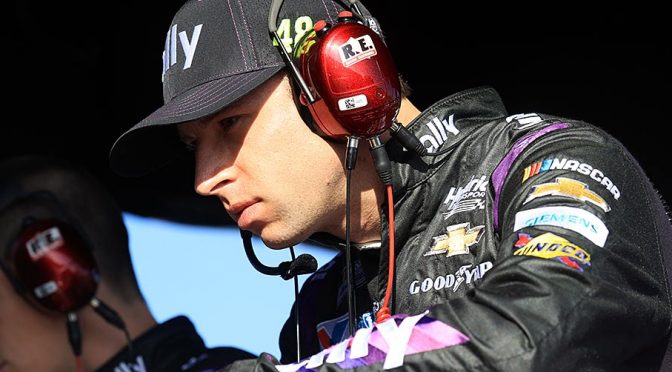
Safety, always a priority in motorsports, remains the first order of business. Those precautions, however, have created some significant adjustments for Cliff Daniels and the rest of Hendrick’s Cup Series crew chiefs. Foremost among those modifications: Not laying eyes or hands on the No. 48 Chevrolet that they’ll bring to Darlington Raceway since, oh, mid-March.
“We are proactively really not trying to let the two groups of our shop working force and our road-crew working force intermingle unless absolutely necessary, just to avoid risking exposure,” said Daniels, in his first full season as crew chief for seven-time series champ Jimmie Johnson. The interactions among crewmembers, instead, have come electronically — by video conferences, phone, text, and workplace chat software.
“From a crew chief perspective, it’s a little wild because not being able to physically see and touch the race car right now is definitely a big change for me and one that was tough at first, but we have a lot of great people that I trust, and we trust them to get the job done,” Daniels added. “So, thankful that we have good employees that are really willing to dig in and adapt. I don’t know that right now there’s many procedures that are business as usual, so to speak. There’s so much that we’ve had to change and adapt to that the whole thing, the whole landscape operationally is different, but we’ve put a lot of forethought and planning into it.”
Car, driver and crew chief will be reunited when the Cup Series resumes May 17 at Darlington (3:30 p.m. ET on FOX, MRN, SiriusXM NASCAR Radio), an event that touches off a busy four-race stretch in an 11-day period for the circuit. Two events at the historic South Carolina track will be quickly followed by two more at Charlotte Motor Speedway, with each race being held without fans and with strict safety protocols in place to combat the public-health crisis.
Though the other Hendrick crew chiefs haven’t had personal contact recently with the cars they’ll carry responsibility for at the track, Daniels says the team’s Darlington entries were already well-prepped for races at Atlanta Motor Speedway and Homestead-Miami Speedway before their postponements in March.
“Right now we’re a little bit spoiled in terms of the level of prep that was in those cars,” Daniels says, “and once we get into some weeks where you’re racing three times in seven days, the cars on the backside of that schedule, we’ll see how good we really are at executing and getting all the details met, and I’m very confident in everyone at Hendrick Motorsports that we can do that. We’ve just got to see it through.”
That next challenge will come at Darlington with a drastically reduced race-day schedule that forgoes practice and qualifying. Only one of the next four Cup Series events — the May 24 Coca-Cola 600 — will hold qualifying as racing officials attempt to limit the time that crew members and other essential personnel are gathered.
Without practice, Daniels said that unloading and then priming each car with limited adjustments before diving into an official event will mean a “quick evolution” as the track takes rubber and shapes driver feedback. He and Johnson plan to rely on notes from previous races, simulation data and other trends to establish a baseline before the No. 48 rolls out in the Darlington garage.
“With no practice, you just have to be very specific in what you’re looking for with the balance, grip level, attitude and performance of your car,” Daniels says. “There’s the good and the bad, and there’s an opportunity to either dial yourself in or dial yourself out, so I’m excited about the challenge. We’ve taken these last eight or nine weeks to work from home and really dig into a lot of the notes and situations, just to make us better. To have that confidence in the decisions that we’re going to make for how we unload.”
The communication lines have also been open during the sports-world lockdown between Daniels and Johnson, who plans to make this campaign his last full-time season in NASCAR’s top division. But their conversations have deviated from typical driver-crew chief race-day banter, first making sure that their families are staying safe amid the recent health emergency and offering input to the organization and NASCAR’s racing operations group about revised safety procedures that will be in place in the coming weeks.
With the larger public-health concerns kept firmly in mind, the passion for the racing retains its pull on Johnson. On Tuesday, he took ESPN’s social media challenge “Dear Sports, _____” to heart, detailing how he missed it. “It’s been an interesting time for me to reflect and to really understand how much I love competition, not only as a participant, but certainly as a spectator,” Johnson said, adding he was ready to enjoy the entertainment that sports provides, but also to make his own contribution to that cause.
That feel extends to Daniels’ drive to get back to business — albeit under different circumstances — in the racing world.
“From the competitive standpoint and just for what all this has been, we have so much empathy and concern for the general public and everyone in our country and over the world affected by the virus,” Daniels says, “but if we’re able to get back and bring some entertainment to those folks and just some hope for making one day a return to normalcy and to provide a little window into our competitive world for our fans and sponsors, that’s something we want to do.
“Personally, he and I are both incredibly competitive. It’s no secret how competitive he is and how much energy and passion he has for racing and just so many aspects of his life and career,” Daniels added, saying that Johnson has been intent on staying physically fit and mentally sharp during the unforeseen break. “When we get back going, I promise you he will have a grin from ear to ear when he drives into Turn 1 at Darlington when they drop the green flag at 180 mph. That’s a guarantee. You can take that to the bank.”
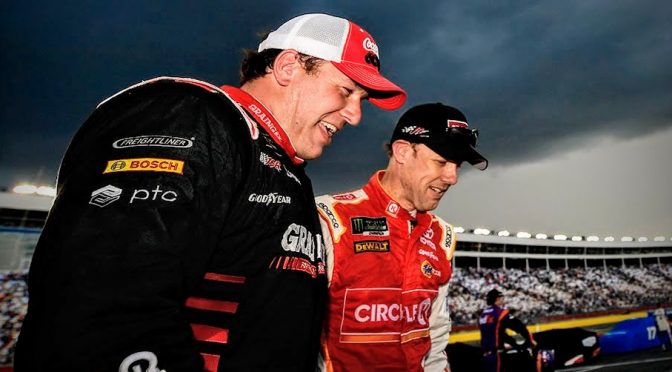
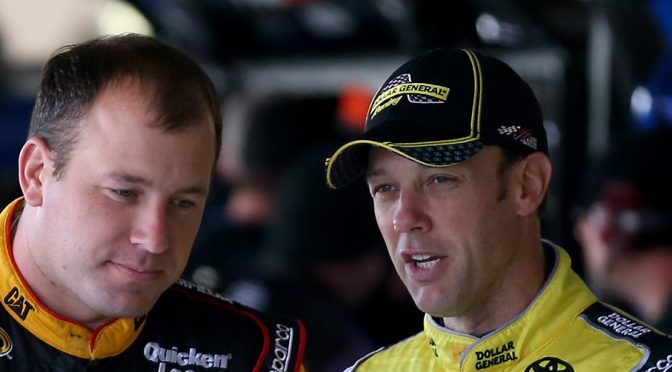
Matt Kenseth and Ryan Newman will each be making their highly anticipated returns to the NASCAR Cup Series when racing resumes Sunday, May 17 at Darlington Raceway (3:30 p.m. ET on FOX, MRN, SiriusXM NASCAR Radio).
Two of NASCAR’s most decorated veterans, the pair of former Daytona 500 winners should inject a degree of excitement into what’s already going to be a thrilling afternoon at NASCAR’s original superspeedway.
But what about beyond that race? Surely, the two drivers aren’t content to just ride out the respective twilights of their careers — Kenseth was already sitting on his couch before the rest of us were, and likely wouldn’t come back just to turn laps. Newman, not to mention, was in contention to win another “Great American Race” coming to the checkered flag just a few months ago.
The potential future Hall of Famers each find themselves in competitive rides, faced with a schedule that will trim practice and qualifying time — a caveat you’d have to think would favor the sport’s veterans with a bevy of track laps under their belts.
Courtesy of some data from Racing Insights, here are some bullet points on a statistical pathway to the 2020 NASCAR Playoffs for two of NASCAR’s longtime stars.
Ryan Newman, No. 6 Roush Fenway Racing Ford
Has amassed 36 points from finish at Daytona (29th place in the standings)
Will need to average 28 points/race in the next 22 races to make top 16 in points
28 points with no stage points is ninth place
Matt Kenseth, No. 42 Chip Ganassi Racing Chevrolet
Will need to average 30 points/race in the next 22 races to make the top 16 in points
30 points with no stage points is seventh place
Daniel Suarez currently sits 31st in points with 32 points
Non-full timer David Ragan is 30th, but ineligible for the playoffs
Clearly, with the spate of races to come and the difficulty involved in averaging ninth- and seventh-place finishes for Newman and Kenseth, respectively, their best path to the postseason contention will come via a trip to Victory Lane.
For context, 2019 Cup champion Kyle Busch led the series with an average finish of 8.9 over 36 races last year. Not saying the duo — with a championship and 57 Cup wins scattered between them — isn’t capable of pulling off such a feat, it just isn’t the most likely of scenarios, by far.
The question then: where should we look for these two to cash in on for an automatic playoff berth?
Based solely on the above numbers, you’d have to think Kenseth — whose career win count is more than double that of Newman’s, in only eight more starts — would be the more likely of the two that we’d see punch his ticket with a win. The 48-year-old, however, is at an age where it’s fair to question what he still has left in the tank after sitting out the entirety of last season.
Lest we forget, as well, that Newman very nearly could have already been a playoff lock with a Daytona 500 win that was within his grasp in the final seconds of that race.
Either way, the possibilities are endless at the moment and given the already topsy-turvy nature of the 2020 season, we certainly aren’t counting either out from making a run at a title, perhaps for the final time.
On the other, Newman is bouncing back from a serious injury after the driver of the No. 6 Roush Fenway Racing Ford was involved in a scary last-lap wreck in the season-opening Daytona 500. He was sidelined for three races with Ross Chastain filling in as the substitute.
Now that that’s settled, on to the competition aspect.
On May 17, Darlington Raceway will host NASCAR’s first race back since the COVID-19 outbreak paused the 2020 schedule (3:30 p.m. ET on FOX, MRN, SiriusXM NASCAR Radio). And here’s the best part: Kenseth won the last Cup Series event the South Carolina track hosted in the month of May. It was the 2013 Southern 500. Five of Darlington’s six premier races since then have been in September for Labor Day weekend; the other took place in April.
That was Kenseth’s only win at Darlington throughout his 18-year full-time career, which spanned from 2000-17. He took his No. 20 Joe Gibbs Racing Toyota to Victory Lane after leading 17 of the 367 laps and beating Denny Hamlin to the finish line by 3.115 seconds.
Newman, meanwhile, has never finished first in 21 Darlington starts. In the 2002 Southern 500, he did come runner-up to Jeff Gordon. Newman was 1.734 seconds short of the checkered flag.
Win totals aside, though, Newman has a stronger all-around record at the 1.336-mile track. His average start (10.6) and finish (12.6) are better than Kenseth’s (19.7 and 15.8, respectively). Newman also has more top fives (seven; Kenseth: three), top 10s (13; Kenseth: 12) and laps led (334; Kenseth: 193).
Other variables to consider are seat time and overall experience. Newman was in a race car more recently than Kenseth, whose last competitive event was in November of 2018. Kenseth has a championship title (2003) to his name, while Newman does not.
There’s really no reason to pin these two drivers against each other than to see who has the superior NASCAR homecoming.
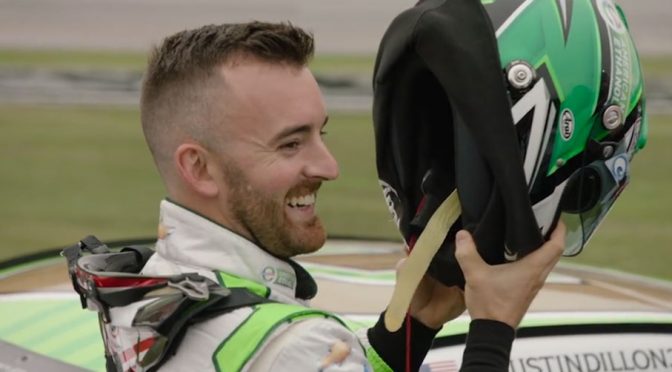
CONCORD, N.C. (May 6, 2020) — Coca-Cola Racing Family driver Austin Dillon recently spent nearly an hour visiting with Special Operations Command Marines for Camp Lejeune as part of Charlotte Motor Speedway’s Mission 600 campaign to honor the men and women of the U.S. Armed Forces as a prelude to the 61st running of the Coca-Cola 600 on Memorial Day Weekend.
While the traditional Mission 600 features drivers paired with regional military bases representing all five branches of the U.S. Armed Forces completing in-person training exercises and interaction, the ongoing coronavirus pandemic shifted plans to a virtual visit.
As part of the video teleconference, the Marines hosted a rappelling demonstration and showed Dillon a video providing the driver a little more background into the life of a MARSOC Marine. Later, Dillon opened up the conference to questions from the Marines, covering a range of questions from what motivates the young driver to his feelings on welcoming his first child later this year and what it means to drive the iconic No. 3 car for his grandfather’s team.
— Charlotte Motor Speedway (@CLTMotorSpdwy) May 6, 2020
Mission 600 continues this week with fellow Coca-Cola Racing Family driver Bubba Wallace scheduled to virtually visit airmen from South Carolina’s Shaw Air Force Base. Denny Hamlin, Joey Logano, Ryan Newman and Daniel Suarez have also recorded video shout outs to service men and women, among other content, as part of the campaign, which runs on Charlotte Motor Speedway’s social media channels through race day.
The Coca-Cola 600 is slated to go green in its traditional Memorial Day Weekend slot on Sunday, May 24. Fans can tune in on FOX or through the PRN radio network.
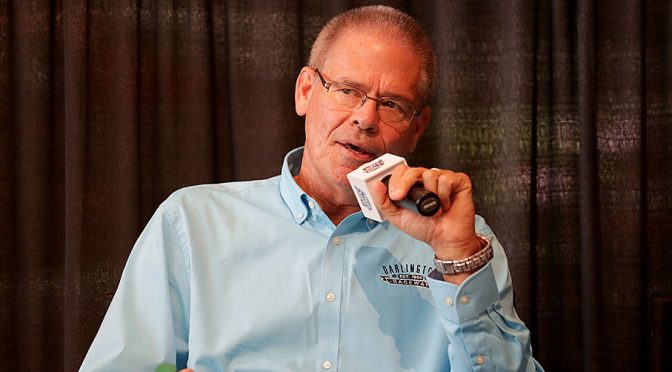
As Darlington Raceway’s president since 2016, Kerry Tharp has led the preparations for four editions of the Southern 500, a crown-jewel race on the NASCAR schedule each year. The month of May usually means longer-term planning for the South Carolina track’s annual Labor Day special. This year, the short-term planning for an unexpected event has arrived much sooner.
Tharp and his staff are hard at work gearing up for three NASCAR national series races in a four-day stretch that wasn’t a blip on the racing schedule when the season started. With its convenient proximity to the industry’s Charlotte-area hub, venerable Darlington is now set to play host to big-league motorsports’ first real-world race since the coronavirus pandemic shut down virtually all sports worldwide.
Tharp said the historic 1.366-mile venue is ready to play its part, a role he says isn’t taken casually.
“We’re excited to have the opportunity to bring live sports back to this country,” Tharp told NASCAR.com. “That’s a great opportunity; certainly it’s a privilege. We feel honored to have the chance to do that, but it’s also a big responsibility, too, because we want to make sure we get it right and make sure that we create the safest environment that we can for the competitors that are going to be here on our property the end of next week and through next week.
“We’re excited, a lot of work to do. We’re working pretty hard at it, and it’s a total team effort with a lot of good people involved.”
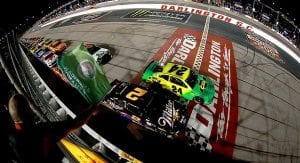
NASCAR makes its first steps back Sunday, May 17 at Darlington, where the Cup Series will resume nearly nine weeks after holding its most recent event (March 8 at Phoenix). Two days later, the track will host a Tuesday race for the Xfinity Series, then another Cup Series race Wednesday, May 20. NASCAR officials have not released a fully revised schedule beyond May 27, but said the Southern 500 weekend remains in place for Darlington on Sept. 6.
These first handful of races — for Darlington and Charlotte Motor Speedway later this month — after the arrival of COVID-19 to the country will be held without fans as a safety measure meant to prevent large gatherings and to maintain social-distancing guidelines. It represents a striking change from Darlington’s annual throwback weekend, a well-attended highlight on the NASCAR calendar.
Sean Gardner | Getty Images
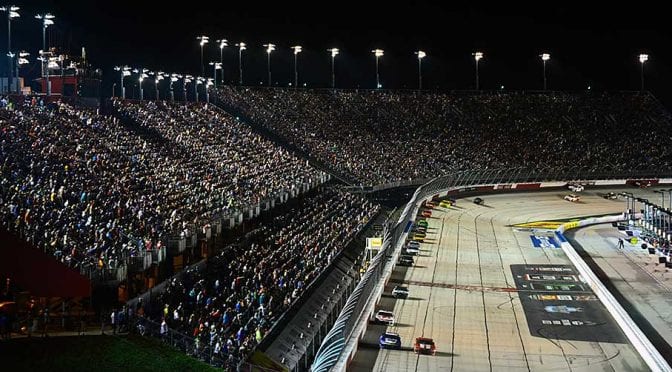
“It’s going to be very different; the type of event that we’re putting on compared to what we’re used to, when we usually have 50, 60 thousand people on our property for three or four days, having a big, festival type of atmosphere,” Tharp says. “We’re not going to have that right now, but now’s not the time for that. We’re trying to get back in the best way that we can with live sports and NASCAR, and this is the step that we have to take. So, it is a great deal different than what we’re used to doing, but I feel confident in our team and all the plans that have been put in place that we’ll put on a super event.”
Those plans have been developed through a collaboration of contributors, from the support of South Carolina governor Henry McMaster, to the guidance of NASCAR medical and racing operations teams, to the input from McLeod Health’s regional network of medical staff.
South Carolina declared a state of emergency March 13, the same day that NASCAR postponed a scheduled tripleheader of events that weekend at Atlanta Motor Speedway. A stay-at-home order went into effect April 6, but McMaster loosened the state’s restrictions April 19 before lifting the order Monday, leaving social-distancing guidelines in place for some businesses.
Tharp singled out McMaster for his help in working with NASCAR and the track to bring stock-car racing back. But that return will be a measured one, with pre-screening for those planning to come to the track and on-site screening stations for the limited amount of personnel allowed on the property. Face masks will be required, and social distancing will be maintained with one-way walking routes and by spacing out work stalls in the Cup Series garage, the motorcoach lot and other infield areas.
“We’re going to be very strict and stringent on these protocols. Everybody’s got to be compliant with this for this to work,” Tharp says. “We’ve got a pretty good plan in place on how we’re going to get the teams, the workers, the officials, the hauler drivers — everybody who’s going to be inside the garage area — inside safely. … It’s going to look a lot different, but I think we’ve got a good plan in place, and I think it’s going to work.”
Tharp has joined some special celebrations in Victory Lane at Darlington in recent years, and he says the anticipation of returning to competition after a nearly two-month hiatus should be running high. But post-race cheers won’t ring out from the grandstands later this month, and the customary group photos and hugs all around for the winning team will be shelved to avoid personal contact.
Darlington will be the first trial run, so what will a socially distanced Victory Lane look like?
“I think it’s still a work in progress,” Tharp said. “I’m not sure yet what the racing operations team and the broadcast partners have worked out post-race. Certainly, I will tell you this: The team that wins that first race, the trophy’s going to mean a lot to them. The first race back, I think it’s going to be super special. I think the teams are going to be competing very hard for that and it’s going to be a historic moment to say that they won the first race back after the pandemic.
“I think that the teams are hungry to get back racing. It’s been about two months since they’ve been behind the wheel of a race car. I know they’ve done the iRacing and I think everybody’s done a super job with that, but now we’re talking about 3,600-pound machines that are going to be doing upward of 180 miles an hour at Darlington without practice or qualifying, and that’s pretty challenging. It’s also pretty exciting, and I think everybody’s going to look forward to seeing how that plays out.”
In less than two weeks, NASCAR engines will shift from idle to full song as the 2020 racing schedule resumes May 17 at Darlington Raceway. The teams preparing for that restart date are already revving up, but with a precautionary vibe.
Last week, NASCAR officials issued a tightly condensed May itinerary for getting back up to speed after roughly two months off during the rising spread of the coronavirus pandemic. The Cup Series’ first two races back are set for the historic South Carolina track with two more to follow in quick succession at Charlotte Motor Speedway — four events in an 11-day span.
Teams have restarted prep work at their respective shops to get cars ready for those events, but Hendrick Motorsports, Chip Ganassi Racing and Joe Gibbs Racing are among organizations reporting that they are doing so with safeguards in place. Those protocols include regular health screenings, limiting the number of personnel on site and staggering their work schedules, practicing social distancing and requiring facemasks and other protective coverings during their shifts.
Back at work and staying smart. #SHRacing employees take their jobs and their health seriously. Racing is able to return because of the safety measures our industry is following. We all have to do our part. 🙏#NASCARpic.twitter.com/p9or9wfAxt
— Stewart-Haas Racing (@StewartHaasRcng) May 5, 2020
Similar health measures will be in place once teams return to the track, where those first races back will be held with social-distancing precautions and other safety directives. NASCAR officials have maintained that all 36 races will be run this season; a revised Cup Series schedule beyond a May 27 event at Charlotte has not yet been released.
The preparations have come as teams adhere to federal, state and local guidelines, with several organizations doing their part to help in manufacturing protective equipment. In North Carolina — the hub for most Cup Series teams — a stay-at-home order is in place through at least May 8, but Governor Roy Cooper said April 23 that race shops may operate as essential business.
That order gave teams the go-ahead to begin preparations for a busy end to May. Charlie Langenstein — a veteran, title-winning mechanic with StarCom Racing — was among those back at it Monday, detailing the team’s work and its precautionary measures on social media. Langenstein said the team took its primary No. 00 Chevrolet earmarked for the postponed Atlanta event that was scheduled March 15th and retooled it for Darlington duty; two StarCom cars were set to go to the NASCAR Research & Development Center for approval.
Langenstein reported that rigorous cleaning processes were in place at the team’s shop, both during and after shifts.
Well today we are all back to work @StarcomRacing. With all safety measures in place including social distancing, wearing a mask, temperature checks, and working in an environment cleaner than a hospital. I am running thru some notes in my office for a few then back on the floor! pic.twitter.com/iCXER4dpDT
— Charlie Langenstein 🏁🇺🇸 (@wrenchtwister00) May 4, 2020
The Gold Edition of NASCAR Heat 5, the video game Officially Licensed by NASCAR, will launch on Tuesday, July 7, for the PlayStation®4 computer entertainment system, the Xbox One family of devices, including the Xbox One X, and PC via Steam, with the Standard Edition launching on July 10th. To mark the announcement, NASCAR Heat 5’s debut trailer has been released. Entitled ‘Refuse to Lose,’ it is narrated by legendary NASCAR sportscaster Ken Squier and features the cars currently driven by the game’s cover star Chase Elliott, 2019 NASCAR Cup Series™ Champion Kyle Busch and 2014 NASCAR Cup Series Champion Kevin Harvick.
Developed in-house at 704Games, NASCAR Heat 5 will be published by Motorsport Games, the video game company dedicated to the integration of racing game development and esports. The game features all the official teams, cars and drivers from the NASCAR Cup Series, as well as the NASCAR Xfinity Series™, NASCAR Gander RV & Outdoors Truck Series™, and Xtreme Dirt Series. Race at 34 authentic tracks from across North America in single player, two-player split screen multiplayer, and online multiplayer for up to 40 players.
Motorsport Games has also announced that the Gold Edition of NASCAR Heat 5, available for pre-order now, will sport exclusive content featuring Tony Stewart. This will include the ability to have the NASCAR Hall of Famer as your in-game spotter, an exclusive Career contract offer from Stewart-Haas Racing, classic Tony Stewart paint schemes, the NASCAR Heat 5 Season Pass (containing four DLC packs) and in-game cash to kick-start your own team.
NASCAR Heat 5 is the definitive NASCAR video game experience, building on the foundations of the previous games with a host of gameplay additions and enhancements. The immersive Career Mode, now with improved statistics, lets you either work your way through the various series until you reach the NASCAR Cup Series, or start at the top for your favorite team. Meanwhile, the new Testing Mode allows you to perfect your car set-up for every track and hone your racing line.
With online racing support for up to 40 players, NASCAR Heat 5 is perfect for esports. The official eNASCAR Heat Pro League will race with NASCAR Heat 5 later this year.
More information about NASCAR Heat 5 will be revealed in the run up to release on Tuesday, July 7, 2020. To make sure you stay up to date with the latest news, follow NASCAR Heat on Twitter, Facebook and Instagram.
Title:
NASCAR Heat 5
Release Date:
Gold Edition: Tuesday, July 7, 2020
Standard Edition: Friday, July 10, 2020
Formats:
PlayStation 4, Xbox One, Windows PC (Steam)
Multiplayer:
Offline 2 player split screen, online 2-40 players
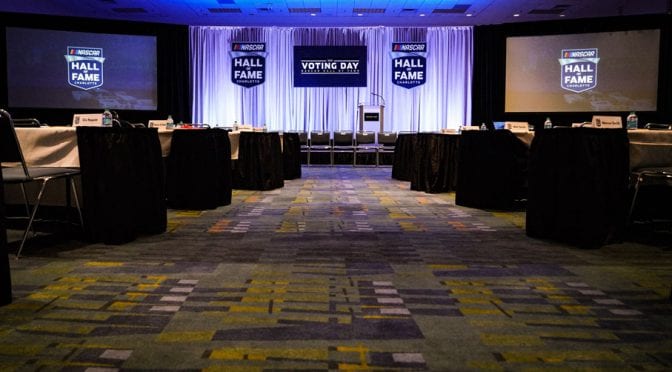
Voting Day to elect the 2021 class for the NASCAR Hall of Fame has been postponed.
The annual gathering of the Hall’s voting panel had been scheduled May 20th in Charlotte, North Carolina. On Monday, a NASCAR spokesperson confirmed that Voting Day had been pushed to an as-yet-undetermined date. FOX Sports first reported the news.
This year’s vote is scheduled to be the first under new guidelines for enshrinement. Three legends — two from a Modern Era ballot of 10 nominees, and one from a Pioneer ballot of five — will be elected. Previous classes have been composed of five members each.
Fan voting for the 2021 class is open and will continue until a rescheduled Voting Day. Fans can cast their ballot here; the tabulated results will count as one vote from the panel.
Every NASCAR fan has one piece of memorabilia that stands out above the rest.
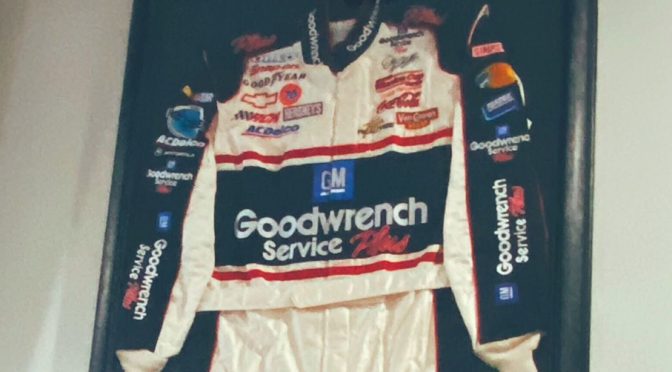
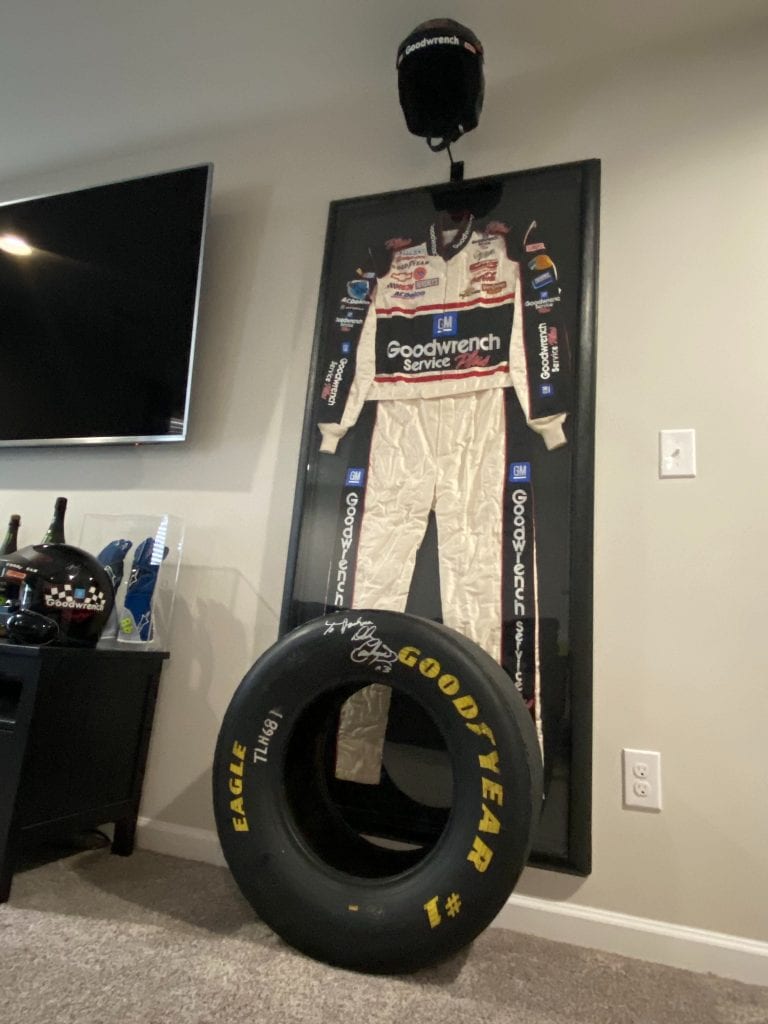
For Ryan Blaney’s spotter Josh Williams, it’s one of Dale Earnhardt’s last fire suits from the 2001 NASCAR Cup Series season. The suit is displayed prominently in Williams’ living room, where it can be easily admired every day.
The suit was originally gifted to his father, Chris Williams, by Earnhardt’s widow Teresa. Chris headed Earnhardt’s merchandising affairs from 1988 until the driver’s passing. Williams is unsure if Earnhardt ever wore the fire suit before his crash on the final lap of the 2001 Daytona 500.
“When they did the photoshoots, they had different logo placements on them than what he wore during Speedweeks,” Josh Williams told NASCAR.com. “This one is identical to what he wore during Speedweeks. I don’t know why that was back then, but it was different from when he did the photoshoots, which was during the Rolex race.”
Photo courtesy of Josh Williams
Whether Earnhardt actually wore it or not would just add to the overall value, but it’s the relationship Williams had with the man it belonged to that sparks endless childhood memories with each passing glance and represents the unique path he took to become the eye in the sky for the No. 12 Team Penske driver.
Williams, a native of Martinsville, Virginia, grew up a mile away from Martinsville Speedway while his grandparents actually lived directly next to the half-mile short track. When Williams’ father started working for Earnhardt, the “Intimidator” would park his motorhome in the family’s backyard during Martinsville race weekends.
“Him (Chris) and Dale were best friends,” Josh Williams said. “They went on hunting trips and stuff together. A lot of younger memories with him — helping them cook dinner at the house during race weeks or going turkey hunting, deer hunting, coming down to Mooresville (North Carolina) and going deer hunting at his shop.”
One particular hunting story that stood out involved Earnhardt’s youngest daughter, Taylor.
Earnhardt, Williams and his dad during a hunting trip. Photo courtesy of Josh Williams.
“Some of the fonder memories were him, me, dad and Taylor all sitting in a big tree stand hunting together and me and Taylor being 10 years old at the time and not really caring about hunting, acting crazy in the deer stand,” Williams recalled. “My dad and Dale laughed at us the whole time telling us we were flirting and stuff.”
While potentially flirting with his daughter gave Earnhardt a chuckle, there was another side to the driver that Williams experienced at an early age — a less amused one. Williams recalled playing the NASCAR ’93 video game with Earnhardt during a Martinsville weekend. The game allowed you to wreck a player under caution to gain a spot without penalty.
Williams decided it would be comical to intentionally crash Earnhardt, but Earnhardt wasn’t having any of it. It’s in your best interest not to upset the “Intimidator,” a concept that some grownups were never able to grasp.
“Dale got ticked off at me, telling me that wasn’t how you race and that wasn’t how you were supposed to do it,” Williams remembered. “I’m laughing because I didn’t care, I thought it was great. I remember he left the house and spent the rest of the afternoon in his motorhome. He wouldn’t hang out with us because he was so mad at me for doing that as a kid.
“The best part was coming from a guy who pretty much had a career for moving people out of the way, and he got mad at me for doing it in a video game,” he added. “Looking back, I’m like, you would have done that, come on. … I was scared because he was mad.”
While Williams spent much of his younger years watching Earnhardt spark fear into much of his competition, thus fueling his passion for NASCAR racing, there was another passion he started taking more seriously beginning at age 12 — golf.
Williams played more frequently as he ascended through high school before eventually going semi-professional after graduation, playing on smaller tours and even attempting a few U.S. Open qualifiers.
Oddly enough, it was the time spent chasing a dream on the links that led him back to chasing another dream at the race track.
Williams’ father started working for Kevin Harvick following Earnhardt’s death. At that point, Williams was playing professional golf, but he was able to develop a close friendship with Harvick. Williams would race go-karts at Harvick’s house, which is where he met former NASCAR driver Scott Speed during his final year at Red Bull Racing. The pair became friends and started playing golf together.
“When he got let go from Red Bull, he … asked me if I would come spot for him so I could be on the road and play golf on Saturdays,” Williams said. ” … It got to the point that any money I was making spotting was just getting thrown right back into golf and it wasn’t going well, so I quit golf and started spotting full time.”
Williams followed Speed to the No. 95 Leavine Family Racing car in 2013. Williams moved to spotting duties for Michael McDowell, followed by AJ Allmendinger for a half season on the No. 47 JTG Daugherty Racing team. In 2015, Williams moved over to the No. 21 Wood Brothers Racing team to spot for Blaney in a partial Cup Series schedule before going full time in 2016.
Williams celebrates with Ryan Blaney in Victory Lane at Talladega Superspeedway in October 2019. (Chris Graythen | Getty Images)
“Racing was always my No. 1 passion because it’s what I’ve grown up around and all I’ve known since the time I was born,” Williams said. “But then going through high school and being good at golf, I tried that and I love golf and I miss playing professionally, but racing has always been something my whole family’s been in so it was always there. So, it’s funny how they kind of intertwined by knowing the right people and being around them.”
After taking the road less traveled toward a dream fulfilled, Williams used lessons learned from Earnhardt during childhood to transcend from a talented golfer to atop the spotter’s stand for one of NASCAR’s most popular drivers.
“He would always give everyone a hard time about how you only get one chance at life and you have to make the most of it and the most of every opportunity and take every chance you can,” Williams said. “I feel like he would be proud of me getting my start, but also from there, earning my way to get with Ryan, a good driver and a good team. … He’d always want to push me to be better and would be hard on me, I’m sure, but that’s just who he was. Everyone he ever touched, he made better. I’m sure that would be the same case if he was still around.”
And just in case he ever needs a reminder, Williams will always have Earnhardt’s fire suit right in front of him to remember where he came from while using it as motivation for success.
“I have a lot of different stories about him away from the track, but when you look at that, it gives you a more different perception of who he was when … he was Superman, right?” Williams said. “Who he was when he put his suit and cape on, it reminds you every day of who he was and not ever forgetting who he was when he was on the race track. Kind of helps you carry yourself in a better way sometimes.”
On May 22, 1987, Kyle Petty stepped on stage with a guitar at Hampton Coliseum. His career as a next-generation driver in NASCAR’s big leagues was already gaining momentum, but the on-again, off-again exposure to country music stardom was back on, with Petty opening for the popular Janie Fricke in a 10,000-seat arena.
Petty performed well enough that the thought of an encore wasn’t out of the question. However …
“Couldn’t do it,” he told reporters days later. “I only knew 10 songs, and I already had sung them.”
Petty whisked back from that Friday night concert in Virginia to Charlotte Motor Speedway, where questions loomed about whether his heart was more in becoming a twangy troubadour or continuing the family tradition as a stock-car driver. That Sunday, Petty was in Victory Lane after another standout performance, surviving a sweltering Sunday to win the Coca-Cola 600 in the Wood Brothers’ famed No. 21.
Racing Photo Archives | Getty Images
Two career breakthroughs, less than 48 hours apart, almost presented Petty with a choice.
“What’s that saying: jack of all trades, master of none? I think that’s where I was going to get to that point,” Petty said earlier this month. “I was going to get to the point where they were going to start detracting from each other. For me, probably at that point in time, the music was going to detract from the racing, more so than the racing would detract from the music. I thought in the beginning, being naive, you could just stand up and sing a song and that would be the end of it.”
Petty attracted some big-label attention, but the recording industry had many of the same obligations that racing did.
“So all of a sudden, there were two jobs, and I never wanted a job, period — zero. No job,” he says. “And I felt like driving a race car wasn’t a job, and I didn’t want music to become where I despised it or resented it because it was a job, because I enjoy it so much. So I kind of put one on the shelf for a while and said, you know, maybe I can come back to that later.”
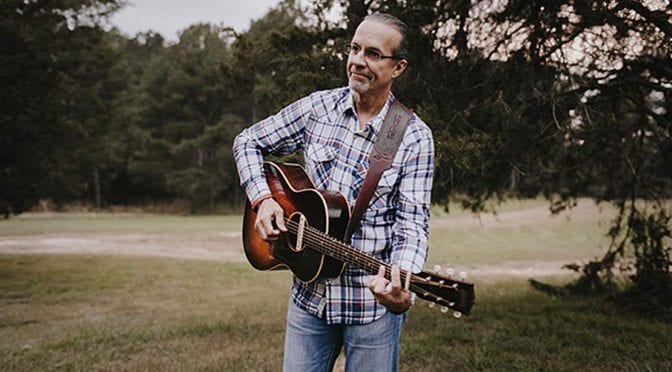
Petty’s career in racing continued for nearly 20 more seasons as a driver and for more than a decade after as a broadcaster, now with NBC Sports. But the guitar never found a permanent home in storage, making frequent trips with him from track to track as a near-constant creative outlet.
Petty’s musical path could have unfolded on a glossy Nashville route, where he sang other people’s songs in big-budget productions. Instead, his lifelong side project has guided him to intimate clubs, where he connects with smaller audiences through his own deeply personal acoustic messages that blend country and folk.
“He writes some songs that are really special,” says Dolph Ramseur, who has a long-running association with Petty through music and his early days as a Wood Brothers fan. He also knows a measure about special songs, having discovered the Avett Brothers and bringing their gritty, hybrid brand of alt-bluegrass to prominence through his Ramseur Records label.
“I hope that people in the NASCAR world understand,” Ramseur says before pausing, “Kyle just might be … how can I phrase this … a very good driver, a very good TV personality, he might turn out to be a world-class excellent songwriter. He’s got a talent.”
Petty now has more than 10 songs in his supply, and they tell revealing stories about his family and his experiences. They’re also finding a platform to help others, conveying messages of sympathy and hope as the world deals with a public-health crisis.
At age 59, the driver who grew up as the son of stock-car racing’s king is still learning with each note and lyric, and his best songs may be ahead of him.
Radio gold and early influences
In Kyle Petty’s estimation, the miles spent riding in cars in his youth numbered in the millions. His father, Richard, sat alongside mother Lynda up front while Kyle and his three sisters crammed into the back. The radio played front and center with country gold: Johnny Cash, Waylon Jennings, Merle Haggard, Loretta Lynn, Patsy Cline, early Willie Nelson, Conway Twitty. The advent of the 8-track player only expanded that spectrum.
Petty’s preteen years included a brief affair with big-band music, and his adoration of Benny Goodman and Glenn Miller led him to play saxophone in his middle school band. But an appreciation also developed for songwriters who blurred the lines drawn by his country influences — artists like Harry Chapin, James Taylor, John Prine, Carole King, Jim Croce.
Two childhood experiences galvanized Petty’s path toward music. Brother Bill Frazier, the founder of Motor Racing Outreach, would sometimes play the guitar during trackside chapel services; he gave Petty his first six-string, which he still has in his extensive collection.
The second was watching Marty Robbins, a legendary country singer-songwriter and NASCAR hobbyist, playing poolside outside of Talladega, Alabama. Those events, plus a realization, steered him from woodwinds to a closer relationship with guitars.
“One thing was that it was a lot easier to converse with the opposite sex with a guitar in your lap than a horn in your mouth,” Petty says, “so when you’re 12, 13, 14 years old or you’re in that zone a little, it’s like, which one’s cooler, and the guitar won out.”
RacingOne | Getty Images
Petty goes national
Petty claps his hands and laughs when one of NASCAR’s musical skeletons is mentioned. Laughing is probably the better reaction, and cringing would be the worst-case reflex.
A 1984 recording called “World Series Of Country Music Proudly Presents Stock Car Racing’s Entertainers Of The Year” came with slick (for the era) production and a collection of NASCAR racers taking the microphone for a terrifying 22-track double LP of original country songs. A producer wrote songs that correlated to each driver — Hall of Famers and journeymen alike — based on interviews that summed up their personalities. It’s what led Bill Elliott to warble “Crazy Racin’ Man,” Dale Earnhardt to croon “Hard Charger,” and Richard Childress to warn about the crash they call “T-Bone.”
“Listen, it didn’t age after the first week, it was bad,” Petty says, thankfully still smiling. “It was always bad. That’s the way it was.”
Petty’s song — “The People Who Love Me (Worry a Lot)” — was the first song after Ned Jarrett’s spoken-word introduction. It was the double album’s clear standout, but it also insured that the recording got no better after that track. “I would love to be able to tell everybody we did that horrendous album and made a ton of money, but we didn’t,” Petty says.
Token promotion of the recording meant a return trip to Nashville, where Petty was booked for an appearance and a brief musical interlude on what he thought was a local talk show. At the following race weekend at Riverside, California, multiple people came up to him to say they’d seen him perform. It was only explained later that Petty had appeared on “Nashville Now,” a top-rated cable show hosted by Ralph Emery on The Nashville Network.
“I’m like, oh my God, this is a national show?” Petty recalled. “You mean I went on TV and sang on a show that’s on national cable? And they were like, sure did. So that was the part of the whole deal of it that was amazing to me or I would have never … If I’d known it was a national show, I would’ve said no.”
What followed was no novelty act. By 1985, Petty had left his family-owned team for Wood Brothers Racing and scored his first Cup Series win the following year. That time frame overlapped with his first record deal with RCA and his association with manager Don Light, who had discovered Jimmy Buffett and dabbled in racing at a grassroots level.
Petty admits now that he was “scared to death” each time he took the stage, but that he learned from his exposure to that side of the music industry. When the music side stalled, he opted to sharpen his focus on racing, waking up to the realization that he needed to commit to one career path or the other.
“If I’d have torn down a bunch of walls early in my career, I’d have probably gone off in the music direction,” Petty says, “but by this time I was so deep into racing. I’d wanted to be a race car driver since I was 5, and I just couldn’t give that dream up to chase another dream. Although I had two dreams, I guess.”
Crafting handmade songs
Dolph Ramseur was a teenage fan at Charlotte Motor Speedway on that steamy Memorial Day weekend in 1987, watching Petty’s victory in what he still calls the World 600. But his fandom of the Wood Brothers predates that momentous win back to the team’s glory days with David Pearson, who was often a thorny rival of Petty’s father.
Ramseur watched Petty play to a six-figure crowd back then, but the former driver’s audiences now are far more intimate. Petty still soaks in the bustle of the race track with his role at NBC Sports, but he also feels the pull toward rural music halls or cozy neighborhood clubs. Even as his driving career transitioned into his broadcasting tenure, Petty would show up unbilled at open-mic nights at Charlotte’s The Evening Muse, which holds little more than 100 people at best.
Chris Graythen | Getty Images
His songwriting has matched the well-worn, comfortable personality of these rooms. There’s a measure of hardship, as writing music helped him mourn the loss of his son Adam in a racing accident in 2000. But there’s also underlying joy behind the weighty nature of his songs, which draw inspiration from his parents, his wife Morgan and their 22-month-old son, Overton. Some of the songs were so personal that Petty kept them in what he described as a “cocoon” with his family members, but his desire to connect with others as a creative release eventually won out.
“He’s very funny, so he really gives people a little bit of sugar to help the medicine go down when he performs,” Ramseur says. “I mean, he really pairs laughter with the somber kind of moments of his songs really well. So it’s a very good roller-coaster of emotions, but Kyle, these songs are very personal. They’re really intimate. They all come off like a handmade quilt. They’re very revealing, I mean, opening his soul so people can see it.”
While Petty has built a solid musical baseline, he’s also made a point to ask Ramseur for advice on how to develop as an artist and to add more layers to his craft. Years ago, Ramseur paired him with David Childers — a longtime songwriter and North Carolina native — as a mentor. The two are now collaborators and frequent touring companions. “I walked in and it’s like David and I had known each other our whole life,” Petty says. “Instantly we just clicked.”
While there are similarities in their musical backgrounds, Petty and Childers have found balance in their differences. Petty describes a melancholy quality to his songs, leaving it to Childers’ more upbeat tunes to bring the crowd back up. But Childers has also been impressed by Petty’s appetite to learn more and add texture, describing a breakthrough in the pair’s most recent show together in Sparta, North Carolina.
“There’s a lot of dimensions to the guy,” Childers says. “He’s a car racer and he’s passionate about that, but he has a lot of other interests, some broad interests and I’d like to see more and more of that get into his songs. I don’t think he’s written his best songs yet.”
Ramseur was there when Petty’s career faced its 1987 crossroads, when he ultimately steered down the stock-car racing path. Had his exposure to the mass-produced Nashville sound taken firmer root back then, Ramseur isn’t sure Petty’s personality would have had the chance to come through in his music. Instead of a “paint-by-numbers” music career, he says, Petty’s approach is more like a potter shaping clay at the wheel.
“To be honest with you, these are the kind of songs that ought to be on country radio,” Ramseur says. “I would think a lot of the guys in country music if they heard a lot of the songs he did, they would probably sit up and number one, take notice and then number two, they would do a gut-check on the art that they’re presenting out to the world.”
Childers also isn’t sure what sort of influence mainstream country would have had on Petty’s musical arc.
“I’m not very good at prognosticating any of that, but what I see now, I see a man who has lived a very full life and has a lot of joy in it despite tragedies that he’s suffered,” Childers says. “He has a joyousness that’s infectious. I think he could be a hell of a politician, too, but he’s probably too honest for that.”
Giving back through music
There but for the grace of God stands me or you Only by the grace of God will he get through He’s just another sign that we’re living in hard times.
— Kyle Petty, “Hard Times”
Kyle Petty has never had much trouble communicating — outspoken as a driver, vivid as a musical storyteller and never one to hold back an opinion as a broadcaster. So when the racing world — and the world in general — went on hold with the aggressive advance of the coronavirus, Petty found a means to keep the communication lines open.
He found inspiration in the virtual concerts played by other artists in recent weeks and thought, “I’m never going to sell a million albums, but I can sit in a room and play a guitar.” Through his social media channels, “quarantunes” were born.
Ramseur Records
But there was a greater need to use his voice to help others as well as entertain. When the virus outbreak forced the postponement of the annual Kyle Petty Charity Ride Across America motorcycle rally for charity this spring, he found another way to give, again with the help of Ramseur and Childers. Ramseur’s label announced last week a digital split single for charity featuring the two artists, with proceeds to benefit Loaves & Fishes, a non-profit food pantry helping needy families in the Charlotte area.
“I think that affects so many people,” Petty says. “I think that’s something that’s beginning to raise its head that’s been lost in the coronavirus is people unemployed, people running out of food, not having a place to go for a hot meal, not having this or that — just the basic needs of humanity.”
Ramseur says the only digital element to the two-track release is the format, a necessity because of the closure of plants that would have pressed the vinyl. “It’s just him and acoustic guitar. It’s no bells and whistles to it,” Ramseur says of Petty’s cut, titled “Hard Times.” “There’s no smoke and mirrors here. You can’t hide behind a band and you can’t hide behind autotune. This was all recorded on a tape — all analog — so it’s a totally different world that we’re swimming in, and thank the Lord that’s the case.”
Fans of authentic roots music can thank the Lord, too, while tipping a cap toward Brother Bill Frazier and 8-track players, Marty Robbins and Ralph Emery, Dolph Ramseur and David Childers, and whatever it was that kept Kyle Petty from putting his six-string guitar on a shelf so many years ago.
“I just said for the fans that are out there that want to know a different side of Kyle Petty, other than just riding around in circles or just running my mouth on TV, it’s given me an opportunity and I’ve connected with a lot of people, honestly,” he says.
“A lot of musicians, but a lot of friends and a lot of people that I’ve known my whole life that are like, man, I didn’t know you were still doing that. It’s like, I never quit, man. I never quit.”