Junior Johnson, a stock-car racing giant whose career spanned the sport’s history from its moonshining roots to its modern era as a fierce, hard-nosed driver and an innovative mechanic and team owner, has died. He was 88.

Johnson’s passing was confirmed by the NASCAR Hall of Fame. He had been in declining health and entered hospice care earlier this week. His wife, Lisa, told The New York Times that Johnson had Alzheimer’s disease.

Johnson was inducted into the NASCAR Hall of Fame in its inaugural Class of 2010. He won 50 races in NASCAR’s top division — the most of any driver without a championship — and added 132 victories and six championships as a successful team owner for many legends of the sport. Johnson won the second running of the Daytona 500 in 1960, then added two more triumphs in the Great American Race as a car owner in 1969 and ’77.

His all-out style — honed from years of hauling illegal liquor at breakneck speeds through the North Carolina foothills — took a toll on his competitors and his own equipment, earning him a reputation as the hardest of the hard chargers. Johnson was also known as the Wilkes County Wildman and heralded as “The Last American Hero,” after a brilliant 1965 essay in Esquire by author Tom Wolfe.

“Junior Johnson truly was the ‘Last American Hero,’ ” NASCAR Chairman and CEO Jim France said in a statement. “From his early days running moonshine through the end of his life, Junior wholly embodied the NASCAR spirit. He was an inaugural NASCAR Hall of Famer, a nod to an extraordinary career as both a driver and team owner. Between his on-track accomplishments and his introduction of Winston to the sport, few have contributed to the success of NASCAR as Junior has. The entire NASCAR family is saddened by the loss of a true giant of our sport, and we offer our deepest condolences to Junior’s family and friends during this difficult time.”

RELATED: NASCAR community mourns loss of Junior Johnson

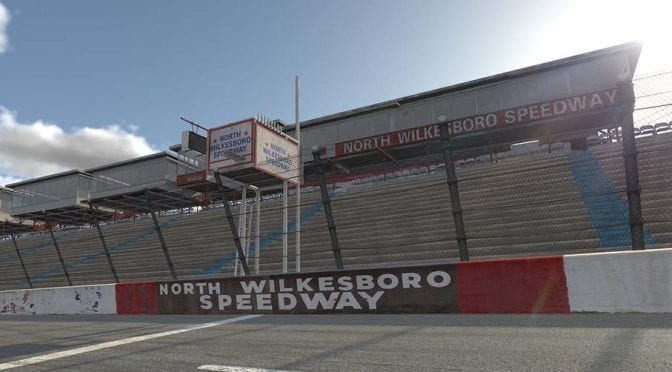
Born Robert Glenn Johnson Jr. in 1931, he became known simply as “Junior” as the fourth of seven children. His North Carolina home was the small community of Ronda, not far from Ingle Hollow, just a short drive from the North Wilkesboro Speedway, one of NASCAR’s charter tracks.

RacingOne
RacingOne

Farming was a staple of the Johnson household, but so was the manufacture and high-speed transport of untaxed whiskey. Junior Johnson quickly became involved in both family businesses, sharpening his skills as a driver with his fearlessness in distributing liquor in hopped-up cars.

“The good whiskey runners were kind of cocky about it, like good race drivers,” Johnson told the Associated Press in 1991. “I guess I was pretty cocky.”

Legend has it that Johnson was never caught on the road. He was convicted of moonshining in 1956 after authorities staked out the family still. President Ronald Reagan pardoned him on Dec. 26, 1986. “No maybe about it. Best Christmas gift I ever got,” Johnson told the Atlanta Journal-Constitution in 2007. Johnson now sells moonshine legally under the Midnight Moon label.

RELATED: Junior Johnson’s life in photos

Johnson’s earliest aspirations were first aimed at a different professional sport, but an accident cut those dreams short. “I’d probably have been a baseball pitcher if I hadn’t broken my arm when I was 14,” Johnson told the AP. “I broke it turning a farm tractor over on it, acting a fool.”

Johnson’s first stock-car event came by chance, according to North Wilkesboro Speedway founder Enoch Staley. At his brother’s encouragement, Johnson temporarily put his plow aside and threw on some shoes to compete at his home track, which was then dirt. “We had scheduled a modified race, but didn’t have enough cars to complete the field,” Staley told the Associated Press in 1965. “So we invited the Wilkes County fans out of the stands to enter passenger cars and Junior ran in a 1939 Ford. That’s how he got his start.”

Johnson’s first appearance in NASCAR’s top division was on an even bigger stage, in the 1953 Southern 500 at Darlington Raceway. He finished 38th in the 59-car field, but gave the garage an early glimpse at his toughness. After his No. 75 Oldsmobile pirouetted off a guard rail, Johnson exited his crumpled car unharmed but noticed that the engine was on fire. Johnson quickly opened the hood, removed his shirt and batted out the flames himself.

RacingOne
RacingOne

By the time Johnson made a full-fledged go at stock-car racing, he quickly established himself as a winner. He prevailed for the first time at Hickory Speedway on May 7, 1955, adding four more victories by the end of his rookie season.

“I was crazy, I think,” Johnson told NASCAR Productions in 2015. “I’ve never been scared in a race car, any other kind of car, because I thought I was a good enough driver to handle it. And I was.”

Johnson’s legend as a fierce competitor grew in the late 1950s into the ’60s, taking a major leap with his Daytona 500 triumph in 1960. “I’ve driven in a lot of races, but this is my first big victory,” Johnson told reporters after leading 67 of 200 laps and beating Bobby Johns for the win.

The significance of that win took on extra meaning with a discovery that is now superspeedway canon. During preliminary events at Daytona International Speedway, Johnson learned how to use the aerodynamic push and pull created by the air at high speeds. The technique of “drafting” was born, a tactic that Johnson initially kept to himself, later using it to help his year-old Chevrolet compete against the favored Pontiacs.

Johnson stayed tucked firmly behind Johns in the late going of that Daytona 500, the aero pull becoming so forceful that it popped the rear window from Johns’ car. Johns lost control on the backstretch, allowing Johnson to pull away and lead the final nine laps.

“Heck, his whole car came up off the ground, spun around and went down to the infield and I went on and won the race,” Johnson told Speed TV years later. “Everybody knew then by about the time the race was over with what I had done all day long was just drafted people, and that’s how I got to where I was at.”

Johnson accumulated wins for eight straight seasons into the 1960s, but never finished higher than sixth in the premier series standings, running only partial seasons throughout his career. His best season in terms of visits to Victory Lane came in his final campaign in 1965, when he won 13 of his 36 starts, including his final win as a driver at North Wilkesboro that October.

That same year, Johnson’s impact was chronicled in Wolfe’s groundbreaking article, “The Last American Hero is Junior Johnson. Yes!” The profile, a prime example of Wolfe’s brand of “new journalism,” introduced the country to Johnson’s stature as an everyman icon in his native Wilkes County and a “lead-footed chicken farmer” while capturing America’s growing love affair with the automobile. Wolfe colorfully heralded Johnson as “one of the last of those sports stars who is not just an ace at the game itself, but a hero a whole people or class of people can identify with.”

Rusty Jarrett | Getty Images

Nearly five and a half decades later, the article remains an iconic piece of sports journalism. Johnson and Wolfe were reunited in New York in 2015 for a short film produced by NASCAR Productions. Wolfe died May 14, 2018, also at age 88.

“I didn’t think that he would write the story that he wrote, but I thought it was an awesome story,” Johnson said. “Things change, people change, but you don’t want to ever forget how you were brought up. You’ll remember it as long as you live. That article did that.”

Even as his prominence grew, Johnson contemplated a transition from his driving days to team ownership. He entered just seven races in 1966, but began fielding cars that year for a host of young drivers, including an up-and-coming prospect named Bobby Isaac.

He was 35 at the time of his final race behind the wheel, ending his driving career while still in his prime.

“Racing has been good to me,” Johnson told the AP in November 1965 as his driving days wound down. “I want to make it clear that I am not quitting because I am too old to drive or am afraid of high-speed racing. I have accomplished about everything I had hoped to as a driver. Now I want to relax and enjoy life, but still be connected with the sport in a supervisory capacity.”

His ties to the sport endured for three more decades as a team owner, fielding cars for a host of future NASCAR Hall of Famers. Johnson’s plan for relaxation never quite hit its mark, though, as he remained heavily involved in running his team, even wielding a jack over the wall for pit-stop duty.

Cale Yarborough scored three consecutive championships from 1976-78 in Johnson’s familiar No. 11, winning 45 races over an especially prolific seven seasons together. When Yarborough opted to shift to a part-time racing schedule after the 1980 season, Johnson hired Darrell Waltrip and promptly won three more titles (1981, ’82, ’85) and 43 more races with the No. 11 in a six-season span.

RacingOne
RacingOne

Terry Labonte, Geoffrey Bodine and Bill Elliott also won in Johnson’s cars. His last victory came in September 1994, with Elliott winning the famed Southern 500 at Darlington over Dale Earnhardt. Johnson sold his operations to Brett Bodine at the end of the next season.

Johnson’s contributions to the sport lasted beyond his ownership days. NASCAR’s top tour continued as the Winston Cup Series until 2003, a long-running entitlement sponsorship deal that Johnson helped broker in the early 1970s.

R.J. Reynolds, faced with a ban on television advertising in 1971, needed a new outlet for its marketing dollars. Johnson, whose shops were based 45 miles away from RJR’s Winston-Salem headquarters, came calling but soon realized that its sponsorship reach was much greater than simply investing in a team.

“They told me they had millions of dollars to spend,” Johnson told Steve Waid for a 2016 article in Popular Speed. “Now, I wanted some of that. But it occurred to me that if I made a counter proposal, it could benefit NASCAR and everyone in racing — including me.” The business connection that followed ushered in a great period of growth in NASCAR, giving stock-car racing a healthy points fund and a greater foothold that expanded outside its Southern roots.

Johnson was enshrined in the NASCAR Hall of Fame in its first class in 2010, joining Bill France Sr. and Jr., Dale Earnhardt and Richard Petty as the inaugural inductees. He remained involved with the NASCAR Hall for years afterward and contributed an operational moonshine still as an exhibit for the museum’s Heritage Speedway section.

He was presented for induction by his son, Robert, on a night of stories about Johnson’s decades-long dedication to stock-car racing.

“We have lost one of NASCAR’s true pioneers, innovators, competitors and an incredible mechanical and business mind. And personally, I have lost one of my dearest friends,” said Winston Kelley, the NASCAR Hall of Fame’s executive director. :While we will miss Junior mightily, his legacy and memory will forever be remembered, preserved, celebrated and cherished at the NASCAR Hall of Fame and in the hearts and minds of race fans around the world. Please join us in remembering and celebrating Robert Glenn Johnson Jr.”

CONCORD, N.C. — The end of the 2019 racing season marks an anniversary of sorts in NASCAR’s competition department. Jay Fabian will hit a work milestone next month, completing one year as the director of stock-car racing’s premier series.

Fabian has brought an even-keeled touch to the position, but it’s also a hands-on manner with others that’s helped him navigate the Cup Series garage — even in a season that brought stricter deterrence systems with a new inspection model. It’s what he hopes will help steer the series in a major time of transition ahead in the coming years. And it’s an approach that has developed over his years as a team executive on the other side of the garage’s fence.

“That may have just been a bit of luck,” Fabian explained last week from the NASCAR Research & Development Center. “I have that relationship with a lot of people that I had worked with before. … If you don’t have that good relationship, you’re not going to be successful in any model. So now that I’m on this side, it’s me talking to the same people the same way about, ‘hey, you’ve got to fix this. We’re not OK with that.’

“Same way with in my life as a supervisor at a race team, if you don’t assemble a car correctly, you’re going to have failures and issues and you have to address it with those folks that, here’s what you’ve done wrong. It’s a little bit of the same approach, and you have to be the one doing it. I’ve always felt responsible for my job, so I’ve always stayed hands-on, whether it was building a car or whether it’s here. I think it’s super-important.”

For Fabian and the rest of the department at the R&D Center, the holiday break offers a welcome chance to rest and re-energize for the season ahead. There’s plenty to recharge for — ongoing tests and development to the Next Gen car that’s on target for 2021, potential tweaks for next season’s rules and procedures, a newly merged NASCAR that has absorbed International Speedway Corp. and a shaken-up schedule that’s likely to continue evolving.

RELATED: 2020 NASCAR schedule

Fabian’s prime challenge upon taking the job came with an accelerated post-race inspection model that carried tougher penalties, including the potential disqualification of race winners caught with significant rules violations. Such punishments were relatively scarce last season in NASCAR’s three national tours, but all 36 winning cars in the Cup Series were found in compliance with the rule book — a smooth outcome that Fabian said starts with cooperation with the teams.

Jay Fabian in the garage
Zack Albert | NASCAR Digital Media

“We didn’t have to spend much time fighting with them, so that went pretty well,” Fabian says. “That was less of a fight than I anticipated.”

That model is expected to return largely intact for 2020, but with the potential for more cars returning to the R&D Center so that competition officials can monitor them for trends —  and also to enforce compliance with the expanded parts freeze for next year, instituted ahead of the 2021 arrival of the Next Gen model.

Any other potential rules and procedural alterations would be announced closer to the season-opening Speedweeks at Daytona International Speedway in February, but Fabian hinted that the structure of each race weekend is currently under review.

“We’ll see quite a bit of impound weekends,” Fabian says, referencing schedules where cars are garaged and not eligible for major changes between qualifying and the race start. “Historically, the enhanced schedule is when we would qualify and then inspect the next morning and then you’d (have offenders) start at the back — there shouldn’t be any of those, but we’ll still have plenty of two-day schedules. There will be some three-day schedules. I think there were actually some races toward the end of the year that those weekend schedules will be very similar to what you’ll see in 2020.”

Fabian and his group also are deeply involved with the development of the series Next Gen car, which completed its second on-track test Dec. 9-10 at ISM Raceway near Phoenix with Team Penske’s Joey Logano at the wheel. The same prototype underwent testing at Richmond in October, with driver Austin Dillon and the Richard Childress Racing crew that built it putting the model through its paces.

MORE: Logano finds car ‘challenging’ | Next Gen photos

The most recent test brought teams together across manufacturer lines, with NASCAR officials working with Childress (Chevrolet) and Penske (Ford) personnel to learn more about the car’s characteristics.

“They gave comments on the car and some performance items that in my past, you would go to a test with subtle changes on a car and you would get more feedback than you would’ve on an entirely new car,” Fabian said, noting that officials on site worked with Logano to find the proper steering feel and responsiveness as they collected data. “I think they got that sorted, and I think everything that they’d gone through was pretty positive at the test. Comments are good, feedback is good. I think that (Logano) would’ve been content throughout the test at one point to line it up and race it, so that’s pretty good.”

The offseason and the spare moments of free time have given Fabian a chance to catch up on some extracurriculars, racing with his 13-year-old son, Brady, as much as his schedule allows. The younger Fabian has competed in quarter-midgets for roughly four years and is making the transition to dirt racing at Millbridge Speedway near Salisbury, North Carolina.

Brady Fabian prevailed in two classes in Huntsville, Alabama, over Thanksgiving weekend, actually collecting a small purse. “He thought it would be fair to split the winnings, so he got a racing economics lesson of how much it cost to get there,” Jay said with a laugh. “So when he figured out how much he owed me after we split the winnings, maybe we should just stay the way we have been.”

Fabian insists he hasn’t pushed his son’s racing endeavors, saying “the minute he says I don’t want to do this, I won’t be able to get rid of that stuff quick enough.” Brady frequently tags along with his father on Cup Series weekends, but the smaller-scale grassroots side has its own appeal — even though Fabian admits he sometimes bristles when the driver meetings and other scheduled events don’t go like big-league clockwork.

“At this job, we don’t win,” Fabian says, explaining that a job well done means not making waves or headlines. “We don’t come home hung over because we just won something. We try to put on a great race and not be involved in any of the stories of the weekend. It’s hard to throw your hands up and consider that a win, but in my life of racing, it’s still nice to be able to take your kid out and try to do the best you can to perform.”

Still, it begs the question: Does a ranking official trusted to enforce the rule book of stock-car racing’s top series ever show up at a youth event with an, ahem, innovative car that pushes boundaries?

“So there is always a potential that I’ll get thrown out because I don’t build my own engines, but as far as everything else on the car, I am 100 percent confident of my knowledge that there isn’t anything off,” Fabian smiles. “That would be pretty embarrassing to get thrown out of a quarter-midget race because my car’s illegal.”

The eNASCAR iRacing World Championship Series will see a full grid of teams for the 2020 season, as 20 teams will be on the line when the green flag drops for the season opener at Daytona International Speedway on Feb. 11. A majority of last year’s teams will return, with legendary NASCAR team Stewart-Haas Racing and NASCAR Cup Series stars Denny Hamlin, Kyle Larson and William Byron also represented in the series for the first time.

“We’re elated to announce 20 teams for the 2020 eNASCAR iRacing World Championship Series,” said Tony Gardner, president, iRacing.com Motorsport Simulations. “The amount of interest we’ve seen in the series has been beyond anything we could have possibly imagined when we first opened the series up to real-world racing teams and professional gaming squads for 2019. With a full grid for this season, including some prominent newcomers, we’re expecting some intense team battles throughout the year!”

ROUNDUP: Stewart-Haas joins iRacing

The new team owners joining the series have combined for more than 90 NASCAR Cup Series victories behind the wheel, as well as three championships and three All-Star Race victories. Stewart-Haas eSports owner Tony Stewart will join the NASCAR Hall of Fame in 2020, while Hamlin, Larson, and Byron each made the NASCAR Cup Series playoffs last season. In addition to the real-world pros, Virtual Racing School will also continue a long tradition of participation in iRacing World Championships by joining the series with a team of its own.

The full list of 2020 eNASCAR iRacing World Championship Series teams is as follows. Teams in bold will be new for the upcoming season:

  • Burton-Kligerman eSports
  • Clint Bowyer Racing
  • Denny Hamlin Racing
  • G2 eSports
  • Jim Beaver eSports
  • Joe Gibbs Racing
  • JR Motorsports
  • JTG Daugherty Racing
  • Kyle Larson Racing eSports
  • Letarte eSports
  • Mode Motorsports
  • Renegades eSport
  • Richmond Raceway eSports
  • Roush Fenway Racing
  • Stewart-Haas eSports
  • Team Dillon eSports
  • Virtual Racing School
  • Williams eSports
  • William Byron eSports
  • Wood Brothers Racing

MORE: Complete eNASCAR coverage

Professional teams made their debut in the eNASCAR iRacing World Championship Series for the 2019 season, with 12 two-car organizations starting off the year with a Driver Draft. As the season progressed, four additional teams also joined the championship, reflecting strong interest from throughout the motorsports and esports worlds. The competition will be even tougher in 2020 as all 40 drivers on the grid will race for professional teams, with a free agency period starting on Friday, Dec. 20 for drivers and teams to come to agreement on 2020 partnerships.

More details on the 2020 eNASCAR iRacing World Championship Series, including the championship schedule and how to watch, will be revealed in the coming weeks. For more information on iRacing and for special offers, visit www.iracing.com.

HUNTERSVILLE, N.C. — Joe Gibbs Racing announced Thursday that James Small has been promoted from lead engineer to crew chief of the No. 19 Bass Pro Shops Toyota Camry.

A native of Melbourne, Australia, Small is no stranger to teaming with Martin Truex Jr. as the pair have worked together in some capacity for the past three seasons dating back to their time at Furniture Row Racing. Last season, Small served as the lead engineer for the No. 19 team that won a series-best seven races and claimed 15 top-five finishes and 24 top 10s on the way to a runner-up result in the NASCAR Cup Series standings.

RELATED: Pearn steps away | Key players in Silly Season

“This is an incredible opportunity,” Small said. “Having the confidence of Coach, Martin and everyone at JGR means a lot to me. I moved to the United States six years ago to work in NASCAR and I wanted to work my way up to become a crew chief. I’m ready for this and I am excited about working with Martin and the foundation we have in place on the 19 team with the group of guys we have.”

https://twitter.com/colepearn/status/1207746914499694592

While this will be the 36-year-old Australian’s first full-time crew chief role, he has experience atop the pit box when he filled in for two races working with Erik Jones in 2017 with Furniture Row Racing. In those two races, Small guided the then-rookie Jones to a 10th-place finish at Watkins Glen International and a third-place result at Michigan International Speedway.

“I know James well and feel very comfortable with him,” Truex said. “I feel like we approach racing very similar. He and Cole (Pearn) have a lot of similarities. It’s a natural fit and I’m really excited about it. I think he’ll do a great job.”

Before transitioning to Joe Gibbs Racing at the start of the 2019 season, Small spent the previous two years at Furniture Row Racing where he was the No. 77 team’s lead engineer in 2017 and eventually shifted to Truex’s team in 2018. Prior to that, Small spent eight years working in Australia in the V8 Supercars Championship before moving to the United States and an engineering role at Richard Childress Racing from 2014-2016.

Additionally, Jeff Curtis has joined Joe Gibbs Racing as lead engineer for the No. 19 team. He previously worked with Truex at Furniture Row Racing, including the team’s 2017 championship season.

Car chief Blake Harris will return to the No. 19 team in the same capacity for the 2020 season.

Daytona International Speedway and Anheuser-Busch announced Dec. 18 that Busch Beer would return as the title sponsor of the preseason Clash race at Daytona for the first time since 1997.

Additional details provide a picture as to which drivers have qualified for the event, too.

RELATED: Busch Beer returns to Clash

The Busch Clash (Feb. 9, 3 p.m. ET on FS1, MRN Radio and SiriusXM NASCAR Radio) will return in 2020 as a 75-lap/187.5-mile exhibition. The field is limited to 2019 Busch Pole Award winners; past Busch Clash champions who competed full-time in 2019; former DAYTONA 500 champions who competed full-time in 2019; former DAYTONA 500 pole winners who competed full-time in 2019 and 2019 NASCAR Cup Series Playoff drivers.

MORE: Daytona 500 hub

Using those criteria, here are the 20 drivers eligible:

NO. DRIVER HOW QUALIFIED
1. Aric Almirola One Busch Pole Award in 2019
2. Ryan Blaney One Busch Pole Award in 2019
3. Alex Bowman Former Daytona 500 Pole Winner
4. Clint Bowyer One Busch Pole Award in 2019
5. Kyle Busch One Busch Pole Award in 2019
6. Kurt Busch Former Clash Race Winner
7. William Byron Five Busch Pole Awards in 2019
8. Austin Dillon Three Busch Pole Awards in 2019
9. Chase Elliott Four Busch Pole Awards in 2019
10. Denny Hamlin Three Busch Pole Awards in 2019
11. Kevin Harvick Six Busch Pole Awards in 2019
12. Daniel Hemric One Busch Pole Award in 2019
13. Jimmie Johnson One Busch Pole Award in 2019
14. Erik Jones 2019 Cup Series Playoffs
15. Brad Keselowski Three Busch Pole Awards in 2019
16. Kyle Larson One Busch Pole Award in 2019
17. Joey Logano Two Busch Pole Awards in 2019
18. Ryan Newman Former Daytona 500 Race Winner
19. Daniel Suarez One Busch Pole Award in 2019
20. Martin Truex Jr. Former Daytona 500 Pole Winner

Kyle Busch didn’t waste any time winning in the NASCAR Cup Series. In his first full-time season, Busch took the checkered flag at Auto Club Speedway in September 2005 at the age of 20. He was the youngest winner at that point in series history.

RELATED: Kyle Busch through the years

Although no one knew it then, Auto Club would come full circle for Busch some 14 years later. In 2019, Fontana delivered yet another milestone for Busch as he took home his 200th national series win after winning the 2019 Auto Club 400.

Since that September day in 2005, Busch has added another 55 Cup wins, 200 top fives, 32 poles and two premier series championships to his resume.

Relive the race that started it all for Busch at NASCAR’s highest level in this Full Race Replay of the 2005 Sony HD 500 from Auto Club.

MORE: NASCAR’s YouTube page

CHARLOTTE, N.C. (Dec. 19, 2019) – Since opening in 2010, the NASCAR Hall of Fame’s signature exhibit, Glory Road, has served as a prominent focal point for guests and members alike.

Every three years, the exhibit receives a makeover with a new theme and 18 new race cars. For the fourth iteration of Glory Road, the NASCAR Hall of Fame will partner with Dale Earnhardt Jr. as its first-ever guest curator to debut “Dale Jr.: Glory Road Champions,” on Saturday, Jan. 11, 2020, featuring 18 premier series championship cars personally selected by Earnhardt.

On January 15, the NASCAR Hall of Fame will host a special media-only event at Glory Road providing an inside look into his curation process in collaboration with the NASCAR Hall curatorial team.

“We are excited to present some of NASCAR’s most iconic premier series championship cars from the eyes of one of our biggest fans and ambassadors, Dale Earnhardt, Jr.,” said Winston Kelley, Executive Director of the NASCAR Hall of Fame. “I have always been inspired by Dale Jr.’s sincere interest in, and appreciation for, the history of our great sport. Having Dale guest curate one of our most recognizable exhibits following his days as a full-time driver has always been one of my personal goals. With so much from which to choose, selecting a theme, and narrowing that theme to 18 cars from a list of 75 – 100 available cars, is a very tough task. I know I can speak for my fellow NASCAR fans in thanking Dale for once again giving back to the sport he so dearly loves.”

Over the past 10 years, the NASCAR Hall of Fame’s Glory Road has featured some of most recognizable race cars and drivers throughout the history of NASCAR. For the fourth generation of the exhibit, the NASCAR Hall of Fame and Earnhardt worked together to create a collection unlike any other, celebrating the champions and championship moments of the sport.

“Dale Jr.: Glory Road Champions” will showcase a lineup of cars that fans will instantly recognize for their significance in some of the most memorable races and championship seasons in NASCAR. Glory Road displays the cars in race formation on a curved “track” representing the different levels of banking found where NASCAR’s national series competes, along with some of NASCAR’s historic tracks.

“Having the chance to help choose the cars for the NASCAR Hall of Fame’s newest installment of Glory Road was an opportunity that I couldn’t pass up,” said Earnhardt. “Everyone knows how much I enjoy learning about the history of our sport and sharing that history with people, and with this, I’m able to play a small role in what we share with fans who visit the NASCAR Hall of Fame. I knew when Winston (Kelley) and his team first met with me that if I was able to pick the cars for the exhibit, I wanted it to focus on the champions of our sport.

“I felt like that was a no-brainer,” he continued. “I picked cars for this exhibit for many different reasons. But I definitely wanted to represent a broad history of the sport as a whole, so we could also see the progression of the cars. It’s really cool when they’re all there together and you can see all that’s changed in the technology from where we started to where we are today.”

More information on the media-only event with Dale Earnhardt Jr. will be released in early January. The complete list of the new cars installed on Glory Road will be announced on the NASCAR Hall of Fame’s social channels prior to the exhibit opening. Follow the NASCAR Hall of Fame on Instagram, Facebook and Twitter for daily unveils of several cars per day, which will begin on Monday, Jan. 6 leading up to opening day.

For more information about the NASCAR Hall of Fame, including Holidays at the Hall events happening now until Dec. 26, visit nascarhall.com.

DAYTONA BEACH, Fla. (Dec. 18, 2019) – Daytona International Speedway and Anheuser-Busch announced today that for the first time since 1997, Busch Beer will return as the title sponsor for The Clash At DAYTONA on Sunday, Feb. 9 at 3 p.m. The exhibition race will return to its original iconic name – Busch Clash At DAYTONA.

Anheuser-Busch’s history in NASCAR dates back to 1978, when it sponsored the Busch Pole Award, and the Busch Clash At DAYTONA debuted the following year in 1979. Following the 1997 Busch Clash, Anheuser-Busch continued sponsorship of the exhibition event with its Budweiser brand through 2011. But after a couple of name changes, the legendary race name is now back on this fan-favorite event.

RELATED: Busch Clash all-time winners

“Busch Beer will forever be linked to the history of The Clash and we are thrilled to welcome them back as we collectively drive excitement for the start of the 2020 season,” Daytona International Speedway President Chip Wile said. “Our brand-loyal fans have been awaiting Busch’s return to The Clash for years and we expect this will rekindle memories and help set the stage for the next generation of NASCAR fans.”

MORE: 1997 Busch Clash results

The Busch Clash (3 p.m. ET on FS1, MRN Radio and SiriusXM NASCAR Radio) will return in 2020 as a 75-lap/187.5-mile exhibition event featuring 20 drivers. The exclusive field is limited to 2019 Busch Pole Award winners; past Busch Clash champions who competed full-time in 2019; former DAYTONA 500 champions who competed full-time in 2019; former DAYTONA 500 pole winners who competed full-time in 2019 and 2019 NASCAR Cup Series Playoff drivers.

“Becoming a NASCAR Cup Series Premier Partner afforded us the opportunity to evolve our presence in the sport, and authentically connect our deep-rooted history in NASCAR to its future,” said Nick Kelly, vice president partnerships, beer category and community, Anheuser-Busch. “We’re looking forward to enjoying the Busch Clash with all the fans who’ve waited, and asked, for the return of the original race name.”

RELATED: NASCAR’s premier partners

The return of the Busch Clash At DAYTONA highlights Busch Beer’s position as a NASCAR Cup Series Premier Partner, announced earlier this month. As a Premier Partner, Busch Beer, will continue to activate across the sport through its exclusive sponsorship of the Busch Pole Award and will be featured prominently in multiple platforms across the sport, including integrations in broadcast, NASCAR digital and social channels, in-market promotions and at-track activations. Busch Beer is joined as a NASCAR Cup Series Premier Partner by Coca-Cola, GEICO and Xfinity.

Tickets for the 2020 DAYTONA 500 and all Daytona International Speedway events can be purchased online at www.daytonainternationalspeedway.com or by calling 1-800-PITSHOP. Fans can stay connected with Daytona International Speedway on Twitter, Facebook, Instagram, Pinterest, YouTube and Snapchat, and by downloading Daytona International Speedway’s mobile app, for the latest speedway news.

DARLINGTON, S.C. – In the sixth year of its award-winning throwback weekend, Darlington Raceway will celebrate “NASCAR’s Champions…Past, Present and Future” and “New Traditions…First Race of the 2020 NASCAR Cup Series Playoffs” for its 2020 throwback campaign.

The “Official Throwback Weekend of NASCAR””will be celebrated during the track’s 71st running of the famed Southern 500® (NASCAR Cup Series) and Sport Clips Haircuts VFW 200 (NASCAR Xfinity Series) on Labor Day weekend, September 4-6.

Darlington Raceway will honor all the past champions of the NASCAR Cup Series and NASCAR Xfinity Series during the weekend, which will coincide with the start of the NASCAR Cup Series Playoffs (Sept. 6) and the future crowning of another champion at ISM Raceway in November.

RELATED: Vintage camera views from 2019 Southern 500

“Celebrating our NASCAR Champions – past, present and future – during our 2020 Throwback Weekend is a great tie-in for Darlington hosting the opening round of the NASCAR Cup Series Playoffs,” Darlington Raceway President Kerry Tharp said. “There is so much history and correlation between NASCAR champions and Darlington race winners that this Throwback theme makes our 2020 event that much more special for our fans, teams, partners and stakeholders.”

There are 33 different NASCAR Cup Series Champions that have won 71 total championships since 1949. Drivers with multiple championships include: Richard Petty (7 championships), Dale Earnhardt (7), Jimmie Johnson (7), Jeff Gordon (4), Lee Petty (3), David Pearson (3), Cale Yarborough (3), Darrell Waltrip (3), Tony Stewart (3), Herb Thomas (2), Tim Flock (2), Buck Baker (2), Joe Weatherly (2), Ned Jarrett (2), Terry Labonte (2) and Kyle Busch (2). Seventeen drivers have one championship each.

Additionally, there were 19 years in which the NASCAR Cup Series champion won one or more Darlington races in the same year.

In the NASCAR Xfinity Series, 29 different drivers have won the series’ championship since 1982. Drivers with multiple championships include: Jack Ingram (2), Sam Ard (2), Larry Pearson (2), Randy LaJoie (2), Dale Earnhardt Jr. (2), Kevin Harvick (2), Martin Truex Jr. (2), Ricky Stenhouse Jr. (2) and Tyler Reddick (2). Twenty drivers have one championship each.

Just in time for the holidays, fans can renew their tickets and campsites early with the ability to print a gift letter when they renew.

Renewal brochures will be mailed in early January, but fans may log in to their accounts now to receive exclusive renewal benefits. Renewing tickets early guarantees great seats for the 2020 playoff race and throwback weekend prior to the opening of all remaining seats to the general public on Friday, February 21, 2020.

Renewing fans receive many outstanding benefits for being a loyal customer for Labor Day weekend.

Renewal benefits include:

  • The best value of the season for the Southern 500® and Sport Clips Haircuts VFW 200.
  • Convenient four-part payment plan.
  • First to upgrade or relocate seats during the special relocation window.
  • One (1) free admission to the Darlington Raceway Museum ($7.50 value).
  • Special renewal pricing for Southern 500 pit passes ($15 savings).
  • Special renewal pricing for an exclusive VIP “Untamed Access” race day experience.
  • Fans can create custom “Weekend Ticket Packages” that can save up to $60 per person for tickets, pit passes and scanners.
  • Guests may renew their tickets and campsites by calling 866-459-RACE (7223) or visiting DarlingtonRaceway.com/renewals. The renewal deadline is Friday, February 7, 2020.

The Tradition Continues on Labor Day weekend as the NASCAR Cup Series Southern 500® is set for Sunday, Sept. 6, 2020. Throwback Weekend coverage will once again be covered in its entirety on NBCSN, MRN and SiriusXM. The NASCAR Xfinity Series Sport Clips Haircuts VFW 200 will race on Saturday, Sept. 5, 2020. You can keep up with all of the latest news from Darlington Raceway at DarlingtonRaceway.com, on Facebook at Facebook.com/DarlingtonRaceway and on Twitter at Twitter.com/TooToughToTame.

Kurt Busch knows a thing or two about going really fast on four wheels but can he handle spinning the big wheel on “The Price Is Right?”

The Chip Ganassi Racing driver taped an appearance on the Drew Carey-hosted game show this week.

The 2004 champ says the episode should air in February of 2020. Here’s hoping he gets to take a turn at Plinko or Cliffhanger.