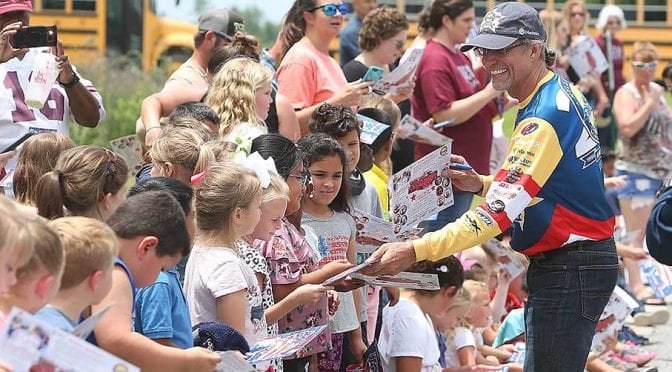
The Kyle Petty Charity Ride is back for a 26th year of charitable good deeds and two-wheeled sight-seeing. This go-round, it’s getting the full royal treatment.

“The King” Richard Petty will be a part of the fundraising journey for the May 2-8 event duration as the motorcycle rally makes a scenic tour of the southwestern United States. His son’s mission will begin and end in Phoenix, making its way through a weeklong tour of destinations throughout Arizona and Utah.

“In the past, I haven’t been able to participate for the full duration of the Ride,” Richard Petty said in a news release provided by the charity ride. “But when Kyle first told me about this year’s route, I said I was going to clear my schedule to be there for the whole thing because I wanted to see all of the places on the list. My wife, Lynda, and I spent a lot of time in the Southwest and it was a special place for us. I’m excited to see some of those places again and share them with Kyle.”

As is customary, the event will raise funds and awareness for Victory Junction, the North Carolina-based camp that offers support and fun-filled experiences for children with chronic and serious medical ailments. In its quarter-century of service, the Charity Ride has raised more than $19 million for Victory Junction and other children’s causes.

“Some of the places on this year’s Ride are places we’ve been before, but never really got the chance to explore. Now, we’re taking the time to stop and truly see some of the majestic places we’ve ridden by in the past,” Kyle Petty said. “Plus, we’re going to throw in some new places, like Monument Valley, that have always been on our bucket list. Our riders will experience a new, exciting adventure and will create memories to last a lifetime. And it’s all for the kids at Victory Junction. At the end of the day, that’s what this Ride is all about — it’s why we ride!”

Joining the Pettys for the ride are a host of celebrities from the world of stock-car racing. Harry Gant, David Ragan, Donnie Allison and 92-year-old Hershel McGriff are scheduled to participate, as are NBC Sports broadcasters Krista Voda and Rutledge Wood, sports-car ace Max Papis and former Heisman Trophy winner Herschel Walker.

DAYTONA BEACH, Fla. — Less than a month after Denny Hamlin celebrated his Daytona 500 crown in the sport’s most famous Victory Lane, Daytona International Speedway has announced adjustments to the traditional 2021 NASCAR Cup Series season-opening race week — changing the course of the popular Busch Clash race and condensing the schedule of Daytona Speedweeks.

Next year, the annual Busch Clash race will kick off the on-track action under the lights Tuesday, Feb. 9, and instead of racing on the Daytona 2.5-mile high banks, stock cars will compete on the track’s road course for the first time.

RELATED: Winners of the Busch Clash 

Daytona president Chip Wile announced the news Wednesday in advance of hosting this weekend’s 50th running of the Daytona Supercross.

“We continue to look for opportunities to differentiate the Busch Clash from the Daytona 500 and obviously everything we do around Speedweeks presented by Advent Health is about building toward the 500,” Wile said. “This is about how we can continue to push and elevate the Busch Clash to be something different. And we’ve done that with a lot of new initiatives the first weekend.

“We’ve seen growth year over year with the Busch Clash and that weekend, but to see the resurgence in road-course racing and the excitement around it from the fans, we thought, why can’t we do this.”

The road course at Daytona is best known for hosting IMSA’s season-opening Rolex 24 At Daytona, as well as the Daytona 200, North America’s premier races for sports cars and motorcycles, respectively.

“The famed road course at Daytona has a long and storied history with sports cars and motorcycles and now we can write a new chapter on it with stock cars,” said Ben Kennedy, NASCAR’s Vice President of Racing Development. “Fans coming to the track will get to see six consecutive days of exciting NASCAR action, with no days being the same.”

The new schedule and new venue is just another example of NASCAR’s willingness to be open to ideas and enhance what is already viewed as the highest profile week in stock car racing.

The action-packed six-day schedule for 2021 Speedweeks will now start with the Busch Clash road course event Tuesday, Feb. 9, and culminate with the Daytona 500 on Valentine’s Day — Sunday, Feb. 14.

After the Busch Clash road-course event, Daytona 500 Qualifying presented by Kroger will take place Wednesday, Feb. 10. The Bluegreen Vacations Duel races to set the rest of the Daytona 500 field will remain on a Thursday evening, Feb. 11, followed by the NASCAR Gander RV & Outdoors Truck Series race Friday, Feb. 12.

Saturday, Feb. 13, will become a double-header with the NASCAR Xfinity Series season opener and the ARCA Menards Series Lucas Oil 200. Then “The Great American Race,” the Daytona 500, will take place Feb. 14, putting an exclamation point on the week of speed.

The change in course for the Busch Clash adds a new dimension to NASCAR’s opening week and certainly provides a new viewing opportunity for fans, who can watch the race from Daytona’s  infield as well as the grandstands.

“NASCAR fans have asked for more road-course competition and the industry is listening,” Wile said. “With the talent level the Busch Clash brings to the table, the race will now clearly have its own look and feel during Speedweeks in 2021.

“The new placement on the Speedweeks schedule also adds to the anticipation. That switch will make for a fuller Speedweeks calendar. Fans also will have the opportunity to engage in a festive infield atmosphere similar to the Rolex 24 at Daytona.”

We’re four episodes into the “NASCAR All In: Battle for Daytona” docuseries, produced by MotorTrend Group in partnership with NASCAR, and fans who have downloaded the app and subscribed have been treated to behind-the-scenes access as three teams prep for the Daytona 500.

MORE: Download the app to watch

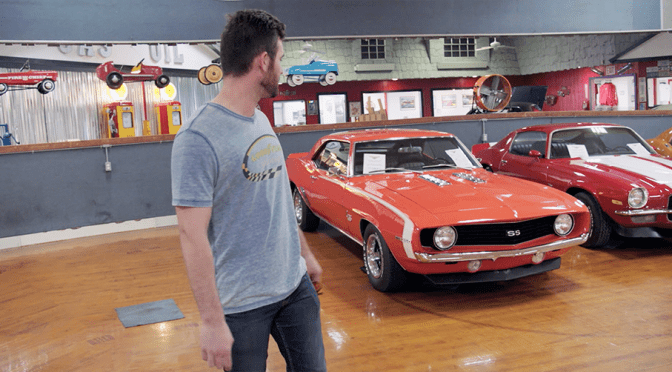
In Episode 4, now available, MotorTrend cameras follow Corey LaJoie as he pays a visit to Hanksters to check out a few classic cars that he would love to purchase.

During his visit, LaJoie was nearly speechless and only had one thing to say about every hot rod he saw: “That is sweet.”

But as his #StackingPennies hashtag suggests, LaJoie makes an effort to stay within budget, darting out of the building before he decides to drop some cash on a classic car.

Fans will receive exclusive, inside access to NASCAR Cup Series drivers Austin Dillon, Tyler Reddick and Corey LaJoie preparing for the Daytona 500 from the vantage point of the athletes, their race teams and their families. MotorTrend will go off the track for an emotional, behind-the-scenes look at the highs and lows of real-life NASCAR racing.

New episodes will air every Monday as the sports documentary series chronicles the commitment, struggles and sacrifices in the chase for greatness at the biggest race of the 2020 NASCAR Cup Series season.

Click here to catch up on the entire series so far — and to prep for more episodes, coming soon.

We’re four episodes into the “NASCAR All In: Battle for Daytona” docuseries, produced by MotorTrend Group in partnership with NASCAR, and fans who have downloaded the app and subscribed have been treated to behind-the-scenes access as three teams prep for the Daytona 500.

MORE: Download the app to watch

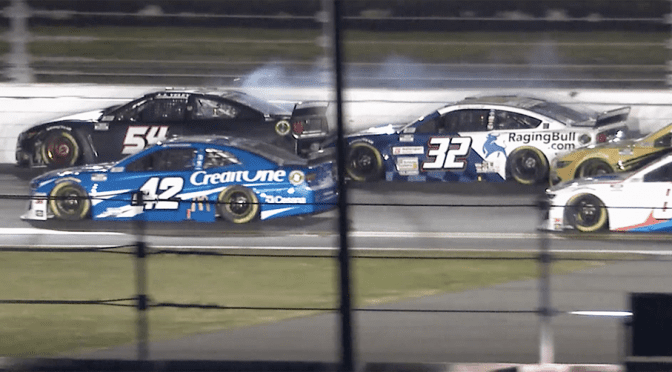
In Episode 4, now available, MotorTrend cameras were on Corey LaJoie and the No. 32 Go Fas Racing team as they battled it out in the Bluegreen Vacations Duel No. 2 at Daytona.

But it wasn’t smooth sailing for Lajoie and Co. after getting caught up in a late-race incident on the backstretch with JJ Yeley.

Listen to LaJoie’s radio and watch the team get fired up after the crash that damaged the No. 32 Ford, resulting in a 19th-place finish and a disappointing starting spot in the 2020 Daytona 500.

Fans will receive exclusive, inside access to NASCAR Cup Series drivers Austin Dillon, Tyler Reddick and Corey LaJoie preparing for the Daytona 500 from the vantage point of the athletes, their race teams and their families. MotorTrend will go off the track for an emotional, behind-the-scenes look at the highs and lows of real-life NASCAR racing.

New episodes will air every Monday as the sports documentary series chronicles the commitment, struggles and sacrifices in the chase for greatness at the biggest race of the 2020 NASCAR Cup Series season.

Click here to catch up on the entire series so far — and to prep for more episodes, coming soon.

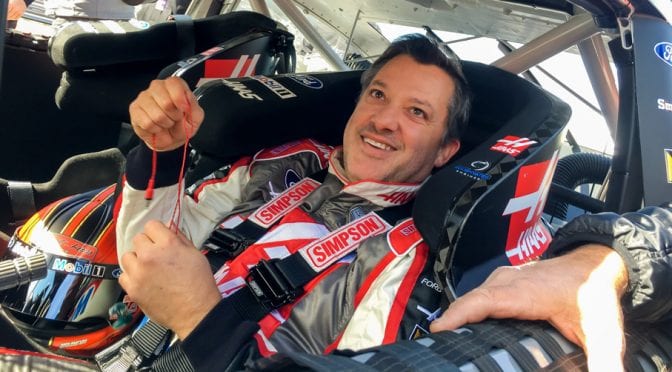
Tony Stewart is set to end his hiatus from NASCAR competition this summer, giving Indianapolis Motor Speedway a home-state flair for its NASCAR Xfinity Series race on an oval-road course layout July 4.

Stewart’s scheduled return in the Pennzoil 150 comes more than three years after he retired from full-time driving at the end of the 2016 season. The three-time Cup Series champion has kept active with occasional sprint-car starts, but his NASCAR activity has been focused on his role as a co-owner of Stewart-Haas Racing.

“Everyone knows what Indy means to me, so I can’t think of a better place to race on Fourth of July weekend,” Stewart, who grew up 45 minutes from Indianapolis in the towns of Columbus and Rushville, Indiana, said in a team release. “It’s going to be cool making history by turning left and right in a stock car at the Brickyard, and the racing will be full of action and contact. Any time you can drive any race car at the speedway is special, and you know I’m going for the win. The date is already circled on my calendar.”

RELATED: Full Xfinity schedule/Buy Tickets | Tony Stewart through the years

Stewart, 48, ended his Cup Series career with 49 victories and titles in 2002, 2005 and 2011. He was inducted into the NASCAR Hall of Fame on Jan. 31 as part of the Class of 2020.

Stewart’s most recent Xfinity Series start came in 2013, when he prevailed in the season opener at Daytona International Speedway. He has 11 career wins in the series, including seven at Daytona.

The famed Indianapolis venue has always been cherished by Stewart, who scored two Brickyard 400 victories — in 2005 and ’07 — in his Cup Series career. He also made five Indianapolis 500 starts in IndyCar competition, twice starting on the front row and claiming Rookie of the Year honors in 1996.

This summer’s return will present a new challenge for both Stewart and the Xfinity Series’ regulars — a hybrid layout that uses portions of the historic oval and the infield road course. A stock-car test for the combination circuit was performed during the offseason, with Matt DiBenedetto behind the wheel.

According to a team release, details regarding Stewart’s car number, crew and primary partner will be announced closer to the race.

MORE: Photos of DiBenedetto testing at Indianapolis

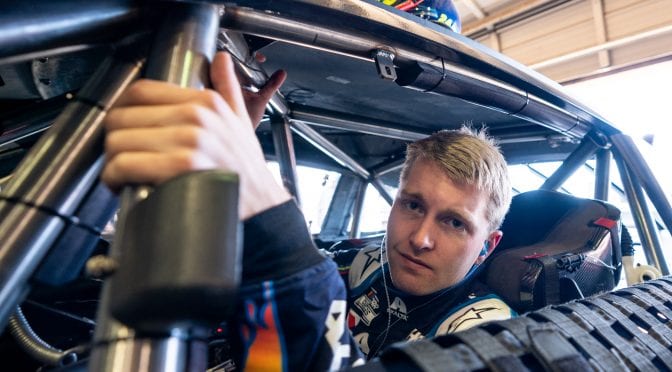
Hendrick Motorsports driver William Byron has completed two days of testing the NASCAR Cup Series Next Gen car at Auto Club Speedway, becoming the fourth Cup Series driver to take the 2021 car out on the track.

The Next Gen car was on track for its fourth formal test in advance of its planned competitive debut next season — previously, Austin Dillon (Richmond), Joey Logano (Phoenix) and Erik Jones (Miami) took their turns piloting the car and providing crucial feedback to NASCAR officials.

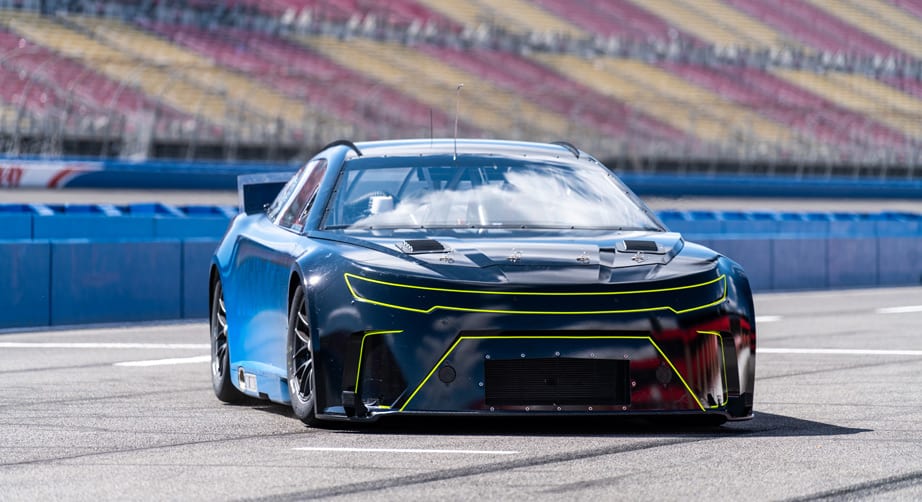
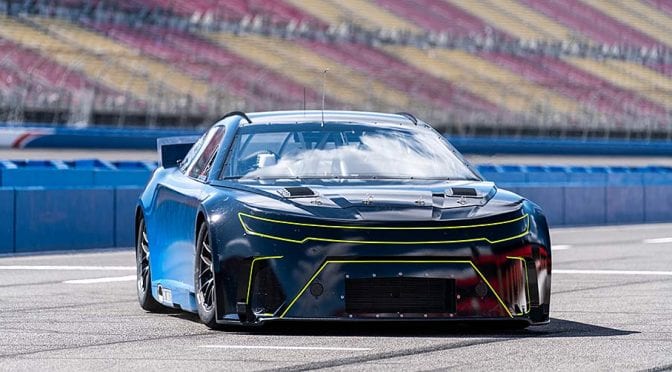
But this time around, it was a new car altogether on the 2-mile oval. Dubbed “P3” internally — the third prototype in the development process — NASCAR officials have described this version as nearly 100 percent complete for debut in the 2021 Daytona 500.

“I’ve been happy with it, especially as we’ve been adjusting it more and tailoring it to this track – this is the biggest track it’s been on so far,” Byron said. “As soon as it started to go for us, I thought the steering felt better and the car felt more stable. It’s been fun the more laps I’ve been able to run.”

PHOTOS: Exclusive access into William Byron’s Next Gen test

Tuesday’s session ended early for Byron, though, after an incident early in a 25-lap tire run. It was something Byron acknowledged as a learning experience, comparing it to a similar situation that happened to him during Sunday’s race where he was able to avoid incident.

“We were probably six or seven laps into a 25-lap tire run. I had been a little free for a couple of corners, but nothing major,” Byron said. “That time, I just got loose and figured I’d be able to save it but wasn’t able to. It just came all the way around. I had a number of similar moments in the race Sunday and was able to drive out of it. That’s what caught me off guard the most. It’s part of testing though, learning where the line is with what the car can do.”

Next Gen Test Fontana 3
Alejandro Alvarez | NASCAR Digital Media

That’s the view John Probst, NASCAR Senior Vice President of Innovation and Racing Development, took as well.

“This is exactly why we test,” Probst said. “We were able to put almost 300 miles on the car the past two days and captured some valuable data. Because of the nature of a test, we have a lot more data available than during a normal race weekend, including the IDR (incident data recorder) and high-speed camera. We’ll take the car back to North Carolina and evaluate it. This gives us a good opportunity to make sure the car holds up as expected during an incident. We’ll review everything available to us and move forward.”

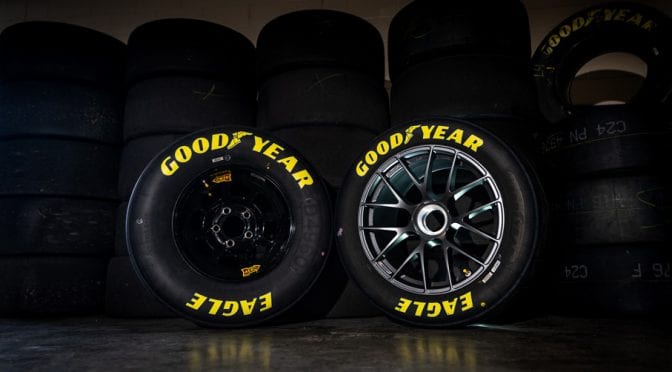
The Next Gen prototype’s new features include 18-inch, single center-locking lug wheels designed by German wheel manufacturer BBS.

RELATED: NASCAR moving to single lug-nut design for 2021

That was one of many adjustments that Byron had to familiarize himself with compared to his current No. 24 Hendrick Motorsports Chevrolet.

“It was tough to get a hold of at first, just how fast everything is,” Byron said. “The tire doesn’t have the same sidewall, so there is not the same amount of slip that you can hang the car out. You just have to get used to that timing and rhythm of when the car does step out, how quickly can you catch it when it slides the front tires, how quickly does it come back. All those things are a lot different from what we do now.”

A feature that Byron enjoyed, as well as one that he had raced in his earlier days of racing, was the car’s sequential shifting. A six-speed gearbox allows driver to tab the level forward and backward during upshifting and downshifting, compared to the traditional H-pattern, four-speed unit featured now.

“I think it will be better for us on restarts to focus on moves and not have to worry so much about shifting,” Byron noted. “And on road courses, you’re going to be able to be a lot more aggressive in your downshifts. That’s going to be a lot of fun.”

Byron’s crew chief, Chad Knaus, was also on hand for the two-day test. Knaus expressed his excitement for the significantly different setup and build of the car, specifically how the components are smaller and more compact.

The seven-time championship crew chief said he feels the teams’ abilities to tweak at the track, compared to the present, will be drastically different.

“I like the car, I think it’s really cool,” Knaus said. “It’s definitely taking a step in the right direction in terms of modern motorsports, so I think that’s great. We have a lot to learn as an industry about what this car is capable of. I really want to acknowledge RCR and NASCAR — they did a fantastic job in getting this car built to get it out here, I thought it was spectacular.”

Next Gen Test Fontana 2
Alejandro Alvarez | NASCAR Digital Media

NASCAR fined the crew chiefs for two Cup Series teams and one Xfinity Series team for lug-nut violations that were discovered after the races last weekend at Auto Club Speedway.

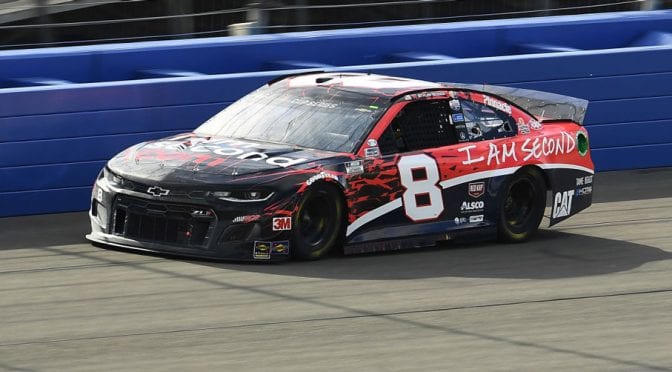
Randall Burnett and Mike Shiplett each received a $10,000 fine when one lug nut was found to be not safe and secure on the No. 8 Richard Childress Racing Chevrolet and the No. 41 Stewart-Haas Racing Ford, respectively. Tyler Reddick drove the No. 8 to an 11th-place finish in Sunday’s Auto Club 400 while Cole Custer finished 18th in the No. 41.

RELATED: Full results from Auto Club Speedway

In Xfinity, Dave Rogers received a $5,000 fine for one lug nut found to be not safe and secure on the No. 18 Joe Gibbs Racing Toyota. Riley Herbst drove the No. 18 to a second-place finish in Saturday’s Production Alliance Group 300.

No. Driver Sponsor Make Organization
00 Quin Houff Mount-N-Lock / Ashurst Honey Chevrolet StarCom Racing
1 Kurt Busch GearWrench Chevrolet Chip Ganassi Racing
2 Brad Keselowski Alliance Parts Ford Team Penske
3 Austin Dillon Bass Pro Shops / Tracker Off Road Chevrolet Richard Childress Racing
4 Kevin Harvick Jimmy John’s Freaky Fast Rewards Ford Stewart-Haas Racing
6 Ross Chastain Oscar Mayer Ford Roush Fenway Racing
8 Tyler Reddick I Am Second Chevrolet Richard Childress Racing
9 Chase Elliott Unifirst Chevrolet Hendrick Motorsports
10 Aric Almirola Smithfield Ford Stewart-Haas Racing
11 Denny Hamlin FedEx Freight Toyota Joe Gibbs Racing
12 Ryan Blaney Menards / Tarkett Ford Team Penske
13 Ty Dillon GEICO Chevrolet Germain Racing
14 Clint Bowyer Mobil 1 / Haas CNC Ford Stewart-Haas Racing
15 Brennan Poole TBD Chevrolet Premium Motorsports
17 Chris Buescher SunnyD Ford Roush Fenway Racing
18 Kyle Busch Sport Clips Toyota Joe Gibbs Racing
19 Martin Truex Jr. Bass Pro Shops Toyota Joe Gibbs Racing
20 Erik Jones Interstate Batteries Toyota Joe Gibbs Racing
21 Matt DiBenedetto Motorcraft / Quick Lane Ford Wood Brothers Racing
22 Joey Logano Shell Pennzoil Ford Team Penske
24 William Byron Hertz Chevrolet Hendrick Motorsports
32 Corey LaJoie TBD Ford Go Fas Racing
34 Michael McDowell Love’s Travel Stops Ford Front Row Motorsports
37 Ryan Preece Velveeta Chevrolet JTG Daugherty Racing
38 John Hunter Nemechek MDS Transport Ford Front Row Motorsports
41 Cole Custer Haas Automation Ford Stewart-Haas Racing
42 Kyle Larson McDonald’s Chevrolet Chip Ganassi Racing
43 Bubba Wallace World Wide Technology Chevrolet Richard Petty Motorsports
47 Ricky Stenhouse Jr. Kroger Chevrolet JTG Daugherty Racing
48 Jimmie Johnson Ally Chevrolet Hendrick Motorsports
51 BJ McLeod TBD Chevrolet Petty Ware Racing
52 JJ Yeley TBD Ford Rick Ware Racing
53 Joey Gase TBD Chevrolet Rick Ware Racing
66 Timmy Hill TBD Toyota MBM Motorsports
77 Reed Sorenson TBD Chevrolet Spire Motorsports
88 Alex Bowman Axalta Chevrolet Hendrick Motorsports
95 Christopher Bell Procore Toyota Leavine Family Racing
96 Daniel Suarez CommScope Toyota Gaunt Brothers Racing

The Next Gen car for NASCAR Cup Series racing in 2021 makes its fourth on-track test Monday and Tuesday at Auto Club Speedway. For this particular prototype, it’s a maiden voyage for a model that’s nearly 100 percent complete.

William Byron is set to drive the new model in the two-day test in Fontana, California. The new car has been referred to internally as “P3” — the third prototype in the accelerated development process of the new-generation racer. The first car was used as a wind-tunnel model, and the second was used in the previous three on-track tests.

“When it came time to build our P3 prototype, we tried to take into account all of the things that we wanted to do with respect to the final car that we’re going to race next year as much as we could into this plan,” said John Probst, NASCAR Senior Vice President of Innovation and Racing Development. “We feel like this car is probably 99 percent what we’re going to compete with next year, and then some of the vendors that we’ve selected have been able to make parts available that will be identical to what we’re racing next year.

“So it’s a mix of things that make it easier to work on, which is probably one of the biggest criticisms of the first car is that it was difficult to work on, so we implemented a bunch of changes from a mechanic’s standpoint to make it easier.”

NASCAR officials have not released a full list of vendor partners and parts suppliers for the 2021 car. German wheel manufacturer BBS has been announced as the vendor for the Next Gen car’s 18-inch wheels, which will go to a single center-locking lug next season.

RELATED: Single-lug design coming in 2021

Probst said that Richard Childress Racing, which also produced the previous Next Gen test mule, built the P3 car for this week’s test. RCR officials have worked with drivers and crew from other teams and manufacturers at previous test sessions, gathering data and feedback as part of the collaborative development of the 2021 model.

“From the first car they built for us and the testing they’ve done for us, they’ve done a very good job,” Probst said of RCR. “The other race teams that have been at the tests have worked very well with them, so our goal in keeping them was just that we’re on a very tight timeline and they were in the best spot to deliver something good quickly.”

At 2 miles in length, Auto Club is the largest track yet to host the proposed 2021 model. Previous tests were held at Richmond Raceway (.75 miles), Phoenix Raceway (1 mile) and Homestead-Miami Speedway (1.5 miles). Probst said that competition officials have installed new underbody components for this week’s test as the teams continue to develop the car’s aerodynamic characteristics.

Three more Next Gen tests are scheduled in the next two months: March 16-17 at Atlanta Motor Speedway, April 6-7 at Bristol Motor Speedway and May 4-5 at Dover International Speedway — all scheduled the day after NASCAR Cup Series races. A June 2-3 test is set for Charlotte Motor Speedway, two days after the Cup Series competes at Kansas Speedway.

With two track-ready test cars built, the next step in testing would be a multicar session to see how vehicles perform together, either in an aerodynamic draft or side by side.

“That is on our radar. I think pending how this test goes with the P3 prototype Monday and Tuesday, if that all goes well, we could see it as soon as Atlanta although that’s not our primary goal at the moment,” Probst said, “but certainly by the time we get out to Bristol, Dover and certainly by the Charlotte test.”

NASCAR officials announced Monday that the Next Gen car for the 2021 Cup Series will have a single, center-locking lug nut for its wheels.

The setup made its debut in the Next Gen prototype’s fourth on-track test, scheduled Monday and Tuesday at Auto Club Speedway. The three previous tests featured a larger aluminum wheel, but with the five-lug pattern that’s been used in NASCAR for decades.

John Probst, NASCAR Senior Vice President of Innovation and Racing Development, said the move away from a 15-inch steel wheel was part of an overall goal to provide more relevance and a stronger correlation to today’s production cars with an 18-inch wheel, but that a strong enough fastener that could hold up under high-speed conditions was a necessity.

“For us we felt like from a standpoint of the wheel is that we wanted to get to an 18-inch wheel, an aluminum wheel,” Probst said. “Once you get to an 18-inch aluminum wheel, the next step for us is to make sure that from a durability standpoint under racing conditions is that it will accept the durability that we need to finish races and then also finish multiple races. To do that, the single nut was our only option.”

RELATED: Next Gen car ’99 percent’ complete

William Byron was chosen as the driver for this week’s test, which features a new Next Gen prototype on the 2-mile California oval. As with previous tests, the wheels used in Next Gen testing were made by BBS, a German-based company that has its American headquarters in Braselton, Georgia. The wheelmaker has a long history in motorsports, particularly in IMSA and other forms of sports-car racing.

The look of a single-lug wheel will be a departure for the series, but other changes will be more miniscule. Probst indicated competition officials do not expect wholesale changes to the execution of pit stops, the five-person limit on crew members who go over the wall or team rosters overall.

“I think from a fan standpoint, the choreography of the pit stop will look unchanged,” Probst said. “I think that a lot of times when we say single lug nut, people fear that it’s an open-wheel style pit stop where people will be on their knees waiting for the car to come in. We don’t intend to change anything with respect to how the pit-stop flow is executed.

“There will still be guys coming off the wall, there will still be a premium for that athlete to come off the wall, get to the right side of the car, make that tire change, get over to the left side of the car and make the tire change. From the look and feel of the pit stop, we don’t see any significant changes.”

While the over-the-wall personnel and their movements will be largely the same, other changes will become evident in 2021. Crew members won’t be able to change tires in the new setup in one-fifth of the time it takes now; the new, larger single lug will require more torque to properly fasten the wheel.

“On the on and off, they still have to keep the gun on — they can’t just cap it, it’s got to actually ratchet a few times before it actually gets tight,” Probst said. “So today, good tire changers can take five lug nuts off or put them on in less than a second, say eight-tenths of a second to a second. They’re going to have to leave the gun on for probably at least a half a second, so if anything, they may be three-tenths (quicker) here and there, but it shouldn’t dramatically change the timing on the pit stop.”

MORE: Photos from previous test

That extra torque is critical, especially with just one focal contact point for the wheel. In the current five-point system, the likelihood that one or more of those lug nuts aren’t optimally tight when changing tires quickly in race conditions is greater.

“The steel wheel is more forgiving and can handle loose wheels a little bit better,” Probst said. “When we get to the aluminum wheel, we did some durability studies and if you leave lug nuts loose on an aluminum wheel, you reduce the durability of the wheel by around 30%. It’s more of, the aluminum wheel has less tolerance to loose lug nuts, so when we have one, there really is only one thing to concentrate on, and that is to get that lug nut tight. Then everything else from a durability standpoint is fine.”

Another subtle change should affect teams’ pre-race routines. Crewmembers often glue multiple lug nuts onto their allotment of tire sets in advance, which sped up their placement during tire changes. The single-lug system should eliminate that race-day task in the Cup Series next season.

“One of the things when you look at the single nut, it actually is retained in the socket, so they’ll actually use the same single wheel nut for the entire race and likely multiple races,” Probst said. “They’ll use the same lug the entire time, so the concept of gluing lug nuts to tires goes away, which creates some efficiencies for us. There’s times when we have to open up the garage or pit road early on race day for no other reason than for the race teams to glue up 11 sets of tires. They can just use the wheels as they are without being glued.”

MORE PICS: Next Gen in Miami