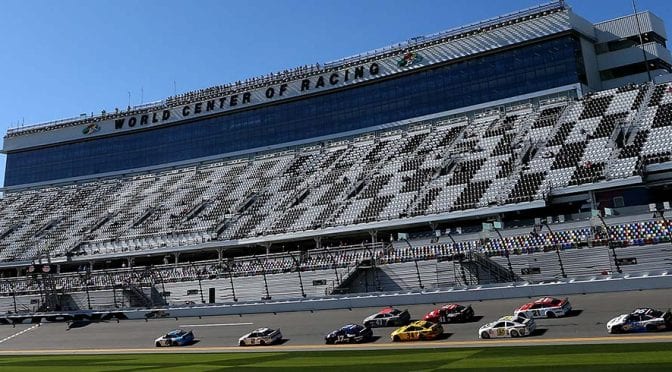
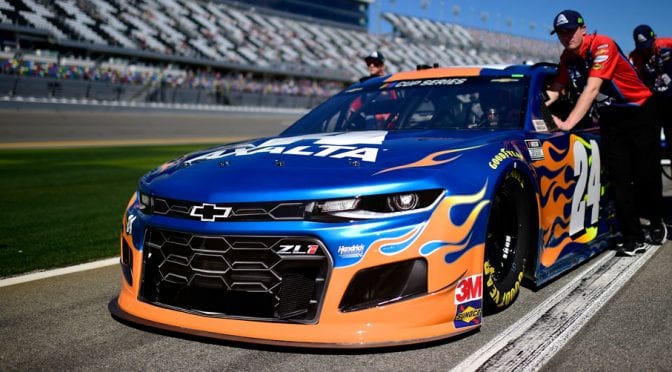
William Byron topped the leaderboard in Friday’s third overall NASCAR Cup Series practice at Daytona International Speedway at 204.587 mph in the No. 24 Hendrick Motorsports Chevrolet.

Byron won the second of Thursday night’s Bluegreen Vacations Duel races that finalized the field for Sunday’s Daytona 500 (2:30 p.m. ET, FOX, MRN, Sirius XM NASCAR Radio).

RELATED: Joey Logano, William Byron win Duel races

Right behind him was Ryan Preece, in the JTG Daugherty Racing No. 37 Chevrolet at 204.096 mph, and teammate Chase Elliott in the No. 24 Chevy at 203.869 mph

Rounding out the top five were Ty Dillon in the No. 13 Germain Racing Chevy (203.422 mph) and Tyler Reddick in the No. 8 Richard Childress Racing Chevrolet (202.922 mph). And next came Byron’s other Hendrick Motorsports teammates, Jimmie Johnson in the No. 48 Chevy (202.698 mph) and Alex Bowman in the No. 88 Chevy (202.657 mph).

MORE: Full practice results | Daytona 500 lineup

Defending Daytona 500 champ Denny Hamlin was eighth in the No. 11 Joe Gibbs Racing Toyota at 201.821 mph.

NASCAR on FOX’s Larry McReynolds announced during the session that he was informed by NASCAR’s Jay Fabian that Dillon would need to drop to the rear for Sunday’s race as a result of a gear change in his No. 13.


Final Daytona 500 practice is Saturday at 12:30 p.m. ET on FS1.

Ever wonder what NASCAR’s young stars listen to prior to pulling on their helmets and strapping in for a few hundred miles of mayhem? Wonder no longer.

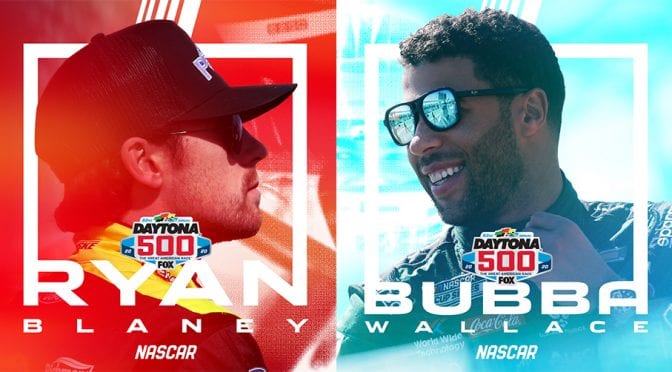
NASCAR and Pandora are partnering this year to give NASCAR fans and Pandora listeners the opportunity to follow along with Ryan Blaney and Bubba Wallace, whose custom Pandora Playlists will reveal exactly what the drivers listened to in the offseason as they prepared for the “Great American Race.”

PANDORA PLAYLISTS: Bubba Wallace | Ryan Blaney

From adrenaline-pumping heavy metal (Wage War), to laid back country folk (Tyler Childers), soul music, classic country, edgy alt-metal (Incubus) and feel-good classic rock (The Eagles), the mix is a perfect eclectic balance — much like the drivers themselves.

Blaney and Wallace each have heart-stopping, near-wins in the season-opening Daytona 500 in the past.

Blaney finished runner-up in the 2017 race that saw plenty of drivers attempt to stretch fuel, leading to a frenetic final few circuits. Blaney’s car actually sputtered down the backstretch, but he still finished runner-up to Kurt Busch.

Wallace followed suit with a runner-up finish of his own the following year in 2018, finishing second to Austin Dillon after he avoided the last-lap wreck.

Tune in to the Daytona 500 on Sunday at 2:30 p.m. ET (FOX) – and before you do, check out the Pandora Playlists to get yourself ready in the exact same manner as a couple of NASCAR drivers.

PANDORA PLAYLISTS: Bubba Wallace | Ryan Blaney

DAYTONA BEACH, Fla. — James Small’s current place of business is nearly 10,000 miles from his hometown of Melbourne, Australia, but his connection to NASCAR in an upbringing tethered to racing is closer than a world apart.

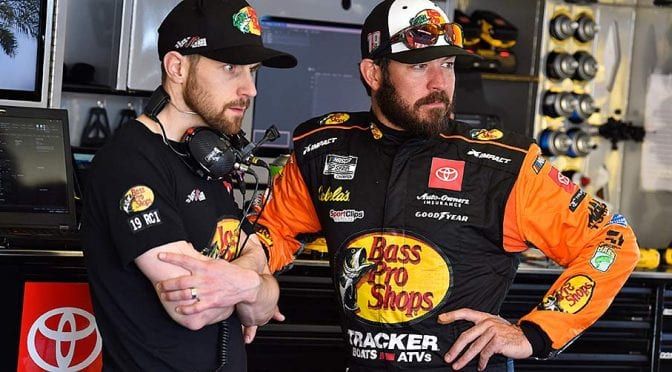
Small was thrust into the spotlight last December, elevated from the important but less forward-facing role of lead engineer to crew chief of Joe Gibbs Racing’s No. 19 Toyota for Martin Truex Jr. As for Cole Pearn, his Canadian predecessor, they’re not exactly worlds apart either, down to Small’s choice of a logoed T-shirt as their shared preference for at-track attire.

“Him and Cole are kind of like twins. One is from Canada, one is from Australia, but I’m pretty sure in some way they’re related,” Truex said this week in the lead-up to Sunday’s Daytona 500, their first race together under the new arrangement. “They’re very, very similar, and from that standpoint, I think that’s a good thing.”

The combination is still in its early stages, but Small has strived to make the change in command as seamless as possible. A helping factor has been Pearn’s influence, which dates back to their time together with the former Furniture Row Racing operation. Another plus: By Small’s count, 10 former Furniture Row crewmembers remain from the cohesive group that claimed the Cup Series title with Truex in 2017, keeping a dedicated core intact at JGR.

RELATED: All of Truex’s NASCAR Cup Series wins | Daytona Speedweeks schedule

“Cole’s been a really good teacher and we’ve worked really well together,” Small says. “We have similar mindsets and everything, and I think we operate pretty similarly. He felt like transitioning to me was just a natural progression and it wouldn’t really change too much, which so far I don’t think it has.

“We have pretty strong bonds, and think that’s what’s super-important in our team. He saw that and we can continue that legacy he built with such a strong team.”

Pearn rose to prominence with a steady, low-key demeanor, a crew-chief prowess that yielded 24 Cup Series victories and a selective social-media presence that went heavy on dry wit. Small’s story, one rooted in Aussie racing history before his stateside move in 2013, deserves its own light.

Small says he was “born into racing” as the son of Les Small, a successful team manager and mechanic on the Australian touring car circuit. The elder Small was a key part of a unique international convergence of NASCAR and racing Down Under in the late 1980s.

Racer and businessman Bob Jane served as Les Small’s sponsor, but he was instrumental in building a NASCAR-style oval dubbed the Thunderdome at Calder Park Raceway. A handful of American stock-car stars made the trip to the track — a hybrid layout that drew design inspiration from Rockingham and Charlotte — for a pair of exhibition events in 1988, when James Small was barely in grade school.

In the same time frame, his father also brought an international presence to NASCAR’s heartland, making the long trip to Charlotte for two starts in the Coca-Cola 600 with Aussie touring-car legend Allan Grice in 1987 and 1989. “That’s where my start in NASCAR began,” Small says, “and I just became as I grew up more hooked in.”

MORE: Joe Gibbs Racing season preview | Video debate: Who’s the top driver at JGR?

His own racing career went from primary steps in BMX racing and go-carts to Formula Ford competition until funding ran dry. The backup plan for keeping his career path headed toward motorsports was an engineering degree. Fresh from school, Small went to work for Garry Rogers Motorsport, staying involved in the Australia-based V8 Supercar tour for several years. In his last season in the series, he was part of a winning effort in the famed Bathurst 1000 — the Aussie equivalent to the Daytona 500.

“That’s when I decided I’d accomplished what I wanted to do there so now was the time to come over,” says Small, who landed with Richard Childress Racing before the 2014 season. Once there, he soon connected and became friends with Pearn through Furniture Row, which was allied with RCR at the time. After three years with Childress, Small joined Pearn with the Denver-based operation and began building their foundation as part of one of NASCAR’s elite groups.

“He’s really Cole’s protege,” Truex said. “I feel like he’s always been behind the scenes, but he’s always been a big part of what we’ve done and the decision-making process, and I feel like he’s right at home in his new role.”

When Pearn left the organization in the offseason to spend more time with his family, both driver and crew chief were part of an overwhelming recommendation for Small’s promotion. In the latter stages of Pearn’s tenure, Truex said he and Small were on the same wavelength, “answering each other’s questions and finishing each other’s sentences.”

When it came time to assess the team’s direction for 2020, Pearn’s vote of confidence carried such magnitude that Truex said he would not have made his decision if he didn’t feel the No. 19 group was left in good hands. The choice was unanimous.

“He told me he couldn’t leave unless he knew that it was going to be OK,” Small said. “He wouldn’t do that to everybody on this team, so that was one big thing. He knew if they chose me, it’d be fine, and I think everybody had the same mindset.”

The Daytona 500 (set to resume on Monday at 4 p.m. ET, FOX, MRN, SiriusXM NASCAR Radio) won’t be Small’s crew chief debut. The 36-year-old engineer filled in for the suspended Chris Gayle for two races with Erik Jones in 2017.

But the Great American Race represents the start of a full-time crew chief role with a team that won a series-best seven races last year and cruised to Truex’s third straight Championship 4 appearance. It’s a high bar, one that comes with the responsibility of taking credit for when strategies play out right or answering for when other factors go haywire, such as when a miscue with mismatched tires unraveled Truex’s title bid in the 2019 finale at Homestead-Miami Speedway.

Small says he’s ready for all of it.

“There’s a lot more added pressure, but that’s something I feel like in my career, even back in Australia, that’s what I’ve done,” Small says. “I like having that responsibility, and I feel like I’m ready for it. Nobody’s harder on me than myself, so as far as I see, anything less than seven wins is kind of like a failure almost, but that was such a difficult thing to accomplish in the first place. There’s so many things that happen in our sport that are outside of our control. As you saw in Homestead even, we were on our way to a championship and it all fell apart. It’s a random thing and all we can do is just try to be as competitive as we can be every week and hopefully it all falls our way.”
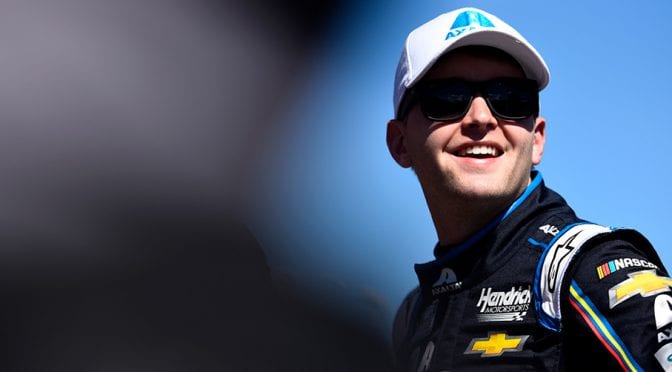
NASCAR and NASCAR Cup Series team owners today announced the extension of the Charter agreement through 2024.

“The Charter agreement is delivering stability and long-term value to existing team owners while providing a clear path for ownership in the NASCAR Cup Series,” said Steve Phelps, NASCAR President. “We are pleased to have reached an agreement with the team owners that extends the length of the Charter system until 2024. A healthy ownership structure ensures strong, competitive racing for our fans, which is a goal the industry collectively shares.”

The Daytona 500 is one of the most unpredictable races on the entire NASCAR Cup Series schedule. But thanks to our friends at Racing Insights, we know there are a few recent trends that have become (mostly) reliable.

Here are five things to expect this year, if the trends continue:

1. There will be a last-lap pass.

Historically, only 12 of the 61 Daytona 500s ended with a last-lap pass for the win. But three of those instances happened in the last four years alone, and two of the last three race winners led only the final lap.

2. There will be wrecks. Big wrecks.

That goes without saying at a place as treacherous as Daytona International Speedway, but the volume of cars involved in these incidents has been staggering recently. According to Racing Insights, in the last three Daytona 500s, 80% of all the cars entered were involved in a spin or a wreck.

MORE: To block or not to block?

3. Joey Logano will be there at the end.

Here are Logano’s finishes in the last five Daytona 500s: first (2015), sixth, sixth, fourth, fourth. His streak of five consecutive top-10 finishes in the “Great American Race” is tied for the second longest streak behind Dale Earnhardt (10). His streak of five consecutive finishes of sixth or better in the Daytona 500 is tied with Bill Elliott for the longest.

4. A Busch brother will be passed late.

Sorry to say, Kyle and Kurt. But in the last five superspeedway races, a Busch brother has been passed for the win four instances.

DATE TRACK WINNER PASSED LATE LAPS TO GO
Oct. 13, 2019 Talladega Ryan Blaney Kyle Busch 7
July 7, 2019 Daytona Justin Haley Kurt Busch 1
April 28, 2019 Talladega Chase Elliott Joey Logano 4
Feb. 17, 2019 Daytona Denny Hamlin Kyle Busch 9
Oct. 14, 2018 Talladega Aric Almirola Kurt Busch 1

5. Youth will be served.

There are four superspeedway races per year in the NASCAR Cup Series — two at Daytona, two at Talladega. Over eight races in the last two years, six were won by drivers younger than 30. Additionally, the last three Superspeedway winners were 25 or younger.

DAYTONA BEACH, Fla. (Feb. 14, 2020) – NASCAR today announced a record-setting purse for the 62nd annual DAYTONA 500, where 40 of the world’s best drivers will race for a total purse of $23.6 million. (race resuming Monday at 4 p.m. ET; TV – FOX, FOX Deportes; Radio – MRN, SiriusXM).

Since the very first edition of “The Great American Race” in 1959, NASCAR drivers have aimed for a career-defining victory in the DAYTONA 500 – and the fame, prestige and, now, largest purse in the history of American motorsports that come with it.

RELATED: See every winner of the Daytona 500 | 62nd annual Daytona 500 sold out

“The DAYTONA 500 is more than just the season-opening race,” said Chip Wile, President of Daytona International Speedway. “It’s a life-changing event for the winner, whose name will join the legends of this sport. Fans will pack the state-of-the-art motorsports venue, and millions will watch on television. And the reason is simple: The DAYTONA 500 is one of the premier events in all of sports, and now has the richest purse in history.”

With roots dating back more than a half century, the DAYTONA 500 has evolved incredibly since NASCAR founder Bill France Sr. introduced race fans to what has become a world-wide spectacle. Just fewer than 42,000 fans attended the inaugural event, won by Lee Petty, who took home just under $20,000 for the victory.

A sell-out crowd of more than 100,000 fans will pack the Daytona International Speedway on Sunday to watch the most prestigious – and richest – race on the NASCAR calendar.

Tickets for Daytona International Speedway events can be purchased online at www.daytonainternationalspeedway.com or by calling 1-800-PITSHOP. Fans can stay connected with Daytona International Speedway on Twitter, Facebook, Instagram, Pinterest, YouTube and Snapchat, and by downloading Daytona International Speedway’s mobile app, for the latest Speedway news throughout the season.

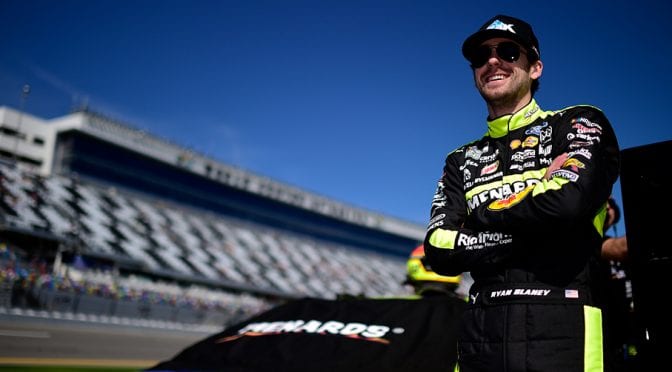
DAYTONA BEACH, Fla. — Ryan Blaney has won one race per season the last three years.

A trip to Victory Lane is still a trip to Victory Lane — but the driver of the No. 12 Team Penske Ford would surely love to get over that hump and win multiple races on the 2020 NASCAR Cup Series schedule.

He has an idea of how he can do that, too.

“I think just getting smarter as the race goes on,” Blaney said Wednesday at the Daytona 500 Media Day. “I think that is something that has hurt me and something that I have struggled with – maybe not thinking far enough ahead of how the track is going and changing things to be better at the end of the race. … A lot of races we fire off really well and then don’t end the race like we fired off. That is what I am talking about; the ability to pinpoint where you think things are going and get ahead of it.”

RELATED: Daytona 500 paint schemes | When blocking goes bad

Blaney’s three wins came at Pocono Raceway (2017), Charlotte Motor Speedway’s Roval (2018) and Talladega Superspeedway (2019).

The 2020 slate starts with Sunday’s Daytona 500 at Daytona International Speedway (race resumes Monday at 4 p.m. ET, FOX, MRN, SiriusXM NASCAR Radio), where Blaney averages a 23.8 finish in nine starts. His best result was a runner-up showing in 2017.

A big difference in the No. 12 stable this season, however, is crew chief Todd Gordon coming over from Joey Logano’s No. 22 team.

“I am excited to work with Todd,” Blaney said. “It has been really great so far. Maybe you think of things that you didn’t before because it wasn’t normal to you. It opens your mind a little bit to other areas you need to improve on.”

RELATED: Blaney goes to backup car for Daytona 500

Blaney had only ever known Jeremy Bullins atop his pit box since he joined NASCAR’s premier series in 2015.

“When you get someone new, it changes things up and then you start thinking about things differently,” Blaney said. “We focus more on those things and also focus on what I know from the past.”

Bullins is now with Brad Keselowski and the No. 2 group. Keselowski’s old crew chief, Paul Wolfe, moved over to Logano. Team Penske made the switches back in early January.

RELATED: Team Penske trio believes change will do them good

Gordon helped command Logano to 21 victories and the 2018 championship. His history of success could be beneficial to Blaney and maybe teach him how to adapt during a race. That is where he wants to improve, anyway, in hopes of winning more races.

“You take what you learned from the previous experience, and you are learning new things,” Blaney said. “It just gives you a bigger bandwidth for knowledge, which is good.”

DAYTONA BEACH, Fla. — They did what they had to do.

Reed Sorenson and Timmy Hill made it to the Daytona 500 after the Bluegreen Vacations Duel events Thursday. Sorenson finished 18th in Duel 1. Hill was 16th in Duel 2. And that was enough.

Both will now compete in the 2020 NASCAR Cup Series season opener at Daytona International Speedway (race resumes Monday at 4 p.m. ET, FOX/FOX Sports App, MRN, SiriusXM NASCAR Radio).

“This might be your last Daytona 500, and there’s no guarantee on when you’re going to get that next opportunity,” Sorenson said. “Just to get the opportunity was very exciting for me, and then now that we’re in, I can enjoy the moment and the weekend.”

RELATED: Joey Logano, William Byron win Duel racesProjected Daytona 500 lineup

The way it works, drivers from teams without a Charter are considered Open and are not automatically given a spot in the Daytona 500. That must be earned in single-car qualifying or the Duel races.

The two fastest Open drivers in single-car qualifying advance. The others then have to duke it out in the Duel races, where the best Open finisher in each gets a bid into the Daytona 500. If the best Open finishers are also the fastest qualifiers from Sunday, then it goes back to best qualifying speeds from Sunday to fill the final two spots.

Open drivers whose speed from qualifying punched their ticket into the Daytona 500 were Brendan Gaughan and Justin Haley.

While Hill just had to finish better than JJ Yeley and Gaughan in Duel 2, Sorenson needed to beat out Justin Haley, Chad Finchum and Daniel Suarez in Duel 1. Hill accomplished that feat to make the 500 field while Sorenson advanced based on Sunday’s speed because Haley was the top Open finisher in Duel 1.

Suarez. meanwhile, was actually leading the mini race when he collided with Ryan Blaney on Lap 30 of 60 to take his No. 96 Gaunt Brothers Racing Toyota out of contention. Finchum was then two laps down in 20th.

“My spotter was high-pitched to say the least,” Sorenson said. “I didn’t really have much emotion about it because I was still trying to concentrate on what we might or might not have to do to get in. But yeah, he started screaming at me. Nobody was around, so I didn’t know what he was screaming about, and it was because the 96 was in it.”

Yeley also wrecked himself out of the competition on Lap 42 of 60 of his race.

“I don’t know if the smile is going to come off my face,” Hill said. “Look, as a kid, everybody who is a race car driver has a dream of driving this stuff. You want to run the Daytona 500. My car is very capable of running competitively in this race. I feel like we’re not just here to participate, we’re here to race.”

This will mark Hill’s first Daytona 500 and Sorenson’s seventh start. Hill has been in the Cup Series for eight years, all part time. Sorenson is at 15 years but with five full-time seasons.

Neither has any victories to their name.

“You can win,” Sorenson said. “It can happen.”

Sorenson’s crew chief, Peter Sospenzo, led Haley to his first career victory in July at Daytona. Sospenzo has four wins atop the pit box overall.

Steve Idol, meanwhile, is Hill’s crew chief.

The 40-driver field for the Daytona 500 is now set.

“For us, people don’t really give us much of a shot,” Hill said. “To come into this race as an underdog nobody’s really counting on, it feels really great to prove a lot of people wrong.”

The Bluegreen Vacation Duel races-winning cars of Joey Logano (No. 22 Team Penske Ford) and William Byron (No. 24 Hendrick Motorsports Chevrolet) passed post-race technical inspection Thursday at Daytona International Speedway with no issues.

Both machines were found to be compliant with the NASCAR Rule Book following the twin 60-lap qualifying races.

With post-race teardown complete, the race results are official.

RESULTS: Duel 1 | Duel 2

This is the second year of a post-race process to bring a more timely approach to inspection for all three NASCAR national series. Competition officials announced last February that thorough post-race inspections would take place shortly after the checkered flag at the track instead of midweek at the Research & Development Center.

Those inspections come with a stiffer deterrence structure that includes disqualification for significant rules infractions — “a total culture change,” said Steve O’Donnell, NASCAR Executive Vice President and Chief Racing Development Officer. Prior to the 2019 season, race-winning teams found in violation of the rules were penalized with post-race fines, points deductions and/or suspensions, but victories were allowed to stand.

NASCAR will still inspect cars and parts at the R&D Center as needed, but the more comprehensive at-track inspection will take priority.