Fourteen years have passed since Matt Hirschman last contested the entire NASCAR Whelen Modified Tour schedule.
A lot has changed during that time for both Hirschman and the series, but one thing that hasn’t changed is Hirschman’s ability to win races. The driver from Northampton, Pennsylvania is always a threat to reach Victory Lane no matter where he’s racing. In fact, Hirschman has won a race in five consecutive Modified Tour seasons despite racing on part-time basis.
This year, thanks in part to the race and championship purse increases announced by NASCAR and series entitlement partner Whelen Engineering last October, Hirschman decided to embark upon the entire Modified Tour campaign for the first time since 2011.
The goal was simple: Win as many races as possible and try to secure a championship.
“It’s just been a matter of putting all the people and pieces in place to do it,” said the 42-year-old Hirschman, who will make his 150th Modified Tour start in Saturday’s Eddie Partridge 256 at Riverhead Raceway. “NASCAR and Whelen made a commitment to increasing the point fund for this year, which certainly weighed on our decision to compete in all the races.
“I’m glad that we did it. We’re going to see how things finish up.”
Speed has never been an issue for Hirschman. Whether it’s in his own car, the PeeDee Motorsports entry or the Elite Towing/Baker Racing Modified, he always finds a way to get the most out of whatever car he’s driving.
During a career that has spanned 19 mostly part-time seasons, Hirschman has scored 10 Modified Tour wins.
He’s also secured 59 top fives and 95 top 10s in his 149 starts leading into Saturday. Those are incredible numbers for a driver who’s started every race during a Modified Tour season just four times in 19 years.
They’re so good, in fact, that he was selected as one of the NASCAR Whelen Modified Tour’s 40 greatest drivers earlier this year alongside his father, five-time Modified Tour champion Tony Hirschman.
“It speaks to having longevity and having a good career to continue to have the opportunity to still compete,” Hirschman said. “I still have cars to drive and can compete at a high level. As long as we can continue to do that, we’re going to continue to make more starts and look to try and get some more wins.”
This year, being consistent has been Hirschman’s biggest challenge.
Despite leading 91 laps in the first three events, he failed to secure a top-10 finish.
Matt Hirschman during practice earlier this year at Riverhead Raceway, where he finished second. (Photo: Mike Lawrence/NASCAR)
He turned things around quickly, winning at Seekonk Speedway and scoring four consecutive top-five finishes before a disappointing, 17th-place effort at Monadnock Speedway on July 19.
Since then, he hasn’t finished worse than sixth, which leaves him 25 points behind Modified Tour championship leader Austin Beers entering Saturday’s Eddie Partridge 256.
While Hirschman isn’t out of the championship battle, he admits he’s going to need a lot of help starting Saturday at Riverhead if he has any chance of capturing the championship later this month in the season finale Martinsville Speedway.
“I feel like our season did not get off to a good start. We dug ourselves a hole that we’ve never been completely out of it, but I always feel like we’ve been at an arm’s length,” Hirschman said. “We’re solidly in the top five, and it’s not over yet. We just didn’t get off to the start we needed to.
“The consistency shows for the 64 team (Beers). They’ve been in the top 10 in every race. They have the best average finish of all the teams. We’ve had the speed and the top-five finishes to compete with those teams, but we have too many finishes outside the top 10.”
Saturday’s race presents a unique challenge for Hirschman. He doesn’t have many starts at the Long Island quarter-mile bullring, which means his notebook is considerably smaller at Riverhead than it is at most of the tracks in the Northeast.
He’s made a conscious effort to change that. In addition to racing in Modified Tour events at the track, he’s also competed in Riverhead’s annual Islip 300 in each of the last three years, winning the event in 2023.
The extra laps have already paid dividends. He scored a runner-up finish earlier this year in the Miller Lite Salutes Steve Park 200, a career-best for Hirschman at the historic Long Island oval in Modified Tour competition.
“Riverhead is a track I never really had a lot of success or experience at,” Hirschman said. “That was one of the tracks, when I stopped racing full time, that I didn’t go to while participating on a part-time schedule. Over the last few years while running races with the Elite Towing-sponsored car in the Islip 300, I’ve gained more experience there and more confidence there.
“I believe our runner-up finish back in June shows that we can now contend, and I’m more comfortable there now. I can now say I’m looking forward to going. Years ago, that would not have been my answer. I think right now it’s a track that we’ve got the speed, and I’m comfortable racing there now. I think we can contend to win.”
If everything goes right, Hirschman thinks a trip to Victory Lane on Saturday night isn’t out of the question. If that happens, it will be hard to bet against the driver from Mud Lane in a championship battle that will almost certainly come down to the wire.
“It’s still tight among the top five,” Hirschman said. “We can move up or down over the last three races.”
Here’s what’s happening in NASCAR with Kansas Speedway in the rearview and Sunday’s Bank of America Roval 400 at Charlotte Motor Speedway up next (3 p.m. ET, USA Network, PRN Radio, SiriusXM NASCAR Radio, NBC Sports App).
1. Final exams: Back half of playoffs set to test championship contenders
The first half of the 2025 NASCAR Cup Series Playoffs is in the books, with the back five set to whittle away even further at the playoff field. With five unique tracks ahead — three of which are elimination races — drivers better sharpen their pencils, because the grading scale just tightened.
As NASCAR’s playoffs enter the second half this weekend at the Charlotte Motor Speedway Roval — with upcoming trips to Las Vegas, Talladega, Martinsville and Phoenix to round it out and call it a season — every twist, bump and restart on these vastly different tracks can be viewed as a high-stakes final exam for those who remain in the championship hunt.
A curious thing happens when you pair five wildly varying venues with elimination stakes: the veterans will often pull away, while newcomers and one-trick specialists can find themselves scrambling for answers. Drivers who’ve taken similar tests before stride into the exam room with confidence; those experiencing these pressures for the first time or near to it feel the walls closing in.
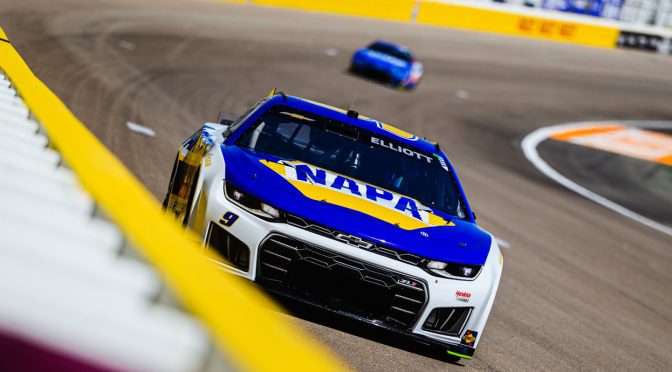
This postseason, momentum has flowed almost exclusively toward the seasoned. After a near-perfect opening round, Joe Gibbs Racing and 23XI Racing watched their edge vanish at Loudon, replaced by Team Penske’s clinical execution and Hendrick Motorsports’ renaissance on a track where it hadn’t won since 2012. Past champ Chase Elliott collected the win on Sunday at Kansas Speedway, fending off future Hall of Famer — and Kansas race dominator — Denny Hamlin at the line. We’re starting to see the cream rise to the top, and that will become even more evident in the Round of 8.
Three of these remaining five races carry a buzzsaw aimed at the playoff grid: the Roval cuts the Round of 12 down to eight, Martinsville whittles eight to four and Phoenix sorts the championship, with the most painful “cut” of all for the three drivers who have to watch one of their Championship 4 mates hoist the Bill France Cup mere moments after it could’ve been theirs. As we’ve seen sometimes with these must-make deadlines, playoff competitors like rookie Shane van Gisbergen — who led 52% of laps on road courses this year but fell short in the Round of 16 with three finishes of 25th or worse — discover that specialty prowess doesn’t always translate into a passing postseason grade.
Compare that to Joey Logano, whose three titles rest on a foundation of clutch road-course passes (and failures), textbook short-track survival and a drafting knack that helps him excel at superspeedways. Or Denny Hamlin, 19-time playoff veteran and nine-time Round of 8 entrant. Their resumes might as well be study guides on how to survive as long as possible in the NASCAR Playoffs.
Even pit boxes become classrooms. A flawless stop at Charlotte might net you a leg up on the bubble drivers; a mistake at Las Vegas can cost you more than you lost in the casino the night before. Veteran crew chiefs and pit crews, hardened by years of playoff scrambles, are battle-tested beyond belief, and we’ve seen time and again how a championship can come down to whose pit crew pukes the least when things get queasy.
Then there’s the mental calculus. With each new circuit comes a fresh school subject: Charlotte’s combo turns demand surgical braking. Vegas’ high oval speeds punish aero flaws. Talladega’s pack racing hexes hesitation and might bite you anyway, regardless of how hard you study. Martinsville forces precise control of both brakes and one’s temper, and Phoenix demands perfect entries and exits over and over on long runs while, oh-by-the-way, the pressure is the highest it’s been and will be all season. For drivers who’ve battled through similar finals in years past, the syllabus is familiar. For any novices among the group, you might as well be learning French on a roller coaster.
Still, upsets simmer. History shows that momentum can surge in a single lap, as Christopher Bell proved with his must-win, two-laps-led Roval victory in 2022. But those moments are exceptions, not rules. More often, we’re approaching the point where the truest championship contenders reveal themselves; veterans making measured moves, accumulating stage points to build buffers and relying on pit-road prowess to navigate chaos unscathed.
By the time the green flag waves in Phoenix a month from now, only a quartet will remain, each tested not once but four times over from here to reach that point. The final exams reveal more than just who has the fastest car, but often expose who can think and perform fastest under fire.
And as the inexperienced shuffle from their desks, shoulders slouched, the veterans might just walk out confident that they passed with honors.
Pencils down.
James Gilbert | Getty Images
2. Roval roulette: Which driver will burst the playoff bubble?
Entering elimination weekend at the Charlotte Roval, four drivers face do-or-die stakes on NASCAR’s only playoff road course. History suggests at least one will defy the odds — so, who’s the most likely?
Get your pumpkin-spiced popcorn out, everybody.
As the calendar turns to October, Ross Chastain (−13), Bubba Wallace (−26), Tyler Reddick (−29) and Austin Cindric (−48) all must capitalize in Sunday’s single-race showdown — the Bank of America Roval 400 at Charlotte Motor Speedway (3 p.m. ET, USA Network, PRN Radio, SiriusXM NASCAR Radio, NBC Sports App) or see their 2025 title quests end. Sunday promises to be a spectacle, and after Kansas produced its twice-annual showstopper this past weekend, the bar will be set high.
A glance at the standings highlights the grim realities each contender confronts, as each needs significant upward movement and perhaps even a win … and all four of them are the type to do it at all costs. With Joey Logano holding a 13-point cushion over Chastain for the final spot, it may seem scant, but the nature of the Roval could make even that amount difficult to surmount, with going for the win from the get-go arguably still the surest path forward, rather than relying on points to shake out in one’s favor.
Although Cindric faces the steepest climb at 48 points back, past comebacks offer faint hope: Christopher Bell erased a 45-point deficit here in 2022 en route to advancing with his win, and Chase Elliott regained 22 points without a win to advance in 2019. Still, only Brad Keselowski (2014) and Bell (2022) have navigated must-win scenarios to secure Round of 8 spots, underscoring the rarity of outright victories under such immense pressure.
Charlotte’s unique 2.28-mile configuration demands finesse more than brute force. Drivers must navigate tight chicanes, heavy braking zones and asphalt-to-grass transitions that punish even minor miscalculations. Of the seven Cup races held here, six winners started inside the top 10, emphasizing the premium on qualifying and track position. Conversely, rushing for stage points has seldom translated into overall triumph; the last driver to claim both a stage and the race was Elliott in 2019. Those patterns hint that disciplined, lap-by-lap execution could reward bubble contenders who play the long game.
And speaking of finesse, there’s one guy lurking in the field who’s out-maneuvered the entire field on road courses all year that they’ll have to contend with. A win may not even be available to these guys.
But for now, let’s examine each of the four under-the-bubble drivers and their likelihood — or not — to advance to the Round of 8 with a win.
Ross Chastain (−13)
Chastain enjoys a modest deficit that could, in theory, be erased with a steady result and some help. He claimed his lone road-course victory at COTA in 2022 and has piled up 136 road-course points this season, ranking seventh among playoff contenders. Despite that, the Roval has proven unforgiving: in six attempts, he averages a 24.0 finish and has only once cracked the top 10 (10th in 2023). His experience reaching the Championship 4 in 2022 adds context to his capability under pressure, but converting opportunity into performance on this track has eluded him.
Bubba Wallace (−26)
Wallace trails only Ryan Blaney in stage points on road courses this year (37) among playoff drivers, a metric reflecting strong early speed at these layouts he didn’t previously have earlier in his career. His Next Gen Roval outings have yielded 33.0 points per race, outperforming some higher-ranked contenders. Recent struggles, including two DNFs and four finishes of 26th or worse in the past seven events, underscore the need for precision under pressure.
Tyler Reddick (−29)
Reddick’s resume at the Roval is unmatched among those on the cusp. In five starts, he ranks first in average finish (7.80) and has never finished worse than 12th. Last year, he led early, survived heavy contact and still landed 11th with enough to clinch his spot in the next round. His 166 points on 2025 road courses place him second among playoff drivers, despite being the only remaining playoff driver yet to win this year. Persistent pit-road mishaps and a mid-season funk, however, marked by seven finishes outside the top fifteen in the past 10 races, cast some doubt on his consistency.
Austin Cindric (−48)
Cindric’s path to survival is narrow: a win or near-perfect conditions are prerequisites. His best Roval outing, a fourth-place run last year, demonstrates capacity when everything clicks, but even that may not be enough this time around. Over 25 career road-course starts, he has secured nine top-10 finishes, and it’s somewhat expected he’ll capture a road-course win at some point in his career. Yet this season’s output tells a bleaker story: second to last in points on road courses among playoff drivers with just 69, zero stage points and three finishes of 30th or worse in his last six starts. Without a dramatic turnaround, his title hopes hinge on an outlier performance.
Picking the bubble-buster
By combining track history, recent form and points scenarios, Reddick likely emerges as the most credible candidate to advance, despite trailing by 29 points. His sustained excellence at the Roval, paired with significant road-course success this season and a history of winning on them, gives him the best chance to leapfrog his competitors. Chastain’s minimal gap keeps him mathematically alive, but his poor Roval track record tempers expectations. Wallace remains a viable dark horse, provided he leverages early speed into a clean, uninterrupted run, but he would need an all-time performance. Cindric’s uphill battle demands perfection and a complete trend reversal, making him the least likely of the four to claw back into contention.
If history repeats, at least one of these drivers will defy their deficit and punch through the cutline. On Sunday, survival awaits at the most intricate — and consequential — road course of the season.
Joey Logano discusses the points situation after Kansas Speedway and how it could’ve been much different without a last-lap incident between Denny Hamlin and Bubba Wallace.
4. Is this championship Chase Briscoe’s to lose?
The No. 19 Joe Gibbs Racing driver has been the playoffs’ most consistent driver so far, and has a chance to match some current and future Hall of Famers if he collects a sixth straight top 10 to open the postseason this weekend. Will this level of consistent excellence take him all the way to Phoenix, site of his first career win? (Credit: Racing Insights)
Season
Driver
2004
Kurt Busch
2008
Jimmie Johnson
2009
Jimmie Johnson
2015
Joey Logano
2021
Denny Hamlin
5. Catch the pack — news and notes from around the garage
Though Zane Smith was unhappy with John Hunter Nemechek for causing a startling wreck at Kansas Speedway, NASCAR was pleased with Smith’s No. 38 Ford after its wild ride.
During the latest episode of the “Hauler Talk” podcast, Mike Forde, NASCAR managing director of communications, said the at-track inspection after the crash went so well that the car was returned to Front Row Motorsports instead of being transported to the R&D Center for further scrutiny.
The contact with Nemechek’s No. 42 Toyota squeezed Smith’s car into the SAFER barrier. After turning onto its driver side, the No. 38 rode along for several hundred feet at a 90-degree angle to the asphalt before barrel-rolling and landing back on its wheels.
“We never like seeing that, so there is concern that it happened, but from the structural integrity of the car, we’re not concerned,” Forde said. “We were very, very happy with how all that went down. … Nothing was bent, nothing was abnormal, so we gave the car back to the team, and they brought it back to the shop.”
Upon the car’s return from Kansas, NASCAR officials took more photos and met with team members about the incident.
Dr. John Patalak, NASCAR’s vice president of safety engineering, also reviewed the Incident Data Acquisition System that measures G-forces and has a high-speed camera to review the response of driver restraint and cockpit safety devices.
“(Patalak) really liked what he saw from the safety systems,” Forde said. “Zane came away really good there as far as how his seat positioning was, and there was no concern there, either. So, I think the next steps are we’ll look at the race track, look at some more of the data as far as how it got up on the wall. Because cars do get pinched up against the wall often, and you don’t always see that. But all in all, we’re pretty happy with how all that went from a car standpoint. … Everything was good — so good that they may be able to use that chassis again and just pop a new body on it. We’ve had definitely other chassis that were in much worse shape than that one.”
Forde confirmed that security was summoned to Smith’s team hauler, which coincidentally was parked beside John Hunter Nemechek’s hauler in the Kansas garage. In an interview after being released from the infield care center, Smith angrily blamed Nemechek for the wreck.
“It’s not our first rodeo, so sometimes when we see that there might be trouble brewing, we send (security),” Forde said. “That was just trying to keep the peace, get ahead of it and make sure that there were no issues between those two drivers, and there were not. So, I think we’re good there.”
Other topics covered by Forde and NASCAR senior director of racing communications AmandaEllis during the 35th episode of “Hauler Talk,” which explores competition issues in NASCAR:
— How NASCAR handles power-steering problems during races.
— The rule Brad Keselowski broke that caused his free pass to be rescinded.
— The ejections of two crew chiefs for inspection violations.
— New temporary lighting at the Charlotte Motor Speedway Roval for a 5 p.m. ET Xfinity start.
— Post-race inspection procedures for a cutoff race in the playoffs.
Click on the embed above to listen or search for “Hauler Talk” wherever you download podcasts to hear it on your phone, tablet or mobile device.
Nate Ryan has written about NASCAR since 1996 while working at the San Bernardino Sun, Richmond Times-Dispatch, USA TODAY and for the past 10 years at NBC Sports Digital. He is a contributor to the “Hauler Talk” show on the NASCAR Podcast Network. He has also covered various other motorsports, including the IndyCar and IMSA series.
Trackhouse Racing announced Sept. 23 that Randall Burnett will join the organization in 2026 as crew chief for Connor Zilisch, who will begin his full-time NASCAR Cup Series career next season.
Burnett will make the move from his role as crew chief for Kyle Busch’s No. 8 Chevrolet at Richard Childress Racing, which brought him on during the 2017 season. He has six wins in each the Cup Series and Xfinity Series.
With Burnett moving on from Busch after the 2025 season, RCR announced Oct. 1 that crew chief Andy Street will sit atop the box for the No. 8 team for the remainder of the year. Burnett will remain in a support role with the organization until the season concludes.
The personnel hire by the Justin Marks-founded team locks in another component to what will be Zilisch’s first full season in NASCAR’s top division. Trackhouse formally announced the 19-year-old’s heavily anticipated leap to the Cup Series last month, indicating that the crew-chief pairing, Zilisch’s car number and other personnel alignments would take shape in the coming weeks.
Burnett had previous stops at Chip Ganassi Racing and what’s now called Hyak Motorsports, first as an engineer and later as a crew chief. He spent roughly two and a half seasons with Childress’ Xfinity Series program, winning six races and the championship with Tyler Reddick in 2019.
Burnett and Reddick made the jump to the Cup Series together in 2020. The veteran crew chief remained with RCR’s No. 8 team when Busch replaced Reddick in 2023, and Burnett has three Cup wins with each driver.
Zilisch has been a dominating force in his rookie Xfinity season, winning nine times this year with JR Motorsports. The surge has rocketed Zilisch to the top of the Xfinity Series Playoffs standings, and he has won seven of the last nine events on the circuit.
The NASCAR Xfinity Series heads to the Charlotte Motor Speedway Roval for the final race in the Round of 12 as the competitors vying for the 2025 crown will be cut down to eight. Teams will hit the track for practice on Saturday at 11:30 a.m. ET with qualifying to follow at 12:40 p.m. ET on The CW app.
Saturday’s qualifying session will consist of one round, split into two 20-minute groups. The qualifying order below is determined via metric that combines the previous race finish by owner (70%) and current owner points position (30%).
The race will occur later Saturday at 5 p.m. ET (The CW, PRN Radio, SiriusXM NASCAR Radio).
Chase Briscoe lined up a 10-foot birdie putt a few weeks ago at Rolling Hills Country Club in Monroe, North Carolina, southeast of Charlotte. As he crouched down to study the contour of the grass between his ball and the hole, Noah Gragson, his close friend, former teammate and source of nonstop amusement on the course, helped him choose his line.
“If you hit that dot right there,” Gragson said, marking with confidence a dot with the butt of his putter. “It’s going in.”
“That one?” Briscoe asked.
“No, that one.”
Briscoe flinched when he missed the putt by an inch.
“Did you hit the dot?” I asked.
“No,” Gragson said. “He wasn’t even close.”
“If I would have,” Briscoe said, “I would have made it.”
It sounds simple, right? Hit a ball to a spot just a few feet away, bask in the accompanying glory. What could go wrong?
I mean, besides everything. If it were easy, anyone could do it, and nobody would want to. Briscoe, driver of the Joe Gibbs Racing No. 19 Toyota in the NASCAR Cup Series, and Gragson, who pilots the No. 4 Front Row Motorsports Ford, can make a 3,400-pound race car do whatever they want. A 1.62-ounce dimpled white orb, not so much. And that drives them a little crazy.
Nothing generates more fake misery than golf. You can play absolutely terribly, be teeth-grindingly angry at yourself for hours on end, be half-tempted to throw your clubs into the pond, vow 37 times to never play this fool sport again, and yet when someone asks how your day was, you’ll say awesome and proclaim that a bad day on the golf course is better than a good day at work.
The better you get at golf, the more miserable it makes you, because your expectations go up faster than your ability to reach them. Racing is like that, too: Once you win, not winning is way more annoying. You’ve proved you can do it, so why can’t you do it all the time?
Golf might be more insufferable for NASCAR drivers than “normal” people because they are uncommonly gifted, uncommonly competitive and uncommonly successful. The sport humbles them because on the track, they are indisputably world-class athletes, the best of the best of the best, and on the course, they are decidedly not.
So why do they subject themselves to such frustration? The maddening challenge to command the ball draws Briscoe and Gragson (and every other driver who plays) to golf. They play because their competitive natures drive them to improve, and in golf, it’s really hard to do so, and thus more rewarding when they do, even if the only reward of getting better is deeper knowledge of how bad they still are.
They play because of the joy they find in the striving.
And they play because they laugh a lot on the course.
Brittney Wilbur | NASCAR Digital Media
Long drives, fast drives, and what they have in common
Golf is seemingly everywhere in NASCAR lately. Austin Dillon AND his dad both got holes in one in the same round last week, and Instagram posts about that seemingly impossible accomplishment generated thousands of likes. NASCAR Xfinity Series drivers Connor Zilisch, Daniel Dye and Jesse Love have a YouTube channel devoted to the sport. And during the week of the final race of the first playoff round, Hendrick Motorsports set up a putt-putt course in their office and made Instagram videos of their four drivers playing it while wearing their fire suits.
This is a continuation of a decades-long trend. 23XI, the team co-founded by Denny Hamlin and Michael Jordan, owes its existence to conversations between the two on golf courses. Hall of Famer Dale Jarrett was a scratch golfer during his driving days and remains one of the best golfers in the industry, if not the best. In 2005, Jarrett, Elliott Sadler, Jamie McMurray, Michael Waltrip and Rusty Wallace competed in a made-for-TV event on The Golf Channel.
Even though they’ve been paired up for decades, NASCAR and golf still seem like an unlikely match. Golf smells like freshly cut heaven, is quiet and peaceful and played on an endless green expanse. Fans get shushed for talking above a whisper. NASCAR smells like oil and rubber (also heaven), is loud and harrowing and played on a narrow asphalt strip. Fans yell themselves hoarse, and still nobody hears a dang thing anybody says.
NASCAR drivers make uncountable thousands of split-second decisions in a race, and just about any of them could lead to serious injury or a torn-up race car or both. Golfers make “only” dozens of decisions in a round, have plenty of time to ponder them, and the worst possible consequence is a ball in the drink.
But dig below the surface, and the two sports have a lot in common.
In both sports, you need to be able to think ahead to be in the right position at the right time. If you want a great Turn 3, you set that up with a great back straightaway, which you set up with a great exit off Turn 2. In the same way, if you want to make a short birdie putt, you set that up with a great approach, which you set up with a great tee shot.
Both sports reward your ability (and punish your inability) to concentrate for a long time; a bad 18th hole can wreck a good round just like a bad final run can wreck a good race.
Josh Wise, a former driver (and former golfer) who helps drivers maximize their performance as owner of Wise Optimization, puts his drivers in athletic/competitive scenarios across a wide range of activities, from paddleboarding to yoga to pickleball, because doing so teases out traits that otherwise might go unnoticed.
Drivers golf for the same reason (though not, by any means, ONLY that reason). “If I had to pick something as a performance advisor (for drivers to learn from golf),” Wise said, “it would, hands down, be the ability to quiet the mind for a critical moment.”
Now, having said all that, nobody grabs their clubs and heads to the course with even the faintest notion that what happens there matters at all in the race car.
The value of golf for drivers is simpler … and more complicated … than that. They play not because it will improve their performance on the track but because playing brings them joy.
And that makes them better race car drivers.
Brittney Wilbur | NASCAR Digital Media
“‘Dude, I hate this Chase Briscoe guy.’ And now we’re best of friends.”
Golfing with Gragson and Briscoe was like golfing inside a buddy movie. They encouraged and teased each other in equal measure.
I split my time between their carts. When I rode with Briscoe, Gragson would be on the green while we were still lining up our shots in the fairway.
Gragson parked the cart a couple of times within a foot of the ball, the nose just in front of it. Not in the way, but close enough that I could see the cart when I looked down at my ball. I couldn’t swing with the cart right there. It distracted me too much.
He parked like that at his ball, too, only Gragson wasn’t distracted at all. I guess if you drive 180-plus mph inches from speeding race cars on all sides for three hours every Sunday, hitting a golf ball a foot from a parked golf cart on a sunny Thursday afternoon is no big deal.
You can tell a lot about friends by how they react when the other hits a good shot. Briscoe muscled a shot straight down the middle, long and high and true, and Gragson bellowed loud enough for us to hear him half a fairway away. “When my boy Chase hits a bomb, I’m going to scream,” he said.
A few holes later, Gragson striped his drive down the center.
Brittney Wilbur | NASCAR Digital Media
Briscoe hit next.
“How’d you do?” Gragson asked.
“Flew 70 yards past you,” Briscoe said.
He was only exaggerating by about 40. “Noah’s the king of (trash)-talking,” Briscoe says. “So, it’s fun when you can give it back to him.”
Their friendship almost ended before it started. On the first lap of the first NASCAR national series race they ever ran together — the Craftsman Truck Series race in 2017 at Daytona International Speedway — Briscoe tried to bump draft Gragson and wrecked him instead.
“I didn’t know what I was doing,” Briscoe says.
“Neither did I,” Gragson replies.
Briscoe dumped Gragson accidentally again in a race shortly thereafter. I asked Gragson’s reaction to those encounters as we walked off a green. “‘Dude, I hate this Chase Briscoe guy,'” he said. “And now we’re best of friends.”
And unlikely friends at that. Gragson is a single, strutting Las Vegas native who, as an up-and-coming star in the Xfinity Series, threw punches, traded barbs and was so excited to win that he threw up the contents of his stomach right there on the track.
Briscoe, on the other hand, is Indiana wholesome through and through, the married father of three who exudes earnestness. By his own unsolicited admission, nothing about his pre-NASCAR career foretells the success he has had. But hope is a powerful thing: Even with his modest resume, he moved to Charlotte, slept on Christopher Bell’s couch and did menial jobs in the sport to chase his chance.
And when he caught it, he excelled, progressing to Cup in 2021. This year, his first driving for Joe Gibbs Racing, he is in the championship hunt for the first time. He has won twice and set career highs in every category. Through 31 races, he’s led 808 laps — that’s 283 more than in the rest of his career combined.
Their friendship sprouted when they became teammates at Stewart-Haas Racing in 2024 and blossomed on the golf course. Briscoe leans on his friendship with Gragson to escape the pressure of being a big-time athlete with a big-time team and big-time responsibilities at home as the father of three young children. He relishes the chance to have adult conversations.
And Gragson plays funcle to Briscoe’s three small children. He delights in buying obnoxiously loud gifts that kids love and parents hate. His latest offering, he told me as Chase chipped out of earshot, is a deejay game he can’t wait for Chase and Marissa (Chase’s wife) to loathe. Gragson fully expects payback when he has kids.
We cut our round short at 16 holes so they both could get to the tee-ball practice of Briscoe’s 4-year-old.
“PARTY HOLE!” he said on one green and demanded we all line up putts and hit them at the same time. “Three … two … one!”
Brittney Wilbur | NASCAR Digital Media
They hit everything but the pace car
Drivers play a sport for a living and play other sports for fun. Sometimes they are dangerous. Tony Stewart broke his back in a dune buggy crash. Denny Hamlin has torn both of his ACLs playing basketball. Chase Elliott fractured his tibia while snowboarding.
Whenever something like that happens, team owners, sponsors and fans debate what activities drivers should participate in. Perhaps golf is a popular hobby among drivers because nobody ever gets hurt doing it. …
Except, of course, for Jimmie Johnson, a seven-time champion, Hall of Famer and team owner. Fresh off his first championship in 2006, he showed up for preseason events in 2007 with his arm in a cast. He told the media he fell off a golf cart. That was true. What he didn’t say is that he was on top of it, not inside of it, when he fell.
Johnson and other NASCAR drivers play the sport for the camaraderie, for the fun, for the laughs, and to get away from the constant pressure to perform so they can forget, for a few hours, that their livelihood rises and falls with their ability to always, always, always push their car right up to the edge and stay there for hours on end without blinking or flinching or making any mistakes, ever.
Brittney Wilbur | NASCAR Digital Media
The stress of that is suffocating.
And then they go play golf and get nearly as wound up on the course as they do at the race track.
Golf is both a relief from and source of stress. Johnson plays more now that he’s an owner than he did as a driver. No word on whether he rides inside the cart these days. Asked by a golf reporter this summer which is more stressful, protecting a lead on the last lap at Daytona or standing over a 10-foot putt on the 18th with his personal best score on the line, Johnson said, “without question, 10-foot putt.”
There’s an old saying that a good goal is always just out of your reach, and while that’s true in golf, it’s also annoying as hell when coming up short means SPLASH! As Hamlin, who helped run a now-defunct golf league among drivers and industry insiders, once said: “We try to pull off shots that pros make, and we get pissed off when we don’t get it done.”
And they get pissed off when they blow easy shots, too. Gragson chipped his ball back and forth halfway across creation, and Briscoe stifled a laugh because there’s nothing funnier than your friend being pissed off at golf.
Briscoe: “How many clubs have you broken?”
Gragson: “Three.”
He meant in his life, not that sun-drenched September day.
“It’s the only sport I know of where you can put countless hours in,” Briscoe said, “and still suck at it.”
I filled my notebook with quotes like that from both. And after playing with them, I can say, um, how to put it, sometimes they proved those quotes accurate … and often they didn’t.
They both have the great hand-eye coordination you would expect from professional race-car drivers. They both have smooth, easy swings befitting a lifetime of playing sports. Fluidity, balance, weight-shifting — all crucial for golf, all ever-present in their swings.
This is a small sample size, but I suspect overall their decision-making leans toward going for it rather than laying up, which I say because they are race car drivers AND because before Briscoe tried to squeeze a shot between two trees, he turned to me and said it would either turn out awesome or smack the tree and come right back at him. (It slithered through.)
They have the tools to score low; they just need to learn to use them consistently. The only thing keeping them from becoming good golfers is playing more.
And doing so would only show them how much better they could still get.
The NASCAR Cup Series Playoffs conclude the Round of 12 with a road-course bout at the Charlotte Motor Speedway Roval this weekend. Qualifying will occur on Saturday at 3:10 p.m. ET on truTV.
Saturday’s qualifying session will consist of one round, split into two 20-minute groups. The groups below are determined via a metric that combines the previous race finish by owner (70%) and current owner points position (30%).
The race itself will be on Sunday (3 p.m. ET, USA Network, PRN Radio, SiriusXM NASCAR Radio, NBC Sports App).
For the first time, the NASCAR Craftsman Truck Series heads to the Charlotte Motor Speedway Roval. In preparation for Friday’s Round of 8 opener (3:30 p.m. ET, FS1, NRN Radio, SiriusXM NASCAR Radio), teams will receive 50 minutes of practice earlier in the day at 11:05 a.m. ET on FS2. Qualifying is scheduled for 12:10 p.m. ET, also airing on FS2.
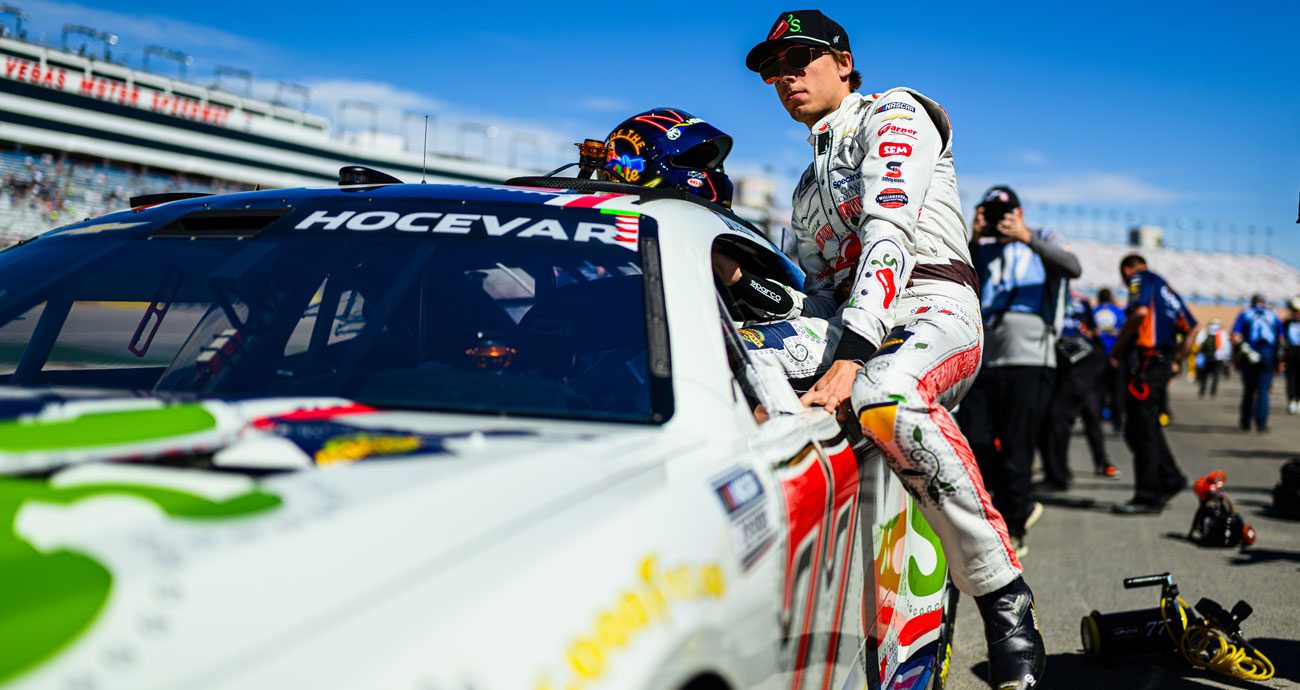
NASCAR officials fined Cup Series driver Carson Hocevar $50,000 on Wednesday for a behavioral penalty during last Sunday’s race at Kansas Speedway.
Hocevar’s No. 77 Spire Motorsports Chevrolet spun to a halt on the backstretch on the 260th of 273 laps in the Hollywood Casino 400, flattening multiple tires. After safety personnel had arrived at the crash scene, officials indicated that Hocevar revved and spun his tires in an attempt to rejoin the field while those safety workers attended to his car.
As a result of the violation of Sections 4.4.B&D: NASCAR Member Conduct in the NASCAR Rule Book, competition officials issued a $50,000 fine.
Hocevar was running 13th at the time of the incident, which was his second mishap of the day. He finished 29th in the 37-car field, four laps down.
Additionally, NASCAR officials penalized the No. 48 Big Machine Racing team for a lug-nut infraction after Saturday’s Xfinity Series race. Nick Sanchez drove the car to an eighth-place finish in the Kansas Lottery 300, but one lug was found to be unsecured in a post-race check. Officials fined the team $5,000.