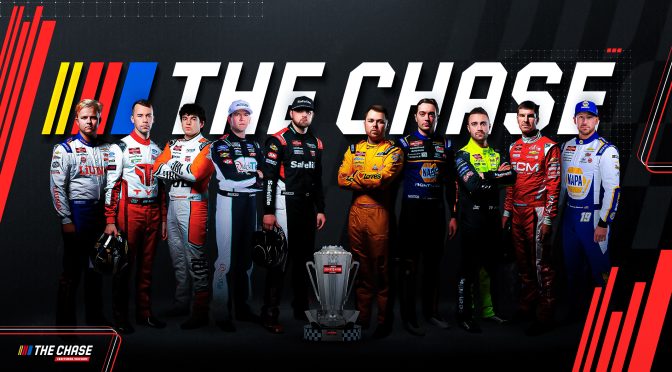
Following Layne Riggs’ sixth victory of the 2026 NASCAR Craftsman Truck Series season Saturday afternoon at New Hampshire Motor Speedway, the grid for this year’s Chase is now set.
Riggs will start The Chase as the top seed, followed by Kaden Honeycutt, Chandler Smith, Christian Eckes and Gio Ruggiero, rounding out the top five. Ty Majeski, Grant Enfinger, Daniel Hemric, Ben Rhodes and Tyler Ankrum complete The Chase field.
Ankrum barely secured the 10th and final spot after battling brake issues at Loudon, edging Stewart Friesen and Jake Garcia, who were the first two drivers outside the postseason field. The No. 18 McAnally-Hilgemann Racing driver weathered the storm to finish 16th in the Granite State.
Friesen’s fourth-place finish was not enough to advance to The Chase, as he missed out by seven points. Garcia missed out on a Chase berth by 11 points after a 14th-place result Saturday.
Ten drivers will compete for the 2026 Truck Series championship in the final seven races of the year, starting with The Chase opener Thursday, Sept. 17, at Bristol Motor Speedway (8 p.m. ET, FS1, NASCAR Racing Network Radio, SiriusXM NASCAR Radio).
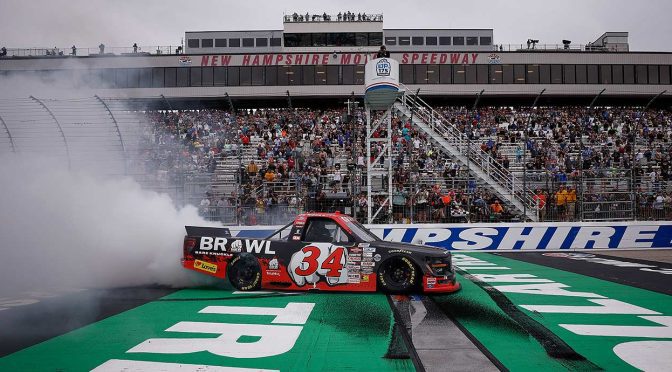
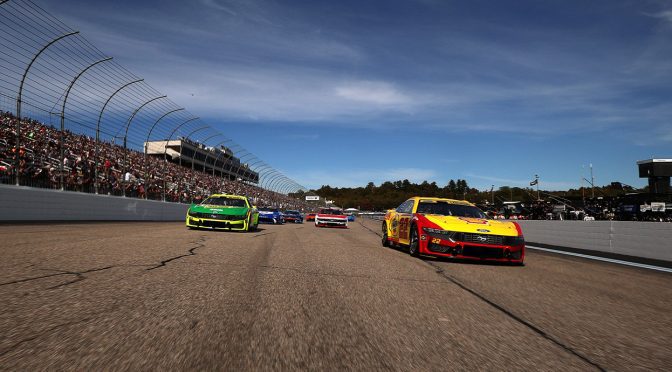
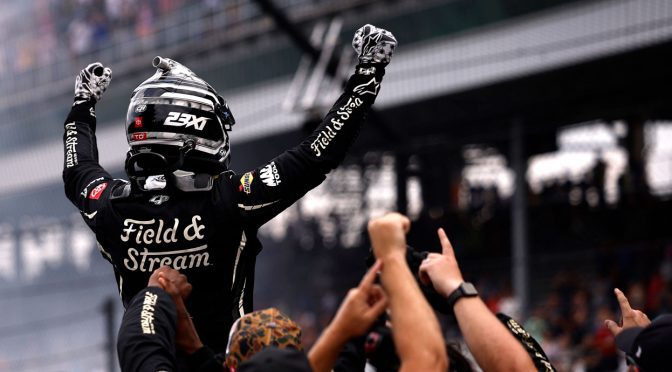
LOUDON, N.H. – Layne Riggs capped his 2026 NASCAR Craftsman Truck Series regular season with his series-best sixth win of the year, claiming the Team EJP 175 at New Hampshire Motor Speedway on Saturday afternoon in a dramatic double overtime victory in the regular-season finale.
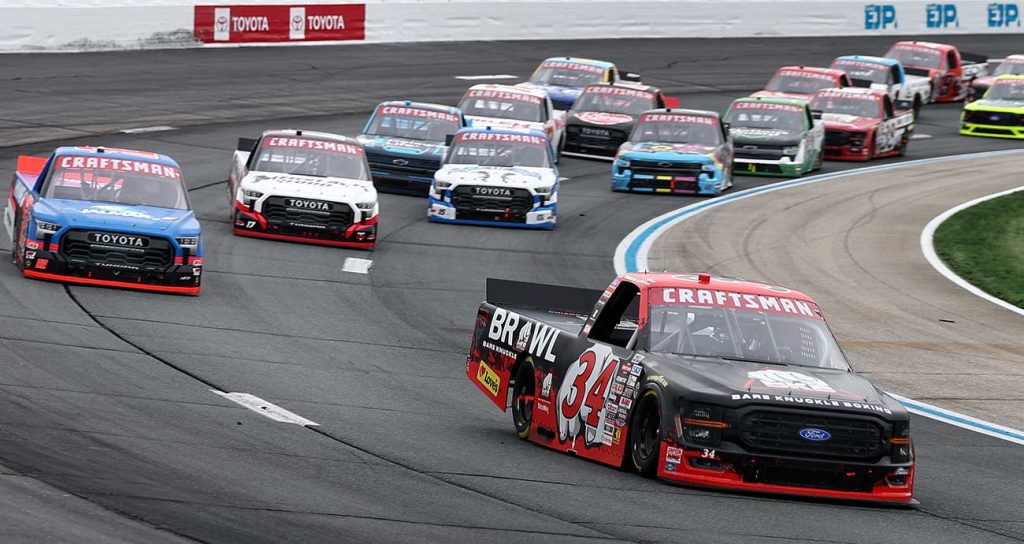
The 24-year-old North Carolinian claimed a 0.293-second win over his Front Row Motorsports teammate Chandler Smith — Riggs’ pole-sitting No. 34 Front Row Ford leading a race-high 106 of the 189 laps, including the last 71 through a pair of overtime restarts. It’s his 11th career Truck Series win.
“Statement win, this is awesome,” a grinning Riggs told a thrilled New Hampshire Motor Speedway grandstand, receiving cheers as he spoke about how much he loves racing in New England.
“Thank you to everybody at Front Row Motorsports and Ford Racing. I thought I was off a little bit and thought I was in trouble,” Riggs said, of finishing second and third in the stages to NASCAR Cup Series regular Connor Zilisch, who swept Stages 1 and 2 of the race.
But Riggs credited his team with making the key adjustments to his truck to close out the race, and the young talent took it from there in what’s been his most successful season of NASCAR competition.
“One, two, Front Row Motorsports, it’s in the name,” he added of his and Smith’s effort Saturday. “Let’s bring on the Chase. Only got seven [races] left. No mercy.”
Another big winner on the day was McAnally-Hilgemann Racing’s Tyler Ankrum, claiming the 10th and final position for the seven-race Chase that will decide the ultimate 2026 season champion. Ankrum persevered after his No. 18 Chevrolet suffered mechanical gremlins mid-race, dropped nearly a lap down but rebounded for a 16th-place finish in the 36-truck field.
Although disappointed with the struggles, the finish was good enough to give Ankrum a seven-point edge over veteran Stewart Friesen and an 11-point advantage over Jake Garcia, both of whom were vying with him for the final Chase position. Both of those drivers led multiple laps, but ultimately, Ankrum’s points advantage coming into the race was enough cushion to keep him in that final championship transfer position.
Friesen’s No. 52 Halmar Friesen Racing Toyota finished fourth while Garcia’s No. 98 ThorSport Racing Ford was 14th. Garcia’s hopes faded with a penalty for pitting his No. 98 ThorSport Ford outside the box during the Stage 2 intermission.
Ankrum was excited about making the Chase, but still visibly frustrated with an emotional day full of challenges to get to that point.
“It’s extremely rare you come to a place as fast as this and have no rear brakes and can’t fix the problem,” Ankrum said. “We’ve had adversities like this through the year, and I thought we were done with them. Luckily, Eddie D’Hondt, my spotter, gave me some advice [in the closing laps].
“Definitely did not want to come to New Hampshire and perform like that. Got lucky. Did not perform like we belong in the Chase,” he added, promising in a couple hours he would be able to “move on past this and go to the shop and improve and race for the championship.”
Meg Oliphant | Getty Images
Friesen, whose fourth-place run at New Hampshire was his fourth top-five finish in the last five races, was proud of his team effort despite the near miss. A heart-breaking 36th-place finish at Richmond, Va., last week after an early-race crash essentially made the mathematical difference.
“It was what it was, proud of the Halmar team,” the 43-year-old Friesen said. “We just didn’t bring enough speed all year. We battled today, [crew chief] Bruce [Cook] made a good call to get two tires and up in the front we got the balance pretty close and found a lane I could work with.
“It’s a bummer, I think we’re definitely at top-10 team, we just had some misfortune at Richmond last week and some other times throughout the season. We’ll just go back to work and keep building this team up and get better and better, I promise you that.. … We’ll go back to work and finish the year as strong as we can and bring better stuff for next year.”
Tricon Garage driver Kaden Honeycutt finished third in another remarkable competitive recovery – a tire went down in the opening stage, and he ended up losing a lap but battled back to his 11th top-five on the season. He’ll start the Chase ranked second in the reseeded championship standings, 25 points off Riggs.
Friesen was fourth with Zilisch rounding out the top five in the No. 71 Spire Motorsports Chevrolet – his effort coming the same week he announced big plans to move in 2028 to the Hendrick Motorsports organization in the NASCAR Cup Series.
His Spire Motorsports teammate, Tristan McKee, continued his impressive work, the 16-year-old answering an eighth-place finish in his series debut last week at Richmond with a sixth-place showing in the No. 77 Spire Motorsports Chevrolet on Saturday.
Christopher Bell, a two-time NASCAR Cup Series winner at New Hampshire was seventh with McAnally-Hilgemann’s Daniel Hemric, Kaulig Racing’s Justin Haley and Niece Motorsports’ Parker Eatmon rounding out the top 10.
The Craftsman Truck Series takes a four-week break before starting its seven-race Chase run to the title. Joining Riggs and Honeycutt in that championship run are Smith, McAnally-Hilgemann’s Christian Eckes, Tricon Garage’s Gio Ruggiero, ThorSport’s Ty Majeski, CR7 Motorsports’ Grant Enfinger, Hemric, three-time series champion and ThorSport Racing vet Ben Rhodes, and Ankrum will contend for the season trophy.
The Craftsman Truck Series’ next race is scheduled at Bristol Motor Speedway, where the seven-race Chase postseason will open Thursday, Sept. 17 (8 p.m. ET, FS1, NASCAR Racing Network, SiriusXM NASCAR Radio). Riggs is the defending race winner.
NOTE: Post-race inspection was completed without issue in the Craftsman Truck Series garage, confirming Layne Riggs as the winner. The Nos. 11, 14, 77 and 88 will be taken to the NASCAR Research & Development Center in Concord, North Carolina for further inspection. The No. 9 truck had one lug nut not safe and secure post-race, resulting in a loss of pit selection for The Chase opener at Bristol.
LOUDON, N.H. — With more championship rings than can fit on a single hand, Michael Jordan knows a thing or two about elevating one’s performance when the postseason lights shine bright.
As NASCAR readies for a return to The Chase early next month at Darlington Raceway, the NBA Hall of Famer’s 23XI Racing finds itself on a bit of uneven ground in the Granite State ahead of Sunday’s Dollar Tree 301 (2 p.m. ET, USA Network, HBO Max, PRN Radio and SiriusXM NASCAR Radio).
So the G.O.A.T. decided to drop by Airspeed recently to check in with the team and also offer some (perhaps somewhat direct) words of encouragement.
“I think it’s a little bit of both (just dropping by the shop, but also picking up the team),” team co-owner Denny Hamlin said Saturday morning at New Hampshire Motor Speedway. “I think that he always makes surprise pop-ins to the team and we know ahead of time, but I think this was a good time. Just, you know, they were in a little bit of a rut and kind of lost some momentum.”
… But was the message more of a pat on the back or a kick in the rear?
“I think it was a little bit of both, truthfully,” Hamlin said. “And, again, he’s always a big self-reflection guy. You know, what can you do better? Stop worrying about everybody else.”
The pep talks appear to be paying dividends for one team already well-clinched into The Chase field, while the other one in postseason contention is still grasping at straws with the minimal but all-too-real risk of potentially missing it.
Bubba Wallace looked fast in practice, turning in the third-fastest overall speed among a three-team Toyota contingent atop the leaderboard, sporting long-run speed as well, before chunking it in qualifying to set up a P23 spot on the grid for Sunday’s starting spot.
Compounding the frustration?
His teammate will start from the pole — after landing 31st on the charts in practice.
“Justgetsoldstarting from behind. (We’re) way better than 14th (in the standings), that’s for sure. It’s just unfortunate we’re having to think about (points),” said Wallace, who was top three in points from EchoPark to Darlington earlier this season, before cooling off through the late spring and summer. “Startlosingfocusonwhatyouneedtodo,andthingshappen.Soyeah,wejusthave to haveagooddaytomorrow.Weshouldbefine.”
Even before Sunday, Wallace has started outside the top 20 in six of the past nine races. Only three of those races, understandably, resulted in top 10s, but there’s perhaps some reason for optimism, as he was able to claw through the field a bit at a somewhat comparable Iowa a few weeks ago, going from 26th to finish 12th, leading 35 laps in the process.
Loudon is also notoriously hard to pass at, but will he be able to replicate that forward momentum?
“Potentially. Idon’tknow,man.WerevampedourweekendplanssinceIowatodo mock Q andpractice,andfeltlikewelearnedalittlebit,but it stilldidn’ttranslatetomuchspeed.Sowejust …thisplace (has) gotournumberrightnow,andI’mlookingforwardtothetesttomorrow.Notthrowinginthegloves, justfrustrating. …Imaysoundworsethanwhatweare,butitjustfeelslikewehaven’tmadeanyprogress,whichisunfortunatebecause(Loudon)wastheonethatweworkedsohardon.Wethrewallofourresourcesandeffortsintothisone,andtheweekend’sjustgettingstarted,so before y’all createheadlineswhereBubba’sgivingupandallthis(expletive), that’snotthecase.Icanunmuteandbefrustratedathowwe’requalifying.Soyeah,it’sjustoneofthesethingsthatwehaven’tfiguredoutyet.”
And that was part of the message from MJ.
They know they can do it. All the pieces are there. It just needs to click.
And as frustrated as Wallace was with his qualifying effort, Reddick was equally mystified that he’d even been able to win the pole, given how off the No. 45 car was in practice. The funny thing, though?
He couldn’t wait to debrief with his teammates and figure out what they were doing better than him.
“Yeah,that’swhathavingteammates is allabout:workingtogether,helpingeachotherout,” said Reddick after securing his fifth pole of the season. “It’sprobablygonnasoundcrazy, but theguystartingfirst isgonnabereallyleaningontheseteammates tofigureoutwhatto do. We got plenty of things to discuss and figure out. You know, yeah, it’s a confidence boost, right? It’s like, OK, well, we know we can at least get it right.”
Massive shot in the arm for a No. 45 team searching for late-summer answers after beginning the season on an unprecedented scorcher. The No. 23 team, however, could still use a boost, with little time remaining to find one.
More than likely, Wallace will still be part of The Chase field after the checkered flag falls at Daytona, and, silver lining, there aren’t too many in the sport (or elsewhere) who can lean on pep talks from an NBA legend to recenter and refocus when the going gets tough. Still, for the many-layered Wallace, he’s thankful that other outlets exist to release some of that frustration, too.
“Goodmusic.Theheavier,thebetter,” he said. “Callthewifeandkiddos.Venttoher.Thinkthatshe’llhavethemagicalfix, and we’ll just re-rack ’em tomorrow.”
It’s time for lobster fishing as the NASCAR Cup Series treks to New England for a Sunday contest at New Hampshire Motor Speedway (2 p.m. ET, USA Network, HBO Max, PRN Radio, SiriusXM NASCAR Radio).
The bout at the 1.058-mile track will act as the penultimate race of the 2026 regular season, and with drivers on the bubble jockeying for Chase positioning, the action is surely going to be tense from start to finish. Positioning will be critical; five of the last six New Hampshire races were won from a top-five starting position, with the Stage 1 winner going on to win the last three Loudon contests. That said, the driver starting on the pole has won only once over the last 21 New Hampshire Cup races, so positioning is certainly not the end-all, be-all theme.
Every point matters, and at this juncture, every maneuver and strategy call could be the difference between capturing a coveted Chase berth — and perhaps netting the famed lobster trophy — and going home empty-handed. So, how does Racing Insights project Sunday’s race playing out? Let’s give it a look, with full race projections from first to 36th.
DRIVERS TO WATCH
SHANE VAN GISBERGEN: Though he dropped to 16th in The Chase standings following action at Richmond Raceway, the 37-year-old Kiwi gained three markers to the cutline. While he is known for his road-course acumen, van Gisbergen has shown marked improvement on ovals and short tracks, with a 14th-place showing at Richmond nothing to scoff at. That said, he finished 32nd in last year’s New Hampshire Cup contest — his only career Cup start there — so the No. 97 driver isn’t out of the woods entirely.
BRAD KESELOWSKI: The No. 6 RFK Racing Ford lost 30 points to The Chase cutline following a 26th-place finish at Richmond, but Loudon could see those fortunes flip for the better. Keselowski has two career victories at New Hampshire to go along with 10 total top fives and 16 top 10s in 25 starts. Experience — especially in the championship department — also tends to play here, with 13 of the last 17 Loudon victors being Cup Series champions. Could the 2012 Cup Series champion break out in a big way this weekend?
ROSS CHASTAIN: A 12th-place finish at Richmond resulted in Chastain remaining 18th in the Cup Series table but losing 16 points to the cutline. However, momentum could be on the upswing for the No. 1 Trackhouse Racing driver, who has six top-15 finishes in the last nine races after two such results over the season’s first 15 contests. Chastain has four top-10 finishes at New Hampshire in seven career Cup starts, with a best finish of eighth twice.
NASCAR Craftsman Truck Series Team EJP 175 at New Hampshire Motor Speedway on Saturday (1:30 p.m. ET, FS1, FOX One, NASCAR Racing Network Radio, SiriusXM NASCAR Radio).
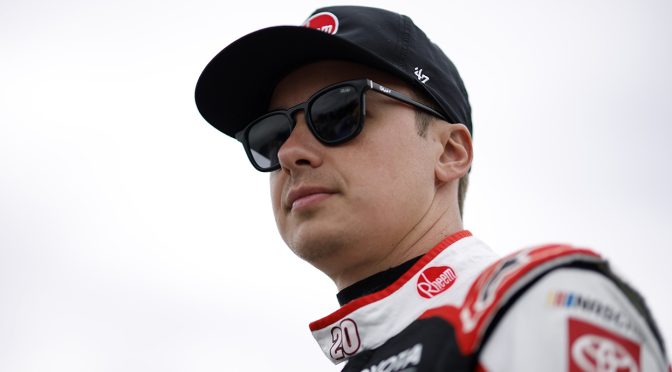
LOUDON, N.H. – With seven runner-up finishes in NASCAR Cup Series competition this season, Joe Gibbs Racing driver Christopher Bell smiles and anticipates the question: how close is he to finally hoisting a trophy in 2026?
For what it’s worth, this week’s stop at the New Hampshire Motor Speedway one-miler has been a particularly strong venue for the 31-year-old Oklahoma native. He’s won two of the last four races in his No. 20 JGR Toyota and was strong in Saturday’s practice with top-five single lap speed early in the session and tops on 10-lap speed. It’s one of only two tracks (also Phoenix) where Bell has won multiple races.
Bell will roll off the grid from sixth position and comes into the weekend ranked seventh in the championship standings — tied with sixth place, Hendrick Motorsports’ Chase Elliott — with a reasonable opportunity to move up in points considering he’s only 20 points behind fifth place, his JGR teammate Chase Briscoe.
Bell’s finished top five in five of the last seven races – turning in four of his season’s seven runner-up efforts in that span.
“We know that this is a huge opportunity for us and then Daytona is going to be a complete unknown,” Bell said of the two remaining regular-season races to formally set the 16-driver Chase-eligible standings.
“I think this one is kind of in our hands to where we can control our own destiny. And then Daytona, we’re just going to go out there and basically ‘go to Vegas and gamble’ and see what happens.
“Obviously with Briscoe having that huge day at Richmond [runner-up], we got some ground to make up on him. Myself and Chase Elliott, are tied for sixth place. I think we’re in as good a spot as we could have asked for given the circumstances of 2026 for us.”
LOUDON, N.H. — While Denny Hamlin is pulling away with the points lead in the NASCAR Cup Series, the battle for second has tightened significantly.
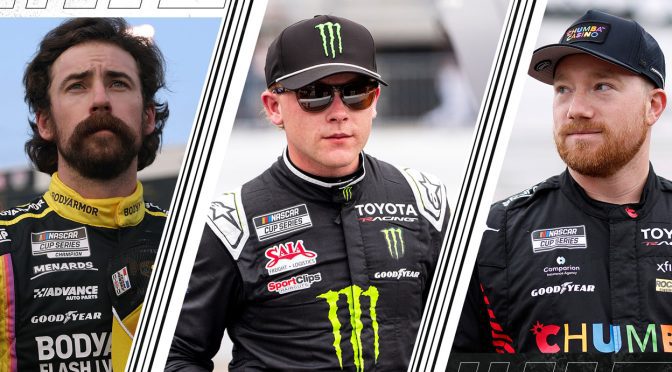
With just two races remaining in the Cup Series’ regular season, Ryan Blaney enters New Hampshire Motor Speedway with the next-best spot in the points shakedown, 115 points behind Hamlin. But just 23 points separate Blaney from fourth-place Tyler Reddick, a three-man battle featuring Ty Gibbs square in the middle.
The Chase fires up in two weeks, after Sunday’s Dollar Tree 301 at New Hampshire (2 p.m. ET, USA Network, HBO Max, PRN Radio, SiriusXM NASCAR Radio) and next week’s regular-season finale at Daytona, and every higher seed matters as points reset for the 10-race journey to the Bill France Cup.
Blaney, the defending Loudon winner, has two victories on the board this season and has led significant laps in each of the last two weeks at Iowa Speedway (129 laps led) and Richmond Raceway (88). But regardless of his notable speed and time spent out front, the driver of the No. 12 Team Penske Ford is still watching the standings in hopes of clinching that No. 2 seed in The Chase. The second seed starts with a 10-point advantage over third place and 15 over fourth.
“Ilookatthepointsonceortwiceaweek,usuallythenightaftertheracetoseewhereeveryone’sat, and then I kind of remind myself where everyone’s at before the weekend comes,” Blaney said Saturday. “Theydon’tconsumemywholerace,butInoticewherethoseguysarerunningjustbecauseweareinthefight withthoseguysforthesecondspot. Butitdoesn’tchangeourrace.Wewon’tstrategizeourracearoundthe45 (Reddick) orthe54 (Gibbs).Westrategize to trytowintherace,andthenthepointsstufftakecareofthemselves.Butyeah,youdoknowthatandwedoknowfromsecondtofourthisadecentchunkofpoints.Soyeah,that’skindofgoalnumberoneoutsideofwinningtheracethenexttwoweeks, trytostayaheadofthosetwoguys.”
Twelve points behind No. 12, Gibbs won his second race of 2026 two weeks ago at Iowa, reinforcing his newfound position as a mainstay in NASCAR’s top five, where he’s placed his No. 54 Joe Gibbs Racing Toyota in points since the Coca-Cola 600 on Memorial Day weekend. With great speed comes great responsibility, though. That means avoiding any unforced errors.
“Well, I can’t speed on pitroad,” Gibbs said with a smile, harkening back to costly penalties at both North Wilkesboro and Richmond in the last four races. “That’sthenumberonething,andthenjustputtingracestogether,andyeah,hopefullygooutandhaveashottowinthisone.”
To be in contention for a high Chase seed is new territory for Gibbs this late in the season. The 2026 campaign has easily been a breakout year for the 23-year-old, already eclipsing career highs in top fives (10) and top 10s (15) this season, improving his average finish by a whopping six positions from 17.9 in 2025 to 11.7 in 2026.
No one started the 2026 Cup Series season hotter than Reddick, who began the year with a rousing Daytona 500 win that kicked off a span of three straight victories and five in the year’s first nine races. His summer took a downward turn starting at Michigan International Speedway in June, though, dotting his results sheet with seven finishes of 25th or worse in the last 10 races.
But after a midweek visit from 23XI Racing co-owner Michael Jordan, Reddick and the No. 45 team rallied from a 32nd-place qualifying effort at Richmond to finish 11th last weekend. That result may not sound like much, but after a spin in practice and a poor time trial, Reddick conceded it was a “big deal.” He now enters Sunday’s race at New Hampshire 11 points behind Gibbs for third.
And if the No. 45 team can rekindle its early-season magic, that could spell danger for the rest of The Chase championship hopefuls — with optimism bolstered by a New Hampshire pole qualifying effort Saturday afternoon.
“Ifwefinishtheyearthewaywestarted,we’llbejustfine,” Reddick said. “Yeah,justgetbacktoscoringstagepoints,qualifyinggood. Wecanjuststacksomeofthoseracesinarow. If wecandothathere andthengodowhatwenormallydoatthe speedwaysatDaytona, we shouldbeinareallygoodspotforthat.”
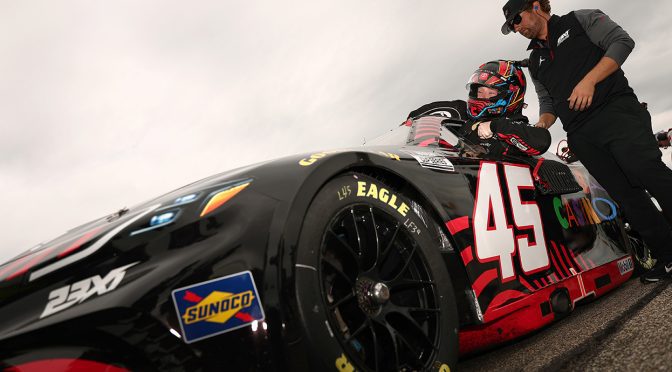
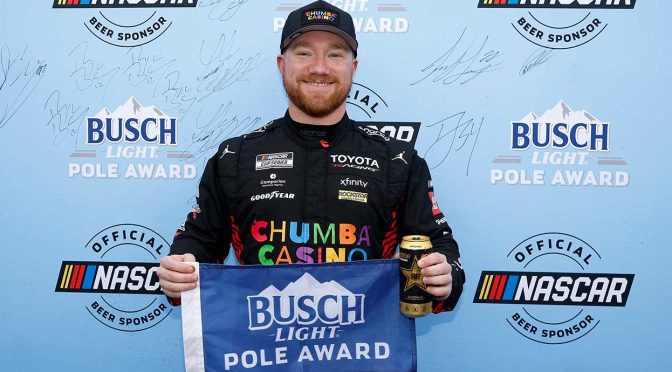
LOUDON, N.H. – Tyler Reddick conceded he was a bit surprised — although pleasantly so — at his Busch Light Pole Qualifying effort Saturday at New Hampshire Motor Speedway after the five-time race winner and 2026 championship contender claimed the top starting position for Sunday’s Dollar Tree 301 (2 p.m. ET, USA Network, HBO Max, PRN Radio, SiriusXM NASCAR Radio) NASCAR Cup Series race.
Reddick turned a lap of 131.094 mph around the historic New England mile track in his No. 45 23XI Racing Toyota, besting Wood Brothers Racing’s Josh Berry by 0.015 seconds in the No. 21 Ford. It’s Reddick’s fourth pole position of the season and 15th of his career.
Including weather-forced qualifying cancellations, it’s the seventh time Reddick has started from the top position on the grid this year — the first time since Charlotte in May that he will start from the No. 1 position.
Four times the 30-year-old California has won from that place on the starting grid — leading the field to both the green flag and the checkered at back-to-back races at EchoPark Speedway near Atlanta and the Circuit of The Americas road course this spring and then again three weeks later at the historic Darlington Raceway and most recently at Kansas Speedway in May, where he claimed his fifth — and most recent — victory.
Saturday’s pole-winning work came after a frustrating 31st-place effort for single-lap speed in the 50-minute practice session; Reddick’s Toyota was only 26th-best in 10-lap average speed. This will be the first front-row start for him since June at Nashville, where he qualified second.
“I was thinking if qualifying went good, we’d be top 10,” Reddick conceded. “Obviously, you want to get the most out of the car, the most out of the lap. I just tried to understand what I didn’t like about my car in practice and make sure not to tap into that at all on the lap. Just try to make the most of our strengths in practice and tie it all together and run a really good lap in qualifying.
“Just feel like my mindset was in a really good place for what I needed to do,” added Reddick, who has now started top 10 in 17 of the 25 races.
It was a strong showing for Berry as well, who has now rolled off in the top 10 in all three of his career New Hampshire starts. Hendrick Motorsports’ William Byron was third-quickest in the No. 24 Chevrolet, with championship points leader Joe Gibbs Racing’s Denny Hamlin fourth on the grid.
Trackhouse Racing’s Shane van Gisbergen turned in a clutch qualifying effort and will start fifth in the No. 97 Trackhouse Racing Chevrolet, calling his car “great” after the session and emphasizing how important he expects track position to be. Especially so, considering he is ranked 16th and holds a 50-point advantage on that final Chase qualifying position. It’s the fifth time this season the New Zealander road racing champion has started from the top 10 on an oval course.
Two-time New Hampshire winner Christopher Bell was sixth-fastest in the qualifying session, just ahead of his Joe Gibbs Racing teammate Ty Gibbs in seventh. Defending race winner Ryan Blaney will roll off eighth in the No. 12 Ford with Hendrick Motorsports teammates Kyle Larson and Alex Bowman rounding out the top 10.
“Tells me if we hit it, we should be pretty good on speed, but that’s going to be the tough part, right, making sure we make the right changes between today and tomorrow,” said Reddick, who flashed a big smile after his effort. “Going to some of these tracks, on more typical days when I’ve been sitting on pole, we’ve been fast in practice. This one is really fun and cool because practice was not like for us. It wasn’t like we walked away from practice thinking we need to make a little adjustment here or there, so for us to take that and go lay the lap down like we did, that for me is a big deal.
“For me, I’ve been able to get the pole at a few of places over the years that’s been really fun and special but the fashion we did it today was really, really awesome.”
AJ Allmendinger’s No. 16 Kaulig Racing Chevrolet scraped the outside retaining wall as he steamed toward the green flag to begin his qualifying attempt. He continued and grabbed the 24th starting spot in the 36-car field.
The 301-lap race is the next-to-last race of the Cup Series’ regular season. The 16-driver Chase postseason field will be locked in after this weekend’s race at New Hampshire and the Aug. 29 regular-season finale at Daytona International Speedway.
Practice recap: Jones tops leaderboard
Erik Jones led a 1-2-3 sweep of Toyota drivers atop the board in Saturday morning’s first on-track session, topping the Cup Series practice charts at New Hampshire.
Jones put the No. 43 Legacy Motor Club Toyota out front in the 50-minute practice with a lap of 130.251 mph (29.242 seconds). That time was just 0.021 seconds better than second-fastest Ty Gibbs, who clocked in at 130.158 mph in the No. 54 Joe Gibbs Racing Toyota.
Bubba Wallace turned in the third-fastest lap at 130.095 mph in the No. 23 23XI Racing Toyota. A pair of Team Penske Fords completed the top five, with Joey Logano — last weekend’s winner at Richmond — fourth and Austin Cindric fifth.
Teams had two sets of Goodyear tires available for the expanded session, which featured the entire 36-car field in a 50-minute practice.
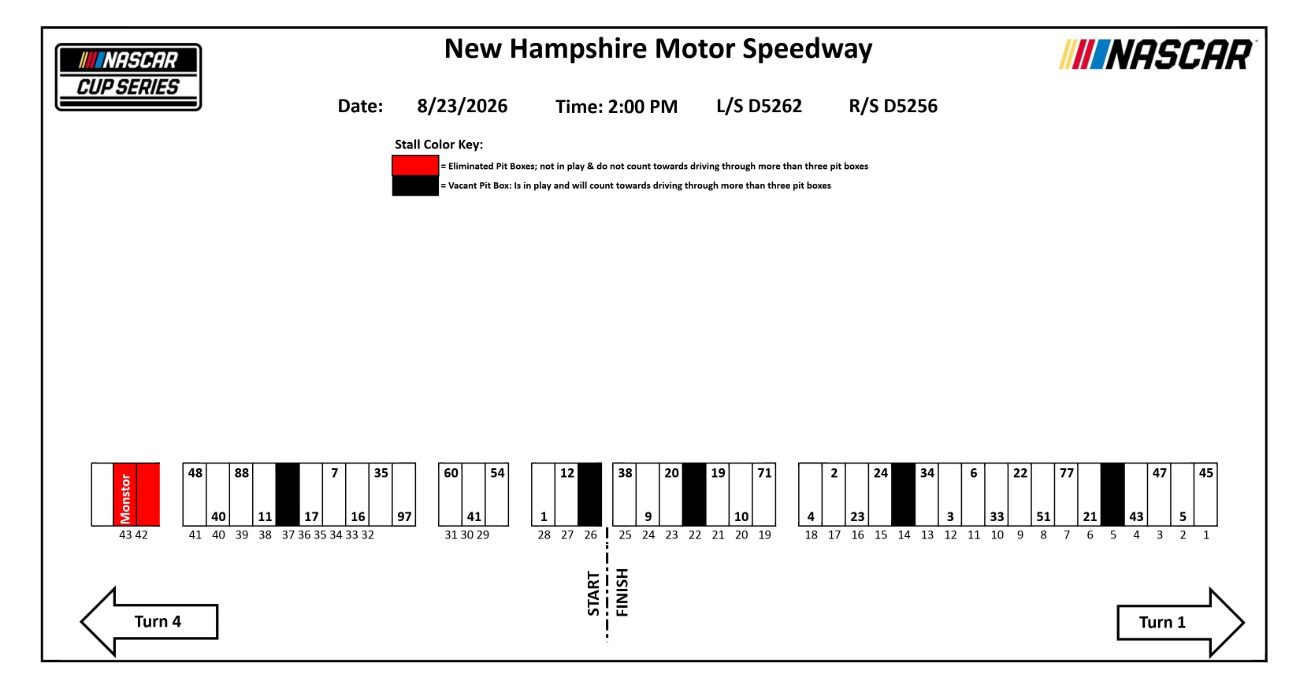
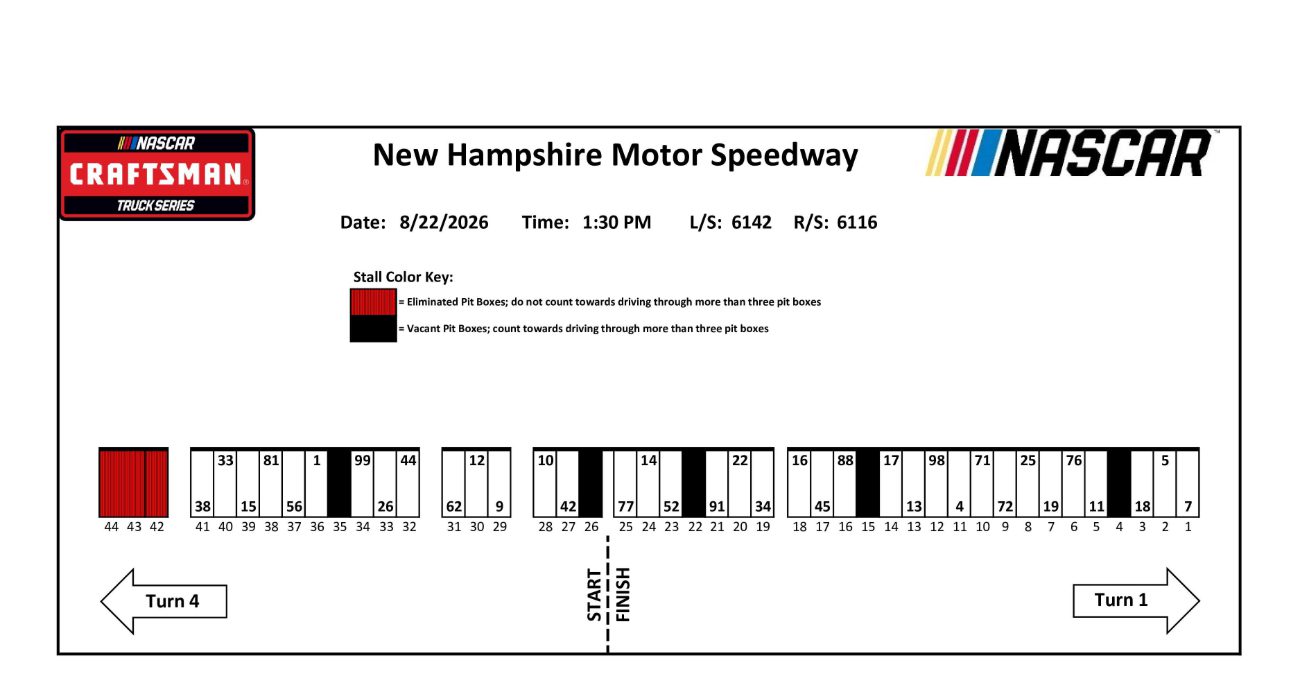
The NASCAR Cup Series and NASCAR Craftsman Truck Series headed to the 1.058-mile New Hampshire Motor Speedway this weekend for a pair of races in Loudon, New Hampshire. The Cup Series ran the penultimate race of its regular season before The Chase, while the Truck Series set its 10-driver Chase field in Saturday’s regular-season finale. Bookmark this page and come back often for your race-week essentials — from qualifying orders, practice speeds, pit stalls and more.
Race day: Sunday at 2 p.m. ET on USA Network. The categories listed below will be filled out with links as the information becomes available.
Tires: Ten total sets — seven new sets for the race, one for qualifying that transfers to the race and two for practice. Four wet-weather sets will also be available as needed.
Race day: Saturday at 1:30 p.m. ET on FS1. The categories listed below will be filled out with links as the information becomes available.
Tires: Five total sets — three new sets for the race, one for qualifying that transfers to the race and one for practice. Three wet-weather sets will also be available as needed.
One question has persisted for stock-car racing prospects for decades: What’s the best path to success as a NASCAR Cup Series driver?
Some start their journeys in go-karts. Some grow up in Legends cars and stay on pavement through late models. Others hone their craft on dirt, then transition into the NASCAR Regional world.
But eventually, when an aspiring racer breaks into NASCAR’s three national touring series, they will first land in either the NASCAR Craftsman Truck Series or the NASCAR O’Reilly Auto Parts Series. There, those drivers hope to learn valuable lessons and traits that will carry over to Sundays as Cup Series stars.
All three series’ vehicles — from Cup to O’Reilly to Truck — have vastly different characteristics from each other. To some extent, that has impacted how Cup teams of today evaluate the talent developing in NASCAR’s lower-tier national series as they determine who has what it takes to shine on Sunday.
Denny Hamlin and Brad Keselowski both climbed through NASCAR’s ladder system in the 2000s. Long before either co-owned a NASCAR Cup Series team, each had to impress prospective car owners through the O’Reilly Auto Parts Series and Truck Series. One benefit at that time was a similar DNA between the O’Reilly car and the Cup car used on Sundays. Saturday’s racers often used Cup-built chassis with similar motors, building habits, skills and techniques that often translated to Sunday success.
But now each series has evolved, highlighted by a radically new Cup platform introduced in 2022 through the Next Gen car. The Next Gen vehicle features departures from previous stock-car designs, such as independent rear suspension, a flat carbon underbody and a sequential five-speed transaxle in place of a four-speed H-pattern transmission.
Much of the known calculus of driving a Cup car changed in a hurry. Four years later, we’ve seen a handful of drivers jump from the Truck Series directly to Cup, notably Carson Hocevar, Todd Gilliland and Zane Smith.
So how do the trucks and O’Reilly cars of today compare to the Next Gen car?
“It’s hard. It’s really, really hard,” said Hamlin, driver of the No. 11 Joe Gibbs Racing Toyota and co-owner of 23XI Racing. “The trucks probably drive more similarly to the Next Gen car, but it’s really hard to evaluate one over the other.”
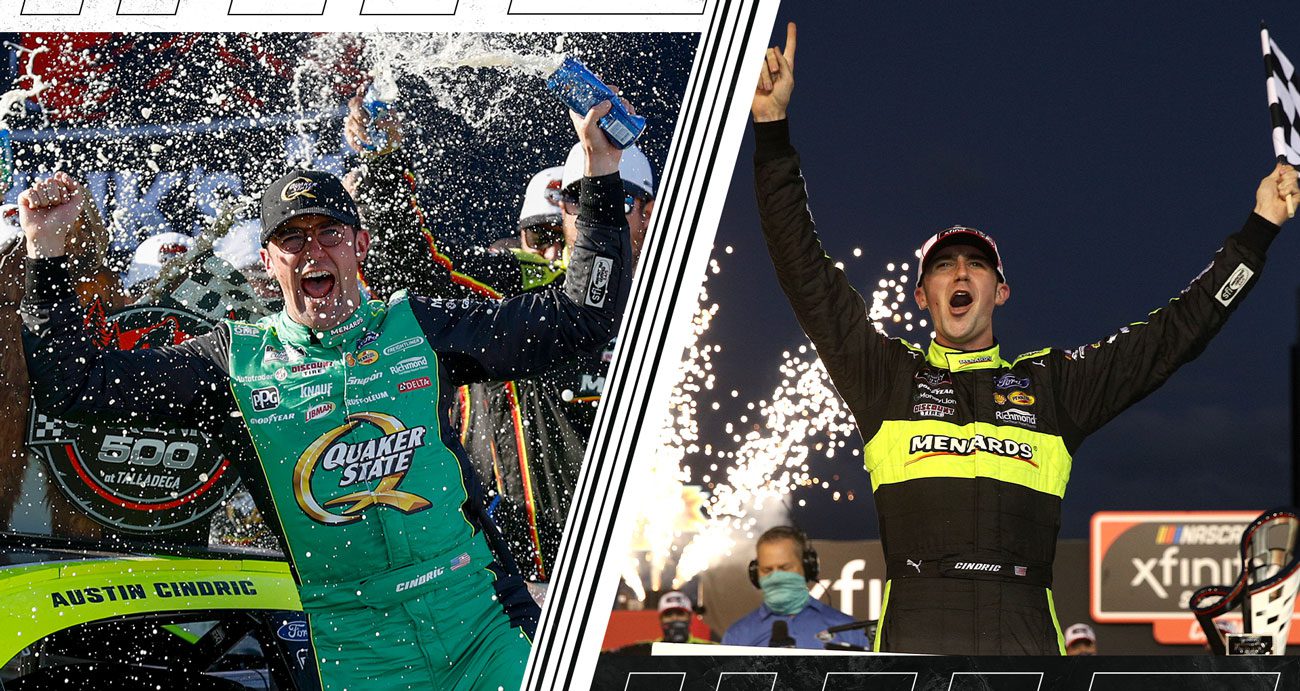
Austin Cindric, the fifth-year driver of the No. 2 Ford for Team Penske, spent the majority of his time developing his skills in the NASCAR O’Reilly Auto Parts Series, racing four full seasons on the tour and collecting the 2020 championship before graduating to Cup full time in 2022 — the inaugural year of the Next Gen car.
“I think the narrative during my rookie year was it was a great year to be a rookie, just because there’s a lot of newness and no one’s learned the car yet,” Cindric, who won the Daytona 500 to kick off that rookie campaign, told NASCAR.com. “I feel like it’s kind of a double-edged sword because I think now, if you’re a rookie moving into the series, it’s much more of a known quantity. And at the end of the day, it comes down to the people that are around you, the people that can support you, understanding and gaining that knowledge of those cars and what that transition looks like from just driving and how to extract the lap time out of the car.”
Getty Images
Before heading to the O’Reilly Auto Parts Series, Cindric spent one full season in the Craftsman Truck Series, racing for Keselowski’s former race team Brad Keselowski Racing, an outfit that fielded efforts for some of today’s best Cup Series drivers. In addition to Cindric, 2023 Cup champion Ryan Blaney and 2026 Daytona 500 winner Tyler Reddick drove for Keselowski.
Now 27 years old with nearly five full seasons of Cup racing and three Cup Series wins, Cindric sees value in both series’ paths. The aerodynamics and drag all transfer from the Truck Series to Cup, he noted. The O’Reilly Auto Parts Series offers longer races more comparable to the Cup Series, allowing Saturday racers to experience how a track evolves over the course of a 300-mile contest and the increased tire degradation that comes with it.
“I think there’s a lot of great lessons that I’ve taken from both,” Cindric said. “Obviously, I spent four years in the O’Reilly Auto Parts Series, so that was huge. I learned how to be a NASCAR driver in that series in those cars and learned a ton. So I don’t think there’s a right or wrong way of how to do it. It’s more about what you extract and what you’re able to apply.”
One benefit to Cindric’s racing upbringing was a diverse path that pushed him through sports cars and V8 Supercars, manifesting a unique skill set on road courses before adapting to NASCAR’s ovals. In his opinion, the broader a driver’s resume, the less concern there should be about creating bad habits in the Truck or O’Reilly Auto Parts Series that would inhibit a Cup driver’s performance — simply because they should be able to adapt what each respective vehicle requires.
“I felt like I was definitely the exception when I was coming up through the ranks as far as how many different types of cars I’ve driven and different experiences I’ve had,” he said. “And not that I’m saying that I was a trailblazer for that, but (I’m) certainly seeing that that’s becoming much more of the norm, where drivers are getting in road-course cars or going and racing on dirt and doing all these experiences while they’re still young. And I think that really helps for drivers to be open-minded and easily adaptable. So avoiding creating habits, I think, is kind of somewhat eliminated in the sense that I feel like a lot of the drivers coming in now are much more of that flexible mindset.”
That adaptability, in large part, is what Hamlin looks for from the ownership seat as he evaluates talent to elevate to the NASCAR Cup Series for 23XI Racing.
“I just really look at race craft,” Hamlin said. “Can someone make a move and put their car in a position that I know is a very difficult position, and they come out of it ahead? It really doesn’t matter to me what vehicle that that person that I’m eyeballing is in. It makes no difference because I believe the great drivers can adapt to whatever car that they’re in. I think that it just doesn’t matter. You learn race craft and then you just adapt your style to get the speed out of the vehicle and the machine that you’re in.”
Sean Gardner | Getty Images
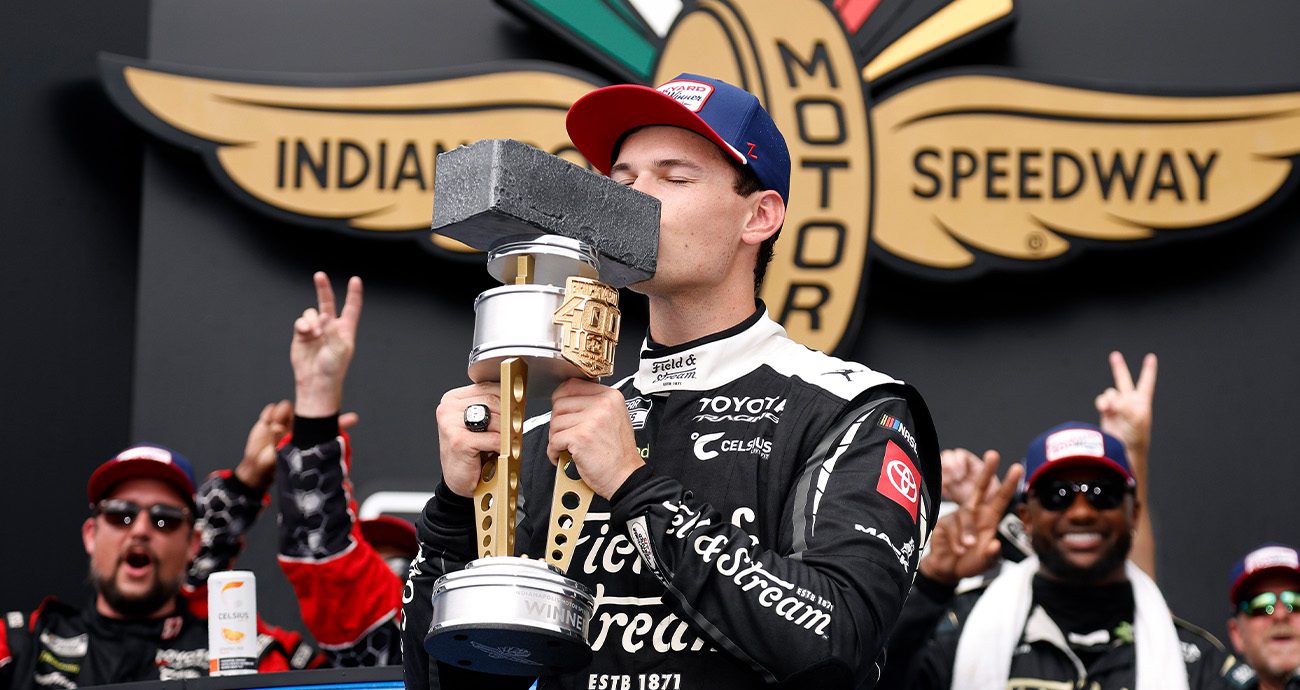
Corey Heim may be the best modern example. Heim, the 2025 Craftsman Truck Series champion who dominated the series in 2024 and 2025, already is a two-time winner in the NASCAR Cup Series. He was victorious in the summer’s biggest races at Naval Base Coronado and the Brickyard 400 at Indianapolis Motor Speedway.
Heim has limited experience in the O’Reilly Auto Parts Series but an extensive and extraordinary successful Truck résumé.
“The trucks are definitely more similar than the O’Reilly cars, but they’re all just totally different honestly,” Heim said on Dirty Mo Media’s “Door Bumper Clear.” “The main difference from the truck to the Cup car, getting technical, is you cannot yaw the Cup car out. I mean you’re driving it like as straight as possible. You can’t really counter-steer and yaw the Cup car out. The truck, I feel like I always just drove it off the right rear, just slung it into the corner, did everything I could to feel all of the sideforce and all that nature.
“But the Cup car, it’s like you’re just driving it on a railroad track. And if you break off that railroad track, then you’re in trouble. The feel of the tire’s a lot different. Of course, you’re going from an H-pattern to a sequential shifter. There are a lot of differences, but if I were to develop in anything, I think a truck might be a better avenue right now. But it’s apples to oranges.”
For Keselowski, there is so much difference between today’s Cup car and the other series’ vehicles that few of the specifics translate on a one-to-one basis. But those who are scouting prospective talent can still observe key decision-making capabilities that can indicate a driver’s ceiling.
“I think oftentimes, what makes somebody a great Saturday driver that can maybe transcend into being a great Sunday driver is greater than just their talents,” said Keselowski, co-owner of RFK Racing and driver of the No. 6 Ford. “It’s their ability to really understand second- and third-order decision making, which is the concept of since the races are so long, you can’t make a move and just think about the immediate success of it. You can’t use your strategy and just think about the immediate success of it. You have to be able to think of it over the terms of not just a 500-lap or 500-mile race, but oftentimes over a 30-some week season.”
Those decisive moments could shape not only a race but a future or career. On Fridays and Saturdays, those decisions are made against competition that is still learning the ropes.
On Sundays, those moves are being made against 35 of the top stock-car drivers in the world.
“It’s gotten to the point now where if you look back 30, 40 years ago, you would say that you could have talent and great work ethic, and that would get you to Cup,” Keselowski said. “And that’s not enough now. The competition’s too good. Everybody’s got talent. Everybody’s got work ethic. You have to be a great decision-maker over the course of a really long race.”