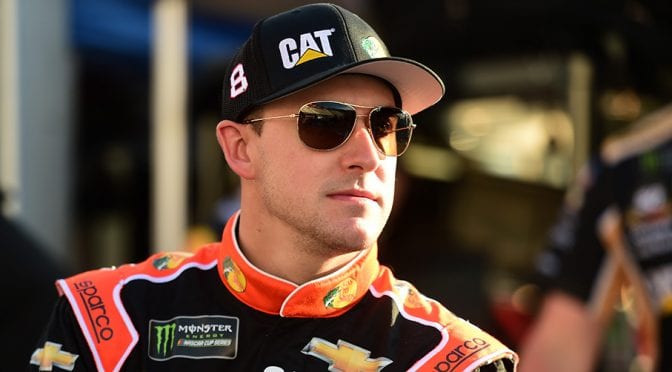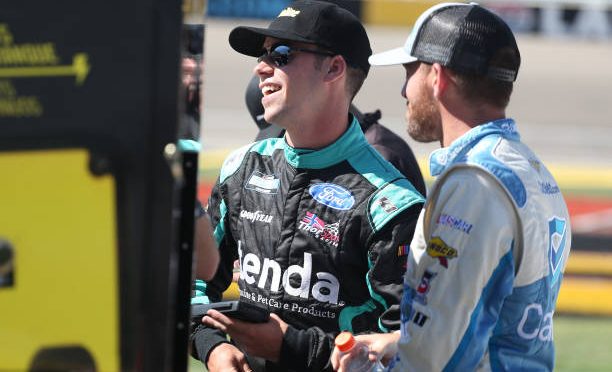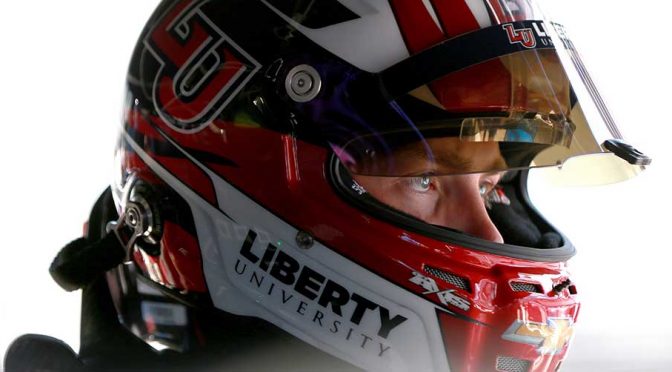
Hailie Deegan nabbed the pole position for Saturday’s NASCAR K&N Pro Series West race at Sonoma Raceway. Deegan will be joined on the front row by Xfinity Series regular Noah Gragson, who qualified second.
Deegan won the Pro Series West’s most recent race at Colorado after last-lap contact with teammate Derek Kraus. She has two wins and now has two poles on the season in the series.
The field for Saturday’s race is filled with some big names — in addition to the K&N Pro Series West regulars, Monster Energy NASCAR Cup Series drivers Austin Dillon, Daniel Hemric and Ryan Preece will be in the race in an effort to get more seat time at the California road course. Cole Custer, who has three Xfinity Series wins, is also in the race.
The NASCAR K&N Pro Series West takes to the track at 4:45 p.m. ET at Sonoma. You can watch the race on FansChoice.tv.
SONOMA, Calif. – Nobody likes a backseat driver, but not all passengers are seven-time championship winning crew chiefs.
Three of Hendrick Motorsports’ four drivers – William Byron, Alex Bowman and Jimmie Johnson — spun laps this week at Pahrump, Nevada’s Spring Mountain Motorsports Ranch, in preparation for Sunday’s Toyota/Save Mart 350 (3 p.m. ET, FS1, PRN, SiriusXM NASCAR Radio) at Sonoma Raceway. Each driver’s crew chief was on hand to pore over the data, but it was Byron’s pit boss, Chad Knaus, who actually took it to the next level and rode shotgun with his driver to get a better feel for what his sophomore talent is looking for.
“Communication’s getting better and more up front,” Byron said Friday at Sonoma. “Got a chance to take Chad out on the track and that was really fun. I think that’s going to help us this weekend — to kind of be able to relate to what’s going on and keep trying to improve.”
Turns out, “really fun” for the 21-year-old means making his crew chief – more than double his age at 47 – hang on for dear life.
“Every time we’d go through the braking zone, his head would fall forward and hit the dash. I liked that part,” Byron joked. “I think I probably ran my fastest lap with him in the car. It was fun, I really enjoyed it. …
“He seemed all right. He got really quiet, but seemed OK. He definitely got quiet so I wasn’t sure if he was getting sick.”
With Sonoma being a place where one of the three of Hendrick drivers could punch a ticket to the NASCAR Playoffs – Chase Elliott is already provisionally in via his Talladega win — the trio wanted to turn some laps at Spring Mountain before heading farther west to wine country.
Former road course ace Ron Fellows provided help, and they ran nose-to-tail for about 100 laps, finishing up by analyzing a multitude of data, primarily throttle and brake specs.
It was a text — ‘Hey, I want to get out there’ — from Knaus to Byron midway through the session, however, that could give the driver of the No. 24 Chevrolet the edge he needs come Sunday.
“We stopped and he got in the passenger seat and really he just wants to learn what the car feels like and what I’m asking the car to do and how I want the car to work really well,” said Byron, currently 14th in points. “It’s helped us this weekend, because we know exactly where we want our car to perform well.”
Not all the laps were thrill rides, however, as Byron took the time to walk Knaus through the variable-length course corner-by-corner to explain what he was looking for.
“We would kind of run through laps and then we’d slow down and talk about them in each corner and kind of go through exactly what I felt like in each corner. I thought it was really, really good for us to do that. I think it’s just going to help make it more relatable for him when we’re talking about the car. He even admitted that just understanding what makes speed and what’s going to make us successful.”
The pairing was always going to feel odd to outsiders in the early going given just how long Knaus was paired with “Seven-Time” – same goes for the duo of Johnson and his new guy in Kevin Meendering – but it’s really starting to pay dividends as they settle in.
After struggling to maintain any kind of consistency in his rookie season last year en route to a 23rd-place points finish, Byron has bettered his average finish by nearly seven spots (22.1 to 15.7) and currently sits inside the provisional playoff field. The driver has also put his No. 24 Chevy out in front of the field for five straight races – the first time he’s led laps in five straight in any national series since 2016 in Gander Trucks. Byron also has started on the pole in two of the last three races.
This week’s laps at Spring Mountain are just the latest instance of the pair working on improving their communication – something Knaus and Johnson really honed after a rocky start, and that arguably helped propel them to their unprecedented run of five straight and seven total titles.
“He’s really open and honest with me about what we’re going to face when we get here,” Byron said. “He always asks me what he can do to help or what things can help me. I’ve been surprised at how vocal he’s been and how much we communicate throughout the week. Things like that I think are all good for us.
“I’ve been around him for a year now, in the debriefs and in the weekends and knowing how he worked with Jimmie and his team. I feel like there wasn’t much of a surprise (to how he is), honestly. He’s very direct, so you don’t have to worry about whether he’s trying to send you a message in a certain way or he’s trying to blow you off or whatever. He’ll tell you if you’re doing something wrong.”
As one of the youngest drivers in the series, Byron will still do some things wrong, of course – but he’s been doing a lot more right lately, and Knaus’ guidance is a key part in that development.
SONOMA, Calif. — The sport of stock car racing comes with its fair share of big-time decisions, big-time rewards and big-time consequences. For Hailie Deegan, the decision trigger and the weighted scale of risk vs. reward is a quick one evident from her bump and run on her teammate Derek Kraus at Colorado in early June.
“Me and Derek are friends now, again! We resolved our conflict from last race, so we’re cool now.” Deegan said.
Deegan even interviewed Kraus about the upcoming NASCAR K&N Pro Series West race at Sonoma about his expectations and he jokingly said he hoped to “stay clean.”
The NASCAR K&N Pro Series West takes to the track at 4:45PM ET at Sonoma. You can watch the race on FansChoice.tv.
SONOMA, Calif. — Nothing stings more for a race car driver than “what could have been.” For Denny Hamlin at Sonoma, that moment came in 2016 racing Tony Stewart through Turn 11 on the final lap. The win that day went to Stewart, the 49th and final win of his Hall of Fame career. Hamlin finished second.
“2016 in general was tough,” Hamlin told NASCAR.com. “I had that battle with Tony, I’m glad I was able to get him his final win, I guess. That part was tough. I remember thinking after that race, I was so distraught just thinking, man! That’s the closest I have ever come to winning a road course race other than my rookie season.”
Since that race, Hamlin has won a road course race at Watkins Glen (also in the 2016 season), and posted two more top-10 finishes at Sonoma — he has three in a row at Sonoma counting his 2016 heartbreak. The Joe Gibbs Racing driver has already won two races in what he calls a “revival year” after his first full-time winless season in the sport’s top series. Returning to Victory Lane multiple times in 2019 leaves the driver of the No. 11 confident.
“I mean you are always wanting to prove yourself to be better,” Hamlin said. “I think there is enough metrics out there, and there is enough data to support that I have been a top five to six driver my entire career. Fortunately, and unfortunately, I’m probably teammates with the best out there in NASCAR so you’re always going to be judged on that bar.”
Hamlin is a 33-time winner at NASCAR’s highest level with two of those wins coming in the Daytona 500. The 33 wins tie him with Fireball Roberts for 23rd on NASCAR’s all time Cup wins list and are the fourth-most among active drivers in the series. Despite the numbers, Hamlin feels he doesn’t get the credit others do.
“Well we have been overlooked a lot through my career,” Hamlin said. “I think you could ask most people … ‘how many wins does Denny have?’ and they would have no idea. They would say ‘maybe 10-15.’
“… We’re not flashy with it, but neither was Matt Kenseth, neither was Mark Martin. Both of those guys are guys that I respect.”
Both those drivers are a tick above Hamlin on the all-time Cup wins list — Kenseth sits at 21st with 39 wins and Martin is 19th with 40 wins. The Virginia native will be in pursuit of moving closer to each with win No. 34 on Sunday — and his first at Sonoma — in the Toyota/Save Mart 350 on Sunday at 3 p.m. ET on FS1, PRN and SiriusXM NASCAR Radio.
In a sense Martin Truex Jr. merely picked up right where he left off. … in front of the pack. The defending and two-time Sonoma (Calif.) Raceway winner led opening practice Friday at the 2.52-mile road course and looked like a good bet for race day, even with a new twist to the Sonoma turns.
For the first time since 1997, the road course will include its unique “Carousel” section, a tough and tight twist through Turns 4-7 of the 12-turn course.
The new look was a hot topic of conversation both before the Monster Energy NASCAR Cup Series rolled into Northern California for Sunday’s Toyota/Save Mart 350 (3 p.m. ET on FS1, PRN and SiriusXM NASCAR Radio) and throughout Friday’s opening practice sessions.
“We definitely learned a lot about it,” said Truex, driver of the No. 19 Joe Gibbs Racing Toyota. “I’d never been on it so it was quite a learning experience for me.
And, he added, “I’m glad we were able to come here, figure out the track, figure out the race car and how to adapt our set-up that we’ve been running here the couple seasons over to the new turns and I definitely felt like it worked out pretty well for us.”
While Truex, a three-time winner this season, led the opening practice, two-time defending pole-winner Kyle Larson paced the later session. Most of the drivers acknowledged Friday that the track’s new look took a little adjustment even if two of Sonoma’s recent best looked to have figured it out rather quickly.
It wasn’t that way for everyone, though. Four-time 2019 race winner and two-time Sonoma winner Kyle Busch, for example, had multiple misadventures navigating the previously unused carousel as did Bubba Wallace.
Drivers reiterated Friday that time on track was truly the only way to transition the course change.
“The only thing I did in preparation of coming here was to go to the simulator a little bit,” Truex said. “You only get so much out of that. All the visual cues are there, but you don’t have the feel, the sensation of speed, the g-forces, the rises and the falls, all of that.
“So to go out there, cold turkey this morning, it was a little bit weird. It was a little bit hairy. I was trying to figure it out and the track was a little dirty. It took a while to get it figured out, but once we were done with practice, I was really comfortable with the track. With the changes we made to my car, I am looking forward to hopefully laying down a good qualifying lap (Saturday).”
Reigning series champion Joey Logano insisted he had similarly high hopes for Saturday’s qualifying and for Sunday’s race. However, the Team Penske driver also spoke about the challenges of the new-look layout and the wide-open expectations for Sunday’s race.
“I think it affected us before we got here trying to figure out what it was going to take to go fast through the carousel, but still have the control you need through the rest of the race track,” Logano said. “You have a few laps trying to figure out where you are going and what you need in your car and then start working on it.
“We all have plenty of time to work on it and figure it out. The thing that is still an unknown is how it races. We got behind some cars in traffic in practice to see what effect it has to your car and those little things. There are a lot of unknowns until we race in all honesty.”
That race-and-see was a familiar refrain Friday after practice. Roush Fenway Racing driver Ryan Newman said he came to the track a day early to get an idea of the best technique to tackle the carousel.
“They let me drive the pace car around just to kind of get a feel for it,” Newman explained. “I couldn’t go fast because there were a bunch of people around the race track, but I wanted to get an idea of what to expect. It is fine. It will be interesting to see how it races. It is another half-mile of distance that hopefully will add some excitement and some passing zones that we kind of needed here.”
The upside of the unknown may be an intriguing race-day twist, so to speak.
“I think it is going to be a challenge when you crest the hill for the first time to see where the accordion effect happens going back toward Turn 3,” Newman said. “You will be on the brakes in places you have never been on the brakes before. That will be the biggest challenge, I think.”
SONOMA, Calif. — Corey LaJoie knows he’s still putting the pieces together and building a foundation at Go Fas Racing before he and his No. 32 team are in the mix for wins on a weekly basis.
As such, it’s not the simplest task to work up a strong fan base with an average finish of 25.7. Sometimes a driver has to get creative and take things into his own hands – literally.
LaJoie and buddy Bubba Wallace were the darlings of social media and the rain-soaked fans at Michigan International Speedway a few weeks ago, entertaining the crowd during the rain delay by tossing the football around on pit road – and over the catch fence to a delighted group of lucky race attendees.
“I don’t quite have the opportunity to win any of these Cup races yet, we just try to do the things that we can control. A little bit behind on up-to-date cars and the motors aren’t quite as good so we’re relegated to somewhere in that 25th to 30th range on speed but anytime we can do better than that is the goal,” LaJoie said Friday at Sonoma Raceway, site of Sunday’s Toyota/SaveMart 350 (3 p.m. ET, FS1, PRN, SiriusXM NASCAR Radio).
“So any time I can get out there and mix it up with the fans, they were loving it. What was awesome was it just started as a natural thing just throwing the football, then we’d launch it up into the stands and they just loved it.
“That was huge. I was talking with FOX and the video of me and Bubba throwing the football got almost double the views that Joey Logano winning the race did. That solidified my theory that I got more attention throwing the football than I would have if I’d won the race the next day. Whatever it takes, right?”
The dynamic duo was back at it on Friday, tossing the ball around in the garage area with fans during practice.
Luckily for LaJoie, there was a two-week break in between pigskin practice sessions to parse over game film, fine-tune their skills and, most importantly, rest up.
“My abs and my arms were pretty sore for the next 48 hours, but it was worth it.”
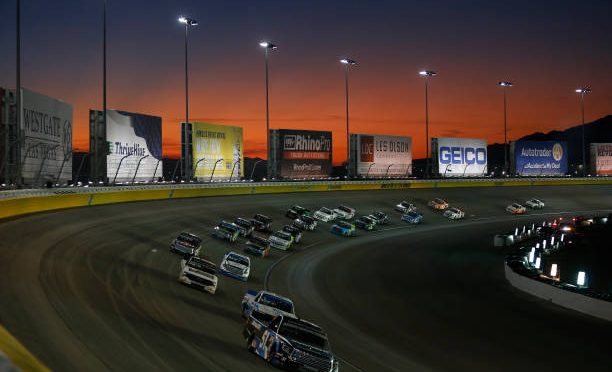
The NASCAR Gander Outdoors Truck Series inaugural Triple Truck Challenge concludes its three-race run Saturday night at World Wide Technology Raceway at Gateway (10 p.m. ET on FS1, MRN and SiriusXM NASCAR Radio) and if this final event holds true to its two-race lead-in there will be no shortage of drama and big news.
Brett Moffitt and his GMS Racing team stand to pick up an extra $150,000 bonus should the defending series champion win for the second consecutive week. The runner-up at Iowa, Moffitt was awarded the victory after the apparent winner Ross Chastain’s truck was deemed illegal in post-race inspection. And that verdict was upheld again on appeal this week.
Moffitt acknowledged he didn’t lead a lap in his win – the first by a disqualification in the history of the series – but welcomed the victory nonetheless, posting photos on social media of his team celebrating.
“This is a big change of emotions,” Moffitt said after being called to speak to the press following Chastain’s disqualification.
“As a race car driver, I got beat on track and that’s not how you want to do it. … but I’ll take a win any way I can get it.
“It is what it is,” he continued, “We finally got a win that we needed and we’ll take it.”
And, he reminded, the big money from the Triple Truck Challenge was a nice companion to his first trophy of the season.
Saturday night’s CarShield 200 presented by CK Power is a sort of re-set for everyone with another huge paycheck on the line. If someone other than Moffitt wins, that driver still earns a $50,000 bonus as part of the Triple Truck Challenge incentive.
And with the Playoffs looming, it’s go-time for multiple reasons. The big incentive from series sponsor Gander Outdoors is icing on the cake.
Chastain, for example, now needs to win again and break into the top-20 in the standings to make the Playoffs. He only declared himself Gander Trucks championship eligible two races ago (before Texas) and sits 69 points behind the 20th-place cutoff. A victory this week would be a strong statement from his Niece Motorsports team.
Looking especially strong in recent weeks is Matt Crafton, a two-time Gander Trucks champion, who moved into second in the series driver standings last week at Iowa. He trails championship leader Grant Enfinger by 47 points and holds a slim two-point edge over third place Stewart Friesen.
Crafton drove the No. 88 ThorSport Ford to back-to-back pole positions at Kansas and Charlotte earlier this season. He has nine top-10 finishes in the season’s opening 10 races; including the last seven consecutively. He was a season best runner-up in Texas in the Triple Truck Challenge opening race two weeks ago, but he’s had only one top five in the last five races at Gateway – including three DNFs.
In two previous starts at Gateway, NASCAR Gander Outdoors Truck Series driver standings leader Grant Enfinger won the pole position last year and scored a best showing of fifth place in 2017. He’s finished top 10 in nine of 10 races this season – his worst finish is 11th at Vegas. He was runner-up at the Daytona season opener and has finished fourth in the opening two races of the Triple Truck Challenge.
There is plenty of motivation across the Gander Trucks field. Moffitt is the only driver ranked among the top six in the championship standings with a victory. There are no former Gateway race winners entered this week, however, Kyle Busch Motorsports driver Todd Gilliland finished second last year and is still looking for his first series victory.
As far as Moffitt’s concerned, being awarded the victory last week following a competitor’s disqualification is not the same thing as taking the checkered flag after beating the field. So he remains as driven as ever – perhaps more so.
“It’s a place I like and GMS Racing has proven it’s strong there,” Moffitt said. “We’re looking forward to it and winning that 150 grand.”
Kyle Larson snared the No. 1 spot on the Monster Energy NASCAR Cup Series leaderboard Friday afternoon, leading a 1-2 Chip Ganassi Racing sweep in the final tune-up for Sunday’s Toyota/Save Mart 350 (3 p.m. ET, FS1, PRN, SiriusXM NASCAR Radio).
Larson drove the Ganassi No. 42 Chevrolet to a best lap of 95.469 mph on the 2.52-mile road course. His speed was just ahead of teammate Kurt Busch’s No. 1 Chevrolet, which notched a 94.986 mph lap in the 80-minute practice.
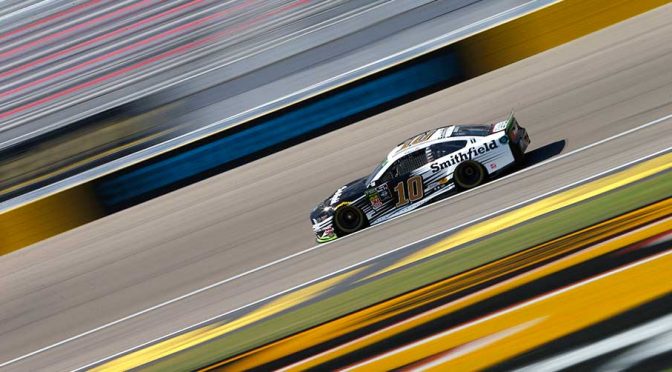
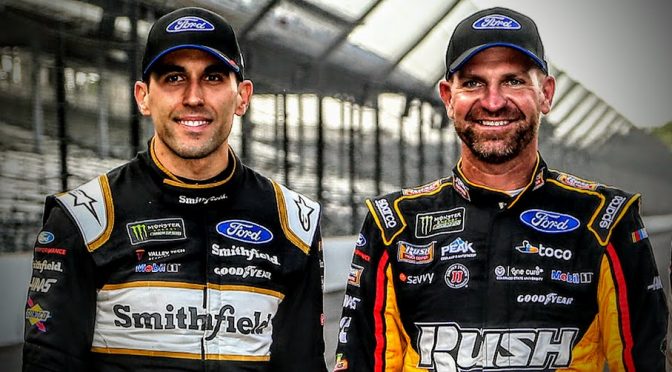
Aric Almirola was third-fastest in the Stewart-Haas Racing No. 10 Ford, just ahead of SHR teammate Clint Bowyer. Matt DiBenedetto completed the top five on the practice chart.
Drivers used Friday’s practice sessions to familiarize themselves with the “carousel” section, which was used for NASCAR events from 1989-97. The addition of the series of twists between Turns 4 and 7 stretches the course distance from 1.99 miles to the original 2.52 miles.
Kyle Busch had a handful of misadventures early in final practice. Busch’s Joe Gibbs Racing No. 18 Toyota overshot Turn 4 three times, missing the right-hander that serves as the entrance to the carousel section. In between those issues, Busch’s car spun off course as it rounded the uphill first turn into Turn 2. Busch drove away from all four incidents without significant damage. Bubba Wallace’s No. 43 also continued after a harmless spin in Turn 7 with three minutes left in the session.
Defending race winner Martin Truex Jr. was 12th-fastest in the Joe Gibbs Racing No. 19 Toyota. Truex, who paced first practice, was docked 15 minutes of track time in final practice as a penalty for his team failing inspection twice in the series’ most recent race at Michigan International Speedway.
Busch Pole Qualifying is scheduled Saturday at 3:10 p.m. ET (FS1, PRN, SiriusXM NASCAR Radio).
Truex tops the board in opening practice
Martin Truex Jr. sped to the top of the Monster Energy Series chart in Friday’s opening practice as NASCAR’s top division used the original layout at Sonoma Raceway for the first time in 22 years.
Truex’s Joe Gibbs Racing No. 19 Toyota paced the 80-minute session with a best lap of 95.326 mph. Truex is the defending race winner of Sunday’s Toyota/Save Mart 350 (3 p.m. ET, FS1, PRN, SiriusXM NASCAR Radio), having scored his second Sonoma win last June.
Ryan Blaney’s Team Penske No. 12 Ford was second-fastest at 95.195 mph. Chris Buescher was third on the speed list with Jimmie Johnson and Michael McDowell rounding out the top five.
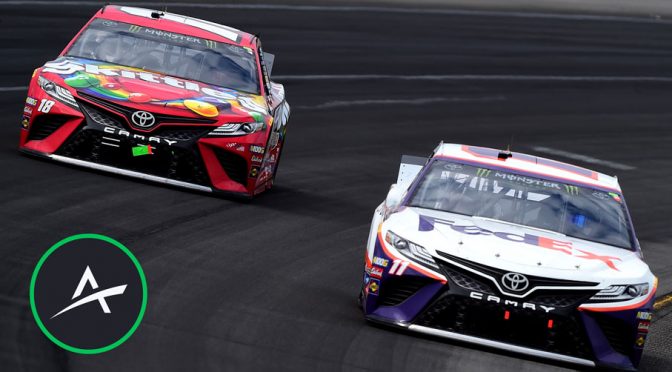
SONOMA, Calif. – When longtime sponsor FedEx told Denny Hamlin he could design his own throwback paint scheme for the Southern 500 at Darlington Raceway, he jumped at the opportunity to honor one of the sport’s legends – even if he hated him growing up.
The Joe Gibbs Racing driver revealed his 2019 Darlington throwback scheme on Friday at Sonoma Raceway — a tribute to Darrell Waltrip, the three-time champion and NASCAR Hall of Famer who is retiring from the FOX broadcast booth after Sunday’s Toyota/Save Mart 350 (3 p.m. ET, FS1, PRN, SiriusXM NASCAR Radio).
“(Watching NASCAR as a boy,) I knew (Darrell) was tough. He was a tough guy. I grew up a huge Bill Elliott fan and he was one of the toughest competitors, Darrell Waltrip was,” Hamlin said Friday. “One of my best friends at the time, we grew up watching racing and his favorite driver was Darrell Waltrip. So, we would always be sparring back and forth each week whether it be at school or wherever, talking about his driver versus my driver.
“I’ve grown to really like Darrell and everything he represents and to give 40 years of his life, not only to racing, but he transformed the sport in so many different ways, that’s just an honor to be able to know him and see him off into the sunset.”
From 1981-86 Waltrip drove the No. 11 car, the numeral that has donned Hamlin’s car since 2005. This year’s scheme is a nod to Waltrip’s Western Auto look, and it was the winner of an employee vote at Joe Gibbs Racing.
“This has been a process; this has been a couple months that I emailed FedEx and said ‘here’s the ideas that I have. I have two that I really, really like and can bring to the shop to vote’,” Hamlin said. ” … This could be a great way to honor someone who’s been a big influence for myself and a lot of people who’ve been in NASCAR. He’s devoted 40 years of his life to NASCAR and I can’t say thank you enough. This is just a small way for us to do that.”
Hamlin joins Ricky Stenhouse Jr., David Ragan and Matt DiBenedetto among those in the Monster Energy NASCAR Cup Series paying tribute to Waltrip. Cars will also carry a special decal commemorating Waltrip’s final broadcast and the hashtag #ThanksDW is being used across social media.
Waltrip was on-hand to pull the cover off the car Friday morning and was beside himself with the outpouring of support and tributes flowing his way in his final weekend behind the mic — Hamlin’s paint scheme, in particular.
“First of all, I’m flattered. This was one of my favorite paint schemes that I raced and what kind of made this special to me was this was my car. This was my team that started in 1991,” said Waltrip, who has 84 career Monster Energy Series wins. “We had some pretty good days with this car and of course, I guess my favorite number – even though it’s 17 – I always loved car No. 11. You may or may not know this, but that is the winningest number in NASCAR … Things like this mean more to me than anything. To see this car on the race track and think that it might end up in Victory Circle, that’s a pretty big deal.
” … These are the kind of things when people do them – and he wanted to run this car and this scheme – that means the world to me. I do a lot of things, but this is my life and these cars and what they represent and what they mean to me … to think that they mean something to him, too, that’s special. It doesn’t get any better than that. Best-looking car I’ve seen in a long time.”
Hamlin is a two-time Southern 500 winner, with the most recent one coming in 2017.
This story was first published on February 15, 2019.
Darrell Waltrip had all sorts of numbers in his favor before the 1989 Daytona 500. The signs and signifiers all added up. To this day, he still says he doesn’t necessarily subscribe to the belief that numbers have some higher mystique.
And yet …
“I really don’t,” Waltrip says. “It just so happens that when you’re driving car No. 17 and it’s your 17th Daytona 500 and you just kind of start looking at all the possibilities. My name (Darrell Lee Waltrip) has 17 letters in it. Our house is actually built on lot No. 17. My golf handicap is 17. The purse was $1.7 million. It was ’89 — 8 and 9 … 17.”
Those coincidences were too numerous to miss, so many that Waltrip pulled crew chief Jeff Hammond aside to discuss them before the race. Would those recurring 17s would be a promising bellwether or an ill-fated omen?
“So many things added up to 17,” Waltrip said. “And I’ve said this before, I told Hammond, I said, ‘I think there’s some good things happening here. We’re either going to win it or we’re going to finish 17th. I’m just not sure which.’ ”
When it came to the finishing order, the cosmic number 17 stopped there. Darrell Waltrip’s long-sought Daytona 500 victory was a dream come true on Feb. 19, 1989, thanks to a strategic gamble, a car named Betty and a fuel-sipping final run to the checkered flag. The completion of his career bucket list touched off a stirring celebration, one marked by a memorable, incredulous Victory Lane interview and a triumphant dance tied to a brief NFL fad.
Thirty years later, the connective tissue that binds many of that day’s prominent figures still resides in the FOX Sports booth. Waltrip and Hammond continue to be teammates in their 19th season of full-time broadcasting, which will serve as Waltrip’s final year after announcing his retirement. They’re anchored by play-by-play expert Mike Joy, who conducted that highlight-reel post-race interview, and joined by Larry McReynolds, like Hammond a member of that era’s tight-knit community of crew chiefs.
The story of that day still rings true today, united by their continued work as teammates.
Finding their way
Waltrip had qualified his lucky No. 17 on the front row, starting alongside pole-sitter and Hendrick Motorsports teammate Ken Schrader. His car, supplied with power from legendary engine builder Randy Dorton, carried so much speed that Waltrip said the crew installed a smaller restrictor plate for preseason testing so as not to fully show their hand. It’s what fed Hammond’s optimism that year, even though the car’s bouts of misfortune the previous season left the window open for doubt.
“Honestly, coming into that year, I was very confident,” Hammond said. “The car that we were going to run had been built the year before — a really good, fast race car. We had a lot of bad luck in that car, which if you don’t know, was named Betty. Darrell had named that car Betty, and he liked to go around saying, ‘Betty’s being bad.’ ”
RacingOne
Changes with tires and other set-up issues reared up the car’s more finicky side, something that Hammond and the No. 17 crew battled throughout race day.
“There were a lot of very strong cars at Daytona that year and a number of leaders late in the race,” Joy recalled, “so certainly you would’ve put Darrell among the favorites, but he was not an overwhelming favorite to win. All of those Hendrick cars were strong. At the start of the race, I wouldn’t say that he was the favorite, but he had made it very clear to everybody that he was going to be a contender.”
Instead, it was a veteran teammate in Schrader who set the pace, leading the majority of the race and running in close competition with Dale Earnhardt, who would have his own storied chase of an elusive 500 crown fulfilled nearly a decade later. All the while, Waltrip lingered in the hunt.
“During the race, we kept working, working, working and we’d kind of gotten off sequence,” Hammond said. “We had done our homework and we knew we were getting good fuel mileage. We’d started to do some calculating from the end of the race back to where we were. At that point in the race, we were kind of chasing these guys, but then realized that we have an opportunity here if we can stretch it on this next stop that we can make it on one more stop, and that if this thing stays green, we’re going to be in the catbird seat.”
Groundwork to the gamble
The foundation for a winning strategy started well before the 500-miler. Back then, fuel tanks were larger and the qualifying races were shorter — 125 miles — meaning teams planned to compete in those races without stopping for fuel. To make absolutely certain, Hammond said his team pushed to the maximum allowable size on fuel lines, overflow tubes and anything else related to the fuel system.
“We were able to take what was legally at our discretion and we maximized it,” Hammond said. “All of a sudden, we’re adding ounces to our capacity.”
Those extra drops would come in handy. Decision time came with 53 laps to go, but it wasn’t solely the crew chief’s call to make. In the pit area alongside Hammond was Waltrip’s devoted wife, Stevie, who kept a record of lap times and fuel calculations.
“The gas was going to be really close,” Stevie Waltrip said. “I can remember Jeff and I talking and trying to decide should we pit, because we knew how close it was going to be. I told Jeff, ‘Look, we know how to lose this race. Let’s go for it.’ So we did.”
Said McReynolds: “I think she was as much on board with what was going on here and I think she knew the situation, too. This is the biggest race of the year, it’s a stretch, but it’s doable and heck, let’s roll the dice here. Let’s go after it. I commend Darrell and Jeff and Stevie, the engine guys, and everybody involved with that for basically being all-in and pushing all their chips to the middle of the table.”
The final stretch
One by one, other contenders peeled off the track for small doses of fuel. Prime among them were front-runners Schrader and Earnhardt, who pitted together with 11 laps remaining. That left Alan Kulwicki and Waltrip, who used every aerodynamic draft aid he could to ease the burden on his accelerator pedal.
“We had told him what we were doing, so he had started conserving fuel early in that final run,” Hammond says. “I even told him one time, man, you draft anything you can get behind, including a seagull.”
Kulwicki dropped off the pace with four laps remaining, pitting with what was later revealed to be a flat tire, not a fuel issue. That left just Waltrip, hemmed in to the strategy that would carry his Tide-sponsored No. 17 Chevrolet to the end.
“We didn’t have fuel pumps like they do now, it’s gravity-fed, you could get fuel on the straightaway and lose it in the corners, so I’m screaming at Hammond, we’re not going to make it,” Waltrip said, indicated that his car started to sputter with two laps left. “And he’s screaming to me, just shut up and drive.
“So with the white flag in the air, we come by with one to go, and this thing is cutting out. It’s popping, it’s cracking, it’s picking up fuel in a straight line and losing in the corner, but for God knows why in some odd way, that thing had enough fuel in it that it made it all the way around that last lap.”
Hammond said at one point in the closing laps, Waltrip told him to get the gas man ready because he was coming to pit road. “We said no, you’ve got to keep going, run that son of a gun dry, because we’re committed,” Hammond said. “We were either going to live or die by whether Betty made it back to the start-finish line.”
Stevie Waltrip, meanwhile, was left double- and triple-checking her math, all while trying to remain calm.
RacingOne
“I’m sure if somebody had taken my blood pressure, it would’ve been sky high,” she said, “but I always liked to give the impression that I was not moved necessarily. Once I go in that direction, it’s not good. I was real excited and I could hear Darrell on the radio with Jeff, saying, ‘I’m running out of gas! I’m running out of gas!’ and Jeff’s telling him to draft. I was really grateful.
“Somebody came over to me on that last lap, I don’t remember who but they were celebrating, and I said, ‘don’t do that yet. It’s not over.’ Those are the things I remember. I just remember being so excited for Darrell.”
Darrell Waltrip’s animation stayed bottled up until just moments after the finish.
“It was the most dramatic, nerve-wracking, absolute I thought I was going to lose my mind race that I think I’d ever been in in my life,” Waltrip said. “It was not routine, not easy, not typical. It was an amazing accomplishment to be able to run that many laps in a car that really wasn’t that good, on a day that it was good enough to win, and that was all that really mattered.”
The interview and the ‘Shuffle’
Mike Joy interviewed Hammond and Stevie Waltrip in quick succession from the chaotic scene on pit road. All three had a sense of disbelief, from Hammond’s indication that the race had been won with a Plan B and Stevie Waltrip’s difficulty in finding the right words. After a quick break in the broadcast, Joy followed the celebration to Victory Lane, where the 42-year-old driver was having his own trouble comprehending what had happened.
“The best thing about it was, he climbs out of the car and we didn’t have to wait for a (full) commercial break to get to the winner, as often happens today,” Joy recalled. “So it was just pure, raw emotion. And he climbs out of the car and he starts talking and he grabs me, and he has that gleam in his eye that kind of let me know right then and there that I had lost control of this interview, which was fine. I was then a willing accomplice for whatever he wanted to do.”
What unfolded was Waltrip hugging team owner Rick Hendrick and shouting, “I won the Daytona 500! I won the Daytona 500!” grabbing Joy’s shoulders before returning to his incredulous state. “Wait, wait, wait. This is the Daytona 500, isn’t it? Don’t tell me it isn’t. Thank God!”
Joy, for his part, was more than eager to let the celebration roll.
“When it came to grandstanding, Darrell had few if any equals, and this was his moment,” Joy said. “Instead of interrupting him or firing in the question or something like that, it was real easy to just let him enjoy the moment however he wanted to. It turned out to be memorable. Every can remember that. Anybody who saw that moment remembers it, and I don’t think there are — maybe Dale Earnhardt in ’98 — but I don’t think there are many Victory Lanes in the Daytona 500 that compare with that one.”
Dozier Mobley
The customary radio interviews and Victory Lane photos followed, but Waltrip added his own special touch, borrowing a cue from a national phenomenon in another professional sport. The ephemeral rise of Cincinnati Bengals running back Elbert “Ickey” Woods had enlivened the NFL, briefly making him and his signature touchdown dance — the “Ickey Shuffle” — household names.
So Waltrip made the football two-step his own.
“People were trying to think of unique ways to celebrate their victory,” Waltrip said. “So they were asking me if you win the race, what are you going to do? I said, ‘boys, I ain’t got a clue, but I can’t wait to see because I’ll think of something. But I’m going to have to win it first and then I’ll think of something.’ That’s where the Tide Slide as I liked to call it, that’s where it was invented. That’s what I did and spiked my helmet.”
Lingering legacies
By the time Waltrip finally won the Daytona 500, his credentials for inclusion in the yet-to-be-built NASCAR Hall of Fame were well rooted. He was already a three-time champion of NASCAR’s premier series with a high perch on the all-time win list. Waltrip was also a four-time winner of the Coca-Cola 600; he’d get his fifth later in the 1989 season.
Dozier Mobley
Even with all those accolades, the Daytona 500 had escaped his grasp. It only made his determination to achieve it greater, to fill that last remaining void on his driving record.
“The one thing you don’t want in your career is a ‘yeah but,’ ” Waltrip says. “You don’t want to say all the things you’ve done, and ‘yeah, but you’ve never done this or yeah, but you’ve never done that.’ As you go through your racing career, in particular as you get to the end of your career, you always hope and think, have I got any ‘yeah buts’ out there? Are there any things that I could’ve done, should’ve done, wish I’d have done that I didn’t get to do? And Daytona would’ve been a huge ‘yeah, but.’
“You’ve got all these things, won championships and all these races, but you’ve never won Daytona. That would’ve been huge.”
Hammond’s own legacy was already secure as crew chief for two of Waltrip’s titles, and his Daytona 500 triumph added to his eventual total of 43 premier series wins. But what he saw in his driver that day was the opportunity to finally breathe more easily.
“What I sensed at Daytona at the end of that race was a sigh of relief,” Hammond said. “I really do. I think it’s like, ‘man, I finally won the Super Bowl. I finally went the distance and was able to close it out in that ninth inning in the final game of the World Series.’ It’s that kind of an accomplishment. To be a part of that and to be so involved in his career from championships and to finally put that crown jewel at the top, and it was somewhat late in his career when he did it, I think it took the pressure off him to feel like now, I belong in the same league with Petty and Pearson. I think that was part of it.
“These drivers, when they’re able to hoist that trophy, it puts you in a very unique class and I think if he had never done that, I think it would’ve been something lacking. There would have been a certain hole in his legacy when it comes to being a Hall of Famer.”
Still together
When Waltrip retired after the 2000 season, he was among the first hired for to join FOX Sports’ all-new team for broadcasting NASCAR races the following year. Before he’d even settled in, he was heavily involved with FOX Sports management in selecting the on-air talent that would surround him. All would have their own ties to his day in Daytona in 1989.
Mike Joy was his first pick as the team’s quarterback. McReynolds and Hammond followed, as did reporters Steve Byrnes and Matt Yocum. The core group all worked together on a broadcast of an Xfinity Series (then the Busch Series) event before making their full-fledged national debut in 2001. It was enough to convince the FOX brass that they had made the right call.
“It’s kind of neat, isn’t it?” Joy says. “I think much in the way that sometimes in this business if you’re lucky, sometimes your heroes become your friends. Sometimes the people you cover end up becoming your colleagues and you develop quite a bond, and you look back to where it began and that was one of those times.”
Racing Photo Archives
McReynolds realized that the new on-air lineup was a special group early on, though he had his own apprehension about how their personalities would align.
“When you have a group of people and it’s a group of people that’s been successful and you’ve got them trying to work together, the biggest obstacle is egos,” McReynolds said. “And are you kidding me, egos? Mike Joy, Darrell Waltrip, Larry McReynolds, Jeff Hammond, and throw all the others in, that’s enough ego to fill a warehouse and start oozing out the cracks.
“But I think what we’ve all done a really good job at for going on 19 years is that the biggest part of our ego is to let’s just have a good broadcast. I think that’s one of the biggest components to make that work.”
Hammond said he was fortunate, not only to have played a large part in one of Waltrip’s signature wins, but in being able to make the transition with him to a new role in the sport after their racing careers were complete.
It’s a near-weekly get-together for the key players that made the 1989 victory in the Great American Race a reality. And all that reminiscing has Hammond eager to form another reunion soon.
“We have gotten together a couple different times to have dinner and drink a couple beers over that win,” Hammond says. “We probably need to think about doing it here with a 30-year anniversary. There’s still a bunch of us around and for those who aren’t, we need to remember them and we need to remember the moment that we all, that particular day … I wouldn’t say we were perfect, but we were perfect for the day.”