SONOMA, Calif. – When longtime sponsor FedEx told Denny Hamlin he could design his own throwback paint scheme for the Southern 500 at Darlington Raceway, he jumped at the opportunity to honor one of the sport’s legends – even if he hated him growing up.
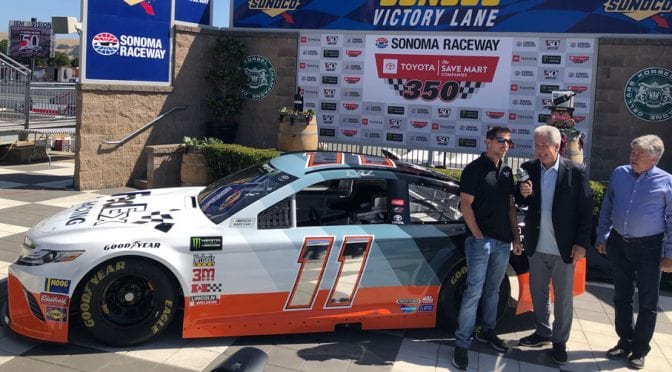
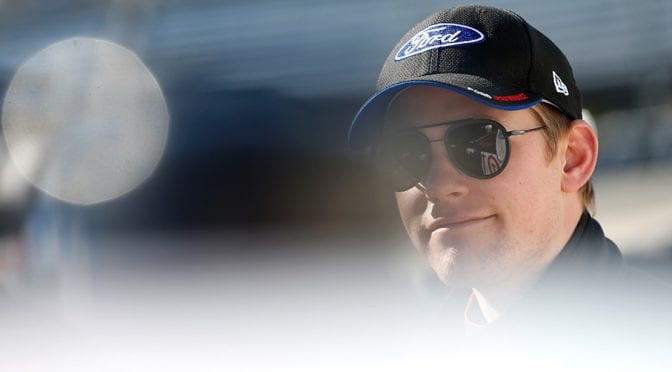
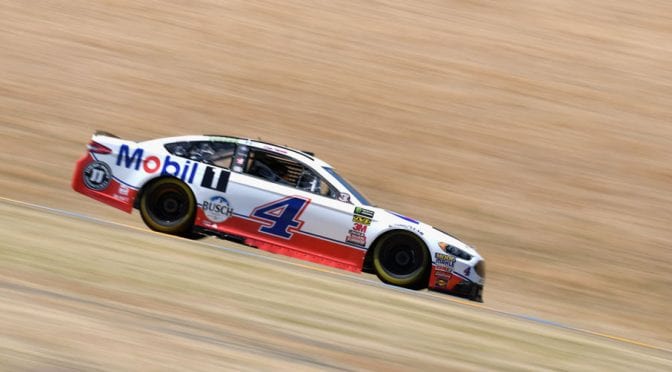
The Joe Gibbs Racing driver revealed his 2019 Darlington throwback scheme on Friday at Sonoma Raceway — a tribute to Darrell Waltrip, the three-time champion and NASCAR Hall of Famer who is retiring from the FOX broadcast booth after Sunday’s Toyota/Save Mart 350 (3 p.m. ET, FS1, PRN, SiriusXM NASCAR Radio).
“(Watching NASCAR as a boy,) I knew (Darrell) was tough. He was a tough guy. I grew up a huge Bill Elliott fan and he was one of the toughest competitors, Darrell Waltrip was,” Hamlin said Friday. “One of my best friends at the time, we grew up watching racing and his favorite driver was Darrell Waltrip. So, we would always be sparring back and forth each week whether it be at school or wherever, talking about his driver versus my driver.
“I’ve grown to really like Darrell and everything he represents and to give 40 years of his life, not only to racing, but he transformed the sport in so many different ways, that’s just an honor to be able to know him and see him off into the sunset.”
From 1981-86 Waltrip drove the No. 11 car, the numeral that has donned Hamlin’s car since 2005. This year’s scheme is a nod to Waltrip’s Western Auto look, and it was the winner of an employee vote at Joe Gibbs Racing.
“This has been a process; this has been a couple months that I emailed FedEx and said ‘here’s the ideas that I have. I have two that I really, really like and can bring to the shop to vote’,” Hamlin said. ” … This could be a great way to honor someone who’s been a big influence for myself and a lot of people who’ve been in NASCAR. He’s devoted 40 years of his life to NASCAR and I can’t say thank you enough. This is just a small way for us to do that.”
Hamlin joins Ricky Stenhouse Jr., David Ragan and Matt DiBenedetto among those in the Monster Energy NASCAR Cup Series paying tribute to Waltrip. Cars will also carry a special decal commemorating Waltrip’s final broadcast and the hashtag #ThanksDW is being used across social media.
Waltrip was on-hand to pull the cover off the car Friday morning and was beside himself with the outpouring of support and tributes flowing his way in his final weekend behind the mic — Hamlin’s paint scheme, in particular.
“First of all, I’m flattered. This was one of my favorite paint schemes that I raced and what kind of made this special to me was this was my car. This was my team that started in 1991,” said Waltrip, who has 84 career Monster Energy Series wins. “We had some pretty good days with this car and of course, I guess my favorite number – even though it’s 17 – I always loved car No. 11. You may or may not know this, but that is the winningest number in NASCAR … Things like this mean more to me than anything. To see this car on the race track and think that it might end up in Victory Circle, that’s a pretty big deal.
” … These are the kind of things when people do them – and he wanted to run this car and this scheme – that means the world to me. I do a lot of things, but this is my life and these cars and what they represent and what they mean to me … to think that they mean something to him, too, that’s special. It doesn’t get any better than that. Best-looking car I’ve seen in a long time.”
Hamlin is a two-time Southern 500 winner, with the most recent one coming in 2017.
This story was first published on February 15, 2019.
Darrell Waltrip had all sorts of numbers in his favor before the 1989 Daytona 500. The signs and signifiers all added up. To this day, he still says he doesn’t necessarily subscribe to the belief that numbers have some higher mystique.
And yet …
“I really don’t,” Waltrip says. “It just so happens that when you’re driving car No. 17 and it’s your 17th Daytona 500 and you just kind of start looking at all the possibilities. My name (Darrell Lee Waltrip) has 17 letters in it. Our house is actually built on lot No. 17. My golf handicap is 17. The purse was $1.7 million. It was ’89 — 8 and 9 … 17.”
Those coincidences were too numerous to miss, so many that Waltrip pulled crew chief Jeff Hammond aside to discuss them before the race. Would those recurring 17s would be a promising bellwether or an ill-fated omen?
“So many things added up to 17,” Waltrip said. “And I’ve said this before, I told Hammond, I said, ‘I think there’s some good things happening here. We’re either going to win it or we’re going to finish 17th. I’m just not sure which.’ ”
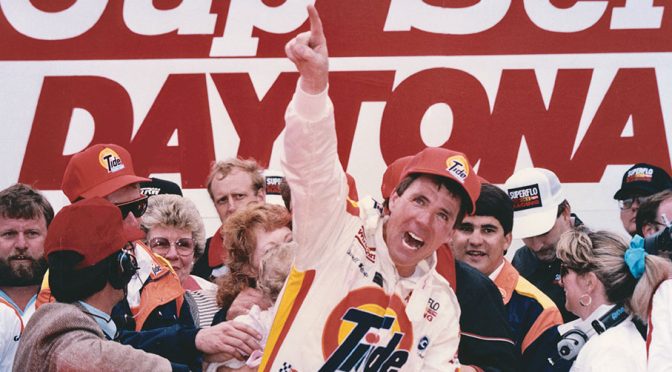
When it came to the finishing order, the cosmic number 17 stopped there. Darrell Waltrip’s long-sought Daytona 500 victory was a dream come true on Feb. 19, 1989, thanks to a strategic gamble, a car named Betty and a fuel-sipping final run to the checkered flag. The completion of his career bucket list touched off a stirring celebration, one marked by a memorable, incredulous Victory Lane interview and a triumphant dance tied to a brief NFL fad.
Thirty years later, the connective tissue that binds many of that day’s prominent figures still resides in the FOX Sports booth. Waltrip and Hammond continue to be teammates in their 19th season of full-time broadcasting, which will serve as Waltrip’s final year after announcing his retirement. They’re anchored by play-by-play expert Mike Joy, who conducted that highlight-reel post-race interview, and joined by Larry McReynolds, like Hammond a member of that era’s tight-knit community of crew chiefs.
The story of that day still rings true today, united by their continued work as teammates.
Finding their way
Waltrip had qualified his lucky No. 17 on the front row, starting alongside pole-sitter and Hendrick Motorsports teammate Ken Schrader. His car, supplied with power from legendary engine builder Randy Dorton, carried so much speed that Waltrip said the crew installed a smaller restrictor plate for preseason testing so as not to fully show their hand. It’s what fed Hammond’s optimism that year, even though the car’s bouts of misfortune the previous season left the window open for doubt.
“Honestly, coming into that year, I was very confident,” Hammond said. “The car that we were going to run had been built the year before — a really good, fast race car. We had a lot of bad luck in that car, which if you don’t know, was named Betty. Darrell had named that car Betty, and he liked to go around saying, ‘Betty’s being bad.’ ”
RacingOne
Changes with tires and other set-up issues reared up the car’s more finicky side, something that Hammond and the No. 17 crew battled throughout race day.
“There were a lot of very strong cars at Daytona that year and a number of leaders late in the race,” Joy recalled, “so certainly you would’ve put Darrell among the favorites, but he was not an overwhelming favorite to win. All of those Hendrick cars were strong. At the start of the race, I wouldn’t say that he was the favorite, but he had made it very clear to everybody that he was going to be a contender.”
Instead, it was a veteran teammate in Schrader who set the pace, leading the majority of the race and running in close competition with Dale Earnhardt, who would have his own storied chase of an elusive 500 crown fulfilled nearly a decade later. All the while, Waltrip lingered in the hunt.
“During the race, we kept working, working, working and we’d kind of gotten off sequence,” Hammond said. “We had done our homework and we knew we were getting good fuel mileage. We’d started to do some calculating from the end of the race back to where we were. At that point in the race, we were kind of chasing these guys, but then realized that we have an opportunity here if we can stretch it on this next stop that we can make it on one more stop, and that if this thing stays green, we’re going to be in the catbird seat.”
Groundwork to the gamble
The foundation for a winning strategy started well before the 500-miler. Back then, fuel tanks were larger and the qualifying races were shorter — 125 miles — meaning teams planned to compete in those races without stopping for fuel. To make absolutely certain, Hammond said his team pushed to the maximum allowable size on fuel lines, overflow tubes and anything else related to the fuel system.
“We were able to take what was legally at our discretion and we maximized it,” Hammond said. “All of a sudden, we’re adding ounces to our capacity.”
Those extra drops would come in handy. Decision time came with 53 laps to go, but it wasn’t solely the crew chief’s call to make. In the pit area alongside Hammond was Waltrip’s devoted wife, Stevie, who kept a record of lap times and fuel calculations.
“The gas was going to be really close,” Stevie Waltrip said. “I can remember Jeff and I talking and trying to decide should we pit, because we knew how close it was going to be. I told Jeff, ‘Look, we know how to lose this race. Let’s go for it.’ So we did.”
Said McReynolds: “I think she was as much on board with what was going on here and I think she knew the situation, too. This is the biggest race of the year, it’s a stretch, but it’s doable and heck, let’s roll the dice here. Let’s go after it. I commend Darrell and Jeff and Stevie, the engine guys, and everybody involved with that for basically being all-in and pushing all their chips to the middle of the table.”
The final stretch
One by one, other contenders peeled off the track for small doses of fuel. Prime among them were front-runners Schrader and Earnhardt, who pitted together with 11 laps remaining. That left Alan Kulwicki and Waltrip, who used every aerodynamic draft aid he could to ease the burden on his accelerator pedal.
“We had told him what we were doing, so he had started conserving fuel early in that final run,” Hammond says. “I even told him one time, man, you draft anything you can get behind, including a seagull.”
Kulwicki dropped off the pace with four laps remaining, pitting with what was later revealed to be a flat tire, not a fuel issue. That left just Waltrip, hemmed in to the strategy that would carry his Tide-sponsored No. 17 Chevrolet to the end.
“We didn’t have fuel pumps like they do now, it’s gravity-fed, you could get fuel on the straightaway and lose it in the corners, so I’m screaming at Hammond, we’re not going to make it,” Waltrip said, indicated that his car started to sputter with two laps left. “And he’s screaming to me, just shut up and drive.
“So with the white flag in the air, we come by with one to go, and this thing is cutting out. It’s popping, it’s cracking, it’s picking up fuel in a straight line and losing in the corner, but for God knows why in some odd way, that thing had enough fuel in it that it made it all the way around that last lap.”
Hammond said at one point in the closing laps, Waltrip told him to get the gas man ready because he was coming to pit road. “We said no, you’ve got to keep going, run that son of a gun dry, because we’re committed,” Hammond said. “We were either going to live or die by whether Betty made it back to the start-finish line.”
Stevie Waltrip, meanwhile, was left double- and triple-checking her math, all while trying to remain calm.
RacingOne
“I’m sure if somebody had taken my blood pressure, it would’ve been sky high,” she said, “but I always liked to give the impression that I was not moved necessarily. Once I go in that direction, it’s not good. I was real excited and I could hear Darrell on the radio with Jeff, saying, ‘I’m running out of gas! I’m running out of gas!’ and Jeff’s telling him to draft. I was really grateful.
“Somebody came over to me on that last lap, I don’t remember who but they were celebrating, and I said, ‘don’t do that yet. It’s not over.’ Those are the things I remember. I just remember being so excited for Darrell.”
Darrell Waltrip’s animation stayed bottled up until just moments after the finish.
“It was the most dramatic, nerve-wracking, absolute I thought I was going to lose my mind race that I think I’d ever been in in my life,” Waltrip said. “It was not routine, not easy, not typical. It was an amazing accomplishment to be able to run that many laps in a car that really wasn’t that good, on a day that it was good enough to win, and that was all that really mattered.”
The interview and the ‘Shuffle’
Mike Joy interviewed Hammond and Stevie Waltrip in quick succession from the chaotic scene on pit road. All three had a sense of disbelief, from Hammond’s indication that the race had been won with a Plan B and Stevie Waltrip’s difficulty in finding the right words. After a quick break in the broadcast, Joy followed the celebration to Victory Lane, where the 42-year-old driver was having his own trouble comprehending what had happened.
“The best thing about it was, he climbs out of the car and we didn’t have to wait for a (full) commercial break to get to the winner, as often happens today,” Joy recalled. “So it was just pure, raw emotion. And he climbs out of the car and he starts talking and he grabs me, and he has that gleam in his eye that kind of let me know right then and there that I had lost control of this interview, which was fine. I was then a willing accomplice for whatever he wanted to do.”
What unfolded was Waltrip hugging team owner Rick Hendrick and shouting, “I won the Daytona 500! I won the Daytona 500!” grabbing Joy’s shoulders before returning to his incredulous state. “Wait, wait, wait. This is the Daytona 500, isn’t it? Don’t tell me it isn’t. Thank God!”
Joy, for his part, was more than eager to let the celebration roll.
“When it came to grandstanding, Darrell had few if any equals, and this was his moment,” Joy said. “Instead of interrupting him or firing in the question or something like that, it was real easy to just let him enjoy the moment however he wanted to. It turned out to be memorable. Every can remember that. Anybody who saw that moment remembers it, and I don’t think there are — maybe Dale Earnhardt in ’98 — but I don’t think there are many Victory Lanes in the Daytona 500 that compare with that one.”
Dozier Mobley
The customary radio interviews and Victory Lane photos followed, but Waltrip added his own special touch, borrowing a cue from a national phenomenon in another professional sport. The ephemeral rise of Cincinnati Bengals running back Elbert “Ickey” Woods had enlivened the NFL, briefly making him and his signature touchdown dance — the “Ickey Shuffle” — household names.
So Waltrip made the football two-step his own.
“People were trying to think of unique ways to celebrate their victory,” Waltrip said. “So they were asking me if you win the race, what are you going to do? I said, ‘boys, I ain’t got a clue, but I can’t wait to see because I’ll think of something. But I’m going to have to win it first and then I’ll think of something.’ That’s where the Tide Slide as I liked to call it, that’s where it was invented. That’s what I did and spiked my helmet.”
Lingering legacies
By the time Waltrip finally won the Daytona 500, his credentials for inclusion in the yet-to-be-built NASCAR Hall of Fame were well rooted. He was already a three-time champion of NASCAR’s premier series with a high perch on the all-time win list. Waltrip was also a four-time winner of the Coca-Cola 600; he’d get his fifth later in the 1989 season.
Dozier Mobley
Even with all those accolades, the Daytona 500 had escaped his grasp. It only made his determination to achieve it greater, to fill that last remaining void on his driving record.
“The one thing you don’t want in your career is a ‘yeah but,’ ” Waltrip says. “You don’t want to say all the things you’ve done, and ‘yeah, but you’ve never done this or yeah, but you’ve never done that.’ As you go through your racing career, in particular as you get to the end of your career, you always hope and think, have I got any ‘yeah buts’ out there? Are there any things that I could’ve done, should’ve done, wish I’d have done that I didn’t get to do? And Daytona would’ve been a huge ‘yeah, but.’
“You’ve got all these things, won championships and all these races, but you’ve never won Daytona. That would’ve been huge.”
Hammond’s own legacy was already secure as crew chief for two of Waltrip’s titles, and his Daytona 500 triumph added to his eventual total of 43 premier series wins. But what he saw in his driver that day was the opportunity to finally breathe more easily.
“What I sensed at Daytona at the end of that race was a sigh of relief,” Hammond said. “I really do. I think it’s like, ‘man, I finally won the Super Bowl. I finally went the distance and was able to close it out in that ninth inning in the final game of the World Series.’ It’s that kind of an accomplishment. To be a part of that and to be so involved in his career from championships and to finally put that crown jewel at the top, and it was somewhat late in his career when he did it, I think it took the pressure off him to feel like now, I belong in the same league with Petty and Pearson. I think that was part of it.
“These drivers, when they’re able to hoist that trophy, it puts you in a very unique class and I think if he had never done that, I think it would’ve been something lacking. There would have been a certain hole in his legacy when it comes to being a Hall of Famer.”
Still together
When Waltrip retired after the 2000 season, he was among the first hired for to join FOX Sports’ all-new team for broadcasting NASCAR races the following year. Before he’d even settled in, he was heavily involved with FOX Sports management in selecting the on-air talent that would surround him. All would have their own ties to his day in Daytona in 1989.
Mike Joy was his first pick as the team’s quarterback. McReynolds and Hammond followed, as did reporters Steve Byrnes and Matt Yocum. The core group all worked together on a broadcast of an Xfinity Series (then the Busch Series) event before making their full-fledged national debut in 2001. It was enough to convince the FOX brass that they had made the right call.
“It’s kind of neat, isn’t it?” Joy says. “I think much in the way that sometimes in this business if you’re lucky, sometimes your heroes become your friends. Sometimes the people you cover end up becoming your colleagues and you develop quite a bond, and you look back to where it began and that was one of those times.”
Racing Photo Archives
McReynolds realized that the new on-air lineup was a special group early on, though he had his own apprehension about how their personalities would align.
“When you have a group of people and it’s a group of people that’s been successful and you’ve got them trying to work together, the biggest obstacle is egos,” McReynolds said. “And are you kidding me, egos? Mike Joy, Darrell Waltrip, Larry McReynolds, Jeff Hammond, and throw all the others in, that’s enough ego to fill a warehouse and start oozing out the cracks.
“But I think what we’ve all done a really good job at for going on 19 years is that the biggest part of our ego is to let’s just have a good broadcast. I think that’s one of the biggest components to make that work.”
Hammond said he was fortunate, not only to have played a large part in one of Waltrip’s signature wins, but in being able to make the transition with him to a new role in the sport after their racing careers were complete.
It’s a near-weekly get-together for the key players that made the 1989 victory in the Great American Race a reality. And all that reminiscing has Hammond eager to form another reunion soon.
“We have gotten together a couple different times to have dinner and drink a couple beers over that win,” Hammond says. “We probably need to think about doing it here with a 30-year anniversary. There’s still a bunch of us around and for those who aren’t, we need to remember them and we need to remember the moment that we all, that particular day … I wouldn’t say we were perfect, but we were perfect for the day.”
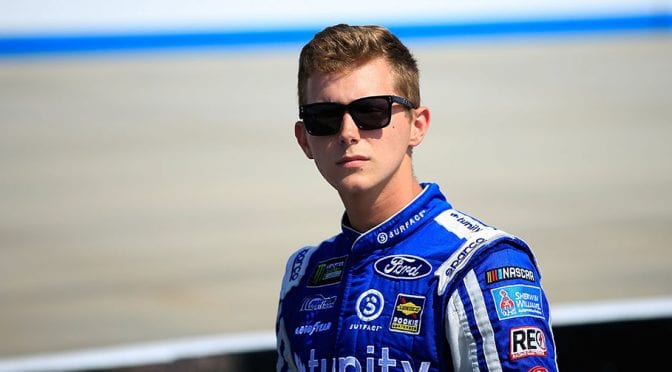
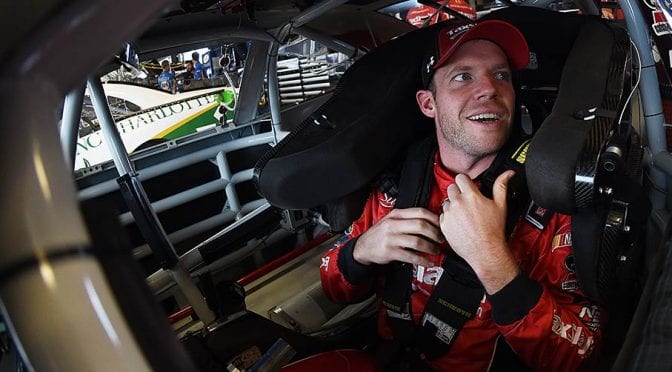
Professional stock car racing wasn’t in the blood for Matt Tifft, a 22-year-old from Medina County, Ohio — he turns 23 on June 26th. However, strong support from family and friends led Tifft to becoming one of NASCAR’s youngest drivers in the 2019 Monster Energy NASCAR Cup Series.
Growing up in the small town of Hinckley, Tifft traveled across state lines to Michigan almost every weekend to experience dirt track races with his dad and a family friend. From there, he genuinely knew he wanted to be behind the wheel.
“We would spend time with family and go watch the races and those were always some of my favorite memories as a kid,” Tifft said. “So, from a young age, I began asking myself the question of how to get started in racing.”
Tifft started out at 11 years old, racing go-karts at the local, state and national levels. By the time he was 15, the Ohio native was racing full-sized stock cars on the ARCA Midwest Tour. At age 18, he made his debut in NASCAR’s Gander Outdoors Truck Series, and during the 2015 campaign, he raced his way to five top-10 finishes in just 12 races.
He quickly moved up to the Xfinity Series, racing full-time with the Joe Gibbs Racing team — and later with Richard Childress Racing — amassing 32 top-10 finishes and eight top-five finishes in full-time duty from 2017 to 2018. A solid year in 2018 opened the doors for Tifft to move up to the Cup Series, as he began conversations with Front Row Motorsports to join their stable of experienced drivers.
In spite of having established success at many lower levels, Tifft knew the transition to a new team in the Cup Series would be one of the biggest challenges of his career. He made his Monster Energy Series debut in February at the 2019 Daytona 500 but got caught up in the “Big One” late in the race — a 21-car accident. Here, he learned that the level of competition is much higher and the margin for error each week is very slim.
“The first couple of weeks were definitely a big adjustment and I had to lean on my teammates a lot,” he said. “Being with Front Row, a smaller team, you have to race the race differently than if you were racing for a top-tier team.”
Working alongside veteran drivers and teammates Michael McDowell and David Ragan has been vital for Tifft, allowing him to grow on and off the track.
“Learning what they (my teammates) do and how they approach races to have a successful day has been important,” he said. “My original goal was to just be able to finish and learn the races, but now I can shoot for top 25s and top 20s. Three out of the last five races we’ve finished in the top 25, which met our goal.”
For the entire Front Row Motorsports team, Tifft said a main focus for 2019 has been getting better each race and becoming more consistent.
“We’ve got to get better at capitalizing on opportunities,” Tifft said. “We’ve been there, and the next goal is figuring out how we solidify ourselves in the top 20 and start getting some top 15s and maybe sneak out a top 10 somewhere.”
In 15 starts this season, Tifft has a pair of top-20 finishes. The Front Row rookie and crew chief Mike Kelley have finished all but two, an important goal for the pairing. Tifft will head to the first road course race of his Cup career as the series goes to Sonoma on Sunday (3 p.m. ET, FS1, PRN, SiriusXM NASCAR Radio).
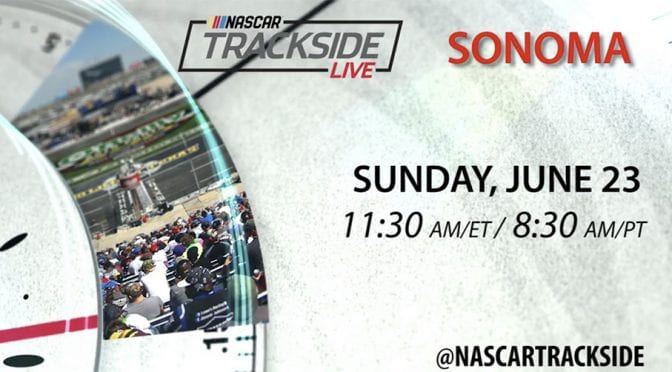
Trackside Live makes its return in Wine Country, as the Monster Energy NASCAR Cup Series heads to the winding roads of Sonoma Raceway for the first road course showdown of the season!
The live show will begin Sunday, June 23 at 11:30 a.m. ET with a special guest appearance from driver Kyle Larson.
Q&As, games and more family fun will be a part of this unique experience so join in on the excitement and don’t miss your opportunity to soak up the sun and be a part of this must-see event — all leading up to the Toyota/Save Mart 350 (3 p.m. ET, FS1, PRN, Sirius XM NASCAR Radio).
SANDUSKY, Ohio – ThorSport Racing announces Myatt Snider will pilot the No. 13 Tenda Ford F-150 this weekend at World Wide Technology Raceway at Gateway (WWTR) near St. Louis, Missouri.
With one start at the track in the NASCAR Gander Outdoors Truck Series, Snider started the 2018 event 14th, where he raced to a fourth-place finish. The 2018 Sunoco Racing Rookie of the Year, Snider amassed three top-five and eight top-10 finishes on his way to the honor that included 55 laps led.
“We had one of our best finishes of the year last season at Gateway, and I can’t wait to see what we can do again this year with the No. 13 Tenda team and ThorSport Racing,” noted Snider. “I’m really thankful for Duke and Rhonda Thorson to give me the chance to step back into the truck and compete this weekend. I’m pumped for the race, and to work with many of my guys from last year on the No. 13 Ford Performance team.”
Snider has made two starts in 2019 recording a season-best finish, sixth, at Martinsville Speedway.
Televised action for the CarShield 200 presented by CK Power at WWTR will air Saturday, June 22, at 10 p.m. ET on FOX Sports 1 (FS1) / FOX Sports App. Additional coverage can be found via the Motor Racing Network (MRN) and SiriusXM Channel 90.
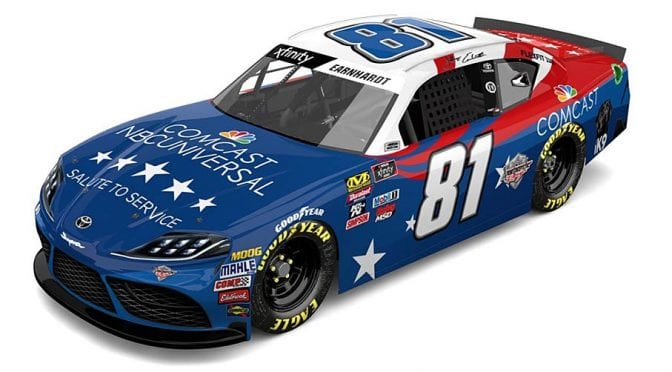
Comcast NBCUniversal plans to round out the NASCAR Salutes initiative with a flourish, announcing Wednesday that it will sponsor the Xtreme Concepts Racing No. 81 Toyota driven by Jeffrey Earnhardt with a patriotic paint scheme in the Xfinity Series race at Chicagoland Speedway.
Comcast announced the “Salute to Service” design for Earnhardt’s entry, which will hit the track Saturday, June 29 at the 1.5-mile Illinois track. Earnhardt will be making his seventh Xfinity Series start of the season at Chicagoland, and just his second this season for the Xtreme Concepts organization.
The company also announced that it would showcase its support of the U.S. armed services with the names of active military units and installations on the windshield headers of every car in the field at Daytona International Speedway for the fourth straight year.
“At Comcast NBCUniversal, our sustained commitment to our nation’s military community has never been stronger,” said Brigadier General (Ret.) Carol Eggert, Senior Vice President of Military and Veteran Affairs at Comcast NBCUniversal. “We truly value the tremendous contributions of those who serve our country and wanted to recognize them and their families in a special way as we celebrate our country’s independence.\
Comcast NBCUniversal also plans to support other special programs, including inviting more that 100 local service members and their families to the track. Earnhardt will make an public appearance at the Xfinity Store near the speedway in Joliet, Illinois, on Thursday, June 27 from 6-7 p.m. CT.
“I’m really excited to be partnering with Comcast and the military on the Comcast Salute to Service Toyota for Chicagoland Speedway,” Earnhardt said in a news release. “Our race team at Xtreme Concepts Racing feels as though we can’t ever do enough for the men and women that protect us and it’s awesome to be partnered with a company like Comcast that feels the same. We will give the fans at Chicagoland Speedway and watching on NBCSN something awesome to cheer for. Hopefully, they watch us park it in Victory Lane.”
MOORESVILLE, N.C. – Regan Smith, current NASCAR analyst and pit reporter for FOX Sports, is temporarily trading in the microphone for the familiarity of a steering wheel this summer. Smith broke the news on “NASCAR Race Hub,” and JR Motorsports confirmed that he’ll return to his former team to drive the No. 8 Chevrolet in NASCAR Xfinity Series races at Mid-Ohio Sports Car Course (Aug. 10) and Road America (Aug. 24). Smith will also reunite with longtime partner Fire Alarm Services for the events.
It marks the 35-year-old Smith’s first Xfinity start in two years and his first for JRM since 2016. The Cato, N.Y., native started his JRM career in a memorable way in 2012, winning in his team debut at Homestead-Miami Speedway. Smith moved into a full-time role for the organization from 2013-2015, a highly successful three-year stint that produced five wins – including one at Mid-Ohio – 26 top fives and 71 top 10s, along with a Most Popular Driver Award. Smith’s best points finish, a second-place effort in the 2014 NXS championship, crowned JRM the first team in 14 years to claim first and second in the series point standings.
“I can’t tell you how pumped I am for this,” Smith said. “Dale, Kelley and everyone at JRM have been like family to me, so in a way, it feels like I’m coming home. I have great memories of the years I spent there and the success we had during that time. And to have Fire Alarm on board for these races makes it all the more meaningful. They’ve been both friends and supporters of mine for a long time.”
Smith’s No. 8 Fire Alarm Services entry will be nearly identical to the neon green and flat black paint scheme he carried to victory with JRM in 2015 at Dover International Speedway. With headquarters in Arvada, Colo., Fire Alarm Services Inc. provides superior Fire Life Safety and Security services and products for protecting its clients’ real-estate investment. The company brings a fresh and innovative approach to the Fire Life Safety industry with an emphasis on developing lasting client relationships and unmatched customer service.
“Regan is a great friend, and he means so much to our company,” said Dale Earnhardt Jr. “He won a lot of races here, but for me his significance was no more evident than in his very first race for JRM at the end of 2012. That win at Homestead was enormous. It ended a winless streak for JR Motorsports that had dragged us down for more than two years. It was a tone-setter. It gave us momentum that, to be honest, I’m not sure we’ve ever lost. That’s what Regan means to this company, and that’s why I’m thrilled to have him back for these two races at Mid-Ohio and Road America.”
Smith is the ninth driver named to the No. 8 this season. The team, led by crew chief Taylor Moyer, is currently ranked 10th in owner points on the strength of four top-five and 11 top-10 finishes.
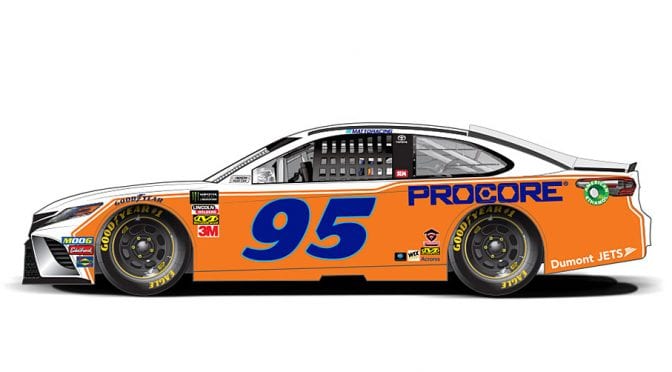
Leavine Family Racing became the latest team to announce a commemorative paint scheme honoring Darrell Waltrip’s final race for FOX Sports, revealing a No. 95 Toyota that pays tribute to the driver-turned-broadcaster’s earliest days on the track.
Matt DiBenedetto will drive a throwback No. 95 ride that resembles the design campaigned by DW in 1974, a year that produced Waltrip’s first pole position in NASCAR’s top division. The car, sponsored by Procore, will hit the track in this Sunday’s Toyota/Save Mart 350 (3 p.m. ET, FS1, PRN, SiriusXM NASCAR Radio) at Sonoma Raceway.
The design was unveiled Wednesday on FOX Sports’ “Race Hub” news program.
LFR’s entry is at least the third organization celebrating Waltrip’s broadcasting career. Roush Fenway Racing’s No. 17 and Front Row Motorsports’ No. 38 will also recognize Waltrip this weekend.
This scheme is based on DW’s 1974 Terminal Transport car.
DW made 35 career starts in the No.95 and we’re thrilled to pay homage to him this weekend!#ThanksDW#Team95pic.twitter.com/4nxV9MFJSj
Stage points have gone out the window for the winners of the past two Sonoma races in the Monster Energy NASCAR Cup Series. Both Kevin Harvick and Martin Truex Jr. chose to forgo stage points in order to get track position on the way to their wine-soaked wins in 2017 and 2018, respectively.
According to Racing Insights, Harvick made four pit stops during his 2017 win, with two of them coming two laps before the end of a stage. Meanwhile, Truex took a similar approach last season, pitting a total of three times with two of those stops coming two laps before the end of a stage.
On the other hand, the stage winners the past two seasons haven’t fared as well. Truex and Jimmie Johnson won the stages in 2017 but finished the race 37th and 13th, respectively. AJ Allmendinger and Denny Hamlin won the stages in 2018 and finished 38th and 10th in the race.
Something to keep in mind as you watch the race on FS1 and when you set your lineups in the Fantasy Live game or place your Props Challenge picks this week.
Now for the rest of the rundown for this Sunday’s Toyota/Save Mart 350 (3 p.m. ET, FS1, PRN, SiriusXM).
IT’S BACK!
After more than 20 years without it, Sonoma Raceway is bringing back the carousel section to help celebrate the track’s 50th anniversary. This means drivers will drop down coming out of Turn 4 and make a big, sweeping left turn through Turns 6 and 6A before popping back up onto what has been the normal layout of late in Turn 7.
It’s the first chance to break out the Goodyear Eagle Road Course Radials this season. Each team will get three sets for practice, one set for qualifying and seven sets for the race (six race sets, plus one set transferred from qualifying or practice).
Adding the carousel lengthens the track from 1.99 miles to 2.52 miles and will make the technical road course even more tight. As a result, Goodyear is bringing one of its most tractive tread compounds in the entire 2019 tire lineup.
Goodyear will also bring its wet weather radials for Sonoma should NASCAR decide that conditions warrant. But they tell us it never rains in Northern California.
RULES PACKAGE
Sonoma will feature the 2019 rules package for road courses, and that means no aero ducts and a tapered-spacer engine expected to reach 750 horsepower.
TUNE-IN INFORMATION TV: FS1 (3 p.m. ET) Radio: PRN, SiriusXM NASCAR Radio NASCAR.com: Live leaderboard, Drive, RaceView Trackside Live: 11:30 a.m. ET on Sunday
Of note: The FOX part of the 2019 Cup schedule wraps up this weekend, and it will be Darrell Waltrip’s last broadcast, i.e. the last time to hear him utter the famous “Boogity, boogity, boogity” line. He is sure to have something special up his sleeve worth tuning in for, and several drivers will be driving cars paying homage to Waltrip’s former paint schemes. | See the schemes
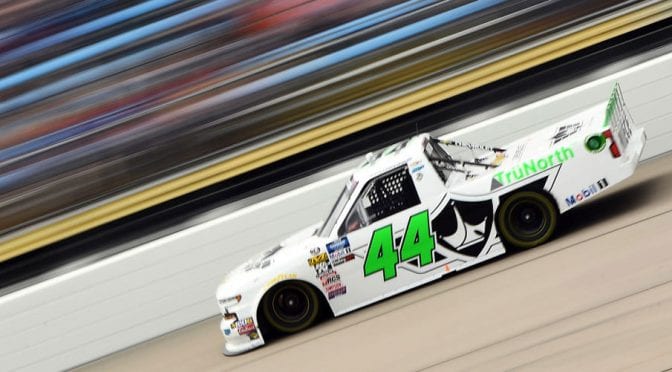
A member of the National Motorsports Appeals Panel upheld penalties Wednesday against the Niece Motorsports No. 44 team for violations found in post-race inspection after last Sunday’s NASCAR Gander Outdoors Truck Series event at Iowa Speedway.
The Al Niece-owned truck was found to be too low in the front after Ross Chastain drove it to an apparent victory in Sunday’s M&M’s 200 at the .875-mile track. Competition officials disqualified Chastain and the Niece organization, handing the win to Brett Moffitt, who was scored second as the checkered flag unfurled.
In filing the expedited appeal, Niece indicated that it planned to argue that minor damage during the course of the 200-lap race caused the No. 44 Chevrolet to fail the minimum height requirement. The Monster Energy NASCAR Cup Series does not have a ride-height rule, but those guidelines exist in the Xfinity and Gander Trucks tours.
Wednesday’s appeal was heard by Bryan Moss, the former Gulfstream Aerospace president who was appointed as the National Motorsports Final Appeals Officer in 2014. His ruling is final and cannot be appealed. Under this type of appeals process, the burden of proof rested with NASCAR to demonstrate that a rules violation had occurred and that the penalty was appropriate.
Niece Motorsports representatives, including Chastain, released a statement through social media shortly after the hearing’s outcome was announced.
— Niece Motorsports (@NieceMotorsport) June 19, 2019
Chastain and Niece were also stripped of their two stage wins, stage points and any benefits from the victory that would apply to playoff eligibility. Chastain was demoted to a last-place finish in the 32-truck field, earning five championship points, and all other drivers were moved up by one position in the finishing order. Officials also redistributed stage wins to ThorSport Racing teammates Matt Crafton and Ben Rhodes.
Chastain recently changed his series eligibility, declaring June 4 that he would collect points toward the Gander Trucks championship after opening the season with a focus on the NASCAR Xfinity Series. That left the 26-year-old driver with the challenge of starting with zero points midway through the regular season, requiring him to win and move into the top 20 in the series standings to qualify for the eight-driver playoff field.
Chastain had already scored a Gander Trucks victory this season, prevailing May 10 at Kansas Speedway for the first win of his career in the series. But that triumph did not carry championship implications as Chastain was eligible for Xfinity Series points at the time.
The last time an apparent NASCAR national-series winner was disqualified was when the Emerald Performance Group’s No. 19 Chevrolet driven by Mike Skinner was found with an unapproved cylinder head in an Xfinity Series race in March 1999 at Atlanta Motor Speedway. Three days after that decision, the penalty was overturned in an appeal and Skinner was restored as the race winner.
The last national-series disqualification that was upheld came in August 1995 after Dale Jarrett’s first-finishing No. 32 Ford was penalized for an illegal intake manifold at Michigan International Speedway. Mark Martin inherited the victory.