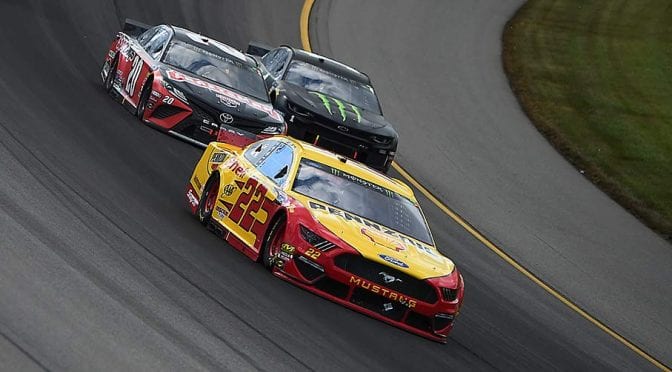
NASCAR competition officials announced Monday that post-race inspection for all three national series will have a new model for 2019, introducing a system where race-winning teams found in violation of the rule book would be disqualified.

The rules change signals a shift in a long-standing tradition of penalizing an offending race winner with fines, suspensions and/or points deductions, but allowing victories to stand. The new system also accelerates the timetable for thorough post-race technical inspections, which will now be conducted at the track soon after the checkered flag instead of midweek at the NASCAR Research & Development Center in Concord, North Carolina.

“I think for us, we’re really looking at a total culture change,” said Steve O’Donnell, NASCAR Executive Vice President and Chief Racing Development Officer. “We’ve been through a deterrence model where we’ve really worked with the race teams at the track and probably been more lenient than we should in terms of the number of times teams can go through inspection and pass, fail and there’s almost incentive to try to get something by NASCAR, so we want to really reverse that trend.

“We’re going to put it on the teams to bring their equipment right. When they come to the track, we’ll be much less lenient as they go through technical inspection with stiffer penalties in terms of qualifying, and then ultimately during the race, obviously we want everyone to be racing straight up.”

RELATED: More competition tweaks for ’19

The cars of the first-place and second-place finishers, plus at least one randomly selected car, will undergo post-race inspection at the track. Competition officials said they are targeting a time frame of approximately 90 minutes to two hours to complete the inspection and confirm the race winner.

Should one of those cars fail the post-race inspection, the driver and team would receive last-place points and the rest of the finishing order would move up. Disqualified teams also would be stripped of the benefits of playoff points, stage points and automatic postseason berths and playoff advancement.

The shift in rules marks a distinct break from a longstanding, unwritten company policy. Series organizers have avoided taking wins away for decades, adhering to a belief that fans should leave the race track with an assurance that the first finisher was indeed the winner.

Current-day officials acknowledged that break in tradition, saying that a goal of the new procedures was to accelerate the inspection process and avoid the potential pall that midweek penalties can cast over both the previous week’s result and the following week’s race.

RELATED: Target date for Gen-7 set

“Times have changed. We’ve moved forward with a lot of things,” said Jay Fabian, who was named the new Monster Energy NASCAR Cup Series managing director on Jan. 16. “There’s always been different thoughts on what the right way is to do it and it’s migrated to saying, hey, we really need to do this as more of a real-time thing and make sure it’s right post-race and move on with it from the weekend.

“We want to be able to avoid the Tuesday, Wednesday announcements of penalties. We want to take that story line away and we’ve got to be rid of all that. So it’s up to the teams to behave the right way and if they don’t, they’ll get a DQ and we’ll move forward from that on a Sunday or Saturday whenever we race instead of a Tuesday or Wednesday.”

Said O’Donnell: “I think it’s evolved over time as you look at it. Certainly we wanted to declare a winner at the track, but what was happening was a potential negative story line that just stayed with the sport and really for the fan base for too long. So with the ability now with Jay Fabian coming into the director’s seat, and we have the capabilities to conduct a thorough post-race inspection at track and do it in a somewhat efficient timeline and still be able to declare that winner that night, put it to bed, celebrate that winner and go on from there.”

NASCAR’s history of disqualifying drivers can be traced all the way back to the first race for the Monster Energy Series (then called Strictly Stock) in 1949. Jim Roper was declared the winner at the old Charlotte Speedway after the car of apparent first-place driver Glenn Dunaway was found with illegal springs.

Last year, a rash of five penalties in the first three months of the season were issued for rear-window modifications. That outbreak prompted Scott Miller, NASCAR senior vice president of competition, to indicate that the sanctioning body was exploring harsher punishment for such violations.

The Stewart-Haas Racing No. 4 team drew the heaviest penalty of last season after an illegal rear spoiler was found on Kevin Harvick’s race-winning car from Texas. That infraction became a headline-grabbing story line with two races left in the playoffs, something Miller said the sanctioning body hopes to avoid this season.

RELATED: Recapping No. 4 penalty

“I don’t know that our hand was necessarily forced,” Miller says, “but really and truly a lot of the team owners, we have this culture of playing these cat-and-mouse games between us and the teams, and that’s really kind of a lot of wasted energy on both sides of the fence and I think that the best way for us to get our arms around that is to have a little bit stiffer deterrent.

“Then there was also, I think every time we had a penalty on Wednesday, there seemed to be an outcry from a lot of the fans about how can you not take the win away if there was something wrong with the car, so I think there’s a lot of factors that went into us moving in this direction for this season. But I think it’s been, as you’ve probably seen, it seems to be pretty well received so far with most all of the industry.

“They kind of asked for it, and it was time. Definitely a departure for us, but times change and I think this is just one of those things of us changing with the times.”

Miller and Fabian said NASCAR will continue to focus on certain “hot” areas of vehicles in inspection, including parts and components designed to fail over the course of a race to gain an advantage. Elton Sawyer, NASCAR’s Vice President of Officiating and Technical Inspection, said officials still will inspect cars at the R&D Center to explore trends as teams search for gray areas in the rule book.

RELATED: Triple Truck Challenge program

Sawyer said the potential for penalties to emerge from the R&D Center still is a possibility, but that likelihood is remote with at-track inspection becoming more rigorous. Sawyer also indicated penalties still will be classified as either L1 and L2, following a structure that was introduced before the 2017 season.

“I think the positive was that disqualification, it’s really clean,” Sawyer said. “It’s simple. Our fans will understand it. It won’t be that someone won the race and had an L1 or L2 and they get no benefit from it, but the second place, third place and fourth place on down, they were somewhat penalized. They basically ran second, third or fourth to a vehicle that was not in compliance to the rule book.”

According to a survey of NASCAR statistics, the most recent instance of a premier series driver’s disqualification from the finishing order came Oct. 7, 1973, in the National 500 at Charlotte Motor Speedway. Team owner Nord Krauskopf ordered driver Buddy Baker to park his No. 71 Dodge nearly 100 laps short of the finish, saying carburetor rules had made the car uncompetitive. Krauskopf refused to let NASCAR officials inspect the car, resulting in the DQ.

The last known disqualification of a race winner in NASCAR’s top series came April 17, 1960, at Wilson (N.C.) Speedway. Apparent winner Emanuel Zervakis was demoted to last place after his car was found with an oversized fuel tank. NASCAR Hall of Famer Joe Weatherly was elevated to first place, credited with leading one lap.

Discussions and development of a next-generation stock car are well underway for NASCAR’s competition arm and the racing departments of the sport’s three participating manufacturers. As the goals for a seventh-generation racer become clearer, so has the target launch date — 2021.

Steve O’Donnell, NASCAR executive vice president and chief racing development officer, provided a progress update on the Gen-7 car for the Monster Energy NASCAR Cup Series last week, giving the best timeline yet for the evolutionary vehicle’s schedule. Officials have indicated that this season’s rules package would serve as a bridge to the next-generation car, which is meant to attract new Original Equipment Manufacturers (OEMs) to compete alongside current participants Chevrolet, Ford and Toyota.

“I think it’s important to note that the reason we headed in this direction with the 2019 rules package was really to line us up for where we wanted to go in the future from a racing standpoint, both on track from a car’s look and feel and then under the hood from an engine perspective,” O’Donnell said. “If you look at a lot of the dialogue we’ve had with our existing OEMs, potential OEMs, there’s a lot of interest to do some things differently in terms of making the cars look even more like they do on the street, making sure that we can evolve some of our engine technology as well.

RELATED: Qualifying tweaks among changes

“So what we’ve done is spent the better part of a year putting together a Gen-7 model. We’re in process now of going out and talking to OEMs, talking in the industry and getting their feedback on what they like and what they may want to see tweaked, but the goal for us is to roll this out fairly quickly with an accelerated timeline to 2021, but again this rules package — particularly the engine horsepower — allows us to have some discussion around a more relevant engine that can be around the 2021 package.”

Relevance in car-speak means a closer correlation between a highway-going consumer vehicle and its NASCAR counterpart, a move that also means increased brand identity. The primary areas for that strengthened resemblance are the car body and the engine, both of which are expected to evolve as the sport moves forward.

Mark Rushbrook, the global director of Ford Performance Motorsports, said that Ford has been supportive of the move to a Gen-7 stock car, even as racing engineers have diligently worked to make the debut of the 2019 Mustang in the Monster Energy Series a successful one.

“As much as we like that we’ve been able to make our new car look like a Mustang, we’d like the ability to do even more in that area,” Rushbrook said Friday during a preseason media session at the automaker’s sprawling Ford Performance Tech Center. “In terms of what you see on the outside of the car, we’d like to see a few changes — nothing major, but a few changes underneath the car for a little bit of technical relevance. We want to make sure that we can keep using our technical tools and learning like we do today. We don’t want to lose that with any changes.

“I think that’s the right step for the sport to take to get a new car in those different areas. Then after that step is taken, then look at something for the powertrain. I think it’s too much to do the engine at the same time, but I think it’s something that can follow after the new car.”

MORE: Triple Truck Challenge announced

Doug Yates, whose Roush Yates Engines supply the factory-backed horsepower for Ford’s premier series entries, said he agreed with Rushbrook’s proposed two-stage transition to Gen-7: car first, engine next. He also expressed hope that such a process, done right, could create efficiencies and cost effectiveness alike.

But Yates also indicated that the industry needed to “continue to move the ball forward” to keep manufacturers — both current and prospective — interested in the sport’s potential for showcasing new technology.

“I always tell my staff, if we come in the shop 20 years from now and it looks the same as it did today, then we haven’t done our job,” Yates said. “I think the same way about the race cars and the engines. When we open up the hood five or 10 years from now, it needs to look different than it does today, and it needs to look more production-based, and that’s exciting. There’s a lot of questions there. The main one is, what does that cost? What are the financial implications, but if we can work together with NASCAR and the other OEMs to make a smart step forward — and that may include electrification on these cars at some point — I think that’s something we need to embrace as a sport.”

NASCAR officials revealed Monday a more compact schedule for national series qualifying procedures at the majority of its tracks in 2019.

At both short tracks and intermediate speedways, the first of three rounds will be shortened from 15 minutes to 10. The other rounds will remain 10 minutes for Round 2 and five minutes for the final round.

At every national-series track next season, the down-time intervals between rounds will be trimmed from seven minutes to five.

“Really as we looked at what was going on, it was obvious that we didn’t need that extra five minutes,” said Scott Miller, NASCAR senior vice president of competition. “Tightening that first round up a bit and tightening up the time between the rounds, we think that was somewhat with TV partners and just making a tighter, more interesting show out of it for our fans.”

Qualifying at superspeedways (Daytona and Talladega) will remain two untimed rounds of single-lap qualifying. Road-course qualifying will continue to be two rounds — 25 minutes followed by a 10-minute final round.

RELATED: Gen-7 target date set

Participation guidelines announced

The national series driver participation guidelines remain mostly unchanged from 2018. Drivers with more than five years of full-time Monster Energy NASCAR Cup Series experience are eligible for a maximum of seven NASCAR Xfinity Series starts and five NASCAR Gander Outdoors Truck Series starts.

Drivers who elect to accumulate Monster Energy Series points are not eligible to compete in any Dash 4 Cash or Triple Truck Challenge races, or the final eight races in either the Xfinity Series or the Gander Outdoors Truck Series. In addition, drivers who earn points in the Xfinity Series are ineligible to compete in Triple Truck Challenge races and the championship race for the Gander Outdoors Truck Series.

MORE: Triple Truck Challenge announced

Kennedy’s role grows

Ben Kennedy, the great-grandson of NASCAR founder Bill France Sr., will expand his leadership in the family business in 2019, becoming the managing director of racing operations and international development.

Kennedy, 27, was named managing director of the NASCAR Gander Outdoors Truck Series one year ago. In his new capacity, he will work alongside Steve O’Donnell, NASCAR Executive Vice President and Chief Racing Development Officer, and others in the sport’s front office.

O’Donnell said Kennedy will take ownership of new projects and expand his reach globally to include NASCAR’s racing series in Canada, Mexico and Europe.

“I’m still going to stay actively involved in the Truck Series as well, but taking more of a broader approach this year and focusing a little more on competition,” Kennedy said. “We have so many different projects and things that we’re working on, not only in 2019 but for beyond as well. The next few years are going to be very exciting.”

Getting specific

NASCAR also announced Monday that its three national tours will have dedicated, series-specific officials conducting inspections in 2019.

Elton Sawyer, NASCAR’s Vice President of Officiating and Technical Inspection, said there will be 12 officials devoted to the Monster Energy Series, 10 for the Xfinity Series and eight for the Gander Outdoors Truck Series.

“We felt like when we sat down and we looked at this and we put this model together that the efficiencies are going to come with the fact that those highly skilled inspectors are going to be in those individual garages and living in those garages,” Sawyer said. “The scrutineering of the vehicles, whether it be trucks or cars, those are the things our inspectors will be living with all weekend. That’s not to say they won’t work in other garages, but 95 percent of the time, they’ll be right there in that garage and working with the teams and trying to correct any issues they may have.

“We feel like this model sets us up for those efficiencies as well as more success across the board as far as the inspection process and making sure ultimately that our fans are seeing a great race with a level playing field.”

The Advance Auto Parts Clash is a preseason race held at Daytona International Speedway. The race is held following the first Busch Pole Qualifying session of the season in the Monster Energy NASCAR Cup Series on Sunday, Feb. 10, 2019. Here’s a look at how the field is determined, the format and much more.

RELATED: Buy tickets for Daytona Speedweeks | Full Speedweeks schedule 

Programming info for the Advance Auto Parts Clash:
When: Feb. 10, starting at 3 p.m. ET
Where: Daytona International Speedway
TV: FS1
Radio: MRN, SiriusXM NASCAR Radio

What is the format?
The Clash is a 75-lap race with a competition caution that will come at Lap 25. In total, the race is scheduled to go 187.5 miles.

How is the lineup set up for the race?
A random draw to be held at 6:30 p.m. ET in the Fan Zone will determine the starting spots for each of the drivers in Sunday’s field.

How are drivers eligible for The Clash?
The Clash field is comprised of:
1. Drivers who won a Busch Pole Award the previous season
2. Drivers who are former Clash winners that competed full time the previous season
3. Former Daytona 500 winners that competed full time the previous season
4. Former Daytona 500 pole winners who competed full time the previous season
5. Drivers who qualified for last season’s Monster Energy NASCAR Cup Series Playoffs

Who is eligible for the 2019 Clash?
Twenty drivers are eligible for this year’s event. Here is the full list and how they qualified:
Aric Almirola (2018 Playoff driver)
Ryan Blaney (2018 Busch Pole Award winner)
Alex Bowman (2018 Busch Pole Award winner)
Clint Bowyer (2018 Playoff driver)
Kurt Busch (2018 Busch Pole Award winner)
Kyle Busch (2018 Busch Pole Award winner)
Austin Dillon (Former Daytona 500 Busch Pole Award winner)
Chase Elliott (2018 Busch Pole Award winner)
Denny Hamlin (2018 Busch Pole Award winner)
Kevin Harvick (2018 Busch Pole Award winner)
Jimmie Johnson (Former Daytona 500 Busch Pole Award winner)
Erik Jones (2018 Busch Pole Award winner)
Brad Keselowski (2018 Playoff driver)
Kyle Larson (2018 Busch Pole Award winner)
Joey Logano (2018 Busch Pole Award winner)
Jamie McMurray (Former Daytona 500 winner)
Paul Menard (2018 Busch Pole Award winner)
Ryan Newman (Former Daytona 500 winner)
Daniel Suarez (2018 Busch Pole Award winner)
Martin Truex Jr. (2018 Busch Pole Award winner)

Which drivers will be in new rides at The Clash?
Kurt Busch: No. 1 Chip Ganassi Racing Chevrolet
Jamie McMurray: No. 40 Spire Motorsports Chevrolet
Ryan Newman: No. 6 Roush Fenway Racing Ford
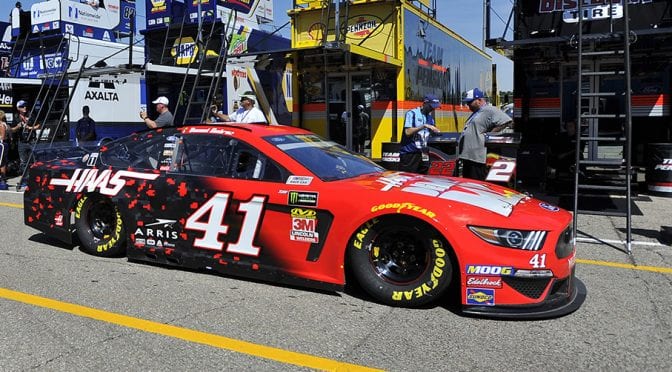
Daniel Suarez: No. 41 Stewart-Haas Racing Ford
Martin Truex Jr.: No. 19 Joe Gibbs Racing Toyota

RELATED: Drivers on the move for 2019 | See drivers in their 2019 fire suits

Who are the active winners of The Clash?
Brad Keselowski is the defending race winner. Active drivers to have won this race in the past besides Keselowski are:
Joey Logano (2017)
Denny Hamlin (2016, 2014, 2006)
Kevin Harvick (2013, 2010, 2009)
Kyle Busch (2012)
Kurt Busch (2011)
Jimmie Johnson (2005)

Editor’s note: NASCAR.com continues its countdown of team previews for the Monster Energy Series season, ranked in order of best finish in last year’s owner standings. Today’s feature: Chip Ganassi Racing and drivers Kurt Busch and Kyle Larson.

Chip Ganassi Racing

Manufacturer: Chevrolet

Engine: Hendrick Engines

Drivers: Kurt Busch, No. 1; Kyle Larson, No. 42

Crew chiefs: No. 1: Matt McCall; No. 42: Chad Johnston

2018 standings: Kyle Larson finished ninth in the driver standings and the No. 42 car was also ninth in the owner standings. Jamie McMurray was 20th in the driver standings and the No. 1 car was also 20th in the owner standings. In his final season for Stewart-Haas Racing, Kurt Busch was seventh in the driver standings and the No. 41 car was seventh in the owner standings.

What’s new: McMurray’s run as a full-time driver is over after nine straight seasons with Chip Ganassi in which he compiled four wins in the Monster Energy Series and qualified for the playoffs five times. McMurray will compete in this season’s Daytona 500 for Spire Motorsports, in partnership with CGR, driving the No. 40 Chevrolet in what could be his final race in the Monster Energy Series. Enter Busch, the 2004 premier series champion who spent the past five seasons with Stewart-Haas Racing, where he compiled six wins and made the playoffs five times with a high finish of seventh in the standings (2016, 2018).

Outlook: Busch brings a championship pedigree, veteran savvy and perhaps a dash of edginess that could be just what the team needs to get Larson back on the right track. Larson compiled four wins in 2017 and has the talent to be among the championship contenders, but he didn’t crack the win column in 2018. With Busch and Larson able to lean on each other for information it would not be surprising to see both cars in the playoffs come September. Both drivers have shown the ability to make a deep playoff run, but the next step is to break into the Championship 4.

DRIVERS
Kurt Busch, No. 1 Monster Energy Chevrolet: Busch had six wins, including the 2017 Daytona 500, in his five seasons with SHR, re-establishing himself as a championship contender. He comes to CGR for at least one season, but the future beyond that is open-ended. With perhaps a short window of opportunity, Busch will need to get up to speed quickly with crew chief Matt McCall and adjust to his new team’s surroundings, including switching manufacturers from Ford to Chevrolet. Partnering with Larson, Busch sounds open to taking on a mentoring role if it means a better performance overall for CGR.

“Larson can be bigger. He can be better,” Busch said. “And I see something in him. And that’s part of the draw of why I came here. There are plenty of reasons, but that’s one of those things on the side. It’s not a trophy. It’s not a win. But I would feel a sense of accomplishment by helping him out.”

Kyle Larson, No. 42 Credit One Bank Chevrolet: Larson appeared primed to make the jump to Championship 4 regular after enjoying a breakout season in 2017 when he won four times and finished eighth in the standings. Although he did not win last season, Larson still managed to compile a career-best 12.6 average finish. That was due in large part to six second-place finishes where for one reason or another Larson couldn’t break through to Victory Lane. It’s easy to see that if Larson finds a way to finish races better that he could be right back where he was two years ago, which is to say on par with the Big 3 and in the thick of the championship hunt. And with Larson’s strong history at Homestead, if he manages to get there someday as part of the Championship 4, he’ll be a good bet to win it all.

TEAM PREVIEWS
• Jan. 22: Assorted teams
• Jan. 23: Richard Petty Motorsports
• Jan. 24: Germain Racing
• Jan. 25: Leavine Family Racing
• Jan 28: Front Row Motorsports
• Jan. 29: JTG Daugherty Racing
• Jan. 30: Wood Brothers Racing
• Jan. 31: Roush Fenway Racing
• Feb. 1: Richard Childress Racing
• Feb. 4: Chip Ganasssi Racing
• Feb. 5: Hendrick Motorsports
• Feb. 6: Joe Gibbs Racing
• Feb. 7: Stewart-Haas Racing
• Feb. 8: Team Penske

MYRTLE BEACH, S.C. — Ty Gibbs scored an emotional victory at Myrtle Beach Speedway on Saturday with his grandfather, Coach Joe Gibbs, in attendance.

Gibbs took the lead from Will Burns on lap 116 and held off a late race challenge from reigning Myrtle Beach Speedway track champion Justin Milliken in the closing laps to score the victory. The win, his biggest to date, came less than one month after J.D. Gibbs, who had been the bedrock of Joe Gibbs Racing for years, passed away.

“I have a great group of guys who did a great job today talking me through the race and everything,” Ty Gibbs told Race22.com in victory lane after the race. “It just means a lot to get this win. This is for J.D. too. He‘s up there, he‘s probably smiling too on some type of racetrack up there. This means a lot. I had a blast up there and my guys did a great job.”

For Ty Gibbs, who was teamed up with Barry Nelson and the Nelson Motorsports racing team, the victory gives him plenty of confidence heading into the CARS Response Energy Tour season.

“It means a lot,” Gibbs said. “It means I get to keep my job. It gives me some confidence to win the first race of the season. First race win for Joe Gibbs Racing this year. It means a lot too to win here at one of the hardest tracks. Now we get to go to one of the easier tracks and go stomp them. It was fun racing next to Justin [Milliken] too.”

The victory was equally emotional for Joe Gibbs, former Washington Redskins head coach and the owner of the Joe Gibbs Racing NASCAR team.

“It means a lot to our family and to Ty,” Coach Gibbs told Race22.com. “Really appreciate it. If everybody out there can go to JDGibbsLegacy.com and watch our service from last Friday with J.D., we lost J.D. on January 11th, so we‘re asking everybody to do that. Huge day for Ty and the whole Gibbs family. It‘s a big deal for us.”

Coach Gibbs talked briefly about the impact J.D. had at Joe Gibbs Racing and now feels Ty could be destined to carry on the Gibbs family legacy in NASCAR.

“J.D. really pulled our race team,” Coach Gibbs remarked. “He spent 27 years there. We want to do everything we can to continue racing. It looks like Ty will be the one grandson that will want to race for us. That‘s exciting for us, for the whole family. We appreciate everyone here today. First race out of the box is a big deal for us so we really appreciate it.”

The victory was Ty Gibbs‘ third career win.

Justin Milliken, who also raced a Nelson Motorsports car, came home in third after challenging Gibbs late. Under the circumstances, Milliken was perfectly fine with a third-place finish.

“For those guys to do what they did and offer me a car and put me in the race, I was just going to race them clean,” Milliken said. “I didn‘t have anything to race with at the end. I knew that. My strategy was just to fall to the back and make some hay at the end. We were able to do that and found ourselves in second. I knew going into one that we didn‘t have a winning car so I wanted to do what I could to try to help the team get a win. It was a great weekend. Ty drove a great race.”

Ryan Millington finished in second after passing Milliken on the last lap. Bradley McCaskill finished fourth while Jacob Heafner rounded out the top-five.

Race22 Gibbs Myrtlebeach 190202

Results
1. Ty Gibbs; 2. Ryan Millington; 3. Justin Milliken; 4. Bradley McCaskill; 5. Jacob Heafner; 6. Brody Pope; 7. Luke Sorrow; 8. Mike Darne; 9. Jason York; 10. Peyton Sellers.
11. Sam Yarbrough; 12. Corey Heim; 13. Layne Riggs; 14. Austin Somero; 15. Will Burns; 16. Bob Saville; 17. David Roberts; 18. Brian Vause; 19. Chris Throckmorton; 20. Cameron Bowen.
21. Dillon Houser; 22. Jerry Miracle; 23. Austin McDaniel; 24. Angela Ruch; 25. Matt Cox; 26. Jamie Weatherford; 27. Chad McCumbee; 28. Brian Mundy; 29. Justin Hicks; 30. Lucas Williams.
31. Ed Williams; 32. Melvin Langley; 33. Matthew Linker; 34. Stuart Ricks.

Which channels have NASCAR programming this week? We answer that and give you the weekly NASCAR television listings here in the NASCAR TV schedule.

Note: All times are ET.

MORE: Get the NBC Sports App | How to find FS1 | Get FOX Sports Go | How to find NBCSN

Monday, Feb. 4
6 p.m., NASCAR Race Hub, FS1/FOX Sports GO
7 p.m., NASCAR Race Classic: The 1998 Daytona 500, FS1/FOX Sports GO (re-air)

Tuesday, Feb. 5
6 p.m., NASCAR Race Hub, FS1/FOX Sports GO

On MRN
7 p.m., NASCAR Live

Wednesday, Feb. 6
3 a.m., NASCAR Race Hub, FS1/FOX Sports GO (re-air)
6 p.m., NASCAR Race Hub, FS1/FOX Sports GO

Thursday, Feb. 7
6 p.m., NASCAR Race Hub, FS1/FOX Sports GO

Friday, Feb. 8
1 a.m., NASCAR Race Hub, FS1/FOX Sports GO (re-air)

Saturday, Feb. 9
8:30 a.m., The Perfect Storm: The 1979 Daytona 500, FS1/FOX Sports GO
9:30 a.m., Untold Stories: Daytona, FS1/FOX Sports GO
10:30 a.m., Monster Energy NASCAR Cup Series Advance Auto Parts Clash practice, FS1/FOX Sports GO (Canada: TSN2)
Noon: NASCAR Race Hub: Weekend Edition, FS1/FOX Sports GO
1 p.m., Monster Energy NASCAR Cup Series Daytona 500 qualifying practice, FS1/FOX Sports GO (Canada: TSN App)
2 p.m., NASCAR Race Hub: Weekend Edition, FS1/FOX Sports GO
3 p.m., Monster Energy NASCAR Cup Series Daytona 500 qualifying final practice, FS1/FOX Sports GO (Canada: TSN App)
4 p.m., NASCAR Race Hub: Weekend Edition, FS1/FOX Sports GO
11 p.m., NASCAR The Decades: The 1990s, NBCSN/NBC Sports App (re-air)
11:30 p.m., NASCAR Race Classic: 1998 Daytona 500, FS1/FOX Sports GO (re-air)

On MRN
10:30 a.m., Advance Auto Parts Clash practice
1 p.m., Daytona 500 qualifying practice
3 p.m., Daytona 500 qualifying final practice

Sunday, Feb. 10
Noon: Monster Energy NASCAR Cup Series Daytona 500 qualifying, FOX/FOX Sports GO (Canada: TSN1, 4, 5)
2 p.m., NASCAR RaceDay: Daytona, FS1/FOX Sports GO
3 p.m., Monster Energy NASCAR Cup Series Advance Auto Parts Clash, FS1/FOX Sports GO (Canada: TSN4, 5)
10 p.m., Monster Energy NASCAR Cup Series Advance Auto Parts Clash, FS2/FOX Sports GO (re-air)
Midnight, Monster Energy NASCAR Cup Series Daytona 500 qualifying, FS1/FOX Sports GO (re-air)

On MRN
Noon, Daytona 500 qualifying
2 p.m., Advance Auto Parts Clash coverage

Business is about to pick up in a big way.

With the offseason officially in the rear-view mirror, New Smyrna Speedway is set to host the World Series of Asphalt Stock Car Racing beginning on Friday night. The nine nights of racing action will mark the 53rd running of the prestigious event, and all of the NASCAR Whelen All-American Series racing (Feb. 8-9 & Feb. 11-16) will once again air via a live stream on FansChoice.TV.

Even though the World Series serves as the kick-off for many race teams, and fans, alike, it isn’t the first time cars will hit the track this year. In January, as part of a revamped Red Eye 50/50 at New Smyrna, Ryan Moore (Super Late Model) and former NASCAR Gander Outdoor Truck Series champion Mike Skinner (Pro Late Model) opened their season in Victory Lane. Moore is among multiple drivers already entered for the World Series with plenty of momentum on his side.


WHAT TO WATCH FOR

The contingent of SLM drivers includes some top talent from across the country. Bubba Pollard, one of the top short-track drivers who is known for winning marquee events, will run the full week driving for track local legend David Rogers, who is injured and can’t compete. Pollard is joined by upcoming star Sam Mayer, who surprised many in 2018, racing to top five finishes in nearly all events during the World Series. He is going back looking for a breakthrough performance to leap towards a championship driving for Wimmer Motorsports.

470x600 Wj4i6u2kmac3x484455Five-time NASCAR K&N Pro Series West winner Derek Kraus, defending USAC Midget champion Logan Seavey and former K&N Pro Series East winner Spencer Davis are also on the star-studded list.

The World Series culminates with the Orange Blossom Super Late Model 100 on Saturday, Feb. 16.

Over the past few years, the World Series has served as a precursor for young talent ascending to the big stage. NASCAR Gander Outdoor Truck Series champion Christopher Bell picked up his first NASCAR Super Late Model win in his debut at New Smyrna in 2015. Last year, Gander Outdoor Truck competitor Harrison Burton visited Victory Lane, and Stephen Nasse picked up his elusive first World Series SLM crown. The eventual champion in the last eight years won his first and only title at the half-mile, showing that a new champion could be in store.

WORLD SERIES OF ASPHALT STOCK CAR RACING CHAMPIONS

Tour Type Modified teams will take to the track for the first time on Monday, with five nights of action headlined by two special events on Wednesday (John Blewett Memorial 76) and Friday (Richie Evans 100). Defending World Series champion Matt Hirschman is heading back looking for his second straight crown, while Cup Series driver Ryan Preece, who won three straight titles before Hirschman took him down last season, will run the first three nights of the week. With Preece not running the entire week and focusing his efforts on his Monster Energy Cup Series effort in the Daytona 500, it leaves the door wide-open for someone new to challenge Hirschman for the top, but you might not have to look far.

Five-time NASCAR Whelen Modified Tour champion Doug Coby is heading back to New Smyrna looking to get his team back into championship form and is looking to score his first World Series crown. Coby also brings a stout lineup of Whelen Modified Tour drivers following closely behind him. Jimmy Blewett, Timmy Solomito, Calvin Carroll, Dave Sapienza, Tommy Catalano and Patrick Emerling are among those entered. Chuck Hossfeld, the 2012 World Series champion, is also returning.

World Series of Asphalt: DAILY SCHEDULES | EVENT PAGE

The Pro Late Models, Florida Modifieds, American Auto Sportsman, Pro Truck, Super Stock, Mod Minis and Bombers are all scheduled to compete throughout the week, creating an impressive racing card. The NASCAR K&N Pro Series East will headline the entire week as they open their season on Sunday, with the running of the New Smyrna 175.

RACE FACTS

RACE World Series of Asphalt Stock Car Racing
PLACE New Smyrna (Fla.) Speedway
DATE Friday, Feb. 8 to Saturday, Feb. 16
TIME 7:30 p.m. ET
TELEVISION FansChoice.tv (Live Stream) (Feb. 8-9 & Feb. 11-16)
TRACK LAYOUT Half-mile high-banked oval
EVENT SCHEDULE Feature racing begins at 7:30 p.m. ET each night
TWITTER @newsmyrnaspdway, @NASCARHomeTrack
HASHTAG #NSSWorldSeries

CREW CHIEF HANDOUT: A two-lap time trial style qualifying will be in place throughout the week. Once a driver has taken the green flag the first time by, the time is official. Any division that doesn’t have qualifying scheduled for a specific night will invert from the previous nights finish. The determination of the qualifying order is done at the pit office by a draw each day. Each night, a fan will draw a number for the invert, ranging from 0-2-4-6-8. Cars must go through pre-qualifying technical inspection and proceed directly to the corresponding qualifying number on the outer (or inner) pit wall. Once a car is through technical inspection, the only item that can be checked is air pressure. Once a car has been on the track, two crew members may go to the car when it returns to check air pressure and stagger, without jacking up the car. No other adjustments may be made prior to the green flag for the race.

The tires a team qualifies on must be the tires a team races on that night. During any impound events teams may not change a tire unless it is flat and approved by an official. Tires will be released from the impound area to teams prior to qualifying. No tire softening or altering agents will be permitted throughout the duration of the week.

A drivers meeting will take place each day, and all drivers are required to attend.

Throughout the week, Super Late Model teams will compete in five 35-lap feature races, one 50-lap event and a 100-lap finale, the Orange Blossom 100. The Pro Late Models will compete in six 35-lap feature events and a 100-lap finale, the Zach Donatti Memorial. The Tour Type Modifieds may enter for technical inspection on Sunday February 11, but will begin racing on Monday. The Tour Modifieds will compete in two 35-lap events, one 50-lap feature and two special events — the 76-lap John Blewett III Memorial on Wednesday and the Richie Evans Memorial 100 on championship Friday night. Practice for the Super Late Models, Sportsman, Pro Late Models and Modifieds is available on Thursday, February 7 from 1-7 p.m.

A cumulative points system will be used to determine the champion of the week in each class. The winner of each event will score 50 points, with the second-place finisher scoring 48, third scoring 46, etc., two points down per position throughout the field.

Pit road speed for the entirety of the week is 35 MPH. Anyone who elects to pit must stay single file behind the pace car under caution and then enter pit road. Any cars that pit must restart at the tail end of the field. No cars may pass the pace car at any time. No weaving on pit road will be tolerated.

At the end of each event, the top three finishes must go to the frontstretch. No crew members may touch or work on the car unless they are directed to do so by officials. Following the post-race media, all three cars must proceed to the technical inspection shed and the driver must drive the car to the scales.


MEDIA CENTER

Race22.com: Ty Gibbs Scores Emotional Victory at Myrtle Beach

TheFourthTurn.com: Joe Gibbs’ Grandson, Ty Gibbs, Wins The Icebreaker at Myrtle Beach

Speed51.com: Showtime Ready To Head South to Smyrna With New Team | Speedweeks Surprise: Coby Racing Full Week at Smyrna

New Smyrna Speedway: Bubba Pollard To Sub For David Rogers During World Series | Loris Hezemans in action during Speedweeks 2019 at New Smyrna

RaceDayCT: Kyle Benjamin To Drive For LFR on Whelen Modified Tour | Thompson Speedway Announces Division Rules, Purse Structure 

NASCAR.com: Trevor Huddleston To Drive For Sunrise Ford Racing in 2019 | Jagger Jones Joins Sunrise Ford For 2019

Clt80162 1 1440x564 C

Editor’s note: Visit eNASCAR.com for full coverage.

The 2019 season marks significant changes to the eNASCAR PEAK Antifreeze iRacing Series. Not only will the series prize pool increase tenfold, reaching six-digit figures for its 10th season, the star power is raised with the arrival of real-world NASCAR teams and professional eSports teams.

On Wednesday, the 12 new virtual-car-owning teams, including familiar NASCAR outfits JR Motorsports, Wood Brothers Racing, Joe Gibbs Racing, JTG Daugherty Racing and Roush Fenway Racing, drafted two drivers each from the pool of 40 eligible drivers.

The 40 eligible racers qualified for the series through their iRacing performance — either through finishing top-20 in 2018 PEAK Series standings, or by graduating to the series through placing in the top-20 in the iRacing Pro qualifier Series.

Draft results were announced Friday.

Legendary NASCAR team Wood Brothers Racing landed the first pick. Four-time and defending series champion Ray Alfalla was chosen first — he’ll pilot the No. 21 Ford in the 2019 season.

Each driver drafted for a team will represent their organization through an officially designed car in 2019, along with receiving an additional $500 cash bonus from iRacing. The remaining undrafted drivers will continue to participate in the series as free agents.

Here are the full draft results:

Round 1

Team Driver
Wood Brothers Racing Ray Alfalla
Flipside Tactics Michael Luza
JR Motorsports Michael Conti
G2 Esports Keegan Leahy
Joe Gibbs Racing Bobby Zalenski
Williams Esports Matt Bussa
Burton Kligerman Esports Logan Clampitt
JTG Daugherty Racing Nick Ottinger
Clint Bowyer Racing Nickolas Shelton
Roush Fenway Racing Zack Novak
Richmond Raceway Esports Jimmy Mullis
Renegades Corey Vincent

Round 2

Team Driver
Renegades Garrett Lowe
Richmond Raceway Esports Malik Ray
Roush Fenway Racing Michael Guest
Clint Bowyer Racing Casey Kirwan
JTG Daugherty Racing Christian Challiner
Burton Kligerman Esports Ashton Crowder
Williams Esports Brian Schoenburg
Joe Gibbs Racing Jake Nichols
G2 Esports Jarl Teien
JR Motorsports Brad Davies
Flipside Tactics Timmy Hill
Wood Brothers Racing Chris Overland

Watch the full draft:


The eNASCAR PEAK Antifreeze iRacing Series kicks off its 2019 season Feb. 12 at Daytona. The series, which features virtual replicas of Monster Energy NASCAR Cup Series cars on 18 real-world NASCAR tracks, culminates in a four-race playoffs, crowning a champion Oct. 8.

Each round of the eNASCAR PEAK Antifreeze Series will be broadcast live Tuesdays at 9 p.m. ET on eNASCAR.com and on the iRacing eSports Network.

LAS VEGAS — The game of chess requires thoughtful decisions, the weighing of risk versus reward and most of all, strategy.

Likewise, strategy is what drivers and teams may need more of during the 2019 Monster Energy NASCAR Cup Series season with the new rules package, which 14 drivers tested on Thursday and Friday at Las Vegas Motor Speedway.

“It’s a lot more of a mental game,” Kyle Busch said. “… It’s going to be a lot more chess match, thinking, how you’re going to make moves and how daring you’ll be making some of those moves and how hard of a time the guy you’re trying to pass is going to give you back and suck you around or spin your or whatever it might be.”

He wasn’t the only one who compared the rules package to a chess match; drivers had plenty to unpack during the two-day show, as they navigated the new package that impacted the front splitter, rear spoiler and horsepower among other changes.

RELATED: Inside the new rules package

One of the most crucial elements of the test were the drafting sessions that the drivers participated in each day to see how the cars would handle bunched up with one another. The sessions produced several three-wide — and sometimes four-wide — runs, an atypical sight for an intermediate track like Las Vegas.

“I thought we got pretty aggressive,” Austin Dillon, who was also one of the drivers testing, said on Thursday after his first draft run. “I was three-wide a couple times off of Turn 2 and that’s good. We can see what the package can do and I’m sure a lot of guys are like, whoa, we gotta change our direction because some guys were really good, some guys weren’t, some guys were OK.

“I think a collaborative effort is great, so that’s good for our sport.”

Dillon also spoke of the side-by-side battles, something that NASCAR Executive Vice President and Chief Racing Development Officer Steve O’Donnell pinpointed last year as an area NASCAR wanted to amplify with the 2019 rules package.

“… The side-by-side battle was pretty intense and it created three-wide,” he said. “I think you’ll see a lot of three-wide this year to clear someone. Because if a guy is slower and a guy goes under him and can’t pass him for a lap, the next guy gets a huge run from that bubble and can create a three-wide pass down low. So, I think there’s draft studies that will continue to go on from each team to figure out where to place their car to make the best pass.

“It’s definitely going to be hard. But you’re going to see passing; it’s going to be more passing than we have in the last couple years I feel like. … You’ll be able to make moves, I believe.”

RELATED: Watch teams in drafting practice at Las Vegas

The two-day test served as the industry’s first real glimpse at the package, which will come into play at Atlanta Motor Speedway on Feb. 24 (the season-opening Daytona 500 will still use traditional restrictor plates). Vice President of Innovation and Racing Development John Probst, who was part of NASCAR’s two-year collaborative process in designing the package, was clear that although they were pleased with the testing results, they’re not “declaring any kind of victory.”

“We feel like all the big places are in place here, we’re encouraged by what we saw on the track,” he told NASCAR.com on its live stream from Las Vegas on Thursday. “By no means, we’ve all done this long enough we’re not going to sit here and declare victory. We know we gotta keep working, these teams gotta keep massaging this package. And we just gotta kinda stay with them to make sure that we put on some really exciting races for the fans next year.”

Excitement on the track was one of NASCAR’s goals with the 2019 package, particularly from a fan perspective.

“It’s really one voice that matters and that’s the fans …” test participant Clint Bowyer said on Thursday. “That’s the voice that we’re all working for, no different than it’s always been. Any business that’s a sporting event, whether it’s a football game, basketball, baseball, NASCAR, doesn’t matter what it is; it’s all about the interaction and the fans showing up and enjoying what they see.

“The entertainment value of our sport’s always been great. And this is a step obviously to try to make it even better.”

But even entertainment value shouldn’t inhibit the most important part of racing: the competition. As drivers and industry personnel continue to work through the package throughout the season, that’s a key component for Probst.

“We’re trying to make it as competitive as we can from the top to the bottom,” Probst said. “I think the one thing we know that’s important out of this is we’re not trying to create some artificial level of competition. I think you’re still going to see, the good guys are going to go out and win, compete for wins. And that’s kind of the way we wanted it to be and that’s probably the way it should be.

“We want to have entertainment but we want to keep the competition in it as well.”

MORE: Scenes from the Las Vegas test