CHARLOTTE, N.C. — The sting of a disappointing fourth-place finish in the NASCAR Gander Outdoors Truck Series standings still sticks with Johnny Sauter and is etched in his comments weeks after the end of the season.

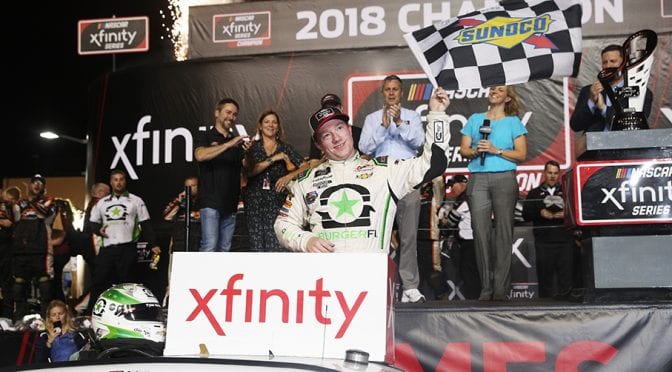
“Honestly, it was the hardest couple of weeks I’ve had after a season like that,” Sauter said Saturday night at the Xfinity and Truck Series Awards at the Charlotte Convention Center. “I felt really good about what we were doing going there (Miami) and then to have it unfold like that, it was very, very tough.

“Week, two weeks after that … it just sucks. You have a season like that, you want to capitalize on it and we didn’t. All in all, it was a great year but without the championship, it kind of leaves a little void.”

The 2018 campaign was a career-best for the 2016 series champion. Sauter set career-high numbers in wins (six) and laps led (585). He also was the series’ Regular Season Champion. A dominating win in the Round of 6 opener at Martinsville locked him into the Championship 4.

From there though, Sauter had one top 10 in the season’s final three races and finished 12th — lowest among the Championship 4 in the season-ending, title-deciding Ford EcoBoost 200 at Homestead-Miami Speedway.

RELATED: Champions honored in Charlotte | See every Truck Series champion

“Statistically, it was a great year,” Sauter said. “The wins and all that — and again there are numerous guys that would love to have the opportunity to win six races, so I’m not going to hang our head on that.

“It’s one thing to get beat for a championship but I felt like we really struggled at Homestead and that’s the toughest part. It’s one thing like last year you go down and finish third. ‘Oh well, it wasn’t your night.’ This year, it was tough to have the season that we did and ultimately struggle like we did.”

Sauter will have a new teammate in Sunoco Rookie of the Year contender and 2018 ARCA Racing Series champion Sheldon Creed in 2019, with Justin Haley moving up to the NASCAR Xfinity Series with Kaulig Racing. The organization also has a technical alliance with Halmar Friesen Racing and driver Stewart Friesen.

“I’ve been in position at GMS as kind of the old guy and I get to work with the rookies, so it’s cool,” Sauter said. “Sheldon (Creed) has shown speed early so I look for him to have a pretty good year obviously. Friesen is coming back and obviously he’s been with us for a year and half now, so it’s going to be fun.

“I feel like all three of us are capable guys and I look for us to be competing against each other for wins not only against the competition but amongst ourselves at GMS.”

Championship 4 driver Justin Haley was left with the bitter taste of unfinished business after finishing third in the final NASCAR Gander Outdoors Truck Series standings in 2018, even amid three wins and 18 top-10 finishes.

Looking forward to 2019, Haley was glowing at the awards banquet in Charlotte, North Carolina. Haley will climb into the No. 11 Kaulig Racing Chevrolet Camaro, the team announced Dec. 1.

“I really wasn’t looking at the time,” Haley said about his initial talks with Kaulig Racing. “But it’s really fallen into place and I’m really happy with Kaulig. I’m excited to be in another Chevrolet; it’s what I’ve done my whole life. Hopefully we can jump in where Ryan (Truex) left off and have a really good season.”

RELATED: Drivers on the move in 2019 | Awards red carpet photos 

Haley said he did have an offer from GMS Racing to move to the team’s No. 23 car in Xfinity after piloting the No. 24 Truck Series Chevrolet for two seasons, but the 19-year-old driver already had signed a multi-year Xfinity Series deal with Kaulig Racing and honored that. It was announced last week that John Hunter Nemechek will drive the No. 23 for GMS in the Xfinity ranks.

The 2018 season was Haley’s second full-time Truck Series season when his first win came at Gateway Motorsports Park in June. He added a second victory at Canadian Tire Motorsport Park to open the playoffs and his third came at Texas Motor Speedway during the playoffs.

Haley is excited about competing with a stout Xfinity rookie class in 2019 that includes Nemechek and fellow Championship 4 driver Noah Gragson, who is moving up with JR Motorsports. Haley says competing in Xfinity cars actually suits his driving style a little better.

“I have to unlearn some bad habits from trucks,” Haley said with a laugh. “They have such amazing grip that you can just kind of bully them and put them where you want.

“I ran really well in my ARCA days, and obviously they’re very similar to the Xfinity cars. The starts I had in the Xfinity Series this year went pretty well. I think I’m going to perform in that series a lot better and hopefully will progress better.”

Kaulig’s driver in 2018, Ryan Truex, scored one top five and 11 top 10s in the No. 11 Camaro in 2018. Kaulig Racing has yet to score its first victory in three years in the Xfinity Series; Blake Koch drove for the team for two years before Truex.

“They were a new team just two years ago,” Haley said, noting 2019 is a growth opportunity both for himself and Kaulig. “I like the direction they’re heading and there’s no reason we can’t win next season.”

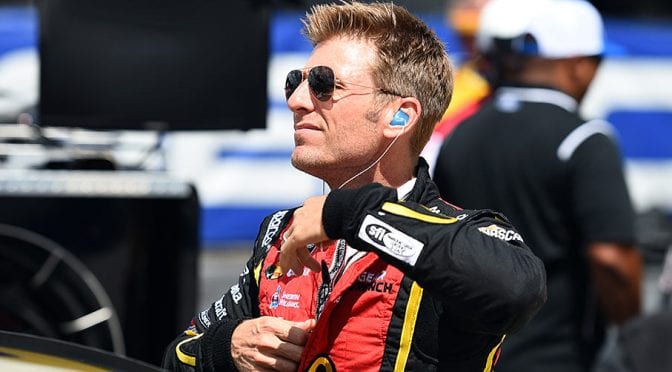
FOX Sports officials confirmed Wednesday that Jamie McMurray has joined its NASCAR broadcast team as an analyst for the 2019 season.

McMurray, 42, will make the transition to the studio for the network’s “NASCAR RaceDay” pre-race coverage and the “NASCAR Race Hub” midweek news show. The move was first reported by SportsBusiness Journal.

McMurray was replaced Dec. 4 as the driver of the Chip Ganassi Racing No. 1 Chevrolet. He has seven victories in 16-plus seasons competing in NASCAR’s top division, including a win in the 2010 Daytona 500.

Kurt Busch will pilot the No. 1 in 2019.

MORE: Silly Season breakdown  | Ganassi envisions new role in McMurray’s future

McMurray dabbled in broadcasting this fall with appearances on Race Hub in late October and early November. He also provided guest analysis in the booth for a pair of Xfinity Series events for FOX Sports the last two seasons.

Jamie Mcmurray Fox Sports 2 2
FOX Sports

“As my driving career got closer to the end, I thought about doing TV but wasn’t sure until I did a couple of NASCAR Race Hub shows at the end of this year,” McMurray said in a release provided by the network. “I really enjoyed it more than I expected. It’s a whole new world, but that’s what I am most excited about – the new challenge and discomfort that comes with doing something completely out of my element.”

In the news release, the network described the transition to broadcasting as McMurray’s “next full-time ride.” Still left to be determined is McMurray’s future role with team owner Chip Ganassi’s organization.

During a Dec. 4 teleconference, Ganassi indicated he hoped McMurray would remain with his team and that his plans would be firmed up in the coming weeks. According to a September report by The Associated Press, Ganassi has offered McMurray a final Monster Energy Series start in the 2019 Daytona 500 and a potential managerial position at CGR.

“There’s a good possibility that I could be in the Daytona 500 for most likely my last race of my career, or at least the foreseeable future,” McMurray said Wednesday on SiriusXM NASCAR Radio. “As of right now, it’s not done yet. But I think there’s a really good chance you’ll see that happen.”

FOX Sports indicated in the news release that an announcement for the full lineup for its 2019 NASCAR broadcasting team is forthcoming. The network announced in October that new, state-of-the-art technology will bring a new dimension to its studio set in Charlotte, North Carolina. The innovations are set to debut in February.

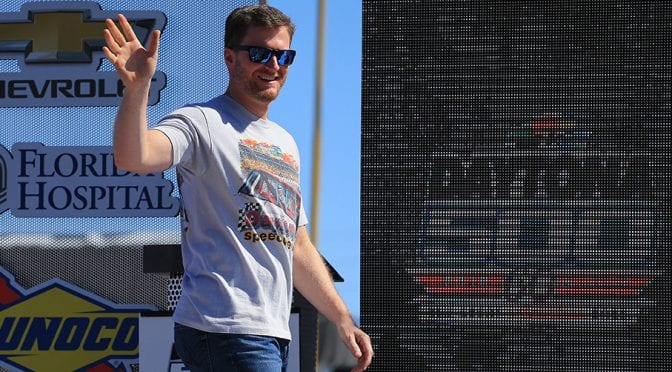
DETROIT, Mich. – Dale Earnhardt Jr. will find himself in a very familiar place at the 2019 Daytona 500: at the front of the pack.

Earnhardt Jr., a two-time Daytona 500 winner, will drive the 2019 Chevrolet Silverado pace truck to lead the field to green for the 61st running of the ‘Great American Race.’ This is the first time the Daytona 500 will be paced by a pickup truck.

“I’ve had a lot of fun and a lot of success at Daytona over the years, and now I can’t wait to get out on that track in a Silverado,” Earnhardt Jr. said. “Away from the track I’ve driven Chevy trucks all my life, and I’m excited to have this unique experience of pacing the Daytona 500 with the Silverado.”

RELATED: See 2019 race start times

In addition to winning the ‘Great American Race’ in 2004 and 2014, Earnhardt Jr. was a two-time winner of the July race at Daytona, overall scoring four wins, 13 top five and 19 top 10s in 36 Monster Energy NASCAR Cup Series career starts at Daytona International Speedway (DIS). Earnhardt Jr. was voted the sport’s Most Popular Driver for 15 consecutive years.

A rendering of the 2019 Chevrolet Silverado Daytona 500 pace truck.
Chevrolet

“Dale Earnhardt Jr. was the perfect choice to pace the race because of his enthusiasm for the sport, his long history with Chevrolet and his love of trucks,” said Jim Campbell, Chevrolet U.S. Vice President of Performance Vehicles and Motorsports. “It’ll be exciting to have Dale lead the field to green in the strongest, most-advanced Silverado ever.”

The Silverado pace truck is powered by a production 6.2L V-8 engine that is paired with a 10-speed automatic transmission. It delivers 420 hp and 460 lb-ft of torque.

Chevrolet has paced the Daytona 500 field 12 times, seven with Camaro and five with Corvette.

Matt Di-Big-One

During the NASCAR offseason, friends of Joe Gibbs Racing satisfy their racing fix using iRacing for an online winter series. Monster Energy NASCAR Cup Series driver Matt DiBenedetto, newly signed to now-JGR-affiliate Leavine Family Racing, made a start in the series at Talladega Monday night.

It did not go well.

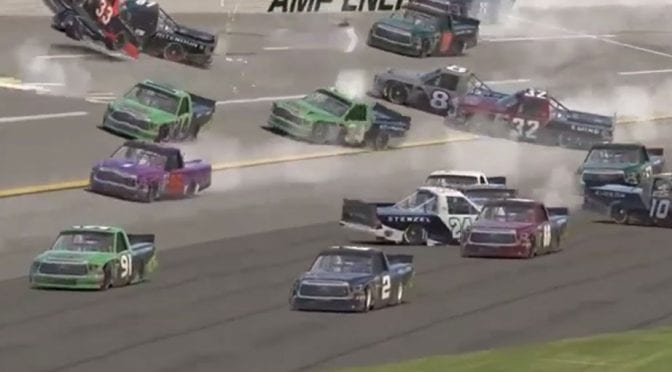
Talladega typically means the “Big One” and it’s certainly the case on iRacing, too. On the opening lap of the race, a major crash swallowed up dozens of competitors, including DiBenedetto.

Iracing Jgr Big One

Life comes at you fast.

Majeski’s Snowball Derby Prep

No way for drivers to prepare for the Snowball Derby? Not so fast, according to Ty Majeski.

The advance prep must have worked for Majeski, who finished second behind Noah Gragson in one of the biggest short track events of the year.


Roval Revolution

The most recent quarterly build for iRacing included the public release of the laser-scanned Charlotte road course, previously only available for testing to real-life drivers who used iRacing to log laps on the simulation before the race in September.

Camping World Truck Series driver Robby Lyons shared his initial Roval attempt — and, well, let’s just be thankful for pixel-based tire barriers instead of their real-life car-mangling equivalents.

Look out for those turtles.


Day-to-Night Time is the Right Time

The long-awaited day-to-night time-of-day transition was also featured in iRacing’s latest update, allowing track conditions and visuals to change over time.

It’s another step toward the ultimate simulation experience.

NASCAR PEAK ANTIFREEZE iRACING SERIES UPDATE

What would you do if four-time champ Ray Alfalla — the undisputed GOAT — joined your session in iRacing? The Internet had some answers.


Too soon, Bobby?

IRACING PAINT SCHEMES OF THE WEEK

Stephane Parent wasted no time re-creating Alex Bowman’s 2019 Monster Energy NASCAR Cup Series ride for iRacing.

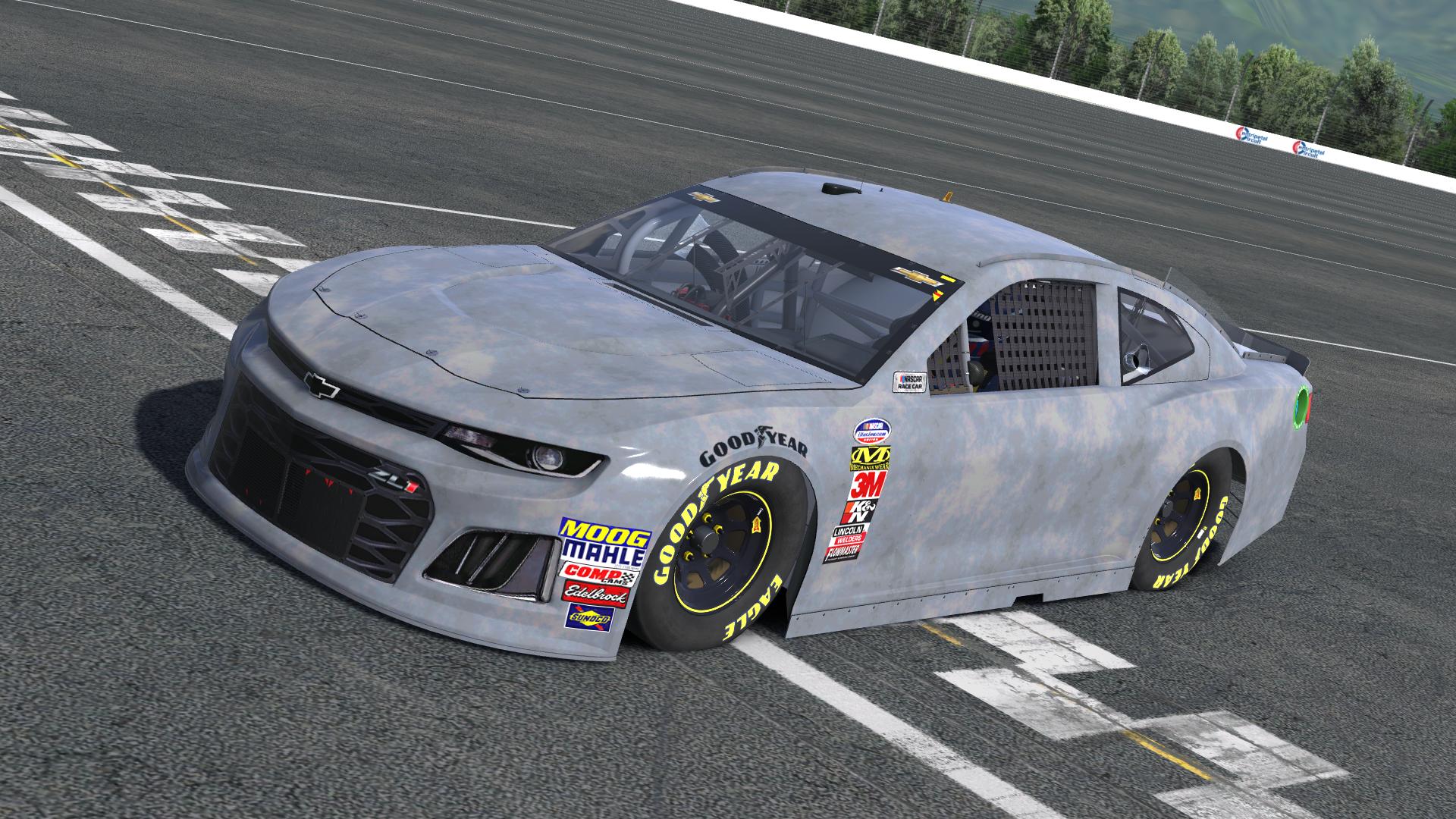
The NASCAR offseason means it’s time to test for the upcoming season. Cory H Harts made an iRacing test car that mimics real-life barebones pre-decal-shop testing cars.


VIDEO OF THE WEEK

How good are NASCAR PEAK Antifreeze iRacing Series drivers? Well, watch Logan Clampitt execute a flawless pass for the lead — one-handed, sipping a drink.

Now, that takes talent. Way to stay quenched.

CHARLOTTE, N.C. — When his move to Richard Childress Racing for the 2019 NASCAR Xfinity Series season was announced on Halloween, Tyler Reddick was in the midst of the Xfinity Series Playoffs but not the champion.

That hardware came about three weeks later with the 22-year-old’s impressive run against the wall in the final stage of the Ford EcoBoost 300 at Homestead-Miami Speedway. The title gave Reddick’s 2018 organization – JR Motorsports – its third driver championship in the series in five years.

In 2019, Reddick will look to be the first Xfinity champion to successfully defend his title since Ricky Stenhouse Jr. in 2012. He will also look to be the seventh driver in the series to do so – Sam Ard (’83-84), Larry Pearson (’86-87), Randy LaJoie (’96-97), Dale Earnhardt Jr. (’98-99), Martin Truex Jr. (’04-05) and Stenhouse (’11-12) – are the others.

The difference for Reddick is he will be doing it with a new team. For the California native, the move to RCR was simply about what he felt was putting himself in a better position for the future.

RELATED: Key players in Silly Season | Reddick honored as Xfinity Series champ

“JR Motorsports has a really good Xfinity car program but the goal one day is to hopefully run in the (Monster Energy NASCAR) Cup Series,” Reddick said following Saturday night’s Xfinity Series and Camping World Truck Series Awards Banquet at the Charlotte Convention Center.

“It seemed like there was a clearer path – it’s a very difficult path to get there anyway. With Ryan (Newman) stepping out and Daniel (Hemric) moving in, RCR has the capability if they wanted to, to run more cars than they currently are. I’m not saying they are going to. It just seemed like a good option to possibly pursue and that’s what we are going to try and do.”

JR Motorsports does not have a Monster Energy Series program of its own, but has clear ties to Hendrick Motorsports given that one of JRM’s owners is Rick Hendrick. JRM has been a pipeline for Hendrick in recent years with drivers – (Chase Elliott and William Byron) – and crew chiefs (Greg Ives, Kevin Meendering) alike.

On the other side, RCR does currently field two Cup cars for Austin Dillon and Hemric. As recently as the 2017 season, the organization fielded three cars in the sport’s top series.

With the next level clearly at the forefront of his mind, Reddick seemed to indicate that there is the potential for a few starts there in 2019.

“Hopefully, next year we get to run a couple Cup races,” Reddick said. “We’ll just see how it goes.”

RELATED: Reddick’s champion celebration at Universal Studios

Reddick’s Xfinity Series car number at RCR has not yet been announced and additional teammates are not yet known since both of RCR’s full-time drivers from 2018 — Hemric (RCR) and Matt Tifft (Front Row Motosports) — are both moving up the Monster Energy Series in 2019.

Earnhardt Jr., his championship car owner and a co-owner of JRM, came away from 2018 impressed with Reddick.

“With each race, he handled his business,” Earnhardt said. “He was aggressive and did everything he needed to do. Just really impressed with him. Looking forward to seeing what he can do next year at RCR. It’s going to be fun to race against him.”

NASCAR officials released start times Tuesday for the 2019 Monster Energy NASCAR Cup Series season.

The most notable shift involves the playoffs opener at Las Vegas Motor Speedway, which will be a nighttime, primetime event next year. The 2019 slate for NASCAR’s top division features few other changes, save for a handful of 30- or 60-minute variations from the previous year’s schedule.

“Moving the start time for the September race at Las Vegas Motor Speedway is fitting because it will deliver a better experience for our fans attending the race, and kick off the Monster Energy NASCAR Cup Series Playoffs in primetime,” said Steve Herbst, NASCAR Senior Vice President of Broadcasting and Production. “Each race weekend, including Las Vegas, is unique, and we work collaboratively with broadcast partners, teams and tracks to ensure the ideal timing is selected for our events.”

MORE: Full 2019 schedule

The 1.5-mile Las Vegas track served as a September opener to the 10-race postseason for the first time in 2018. The daytime race began at 3 p.m. ET (noon local time) and brought with it hot late-summer temperatures. The race starting at 4 p.m. local time puts Vegas in a similar category as the prestigious Coca-Cola 600 in events that start under the sun and end under the lights.

Other notes from the 2019 start times:

Green flag times for next year’s Speedweeks at Daytona International Speedway are unchanged. Daytona 500 qualifying will be scheduled on the same day (Feb. 10) as The Clash invitational for the second straight year. The season-opening stretch will culminate with the Feb. 17 Daytona 500, starting at 2:30 p.m. ET.

The March 31 event at Texas Motor Speedway will start one hour later in 2019, moving from a 2 p.m. ET start to 3 p.m. ET. The race also moves to FOX.

The start time for New Hampshire Motor Speedway’s July 22 event will fire off one hour later, moving from 2 p.m. ET to 3 p.m. ET.

Martinsville Speedway’s Oct. 28 race in the postseason shifts a half-hour later to a 3 p.m. ET start, which should mean a longer stretch of racing under the lights near the finish.

CHARLOTTE, N.C. — Xfinity Series stud Christopher Bell racing full-time against Kyle Larson on Sundays in the not-too-distant future is all but a foregone conclusion.

That doesn’t mean the two dirt aficionados aren’t already quite familiar with each other.

Last month, the 23-year-old native Oklahoman (who turns 24 on Dec. 16) held off his fellow mud master and friend Larson in the 78th annual Turkey Night Grand Prix at Ventura Raceway (California) for the second straight year, capturing consecutive titles and his third Turkey Night crown overall.

The pair of drivers hold a level of respect for each other perhaps unparalleled in today’s motorsports culture, where there’s an understanding that the other is going to use up his competitor’s car as much as possible without wrecking it. Beating and banging encouraged, essentially. 

The friendly rivalry seems to bring the results, with each driver knowing that racing against the other might be the best way to show off their talents to the fullest extent.

“Me and Larson have a very unique relationship, that’s for sure,” Bell said Saturday night at the Xfinity Series and Camping World Truck Series Awards at the Charlotte Convention Center. “It seems like we elevate each other so much, right? He doesn’t want to lose to me and I definitely don’t want to lose to him.

MORE: NXS, Truck champs crowned | Scenes from red carpet

“He’s great and I feel like I’m good, but I feel like whenever you put us together it just kind of makes us race so much harder and we make each other better.”

So, if they bring out the best in each other, would it make sense for them to, say, team up?

Larson owns the eponymous Kyle Larson Racing, and he sometimes will field a second entry in World of Outlaws competition.

Bell’s game.

“I would love to drive for Kyle. I think I was going to at Volusia Speedway Park at the beginning of ’18, it just didn’t work out. He’s got a full-time team and it’s tough for him to have a second car. Obviously he’s done it a couple times,” he said.

“It just hasn’t worked out (for us yet) but we’ll see what it looks like in the future.”

On Sunday, Oct. 21, 2018, the world not only lost a great person, but also one of the most trusted influencers during NASCAR’s formative, booming years.

John Cassidy was a friend of motorsports, a friend of NASCAR and a friend to just about whoever made his acquaintance. And he was so much more.

The Beginning

The story of John’s introduction to NASCAR was told often over the years, and it never got old because it was such an important and early intersection for the sport.

It was 1961 and Bill France Sr. had traveled to Washington, D.C., to see then-Attorney General, Robert F. “Bobby” Kennedy about a situation with Jimmy Hoffa. Cassidy was a United States Department of Justice Trial Attorney and Special Assistant to Kennedy.

Many associate Talladega 1969 and the Professional Drivers Association (PDA) walkout as the critical moment for the sport. This is not to say it wasn’t, but in truth, it was nearly a decade earlier when the France family’s control of NASCAR was tested mightily.

Put simply, Jimmy Hoffa and the International Brotherhood of Teamsters attempted to organize the drivers, Curtis Turner was in the fray, and France was looking for any and all solutions to prevent that from happening.

Cassidy was in his office when Kennedy called. He said: I’ve got someone in my office who is in motorsports — NASCAR, specifically — and his name is Bill France. Hoffa and the Teamsters are trying to move in and take it over, and we can’t let that happen.

Bill Sr. soon after showed up in the office doorway and told Cassidy they collectively were about to go on a long ride together. And sure enough, they did. It was a journey that would last for decades.

The mutual disdain between Kennedy and Hoffa was clear to the entire country and so the mission was obvious.

As they worked through the Teamsters issue successfully, it wasn’t without tense moments. Cassidy once was dispatched to Charlotte, North Carolina, by Bill Sr. to meet with Turner. He showed up at his house where a number of Turner’s “guys” were gathered. Turner told Cassidy he was surprised that he would show up alone.

Turner had been banned for life in 1960 and was reinstated in 1965 only after the attempt to organize had failed, thanks to Cassidy and the other DOJ unit of lawyers and investigators known by some as the “Get-Hoffa Squad.”

The foundation was set.

Formative Years

In 1965, Cassidy, along with his good friend and Department of Justice colleague, Jack Miller, founded what was eventually known as Miller, Cassidy, Larroca and Lewin, and NASCAR and International Speedway Corporation (ISC) were its founding clients.

Cassidy recalled Bill Sr. lumbering up the stairs of the firm with a box of Chivas Regal and said, “Son, if you’re going to run a law firm and do it right, then you’re going to need to keep some good scotch in the back room.” And they had a few.

Miller, Cassidy would go on to become one of the most respected law firms before merging with Baker Botts in 2001. Their representation of motorsports went to the core of constructing the building blocks that support NASCAR to this day.

Cassidy and Bill Sr., who both grew up in Washington, D.C., had commonalities that went far beyond geography and that complemented each other incredibly. As the sport developed, they were in lockstep.

As with any genuine friendship, there was an abundance of esteem and trust that developed generationally across the two families.

“Our family’s relationship with John started as a legal relationship that served our companies but it quickly grew into a close friendship,” NASCAR Chairman and CEO Jim France said. “John became a trusted advisor and remained so for three generations of our family, over nearly six decades.

“He is missed not only by our family but by people throughout motorsports. John played a large role behind the scenes as a counsel in so many ways, to so many key people in our sport. His wisdom — and his friendship — were invaluable.”

Cassidy didn’t grow up in racing, but he figured it out pretty quickly with a guide like Bill Sr. They traveled the circuit and it was at Bowman Gray Stadium where Cassidy first met Richard Childress, who was racing at his home track in Winston-Salem, North Carolina. Cassidy did what it took to learn. He collected money at the gate, he was assigned to release the balloons with Jim France during the Daytona 500 pre-race and had a host of other various assignments in what was then an “all hands on deck” operation.

As stock-car racing evolved through the 1960s, ARCA was a crucial part of the developing landscape, particularly in the Midwest. Cassidy joined Bill Sr. in Toledo, Ohio, to meet with ARCA founders Mildred and John Markham, to discuss the interests of NASCAR and ARCA, and the opportunity ahead. The meeting took place at the Markhams’ kitchen table, which is where Bill Sr. and Annie B. France would conduct business in the early days. The Markhams were cut from the same cloth as the Frances, possessing similar passion and ideas for the development of racing in the United States. And they were friends.

The significance of NASCAR and ARCA being able to lean on each other cannot be overstated and was not lost on Cassidy, nor was the coming together of ARCA within the NASCAR portfolio earlier this year.

As Bill Sr. contemplated national growth for NASCAR, he was also looking for opportunities to shed reliance on any one market. Talladega, Alabama came into focus.

Cassidy spent a lot of time in Florida, and he usually stayed at the France household. The Talladega topic was hotly debated and Cassidy told of being at the kitchen table one morning when Annie B. left abruptly, peeling out of the driveway, unhappy with the conversation that had transpired. She was worried about the proposed track location and the ability to draw an audience, and he was willing to take the risk.

In the end, Talladega took its place on the map.

Talladega opened in 1969 with the infamous driver walkout, sparked by a fear related to tire safety on the superspeedway. As this dominated the headlines, Cassidy and his partners worked diligently to help France keep momentum and control. And they did.

It was also a significant turning point for NASCAR Hall of Famer Richard Childress, who knows well and deeply appreciates Cassidy’s contribution to the sport. Childress joined a group of hastily assembled replacement drivers to make sure the inaugural event took place as scheduled.

“John Cassidy understood what it meant for me and others to field a team at Talladega, and he definitely understood what it meant for NASCAR and Bill Sr. to have a field of cars at the inaugural Talladega race,” said Childress, who made his premier series debut that pivotal year at Talladega. “John’s ability to help navigate the sport’s most challenging situations, across so many decades, played a major role in the success of NASCAR. He was a dear friend.”

Cassidy’s reach was indeed far, his impact immeasurable and he was as low-profile as you could find given the credentials he had. It was people like Childress that stoked his fire to do more for the sport.

As NASCAR became more mainstream, so too did its spotlight on the national stage, creating new opportunities and also new levels of scrutiny. The sanctioning body relied on Cassidy and his firm with increasing regularity to problem solve, strategize and help guide the sport forward, avoiding potentially business-halting scenarios.

In 1974, the season nearly didn’t take place due to an energy crisis and fuel shortage. The Organization of the Petroleum Exporting Countries (OPEC) had stopped exporting oil to the United States and other countries, and Cassidy was central to the resolution that allowed NASCAR to race that year. The season continued with races shortened, limited practice time, fewer cars on the grid and rules changes to address a fuel consumption.

It’s not like the Miller-Cassidy firm had nothing else on its plate that year, having started its representation of President Nixon just after his resignation in August of 1974, and then brokering his pardon shortly thereafter.

The sport continued its growth, ending the 20th century with landmark moments and commercial deals that signaled broad popularity and demand. ISC was listed on NASDAQ and also merged with Penske Motorsports, significantly increasing its track portfolio. And a historic consolidation of broadcast television rights marked the most momentous and lucrative commercial transactions to date.

Miller-Cassidy was out front on each of these transactions, dramatically changing the sport’s landscape.

International Development

The international stage was a table that Cassidy helped set as well for NASCAR, including the negotiations for the sport’s initial forays into Australia and Japan.

Mindful of maintaining control yet also being represented globally, the architecture of the relationship between NASCAR and the Fédération Internationale de l’Automobile (FIA) has Cassidy’s fingerprints on it, ensuring that FIA rules would not supersede those established by NASCAR.

Cassidy continued to increase his international focus, becoming the first United States representative on the FIA international court of appeals, where he served for a number of years.

But things didn’t always work out as planned on the international front. Cassidy and Jim France recently laughed when recalling the time when they were left to close on a deal to establish a race in Quebec, Canada and, without divulging the exact details of what went wrong, they returned to the United States somehow making sure there would not be a race there anytime in the near future.

And there was no matter too small or big for Cassidy, as long as it was in the interest of NASCAR.  That included getting the United States Department of State, in the midst of a government shutdown and a historic Washington, D.C., blizzard, to expedite the issuance of a passport for Dale Earnhardt Sr. in 1996, so that he could travel to Japan to promote the inaugural event.

Relationships

Cassidy’s deep relationships with NASCAR, its owners and drivers crossed aisles even more naturally as his firm’s representation of the Kennedy family and President Nixon crossed political lines.

His view was NASCAR as one family.

The team owners in the sport were also among Cassidy’s closest friends. Although from varying backgrounds, they shared the common thread of a commitment to the sport that would stand the test of time. Cassidy understood what this level of dedication meant to the France family and he cherished these relationships.

“First and foremost, John was a man of great integrity,” said longtime team owner Rick Hendrick. “He was a friend and trusted counselor to me, the France family and many others throughout our industry. Without question, he influenced major decisions that helped grow NASCAR and lift the sport onto the national stage. John was a steady hand during a critical time in our history and deserves a tremendous amount of credit for his contributions.”

“I valued John as a longtime friend and advisor,” said fellow team owner Roger Penske, like Hendrick a NASCAR Hall of Famer. “I admired and respected him as a man of great personal integrity whose wisdom and knowledge served the motorsports industry well. His calm, measured approach to issues facing the sport was grounded in a unique understanding of how things and people really worked. I am grateful that so many of us were the beneficiaries of his rational counsel and direction. I will miss his presence with us.”

At a time when some might have looked at Jack Roush’s entry into NASCAR as potentially incongruous — he was considered an “outsider” — Cassidy took the time to get to know Roush and understand what he brought to the sport.

And they became admired friends.

“For decades, John Cassidy volunteered a treasure trove of insight into NASCAR’s practices and policies, greatly easing my transition to NASCAR ownership,” said Roush, who will be inducted into the NASCAR Hall of Fame in January. “Though neither of our names appear on the other’s family trees, l feel a loss as if the case were otherwise. He was a unique influence on many and will be sorely missed.”

Cassidy helped many drivers during his career, too many to name, and developed lasting bonds along the way. Although Earnhardt used to joke and refer to Cassidy as “that D.C. attorney,” he was so much more than that. He was part of the fabric of NASCAR and helped create the sport that so many enjoy today.

Later Representation

Toward the later years of his practice, Cassidy continued to be called on in the most important situations.

And he continued to answer.

Cassidy was a big admirer of Dale Earnhardt, and that respect went both ways.  Like so many people, Cassidy was personally impacted by the loss of Earnhardt in 2001.

Assembling a proper team of professionals to address a crisis was Cassidy’s specialty, making him an obvious choice to play an important role in the Earnhardt investigation. The results led to groundbreaking safety advancements in the sport.

When NASCAR conducted a comprehensive review of its competition model, Cassidy brought invaluable insight and counsel to sweeping changes around rulemaking and a redefined appeals process for its competitors.

Cassidy always felt there was more that he could be doing for the sport. Some of that eased when Jim France called to let him know the family wanted him to induct Bill Sr. into the NASCAR Hall of Fame. It was a great honor that Cassidy couldn’t believe.

Cassidy was bullish on the future, with unwavering support for the France family and confidence that NASCAR would continue to boldly define itself on the global sports landscape.

Cassidy never took his eye off things when it came to NASCAR, ensuring his legacy in motorsports will be lasting and his contributions will be forever felt.

He knew how to assemble the right team to tackle any matter that motorsports and its stakeholders faced. He knew the delicate balance and complexities present across a constantly moving landscape of stakeholders. He knew how to find his way to the iconic Pulliam’s hot dog stand in Winston-Salem, North Carolina.

Although the spotlight wasn’t for Cassidy, he couldn’t escape it when he walked through the garage.

He loved NASCAR and NASCAR loved him.

Bill France Jr. once summed it up really well. He said, “John, you are our guiding light.”

And he was.

***

Author Jim Cassidy is the nephew of John Cassidy. He is the former Senior Vice President and Chief International Officer for NASCAR. Memorial services for John Cassidy are scheduled today.
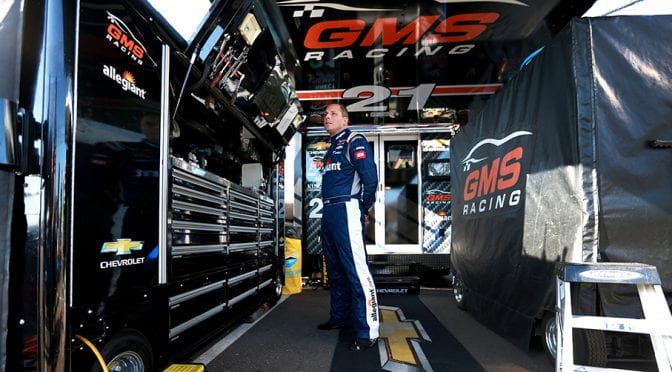
Clint Bowyer put his trademark energy into a pre-game tradition for his hometown NFL team Sunday, banging the drum before the Kansas City Chiefs’ home game against the Baltimore Ravens.

Bowyer — a native of Emporia, Kansas — wore a custom Chiefs jersey that sported his car number with Stewart-Haas Racing: 14.


The 39-year-old driver also attended the Chiefs’ 45-10 victory over the Cincinnati Bengals earlier this season. That Oct. 21 game followed his 13th-place finish in a postseason race earlier that day at Kansas Speedway.

It’s not the first time that the Chiefs have delivered a NASCAR flavor to their game-day experience. Last season, the K.C. offense toasted a long-distance Tyreek Hill touchdown by mocking a NASCAR-style pit stop in their end-zone celebration. Bowyer approved.