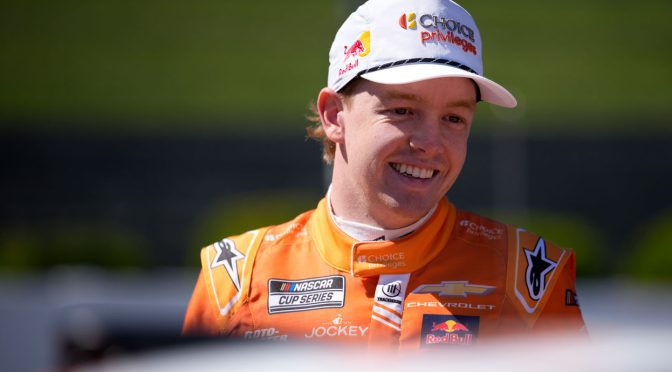
Hendrick Motorsports has hired a young phenom with a rousing reputation and the potential to rise to superstardom in the NASCAR Cup Series.
That sentence is just as true in 2026 as it was in 1992. Different name; similar story.
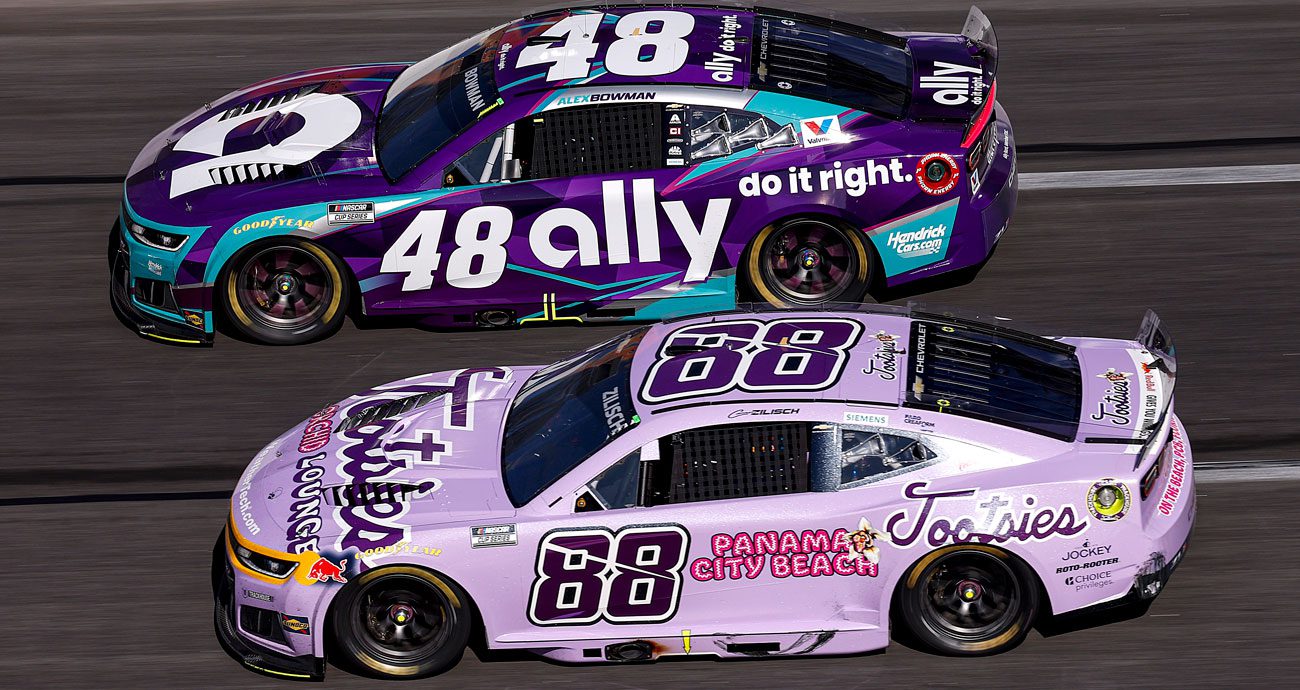
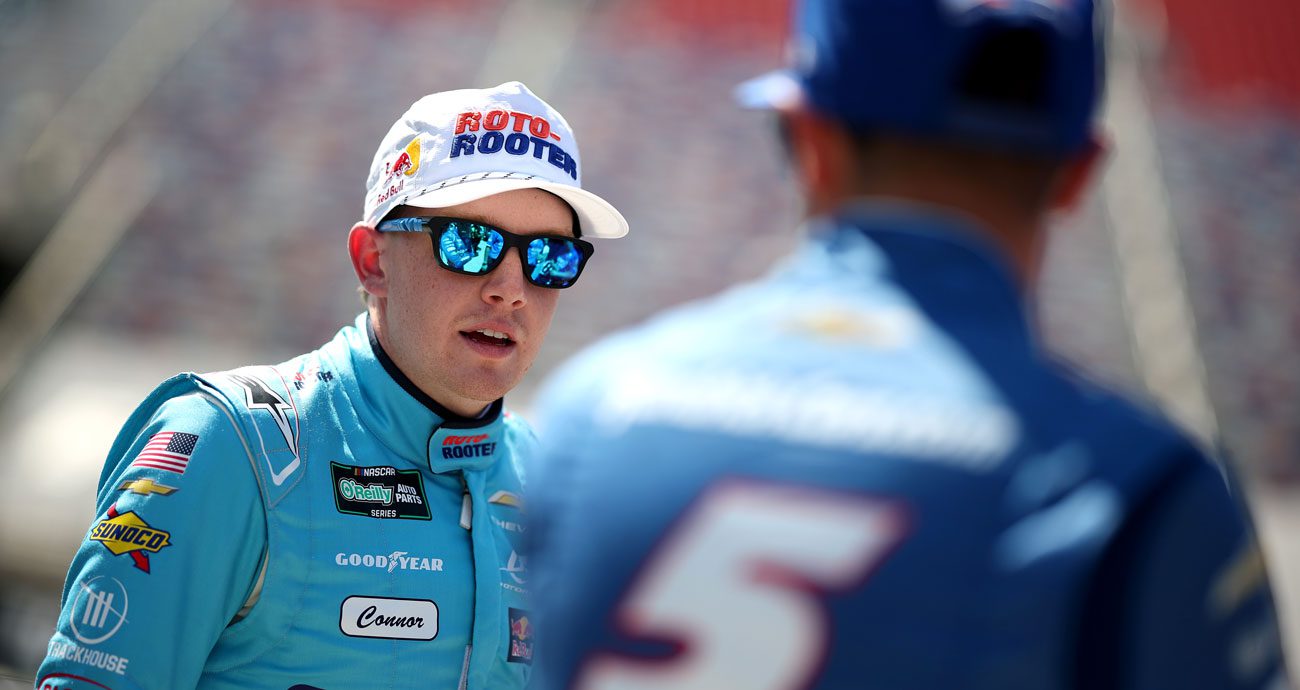
In 2026, it’s Connor Zilisch signing a contract to drive Hendrick Motorsports’ No. 48 Chevrolet beginning in the 2028 season. In 1992, it was Jeff Gordon signing a contract to drive Hendrick Motorsports’ No. 24 Chevrolet — a signing that would change NASCAR as we knew it.
This isn’t all to say Zilisch is destined to be the next Gordon; the four championships and 93 wins earned by Gordon create an impossible standard for anyone to live up to, let alone a 20-year-old like Zilisch who is only 24 races into his inaugural Cup Series campaign.
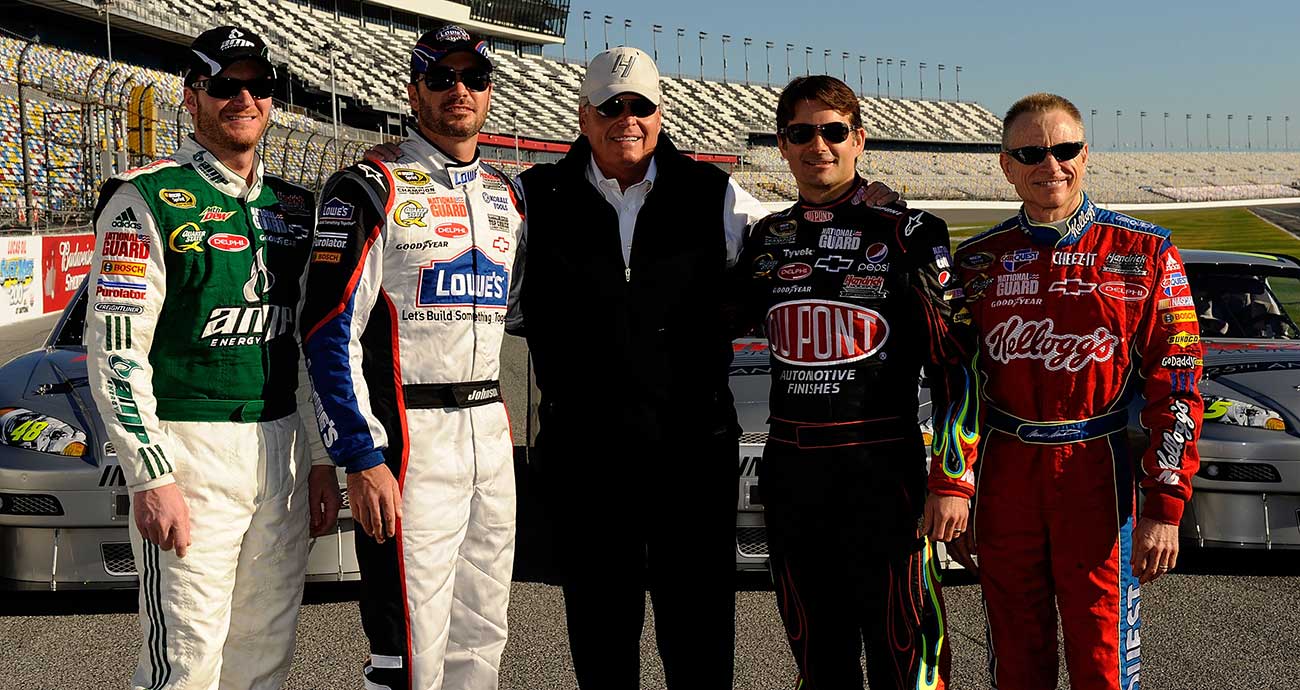
But there was something unmistakably poignant about Tuesday’s press conference at the NASCAR Production Facility, where team owner Rick Hendrick sat alongside Gordon — now the team’s vice chairman and a member of the NASCAR Hall of Fame — to introduce the highly touted Zilisch as the organization’s next driver, one they hope will be a superstar.
“Itreallyalldidcometogetherthewayitwasmeanttobe,” Gordon said.
Alex Bowman, current driver of the team’s No. 48 car, signed a one-year contract extension to make the 2027 campaign his final season before retiring from full-time competition. Hendrick Motorsports wanted Bowman, a 10th-year full-timer for the company, to have the ability to walk away from the sport on his terms after years of myriad health issues that cost him time in the race car. Thankfully for Hendrick Motorsports, Bowman’s timing lined up just right with the ability to pursue Zilisch, who is currently contracted to drive the No. 88 Chevrolet for Trackhouse Racing through 2027.
Unlike Gordon, who never made a Cup start before signing with Hendrick Motorsports, Zilisch has already begun his Cup Series career. It hasn’t gone well and he’d be the first to tell you that, if the statistics didn’t do so by showing him 34th in points with two races remaining in the regular season.
But just like Gordon, Zilisch impressed Hendrick with success in the NASCAR O’Reilly Auto Parts Series, where Zilisch stormed to 10 wins in 2025 driving for the Hendrick-affiliated JR Motorsports.
With a smile to Gordon, Hendrick was quick to add: “It wasjustlikeJeffGordonwhenIsawyouinAtlanta,andI said, ‘Man,it’sashamehe’sgotacontractwithFord.’ And[Gordon’s]roommatesaid, ‘Hedoesn’t.’Hehadacontractwithmethenextday.”
The opportunity to drive for NASCAR’s winningest organization is not lost on Zilisch, who was born the year Jimmie Johnson won the No. 48 team its first championship in 2006. Johnson and crew chief Chad Knaus — now Hendrick’s vice president of competition — ultimately collected seven championships together, forever establishing a legacy behind the No. 48.
With a legacy comes the pressure to live up to high expectations — a standard that comes with driving for Hendrick Motorsports regardless of the number on your door. But pressure is a privilege, one Zilisch welcomes with open arms.
“Iwouldmoresocallitanhonorthanpressure,” Zilisch said. “Youknow,IknowwhatI’mgettingmyselfinto.Iknowthatsuccessisthestandard,andIholdmyselftoahighstandard.SoI’mreallyexcitedaboutit honestlymorethanIamnervousorpressured.Andbeingabletoworkwiththesetwoguys (Hendrick and Gordon) everydayissomethingthatI’mreallyexcitedfor. Drivingthe48andbeingapartofthatlegacyandcreatingmyownstoryissomethingI’mreallyexcitedforaswell.”
Baked within that answer is the real reason Zilisch was such an obvious hire for Hendrick Motorsports. At 20 years old, the North Carolina native carries a maturity and poise that manifests a reputation for being wise beyond his years. To find those traits within someone as naturally talented as Zilisch is a chance too rare for Hendrick executives to have passed up on.
“It’snotjusthistalent;that’sprettyobvious.Butit’sreallymakingsurethatthere’ssomebodythatyouknowhasgreatcommunicationskills,wantstobeagreatteamplayer,” Gordon said. “Imean,thewaythatHendrickMotorsportsworks,Ifeellike,isunlikeanyotherorganizationoutthere.AndIgetthepleasuretositinonthosedebriefswiththedriversandthecrewchiefs,engineers. And themoretransparentyouare,themoreconfidentyouare,themoreinformationthatyoucanaddtotheconversation,itelevatestheentireorganization.”
Chris Graythen | Getty Images
Kyle Larson, the defending and two-time NASCAR Cup Series champion, has already worked closely with Zilisch this season through their Chevrolet connections. Larson has been in the fold at Hendrick Motorsports for nearly six full seasons. And he knows Zilisch is a perfect match for Hendrick — and that Hendrick is a perfect match for Zilisch.
“I’vegottoworkaroundhimalittlebitthisyearjustthroughthekeypartnershipatGMwithTrackhouseandRCRandourselves,” Larson said Tuesday. “So (I)gettokindofhearhowhecommunicatesandbreaksdownhiscarandallthatandallprettynormalstuff. Andyeah,Imeanyes,hehasn’thadagreatseasonthisyear,butIdon’treallythinkthatmeansanything.Ithinkeverythinghe’sproventothispointshowshowtalentedandnaturallygiftedheis,andthen seeinghimworkatit,too,beingintheWiseOptimizationProgramaswellastheGMkeypartnership,yougettoseehisworkethic,andIthinkit’shigh,andIthinkhe’sgonnablendinreallywellatHendrickMotorsports.
Indeed, Zilisch’s rookie year has been a struggle, but the past two weeks have shown glimmers of optimism: At Iowa Speedway on Aug. 9, Zilisch earned an 11th-place finish after qualifying eighth, his career-best finish on an oval, before qualifying 11th at Richmond Raceway for the Aug. 15 contest. Those gains may seem small, but progress is progress after a slow start to his Cup career.
“Weallknewhowtalentedhewasontheroadcourses,” Gordon said. “Tome,Ithinkalotofitwas,well,whatcanhedoonovals?Andheprovedandiscontinuingtoprovethathe’sgoodbehindthewheelatanytrackthatyouputhimoutthereon.”
The last flourish of Mark Martin’s NASCAR career seemed to defy logic at nearly every turn of the 2009 season. At age 50, when most Cup Series racers are on the decline, retired or strongly considering hanging it up, Martin savored one of his most productive years — all aided by a new team and crew chief, a car owner’s relentless persuasion, and a veteran’s keen ability to diversify his already considerable all-around race craft.
Defying logic? For Martin, who had seen a little bit of everything through the decades, it almost defied reality.
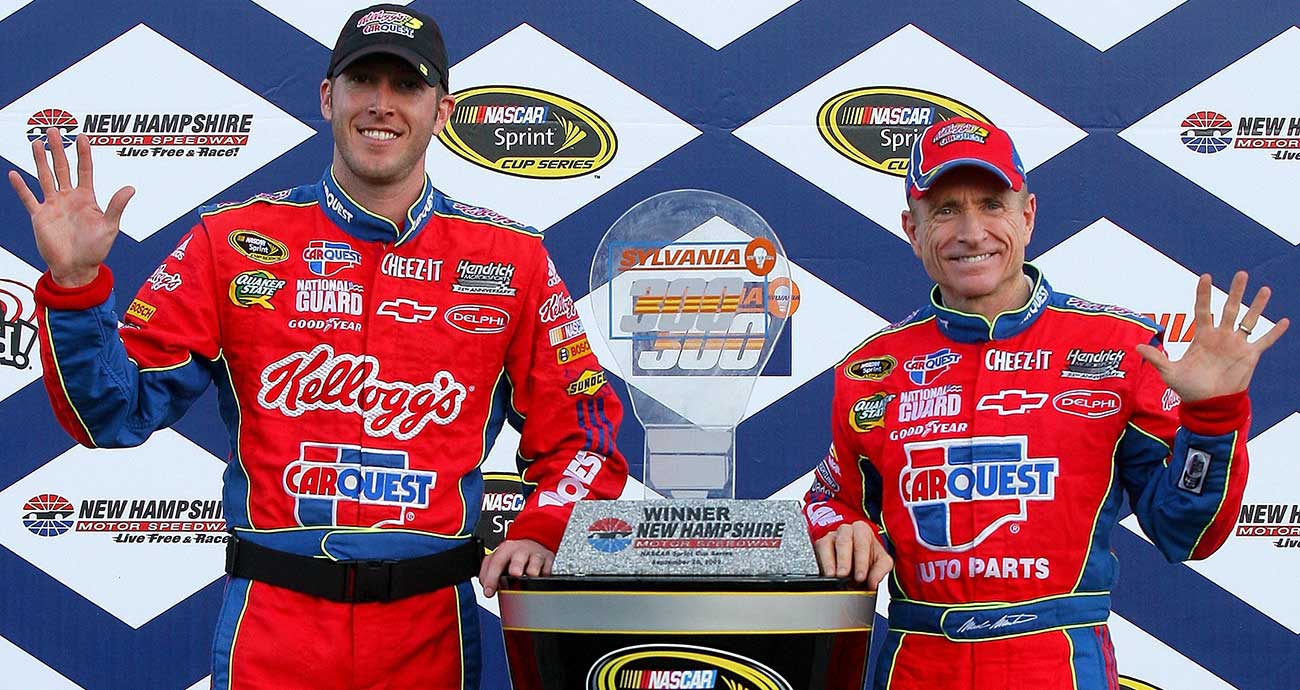
“Pinch me. I am sure I’m sleeping,” Martin said from Victory Lane at New Hampshire Motor Speedway that fateful year. “I am sure I’m dreaming.”
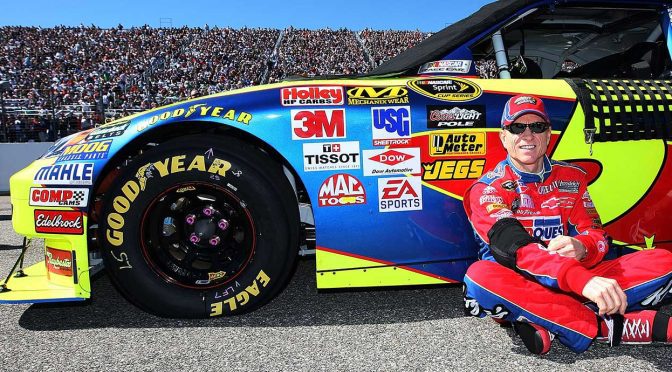
Martin’s five-win season with Hendrick Motorsports in 2009 marked a rejuvenating moment in his voluminous stock-car tenure, told in the first installment of the “Start/Finish” documentary series on the NASCAR Channel. The fifth of those victories — and the last of his 40-win Cup career — came at the 1.058-mile New Hampshire track, site of Sunday’s Dollar Tree 301 (2 p.m. ET, USA Network, HBO Max, PRN Radio, SiriusXM NASCAR Radio).
Chalk Martin’s incredulity up to his history of performances in the Granite State and his difficulty getting a feel for the circuit’s sweeping, relatively flat corners. He’d twice been a pole winner there and thrice a runner-up, but 25 previous trips to the Loudon oval had failed to produce a victory. Furthermore, before landing with Hendrick, Martin had endured three-plus winless seasons in both full- and part-time efforts, including a heartbreaking Daytona 500 loss by a fender to Kevin Harvick in 2007.
The missing piece, Martin said, was what he called an “unfair advantage” — a pairing with crew chief Alan Gustafson, who was in his fifth season at the helm of the No. 5 Chevrolet group. The two clicked nearly from the start, and while Gustafson’s input didn’t reinvent Martin’s veteran skillset, he opened portals that were previously closed off.
Martin won at two tracks that year where he’d previously been shut out — Chicagoland Speedway and New Hampshire — and his triumph at Michigan International Speedway that June unlocked a newfound strength: saving fuel. Gustafson’s late-race coaching over the No. 5 radio emphasized a conservative approach, one that paid off when front-runners Jimmie Johnson and Greg Biffle ran out of gas in the final two laps. At each turn, Martin heaped abundant credit Gustafson’s way.
“I have a lot of trust in Alan,” Martin told The Boston Globe that fall. “I let him do his thing, and he’s brought so much support, you know, in so many areas, and unloaded so much off my shoulders. He’s the smartest — the best combination of really smart engineering, understanding of that, and the guy that pulls the wrenches and gets his hands dirty, [the] practical racer. He’s the best combination of all that. I’ve worked with great engineers and really smart people and great guys that work on race cars and are practical and all that, but he’s the combination, the strongest combination of all of that.”
The respect from Gustafson was mutual, especially for someone he’d looked up to as he made his own climb through the NASCAR ranks. As he graduated to become a Cup Series crew chief in 2005, Gustafson was tasked with molding the early stages of Kyle Busch’s big-league career, discovering a talented, fierce rookie who tended toward a more aggressive bent. Martin, Gustafson says now, was the opposite with a measured style shaped by years of experience.
“The sheer pace that he could go at, I always said if you just put Mark, like if the goal was to run 500 laps as fast as you can and no one else is on the track, I don’t know that he loses a race, to be honest,” Gustafson said. “It was all the other intangible things. He’s well known, obviously, for how he would race people, right? He wouldn’t hold anybody up. If he was slower, then he’d pull over and let them go, and he just raced really clean. As far as the ability to drive the car fast, like second to none, just incredible. So yeah, immensely talented and to have the desire and the commitment and the competitiveness at 50 was great.”
The deal that brought him into the Hendrick fold almost didn’t happen. Martin had raced the previous two Cup Series seasons on a part-time basis by choice, competing in 24 of the 36 events each year. When Rick Hendrick came calling in the months leading up to Silly Season’s full swing, Martin told the team owner that he’d consider it, provided that his agreement was for the same two-thirds workload.
Hendrick wanted that last third, and his persistence prevailed. Martin’s eventual acceptance created a formidable four-driver roster of mega-powers, with Johnson, Jeff Gordon and Dale Earnhardt Jr. as teammates. All four would become NASCAR Hall of Famers. The opportunity was too good for Martin to pass up, giving him a competitive benchmark and his best chance to win in years.
“I never would have thought that we would ever have a lineup like this or any team would ever have a lineup like this,” Martin said at the announcement. “The stars aligned, the opportunities were there, and Mr. Hendrick’s reputation and respect, how he treats people and runs his businesses and organizations, made it all possible.”
Rusty Jarrett | Getty Images
Martin’s performance aligned with that of his peers at Hendrick, and he assembled a regular season of four wins and six pole positions, entering the 12-driver Chase as its top seed. The postseason kicked off that year at New Hampshire, leaving the Arkansas native less than jazzed about his chances.
Gustafson countered the pessimism with what turned out to be a winning setup and strategy, including an off-cycle pit gambit that put Martin in control. He led 68 of 300 laps, snookering Juan Pablo Montoya on a late restart and denying him one of his best shots at an oval-track victory.
“I’m speechless. I can’t talk right now, boys,” Martin said on the cool-down lap.”… Hardest one I remember getting in a long, long, long time.”
“How good is Mark Martin?” Gustafson told the ESPN broadcast. “It’s unbelievable.”
The triumph ended up as the last Cup Series win for Martin, who had emerged from a track of great personal torment with the points lead intact. But the campaign also wound up being his final true bid at a Cup Series championship, and that ending was not as cherished. Johnson was well into his unprecedented run of five consecutive Cup titles, and he registered four wins in the final nine races to seal his fourth crown. Martin’s challenge came unglued in that stretch, capped by a rollover crash on the next-to-last lap at Talladega that provided Johnson with enough of a late-season cushion.
Martin finished second in the points for a fifth and final time that year, and the recurring questions about his lack of a championship ring dogged him anew. Answering those questions in his retirement requires an analysis of his legacy and whether a title matters. The blue jacket that the NASCAR Hall of Fame gave him as part of the Class of 2017 still fits either way.
“He shouldn’t be defined by not winning a championship because I don’t think that was ultimately always in his control,” Gustafson says. “I can tell you from experience working with multiple champions that he is every bit as good as they are, and he is every bit as deserving of winning a championship, and unfortunately, it just never came to fruition for him. I don’t want to say I have regret over ’09, but you know, it’s definitely one of those years that I look back and you always ask yourself, could you have done a little more, could you have done something a little different, because I do think we could have. In my mind, yeah, I wish we would have won that championship and that would have been the answer to that question. So I think yes, flipping at Talladega, I don’t remember everything, but that was one of the big ones.
“I think the best thing: Ask anyone who raced against him, and they’ll be like, yeah, that dude was tough. So yeah, I don’t think he should be judged on the not winning a championship, and it just … sometimes unfortunately, life isn’t fair and it didn’t work out for him. That’s not an indication of his abilities or any shortcoming in his career. It’s just the way it worked out.”
Martin raced for four more seasons — two full-time and two partial — before sunsetting his NASCAR career after the 2013 campaign. No more wins came his way, but he looked back fondly at his last big year, and a brilliant day at New Hampshire’s “Magic Mile.”
“It was a magical year last year for me,” Martin said just before the 2010 campaign, “and I still feel the magic each time I strap into a race car.”
Five races remain on the 2026 NASCAR Whelen Modified Tour schedule. That’s five chances for points leader Patrick Emerling to pad his advantage and earn his first title … or five chances for defending champion Austin Beers to erase said advantage and climb back to the top.
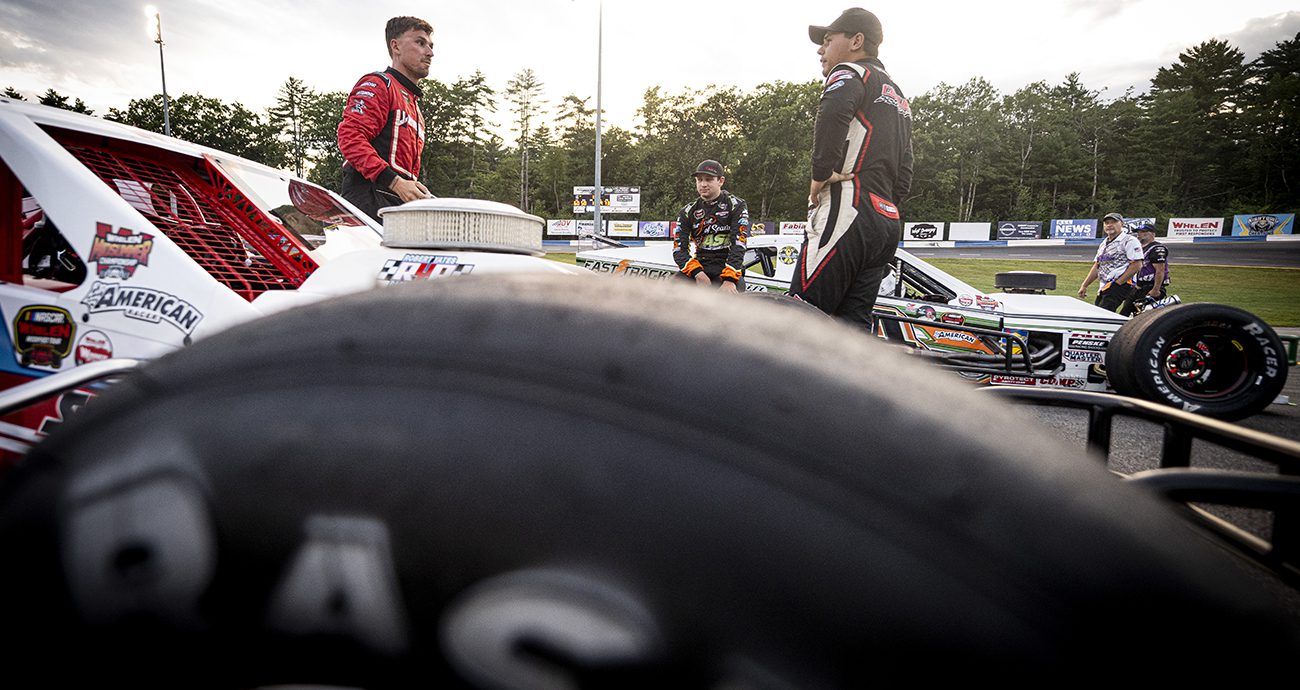
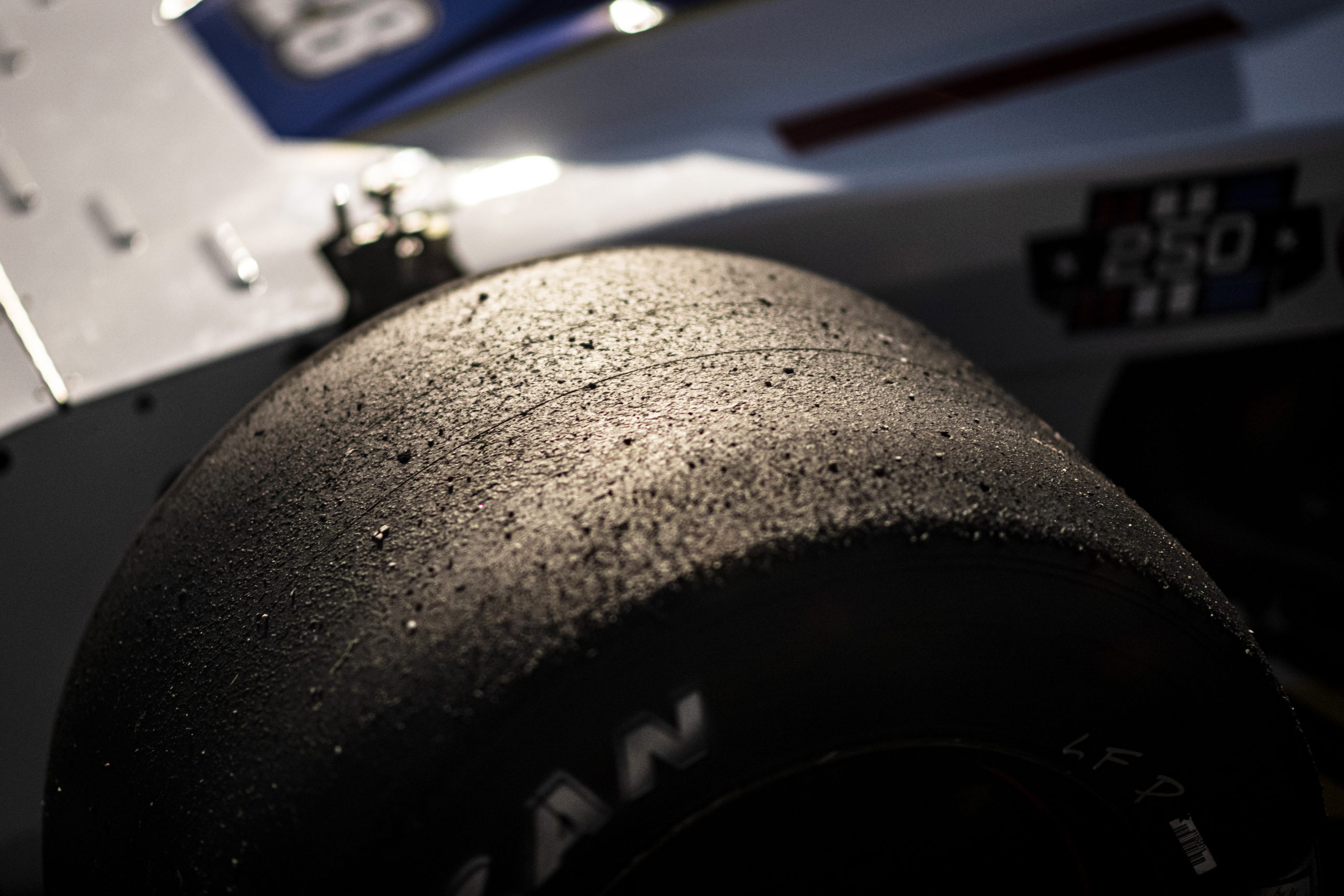
Or, in the focus of some, that’s five chances for NASCAR, Modified Tour teams and American Racer to continue to work together to address the season’s moving target that has been the tires on which NASCAR’s oldest division races.
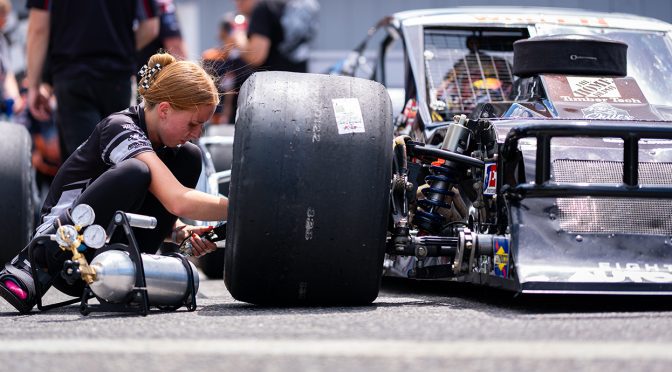
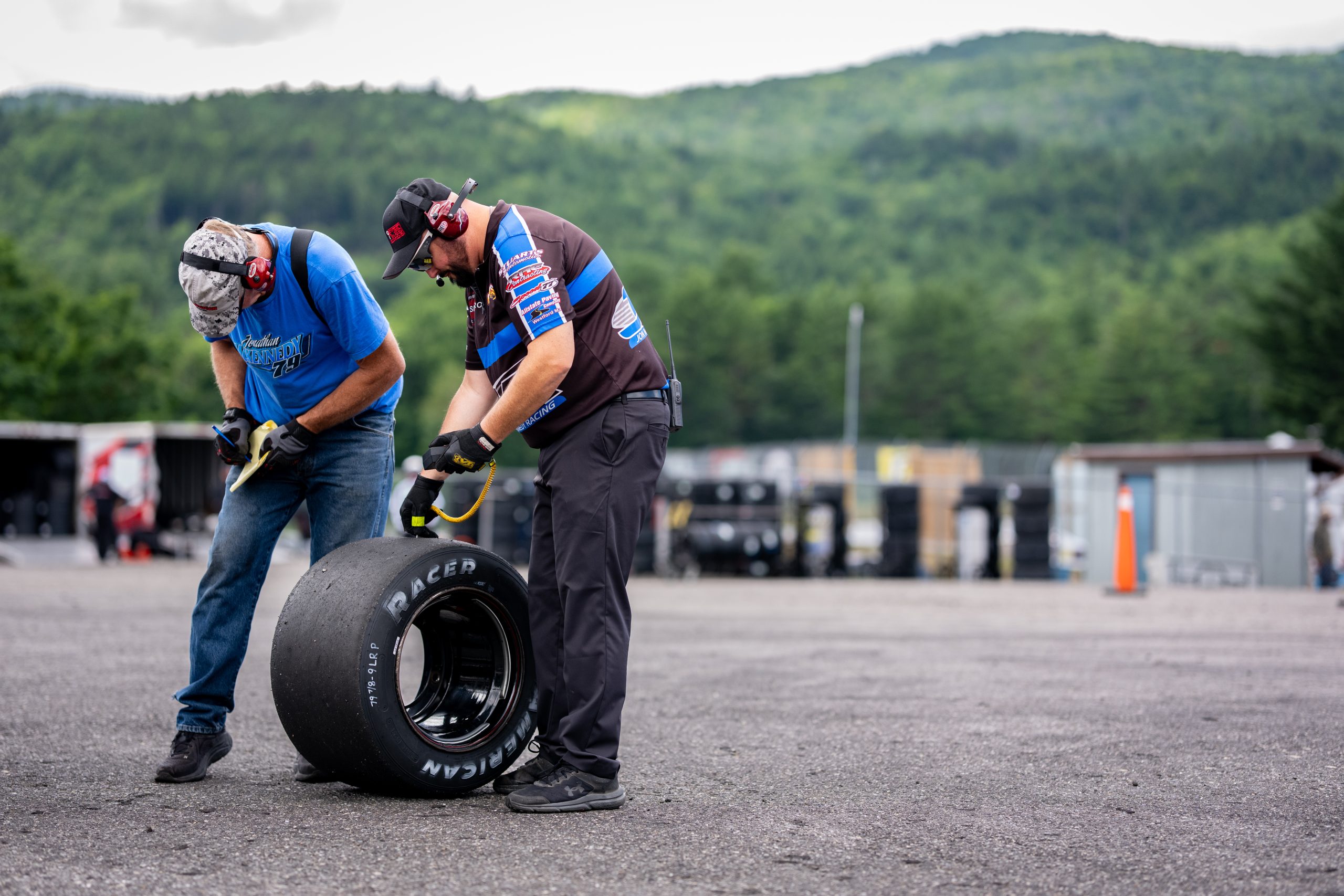
As anticipated, NASCAR and American Racer are still modifying (pun intended) the tires, new for the Modified Tour in 2026, in an effort to achieve the best possible competition. Since the start of the season, NASCAR and American Racer have worked to address teams’ concerns regarding tire-size consistency. Following extensive development and testing at New Hampshire Motor Speedway and Stafford Speedway, the next steps are settled.
“American Racer’s done a good job with the sizing; they’re a lot better as far as that goes,” said Stephen Kopcik, a two-time Modified Tour race winner this season who was the lone driver to participate in the Stafford tire test. “(The tires) just don’t have quite the grip from the start. So there’s not much fall-off because they’re not really that fast from the beginning. You can work your ass off to get to a car and be a little quicker than him, but then it’s line sensitive and tough to pass.”
Beers in a separate interview agreed: “It’s hard to go out of the specific line and find grip and make passes. I think our (racing) product is definitely getting a little better, but it’s still not good enough.”
That’s why and how NASCAR and American Racer have altered their focus. Modified Tour series director Gary Putnam put it plainly: Better grip leads to faster cars early in runs, more tire fall-off and, in theory, better racing.
“It’s in a better spot today,” Putnam said. “We’ve been working closely with American Racer to provide a better combination tire-wise.”
Added Beers, who tested tires at New Hampshire in late June: “Myself, (Jon) McKennedy and (Tyler) Rypkema were all in agreement that this was the best we felt with those tires. We actually were wearing the right fronts — which really hasn’t happened all year — which was good. We felt like we had good stability. I felt there was a lot more grip with the tires, and they lasted long. I had my drivability and maneuverability around the race track, but they still had a little bit of fall-off, so we’d be able to put on a good race.
“It was a very good test in my opinion.”
(Photo: Jaiden Tripi/NASCAR)
The process NASCAR and American Racer went through to pin an ideal tire combination was as follows:
NASCAR arrived at the New Hampshire test wondering whether its then-current tire would work for the Aug. 22 race at the same track. It did not. (“We saw some blistering,” Putnam said.) So they tested an option tire, a harder option, and agreed that compound would work well for the New Hampshire race. American Racer also modified the right-side tires so they’d accept more heat and account for the higher temperatures expected in August.
To address the post-New Hampshire tire package, though, NASCAR kept testing. They along with Kopcik’s team conducted the second tire test, this time at Stafford, in an effort to check what they’d discovered at New Hampshire. They started again with the control set. They then tested the New Hampshire option (harder lefts and rights) and received the same results. They then tried the control lefts with the New Hampshire rights.
That — the original, softer left sides (control set) combined with the harder New Hampshire rights — turned out to be an ideal combination for the final four races of the season: Stafford (Aug. 28), Oswego Speedway (Sept. 5), Riverhead Raceway (Sept. 19) and Thompson Speedway (Oct. 11).
“All that was really good,” Putnam said. “In fact, we saw a higher grip level then where our baseline tire is. So starting at Stafford, we will run the right side tire that we’re running at Loudon through the remainder of the year.”
Added Kopcik: “I’ll give it to them; American Racer’s been doing the best they can. They’ve been good at developing and wanting to make it better. I do think it’s going to be better. … The tire we tested on at Stafford a few weeks ago is a major step in the correct direction.”
(Photo: Chris Dehney/NASCAR)
To proactively address any concerns teams may have about tire sizing or possible blistering from heat, the Modified Tour plans to allow teams opportunities to scuff their qualifying sets for the remainder of the season.
Putnam said roughly half the teams took that opportunity before the Thompson race on Aug. 5, not including Beers, the eventual pole winner. He expects fewer teams to scuff moving forward, but the option remains.
American Racer plans to continue tire development and testing throughout the end of the year in preparation for the 2027 season. In the meantime, NASCAR will work closely with American Racer to optimize the current tire for the final five-race stretch run, which includes some of the season’s biggest events.
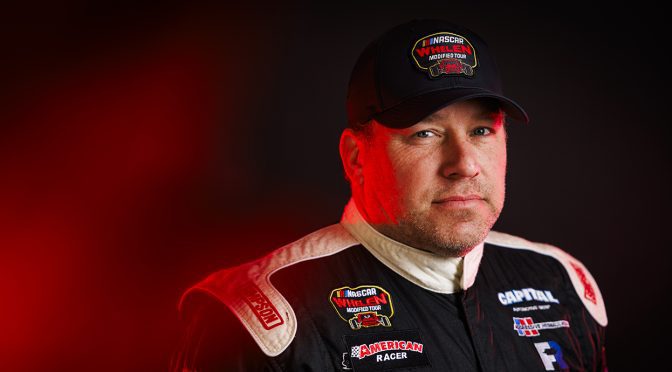
From his earliest days competing in United States Auto Club events to his time in the NASCAR Cup Series, one thing that has always stood out about Ryan Newman is that he’s a racer.
He’s not afraid to get his hands dirty. He wants to know everything about the cars he drives. If there’s a way to find speed, one can bet the driver who earned the nickname “Rocketman” will try to find it.
Racers want to race. And more often than not, racers gravitate to other racers. That’s what makes the pairing of Newman and Glenn Styres so perfect.
The duo, which first worked together for the NASCAR Whelen Modified Tour event at Martinsville Speedway earlier this season, will unite again Saturday for the Mohegan Sun 100 at New Hampshire Motor Speedway (4:30 p.m. ET on FloRacing).
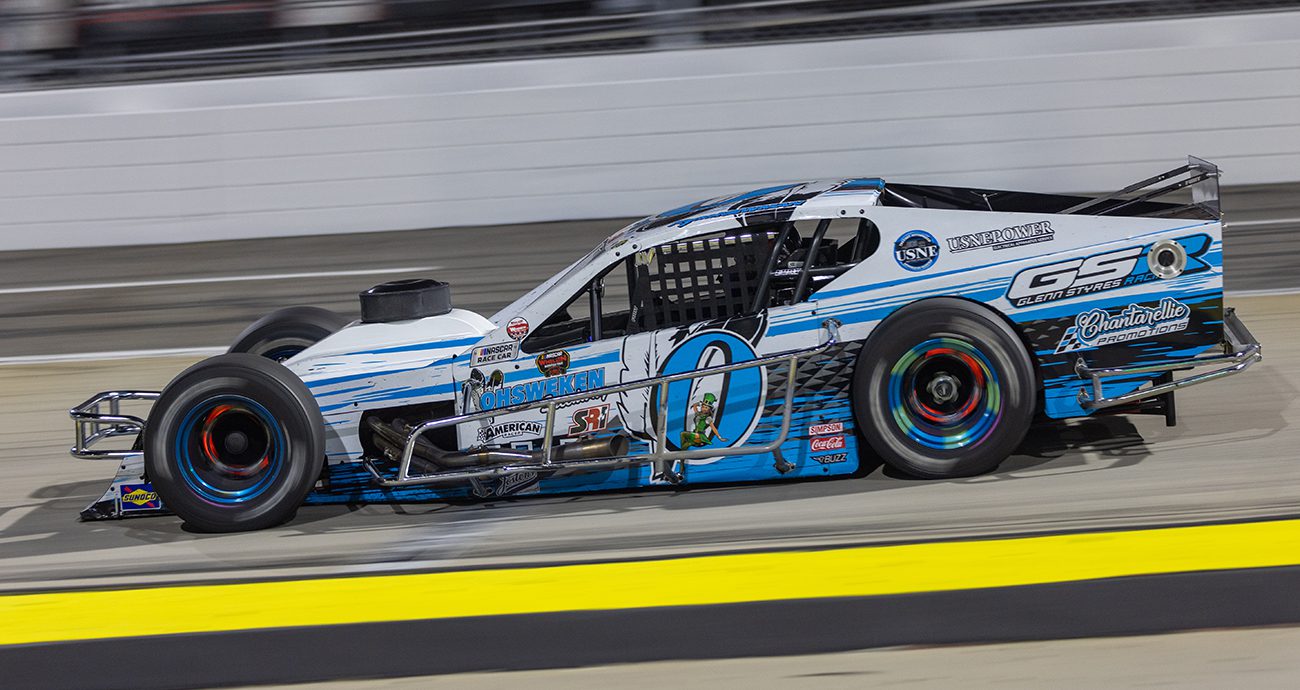
“Glenn’s been gracious enough to let me take his seat and go racing,” said Newman, who will drive Styres’ No. 0 Modified in Saturday’s 100-lap event. “He loves racing so much that he overcommits himself to doing all the things that he wants to do. … The guy has like 30-plus race cars. Kyle Larson couldn’t drive all those and lay out a schedule that makes sense.
“Glenn has a lot of ambition, and that ambition has given me an opportunity because he’s got other things to do in the form of running his race track and running his other race cars that he wants to do.”
Newman first met Styres, who owns Canada’s Ohsweken Speedway and has raced just about every type of car one can imagine, while visiting North Carolina’s zMAX Dragway for an NHRA drag racing event.
Not surprisingly, the two became fast friends.
Ryan Newman drove Glenn Styres’ No. 0 for the first time earlier this year at Martinsville Speedway, where he finished 10th. (Photo: Adam Fenwick/NASCAR)
Newman learned Styres had a nearly race-ready Modified in storage. Styres himself has never entered a Modified Tour event, but Newman saw an opportunity to blow the dust off the FURY chassis and do a bit of racing.
“Glenn had a car at the FURY shop. I’ve become friends with Ryan Stone, the crew chief of the No. 51 (for Justin Bonsignore). What I didn’t realize is Glenn actually had another car that was in storage,” Newman explained. “Through my conversations with Ryan Stone and Glenn, we decided to pull the car out of storage and just go racing.”
Newman and Styres made their debut together at Martinsville in late March. Newman qualified 14th and earned a 10th-place finish in Styres’ No. 0.
It was a solid first outing, but Newman believes there is plenty of room for improvement.
“We finished in the top 10 at Martinsville, which was good for our maiden voyage, but we’re looking for a lot more than that when we go to Loudon,” Newman said.
Because Styres has so many other irons in the fire, it’s basically been up to Newman and a handful of others to get the car ready to race. Once they get to New Hampshire later this week, they’ll gain a few more helping hands to make things just a little bit easier.
“I basically wrench on the car myself,” Newman said. “My girlfriend, my daughters and a few other people like Ryan Stone (help). Glenn has one of his guys he’s sending down with a truck and trailer to help a little bit, which isn’t common but is appreciated. It’s a small group of us.
“When we get up to Loudon, Max Zachem and his guys that he usually has working on race cars will be there to help out with pitting. Max will be in the crew chief role. We kind of just piece it together.”
Ryan Newman has competed in more than 20 Modified Tour races at New Hampshire Motor Speedway, winning twice. (Photo: Adam Glanzman/NASCAR)
The Modified Tour event at New Hampshire is traditionally one of the most anticipated races of the year. The Tour’s rules package combined with the track’s size and shape allow for a unique mix of pack racing and drafting, which has led to exciting action and thrilling finishes.
Newman is no stranger to New Hampshire. He won three times in NASCAR Cup Series competition at the track, including his first victory in 2002. He’s also won twice with the Modified Tour at the 1.058-mile oval. Saturday’s Mohegan Sun 100 will be Newman’s 22nd Modified Tour event at New Hampshire, but his first since 2021.
The Indiana native believes his success at New Hampshire is connected to his experience racing at another flat asphalt track, Lucas Oil Indianapolis Raceway Park.
“For the longest time I said it was my least favorite race track and it was my most successful on paper. I think it’s just because it’s a lot like the corners of IRP,” Newman said. “I think it just kind of suits my driving style, and you’ve got tire management, brake management and all those types of things.
“Then when you get to the Modifieds, you throw in drafting. That’s another part of it that a lot of Modified drivers aren’t used to that I have a lot of experience with. It’s just a fun combination.”
Newman doesn’t know how many more opportunities he’ll have to race with the Modified Tour, but he knows he’s found a like-minded friend in Styres. Together, they’re just a pair of racers at heart looking to chase checkered flags and have fun doing it.
“As they say, a good day is when you’re competitive and you do all the things that are in your control and you can roll it back on the trailer,” Newman said. “It’s not like this team is a championship contending team, because we don’t chase points. We’re just there for a good time and to try and win the race.”
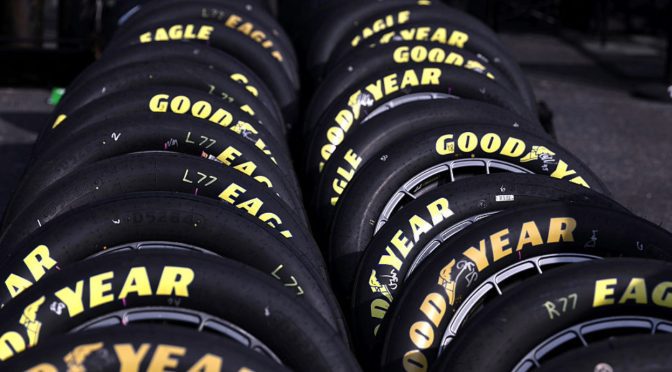
Goodyear is set to bring its familiar short-track tire setup for Sunday’s NASCAR Cup Series race at New Hampshire Motor Speedway (2 p.m. ET, USA Network, HBO Max, PRN Radio, SiriusXM NASCAR Radio).
Cup Series teams will use the same left- and right-side tire compounds used last weekend in the night race at Richmond Raceway.
The short-track tire setup debuted in the 2025 Martinsville fall race. The setup is designed to increase grip and lap-time fall-off over the course of a green-flag run. Goodyear will make just one adjustment to its normal allotment, bringing an additional set of tires for practice with the Cup Series now running just a single 50-minute session for the remainder of the season at non-superspeedway tracks.
“Despite being just over one-mile long, New Hampshire fits into the short-track category, meaning the same Goodyear Racing Eagles used last weekend at Richmond are again the right choice this weekend,” said Rick Heinrich, Goodyear NASCAR product manager. “The new practice format starting in New Hampshire means we will now bring more tires to the track to account for the increased allocation of two sets for practice most weekends.”
NASCAR Craftsman Truck Series teams will use the same left- and right-side tires from the series’ last three short-track races at Richmond, North Wilkesboro and Lucas Oil Indianapolis Raceway Park. The Truck Series will race at New Hampshire on Saturday (1:30 p.m. ET, FS1, FOX One, NASCAR Racing Network Radio, SiriusXM NASCAR Radio).
Tire allotment for each team competing this weekend:
Cup Series: 10 total sets — 7 new for the race, 1 for qualifying that transfers to the race, and 2 for practice. Teams will also have 4 wet-weather sets available, if needed. Craftsman Truck Series: 5 total sets — 3 new for the race, 1 for qualifying that transfers to the race, and 1 for practice. Teams will also have 3 wet-weather sets available, if needed.
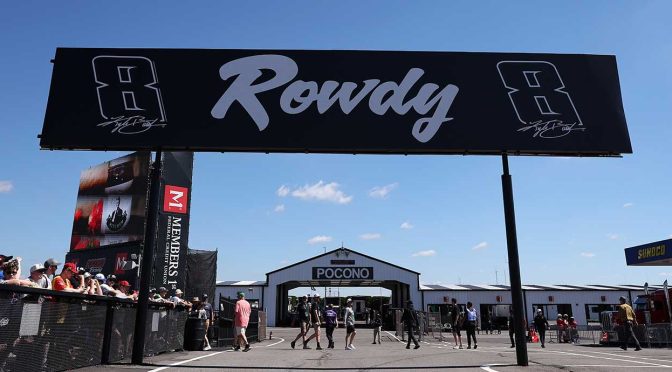
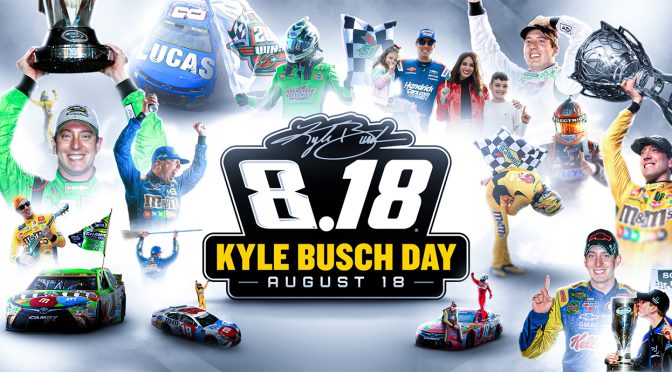
On what feels a fitting date to celebrate Kyle Busch’s impact on NASCAR, today — 8/18, a nod to Busch’s famed car numbers — the sport’s entire industry will recognize “Kyle Busch Day” with competitors, crew members, team owners and corporate execs sharing favorite memories of the two-time NASCAR Cup Series champion on multiple media platforms.
Busch, 41, passed away unexpectedly May 21 of complications from severe bacterial pneumonia and sepsis, however the impact of his life and career will never cease, thanks to an amazing legacy he established both on and off the race track.
Using hashtags such as #ForeverRowdy and #KyleBuschDay on social media, those who knew the late superstar best and those who may have only admired his flair and style from a distance will participate in the daylong tribute to one of the most talented drivers in the sport’s history, and certainly one of its most charitable hearts.
“I think it’s an awesome remembrance and way to show he’s still on the top of all of our minds,” said Joe Gibbs Racing driver Christopher Bell, who credits Busch with helping establish his own NASCAR career. “I think the industry has done really, really, good of not letting it just go. He had such a big impact on the whole industry. So, I’m glad they’re implementing it and I know it will go on for years to come and will be something we always cherish.”
Busch is the all-time winningest driver across NASCAR’s three national series with an astounding – and never to be matched – combined 234 victories.
The 2015 and 2019 NASCAR Cup Series champion has 63 wins in NASCAR’s premier series, ranking him ninth on the all-time list – driving for legendary teams and Hall of Fame owners such as Rick Hendrick, Joe Gibbs and Richard Childress.
The 8/18 is a nod to the No. 8 Chevrolet that Busch was driving for Childress when he passed away this spring and the No. 18 Toyota, which he won his season titles with driving for Gibbs.
“I think that’s really cool the 8/18,” said Busch’s RCR teammate Austin Dillon. “I got to hang out with Brexton, and Sam and Lennix this week at RCR family day so anything we can do as a sport to honor Kyle, we should.”
The 2009 champion in what is now called the NASCAR O’Reilly Auto Parts Series, Busch is the all-time winningest driver with 102 victories – more than twice that of any other driver in series history.
Busch’s 69 trophies from competition in the NASCAR Craftsman Truck Series is most all-time as well. He hoisted the last of those only six days before he passed after leading a typically dominating 147 of the 200 laps – from pole position – in the Truck race at Dover Motor Speedway.
Sean Gardner | Getty Images
Not only was his skill appreciated, but behind the brash, bold and competitive personality Busch was a devoted husband to Samantha and proud father to Brexton and Lennix – whether it be meticulously guiding 11-year-old Brexton’s young racing career or twirling around his beloved 4-year-old Lennix dressed in a princess gown. His love for his young family was always first in his heart.
He and Samantha founded the Bundle of Joy Fund to help provide IVF access, the dedication touching countless souls after candidly sharing the couple’s own challenges with infertility treatment. The tireless work they put into creating and funding this charity is indicative of the ways the Busch’s hoped to positively impact other families.
It’s indicative of the passion Busch possessed and shared. And for a racer who loved to test the tolerance and gumption of his competitors, they all respected his talent on track and that compassion off it.
“I think it’s important,” Hendrick Motorsports driver William Byron said of Tuesday’s industry-wide tribute. “The way that life happens, people don’t take a lot of time to reflect. Thinking about some of the things we remember about him and seeing Ty’s [Gibbs] Bristol [paint] scheme to honor him, shows there’s still ways that we are remembering him and he’s still staying in everyone’s minds.
“I think that’s really important we keep that going.”
For a lot of drivers, Busch was their first crucial nod of approval. And it could be life-changing. Bell and Spire Motorsports driver Daniel Suárez are among the long list of competitors who credit Busch with giving them their first big break.
“I think it’s very nice that NASCAR continues to think about Kyle, about Samantha and his family,” said Suárez. “In other scenarios, it would be very easy to just do a tribute and move on, but NASCAR doesn’t. They continue to honor him and I’m very proud of NASCAR for doing that. I’m very proud also of Samantha for allowing us to do this. I have a lot of memories with him, a lot of times with him, and I’m looking forward to sharing something good about him, something that makes me smile on that day.”
As with Suárez, Bell grins widely thinking about his mentor and friend. Busch challenged them in ways that changed their lives and fulfilled their dreams.
“Certainly, what I will always remember are all the collective moments,” Bell said, adding with a playful smile. “He had two completely different demeanors, this big brash person, but the most kind-hearted guy as well.
“He obviously had the biggest impact on me, more than any driver in the sport with the Kyle Busch Motorsports program and the Truck Series. And then when I graduated to JGR, he was the teammate that kinda looked after me. He had a really big impact on my life.”
A public Celebration of Life for Busch will be held Oct. 9 at Charlotte Motor Speedway after the day’s NASCAR Craftsman Truck Series race. It’s a way for the public to join the Busch family in honoring his unique and plentiful contributions not only as a champion race car driver, but also as someone whose generous spirit extends well beyond.
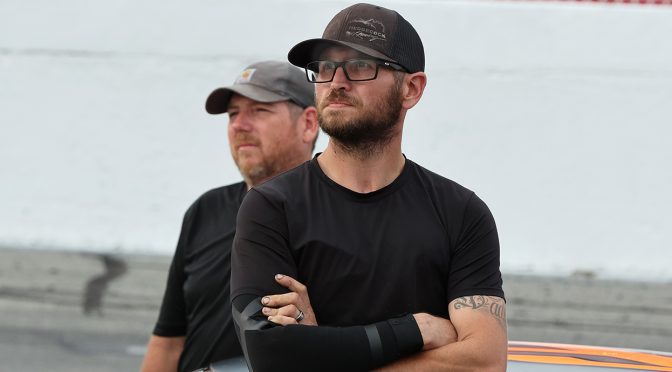
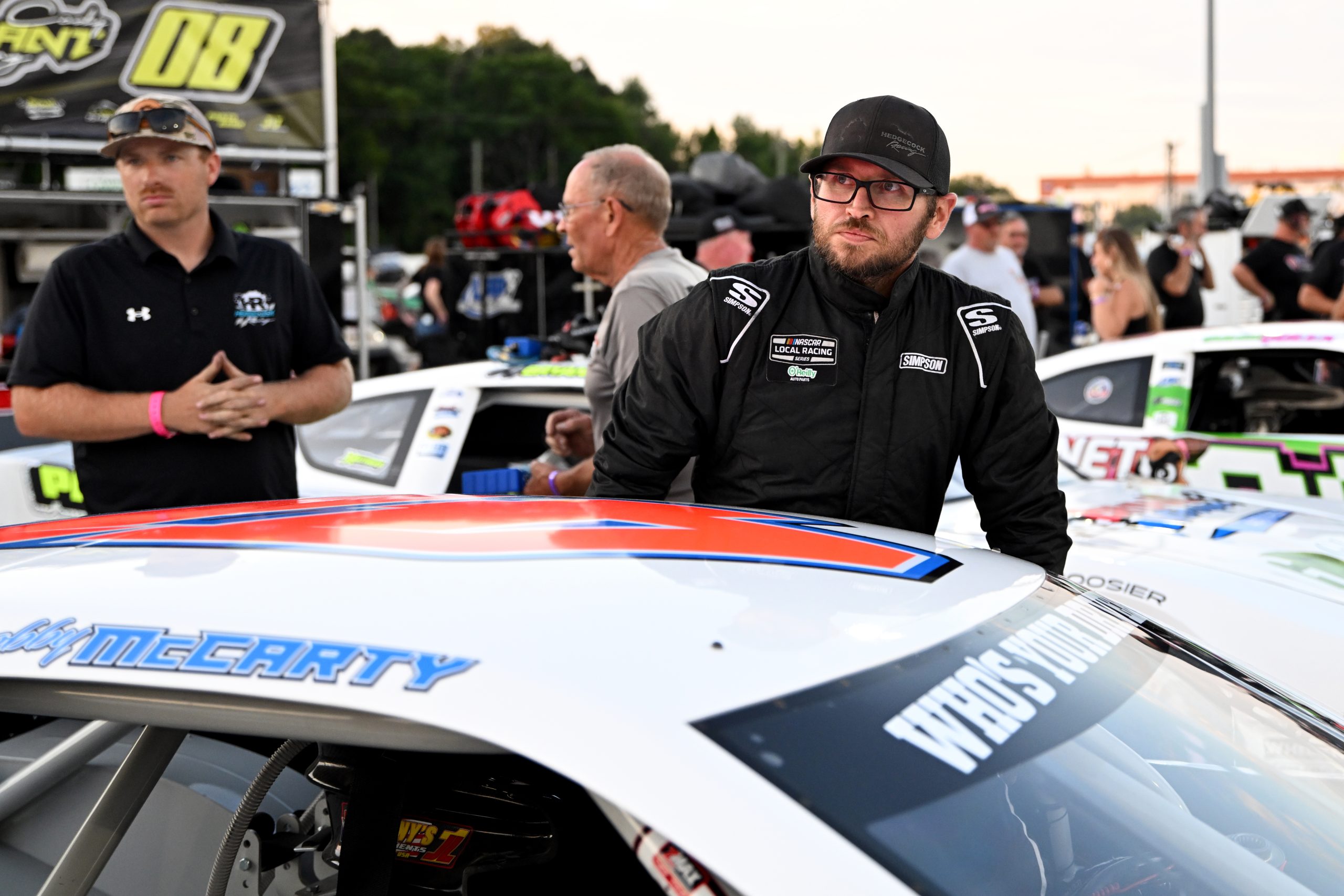
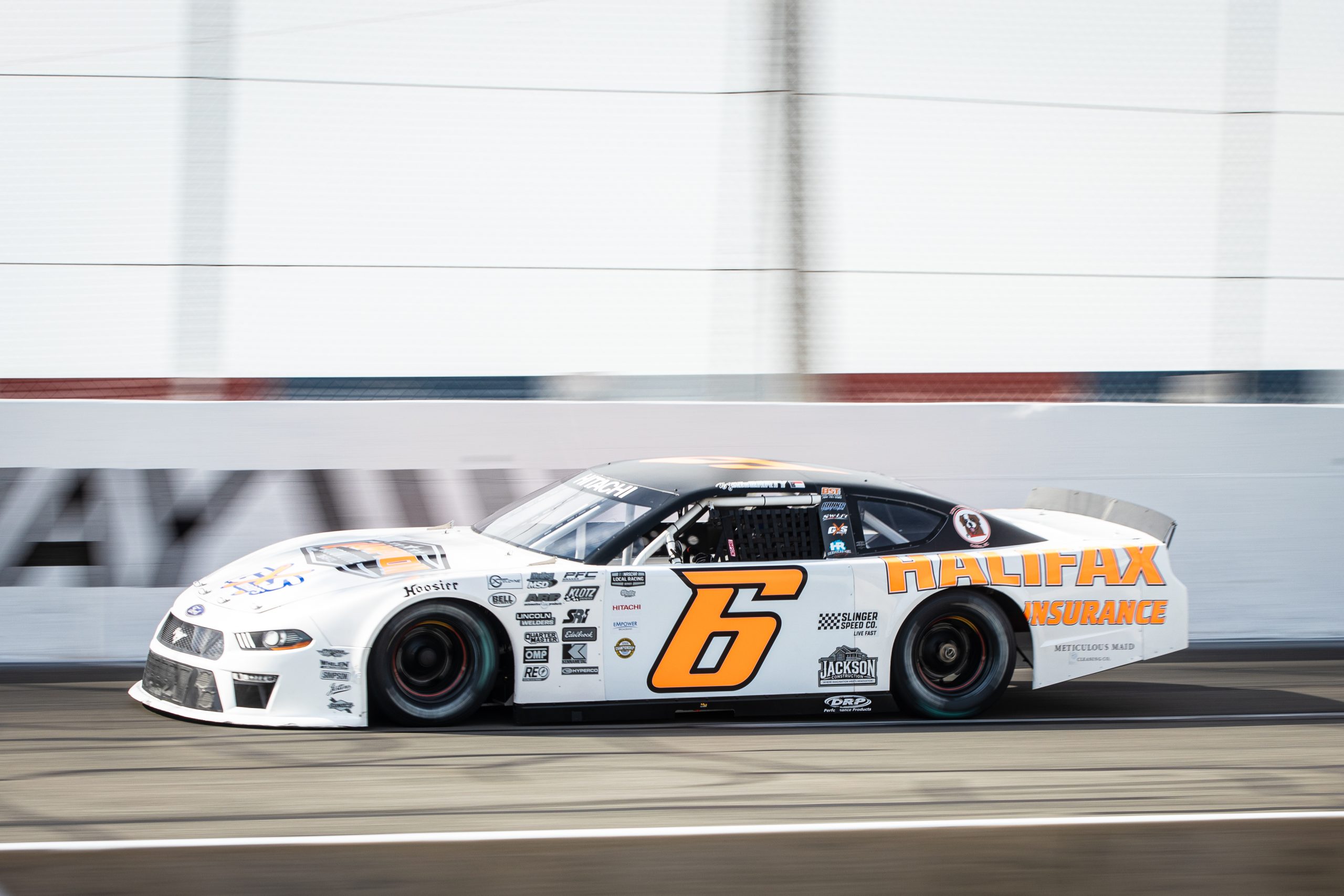
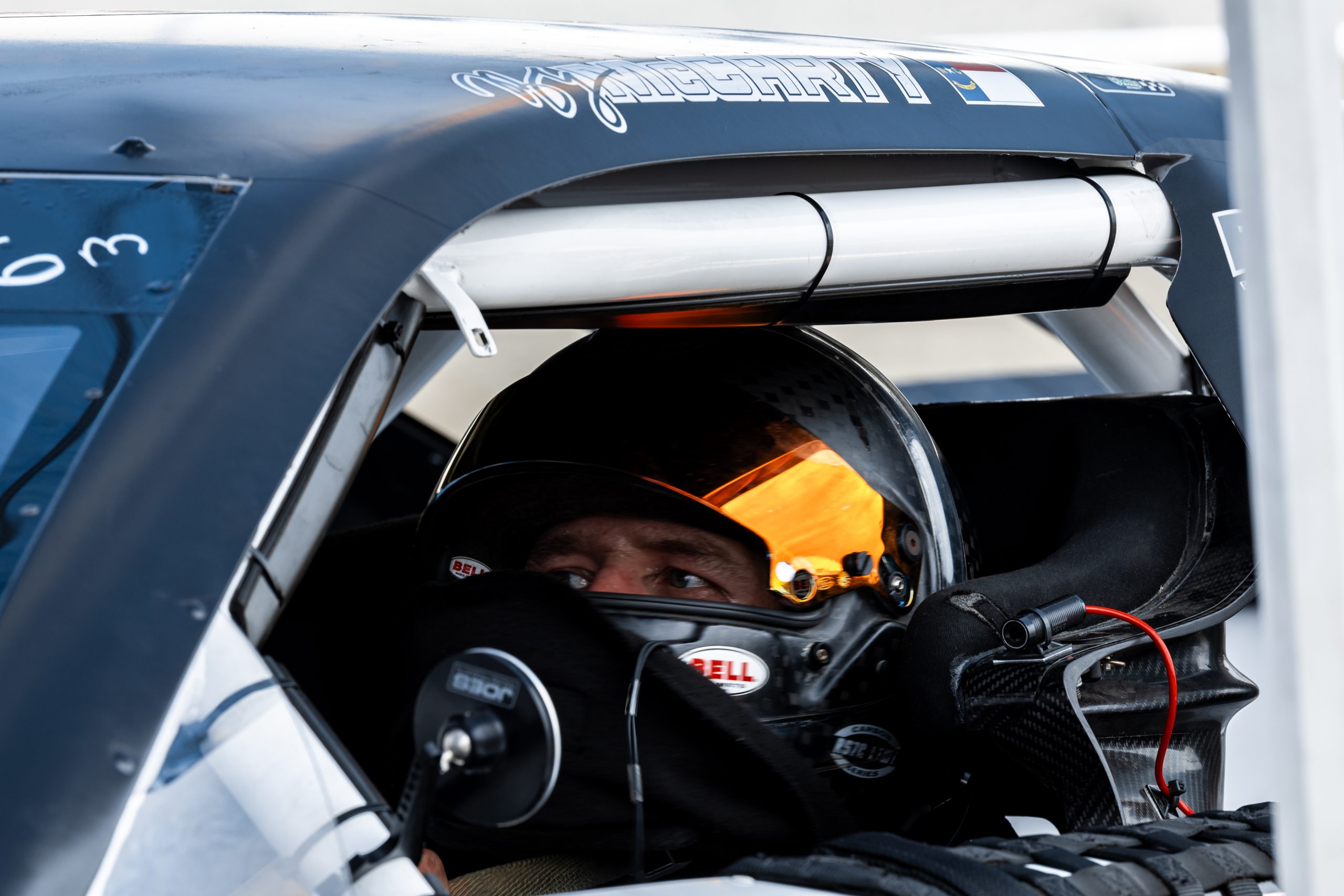
SOUTH BOSTON, Va. — Race fans see a highly competitive Bobby McCarty who appreciates the opportunity to race against the best of the best in Late Model Stock Car racing.
What they don’t see is the intensity and complexity of the Bobby McCarty that deftly navigates a pressure-filled world battling well-financed teams with full-time employees while trying to bring his family-owned race team victories and the status enjoyed by top-tier teams.
McCarty has driven for teams like Nelson Motorsports and R&S Race Cars, teams with solid finances and full-time employees. He holds one of the most impressive resumes in Late Model Stock Car racing.
(Photo: Ted Malinowski/NASCAR)
Among his achievements are being a two-time winner of the Thunder Road Harley-Davidson 200 at South Boston Speedway and winning the Virginia Late Model Triple Crown. He’s won three CARS Tour championships, is a two-time winner of the Rodney Cook Classic, and has won the Thanksgiving Classic.
Life is different today.
Since forming McCarty Motorsports in November of 2024 and moving from a 20-by-20-foot building to a 7,000 square-foot shop with a surface plate, McCarty continues to face a different set of challenges, battles and pressures from those when he drove for other teams.
“The biggest difference is if I don’t do the work, the work doesn’t get done,” McCarty explained. “If I don’t get the work done, we show up at the race track unprepared, and when you’re not prepared, you can’t win races. I don’t care if I’m tired or not, what needs to be done needs to be done at 110 percent of my ability.”
That translates into a grueling schedule for the veteran racer.
“I’m pushing 15 to 18 hours a day at work, and then go work on the race car. I function on very, very minimal sleep. Sleep and I have never really gotten along. I average three to four hours of sleep a night, but it’s been that way my whole life. It’s just the way I am.”
He has transformed physically by working out in the gym and staying in shape. His continued physical conditioning helps give him the stamina to sustain the long hours and exhausting work.
“There is no way I’d be able to do this if I was at my old weight,” he pointed out. “At my old weight, it basically wouldn’t happen.”
There is also the advantage the bigger teams have regarding car chassis setup notes.
“I’m on page one of my book, and those guys with the big teams are on page 10 or 15 or whatever, so to speak,” McCarty noted. “Those other guys have been running their own deal for many years, and they’ve had the same guys building and working on their equipment. They have more notes, more information to go off of in setting up their car.”
The differences McCarty faces extend to the pressure to perform.
“I put a ton of pressure on myself from the aspect of just being in some of the best equipment that is at the racetrack,” he said. “When I was in the Nelson Motorsports car or the R&S house car, everybody knew this was top-notch equipment, and you should be winning. I would keep telling myself that over and over.”
Today’s pressure is different, and it’s ramped up to another level.
“The pressure I put on myself is way higher than anything I’ve ever felt before,” he noted. “I’m extremely hard on myself. I hold myself to a different level of accountability because of my past results. It’s just knowing what you’ve done, the past results, the wins, the championships; what you’re capable of when you go out there.
“It keeps coming back to the same sentence: You’re better than that. The next week or so, or at least until the next race, I’m constantly kicking myself. I’m not in the right state of mind, extremely upset. I keep coming back to that same sentence: You’re better than that.”
McCarty could have raced more aggressively at times but refrained.
“There have been a ton of scenarios this year where I could have gotten a little bit more aggressive and picked up a couple of spots,” McCarty pointed out, “but I go back to that same sentence: I’m better than that. I don’t need to use my car as a weapon to increase spots on the race track.”
Bobby McCarty (Photo: Katherine Gawlik/NASCAR)
A changing image
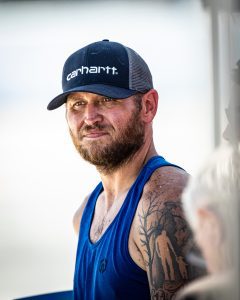
To some fans, McCarty has been seen as driver that wears the “black hat” – a hardcore aggressive driver with an attitude.
McCarty owns it. He explains it has resulted from his earliest racing experiences while racing go-karts. Younger than a lot of his fellow competitors, he won more races than many of his counterparts.
“I’ve had other kids’ parents, when I was 8 years old, cuss me like a dog, following me around the infield, and shoot me the rod,” he explained. “That left its mark on me, and I decided quickly I really don’t care what you think. I’m here to race, and I’m here to win. I don’t care about your feelings. I don’t care what you think about how I race.
“I’m going to race you hard, and I’m going to race you clean. I don’t go out there looking to cause issues with people. I’m here to race, and if I get the same treatment back, I’m all for it, let’s race. Once I feel you’ve disrespected me on the race track, I can’t let go of it. It’s always in the back of my mind.”
It was that way with his attitude about racing fans.
“I don’t care if you like me,” he added. “If you cheer for me, great. If you boo me, I promise that makes me better. I don’t know why, it’s just the way it’s been. When I see somebody hanging over the fence, cuss me, or whatever, that just lights a fire. I think it just comes from the stuff that was going on at a very young age and I really didn’t know how to process it.”
The “black hat” image is progressively fading.
“There are a lot more cheers now,” he pointed out. “It’s kind of weird. I’ve never been a guy that got cheered for. I don’t know how to feel about it, but it’s a good thing.”
(Photo: Joe Chandler/South Boston Speedway)
Racing Follows McCarty Home
“I try to keep the racing world separate from my personal life, and it’s not always easy,” he explained. “From the moment I wake up I dream about this stuff. It’s always on my mind. A lot of times I’m zoned out running numbers through my head. I’m an avid reader. I love reading and learning new things whether it’s geometry-related, physics-related or engineering-related. I study and go back over data and rewatch races and films. It’s a never-ending thing for me.”
The pressure also follows McCarty home.
“People just don’t really understand, but you put so much time and effort into this stuff, and I’m not in the greatest moods all the time,” he noted. “I’m tired. I’m ill. I’m being frustrated with some of our results and unfortunately my wife, Brooke, catches the blow of a lot of this stuff.
“She’s a trooper. She grew up in racing, her dad raced, her brother raced, and her grandmother was really big into racing. She knows the drill, but it doesn’t make it right.”
The struggles and sacrifices of a racing wife are not easy. Brooke works and takes care of her husband and two children, 6-year-old daughter Hadley and 15-year-old son Conner.
Racing has been a part of her family life for 30 years. She knows what to expect and deals with it accordingly.
“I’ve grown up in it,” she explained. “It’s been my life the last 30 years.”
She takes a step back when her husband is not in a good frame of mind.
“I fix his favorite dinner and hope he has time to eat,” she said. “When he’s ready to talk, he will talk to me about whatever it is. I don’t push him because he gets irritated even more. He gets irritated with himself trying to figure out what he can do to make the car better or what he’s doing wrong. He puts a lot of pressure on himself. That’s when I struggle, because I don’t like to see him doubt himself whenever it comes to the race car.”
Simply being there for her husband works wonders.
“He will be at the race shop, and I can tell he’s having a rough week or whatever,” Brooke said. “So, I go down to the race shop. Whether it’s me cleaning the car, letting Hadley run around and play, as long as we’re there his whole demeanor changes. As long as I’m there and Hadley’s there, and he has somebody to just throw out random questions to, he’s good.
“I try to get us all down there to the shop at least once a week so we can just kind of chill. I’ll go get dinner or something. I like being down there, so it’s a very big family thing now.”
(Photo: Ted Malinowski/NASCAR)
Emotional Wins
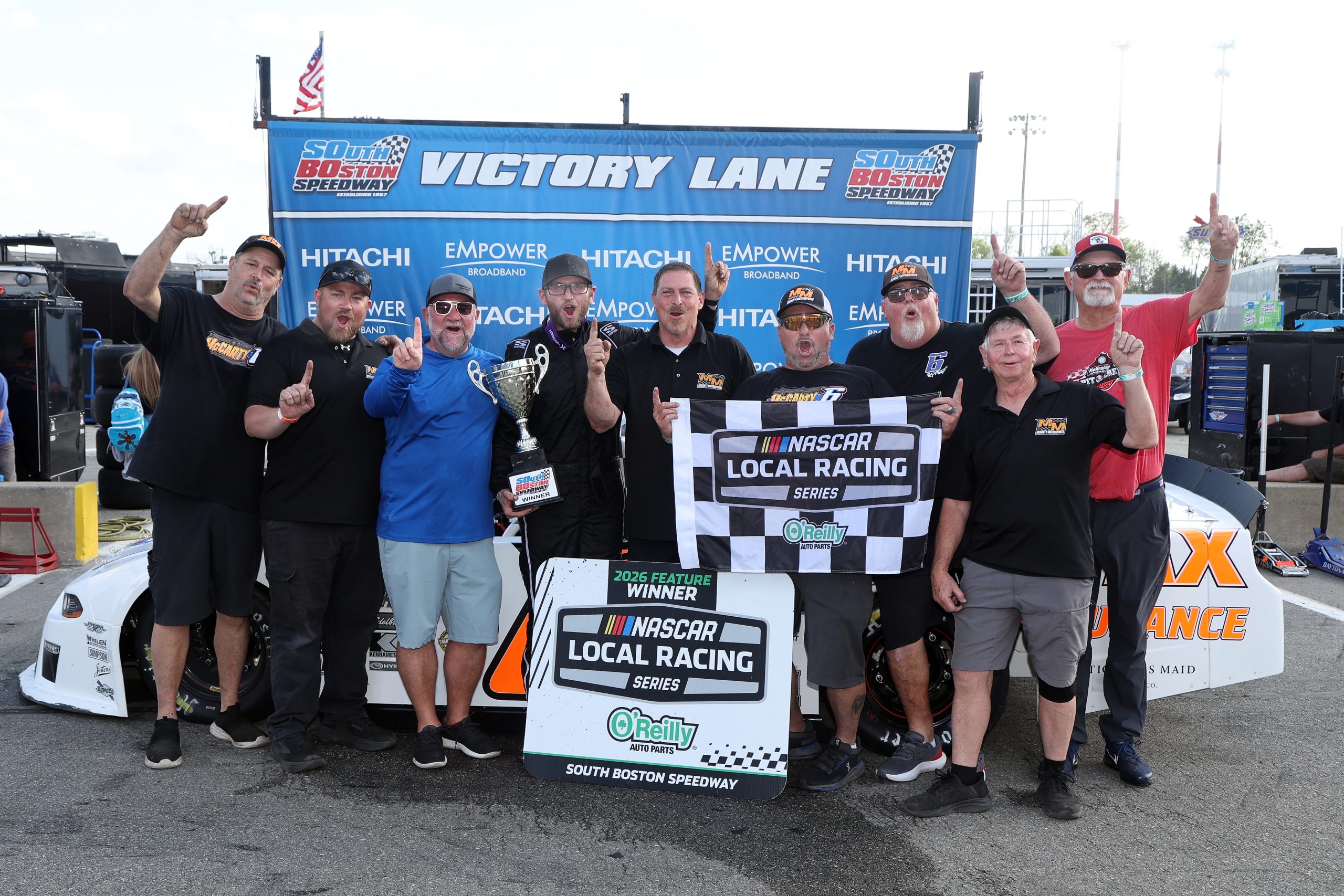
When the wins finally came along, it was an emotional experience for McCarty. Tears welled up in Bobby McCarty’s eyes as he brought his car to a stop in Victory Lane after winning the second race of the twin 75-lap races at South Boston Speedway on April 4. He sat quietly in his car for a couple minutes sharing the victory with his wife on an emotional Facetime call. It was his first win with his family-owned McCarty Motorsports race team which was formed in November 2024.
“Since I work on Saturdays, I was unable to go to the race,” Brooke said. “It was emotional for me just because I could see how happy he was. It made me really proud of him and the team, just because of how much they put into it.”
When McCarty won his second race in July, there was another emotional Facetime call.
“I was dogsitting for a friend at work,” Brooke explained. “So, I watched that one on Flo. Our daughter wasn’t there that day. She had been watching the race with me and was getting very emotional because she loves being at the race track. Seeing her dad in Victory Lane made her very emotional. She wanted to Facetime him, so we Facetimed him after the race and let her talk to him. Whenever we’re not there, we watch on Flo. If he wins, we call him. If not, we text him.”
(Photo: Krista Jasso/NASCAR)
The Present
McCarty has put together a solid 2026 season at South Boston Speedway. He stands fifth in the track’s Hitachi Energy Late Model Stock Car Division point standings entering the 100-lap race that will headline the Davenport Energy Race Night on Saturday night, Aug. 22.
He has earned three wins and now has 11 Late Model wins at the 0.4-mile oval. In addition, he has seven top-five finishes and 13 top-10 finishes in his 16 starts this season.
“After the first win it was kind of like, ‘Wow, we did it,’” McCarty said. “The second win was, ‘Alright, now we have a multiple race win season.’ If you get one win in a season it’s easy to look at the stats and say, ‘Well, we probably got lucky.’ But, when you start stacking two, three or four wins in one season people see it as, ‘Well, you know, they’ve got good stuff.’”
With two wins in his last three starts, the feeling is that the car is headed in the right direction.
“It’s hard to say for sure we’ve got it figured out,” McCarty said. “I have a gut feeling that we’re close. We’re knocking on the door now versus still being out in the front yard.”
The Future
While McCarty’s goal is to produce good results for the 2026 season, he also has his eyes cast toward the future.
Noting previous injuries, two rotator cuff surgeries in the past three years, and being banged up in the recent Hampton Heat, he said, “I really don’t know how much longer I can do this. I just know that if I take a pretty good hit, it is going to do me in for awhile.
“It is for my future, and really for our team, for me to be able to go out there and win races. I want to prove to everybody that our program can win races. I know my days are numbered, and at some point, I want to get out of the seat and put somebody else in it. You’ve got to prove your stuff is good and capable of winning to do that.”
NASCAR.com’s Pat DeCola ranks the top 20 Cup Series drivers competing for the 2026 championship after Joey Logano’s win at Richmond Raceway and before Sunday’s race at New Hampshire Motor Speedway (2 p.m. ET, USA Network, HBO Max, PRN Radio, SiriusXM NASCAR Radio).
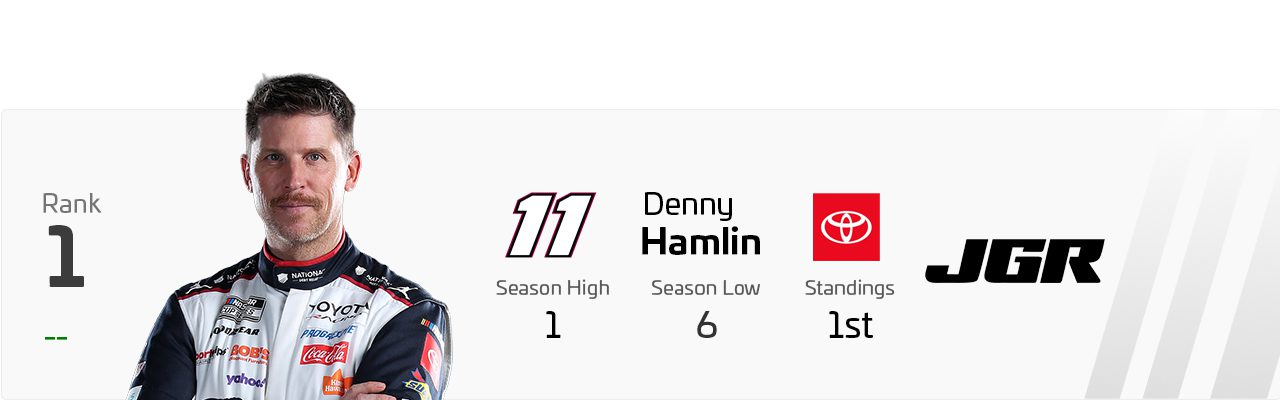
Analysis: Even on a night when Team Penske and Chase Briscoe largely controlled Richmond, Hamlin quietly did what the championship leader keeps doing: finished fourth and left with an even stronger grip on the standings. It marked his 11th consecutive top-five finish on non-drafting ovals, and his advantage over Ryan Blaney now stands at 115 points with only two regular-season races remaining. Loudon has been one of Hamlin’s best tracks for nearly two decades, with Cup victories in 2007, 2012 and 2017, though he was held out of the top 10 there last season. At this point, the regular-season title appears all but his. A mere formality.
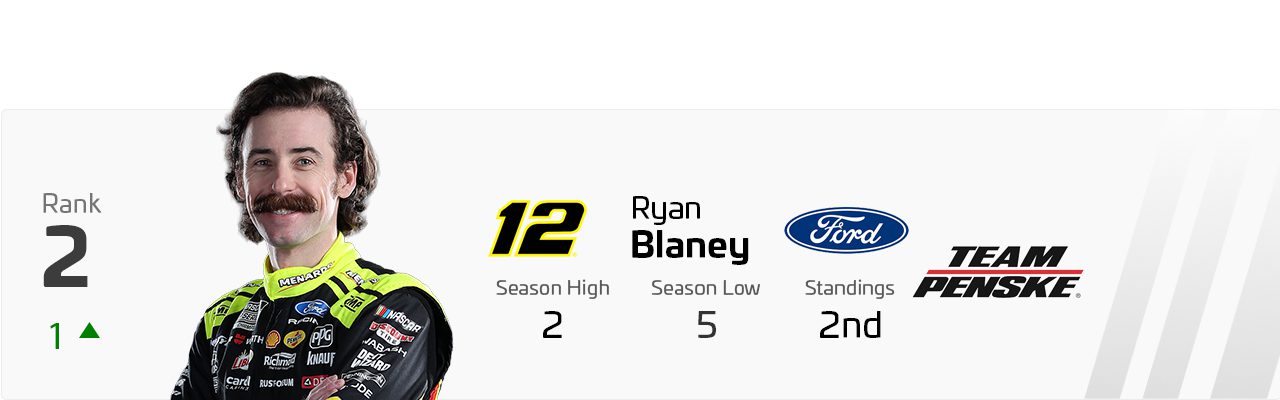
Analysis: Thirteenth at Richmond hardly captures Blaney’s night. The No. 12 started from the pole, led 88 laps, won Stage 1 and spent much of the first half looking like one of the two cars to beat before the race eventually got away from him. Still, Blaney moved back into second in points and gained another 21 tallies relative to The Chase cut. Now comes Loudon, where he led 116 laps and won last season with Joey Logano finishing fourth, an awfully convenient destination for a Penske organization that just put all three cars near the front at Richmond. If there is a driver positioned to make Hamlin work for that top seed over the final two weeks, the defending Loudon winner is probably it.
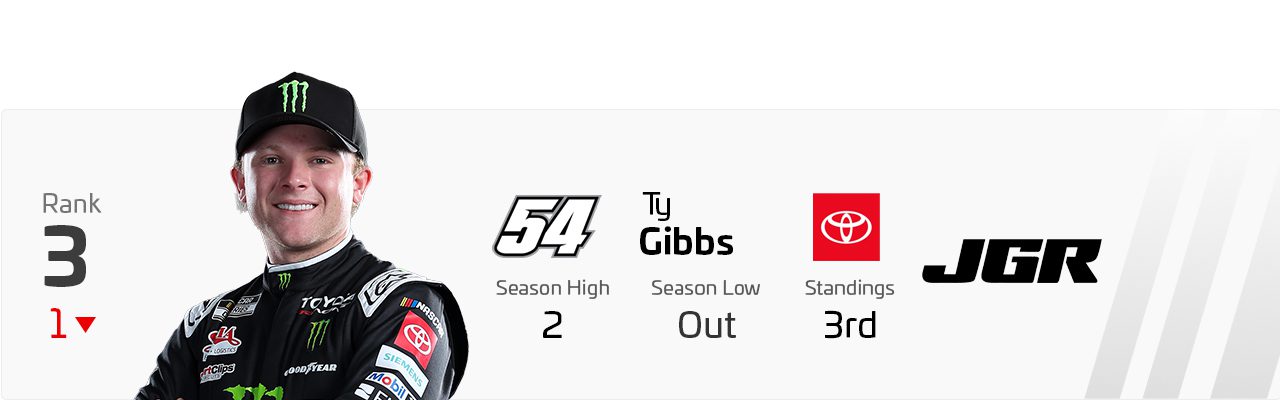
Analysis: One speeding penalty was enough to turn Gibbs’ Iowa follow-up from potentially interesting into largely forgettable. He fell off the lead lap during the opening green-flag cycle and never fully recovered, finishing 15th one week after a statement victory. Yet Gibbs remains only 12 points behind Blaney for second in the standings and 11 ahead of Reddick, keeping that three-driver battle extraordinarily compact. Loudon was considerably crueler last year, when Gibbs crashed out after 134 laps and finished 35th. The good news is that one bad pit-road mistake at Richmond did little to change the bigger picture: the No. 54 still looks much more like a contender than an upstart having a nice summer.
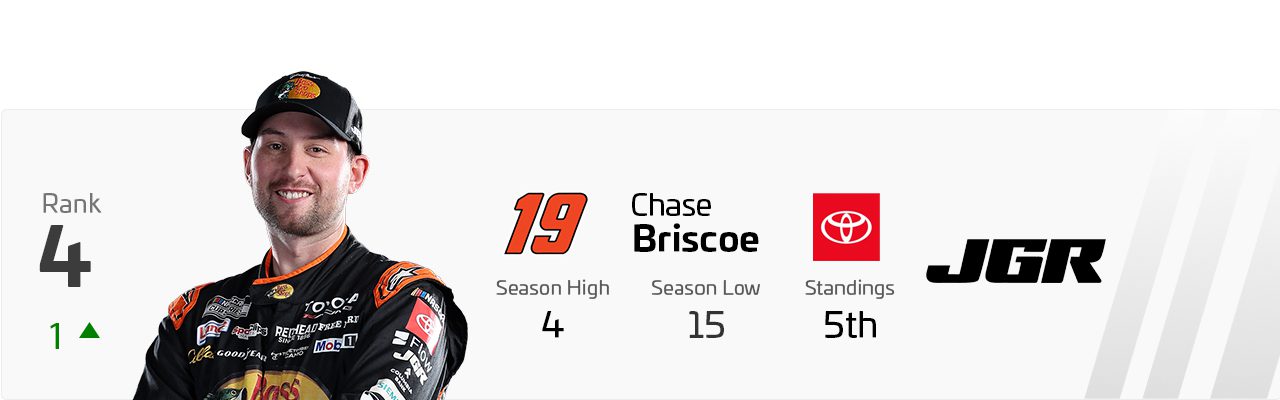
Analysis: If not for Logano’s late execution, Richmond probably belongs to Briscoe. He led a race-high 171 laps, ranked first in speed and restarts and spent virtually the entire night inside the top two before brake trouble dulled his advantage late and left him runner-up. That makes six top-six finishes in seven races and formally locks the No. 19 into The Chase, while also extending an almost absurd JGR streak of seven consecutive runner-up finishes across its four drivers. Loudon brought Briscoe a 10th-place finish with 19 laps led last season. He entered the summer as a driver heating up; he leaves Richmond looking like one of the strongest title contenders in the field.
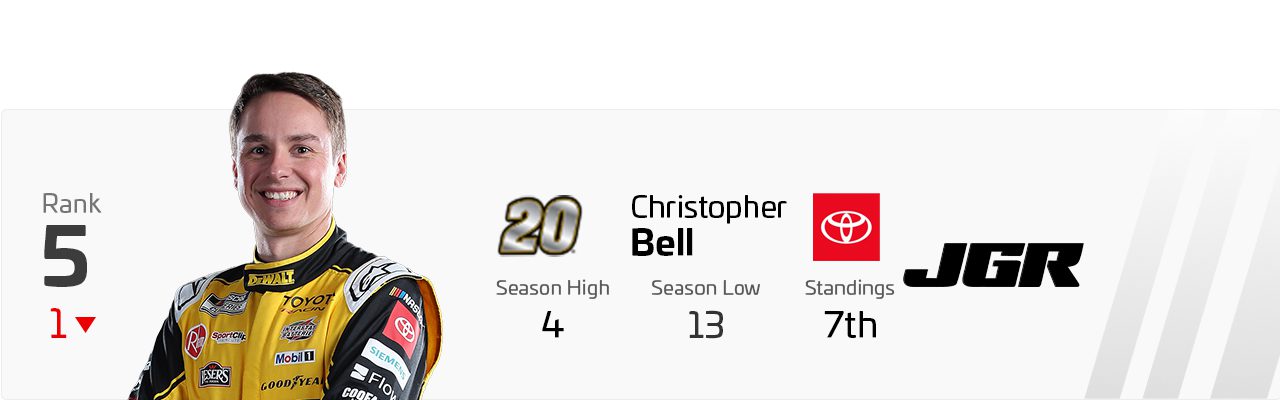
Analysis: For once, Bell didn’t finish second. Seventh at Richmond snapped his personal string of near-misses, but it did little to diminish the broader performance level of a driver still ranked fourth in season-long speed with one of the best pit crews in the series. Better yet, the schedule is about to hand him perhaps his favorite place on the map, in ideal position to strike. Bell has won two of the last four Cup races at New Hampshire, in 2022 and 2024, and owns four O’Reilly Auto Parts Series victories there, including the 2024 event. After seven runner-up finishes without a victory this season, there may not be a more obvious place left for Bell to finally kick down the door.
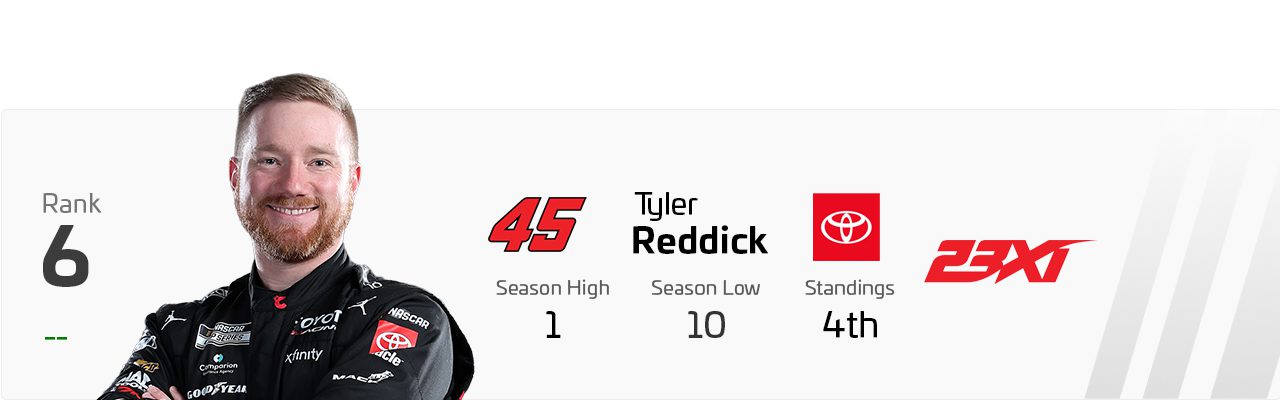
Analysis: Richmond wasn’t spectacular, but after Iowa, an ordinary race was a nice stabilizer. Reddick started 32nd after spinning in practice, briefly cycled to the lead late and finished 11th, smoothing a stretch in which five of his previous nine finishes had been 30th or worse. He remains fourth in points and second in season-long speed, so the underlying profile still looks considerably healthier than the recent box scores. Loudon, however, offers little recent comfort after a 21st-place finish last season. The five-win first half is still doing plenty of work for Reddick’s championship outlook, but The Chase is close enough now that he’d probably prefer the second half starts contributing again.
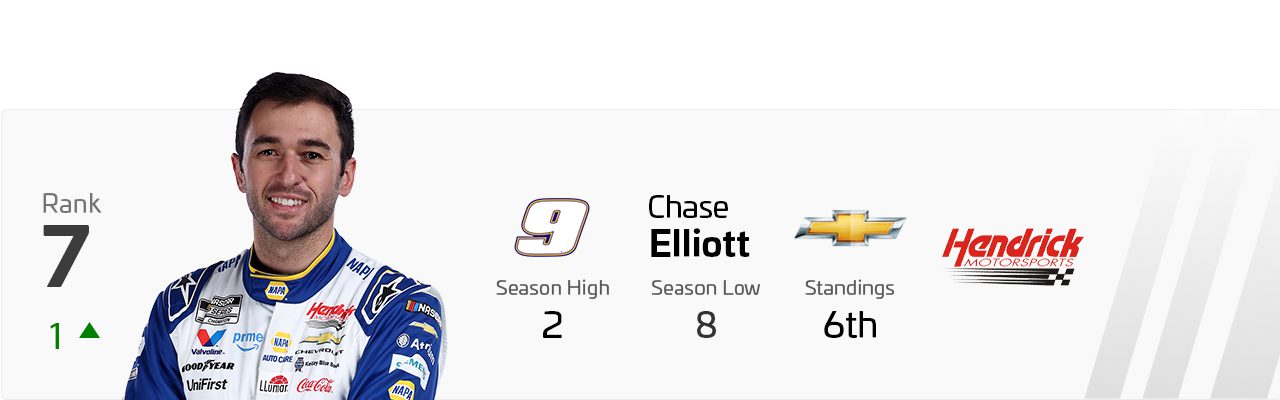
Analysis: Hendrick Motorsports finally looked like Hendrick Motorsports again at Richmond, and Elliott led the recovery. Fifth place was his first top five since winning Texas in early May and headlined the organization’s first race with all four cars inside the top 10 since Talladega in April 2025. It also officially secured Elliott’s Chase berth after a summer stretch that had become increasingly difficult to reconcile with his early season form. New Hampshire supplied another fifth-place finish last season after he started 27th, so there is at least a recent roadmap for keeping this going. One good night doesn’t erase the slump, but it finally gives the No. 9 something better than memories of spring to build from.
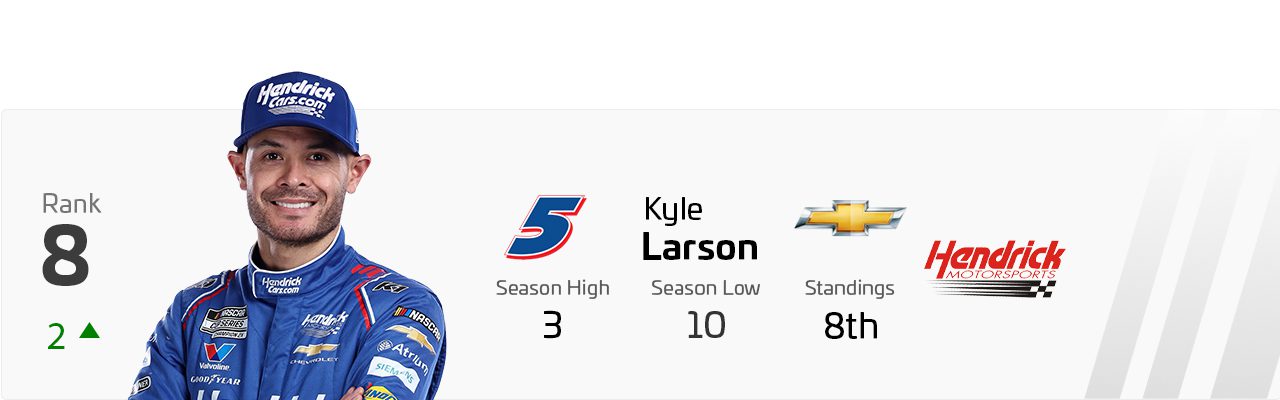
Analysis: Larson started 30th at Richmond and somehow turned it into sixth, which was precisely the kind of salvage operation Hendrick had been missing during its recent short-track malaise. He still ranks fifth in season-long speed, and the No. 5 crew has climbed to second in the pit-crew standings, so the pieces beneath the disappointing summer remain unusually strong, and it would not be a shocker to see him run roughshod in The Chase. Larson also moved up two positions in the standings and sits 143 above the cut. He finished seventh at Loudon last year after leading four laps, another respectable result at a track where he remains winless in Cup. Richmond looked less like a breakthrough than a tourniquet, but given the previous few weeks, that’ll do.
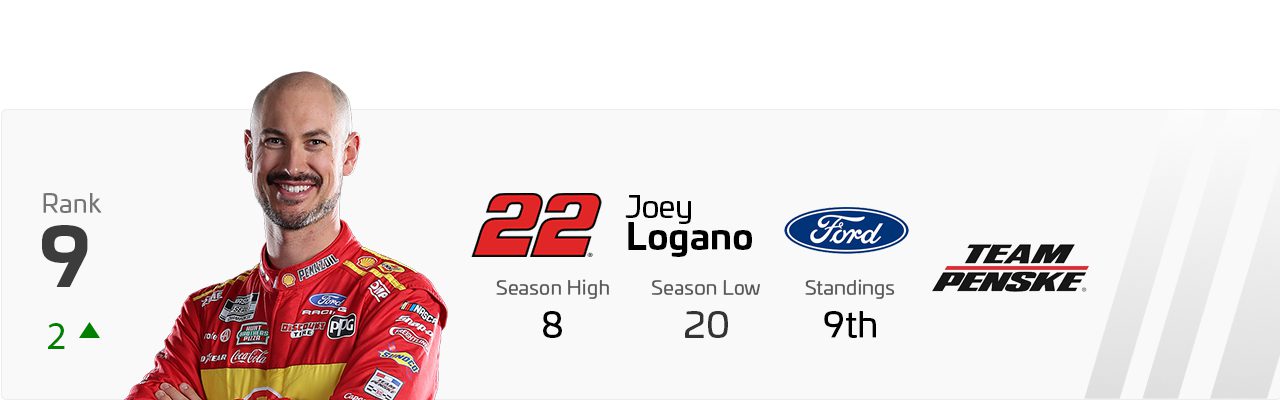
Analysis: Do not let the boys get hot, indeed. Logano has now won twice in four races after winning only once in the previous 56, and Richmond may have been the most complete statement yet: 95 laps led, a Stage 2 win and a late pass of Briscoe — one of the hardest drivers to pass these days — before edging him by 0.392 seconds. Logano has rocketed from 20th to ninth in points over six races and is now 142 above The Chase cut, transforming his entire season in barely more than a month. And now he gets Loudon, where the New England native owns two Cup victories, led 147 laps last season and finished fourth behind teammate Blaney. The question is no longer whether Logano will make The Chase. It is how seriously everyone should take a three-time champion whose season just snapped violently into place.
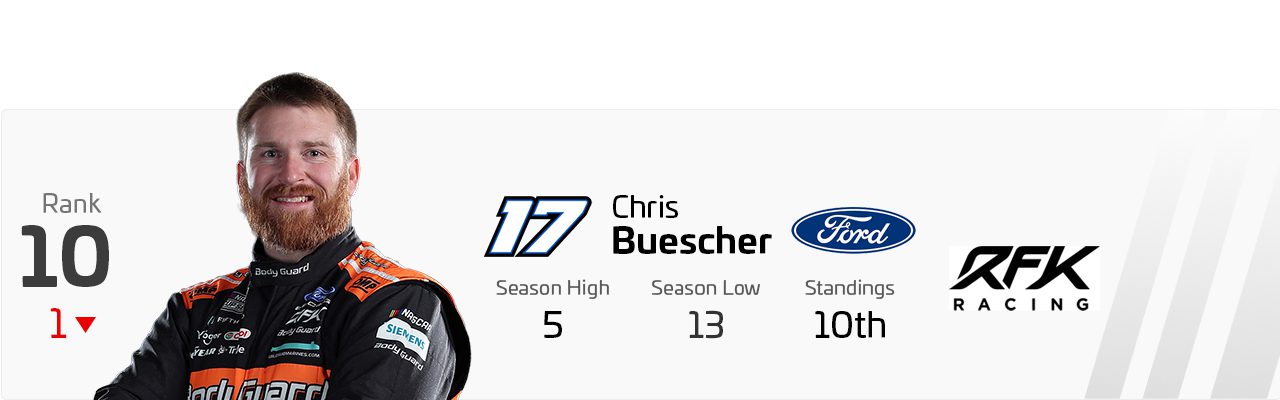
Analysis: Buescher’s Richmond night was the kind that makes a comfortable points position feel slightly less comfortable. He finished 21st, ranked only 22nd in speed and gave four points back to the cut, although 136 points still separate him from any actual trouble. The larger season remains sturdier than this one result, with the No. 17 sitting 10th in points and its pit crew ranked sixth overall. Loudon was similarly quiet last year, producing an 18th-place finish. Buescher is almost certainly headed to The Chase; the more interesting question is whether he can arrive looking like anything more threatening than safely qualified.
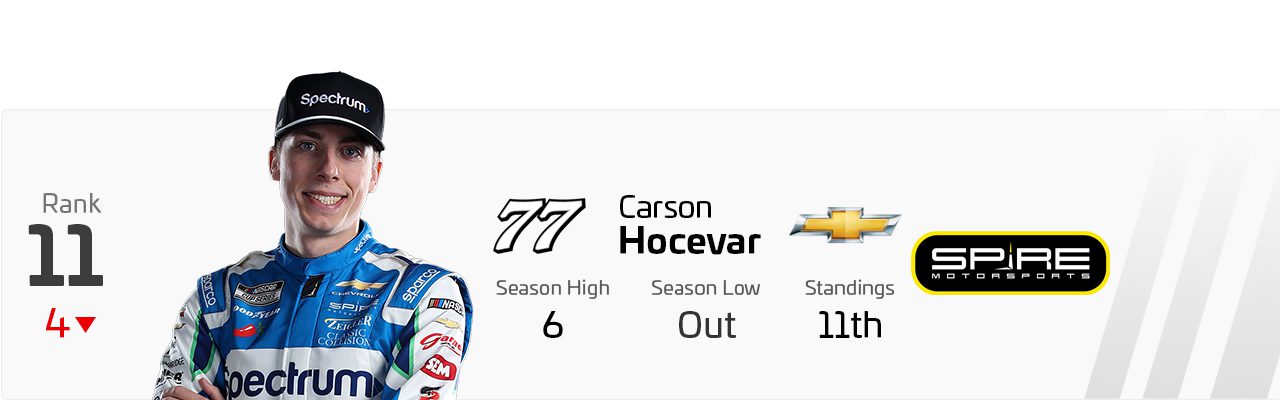
Analysis: The slide is officially too large to dismiss as one rotten afternoon. After finishing 31st at Iowa, Hocevar stalled on track at Richmond and wound up 37th, dead last, while ranking 31st in speed and 37th in passing. Two races have dropped him from eighth to 11th in points and cost another 19 points of Chase cushion at Richmond, though he still sits 128 above the line. Loudon was far more representative of his 2026 season last year, when Hocevar started sixth and finished 11th. Few need the regular season to end more quickly than No. 77 right now, but first it needs to stop the bleeding.
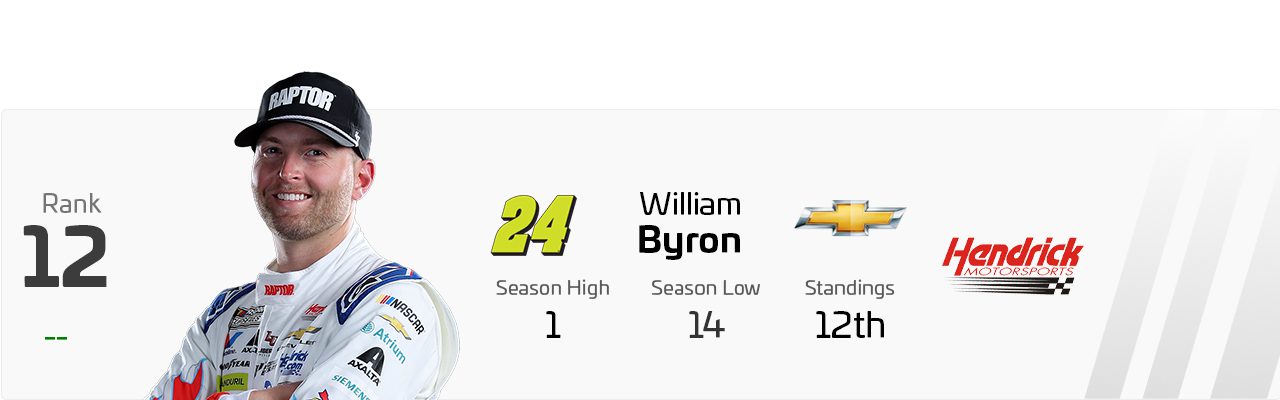
Analysis: Byron followed his Iowa top 10 with another at Richmond, quietly contributing ninth place to Hendrick’s organizational rebound while carrying the top-ranked pit crew in the series. The No. 24 is now 113 points above the cut, meaning the winless regular season is much more an aesthetic problem (zeroes don’t look good under the Hendrick banner) than a mathematical one at this stage. Loudon should bring some genuine optimism, though: Byron finished third there last season and previously won the 2016 Craftsman Truck Series race at the track. Hendrick finally showed a pulse at Richmond; Byron now gets a place where turning that pulse into something louder would hardly be surprising. Same can be said for the week after, too.
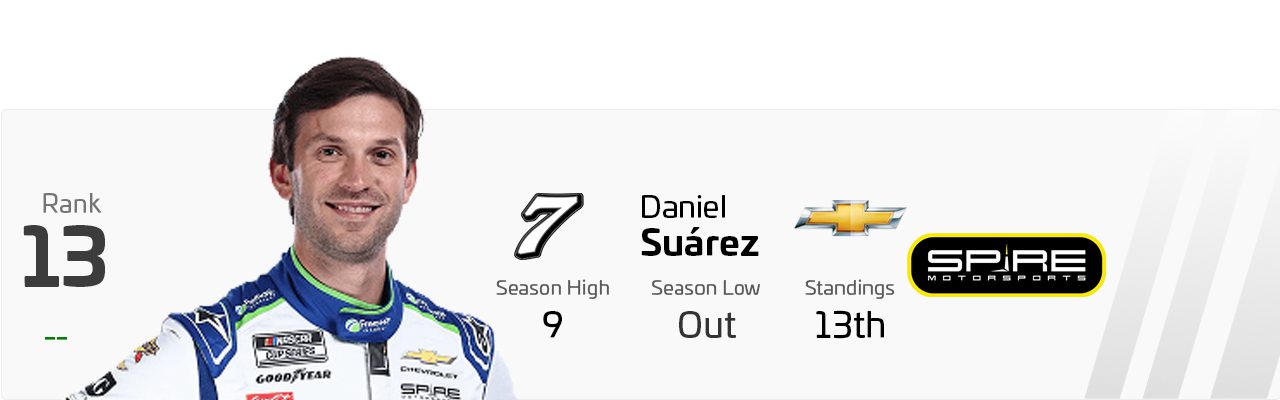
Analysis: Suárez has reached the portion of the regular season where, in terms of points racing, boring is a feature, not a bug. Sixteenth at Richmond did little for the highlight reel, but the No. 7 actually gained a point relative to The Chase cut and remains 101 above the line with two races remaining. His Richmond speed was only 21st-best, continuing a season in which the results have often been more useful than the underlying pace. Loudon is not an obvious place to get aggressive, either, after Suárez crashed to 36th there last season. At this point, though, he doesn’t need to get aggressive. Two more uneventful weekends would accomplish exactly what matters.
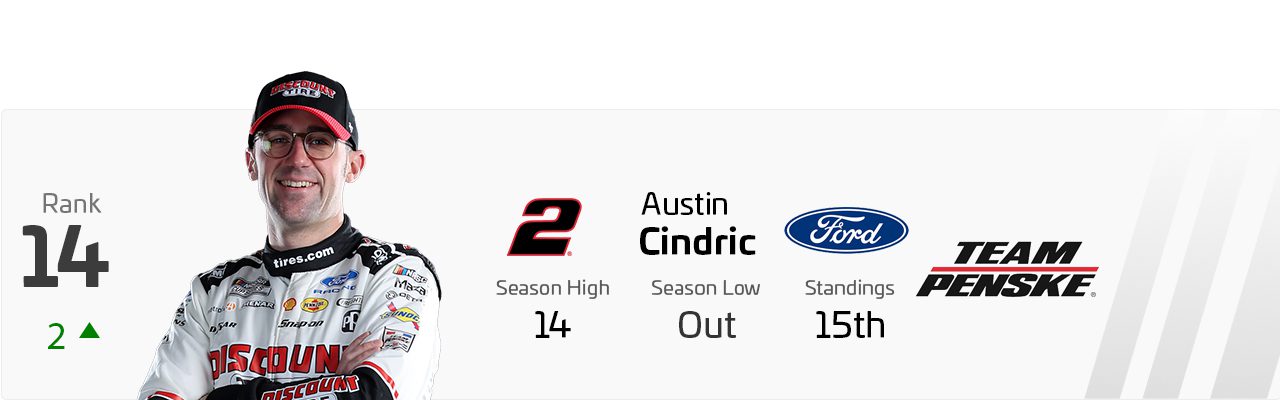
Analysis: Cindric picked an excellent time for his best short-track finish ever. Starting 23rd, he marched into the top five during the first green-flag cycle, stayed there most of the night and finished third while ranking second in passing, first in defense and third in speed. The payoff was enormous: 28 points gained on the cut and a cushion that has doubled to 57, while Cindric now sits only 13 points behind Wallace for 14th in the standings. Loudon produced only 17th last year, but Penske went first and fourth thereat at one of its best tracks, and just dominated huge portions of Richmond. What looked like a precarious Chase bid a week ago suddenly has some meat on the bone.
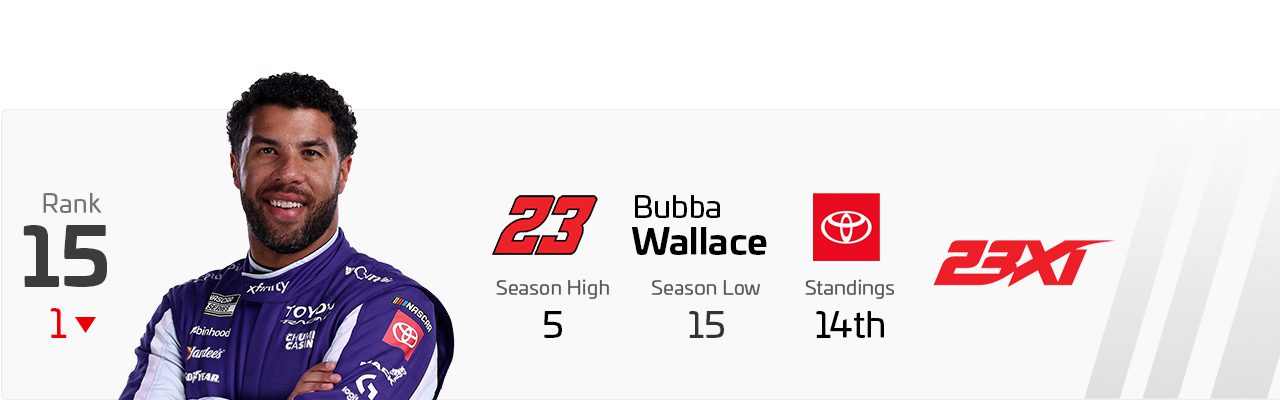
Analysis: Wallace has quietly become the driver Cindric is chasing rather than a driver looking forward, trying to gain ground himself. Richmond yielded only 20th after the No. 23 scored Stage 1 points, and although he technically gained two points relative to the cut, Cindric’s podium trimmed the gap between them in the standings to 13. There is still a healthy 70-point buffer back to elimination territory, so this isn’t panic time, but Loudon wasn’t especially friendly last season either — Wallace finished 26th, one lap down. The Chase spot remains his to protect, but the seed positioning immediately behind the clinched group is starting to get crowded and could jumble.
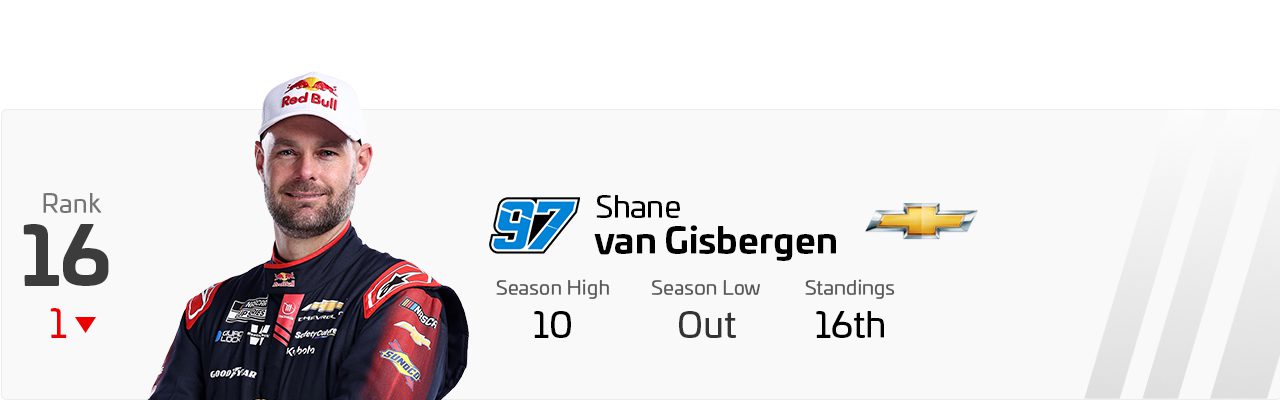
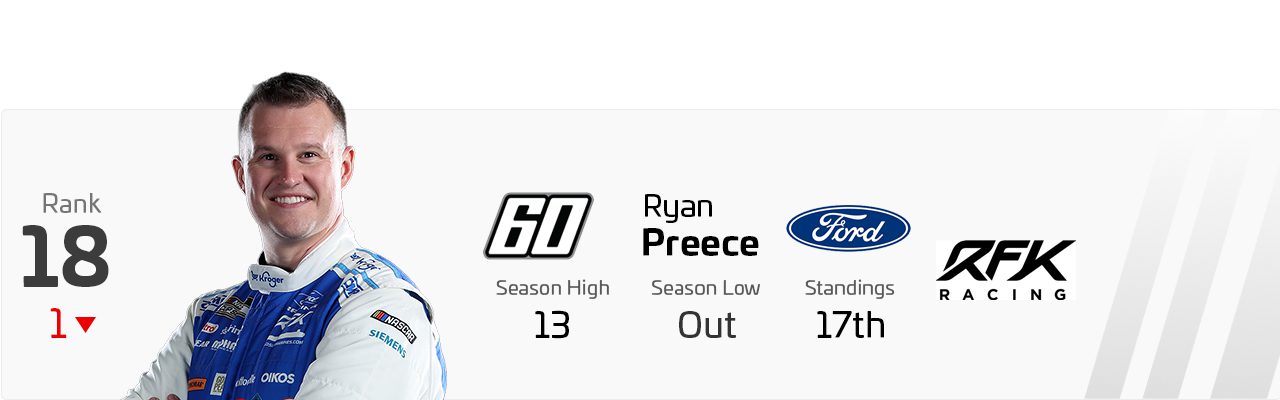
Analysis: Richmond was supposed to be the weekend Ryan Preece started eating into SVG’s advantage. Instead, van Gisbergen finished 14th, actually added three points to the cushion and now heads to Loudon 50 points above the final Chase cut. That makes the remaining math considerably more comfortable than anyone might have expected after Iowa, particularly with only two races left. New Hampshire remains a legitimate hurdle after SVG crashed out and finished 32nd there last season, but the mission has changed a bit. No. 97 does not need to conquer Loudon; he simply needs to avoid giving Preece the enormous opening he now requires.
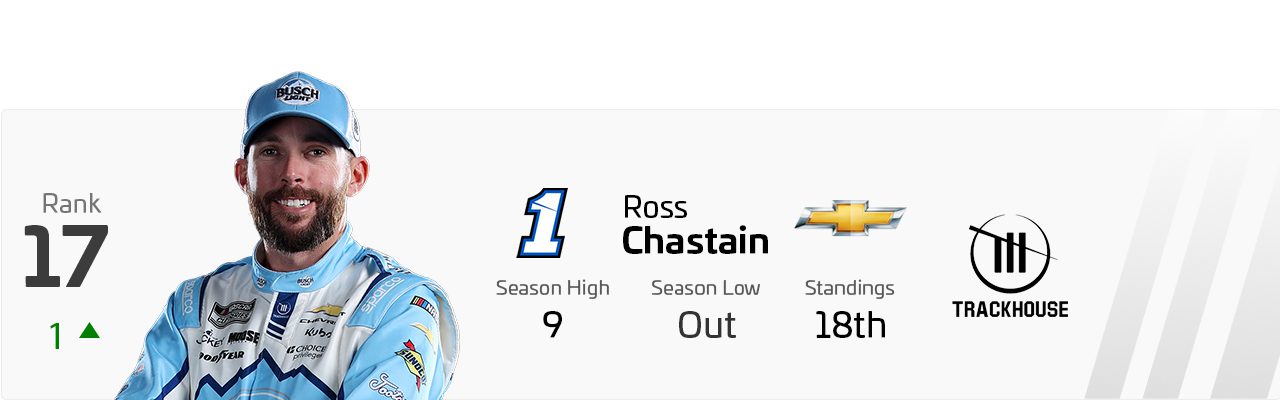
Analysis: Iowa briefly put Chastain squarely back into The Chase conversation. Richmond pushed him toward the outskirts again, though there is still some light. The No. 1 finished 12th but lost 16 points relative to the cut, stretching the deficit to 63 with only Loudon and Daytona remaining. There is at least a respectable New Hampshire reference point available after Chastain finished ninth there last season, but “useful” finishes are rapidly losing their utility. Loudon probably needs to produce either a massive points haul or a trophy if Chastain wants Daytona to be about anything other than desperation.
Analysis: If there is a place for Preece to make one last stand, Loudon could hardly be scripted better. He, remarkably, ranked first in passing at Richmond but finished only 17th, losing 21 points to The Chase cut and falling a daunting 50 behind SVG. New Hampshire, however, is territory he knows exceptionally well: Preece won the 2021 Whelen Modified Tour race there and finished 14th in last year’s Cup event. Fifty points is an enormous ask, but if Preece is going to make The Chase field sweat, this is where it has to start. If he were able to corral, at this track in this moment, a win — which would be his first points-paying Cup Series victory — it would mark a significant moment in the sport’s history.
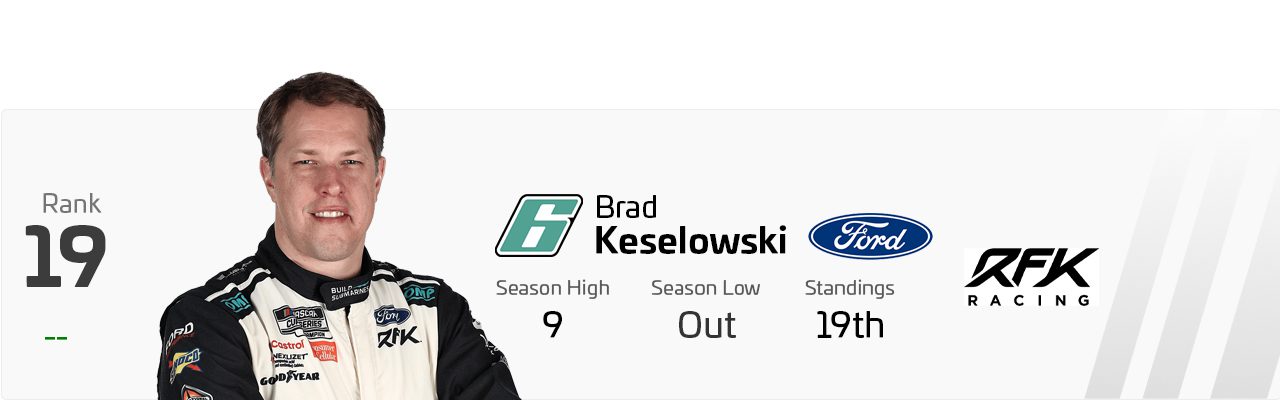
Analysis: Keselowski’s midsummer revival has now stalled at exactly the wrong time. Richmond ended with a 26th-place finish, 25th-ranked speed and another 30 points lost relative to The Chase cut, ballooning the deficit to 78. Loudon at least supplies one last historical reason to believe: Keselowski won Cup races there in 2014 and 2020 and also owns two O’Reilly Auto Parts Series victories at the track. Last year’s 23rd-place finish is the less-comforting counterpoint, however, especially when considering those wins came with a different team. With Daytona waiting after this, the path is beginning to look less like points racing and considerably more like win-or-hope-for-chaos.
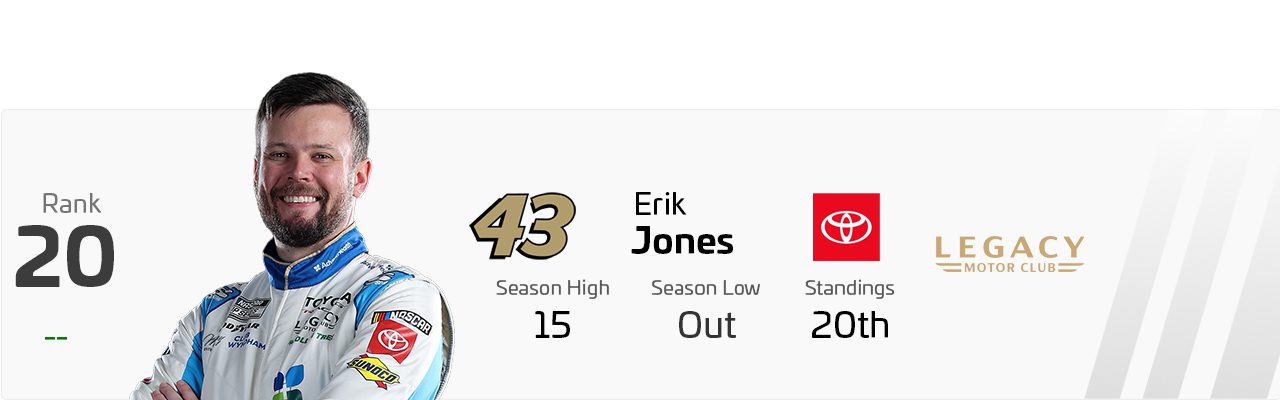
Analysis: Jones is still mathematically alive, but Richmond made the distinction feel increasingly technical. He finished 27th, ranked 30th in speed and lost 31 more points relative to The Chase cut, leaving him 81 behind SVG. Loudon doesn’t arrive with much recent encouragement, either, after Jones finished 28th there last season. The three drivers immediately ahead of him on the wrong side of the line are separated by only 31 points, but that is increasingly beside the point. Jones needs a result that dramatically changes the equation, and there are only two chances left to find one. It’s looking slim.
The win that helped launch Kyle Busch’s next step to stardom was the coming-out party that most expected, a welcome into the realm of NASCAR Cup Series winners and a grand-stage moment under the bright lights in Southern California. His older brother, Kurt, had already gone through all those experiences by the time Kyle reached his rookie season in 2005, but the stock-car world was still getting to know the 20-year-old prodigy as a driver and a person.
Labor Day weekend that season made quite the introductory statement.
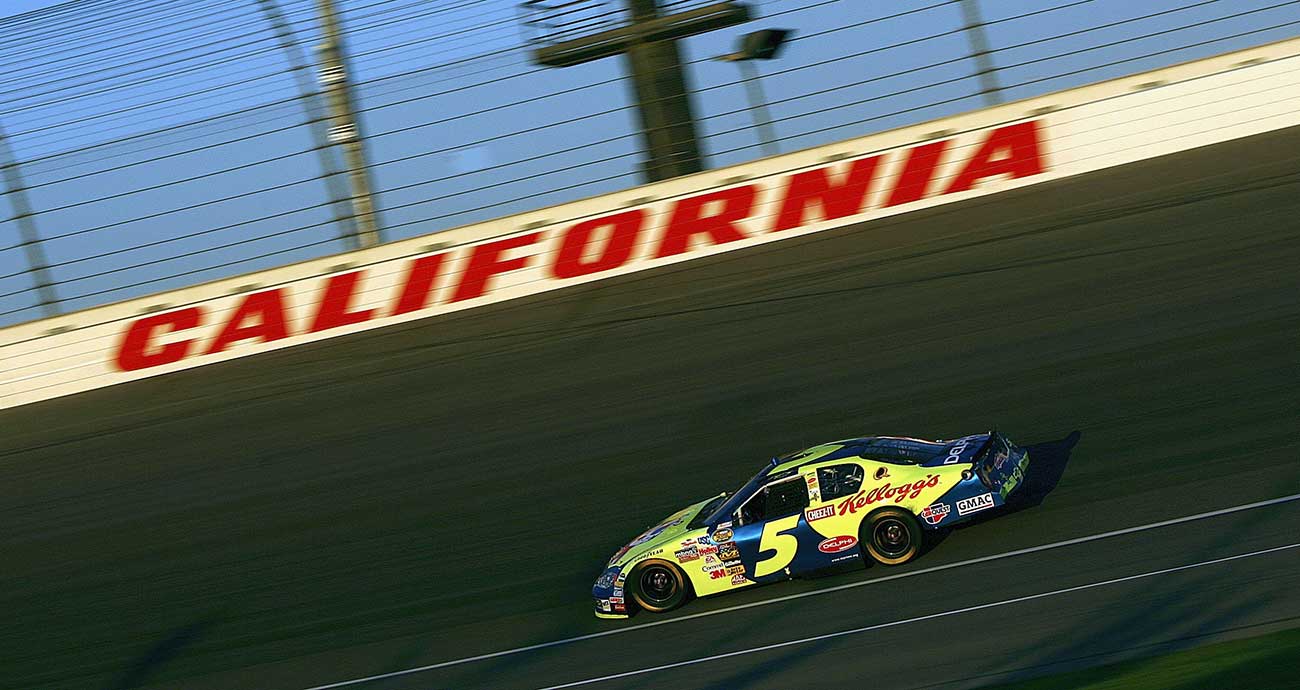
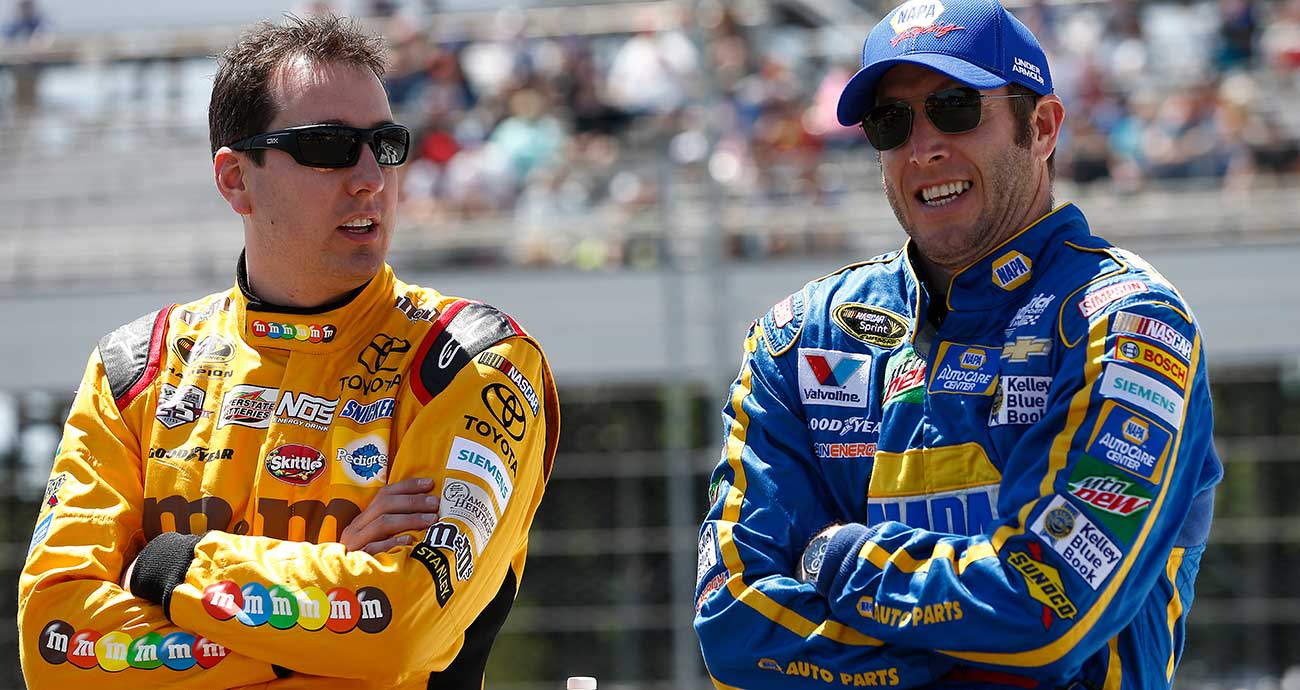
Nearly 21 years ago, Kyle Busch scored the first of his 63 victories in NASCAR’s top division, driving Hendrick Motorsports’ No. 5 Chevrolet and outrunning a stellar field to win the Sony HD 500 — back in an era when high-definition televisions were relatively new and marketable, and when the 2-mile Fontana race track was still called California Speedway and not Auto Club. It was also before Busch became Rowdy, KFB or the face of the M&M’s No. 18 — one of the sport’s most recognizable car designs.
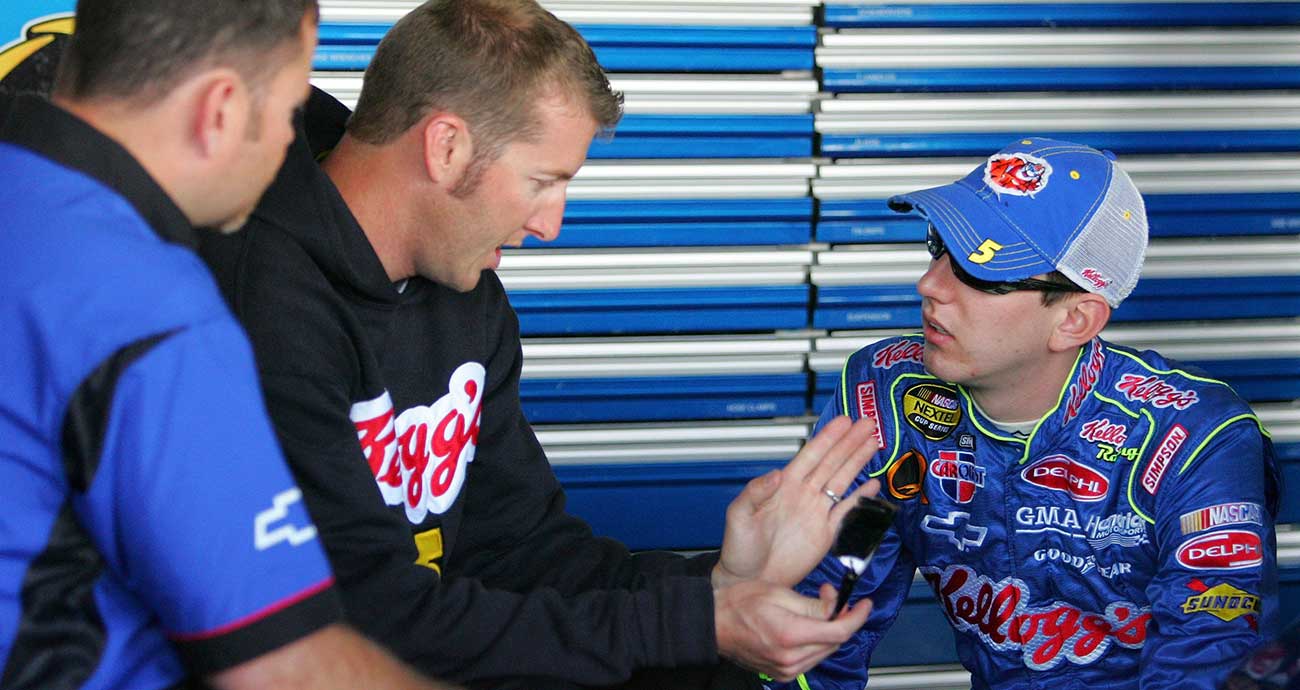
The path to get to that breakthrough point, however, was hardly a rosy one. Busch’s competitive nature was tested in his first full season in Cup, and one week earlier, after a sour run at Bristol Motor Speedway — a track that would become one of his favorite haunts — his relationship with crew chief Alan Gustafson had reached a deep frost. Gustafson, who now serves as crew chief for Hendrick’s No. 9 team and driver Chase Elliott, was a Cup rookie that year also, but as frustrations mounted through the summer, their communications went nearly silent.
That standoff only raised the stakes for California as a make-or-break point. Adding to the pressure, Busch had a chance to become the Cup Series’ youngest winner, eclipsing a mark then held by Donald Thomas, who posted his only big-league victory at Atlanta’s Lakewood Speedway in 1952 at the age of 20 years, 4 months, 6 days. A California triumph would give Busch the record by four days. Wait until the next week at Richmond, and the opportunity would vanish.
“He wanted to win everything all the time, and the fact that we hadn’t been able to seal the deal, I think, was starting to weigh on him,” Gustafson says now. “He was very, very aware of the youngest winner record, and he was conscious of that, and I was aware of it obviously through him, and that was something that became a focus for me, too, because that was one of those records that there’s very few opportunities to get.”
Those tensions needed a pressure-relief valve. A driver and crew chief heart-to-heart just days before the California race had helped alleviate the impasse, but Busch’s intensity flared as the 500-mile race transitioned from day to night, with a setting sun beyond the Turn 3 banking casting a striking glare down the backstretch.
With his vision increasingly impaired as he charged into the lead, Busch vented to spotter Jeff Dickerson — now the co-owner of Spire Motorsports — and pleaded for assistance.
“Kyle was getting really frustrated and lashed out at Jeff, and was like, ‘Jeff, you’re gonna have to really start paying attention or something, and the sun’s getting in my eyes into (Turn) Three; I can’t see,’ and he goes on this rant,” Gustafson recalls, “and Jeff super-calmly just says, “OK, cool. I’ll quit drinking now and start spotting.’ It was just like perfect, because Jeff’s that way, you know. He’s just always a little bit off-color, and the fact that he said it, I think, lightened the mood, and everybody kind of laughed.”
Dickerson, speaking from the Cup Series grid last weekend at Richmond Raceway, laughed anew when the story jogged his memory.
“To Alan’s point, it was just like, everybody just needed to chill and laugh for a minute, right, because everybody hated each other, we were all over running as bad as we were,” Dickerson said. “I think he was saying like I can’t see into (Turn) Three because of the sun and then it was just, ‘Oh, thanks. I guess I’ll [expletive] actually start doing my job.’ ”
Everyone’s jobs mattered that night, when Kyle Busch checked the last box to fully launch his assault on NASCAR’s national-series record books.
* * *
Busch’s generational talent was only starting to be realized when he came under Rick Hendrick’s employ in early 2003. “To say he has a bright future would be an understatement,” Hendrick said at Busch’s signing, making an even greater understatement in historical hindsight.
Busch had blitzed the competition in what’s now called the O’Reilly Auto Parts Series as a rookie in 2004, winning five times and finishing second in the final standings to Martin Truex Jr. Reaching the Cup Series the following year with Hendrick’s No. 5 team felt like destiny, and he was paired with another first-year standout in Gustafson, who at 30 was still considered young in an era when Cup Series pit boxes were still ruled by veterans.
“Growing up fast,” was the Page 1 headline of a Daytona Beach (Fla.) News-Journal profile of the two that season, when both driver and crew chief were still learning the ins and outs of Cup Series racing and about what made each other tick.
Jim McIsaac | Getty Images
“He had incredible pace,” Gustafson said last week. “I think the most interesting thing is he just was not super-competitive, like he was next-level competitive, right? He was just so hyper-focused on being successful, and that was it. Like, that was really all that existed in his life, so I think that’s what you pick up on right away. Then as we work together, you start to see, I think I saw this throughout his career, too, there’s that part of his personality is so overbearing that that’s what most people see and focus on, but I think as we worked together, you really started to see Kyle, the human being and who he is, that there is more to him than that.”
Carving a niche in the Cup Series was a tall order, and the competition included many established drivers with Hall of Fame-worthy credentials — Tony Stewart, Rusty Wallace, Mark Martin, Dale Earnhardt Jr., Matt Kenseth, Carl Edwards, Greg Biffle, Dale Jarrett and more. Even within the campus borders of Hendrick Motorsports, Busch’s teammates included household name Jeff Gordon and champion-in-the-making Jimmie Johnson.
Still, when the racing press tried to draw comparisons between Busch and Gordon, the youngster who would become Rowdy didn’t exactly shy away from it. “I believe so, and I’m hoping so,” Busch told the Daytona Beach paper. “Alan and I have that attitude that nothing can keep us out of Victory Lane; nothing other than ourselves.”
Dickerson conceded that Busch rarely showed signs of being starstruck or intimidated by the elite company on the grid, even as a highly touted but relatively unproven Cup Series prospect.
“By this point, nobody has any resume, you know what I mean?” Dickerson said. “Like Alan, that was his first Cup win as a crew chief, his first season. I mean, you have to go backwards. It’s like all of us were like lowercase of what we were. Nobody had made it yet.”
The pre-race focus for California was less on Busch’s aspiration than it was on the pursuit of one of the 10 spots available in that year’s Chase. The 500-miler was the next-to-last event of the regular season, and Gordon and Kenseth were on opposite sides of the bubble, fighting for their postseason lives. Busch had long since been eliminated, having shown glimmers of his potential with two runner-ups (Vegas, Dover) but sinking to 22nd in the Cup Series standings once the circuit headed back to California.
An uneven summer stretch helped seal his Chase ouster. Busch finished 33rd or worse in four of five races as July rolled into August, and the winless frustrations grew. The last event in that horrid five-race span was Bristol’s annual night race, where the team’s core relationship turned its most fractious.
Gustafson and Dickerson remembered the race so vividly, both could recall that Busch drove the “Johnny Bravo car,” a paint scheme the No. 5 Chevy sported as a tie-in with primary sponsor Kellogg’s and the Cartoon Network animated series. Gustafson recalled the car bottoming out in qualifying, a suboptimal pit stall and general gloom. Busch eventually wrecked about a third of the way in, spent time behind the wall for repairs, and finished 52 laps off the pace in 33rd.
“So, like, essentially, the last 300 laps of Bristol, they weren’t talking,” Dickerson said. “Nobody was talking. I was just like, ‘I guess we’re pitting. Pit,’ because they weren’t talking. So we were kind of at each other’s throats.”
Said Gustafson: “Yeah, it just came unwound. He came unwound and melted down and ended up crashing, and there was a lot of intensity around that, kind of going back to his competitiveness, his expectation to win. It didn’t happen, and he struggled really at that time to be able to handle failure and things not going his way, and it just got super ugly on the radio.”
Two days later, the two had a lengthy two-hour summit where those heightened emotions all came to a head, followed by a team meeting in which Busch and Gustafson owned up to their immaturity. “We needed to refocus,” Gustafson said then. Growing up fast had reached its next developmental step, with California next.
Darrell Ingham | Getty Images
* * *
Busch started in unlucky Row 13 at California Speedway that early September afternoon, but even in 25th place, his bid for a breakthrough had some pop. “Could he get his first win tonight?” NBC announcer Bill Weber said as the starting lineup scrolled. “We’ll see.”
Feeding some of the favor was Busch collecting his first pole position at Fontana that February, setting a youth record in the process. Busch also showed strength at sister track Michigan International Speedway just weeks earlier, foiled when errant trash that clogged his car’s grille overcooked the engine.
Busch’s quest nearly met with early disaster when JJ Yeley spun from the Turn 4 exit on Lap 2 of his first interim start in Joe Gibbs Racing’s No. 11 Chevrolet. Busch instinctually dove to pit road to avoid the tangle. As for the No. 11 ride, Yeley and Hall of Famer Terry Labonte each made four starts in the car after Jason Leffler was replaced behind the wheel. Five races later, Denny Hamlin made his debut in the car that would define his career.
After that early blip, Busch marched forward, breaking into the top 10 in the 33rd of 254 laps. “Man, it’s like it just took off,” Dickerson recalled, and by Lap 82, Kyle Busch passed brother Kurt for the lead, offering a friendly wave after he had roared by.
Gustafson left the car’s handling untouched until the race neared the halfway point, making a key air-pressure adjustment as nightfall approached. But his most pivotal call was about to arrive, just as Busch was asserting himself as a full-fledged contender.
With 10 laps left in the 250-lap scheduled distance, a caution flag flew for debris on the backstretch, erasing Busch’s sizable lead and setting up a final round of pit stops for the majority of the field. Busch, however, carried too much speed entering his pit stall, and the No. 5 Chevy sharply veered to a halt. The car stopped too close to the pit wall, leaving no room for the jack man to operate on the left side. The planned four-tire stop quickly became a two-tire service on the fly.
“I knew we weren’t going to be able to jack it up, so it was just instinct,” Gustafson recalled. “It wasn’t like anything other than that, that we just were going to have to do two. That was going to give us our best opportunity because if we waited for four, it was going to be no chance.”
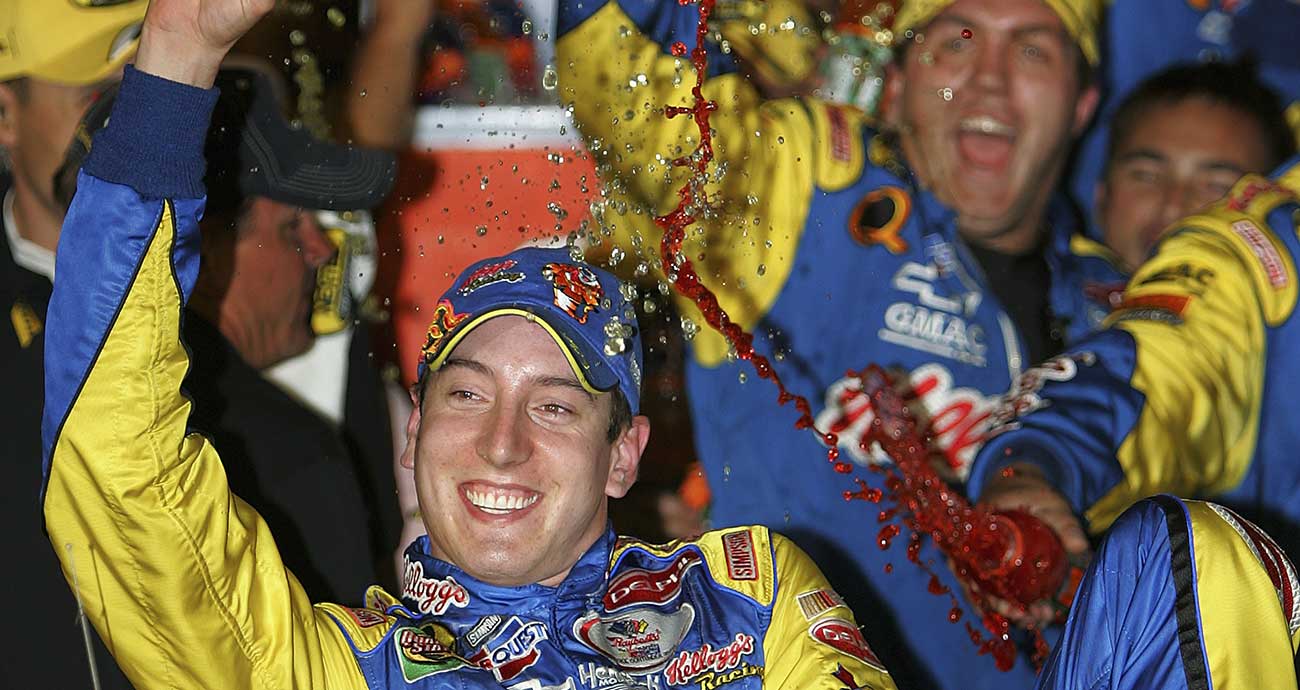
One more caution period forced overtime, but even with just two fresh tires bolted on for the final stretch, Busch outdistanced Biffle’s No. 16 Ford in a two-lap dash to the end. “Get it, get it, get it!” Gustafson exclaimed at the checkered flag, reminding Busch of his record-setting age distinction.
Darrell Ingham | Getty Images
Kurt Busch was among the first of his Cup Series peers to greet him in Victory Lane, tousling his brother’s hair before he exited the car. The younger Busch, however, had a big-picture perspective amid the jubilation. He pulled Rick Hendrick into frame during his post-race interview, asking his car owner to join him in pledging their shares of the night’s winnings to the victims of Hurricane Katrina, which had made devastating landfall on the United States’ Gulf Coast earlier that week. “I saw Carl Edwards do that last night and I thought that was a first-class act,” Busch said, noting Edwards’ generosity after an O’Reilly Series win a day earlier, “and we want to do the same.”
The relief was evident in Busch’s face, and Gustafson said that the No. 5 team planned to use the 10-race Chase as a mock run for next year’s postseason, which they intended to make. They did, entering as the Chase’s fourth seed.
“That’s when it was super hard,” Dickerson says now. “I mean, it’s hard now, too, but you’re racing against all the heroes. That kind of just propelled us, it felt like, where even though Kyle still had to work out some kinks, it’s like the team believed now more in him, and I think he believed more in the team after that.”
The rest of Busch’s career soared from there, with accolades that stacked sky-high in all three NASCAR national series, from his time with Hendrick, his meteoric rise at JGR, and his final chapter as a veteran with Richard Childress Racing. Ten years after that breakthrough Cup Series win, he would become the circuit’s champion — a feat he repeated four years later.
Gustafson noted how he would have relished the opportunity to look back at those days with his former driver, sharing their reflections before Busch’s death from bacterial pneumonia and sepsis on May 21 robbed them of that chance. When weighing Busch’s legacy, Gustafson says the driver was more than the glowing stats, but a firebrand competitor who often cut against the grain.
“I think that his sheer talent and his ability, and the fact his successes (were) really unprecedented through all three series, I don’t know anybody who’s done that or will ever probably do that,” Gustafson says, “but the thing that stands out to me is he — and I saw this when he was young with me – like he was not accepted, right? I mean, he was not accepted really from the fan base, and wasn’t accepted from his competitors, and he wasn’t accepted by NASCAR, in my opinion, and that fueled this … just continued to fuel that bravado, right, or that ‘him against the world’ mentality. I don’t think he wanted to be a villain, or he wanted to be that guy, but no one gave him a choice, and he accepted that.
“He was so confident and so committed, and just was not going to take no for an answer, that he shouldered all that and was an unstoppable force. So that’s what I think made him who he is, or who he was, and that’s why I think that continued to fuel his competitiveness and fuel his desire, and generate that … KFB, right? Yeah, that’s where that persona came from.”
Sixty-two more wins followed that first California triumph, but so did the birth of a racing legend.
“I’m telling you, it’s just like it seems so stupid, but like he was gonna be that guy,” Dickerson says. “I mean, he was just gonna be that guy.”