Numbers mean plenty when it comes to building out your Fantasy Live teams each week. NASCAR.com will examine the stats outlook for each track in advance to help give you an edge as you set your lineups and bonus picks ahead of the race weekend.
Don’t forget to check back on NASCAR.com for additional insight from fantasy expert RJ Kraft, and watch Fantasy Fastlane with Jessica Ruffin and NBC Sports’ Steve Letarte for even more advice.
Top five average running position (per loop data from 2005 to present):
Driver
Average Running Position
Erik Jones
8.312
Chase Elliott
10.072
Denny Hamlin
10.786
Kurt Busch
10.888
Daniel Suarez
11.703
Top five in stage points earned at Pocono in 2017:
Driver
Stage points
Stage wins
Kyle Busch
29
2
Brad Keselowski
28
0
Kevin Harvick
24
0
Kyle Larson
19
1
Martin Truex Jr.
17
0
*22 different drivers earned stage points at Pocono in 2017
Top five in points earned at Pocono in 2017:
Driver
Race points
Race win
Kyle Busch
97
1
Kevin Harvick
94
0
Brad Keselowski
92
0
Martin Truex Jr.
82
0
Kurt Busch
71
0
Most laps led in 2017 races at Pocono:
Driver
Laps led
Kyle Busch
174
Martin Truex Jr.
36
Erik Jones
24
Denny Hamlin
19
Brad Keselowski
17
Average starting position for last 10 winners: 8.2, only two of the last 10 winners have started outside the top 10
Active drivers to win pole: Kyle Busch (4), Jimmie Johnson (3), Denny Hamlin (3), Kurt Busch (2), Kasey Kahne (2), Ryan Newman (2), Joey Logano (2), Brad Keselowski (1), Kyle Larson (1), Martin Truex Jr. (1), Jamie McMurray (1)
Active drivers to win at Pocono: Denny Hamlin (4), Kurt Busch (3), Jimmie Johnson (3), Kasey Kahne (2), Kyle Busch (1), Brad Keselowski (1), Chris Buescher (1), Joey Logano (1), Martin Truex Jr. (1), Ryan Blaney (1), Ryan Newman (1), Matt Kenseth (1)
Most recent pole winner: Kyle Busch, July of 2017
Last time pole-sitter won here: Kyle Busch, July of 2017
Where stage winners started from: First (twice), seven (twice)
Winning manufacturers of last 10 races: Chevrolet-6, Ford-2, Toyota-2
Three penalties across the Monster Energy NASCAR Cup Series and NASCAR Xfinity Series were handed down following a weekend of racing at Charlotte Motor Speedway.
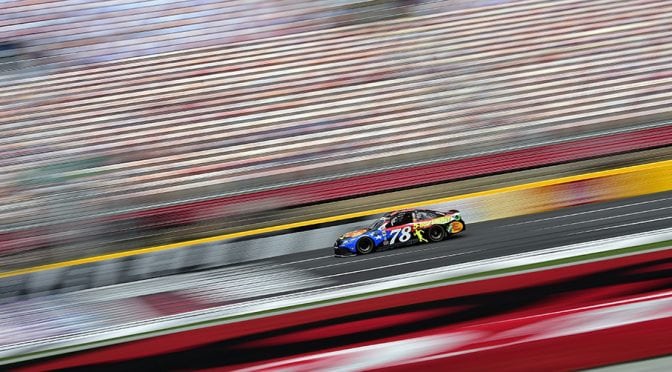
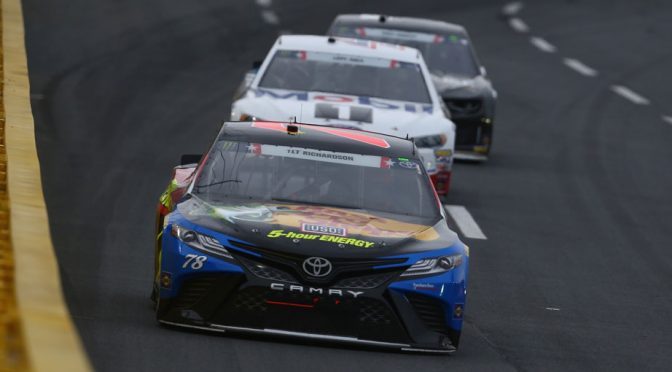
In the Monster Energy Series, the No. 78 Furniture Row Racing team of Martin Truex Jr. was found to have one unsecured lug nut during post-race inspection following Sunday night’s Coca-Cola 600 at the 1.5-mile track. Per the rule book, crew chief Cole Pearn has been assessed a $10,000 fine for the infraction. Truex finished second in the race.
In the Xfinity Series, the No. 20 Joe Gibbs Racing team of Christopher Bell received an L1-level penalty for failing post-race height measurements after finishing second in Saturday’s Alsco 300. The measurements were outside NASCAR allowed tolerances, resulting in a one-race suspension for crew chief Jason Ratcliff in Saturday’s race at Pocono Raceway (1 p.m. ET, FS1) and a $10,000 fine. The infraction also results in a loss of 10 driver points and 10 owner points.
The No. 8 B.J. McLeod Motorsports team of Tommy Joe Martins had two lug nuts unsecured in post-race inspection. Crew chief Keith Wolfe has been fined $10,000 and suspended from Saturday’s Xfinity Series race.
The Monster Energy NASCAR Cup Series will be in action on Sunday for the Pocono 400 at Pocono Raceway (2 p.m. ET, FS1, MRN, SiriusXM NASCAR Radio).
Unfortunately for Dillon, he didn’t defend his win after cutting a tire early in the race — something unpredictable that’s tough to simulate in iRacing. …
NASCAR America on NBC Sports often utilizes an iRacing-equipped simulator setup, usually piloted by experienced iRacer Parker Kligerman. Here’s some behind-the-scenes footage of when Kyle Petty makes (well, attempts) some laps for the show, captured by iRacer Adam DeBlasio.
At one point while making laps, Petty says, “I’ve got to get me one of these.” We agree.
NASCAR PEAK ANTIFREEZE IRACING SERIES UPDATE
Do you like photo finishes? Don’t answer that. Yes you do.
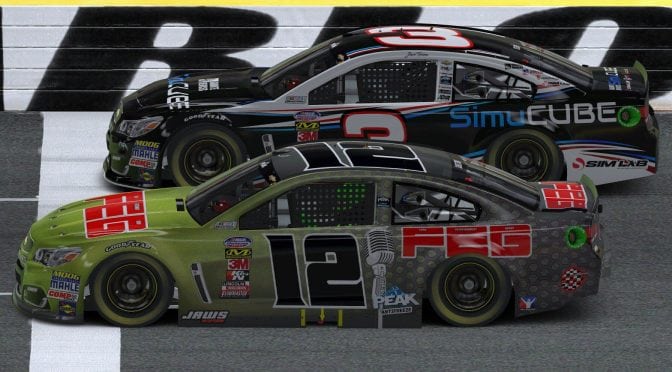
Nick Shelton edged Jarl Teien by 0.007 seconds at the line to score his first NASCAR PEAK Antifreeze iRacing Series victory.
As our Race 7 Power Rankings noted, Shelton showed speed at 1.5-mile tracks this season, finishing third at Las Vegas, third at Kansas, and now, first at Charlotte. The win lifted the Slip Angle Motorsports driver to fourth in the championship standings after Ryan Luza missed his second consecutive race.
Round 7 of the NASCAR @iRacing Series came down to the wire!
The series heads to Michigan International Speedway June 12 for the eighth race of the season. Michael Conti outdueled Zack Novak for the win in last year’s race.
IRACING PAINT SCHEMES OF THE WEEK
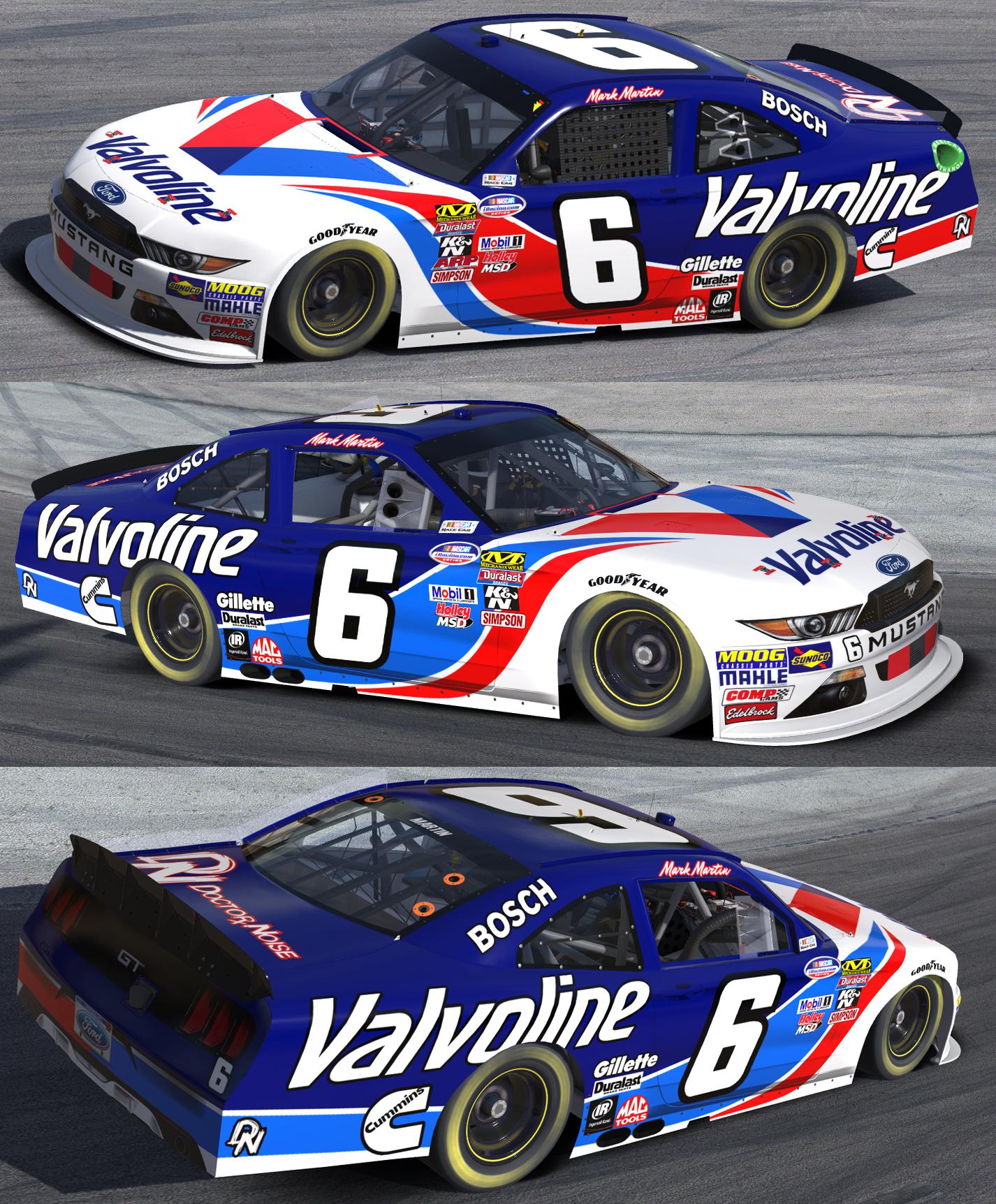
Bill Martin reinterpreted Mark Martin’s 1996 Monster Energy NASCAR Cup Series paint scheme for the NASCAR Xfinity Series Ford Mustang.
Credit: Bill Martin
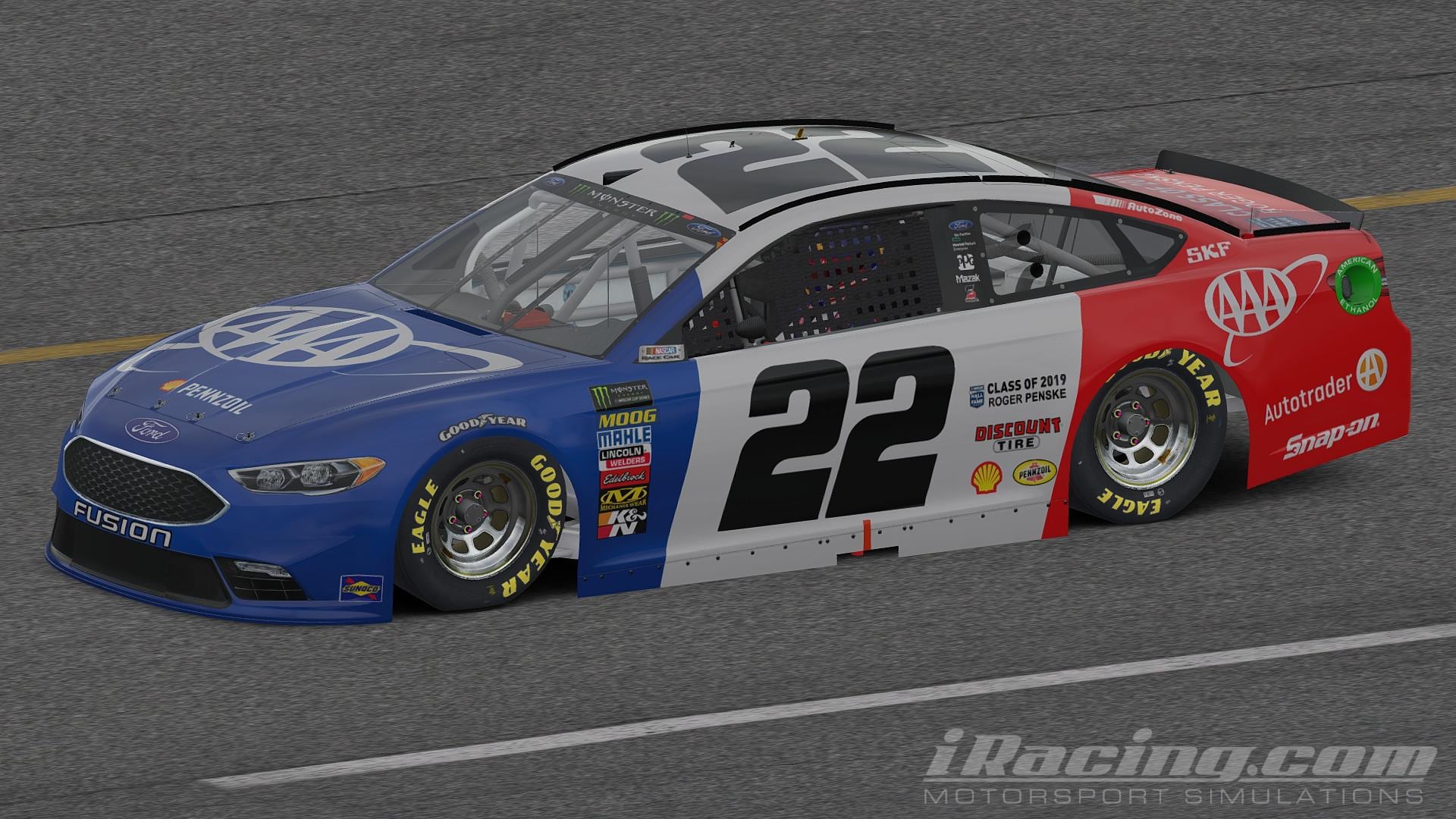
To honor Roger Penske’s induction into the 2019 NASCAR Hall of Fame class, Scott Pierchorowicz created a throwback paint scheme on a modern car.
Credit: Scott Pierchorowicz
DON’T TRY THIS AT HOME
Even NASCAR PEAK Antifreeze iRacing Series drivers make mistakes sometimes — like this week, when Michael Conti confused the shifting pattern of his iRacing car with the one on his street car, resulting in his No. 5 car going for a wild spin through the grass at Charlotte Motor Speedway.
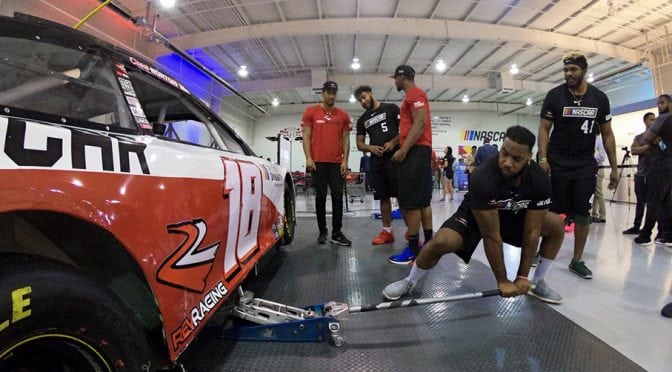
The next wave of promising athletes on pit road had the opportunity once again to showcase their talents in the NASCAR Drive for Diversity Pit Crew Combine in Concord, North Carolina.
The third annual event held by NASCAR and Rev Racing at the NASCAR Research & Development Center on May 25 featured 13 athletes looking to transition from college football, basketball, tennis and track and field to pit road.
The four-hour skills competition put athletes’ fitness and agility to the test with crew member drills and live pit-stop simulations.
The competitors began the day with warm-ups, followed by a physical assessment test, which included 100 single-under jump ropes, 25 lateral-cone high knees, five speed-ladder drills, 25 push-ups, 25 ab-mat roll outs and 100 medicine-ball sit-ups.
Once the grueling assessment was complete, they were put into a live pit-stop situation, changing and carrying tires on a car with a mock pit-stall set up.
Branden Williams | NASCAR Digital Media
“It’s been an enjoyable experience so far,” Ernest Holden, a football player at Norfolk State University, told NASCAR.com. “After going through the fitness drill and then coming over to hang tires up, it’s been fun.
“After doing the regional combine, it’s a little easier fitness wise, but it’s pretty tough learning the technique and the fundamentals,” he added. “Getting better every day.”
Holden also described skills learned on the football field that he’s been able to transfer to pit road.
“Mental focus,” Holden said. “Playing football, everything is fast paced. A play out there is about four or five seconds. It’s all about timing in NASCAR, so being able to focus up and when you hang a tire, getting on the lug nuts right away and getting things done fast paced and correctly.”
Coach Phil Horton, Rev Racing director of athletic performance and leader of the combine, says the program dives deeper than simply training the athletes for careers on pit road with the hopes of making it to the Monster Energy NASCAR Cup Series someday.
“We teach life lessons here,” Horton said. “One of the things they have to learn is to go from college to the professional ranks. They are coddled and taken care of in college, to where they have to make it on their own.
“So then we take them through a six-month program to where they’re not only learning about the race cars, the racing industry, how to do pit stops, we’re also teaching them how to transition from college life to the professional life.”
Brehanna Daniels, 2016 Drive for Diversity Pit Crew Combine alum, became the first African-American female to serve on a pit crew in a NASCAR national series event by changing tires in the NASCAR Camping World Truck Series race last year at Dover International Speedway.
Branden Williams | NASCAR Digital Media
Less than a year after her historic day in Dover, Daniels had the opportunity to go back to where it all began by coaching the athletes participating in the combine.
“I can’t believe it’s been two years since I was in this position,” Daniels said. “It’s nice to give feedback to the newcomers, letting them know — especially the tire changers — to not be frustrated and always listen to coach no matter what because coach will lead you in the right direction.”
Currently working as a tire changer on the No. 55 NASCAR Xfinity Series team, Daniels was impressed with what she observed from the athletes vying to earn their shot in NASCAR.
“I’ve seen a lot of people motivated, determined to get the job done,” Daniels said. “A lot of people were quicker than others in this short amount of time trying to learn all of this in two days. That’s not that much time.”
Once the results of the national combine are gathered by Coach Horton and team, 6-10 athletes will be selected to begin their journey up the NASCAR ranks.
Editor’s note: The following article was written by Team Penske driver Brad Keselowski.
Follow him: Facebook | Instagram | Twitter
A few months back, I wrote that the autonomous car was a bust, and I still feel confident that it is. But last weekend’s All-Star Race and its new rules package got me thinking about a related, fundamental question: What is the future when it comes to cars — especially in relation to motorsports?
To me, the answer is really simple: Hybrids.
Obviously, that’s a bit of a no-brainer since there already are hybrids on the road, but there aren’t really hybrids in racing. The closest thing out there currently is in Formula 1, and for reasons I’ll explain, it’s not that popular with fans.
But that doesn’t mean that hybrids aren’t the future of racing. In fact, not only am I sure that hybrids are the future of NASCAR — I believe it’s essential to the success of the sport that we embrace hybrid technology as soon as possible.
HYBRIDS DONE RIGHT
Back in March, I was at a fan event before the Las Vegas race and noticed that there were a lot of international fans in attendance. I wound up talking to people from Germany, Ireland and Australia — where, incidentally, the Formula 1 race season was about to begin. I asked them why they were in Vegas instead of back home, heading to the Formula 1 race.
“We don’t go to F1 races any more. We don’t like the cars,” they explained. “They don’t sound right. They’ve switched from big engines to small engines, and that made the cars too quiet. They sound like vacuum cleaners.”
That’s one of the factors of the kinetic energy recovery system — called KERS — that’s used by Formula 1 vehicles. KERS takes the energy from braking, charges it into a battery pack, and then returns it to the cars when they need extra power. The idea behind it was to reduce costs, but going to a smaller engine was a big mistake.
Race cars that don’t sound like race cars aren’t acceptable. If that’s going to be the cost of hybrid vehicles, a lot of NASCAR fans will want to throw up, and rightly so. Our fan base associates stock cars with a throaty V-8 engine, and so do I. That shouldn’t change. If we switch to a four-cylinder or V-6 in NASCAR, we’re going to lose a lot of fans.
But having a KERS system similar to F1 — that can recover energy and use it as needed — is the perfect foundation for the NASCAR V-8 hybrid stock car. The way I envision it, we’d be creating one of the best engines in the world, and it would keep the roar that NASCAR fans love.
Here’s how I imagine it working.
The NASCAR KERS system would supply the cars with a small extra reserve of electric energy — almost like having a nitrous button — that would give drivers a boost of power whenever they needed it. When maxed out, that extra boost could last a full lap or two, and it could be used in two different ways: either as a substitute for gas power, or to complement it.
In addition, to make sure drivers have to use the KERS system, the new NASCAR hybrid would have a 10-gallon fuel tank — basically, half of its current size. This would make the cars harder to drive, which I think as a race car driver, is never a bad thing. Race cars should be hard to drive. Without having the fuel to spare, racers also would be forced to use the electric system throughout races, both in critical and non-critical situations. It’s not hard to imagine what it would do to teams’ strategies throughout each race.
In terms of the racing, I think it would be incredible. Today, our cars have a max of about 750 horsepower. Potentially, a hybrid would have almost 1,000 horsepower with the KERS system and the V-8 combined. They would get up to speed immediately.
Let’s say a yellow comes out. According to our new parameters, all cars would switch to electric in their hybrid engines in order to save precious fuel. In that moment, the field would go silent, and wouldn’t be burning gas anymore. This would be great for our fans because it would bring down the wall of useless noise for a few minutes while we’re under caution.
Tight-quarters racing could be even more dramatic in a well-developed hybrid car, Brad Keselowski writes. Robert Laberge | Getty Images
But the second the race goes green, the field — at least those cars in it that still have their KERS reserve power — is firing on both the electric and the gas-powered systems. They’re using the energy they’ve recovered during the race. For the next lap or two, until the electricity is used up, you’re watching the most powerful race cars ever going extremely fast.
And that’s just during a restart. This could be applied to qualifying as well.
Or think about how race strategy would change as the KERS system recharged during a race, and you had that extra boost available to you at a critical point near the end, right when you needed to make a pass. You hit the button and boom. You’ve got that power, and we’ve got a kind of finish that doesn’t exist in NASCAR today — or anywhere in motorsports, for that matter.
As a driver, this would change the way I drive in a good way. More power makes the car harder to manage. That puts control of the car more in my hands, and less under the influence of elements I don’t control like aerodynamics, things of that nature.
THE BENEFITS
There are a number of compelling reasons to go hybrid. If you look at the motorsports landscape right now, there’s an all-electric series called Formula E. Manufacturers are spending money like crazy on electric engines in Formula E because they all want their brands associated with electric vehicles.
Contrast that with NASCAR, where manufacturers are trying to divest themselves from gas-only V-8s and other impractical engines, which aren’t relevant to today’s technology. Our sport relies heavily on manufacturers to be successful. Without them, we can’t operate.
To be clear: I don’t think that electric cars are the future. The poor infrastructure and manufacturing waste associated with electric cars (and especially with their batteries) make that certain. I believe that hybrid vehicles are the future.
If we switch to hybrids, we accomplish several things.
First, we engage our original equipment manufacturers (OEMs) in a new way that has never been seen before. Right now, OEMs spend millions of dollars in racing and they develop a few parts, none of which are really mission-critical parts for them.
Imagine if instead, we’re helping them develop this KERS-style hybrid technology. Once the OEMs got the KERS system right with their race teams, they’d be able to get it right on street cars, too — much more efficiently than the rare existing KERS street vehicle like the McLaren P1, which is a far cry from mainstream.
In that way, NASCAR would be more relevant to the car world than it’s ever been.
In addition, as I’ve already suggested, hybrids would also create an opportunity for NASCAR to put on better racing than ever before. With KERS technology, drivers would have to be far more strategic and engaged in systems management — which, quite honestly, is what great drivers should be.
We’d have more passes for the lead, and more scenarios that would help us be more entertaining as a sport. As we try to cultivate the next generation of fans, more dynamic racing driven by a hybrid NASCAR V8 seems like the right direction to be headed in.
Across the board, this is a win. The time is right, and the time is right now.
Brad Keselowski enters the summer stretch fourth in the standings. Sarah Crabill | Getty Images
THE CHALLENGES
What are the challenges to making this happen?
The first thing that everyone’s going to say is that switching to a KERS hybrid system will cost too much money. I don’t believe that. I’d argue that big teams will always find a way to implement new technology that benefits them. Will it be hard for the smaller teams? Absolutely. But the truth is that struggling teams are always going to be struggling teams. We can’t let that get in the way of making the sport better.
Another problem is that hybrid cars require battery cells, and batteries are extremely dangerous. Put them in a race car that wrecks big sometimes, and at some point, they’re going to explode and catch fire. According to media reports, that’s already happened in a few Tesla wrecks over the past couple years.
Safety standards would have to be rigorous. Thankfully in NASCAR, the cars have a big roll cage. There’s a way to make it work — probably by putting the battery in the center of the car, next to the driver. Regardless of the specifics, I’m confident we can find a way to get it done safely.
Another issue would be outlining the parameters for racing. When do you get to use the KERS afterburner, and how long does that extra boost last? Does the race leader get to use the afterburner? There are enough questions about how all of this would work for a whole other discussion, but to me, the real discussion is simply the ability to think about racing in a new way. Having this technology opens up that discussion.
SHAPING THE FUTURE
There’s one last benefit to going hybrid, and it has to do with the future of cars in general.
Yes, hybrids already exist on the road, but there is still a lot of potential to make pretty significant efficiency gains. I can’t think of a better arena than motorsports to help bring those improvements about.
When it comes to cars, there is no laboratory more potent than the world of racing. We’ll push ourselves to the limit for a one horsepower improvement. If we’re working with OEMs on hybrid technology, some of the money and resources we put to use on the track will eventually make the cars on the roads better, too.
Joe Gibbs Racing driver Kyle Busch led 377 of 400 laps Sunday in winning the Coca-Cola 600, a statistic so impressive that it must encapsulate all parts of a race.
First, the man behind the wheel — Busch was superb all night in the most challenging race of the race.
Second, the car — “I’ll tell you what, I don’t know that I’ve ever had a car that good at Charlotte or in other places,” Busch said of his No. 18 Toyota. “I could pretty much go anywhere I wanted.”
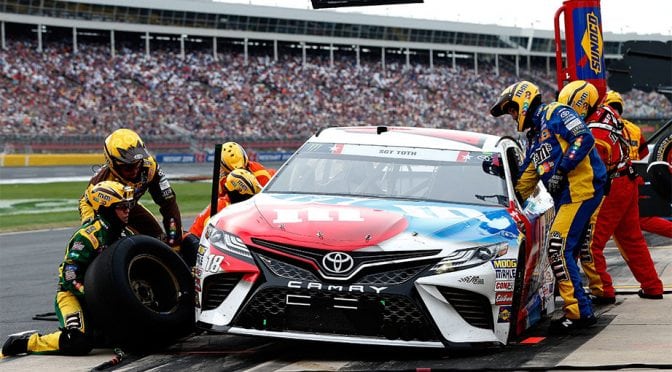
And finally, the pit crew. Busch started from the Busch Pole Award and claimed the first pit stall. It was four-tire stops all night for the JGR crew, and his unit didn’t falter once. He did not lose any position off of pit road throughout the race. “You guys are amazing,” Busch radioed to his crew after taking the checkered flag. “Awesome job, I can’t thank y’all enough.”
The pit road data below shows how swiftly Busch got off pit road — check out the two blistering sub-14 second stops, including a 13.3-second effort under green.
You also can use the tool to compare his times to pit stops from other drivers.
CONCORD, N.C. – Martin Truex Jr.’s week started with a trip to the White House for his 2017 championship and ended up with a runner-up finish in Sunday’s Coca-Cola 600 at Charlotte Motor Speedway.
“Even the warm ones feel cold to me,” Truex said after a grueling 600-mile event in steamy conditions Sunday, pouring a bottle of water down the back of his fire suit.
“I think this race, the tradition of it is to be one of the toughest races of the year and the longest race of the season,” he said later. “It should be hard; I don’t know if it needs to be three-wide and 50 lead changes. I think it’s a huge test of man and machine, like it used to be back in the day and I feel like it’s that way again. May the best man and team win and they did tonight and I think that’s really the face of this race and what’s it’s become.
“Maybe some people say that he led too much and it was boring, but I can’t tell (you) how difficult it is to do the job he did tonight and what it means to him and his team. Props to them and props to my team, as well, for sticking with it all night long.”
Truex indeed can speak to the power of race-winner Kyle Busch – who led 377 of 400 laps — as he was the last driver to dominate the Coca-Cola 600. The No. 78 Furniture Row Racing driver paced the field for 392 of 400 laps to secure the checkered flag in the 2016 Memorial Day weekend event. Speaking from experience, he noted that “it’s really hard to hit it that good.”
That being said …
“He didn’t lead as many miles as me,” Truex quipped with a grin.
Truex’s race on Sunday was one of recovery, as he rallied from two pit road penalties to climb back to the top in the waning laps. Midway through the race, he told his team he was getting a headache from hitting the headrest repeatedly.
Even without the penalties and physical challenges though, it wasn’t an easy task for the No. 78; crew chief Cole Pearn and his team came up with a good “game plan” for race day after qualifying 15th.
“Our car wasn’t perfect by any means all night long and it was really hard to drive at times – that’s just Charlotte Motor Speedway,” Truex said. “That’s why you see a guy that gets it like Kyle and gets it dialed in and just dominates because, man, this place is tough.
“I felt like I was the second-best car on the track and I about wrecked it 15, 20 times by myself. So, it’s really, really, really tough. It’s hard to explain just the bumps and the feel that you get. I had a headache halfway and had to drink a water full of Goody’s for my head bouncing against the headrest. It’s a treacherous place, it’s very, very difficult. I had my hands full all night and we had the second-best car.”
The final 93 laps remained green, leaving no opportunity for Truex to line up for a last-chance restart to pass Busch. Would he have been able to pull it off, though, with Busch’s car being as strong as it was?
“I would have liked to have a shot at it just because we never lined up against each other all night long,” Truex said with a smile. “We were playing catch-up all night. … I don’t know that we would have been able to do anything – he was really strong.”
A handshake coupled with a nod is a moment of mutual understanding for a driver and a crew chief following a grueling 600-mile marathon.
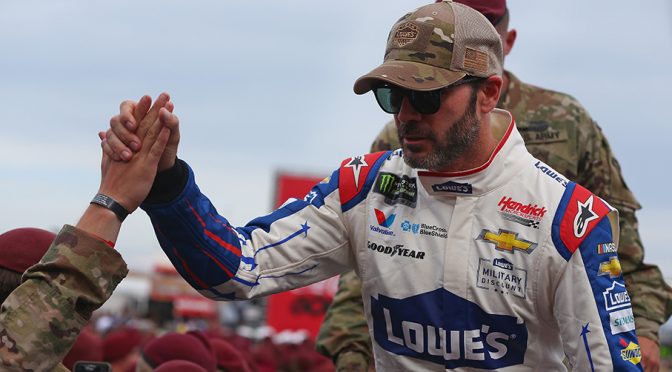
And that’s exactly how Jimmie Johnson and Chad Knaus came together following the Coca-Cola 600 to acknowledge not only finishing the year’s longest race, but notching a top-five finish for the No. 48 team — only the second of the season for Johnson, and the first on a 1.5-mile track since his win at Texas last spring.
Those are some unusual numbers for the seven-time champion.
But Johnson is hungry for more. Much more.
“It feels good, but damn, I want to win,” Johnson said. “I’m tired of running fifth, I’m tired of running whatever it is. We got off on some adjustments today and it was amazing how sensitive the car was with some minor adjustments; the car just lost half a second. We had a hard time trying to grasp it and understand it and communicate about it.
“We put it back to the way it was and it took off and I drove right back up into the top three. Just a very small sweet spot with the car. Luckily, we finished in that sweet spot and got a good finish out of it, including a spin and we had a jack break on a stop. We had to overcome a lot tonight. Really proud of these guys. Wish that I could have got this special paint scheme into Victory Lane with the soldier we were carrying on the car today.”
Dropping out of the top 15 with less than 50 laps remaining and having to come from behind “three or four times,” Johnson regained his rhythm late and dug deep to gut out a finish he deemed worthy enough … for now.
“I had a car tonight that I could race and pass and make some stuff happen,” he said. “First time I’ve done that in a long time.”
One of the biggest obstacles the No. 48 team has dealt with — along with the other Chevrolet drivers — through the first 13 races of the season has been adjusting to the new Camaro ZL1 body. Hendrick Motorsports has been particularly under the spotlight as all four drivers have yet to lock down a Victory Lane celebration this season.
However, there have been improvements, and Johnson believes it’s only a matter of time before the team is back to its normal routine of winning — a feeling he knows quite well.
“We’re getting closer,” he said. “The No. 4 car wasn’t out there … and the No. 18 looked pretty far up there. We’ve definitely improved to the pack, I don’t know about the fastest cars. But we will go home this week and work our asses off to try and do it again.”
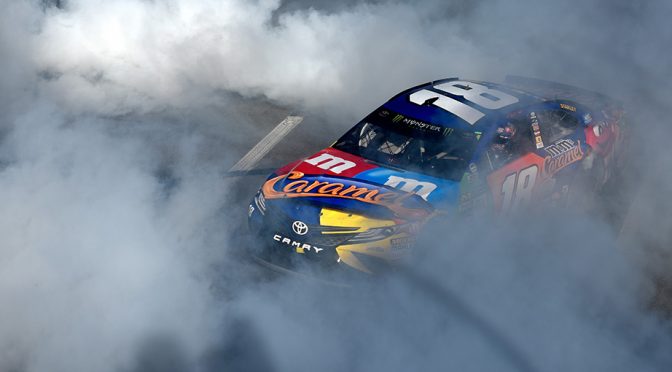
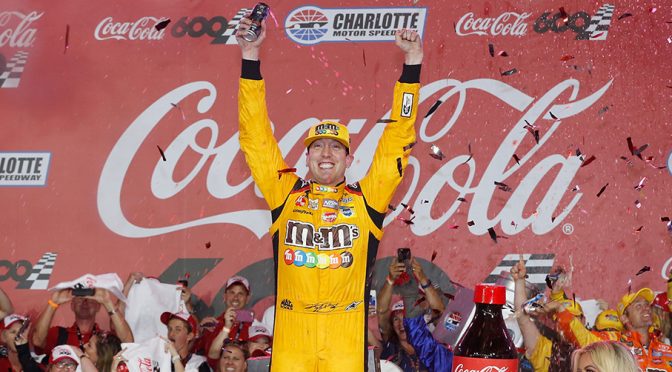
CONCORD, N.C. – Unable to contain himself, Kyle Busch let out an elated scream as his car entered Turn 3 on the 400th and final lap of Sunday night’s Coca-Cola 600 at Charlotte Motor Speedway.
And now, for the driver of the No. 18 Joe Gibbs Racing Toyota, you’re going to need a bigger broom.
From start to finish, Busch fashioned a dominating victory at the only active Monster Energy NASCAR Cup Series track at which he had never won a points event. That makes Busch the only driver in NASCAR history who has won at every Cup track at which he has started a race.
“Oh, yes! You guys are amazing,” Busch shouted over the team radio after he crossed the finish line 3.823 seconds ahead of runner-up Martin Truex Jr. “I can’t thank you guys enough. Unreal!
In winning for the fourth time this season and the 47th time in his career — 15th on the all-time victory lis t— Busch started from the pole, swept all three stages of the race, led 377 laps and extended his series lead to 67 points over 22nd-place finisher Joey Logano.
“This one’s very special,” Busch said in Victory Lane. “I don’t know if there’s anything that can top Homestead (the 2015 title race), just with the meaning of what the championship is. But the Coke 600 — I’ve dreamt of this race since I was a kid. …
“To be able to come out here and win the Coca-Cola 600, it’s a little boy’s dream come true. Man, I just want to say that I thank NASCAR, for one, for giving me the chance to come out here and have this opportunity to race for my dreams and to accomplish those things.”
Alongside two sweeps at Bristol Motor Speedway, where Busch twice won races in all three of NASCAR’s top touring series in the same weekend, the unprecedented sweep of all active Cup tracks will maintain a special place in the pantheon of his successes.
“I’ve dreamt of that – not only winning here and winning the Coke 600 as a kid and being in Victory Lane here for this race, but to just be a force that people (have) to reckon with,” Busch said. “I go across the country and race Super Late Models because I want to win at every single race track. I just want to show that there is no weakness.”
There was no weakness at all on Sunday night, with Busch’s crew performing as flawlessly in the pits as the driver did on the asphalt. Truex, who rallied from two pit road penalties to run second attested to Busch’s dominance.
“Those guys did an awesome job all night, obviously, with qualifying on the pole, perfect pit stops,” Truex said. “I don’t think they ever lost a lead any time except for green-flag stops without cycling around.
“They did an incredible job, had a really fast car, and for us, I felt like we … I felt early on like we were probably second-best to him, and then screwed up on pit road, and then we had two pit road penalties in a row.
“So it was tough to come from the back, but it was one of those nights where we just fought until the end and felt like we had a second place car to Kyle. I felt like that last run we were catching him a bit, but he was probably just managing his lead and taking care of his tires.”
Denny Hamlin, Busch’s teammate at JGR, finished third, 13.598 seconds behind the race winner. Brad Keselowski ran fourth, followed by Jimmie Johnson, who collected his second top five of the season. Johnson hasn’t led a lap this season, and his winless streak reached 36 races on Sunday.
“It feels good, but, damn, I want to win,” Johnson said of his run. “I’m tired of running fifth. I’m tired of running whatever it is. We got off on some adjustments today, and it was amazing how sensitive the car was. With some minor adjustments, the car just lost half a second. We had a hard time trying to grasp it and understand it and communicate about it.
“We put it back to the way it was, and it took off and I drove right back up into the top three. Just a very small sweet spot with the car. Luckily, we finished in that sweet spot and got a good finish out of it, including a spin (on Lap 120), and we had a jack break on a stop. We had to overcome a lot tonight.”
Jamie McMurray, Kyle Larson, Kurt Busch and Alex Bowman, who came home sixth through ninth, were the only other drivers on the lead lap at the finish.
Kevin Harvick’s bid to win three straight Cup points races for the second time this season ended abruptly on Lap 83, when a flat left front tire sent Harvick’s No. 4 Stewart-Haas racing Ford into the Turn 3 wall.
A five-time winner in 2018, Harvick had worked his way up to fourth from his 39th-place starting position, with the deep-in-the-field start resulting from three pre-qualifying inspection failures on Thursday.
Harvick was chasing Kyle Larson for third when the tire went down and ended his day.
“I can’t tell if we ran something over,” said Harvick, who finished 40th. “There’s enough things that could have happened right there, but I’m just really proud of everybody on our Mobil 1/Busch Ford. The car was really, really fast. We came all the way through the pack, and sometimes those things happen.
“I can’t complain about anything that’s happened this year. We have to take the good with the bad. The guys did a great job in basically guessing at where the car needed to be today with all the penalties, no practice and starting in the back. To come out and have the fastest car again was quite an honor to drive, and they’re doing a great job. It was just bad luck.”
The No. 78 Furniture Row Racing Toyota of Martin Truex Jr. was found to have one lug nut not safe and secure in post-race inspection.
Monday, May 28
3 a.m.: Monster Energy NASCAR Cup Series Coca-Cola 600, FS1 (re-air)
6:30 a.m.: NASCAR Xfinity Series Also 300, FS2 (re-air)
9 a.m.: Monster Energy NASCAR Cup Series Coca-Cola 600, FS2 (re-air)
5 p.m.: NASCAR America, NBCSN
6 p.m.: NASCAR Race Hub, FS1
On MRN
noon: Crew Call (with hosts Sammi Jo Francis & Rocko Williams)
1 p.m.: NASCAR Coast to Coast (with hosts Kyle Rickey & Hannah Newhouse)
Thursday, May 31
4 p.m.: NASCAR The Decades: The 1970s, NBCSN
5 p.m.: NASCAR America, NBCSN
6 p.m: NASCAR K&N Pro Series East: Memphis International Raceway, NBCSN
Friday, June 1
11:30 a.m.: Monster Energy NASCAR Cup Series practice, FS2 (Canada: TSN GO)
12:30 p.m.: Race Hub Weekend Edition, FS2
1 p.m.: NASCAR Xfinity Series practice, FS2 (Canada: TSN GO)
2 p.m.: Race Hub Weekend Edition, FS2
3 p.m.: NASCAR Xfinity Series final practice, FS2 (Canada: TSN GO)
4 p.m.: Monster Energy NASCAR Cup Series Busch Pole Qualifying, FS2 (Canada: TSN 3)
8 p.m.: NASCAR Xfinity Series final practice, FS2 (re-air)
9 p.m.: Monster Energy NASCAR Cup Series Busch Pole Qualifying, FS2 (re-air)
On MRN
10:30 a.m.: The Inside Line (with host Tyler Burnett)
Saturday, June 2
8 a.m.: Monster Energy NASCAR Cup Series Busch Pole Qualifying, FS1 (re-air)
9 a.m.: NASCAR Xfinity Series qualifying, FS1 (Canada: TSN GO)
10:30 a.m.: Race Hub Weekend Edition, FS1
11 a.m.: Monster Energy NASCAR Cup Series final practice, FS1 (Canada: TSN 5)
12:30 p.m.: NASCAR RaceDay: Xfinity, FS1
1 p.m.: NASCAR Xfinity Series Pocono Green 250 Recycled by J.P. Mascaro & Sons, FS1 (Canada: TSN 3, 4, 5)
3:30 p.m.: NASCAR Xfinity Series Post-race Show, FS1
Sunday, June 3
6 a.m.: NASCAR Xfinity Series Pocono Green 250 Recycled by J.P. Mascaro & Sons, FS1 (re-air)
12:30 p.m.: NASCAR RaceDay, FS1
2 p.m.: Monster Energy NASCAR Cup Series Pocono 400, FS1, FOX Deportes (Canada: TSN 4, 5)
9 p.m.: NASCAR Xfinity Series Pocono Green 250 Recycled by J.P. Mascaro & Sons, FS2 (re-air)