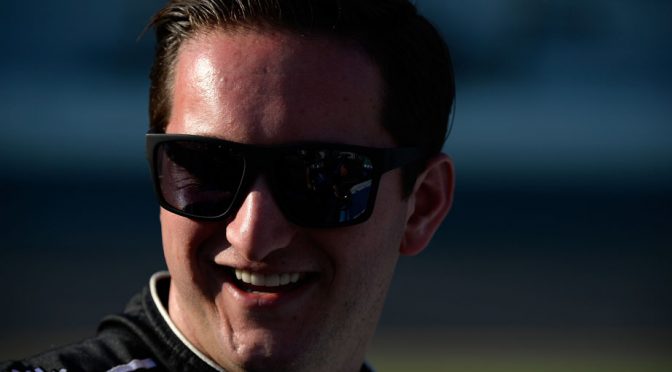
DAYTONA BEACH, Fla. — One month ago, Jordan Anderson had $190 in his bank account. He was two weeks out from announcing the next chapter of his racing career as an owner-driver, but still scrapping to get his team to the race track.
Friday night at Daytona International Speedway, the engaging 26-year-old driver pocketed the first top-10 finish of his NASCAR Camping World Truck Series career. With visions of an even more lucrative top-five result within sight, Anderson’s No. 3 Toyota spun across the finish line after a final-lap jumble and came home in ninth place.
“I can’t believe it — Daytona,” said Anderson, who scratched the top-10 column for the first time in 58 career starts. “This place is so special for so many reasons. I first came here in 2015, trying to make a career in this sport and worked so hard the past several years. Just absolutely blessed.”
It was hugs all around on pit road, with Anderson thanking his sponsors and well-wishers after the season-opening NextEra Energy Resources 250. His father, Clif, earned an extended embrace, an expression of gratitude for years of family support.
Jordan Anderson spins at the finish line in Daytona. Jared C. Tilton | Getty Images
The celebration potentially would have been muted had Anderson not been able to avoid contact as he slid underneath the checkered flag. The South Carolina native said he alternated throttling up and locking down the brakes in an effort to keep the team’s lone superspeedway truck away from the retaining wall.
“All that dirt racing I got a couple years ago came to work out,” Anderson said. “I hope Daytona’s not mad that I messed their grass up for the (Daytona) 500 on Sunday.”
Anderson’s previous best finish in the series was 11th place, recorded in June 2016 at Gateway Motorsports Park. After Friday’s new career high, Anderson said he’s hoping for momentum to carry into the series’ next race (Feb. 24 at Atlanta) and beyond.
“I’m almost speechless,” Anderson said. “I’m usually a guy that has a lot to say, but this makes it all worth it. I love this sport. I love the opportunity to be here. Hopefully this is one for the underdogs tonight.”
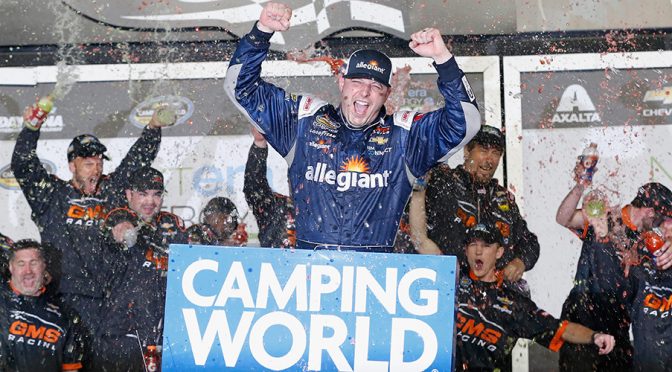
DAYTONA BEACH, Fla. – In a race that produced seven cautions for 35 laps and left 21 trucks running at the finish, Johnny Sauter held off Justin Haley by .098 seconds at Daytona International Speedway to win Friday night’s NextEra Energy Resources 250, the season-opener for the NASCAR Camping World Truck Series.
Sauter grabbed the lead from pole winner David Gilliland on Lap 92 of 100 and stayed out front the rest of the way. The victory was Sauter’s third at Daytona and 18th of his career.
The 2016 series champion dedicated the win to his crew chief Joe Shear, whose wife, Chandra Shear, passed away in December. The race performance of both driver and crew was impeccable.
“I felt like we executed flawlessly,” Sauter said. “I don’t even remember the pass for the lead. We had good track position and we lost it a couple times. I’m just so thankful to be driving this truck. This is best group of guys I’ve ever been around, and it’s great to start the season off like this.
“I just felt comfortable today and I don’t even know why. I didn’t have one nerve. I just felt like this was our day.”
As he watched Sauter close in on the victory, Shear was overcome with emotion.
“This is very, very, very special,” Shear said. “I don’t know if a lot of people know, but I lost my wife in December. She’s looking down on us. She was in love with racing just as much as I was.
“She was looking over us and helped us to this win. And I’m so grateful to be in the position that I’m at and have these people around me. This means so much. I’ll never forget this one.”
Haley had the lead for a restart on Lap 87 but surrendered it to Gilliland on Lap 91. One lap later, Sauter surged past Gilliland into the top spot. A lap after that, Gilliland slapped the outside wall on the approach to Turn 1 and brought his car to pit road, finishing 21st, four laps down.
“Those final laps were crazy,” Haley said. “I finally got shuffled back a little bit there on the last lap, and there wasn’t that much energy on the high side.”
Veteran Joe Nemechek came home third, followed by Ben Rhodes and Scott Lagasse Jr., who took the white flag in second place but couldn’t mount a charge against Sauter on the final lap. Rhodes’ No. 41 Ford failed post-race inspection after measuring too low, however. That typically is an L1 penalty.
John Hunter Nemechek wasn’t as fortunate. After leading for a restart on Lap 70, he picked up a tire rub trying to block a run from Ben Rhodes on the outside, and on Lap 73, his right rear tire exploded, ripping apart the entire wheel well and triggering a seven-truck accident that knocked Brett Moffitt, Stewart Friesen and Myatt Snider out of the race.
Grant Enfinger finished sixth, ahead of Spencer Davis, Dalton Sergeant, Jordan Anderson and Justin Fontaine. Two-time series champion Matt Crafton was part of a five-truck wreck on Lap 82 and ran 19th in his heavily damaged No. 88 ThorSport Racing Ford.
DAYTONA BEACH, Fla. — At least eight cars will start the Daytona 500 from the rear of the field following multiple wrecks in Thursday night’s Can-Am Duel qualifying races.
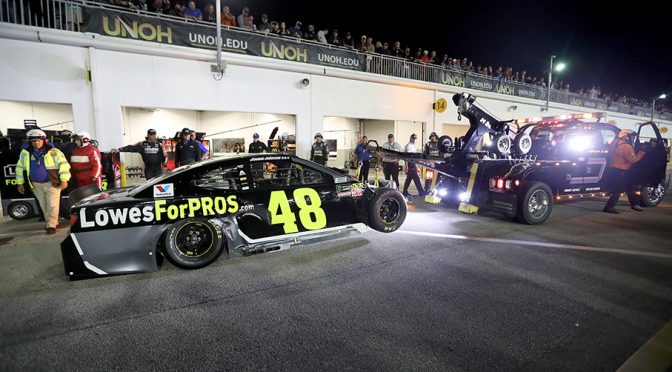
According to the NASCAR officials, Brad Keselowski, Austin Dillon, Aric Almirola, William Byron, Matt DiBenedetto, Kyle Larson, Jimmie Johnson and David Gilliland all will go to their respective backup cars for the Daytona 500. Going to backup cars will move them to the rear of the field.
Most impacted is Austin Dillon, who earned the No. 14 starting spot in his No. 3 Richard Childress Racing Chevrolet.
It also is a setback for Brad Keselowski. The driver of the No. 2 Team Penske Ford ran up front for the entirety of the first Can-Am Duel race before wrecking with Jamie McMurray on Lap 59 of 60. The Team Penske Fords have looked the strongest of Speedweeks thus far.
Additionally, Keselowski, Almirola, DiBenedetto and Johnson must go to backup engines due to the damage sustained Thursday night. At the series director’s discretion, these cars will not go to the rear of the field next weekend at Atlanta.
A few days after the 1979 Daytona 500, Donnie Allison’s wife, Pat, called him to the phone.
“Hello?” Allison said.
He didn’t recognize the voice on the other end of the line, and the caller didn’t identify himself, saying simply, “They have a film that shows the wreck. Make ’em show it to you.”
“Who is this?” Allison insisted.
“They have a film that shows the wreck,” the voice repeated. “Make ’em show it to you.”
Click. The line went dead.
The wreck in question — and its aftermath — put NASCAR racing on the map. On the doorstep of what would have been a career-defining victory in the 1979 edition of the Great American Race, Allison saw his winning chances evaporate in a last-lap wreck with Cale Yarborough, as the drivers were dueling for the lead on the backstretch.
With Allison and Yarborough out of commission on the infield grass, Richard Petty came from a half-lap down to win the Daytona 500, the first NASCAR event that featured live flag-to-flag coverage on television.
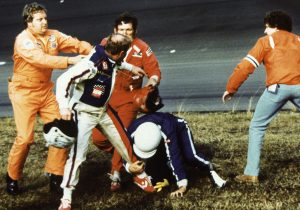
As Petty rode to Victory Lane with his crewmen draped over his car, Yarborough and the Allison brothers —Donnie and Bobby — brawled near the backstretch.
Track emergency workers try to break up a fight between Cale Yarborough, Donnie Allison and Bobby Allison. | ISC Images & Archives via Getty Image
To this day, Yarborough contends that Allison ran him onto the infield grass as Yarborough was attempting to pass for the lead. Allison, understandably, sees it differently.
“I don’t care what anybody says, Cale Yarborough or anyone else, that SOB wrecked me,” Allison said in January, on the night he was inducted into the National Motorsports Press Association Hall of Fame. “No question.”
“You don’t wreck somebody from the front. The guy in the back lifts the gas if he doesn’t have somewhere to go. I didn’t run him in the apron. He ran himself in the apron.”
Initially, NASCAR saw the wreck the same way Yarborough did. All three drivers were fined $6,000 for the fist fight, but the Allisons were placed on probation.
“Bill France Jr. came over to me, and he said, ‘Now, Donnie, you should have let him have the apron.’ I said, ‘Billy, I didn’t put him in the apron—he put his damn self in the apron. He hit me in the back first.’
France disagreed. “The film doesn’t show that,” he said.
“I don’t give a damn what that film shows you,” Allison replied. “I’m telling you what happened.”
The probation didn’t sit well with Bobby Allison.
“Bobby was infuriated, so he appealed it,” Donnie said.
The appeal was scheduled between races at a Red Roof Inn in Atlanta. The day before the hearing, Donnie got the mysterious phone call.
NASCAR executives Les Richter and Bill Gazaway were among those hearing the appeal. Gazaway asked Bobby to wait in a room across the hall while Donnie viewed five different films of the wreck.
The third film showed the initial contact between the right front of Yarborough’s car and the left rear of Allison’s.
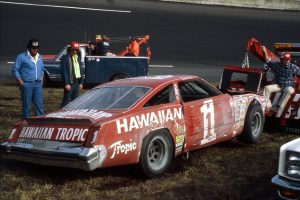
Donnie Allison’s car sits just off the track following a last-lap crash in the Daytona 500 NASCAR Cup race at Daytona International Speedway. | ISC Images & Archives via Getty Images
“The first contact, it went on by, and I said, ‘Can you back it up in slow motion until I tell you to stop,” Donnie recalls. “I’ll never ever forget what happened if I live to be 200 years old. Les Richter popped out of his chair and said, ‘Why in the hell haven’t we seen that film?’
“End of appeal. Bobby never came back into that room. We met in the hall. They put Cale on probation.”
The combatants were able to recoup their fine money at a rate of $1,000 per race for five races—for maintaining good behavior. Donnie got all but $1,000 of his money back. Bobby claims NASCAR still owes him $2,000. But Donnie isn’t sure Bobby didn’t get repaid.
“He said he didn’t,” Donnie said. “I think he did. He’ll tell you a story about a lot of things, but you better watch it.”
One thing is certain. The phone call remains a mystery.
“Till today, I don’t know who it is,” Donnie said.
One other thing is certain. Regardless of the circumstances and the truth about the details, NASCAR wouldn’t be what it is today without the wreck in the 1979 Daytona 500 and the fight that followed. That’s a point of view the Allisons and Yarborough can agree on.
Germain Racing and longtime primary sponsor GEICO announced on Friday a sponsorship extension through at least the 2020 season. It extends a relationship that has spanned more than a decade, with Ty Dillon the latest beneficiary of GEICO’s support in the No. 13 Chevrolet.
“We have been honored to represent GEICO for the last decade,” Germain Racing team owner Bob Germain Jr. said in a team release. “That is, in and of itself, a huge accomplishment and we appreciate their belief in our organization. We are excited to continue improving our team’s performance, and GEICO’s loyalty and support are the keys to any success we achieve. Carrying the GEICO name and the Gecko on the hood of our race car and on the chest of our uniforms is a source of pride and we are committed to representing them well.”
Dillon enters his second full-time season with Germain Racing, an organization that appeared to have new life breathed into it last year with the arrival of the confident 25-year-old.
With the rookie Dillon at the helm, the No. 13 team logged eight top-15 finishes last year. The highlight came at Dover in the spring, when the team was aggressive late in the race and stayed out following a caution on Lap 332 (of a scheduled 400). Dillon restarted first, then actually pulled away from the field a bit despite being on older tires.
He led for 27 laps, positioning himself for a big at a victory before ultimately finishing 14th after an end-of-race wreck.
Dillon was calm and confident earlier this year during the preseason media tour, too, eloquently discussing the NASCAR landscape and his place in it.
Among the highlights:
• “I want to race for Germain Racing and GEICO my whole career and win races and championships and build my own brand like Kobe Bryant and the (Los Angeles) Lakers.”
• “I think it’s a great opportunity. I know what I have to offer.”
• “You look at Furniture Row and that’s the gold standard right now for teams like ours. We’ve got to do it in our own way and use our resources the right way, but I think that’s kind of the approach that we’re taking. The opportunity is there.”
DAYTONA BEACH, Fla. — Team Penske crew chief Paul Wolfe was far more upbeat Friday morning in the Daytona International Speedway garage, less than 12 hours removed from a qualifying race crash that KO’d Brad Keselowski’s primary No. 2 Ford for the Daytona 500.
“It’s a new day, right?” Wolfe said.
Friday was, and Wolfe & Co. went back to work sorting out their backup car in hopes of sustaining their role as a favorite for Sunday’s Great American Race (2:30 p.m. ET, FOX, MRN, SiriusXM). Keselowski will be seeking his first Daytona 500 triumph, forging on with a chassis that has race-winning pedigree; he guided the chassis — since reskinned — to victory last October at Talladega Superspeedway.
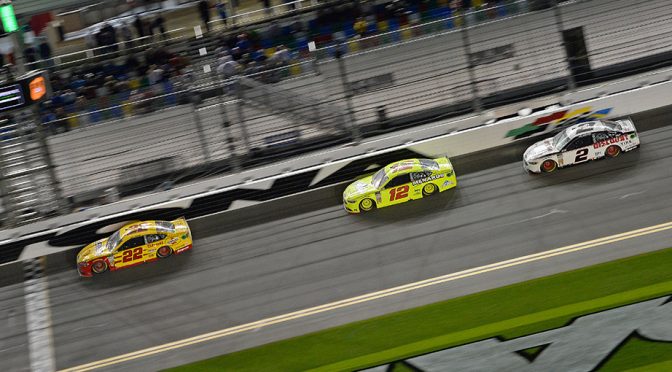
Keselowski and Wolfe have already experienced brilliant highs and troublesome lows in the brief span of Speedweeks. The No. 2 team prevailed in the Advance Auto Parts Clash exhibition last Sunday, but made contact with Jamie McMurray and the outside retaining wall in Thursday night’s Can-Am Duels race, forcing the team to the rear of the 40-car field for Sunday’s main event.
“A little frustrating last night for a couple reasons,” Wolfe said Friday morning. “One, obviously, that race pays points now, and it’s frustrating not to get those points there early on. From a car standpoint, I mean, all our cars I feel good about, so it doesn’t bother me going to a backup car, but I think losing those points last night are valuable; and then just the starting position for Sunday.
“I’m confident in what we have. I mean, obviously we’ve shown really good speed — all the Penske cars have — and it’s just frustrating we weren’t able to make it happen.”
Keselowski will be one of eight drivers dropping to the back of the pack during pace laps for the 500, the penalty for deploying reserve cars after qualifying. Austin Dillon, Aric Almirola, William Byron, Matt DiBenedetto, Kyle Larson, Jimmie Johnson and David Gilliland are the others.
But an encouraging point from Thursday’s Can-Am Duels qualifiers was Team Penske’s ability to work together in the aerodynamic draft, a tactic the organization hopes to replicate Sunday, Wolfe said. And the veteran crew chief is also taking heart that the backup No. 2 Ford has been just as meticulously prepared as the primary.
“I can’t really say that there was one (car) that was put a whole lot more time into than the other, so that’s where I say from that standpoint, we have confidence that this car will be as capable as what we raced in the Clash and what we had last night,” Wolfe said. “We’ll take our time today and get everything dialed back in, get the setup where we want it and there’s no reason we still can’t win this thing Sunday.”
DAYTONA BEACH, Fla. — In years past, drivers could answer the lingering question of identifying the best restrictor-plate racer in the sport with a single word: Junior.
When it comes to that debate now, Dale Earnhardt Jr.’s retirement opens the door like the well-timed development of a third line at Daytona International Speedway.
An informal poll on the topic among drivers yielded a shaky constant of Brad Keselowski and Denny Hamlin taking that mantle as masters of the draft, and it makes sense.
Keselowski has six restrictor-plate victories, including five at Talladega. Hamlin has two, including winning the closest-ever Daytona 500 finish two years ago. Both have shown a sophistication in racing through the draft and running up front in recent years, which is underscored by their showing during Speedweeks so far.
“I look at Brad (Keselowski) and Denny (Hamlin) as being the top two guys,” Joe Gibbs Racing driver Kyle Busch explained earlier this week. “I think the speed of (Ricky) Stenhouse’s car was pretty important last year. He did a good job with it, won some races. But I got to look at Brad and Denny, the things they do, as the guys you kind of watch, see if you can mimic, emulate some of the stuff they have going on in order to get yourself through the pack and up toward the front.”
MAJORITY, NOT UNANIMOUS
Most drivers echoed the sentiment that Keselowski and Hamlin are above the pack at plate tracks, but it wasn’t unanimous.
Team Penske’s Ryan Blaney, in his first year with the Penske organization, mentioned Keselowski and teammate Joey Logano.
Logano tabbed Keselowski and Blaney. No playing favorites here, either. The Nos. 2, 12 and 22 Team Penske Fords ran 1-2-3 for the majority of the opening Can-Am Duel race, with Blaney winning and Logano finishing third.
Keselowski nominated Kevin Harvick specifically, another Ford driver. Harvick, in turn, said Keselowski and Logano.
Kyle Larson’s name was floated. So, too, was Stenhouse Jr., who won once at both Daytona and Talladega in 2017.
“I think the Fords have the fastest cars in the race usually, when you look at the past restrictor-plate races,” said Harvick, whose Stewart-Haas Racing team transitioned to Fords last year. “At some point, it’s gonna be a Ford and usually the Hendrick (Motorsports) cars qualify fast and then they can’t handle, and by the end of the race there’s a Ford up in the front racing for the win.”
THE FAVORITES
The drivers and the data both point toward a Team Penske driver winning the 60th running of the “Great American Race” on Sunday. Attitudes from the Penske camp varied when pressed.
The question following Can-Am Duel race No. 1: Is there any reason to believe a Team Penske car won’t win the Daytona 500?
The answers:
Ryan Blaney: “There’s plenty of reason. There are 37 other cars. Yeah, we’re super strong right now. It’s really cool to be probably the best team right now I’d say this whole week. But you never know what can happen. … I wouldn’t disagree that we might be the favorite team right now just because of the speed we’ve shown, but you never know what can happen.”
Joey Logano: “No reason to believe that, no. We’re going to make it happen.”
Posted on by
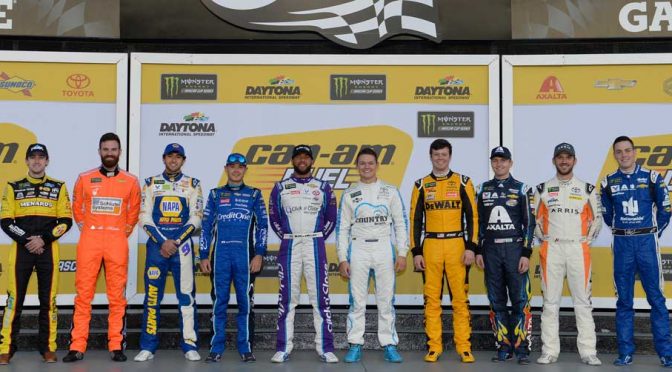
DAYTONA BEACH, Fla. — Before Thursday’s Can-Am Duel qualifying races at Daytona, 10 drivers gathered in Victory Lane for a special photo.
Chase Elliott, Kyle Larson, Daniel Suarez, Darrell Wallace Jr., Erik Jones, Ryan Blaney, William Byron, Alex Bowman, Gray Gaulding and Corey LaJoie, along with Matt DiBenedetto, all come from different teams and backgrounds. But they all share one attribute — they are graduates of the NASCAR Next program.
The NASCAR Next program selects a group of up-and-coming young drivers each year who all share a goal to compete in the Monster Energy NASCAR Cup Series one day. Sunday’s Daytona 500 40-car field includes the above 11 NASCAR Next graduates.
“We’ve all grown up a whole heck of a lot from probably the first picture that you guys have on file,” 2012 Class member LaJoie said. “… To be in that group, (with) Larson, Chase and Blaney and all these guys that are having a ton of success … it’s cool to be in the same picture with those guys.”
With an average driver age of 34.2, the 2018 Daytona 500 field is the second youngest field in the history of the “Great American Race.” Of the 40 drivers, 17 are under the age 30. For reference, the average age of the 1992 Daytona 500 field was 38.6.
The changing field represents the changing field of the sport, as more younger drivers have made their way into the Monster Energy Series.
“It’s changing a lot,” said Jones, Class of 2014. “It’s been a big change. You see guys getting started younger and younger. I think you’re just now getting to that crop of guys that really started at 6, 7, 8 years old racing and got into NASCAR at a young age, too. So you’re seeing the veterans kind of move out and the young guys come in.
“It’s a neat time in the sport really, to see that kind of influx of new talent and new guys. Just a cool time to be a part of it. “I raced with so many of these guys growing up in Late Models and early on in Trucks and Xfinity. To all be together now in the Cup level is a pretty special thing.”
Daniel Suarez topped the speed chart in Friday’s second Monster Energy NASCAR Cup Series practice for the Daytona 500 after leading in the day’s opening session, as well. He also gained quite a bit of speed, up to 203.179 mph in the latter session.
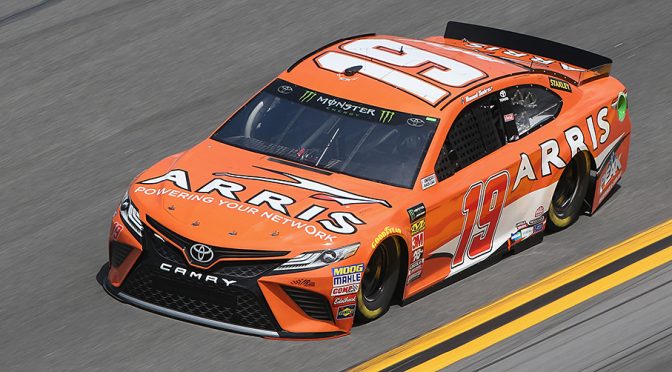
Suarez took the No. 19 Joe Gibbs Racing Toyota up to 199.840 mph in the day’s first practice, which was the third Monster Energy Series practice overall for Sunday’s race (2:30 p.m. ET, FOX, MRN, SiriusXM NASCAR Radio).
Ryan Newman was second-fastest at 202.945 mph in the No. 31 Richard Childress Racing Chevrolet. Michael McDowell (202.867 mph), AJ Allmendinger (202.739 mph) and Kyle Busch (202.689 mph) completed the top five on the leaderboard.
Only 29 of the 40 Daytona 500 entries made laps in Friday’s second practice session.
Daniel Suarez led Friday’s first Monster Energy NASCAR Cup Series practice session for the Daytona 500 with a top speed of 199.840 mph in the No. 19 Joe Gibbs Racing Toyota.
Teammate Denny Hamlin was second on the speed chart at Daytona International Speedway, topping out the No. 11 Toyota at 199.743 mph. Fellow Toyota driver and series defending champion Martin Truex Jr. was third at 199.694 mph.
David Ragan was fourth-quickest in the No. 38 Ford (199.650 mph), and Danica Patrick’s 199.406 mph in the No. 7 Chevrolet rounded out the top five.
Daytona 500 polesitter Alex Bowman was 18th-fastest at 196.721 mph in the first of two Friday practice sessions.
After a wild night of racing Thursday in the Can-Am Duels with several wrecks, Friday’s early practice laps were the first in backup cars for the No. 2 of Brad Keselowski, No. 3 of Austin Dillon, No. 10 of Aric Almirola, No. 24 of William Byron, No. 42 of Kyle Larson and No. 48 of Jimmie Johnson. Matt DiBenedetto and David Gilliland, who also went to backup cars, did not make any practice laps in the session.
Chase Elliott and Ryan Blaney, winners of the Can-Am Duels, kept their speeds at the lower end of the practice charts Friday.
Seven cars had a 15-minute practice hold for being late to inspection: No. 7 of Danica Patrick, No. 23 of Gray Gaulding, No. 34 of Michael McDowell, No. 38 of David Ragan, No. 47 of AJ Allmendinger, No. 62 of Brendan Gaughan and No. 66 of Mark Thompson.
Editor’s note: This is the 13th in a series of 14 team previews on NASCAR.com. Next up: Furniture Row Racing on Feb. 17. A list of team previews already published is at the bottom of this story.
Joe Gibbs Racing
Manufacturer: Toyota
Engine: Toyota Racing Development (TRD)
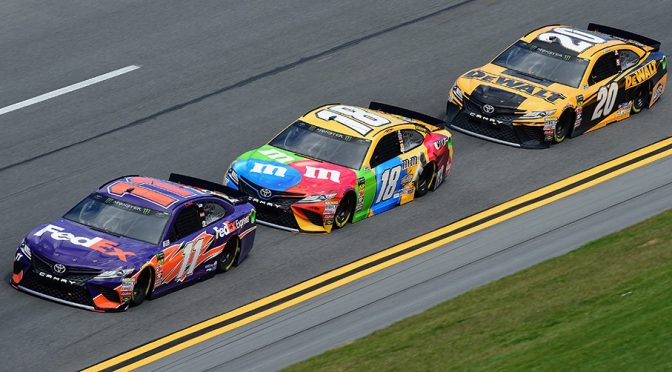
Drivers: Denny Hamlin, No. 11; Kyle Busch, No. 18; Daniel Suarez, No. 19; Erik Jones, No. 20
Crew chief: Mike Wheeler (Hamlin), Adam Stevens (Busch), Scott Graves (Suarez), Chris Gayle (Jones)
2017 standings: Busch, 2nd in final standings (reached Championship 4); Hamlin, 6th (eliminated in Round of 8); Jones, 19th (did not reach the Playoffs driving for Furniture Row Racing); Suarez, 20th (did not reach the Playoffs); Matt Kenseth, 7th (eliminated in Round of 12 driving No. 20 car)
What’s new: After running his rookie Monster Energy Series campaign with Furniture Row Racing last year, sophomore driver Erik Jones takes over the No. 20 Toyota, a seat filled by Kenseth since 2013. Jones also brings company as Chris Gayle moves over from FRR to serve as crew chief.
What to watch: How quickly sophomore sensations Jones and Suarez win their first career race (and yes, it’s WHEN, not IF). Both are poised to have breakout seasons. Between veteran leadership of Busch and Hamlin, along with new, talented blood, JGR is going to be one tough organization to beat (again) in 2018.
Key question(s): Can Jones and Suarez break into Victory Lane for the first time? Can Toyota pick up where they left off last year, or will the new Chevrolet Camaro ZL1 give the JGR Camrys a run for their money? Also, can Busch win at Charlotte Motor Speedway to have a win at every race track on the Monster Energy Series circuit?
DRIVERS
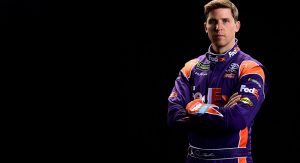
Denny Hamlin, No. 11 FedEx Toyota Camry: It was a very steady season for Hamlin in 2017 — a pair of victories, 15 top fives and 22 top-10 finishes. An average finish of 11.6 was also a career-best for Hamlin. But in a world where race victories and stage wins mean the most, consistency only gets a driver so far.
Jared C. Tilton | Getty Images
Hamlin has come heartbreakingly close to winning a championship on multiple occasions, but sealing the deal has been a tall task. If he can cook up more consistent finishes and sprinkle in a few more race/stage wins, it will have all the makings for a Championship 4 recipe.
Surely, starting on the Daytona 500 front row is a nice jumpstart.
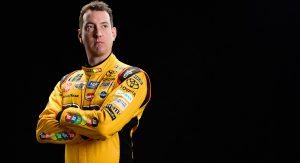
Kyle Busch, No. 18 M&M’s Toyota Camry: When .681 seconds separates you from a second Monster Energy Series championship, you’re going to have a chip on your shoulder. That’s exactly the case for “Rowdy” this season. We know Busch doesn’t need any more fuel for his fire to win, but coming thatclose to another title just allows the blaze to burn even brighter.
Jared C. Tilton | Getty Images
Coming off a stellar five-win season, Busch hopes for more of the same in 2018.
“I don’t think we would be any worse,” he said. “I would like to think we’d be better. We kind of started out the season a little bit on the slower side, if you will, last year with our new car. We were kind of behind the 8‑ball a little bit maybe, and as the season kind of progressed, we learned what things our car liked and what we needed to do in order to make ourselves better and more competitive, and we were able to do those things and got it to where we were pretty fast there obviously and peaked later in the season. Hopefully we can start out our year this year a little stronger than we did last year.”
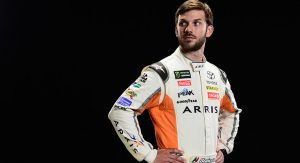
Daniel Suarez, No. 19 Arris Toyota Camry: With one top five and 12 top-10 finishes in his rookie season, Suarez proved success at NASCAR’s highest level is imminent. But, those numbers weren’t good enough for him.
Jared C. Tilton | Getty Images
“That’s not the rookie season that everyone wants, but sometimes that’s what makes you tougher,” Suarez said. “I feel like that can teach me a lot of things to prepare myself better for this year, and I feel like we are going to show that on the racetrack.”
The 26-year-old needs to take his performance to the next level by minimizing mistakes and taking advantage of every opportunity. Between his prowess and strong Toyota power, Suarez has all the potential to notch his first career win and become the first Mexican-born driver to win a Monster Energy Series race.
Suarez recorded his career-best third-place finish at Watkins Glen in 2017, so breaking into Victory Lane could very well come on a road course.
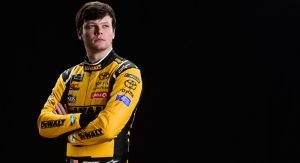
Erik Jones, No. 20 DeWalt Toyota Camry: Taking over a big-time Monster Energy Series ride after a champion held the seat is a tall task, but if anyone can handle it, it’s Erik Jones.
Jones will fill the No. 20 Toyota following Matt Kenseth’s five-year run with the organization. With one year of racing at the top level already under his belt, the 2017 Sunoco Rookie of the Year knows what to expect.
Jared C. Tilton | Getty Images
The 21-year-old driver earned five top fives and 14 top-10 finishes last season. All signs point to Jones building on those numbers and breaking into the win column in 2018 — sooner rather than later.
“There were a lot of unknowns last year at this point for myself, at least, going into a new series with a new team, a new group of guys,” Jones said. “It was just a lot of things that were really unsettled and weren’t really all figured out yet. At least having everybody in place, knowing Chris (Gayle) and knowing the Cup Series one year better than I did last is definitely an advantage. I have a better feel for the cars and everything to expect there and what’s going to be week in and week out and how the season kind of rolls and progresses.”