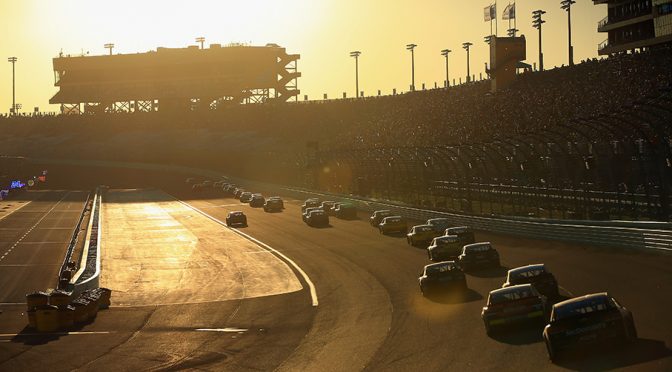
The reverberations from Miami are finally starting to settle, the leaves are falling, the weather is cooling.

It’s Thanksgiving season, and we have plenty to be thankful for. Here’s our list for the editorial team members of NASCAR.com following a tremendous 2017 season.

We are thankful for …

• The championship Furniture Row Racing team and the lesson it showed brilliantly about hard work, overcoming obstacles, belief in your people and the power of tenacity. — Holly Cain 

• Dale Earnhardt Jr.’s thoughtful answers, patience and willingness to let us behind the curtain, so to speak, in his final full-time season. — George Winkler

• The sounds and smells from the garage; the interactions with fans and discovering all the points on the map where they come from; the wide-eyed young drivers aiming to turn themselves into household names; and that last-day-of-school feeling from saying all our goodbyes at Homestead, knowing that 2018 and Daytona will be here before we know it. — Zack Albert 

• Twitter. Seriously, what did we do without it? — Jessica Ruffin

• Jeremy Clements winning at Road America as a highlight for the small teams that work hard and show their dedication week in and week out. — George Winkler

• Danica Patrick’s impact on young fans of the sport, particularly female fans, witnessed with my daughter. — George Winkler

• Dale Earnhardt Jr., Kyle Busch and Brad Keselowski’s ability to develop and mentor talent in NASCAR. The sport’s surging youth movement is in large part due to their efforts to give talented drivers an opportunity. — RJ Kraft

• Graceful farewells. From champion Matt Kenseth to sport-changer Danica Patrick to the Most Popular of all, Dale Earnhardt Jr. They all are examples in talent, fortitude and grace.  — Holly Cain

• Chase Elliott standing up for himself when things got heated with veteran Denny Hamlin. The new boys are coming. — Allie Davison 

• The dedicated fans. Without you, none of this would be possible. Thank you for loving the greatest sport in the world. — Chase Wilhelm

• Maybe this is cliché, but I’m thankful for the fans. Without them, drivers would get really warm inside their cars. — Steve Luvender

• Automakers. The debut of the Chevrolet Camaro ZL1 in the Monster Energy NASCAR Cup Series is coming in 2018. That comes on the heels of the rollout of the newly designed Toyota Camry in ’17 and the updated Ford Fusion in ’16. While navigating the changing automotive waters of the consumer, these auto giants continue to see the benefits of their involvement in NASCAR. — Kenny Bruce

• Martin Truex Jr. and Sherry Pollex, for sharing their strength amid adversity, their willingness to help others and their enduring love story. — Kathy Sheldon 

• Witnessing such an exciting time for the sport. Sure, Dale Earnhardt Jr., Matt Kenseth and Danica Patrick are stepping away. But fans watched Richard Petty retire in 1992, and with that came the silver lining of the start of Jeff Gordon’s career. The next “Wonder Boy” is out there right now. — Pat DeCola 

• Short-track racing. The close quarters bumping and banging leads to some of the best action you’ll see all season long … and also provides some heated exchanges and unexpected rivalries to blossom. — RJ Kraft

The love of competition. Everyone in the garage is a competitor. Sometimes competition is friendly, but most of the time it’s fierce. And that’s what’s great about sports — especially NASCAR. — Jessica Ruffin  

• I’m thankful for Cole Pearn, for no matter what the circumstance, he maintains that one facial expression he has where it looks like he just saw someone holding a jar of mustard with a straw in it. — @nascarcasm
RELATED: Danica steps away | Patrick, Ganassi discuss possible ’18 partnership

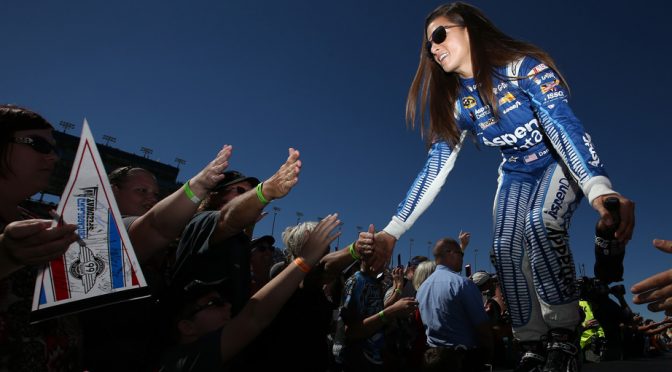
HOMESTEAD, Fla. – The good, the sad, the ugly and the anticipatory; Danica Patrick’s final full-time NASCAR start had it all, the full range of emotions.

Patrick was able to announce her upcoming retirement on her own terms, and surprised herself with the tears the decision induced when she revealed it publicly last Friday. Two days later, she ended her final full-season race at Homestead-Miami Speedway in the wall, and despite the frustration and disappointment, there remains great anticipation for her two-race “Danica Double” – the 2018 Daytona 500 and Indianapolis 500 – to wrap up a historical and important career.

She will finish on her own terms in two of motorsports’ most celebrated races, events that the 35-year-old Patrick loves and that have provided a career highlight reel.

It’s all righteously characteristic of her time in major league auto racing.

“It’s a perfect way (to go out),” Patrick said. “It definitely feels like it should be over. But look, it’s my decision. Before I heard if we had a sponsor or a team wanted to move forward I felt a lot of pressure on myself to answer whether I wanted to before.

“I wanted to make the decision myself. I didn’t want to be at the mercy of everybody else’s decision before mine.”

Patrick with the 2013 Daytona 500 pole award | Tom Pennington, Getty Images

There has always been great expectation of having a talented, respected woman compete under the sport’s brightest lights.

As a woman in a male-dominated profession of sports writing, I understand the need to perform and excel without it being considered “pretty good for a girl.”

Patrick’s work driving Indy cars in the 2000s – and especially her dramatic success in the Indy 500 — was noteworthy and gender-less. And she brought the same promise to NASCAR where she historically won the 2013 Daytona 500 pole position. It wasn’t just good work for a woman. It was good work, period.

And it was even more impressive considering Patrick’s entire racing background had been open-wheel race cars and that was only her second time at that track in a Cup car.

While I remember it “stunning” some people, it was not particularly surprising to me. That is exactly how Patrick has worked — the bigger the stage, the better her game — the opposite results of some athletes that crumble under the pressure and spotlight.

MORE: Patrick through the years

It was evident from the beginning of her career — the press conference at Indianapolis Motor Speedway before she made her first Indy 500 grid. It was an informal event, Patrick and then-team owner Bobby Rahal sitting on barstool-type seats in the fourth-floor media center as opposed to a formal setting in the first-floor press-conference room.

Most of the reporters were milling around holding conversations with public relations representatives, perhaps in their seats transcribing interviews from their tape recorders or deciding whether to hit the lunch room for food.

But I remember vividly how one after another, while listening to Patrick speak, the reporters made their way up to the front of the room closer to her, quite curious to hear about the “big plans” and possibility she would indeed make a start in the following year’s Indianapolis 500.

Boy, did she.

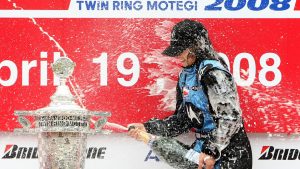
Patrick after winning at Japan in 2008 | Jonathan Ferrey, Getty Images

Patrick finished fourth and led 19 laps in her Indy 500 debut in 2005 and bettered it still with a third-place finish in 2009. She has top-10 showings in six of her seven Indy 500 starts — five of those eighth place or better. Her average finish is 8.7.

When the news began leaking that she would move to NASCAR the buzz was palpable. Some wondered “why?” as Patrick — who became the first woman to win an IndyCar race at Japan in 2008 — was really firming herself as a legitimate contender week after week.

But Patrick has never been afraid of a challenge — taking on challenges is a considerable portion of what has made her so successful.

And much as her Indy 500 record made her an IndyCar superstar, Patrick’s Daytona 500 resume helped solidify her in NASCAR.

She’s the first to concede the results haven’t been what she expected in stock cars, but there are shining moments — and thus her final Monster Energy NASCAR Cup Series start at Daytona makes perfect sense.

Tom Pennington | Getty Images

Although Patrick has not finalized her last ride with a NASCAR or IndyCar Series team yet, she and her personal team were absolutely confident in getting it done and hoped to announce at least the Daytona 500 portion in a matter of weeks.

“I got excited about it and anyone seeing me talk about it was like, you’re really lighting up,” Patrick said. “I am nervous but really excited about it.

“It’s a perfect way [to end].”

Editor’s note: This story is part of our Fit Row series that focuses on the health and fitness aspects of racing and its superstar drivers. Presented by Lilly Diabetes, the exclusive diabetes health partner of NASCAR, the series features 10 themed stories.

The travel has stopped now that the checkered flag has fallen on the NASCAR season at Homestead-Miami Speedway, but the preparation is never done for pit crew members.

With one of the longest athletic seasons in all of professional sports, the individuals who go over the wall each weekend spend the little downtime the offseason provides staying race ready. Many in the garage are quick to admit, the offseason is not as long as the calendar may make it look and one can’t afford to let himself go during that time.

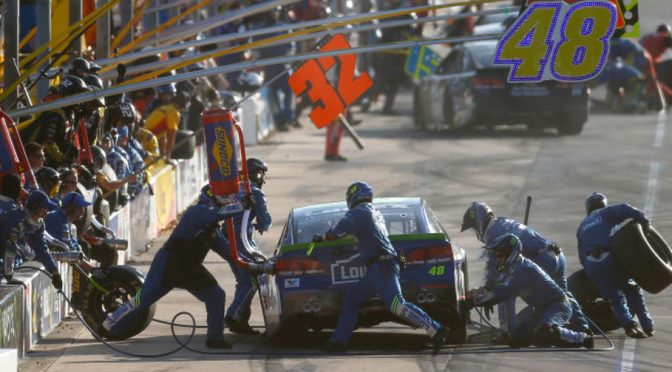
“I was a strength coach at Ohio State before I was on the pit crew, so I preach this a lot to our guys: Take care of yourself during the offseason,” said Ryan Patton, the rear tire carrier on Jimmie Johnson’s No. 48 Chevrolet. “You try to take time to fix any bumps, bruises, strains if you need to, but we’re all competitors and working out and dieting is something that we do year-round.”

Patton, along with Kellen Mills, the gas man for Joey Logano’s No. 22 Ford, admit there are differences when the racing ends. The offseason is less structured and workouts usually lighten up a bit. Ordinarily there are no mandatory pit stop practices.

This is also the time for those who might feel they have any deficiencies or areas they would like to work on to do so. Teams that might be going through turnover with their pit crews are also more likely to get together to make sure everyone develops a chemistry and rhythm.

“Our rest comes from not having pit practice as much or we might not have practice at all. But in terms of conditioning or cardio levels, strength training, like I said, you want to take some time to recharge but you can’t really take too much time,” Patton said, also admitting working with Johnson, who is always training himself, is highly motivating.

“Our team is held to a high standard, all of Hendrick Motorsports is. You know after the first of the year Daytona is only about a month and a half away and that’s our Super Bowl. So, you’ve got to get ready to rock and roll for that. There is a little bit of downtime, but it’s not really downtime.”

Michael Lepp is the senior athletic advisor at Joe Gibbs Racing and stressed an important part in all of sports nowadays is recovery.

At Gibbs, there is a designated physical therapy and training area. Crews have access to a cryotherapy chamber and can get dry needling (the use of non-medicated needles placed directly into one’s problem areas). If lifting weights is something their pit crew members want to do, it’s more to maintain than gain. Anyone who might have been injured will likely be doing remedial rehab during the month of December.

When it comes to staying race ready during the offseason, it seems to be the responsibility of the crew members. Both Patton and Mills acknowledged keeping consistency in their routines and habits, saying the guys on their teams are likely to hold each other accountable to get workouts in or use the pit practice car if necessary.

“We send (our guys) recommended workout schedules,” said Lepp about still being aware of what the crews are doing. “They have their own logins and our strength and conditioning people will put a workout in for them. If you’re working out this week, this is the stuff you should be doing.”

Being in the gym remains a priority during the offseason, as does eating right. While many might assume the end of the race year means going home and laying on the couch with potato chips, Mills explained you cannot change your lifestyle for a month and then expect to go back to in-year mode.

“Thanksgiving time we’re off and come first week of January it’s beginning of pre-season,” he said. “You only have about a month of downtime. You can’t get too far out of whack during that time. Then January we’re right back at it.”

Coincidentally, the NASCAR offseason occurs during one of the biggest weight gain periods of the year: the weekend after Homestead is Thanksgiving, a month later is Christmas and then come the parties on New Year’s Eve. However, pit crews these days are all made up of athletes and gone are the days of showing up before a new season with added weight that needs to be worked off.

As Lepp simply said, there’s no time for that. Or as Patton described, doing so is at your own risk. Waiting in line behind you is always going to be someone training harder, getting stronger.

So being a pit crew member is more than what happens from February to November. It’s become a 365-day job, leaving Patton, Mills and Lepp to agree if a NASCAR race just happened to pop up during the offseason, the pit crews would be standing at attention on the pit wall.

“We’d be ready,” said Patton. “Ready to rock and roll. Absolutely.”

NASCAR announced Wednesday that starting in 2018, the sanctioning body will standardize the number of at-track individuals who work on each race car for all three national series.

Read the full story here.

Below are quick bullet points.

• How is a team roster determined?

There are three categories that make up a team roster: Organization Level (such as competition director), road crew (such as mechanics) and pit crew. Each level has a standard on how many employees a team can bring to the track each weekend.

• What is that standard?

For the Monster Energy Series, it’s three roster spots at the Organization Level for a one- or two-car organization, and four roster spots for three- to four-car organizations. Twelve roster spots are allotted for the road crew. Five roster spots are for the over-the-wall pit crew.

• Is that one fewer spot for pit crews than this year?

Yes. That number goes from six to five, which means we’ll see some real ingenuity next year as teams adapt.

• Can you give me another example of an “Organization Level” job?

Think of this as the competition directors, team managers, technical directors and IT specialists.

• And how about the road crew?

This is like the crew chief (crew chief doesn’t count as part of the pit crew), car chief, engineers, mechanics, shock specialists, tire specialists, spotters, aero specialists, engine tuner … you get the point.

• Will NASCAR dictate the exact positions in each roster level a team must bring?

Nope. That’s up to the teams. A team can bring one crew chief and 11 mechanics to complete its road crew, if that’s what it wants. Or it can be made up of a crew chief, car chief, five mechanics, two engineers, three specialists. You get the idea.

• What about tracks that typically use multiple spotters?

An additional Road Crew roster spot will be granted for road courses and Indianapolis Motor Speedway.

• OK, how is the breakdown different for the other two NASCAR national series?

In the NASCAR XFINITY Series, the rosters include one individual at the Organizational Level, seven at the Road Crew level and five at Pit Crew Level. In addition, for 10 races during the season, a team may bring one additional roster member.

In the NASCAR Camping World Truck Series, the rosters include one individual at the Organizational Level, six at the Road Crew level and five at Pit Crew Level. In addition, for five races during the season, a team may bring one additional roster member.

Series Organizational Road Crew Pit Crew Misc.
Monster Energy NASCAR Cup 3 or 4* 12 5 Additional road crew spot at road courses, Indianapolis
XFINITY Series 1 7 5 Additional road crew spot available at 10 races
Camping World Truck Series 1 6 5 Additional road crew spot available at five races

* Dependent on how many cars the organization runs.

• Will team members be easily identified?

Yes. Starting in 2018, each roster member will be assigned a number/letter based on position. It must be visible at all times throughout the weekend at the track.

• Will rosters be public?

Yes. Teams must submit them prior to the race weekend.

• Why the change in over-the-wall crew going from six to five?

We’ll let Executive Vice President and Chief Racing Development Office Steve O’Donnell explain: “First and foremost, it’s safety, and we’ve taken some steps in our own house in reducing the number of officials on pit road. We’ve got some of the best athletes in the world out there on pit road, so we’ll want to showcase them in as safe an environment as we can.

“Everybody obviously wants to see it play out on the track, but everyone kept in mind that our goal is to make the racing even better and to allow the possibility for even more teams to win a race and compete on pit road.”

RELATED: FAQ: What you need to know about 2018 rosters

NASCAR announced Wednesday morning that it will standardize at-track team rosters across all three national series in 2018, providing a structure for the number of personnel working on each vehicle during the course of a race weekend.

The biggest competition impact from the rules update is the the number of crewmembers who go over the wall for pit stops moving from six to five.

According to Steve O’Donnell, NASCAR Executive Vice President and Chief Racing Development Officer, the overall objective for standardized rosters is to promote better competition through increased parity, to improve safety and to cast a brighter spotlight on the sport’s team concept.

“As much as we can possibly level the playing field and introduce new winners, that’s really the goal and what we want for the fans,” O’Donnell said. “And so if you look at these initiatives with the over-the-wall crew going to five members, that fits into our overall structure from a roster standpoint. We feel like that again puts the focus on the athletes and also continues down that line of putting the focus on the teams and opening it up to as many teams as possible to continue to win races and therefore put a better product out there for the fans.”

At-track rosters for all three series will fall under three headings: Organizational, Road Crew and Pit Crew. Job descriptions and roster maximums for each category:

• Organizational: Examples include competition director, team managers, technical director, IT specialists. In the Monster Energy NASCAR Cup Series, teams will be allotted three organizational roster spots for one- and two-car operations, and four spots for three- and four-car outfits. XFINITY and Camping World Truck Series teams will be allowed one organizational roster spot each.

• Road Crew: Examples include crew chief, car chief, mechanics, engine tuners, engineers, specialists (for areas such as tires, aerodynamics and shocks) and spotters. The limits for these personnel by series: Monster Energy Series, 12; XFINITY, 7; Camping World Trucks, 6.

• Pit Crew: This designation refers solely to team members who perform over-the-wall service during pit stops. The maximum is five for all three series.

The exceptions to these numbers are slight. Monster Energy Series teams are allowed one extra road crew position at Indianapolis Motor Speedway and the three road courses (Sonoma, Watkins Glen, Charlotte), where teams often use multiple spotters. Also, an additional road crew roster spot will be allowed for XFINITY teams at 10 races and Truck Series teams at five.

It will be left to the teams’ discretion on how to best assemble their team — including the over-the-wall crew — within the roster limits. All rosters will be made public — for fans and media — before each race weekend.

The decrease in pit-crew personnel on an active pit road continues a trend in recent years. NASCAR reduced the number of over-the-wall crewmembers from seven to six in 2011, when advances in fueling systems eliminated the need for a catch-can. NASCAR also instituted a high-tech pit road officiating system in 2015 that made over-the-wall officials unnecessary to monitor pit stops.

“First and foremost, it’s safety, and we’ve taken some steps in our own house in reducing the number of officials on pit road,” O’Donnell said. “We used to have seven crewmembers over the wall for the race teams as well; we’d reduced that to six. And this is just another evolution with five, to make sure that the environment is as safe as possible for the race, and then also, candidly, to continue to focus on the athletes. We’ve got some of the best athletes in the world out there on pit road, so we’ll want to showcase them in as safe an environment as we can.”

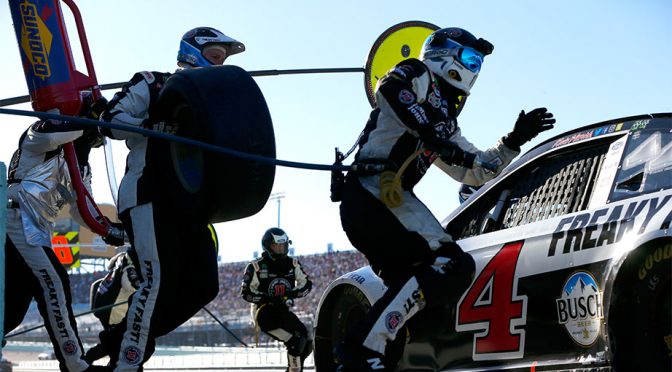
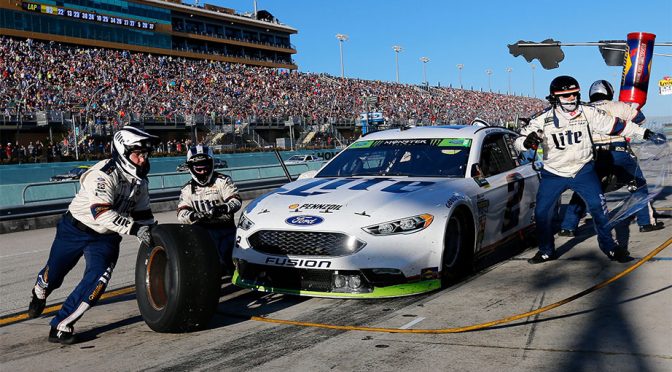
From 2011 to 2017, the standard six-person pit-crew configuration included a jackman, a fueler, two tire changers and two tire carriers (one each for front and rear). For routine four-tire stops starting next season, teams could forgo one tire carrier and devise a new framework for servicing their vehicles.

The responsibilities of the fueler will also be narrowed, with other over-the-wall duties such as wrenching out chassis adjustments prohibited in 2018.

“We wanted to get out ahead of it as quickly as we can, and teams are probably practicing right now,” O’Donnell said about the timing of the announcement. “If I know them, they’re already getting ready for Daytona so that’s something we wanted to get out in front of them, working with the industry.”

In another effort to bring further recognition to team members, rostered crew will be assigned letters or numbers worn on their uniforms and on armbands to identify their duties.

“Those are superstars as well in our industry,” O’Donnell said. “The more we can allow fans inside that window and the media, candidly, to have you handed a roster prior to the race weekend opening up to know who’s on each team and what role they’re going to play for that weekend.

“Short-term, it’s going to take some getting used to, but long-term, I think it’ll really help develop some of the other names that have been a part of this sport for a long time and emphasize why you’ve always heard drivers talk about how this is a team sport. I think it’ll help showcase that for the fans.”

As has been the case with many recent developments in the sport, the advent of standardized at-track rosters was achieved through collaboration with race organizations, a process that O’Donnell said produced favorable feedback.

“I think it’s been really positive,” O’Donnell said. “Everybody obviously wants to see it play out on the track, but everyone kept in mind that our goal is to make the racing even better and to allow the possibility for even more teams to win a race and compete on pit road. So the idea in putting this in place has been very much embraced by the race teams, but obviously we want to see it in action and make it a positive thing for our fans going forward.”

Germain Racing driver Ty Dillon tweeted post-Miami that he couldn’t wait for 2018 after a year of tremendous on-track growth — “but first let’s meet Oakley Dillon,” Ty wrote.

He didn’t have to wait long.

Ty’s wife, Haley, has given birth to the couple’s first child. Oakley Ray Dillon weighed 9 pounds, 8 ounces according to Haley’s Instagram post, and baby girl waited “just in time for her daddy to get home from Homestead to make her grand entrance!”

Ty was so excited about the pregnancy, he inadvertently let slip the gender earlier this year before they had a chance to tell others privately.

The announcement comes two months after Dillon and Germain Racing agreed to a contract extension.

Ty and Haley were one of five NASCAR couples expecting — Kevin and DeLana Harvick and Joey and Brittany Logano both have babies due in January.

Dale Earnhardt Jr. and Amy Earnhardt, and Kyle Larson and Katelyn Sweet are both expecting in May.

RELATED: Miami finale a stepping stone to new beginnings for Dale Jr.

Rick Hendrick has a knack for bringing out the heaviest of emotions in his drivers who have gone into retirement from full-time racing in the Monster Energy NASCAR Cup Series.

In 2015, Jeff Gordon stepped out of a No. 24 car he made famous with four championships and 93 victories during his 24 years with Hendrick Motorsports. Not only was Hendrick a car owner for Gordon, he was a role model and a friend, which led Gordon to tears when thanking Rick and wife Linda on stage during that year’s banquet in Las Vegas.

Fast forward to Dale Earnhardt Jr.’s final weekend as a full-time driver. Piloting Hendrick’s No. 88 for the last time in Miami, Earnhardt called it a career with 26 victories over his 19-year tenure — 10 of those years while driving for HMS.

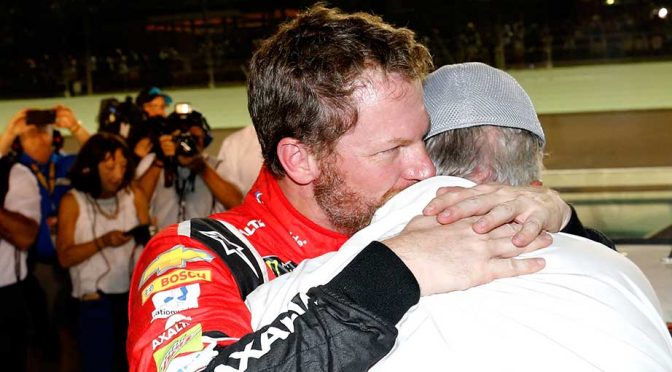
The two-time Daytona 500 winner and 14-time Most Popular Driver immediately embraced his boss for a lengthly period of time after climbing from the car with swarms of people surrounding them on pit road.

For Earnhardt, it was those interactions with Hendrick that got him the most.

“Really didn’t get seriously emotional … only when I talked to Rick,” Earnhardt said during his Dale Jr. Download podcast.

Not only did Hendrick hire Earnhardt when Dale Earnhardt Inc. was facing rocky times, he was also by Earnhardt’s side during some of the toughest moments in his personal life.

“It’s easy to thank him for hiring me,” Earnhardt said. “But when I think about what he did for me personally, for some reason it’s hard for me to thank him. I don’t know why. But, for some reason, when I try to do that, it brings up all the feels.”

As Earnhardt trades his firesuit for a business suit next season in the NBC Sports broadcast booth, the relationship between he and Hendrick will remain special and unwavering.

RELATED: Truex: I owe this to Dale Jr. | Eight wins puts MTJ in impressive company

Newly crowned Monster Energy NASCAR Cup Series champion Martin Truex Jr. is already beginning to make the rounds to talk about his accomplishment.

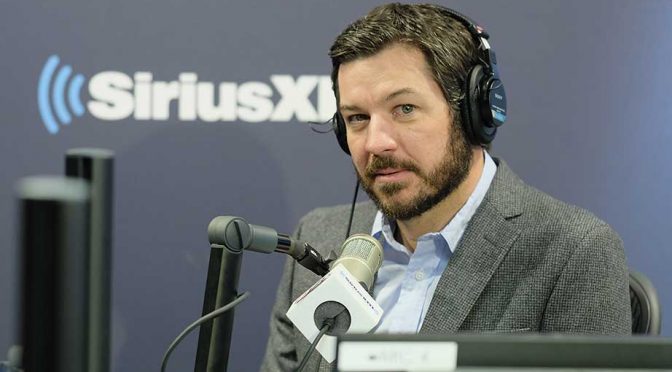
After celebrating deep into the night and early morning in Miami following his championship win on Sunday night, Truex took part in the Champion’s Tour today around New York City. Stops included appearing on the “Megyn Kelly TODAY,” swinging by Fox Business Network and even doing some cross promotion on the NBA and NFL channels of Sirius XM.

Here are a few of the highlights from Truex’s day. And yes, he made sure to bring the 68-pound Monster Energy NASCAR Cup with him.


Crew chief Cole Pearn even got some air time today, too.


RELATED: Listen to the ‘Glass Case of Emotion’ | Blaney to pilot No. 12 Penske car

SHOP: NASCAR die-casts

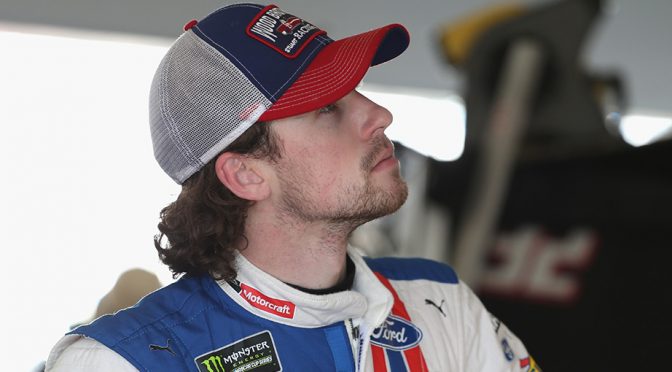
With the 2017 Monster Energy NASCAR Cup Series season complete, teams and drivers are revealing fresh paint schemes for 2018. Ryan Blaney, 2017 playoff driver and star of NASCAR.com’s “Glass Case of Emotion” podcast, revealed a new look that he will be sporting on track.

Blaney took to Twitter to unveil the No. 12 Menards Ford he will be driving for Team Penske, saying fans “definitely won’t be able to miss it!” Over the summer, it was announced Blaney would be moving to a third Penske car for the 2018 season. Penske also fields cars for Brad Keselowski (No. 2) and Joey Logano (No. 22).


Blaney earned the 99th win in the storied history of Wood Brothers Racing en route to qualifying for the 2017 playoffs. The 23-year-old driver finished a career-best ninth in the standings. Paul Menard will take over the No. 21 Wood Brothers Racing Ford in 2018.

RELATED: Menards to sponsor Penske, Blaney for 14 races in 2018

Two Monster Energy NASCAR Cup Series teams and one XFINITY Series team were assessed penalties following season-ending races at Homestead-Miami Speedway, according to the NASCAR penalty report released Tuesday.

According to sections 10.9.10.4 of the NASCAR Rule Book, the No. 20 Joe Gibbs Racing team of Matt Kenseth was assessed a penalty after officials found two lug nuts not properly installed during post-race inspection in Miami. As a result, crew chief Jason Ratcliff was suspended from the next Monster Energy Series event and received a $20,000 fine.

Ratcliff will not have to serve the one-race suspension since he will move atop the pit box for the No. 20 Joe Gibbs Racing XFINITY team of Christopher Bell for the 2018 NASCAR Series season.

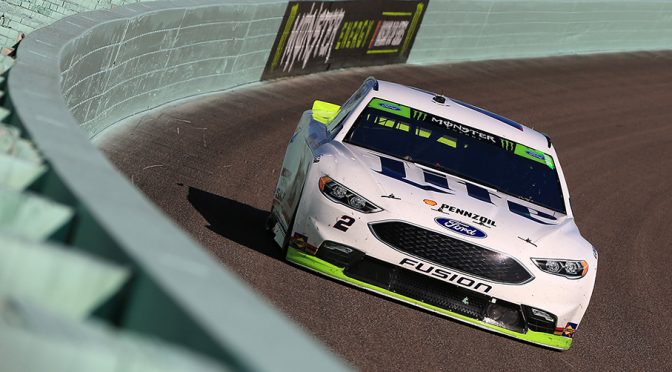
The No. 2 Team Penske squad of Championship 4 contender Brad Keselowski was also penalized under sections 10.9.10.4 of the NASCAR Rule Book for a lug nut not properly installed. Crew chief Paul Wolfe was fined $10,000.

The No. 16 Roush Fenway Racing team of Ryan Reed in the XFINITY Series was also assessed a penalty for lug nuts not secured, which saw crew chief Phil Gould receive a fine of $5,000.