WINSTON-SALEM, N.C. — Saturday night’s racing at Bowman Gray was as hot and as humid as the air that enveloped the stadium.

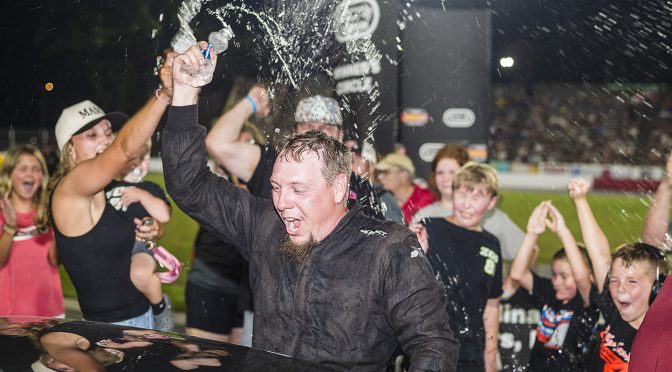
However, Zack Clifton dominated the Colors Edge 100, which was a 100-lap race in the Law Offices of John Barrow Sportsman Series.

In winning, Clifton won his second of the three 100-lap Sportsman races this season and defeated runner-up Chase Robertson, who picked up the other 100-lap Sportsman win earlier this season.

“We’ve had a really good car,” Clifton said. “I’ve been out here a long time and never had a car like I’ve had the past two races. Man, I don’t know what we hit on but we hit on something and this drive in this car is insane.

“But hats off to my guys, sponsors. Everybody has a part in this. It’s a way to go out of my season here at Bowman Gray.”

Clifton said that Saturday’s win will be his last race of this season at Bowman Gray.

“I just want to run the big ones daughter, she’s racing Go-Karts,” he said. “So, we’re doing that and I’m getting ready for Martinsville also. We’re just going to take this win and go out on top.”

Clifton took the lead from Robertson on lap 27.

“I was going to ride until I could get a spot open to take the lead,” Clifton said. “And I put a little pressure on Chase and he ran up wide and gave me the spot. So, we never looked back.”

The race was red-flagged on lap 45 to allow four parachutists from the Special Forces Parachute team to jump.

“I was like, ‘Thank God. I can get some water and a fan,'” Clifton said. “It was hot out tonight. When I took off I knew I had a good car. I just (took) off and lead them on.”

Once that was completed, the race resumed with Clifton continuing his domination over and Robertson. Sterling Plemmons finished third, followed by Zack Ore, and Justin Taylor.

“Usually in a 100-lap race, you know, you baby the car in the first half,” Cliifton said. “And then in the second half you’ve got what you’ve got. Usually the car, it don’t stay underneath you. But this one here, it never changed from lap 1 to 100.”

Lee Jeffreys cruised in the first 25-lap race in the Brad’s Golf Cars  Modified Series.

Jeffreys sat on the pole after having the fastest qualifying lap and led from start to finish. It was his 30th career win, making him No. 14 overall in Modified wins.

“I’d like to thank all these people from coming out tonight as hot as it is because I know that’s tough,” Jeffreys said.

Chris Fleming finished runner-up, followed by Jason Myers, Brandon Ward, and Junior Snow.

The race was marred by an incident that started last week between Mike Speeney and Burt Myers. Speeney retaliated against Myers, which caused a wreck that ended up involving 11 cars.

Following the first 25-lap Modified race, Jeffreys drew 8 in the “Madhouse Scramble,” which inverted the field for the second 25-lap race there.

Kyle Southern started on the pole for the second race and was immediately bumped by John Holleman IV on the first lap. Tim Brown took advantage and took the lead.

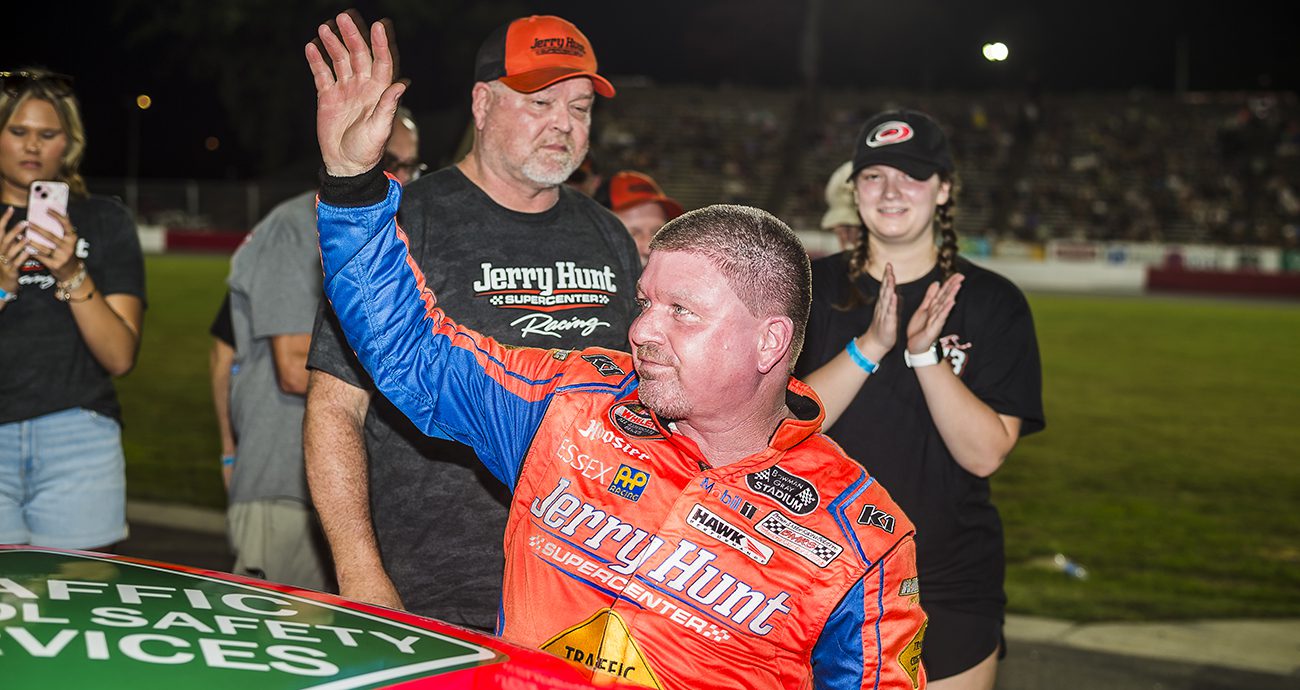
Tim Brown
Tim Brown scored his second Modified victory of the season during Saturday’s event at Bowman Gray Stadium. (Photo: Erick Messer/Bowman Gray Stadium)

Brown carried the momentum until the finish and won his second race in as many weeks after going winless all season.

Saturday’s win is his 103rd win in his Modified career, which added to his lead.

“I’m just glad that we could find our way back to Victory Lane,” Brown said. “It’s still not the same winning the second races…Cam (son) and Marley (daughter) and Megan (wife) is on Facetime right here at home. I just wish they were here so I could them. But we’re going to celebrate this. You know, two wins. Had a great racecar. I screwed up qualifying tonight. It’s on me.”

Snow finished runner-up, followed by Brandon Ward, who is the points leader, Jason Myers, and Fleming.

In the 20-lap race in the QRC HVAC & Refrigeration Street Stock Series, Craig Hartless won his first career race.

Hartless won after a green-white finish following a caution on lap 19 and defeated runner-up Kevin Gilbert.

“We’ve been fighting trouble all year, a couple years in a row,” Hartless said. “Finally figured some stuff out. Still loose on the track. Everybody’s having problems, but yeah, we made it here. We led all 20.”

Brad Lewis finished third and Christian Joyce was fourth.

In the first 15-lap race in the Q104.1 Stadium Stock race, Chuck Wall started fourth and won the race.

Wall, who picked up his fourth win of the season and 38 overall, moved into the lead on lap 3 and controlled the race the rest of the way.

“We’ve been pretty lucky over the years,” Wall said. “We’ve got a pretty hotrod underneath us. We struggled this morning. I think it was I think it was two bad tires. We put some different tires on it. We took off.”

Luke Smith finished runner-up, followed Tyler McDonald, Brandon Brendle, and Billy Andrews, who sat on the pole.

Tyler Rose picked up his first career win in the second 15-lap Stadium Stock race, defeating Chris Allison.

“It feels great,” Rose said. ”

Levi Holt finished third, followed by Kevin Canter, and Zack Taylor.

Next week’s racing will feature the Fox8 WGHP 100, which is a 100-lap race in the Brad’s Golf Cars Series.

There will also be a full-field redraw in the 100-lap Modified race, but the top four qualifiers have the have opportunity to take the Fans’ Challenge and go to the rear of the field. If one or more of the four drivers elect to go to the rear of the field, if they finish in the top four they have the change at winning all or part of $3,000.

In addition to the Traffic Control Safety Services 100, there will be twin 25-lap races in the Law Offices of John Barrow Sportsman Series, a 20-lap race in the QRC HVAC & Refrigeration Street Stock Series, and two 15-lap races in the Q104.1 Stadium Stock Series.

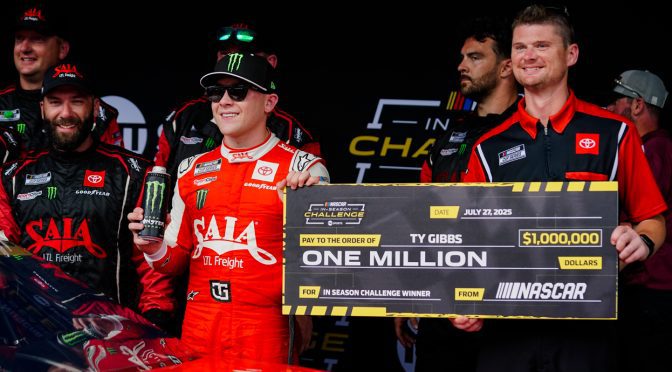
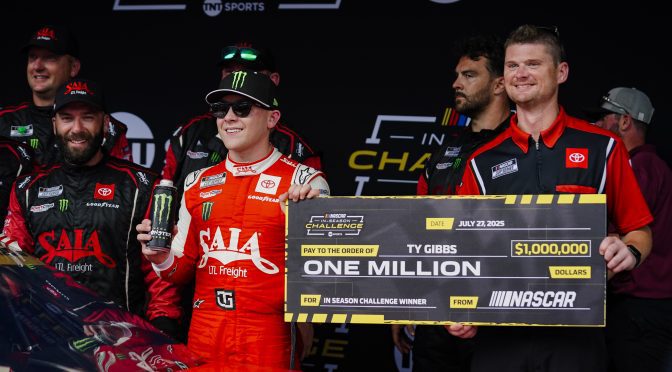
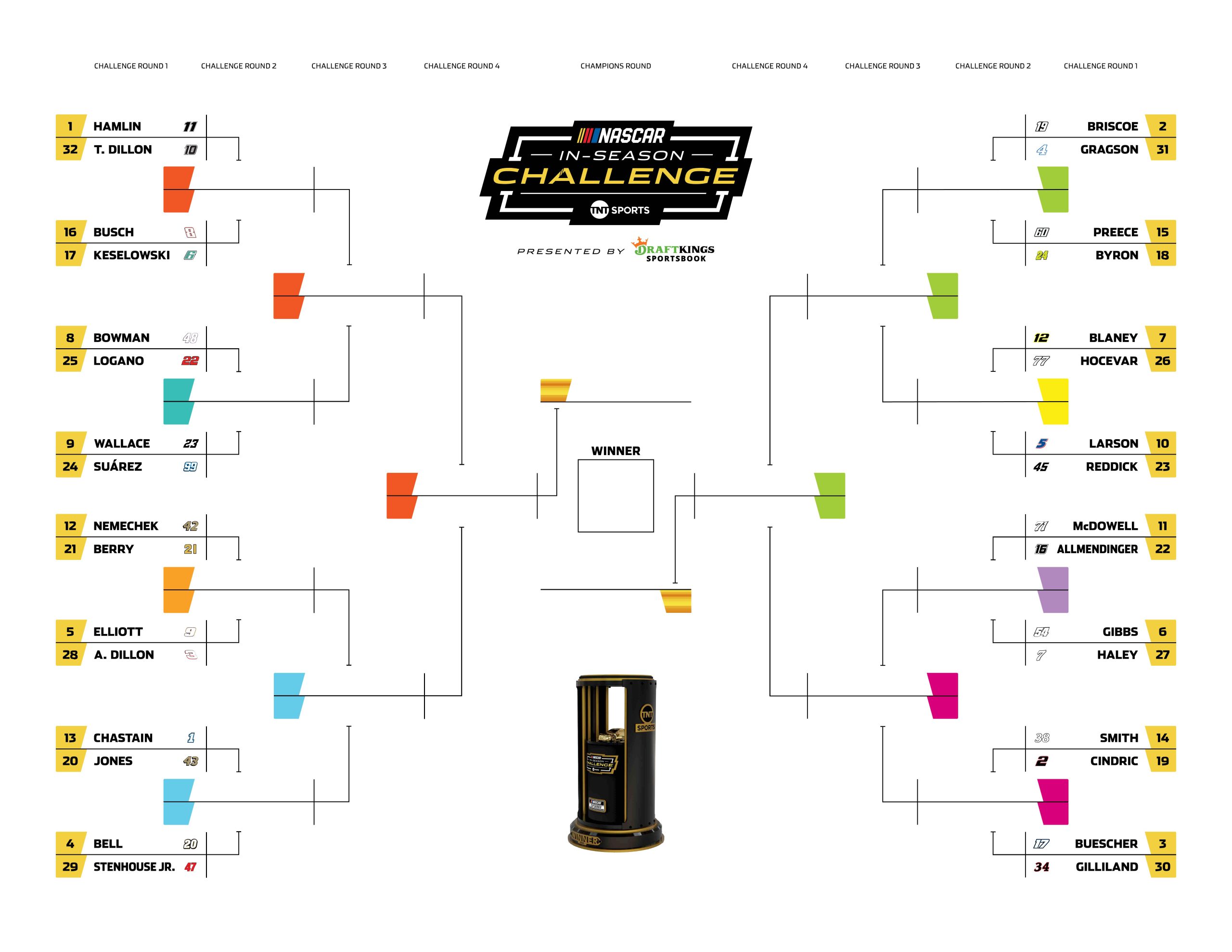
NASCAR’s inaugural In-Season Challenge is now in the books, and Ty Gibbs is officially your first-ever champion. The No. 6 seed in the bracket, Gibbs survived what was hardly an easy path to the final, capped off by outlasting Cinderella No. 32 Ty Dillon in the finale on Sunday at Indianapolis Motor Speedway. The head-to-head win earned the 22-year-old Gibbs a $1 million bonus, and it provided the conclusion to what was an interesting new experiment in NASCAR’s season structure.

So now that the Challenge is in the rearview mirror, it’s worth asking what worked … and what didn’t? So, let’s dive into six big takeaways from the In-Season Challenge — three things it got right, and three areas where there’s room to improve:

It spiced up the midseason calendar.

One of the challenges in today’s sports media landscape is maintaining momentum with fan interest through a full schedule of both regular-season and playoff events — and few leagues have a longer schedule than NASCAR. Here’s a plot of the calendar months in which the sport is active, compared with eight other major American pro leagues:
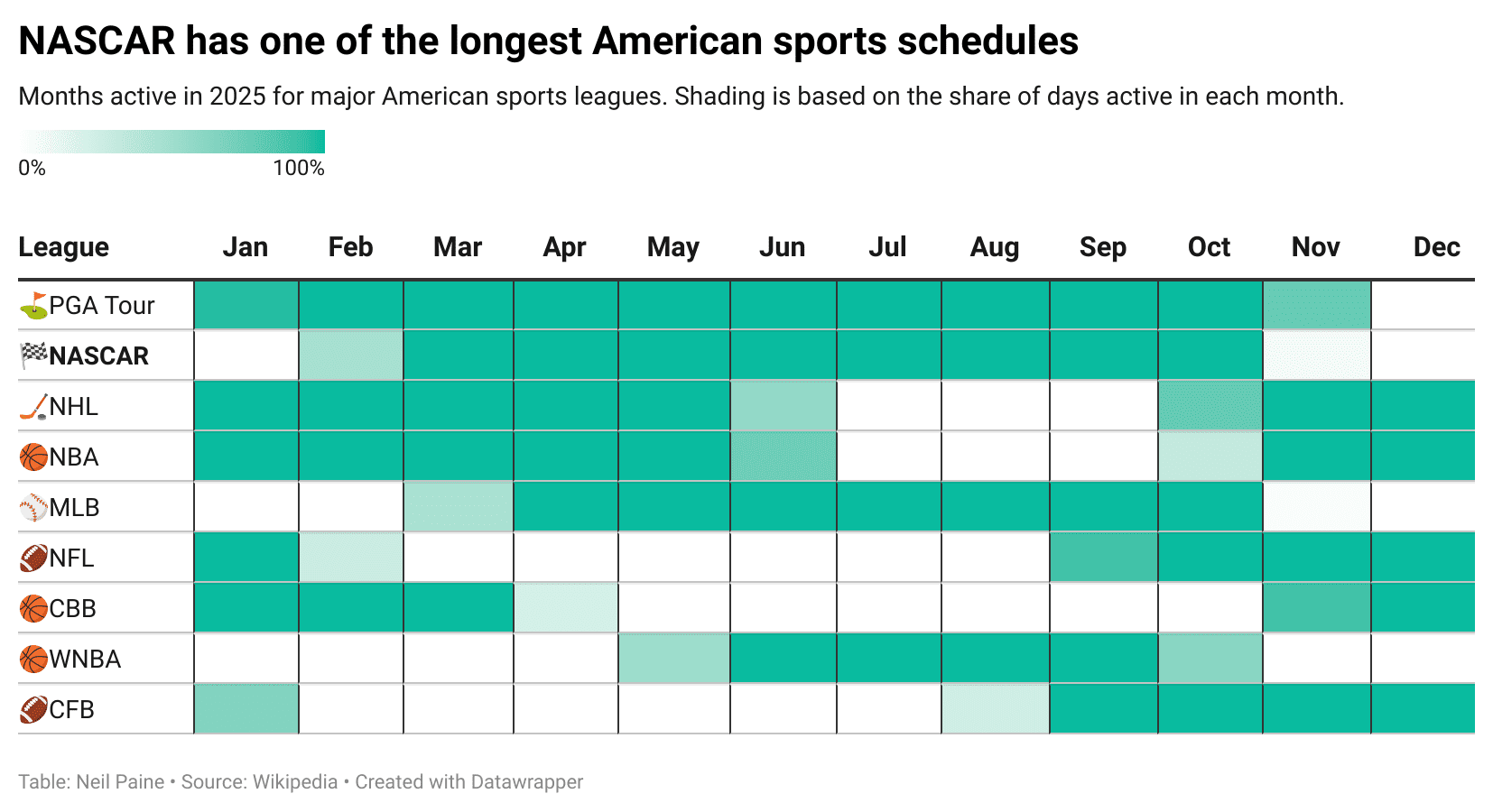
Chart showing length of the season for the major sports.

While golf (at 10.7 active months!) has NASCAR beat for the longest season, the Cup Series does check in at No. 2 with 8.5 active months, beating out the NHL’s mark of 8.3. And the midpoint of the NASCAR schedule comes smack-dab in the heat of the summer, when the rest of the sports calendar slows down a bit and fans’ minds might be shifting gears to vacations and off-field headlines in other leagues.

So the In-Season Challenge represented an opportunity to shake up the dog days a bit and inject some competitive urgency into a time of year when the schedule can otherwise feel like a grind. Not coincidentally, this is the same reason the NBA stages its own in-season tournament during the early part of its schedule, when fan interest tends to lag otherwise.

Sure, the big picture of the standings, the playoffs and the championship race remained on everyone’s minds, and natural subplots like Shane van Gisbergen’s road-course dominance took over at times. But the In-Season Challenge also ensured that we’d have higher-than-normal stakes for the midseason races this year — and that was a welcome change of pace.

The knockout format begs for brackets to be filled out.

The NCAA men’s and women’s basketball tournaments are among the most popular events on the sporting calendar, and one huge contributing factor is a widespread culture of office pools and various other bracket-picking contests. ESPN reported a record 24.4 million entries for its annual Men’s Tournament Challenge in 2025, and an AP poll from March showed that 26% of U.S. adults fill out a men’s March Madness bracket “every year” or “some years,” with 16% saying they did the same for the women’s tourney as well.

Obviously, a brand-new NASCAR in-season tournament is not going to have the same cultural sway as an American institution like March Madness. But tapping into that same bracket-building impulse is a good idea all the same. And while the desire to wager is a big part of office pools’ appeal, that same AP poll reported that just as many or more people simply wanted either bragging rights, or to join in on what their friends, family and colleagues were doing:
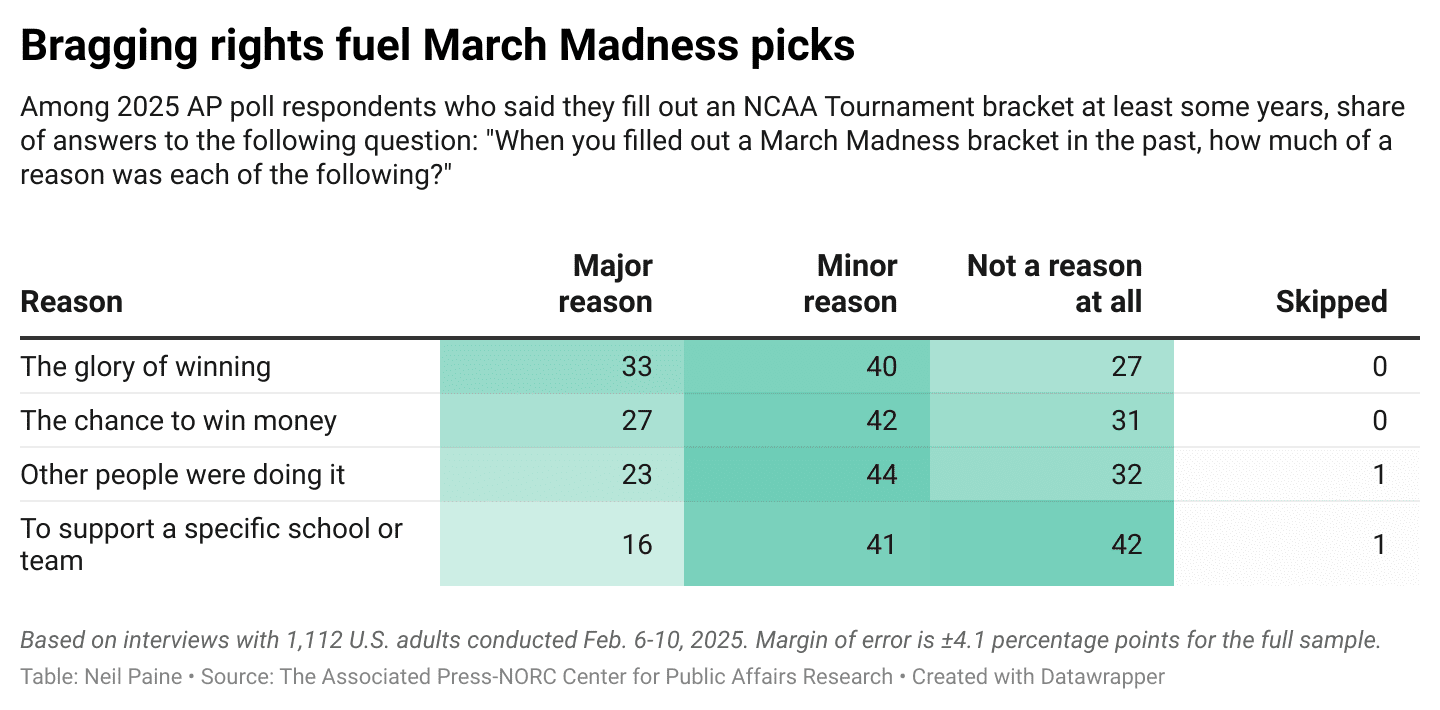
Chart showing reasons for filling out a bracket.

It turns out that Americans really just love filling out a great, big bracket to prove their sports knowledge — and the In-Season Challenge certainly provided one of those.

The setup could probably be tweaked a bit.

One of the more confusing aspects of filling out said bracket was the pre-tournament seeding, which turned a number of star drivers into underdogs and made identifying Cinderella picks a bit of a challenge. The seeds were derived from the highest finishes in the three races leading up to the opening round — one at an oval, one at a road course, one at a triangle — in the spirit of something like the World Cup group stage. On paper, it’s an intriguing idea, but in practice, it resulted in odd seedings (Zane Smith was ranked four spots ahead of William Byron, for instance) and clusters of elite drivers within the bracket, many of whom cannibalized each other early in the tournament.

The fix might be fairly straightforward: Just use the point standings as of the start of the In-Season Challenge. Or, if the goal is to give those Amazon Prime lead-in races added weight, assign them double points for seeding purposes. A hybrid system could also work — guaranteeing top seeds to the top points-earners while letting the remaining bracket positions be determined by the seeding races. That part is just a math problem: finding the sweet spot between rewarding top drivers (plus scattering them more evenly throughout the bracket) and giving the pre-challenge races enhanced importance.

The bigger challenge is structural. In an ideal world, the Challenge would test drivers across a variety of track types to crown a well-rounded champion, but the block of mid-summer races that made up the In-Season Challenge was dictated by the realities of NASCAR’s existing schedule. Perhaps predictably, having the opening round of the Challenge at a drafting-style track (Atlanta) resulted in a wave of multicar wrecks that knocked out seeds No. 1 Denny Hamlin, No. 2 Chase Briscoe, No. 4 Christopher Bell, No. 7 Ryan Blaney and No. 13 Ross Chastain, plus the underseeded William Byron, Austin Cindric and Joey Logano (among others), right away. Then the next two races were at street or road courses, which tilted things toward a completely different skill set — most notably benefiting SVG, who wasn’t even in the Challenge field.

It wasn’t until Race 4 at Dover — itself a highly unique concrete track — that we saw anything close to a regular oval on the docket. And with the finale taking place at Indy, we didn’t get a single track of the standard, mile-and-a-half fare — nor a short track, for that matter. That may be unavoidable; travel constraints, network windows and sponsor priorities all heavily influence the calendar, and the schedule-makers already face the impossible task of satisfying dozens of competing interests each year. But it’s still fair to say the inaugural In-Season Challenge was, in many ways, defined by the races atop which it was layered.

Everyone loves Cinderella. But did we have too much of a good thing?

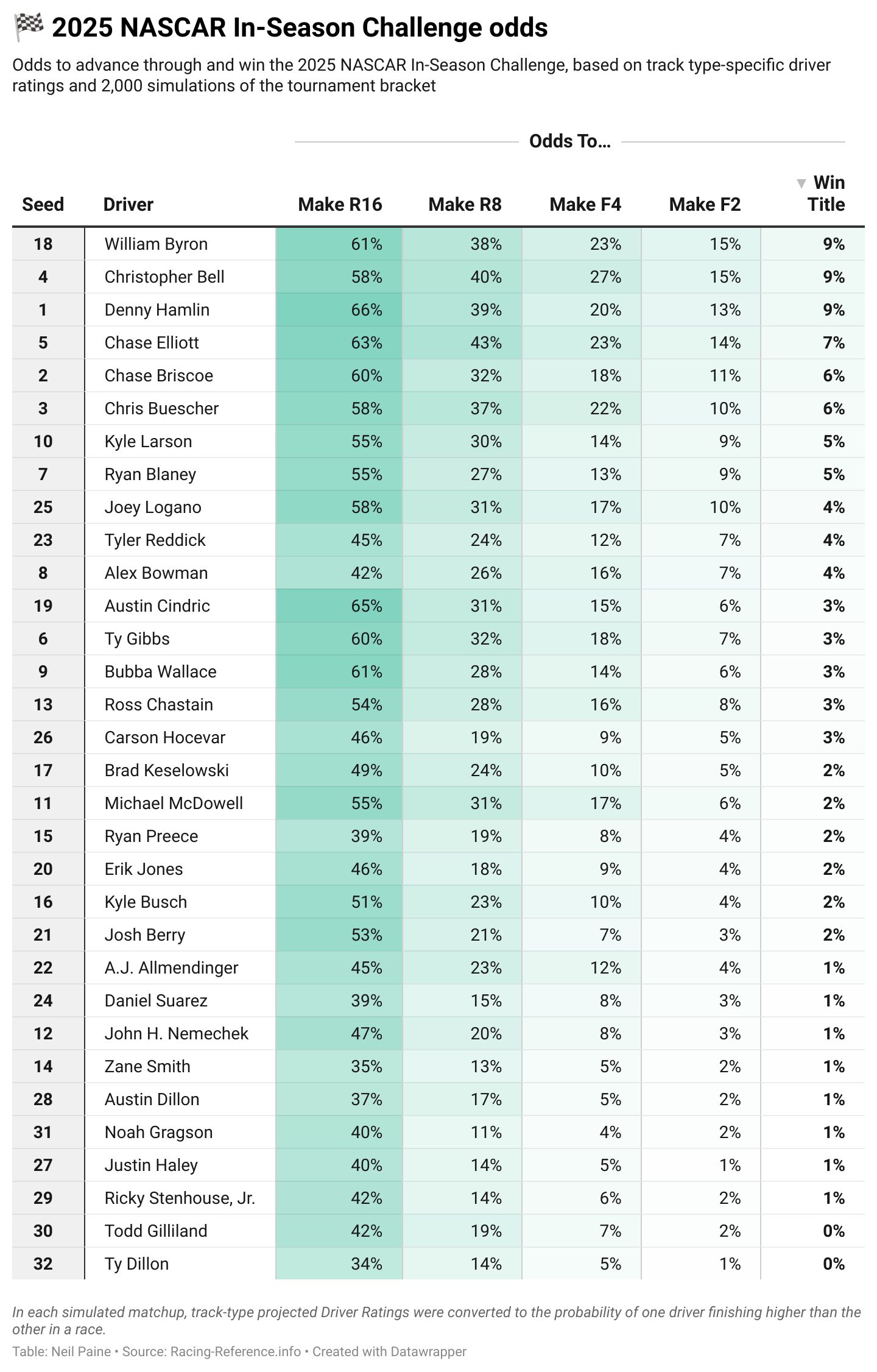
Ahead of the Challenge, there was a roughly 1-in-1,000 chance of a Ty Gibbs versus Ty Dillon finale at Indianapolis, owing to both Gibbs’ mid-pack odds and even more to Dillon needing to pull a Cinderella run of upsets just to reach the championship round. It ended up happening in the face of those long odds, in part because Dillon’s first two foes (Denny Hamlin and Brad Keselowski) both crashed out of their races early. By maintaining a steady average finish of 16.3 in the lead-up to the final, Dillon was the definition of a survive-and-advance driver.

However, anytime the lowest-seeded competitor makes the final in an event’s very first year, it begs the question of whether this was an anomaly or something built into the DNA of the system. Consider the fact that Dillon, while an underdog, had a 34% chance of knocking off Hamlin in Round 1’s 1-versus-32 matchup at Atlanta before the Challenge began. By comparison, the highest-rated No. 16 seed in the NCAA men’s tournament, Norfolk State, had just a 1.6% chance to beat the No. 1 seed (and eventual champion) Florida Gators in Round 1.

In other words, for any given head-to-head matchup — especially at a drafting track — even the lowest-seeded Cup Series regular can beat the highest a healthy amount of the time. And while other sports, such as the NFL playoffs or, nowadays, the first round of the expanded College Football Playoff, offer home games to better seeds to reward the favorite, there was no mechanism to favor better drivers in the In-Season Challenge, aside from their own talent and equipment.

Because of this, it’s worth asking whether the favorites need an extra boost in their matchups, if not simply to replicate a “home-field advantage” of sorts for being the higher seed. To that end, a handicapping system could be introduced whereby the lower-seeded driver needs to beat the higher seed by some number of places (perhaps related to the difference in seeds) in order to advance. Or as my podcast co-host Tyler Lauletta smartly suggested, a system of byes for top seeds could ensure star drivers’ passage into the later rounds while also reducing the number of head-to-heads the broadcast needs to track early on.

Either way, some tinkering might be in order to prevent there from being a bit too much parity in the bracket, to the point that randomness outweighs merit.

How do you cover two races at once?

Along the same lines as Tyler’s suggestion about managing fewer matchups at once, it was interesting to watch how the broadcasters juggled the head-to-head bracket battles while also making sure nothing about the bigger picture of the overall race was missed.

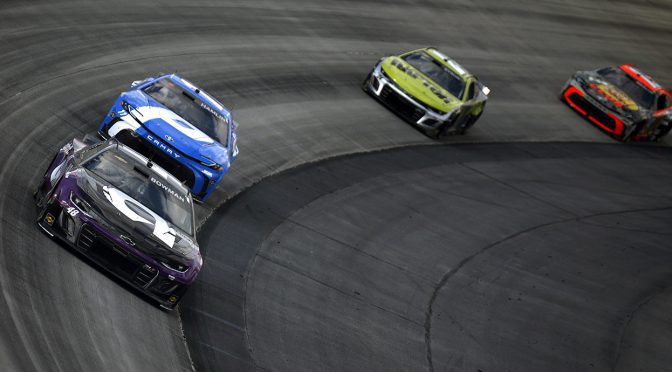
Throughout the Challenge, the standard TNT presentation mostly focused on the regular business of each race as usual, with some mentions of the bracket matchups and an occasional graphic — plus some picture-in-picture and cutaways to battles within the pack, particularly in cases where things got juicy (such as Alex Bowman vs. Bubba Wallace at Chicago).

When they did try to highlight the matchups, especially in early rounds, it was a lot to keep track of at once — particularly against the backdrop of what was happening in the main race. Between pit cycles, tire strategies, in-race adjustments and a thousand other considerations, each NASCAR race already has so much going on anyway that the extra layer of the Challenge verged on information overload. By contrast, truTV ran an alternate broadcast with Larry McReynolds and Jeff Burton, which had the opposite effect: By focusing so much on the bracket, it was difficult to process what happened in the actual race.

There are trade-offs to each approach, and the two simulcasts exist for a reason. But it would be nice to experiment with more ways — perhaps through on-screen graphics or other technological innovations — to help track both the regular race and the key In-Season Challenge matchups at the same time, without missing out on one or the other.

It’s good to try new things!

Overall, though, the In-Season Challenge has to be commended for experimenting with a new type of competition — particularly one that might appeal to a different audience than a standard race.

Aside from the Championship 4 in the season finale and certain other cases where the points shake out a particular way, purely head-to-head battles are rare in NASCAR. But this format leaned into them completely, with enough money on the line that drivers and teams had to pay attention to the Challenge matchups in addition to the bigger picture. Everyone intuitively knows and loves a bracket, too, so the stakes were clear and it wasn’t hard to explain how the tournament worked — always a plus when trying to introduce a new concept to the world.

Not everything is going to be perfect right away, of course, and the execution can be refined in future iterations. Some factors are going to face harder constraints than others — with the hardest ones mainly revolving around the schedule, and how it interacts with the plans of tracks and broadcast partners. In that regard, the perfect can’t be allowed to become the enemy of the good, and some trade-offs will have to happen. But other fixes are lower-hanging fruit, and they provide another opportunity to listen to fans and give them more of the product they want.

Even if the inaugural In-Season Challenge contained a few rough edges, it was a creative addition to the mid-summer calendar — and trying bold new things is great! This was exactly the kind of forward-thinking idea that many leagues have been attempting, as the way we consume sports continues to evolve. With the right tweaks, this tournament could become a summer tradition that fans look forward to every year. Now that the foundation is in place, the next step is to just build on it.
SPEEDWAY, Ind. — A spot of rain fueled by a sweltering afternoon at Indianapolis Motor Speedway gave Kyle Larson a second wind to potentially capture back-to-back Brickyard 400 victories.

Before the precipitation caution on Lap 156, Larson trailed by a big chunk in second while Bubba Wallace set sail after storming to the lead following the final pit-stop cycle.

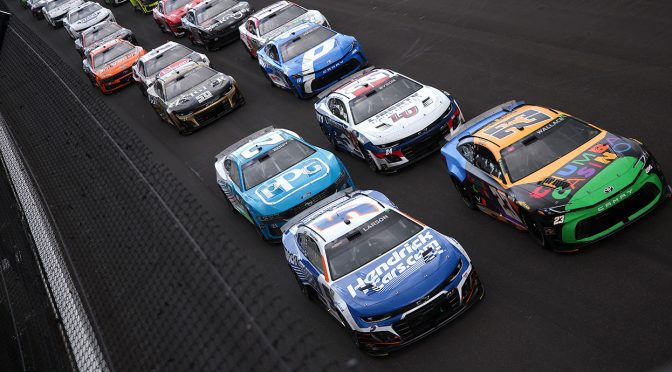
As the field bunched up for the first overtime restart, the No. 5 Hendrick Motorsports Chevrolet driver lined up to the outside of Wallace and stayed even with the No. 23 Toyota through Turn 1. However, Wallace got the best of Larson off Turn 2 before a multicar wreck down the backstretch reset the field for a second overtime.

It was the same song, but second verse for Larson as Wallace set sail for the lead into Turn 1 to snap a 100-race winless drought while Larson crossed the line 0.222 seconds behind the No. 23 as the runner-up.

RELATED: Race results | At-track photos: Indy

“The first one, he was first gear on both of them. He was just a little bit faster-paced for the restart zone,” Larson said after the race. “So I stayed second gear and he got a launch. I was able to just kind of barely hang on his right-rear quarter and then drag him back and kind of pull my momentum to halfway past him. I was just hoping that he could maybe have a moment underneath me and get loose. Then the second one, he brought the pace down so slow I had to be in first gear as well, and just kind of launched with him so I had no momentum. It was gonna be hard to beat him. I think that’s about as good of a job as you could do from the front row outside.”

The summer has had more valleys than peaks for Larson. Entering Sunday’s Brickyard 400, Larson finished outside the top 10 in four of the last six races. The No. 5 team finally put together its first top-five run since Michigan last weekend at Dover Motor Speedway.

At the drop of the green flag, the prospects of following up last Sunday with another top five didn’t look great as Larson slipped to midpack during the first leg of the race.

However, Larson was able to gain an advantage on pit strategy by staying out for a dash to the Stage 2 checkered that put him in a spot to remain within striking distance of the lead and keep that track position to the checkered flag.

“It was a solid day,” Larson said. “The beginning of the race didn’t go well. I didn’t have a good start, and it’s like, damn, that’s maybe gonna kill our race strategy. But our team just did a good job with the strategy that we were on and we executed the green-flag cycles really good, and he [Wallace] was able to kind of maximize what we had going on. I wasn’t really expecting the guys on two tires to come out in front of me like that, but it is what it is. Maybe if I could have got by Reddick, I would’ve had a better opportunity.”

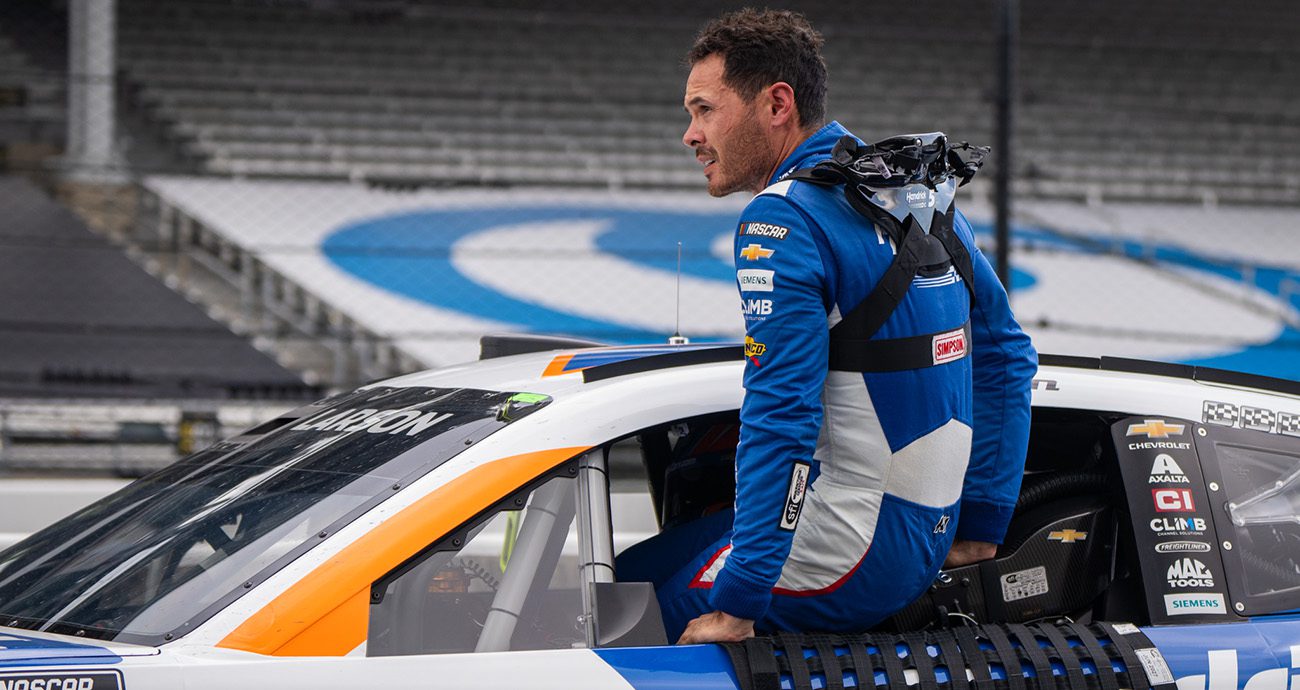
larson climbs from his car
Torey Fox | NASCAR Digital Media

With just four races remaining until the playoffs, the regular-season title battle tightened even more as both Chase Elliott (13th) and William Byron (16th) finished outside the top 10. Byron ran inside the top five on the final restart before running out of fuel before getting to the checkered flag.

The three Hendrick drivers are separated by just 15 points for the coveted 15 playoff points that come with winning the Regular Season Championship as the Cup Series heads to Iowa Speedway next Sunday (3:30 p.m. ET, USA Network, MRN Radio, SiriusXM NASCAR Radio).

“William does a great job every week and gaining a lot of stage points and finishing well,” Larson said. “Then, Chase is so solid. I mean, you’ve got to bank on him finishing in the top 12 every race. With that, you’ve just got to be on your game and be smart and try to execute every lap. That’s my goal. We were quick at Iowa last year, but I’m sure all the teams have gotten their stuff better going back.”

SPEEDWAY, Ind. — Mother Nature wasn’t going to deprive Bubba Wallace of the most important win of his career, not on this Sunday afternoon.

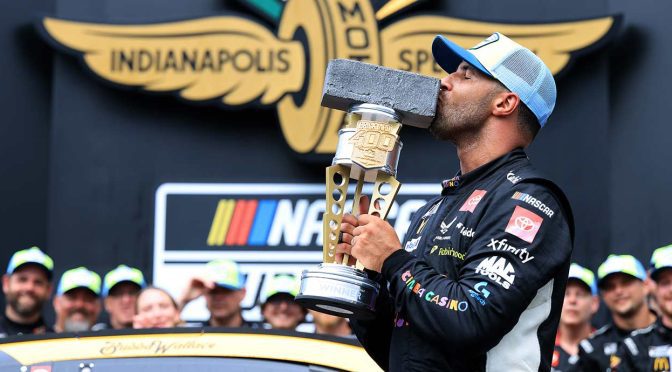
Unsure of the amount of fuel left in his No. 23 Toyota, Wallace survived a rain shower and two overtime restarts at Indianapolis Motor Speedway to win the Brickyard 400 presented by PPG, punching his ticket to the NASCAR Cup Series Playoffs.

Wallace was comfortably ahead of runner-up Kyle Larson with four laps left in regulation, but the sudden shower forced NASCAR to call the fifth caution of the afternoon.

RELATED: Brickyard 400 results | Best photos from Indy

The rain was gone almost as quickly as it appeared, and after a short stoppage to dry the track, Wallace pulled ahead of Larson on the first overtime restart. A five-car accident on the backstretch, however, sent the race to a second extra period.

Wallace stayed on track for the next restart — hoping his fuel would last — and again pulled away from Larson and this time took the white flag without incident. After one more circuit, he crossed the finish line 0.222 seconds ahead of Larson to claim the trophy in the crown-jewel event.

The third victory of Wallace’s career ended a 100-race dry spell dating to Sept. 11, 2022 at Kansas Speedway. He led 30 laps, including the last 26, as the race went eight circuits beyond the scheduled 160.

“Oh, my gosh, I’m just so proud of this team,” Wallace said. “That adrenaline rush is crazy, ‘cause I’m coming off that right now — and I’m worn out.”

SHOP: Winner’s gear

After pausing to hug his wife, Amanda, and hold his 10-month-old son Becks aloft in front of the cheering crowd in the grandstands, Wallace continued.

“It’s unbelievable,” he said. “To win here at the Brickyard, knowing how big this race is, knowing all the noise that’s going on in the background, to set that all aside is a testament to these people here on this 23 team. It’s been getting old right around the cut line (for the playoffs).”

Wallace, who started on the front row beside pole winner Chase Briscoe, ran consistently in the top five but didn’t take control of the race until after he pitted on Lap 119 during a cycle of green-flag stops early in the final stage.

He took the lead permanently when Ryan Blaney pitted on Lap 142 and enjoyed an advantage of more than five seconds after the stops cycled out. Though Larson made inroads into Wallace’s advantage, he wasn’t in position to challenge for the victory until the rain came.

After the shower, Wallace prevailed on the restarts against one of the top drivers in motorsports.

“There’s nothing you can do here to pass, so, no, I don’t really think there was anything I could do differently,” said Larson, last year’s Brickyard 400 winner. “I was second gear on the first restart, and honestly, that one worked out a little bit better, but he almost got clear of me down the frontstretch.

“And then on the second restart, he brought the pace down a little bit slower, so I needed to be first gear. It was kind of the same thing with me last year — he had the preferred lane on the inside, and it’s really hard to beat that.”

Denny Hamlin, who co-owns Wallace’s 23XI Racing car with former NBA superstar Michael Jordan, finished third after crashing in Turn 2 during qualifying and starting the race from the rear in a backup car.

In the finals of the NASCAR Cup Series’ In-Season Challenge, Ty Gibbs claimed the $1 million prize by finishing 21st to Ty Dillon’s 28th. The battle wasn’t as close as the respective finishing positions might suggest.

MORE: Gibbs wins In-Season Challenge

Dillon went a lap down to then-leader Austin Cindric on Lap 78, sustained damage to the nose of his No. 10 Chevrolet during a restart and finished three laps in arrears.

“One million is a lot of money, so I’m going to donate $10,000 to whichever charity Ty Dillon wants to give to,” Gibbs said. “It’s his choice. But we had a fast SAIA LTL Freight Toyota Camry. Didn’t end up where we wanted to in the end. We just lost track position and (were out of the running) to win the race.”

Ryan Preece finished fourth on Sunday but remains 42 points below the current elimination line for the playoffs with four races left in the regular season. Brad Keselowski was fifth, posting his third top-five result of the season.

Todd Gilliland, Blaney, Christopher Bell, Alex Bowman and Carson Hocevar completed the top 10.

Cindric led a race-high 40 laps to 34 for Briscoe.

William Byron saw his bid to retake the series lead from Hendrick Motorsports teammate Chase Elliott fall apart on the final lap. Byron took the green flag for the final overtime restart in third but ran out of fuel and fell to 16th at the finish.

Byron trails Elliott by four points in the chase for the regular-season championship. Larson is 15 points back in third.

The Cup Series’ next race is scheduled Sunday, Aug. 3 at Iowa Speedway (3:30 p.m. ET, USA, HBO Max, MRN Radio, SiriusXM NASCAR Radio).

Note: Inspection was completed in the Cup Series garage without issue, confirming Wallace as the race winner. Competition officials indicated that two cars would return to the NASCAR Research & Development Center in Concord, North Carolina, for further inspection: The No. 17 RFK Racing Ford driven by Chris Buescher to a 14th-place finish and the No. 19 Joe Gibbs Racing Toyota piloted by 18th-place Chase Briscoe.

SPEEDWAY, Ind. — Ty Gibbs is leaving Indianapolis Motor Speedway $1 million richer.

The driver of the No. 54 Joe Gibbs Racing Toyota bested Ty Dillon in Sunday’s Brickyard 400 to take home the prize money in NASCAR’s inaugural In-Season Challenge. The sixth-seeded Gibbs had to finish ahead of the 32nd-seeded Dillon and did so with a 21st-place result. Dillon finished 28th, three laps down.

Gibbs was presented with a sleek black-and-gold trophy, ring and heavyweight AEW wrestling belt for his triumph, celebrating on the bricks just beneath the iconic Indianapolis Motor Speedway pagoda and tossing faux dollar bills around to celebrate with the fans.

MORE: Brickyard 400 results | Check your bracket

“Super cool. Very honored to be in this position,” Gibbs said. “Thank you to all of NASCAR and TNT Sports for allowing us to be able to do this. It’s awesome to win this and super cool to be in this position.”

In addition to the collection of items thrown his way, Gibbs takes home the $1 million prize. Well, most of it.

“A million bucks is a lot of money,” Gibbs told TNT Sports. “I’m going to give $10,000 to wherever Ty Dillon wants to choose to give to charity.”

Dillon had been the Cinderella story of the inaugural In-Season Challenge. He was the bottom-most seed entering the 32-driver, five-race tournament. He upset top-seeded Denny Hamlin in the opener at EchoPark Speedway (formerly Atlanta), where Hamlin and others wrecked in the “Big One.” One week later, he got the better of No. 17 seed Brad Keselowski at the Chicago Street Course when Keselowski was collected in another early crash.

With his hopes dwindling seven days later at Sonoma Raceway, Dillon took the bumper to Alex Bowman to muscle his way into the semifinal round, where he bested John Hunter Nemechek at Dover Motor Speedway by earning the free pass on a caution period in the closing moments.

But at Indianapolis, Dillon’s day took a significant downturn on a Lap 56 restart. Josh Berry appeared to miss a shift in the inside lane while running toward the front of the field. That stacked up a slew of cars, resulting in nose-to-tail damage for a number of competitors. Dillon was one of the many collected, incurring heavy nose damage that hindered his No. 10 Kaulig Racing Chevrolet.

“Disappointing, obviously, but things like that happen,” Dillon said.” You can’t predict everything. I think that’s what’s been so cool about this In-Season Challenge for everybody. I just hate that we didn’t get to give him a run for it there. I don’t think they would say as a team they had their best day either. And I think if all things are equal (and) we don’t knock the nose off on that restart, [we’re] probably sitting in a good position, put a lot of pressure on him and race him out pretty solid.”

Ultimately, the air ducts were “pinched off,” Dillon said, severely limiting the motor’s power at the end of Indy’s long straightaways.

Though the glass slipper didn’t fit when the clock struck midnight, Dillon remained appreciative for what the last five weeks brought him, including a stretch of four consecutive top-20 finishes.

“It’s painful right now that we didn’t win the whole thing,” Dillon said. “But it definitely doesn’t overshadow how much this whole run has meant for us and our team, our sponsors. We’re grateful, man. It’s a good boost of energy.

“Hopefully we’ll finish out the year strong because of it. I believe in our team and what the future holds. So today was tough, but you know, this run has been really great and I appreciate it.”

Five cars will drop to the rear of the field to start Sunday’s Brickyard 400 at Indianapolis Motor Speedway (2 p.m. ET, TNT Sports/truTV, HBO Max, IMS Radio, SiriusXM NASCAR Radio).

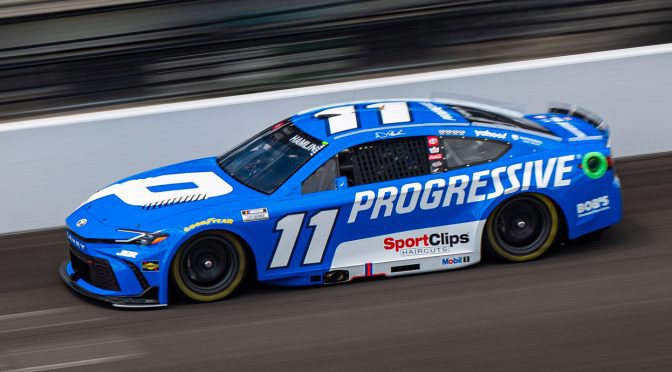
Denny Hamlin, who was fastest in Saturday’s practice session, crashed in the subsequent qualifying session and will start the 160-lap race from the rear in a backup No. 11 Joe Gibbs Racing Toyota.

MORE: Full Brickyard 400 starting lineup | Best Indy photos

John Hunter Nemechek, who was quickest in lap averages across consecutive runs of five, 10 and 15 laps, brushed the wall twice on his qualifying effort with his No. 42 Legacy Motor Club Toyota. The team repaired the car, but will be forced to start from the rear of the 39-car field due to unapproved adjustments.

Joining him at the tail of the pack for unapproved adjustments will be Michael McDowell in the No. 71 Spire Motorsports Chevrolet, Zane Smith in the No. 38 Front Row Racing Ford and Jesse Love in the No. 62 Beard Motorsports Chevrolet.

Sunday’s race will be the 32nd time the NASCAR Cup Series has raced at the historic Indianapolis Motor Speedway and the 29th time on the 2.5-mile oval.

Chase Briscoe will lead the field to the green flag in the No. 19 Joe Gibbs Racing Toyota alongside Bubba Wallace in the No. 23 23XI Racing Toyota.

If Dover taught us anything last weekend, it’s that Hendrick Motorsports and Joe Gibbs Racing are the cream of the crop again in 2025 — and it may not be close.

The two organizations racked up the top six spots at the “Monster Mile” and led all but 20 of the 407 laps.

Outside of Shane van Gisbergen on road courses, no one outside of Hendrick or JGR has trekked to Victory Lane since Team Penske’s Ryan Blaney at Nashville Superspeedway on the first day of June.

With pit strategy and gambles likely to play a massive role at Indianapolis on Sunday (2 p.m. ET, TNT Sports/truTV, HBO Max, IMS Radio, SiriusXM NASCAR Radio), there’s plenty of opportunity for a different team to break the oval streak of the two powerhouses. But who can do it? Let’s take a look at projections for Sunday with stats provided by Racing Insights.

RELATED: Indy schedule | How to watch NASCAR on TNT Sports, Max

Hamlin tops the predicted results sheet for Indianapolis, even after practice and qualifying — when he wrecked his No. 11 Joe Gibbs Racing Toyota. The Brickyard 400 is the lone crown-jewel Cup Series event the No. 11 Toyota driver has yet to conquer. If he’s to break through on Sunday, he’d become just the fifth driver to do so — joining Jeff Gordon, Dale Earnhardt, Jimmie Johnson and Kevin Harvick. Fortunes weren’t so good for Hamlin last year as he was caught in a multicar incident on an overtime restart and was scored with a 32nd-place finish.

The top five stays within trends for this year as JGR-affiliated Tyler Reddick, defending Brickyard 400 winner Kyle Larson and his Hendrick Motorsports teammates William Byron and Chase Elliott round out the top five in the race-day updated projections.

Reddick led the most laps (40) in last year’s Cup return to the 2.5-mile oval and was runner-up to Larson. The No. 5 Hendrick Chevrolet driver and 2021 series titleholder capitalized on Brad Keselowski opting to pit from the lead before the first overtime restart that ultimately led to Larson grabbing the point and holding off Reddick and Blaney in the remaining laps.

FANTASY: Set your lineup | Make a 36 for 36 pick

OTHER DRIVERS TO WATCH

CHASE BRISCOE: Can’t go to Indianapolis Motor Speedway without mentioning the Hoosier himself. Twenty years removed from Tony Stewart’s rousing victory at his home track, Briscoe will try to accomplish the same, and he’s been on a hot streak lately with runner-up results in the last two weekends. He also won the pole on Saturday — his third crown-jewel pole of the season and fifth overall.

BUBBA WALLACE: The No. 23 23XI Racing driver holds the final spot in the playoffs by 16 points over Ryan Preece after a crucial top-10 finish at Dover. Even better for Wallace is that his short history on the Indianapolis oval has been fruitful with three top 10s in four starts — including a top five last year where he led 26 laps.

BRAD KESELOWSKI: If the race finished at its 160-lap distance last year, Keselowski would’ve kissed the bricks for a second time with a thrilling fuel-mileage run to the checkered flag. Alas, a caution came out, stifling hopes of the No. 6 taking the win, but it should make the 2012 champ a viable threat to win Sunday and steal a postseason bid in the final run to the 10-race playoffs.

TODD GILLILAND: Gilliland has quite the short history at Indianapolis with a career-best effort in his Cup tenure coming on the road-course layout in 2022 (fourth). He then put together a sixth-place performance last year in his first Cup start on the 2.5-mile oval. The No. 34 Front Row Motorsports driver needs any momentum he can muster, and another big result at Indy could do just that.

RACING INSIGHTS’ PROJECTIONS FOR THE BRICKYARD 400

Racing Insights’ advanced statistical formula incorporates current track, track type, recent performance, team data and pit-crew data to predict a projected winner and provide full race results. Updated on race day with practice and qualifying factored in.

FINISHCAR NUMBERDRIVER
111Denny Hamlin
245Tyler Reddick
35Kyle Larson
424William Byron
59Chase Elliott
620Christopher Bell
717Chris Buescher
854Ty Gibbs
96Brad Keselowski
1023Bubba Wallace
1122Joey Logano
1212Ryan Blaney
138Kyle Busch
1419Chase Briscoe
1543Erik Jones
162Austin Cindric
1777Carson Hocevar
1899Daniel Suárez
1948Alex Bowman
2071Michael McDowell
214Noah Gragson
221Ross Chastain
2316AJ Allmendinger
2441Cole Custer
2534Todd Gilliland
2638Zane Smith
2760Ryan Preece
2842John Hunter Nemechek
293Austin Dillon
307Justin Haley
3110Ty Dillon
3288Shane van Gisbergen
3321Josh Berry
3447Ricky Stenhouse Jr.
3551Cody Ware
3635Riley Herbst
3766Josh Bilicki
3878Katherine Legge
3962Jesse Love

SPEEDWAY, Ind. — Leaving Indianapolis Motor Speedway and during subsequent team gatherings at the JR Motorsports shop during the week, celebrations will be had from all across the organization as Connor Zilisch earned the milestone 100th win at the Brickyard Saturday evening.

However, the few hours after the Pennzoil 250 and flight back to North Carolina will come with some bitter feelings as cornerstone driver Justin Allgaier crashed from the lead with 14 to go after contact with Kyle Larson.

Through light rain and some ominous weather hovering over the 2.5-mile facility, the Xfinity Series field bunched up for multiple restarts as the laps ticked off.

Allgaier cleared to the point on a prior restart in front of Larson, who was piloting the No. 17 hot rod for Hendrick Motorsports. But on the following restart, Larson and Allgaier were even off Turn 1 and into Turn 2 before Larson scooted up the track and clipped the No. 7 Chevrolet, sending Allgaier into the outside wall. With heavy rear-end damage, it marked the end of another heartbreaking loss for the longtime Xfinity veteran who’s responsible for a quarter of JRM’s all-time wins.

RELATED: Official results | Best photos from Indy

“It doesn’t take much here, especially restarts, the way that everybody’s kind of packed up here,” Allgaier said after exiting the infield care center. “Unfortunately, we got the worst end of the deal. Probably more disappointed because we came here last year, we went down a path and we weren’t as good as we wanted to be. [Crew chief] Jim Pohlman and this whole 7 team, we have worked tirelessly on trying to make sure when we came here to Indy that we had a car that was capable of not only running up front, but trying to win this race.”

That mission was accomplished as Allgaier led a race-high 37 laps and snagged the Stage 2 checkered flag from teammate Zilisch in a side-by-side tilt to the start/finish line.

Meanwhile, Larson kept the No. 17 off the Turn 2 wall and recovered to a fourth-place finish. He explained that he tried to stay off Allgaier as they raced side-by-side into Turn 2, but there wasn’t much he could do.

“I was almost clear and he was just able to kind of get to my right rear and just pull me back,” Larson said regarding the restart. “He kind of drove by me pretty quick where he just took enough air off my right side, where I was just kind of along for the ride there — was trying to miss him, but unfortunately, got into him. Hate to have that happen. That was kind of the end of my race there and obviously to his, so I don’t really know what I could have done differently yet. I’m sure once I look at the replay, I’ll see some things. But he was just there on my door, but I’m the one to control my car, trying to be anyways, but it’s still in my hands.”

It’s not just missing out on getting the 100th win for JR Motorsports in his 10th season with the organization, but it’s a crushing end for Allgaier at one of the most iconic tracks in the world.

At 39 years old, Allgaier knows it will only get harder to stay on top of his game and win at the Brickyard again, but regardless, he’s happy to see his team reach the milestone although the disappointment will linger until getting back into the car next weekend at Iowa (Sat., 4:30 p.m. ET, The CW, MRN Radio, SiriusXM NASCAR Radio).

“I know how important Indianapolis is to the ecosystem of the sport,” Allgaier said. “Even for me, the want to win here again is high. You never know how many opportunities you’re even going to have to race here, let alone win here. I think that’s the hardest part. We were able to get up there and to lead the race and to manage well. We lost the lead a couple of times, and we were able to get it back. Those are really key moments for me that I feel really good about.

“I told [team owner Dale Earnhardt Jr.], if we get [100 wins], I’ll be in Victory Lane celebrating with you. I think that’s the most frustrating part. As a racer, you want to be the one to win those key milestone races. But as somebody that’s been a part of this company for a long time, and as somebody that has watched the men and women in our company work tirelessly to have great Chevrolets week in and week out, 100 wins is no small feat. We’ll go celebrate and have a lot of fun, but it’s going to sting.”

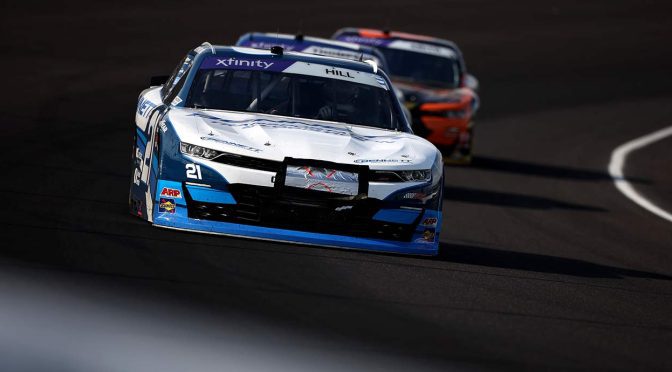
SPEEDWAY, Ind. — Aric Almirola crashed out in Turn 4 after right-rear contact from Austin Hill at Lap 91 of Saturday’s NASCAR Xfinity Series race at Indianapolis Motor Speedway.

Almirola and Hill were battling for fourth late in the Pennzoil 250 when Almirola got Hill loose entering Turn 3. Hill’s No. 21 Richard Childress Racing Chevrolet slid sideways, forcing the Georgia driver to save his car from crashing.

RELATED: Race results | At-track photos: Indy

After correcting his car, Hill came back down the track into Almirola’s right-rear quarter panel. The contact sent Almirola’s No. 19 Joe Gibbs Racing Toyota head-on into the outside wall as Hill spun across the nose of Sheldon Creed’s No. 00 Haas Factory Team Ford.

Almirola was unable to continue after severe damage to his front end. After being evaluated and released from the infield care center, Almirola expressed his perspective on the incident.

“It was definitely intentional,” Almirola told The CW. “He (Hill) blocked me three times. I finally got him loose in (Turn) 3. He had damage on the nose, so he was really slow in the corners. It was time to go. I mean we’re coming to nine to go and the leaders are starting to put a gap on us, so it’s time to go.

“I got him loose and he just turned left and hooked me in the right rear.”

Immediately after the contact, Hill radioed to his team that the crash was not intentional.

“I couldn’t hang onto it. I did not try to right-rear him,” Hill told his team. “He had me out of control and I drove back to the left to keep it off the wall. I’m not sure what the hell he thought just running me over in 3 though!”

The portion of the wall Almirola contacted was not protected by SAFER barriers. Almirola was uninjured in the accident but said the impact was heavy enough to remind him of his 2017 crash at Kansas Speedway, which resulted in a compression fracture to his T5 vertebra in his back.

“That was violent, to be totally honest,” Almirola said of Saturday’s crash. “That’s one of the hardest hits I’ve taken in my NASCAR career. The impact felt very similar to when I broke my back. I’d be very interested to see the black-box data from that crash, but it was vicious and that’s just uncalled for.”

Almirola was credited with a 35th-place finish. As a result of the contact, NASCAR officials issued a five-lap penalty to Hill for reckless driving. Hill finished 34th, the only car five laps down. A NASCAR spokesperson confirmed officials will review the incident this week and that other penalties will be considered if warranted.

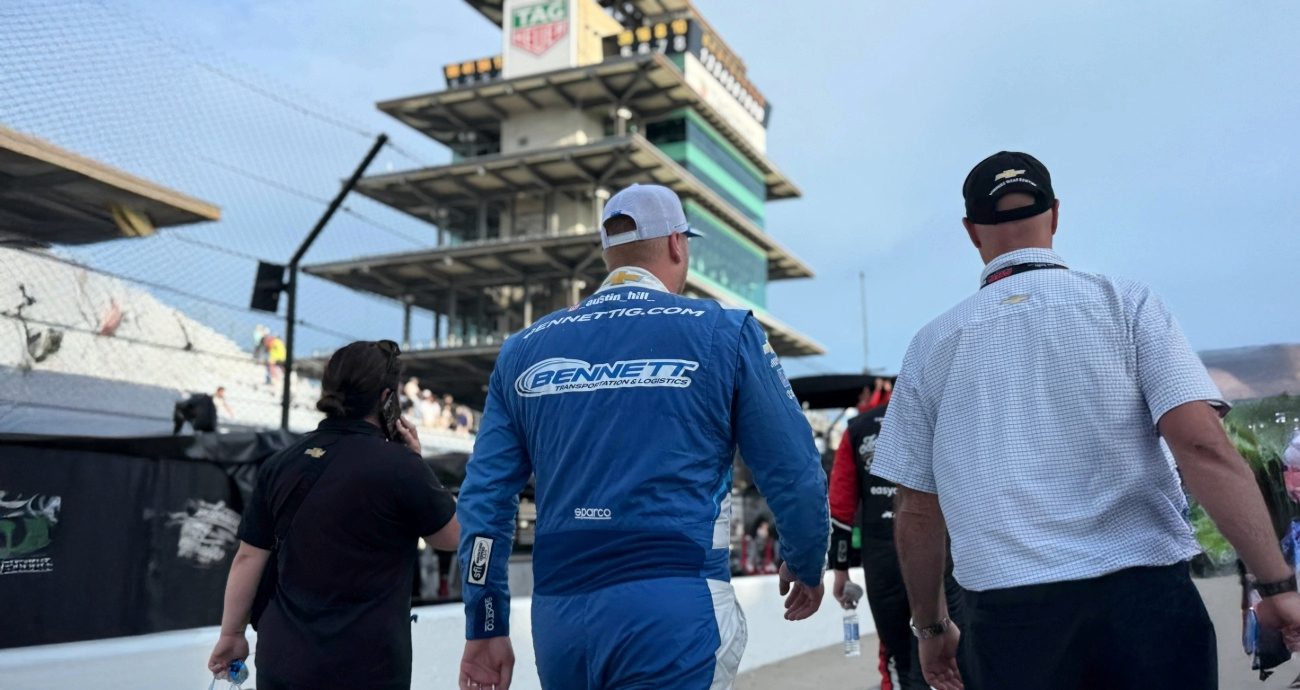
Austin Hill walks down pit road at Indianapolis.
Zach Sturniolo | NASCAR Digital Media

Hill was not made available for comment following Saturday’s event, but did speak with team owner Richard Childress on his way back to the garage area.

When asked if officials should suspend Hill for the contact, Childress answered firmly, disagreeing, pointing to a Cup Series incident at Circuit of The Americas in March when Austin Cindric was issued a 50-point penalty and fined $50,000 for intentionally spinning the No. 10 Chevrolet driven by Ty Dillon, Childress’ grandson.

“Hell no,” Childress told reporters. “They didn’t do a damn thing to the 2 car (Austin Cindric) when he wrecked Ty and admitted to it — drove him in the right rear and wrecked him at COTA. It’s who you are. We’re a blue-collar team. They give us trouble all the time.”

The NASCAR Xfinity Series returns to action at Iowa Speedway on Saturday, Aug. 2 (4:30 p.m. ET, The CW, MRN Radio, SiriusXM NASCAR Radio).

SPEEDWAY, Ind. — As contrary as it might seem, there was ambivalence in Connor Zilisch’s victory in Saturday’s Pennzoil 250 at Indianapolis Motor Speedway.

Yes, Zilisch won his third straight NASCAR Xfinity Series race and added to his inarguable credentials as a budding superstar. What’s more, Zilisch delivered victory No. 100 to JR Motorsports, the organization founded by Dale Earnhardt Jr. and his sister, Kelly Earnhardt Miller.

RELATED: Race results | At-track photos: Indy

But Zilisch’s victory came at the expense of teammate Justin Allgaier, who made a heroic move on the outside to retake the lead from Kyle Larson on Lap 74 and had the win in his sights until the following restart on Lap 87.

That’s when Larson’s No. 17 Chevrolet broke loose in Turn 1 and turned Allgaier’s Chevrolet into the outside wall and out of the race.

That left Zilisch and Taylor Gray to battle for the lead after a restart with four laps left. With a push from the Ford of Sam Mayer, Zilisch took control on Lap 99 of 100 and held on to win by 0.339 seconds over Mayer as Gray slipped to third.

“I see some bricks that look kissable, and I’m going to kiss them,” Zilisch said, referencing an Indianapolis tradition started by NASCAR Hall of Famer Dale Jarrett. “This is awesome. One hundred wins for JRM. Congrats to Dale, Kelley, L.W. (Miller), everybody who’s raced for JRM, everybody who works at JRM.”

“I’m the smallest part of this team, and I’m so glad to be a part of it.”

Zilisch’s fifth victory of the season and sixth of his career followed wins at Sonoma Raceway and Dover Motor Speedway in his last two starts. With Allgaier finishing 36th after the wreck, Zilisch, who turned 19 on Tuesday, cut his teammate’s lead in the series standings to 21 points with five races left in the regular season.

“I hate it for Justin, because he’s been the cornerstone of the company for so many years,” Dale Earnhardt Jr. said of the reigning series champion. “He’s been dependable, reliable, great with our partners and he wants to do these things for us.”

A violent accident involving the cars of Aric Almirola and Austin Hill set up the final restart with four laps left. On Lap 91, Almirola looked to the inside of Hill’s No. 21 Chevrolet exiting the short chute leading to Turn 4.

Hill’s car got loose but recovered, then turned left into Almirola’s Toyota, sending the Supra hard into the outside wall.

“Of course it was intentional,” Almirola said after a mandatory trip to the infield care center. “It was time to go, and I got him loose and he just turned left and hooked me in the right rear. Honestly, it was one of the biggest hits in my entire NASCAR career.”

NASCAR held Hill’s Camaro on pit road for five laps for reckless driving and will review the incident in the coming week for additional penalties, if warranted.

Larson survived the accident with Allgaier to finish fourth and Ryan Sieg came home fifth. William Sawalich, Sammy Smith, Daniel Dye, Jesse Love and Dean Thompson completed the top 10.

Jeb Burton ran 15th and leads his cousin, Harrison Burton, by 10 points in the race for the final Xfinity Series Playoff spot. Harrison Burton finished 18th.

NOTE: Inspection was completed in the Xfinity Series garage without issue, confirming Zilisch as the winner. The following cars (Nos. 2, 17, 39 and 54) will go back to the NASCAR R&D Center in Concord, North Carolina, for teardown and engine dyno.