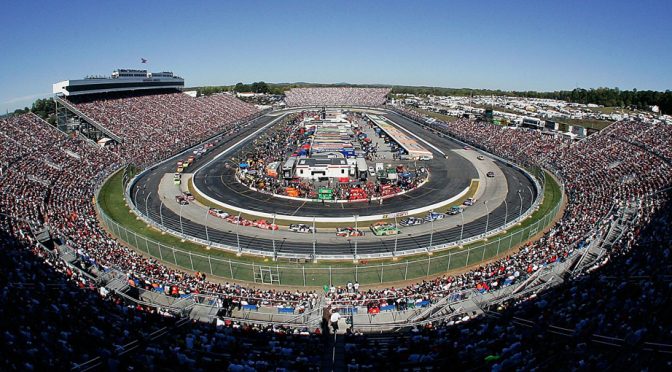
What: First Data 500 Where: Martinsville Speedway, .526-mile oval Green flag: 3:13 p.m. ET TV/Radio: NBCSN, MRN, SiriusXM NASCAR Radio Forecast: Showers likely early then mostly cloudy with a high temperature of 52 degrees, according to the National Weather Service. Chance of precipitation 70 percent, with northwest winds 8 to 14 mph. National anthem: The Gaither Vocal Band. Grand Marshals: Frank Bisignano, First Data CEO and Chairman. Race distance: 500 laps, 263 miles Pit road speed: 30 mph Caution car speed: 35 mph Competition caution: Lap 45 Stage lengths: Stage 1 ends on Lap 130. Stage 2 ends on Lap 260. Final stage is scheduled to end on Lap 500.
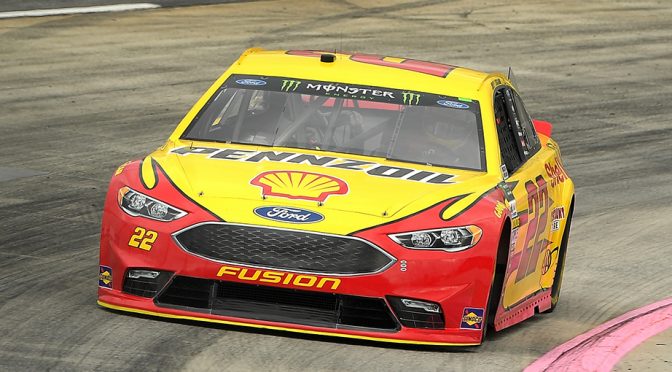
Joey Logano topped the Monster Energy NASCAR Cup Series final practice leaderboard at Martinsville Speedway on Saturday, wheeling his No. 22 Team Penske Ford around the track at 94.416 mph.
Chase Elliott led all NASCAR Playoffs drivers as the second-fastest entry, driving his No. 24 Hendrick Motorsports Chevrolet at 94.326 mph.
Monster Energy Series points leader Martin Truex Jr. was third, pacing his No. 78 Furniture Row Racing Toyota at 94.289 mph.
Clint Bowyer and Kasey Kahne rounded out the top five.
Two other playoff drivers were among the top 10 fastest cars — Brad Keselowski was seventh in his No. 2 Ford while Kyle Busch was eighth in his No. 18 Toyota.
The only mishap of the late afternoon practice came when Erik Jones suffered damage to the right rear of his No. 77 Furniture Row Racing Toyota almost midway into the session when he skidded into the outside wall. Jones will be going to his backup car for Sunday’s qualifying session and race.
Several cars served 15-minute practice holds in the afternoon’s final, 55-minute practice, including the No. 18 of Busch, the No. 21 of Ryan Blaney, the No. 24 of Elliott, the No. 10 of Danica Patrick, the No. 20 of Matt Kenseth and the No. 37 of Chris Buescher. The No. 13 of Ty Dillon served a 30-minute practice hold.
The Monster Energy Series will be back on track for Coors Light Pole Qualifying at 12:05 p.m. ET (NBCSN/NBC Sports App) ahead of the opening race in the Round of 8 for the NASCAR Playoffs, the First Data 500 (3 p.m. ET on NBCSN, MRN, SiriusXM NASCAR Radio).
Denny Hamlin paced the field in Saturday’s first Monster Energy NASCAR Cup Series practice at Martinsville Speedway, turning a lap at 95.415 mph in his No. 11 Joe Gibbs Racing Toyota.
Hamlin topped four of the remaining eight drivers competing for the championship who recorded practice times in the top 10.
Kyle Larson, who was ousted from the playoffs last week as the field was whittled to eight, was second-fastest at 95.299 mph.
Ryan Newman joined playoff drivers Ryan Blaney and Kyle Busch to round out the top five, respectively.
Among playoff drivers, Chase Elliott was 17th-fastest, Martin Truex Jr. was 21st and Jimmie Johnson was 22nd.
Kevin Harvick had the slowest lap time among playoff drivers, ranking 23rd with a lap at 93.924 mph.
The No. 77 Furniture Row Racing Toyota of Sunoco Rookie of the Year candidate Erik Jones did not turn a lap in opening practice due to a steering box issues, according to a team spokesperson.
MARTINSVILLE, Va. — The smallest track on the Monster Energy NASCAR Cup Series schedule is also the one that’s been around the longest. But Martinsville Speedway, measured out at just a shade over a half-mile, might not have been H. Clay Earles’ first attempt at stock car racing.
“Clay, he run one little ol’ race … he took a motor grader and graded a little field in Mount Airy,” NASCAR Hall of Fame member Junior Johnson told NASCAR.com. “Anybody that wanted to could go up there and run.”
That was before 1949, when NASCAR debuted its Strictly Stock series; Martinsville Speedway hosted one of eight such races that inaugural season. And it was before 1947, the year Earles officially opened Martinsville Speedway with a July 4 Modified race won by future champion and NASCAR Hall of Fame member Red Byron.
There was only one problem with the location of the Mount Airy track, according to Johnson, and it wasn’t the river located nearby. It was the one-room schoolhouse situated on the other side of the river.
“People would be down there running cars when they had class in that school and they couldn’t hear theirself talking with the cars so close,” Johnson said. “They got up a petition and made him close it down. That’s how he wound up up there where it’s at now.”
Red Byron won the first race at Martinsville Speedway on Sept. 7, 1947, taking home $500. | RacingOne
Goodbye, Mount Airy. Hello, Martinsville.
“Junior’s probably right; Junior knew my grandfather quite well so it probably did happen,” said Clay Campbell, Earles’ grandson and president of the track that celebrates its 70th year of operation this season.
Martinsville Speedway sits just off Route 220, south of what was once a bustling furniture hub full of factories with names such as Bassett, Hooker, American, Stanley and Gravely.
Up the road they once churned out chairs and tables and bedroom suites and dining room sets and, yes, even grandfather clocks.
But twice a year the rip saws and sanders would go silent, their noise replaced by the roar of engines, the squeal of tires and the sounds of thousands upon thousands of folks packed into a tiny race track that was big on action and full of NASCAR’s stars.
• • •
Fifteen drivers competed in the first Strictly Stock race at Martinsville won by Byron. Three — Byron, runner-up Lee Petty and ninth-place Curtis Turner — are members of the NASCAR Hall of Fame.
On Sunday, Martinsville Speedway will host the First Data 500 Monster Energy NASCAR Cup Series race (3 p.m. ET, NBCSN, MRN, SiriusXM). It is the second stop for the series this season at the legendary facility as well as the opening race of the Round of 8 in this year’s NASCAR Playoffs.
The track hosted one Monster Energy Series race in ’49 and two every year since. Sunday’s First Data 500 will be the 138th points race for the series at Martinsville.
There have been 60 different pole winners and 50 different race winners. Richard Petty is the leader in career wins with 15; among active drivers, that honor belongs to another seven-time series champion, Hendrick Motorsports driver Jimmie Johnson.
The winner’s race trophy Sunday will be a grandfather clock, just as it has been every year since 1964 when the first one was presented to winner Fred Lorenzen. For years, the clocks were built locally, a tie-in between the track and the Martinsville community.
• • •
Earles, who died in 1999 at the age of 86, was “a tough individual,” according to Campbell, “but he came from a tough time in life.”
H. Clay Earles built Martinsville Speedway in 1947. | RacingOne
His street smarts and financial beliefs were the result of living through the Great Depression of the 1930s. “So he watched pennies probably more than anybody,” Campbell said. “They said he was so tight he squeaked when he walked and that’s probably accurate.
“But I guess when you go through the Depression and about lose everything, it changes your outlook on finances and life in general. He didn’t want to go through that again.”
He may have been somewhat tight with his finances, but Martinsville Speedway was the first short track to post a $100,000 purse for a Monster Energy NASCAR Cup Series event.
Earles wasn’t a formally educated man — he made it no further than the fourth grade — but he was wise in many other ways.
Campbell said his grandfather was “one of the smartest people I’ve ever met in my life. … He could do math in his head quicker than I could do it on the calculator. He just had that natural-born talent.”
Earles enlisted the help of two fellow businessmen, Sam Rice and Henry Lawrence, when he began building the half-mile dirt speedway. A year later, the two partners had had their fill of what appeared to be a dusty endeavor and had departed. William H.G. France, a racer, promoter and head of NASCAR, stepped into the picture, at the time providing competitors in exchange for a percentage of the gate revenue.
Earles was one of the first promoters to understand the importance of satisfying the customers, and took great pains to make sure families enjoyed their time at his tiny race track.
“You can have races all you want to, but if nobody’s there to watch it, it wasn’t going to work,” Campbell said. “He realized early in his career that fans were important.”
Campbell said he recalled stories of his grandfather going as far as to have rose bushes planted around the outhouses on the track property.
“It goes back that early where he thought ‘We need to dress this place up and make it a place where a man, wife and family could come and enjoy themselves.’ He caught on to that really early,” Campbell said.
Fans flocked to Martinsville Speedway even back in 1952. | RacingOne
For years, the grassy area between the turns and grandstands at Martinsville was lined with azaleas and boxwoods and no race weekend could begin until the walls around the track had gotten fresh coats of paint.
“Who else did that?” Campbell asked. “Nobody. Now you look around and everybody has a nice place.
“To that point, he set the bar years ago where the fan experience had to be first and foremost in a promoter’s mind.”
In January of 2017 Earles was recognized for his lifelong contributions to NASCAR when he was posthumously presented the Landmark Award during the NASCAR Hall of Fame induction ceremony.
• • •
The design of the track, which measures .526-miles today with turns banked at 12 degrees, was determined by nothing more than the layout of the available property — and nearby railroad tracks.
“The (Norfolk Southern) railroad was there (on the back side of the property) so you couldn’t go back any further and some homes were (located) on the other side, so you were kind of squeezed in between; you had obstacles you had to overcome,” Campbell said. “That’s the reason it’s shaped the way it is, long and with tight turns.”
The railroad tracks have been moved back a bit, but it still runs behind the backstretch.
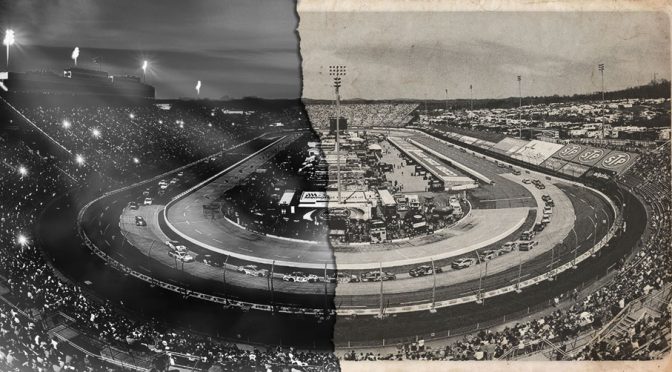
The track, meanwhile, has undergone tremendous change. In ’55 the dirt was replaced with asphalt and by ’77 concrete had been poured in the turns to withstand the pounding of a full field of stock cars.
The original wooden bleachers, which held 750 or so patrons, have long since been replaced with steel and aluminum grandstands.
A $5 million LED lighting project completed earlier this year is the first of its kind at any motorsports venue and debuted last month during the track’s Late Model Stock weekend.
The unique paperclip shape of the track, however, remains the same.
• • •
Only eight tracks hosted NASCAR sanctioned races that first season. And of the eight, only Martinsville remains.
“It’s not the only short track,” Campbell said, “but I think it’s the only true short track. I think you get racing here that you don’t see anywhere else.
“Race fans are loyal. … You come here and you get a glimpse or a feel for the past, see the (present) and glance forward into the future with the lights and things like that.
“Even though we have grown with time, we’ve expanded and done what everyone else has done, I think people feel like we’re still Martinsville, just like it used to be.”
MARTINSVILLE, Va. — Christopher Bell says he’s patched up any fraught feelings with sometime Joe Gibbs Racing teammate Erik Jones after their late-race run-in last weekend at Kansas Speedway.
Bell’s decisive move last Saturday netted his first victory in the NASCAR XFINITY Series, where he’ll drive full-time next year for JGR. But it left Jones with damage, frustration and just a 15th-place finish to show for leading 186 of 200 laps.
“Me and Erik, we’re fine,” Bell said Friday afternoon from Martinsville Speedway, where the Round of 6 begins for the NASCAR Camping World Truck Series Playoffs. “I reached out to him after the race and we’re fine. Our relationship is kind of how it was before that. There’s no grudges held, or at least that I know of.”
Bell’s aggressive tactic with four laps remaining was the subject of debate in the post-race aftermath. The 22-year-old Oklahoman made an asphalt-track interpretation of the classic dirt-track “slide job” to take the lead, drifting up from the bottom lane into Jones’ path on the high lane of the 1.5-mile track.
Jones kept his head of steam and crashed into the back of Bell’s car, sparking “what-if” theories about whether Jones could have slowed to avoid the contact or veered back to the low side in a crossover move.
“Going back to the move, I don’t know,” Bell said. “He’s not a dirt racer and I am a dirt racer, so maybe that was just two backgrounds clashing right there. But I executed my move to exactly how I wanted to do it, and I felt like I left him multiple options to get a different outcome. That’s what I’m going to leave it at.”
Contributing: Zack Albert
Sauter looks to bounce back at Martinsville
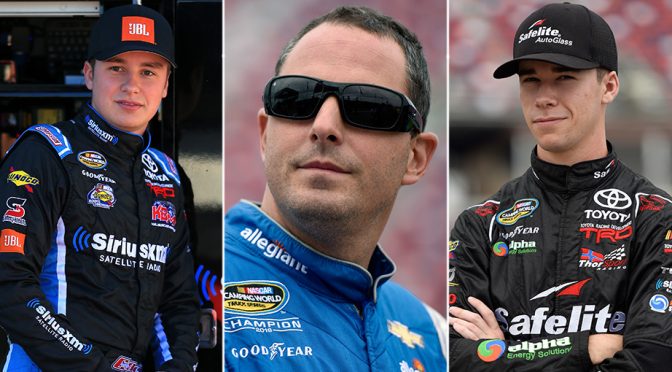
Johnny Sauter cemented his position in the Championship 4 last season with a win at Martinsville. His momentum continued the following weekend with a victory celebration at Texas and wrapped up the season clinching his first Camping World Truck Series trophy with a third-place finish at Homestead.
Fast forward to now, the veteran driver enters Saturday’s playoff race at Martinsville with back-to-back lackluster performances at Las Vegas (10th) and Talladega (12th). Although he sits in second place in the postseason standings, he is 20 points behind leader Christopher Bell. A big gap to makeup and it starts with the Texas Roadhouse 200.
“I’m just looking to finish the race,” Johnny Sauter said ahead of the Truck Series first practice. “The last few weeks have been pretty rough. You know you race against guys that I probably wouldn’t let them ride my kid’s dirt bike … we just have to try and survive this race.”
Sauter understands the importance of having previous success to lean on while piloting around the short-track, and hopes Saturday’s race at “The Paperclip” can be just as much of a catalyst to a second championship as it was in 2016 postseason run.
“Martinsville’s been a really good racetrack to me,” Sauter said. “… this is where we kind of got on a roll (last year). Martinsville is the perfect place for me to start the second round. We’ve just been really, really good here through the years. A lot of things can happen. As I’ve mentioned before, I think it’s really important to qualify well here because I really think it really helps your pit strategy.”
Ben Rhodes riding confidence into Round of 6
A victory at Las Vegas catapulted Ben Rhodes into the Round of 6, but he currently sits outside the provisional Championship 4 in fifth position — just one playoff point behind both John Hunter Nemechek and and Thor Sports teammate Matt Crafton.
The 20-year-old finished 20th at the short-track in the spring and only has one career top-1o (eighth) that came three years ago. With only four starts under his belt here, Saturday’s race poses a lot of unknowns for Rhodes. Yet, the confidence from winning his first Camping World Truck Series race in the last round is a confidence booster for not just him, but the entire team.
“I feel like Martinsville has been a fast track for me in the past, but I don’t have the results to show,” Rhodes said ahead of Friday’s first practice. ” … Survival for me is what’s going to get us that finish. I think we are trying some new stuff this weekend and I’m hoping that will translate to more speed. … If I can qualify up front I think the race will go way better for me than it has in the past.”
Survive and advance seems to the motto for several drivers at Martinsville, including fellow playoff driver Sauter. With a position to chase a championship trophy on the line, Rhodes believes his performance behind the wheel can go one of two ways: In or gone. Ain’t no other way around it.
” …we can certainly take ourselves out of the playoffs more so than boosting ourselves forward.”
MARTINSVILLE, Va. — It’s been a while since a pair of Burtons hit the track for a NASCAR national series race — nearly a decade to be exact.
That will change Saturday as Harrison Burton and Jeb Burton, sons of former drivers Jeff and Ward Burton respectively, will race in the Texas Roadhouse 200 NASCAR Camping World Truck Series event at Martinsville Speedway (1 p.m. ET, FS1).
The two cousins haven’t raced alongside each other in NASCAR, but grew up watching their fathers battle it out all over the country. This small Virginia town is home away from home for both drivers, and a win for either Harrison, 17, or Jeb, 25, would be cause for celebration.
“I would rather lose to him (Harrison) than someone else,” Jeb Burton said ahead of the first Camping World Truck Series practice. “At least we are keeping it in the family, the Burton name. Hopefully, we can both be sitting here on Sundays. That’s our goal. That’s why we are here. I think we can both get the job done.”
Despite never going for the same checkered flag in a NASCAR race, the two cousins aren’t new to a little family rivalry. Saturday will be no different than a friendly game of Madden on the Xbox, except perhaps for bigger stakes — and a potential uncomfortable holiday season on the horizon.
“I think I’m going to race Jeb just like anyone else, and he will race me just like anyone else,” said Harrison Burton, the 2017 K&N Pro Series East champion. “Once you strap into that race car you’re there to do the best you can. You’ll race everyone the same hopefully. … It’s not going to be like I get to Jeb and punt him out of the way. I think that would be an awkward Thanksgiving dinner.”
The two young drivers will use the Camping World Truck Series opportunity to boost their resumes for the 2018 season.
Harrison, who can’t run tracks longer than 1 mile in length for another year due to age restriction (must be 18), wants to improve himself as a driver with sights set on the Monster Energy NASCAR Cup Series. A win among his potential peers would be more than satisfying, especially on a track he knows well.
Jeb, the ‘veteran’ of the two cousins, has yet to secure a full-time ride for next year, but has several runs in all three national series.
“We are really close to getting something done,” Jeb Burton said about next season’s outlook. ” … We are working hard on it.”
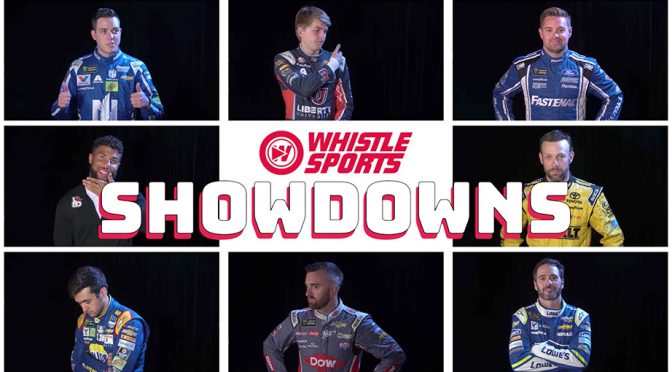
If that had you giggling, you weren’t alone. See which driver laughed out loud at that one and other bad jokes in the latest edition of Whistle Sports’ popular “Bad Joke Telling” competition.
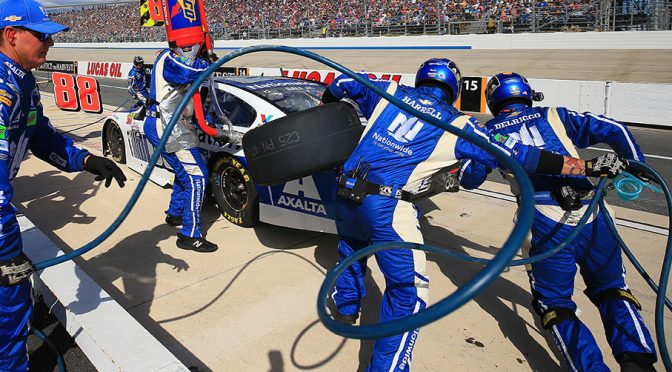
The race is hours away but pit road is humming already. Over-the-wall guys hustle to get their stalls ready. Tire changers check their air guns. Tire carriers align their Goodyears just so. Jackmen make sure their jacks are safely out of sight.
With NASCAR’s stage racing offering more chances to win points, those pit crew athletes’ performances have become more important than ever. It used to be that a bad pit stop in the middle of a race cost a team only track position, but that could be made up later. Now a bad mid-race pit stop can cost a team points, too, especially close to the end of a stage.
If that adds pressure, there is no evidence of it. The atmosphere along pit road at Michigan International Speedway is like a massive outdoor locker room that smells like oil and rubber instead of sweat and Ben Gay. To listen to pit crew members talk to each other is to learn that nobody is good at anything, ever, which is the same as it ever was.
Rowdy Harrell shows off his Alabama football rings, including three national championship rings.
Rowdy Harrell, the No. 88 team’s rear tire carrier, stands near the wall. He holds a tire that he eventually will put on the rear of Dale Earnhardt Jr.’s car. He grips it by wrapping his fingers around the only spoke on the wheel that lines up with a lug nut hole. He grabs every tire that way every time, because that helps him aim the five holes on the rim at the five studs on the car.
He dabs sweat off of his glistening forehead. His face will be behind a mask when he goes over the wall later today, when it will be even hotter than it already is. He wears the mask because one day at practice two years ago, a lug nut hit him on his left lower eyelid and left him bruised. An inch higher, and he might have been blinded. “They’re moving twice as fast as a helicopter rotor spins. It’s a little hulk of steel. If it touches you, it’s cutting you,” he says.
He finished the stop with his eyes closed. After that, he started wearing a luger’s helmet with a full-face shield. So many lug nuts have pinged off the mask that he no longer flinches when they do. That’s important because if he flinches, he’ll be slower slamming the new tire in place, and if he’s slower slamming the new tire in place, he’ll be out of a job. Harrell seems to revel in how ridiculous this is: NASCAR pit road is so competitive he has had to learn to not react when a lug nut moving twice as fast as a helicopter blade flies at his face.
Like many pit crew members, Harrell played sports in college. He won three national championships as a linebacker for the Alabama Crimson Tide, graduated in spring of 2013, joined Hendrick Motorsports, and the following February won the Daytona 500 as a member of Earnhardt Jr.’s team.
Hendrick Motorsports hiring Andy “Papa” Papathanassiou as a pit coach in 1992 helped usher in a new way of thinking. A former football player at Stanford, Papathanassiou, now Hendrick’s director of human performance, came into NASCAR knowing nothing about the sport, an advantage because he wasn’t beholden to pre-existing biases to do things the way they had always been done. The first time he saw a pit stop, he thought it looked like a sports play. That observation led to a revolution in how pit road operates. A pit stop changed from a mechanical event to an athletic one.
The fact pit road is overrun with athletes from other sports is well-known and well-documented. But it is not very well understood. The use of that term — athletes — is slightly misleading, as it’s not necessarily their athletic skills that make them valuable.
Athleticism is, of course, a nice foundation to build upon, and an uncoordinated schlub is not going to become an elite pit crew member. But blazing speed, massive strength and catch-a-fly-with-chopsticks hand-eye coordination, while certainly attractive, are not prerequisites for success.
An example: It’s good for a tire changer to have short-burst speed so that he gets to the other side of the car and back in as little time as possible. But that’s two sprints of six or seven steps at a time. The difference between the best and the worst times among the elite teams is not large. Even if a particular tire changer is super-fast, it doesn’t matter unless the rest of the team is that fast, too, because an over-the-wall team is only as good as its worst member.
Pit crew members work out at Joe Gibbs Racing’s gym.
This is an important distinction between pit crews and teams in every other sport. In football, the running back can make up for a bad offensive line by making defenders miss. A pit road team with a blazing fast tire changer gains no advantage from that because however quickly he gets done, the driver still has to wait for the rest of the team to finish before he can leave. In this way, a pit road team is more like a musical group than another sports team. “Pit crewing is a symphony,” says Derrell Edwards, jackman for the No. 27 Richard Childress Racing Chevy driven by Paul Menard. “Everything has to be in sync for it to sound good.”
So many athletes are on pit road because of the mental acuity and character traits athletes bring with them. “It comes down to what kind of head do they have on their shoulders?” says Scott Bowen, human performance manager at Roush Fenway Racing and former tire carrier. “How do they react when things don’t go as planned?”
Five hundred mile races are very occasionally won and far more often lost based on the six inches between pit crew members’ ears. They must be resilient, solve problems on the fly, work well on a team and have the ability to practice the same tasks over and over again. Those are skills athletes have honed in stick-and-ball sports for years before they try out for a pit road position.
Pit crews train year-round, and yet their weekly time “on the field” is measured in seconds. Even a closer in baseball and kicker in football see more action than that. Pit road teams spend far more time working on their flexibility, agility and explosiveness than they do actually pitting cars.
The ability to stay focused and not get bored or distracted is a skill, and a person who doesn’t have it won’t last on a pit crew. Pit crew members also must be able to shake off bad pit stops because another stop will be coming soon, and they can’t spend that time wallowing in self-pity, anger or, worse, fear of screwing up the next one, too. Pit crew members must be confident they will succeed in the next stop even after they have failed.
“It’s the guys who can handle the pressure and do it over and over and over again who are the best,” says Trent Cherry, pit road coach for Penske and author of Money Stop: The Pressure on Pit Road Has Never Been Greater. “We have guys who played in the NFL who are average pit road guys. And we have guys who barely made their high school team who are great pit road guys.”
Shaun Peet, a former jackman, is Chip Ganassi Racing’s pit road coach.
Shaun Peet, pit road coach for Chip Ganassi Racing and former jackman, says he doesn’t take athleticism into account at all when he’s scouting for talent. He looks for integrity and work ethic first and figures with proper training, he can turn anybody with those traits into a good pit crew member.
Peet and Mike Metcalf, his fellow coach and gas man for Kyle Larson’s No. 42 Chevy, jokingly call themselves, “The Department of Unrealistic Expectations” with the slogan, “Failure’s Coming!” because setting as a goal changing four tires and filling a car with gas in 10 seconds every time is to guarantee failure.
Always watching
Perhaps the greatest sign of how competitive pit road has gotten is the investment teams put into the success of their over-the-wall crew. Teams regularly recruit the best at each position — think of a five-star high school quarterback — and once acquired, outfit them with trainers, full gyms at their race shops and travel for more than 30 events per year
Some teams hold tryouts to find new talent. Most develop pit road team members by starting them out in lower levels, the same way drivers work their way up. The competition for the fastest pit crew members is fierce, and it’s common for one team to poach from another.
All of that is well known. What is not is how teams collect information about which crew members to recruit. At every track, teams affix video cameras to pit boxes and fences and whatever else they can find and point them at opposing pit stalls to record their pit stops. They do this because nobody produces stats related to pit crew members. Teams create those stats themselves by watching their videos. When a pit road coach or crew chief needs a new crew member and wants to hire someone from another team, he identifies candidates by consulting the stats his team created via their video library.
And gets entertained in the process.
“Sooner or later someone will notice there’s a Go Pro pointed in their direction,” says Hendrick’s Papathanassiou. “Guys on other teams will finish their pit stop and go up to your camera and give it a thumbs-up. You don’t want to be a big butthole about it. But if you know the guys on the other team, it doesn’t turn into fisticuffs, usually.”
The video cameras and TV coverage ensure there are no secrets on pit road. If a team discovered a new trick to shave fractions of seconds off of their time, that new trick would be unique to them for one weekend, maximum, after which every other team would copy the new technique. The cameras are perfectly legal, a logical by-product of NASCAR’s policy to have open air garages and pit roads.
In addition to being filmed by opponents, each Monster Energy Series team has multiple cameras recording itself on each pit stop. Coaches study the tape frame by frame, looking for the smallest inconsistencies to improve. This is often done literally seconds after a pit stop ends. Teams across all sports study film. But they don’t break their plays down into fractions of seconds like NASCAR pit crews do.
A breakdown in seconds
Every team starts pit stops the same way: When the driver hits the line one stall down, the jackman, front tire changer and front tire carrier jump off the wall and run across the pit box in front of the car. The rear tire carrier and rear tire changer wait and run behind the car. Once on the other side of the car, the tire changers quickly squat down onto their haunches, a maneuver made possible, in some cases, by weekly yoga sessions.
Mike Metcalf coaches Chip Ganassi Racing pit crew members at the team’s facility. Photo by NASCAR Digital Media
The clock starts ticking the instant the car stops. The times that follow come from Chip Ganassi Racing and were verified as within the margin of error by several other teams.
From the time the car stops, the front tire changer has 0.2 seconds to hit the first lug nut. The front-tire changer is expected to remove all five lug nuts in 1.0 seconds. The rear tire changer has a bit longer — up to 0.9 seconds — to make the first hit because the car is usually moving away from him. Once he hits the first one, he also has one second to remove all five.
In the meantime, the jackman has 1.2 seconds from the time the car stops to slide the jack onto the jackbolt, crank the jackhandle once, and lift that 3,500-pound car skyward.
Once the tire is ripped off, the tire carriers have 0.9 seconds to slam the new tire into place. The changers then have 1.0 seconds to tighten all five lug nuts. The jackman drops the car when the last lug nuts on both the front and rear tires are tight (which he discerns by watching and listening), then he has 3.8 seconds to run around to the other side and lift the car again.
As all of that is happening, the gas man — carrying what Peet calls “a 100-pound bomb” on his shoulder — has 0.3 seconds from when the car stops to when the nozzle of the can is supposed to be inserted into the car. He pours gas in for 5.0 seconds, then disengages the can, throws it to the wall, and grabs the second can. That transition is supposed to take 2.4 seconds.
When the left side tires are being bolted on, the jackman watches and listens for both changers to tighten their five lug nuts. On some teams, the rear tire carrier uses a hand signal to alert the jackman that the rear tire changer is done. When the changers have secured all five lug nuts on both tires, the jackman drops the car, and the driver speeds off.
As complicated as that sounds, it’s even worse because there are so many details that can go wrong. Changers miss lug nuts. Guns jam. Tires bounce away. Rear tire carriers slip on lug nuts or spilled gas. Drivers slide through pit boxes or stop too close to the wall. Cars are dropped too soon or not soon enough.
Jonathan Ferrey | Getty Images
On top of all the things the pit crew can do wrong and get blamed for, sometimes they take heat for miscues completely out of their control. An offshoot of the hyper-competition on pit road is that there’s always someone to blame, even when there isn’t. Cherry says one of his toughest jobs is figuring out when a tire changer is telling the truth about his air gun malfunctioning and when he’s using that as an excuse.
Or consider the final run of the 2017 Daytona 500. In the last pit stop, gas man Mike Metcalf poured every last drop he could into Kyle Larson’s gas tank. There was, Metcalf says, no room left in the tank to hold any more gas.
As Larson peeled out of pit road, the No. 42 team crunched the numbers. The math of how much gas the tank carries, how much gas the engine uses and how many miles were left in the race added up to it was going to be close. Very, very close. And somehow that became Metcalf’s responsibility, even though the only thing he could control — filling the tank — he had done exactly as he was supposed to.
As the end of the race approached — with Larson in contention — Metcalf was nervous enough on his own because he wanted to win the Daytona 500 and didn’t know if he would. On top of that, he had to deal with inane questions. “Mikey, are we going to make it? Are we good? Is it full? How full was it? Really full? Barely full? Was it a little bit over full? Or was it a lot full?”
Metcalf laughs as he tells this story. It’s funny now … almost. Not even close then. “I’m like, why are we having this conversation?”
Larson was leading when he ran out of gas coming out of Turn 2 of the final lap. That means the tank needed to be roughly 32 ounces larger (and full of that much more gas) for Larson to have not run out. But as every gas man knows, if the driver runs out, it’s not the driver’s fault for being too hard on the gas, it’s not the engineers’ fault for not designing a more efficient motor, it’s not the crew chief’s fault for figuring the numbers wrong. It’s the gas man’s fault for not putting 21 gallons of gas into a 20-gallon tank.
The Richard Childress Racing No. 27 pit crew goes to work. Photo by Sarah Crabill | Getty Images
What’s next?
Its name is Lolo Jones. It weighs “20-something” pounds, has a long aluminum handle and can lift a stock car with one crank. “That’s my baby,” says Edwards, the No. 27 team’s jackman, and he means the jack, not the Olympic sprinter it’s named after. Edwards takes special care to make sure Jones’ maintenance is up to date so that when he slams the jack under the car, it lifts it high and fast. Edwards has a backup jack, too: Her name is Kim Kardashian. (Edwards doesn’t name them, he just uses them.)
Very few people know exactly what’s going on inside air guns and jacks, which are like the drills and jacks you have in your garage in the same way the Chevy in your garage is like the one Earnhardt Jr. races. Even the guys using them don’t really know, and unless they have engineering degrees, they probably wouldn’t understand anyway.
Pit stops have arguably reached the point where, without an advance in equipment, humans will not get markedly faster, so teams instead focus on consistency. A team would rather have five 11-second stops than four 10s and a 15, especially if the 15 was the last stop of the race.
Cherry, a former tire carrier, poses a hypothetical question: If a team could choose the best training — speed, strength, conditioning, injury rehab, etc. — or the best gun, which would it take? “I guarantee you 100 percent of the coaches would say, ‘Give me the gun,’ ” he says. “That’s what’s changed the face of the sport is the equipment. The people have gotten bigger, stronger and faster, too. It’s a race between human performance and equipment. As soon as one catches up to the other, the next surpasses it.”
And teams aren’t just looking to optimize pit guns and jacks. “There’s all kinds of crazy stuff that’s been on my list forever,” Papathanassiou says. “Pit crews are only hustling in one direction. Why not have shoes that are purposely designed to turn left for a front tire changer, to turn right for a rear tire changer?”
Why not, indeed?
And as soon as one team has high-banked shoes, they all will.
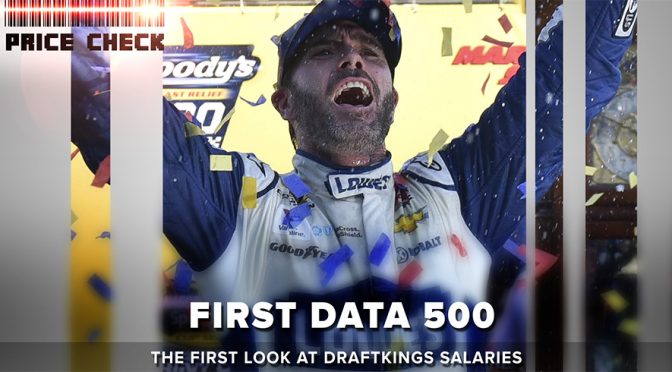
Rankings below are based on a mixture of expected output and DraftKings’ NASCAR salaries for that day. The ordering is not based on highest projected fantasy totals, but rather by value of each driver.
(FPPK = average fantasy points per $1,000 of salary.)
1. Kyle Busch ($11,000) – The No. 18 car was the best car at Martinsville all weekend back in the spring. Busch practically led the entire race until he got a bad set of tires on his last run. Brad Keselowski earned the win, but Busch earned the most fantasy points (164 points). (5.5 FPPK)
2. Brad Keselowski ($9,600) – The assumption is that Keselowski snuck away with the win at Martinsville, but he was fast all weekend. Keselowski recorded 90 fast laps; that’s one less than the leader, Kyle Busch. The Penske Fords have the setup and will likely unload fast this weekend. (4.2 FPPK)
3. Martin Truex, Jr. ($11,200) – Martinsville sticks out as one of Truex’s worst races this season, but it wasn’t. He had the fourth-best average running position. He scored the fifth-most fast laps and laps led points. He was running sixth near the end of the race, but he got spun out. (6.5 FPPK)
4. Joey Logano ($9,000) – Early in the season, the Penske Fords were strong. Logano was a top-tier driver at the flat, short tracks (Phoenix, Martinsville and Richmond). This is a Toyota season, but Martinsville is not like any other track. Watch out for Team Penske. (3.3 FPPK)
5. Chase Elliott ($9,400) – The No. 24 car has nine wins at Martinsville. This is hallowed grounds for Hendrick; the home of the organization’s first win and its greatest tragedy. Martinsville is serious business, and Elliott is a contender. He scored the fourth-most fantasy points in the spring race. (4.2 FPPK)
6. AJ Allmendinger ($6,000) – Forget about the road courses; Martinsville is Allmendinger’s best track. It’s undeniable. He has a top-15 finish in 10 of the last 12 Martinsville races. (3.7 FPPK)
7. Kyle Larson ($10,400) – It’s winning time. His championship dream came to an end when his engine expired for the first time in his career. Larson has been a solid top-10 driver at Martinsville over the last two years, but his team did not have a winning car at Martinsville in the spring. (5.4 FPPK)
8. Matt Kenseth ($9,300) – Everyone knows that Truex, Kyle Busch and Larson have been the fastest this season. The next step down isn’t as obvious. At the short tracks, Kenseth ranks fifth in fast laps and laps led. (3.5 FPPK)
9. Denny Hamlin ($9,200) – There was a time when Hamlin was a god at Martinsville. He finished sixth or better in 11 of 12 races between 2006 and 2012 (four wins). He’s still good, but not the greatest. In his last five Martinsville races, he has two third-place finishes and a win. (4.1 FPPK)
10. Jamie McMurray ($8,500) – Flat tires ruin good race cars. McMurray had a car that could have won the first Martinsville race, but a cut tire ended his day early. Before that wreck, McMurray had top-10s in three of his last four Martinsville races. (3.3 FPPK)
11. Kevin Harvick ($10,200) – The Stewart-Haas Racing Fords have made a giant leap forward at the intermediate tracks. Martinsville will be a big test. Can they compete with the Toyota’s at a short, flat track? Harvick’s last top-15 finish at The Paperclip was in 2015. (4.4 FPPK)
12. Jimmie Johnson ($9,800) – The short, flat tracks have not been strong races for Johnson this season. His best finish is ninth, while his worst finish is 15th at Martinsville. But if anyone can right the ship, it’s the nine-time Martinsville winner. (3.8 FPPK)
13. Clint Bowyer ($8,800) – Kansas may be his home track, but Bowyer is a short-track guy. Don’t look at his 2016 stats for HScott Motorsports. From 2007 to 2014, Bowyer earned 12 top-10s in 15 Martinsville races. (3.3 FPPK)
14. Ryan Newman ($7,400) – It’s guaranteed that the phrase, “Ryan Newman is the toughest driver to pass in NASCAR” will be mentioned in the TV broadcast this weekend. Anyone remember Dover? The hardest-to-pass driver at the track where it’s the hardest to pass, that’s hard to pass up. (4.1 FPPK)
15. Austin Dillon ($7,500) – Experience matters at unique tracks, and this will be Dillon’s 12th time racing at Martinsville (including truck races). He doesn’t have a win. His average finish is a mediocre 16th, but his average start is 26th. Dillon knows how to move through the field at Martinsville. (3.5 FPPK)
16. Ryan Blaney ($8,200) – The short-track woes reared their ugly head again at Dover. Blaney has the 15th-best average running position on the short tracks this season. His average finish ranks 26th. Those are frightening numbers. (3.0 FPPK)
17. Erik Jones ($8,600) – Martinsville doesn’t seem like it’s a Jones track, but Jones is still new. It’s not quite clear where his strengths will lie. He’s never won a Truck race at Martinsville, but he has always finished on the lead lap. (3.9 FPPK)
18. Kasey Kahne ($7,900) – Hendrick always races well at Martinsville. A Kahne win would be surprising, but no one expected Gordon to win the Martinsville fall 2015 race or Earnhardt, Jr. in the fall 2014 race. The 2016 fall winner was another unexpected Hendrick victory by Jimmie Johnson. (3.2 FPPK)
19. Dale Earnhardt, Jr. ($8,000) – The spring race wasn’t as bad as it looks. Junior had a top-15 car for most of the race, but he wrecked on Lap 419 of 500. It’s not impossible for Earnhardt to win this weekend if he plays the strategy correctly. Jeff Gordon won his final race at Martinsville. (2.7 FPPK)
20. Kurt Busch ($8,300) – His track history at Martinsville might be some of the worst numbers in NASCAR. He won at Martinsville in 2014. That is his only top 10 at Martinsville in the last 11 years. That’s not a typo. Over his career, he has four top-10s at Martinsville (34 races). (3.1 FPPK)
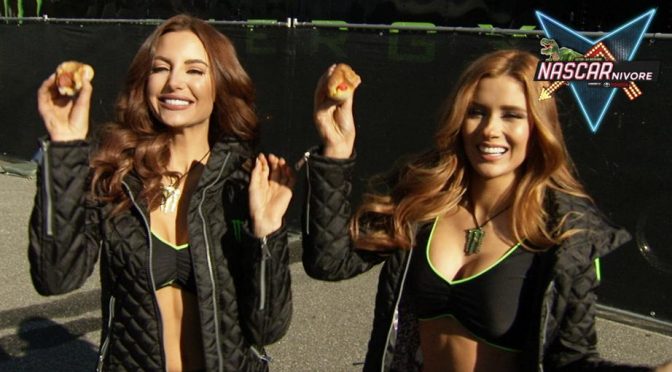
Martinsville is known for three things: 1. Fabulous short-track racing, 2. The Grandfather Clock given to race winners and 3. hot dogs.
Drivers and crew members alike love the Martinsville Hot Dogs they can get at the 0.526-mile track in Virginia. Crews even go so far as to keep a tally of how many each crew member devours.
Find out what sets the Martinsville Hot Dog apart from any other and how the track goes through between 65,000 and 70,000 hot dogs in a race weekend.
In an effort to strengthen its future, Richard Childress Racing dipped into its past this week, announcing that former championship-winning crew chief Andy Petree will serve in an advisory role with the three-team organization.
Petree served as crew chief at RCR from 1993-95, winning back-to-back championships with driver Dale Earnhardt in ‘93-94. Earnhardt finished second in points in ’95.
“Richard is totally committed to winning, I can tell you that,” Petree told NASCAR.com. “And that’s the whole reason behind this.”
Prior to joining RCR, Petree served as crew chief for drivers Phil Parsons (1987-88) and Harry Gant (’89-92) for team owners Richard and Leo Jackson.
An owner later in his NASCAR career, Petree fielded teams that won twice with drivers Bobby Hamilton and Joe Nemechek.
Today, RCR fields three full-time Chevrolet entries in the Monster Energy NASCAR Cup Series — the No. 3 of Austin Dillon, the No. 27 of Paul Menard and the No. 31 of Ryan Newman. Dillon and Newman have one win apiece this season, and qualified for the NASCAR Playoffs. The victories were the first for the Welcome, N.C.-based group since 2013.
Menard will join the No. 21 with Wood Brothers Racing in 2018.
Childress, inducted into the NASCAR Hall of Fame earlier this year, spent 11 years racing as an independent at NASCAR’s top level before exiting the car to focus on ownership. Earnhardt won six of his seven championships while driving for RCR and 67 of his 76 victories.
Eight other drivers have accounted for the organization’s 40 remaining victories.
“It’s something Richard and I have talked about for a few months,” Petree said of his new role. “Richard is very involved with everything that goes on at RCR and he has been forever. Well, they’re not running well and it’s a really, really big machine. He’s trying to figure it all out and he needs help. He needs somebody he can trust, somebody that can come in there and evaluate all these areas and that’s going to be my mission for the next few weeks until the end of the season.
“Figure out where we could actually get the most benefit, where are the things that are really working good, where are the things that are not working so good and to help him make the decisions. That’s really what it boils down to.”
RCR already boasts a talented management staff that includes Dr. Eric Warren, the director of competition, operations director Sammy Johns as well as crew chiefs Matt Borland, Justin Alexander and Luke Lambert.
“He has some smart people there; really dedicated people,” Petree said. “A lot of them. … They do a good job and they deserve to be winning.”
Childress and Petree’s relationship didn’t end when Petree left RCR. Along with fellow team owner Dale Earnhardt, the three formed RAD, a technical alliance that combined resources to focus on research and development. Much of that work resulted in dominant superspeedway programs for the group.
“We were working on some forward-thinking things in that RAD alliance,” Petree said. “There were a lot of things that we were spending a lot of money on that weren’t producing any fruit for us. At least immediately. I convinced Dale and Richard that we shift that (focus) to things we were doing that were really moving the needle. And when we did it made a huge difference.
“That’s the kind of philosophy that (Richard) is looking for here, too. He spends a lot of money. They’ve got every single tool that they need to work with and most of it is state of the art. There is no reason that they are not one of the leading cars or top cars every week. And so he’s frustrated.”
Petree said he will be at the race track each week for the remainder of the 2017 season. He will continue to serve as an analyst on NASCAR Race Hub, the daily NASCAR news program on FS1.
“I miss being in the game,” Petree admitted. “I see a lot of things — I still stay awake at night thinking of things to do, wondering why people do certain things. And if I have smart people to bounce things off of, that would be the ultimate.
“And I’ve got that now with Richard’s teams. I’m so excited about the potential that’s there.”