What channel is NASCAR programming on this week? We answer that and provide all the weekly NASCAR television listings here in the NASCAR TV schedule.

All Monster Energy Series and XFINITY Series events are also live streamed online on the NBC Sports App, which can be accessed here. Events that are only available on NBC Sports App are noted below.

RELATED: Watch on the NBC Sports AppHow to find CNBC on your TV

Monday, August 28
5 p.m., NASCAR America, NBCSN
6 p.m., NASCAR Race Hub, FS1

Tuesday, August 29
5 p.m., NASCAR America, NBCSN
6 p.m., Racing Roots: Kyle Larson, NBCSN
6 p.m., NASCAR Race Hub, FS1

Wednesday, August 30
5 p.m., NASCAR America, NBCSN
6 p.m., NASCAR Race Hub, FS1

Thursday, August 31
6 p.m., NASCAR Race Hub, FS1

Friday, September 1
12 p.m., NASCAR XFINITY Series practice at Darlington, NBCSN (Canada: TSN GO)
1 p.m., Monster Energy NASCAR Cup Series practice at Darlington, NBCSN (Canada: TSN 2)
2:30 p.m., NASCAR XFINITY Series final practice at Darlington, NBCSN (Canada: TSN GO)
3:30 p.m., Monster Energy NASCAR Cup Series final practice at Darlington, NBCSN (Canada: TSN 2)
5 p.m., NASCAR America, NBCSN
6 p.m., NASCAR Southern Speed: The Legend of Darlington, NBCSN

Saturday, September 2
12:30 a.m., NASCAR Special, NBCSN
2:30 a.m., NASCAR Special, NBCSN
12 p.m., NASCAR XFINITY Series Coors Light Pole Qualifying at Darlington, NBCSN (Canada: TSN GO)
1 p.m., NASCAR America, NBCSN
1:30 p.m. Monster Energy NASCAR Cup Series Coors Light Pole Qualifying at Darlington, NBCSN (Canada: TSN 3)
3 p.m., NASCAR XFINITY Series Countdown to Green: Darlington, NBCSN
3:30 p.m., NASCAR XFINITY Series Sport Clips Haircuts VFW 200, NBCSN (Canada: TSN 3)
5:30 p.m., NASCAR XFINITY Series Post-Race, NBCSN
5:30 p.m. Camping World Truck Series Keystone Light Pole Qualifying, FS2
8:30 p.m., NASCAR Racing: K&N Pro Series, NBCSN
9:30 p.m., NASCAR Whelen Modified Series, NBCSN
10:30 p.m., Monster Energy NASCAR Cup Series Coors Light Pole Qualifying (re-air), NBCSN

Sunday, September 3
1 a.m., Racing Roots, NBCSN
10:30 a.m., NASCAR Southern Speed: The Legend of Darlington, NBCSN
11:30 a.m., Monster Energy NASCAR Cup Series Coors Light Pole Qualifying (re-air), NBCSN
2 p.m., Camping World Truck Series Setup: Mosport, FS1
2:30 p.m., Camping World Truck Series Chevrolet Silverado 250, FS1
4 p.m., NASCAR America, NBCSN
5:30 p.m., NASCAR Countdown to Green: Darlington, NBCSN
6 p.m., Monster Energy NASCAR Cup Series Bojangles’ Southern 500, NBCSN (Canada: TSN 5)
10:30 p.m., NASCAR Cup Series Post Show, NBCSN
11 p.m., NASCAR Victory Lap, NBCSN


All three NASCAR national series will be in action this Labor Day Weekend with the XFINITY and Monster Energy NASCAR Cup Series at Darlington Raceway and the Camping World Truck Series at Canadian Tire Motorsport Park.

Monster Energy Series and XFINITY Series events are also live streamed online on the NBC Sports App, which can be accessed here. Check out the full on-track weekend schedule below.

Note: All times are ET

SUNDAY, Sept. 3
DARLINGTON
6 p.m.: Monster Energy NASCAR Cup Series Bojangles’ Southern 500 (367 laps, 501.3 miles), NBCSN (Results) (Canada: TSN 5)

PRESS PASS (Watch live)
2 p.m.: Ricky Stenhouse Jr. and Darrell Waltrip
3:15 p.m.: Bill Elliott
10:30 p.m.: Post-Monster Energy NASCAR Cup Series race

CANADIAN TIRE
2:30 p.m.: Camping World Truck Series Chevrolet Silverado 250 (64 laps, 157.37 miles), FS1 (Results)


FRIDAY, Sept. 1

DARLINGTON
12-12:55 p.m.: NASCAR XFINITY Series practice, NBCSN (Results) (Canada: TSN GO)
1-1:55 p.m.: Monster Energy NASCAR Cup Series practice, NBCSN (Results) (Canada: TSN 2)
2:30-3:25 p.m.: NASCAR XFINITY Series final practice, NBCSN (Results) (Canada: TSN GO)
3:30-4:55 p.m.: Monster Energy NASCAR Cup Series final practice, NBCSN (Results) (Canada: TSN 2)

PRESS PASS (Watch live)
10:15 a.m.: Jeremy Clements
10:30 a.m.: Elliott Sadler
12 p.m.: Chase Elliott
12:15 p.m.: Clint Bowyer and Mark Martin
2:45 p.m.: Martin Truex Jr.
5:20 p.m.: Dale Earnhardt Jr.

GARAGECAM (Watch live)
11:30 a.m.: NASCAR XFINITY Series
12:30 p.m.: Monster Energy NASCAR Cup Series

SATURDAY, Sept. 2

DARLINGTON
12:05 p.m.: NASCAR XFINITY Series Coors Light Pole Qualifying, NBCSN (Results) (Canada: TSN GO)
1:45 p.m.: Monster Energy NASCAR Cup Series Coors Light Pole Qualifying, NBCSN (Results) (Canada: TSN 3)
3:30 p.m.: NASCAR XFINITY Series Sport Clips Haircuts VFW 200 (147 laps, 200.8 miles), NBCSN (Results) (Canada: TSN 3)

PRESS PASS (Watch live)
2:30 p.m.: Post-Monster Energy NASCAR Cup Series qualifying
6 p.m.: Post-NASCAR XFINITY Series race

CANADIAN TIRE
9:30 a.m.:  NASCAR Camping World Truck Series practice (Results)
11:35 a.m.: NASCAR Camping World Truck Series final practice (Results)
5:30 p.m.: Camping World Truck Series Keystone Light Pole Qualifying, FS2 (Results)


RELATED: Complete lineup

Rainy weather led to the cancelation of NASCAR XFINITY Series qualifying on Sunday at Road America in Elkhart Lake, Wisconsin. That meant the lineup for Sunday’s Johnsonville 180 (3 p.m. ET, NBC, MRN, SiriusXM NASCAR Radio) was set per the NASCAR Rule Book.

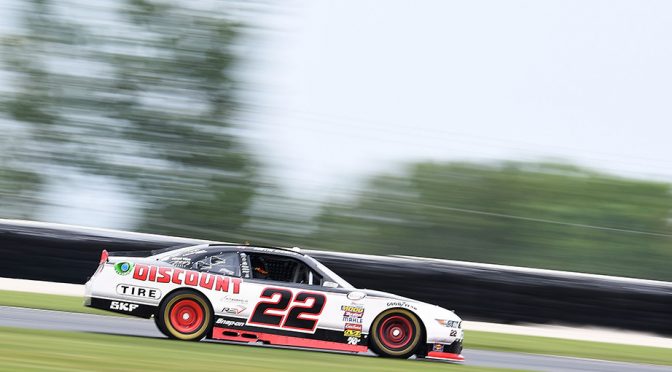
Austin Cindric, in the No. 22 Team Penske Ford, will start from the pole with James Davison, in the No. 20 Joe Gibbs Racing Toyota, also on the front row.

Elliott Sadler, Christopher Bell and Justin Marks rounded out the top five.

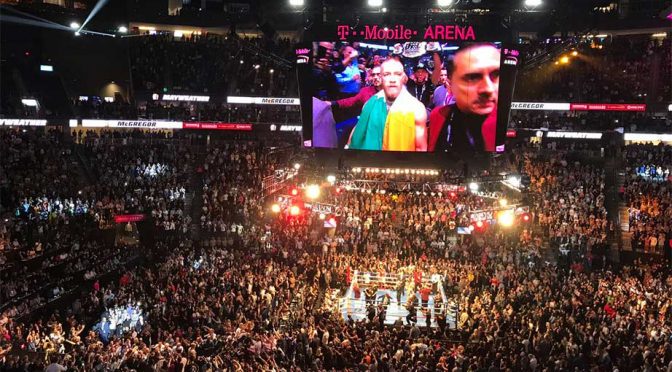
The sports world turned its collective eye to the Conor McGregor-Floyd Mayweather fight on Saturday night (and into Sunday morning), and NASCAR Nation was no different.

Current and future Joe Gibbs Racing drivers Kyle Busch and Erik Jones attended the bout in Las Vegas, and Jeff Gordon was shown on the red carpet during pre-fight coverage.

McGregor, a Mixed Martial Arts star from Ireland, and Mayweather, who entered Saturday’s fight with a 49-0 record, had drummed up incredible interest for the one-of-a-kind event.

Mayweather won the fight in the 10th round by TKO.

Here’s a social media glance at NASCAR’s reaction:

RELATED: Final practice results | Full schedule: Road America

Australian racer James Davison led final NASCAR XFINITY Series practice Saturday afternoon at Road America.

Davison clocked a best lap of 181.691 mph in the Joe Gibbs Racing No. 20 Toyota as he preps for just his third career start in the series. The Aussie, who has raced in the Indianapolis 500 three times, will turn 31 the day after Sunday’s Johnsonville 180 (3 p.m. ET, NBC, MRN, SiriusXM).

Justin Marks, who led the opening 55-minute practice, was fast again in the late session, uncorking a 108.614-mph lap to place second on the leaderboard. Marks will make just his second start of the season Sunday in the Chip Ganassi Racing No. 42 Chevrolet.

Rookie Austin Cindric, 18, was third-fastest in both sessions as he tunes up for his XFINITY debut in the Team Penske No. 22 Ford. Cole Custer (108.235 mph) and Brennan Poole (107.887), both of whom had slight off-course ventures, completed the top five in final practice.

Custer and Poole weren’t alone in veering off course. Dexter Bean also left the pavement early on, and Nicolas Hammann’s slide into the Turn 3 sand with three minutes remaining brought a slightly early end to the session.

Spencer Gallagher, 14th-fastest in final practice, stalled on the track when his GMS Racing No. 23 Chevrolet ran out of fuel.

Elliott Sadler, the series’ points leader, was 15th-fastest in the JR Motorsports No. 1 Chevrolet.

Marks sets early pace in first practice

RELATED: Practice 1 results

Justin Marks rose to the top of the leaderboard in Saturday’s opening practice for the NASCAR XFINITY Series at Road America, completing a 1-2 sweep for Chip Ganassi Racing drivers.

Marks registered a fast lap of 107.923 mph on the sprawling 4.048-mile road course in the Ganassi No. 42 Chevrolet. Marks will be prepping for his fourth Road America start in Sunday’s Johnsonville 180 (3 p.m. ET, NBC, MRN, SiriusXM).

Brennan Poole was second-fastest in the 55-minute session, steering the Ganassi No. 48 Chevy to a 107.846-mph lap. Austin Cindric was third, readying for his XFINITY Series debut in the Team Penske No. 22 Ford.

Justin Allgaier and former Road America winner Brendan Gaughan completed the top five on the speed chart.

Series points leader Elliott Sadler was 18th-fastest (106.070 mph) in the JR Motorsports No. 1 Chevrolet.

A handful of drivers had relatively harmless off-course excursions in the tricky Turn 5 section. Among those were Matt Tifft, Ben Kennedy and Spencer Gallagher. Ryan Reed also went off the track in the Turn 11 kink late in the session, but managed to keep his car off the wall.

The Joe Gibbs Racing No. 18 Toyota of Christopher Bell completed just one lap in practice before he drove to the garage. His crew spent the remainder of the session making an engine change.

Four teams were docked 15 minutes of practice time for infractions incurred last weekend at Bristol Motor Speedway. Richard Childress Racing teammates Daniel Hemric and Kennedy each had 15-minute deductions because their cars failed the Laser Inspection Station twice at Bristol. The No. 16 Ford of Ryan Reed and the No. 74 Dodge of John Graham were held because their cars were late for Bristol inspection.

While the NASCAR XFINITY Series preps for Sunday’s Johnsonville 180 at Road America (3 p.m. ET, NBC, MRN, Sirius XM NASCAR Radio, NBC Sports App), Monster Energy NASCAR Cup Series drivers are in the middle of their final off weekend of the year.

Monster Energy Series drivers will be back in action for NASCAR’s official throwback weekend — the Bojangles’ Southern 500 at Darlington Raceway on Sept. 3, followed by the regular-season finale at Richmond International Raceway on Sept. 9.

As the playoffs loom, see how a few of the drivers are spending the down time before things ramp back up.


Vacation!

A post shared by Kyle Busch (@rowdybusch) on

Nice morning shot

A post shared by Kyle Larson (@kylelarson42) on

☮️out! We off the grid! #️⃣3️⃣0️⃣

A post shared by Danica Patrick (@danicapatrick) on

Dat yacht life! #dirty30 @stenhousejr ⚓️

A post shared by Danica Patrick (@danicapatrick) on

RELATED: 2018 NASCAR schedules

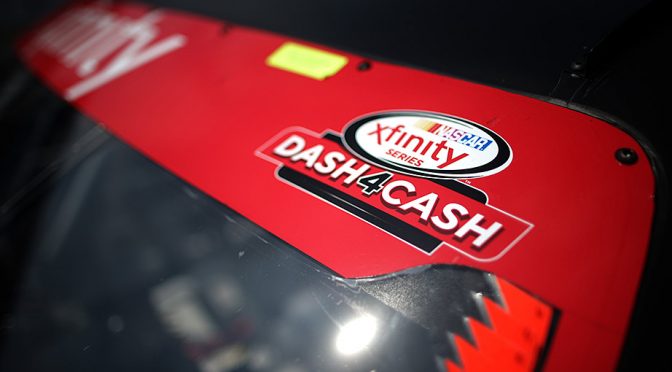
NASCAR announced Friday the four tracks that will compose the Dash 4 Cash incentive program in the 2018 NASCAR XFINITY Series, a springtime quartet that includes a first-time appearance by Talladega Superspeedway.

The four Dash 4 Cash races will be run consecutively on the overall series schedule, starting at Bristol Motor Speedway on April 14. From there, the bonus program rolls on to Richmond Raceway (April 20) and Talladega (April 28) before concluding at Dover International Speedway on May 5.

“We’re excited for the return of the very popular NASCAR XFINITY Series Dash 4 Cash program, which will take place at four unique race tracks in 2018,” said Jim Cassidy, NASCAR Senior Vice President of Racing Operations. “Each track demands different techniques and strategies, which will ultimately benefit the fans. It will again put a premium on the immense talent in the series, as the spotlight continues to shine on our rising stars during this four consecutive race stretch.”

Rules and formats for the four-race Dash 4 Cash program will be announced at a later date. The program offered up $100,000 paydays for eligible XFINITY Series regulars during Dash 4 Cash weekends last season.

RELATED: Recap the 2017 program

Talladega’s first appearance will mark only the third restrictor-plate race since the Dash 4 Cash initiative began in 2009. Daytona International Speedway hosted Dash 4 Cash events in 2011 and 2013.

Bristol and Dover are both on the Dash 4 Cash schedule for the fourth straight year. Richmond will also become a four-time Dash 4 Cash host in 2018; its previous events for the program have not been held consecutively (2011, ’16, ’17).

RELATED: Inside look at safety efforts at NASCAR Research & Development

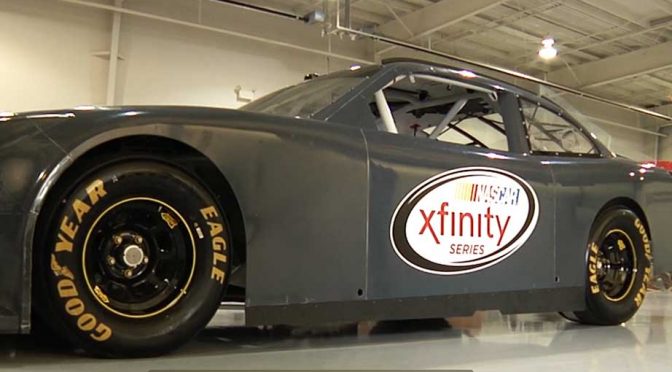
CONCORD, N.C. — There’s plenty of “new” to be found in the new flange-fit composite body that will be phased into the NASCAR XFINITY Series starting later this season. New technology, new cost-cutting measures and conveniences, plus new officiating fail safes are on tap.

But it’s also worth noticing what hasn’t changed, NASCAR’s senior director of team efficiencies Brett Bodine explained in a Thursday walk-through with a Toyota Camry test mule at the NASCAR Research & Development Center.

The car, Bodine said, retains the same dimensions as its steel-bodied predecessor. Plus, at a casual glance either 50 feet away or from the middle of the grandstands, the car offers no obvious visual cues that its body is composed of 13 interlocking laminate panels.

“It doesn’t look any different,” Bodine said, noting that the basic shapes and surfaces carry over from car to car. After those first-blush appearances, the differences become clearer.

The car received its first close-up for the media Thursday at the NASCAR R&D Center, just two weeks before the first of this season’s three scheduled races for the technology. XFINITY Series teams will have the option of racing the composite bodies at Richmond (Sept. 8), Dover (Sept. 30) and Phoenix (Nov. 11) as the season winds down. The current plan is to introduce the new body style at all tracks except Daytona and Talladega next year, with a full-fledged implementation in 2019.

GMS Racing tested at Richmond Raceway last week, using a rookie test for Spencer Gallagher to allow the team to get accustomed to the new body style. Bodine said the team reported a “virtually seamless” transition, keeping the timetable for a gradual phasing-in on a steady track.

“The decision process was really all on the teams,” Bodine said of the timing. “We presented them with several options through the collaboration throughout the process, the timing of when the panels would be ready out of production in a large enough supply. Certainly, the teams wanted to run it a few races on smaller tracks to get an understanding of how durable the car was going to be. All of those factors went into the teams’ and industry’s decision on this rollout plan.”

Wisconsin-based Five Star RaceCar Bodies produces the composite-material panels, which are all implanted with an RFID transponder, similar to how pets are micro-chipped. That feature helps NASCAR competition officials track inventory.

MORE: Take a 360-degree tour of the flange-fit XFINITY Series car body

Savings in time and cost come with the design. Instead of a steel body welded onto the chassis, parts lock and bolt on, making it far easier to replace damaged panels. Today’s crash in practice that might be an automatic decision to unload a backup car could become tomorrow’s repair or replacement for an individual panel, a process that could lead teams to keep fewer cars in stock. Furthermore, the process to hang a composite body will take far less time — an estimated two days versus the nearly two weeks to form, shape and weld the current steel-body style.

A closer inspection reveals a built-in anti-tampering detail, a raised honeycomb pattern on the surface of panels in the most aero-sensitive areas. If a team tries to sand or otherwise massage the aerodynamics, blemishes to the pattern will reveal the infractions.

While the new body style won’t stop crew chiefs from pushing the boundaries of the rules to gain an advantage, Bodine said the project was developed with fair play in mind.

“That’s their job,” Bodine said, noting crew chiefs’ long history of experimentation. “Their job is to try to be better than the other team. Our responsibility to the industry is to be stewards of the sport, create as level a playing field as possible, and we feel this flange-fit composite body will provide the officials with more tools to ensure that level playing field.”

Bodine said he expected nearly 85 to 90 percent of the field for the XFINITY Series’ trip to Richmond to be using the flange-fit body. There are competitive incentives for doing so; the steel-body cars will be 150 pounds heavier than their composite-bodied counterparts and they will also race without the aero benefit of a radiator pan.

Those decisions and others were reached through collaboration among NASCAR competition officials and team technical directors.

“They asked us to make sure the flange-fit body was the body of choice,” Bodine said, noting that teams wanted to concentrate their resources on a single body style.

Teams in the NASCAR K&N Pro Series have used the Five Star composite bodies since 2015, providing a time for competition officials to learn the ins and outs of the body style before elevating them to a NASCAR national series. That evolution raises the question of whether composite bodies are in the development pipeline for the Monster Energy NASCAR Cup Series.

“Right now, our main concern is making it successful in XFINITY,” Bodine said. “We’ve got to get them on the race track, get them running side by side, we’ve got to understand the durability of the car, and then we’ll evaluate the future of a project like this once we’ve got all the information we need.”

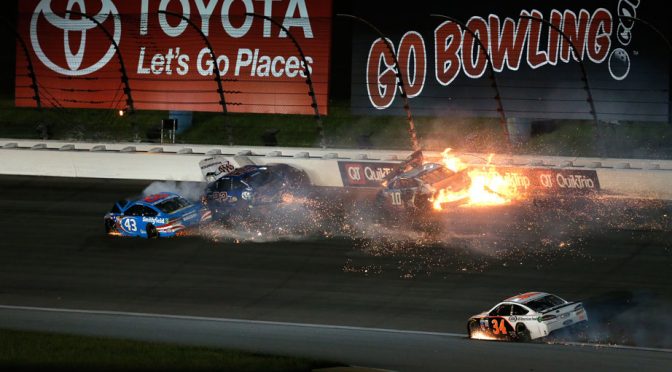
An accident unfolds on the track and is witnessed by many of the fans in the stands as well as those watching the race at home on television.

There will be replays on the big video boards at the track as well as those provided by the network.

Those involved make their way to the ambulance for a mandatory trip to the care center. Their car or cars are driven to the garage, or if the damage is too severe they’re transported there by a wrecker or on a rollback.

Eventually, the race resumes, and for the most part the incident is soon forgotten by anyone who might have seen it unfold.

When it comes to safety in NASCAR, that’s what comes to mind for a lot of folks. The wreck, the cleanup, the eventual resumption of the race.

In truth, there’s so much more going on. Fans can see some of it, but much more goes unseen. And similar to the competition side of racing, safety in the sport is ever-evolving.

• • •

Watch a NASCAR race today and you see safety advancements everywhere. But you really don’t “see” them until something unexpected, something dangerous, has taken place.

Drivers come onto pit road and their crews leap over the wall. The crewmen are wearing fire suits, gloves and helmets but the average fan doesn’t notice. He or she is watching to see if anything goes wrong or how fast that crew can complete its task and send its driver on his or her way.

Cars zoom around the track at speeds in excess of 100 mph at nearly every facility, and closer to 200 mph at most. The walls lining the track are covered in SAFER (steel and foam energy reduction) barrier. The barrier goes unnoticed by many — until a car smashes into the wall at full speed.

Those are just a couple of examples. Safety measures such as the stronger, safer EVP chassis currently used on superspeedways and expected to eventually be mandatory at all venues and the strengthened footbox area that provides additional protection to a driver’s lower extremities are more difficult to see, hidden underneath and inside the sheet metal surrounding the vehicle. But they’re there nonetheless.

The average fan sees a crewman pull a tear-off from the windshield of a car during a pit stop but probably don’t realize the windshield is made of a laminate material that’s been mandatory for use at all tracks for the Monster Energy NASCAR Cup Series since 2013.

Recent years have seen the focus turn more to the inside of the car and the driver compartment, but officials will never stop looking for ways to make the sport safer for everyone inside and outside of the car.

“That’s really a never-ending process for us,” John Patalak, Director of Safety Engineering for NASCAR told NASCAR.com during a recent visit to the NASCAR Research & Development Center.

“Sometimes we have opportunities to be proactive, like the laminate windshield. That wasn’t necessarily tied to one specific incident where we were responding to an injury or an issue, but it was an opportunity we saw and realized that with the technology we have available to us we could make that part better and safer.”

Ideas can come from anywhere, he said. “From internal discussion among our group, an idea from the race teams, the driver, things we have observed. Sometimes it’s just things we see, hypothetical scenarios we create and say, ‘Wow, if that had gone a little differently … let’s look at that and see how we can make it better.’ ”

Other projects were the direct result of on-track incidents. Former series champion Kyle Busch missed the first 11 races of 2015 after suffering a compound fracture of his lower right leg and a mid-foot fracture of his left foot in a crash while competing in an XFINITY Series race.

That led to a closer look at the inside area of the driver compartment below the seat in what’s known as the footbox area.

“We were able to add toe board foam, an energy-absorbing foam, to the toe board and that reduced loads into the lower legs, ankles and knees of drivers during a frontal impact,” Patalak said.

While NASCAR’s safety team has grown in numbers in recent years, officials look to others outside the sport for guidance when necessary and to gather opinions from those not working inside the sport.

“We have a group of expert consultants … with a great level of experience, education and background in protecting humans during crashes,” Patalak said. “We will bounce ideas off them, we will use them to evaluate new head-and-neck restraints, we use their input as a fresh set of eyes on our data and conclusions to make sure we’re not missing anything, to make sure we’re going down the right road and really to help us ask the right questions or test the right things to make sure we are doing no harm.

“Sometimes we come up with a conclusion and it may be better for that exact, specific scenario but it’s important to evaluate it against all scenarios to make sure we’re not creating a hazard somewhere else that we would be unaware of.”

• • •

NASCAR’s at-track safety effort on the competition front is led by former racer David Green. His group’s job doesn’t begin when there’s an on-track accident. It starts days before, when the cars first roll off transporters and begin the inspection process.

Headrests and seat belts, HANS devices and the seats, themselves, all have to meet SFI specifications and those are checked by safety officials going into the race weekend. How are the belts installed, what type of restraint system is being used, what is the angle of the seat? Everything is noted and can be helpful afterward should the car be involved in an accident.

Each car is also outfitted with an IDR (incident data recorder) that will record specific information should the car exceed a predetermined impact threshold in a crash.

Green, Safety Manager for NASCAR, watches each race from a trailer in the infield. One TV screen shows the live feed as the race unfolds; a second carries the TV feed, which typically runs 5-7 seconds behind the live action. He also has a scanner that keeps him in radio contact with officials in the tower and those along pit road as well as other emergency personnel.

When an accident occurs, Green and his group will typically see it unfold via the live feed, take initial notes, then see it again seconds later on the TV feed. “That gives us kind of a baseline of what we’re going to look at out in the garage,” he said.

“I try to have an idea when I leave the trailer to what cars I’m looking at first, second, third if it’s a multi-car wreck. The impact as I see it on TV, that would weigh in a little bit on maybe some things I look into on the car.”

Once the car has arrived back in the garage, photos of the vehicle will be taken, a minimum of nine and as many as 50.

“But the nine are our baseline,” Green said. “That’s what we call the overview and includes the door number, primary damage, right front into the wall for example, secondary damage, right rear in the wall maybe, and a third area if maybe it bounced off the wall and hit another car or was hit by another car.

“And then we go directly inside the car. We look at headrest, we look at foot well, gas pedal area, brake pedal area, seat mounting. We put the seat belts back together as if the driver is sitting in the car. We see brand (of belts), any trends on belt mounting, whether it’s a seven- or nine-point belt system. …

“Finally we get photos of the inside from the headrest area, looking down at the dash. With the steering wheel on, with it off. On a hard right-front (impact) you see movement of stuff to the right. The knee knocker that protects his knees is to the right.

“All this stuff is common in a big hit but it reassures us that some of the things we’re doing and how we inspect it is the right manner.”

The information on the IDRs can be crucial, but Green said the pieces are often the last thing his team checks. If the light on the IDR is flashing, the impact has exceeded the pre-determined threshold and that data will need to be included in the report that will be filed and sent back to Patalak.

No wreck is categorized as minor or major, Green said, adding that “they’re all significant.

“We’ll let the data seek its path and show John what he needs to know (with our reports).”

The goal is to stay ahead of the curve with safety always in front of competition.

If everything inside the car works as it’s designed, is there anything left to be done one the safety front?

“That means (everyone) has done a great job, absolutely,” Green said. “But it also tells me we need to start looking a little deeper because as (NASCAR Chairman and CEO) Brian France said, ‘Without safety, we have nothing.’ I know that’s our motto as well.

“I’ve been very proud of what John has created here; it’s been an awesome opportunity to work with and learn from him.”
RELATED: Full Road America schedule | Playoff standings

It wasn’t that long ago that guys such as Matt Tifft and Daniel Hemric and Cole Custer were watching NASCAR races as fans, either on the television or occasionally from the track.

Today the three are among the new, young breed of drivers stepping into the fray, now finding themselves on the receiving end of the attention they once paid others.

Hemric is 26, a bit older but still young enough to recall the feeling of awe anytime he rode past one of the most impressive race shops in NASCAR — Dale Earnhardt Inc. in Mooresville, N.C.

“That was always cool to be able to drive by there and see what this guy from Kannapolis had done for himself,” Hemric said of the seven-time series champion and team owner.

“I was 7-8 years old and I can remember watching the Bristol night race, actually sitting on the foot of my parents’ bed and thinking to myself, ‘Man, this is an incredible place to watch a race.’ That’s like my first memory of NASCAR and Bristol. The race — Earnhardt goes on and moves Terry Labonte out of the way, spins him, and that’s where he got the old ‘rattle his cage’ quote.”

Growing up in Kannapolis, Hemric said it wasn’t unusual to run into NASCAR drivers or others involved in the sport, “but it was never a 1-on-1 situation; it was kind of like … being in Hollywood or somewhere and seeing an actor … just star-gazing as they walked by.”

Today, he’s driving the No. 21 Chevrolet for Richard Childress Racing. But he still remembers those early days of being a fan.

“It’s cool to have the opportunity to see us the same way,” he said.

The Bristol night race is a point of reference for Tifft as well. The 21-year-old said he can remember being “six or seven, and I still had a bedtime back then.

“I wasn’t allowed to watch any night races except for Bristol,” Tifft said. “I was allowed to watch until halfway and if I was good that day I was allowed to watch the end of the race. That was a big one in the summer for me because I would always be real excited about that and then the next week you’d be starting school, which I hated, so this was like that big celebration one of the summer.”

Tifft was a fan of Jeff Gordon. Custer, whose father Joe is president of Stewart-Haas Racing, has been around racing most of his life and says that as a youngster, he was a fan of Jason Leffler and Johnny Sauter.

“I liked those guys’ personalities and how they raced and everything,” Custer said. “Definitely a lot of good memories of going to the race track with Dad.”

All three competed in the Camping World Truck Series and have since moved on to XFINITY competition where they are vying for Sunoco Rookie of the Year honors. Custer is in his first full year with SHR, piloting the No. 00 Ford.

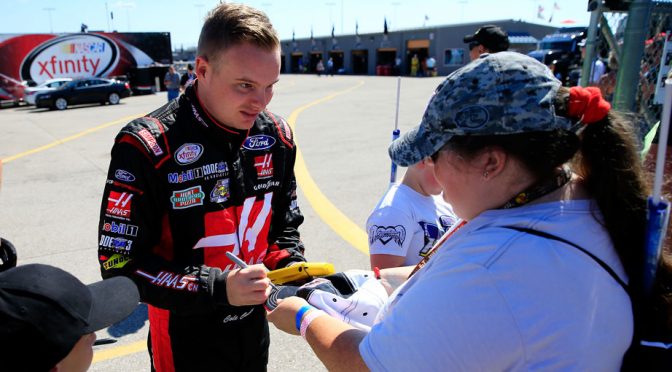
The biggest difference in driver/fan interaction today, they agree, is social media. But face-time at the track, whether it’s the scheduled autograph signings or chance meetings in the garage, is still a big selling point for the sport.

“I never had that (interaction), not to say the opportunities weren’t there then but they weren’t as right in front of our face as they are now on a day-to-day basis now with social media and the media pushing us in general,” Hemric said.

“I can remember, we all came up racing together, when it was all about the five or six elite guys. Nowadays, the way fans can interact it’s not just those elite guys …

“The opportunity to market yourself and brand yourself and have that interaction is at a whole different level and I’m just thankful for that. I think we all are and I think everybody in here owes that to everyone that’s come before us for that reason.”

The popularity of the sport that drew them in as youngsters is something each believes can be attained once again.

“We all got involved and were fans of it when it was at its peak,” Tifft said, “and saw how great it can be and I think we still see it as that.

“The competition is great and we all want to be able to have long careers where we can be successful in the Cup Series for a long way to come and have the fan base back with that. … It’s part us and part making sure we’re putting on a great show for the fans and interacting with them.”