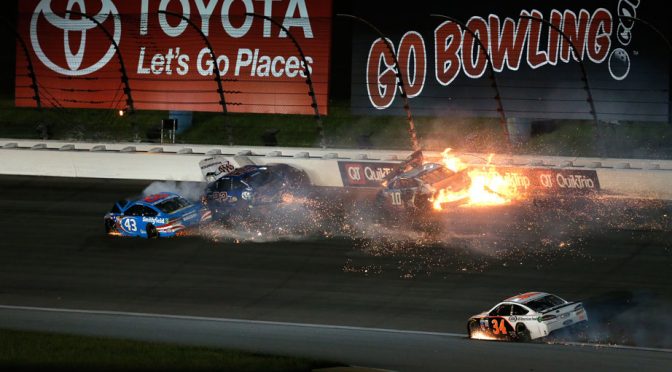
An accident unfolds on the track and is witnessed by many of the fans in the stands as well as those watching the race at home on television.

There will be replays on the big video boards at the track as well as those provided by the network.

Those involved make their way to the ambulance for a mandatory trip to the care center. Their car or cars are driven to the garage, or if the damage is too severe they’re transported there by a wrecker or on a rollback.

Eventually, the race resumes, and for the most part the incident is soon forgotten by anyone who might have seen it unfold.

When it comes to safety in NASCAR, that’s what comes to mind for a lot of folks. The wreck, the cleanup, the eventual resumption of the race.

In truth, there’s so much more going on. Fans can see some of it, but much more goes unseen. And similar to the competition side of racing, safety in the sport is ever-evolving.

• • •

Watch a NASCAR race today and you see safety advancements everywhere. But you really don’t “see” them until something unexpected, something dangerous, has taken place.

Drivers come onto pit road and their crews leap over the wall. The crewmen are wearing fire suits, gloves and helmets but the average fan doesn’t notice. He or she is watching to see if anything goes wrong or how fast that crew can complete its task and send its driver on his or her way.

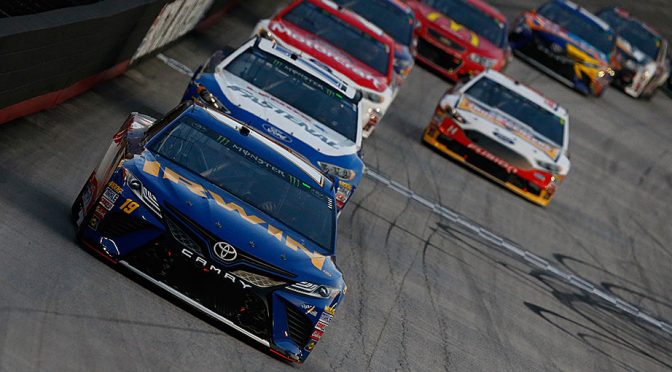
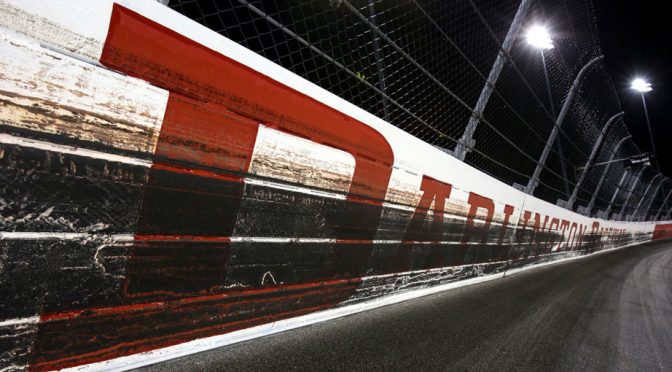
Cars zoom around the track at speeds in excess of 100 mph at nearly every facility, and closer to 200 mph at most. The walls lining the track are covered in SAFER (steel and foam energy reduction) barrier. The barrier goes unnoticed by many — until a car smashes into the wall at full speed.

Those are just a couple of examples. Safety measures such as the stronger, safer EVP chassis currently used on superspeedways and expected to eventually be mandatory at all venues and the strengthened footbox area that provides additional protection to a driver’s lower extremities are more difficult to see, hidden underneath and inside the sheet metal surrounding the vehicle. But they’re there nonetheless.

The average fan sees a crewman pull a tear-off from the windshield of a car during a pit stop but probably don’t realize the windshield is made of a laminate material that’s been mandatory for use at all tracks for the Monster Energy NASCAR Cup Series since 2013.

Recent years have seen the focus turn more to the inside of the car and the driver compartment, but officials will never stop looking for ways to make the sport safer for everyone inside and outside of the car.

“That’s really a never-ending process for us,” John Patalak, Director of Safety Engineering for NASCAR told NASCAR.com during a recent visit to the NASCAR Research & Development Center.

“Sometimes we have opportunities to be proactive, like the laminate windshield. That wasn’t necessarily tied to one specific incident where we were responding to an injury or an issue, but it was an opportunity we saw and realized that with the technology we have available to us we could make that part better and safer.”

Ideas can come from anywhere, he said. “From internal discussion among our group, an idea from the race teams, the driver, things we have observed. Sometimes it’s just things we see, hypothetical scenarios we create and say, ‘Wow, if that had gone a little differently … let’s look at that and see how we can make it better.’ ”

Other projects were the direct result of on-track incidents. Former series champion Kyle Busch missed the first 11 races of 2015 after suffering a compound fracture of his lower right leg and a mid-foot fracture of his left foot in a crash while competing in an XFINITY Series race.

That led to a closer look at the inside area of the driver compartment below the seat in what’s known as the footbox area.

“We were able to add toe board foam, an energy-absorbing foam, to the toe board and that reduced loads into the lower legs, ankles and knees of drivers during a frontal impact,” Patalak said.

While NASCAR’s safety team has grown in numbers in recent years, officials look to others outside the sport for guidance when necessary and to gather opinions from those not working inside the sport.

“We have a group of expert consultants … with a great level of experience, education and background in protecting humans during crashes,” Patalak said. “We will bounce ideas off them, we will use them to evaluate new head-and-neck restraints, we use their input as a fresh set of eyes on our data and conclusions to make sure we’re not missing anything, to make sure we’re going down the right road and really to help us ask the right questions or test the right things to make sure we are doing no harm.

“Sometimes we come up with a conclusion and it may be better for that exact, specific scenario but it’s important to evaluate it against all scenarios to make sure we’re not creating a hazard somewhere else that we would be unaware of.”

• • •

NASCAR’s at-track safety effort on the competition front is led by former racer David Green. His group’s job doesn’t begin when there’s an on-track accident. It starts days before, when the cars first roll off transporters and begin the inspection process.

Headrests and seat belts, HANS devices and the seats, themselves, all have to meet SFI specifications and those are checked by safety officials going into the race weekend. How are the belts installed, what type of restraint system is being used, what is the angle of the seat? Everything is noted and can be helpful afterward should the car be involved in an accident.

Each car is also outfitted with an IDR (incident data recorder) that will record specific information should the car exceed a predetermined impact threshold in a crash.

Green, Safety Manager for NASCAR, watches each race from a trailer in the infield. One TV screen shows the live feed as the race unfolds; a second carries the TV feed, which typically runs 5-7 seconds behind the live action. He also has a scanner that keeps him in radio contact with officials in the tower and those along pit road as well as other emergency personnel.

When an accident occurs, Green and his group will typically see it unfold via the live feed, take initial notes, then see it again seconds later on the TV feed. “That gives us kind of a baseline of what we’re going to look at out in the garage,” he said.

“I try to have an idea when I leave the trailer to what cars I’m looking at first, second, third if it’s a multi-car wreck. The impact as I see it on TV, that would weigh in a little bit on maybe some things I look into on the car.”

Once the car has arrived back in the garage, photos of the vehicle will be taken, a minimum of nine and as many as 50.

“But the nine are our baseline,” Green said. “That’s what we call the overview and includes the door number, primary damage, right front into the wall for example, secondary damage, right rear in the wall maybe, and a third area if maybe it bounced off the wall and hit another car or was hit by another car.

“And then we go directly inside the car. We look at headrest, we look at foot well, gas pedal area, brake pedal area, seat mounting. We put the seat belts back together as if the driver is sitting in the car. We see brand (of belts), any trends on belt mounting, whether it’s a seven- or nine-point belt system. …

“Finally we get photos of the inside from the headrest area, looking down at the dash. With the steering wheel on, with it off. On a hard right-front (impact) you see movement of stuff to the right. The knee knocker that protects his knees is to the right.

“All this stuff is common in a big hit but it reassures us that some of the things we’re doing and how we inspect it is the right manner.”

The information on the IDRs can be crucial, but Green said the pieces are often the last thing his team checks. If the light on the IDR is flashing, the impact has exceeded the pre-determined threshold and that data will need to be included in the report that will be filed and sent back to Patalak.

No wreck is categorized as minor or major, Green said, adding that “they’re all significant.

“We’ll let the data seek its path and show John what he needs to know (with our reports).”

The goal is to stay ahead of the curve with safety always in front of competition.

If everything inside the car works as it’s designed, is there anything left to be done one the safety front?

“That means (everyone) has done a great job, absolutely,” Green said. “But it also tells me we need to start looking a little deeper because as (NASCAR Chairman and CEO) Brian France said, ‘Without safety, we have nothing.’ I know that’s our motto as well.

“I’ve been very proud of what John has created here; it’s been an awesome opportunity to work with and learn from him.”
RELATED: Full Road America schedule | Playoff standings

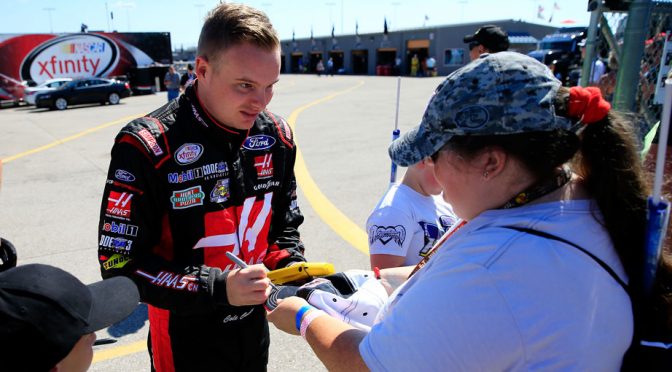
It wasn’t that long ago that guys such as Matt Tifft and Daniel Hemric and Cole Custer were watching NASCAR races as fans, either on the television or occasionally from the track.

Today the three are among the new, young breed of drivers stepping into the fray, now finding themselves on the receiving end of the attention they once paid others.

Hemric is 26, a bit older but still young enough to recall the feeling of awe anytime he rode past one of the most impressive race shops in NASCAR — Dale Earnhardt Inc. in Mooresville, N.C.

“That was always cool to be able to drive by there and see what this guy from Kannapolis had done for himself,” Hemric said of the seven-time series champion and team owner.

“I was 7-8 years old and I can remember watching the Bristol night race, actually sitting on the foot of my parents’ bed and thinking to myself, ‘Man, this is an incredible place to watch a race.’ That’s like my first memory of NASCAR and Bristol. The race — Earnhardt goes on and moves Terry Labonte out of the way, spins him, and that’s where he got the old ‘rattle his cage’ quote.”

Growing up in Kannapolis, Hemric said it wasn’t unusual to run into NASCAR drivers or others involved in the sport, “but it was never a 1-on-1 situation; it was kind of like … being in Hollywood or somewhere and seeing an actor … just star-gazing as they walked by.”

Today, he’s driving the No. 21 Chevrolet for Richard Childress Racing. But he still remembers those early days of being a fan.

“It’s cool to have the opportunity to see us the same way,” he said.

The Bristol night race is a point of reference for Tifft as well. The 21-year-old said he can remember being “six or seven, and I still had a bedtime back then.

“I wasn’t allowed to watch any night races except for Bristol,” Tifft said. “I was allowed to watch until halfway and if I was good that day I was allowed to watch the end of the race. That was a big one in the summer for me because I would always be real excited about that and then the next week you’d be starting school, which I hated, so this was like that big celebration one of the summer.”

Tifft was a fan of Jeff Gordon. Custer, whose father Joe is president of Stewart-Haas Racing, has been around racing most of his life and says that as a youngster, he was a fan of Jason Leffler and Johnny Sauter.

“I liked those guys’ personalities and how they raced and everything,” Custer said. “Definitely a lot of good memories of going to the race track with Dad.”

All three competed in the Camping World Truck Series and have since moved on to XFINITY competition where they are vying for Sunoco Rookie of the Year honors. Custer is in his first full year with SHR, piloting the No. 00 Ford.

The biggest difference in driver/fan interaction today, they agree, is social media. But face-time at the track, whether it’s the scheduled autograph signings or chance meetings in the garage, is still a big selling point for the sport.

“I never had that (interaction), not to say the opportunities weren’t there then but they weren’t as right in front of our face as they are now on a day-to-day basis now with social media and the media pushing us in general,” Hemric said.

“I can remember, we all came up racing together, when it was all about the five or six elite guys. Nowadays, the way fans can interact it’s not just those elite guys …

“The opportunity to market yourself and brand yourself and have that interaction is at a whole different level and I’m just thankful for that. I think we all are and I think everybody in here owes that to everyone that’s come before us for that reason.”

The popularity of the sport that drew them in as youngsters is something each believes can be attained once again.

“We all got involved and were fans of it when it was at its peak,” Tifft said, “and saw how great it can be and I think we still see it as that.

“The competition is great and we all want to be able to have long careers where we can be successful in the Cup Series for a long way to come and have the fan base back with that. … It’s part us and part making sure we’re putting on a great show for the fans and interacting with them.”

RELATED: Peer praise for Kyle Busch | Dale Jr. weighs in

Perhaps it’s because I’ve spent the last three decades reporting on NASCAR, but every time I see race fans tweeting or calling into radio shows that Kyle Busch wins too much, I am reminded of a couple other former NASCAR drivers who also “won too much.”

Winning in big league sports is the point of participation. Do it a lot – like the Yankees, the Lakers, the Canadiens … and Richard Petty – and you are a respected dynasty. Or should be.

Back in the 1980-90s, there was a guy named Dale Earnhardt who took it to his NASCAR competition without much obvious concern about whether he was getting cheered or jeered in Victory Lane. Although we remember the late and great seven-time champion in the fondest of ways, when he was racing there were plenty of those who griped about all his Cup trophy hoists (76 of them).

“Anyone but Dale” wasn’t just a homemade banner or something scrawled on the side of car windows at race tracks. It was a boisterous and unmistakable sub-movement that permeated tracks and camping grounds. You were with Dale or you were against Dale.

But you couldn’t deny Dale. He was Legendary with a capital L.

It may be premature to give 32-year-old Kyle Busch that L yet, but he sure is making a good case that it will be how he’s ultimately regarded despite the boos and jeers he gets after winning.

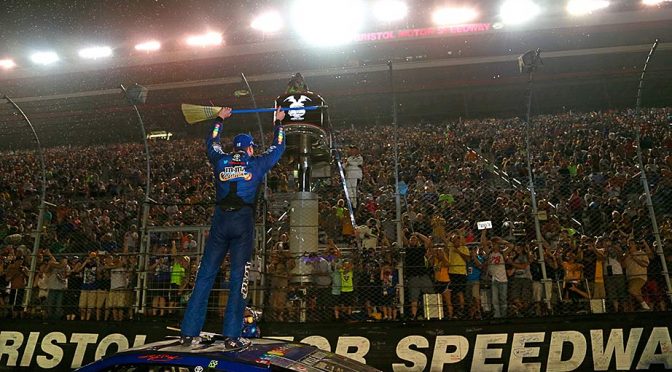
Like he got after sweeping all three national series races at Bristol Motor Speedway last weekend – for the second time in his career there. No one has ever earned a three-race sweep anywhere else – even once.

Another of Busch’s contemporaries, seven-time Cup champion Jimmie Johnson, receives similar receptions during driver introductions, and like Busch will be, Johnson is certainly considered among the sport’s greatest ever.

Although Busch has “only” one Cup championship so far (2015), he has a jaw-dropping 180 wins in NASCAR’s three national series. With his relative youth – and even with NASCAR’s new rules limiting Cup drivers’ participation in the XFINITY and Camping World Truck Series – Busch is likely to join NASCAR’s most celebrated winner, “The King” Richard Petty with 200 national series wins.

Petty’s all came in the Cup ranks – many in the 1960s and 70s when the series commonly ran 40-something races – but the 200 number is huge and iconic and Busch’s work should be respected as well.

Of his 180 NASCAR national series wins, Busch has 40 in Cup, a record 91 in XFINITY and 49 in the Truck Series.

Just for perspective, NASCAR Hall of Famer David Pearson has 106 wins (all but one in the Cup Series). Earnhardt had 97 major series wins (76 in Cup and 21 in XFINITY), the recently retired Jeff Gordon has 98 total (93 in Cup, five in XFINITY) and fellow retiree Tony Stewart has 62 national series victories (49 in Cup, 11 in XFINITY and 2 in the trucks).

While fans may be slow to appreciate Busch’s work – or at least slow to admit they do — many of the competitors he beat this past weekend publicly offered him praise – from Kyle Larson to Earnhardt’s son and namesake, Dale Earnhardt Jr.

“I think Kyle Busch would be considered by many people to be the greatest race car driver in the history of the sport if and when he wins a few more championships,” Earnhardt said. “I think that’s the only thing that’s not allowed him to creep into that conversation yet for a lot of people – just say the media. Maybe the media thinks that Jimmie (Johnson), my dad … there’s a lot of people that would say David Pearson might have been the greatest race car driver ever. Kyle’s definitely getting in this conversation. Particularly with weekends like that.”

Busch only races a handful of times in the Truck Series and XFINITY Series, but he’s competing against those series’ champions and veterans.

It can’t be too easy to randomly jump in a truck or XFINITY car and beat a field of guys who run them at every stop on the schedule. At the very least, instead of his detractors wishing Busch didn’t win, how about wishing the others could beat him?

And if they can’t, don’t begrudge Busch the trophy.

He’s earned it.

MORE: All throwback schemes
SHOP: Darlington gear

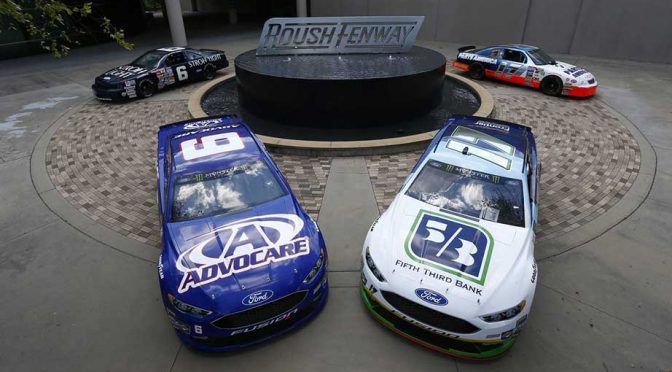
Roush Fenway Racing will honor two NASCAR Hall of Famers, including one of the company’s former drivers, with its throwback paint schemes at Darlington Raceway.

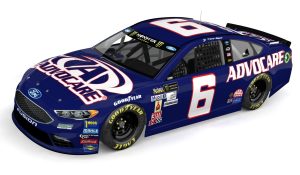
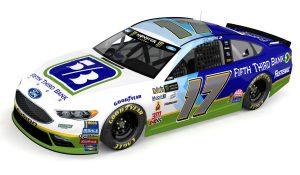
Announced Wednesday afternoon, Trevor Bayne will sport a former Mark Martin look while Ricky Stenhouse Jr. will once again honor Darrell Waltrip.

Bayne’s No. 6 AdvoCare Ford will resemble the car Martin drove during Roush Fenway’s first two seasons in the NASCAR Cup Series. In 1988 and ’89, Martin drove the dark blue car, at the time sponsored by Stroh’s Light, to one win, 602 laps led and 28 top-10 finishes. The victory came on October 22, 1989 at Rockingham Speedway.

In 47 starts at Darlington, Mark earned two wins and led 801 laps.

The No. 17 Ford scheme is a personal favorite of Stenhouse’s. The Fifth Third Bank colors are different than what Waltrip drove during the 1997 season, but the design is the same. Waltrip used this scheme in the 31 races he ran that year, finishing 26th in points.

At Darlington, Waltrip earned five wins in 55 starts in addition to leading 1,723 laps.

Roush Fenway Racing has five victories at Darlington Raceway in 152 starts.

The Bojangles’ Southern 500 is slated for Sept. 3.

MORE: All throwback schemes
SHOP: Darlington gear

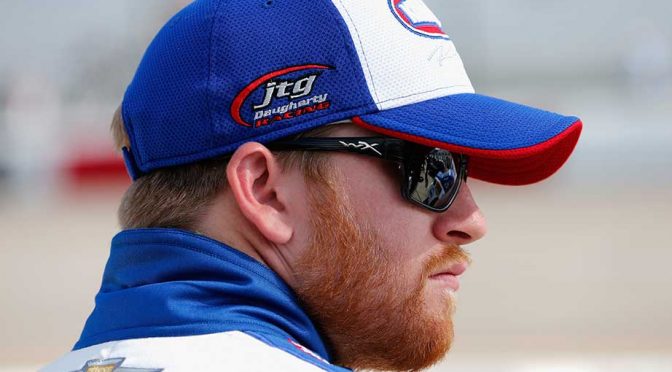
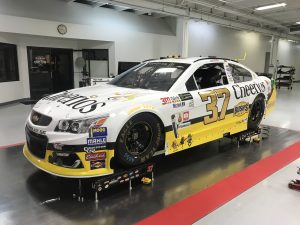
Chris Buescher’s No. 37 JTG Daugherty Racing Chevrolet for the Bojangles’ Southern 500 will pay homage to a driver who also once ran the same number.

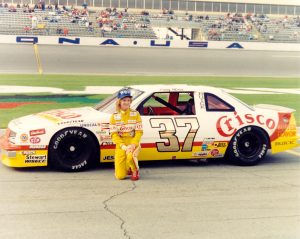
With sponsorship from Cheerios, Buescher’s paint scheme for Darlington Raceway on Sept. 3 will mimic Patty Moise’s from 1988 when she competed in what is now the XFINITY Series. Anchored by a gold No. 37, the design features a primarily white body with a black stripe underneath the number and then distinct yellow trim wrapping around the bottom of the car.

“I’m really excited to have our No. 37 Cheerios Chevrolet pay tribute to another former No. 37 car,” said Buescher in a team release. “When we looked at some of the possibilities for our paint scheme, this one stood out because of the No. 37 number.”

Moise, who made her NASCAR debut in 1986, drove a similar looking car with sponsorship from Crisco in 11 races in 1988 — including at Darlington where she finished 27th.

Of her 11 starts, Moise’s season-best finish was a 15th-place effort at Richmond Raceway. In 133 series starts, Moise earned four top-10 finishes.

Between 1987 and 1989, Moise also made five starts in the Cup Series. She earned a career-best finish of 26th in the July 1988 Daytona race.

This will be the third consecutive year Darlington has hosted the popular throwback weekend. The suggested celebrated time period is 1984-89.

“The throwback weekend is one of the coolest weekends we have on the schedule and Darlington Raceway is one of my favorite tracks as it is,” continued Buescher. “I look forward to taking our No. 37 Cheerios Chevrolet and putting on a great show Labor Day Weekend.”

Buescher is the 2015 XFINITY Series champion. Last year, he finished 17th in his Cup Series Darlington debut.

RELATED: Joey Galloway learns new kind of speed | Most memorable 2017 moments so far

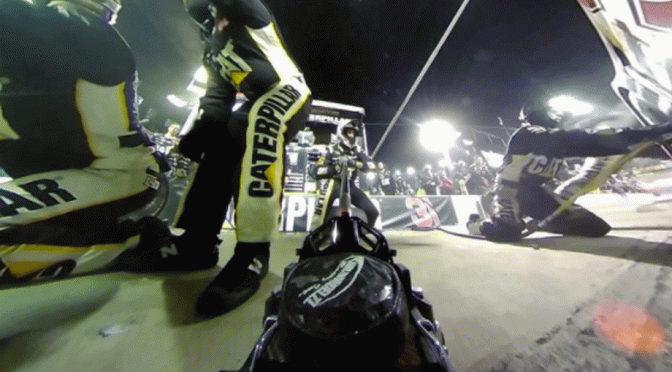
It’s not every day fans get to see what goes down on pit road — especially during an adrenaline-pumping pit stop.

Jackman Adam Lewis, a member of Ryan Newman’s pit crew, decided to change that.

Not only did Lewis hook a GoPro to his jack at Bristol Motor Speedway, he left it recording during the Monster Energy NASCAR Cup Series night race and was able to capture some mid-race magic.

Lewis’ speed with the jack helped Newman earn a sixth-place finish.

MORE: All throwback schemes
SHOP: Darlington gear

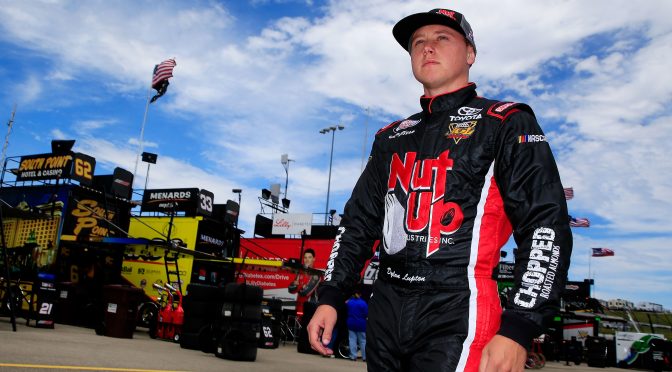
NASCAR XFINITY Series driver Dylan Lupton will pay homage to Jeff Gordon in a big way during throwback weekend at Darlington Raceway.

Lupton’s No. 24 JGL Racing Toyota will sport the infamous “Rainbow Warriors” paint scheme four-time Monster Energy NASCAR Cup Series champion Jeff Gordon drove from November 1992 through 2000. The paint scheme was revealed Wednesday on Lupton’s Twitter page.


Gordon collected three championships (1995, 1997, 1998) and 52 wins with this look on his No. 24 Hendrick Motorsports Chevrolet. The illustrious scheme first hit the track for the 1992 season finale at Atlanta Motor Speedway in Gordon’s first Cup Series race, which also served as seven-time champion Richard Petty’s last.

The XFINITY Series will be in action on Saturday, Sept. 2 for the Sports Clips Haircuts VFW 200 (3:30 p.m. ET, NBCSN, MRN, SiriusXM NASCAR Radio, NBC Sports App). It will be Lupton’s first start at Darlington after he made his NASCAR debut in 2015.

RELATED: Post-Bristol playoff watch

NASCAR issued penalties Wednesday to one team in the Monster Energy NASCAR Cup Series and two organizations in the NASCAR Camping World Truck Series for lug-nut violations.

All penalties came after post-race inspections revealed one unsecured lug nut on each vehicle after last week’s events at Bristol Motor Speedway. That included one infraction after Saturday’s Bass Pro Shops NRA Night Race, involving the Joe Gibbs Racing No. 19 Toyota driven by Sunoco Rookie of the Year candidate Daniel Suarez.

Suarez’s crew chief, Scott Graves, was fined $10,000 for the violation. It’s the third time that Graves has been docked that amount since taking the reins of the No. 19 in late March; he was also fined for single-lug violations after races at Pocono Raceway in June and New Hampshire Motor Speedway in July. Suarez finished 15th in the 40-car field at Bristol.

NASCAR also handed out penalties to two Truck Series teams after last Wednesday’s UNOH 200:

  • The Kyle Busch Motorsports No. 51 Toyota driven by Harrison Burton, who finished 18th
  • The Copp Motorsports No. 83 Chevrolet driven by JJ Yeley, who finished 19th

Kevin “Bono” Manion, crew chief for Burton’s No. 51, and Richard Mason, who was crew chief for Yeley’s No. 83 at Bristol, were each fined $2,500.

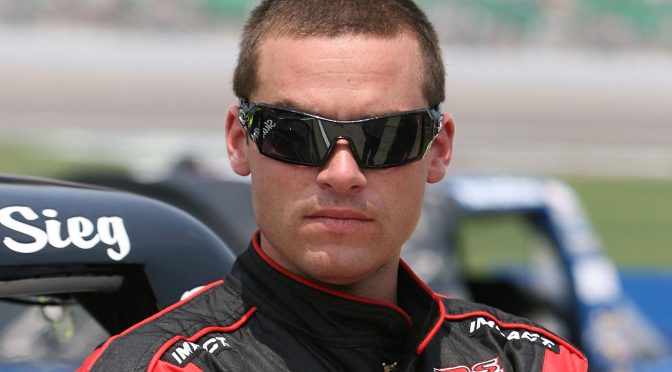
Former NASCAR driver Shane Sieg, older brother of NASCAR XFINITY Series driver Ryan Sieg, passed away over the weekend at the age of 34.

Shane Sieg competed in 68 NASCAR Camping World Truck Series races over the span of seven seasons from 2003 to 2011. He also made two NASCAR XFINITY Series starts in 2004. His last NASCAR national series event was the Camping World Truck Series race at Pocono Raceway in 2011, driving a family-owned No. 93 truck.

Ryan Sieg drives the No. 39 RSS Racing Chevrolet, 0wned by his father Rod Sieg, in the XFINITY Series. He currently sits 15th in the points standings. Ryan Sieg qualified for the inaugural XFINITY Series playoffs last year.

A NASCAR statement reads: “Shane Sieg was a passionate racer who shared a deep love of the sport. NASCAR extends its deepest condolences to the Sieg family for a racer lost too soon.”

Members of the NASCAR community also sent out their thoughts and condolences to the Sieg family following the tragic news.

DAYTONA BEACH, Fla. (August 23, 2017) –- On a day celebrating the sport’s iconic past, NASCAR® fans attending the Bojangles’ Southern 500 can share their race-day experiences from Darlington Raceway with millions of Snapchatters through a premium “Our Story” on Snapchat covering the Official Throwback Weekend of NASCAR, NASCAR announced today.

The “Our Story,” an expertly-curated stream of video and photo Snaps, will provide a unique, behind-the-scenes look at The Official Throwback Weekend of NASCAR from the perspective of fans and drivers during race day in Darlington, South Carolina, on Sept. 3.

“The Snapchat ‘Our Story’ at Darlington gives NASCAR an opportunity to showcase the history of our sport in a new and compelling way,” said Scott Warfield, NASCAR managing director, social and digital content. “Throwback Weekend is one of the most vibrant and colorful events on the NASCAR calendar – now Snapchat users across the world will get a taste of what it’s like to experience it on race day.”

Fans, teams and drivers at and near the racetrack will be able to share photo and video Snaps to a special “Our Story” that shows off the best visual experiences that Throwback Weekend has to offer. The Snapchat team will then curate and package Snaps of the various perspectives and experiences into a Story, which will air in Snapchat’s Discover platform for 24 hours.

The announcement is the latest in the continued partnership between NASCAR and Snap Inc. Earlier this season, Snapchat covered the 2017 DAYTONA 500® at Daytona International Speedway and Monster Energy NASCAR Cup Series™ races at Talladega Superspeedway and Charlotte Motor Speedway with “Our Stories.”

The Bojangles’ Southern 500 at Darlington Raceway will begin at 6 p.m. ET on Sunday, Sept. 3, and will be broadcast live on NBCSN, SiriusXM NASCAR Radio (channel 90) and MRN, with additional coverage on NASCAR.com.

Tickets to NASCAR national series events are available at NASCAR.com/tickets.