RELATED: Complete playoff picture | Johnson goes to backup car after early contact

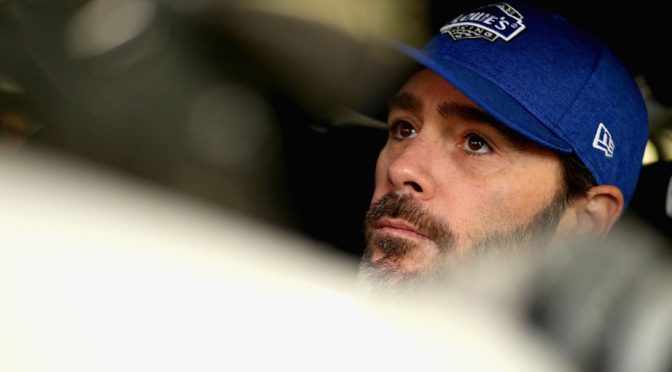
LOUDON, N.H. – At the three-quarter mark of the Monster Energy NASCAR Cup Series season, Jimmie Johnson is on pace for four wins – a boon for most teams, but a bit below the bar that’s been set compared to the six, seven, even 10-win campaigns that we’re accustomed to seeing from the No. 48 Chevrolet driver.

A record-tying seven championships deep, the 42-year-old Johnson is likely in the final stage of his career.

A stage, in fact, that has seen the introduction of something foreign to the Hendrick Motorsports driver and NASCAR as a whole … stages.

Johnson’s three 2017 wins to date all came within the first 13 races of the season, while the concept of stage racing was fairly novel and teams were still feeling things out. To that point, Johnson and crew chief Chad Knaus’ race strategy that led to the first seven titles remained largely unaltered: run hard, race fast and get to the finish line ahead of everyone else.

As the season wore on, other teams (see Nos. 18, 42, and particularly 78) began to adopt a strategy that included piling up stage wins and race wins — both of which the No. 48 team has been shut out of since an early June win at Dover.

In fact, Johnson and Co. have exactly – count ’em – one stage win in 2017, something the driver is starting to realize may be a determining factor throughout the remainder of the NASCAR Playoffs until Miami.

RELATED: 2017 stage point totals

“Those bonus points (for stage placement) are huge,” he said Friday at New Hampshire Motor Speedway, site of Sunday’s ISM Connect 300 (2 p.m. ET, NBCSN, PRN, SiriusXM NASCAR Radio). “We had a white board with points earned on last weekend’s race (at Chicago) and you would think that an eighth-place finish would yield a fair amount of points, but we didn’t score any stage points. I can’t remember exactly now, but we didn’t leave the track with the eighth most points scored; it was much worse than that and that is a problem, especially as you get to the later rounds and need to count on points.

“I think we are all living it first-hand. I think we understood the concept, but now that it is in your face and you live it day-to-day and kind of obsess over it, I think it is making it much more apparent to myself and others how important those stage points are.”

Just take a look at where Martin Truex Jr., driver of the No. 78 Toyota, is in the playoffs standings compared to Johnson after the first race at Chicago. Truex won the race and Johnson finished eighth, but they’re separated by a whopping 56 points because of the 78 team’s emphasis on stage wins throughout 2017.

Johnson has proven time and again since his first title in 2006 that he can win in untenable circumstances, under evolving championship rules (points, 10-12- or 16-driver playoff fields, elimination-style, elimination style with stages, etc.).

RELATED: Jimmie in his own words: ‘I want to be the best’

But he’s now realizing the situation his team is in currently and the points cushion his team maybe could have or should have – and the uphill battle he’ll be fighting over the next nine weeks.

“Yeah, this year’s format definitely doesn’t fit my natural tendency in a car and kind of what our team has earned seven championships through. So, we felt like without a doubt this is going to challenge us more than any other format in our history in the sport,” Johnson said. ” … We always show up at the end of a race and if you don’t win the race there is a very good chance you are going to earn (fewer) points than you did if you were up front at the start and got stage points in the first and second stage. That is just the reality of it and it’s forcing me to do things differently. … ”

“But, winning does supersede all,” he continued. “So, if we can look at the new approach and at the same time not take anything away from the way we have won so many races and championships that will fix all.”

And if there was ever an old dog that could learn new tricks, it’s Johnson.

Mess with the bull, you get the horns.

A phrase that needs little explanation, especially when it’s coming from someone like Johnny Sauter, who isn’t afraid to do whatever it takes to win.

RELATED: Sauter’s intense post-race interview

After celebrating in Victory Lane at Chicago, Sauter, the 2016 series champion, addressed perhaps the key question of the NASCAR Camping World Trucks Series Playoffs — How do the veterans feel about the youth movement happening in the series?

Sauter’s response: He isn’t afraid to go toe-to-toe with anyone, even drivers who are half his age.

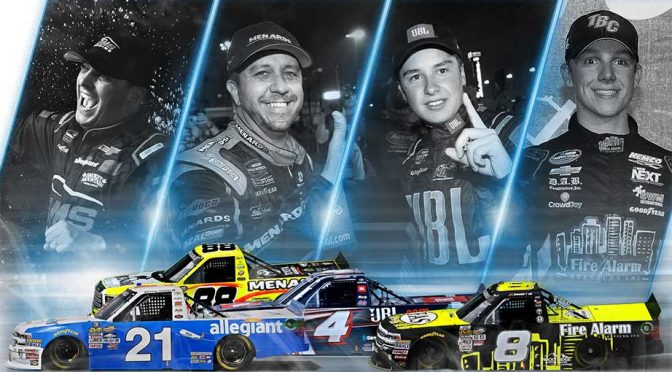
The 2017 NASCAR Camping World Truck Series Playoffs field is a melting pot of two veteran drivers, one being Sauter, and six fast-rising young guns who are trying to jumpstart their early careers.

MORE: Analyzing the full field

Ben Rhodes, driver of the No. 27 Safelite AutoGlass Toyota Tundra, addressed the topic with NASCAR.com after Sauter said “If Ben Rhodes wants a piece of it, let’s go” post-Chicago.

“I’ll make sure to bring my leather gloves,” Rhodes told ‪NASCAR.com. “I’ll wrestle the cattle up. I ain’t scared. He can be a bully all he wants, it doesn’t intimidate me.”

With a championship on the line, all eight drivers — no matter the age — want to win it all.

Will experience be a factor? Will the motivation to make a statement be the key?

The journey begins at New Hampshire on Saturday (1 p.m. ET, FS1, PRN, SiriusXM NASCAR Radio).

RELATED: Practice results

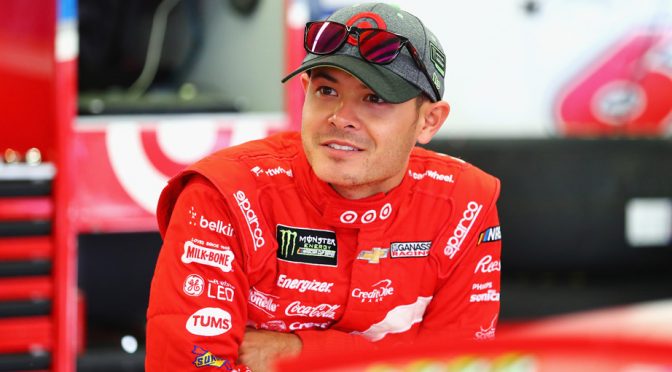
Using a top speed of 135.714 mph, Kyle Larson brought his No. 42 Chip Ganassi Racing Chevrolet to the top of the leaderboard in Friday’s opening Monster Energy NASCAR Cup Series practice at New Hampshire Motor Speedway.

Kyle Busch was second-fastest, his No. 18 Joe Gibbs Racing Toyota notching a fast lap of 135.342 mph. Hendrick Motorsports’ Kasey Kahne clocked the third-quickest speed in his No. 5 Chevrolet (135.198 mph), while last week’s Chicago winner Martin Truex Jr. nabbed the fourth spot in his No. 78 Furniture Row Racing Toyota (135.188 mph) during the waning minutes of the session. Ryan Blaney rounded out the top five, his No. 21 Wood Brothers Racing Ford coming up at 135.030 mph.

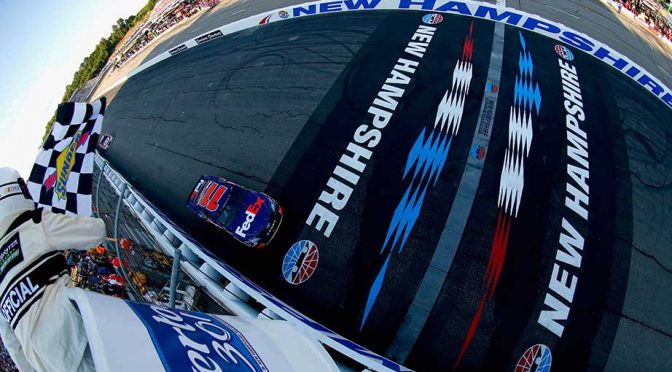
Denny Hamlin, the most recent winner at the Magic Mile, ranked sixth in the field, his No. 11 Joe Gibbs Racing Toyota notching a speed of 134.973 mph.  Reigning race winner Kevin Harvick was 19th-fastest in his No. 4 Stewart-Haas Racing Ford.

The top 10 drivers in opening practice are all playoff contenders with the exception of Erik Jones (eighth-fastest).

Hendrick Motorsports teammates Jimmie Johnson and Chase Elliott both hit the outside wall early during opening practice. Both Johnson and Elliott will go to backup cars. Elliott did not make another lap in the backup car and was the slowest in opening practice among the 16 NASCAR Playoffs drivers (32nd).

RELATED: Johnson, Elliott smack the wall

Friday’s opening practice run was the only practice time for Monster Energy Series teams on the day. The NASCAR Camping World Trucks Series practices twice, with Monster Energy Series qualifying slated for 5:15 p.m. ET (NBCSN/NBC Sports App).

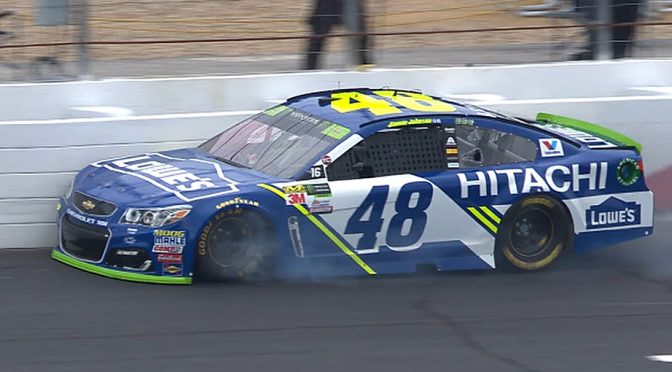
LOUDON, N.H. — Hendrick Motorsports drivers Jimmie Johnson and Chase Elliott got into an early hole Friday morning at New Hampshire Motor Speedway, each drilling the wall in opening practice for Sunday’s Monster Energy NASCAR Cup Series Playoffs race.

Johnson, the defending series champion, put his No. 48 Chevrolet into the outside wall early in the session. After the damage was deemed significant, the team immediately pulled out a backup entry.

Elliott nearly matched Johnson’s mistake minutes later, getting his No. 24 Chevrolet into the wall, as well. He also will go to a backup car.

As the incidents came prior to Friday’s qualifying session, the switch to backup entries will not necessitate starting from the rear of the field in Sunday’s ISM Connect 300 (2 p.m. ET, NBCSN, PRN, SiriusXM NASCAR Radio).

“I had a good first lap and entering Turn 3 for my second lap just got in there with a lot of speed anticipated it sticking, didn’t quite stick and then once I got out of the PJ1 there was just really no slowing down or directing it off the wall at that point,” the seven-time champ said following the wreck. “Came around and it got the fence. Definitely not the way we wanted to start. Frustrating, but we will take it and go figure it out.”

The wrecks came shortly following Johnson’s foretelling comments on the PJ1 track compound that was added to the asphalt of the 1.058-mile New Hampshire oval ahead of the weekend.

“When (the compound) on the newer-side, you can let off the brake earlier and just carry a lot of speed to the center of the turn and count on that sticky stuff to catch the car and help it change directions. As it wears off, you go to your same braking point and you let off, you roll in the turn, you miss your mark,” he said.

The timing – while fortuitous that this came before qualifying – couldn’t be much worse for Elliott and Co., as the 24 group already finds itself without crew chief Alan Gustafson and car chief Joshua Kirk. The pair currently are serving one-race suspensions stemming from an L1-level penalty assessed after post-race inspection following Elliott’s runner-up finish at Chicago last Sunday.

The finish was ruled encumbered and Elliott was docked 15 driver points, positioning him a precarious eighth in NASCAR Playoffs standings.

“Just got kind of loose in Turn 3, got up the track and just ran out of room,” Elliott told NBCSN. “I hate it. That is not what we needed. We are behind this weekend now, so that is never good, but it’s Friday, so we’ve got another day and a half to get things turned around and try to get it fixed.”

While just a small sample size of three races, Elliott’s numbers at Loudon don’t particularly suggest he’ll have an easy go of it in a backup car, either. In his trio of Monster Energy Series starts, the sophomore driver has an average finish of 19.3 with no top-10 finishes.

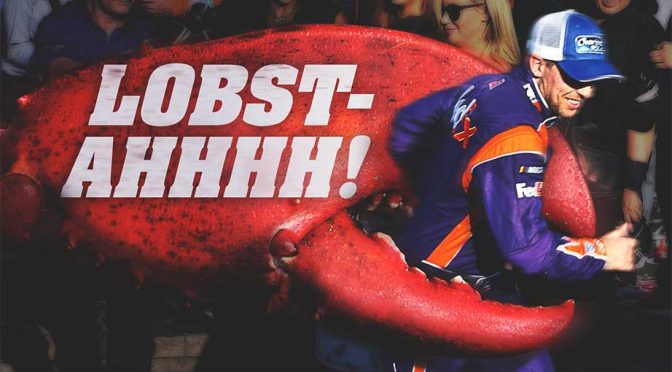
As an organization, Hendrick Motorsports hasn’t won at the “Magic Mile” since 2012, when Kasey Kahne held the lobster in Victory Lane … alongside Elliott’s interim crew chief for the weekend, Kenny Francis.


RELATED: Complete playoff picture | See the entire 12-driver field

One. Two. Three. Four.

One-third of the field.

That’s how many JR Motorsports drivers are in the 2017 NASCAR XFINITY Series Playoffs — more than any other team.

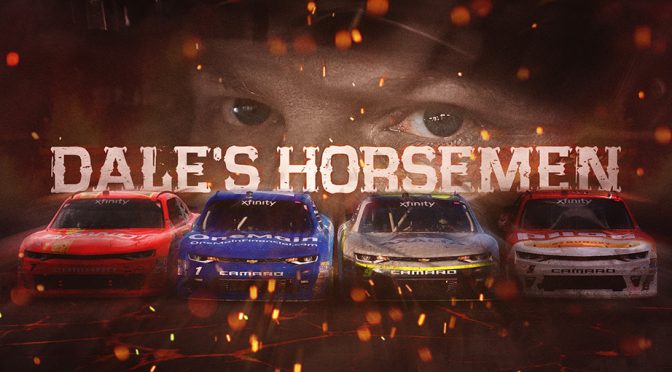
William Byron, Justin Allgaier, Elliott Sadler and Michael Annett are the four horsemen who are galloping their way toward Miami to help bring a shiny trophy to the Earnhardt family once more — especially for Dale Jr., who is finishing out his own Appreci88ion Tour over the next couple of months.

Graphic by NASCAR Creative Design

Byron, the lone rookie at JRM, is the clubhouse leader in the XFINITY Playoffs standings with teammates Allgaier and Sadler, the regular-season champion, peeking over his shoulder. A mere five points separate the three as they head to Kentucky Speedway on Saturday for the first playoffs race (8 p.m. ET, NBCSN, PRN, SiriusXM NASCAR Radio).

Although the JRM drivers want to see their name on the trophy for selfish reasons, the weight of winning a title for Junior isn’t something they take lightly — and it’s something that adds even more motivation to succeed as they get behind the wheel.

“We definitely want to try and win a championship for him in his last year in the (Monster Energy NASCAR) Cup Series,” Byron told NASCAR.com “Hopefully give him that excitement and thrill of that last weekend at the race track. I think we have a great shot to do that. We have four of us in the playoffs, and that would be really special to him I think.”

RELATED: Former champs offer advice

Sadler, the veteran at JRM, has a long history with Earnhardt that goes back to when the men were just teenagers getting their first true taste of driving race cars. He understands his career is coming to the end of a chapter — just like Earnhardt. The two have a deep understanding of each other which helps as Sadler saddles up for an opportunity like the playoffs, where all eyes will be on him to celebrate in Victory Lane.

“The biggest thing Dale has told me is be yourself and do your thing,” Sadler told NASCAR.com. “You know how to do this, we’ve been leading the points all year. We’ve been getting maximum points at almost every track that we go to. … Just continue doing those things to make it to Homestead to put yourself in position to become a champion. He has really (been) giving me a lot of comfort and support that they are going to do everything they can from their side of the race team to give us every possible tool that we need to become a champion.”

Earnhardt Jr. is a two-time XFINITY Series champion as a driver, and he also is a championship owner (2014). He knows what it takes to win.

Now, it’s up to his horsemen to make it to Miami — and it all begins now.

Rankings below are based on a mixture of expected output and DraftKings’ NASCAR salaries for that day. The ordering is not based on highest projected fantasy totals, but rather by the value of each driver.

*FPPK = average fantasy points per $1,000 of salary

1. Martin Truex, Jr. ($10,500) – He can’t win every single playoff race, but, well, he could. At every remaining track, Truex should be the clear favorite. The track type does not matter. Truex runs up front, finishes near the top and earns fast laps and laps led points everywhere. (6.4 FPPK)

2. Kyle Larson ($9,500) – The New Hampshire July race was another case of Kyle Larson starting in the back and cruising to the front. He was inside the top-10 by lap 30. That’s fast a car and smooth driver. (5.5 FPPK)

3. Kyle Busch ($10,700) – Chicago was Busch’s race to lose. He wanted to shut up the non-Toyota-ers. That didn’t happen because once again the 18 team shot itself in the foot. A loose wheel and a penalty were death sentences in a near caution-free race. (5.5 FPPK)

4. Denny Hamlin ($9,900) – Not a lot changes in a couple months. Hamlin won the New Hampshire July race, so he should be ready to repeat. The only issue is that Hamlin won via strategy, not by being the best car. (4.3 FPPK)

5. Matt Kenseth ($9,400) – At intermediate tracks, Kenseth is not going to score a lot of fantasy points. At the short, flat tracks like New Hampshire, watch out. Kenseth led a significant amount of laps in both Richmond races, and he scored 15.5 fast lap points in the first New Hampshire race. (3.6 FPPK)

6. Jimmie Johnson ($9,600) – Seven championships are not the result of being the fastest. It’s the result of overcoming adversity. Last weekend, Johnson was slow in practice, but he was able to salvage the weekend with a solid eighth-place finish. (3.7 FPPK)

7. Kurt Busch ($8,200) – The top-five streak is over. Kurt Busch didn’t even finish inside the top-15. Before we write Busch’s playoff obituary, let’s look at numbers more closely. Kurt finished 19th, but his average running position at Chicago was 12th. (3.3 FPPK)

8. Joey Logano ($8,700) – Someone’s home track has to be New Hampshire, and Logano lived in Connecticut until he was 10. He likes the Patriots, so that’s close enough. Even with two career wins at New Hampshire, it will be hard to match the speed of the Toyotas. (3.1 FPPK)

9. Kevin Harvick ($10,100) – When fate dealt Kyle Busch and Martin Truex, Jr. a bad hand, Harvick was given the opportunity to lead some laps. Eventually, Harvick coughed it up. New Hampshire has been a great track for Harvick, but that was in a Chevy. (4.3 FPPK)

10. Paul Menard ($6,300) – Anyone that picked Menard last week will brag that they knew he was going to have a big week. There were four cautions last week, and Menard received the Lucky Dog twice. In Menard’s defense, he’s averaging 30 fantasy points per race over his last 15 races. (3.9 FPPK)

11. Chase Elliott ($9,100) – Chicago is the track for the No. 24 car. In his three New Hampshire races, Elliott’s average running position was 11th, fifth and 10th. This looks like a solid top-10 for Elliott. (3.8 FPPK)

12. Brad Keselowski ($10,200) – Twitter blew up when Keselowski begged NASCAR to strip Toyota of its speed. The only car that got busted last week was a Chevy. Without a favor from NASCAR, it seems Keselowski and the Penske Fords will not see the front of the pack anytime soon. (4.1 FPPK)

13. Ryan Newman ($7,200)RCR didn’t have the right setup last week. That’s what happened in the July New Hampshire race, too. Newman’s average position of 20th was the best on the team. Last fall, his average running position was 11th. Newman has three wins and 18 top-10s at New Hampshire. (4.4 FPPK)

14. Ryan Blaney ($8,000) – Statistically speaking, Blaney’s average running position proves he has been solid at short tracks. His finishing position tells another story (five finishes outside of the top-20). The tide is turning. Blaney has three straight top-20s at short tracks. (2.8 FPPK)

15. Jamie McMurray ($8,400) – Not counting Talladega, McMurray has started outside of the top-15 twice. At Dover, he scored 51 fantasy points. At Chicago, he scored 43 fantasy points. He started fourth at New Hampshire in July but finished 17th. He posted similar numbers in last fall’s race. (3.4 FPPK)

16. Daniel Suarez ($7,500) – If he doesn’t make a mistake, this JGR Toyota defaults to a top-15 finish. He’s recorded five consecutive top-15 finishes at short tracks including a sixth-place finish at New Hampshire. (3.9 fppk)

17. Danica Patrick ($6,100) – New Hampshire is the ninth short track race of the season. In the previous eight, Danica has one bad race. She finished 36th in the carnage that is Bristol. In the other seven races, her worst finish was 25th, and her average finish is 19th. (3.4 FPPK)

18. Erik Jones ($7,800) – In green races with very few cautions, the worst thing a driver can do is make mistakes. Jones spun out, he sped on pit road and his crew jumped over the wall too soon. Jones is talented, and his car is fast, but no one wins with that many mistakes. (4.1 FPPK)

19. Ty Dillon ($6,700) – Few cautions means few wave arounds and Lucky Dogs. That’s not a Ty Dillon race. Without the favorable yellow flag, Dillon finished five laps down. There could be enough wrecks this week for Dillon to hang around the top-20. (4.5 FPPK)

20. Austin Dillon ($7,000) – No one believes Dillon is going to win the championship, but he’s capable of advancing to the second round. It only takes top-15 finishes. Throw out the Bristol race, and his average running position is 17th at short tracks. (3.5 FPPK)

RELATED: XFINITY Series Playoffs standings | Meet the playoff field

The XFINITY Series playoffs are here and winning a championship will be no easy task.

But there’s good news for this year’s 12 title contenders: former champions have some advice. In the midst of competing for the Monster Energy NASCAR Cup, drivers Kevin Harvick (2001, 2006), Martin Truex Jr. (2004-05), Kyle Busch (2009), Brad Keselowski (2010), Austin Dillon (2013) and Chase Elliott (2014) all recalled some of the most important parts about going into battle.

Of course, leave it to Keselowski to be short and sweet, “Don’t screw it up.”

Among some of the better advice heard above is Busch talking about taking advantage of certain situations to knock down some wins. There’s also Harvick and Truex, who believe in sticking with what’s worked all season long.

And if you also want to know who the title favorites are, Elliott answers that question.

Heading into the second playoff race this weekend at New Hampshire Motor Speedway the question is simple: How do you win at the “Magic Mile?”

If you’re Matt Kenseth, the answer is equally as simple and laced in his classic dry humor – you just finish ahead of the 39 other drivers in the field. But for some of the other drivers in the postseason, there really doesn’t seem to be one way in which you can claim the Loudon lobster.

Take a look at the video above and count the ways to find success in Sunday’s ISM Connect 300 (2 p.m. ET on NBCSN, PRN, SiriusXM NASCAR Radio).

RELATED: Championship vibes are strong within walls of Chip Ganassi Racing

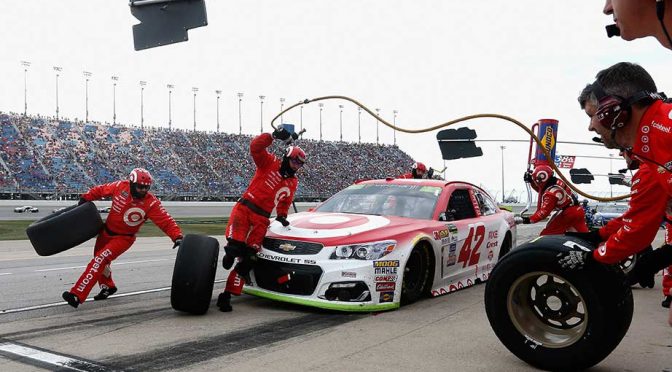
CONCORD, N.C. — For a NASCAR pit crew, there’s a degree of pleasure to be found in putting all the choreography together and rattling off a lightning-fast pit stop. It’s a level of satisfaction that Chip Ganassi Racing’s group of athletes know well. 

CGR’s No. 42 crew found that sweet spot earlier this month, making quick work of the final service for Kyle Larson and providing the difference-making track position that won the Monster Energy NASCAR Cup Series regular-season finale at Richmond Raceway.

Then there’s the impact that goes beyond four fresh tires and fuel. It’s why Ganassi pit crew coach Shaun Peet took time out of the team’s Tuesday morning huddle — before the pep talk in the heat of the NASCAR Playoffs — to read a note of appreciation that made its way to his inbox after last weekend’s postseason opener.

“I wanted to take the time to thank you for the way I was treated this weekend at Chicagoland Speedway,” the letter began, written by a fan who serves as a teacher of special needs children and who spent time interacting with the Ganassi crew before and after the race. The note continued, “The smile on his face and the excitement in his voice is something I rarely see from him. This is something both of us will never forget.”

The sentiment moved Peet to share the appreciation with his crew before the over-the-wall reps began. 

“So it’s great when our pit crews do great, but that’s the stuff for us that transcends this whole thing, right?” Peet said. “We’re lucky. Our philosophy is we’re going to win with good people here. …

“If they can affect lives positively while in this sport, for us as coaches, that goes beyond them pitting a race car in 10 seconds. We’re really proud of this group. We feel like we have 30 great human beings here.”

***

So how does a scrapper of a hockey player from a blue-collar logging town in Canada land in NASCAR, graduating with a double major from an Ivy League university along the way?

“Completely by accident,” Peet says.

And that’s how a whale of an ‘all things happen for a reason’ story comes to pass. In the fall of 2001, Peet had been sent down from the Pittsburgh Penguins’ Triple-A affiliate to the Greensboro (North Carolina) Generals. Already unhappy with the demotion down the minor-league hockey ladder, the then-26-year-old defenseman reached a turning point, goaded into a fight by a pesky player from the opposing Reading Royals.

“The first inkling that I knew I was in trouble was our team idiot was already kicked out,” Peet says now, reflecting back on his role in the escalating hostilities that led to what East Coast Hockey League officials called the worst brawl in the association’s history. “Big trouble” was how the so-called team idiot termed it, and he was right. Penalty minutes were handed out like Halloween candy, and Peet was suspended for 18 games, a quarter of the team’s season.

RELATED: At the shop with Chip Ganassi Racing

From there, the chain of events forms a serendipitous string. There’s the chance meeting with a NASCAR fan in the coliseum stands while serving his suspension, the casual visit to a race shop where he earned an impromptu tryout as a jack man, the eventual job with the Keselowskis, car owner Bill Davis and eventually Chip Ganassi Racing.

“I didn’t even know what NASCAR was,” Peet says. “And here, 14 years later, I’ve enjoyed it all.”

The Charlotte area where Peet wound up is a long way from his hometown of Nanaimo, a harbor city on Vancouver Island in British Columbia. But it’s also a good distance from Dartmouth, where he played collegiate hockey and earned his degree with concentrations on psychology and sociology — majors that have served him well in managing the many personalities on the team.

His transition drew recognition from the school’s alumni magazine, in a feature akin to Sports Illustrated’s “Faces in the Crowd” segment. One picture lauded a physician’s achievement in medicine; the second, a Naval officer recognized for his outstanding accomplishments as a pilot. “And then the third picture was me running around a race car,” he said with a laugh.

“I never thought I’d be here, but I’m glad I am,” Peet says. “I really, truly feel like I haven’t worked a day in my life.” 

***

The mood at Tuesday’s pit practice after the Chicagoland race is decidedly light. Upbeat songs blare as the test mule Chevrolet — marked with a No. 42 on the driver’s side and a No. 1 on the other to represent both teams — pulls in for practice stops. “Five yards per carry, baby!” one crewman shouts over the music, making a nod to the football background of many team members.

It’s a collegial group with regular words of encouragement, but underneath, there’s determination and drive that push them to be better. A small “Wheel of Fortune” style wheel adorns a pit box, indicating which crew is next up in the pit-stop rotation. Elimination-style tournaments determine weekly winners for a larger, quarterly tote board. It’s all meant to promote an internal spirit of competition, a means of figuratively sharpening the sword to face off with 38 other pit crews on race day.

“Every once in a while, I get to work out with the guys and it’s pretty interesting — it doesn’t matter what they’re doing, they’re still competitive,” says Matt McCall, crew chief for Jamie McMurray’s No. 1 Chevy. “It’s a race — no matter what you’re doing — to be the best.” 

After each practice stop, the crews huddle to review replays, receiving immediate feedback on their routine. Mike Metcalf — a pit coach who doubles as gas man for Kyle Larson’s No. 42 — says breaking down film is an old-school touch adapted for the current generation — a more visual, screen-dependent group.

RELATED: All of Kyle Larson’s Monster Energy Series wins

While Metcalf and Peet will still make minor adjustments to fine-tune their crews’ technique, Chip Ganassi Racing plans no wholesale changes for the playoffs. The emphasis on fundamental skills — a focus drilled into the team since before the season began — remains the primary goal.

“You reap what you sow, and these guys have worked their guts out for nine months and they’re ready to go,” Peet says. “The hay’s in the barn and you’re going to see the result of that effort over the next nine weeks. So for us, it’s not hard. It’s just keeping it on course and letting them do what they do.”

Says Metcalf, a former fullback during his football days at Appalachian State: “Our pressure, the serious stuff, we started that months ago. We’re already ready for it.”

***

“I’m just thankful that Shaun Peet’s better at this than he was hockey.”

Chad Johnston, Larson’s crew chief, delivers that faint praise with a smirk. But in another breath, he applauds the job the coaching staff has done to build a stealthy-good over-the-wall corps.

If there’s any sort of pressure in the postseason, it doesn’t show in the ambiance before, during and after pit-stop practice. After the series of stops, the team takes turns shooting long-distance shots then chasing down rebounds at the basketball hoop in CGR’s back parking lot. 

Those breaks in the day are part of the more elaborately planned activities during the season. The team members commemorate opening day of the Major League Baseball season with a Wiffle Ball tournament. Canada Day comes along on July 1, providing Peet a chance to celebrate his roots with a hockey tourney on a makeshift rink on the grounds, made out of racing tires.

The extracurriculars have all helped to create a family-style atmosphere and support system among a group of athletes from all sorts of cultural and geographical backgrounds. The common thread, beneath all the fun times and the well-fueled competition, is an enduring code of character. 

“The thing I’m most proud of is the quality of human beings we’ve got in this program,” Peet says. “One of the big things we keep getting back from the people we talk to is, ‘wow, you have a really diverse group.’ The funny thing is, we’re not. Visually, we look diverse, but every single one of our guys is hard-working, has a ton of integrity, cares deeply about their family, cares deeply about this group. So really, all the important things, they’re exactly the same.”