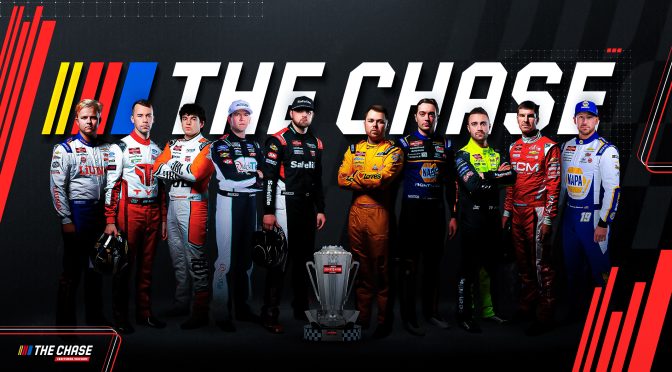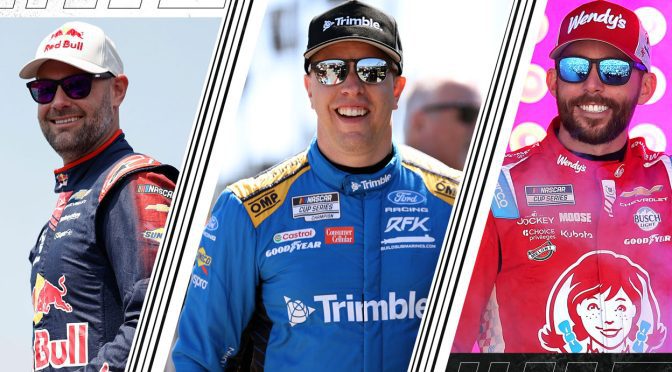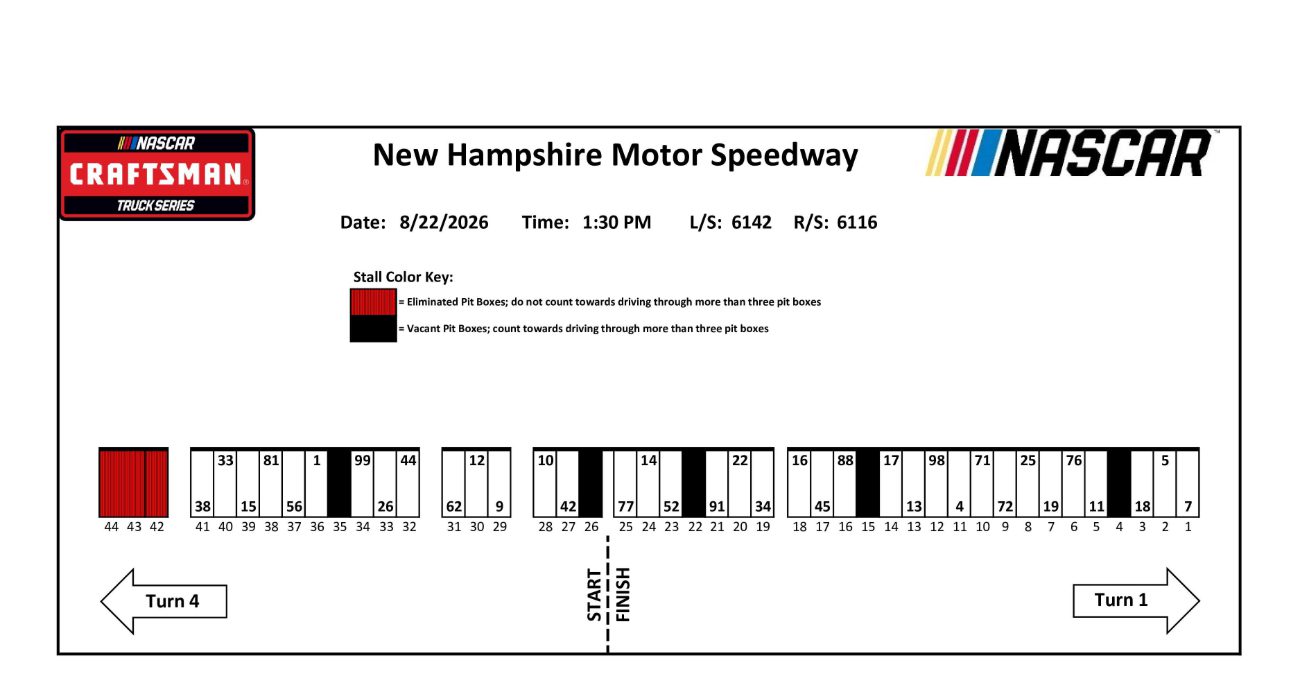
The NASCAR Cup Series and NASCAR O’Reilly Auto Parts Series trek to the Midwest for a visit to Chicagoland Speedway. Each series will race the 1.5-miler for the first time since the 2019 season, with the ARCA Menards Series joining the fun. See how the qualifying groups will be divided this weekend at the Joliet, Illinois, facility.
SAN DIEGO — Eyes wide open and hearts beating fast, more than 100 eager kids arrived at The NASCAR Foundation obstacle course inside Qualcomm Circuit last month at San Diego’s Naval Base Coronado — the USS Carl Vinson anchored in the background and a U.S. Navy Hawkeye helicopter on display only a few yards away.
Dressed in bold-colored The NASCAR Foundation T-shirts, the students ranging from kindergarten to middle school-age from the base’s Navy Child Youth Program ran into the designated area as NASCAR race car engines screamed from the track in the distance. The NASCAR Foundation members and Ally representatives shook pom-poms high above their heads and shouted cheers to welcome the group to San Diego’s installment of the Speediatrics Fun Day Festival — one of 16 held across the United States this year.
A tire “roll,” a “gas can relay,” and a “find the lug nut” challenge were among the creative hands-on activities the kids tried out. Most notably among the setup was a series of long tables with bicycle helmets piled high — that station designed to fit each of the 121 students with a brand-new helmet.
Within the hour, the students would find out that each of them was not only receiving a personalized helmet but also receiving a new bicycle — courtesy of Ally. The bikes were custom-built only days earlier by dozens of supportive people in the NASCAR industry. Volunteers from groups like Stepp’s Towing drivers to race team mechanics to Kaulig Racing team owner Matt Kaulig and team executive Chris Rice — the Kaulig team being a full-season sponsor of the Fun Day events across the country are the first to raise their hands to turn wrenches as master bike builders for the Foundation.
“The NASCAR Foundation does incredible work keeping youth active and engaged in our race communities,” said Bridget Sponsky, executive director of brand, sponsorship and creative marketing at Ally. “A new bike and a day at the track might seem like small things, but they can easily spark a lifelong love for the sport. Supporting the foundation’s initiatives over the years is one meaningful way we ‘do it right’ and leave the communities where we race a little better than we found them.”
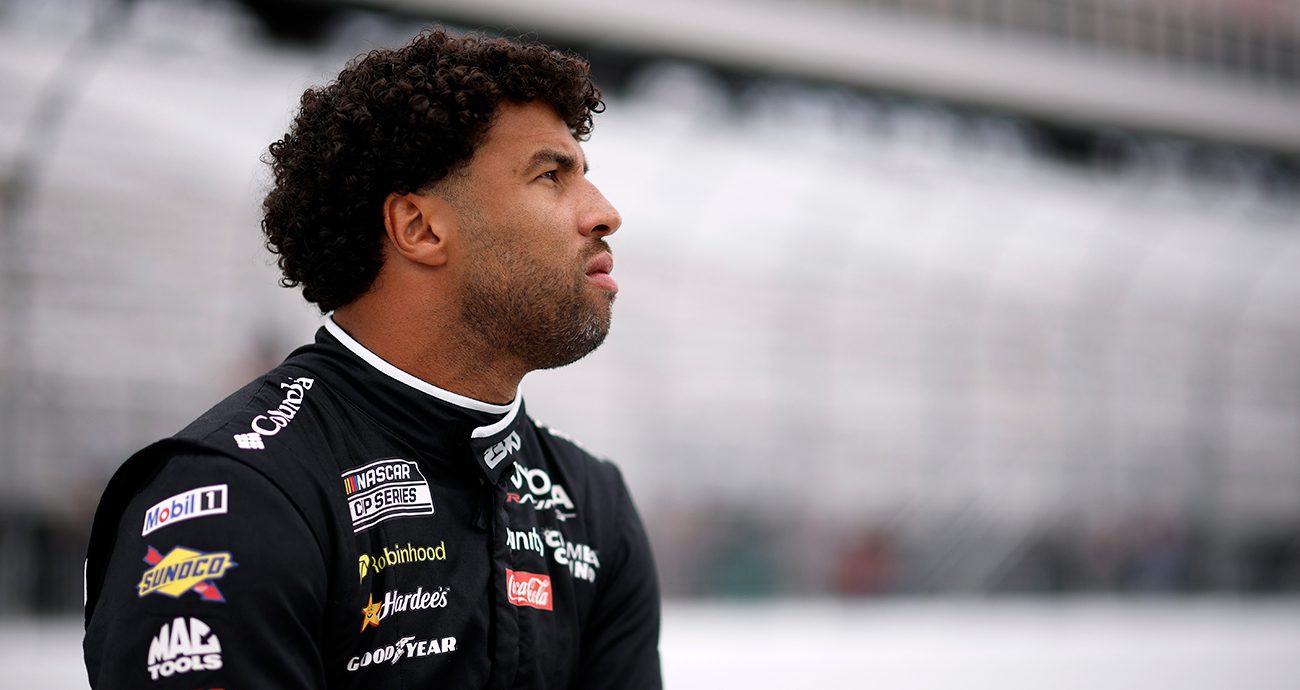
Before the dramatic two-wheel reveal, NASCAR Cup Series driver Alex Bowman made an appearance. The No. 48 Hendrick Motorsports Chevrolet driver posed for photos and signed autographs and shared the Foundation’s message with the kids about the importance of healthy eating and staying fit.
Then, Nichole Krieger, The NASCAR Foundation’s vice president and executive director, took the microphone and announced that not only was the organization donating $15,000 to the Navy Child Youth Program, but every one of the youngsters would also be receiving a new bicycle.
“I can’t believe it, I can’t believe it, I can’t believe it,” 11-year-old Jack Hamby shouted over and over again.
Alan De Castro for NASCAR
There was no question what this Foundation-led experience had meant to these kids on this day and to families across the country so many other days as the organization officially marks 20 years of service to the sport.
The NASCAR Foundation isn’t just an admirable and generous concept developed and fostered by the late Betty Jane France. The organization has been a real-life difference-maker for kids and families since its inception, raising and donating more than $55 million and serving almost two million children and their families.
NASCAR Vice Chairman and Senior Adviser Mike Helton — a highly respected longtime steward of the sport — is a founding board member and the current Chairman of The NASCAR Foundation. And he doesn’t lead from an office in Daytona Beach, Florida; he makes it a point to attend the events around the country and forge a bond with the people this impactful organization is helping.
He often assures Krieger that his close friend, the late Mrs. France, would have loved seeing the joy and solace the Foundation has given to families. And that it is still going strong two decades after its inspired beginning.
“I think what the Foundation has done now in its 20 years, it has created a culture in our industry that represents that family spirit of helping,” Helton said. “I think that’s the synergy that Betty Jane led the charge on for the Foundation. But the bigger and broader part, in addition to millions of dollars of help with children that need help, whether it’s medically or quality of life, it was also a statement made that NASCAR, everywhere we go, our footprint is across America, but everywhere we go, we’re still a local community-driven event.”
“I think in a way, NASCAR kind of created the idea that our sport is big-hearted. Before there was a Foundation, that spirit existed. It certainly existed in Daytona, where our headquarters is at the Speedway and is still a huge part of the community. But that model got to be able to be spread across the country as we traveled on our national series and even our local series.”
Now in her 14th year with The NASCAR Foundation, Krieger is proud that it has continued to play such a significant role in NASCAR communities and beyond.
“Mrs. France was so passionate about kids,” Krieger recalled of the organization’s beginning. “So we honed our mission to really be about children’s health and wellness. It could be kids in the hospital, and it could be kids like here at San Diego learning about health and wellness. It’s all of that.
“I think the other thing our team has worked really hard at is we’re about more than just writing a check. We do that. We write checks to hospitals and charities, but the programs we run — the Speedy Bear Brigade, for example, where we go into the hospital, we deliver the teddy bears and bring the drivers to meet the kids. Our track presidents get involved, and employees and sponsors get involved. I feel like it has distinguished the Foundation to be more than just writing a check. It’s more about, how do we rally our sport?”
The support has come from the entire sport. From the corporate sponsors who support the race teams, to the insiders who make the industry tick and certainly the race car drivers themselves — all cherish the opportunities to make a difference for these children.
From visiting young patients in hospitals all around the country, to supporting youth sports to building the bicycles, as they did in San Diego — the “ask” is invariably met by a “thank you” from the sports stars, whose time supporting The NASCAR Foundation turns out to be as impactful for them as the kids they make smile.
Alan De Castro for NASCAR
“It’s really easy to forget we do a job that kids idolize and they put us on a pedestal,” said RFK Racing driver Ryan Preece, who has made several hospital visits on behalf of The NASCAR Foundation and says it especially hits home for him now as a father of two young children.
“You can go to a hospital and see some of these kids, and they need that little bit of something to lift them up, you see it lift their spirits, just them spending five minutes with a race car driver.
“And when you’re around them, they’re doing something for us as well. Everybody goes through tough times, but when you’re able to take a minute and really put things into perspective. Those are the moments that impact.”
NASCAR Chairman Jim France has been a strong supporter of The NASCAR Foundation from the very beginning and considers it a vital part of the sport — its present-day impact something he knows his late sister-in-law would be especially proud of.
“I think it reflects the value, the core of our sport and our industry and the folks that are around that are teams and drivers,” France said. “We’ve got a very big community of people that have important social projects and things that they’re trying to support. Our Foundation has become kind of a hub of that for the entire sport, so to speak.
“So, watching it step up and help organize a lot of different things is gratifying.”
One of the most impactful moments Krieger says she’s ever experienced with The NASCAR Foundation happened this summer at Michigan International Speedway during another of the Foundation’s Fun Days.
Among the more than 100 youth that attended the Michigan event was a fifth-grade girl, Dayton, with spina bifida — a spinal cord condition that affects the ability to walk and can often make wheelchairs necessary for patients. As the Foundation was preparing bicycles to give away, Krieger was adamant that Dayton received a bicycle, too — and a specially made version just for her was presented along with the others.
Special to NASCAR.com
The surprise and thrill … and complete gratitude from this young girl and her family was one of the more emotional moments for Krieger in all her years witnessing the Foundation’s service to the community.
“It was the right thing to do, and I always want to be guided by that,” Krieger said, recalling how Dayton got on the bike and rode it around within minutes. “She was thrilled, and her mom texted me with videos and photos afterward of her outside riding her bike at home along with everyone else now.
“As a sport, it makes me proud that we can do that. It’s just one child, but we may have really changed her life. We don’t know what the impact will be like later. That’s why we do this.”
In so many ways, The NASCAR Foundation is NASCAR’s ultimate “win-win” — powering the sport and fueling the future with generosity and kindness that will provide its own substantial legacy.
As France puts it, “It’s a community effort by everybody within the sport, and it makes you proud of our folks and people that participate.”
An expected strong run at Sonoma Raceway could have reinforced William Sawalich’s Chase position. Instead, a 13th-place finish in the No. 18 Joe Gibbs Racing Toyota pushed him below the NASCAR O’Reilly Auto Parts Series Chase cutline for the first time in nearly two months, raising the stakes for the final five races before the postseason.
Rookie sensation Brent Crews — Sawalich’s Joe Gibbs Racing teammate — banked a race-high 50 points, while Sawalich lost 25 points on The Chase bubble. Over the last two races, he’s bled 36 points.
Being on the outside looking in isn’t a place Sawalich desires to be with only a handful of races remaining in the regular season, especially with two of those events being at drafting-style tracks. But he’s among a trio of JGR drivers ranked 11th through 13th in the standings.
“We are very aware of that,” Steve de Souza, executive vice president of O’Reilly Auto Parts Series and development for JGR, told NASCAR.com at Sonoma. “We have a weekly points system that we put out. The drivers know, and that creates a lot of stress in their minds, but this is a pro sport. They need to know what they are up against.”
Sawalich feels the pressure to make the postseason after missing out as a rookie in 2025. He doesn’t want to overthink the final stretch of races, however, knowing how crucial each race is.
“It’s only on your mind if you lose out on a point,” Sawalich said of his position. “When you’re actually racing, you are racing the race and then try to figure out points after. You can’t let it get in your head during the race.
“The goal for the season is to make the playoffs in this new Chase format. We were ninth for a while, so we are fast enough to be in there, no problem. It comes down to putting together good, consistent finishes.”
Consistency has been the biggest hurdle for the No. 18 team over the past year and a half. While Sawalich has shown race-winning speed — charging from the middle of the pack to earn his first victory at Rockingham Speedway in April — those standout performances have been difficult to sustain. In 49 starts as a full-time competitor, he has recorded seven top-five finishes and 16 top 10s.
There have been signs of progress during Sawalich’s sophomore campaign. The No. 18 Toyota emerged as a consistent top-five contender in May, highlighted by a career-best streak of three consecutive top-five finishes spanning Dover Motor Speedway through Nashville Superspeedway.
“Since Rockingham, he won that race, that taught him what it takes to win a race, the level you have to compete at,” de Souza said. “I think he’s aware from a competitive standpoint what needs to happen. He is aware that he has to finish races. There is a lot there, and I think that’s an ongoing discussion throughout the week of where we are and what we need to continue to improve.”
Meg Oliphant | Getty Images
Admittedly, Sawalich’s rookie season was a difficult transition, moving two full rungs up the proverbial developmental ladder from being full-time in the ARCA Menards Series in 2024. It was a wake-up call for the Minnesota driver.
“The competition level is just different,” Sawalich said. “You have to fight hard for even a top 10. When the car is good, it’s an easier day. But when the car is a little off, and I have to adjust for it, that’s probably what I’ve had to learn.”
Learning techniques at mile-and-a-half tracks was the biggest adjustment. The success rate is naturally lower after his jump to the O’Reilly Series, given how challenging the field is. He is one of six series regulars to win through the opening 19 events in 2026.
“The wins are a lot more prestigious here,” Sawalich said. “Some of the best guys haven’t even won this year. It’s really tough. To get that win early on was good and relieved a lot of the pressure.”
After leaning on Aric Almirola for a chunk of 2025, Sawalich joined a program led by former drivers Trevor Bayne and Blake Koch this season. They have worked with Toyota drivers to help refine their skills.
Sawalich’s finishes have slightly improved. His average starting position is almost in line with 2025 (10.1 in 2025 vs. 10.3 in 2026), while his average finish has improved 1.7 spots (18.9 in 2025 vs. 17.2 in 2026).
“It probably looks like a heart-rate monitor,” Sawalich said of his season. “Our finishes are either really good or we get caught in something that we don’t want to be in and lose some points from it. Now, we are definitely in a big hole that we need to get out of.”
The 20-point deficit isn’t insurmountable. He’s still new to the game at 19 years old, meaning there is plenty of room to grow. The next chance at growth will be at Chicagoland Speedway on Saturday (5:30 p.m. ET, The CW, MRN Radio, SiriusXM NASCAR Radio). The July 4 event will be the first time the O’Reilly Series has raced at the 1.5-mile track since 2019.
“The biggest thing I would say now is remember his age,” de Souza said. “If he’s 25, 30 years old and doing this a long time, the lesson should already be learned. But he’s 19 and doing this for two years and has had success in the ARCA car, which is great to learn race craft, learn to compete and how to win races. But jumping up the next couple of levels, now you’re racing against much better race teams, better drivers, better pit crews and you have to be part of that process that excels.”
With a video wall that’s 32 feet wide and 9 feet tall, Scott Miller watches races every week with the informative breadth of an omniscient narrator.
The competition strategist for NASCAR oversees the Remote Race Control center in Concord, North Carolina, that has been fully operational since last year.
The video wall can display 24 quadrants of screens featuring video feeds (including broadcast, in-car and specialty cameras), telemetry and team radios. Virtually every area of the race track can be monitored.
“We have a lot of information at our disposal,” Miller said on the latest “Hauler Talk” podcast. “And one of the challenges has been to make that concise enough to where we can view it quickly when we need it. … We’ve really made a lot of headway there and are now pretty much integrated into every race weekend as a support arm for those in race control at the race track.”
As the former vice president of competition at NASCAR, Miller once was a regular in on-site race control.
Shifting to the remote role has required retraining his perspective from the visceral experience at the track to absorbing the action from a windowless room packed with technology.
“At Remote Race Control, you have the luxury of not having to be sort of in the moment,” Miller said. “As the race is unfolding, you can kind of go back and continue to look without feeling like the ones that are in the at-track race control have got that covered while you try to help them review an incident or a violation or whatever it may be that you’re digging into for them.
“So it’s really just a lot of support that everybody in race control has come to rely on. And it’s just much easier to do from the Remote Race Control with the resources that we have that they don’t have in the tower.”
Using technology to aid officiating has become ubiquitous in pro sports. While helping get NASCAR’s Remote Race Control up and running, Miller visited the NFL’s command center in New York, which reviews every scoring play, turnover and coach’s challenge during games.
Though there are similarities, Miller noted that NASCAR is unique because the action on the track doesn’t stop when making a call. A 36-race schedule of ovals, road and street courses also means a wide variety of playing surfaces, most of which dwarf a football field.
“The NFL plays on a 100-yard long by 50-yard wide field every single weekend, and I came to understand they have a specific sort of diagram of cameras that are at every single venue,” Miller said. “So they can have super consistent views on everything across all the games because the field is the same. Obviously, we race at different venues, and each and every one of them poses its unique challenge to get full camera coverage where you need it.”
Miller said the Remote Race Control is positioned as a support system that defers to the officials calling the race at the track.
“We would never get in a situation where it would be sort of disrupting the action or anything like that,” Miller said. “Honestly, what we strive to be is kind of invisible and not be the story but get the calls right that need to be made.”
Other topics covered by NASCAR vice president of racing communications Mike Forde and senior director of racing communications Amanda Ellis during the 60th episode of “Hauler Talk,” which explores competition issues in NASCAR:
— How Tyler Reddick was able to record the fastest lap at Sonoma Raceway despite repairs for a power steering problem.
— How $5 million in capital improvements were made at Chicagoland Speedway to prepare for the track’s first NASCAR race weekend in seven years.
— The speeds recorded during the April test at the 1.5-mile track in Joliet, Illinois.
Click on the embed below to listen or search for “Hauler Talk” wherever you download podcasts to hear it on your phone, tablet or mobile device.
Nate Ryan has written about NASCAR since 1996 while working at the San Bernardino Sun, Richmond Times-Dispatch, USA Today Co. and, for the past 10 years, at NBC Sports Digital. He is a contributor to the “Hauler Talk” show on the NASCAR Podcast Network. He has also covered various other motorsports, including the IndyCar and IMSA series.
What comes next — whether that includes a return in 2027 or otherwise — has yet to be determined. But sorting next year’s plans hasn’t been Bowman’s No. 1 priority, he said in a Tuesday teleconference.
Entering Sunday’s eero 400 at Chicagoland Speedway, Bowman sits 29th in the points standings with two top fives and three top 10s, all after missing four races earlier this spring due to vertigo. His future plans have not been announced, but his focus remains on righting the No. 48 team’s performance in the second half of the NASCAR Cup Series season.
“I’m just trying to do my part to try to help (Hendrick Motorsports) be the best it can be right now and obviously trying to get things turned back around on the 48 side of things,” Bowman said Tuesday. “But yeah, definitely not — I don’t feel like I’m racing for my job or anything like that by any means. Really just kind of week-to-week focused on trying to get pointing back in the right direction.”
Bowman, who finished 10th last week at Sonoma Raceway for his best finish since a third-place result at Texas Motor Speedway in May, added he doesn’t have a specific timeline set to solidify plans for 2027 or beyond, but discussions behind the scenes have continued at Hendrick.
“It’s been interesting,” Bowman said. “Obviously, we’ve had a lot of different conversations and kind of trying to figure out what the best thing to do is, so I would say sooner rather than later, for sure. But really, I guess I haven’t really thought about (it). Like, it hasn’t been the first thing on my mind by any means, and really just been working hard at trying to get things pointed in the right direction. But definitely, (I) think sooner rather than later.”
After missing races in three of the past five seasons for medical reasons, Bowman says he feels OK after 11 races back from his most recent absence. But his results have also left him disappointed, scoring just two wins since the Next Gen debuted in 2022 and winless since the Fourth of July weekend at the Chicago Street Course in 2024.
No matter what comes next, Bowman is carefully considering his options both for himself and his current team.
“I think for me, I just want to make the right decision for myself, I guess,” Bowman said. “And yeah, certain things haven’t gone how we want them to go. And honestly, I’m at a point in my life where I’m super blessed to be in a position where I don’t have to do this forever. So I’ve just got to make the right decision, and I want Hendrick Motorsports to make the right decision and everybody to be on board with whatever we do. I think I have a lot of faith in Rick (Hendrick, team owner) and Jeff (Gordon, vice chairman) and everybody to guide all of us the right way, and whatever happens, happens.”
Matt Sullivan | Getty Images
Bowman returns to Chicagoland on Sunday (6 p.m. ET, TNT Sports, truTV, HBO Max, MRN Radio, SiriusXM NASCAR Radio) as the track’s most recent winner. That, of course, was seven years ago, when the Cup Series last visited in 2019. That day, Bowman battled his future teammate Kyle Larson for victory, losing the lead and snagging it right back in the closing laps. That marked Bowman’s first of eight Cup wins so far.
“It feels like a really long time ago,” Bowman said. “I’m definitely looking forward to getting back there.”
Like most of the Cup field, Bowman has no experience driving around the track in a Next Gen car. But Larson was Chevrolet’s representative for a Goodyear tire test earlier this spring, turning laps around the oval’s aging and worn pavement and relaying his feedback to his teammate.
“I just think it’s going to be tricky with the Next Gen car,” Bowman said. “That place is slick, so you’re going to be sliding around a lot, which the Next Gen car is just inherently hard to slide much without it getting away from you. And it’s very bumpy, and Next Gen is tough through the bumps, so it’ll be interesting to see how the track widens out, what grooves are and aren’t at play because of the bumps and see what works.
“It’s kind of fun to go to a place without a huge notebook. I’ll be in the sim tomorrow morning, so I don’t really have any idea yet on how it’s going to drive other than talking to Kyle from the test, but yeah, looking forward to the challenge.”
Speaking of challenge — Bowman earned the ultimate upset in the In-Season Challenge Sunday at Sonoma by ousting No. 1 seed Tyler Reddick, allowing the No. 32 seed Bowman to advance into Round 2. Reddick suffered mechanical issues that led to a last-place finish while Bowman earned a much-needed top 10. After making a run into the third round in 2025, Bowman will go head-to-head with No. 16 Austin Cindric at Chicagoland, and he’s definitely conscious of the $1 million prize that goes to the winner.
“Yeah, certainly pays pretty well to win, so we want to do the best we can and try to give ourselves the best shot at doing that,” Bowman said. “I think we probably got a little bit of a gift with the 45 (Reddick) having an issue, but we also went to Sonoma and put together a good, solid day. So yeah, think we’re plenty capable. Obviously, we went pretty far last year. Hopefully, we can do that again and try to make something happen, but at the same time, just really focused on trying to get back to normalcy on the 48 side of things.”
For Bowman, that “normalcy” he feels his team is missing entails both speed and results after a two-month stretch where “nothing went our way.” Sonoma was a step in the right direction, but the question remains whether the No. 48 team can find its footing once again as a regular contender on ovals.
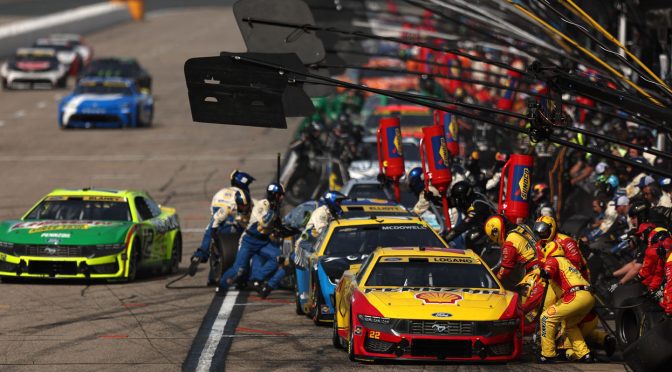
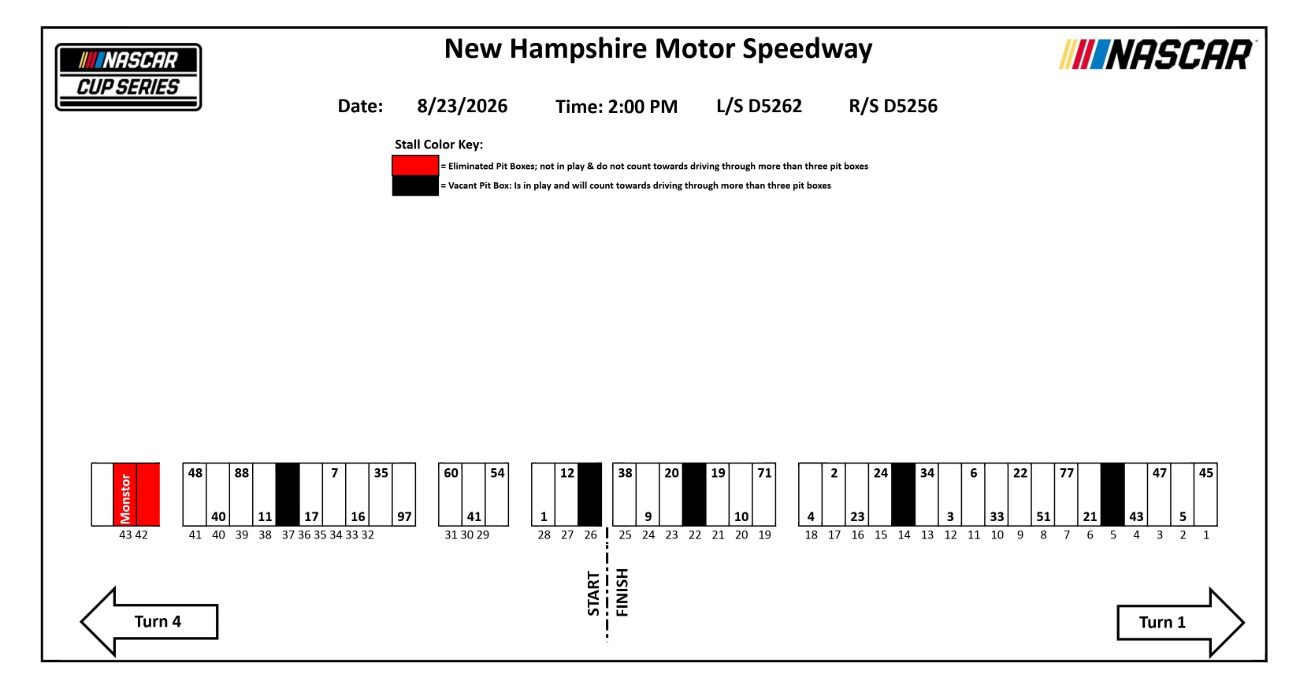
“I think it’s just really easy to be a little bit off and it to look like you’re way off with how small the margins are in the Cup Series,” Bowman said. “And like I said before, once you get stuck in group one and qualify early, you end up qualifying bad, you have bad pit stalls, so then your race suffers, and you can’t get any track position, and then you’re stuck in group one the next week. And it just continues and continues. So trying to get out of that cycle and get back to group two and be back on the right side of things, qualifying later so you have a better pit-stall selection, and kind of inherently — like the group (two) cars are just always faster, right? You can watch the first session and take data from whoever is on your team in that session or whatever and go from there.
“As buried as we are in points, it’s really hard for us to get into group two, so I think that’s the biggest hurdle that we have, and yeah, good days fix that. So just need to continue to have good days.”
Driving the No. 38 Ford for Front Row Motorsports, the 27-year-old Smith understands the odds, but confidence is high among his team, particularly after top-five runs at Charlotte Motor Speedway and Nashville Superspeedway at the end of May.
“It would be awesome to pull that off, and mile-and-a-halves have been good for us since Charlotte,” Smith said. “So it’s exciting, and I think definitely possible.”
Across his prior 99 starts, Smith has raced for RFK Racing, Rick Ware Racing, Spire Motorsports via Trackhouse Racing and Front Row Motorsports, including a full rookie campaign with Spire in 2024 before transitioning to FRM for 2025 and 2026. After collecting a personal-best five top 10s last year, Smith has already set new high marks for himself this year, earning six top 10s in the first 18 races this season and equaling his 2024 best of two top fives after a fourth-place finish at Naval Base Coronado in San Diego.
Smith has just one runner-up finish to his credit, along with four other top fives. But the flashes he has shown, he believes, indicate he is nearing a breakthrough.
“Everything has to go right for a race win, but showing that you’re running up front and having good runs, I think, is what’s super important,” Smith said. “And fortunately, I’ve had glimpses of that throughout my early starts, but I would say since my, like, 80-ish start, it’s been more consistent of being able to run up front more consistently. And recently, since Charlotte, I’ve been able to lead laps and contend for a race win. And I have a few seconds and thirds, whatever, but just honestly leading these races at the wrong time. Just need to do it a little bit later. But I feel like that’s what’s mostly important.
“I feel like everyone understands in the industry how hard these races are to win — and then on top of that, we’re a smaller team, too, so we’re doing a lot with a little and trying to make big strides each year. So proud of that and just proud of how we’re running, but yeah, would love to put an exclamation mark on this on the 100th start.”
Ethan Smith | For NASCAR Digital Media
Perhaps Smith’s most significant takeaway through 99 prior Cup starts has been how to overcome adversity. Multiple strong performances have been crushed by late incidents, most recently including Michigan, where he crashed while running ninth at Lap 142, and again a week later at Pocono, where he spun and crashed out from a third-place battle at Lap 41. But a San Diego top five and a Sonoma top 20 have helped steady the stretch, providing momentum as Smith enters the second half of the regular season.
“In just one Cup race, you will experience so much. There are so many ups and downs throughout a Cup race and it’s like that every weekend,” Smith said. “I can probably count on one hand how many Cup races I’ve had where it’s like, ‘Man, that went really smooth and everything went right.’ I just feel like the main thing is you’ve got to take the little wins and pile them into bigger wins and eventually you’re gonna be racing for a race win.
“The harder thing is when you’re part of a smaller team going against a powerhouse team like a Penske, a Hendrick, a Gibbs, they have more people and we’re trying to become that one day. By doing that, you’ve got to win races and run up front and prove your worth, and I feel like we’re accomplishing that. I hope to keep that going, but there are so many ups and downs and I’m certainly a way different race car driver now versus what I was in my rookie year and certainly what I was in the Truck Series.”
The next step is turning those strong runs into consistent top-10 finishes, a task Smith believes is reasonable as the schedule turns back to ovals for the rest of 2026.
“Our whole group is a really fun group to work with, which says a lot,” Smith said. “We just had a year last year of past communication and past times to know what to do for adjustments going from practice to qualifying, and qualifying to the race more importantly, and I feel like some of that is showing. But just trying to carry the momentum is the main thing.”