Rankings below are based on a mixture of expected output and DraftKings’ NASCAR salaries for that day. The ordering is not based on highest projected fantasy totals, but rather by the value of each driver.

*FPPK = average fantasy points per $1,000 of salary

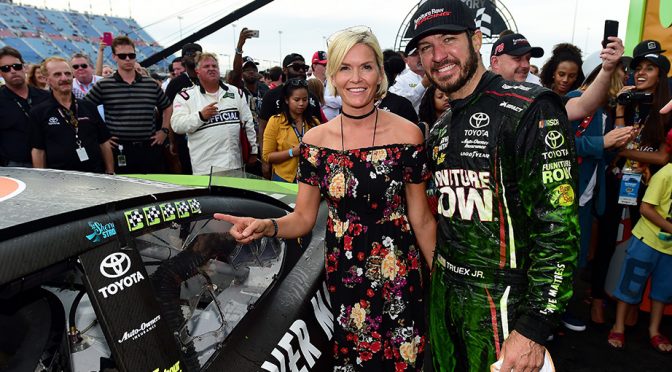
1. Martin Truex, Jr. ($10,500) – He can’t win every single playoff race, but, well, he could. At every remaining track, Truex should be the clear favorite. The track type does not matter. Truex runs up front, finishes near the top and earns fast laps and laps led points everywhere. (6.4 FPPK)

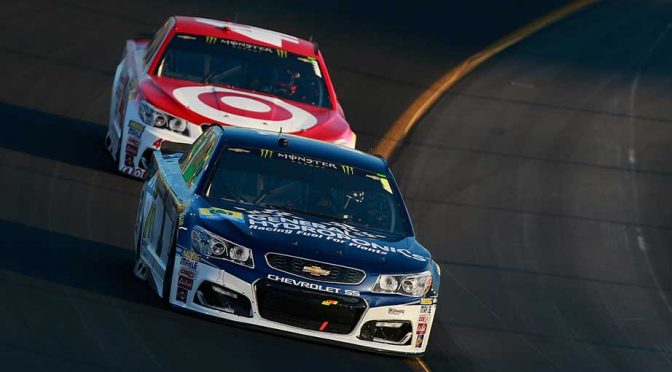
2. Kyle Larson ($9,500) – The New Hampshire July race was another case of Kyle Larson starting in the back and cruising to the front. He was inside the top-10 by lap 30. That’s fast a car and smooth driver. (5.5 FPPK)

3. Kyle Busch ($10,700) – Chicago was Busch’s race to lose. He wanted to shut up the non-Toyota-ers. That didn’t happen because once again the 18 team shot itself in the foot. A loose wheel and a penalty were death sentences in a near caution-free race. (5.5 FPPK)

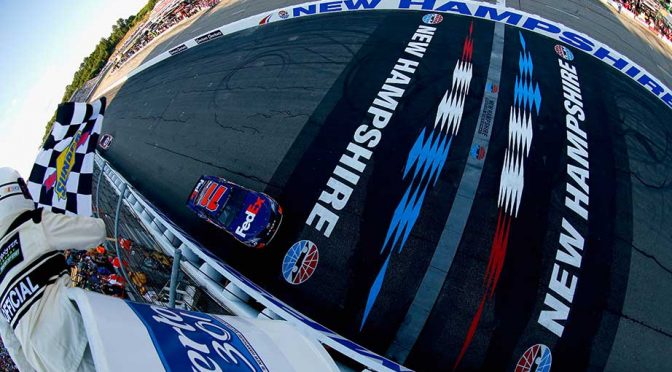
4. Denny Hamlin ($9,900) – Not a lot changes in a couple months. Hamlin won the New Hampshire July race, so he should be ready to repeat. The only issue is that Hamlin won via strategy, not by being the best car. (4.3 FPPK)

5. Matt Kenseth ($9,400) – At intermediate tracks, Kenseth is not going to score a lot of fantasy points. At the short, flat tracks like New Hampshire, watch out. Kenseth led a significant amount of laps in both Richmond races, and he scored 15.5 fast lap points in the first New Hampshire race. (3.6 FPPK)

6. Jimmie Johnson ($9,600) – Seven championships are not the result of being the fastest. It’s the result of overcoming adversity. Last weekend, Johnson was slow in practice, but he was able to salvage the weekend with a solid eighth-place finish. (3.7 FPPK)

7. Kurt Busch ($8,200) – The top-five streak is over. Kurt Busch didn’t even finish inside the top-15. Before we write Busch’s playoff obituary, let’s look at numbers more closely. Kurt finished 19th, but his average running position at Chicago was 12th. (3.3 FPPK)

8. Joey Logano ($8,700) – Someone’s home track has to be New Hampshire, and Logano lived in Connecticut until he was 10. He likes the Patriots, so that’s close enough. Even with two career wins at New Hampshire, it will be hard to match the speed of the Toyotas. (3.1 FPPK)

9. Kevin Harvick ($10,100) – When fate dealt Kyle Busch and Martin Truex, Jr. a bad hand, Harvick was given the opportunity to lead some laps. Eventually, Harvick coughed it up. New Hampshire has been a great track for Harvick, but that was in a Chevy. (4.3 FPPK)

10. Paul Menard ($6,300) – Anyone that picked Menard last week will brag that they knew he was going to have a big week. There were four cautions last week, and Menard received the Lucky Dog twice. In Menard’s defense, he’s averaging 30 fantasy points per race over his last 15 races. (3.9 FPPK)

11. Chase Elliott ($9,100) – Chicago is the track for the No. 24 car. In his three New Hampshire races, Elliott’s average running position was 11th, fifth and 10th. This looks like a solid top-10 for Elliott. (3.8 FPPK)

12. Brad Keselowski ($10,200) – Twitter blew up when Keselowski begged NASCAR to strip Toyota of its speed. The only car that got busted last week was a Chevy. Without a favor from NASCAR, it seems Keselowski and the Penske Fords will not see the front of the pack anytime soon. (4.1 FPPK)

13. Ryan Newman ($7,200) – RCR didn’t have the right setup last week. That’s what happened in the July New Hampshire race, too. Newman’s average position of 20th was the best on the team. Last fall, his average running position was 11th. Newman has three wins and 18 top-10s at New Hampshire. (4.4 FPPK)

14. Ryan Blaney ($8,000) – Statistically speaking, Blaney’s average running position proves he has been solid at short tracks. His finishing position tells another story (five finishes outside of the top-20). The tide is turning. Blaney has three straight top-20s at short tracks. (2.8 FPPK)

15. Jamie McMurray ($8,400) – Not counting Talladega, McMurray has started outside of the top-15 twice. At Dover, he scored 51 fantasy points. At Chicago, he scored 43 fantasy points. He started fourth at New Hampshire in July but finished 17th. He posted similar numbers in last fall’s race. (3.4 FPPK)

16. Daniel Suarez ($7,500) – If he doesn’t make a mistake, this JGR Toyota defaults to a top-15 finish. He’s recorded five consecutive top-15 finishes at short tracks including a sixth-place finish at New Hampshire. (3.9 fppk)

17. Danica Patrick ($6,100) – New Hampshire is the ninth short track race of the season. In the previous eight, Danica has one bad race. She finished 36th in the carnage that is Bristol. In the other seven races, her worst finish was 25th, and her average finish is 19th. (3.4 FPPK)

18. Erik Jones ($7,800) – In green races with very few cautions, the worst thing a driver can do is make mistakes. Jones spun out, he sped on pit road and his crew jumped over the wall too soon. Jones is talented, and his car is fast, but no one wins with that many mistakes. (4.1 FPPK)

19. Ty Dillon ($6,700) – Few cautions means few wave arounds and Lucky Dogs. That’s not a Ty Dillon race. Without the favorable yellow flag, Dillon finished five laps down. There could be enough wrecks this week for Dillon to hang around the top-20. (4.5 FPPK)

20. Austin Dillon ($7,000) – No one believes Dillon is going to win the championship, but he’s capable of advancing to the second round. It only takes top-15 finishes. Throw out the Bristol race, and his average running position is 17th at short tracks. (3.5 FPPK)
RELATED: XFINITY Series Playoffs standings | Meet the playoff field

The XFINITY Series playoffs are here and winning a championship will be no easy task.

But there’s good news for this year’s 12 title contenders: former champions have some advice. In the midst of competing for the Monster Energy NASCAR Cup, drivers Kevin Harvick (2001, 2006), Martin Truex Jr. (2004-05), Kyle Busch (2009), Brad Keselowski (2010), Austin Dillon (2013) and Chase Elliott (2014) all recalled some of the most important parts about going into battle.

Of course, leave it to Keselowski to be short and sweet, “Don’t screw it up.”

Among some of the better advice heard above is Busch talking about taking advantage of certain situations to knock down some wins. There’s also Harvick and Truex, who believe in sticking with what’s worked all season long.

And if you also want to know who the title favorites are, Elliott answers that question.

Heading into the second playoff race this weekend at New Hampshire Motor Speedway the question is simple: How do you win at the “Magic Mile?”

If you’re Matt Kenseth, the answer is equally as simple and laced in his classic dry humor – you just finish ahead of the 39 other drivers in the field. But for some of the other drivers in the postseason, there really doesn’t seem to be one way in which you can claim the Loudon lobster.

Take a look at the video above and count the ways to find success in Sunday’s ISM Connect 300 (2 p.m. ET on NBCSN, PRN, SiriusXM NASCAR Radio).

RELATED: Championship vibes are strong within walls of Chip Ganassi Racing

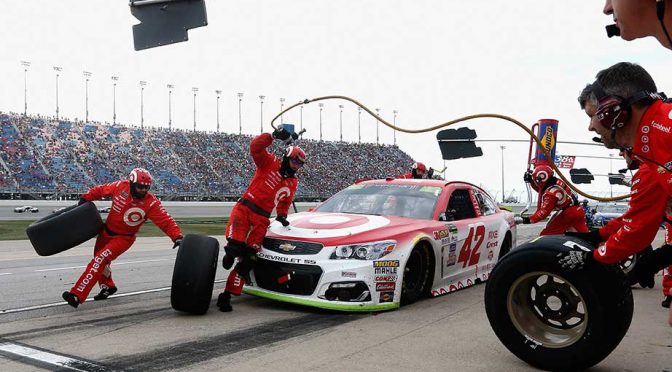
CONCORD, N.C. — For a NASCAR pit crew, there’s a degree of pleasure to be found in putting all the choreography together and rattling off a lightning-fast pit stop. It’s a level of satisfaction that Chip Ganassi Racing’s group of athletes know well. 

CGR’s No. 42 crew found that sweet spot earlier this month, making quick work of the final service for Kyle Larson and providing the difference-making track position that won the Monster Energy NASCAR Cup Series regular-season finale at Richmond Raceway.

Then there’s the impact that goes beyond four fresh tires and fuel. It’s why Ganassi pit crew coach Shaun Peet took time out of the team’s Tuesday morning huddle — before the pep talk in the heat of the NASCAR Playoffs — to read a note of appreciation that made its way to his inbox after last weekend’s postseason opener.

“I wanted to take the time to thank you for the way I was treated this weekend at Chicagoland Speedway,” the letter began, written by a fan who serves as a teacher of special needs children and who spent time interacting with the Ganassi crew before and after the race. The note continued, “The smile on his face and the excitement in his voice is something I rarely see from him. This is something both of us will never forget.”

The sentiment moved Peet to share the appreciation with his crew before the over-the-wall reps began. 

“So it’s great when our pit crews do great, but that’s the stuff for us that transcends this whole thing, right?” Peet said. “We’re lucky. Our philosophy is we’re going to win with good people here. …

“If they can affect lives positively while in this sport, for us as coaches, that goes beyond them pitting a race car in 10 seconds. We’re really proud of this group. We feel like we have 30 great human beings here.”

***

So how does a scrapper of a hockey player from a blue-collar logging town in Canada land in NASCAR, graduating with a double major from an Ivy League university along the way?

“Completely by accident,” Peet says.

And that’s how a whale of an ‘all things happen for a reason’ story comes to pass. In the fall of 2001, Peet had been sent down from the Pittsburgh Penguins’ Triple-A affiliate to the Greensboro (North Carolina) Generals. Already unhappy with the demotion down the minor-league hockey ladder, the then-26-year-old defenseman reached a turning point, goaded into a fight by a pesky player from the opposing Reading Royals.

“The first inkling that I knew I was in trouble was our team idiot was already kicked out,” Peet says now, reflecting back on his role in the escalating hostilities that led to what East Coast Hockey League officials called the worst brawl in the association’s history. “Big trouble” was how the so-called team idiot termed it, and he was right. Penalty minutes were handed out like Halloween candy, and Peet was suspended for 18 games, a quarter of the team’s season.

RELATED: At the shop with Chip Ganassi Racing

From there, the chain of events forms a serendipitous string. There’s the chance meeting with a NASCAR fan in the coliseum stands while serving his suspension, the casual visit to a race shop where he earned an impromptu tryout as a jack man, the eventual job with the Keselowskis, car owner Bill Davis and eventually Chip Ganassi Racing.

“I didn’t even know what NASCAR was,” Peet says. “And here, 14 years later, I’ve enjoyed it all.”

The Charlotte area where Peet wound up is a long way from his hometown of Nanaimo, a harbor city on Vancouver Island in British Columbia. But it’s also a good distance from Dartmouth, where he played collegiate hockey and earned his degree with concentrations on psychology and sociology — majors that have served him well in managing the many personalities on the team.

His transition drew recognition from the school’s alumni magazine, in a feature akin to Sports Illustrated’s “Faces in the Crowd” segment. One picture lauded a physician’s achievement in medicine; the second, a Naval officer recognized for his outstanding accomplishments as a pilot. “And then the third picture was me running around a race car,” he said with a laugh.

“I never thought I’d be here, but I’m glad I am,” Peet says. “I really, truly feel like I haven’t worked a day in my life.” 

***

The mood at Tuesday’s pit practice after the Chicagoland race is decidedly light. Upbeat songs blare as the test mule Chevrolet — marked with a No. 42 on the driver’s side and a No. 1 on the other to represent both teams — pulls in for practice stops. “Five yards per carry, baby!” one crewman shouts over the music, making a nod to the football background of many team members.

It’s a collegial group with regular words of encouragement, but underneath, there’s determination and drive that push them to be better. A small “Wheel of Fortune” style wheel adorns a pit box, indicating which crew is next up in the pit-stop rotation. Elimination-style tournaments determine weekly winners for a larger, quarterly tote board. It’s all meant to promote an internal spirit of competition, a means of figuratively sharpening the sword to face off with 38 other pit crews on race day.

“Every once in a while, I get to work out with the guys and it’s pretty interesting — it doesn’t matter what they’re doing, they’re still competitive,” says Matt McCall, crew chief for Jamie McMurray’s No. 1 Chevy. “It’s a race — no matter what you’re doing — to be the best.” 

After each practice stop, the crews huddle to review replays, receiving immediate feedback on their routine. Mike Metcalf — a pit coach who doubles as gas man for Kyle Larson’s No. 42 — says breaking down film is an old-school touch adapted for the current generation — a more visual, screen-dependent group.

RELATED: All of Kyle Larson’s Monster Energy Series wins

While Metcalf and Peet will still make minor adjustments to fine-tune their crews’ technique, Chip Ganassi Racing plans no wholesale changes for the playoffs. The emphasis on fundamental skills — a focus drilled into the team since before the season began — remains the primary goal.

“You reap what you sow, and these guys have worked their guts out for nine months and they’re ready to go,” Peet says. “The hay’s in the barn and you’re going to see the result of that effort over the next nine weeks. So for us, it’s not hard. It’s just keeping it on course and letting them do what they do.”

Says Metcalf, a former fullback during his football days at Appalachian State: “Our pressure, the serious stuff, we started that months ago. We’re already ready for it.”

***

“I’m just thankful that Shaun Peet’s better at this than he was hockey.”

Chad Johnston, Larson’s crew chief, delivers that faint praise with a smirk. But in another breath, he applauds the job the coaching staff has done to build a stealthy-good over-the-wall corps.

If there’s any sort of pressure in the postseason, it doesn’t show in the ambiance before, during and after pit-stop practice. After the series of stops, the team takes turns shooting long-distance shots then chasing down rebounds at the basketball hoop in CGR’s back parking lot. 

Those breaks in the day are part of the more elaborately planned activities during the season. The team members commemorate opening day of the Major League Baseball season with a Wiffle Ball tournament. Canada Day comes along on July 1, providing Peet a chance to celebrate his roots with a hockey tourney on a makeshift rink on the grounds, made out of racing tires.

The extracurriculars have all helped to create a family-style atmosphere and support system among a group of athletes from all sorts of cultural and geographical backgrounds. The common thread, beneath all the fun times and the well-fueled competition, is an enduring code of character. 

“The thing I’m most proud of is the quality of human beings we’ve got in this program,” Peet says. “One of the big things we keep getting back from the people we talk to is, ‘wow, you have a really diverse group.’ The funny thing is, we’re not. Visually, we look diverse, but every single one of our guys is hard-working, has a ton of integrity, cares deeply about their family, cares deeply about this group. So really, all the important things, they’re exactly the same.”

RELATED: Full schedule for Kentucky | Paint Scheme Preview

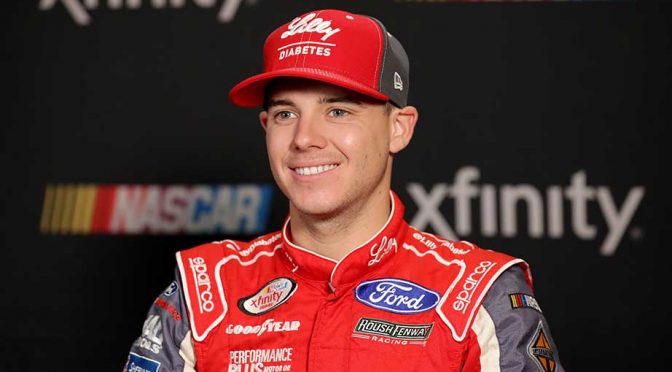
Ryan Reed heads into the NASCAR XFINITY Series playoffs as the No. 6 seed, but the Roush Fenway Racing driver knows he and his team have their work cut out for them if they hope to advance and possibly contend for the championship.

“It’s a tough atmosphere to judge,” Reed told NASCAR.com recently. “You’ll be like, ‘We ran ninth last week, is that going to be good enough (to advance)?’ Well, you have to look at your competition; who did you beat last weekend? That’s where it’s convoluted. There are times where it’s like, ‘We’ve got a shot,’ and times where you think, ‘We’re not going to be around if we don’t get it together.’

“Last year, we didn’t even ask where we stacked up (going into Playoffs) … Next thing you know going into Phoenix (for the final race before the Championship Round) we were seven points out. We ran fifth or sixth there, gave ourselves a real shot, it just didn’t work out. We had a plug wire fall off a couple of weeks before – you can’t have mistakes like that in the playoffs. We finished sixth in points and it was like ‘OK, the 16 team had a shot at this.’ 

“This year has been a lot different dynamic. Obviously the last few weeks have been on us, we have to clean our mistakes up. I think if we do then we do have a shot at it.”

Reed earned his playoff berth early, winning the season-opening race at Daytona International Speedway for the second time in his career. The remainder of the regular season had been one of ups and downs for the No. 16 team. After a handful of top 10s early in the season, the group has struggled to finish off races heading into the playoffs.

For the first 12 races of the season, RFR fielded two XFINITY Series teams. But a lack of sponsorship led officials to shut down the No. 6 team of driver Darrell Wallace, leaving Reed and the No. 16 group to go it alone.

Any impact wasn’t felt immediately – Reed finished eighth a week after the move. But there have been times when not having a second car has affected Reed’s efforts. 

“Maybe weekends like (Bristol) where that’s not my best track and I probably do struggle to get some feedback from there,” he said.

“Talk to any (organization) that is a two-car team … a driver who struggles at a particular track is going to lean on the teammate who is better there. (Bristol) was a good example of where being a two-car team can help.

“But I think overall we do a nice job; we go to figure out how to keep our nose clean, not beat ourselves on pit road and things like that.”

Reed qualified 27th at Bristol and finished 37th. It was the second of three consecutive races the team failed to complete.

The Playoffs, however, provide the opportunity for a fresh start. Race No. 1 for the 2017 title takes place Saturday at Kentucky Speedway (8 p.m. ET, NBCSN).

“I think we have some things to clean up but I think that’s not because we’re a one-car or two-car team,” Reed said. “Because once the race starts, you’re on your own and some of that stuff we beat ourselves, some of it is driver-inflicted. We just have to clean it all up across the board.

“We can lean on our Cup teammates but not like we could before. Today, usually when you see a single-car team it’s still part of a satellite organization or something like that. I do think there is an advantage to having multicar teams or else you wouldn’t see all those groups do it.”

In addition to the XFINITY Series team, Roush Fenway also fields two entries in the Monster Energy NASCAR Cup Series with drivers Ricky Stenhouse Jr. and Trevor Bayne.

“This is the absolute hardest, toughest year I’ve ever been a part of,” Reed said. “You’ve got some really good, high-quality teams that are struggling heading into the playoffs. It’s just a tough, tough series right now.”

And even though his own team has struggled more than he anticipated, Reed still feels good about his Playoff chances. 

“I don’t consider us an underdog,” he said.

Alba Colon, who has played a key role in Chevrolet’s NASCAR success, from Dale Earnhardt’s to Jimmie Johnson’s championships and more, won a title of her own: the STEM award from the Hispanic Heritage Foundation.

Racing partners offered praise Tuesday for the science, technology, engineering and math award presented to one of NASCAR’s fiercest competitors.


The Hispanic Heritage Awards included top Latino performers and personalities paying tribute to the honorees from the stage on Sept. 14 in Washington, D.C., and will be broadcast nationally Oct. 6 at 10 p.m. ET on PBS.

RELATED: Alba Colon blazes a trail in racing

“As a Latina in a traditionally underrepresented field, Alba Colon is a transformative role-model for our community,” José Antonio Tijerino, President and CEO of the Hispanic Heritage Foundation, said in a press release. “The Hispanic Heritage Foundation is privileged to honor her with the STEM Award.”

Colon, who was born in Spain and grew up in Puerto Rico, began as Chevrolet Racing Program Manager for the NASCAR Cup Series, working with drivers such as Tony Stewart, Ryan Newman, Johnson, Earnhardt, Dale Earnhardt Jr. and many more. Under her charge, Chevrolet has now amassed 285 race wins, 11 Drivers’ Championships and 14 Manufacturers’ Championships.

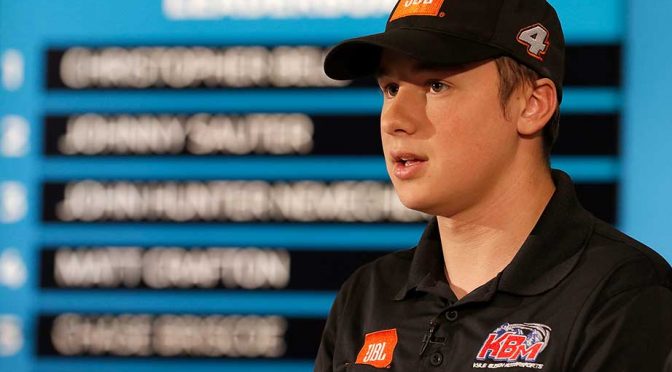
CHARLOTTE, N.C. — Christopher Bell rolled through the NASCAR Camping World Trucks Series regular season showing he’s capable of winning races and that he’s championship-worthy.

Now it’s time for Bell to do all of that again in the playoffs – and to prove that he can win the title.

Bell will be the top seed as the eight-driver Camping World Truck Playoffs begin Saturday with the UNOH 175 at New Hampshire Motor Speedway (1 p.m. ET on FS1). He begins his push for the championship with 40 valuable playoff points, many of them accumulated from his four victories at Atlanta, Texas, Kentucky and Pocono.

“Looking ahead, nothing changes for us,” Bell said. “We are going to try and win each and every race in the playoffs. There’s nothing you can do that’s different (from the regular season) except you realize that the penalties are higher if you make a mistake, so you’ve got to try and minimize your mistakes.”

This isn’t Bell’s first postseason experience. He qualified for the playoffs in his rookie season of 2016 – getting in by virtue of a victory at Gateway Motorsports Park – and advanced on points to the Championship 4 at Homestead-Miami Speedway. But his whole outlook of what it takes to perform well in the playoffs – and grabbing a first championship – has changed from a year ago.

“Last year I felt like we were able to capitalize on consistency,” Bell said. “We won in the middle of the season at Gateway, but overall we weren’t consistently competing for wins. We knew if we could knock down top fives or to eights, it would get us to Homestead.

“But this year we’ve seen a different kind of progress. We’re competing for wins a lot more often and we’ve won a lot more races. Hopefully it continues that way and we win our way to Homestead.”

The regular season was nothing short of a success for Bell, who had 10 top fives, 14 top 10s, won three poles and five stages victories, in addition to leading 593-of-2,200 laps (more than a quarter of the laps he ran). He thinks that’s the kind of consistency that should help get him to Homestead again (along with the built-in advantage of those 40 bonus points).

“I think that will translate for us into the Playoffs,” Bell said. “It’s going to be nothing different. Saturday (at New Hampshire) will be just another race. There’s no more added pressure over the next nine races than if we were to go to the GoPro Motorplex (in nearby Mooresville, N.C.) and run go-karts. We’re all racers. The only downside is the mistakes are more costly.”

As confident as Bell is, two upcoming Playoff tracks have him somewhat concerned – Martinsville and Talladega.

“Martinsville is my struggle point,” said Bell, whose best finish in three starts at the Virginia short track is sixth (twice). He remembers leading late at Martinsville when he was taken out by a lapped car.

Then there’s Talladega, which will be the third and final race of the playoffs’ first round and where Bell finished sixth in 2016.

“Talladega’s such a wild card,” Bell said.

Bell said there will be no major changes for the playoffs made to his No. 4 Kyle Busch Motorsports Toyota truck. None are necessary.

“We haven’t done any experimenting,” he said. “Every time we go to the race track, we have fantastic trucks, so there’s no need. Kyle (Busch) has done some experimenting with our fourth truck, so luckily for me I haven’t been the guinea pig. This truck can compete for wins and has winning speed and has winning speed almost every time.

Bell laughed.

“Now that looks bad for me as the driver, because I didn’t win every race.”

RELATED: At the shop with Chip Ganassi Racing

CONCORD, N.C. — It’s an ideal time to dream about season-long goals at Chip Ganassi Racing, with both of its Monster Energy NASCAR Cup Series entries in the early stages of the postseason hunt. Placards welcoming their employees into the playoffs are constant reminders in the 185,000-square-foot shop.

A NASCAR championship would be a first for the 59-year-old Ganassi, who has enjoyed multiple titles as a car owner in other motorsports disciplines. But it would also mean something else to Chad Johnston and Matt McCall, the crew chiefs for Ganassi’s No. 42 and No. 1 rides.

“It’s probably going to mean whiplash,” Johnston said with thick deadpan, recalling Ganassi’s physical exuberance atop the No. 42 pit box for Kyle Larson’s victory last month at Michigan International Speedway.

“Poor Chad’s still wearing a neck brace during the week trying to recover,” says McCall, the third-year crew chief for Jamie McMurray.

Being grabbed by the shoulders and jostled by their team owner is a side effect that both Johnston and McCall would gladly accept, so long as a championship was part of the equation. Both teams opened their postseason quests on solid footing last weekend at Chicagoland Speedway: Larson finished fifth to hold second in overall points, and McMurray recovered from a spin to take 10th place, moving him up five spots to 11th in the Round of 16 standings.

While there’s a vibe of excitement to the final 10-race stretch, there’s also an element of status quo to the preparations. The same checklists and duties remain, even as the pressure ratchets up, and Johnston says he hasn’t done or said much differently to change up the approach that’s served the organization well for the 26-race regular season. 

“I think that’s the beauty of here. They’re all pretty self-motivated,” Johnson says of his crew. “We all came into the year looking to go to Homestead for a chance at the championship and anything less is going to be a disappointment. It doesn’t take much motivation on their parts. They’re all pretty self-motivated, and they hold themselves accountable, so it’s a really good group to work with. They’re willing to do whatever it takes to make the cars better.”

For Larson and his team, that approach netted four regular-season victories. For McMurray, McCall and Co. on the No. 1 Chevrolet, the group is still searching for that first win of the year, having ridden a formula of balance and top 10 efforts into the postseason field.

“To not have won a race right now, it is hard for us to be super-positive, right, because we’ve been able to run top five, top 10 somewhat consistently, but to be able to put a full race together and get a win is still … I think it’s pushed our guys harder,” says McCall, who called his 100th premier-series race as a crew chief last Sunday. “We’re positive we can get the results we’ve been getting. We just need to improve that.”

If there’s need of further reminders that the team is capable of achieving big-prize goals, Exhibit 1 and 1-A sit just inside the entranceway to the shop’s main floor — a pair of No. 1 Chevys still covered in race-track grime from McMurray’s landmark 2010 victories in the Daytona 500 and Brickyard 400.

There’s room for more history-making cars in that white-walled foyer, something longtime CGR project manager Chris Clark says he can almost taste for the first time in more than a decade. Before the operation’s recent performance spike, Chip Ganassi Racing’s closest challenge for a NASCAR championship dated back to Sterling Marlin’s injury-shortened 2002 season.

“I think for where the organization was about two years ago, to get it to the level we are, it should mean a lot to everybody in this program company-wide,” says Clark, who has 20 years of experience at Ganassi. “Everybody’s pushed pretty hard for the last year and a half to get to this level, to make the goals and push through to get into the (Playoffs), so to get both cars here, it’s big for us right now as an organization.”

Even if it means a post-Homestead trip to the chiropractor for its crew chiefs.

It is absolutely impossible to speak with Sherry Pollex for more than two minutes and not start feeling something strong and distinct develop in your own heart and mind. She is positive, motivated, and optimistic. And she makes you feel the same way.

It’s an amazing demeanor for someone so bravely battling stage III ovarian cancer. In fact, Pollex, 37, has recently begun her second trip through intense chemotherapy treatment after doctors located a Ping Pong ball-sized recurrence of cancer in her spleen this summer. Surgeons removed her spleen and she was still recovering in the hospital when her longtime boyfriend Martin Truex Jr. won the Monster Energy NASCAR Cup race July 8 at Kentucky Speedway.

She was trackside this past week, however, when Truex, 37, and the No. 78 Furniture Row Racing team kicked off the playoffs with a huge victory at Chicago — his series best fifth of the season and a perfect exclamation point for Ovarian Cancer Awareness Month.

It seems like the ultimate in “win-win” situations!

“To be able to experience what he’s going through on and off the track has been huge for both of us,” Pollex told NASCAR.com. “I think the race track is a good place to go to kind of forget about all your troubles. You go there, perform well and it makes everything better. It makes him happy, and I love seeing him happy. It’s been an amazing year.”

The ability and opportunity to appreciate Truex’s success in NASCAR has actually been a sort of panacea for Pollex. And for Truex.

Truex, the Regular Season Champion, is guaranteed a spot in the second round of the NASCAR Playoffs with Sunday’s win. He’s collected more race trophies, more playoff points than any other driver this year. And, he’s done it with good vibes even against emotional odds.

You think Truex is strong behind the steering wheel of his Toyota? Imagine what he’s like out of the driver’s seat being a source of strength, compassion and can-do for Pollex.

“I think about that a lot,” Pollex said. “He’s not a super emotional person and doesn’t talk a lot about his feelings and I worry about him dealing with everything that I’m going through — I know he worries about my disease and me possibly not being there for him one day.

“I can’t imagine the pressure in everything he’s had to deal with and he just handles it with such class. His character speaks for itself. Most people in the garage have a lot of respect for him. He’s a good person and he has a big heart and he’s always been there for me. He’s my rock and he’s never wavered once through everything we’ve been through.”

On her website, Sherrystrong.org, Pollex has candidly written about her recent medical situation. Opening up helps her. And she hopes, helps others.

As word of her current situation has gotten out, Pollex said she’s been surprised at the number of people who have reached out to cheer her on — at the grocery store or gas pumps even, people stop her to wish her well.

“The passion the fans have in NASCAR, there’s really no other sport like it,” Pollex said. “I wonder sometimes, why do they feel so connected? I think some really feel like they are going through a battle with me. So many people around the world are touched by cancer and any time you can relate to someone going through something that tough, you feel a connection to them. You can’t explain to people what it is to meet people who are going through what you are going through. It’s real.

“For me, I’ve been very open with what I’m going through and I want to help other women and people in general who are battling cancer. I kinda feel like that’s the path God has put me on. Everyone is dealing with a struggle or something going on in their life. No one’s life is perfect. I just put it all out there and hope it inspires or helps someone.”

Judging by the response she receives and the feel-good Truex produces, it’s safe to say Pollex’s message of positivity through adversity has gotten out.

And now each weekend, Pollex can take great satisfaction in watching Truex find such success. He’s put in 12 years in NASCAR’s big time and four years ago took a leap of faith to join the small Furniture Row Racing team based 1,000 miles from NASCAR’s Charlotte hub, a small organization that fought to be considered a legitimate title contender compared to the “mega-organizations” it competed against.

And now, Truex and team are making a great, even emotional, run for his first Monster Energy Series title and the Furniture Row Racing team’s first championship too.

“I feel like it’s God rewarding him with this success for him being such an amazing person,” Pollex said. “Everything you’ve worked your whole life for is finally coming to fruition. You’re with a manufacturer that’s good, you and your crew chief are good — him and Cole (Pearn) are such a good combination — and that team. It’s the closest-knit group of guys I’ve ever been around. They have told me so many times that, ‘There’s no other guy in that garage we would want behind the wheel of that race car than him.’

“And,” she continued, her voice full of passion and admiration, “How he handles things in the car and when things don’t go his way. Martin and I talk about things, how his personality is so different than from before I got diagnosed.

“The old Martin would have gotten mad when they had a bad pit stop or run bad. But he’s not like that anymore and I think that’s what he means when he says, ‘With everything Sherry and I have been through … it’s made me a better person and a better driver.’

“You can take all that adversity and turn it into something positive and that’s exactly what he’s done. That’s hard to do.”

And she should know.

RELATED: See exclusive photos of the race

When NASCAR brought its road show to Japan for the first time in the 1990s, it meant transporting everything that makes the sport so great 7,000 miles — including the post-race drama American fans love to see.

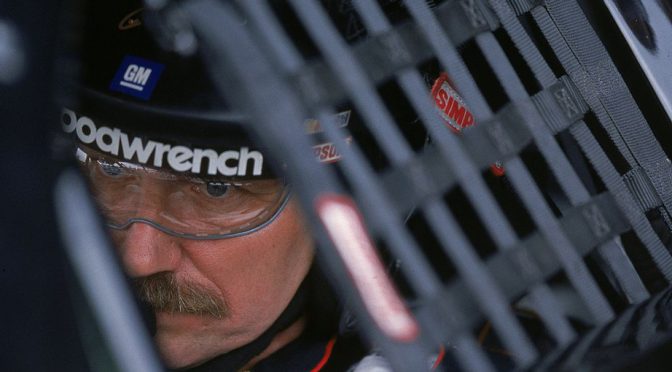
Little did they know the drama would center around the father-son duo of Dale Earnhardt and Dale Earnhardt Jr. But as Junior explains in this excerpt from “Made in Japan,” which airs tonight at 6 ET as part of FS1’s Race Hub, things got interesting when he felt his father’s shoe whiz past his head after the race.

Find out what provoked Dale Sr. to do such a thing and what happened afterward, then tune in for the rest of “Made in Japan” to see the other stories that unfolded when NASCAR went to the Far East for a race.