RELATED: North Wilkesboro, 20 years later
MORE: Classic Dale Jr. story: Angry dad, purple gas jug


In the late 1980s, NASCAR’s twofold quest for speed and success took a sharp turn as tire supplier Goodyear introduced the radial tire to the sanctioning body’s premier series.


Bias-ply tires had been the standard for stock car competition from the very beginning. But radial tire technology had vastly improved, and major open-wheel series had already made the swap to radials. Off the track, radials had also begun replacing bias-ply as the tires of choice for passenger vehicles.


But the bias-ply tires still used in NASCAR provided teams with another tool in the toolbox, a way to “tune” the car’s setup through the use of air pressures and tire stagger (the variation in the circumference of the car’s tires), something radial tire technology couldn’t duplicate at the time.


Goodyear officials were working toward implementing radials in NASCAR when the company got an unexpected push from Hoosier Tire Company in 1988.


The competition between the two was fierce, and not without consequences. “Softer” tires produced by both brands generated higher speeds, but durability faltered. The “fall-off” in the product led to numerous tire failures and hard crashes.


The following year, Goodyear officials rolled out radial race tires in an effort to provide both speed and durability. It was an ongoing project — problems before the season-opening Daytona 500 forced the company to withdraw its product for that event.


It wasn’t until the spring race of 1989 at North Wilkesboro that Goodyear debuted the radial tire that officials felt was far more durable and could provide the necessary consistency and speed.


“We were going to step through it,” said Greg Stucker, head of race tire sales for Goodyear. “We were going to introduce them at the short tracks and then slowly step into the other race tracks.”


Rusty Wallace, driving for team owner Raymond Beadle, won the pole after the Blue Max team made the switch to Hoosiers.


“We knew the Hoosiers were quick,” Stucker said. “We also knew that the radials were extremely good over the long run. We went the first 100-some odd laps under green, which you don’t do at North Wilkesboro very often. And Rusty got lapped, I think, about Lap 70.”


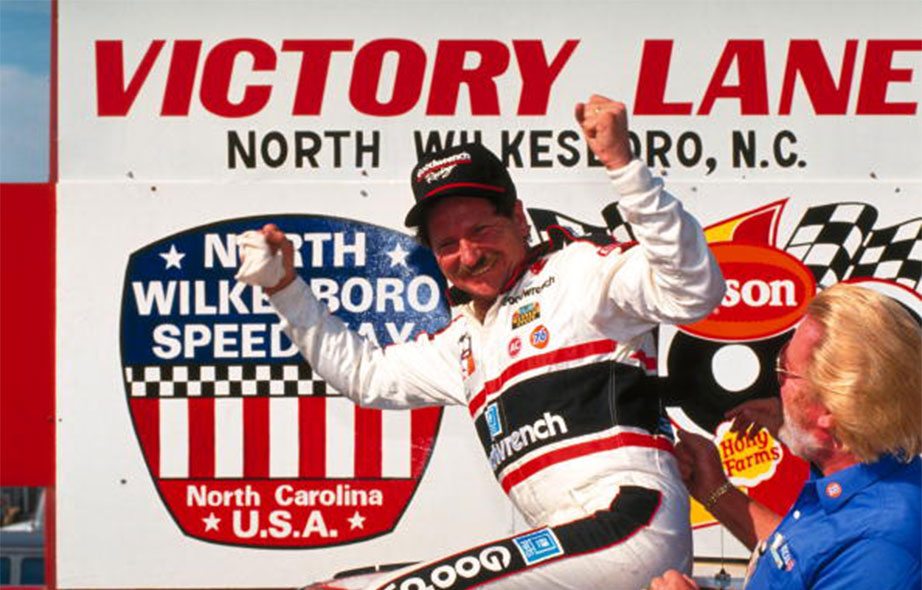
Dale Earnhardt won the race, thanks in part to the Richard Childress team’s use of the Goodyear radials.


“I still have that car,” Childress said. “That’s one of my favorite cars I have on display because I didn’t re-do the body on it. I made the rest of them look real nice, but that car is still beat up; it has the Dale Earnhardt look still left on it. All the fenders beat in, the sides, and a set of the very first radial tires.


“That’s why we kept that one. It was the first win anybody had on radial tires. And everybody said ‘That’s going to be the end of Dale Earnhardt; he won’t be able to run on them radial tires.’ Well, we went out there and won the first race on them.”


The tire war eventually ended – Hoosier pulled out of the sport in mid-1989, returned for the ’94 season with its own radial tire, but departed at year’s end due to a lack of sales.


“It couldn’t have worked out better for us to demonstrate how strong and how consistent the radial was,” Stucker said. “The race really played into our hands pretty well. I think it was a good demonstration to everybody that this was a good package.


“You know they say you have good days and bad days in racing? That was definitely one of the best days I’ve had at the race track. It was a good one.”

RELATED: North Wilkesboro, 20 years later


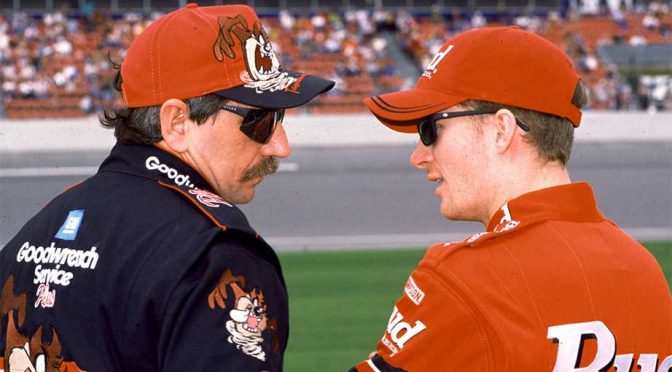
Dale Earnhardt Jr. didn’t begin his career in NASCAR’s premier series until 1999, three years after the series had moved on from North Wilkesboro Speedway.


But Earnhardt Jr., a student of NASCAR history, did compete at the .625-mile track, racing a Late Model entry on at least a couple of occasions.


“I ran the Sun Drop (sponsored) car there,” Earnhardt Jr. recalled. “Actually, I think we went there twice. With the Sun Drop car I remember qualifying 19th or something; I don’t remember how many cars were there but I’m sure they sent a few home so it was cool to make the race.”


The contentment was short-lived. According to Earnhardt, he “T-boned a guy and had to run the rest of the race with no fenders or hood or anything. So it wasn’t a whole lot of fun.”


The following year, all three Earnhardt siblings — Earnhardt Jr., older brother Kerry and older sister Kelley — made the trek to the legendary track to compete in the Late Model race.


None of the three managed to qualify, a situation that didn’t sit well with their father and team owner, Dale Earnhardt.


“Dad had assumed that I would make the race because we’d been running so good at Myrtle Beach,” Earnhardt Jr. said. “He said, ‘You guys run this race’ and there was a race at Myrtle Beach that night; he was going to fly us in his King Air to the beach so we could compete that night and stay in the track points (battle).”


But when Dale Jr. failed to make the show, “He told me and my guys to screw off, that we had to drive the damn van all the way from North Wilkesboro to Myrtle Beach to try to make the race.


“We had to hustle; we barely made it. He was pissed off that all three cars missed the race.”


MORE: How end of “tire war” started at track


Failing to qualify and having to drive all day to that night’s race wasn’t the only issue. An incident with “questionable” fuel also took place, but Earnhardt Jr. laughs when he recounts the incident today.


“I had a jug of trick fuel for my car,” he said. “It was a purple gas jug. We kept it in that purple gas jug so we wouldn’t mix it up with the other fuel. It was probably Elf fuel or something just to give my car a little more speed. Or it might have had some propylene oxide in there or something.


“One of Kerry or Kelley’s guys walked over to get some gas for their car and grabbed the purple jug and a fight ensued between their crew and my crew; it sort of let the cat out of the bag that whatever was in that jug was pretty special. That was kind of comical.”


Something to laugh about, no doubt, on the long drive from the hills of North Wilkesboro to the sands of Myrtle Beach.

NORTH WILKESBORO, N.C. — Paint peels and memories fade but the echoes of the past still ring off the hillsides here.


Twenty years ago today, the checkered flag fell on the final NASCAR premier series race at North Wilkesboro Speedway.


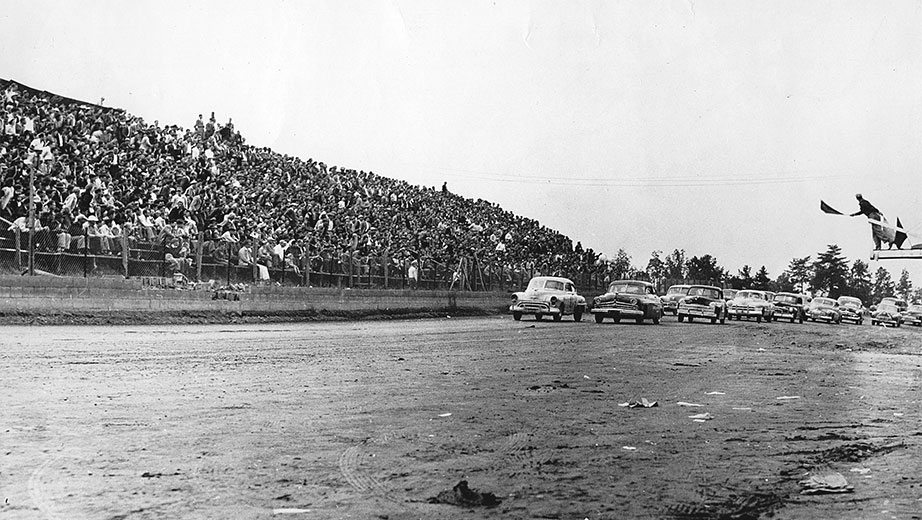
Bob Flock won the first race, in 1949 and on dirt. Jeff Gordon won the last, in 1996 and on asphalt. The two races serve as bookends for a track that even after 20 years of silence serves as a reminder of the sport’s colorful past.


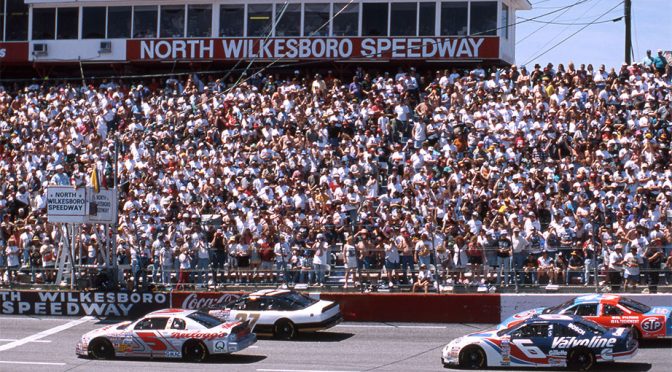
For 48 years and 93 races, NASCAR teams made the trek to the secluded .625-mile track in the Brushy Mountains of northwestern North Carolina.


“It’s one of the sport’s most historic tracks, one that really helped put NASCAR on the map,” car owner Richard Childress said. “A lot of people overlook that. But a lot of great things happened there. (Former series sponsor) R.J. Reynolds really supported it; Holly Farms back in the day … all those things were important to building our sport to what it is today.”


Built by Wilkes County resident Enoch Staley and partners Lawson Curry and Jack and Charlie Combs, North Wilkesboro Speedway was a venue unlike any other — in part because the front straightaway ran slightly downhill and the backstretch uphill.


It opened in 1947, two years before the debut of NASCAR’s Strictly Stock Series, and hosted its first NASCAR premier series event in October of ’49.


The Wilkes 200 featured a 22-car field and was the final race of the inaugural season for NASCAR’s new featured series. Flock won the race but it was Red Byron, finishing 16th, who captured the series’ first championship.

RELATED: Veterans share fond memories of track


‘I felt like I was lost’


Thirty-eight drivers made it to Victory Lane at North Wilkesboro through the years, including 19 members currently in the NASCAR Hall of Fame. Richard Petty mastered the track, winning a record 15 times; Darrell Waltrip won 10 times.


No active full-time driver competing in the premier series today made a single start at the track.


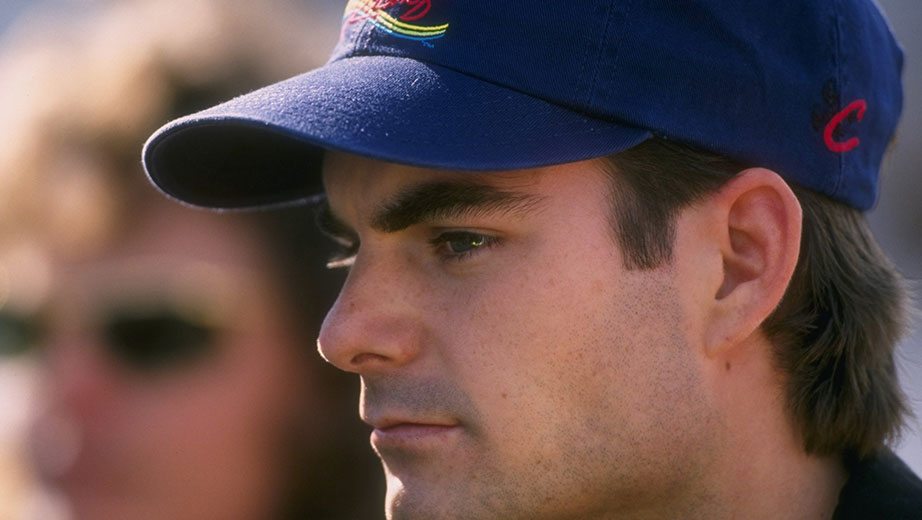
Gordon was the last to win at North Wilkesboro in NASCAR’s top division and the last active driver to compete there.


“I saw somewhere this year the last eight laps or so of the (final) race,” Gordon told NASCAR.com. “That’s the cool thing about it. If you look at the cars, there were no splitters, the air dams weren’t on the ground, nothing was all sealed up. It was all about mechanical grip. Springs and shocks played a role. The driver played a role. Managing the tires and the brakes played a role. It was nice to be able to go there and focus on those things.


“North Wilkesboro was probably one of the most challenging short tracks that we went to. Hard to get ahold of, very slick, really unique. The banking and radius of the corners as well as the uphill, downhill aspect of it. It was just really old school. Very old school and I felt like I was lost the first couple of times that I went there.


“That’s why that pole meant a lot to me the year before, because I felt like ‘Boy, I don’t know if I have what it takes to get around this track’ and then the next year to win the race? I’m sure that’s what was going through my mind; I thought I’d never win at this place.”


Ray Evernham helped guide Gordon to three championships as crew chief of the No. 24 Chevrolet for Hendrick Motorsports. But it took some doing, and eight career starts, before the duo solved the riddle of the unique little track.


“I just loved that place,” Evernham said. “The fact that it would change throughout the day and you really had to manage your car and you really, honestly, had to worry about mechanical grip back then. The fact that it was two completely different corners. Any of the tracks that had a real history to me and were real challenging were tracks I really wanted to win at. Just because of the design and surface (at North Wilkesboro), it didn’t matter if you had a good motor, none of that mattered.


“It was really about the pureness of what stock car racing was — you had to get your car to handle, you had to get your driver to hang in there, your pit crew guys had to be good. It wasn’t about all the latest and greatest technology; it was about pure racing.”

The first race NASCAR race at North Wilkesboro came in 1949 — and it was on dirt.

Through the years


North Wilkesboro Speedway was the site of so much throughout its four-plus decades as a part of NASCAR’s annual schedule. Close finishes and close calls; rivalries renewed and rivalries begun; and at least one finish that’s memorable because it wasn’t close at all.


Just a few that stand out:


The spring race of 1955, the Wilkes County 160, saw Buck Baker edge Dick Rathmann for the win. The margin of victory, officially 3 feet, was the closest winning margin in the seven-year history of the series.


Two years later, in the spring of 1957, Fireball Roberts won the 100-mile race without making a single pit stop. The big news, though, was that this was the last race on dirt at North Wilkesboro.


Lee Petty’s first North Wilkesboro win came in 1959. And it was his only victory with the Petty Enterprises’ No. 43, a number later made somewhat famous by his son, Richard.


The win for Junior Johnson in October of 1965 was the hometown favorite’s 50th and final as a driver. In all, Johnson won four times at North Wilkesboro. His teams went on to earn 15 more victories with the Ingle Hollow, North Carolina, native as an owner.


On Oct. 1, 1967, Richard Petty won the Wilkes 400 for his 10th consecutive victory and his 27th on the season. Both records remain unmatched.


Another Petty item — this one involving Bobby Allison, who was one of the King’s biggest rivals back in the day — took place in ’72.


“There wasn’t a winner’s circle; you just stopped on the race track,” Petty’s championship winning crew chief Dale Inman recalled. “I guess Richard and Bobby, the last five or six laps got to bumping each other; got to bumping each other pretty hard.


“We just stopped on the race track and that was the winner’s circle. Richard got out of the car and handed Maurice (Petty, Richard’s brother and the team’s engine builder) his helmet and somebody came up and put their hands on Richard. Maurice hit him right in the face with the helmet.


“When Maurice hit him, he staggered over and I caught him. He said, ‘What’d he hit me for?’ I said, ‘Hell, I don’t know.’ “


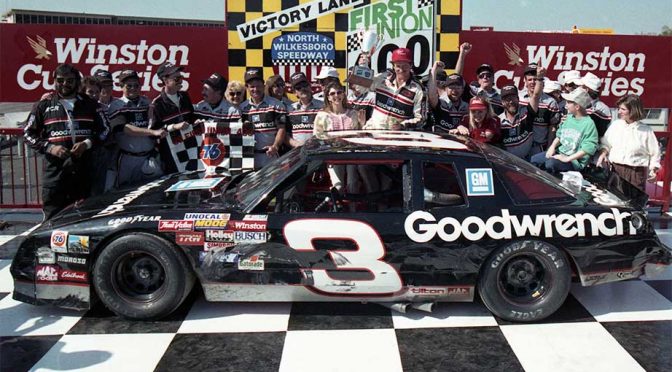
In 1989, Goodyear officials successfully debuted the company’s radial race tire in a race won by Dale Earnhardt.


Earnhardt won five times at North Wilkesboro and finished second on six occasions. It was a rare race that didn’t see the “Intimidator” in contention, much as Waltrip and Petty had been dominant earlier.


RELATED: How end of “tire war” started at track

Dale Earnhardt won five times at North Wilkesboro, including the 1989 race that ushered in the ending of the “tire war.”

Earnhardt passed us so often one time there we thought there were two of ’em on the track,” said Wood Brothers Racing co-owner Eddie Wood.


The Tyson Holly Farms 400 in 1994 featured only one driver on the lead lap at the finish — race winner Geoffrey Bodine. It was the last premier series event in which the winner lapped the entire field.


Terry Labonte tied Richard Petty’s consecutive starts record at North Wilkesboro; Ernie Irvan returned to competition at the track after being critically injured 14 months earlier; Harry Gant’s streak of four consecutive wins in the month of September came to an end at North Wilkesboro.


So much happened at such a tiny facility. But that was what made the track so enjoyable and so memorable.


‘Just an awesome race track’


Former NBA all-star Brad Daugherty became a race fan in part because of the numerous treks with family to watch the NASCAR races at North Wilkesboro. Today he remains involved in college basketball and the NBA as an analyst for ESPN.


He’s also involved in NASCAR — he’s the Daugherty in the JTG Daugherty Racing team that fields the No. 47 Sprint Cup team with driver AJ Allmendinger.


“I used to go there a lot … I mean we went every year,” Daugherty said. “We’d go watch that Holly Farms race every year. Just awesome.


“Actually that’s where I got to know Junior Johnson really well as a young fella. Me and my dad and my uncle, I’ve got to give my uncle all the credit, we used to go to North Wilkesboro and Bristol a lot. But he loved going to North Wilkesboro and I did, too. It was great. We’d spend all day, driving over from Asheville, winding our way up through there and getting to the race track.


“I remember getting there and seeing all the cars — the Tide car, the Levi Garrett car, the Skoal car. It was just a wonderful race track and I was just so disappointed that it went away. It was just an awesome race track.”


Childress, an owner/driver for just over a decade before turning his attention solely to ownership, called the track “one of my favorites.”


“That and Martinsville were my two home tracks,” the Winston-Salem, North Carolina, native said. “I had some good runs and good finishes there. The fans, how they got into it, was just amazing. Those fans were true to Junior Johnson. It was just quite a deal to go back up there and race.


“I can remember back when I ran there; I remember spinning out one time, it had just rained and the track was wet. Enoch Staley owned the track … I never will forget. I spun out, went across the grass back there on the back side of the track and tore down one of his fences.


“He came over there raising hell about me tearing down his fence; he didn’t care anything about the fact that I had my old car torn all to pieces. But that’s just the way he was.”

Jeff Gordon went down in history as the final winner at North Wilkesboro Speedway in 1996.

One last hurrah


The weekend of Sept. 27-29, 1996, was the final NASCAR race weekend at North Wilkesboro. Two races were held — the Lowe’s 250 NASCAR Camping World Truck Series race on Saturday followed by Sunday’s Tyson Holly Farms 400.


The Truck Series race was stop No. 20 of 24 for the season and it was just the second time the series visited the legendary facility.


Sunday’s premier series race was No. 27 of 31 for the 1996 season. It was the last season in which the schedule consisted of 31 races. The following year at the request of the track’s new owners, the spring date at North Wilkesboro was moved to Texas Motor Speedway while the fall date went in as the second of two dates at New Hampshire Motor Speedway.


Friday, Sept. 27: Following a 3 p.m. ET start, rain interrupted first-round qualifying with 13 of 40 drivers still waiting to get on track. Bobby Hamilton, driving the popular No. 43 Pontiac fielded by Petty Enterprises, was fastest before the delay.


After a 2 1/2-hour wait, Gordon was first out on the track, and the defending series champion quickly put his Chevrolet on top with a lap of 117.937 mph. The run held until Ted Musgrave, driving the No. 16 Family Channel/Primestar Ford Thunderbird for car owner Jack Roush, won the pole with a lap of 118.054 mph. It was Musgrave’s first pole of the season and the fifth and final No. 1 starting spot of his career.


Hamilton wound up third, with Mark Martin and Irvan completing the top five.


In the Truck Series, all but five drivers had made qualifying attempts when rain returned and darkness forced officials to postpone the remainder of the program until Saturday. Rookie Johnny Benson had the fastest lap when qualifying was stopped. Rain was in the Saturday forecast and had it continued, leaving officials to set the lineup by the rule book, Benson would have failed to qualify as he had only two previous starts that season.


Saturday, Sept. 28: Second-round qualifying was still in place for the Cup Series, allowing drivers to stand on their first-round times or make a second attempt. Only the top 25 locked in times from first round the previous day. The practice was done away with following the 2000 season, with only one round used to determine the lineup.


Six drivers made second-round attempts, with Hut Stricklin fastest and Dale Jarrett also improving on his first day’s effort. Provisionals went to Bodine, Lake Speed, Robert Pressley, Jeff Green and Darrell Waltrip (past champion’s provisional).


Ward Burton, Dick Trickle and Gary Bradberry failed to qualify.


Rain following the Truck Series race cut short final practice for Cup teams. Gordon completed just 15 laps when his car developed engine problems, later traced to debris in the carburetor.


In the Truck Series race later that day, Mark Martin won in just his second start in the series to become only the third driver at that time to win at least one race in all three of NASCAR’s national tours.


For posterity, the entire field posed for a picture prior to the last race at the fabled .625-mile track.


Sunday, Sept. 29:
More than 40,000 fans were on hand to witness the final premier series race at North Wilkesboro. Many carried signs with, “We’ll miss you North Wilkesboro,” “Farewell Old Friend” or similar messages.


Television coverage was provided by ESPN Speedworld; it was the 30th premier series race broadcast from the track by the network, which had begun airing races from Wilkesboro in 1982.


The race featured eight different leaders, but it was Gordon who had the dominant car. He led at halfway, collecting a $10,000 bonus, and moved past Earnhardt after a restart with 79 laps remaining to grab the lead for the final time.


When the checkered flag appeared, it was Gordon across the stripe first, with Earnhardt, Jarrett, Jeff Burton and Labonte rounding out the top five.


Evernham said the win was special because “we knew it was going to be the last race there.”


“For a little bit of time there the short tracks had almost been our Achilles’ heel and we got a handle on it,” he said. “And that’s the year we won 10 races, so we were pretty proud of that accomplishment; I was really proud of that even though we had won the championship in ’95. I felt like we were becoming one of the dominant teams.


“When you could beat guys like (Dale) Earnhardt, Junior Johnson’s cars and those people at North Wilkesboro, you deserved to be there.”


In addition to being his 10th win of the season, it was also Gordon’s third in a row, coming on the heels of victories at Dover and Martinsville.


“We were on a pretty good roll that year,” Gordon said. “Winning wasn’t outside of the realm but at the same time, knowing it was the last race there … now looking back on it, it’s extremely special to me because it was the last race and because it was such a tough, challenging race track.


“To be good on the short tracks meant a lot back then.”


Bill Brodrick, known as the Hat Man, was waiting in Victory Lane, situated on top of a building in the infield. So, too, was team owner Rick Hendrick and the rest of Gordon’s crew.


Several hours later, the gates swung shut at North Wilkesboro Speedway. The fans had departed. And this time, NASCAR had, too.


MORE: Classic Dale Jr. story: Angry dad, purple gas jug
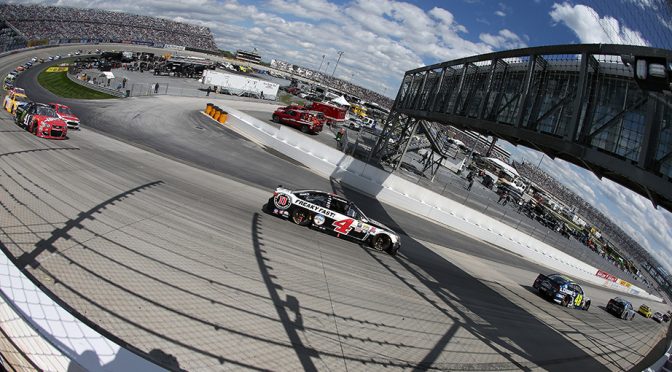
Here are the hot topics, trending news and key story lines to get you ready for this weekend’s races at Dover International Speedway and Las Vegas Motor Speedway.


WEATHER


The weekend forecast for Dover, Delaware, looks like there’s a chance for rain. Friday for Sprint Cup Series Coors Light Pole qualifying there is a 60 percent chance for precipitation. For the XFINITY Series race on Saturday, there is an 50 percent chance for precipitation with a high of 76 degrees. And for the Sprint Cup race on Sunday, there’s a 30 percent chance for precipitation and a high of 76 degrees.


For Las Vegas, site of this weekend’s Camping World Truck Series events, it will be clear and 70 degrees for the start of Saturday’s practices. And on Saturday it will be clear and 90 degrees for the start of the race.


KEY TIMES


Sprint Cup Series: The Sprint Cup Series holds its first practice Friday at 10 a.m. ET (NBCSN/NBC Sports App) followed by Coors Light Pole qualifying at 3:40 p.m. ET (NBCSN/NBC Sports App).

 The Citizen Soldier 400 is at 2 p.m. ET Sunday (NBCSN/NBC Sports App, MRN, SiriusXM NASCAR Radio).

XFINITY Series: The XFINITY Series opens practice on Friday at 11:30 a.m. ET (NBCSN/NBC Sports App) and qualifies Saturday at 11:45 a.m. ET (NBCSN/NBC Sports App). The Drive Sober 300 is on Saturday at 3 p.m. ET (NBCSN/NBC Sports App, MRN, SiriusXM NASCAR Radio).


Camping World Truck Series: The Camping World Truck Series is scheduled for a Keystone Light Pole qualifying session Saturday at 6:10 p.m. ET on FS2, followed by the DC Solar 350 race at 8:30 p.m. ET (FS1, MRN, SiriusXM NASCAR Radio).


CATCH DRIVERS LIVE


We’ll stream every driver press conference in the Dover media center at NASCAR.com/presspass. Click here for a full schedule. Click here to tune into the live stream.


LAST TIME


In September of 2015, Kevin Harvick punched his ticket to advance to the next round of the Chase for the NASCAR Sprint Cup by leading 355 of 400 laps at Dover International Speedway, a career-best at any track. Harvick beat out eventual 2015 Sprint Cup Series champion Kyle Busch by 2.639 seconds for the victory. 


YOU SHOULD KNOW


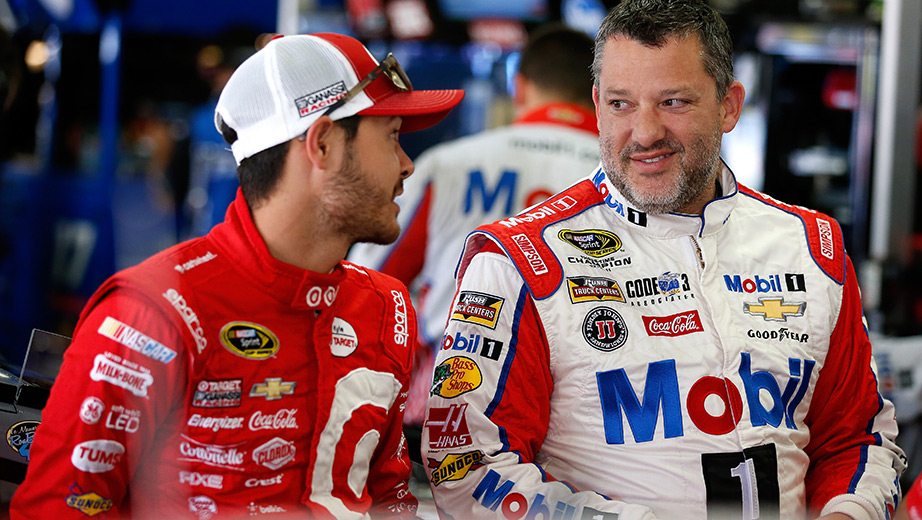
Chris Buescher (-30 from 12th place), Tony Stewart (-11), Austin Dillon (-5) and Jamie McMurray (-5) are all on the outside looking in as far as the Chase Grid standings are concerned. Of those drivers, Stewart is the only one who has won at the “Monster Mile” — three times to be exact. Stewart’s most recent win came in 2013.

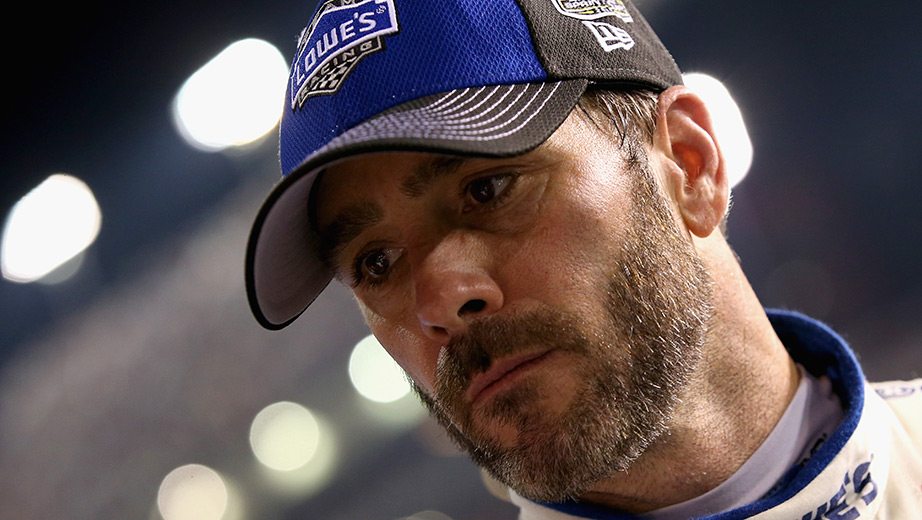
• With 10 wins, six-time Sprint Cup Series champion Jimmie Johnson has been to Dover’s Victory Lane more times than any NASCAR driver. Johnson is looking to punch his ticket to the next Chase for the NASCAR Sprint Cup round and a win at his best track could be in the cards.

• Winning the opening XFINITY Series Chase race at Kentucky, Elliott Sadler continues his momentum to Dover where he has earned three top five and 10 top-10 finishes, two of which came in the last two XFINITY Series races at the 1-mile track. Sadler’s experience in 17 starts at Dover could shine through on Saturday compared to the young guns he’s competing against for the championship.


• Of the Camping World Truck Series Chase drivers, only Johnny Sauter and Timothy Peters have wins at Las Vegas Motor Speedway. Canadian Tire Motorsport Park winner John Hunter Nemechek has the best average finish of 4.0 out of the Truck Series Chase drivers. Behind Nemechek is Ben Kennedy with 5.0. Nemechek has run just one Truck Series race at Dover, while Kennedy has experienced two. In 15 starts, two-time Camping World Truck Series champion Matt Crafton has an average finish of 11.9, but is still seeking a win.

THE FAVORITE


Jimmie Johnson. Who better to pick than the 10-time Dover winner as this weekend’s victor? With a championship at stake, Johnson is comfortable under pressure and is looking like a solid pick to win on Sunday.

Others to consider: Kevin Harvick, Martin Truex Jr.

THE SLEEPER


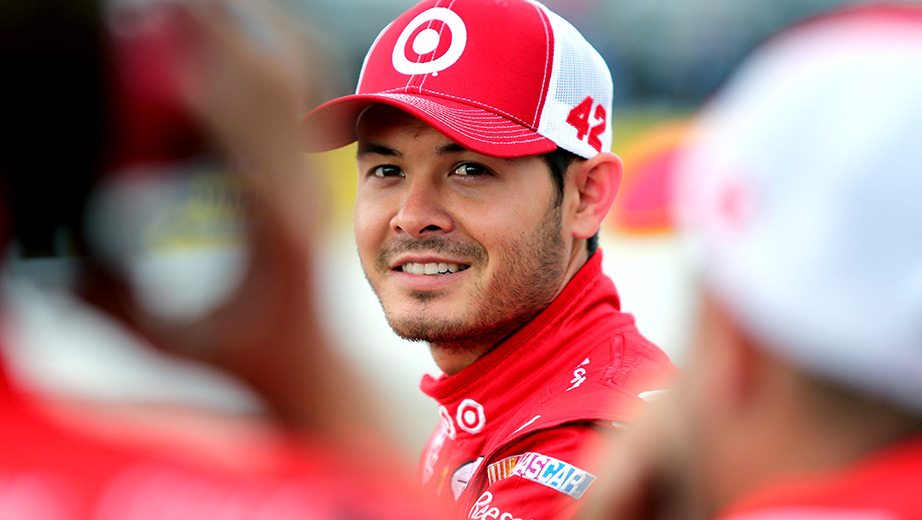
Kyle Larson. In five starts, the No. 42 driver has come as close as second (2016 spring race) to a win at Dover and has earned a total of four top-10 finishes. Larson earned his first Sprint Cup Series win this season and that victory could have given the boost to break the runner-up ceiling at the “Monster Mile.” 

Others to consider: Tony Stewart, Chase Elliott.

STAFF PICKS

Kyle Larson: 5
Jimmie Johnson: 2
Kevin Harvick: 1
Martin Truex Jr.: 1

RELATED: See Dale Jr.’s day at Talladega

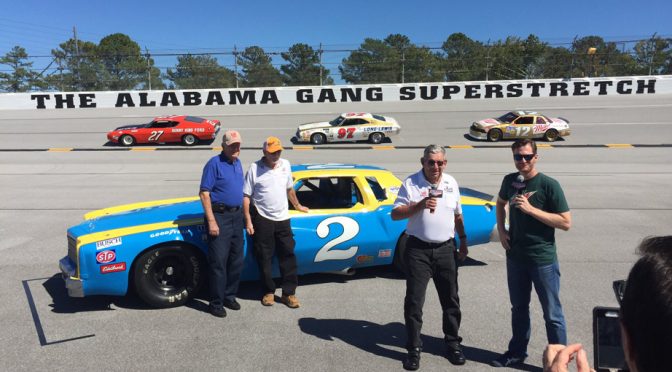
Six-time Talladega Superspeedway winner Dale Earnhardt Jr. visited one of his favorite tracks Thursday for an action-packed day of greeting fans, mingling with the Alabama Gang, assisting the track with its landscaping duties and watching his father’s No. 2 Chevrolet take a lap around the superspeedway. 

The Hendrick Motorsports wheelman, sidelined for the rest of the season by concussion-like symptoms, was welcomed by Alabama Gang members Bobby Allison, Donnie Allison and short-track legend Red Farmer as an honorary member of the group.


The Alabama Gang, with deep roots in stock-car racing’s early days, was the nickname earned by a group of notable NASCAR drivers — the Allisons, Neil Bonnett, and Farmer among them — with ties to the state. Talladega’s back straightaway was named “The Alabama Gang Superstretch” in their honor in the spring of 2014. 


Although Dale Earnhardt was not a part of the group, he remained great friends with the drivers — especially Bonnett, a fellow outdoorsman. The group paid tribute to the first-ballot NASCAR Hall of Fame inductee as Donnie Allison wheeled Earnhardt’s famous No. 2 Monte Carlo around the 2.66-mile track. 


See glimpses from Dale Jr.’s day.


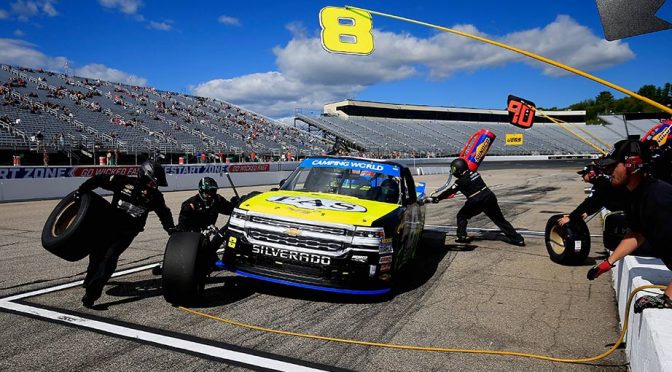
NASCAR issued penalties Thursday to the No. 8 NEMCO Motorsports team and Camping World Truck Series driver John Hunter Nemechek for P2 infractions found last weekend at New Hampshire Motor Speedway.


Nemechek’s No. 8 Chevrolet failed to meet the minimum ride height during an inspection after last Saturday’s UNOH 175, the opening race of the Camping World Truck Series Chase playoffs.


Competition officials docked the team 10 championship points in both the owners’ and drivers’ standings. The penalty dropped Nemechek, who rallied from an early spin to finish ninth last weekend, from fourth to seventh on the Chase Grid with two races remaining before cuts are made to the championship-eligible field.


NASCAR officials also fined crew chief Gere Kennon $6,000 and NASCAR probation for the crew chief continues through Dec. 31, 2016. It’s the second such violation this season for the NEMCO team, which also failed the ride-height minimum at Iowa Speedway in June for a P2-grade infraction.


NASCAR abandoned ride-height rules for its Sprint Cup Series ahead of the 2014 season. Those restrictions remain in effect for its other two national series.


This week’s penalty report for the Sprint Cup and XFINITY Series was marked by written warnings and lesser violations. From the Sprint Cup Series race weekend in New Hampshire, the following teams were cited:


— The No. 7 Tommy Baldwin Racing team of driver Regan Smith received written warnings for failing pre-race LIS twice and pre-qualifying LIS twice.

— The No. 4 Stewart-Haas Racing team of driver Kevin Harvick, No. 5 Hendrick Motorsports team of driver Kasey Kahne, No. 16 Roush Fenway Racing team of driver Greg Biffle and No. 83 BK Racing team of driver Matt DiBenedetto all received written warnings for failing pre-qualifying LIS twice.
— The No. 11 Joe Gibbs Racing team for driver Denny Hamlin received a written warning for failing pre-qualifying template inspection twice.

The pre-qualifying LIS failures of Nos. 4, 5, 7 and 16 teams were each their third infractions, meaning the next such infraction will see those teams penalized with the last selection of a pit stall on the weekend that violation occurs. Of those cars, only the 4 of Harvick is in the Chase for the NASCAR Sprint Cup.

Warnings from the XFINITY Series’ event at Kentucky Speedway:


— The No. 18 Joe Gibbs Racing team and No. 51 Jeremy Clements Racing team of driver Jeremy Clements received written warnings for failing pre-race LIS twice.

Warnings from the Camping World Truck Series’ event at New Hampshire Motor Speedway:


— The No. 50 MAKE Motorsports team of driver Travis Kvapil received a written warning for failing pre-race template inspection four times and also a loss of 15 minutes of practice time this weekend at Las Vegas Motor Speedway.

DAYTONA BEACH, Fla. (Sept. 29, 2016) — Seventeen drivers from across the country will compete for spots in the top driver development program in motorsports, NASCAR Drive for Diversity, during a national tryout at Florida’s New Smyrna Speedway from Oct. 10-12.


The 13th annual NASCAR Drive for Diversity Combine invites promising ethnically diverse and female drivers from across North and South America to test their skills over a three-day period as NASCAR evaluates talent for the NASCAR Drive for Diversity Class of 2017.


“This year’s NASCAR Drive for Diversity Combine will feature some incredible talent and we’re excited to watch these young drivers compete,” said Dawn Harris, NASCAR director, multicultural development. “NASCAR’s first-class development program has produced the likes of Kyle Larson, Daniel Suárez and Darrell Wallace Jr., so it will be fun to see who rises to the top at New Smyrna.”


In partnership with Rev Racing, NASCAR Drive for Diversity offers racing opportunities in the NASCAR K&N Pro Series East and NASCAR Whelen All-American Series for one full season, providing drivers with equipment, mentoring, and competition experience.


“This is an unbelievable opportunity for these up-and-coming drivers; something I am very proud to be a part of for the sixth-consecutive year,” said Jefferson Hodges, Rev Racing director of competition. “To see past Drive for Diversity participants compete across all three NASCAR national series speaks volumes for the solid foundation Rev Racing provides these drivers in their budding careers.”


This year, there are 13 female drivers competing for spots with Rev Racing. Returning this fall is Macy Causey, who at 14 years old was the youngest combine participant in NASCAR Drive for Diversity history in 2015. Also participating is Hailie Deegan, daughter of Brian Deegan, the most decorated athlete in freestyle motocross history, and Hope Hornish, the niece of 2006 Indianapolis 500 winner and current NASCAR XFINITY Series driver Sam Hornish Jr.


Drivers under consideration to return to the team in 2017, but who will not compete at the NASCAR Drive for Diversity Combine, include current NASCAR K&N Pro Series East and NASCAR Whelen All-American Series drivers: Jairo Avila, Enrique Baca, Collin Cabre, Madeline Crane, Ruben Garcia Jr, and Ali Kern. Collin’s brother, Chase Cabre, is also among the drivers selected to compete in this year’s combine.


Driver combine participants will be evaluated on their driving skills and take part in a physical fitness assessment and receive additional training at Bethune-Cookman University.


The NASCAR Drive for Diversity Combine has proven successful in identifying and developing future stars of the sport. Current NASCAR Driver for Diversity members have garnered four Top-5’s and 13 Top-10’s combined in the NASCAR K&N East and NASCAR Whelen All-American Series this season and are looking to repeat last year’s season ending victory at Dover International Speedway.


Program graduate, Kyle Larson, earned his first victory in the NASCAR Sprint Cup Series this year at Michigan International Speedway. Fellow graduate and NASCAR XFINITY Series driver Daniel Suárez this year became the first Mexican-born driver to win a NASCAR national series race. Suárez and fellow NASCAR XFINITY driver Darrell Wallace Jr., another NASCAR Drive for Diversity alumnus, are currently competing in the first NASCAR XFINITY Series Chase.  


Fans can follow the Combine live on Twitter at @NASCARDiversity and @RevRacing.


Below are the invitees to the 2016 NASCAR Drive for Diversity Combine:


First

Last

Age

City

State/Country

Ali

Kern*

23

Fremont

Ohio

Amber

Balcaen

24

Winnipeg

Canada

Ariel

Biggs

22

Castaic

California

Armani

Williams

16

Grosse Point

Michigan

Chase

Cabre

19

Tampa

Florida

Collin

Cabre*

23

Tampa

Florida

Enrique

Baca*

25

Monterrey

Mexico

Hailie

Deegan

15

Temecula

California

Hannah

Newhouse

19

Twin Falls

Idaho

Hope

Hornish

19

Defiance

Ohio

Jairo

Avila*

21

Alhambra

California

Jay

Beasley

24

Las Vegas

Nevada

Kayli

Barker

19

Las Vegas

Nevada

Luis

Rodriguez

22

Miami

Florida

Macy

Causey

15

Yorktown

Virginia

Madeline

Crane*

18

Meansville

Georgia

McKenna

Haase

19

Carlisle

Iowa

Nicole

Behar

18

Otis Orchards

Washington

Reegan

May

22

De Pere

Wisconsin

Ruben

Garcia Jr.*

20

Mexico City

Mexico

Santiago

Tovar

23

Mexico City

Mexico

Taylor

Jorgensen

20

Stockbridge

Georgia

Walter

Thomas III

18

Indianapolis

Indiana


* Current NASCAR Drive for Diversity drivers eligible for 2017 program; will attend but not compete in Combine

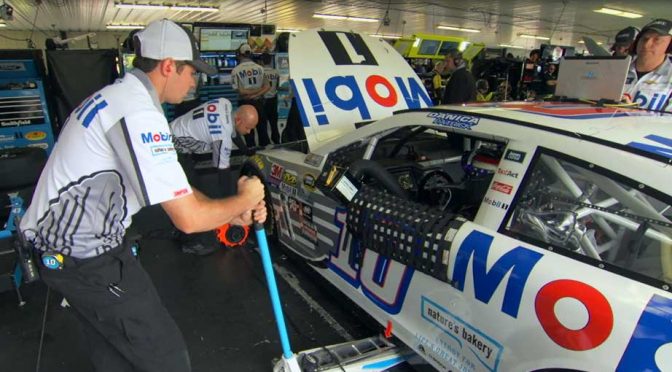
In the third instalment of the Mobil 1 “Our Normal Drives” video series on NASCAR.com, the Official Motor Oil of NASCAR gives fans a look at a “normal” day for two Stewart-Haas Racing interior specialists.

Check out how Kyle Anderson and Justin Peiffer work behind the scenes with drivers.

Watch today’s video, which is part of NASCAR Inside Track presented by Mobil 1, then come back throughout the season for more in-depth looks at NASCAR from Mobil 1.

RELATED: Chase Grid | Bubble Watch


Story lines abound, NASCAR.com’s Holly Cain and Zack Albert tackle three pressing topics before the 2016 Chase for the NASCAR Sprint Cup postseason makes its first elimination at Dover International Speedway.


1. Which driver currently below the Chase cutoff line is most likely to advance to the Round of 12?


Cain: I realize this is a long-shot and a sentimental pick, but I’m not counting Tony Stewart out of his final Chase run quite yet. I remember watching him win five of the 10 Chase races — including the 2011 season finale — to grab his third title from Carl Edwards‘ clutches. Stewart is 11 points from the transfer position heading into the weekend, but he also is a three-time winner at Dover.


Albert: Jamie McMurray, primarily based on the performance increase that Chip Ganassi Racing has enjoyed in recent weeks. While his teammate Kyle Larson has more regularly competed for wins, McMurray has been a tick more consistent. In the opening round, staying steady and avoiding the Monster Mile’s pitfalls may be enough.


2. Which driver currently above the Chase cutoff line is most likely to be eliminated at Dover?


Cain: Kurt Busch has only one top-10 finish in his last nine starts at Dover. Similarly, Carl Edwards has only a single top 10 in his last eight starts at the Monster Mile. They are 16 and 15 points, respectively, above the cutoff line. While that’s some cushion to the good, they will need to perform well Sunday as this is a place where crazy things have happened. Ask Jimmie Johnson.


Albert: The provisional top 12 is a pretty stout list. While Chase Elliott has righted the ship to a degree from his dreadful July and August stretch, he’ll need to conjure up the positive mojo from his third-place finish at Dover in May and avoid the mistakes that he tends to lament so bitterly.


3. Of the two, who is more likely to win the championship: Martin Truex Jr. or Kevin Harvick?


Cain: This is the $10 million question. In the preseason and again before the Chase I picked Jimmie Johnson to hoist the trophy. But clearly Truex and Harvick have proven themselves — again — as the drivers to be dealt with. Truex drives a Toyota, which has shown itself the power of the field, and his Furniture Row Racing team is exactly the kind of “all-in,” underdog, feel-good story that would make anyone smile. But as Harvick showed this past weekend, he should never, ever be underestimated. He’s as motivated, focused and ready as he’s ever been for a title and is the only driver in the series that has been in the Championship 4 each year of the new elimination format.


Albert: Truex and Harvick have certainly made a case for their championship credentials in the opening two races of the Chase for the NASCAR Sprint Cup postseason. No weak links, regardless of the venue, for either of these two, save for Truex’s early season tendencies to have odd occurrences make victories somehow slip away. Still, it’s hard to anoint either one with eight races left in the 10-race playoffs with plenty of opportunity for mess-ups, especially at wild-card tracks Talladega and Martinsville. Forced to pick one of the two, I’ll call the coin toss in the air for Harvick.