RELATED: Full race results
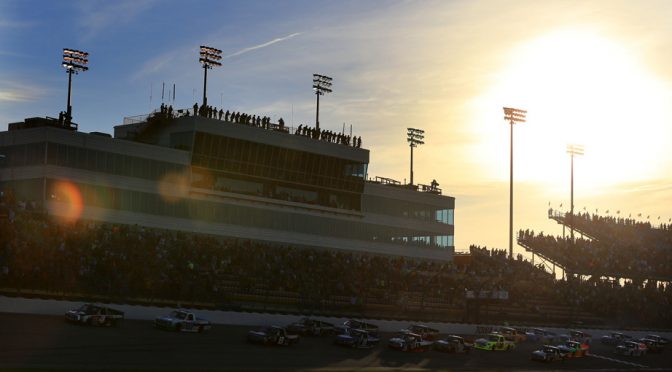
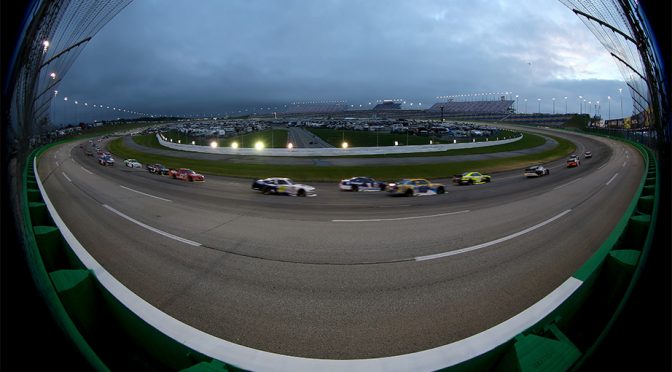
BROOKLYN, Mich. – NASCAR’s latest changes to its current rules package, rolled out for use at only two stops this season, may have generated high straightaway speeds here Sunday at Michigan International Speedway, but it generated generally high praise as well.
It also produced a fair share of those edge-of-the-seat moments.
“You know, I went down into Turn 1 the first lap, and I thought I was King Kong,” Joey Logano, winner of the FireKeepers Casino 400 at Michigan said. “I drove down in there and about crashed. That didn’t work out so well. So I learned a lot from that one.”
A smaller rear spoiler, along with changes to the splitter and rear deck fin, were put into place only for Sunday’s Michigan race as well as next month’s stop at Kentucky Speedway. It’s a dress rehearsal of sorts for what likely will be the basis for the ’17 rules package.
“No doubt, they are out of control crazy, and it makes it a lot of fun, but you’ve got to think if you’re in that pack a little bit, you’re going faster down the straightaways, you’re getting a huge draft when cars are side‑by‑side in front of you, and you have no downforce at all,” Logano said. “… It’s a recipe for disaster for sure, but … I thought the race was pretty good.
“There were a lot of natural cautions out there and a lot of things that happened, and I think that’s a good sign. Without watching it, I know it’s better than the package we ran here last time, so I’m excited about that.”
The race featured 14 lead changes (fewest since June of ’09 here) among eight drivers. Thank, or blame, Logano for that — the No. 22 Team Penske Ford was out front five times for 138 laps.
But even with one driver dominating, others sounded pleased that NASCAR officials have continued down the latest aerodynamic path.
“I applaud NASCAR for taking downforce away and the speeds are still so high because the surface is good and the Goodyear tires are good and everybody is working hard on their cars,” said Carl Edwards (Joe Gibbs Racing No. 19 Toyota) after his sixth-place finish. “They just keep working in this direction and we’re going to keep having better and better races. Those restarts, as crazy as they were, they were actually kind of fun.”
Straightaway speeds were in the 215 mph range at times. But because of the downforce reduction, drivers had to lift in the corners, dropping speeds considerably and opening up passing zones.
It’s not the finished product, most said, but definitely a step in the right direction.
“Today we got to drive the cars,” three-time Sprint Cup Series champion Tony Stewart said after a seventh-place finish.
“We have to make a difference in the car, manipulate things. That’s what we’ve all been wanting; we’re not running Mach 12 around here in the middle of the corner.
“I don’t know what everybody else is going to say but I thought it was pretty good. It may not be perfect yet but it is more than definitely going in the right direction.”
RELATED: Stewart discusses ‘solid weekend’
NASCAR officials Gene Stefanyshyn and Scott Miller were hesitant to heap too much praise on the package, but acknowledged it did produce some of the hoped-for effects.
While there were times the field became a bit strung out on the 2-mile layout, Stefanyshyn, Senior Vice President of Innovation and Racing Development for NASCAR, said the tire choice and high straightaway speeds likely had more of an impact than anticipated.
“These tires have not been tuned to this package, so we’ll work with our Goodyear folks,” he said. “Probably a bit handicapped by the entry speeds (being) pretty high, so still that creates some aero effects, so that’s something we’ll look at.
“But again, this has been planned as a two- to three‑step process. … This is part of it. (We) did see some things; I think the middle of the field we did see cars running together and passing, so yeah, I think (there is) more work to do.”
Miller, NASCAR Senior Vice President of Competition, said the goal wasn’t to have the drivers “out of control.”
“One of the biggest things that the drivers are looking for is that off‑throttle time and that differential between the mid‑corner speed and the entry speed,” he said. “That’s one of the very, very positive things from what we saw throughout the course of the whole weekend … we did achieve that goal.”
Approximately 14 teams will test the new package Monday and Tuesday during a two-day organizational test at Kentucky Speedway. The track recently completed a repave of its 1.5-mile racing surface and increased the banking in Turns 1 and 2 from 14 to 17 degrees.
RELATED: Teams to take to Kentucky for two-day test