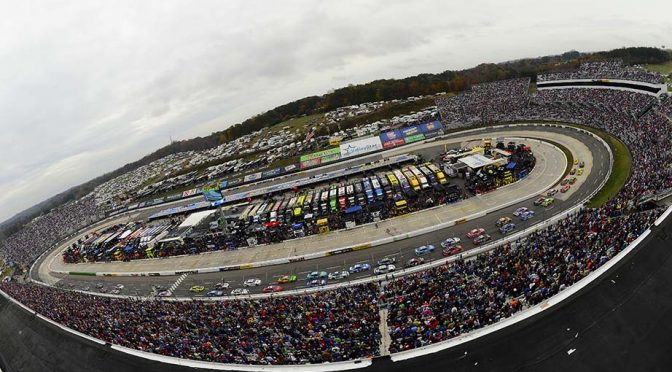
Two-time Richmond race winner Denny Hamlin is one of four NASCAR Sprint Cup Series drivers scheduled to take part in a one-day Goodyear tire test Tuesday, March 29 at Richmond International Raceway.


Hamlin, 35, is a native of Chesterfield, Virgina, which is located approximately 30 minutes south of the .75-mile NASCAR track. The driver of the Gibbs Racing No. 11 Toyota earned NASCAR Sprint Cup Series victories at RIR in 2009 and ’10. The Toyota Owners 400 is scheduled for Sunday, April 24 (1 p.m. ET, FOX, MRN, SiriusXM NASCAR Radio).


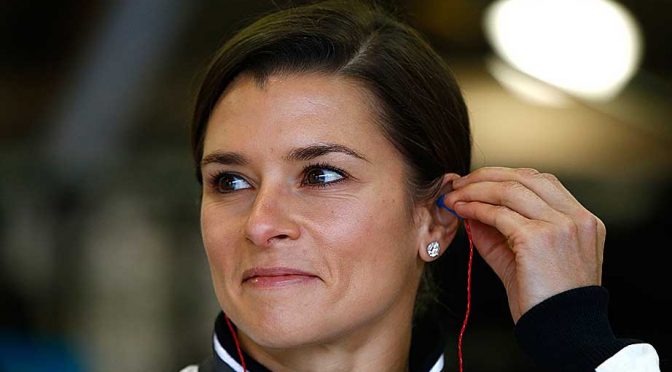
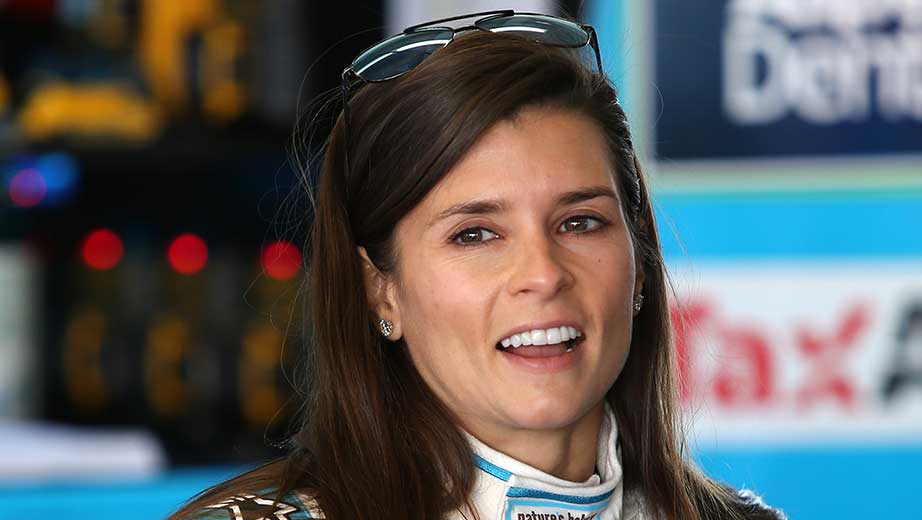
Also expected to participate in the test are Joey Logano (Team Penske No. 22 Ford), Greg Biffle (Roush Fenway Racing No. 16 Ford) and Danica Patrick (Stewart-Haas Racing No. 10 Chevrolet).


Tuesday’s Richmond test is one of two single-day tests by the tire supplier for 2016. A one-day test is also scheduled for Tuesday, May 17 at Michigan International Speedway.


The Richmond test is scheduled to run from 10 a.m. until 5 p.m. ET. According to track officials, the grandstands will be open and fans attending the test should enter through Gate 70.


Kurt Busch (SHR) is the defending winner of the Toyota Owners 400.

A picture of a race track hangs above the fireplace in the living room of Shane Hmiel’s home in Greensboro, North Carolina. Smoke fills most of the shot, the result of a celebratory burnout. Barely visible in the center of the smoke is a truck from the NASCAR Camping World Truck Series. Invisible under the smoke and inside the truck is the man driving it — Hmiel.


As a NASCAR driver in the early 2000s, Shane Hmiel was on the rise. He won that Truck Series race at Las Vegas in 2004 and had 10 top-five finishes in 83 races in what is now known as the XFINITY Series. He made seven starts in the Sprint Cup Series, including two for Braun Racing, which was co-owned by Ralph Braun, founder and CEO of BraunAbility, the world’s largest manufacturer of wheelchair accessible vehicles.


Hmiel was cocky, mouthy and fast, the kind of driver loved and loathed in equal measure. Hmiel was also a drug addict, and after he failed three drug tests, NASCAR banned him for life in 2006, the first time the sanctioning body ever did that to anybody. Hmiel was only 25, and already his career at the highest level of American motorsports was over.


“Getting kicked out of NASCAR was a total embarrassment for my parents,” he says now, sitting in front of that picture. His father is Steve Hmiel, who was the first employee of Roush Racing and a crew chief for Terry Labonte, Mark Martin and Dale Earnhardt Jr., among others, in a career that spanned four decades.


As Shane Hmiel fought his drug addiction, he was diagnosed as bipolar, which was in a way a relief, an explanation for the mood swings he had experienced his whole life. After a trip to rehab, Hmiel got clean and says he has been so since October of 2007. “When I got kicked out, I was so driven to get back,” Shane Hmiel says.


He knew he couldn’t go back to NASCAR, but he could get back into racing. Though he had never raced on dirt — and thought it was, as he put it, “stupid” — he started entering sprint car races on the USAC (United States Auto Club) circuit. He was fast. The wins piled up. He had fallen down in life and gotten back up. “I was on a higher mountain than I had ever been,” he says.

• • •

Photo courtesy of Eric Saunders

When Eric Saunders was about 12, friends of his family built an oval race track in his Lakeville, Indiana, backyard, adjacent to the motocross track that was already there. One of those friends, three-time Sprint Cup champion Tony Stewart , gave Eric a 600 Mini Sprint race car. Eric climbed in the car and turned a few laps.


Eric’s father is Irish Saunders, a longtime employee for Hoosier tires. His years in racing had given him an eye for talent, and he saw his son’s driving skill immediately. He turned smooth laps, with delicate throttle control — which was great, except turning in circles while staying on the ground the whole time didn’t interest Eric, who was used to flying through the air on his dirt bike, racing for a team owned by Stewart. “This is really boring,” he told Irish after just a few laps in the car.


Eric stuck with motocross instead, and by the time he was 17, he had won 700 races, landed lucrative sponsorships, spoken at the Pentagon and positioned himself for stardom. “I used to go out there and sit there and watch him for hours riding. I used to love to sit there and watch him ride,” Irish Saunders says. “He’d do stuff on motorcycles where I’d be like, you have to be kidding me.


Early in his career, Eric Saunders relied on natural ability. He didn’t work at his craft. But the more success he had, the more devoted he became. As he started his professional career while still only 17, he worked himself, he says, into great physical shape.


“He was going to be the guy,” Irish Saunders says. “He was on his way. He was running his first season as a pro at 17 years old. He was living the dream. He had the life of a rock star. He had the glory and the glamour and the girls — the three Gs.”


On August 28, 2010, the day before his 18th birthday, Eric Saunders was practicing on the motocross track in his backyard. He’s not sure what happened, except that he wiped out, and when he tried to get up, he couldn’t. He woke up in a hospital in Indianapolis five days later to learn he had broken his back and was paralyzed from the chest down.


As Eric Saunders recovered, the NASCAR Sprint Cup Series raced in Atlanta. Stewart got word to the Saunders family to watch the event on TV. He won the race, climbed from the car and said, “This one’s for my buddy Eric Saunders, who’s in Indianapolis. He got hurt really bad in a motocross crash. He’s up in Indianapolis healing. He’s paralyzed right now. But he’s one of the toughest young guys I know. So, Eric, buddy, this one’s for you, pal.”


Ten days before Eric was scheduled to be released from the hospital, the Saunders’ home was not ready to accommodate Eric’s wheelchair. By the time Eric got out, Stewart, X Games superstar Travis Pastrana and others had made sure the home was handicap accessible.


A few weeks later, Irish Saunders attended a USAC meeting in Indy. He ran into Shane Hmiel. They had known each other since the 1990s, and when Shane Hmiel made the transition from NASCAR to USAC, Irish served as a mentor to him, helping him understand the differences between the two series. By the time of the meeting, the mentorship had turned into a friendship.


Hmiel was startled by the look on Irish’s face. Pain shrouded him, like the smoke that shrouds Hmiel’s truck in that picture in his living room. “Irish, man, I don’t know what I would do if this ever happened to me,” Hmiel told him.


Irish responded: “Shane, let’s just hope it never does.”


• • •
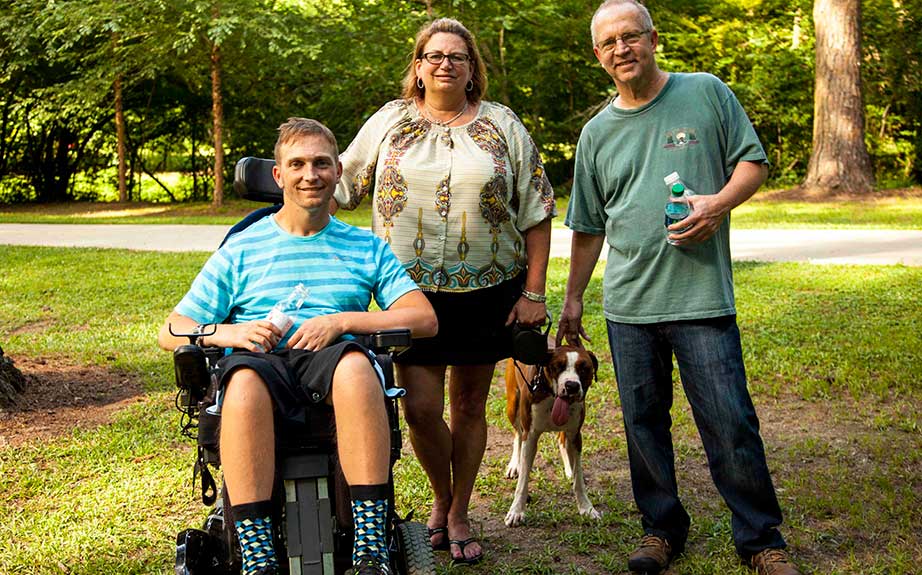
Shane Hmiel, left, has found plenty of support from his parents — and dog. (Photo courtesy of Shane Hmiel)


That was a sobering encounter for Hmiel in a life full of such moments. He had been good friends with Adam Petty, who died in a crash during practice at New Hampshire in 2000, and with Ricky Hendrick, son of Hendrick Motorsports owner Rick Hendrick, who died in a plane crash in 2004.


But as late summer turned to fall in 2010, Hmiel savored the spectacular view that his new life afforded him. The fog from so many years of drug use had cleared; he had been clean for three years, the longest stretch since he started smoking marijuana at 12. He had a renewed outlook on life — he wasn’t going to waste his on drugs and fighting, two things he had done nearly as often as he’d raced.


Already in 2010, Hmiel had won the three biggest sprint car races of the season, a feat no one had ever accomplished. And in rehabbing a back injury, he had worked himself into the best physical shape of his life. He had plans to progress into the IndyCar Series and race in the Indianapolis 500.


During a qualifying run on October 9, 2010 at a track in Terre Haute, Indiana, Shane Hmiel slammed into a wall. The roll cage hit first, and it crumpled under the force of the collision. Shane Hmiel was clinically dead when emergency workers got to him, his dad, Steve, says, but they revived him. He nearly died two more times during surgery to repair a rip in his carotid artery. Shane spent more than a month in a coma with catastrophic injuries, including a partially severed spinal cord and a traumatic brain injury.


He was paralyzed.


Among the people to arrive at Indiana University Health Methodist Hospital in Indianapolis as Hmiel fought to survive was Irish Saunders.

• • •

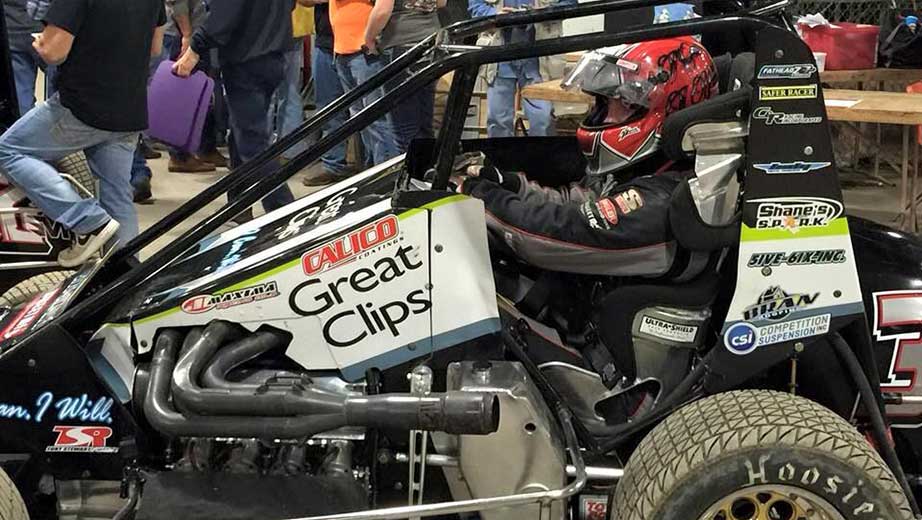
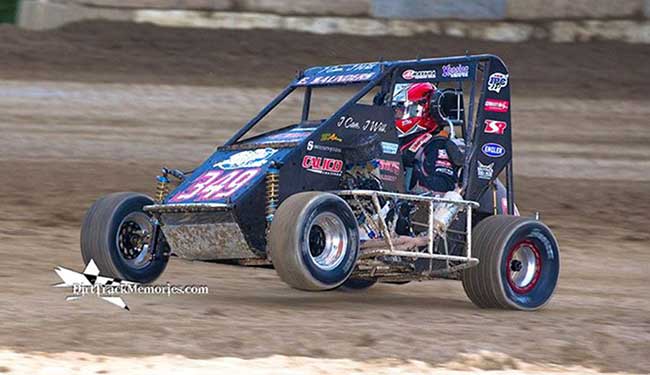
Eric Saunders now drives for Shane Hmiel (Photo courtesy of Eric Saunders)

The Saunders family spent the first year after Eric’s accident getting used to their new life. As they started to settle in, a friend named Ed Kennedy asked Irish how the family would stay involved in racing, which had been a constant in the family’s life. Irish said he had no idea. Kennedy, a businessman and part-time ARCA driver from Daytona Beach, Florida, had one. On March 17, 2011 — Irish’s birthday — Kennedy called Irish to tell him he had he bought Plymouth Speedway, a dirt track near the Saunders’ home. Kennedy asked the Saunders family to oversee it for him.


Racing again became central to the Saunders family. One night, Plymouth Speedway sponsored a drag race for fans’ street cars. Eric Saunders entered his Jeep Rally Compass, outfitted with the gas and brake on the steering wheel so he could drive it. He won the race. The crowd loved it.


Something about that win — the rush of adrenaline, the noise of the crowd, the thrill of taking the checkered flag — rekindled Eric’s dormant desire to race. Soon he was back in a 600 Mini Sprint race car — the same kind he once labeled boring. Someone painted, “I can. I will,” on it, a slogan Eric adopted to motivate himself as he stayed active and fought depression throughout his recovery.


Racing the car, owned by Tony Stewart Racing, did not come easy. The hand controls needed to be ironed out. They worked, but they weren’t nearly as fine-tuned as traditional brakes and throttles. On top of that, he had never raced anything with four wheels. Driving laps alone on a track in his backyard with just his dad watching was one thing. Racing in a tight bullring full of other cars was another.


But Eric was determined to get better. By 2013, he started to get comfortable in the car. On October 4, 2014, he dominated a race at Plymouth Speedway from beginning to end. When he took the checkered flag, his mom, brother, sister and dad all cried.


“I was a basket case,” Irish Saunders says. “I was down there with him when he stopped. The look in his eyes, when he looked at me and said, ‘Dad, I’m back,’ that’s just the stuff he did when he was racing motorcycles. It was just unbelievable.”


There’s an old saying in racing, that the first win is the hardest, and then they come in bunches, and that proved true for Eric Saunders. After that first win in 2014, he won six times in 2015.


• • •


Doctors gave Hmiel a 10 percent chance of surviving. They said he’d never walk or breathe on his own again. They said he’d never feed himself or brush his teeth.


The last memory Hmiel has is of walking out of a McDonald’s in Toledo, Ohio four days before the wreck. The next thing he remembers, it was five weeks later and he was on a plane, with who knows how many tubes sticking out of him. He asked his mom what had happened. Crying, she told him he had been in a wreck.


He was being flown to Charlotte, North Carolina. Doctors there told the Hmiels to take him home. He was immobile and used a ventilator to breathe. They said he’d never get any better. The Hmiels did not accept that. Instead, they checked Shane into the Shepherd Center in Atlanta, one of the top spinal cord and brain injury rehabilitation facilities in the country.


Life had knocked him down, again. But he decided to start getting back up immediately. It would not happen easily or quickly. He stayed at Shepherd for much of the next three years. Early on, his parents often slept at the foot of his bed. His brain injury meant he wasn’t yet lucid, and they didn’t want his incoherent rambling to alarm anybody. He told nurses that his mom and dad had put him in the bed of a pickup truck, taken him to a car wash and cleaned him up there because they didn’t know how to get him in the shower.


Slowly, excruciatingly, Shane began to recover. He relearned how to brush his teeth and how to feed himself. He recalls the first time he left the Shepherd facility, months after his injury. It was a simple trip, first to Walgreens and then out for tacos. As he drove his wheelchair over the Walgreens parking lot, each pebble felt like a boulder, and the jostling sent searing ripples of pain through his body. This man who once drove stock cars at 200 miles per hour now could barely drive a wheelchair. “It hurt so bad that I drove so slow. The people walking with me were like, ‘Come on, come on,’ ” he says.


But there is a glimmer in his eye as he tells this story. “Now I could drive over it wide open.”
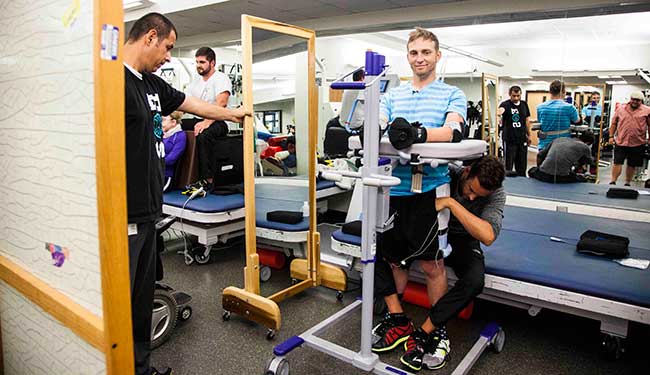
 

Shane Hmiel’s journey isn’t over yet, but the racer has made tremendous progress since being paralyzed in 2010. (Photo courtesy of Shane Hmiel)


He says his goal each day is to go to bed with something he didn’t have when he woke up. He doesn’t mean money (though he wouldn’t argue with that). He means he tries to collect knowledge or information that will make tomorrow better.


He hopes technology will one day make it possible for him to walk again.


He drives a van with “BraunAbility” painted on the side of it and a lift inside that allows him to get in and out in his wheelchair. He laughs as he describes the two reactions he sees in traffic when people realize a paralyzed guy is driving next to them. They either give him a thumbs-up … or move over as many lanes as they can.


Today Hmiel lives in that brick home in Greensboro with a childhood friend — a level of independence nobody would have believed as his heart beat only four times per minute while he lay in his hospital bed in Indianapolis. Ramps allow him to maneuver throughout his home. He attends physical therapy three days a week, and aides come during the day and stay with him at night.


“He’s like his mother, and his mother’s side of the family. They’re tough, tough, tough,” Steve Hmiel says. “Thank God Shane is like that. He never would allow himself to roll up into a ball and let people take care of him. Eric Saunders is exactly the same way.”

The first time Shane Hmiel, Steve Hmiel, Eric Saunders and Irish Saunders were in the same place at the same time was at the hospital in Indianapolis shortly after Shane’s crash. Irish took Eric there for a checkup; Steve was visiting Shane. They ran into each other in the ICU.


One son was in a coma. The other was just weeks removed from being paralyzed. The two dads were overcome by grief with no idea what they would do with the rest of their lives. That they would all go racing together five years later would have seemed impossible. But that’s what happened.


Last fall, Eric Saunders set running the Chili Bowl as a goal. Held every January in Tulsa, Oklahoma, the Chili Bowl is the premier event on the midget racing calendar. At first, Eric Saunders had a car for it, but when that fell through, he started looking for another one.


Irish Saunders discussed the pursuit with Levi Jones, an old friend and former USAC driver who also was close with Shane Hmiel — indeed, Jones won a race for a team owned by Hmiel on the one-year anniversary of Hmiel’s wreck. You should call Shane, Jones told Irish. He’s got a car.


Irish Saunders called Steve Hmiel first. Steve said he would talk to Shane, but he made no promises. Shane sometimes has an old-school approach to the business side of racing: He writes a check on Friday with plans to win enough money on Saturday that the check clears on Monday. Soon enough, Shane called Irish. He said one of his cars was stored near St. Louis, and that Eric was welcome to drive it. When Irish and Eric separately recounted what happened next, each broke into an impression of Shane, with his North Carolina drawl and distinctive cadence. Drive down to St. Louis and get that car. Get it all set up. Meet me at the Chili Bowl. Let’s go have some fun.


As the Chili Bowl approached, the friendship between Irish Saunders and Steve Hmiel deepened. They had known each other, but barely, for decades. Now the two talk on the phone almost every day. They talk about racing and their sons and how to best take care of them, both now and in the future. They lament how they both tried to do too much too soon after their sons’ injuries and how they were in shock for the first couple years.


They talk about the twists and turns they’ve already faced and the ones they don’t know are coming. They worry about their sons wasting away as wards of the state, or tucked away in the corner of some nursing home somewhere.


“We both have the understanding that our sons will need to live on after we’re gone,” Steve Hmiel says. “We can’t protect them physically or financially once we’re dead. Our goal is to make sure that when we pass away, they either have a business in place, or a really nice job, or enough cash in the bank that they can live until they pass away.”


• • •

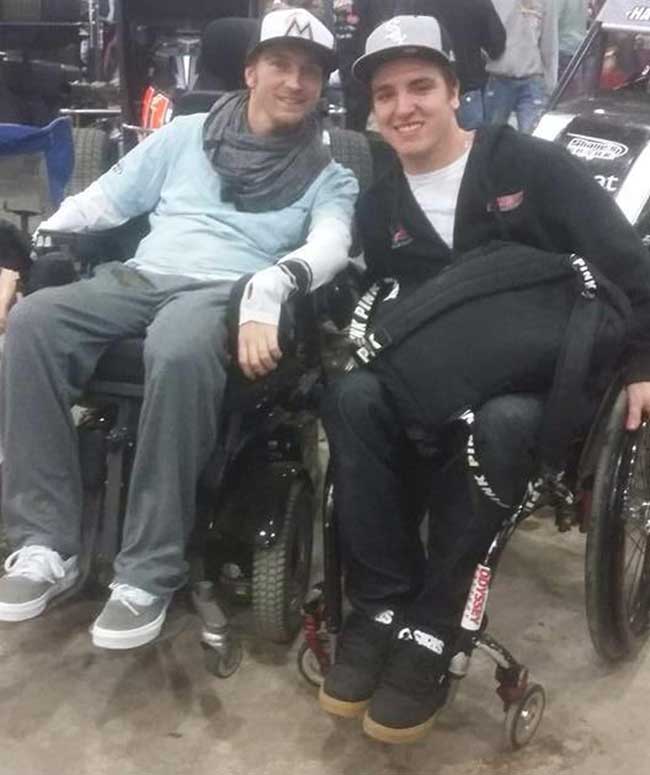
Shane Hmiel and Eric Saunders (Photo courtesy of Eric Saunders)

On Thursday evening, Jan. 14, at the 448,400-square foot Tulsa Expo Center, the third of five nights of racing at the Chili Bowl, the Saunders and Hmiels were together again, their haulers parked side by side. Eric, now 23, and Shane, now 35, maneuvered their wheelchairs between them.


Garrett Saunders, Eric’s younger brother and fellow racer, helped lift Eric up and over the roll cage of his car. Eric put his hands on the roll cage and lowered himself into the driver’s seat. He headed to the track for hot laps.


When he returned a few minutes later, he was frustrated. He knew he shouldn’t be — he had never raced a midget before. But he couldn’t help it. He wheeled his wheelchair away from the car.


Shane wore a winter hat and a scarf; one lingering effect of his injury is that his body struggles to stay warm. He drove toward Eric. They leaned across their chairs to be heard above the din. “I put more pressure on myself than anything else,” Eric told Shane. “The more fun I have, the better off I’ll be.”


Eric’s team worked on the car. He left for another run and came back again. “Did I look like I ran one of these things before?” he asked. He proclaimed the job he did “not that bad.”


“Not that bad?” Shane said. “Not even close to not that bad.”


And then Shane paid Eric the highest compliment one racer can give another: “You were fast.”


This man who spent the first 30 years of his life looking for fights — and sometimes started one when he couldn’t find one — now relishes his role as a cheerleader. He loves to watch Eric drive. “When he comes in, when he lifts his helmet up, if he runs dead last or spins out, he’s smiling,” Hmiel says. “To me, nowadays, that’s what life is about, smiling.”


Over and over, Shane summed up his goals for his partnership with Eric with two words: Have fun. The power of racing together, they believe, is bigger than results. To Shane and Eric and their dads, the Chili Bowl seemed like the start of something powerful, much deeper than the typical owner-driver relationship. They’re looking for sponsors to buy into their passion, to help them run as many races as they can with the idea that they more they race together, the more they can tell their stories.


The confluence of their stories is eerie: Two promising young motorsports stars from well-known families suffer paralyzing injuries, rebound from them, and team up. Even the way they separately describe the changes they have undergone since their injuries is strikingly similar.


“I know that, honestly, this sounds stupid, but I wouldn’t change anything,” Shane says. “My life was how I ran last week, until I got to try again. Now my life has, to an extent, meaning.”


Says Eric: “I would say the same thing. … I used to think I’m Eric Saunders, superstar at motocross. Now I’m starting to live my life as Eric Saunders, the person. It humbled me.”


They had to lose racing in order to find out it was too important to them. Now they want to use racing as a way to share their newfound perspectives, to teach others that it’s possible to rebuild a wrecked life.


Each knows he can help the other and by doing so, help himself. By driving Shane’s cars, Eric can further his racing career and teach others that the end of one dream can be the beginning of another. By hiring Eric to drive his cars, Shane can draw attention to his foundation, Shane’s Spark, through which he wants to help the recently injured and people who are transitioning from the hospital to “normal” life.


“I want to take Eric, and it sounds bad, but I want to use him up. I want to drag him all over the country,” Hmiel says. “I want to get it to where, when people think Eric, they think, totally kick-ass human.”


• • •
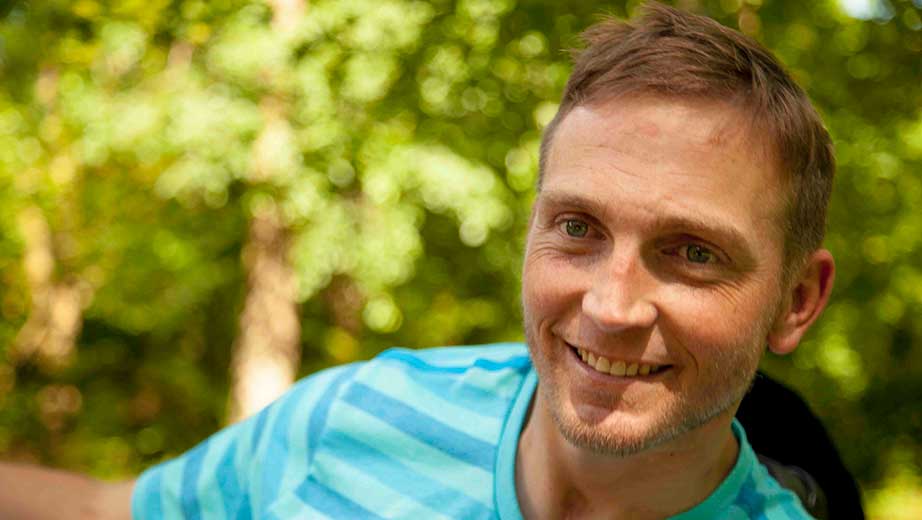
 

Shane Hmiel and Eric Saunders have an inseparable bond. (Photo courtesy of Shane Hmiel)


Eric’s Chili Bowl ended early Saturday morning, when he failed to transfer out of his first race. He and Shane were disappointed, even while acknowledging the odds of having success were very long. They viewed it as a starting point and promised to return to the Chili Bowl next year and show vast improvement.


The event would go on for more than 12 more hours. Eric and his mom, dad, brother and sister stayed around the hauler all Saturday after Eric was done racing. Shane and his mom and dad stayed, too, parked right next door. It seemed like the Fourth of July, except the people who ate and drank and laughed as they sat in lawn chairs watched racing instead of fireworks. Someone in the party provided profane and hilarious running commentary and broadcast it via Periscope.


Eric Saunders sipped a beer out of a red plastic cup. Shane drove his wheelchair back and forth from the hauler to the track, where he watched one of his other drivers perform. Steve Hmiel worked on one of Shane’s race cars while Irish worked on Eric’s.


As the afternoon turned to evening, Irish Saunders soaked up the moment. He thought he had lost the happiness that racing brought to his family, and now here he was, here they all were, swimming in it again. The pain on his face that had so startled Shane Hmiel at that USAC meeting five years ago was replaced by joy.


“I never thought I’d be at this level in my life right now, I can honestly tell you that,” Irish Saunders says. “It’s been a great ride. I hope it never quits.”
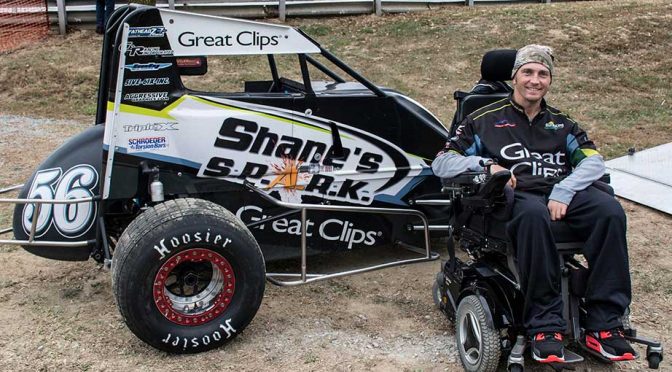
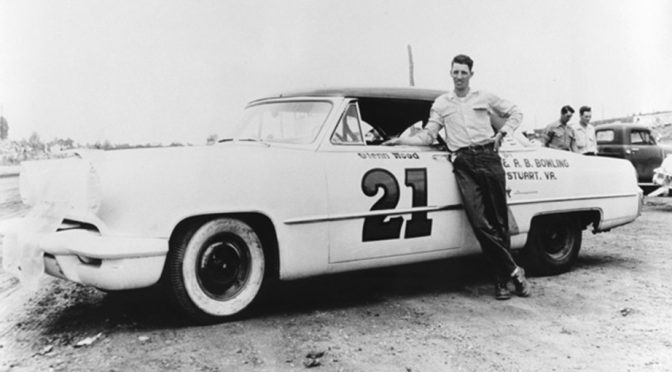
Photo credit: Eddie Wood/Wood Brothers. Glen Wood stands next to his first NASCAR Grand National car, a 1953 Lincoln, at Martinsville Speedway on May 17, 1953 – his first NASCAR start.

It’s a home game for the Wood Brothers.
 
But the April 3 STP 500 (1 p.m. ET, FS1, MRN, SiriusXM NASCAR Radio) is a home game the Wood Brothers haven’t experienced as a full-time NASCAR Sprint Cup Series team with a single driver since Ken Schrader filled the seat of the vaunted No. 21 Ford in 2006.
 
We’re talking about Martinsville, of course, the shortest track on the Sprint Cup circuit at 0.526 miles, the closest to the Wood Brothers’ family home in Stuart, Virginia, and the next race on the Sprint Cup schedule.
 
“It’s a huge thing,” says NASCAR Hall of Fame crew chief Leonard Wood, who co-founded NASCAR’s most venerable organization with brother, driver and fellow Hall of Famer Glen Wood.
 
“We look forward to going to Martinsville. We used to run over there and have a lot of fun.”
 
The Wood Brothers last competed at Martinsville in 2011, when Trevor Bayne‘s unexpected victory in the season-opening Daytona 500 gave the family-owned team the wherewithal to run more races than originally planned.
 
The Woods’ last trip to the paper-clip-shaped track before Bayne’s 35th-place run was with veteran driver Bill Elliott in 2008.
 
This year, they return to the track with Sunoco Rookie of the Year hopeful Ryan Blaney, a 22-year-old who has never driven a Sprint Cup car at Martinsville, though he does have five NASCAR Camping World Truck Series races under his belt there.
 
Blaney appreciates the significance Martinsville holds within his organization.
 
“It’s really a home race for those guys, and almost for me, too,” Blaney said. “I grew up in High Point, North Carolina, an hour away from Martinsville, and I vividly remember every Martinsville race I went to, watched my dad (Dave Blaney) run it.
 
“And it’s really neat to go back and bring the Wood Brothers back there and have them in their hometown and home state. Hopefully, we’ll see a bunch of Wood Brothers fans out there. I think we will.”
 
Obviously, Leonard Wood’s memory is a bit longer than Blaney’s, dating to the days in the early 1950s when Martinsville was still a dirt half-mile. In 1953, Glen Wood raced there for the first time at NASCAR’s highest level in a ’53 Lincoln.
 
“It had power steering on it, and the power steering was so easy that we had to mark the steering wheel, because, when the track was wet, it was so smooth you couldn’t feel it,” Leonard Wood says.
 
In 1959, Glen Wood won the pole at Martinsville with a lap at 69.471 mph, a track record at the time. All told, Glen won four poles there, though he never won a race in NASCAR’s premier division. In fact, the only two Martinsville victories recorded by the Wood Brothers in 109 starts came with NASCAR Hall of Famers Cale Yarborough (1968) and David Pearson (1973) behind the wheel.
 
When Blaney completes his 22nd lap at the .526-mile track on April 3, it will mark 45,000 laps in Cup competition at Martinsville for the Wood Brothers.
 
But that’s just the tip of the iceberg. Thanks to the beneficence of track founder Clay Earles, the Woods spent countless hours testing there.
 
Leonard recalls one instance where Glen was testing the team’s “back-seat car,” a 1937 Ford with both the engine and driver’s seat moved radically toward the rear of the car. Glen though the car needed a bigger spindle on the right front. From observing the car on the track, Leonard wasn’t so sure.
 
“So I climbed in and rode with him around the track at Martinsville” Leonard says. “He is just flying through the corners, and it felt like there’s about 10 tons of pressure on the right front. It was getting so much grip that I was just holding on, like it was trying to throw me right out the window.
 
“I’m trying to get him to slow down. He can’t hear me. Finally we came to a stop. And I said, ‘Glen, you need a bigger spindle on that right front.'”
 
Blaney’s experience clearly is a lot more limited, and he’s not sure racing the trucks at Martinsville will be all that helpful, even though he posted fifth-place finishes in his last three starts.
 
“I think there are some things you can take away from running the Truck races,” Blaney said, “but I think there’s a reason why the Cup guys don’t normally run both of them. For one thing, it’s really hard on your body. And, two, I hear it kind of messes them up when they run both, trying to be consistent between the two cars.
 
“There are probably some things we can take away, and I’m looking forward to learning and everything like that, but there’s not a lot that you can take away.”
 
Though Blaney readily admits Martinsville hasn’t been one of his best tracks, he credits crew chief Jeremy Bullins with helping to retool his attitude.
 
“Last year, when we announced the full-time deal, I said ‘Martinsville’s the one place I’m not looking forward to,’ and he persuaded me (otherwise),” Blaney said. “And now I’m looking forward to going to Martinsville, and I want to go real bad.
 
“So it’s nice to have someone that can motivate you.”
 
Doubtless, on April 3, there will be a large contingent of fans in the grandstands trying to amplify that support.
 
After all, it’s a home game for the Wood Brothers—and by extension and proximity, for Blaney, too.

RELATED: Buy Tickets | NASCAR Fantasy Live

The NASCAR Sprint Cup and Camping World Truck Series head to Martinsville Speedway for a doubleheader while the XFINITY Series has the weekend off. Check out the full weekend schedule below.

Note: All times are ET; Sunday’s Sprint Cup Series race is on FS1. Find FS1 in your area below.

FRIDAY, APRIL 1:

ON TRACK
— 10-10:55 a.m.: NASCAR Camping World Truck Series practice, FS1 (Results)
— 11 a.m.-12:20 p.m.: NASCAR Sprint Cup Series practice, FS1 (Results)
— 12:30-1:55 p.m.: NASCAR Camping World Truck Series practice, FS1 (Results)
— 3-3:50 p.m.: NASCAR Camping World Truck Series final practice, FS1 (Results)
— 4:15 p.m.: NASCAR Sprint Cup Series Coors Light Pole Qualifying, FS1 (Results)

GARAGECAM (Watch live)

–10:30 a.m.: NASCAR Sprint Cup Series

PRESS CONFERENCES (Watch live)
— 9 a.m.: Parker Kligerman

— 9:15 a.m.: John Hunter Nemechek

— 9:30 a.m.: Ryan Blaney

— 1 p.m.: Denny Hamlin

— 1:15 p.m.: Dale Earnhardt Jr

— 5:45 p.m.: Post-NSCS qualifying


DAILY ROUNDUP 

Logano earns Coors Light Pole at Martinsville

Earnhardt Jr. pledges to donate brain to science

Not a stats fan, Johnson in awe of Earnhardt, career milestones

At-track photos: Friday at Martinsville

SATURDAY, APRIL 2:

ON TRACK

— 10-10:55 a.m.: NASCAR Sprint Cup Series practice, FS1 (Results)
— 11:15 a.m.: NASCAR Camping World Truck Series Keystone Light Pole Qualifying, FS1 (Results)
— 1-1:50 p.m.: NASCAR Sprint Cup Series final practice, FS1 (Results
— 2:30 p.m.: NASCAR Camping World Truck Series Alpha Energy Solutions 250 (250 laps, 131.5 miles), FS1 (Results)

PRESS CONFERENCES (Watch live)
— 12:15 p.m.: Jamie McMurray

— 4:45 p.m.: Post-NCWTS race

DAILY ROUNDUP 

Busch wins overtime Truck race at Martinsville

Will someone join Johnson, Hamlin in Martinsville elite?

At-track photos: Saturday, Martinsville

Fire contained at Richard Petty Museum, Petty’s garage

SUNDAY, APRIL 3:

ON TRACK

— 12:30 p.m.: NSCS Driver Introductions w/ NASCAR Special Awards

— 1 p.m.: Presentation of Colors by US Army 82nd Airborne Division Color Guard

— 1 p.m.: Invocation by Martinsville Speedway Track Chaplin, Mike Hatfield

— 1:01 p.m.: National Anthem by US Air Force Heritage Brass Band Quintet
— 1:02 p.m.: Flyover: The Bandit Flight Team (Turn 4 to Turn 1)

— 1:07 p.m.: “Drivers, Start Your Engines” by AJ Cook

— 1:13  p.m.: NASCAR Sprint Cup Series STP 500 (500 laps, 263 miles), FS1 (Results)

PRESS CONFERENCES (Watch live)
— 4:45 p.m.: Post-NSCS race


DAILY ROUNDUP 

At-track photos: Sunday, Martinsville

Busch sweeps weekend, wins wild Martinsville Cup race

All of Busch’s Cup Series victories

“Rowdy” gets awesome fan reaction on road

Allmendinger on roll, hopes to shed underdog role


RELATED: NBC Sports Live Extra


All times ET

Monday, March 28
6:30 a.m., WeatherTech Sportscar Championship: Sebring (re-air), FS1
9:30 a.m., Contintental Tire Sportscar Challenge: Sebring (re-air), FS1
5 p.m., NASCAR Race Hub, FS1
5 p.m., NASCAR America, NBCSN
6 p.m., Beyond the Wheel (re-air), FS1

Tuesday, March 29
7 a.m., NASCAR America (re-air), NBCSN
5 p.m., NASCAR America, NBCSN
5 p.m., NASCAR Race Hub, FS1

Wednesday, March 30

7 a.m., NASCAR America (re-air), NBCSN
5 p.m., NASCAR America, NBCSN
5 p.m., NASCAR Race Hub, FS1

Thursday, March 31
7 a.m., NASCAR America (re-air), NBCSN
5 p.m., NASCAR Race Hub, FS1
6 p.m., One Hot Night: The NASCAR 1992 All-Star Race (re-air), FS1
7 p.m., NASCAR Masters of the Clock: The Legend of Martinsville (re-air), FS2
8 p.m., Continental Tire SportsCar Challenge: Sebring (re-air), FS2

Friday, April 1
8 a.m., Contintental Tire Sportscar Challenge: Sebring (re-air), FS1
10 a.m., NASCAR Camping World Truck Series practice, FS1
11 a.m., NASCAR Sprint Cup Series practice, FS1
12:30 p.m., NASCAR Camping World Truck Series practice, FS1
2 p.m., NASCAR Race Hub: Weekend Edition, FS1
3 p.m., NASCAR Camping World Truck Series final practice, FS1
4 p.m., NASCAR Sprint Cup Series Coors Light Pole Qualifying, FS1
5:30 p.m., NASCAR Masters of the Clock: The Legend of Martinsville (re-air), FS1
6:30 p.m., NASCAR Race Classic: The 1993 Daytona 500 (re-air), FS1

Saturday, April 2
7 a.m., NASCAR Sprint Cup Series practice (re-air), FS1
8:30 a.m., NASCAR Sprint Cup Series Coors Light Pole Qualifing (re-air), FS1
10 a.m., NASCAR Sprint Cup Series practice, FS1
11 a.m., NASCAR Camping World Truck Series Keystone Light Pole Qualifying, FS1
12:30 p.m., NASCAR Race Hub: Weekend Edition, FS1
1 p.m., NASCAR Sprint Cup Series final practice, FS1
2 p.m., NASCAR Camping World Truck Series Setup, FS1
2:30 p.m., NASCAR Camping World Truck Series: Alpha Energy Solutions 250, FS1
7:30 p.m., NASCAR K&N Pro Series Race: Greenville-Pickens (taped), NBCSN
1 a.m., NASCAR Camping World Truck Series: Alpha Energy Solutions 250 (re-air), FS1
3 a.m., NASCAR Sprint Cup Series final practice (re-air), FS1

Sunday, April 3
11:30 a.m., NASCAR RaceDay, FS1
1 p.m., NASCAR Sprint Cup Series STP 500, FS1
12:30 a.m., NASCAR Sprint Cup Series: STP 500 (taped), FS1


EDITOR’S NOTE: This story initially ran in 2016.

RELATED: Photos of women in NASCAR | About the series
MORE: Women racers pave new roads to success in NASCAR


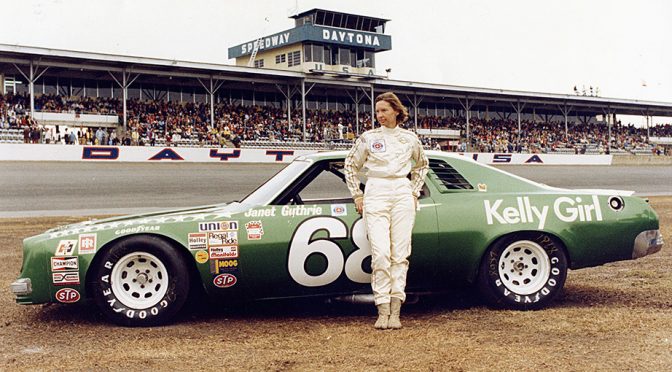
Four decades have passed since she first stepped foot on the track in her fire suit, yet Janet Guthrie’s impact remains just as prevalent in 2016 as it was in 1976. She continues to inspire some of NASCAR’s most successful athletes, including Dale Earnhardt Jr. and NASCAR Craftsman Truck Series wheelwoman Jennifer Jo Cobb

Guthrie’s recent nomination for the Landmark Award for Outstanding Contributions to NASCAR is confirmation of her legacy and acknowledgement of the adversities she had to overcome. It has, after all, taken her years to move from being the hecklers’ main target to an embraced figure.

The nomination was “a completely unexpected honor,” she told NASCAR.com.


Earnhardt, an avid historian of the sport, is pleased she is getting the recognition. 

“You know, she was tough,” he recalled. “What it must have been like in the late ’70s and early ’80s to be trying to get out there and compete as a female. That was unheard of.”

Recounting to NASCAR.com a scene from 1976 when she drove for team owner Rolla Vollstedt, Guthrie is honest about what she faced each day at the race track.


A group of bystanders asked her:


“Hey Janet, you gonna go out on the track today?”


“Yes, I hope so,” Janet responded.


“Well we don’t. We hope you crash on our corner.”


“I went back to Rolla’s garage,” Guthrie explained, “and kicked a few tires, but by the time I went out on the track I had made that (anger) vanish.”


It could be a different day, race track or group of critics, but both the spoken and unspoken message was always the same: she was not welcome.


Guthrie had the brains — with her Bachelor of Science in physics and aviation license — the talent, resilience and a fiery personality to boot. It was her gender that was her shortcoming in the eyes of so many.


Today, however, is a different story. She is celebrated as a pioneer who helped break down gender barriers in a high-octane, male-dominated arena.


“She proved being a female race car driver is possible,” Cobb told NASCAR.com.


The Iowa native was the first woman to compete in the Indianapolis 500 as well as the Daytona 500. Her sixth-place finish at Bristol Motor Speedway in 1977 is shared with Danica Patrick (2014, Atlanta Motor Speedway) for the top finish by a female in NASCAR’s premier series in the modern era, 39 years later.


She clearly wasn’t crashing on too many corners.

A steering wheel and a gas pedal


It all began with a classified ad that read, “1953 Jaguar XK 120 M coupe, $1,200 …” 


This one advertisement would mark the beginning of her story.


Guthrie admitted in her autobiography, “Janet Guthrie: A Life of Full Throttle,” that by 1954, the Jaguar “was a sensation.”


Six years later, Guthrie purchased this “sensation,” and it would eventually accompany her on her first racing venture: gymkhanas — an intricate car course in which competitors drove one car at a time, as fast as they could. The fastest car, of course, won the event.


Guthrie was a natural and, she wrote, her Jaguar “became one of the cars to beat in gymkhanas.”


More than two decades after reading that all-important ad, another life-changing event would come her way. It, again, came in the form of a message — but this time a voice mail. 


“This is Rolla Vollstedt in Portland, Oregon,” the voice said. The name rang no bells. “Please call me about a possible ride in the Indianapolis 500.” 


At first, Guthrie was sure it was a scam.


“Well, of course, I had no idea who he was when he first told me,” she said.


But after investigating Vollstedt’s name she quickly realized, “Vollstedt was real.”


Once they connected, Vollstedt told the young Guthrie he was interested in having her race for his team.


But he also gave her a harsh truth: “You will never be a winning driver, because no one will ever give you a winning car, because you are a woman.”


Guthrie’s biggest break occurred when Vollstedt invited her to test one of his Indy cars for the 1976 Indianapolis 500.

Janet Guthrie, left, with two other women (Lela Lombardi, center, Christine Beckers, right) who qualified for 1977’s Daytona Firecracker 400, and grand marshal Lee Petty.


Influencing the next generation


Guthrie did not qualify for the Indianapolis 500 in 1976, but did so for the 1977 Indianapolis 500. It launched her professional racing career. Yes, with backlash. But it also was off to an unprecedented start. 


Guthrie went on to compete in 33 NASCAR premier series races, and notched five top-10 results. She also participated in two 24-hour races at Daytona International Speedway (1966 and 1967). 


As Earnhardt Jr. said: “She didn’t just race once or twice then disappear. She was very good.”


Reflecting with NASCAR.com on her decorated career, Guthrie revealed how she stayed passionate while surrounded by countless critics.


“The only way to deal with that stuff was on the race track; there was no other way to deal with it,” she said. “As long as I had a car to drive, I figured I could handle whatever came with the territory.” 


Her legendary tenacious drive still impacts today’s talent, including Cobb, who has nothing but appreciation for the pioneer female racer.


“Foundations must be strong in order to endure, and I don’t think female drivers could ask for a stronger foundation than Janet,” Cobb said.

More history at 78


When NASCAR announced on Feb. 24 — 12 days shy of her 78th birthday — that Guthrie was nominated for the Landmark Award, she was honored, but it also left a reminder of a hole in her resume that will never be filled.


“I’d give anything to have been able to continue competing in NASCAR Cup races for the necessary 10 years to be eligible for the NASCAR Hall of Fame,” she told NASCAR.com. “I truly believe that I would have won Cup races in less than the five full seasons that was standard at the time.”


Her admirers believe that, too.


“There are people in this world who are just born with it — and that means a special case of perseverance and true grit — and it seems that she has that factor that would enable her to make her mark no matter what generation of NASCAR she was involved with,” Cobb said.


It’s that same perseverance and grit that Guthrie hopes is reflected in the future. Most of all, she just hopes that drivers get an opportunity to shine.


“There is female talent out there, and the only question is will another talented woman get the chance,” Guthrie said.

MORE: About the Women In NASCAR series | Meet the Women in NASCAR
RELATED: Janet Guthrie pioneered the fast lane

Women racers have accounted for a vital part of NASCAR’s rich history. As NASCAR.com celebrates Women in NASCAR this week, check out some of the sport’s biggest female names and the accomplishments they achieved despite the numerous speed bumps they faced.

Danica Patrick


Patrick is the only female to win a pole in NASCAR (2013 Daytona 500 ), and she’s tied for the best finish by a woman in the premier series (sixth) in the modern era.


Patrick also is the first woman to win an IndyCar race (2008’s Indy Japan 300), and she owns the highest finish by a female in the Indianapolis 500 (third in 2009).


Yes, Danica Patrick lives up to the hype that surrounds her popular name.


After racing in IndyCar for seven full seasons, Patrick received a full-time opportunity with Stewart-Haas Racing in the NASCAR Sprint Cup Series in 2013.


“Tony (Stewart) gave me a job, so I’d say that is a pretty big player in my career,” Patrick said. “Just being a driver that’s gone from IndyCar to NASCAR is something that obviously plays into my career, and (Tony) having done the same thing.


“What you see is what you get with Tony. … So when it came time to think about NASCAR, think about what team I wanted to drive for, I was very fortunate to be able to name my team and have them willing to take me. … I’ve had a great fortune in my career to have good people around me, good sponsors behind me and Tony is absolutely one of them.”

Jennifer Jo Cobb


With 25 years in racing and more than 100 NASCAR Camping World Truck Series starts, Jennifer Jo Cobb continues to break down gender stereotypes as she wears both the driver and owner hats — a resilient soldier in her own journey to success.


After making her NASCAR debut in 2004 at Homestead-Miami Speedway, Cobb has used her gender as a motivator. “I, personally, am motivated by the fact that I will have to work a little harder to overcome being different,” she told NASCAR.com. “It makes me feel empowered to accomplish something that nobody expected me to do.”


The Kansas native was also given valuable guidance early in her career when she, admittedly, was struggling.


“(President of Rockingham Speedway) Andy Hillenburg … gave me the best advice on the subject (of women in the sport) that I have ever heard — I am going to get a lot of unfair criticism and it is going to hurt, but I am also going to get a lot of recognition, and I should not feel bad about that.”

Shawna Robinson


Former NASCAR driver Shawna Robinson is a wheelwoman of all trades, with her lengthy — and successful — resume including high honors in all three NASCAR national series as well as ARCA.


Her most fruitful stint was in the now-retired Goody’s Dash Series where she became the first woman to earn the pole position for a race (in 1989). She finished with three wins, 21 top 10s, two Most Popular Driver awards (1988 and 1989) and the Rookie of the Year title (1988).


In the Busch Series (what is now the XFINITY Series), Robinson was the first female to win a pole (Atlanta Motor Speedway, 1994).


And in 2003 during the Truck Series’ O’Reilly 400K at Texas Motor Speedway, Robinson had the first all-female pit crew to compete in a NASCAR event. The group penned itself “The Aaron’s Dream Team” and finished the day inside the top 20.

Photo credit: Hendrick Motorsports

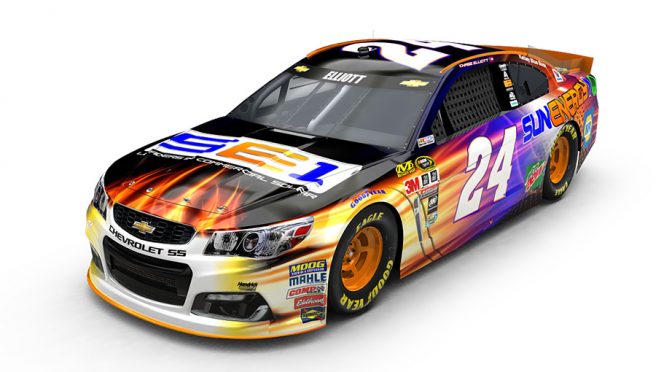
Chase Elliott
will have a sun-filled paint scheme later this year in the NASCAR Sprint Cup Series.

The look for his SunEnergy1-sponsored No. 24 Chevrolet has been unveiled and it has quite the array of colors.

The car will first take to the track at Daytona International Speedway ahead of the July 2 race at the revamped facility. SunEnergy1 will also be the primary sponsor for Elliott’s races at Watkins Glen International (Aug. 7), Kansas Speedway (Oct. 16) and Phoenix International Raceway (Nov. 13).

SunEnergy1 founder, CEO and part-time NASCAR driver Kenny Habul will pilot the No. 88 SunEnergy1 Chevrolet for JR Motorsports in the NASCAR XFINITY Series on Aug. 6 at Watkins Glen International.

The solar energy company is on board as a sponsor for four races in each of the next three years for the Hendrick Motorsports driver.

Elliott’s rookie season in the sport’s top series is off to a strong start. In addition to nabbing the pole for the season-opening Daytona 500, he has three top-10 finishes in the season’s first five races. The 20-year-old Georgia native and son of NASCAR Hall of Famer Bill Elliott is 16th in the point standings.

RELATED: Which rookie will win first? | SHOP: Elliott fan gear

MORE: About the Women In NASCAR series | Meet the Women in NASCAR
RELATED: Alba Colon blazes a trail in math, science and racing

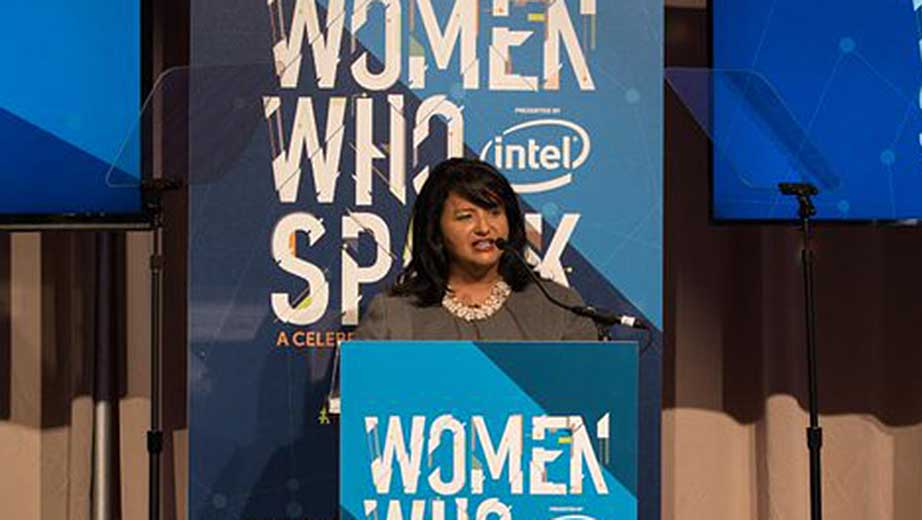
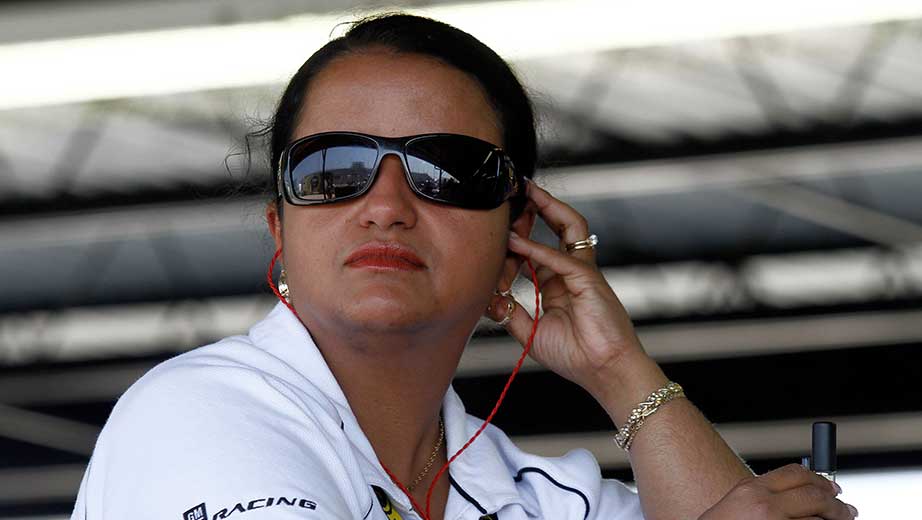
Engineering and technical jobs in NASCAR have traditionally been male-dominated positions, but times are changing. In addition to Alba Colon’s major presence as General Motors Program Manager in NASCAR, women are now holding major technical positions in the NASCAR garage.


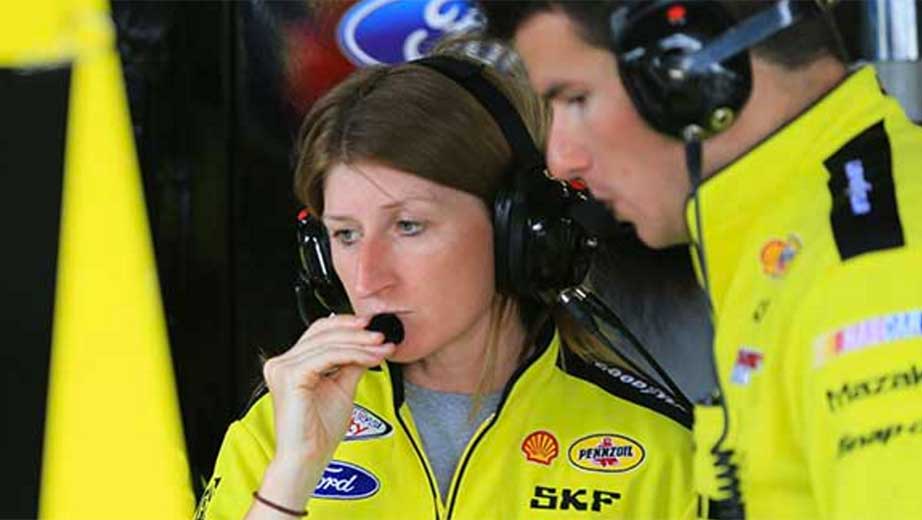
Andrea Mueller is a lead engineer at Team Penske and has helped lead the team to manufacturer’s championships in the XFINITY Series. Ashley Parlett is a full-time mechanic at the Chip Ganassi Racing organization — both young women setting a high standard for themselves and breaking barriers for others to follow in the sport.

Andrea Mueller


After spending the early days of her career working on engine components for NASA’s space shuttles, Mueller made the move to her first love, auto racing. Mueller, who raced quarter and micro-midgets as a youngster, helped lead the esteemed Team Penske organization to back-to-back XFINITY Series titles in 2013 and 2014 and another last year. The team has collected 31 of its 54 race wins since Mueller came on board as a race engineer in 2012.

Ashley Parlett

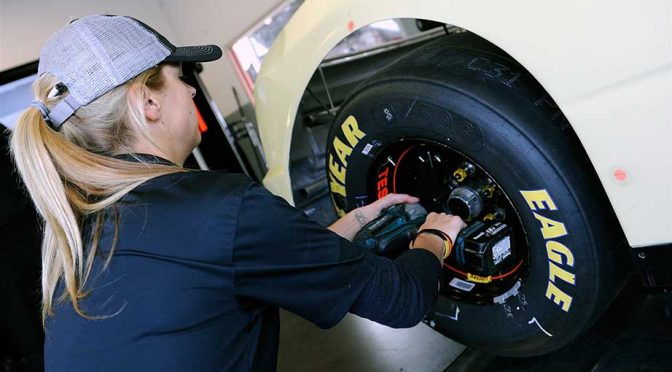
While seeing Ashley Parlett with tools underneath a race car may cause some to pause, it’s just another day at work for this Chip Ganassi Racing mechanic. And there appears to be nothing she can’t handle — from working full-time on Jamie McMurray ‘s Sprint Cup Chevrolet to turning the wrenches on Ganassi’s famous sports cars, Parlett has been a NASCAR mechanic for 13 years. Her background in racing open-wheel sprint cars also included working on all of those race cars from the age of 13. Earlier in her career, she led the efforts of a NASCAR K&N team and hopes one day to have the opportunity to become a crew chief in one of NASCAR’s three national series.

MORE: Women in technical positions include Andrea Mueller and Ashley Parlett

RELATED: Photos of women in NASCAR | About the series


While still a young, school-aged girl, the ever-thinking, always-dreaming Alba Colon was completely convinced that she would join one of her heroes, astronaut Sally Ride, exploring space. She assumed that one day, she’d be visiting a faraway planet and conducting the science experiments she so loved while orbiting on a spaceship.


Growing up in Puerto Rico in the 1970s and 80s, Colon, was so talented in science and math that she remembers a time she wasn’t permitted to take art classes on her school schedule — even though art was a subject she loved and excelled in — because the school faculty had recognized her gift with numbers and theories and wanted to foster that potential.


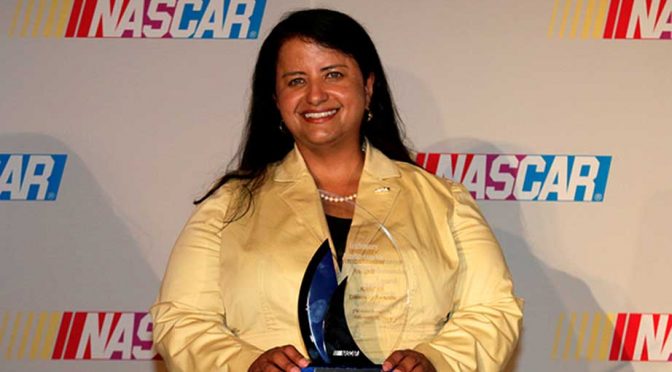
Decades later and now Chevrolet’s program manager for the Sprint Cup Series, Colon, 48, is the first to suggest it hasn’t all worked out quite the way she planned.


But her position leading Chevy’s top-shelf NASCAR effort has given her unprecedented opportunity to still pursue her dreams — and it’s been every bit as high-tech and artful a ride for one of the sport’s true trailblazers.

SERIES DAY 1: Lesa France Kennedy | DAY 2: DeLana Harvick | DAY 3: Kelley Earnhardt Miller


‘You can be whatever you want to be’


“My father always told me, ‘You can be whatever you want to be’ and that was a big deal,” Colon remembered. “But, he said one thing we ask, is all of you (her brother and sister, too) must finish college.”


College was no problem; she loved academics. But cars?


“There was no interest in cars at the time for me,” she said laughing. “I wanted to be an astronaut and I had a poster of Sally Ride, the first American woman astronaut, in my bedroom. I wanted to be like her; that was the whole deal.


“A funny thing I also remember is from very early on, I wanted to be an altar boy. My brother was an altar boy and I come from a very Catholic family. I remember telling my mom I wanted to be an altar boy and she said, ‘No, you can’t because you are a girl.’ That was the first time I remember being told, ‘You can’t because you are a girl.’ At that time girls couldn’t become altar boys. They can now, but at that time you couldn’t.


“For me, that was always in the back of my mind: I don’t understand why I can’t do something because I am a girl.”


The philosophy of perseverance has served Colon well and made her an example of can-dream, can-do.


It certainly has never stopped Colon’s progress at General Motors, where she was hired immediately out of the University of Puerto Rico in 1994 thanks to what became a life-changing opportunity there. To get there, she first competed in International’s Formula SAE college competition that took Colon to many places around the world … including Michigan, where she has lived and worked ever since accepting a job with GM after graduating.


“I decided to be a mechanical engineer because that’s what I wanted to do,” said Colon. “And in college, things changed and I got an opportunity to work on a race car, to design and build a race car. My love shifted.


“Through this competition (Formulat SAE) I got a good opportunity to apply what I had learned in the classroom, and I remember in 1991 I came to United States for the first time to Michigan to participate in the competition and see other cars.


“I just fell in love with the whole idea of the competition and building something to make it better. It was the first time I really saw a nice Corvette, a Camaro. It was my first contact with GM and I was like, ‘This is awesome.'”


By 2001, GM had selected Colon to lead the top NASCAR Chevrolet technical position.


Blazing the trail


Even with the demands of her position today, Colon speaks to school students around the country, sharing not only her love of math and science, but also telling her life story of realizing anything is possible. It is important to Colon to share her background and encourage today’s students to consider all the possibilities — not just the easiest.


But most of all, Colon’s message really is about perseverance and being open to finding your talents.


“My father spent the time with me studying math and science,” Colon recalled of her father, Dr. Miguel Angel Colon Fernandez, who passed away last year. “It was not only studying, because when you are a kid it’s like, ‘Let’s just study the test questions and move on.’ But not with him. He wanted to look at the beauty of the math or Albert Einstein’s theory.”


A quick walk around the Sprint Cup garage and Colon’s presence is unmistakable. She is one of the most recognized and popular personalities, and her work ethic and knowledge clearly are second to none. Beyond that, she has been embraced for pursuing a career that wasn’t the easy option.


Colon is a trailblazer not just for women or Hispanics, but also for her craft in general — and the combination of the two is what makes her most proud.


“Let’s be honest, at first it was hard,” Colon said. “But my parents said, ‘Never give up.’ At first it was just the unknown, but you have to keep going, keep going. You will get there by respect, and respect is not something you can tell someone. You have to earn the respect and I learned that very young.


“It takes time to get respect in this garage and it doesn’t matter whether you are a woman or a man. You are part of their team and their well-being, and that takes time.


“That’s what I want people to understand: It doesn’t matter who you are, you have to earn it here and anywhere.”

Earning her reputation


During Colon’s career at Chevrolet she has both worked alongside the best and earned respect from them.


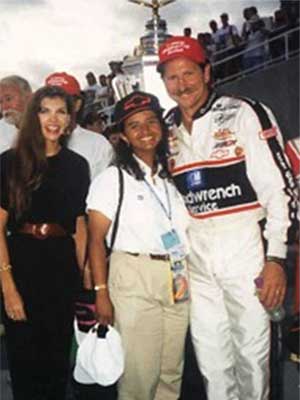
She remembers her initial meetings with the late, seven-time champion Dale Earnhardt, who during one test session early on suggested with a smile that NASCAR might not be more than a one-year gig for Colon. Then, with her help in winning the 1995 Brickyard 400 at Indianapolis, he insisted she pose with him and the trophy in Victory Lane.


She first met six-time champion Jimmie Johnson in his earliest days racing in ASA and has been a part of Chevrolet’s technical staff for all his championships and 77 wins. Despite all that success, Colon said, “You know what? He’s still the same, humble nice guy; still the great kid.”


Of another champion she worked with, Tony Stewart , Colon is especially impressed with Stewart’s 2011 title run when he won five of the final 10 races.


“I love the spark he had for that championship, the ‘and now I’m going to show you who I am’ feeling,” Colon said. “That season was magic.”


And last year, Colon was so glad a last-minute change in plans put her in Martinsville, Virginia, where the retiring Jeff Gordon emotionally collected the final of his 93 victories.


“These are things that will be there forever,” she said.


Those memories come from a work-ethic instilled in her by her late father, a doctor, and her mother, a middle-school teacher. But it’s  self-motivation she used to navigate the dueling forces of challenge and opportunity.


“She’s incredible,” longtime NASCAR team owner Richard Childress said. “She was one of the first engineers that ever came to RCR. She brought so much to us over the years. She’s a wonderful lady but very, very smart. She’s done it for so many years and still here, still strong and still has the passion. She really has a huge passion for our sport.”


Stewart , now a NASCAR team owner to go along with being a Chevrolet driver, shares that appreciation for Colon and notes what is particularly special is that she is as well-liked as she is brilliant. Stewart won three Cup championships driving Chevrolets with Colon leading the engineering effort.


“You think about the position she’s in with Chevrolet and she is one of very few women that has a title like that,” Stewart said. “And I don’t care who you are in the Cup garage, even if you don’t drive a Chevrolet, you know Alba and you respect Alba. 


“She’s one of the smartest people. And especially me being in the Chevy family for so long, I see that she has that special relationship with everybody — drivers, owners, crew chiefs or crew members. She knows everybody and everybody respects her. 


“But she’s always asking, ‘What can I do to help?’ and that’s something from my experience working with her, that sets her apart from everyone else.”


That’s the ultimate feedback that an engineer like Colon appreciates most: It speaks equally of her determination and ability.


Leaving her mark


“This is my family,” Alba said, motioning to the buzz and vibe around her on a recent NASCAR Sprint Cup Series race morning.


“Dreams shift. I tell young students, ‘You can prepare yourself for one thing, but in the end, God decides. Don’t fight against it. Accept it.’ I never imagined I’d be doing this, and this — racing — is my family.”


“I will be honest,” Colon said smiling, “I tend to come here to work and I just keep working. But once in a while you stop and realize people watch what you do and how you behave. One time, a young girl wanted to take a picture of me, and I asked, ‘Why?’ She said, ‘Because when I grow up I want to be like you.’


“I just cried. That day made me realize people admire the pit crew, the drivers, everyone out here, and we ought to be responsible for our actions.


“I will not be here forever; none of us will be. So while I am here, I want to do the right thing and someday say, ‘I left the sport better than I came.’ I love what I do.”