The Road to Daytona kicks into high gear Thursday as drivers continue crossing the country to spread the word on the “Great American Race.”
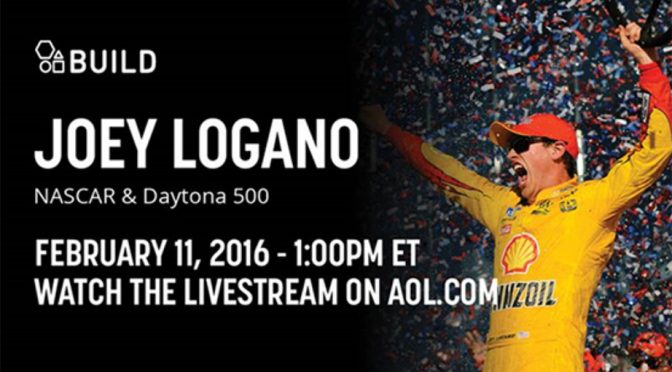
Thursday’s slate includes Joey Logano hitting New York City, Carl Edwards in Orlando and Matt Kenseth in Tampa, Florida.
Logano’s NYC tour will include an interview on AOL BUILD, which is live-streamed to anyone who wants to watch. The Team Penske driver’s appearance starts at 1 p.m. ET — click here to watch it.
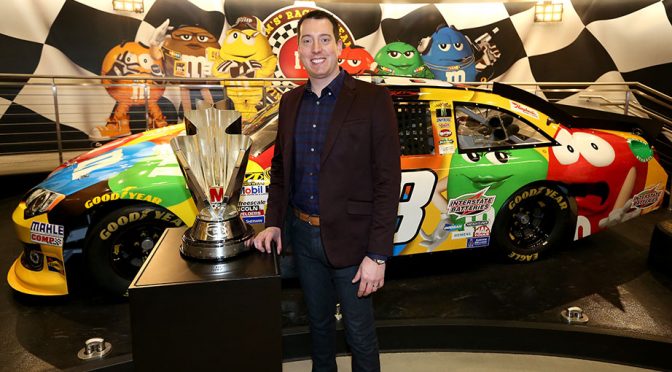
The M&M’s brand celebrates its 75-year anniversary this year, and Mars, Inc., has some special celebrations planned — that includes a retro paint scheme for Kyle Busch‘s No. 18 Toyota at Daytona International Speedway.
The classic yellow look was revealed Wednesday on Facebook, via the M&M’s Racing account. Pretty spiffy!
Here she is straight from the garages at Joe Gibbs Racing – the retro M&M’S 75th Anniversary paint scheme we’ll be running down in Daytona!
Posted by M&M’s Racing with Kyle Busch on Wednesday, February 10, 2016
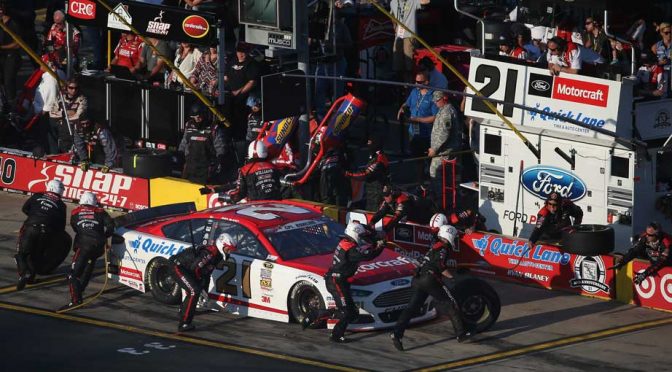
Being a NASCAR Sprint Cup Series rookie is never easy, but a driver can take comfort in knowing there are veterans on the team.
Rookie Ryan Blaney will have veteran tire changers Shannon Myers and Ryan Langley to help with pit stops at Daytona. Both changers were at Michael Waltrip Racing last year and come over with experience and talent.
The rest of the No. 21 pit crew fills in nicely as well. Jesse Mills will carry front tires and veteran jackman Chris Conklin will be in the middle.
The back of the car has Josh Chaney carrying tires and gasman Andrew Lackey.
This pit crew has a good mixture of youth and experience, and it will make a big impact on how the No. 21 Wood Brothers Ford finishes races.
For more pit crew news, visit PitTalks.com.
RELATED: Stewart suffers serious back injury | Evernham’s firsthand account
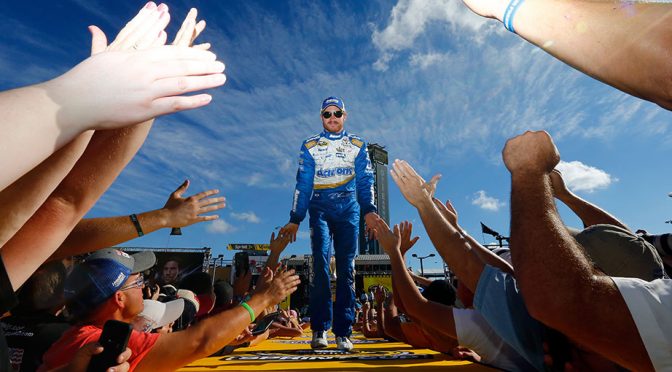
Stewart-Haas Racing has called a press conference Friday morning at Daytona International Speedway to announce who will drive Tony Stewart‘s car in the Feb. 21 season-opening Daytona 500 (1 p.m. ET, FOX), and sources confirm to NASCAR.com that Brian Vickers is the leading candidate for the job.
The three-time premier series champion Stewart is sidelined for an undetermined amount of time after injuring the L1 vertebra in his back in an all-terrain vehicle accident in the desert a week ago. Stewart underwent surgery and is back home in Charlotte, North Carolina, but no timetable has been given for his return.
In the meantime, sources confirm that his SHR team is making plans for Vickers to steer Stewart’s No. 14 Bass Pro Shops/Mobil 1 Chevrolet in the Daytona 500.
Vickers, 32, competed in only two races last season for Michael Waltrip Racing after missing time due to a recurrence of blood clots, and he currently is in the process of getting final medical clearance to fill in for Stewart.
On Thursday, NASCAR Executive Vice President & Chief Racing Development Officer Steve O’Donnell confirmed to SiriusXM NASCAR Radio that NASCAR has medically cleared Vickers, should SHR elect to put him in the seat.
Vickers did not compete in the 2015 Daytona 500 , but started races in Las Vegas and Phoenix before announcing the next week at Fontana that he would be sidelined while under treatment for the clots. Because Vickers was on blood-thinning medication to deal with the blood clots, he was not cleared by doctors to race and has not made another Sprint Cup start since.
This would be Vickers’ first Daytona 500 start since 2014. He finished runner-up in the Coke Zero 400 at Daytona in July of 2014.
RELATED: Full coverage of accident, impact
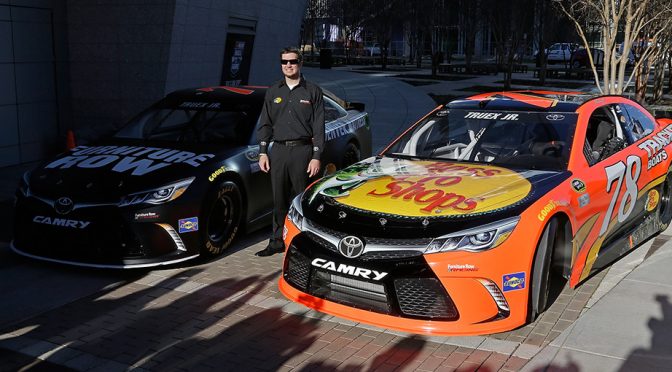
When Martin Truex Jr. arrived for his Charlotte Media Tour interview session late last month he looked as happy and optimistic as you would expect a returning championship contender. He was smiling, joking and really quite ready for competition to commence.
And yet much of what he can reasonably expect in 2016 remains unclear — except for that shiny Sprint Cup championship trophy.
After finishing a career-best fourth-place in the 2015 Sprint Cup title run, Truex will be driving a new car make — Toyota — this year. And the opportunity to pair and share technology with reigning Cup championship Joe Gibbs Racing Toyota team only raises expectations.
Most athletes are optimistic in the weeks before the season starts, but Truex feels it’s warranted.
“Since it’s the first day of the media tour I guess I can get away with saying I’m excited,” Truex said breaking into a wide grin.
“It’s a big deal for everyone at Furniture Row Racing to start off with manufacturer support, it’s a big deal for our team and our group to have that for the first time.
“Everything is shaping up for another great season hopefully and I’m looking forward to getting on the track and seeing where we stand.”
For Truex, the 2015 season represented a move into elite status — he qualified for the four-driver, one-race championship finale competing against Gibbs (Kyle Busch) and the Chevrolet strongholds of Hendrick Motorsports (Jeff Gordon) and Stewart Haas Racing (Kevin Harvick). Reaching title contention with a single car team like Furniture Row Racing was a strong statement.
“Confidence is a big part of this sport and certainly mine was raised last year,” Truex said. “It’s fun to go to a race track when everyone’s on your side and has your back and you’re not worrying about losing your job. It’s nice to be in a great spot with great people who believe in each other. You can focus 100 percent on what you need to do for your race car.”
While most drivers are eager to take the first green flag, Truex feels like he’s almost got to control his expectations — a good position to be in. While he acknowledges much is still to be learned about the new car and also the new low down-force package the Cup series will run in 2016, Truex genuinely seems as focused and comfortable as he has looked in many seasons.
“It makes you excited, and you really anticipate the season starting to see where you stand,” Truex said. “The anticipation is always there for all of us, the new year where we come in to see where we measure up. You never really know. You have two months of offseason to get all the work to find the most speed you can and you don’t know what you’re doing, you’re basically working blind.
“I’ve been pleasantly surprised. I wasn’t sure how much into sharing JGR would be. Would they give us everything and say, ‘here it is.’
“And they have, it’s been an open book and I’m really proud for my guys for that. They are all working together right now. Once we get to the race track and try to figure it all out, it’s going to be fun.
“When I first heard we were partnering with Joe Gibbs Racing, I was a little skeptical because I remember back when I was with Michael Waltrip Racing (Toyota team) and they didn’t want to share even what size bolt they had in the back window,” Truex said with a laugh.
“But the willingness to go out of the way to make sure we have everything we need to help us make sure we’re doing it right, they (Gibbs) have such an impressive group of people there. For them to take us in and want to make sure we’re on the same page is awesome.”
Truex said he felt his team could have won up to six races last year if not for isolated cases of this-or-that. He led the points standings three times in the Chase and was ranked second or third from late February until June. He posted a career best for top-fives (eight) and top-10s (22) and won at Pocono Raceway in the summer.
“You can always do better,” Truex said. “We want to be faster, lead more laps, make fewer mistakes and go to Homestead and do better this time around.
“What doesn’t kill you makes you stronger and we’ll be able to use it going forward.
“My experience is that any time you have to change team stuff, if there’s a big rule change that comes with it, it’s probably the best time to do it (change manufacturers),” Truex said. “Everyone’s going to be learning it, there’s going to be a big effort from everybody.
“Nobody really knows how it’s going to look at the beginning of the season, but I think we’re in store for a good one.”
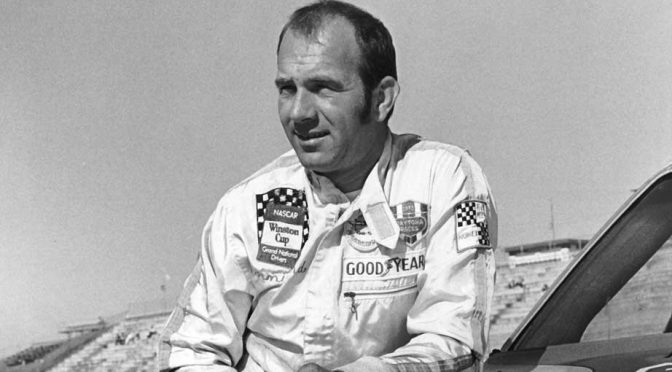
Lennie Pond, the 1973 Rookie of the Year in NASCAR’s premier series, died on Wednesday at age 75 of complications of cancer, a family spokesperson said this morning.
Pond, a native of Ettrick, Virginia, raced for 17 seasons in NASCAR’s premier series with 234 career starts, one win, 39 top fives, 88 top 10s and five pole positions.
NASCAR released a statement that read: “NASCAR extends its condolences to the friends and family of Lennie Pond, a true racer and for decades a fixture at Virginia short tracks — where he was a five-time Late Model champion. Throughout his career, Lennie boasted accolades including the 1973 premier series rookie of the year title and a Talladega win, but it was his passion for speed, competition and racing that made him a favorite among fans and fellow competitors alike.”
Pond’s only career win came in the 1978 Talladega 500 while driving for Harry Ranier at a speed of 174.7 mph, the fastest 500-mile win in motorsports at that time.
He finished fifth in the final Cup standings in 1976 and seventh in 1978.
In 1973, Pond beat out Darrell Waltrip in a spirited race for the Rookie of the Year title. Pond finished 23rd in the final Cup standings that season; Waltrip was 28th.
In 1976, Pond was the winner of the ARCA 200 at Daytona. Pond was also the runner-up in the NASCAR National Sportsman Championship behind Rene Charland in 1965 and a five-time champion in Virginia Late Models.
Dale Earnhardt Jr. was among those with a NASCAR connection who honored Pond via social media Wednesday:
Prayers for family of racer Lennie Pond who passed away from complications with cancer. Lucky to have raced with him once. 1973 Cup ROY.
— Dale Earnhardt Jr. (@DaleJr) February 10, 2016
I raced Lennie Pond @ECSpeedway in 1995. Battled for position in the top 5 with him a few laps. https://t.co/HQ0XP4vHwN
— Dale Earnhardt Jr. (@DaleJr) February 10, 2016
Very sad. Great competitor, truly one of the nicest guys in racing. Corvette guy, loved talking cars & racing. https://t.co/aPD0pWc9h8
— Mike Joy (@mikejoy500) February 10, 2016
What a day this was!
Lennie Pond got his only Cup victory in the 1978 #Talladega500 driving for Harry Ranier. pic.twitter.com/kVOsYM4wxF
— TalladegaSuperSpdwy (@TalladegaSuperS) February 10, 2016
RELATED: NASCAR Drive
NASCAR Drive is new for the 2016 season
· Free, live race day experience
· In-Car Video
· Lap-By-Lap Commentary
· Driver Stats and Social Hub
2016 NASCAR Drive Schedule
| Date | Location | Series | Time |
|---|---|---|---|
| November 19 | Homestead-Miami Speedway | XFINITY Series | 3:30 p.m. ET |
| November 20 | Homestead-Miami Speedway | Sprint Cup Series | 2:30 p.m. ET |
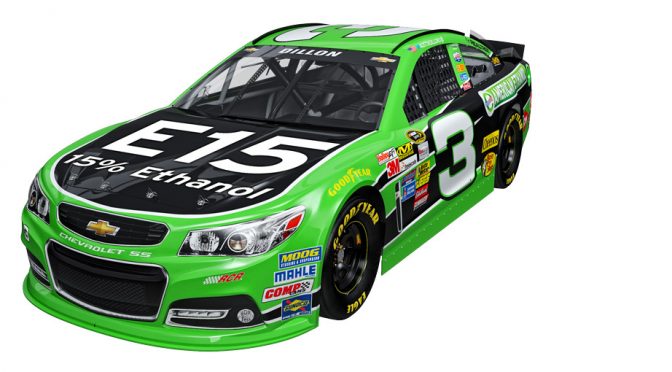
American Ethanol revealed its 2016 paint scheme for Austin Dillon‘s No. 3 Richard Childress Racing Chevrolet SS on Wednesday.
American Ethanol will return to the No. 3 team as a primary sponsor for six races during the 2016 Sprint Cup Series season:
– March 20 — Auto Club Speedway, California
– May 7 — Kansas Speedway Kansas
– July 31 — Pocono Raceway, Pennsylvania
– Sept. 4 — Darlington Raceway, South Carolina
– Oct. 23 — Talladega Superspeedway, Alabama
– Nov. 13 — Phoenix International Raceway, Arizona
For the Darlington race, the paint scheme will feature a retro theme to go along with the throwback weekend the track has planned.
American Ethanol was the primary sponsor for Dillon for six Sprint Cup races during the 2015 season.
RELATED: NASCAR announces landmark new ownership structure
If there was ever a perfect anecdote to illustrate how hard NASCAR executives and the alliance of Sprint Cup team owners worked to reach their historic Charter agreement this offseason, it’s the one provided by Brian France himself.
The NASCAR Chairman and CEO offered a glimpse with his Tuesday remarks, providing visions of working the phones on Christmas Eve against the backdrop of gift wrap, trimmed trees and mulled cider. In addition to pushing through the typically sacrosanct time around the holidays, France also navigated around offseason knee surgery to help broker the deal.
But a more evident, powerful visual from both sides came during Tuesday’s groundbreaking announcement. When the eight representatives — four from NASCAR’s executive board and four from the team ownership group — took the stage, each sat intermingled across company ranks. No divisions.
When the Race Team Alliance formed in July 2014 with the hopes of providing owners a unified voice and a path to a better financial model, France was among the early skeptics, telling SiriusXM NASCAR Radio that he didn’t think such a coalition was necessary. A year and a half later and with any battle lines erased, the eight reps sat on stage in harmony — loose, amiable, and with both sides sharing smiles and the feeling of mutual benefit.
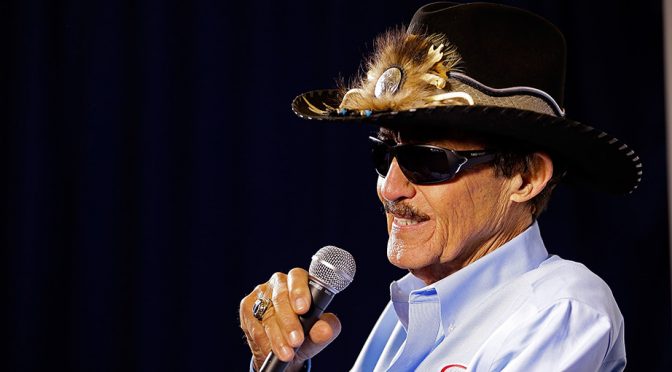
“To me, this is the second-most important thing that’s ever happened in NASCAR, because now the drivers and owners and stuff now can really work across the aisle,” said King Richard Petty, who ranked Tuesday’s landmark announcement behind only the meetings that set the foundation for NASCAR’s formation in 1947 and ’48.
“I was telling him a while ago, it’s sort of like the Democrats and Republicans, they’ve been doing their thing, we’ve been doing our thing, meeting in the middle a little bit. We’re getting rid of that. We’re all going to be in the middle of the deal now.”
Based on the newfound collegiality, the Congressional halls in Washington could take a cue from the boardrooms of Charlotte and Daytona Beach. Though both sides had to yield on certain points to reach a compromise, each emerged with a considerable number of positives to create a true win-win scenario from the nine-year agreement.
For team owners, the plusses include stability and palpable value for their Charters, an enticing selling point for sponsors. The agreement also provides a share of revenue, which may conceivably help smaller-budget teams reinvest and make modest performance gains on their well-heeled competitors within the Charter system.
For NASCAR, the premier stock-car series stands to benefit from seeing its current Charter members thrive, but also in seeing value build for prospective new sponsors and owners. The sanctioning body will retain a firm grasp on its governance of the on-track product, but the newly forged bonds of cooperation and open communication with its team owners should buoy the sport for many years.
WATCH: France calls Tuesday a ‘historic day in NASCAR’
“It’s not surprising there were a lot of different opinions, lots of different perspectives expressed during the process,” said Roush Fenway Racing president Steve Newmark. “You expect that with the diversity in our sport that we have. There was always an unwavering commitment to a single goal, a single mission. That was to make our sport better and stronger for our fans and partners. That commitment translated into a willingness of everyone involved to pursue and explore a complete paradigm shift in how we operate and to create a much stronger and stable foundation going forward.
“If you poll everyone involved in this process, the prevailing sentiment would be the collaborative precedent we set during this process bodes very well for our future.”
The spirit of collaboration — with team owners, with tracks in reaching a five-year sanctioning deal last October, and with the drivers’ council that was created just last season — represents a major advancement for NASCAR’s brass. It’s a reason why France, when asked what his father and predecessor, Bill France Jr., would think about the Charter agreement, politely joked that he’d expect a largely conservative approach.
But this isn’t your father’s NASCAR, or even France’s father’s NASCAR. That both sides drew inspiration from the ownership models of other professional sports such as the NFL, European soccer and cricket — cricket! — rams that point home.
NASCAR has long operated under a system with its participants acting as independent contractors. Now team owners can claim a degree of equity for their investment in an expensive sport.
“We always have said, because we mean it, that our owners and their success and their viability is very important to us,” France said. “That remains true yesterday; it remains true today. But these agreements and this new course that we’re on today gives us a chance to really back that up. We get to align our interests in a way we never thought we could. I’m excited about that. We’re going to be partners in a different way going forward. I couldn’t be more thrilled.”
France and the team owners may have interrupted their holidays to keep hammering away at negotiations in the face of a hard deadline — the season-opening Daytona 500 — looming just several weeks off. The culmination of those efforts made a historic holiday all its own, turning an otherwise ordinary Tuesday in February into a turning point for stock-car racing.