RELATED: Suarez talks about his No. 1 goal upon arriving in America

DAYTONA BEACH, Fla. — By his own admission, Daytona’s Speedweeks last year was a struggle for then-rookie Daniel Suarez. His role in a multicar crash during qualifying and another pileup during the season-opening race did not win points with his new NASCAR XFINITY Series brethren.

One year later, it’s a much more buoyant and respected Suarez in the Daytona International Speedway garage. The Mexican-born driver has a year of experience and improvement on his resume as he kicks off his second full XFINITY season in Saturday’s PowerShares QQQ 300 (3:30 p.m. ET, FS1, MRN, SiriusXM NASCAR Radio).

“I feel like right now, we are a different driver and a different race team,” Suarez said Tuesday at NASCAR Media Day, chalking up his 2015 missteps here to inexperience. “We know where we need to be. Our confidence level is different as well, so I really feel really good. I really feel like right now from one year to right now we have made a lot of ground, so really looking forward to trying to make something different on this superspeedway.”


RELATED: Paint schemes for Daytona

After such a shaky start last February, Suarez hatched a successful Sunoco Rookie of the Year campaign, finishing fifth in the drivers’ standings. The Joe Gibbs Racing driver turned in top-five efforts at short tracks, 1-mile layouts and intermediate-sized circuits, but none in the three superspeedway events (two at Daytona, one at Talladega).

Though he did cash in with his first Coors Light Pole Award when the series returned to Daytona in July, Suarez still said he had plenty to learn on the sport’s biggest ovals.

“I really was thinking during the offseason about how to be successful at this race track, how to be good at it,” Suarez said. “I just really think that last year, 2015 we were learning about so many race tracks and learning about everything, but in superspeedways I just feel like I was stuck a little bit, so I did a lot of homework to try to learn more about superspeedways, how to work on superspeedways, how to be a little bit better and I’m really looking forward to trying to be more successful on superspeedways than what I did last year.”

Suarez, 24, plans to concentrate on vying for the XFINITY championship, but will again split time in the Camping World Truck Series with plans for a 13-race schedule — the same number that he ran last year in an effort to gain valuable time behind the wheel. But there’s also been preliminary talk, he admits, about a potential move up the ladder to the Sprint Cup Series in the future as part of JGR’s rich crop of development drivers.

“Yeah, we have had that conversation a little bit here, a little bit there,” Suarez says, “but at the end of the day, I’m one of those drivers that thinks if we do our job with what we are doing right now the future is going to take care of itself. Yeah, we’ve had a little bit of those conversations — nothing for sure, really — but I really think the most important deal right now for us is the NASCAR XFINITY Series and the NASCAR Camping World Truck Series.”

DAYTONA BEACH, Fla. — The tale of Martin Truex Jr.’s Daytona Speedweeks trip still has a few chapters to be written. But however his season-opening race turns out, Truex has already told his most important story.


Truex’s byline graced The Players Tribune on Monday, documenting girlfriend Sherry Pollex’s fight with ovarian cancer and how it impacted their relationship. The 35-year-old driver’s heartfelt first-person account — titled “The Fight of Our Lives” — comes just weeks after Pollex completed a 17-month course of chemotherapy treatment.


With that stage of the fight behind them, Truex said the next logical step was to raise awareness to help others wage their own battle against cancer.


“She’s going to kind of be a spokesperson for the disease and she wants to help other people and spread the word about it and try to get more funding for research and all those type of things,” Truex said Tuesday at NASCAR Media Day, “So it was kind of a good time to get our story out there, explain how it went and kind of get the ball rolling on what we’re going to try and do as far as the awareness side and the research side about trying to help other women and other people with this disease.”


Truex established his foundation in 2007 to help combat children’s issues, specifically pediatric cancer. When Pollex was diagnosed with the disease in 2014, the Martin Truex Jr. Foundation expanded its reach to help women affected by ovarian cancer as well. The foundation’s annual Catwalk for a Cause helped raise more than $250,000 in contributions last year.


Truex’s article this week was an extension of the foundation’s goals, but it also helped to tell their story — both from her perspective and his.


“On my side of it, it’s about kind of teaching husbands and sons and just whoever from the man’s point of view on how to deal with it,” Truex said, “So we’ve kind of retooled our foundation a bit to focus on not only childhood cancer, which we’ve always done — pediatric cancer — but also now we’re going to put a lot of effort and emphasis in ovarian cancer, so all those things kind of go together and that timing was part of it.


“The rest was just — that was our story. That’s the story how it went for me and that’s how I wanted to get it out there.”


Truex joins the ranks of fellow NASCAR drivers Kyle Busch and Danica Patrick as contributors to The Players Tribune, which features content penned from a professional athlete’s point of view. Just 24 hours after his article’s publication, Truex said the reception has been overwhelmingly positive.


“I think that it hit home with a lot of people because a lot of people have unfortunately dealt with similar battles,” Truex said. “It just kind of shows what we’ve been through.”

DAYTONA BEACH, Fla. — The gleaming structure that now flanks the frontstretch at Daytona International Speedway has re-established rightful prominence to one of NASCAR’s most historic tracks. But the price tag on prestige also includes another measure of improvement — the always-moving target in the realm of safety.


The Daytona Rising project opened in earnest for February’s annual Speedweeks with high-rise seating, “injector” entrances and sprawling concourses. But after a pair of harrowing crashes in its two races last season, it also made sure to make enhancements to the other side of the catchfence — the track itself. And there’s still more to be done.


“Daytona has its own challenges, but there’s a fix for everything,” said Ryan Newman, one of the sport’s most outspoken drivers when it comes to safety. “It’s just a matter of spending time, money and effort to do it right.”


Kyle Busch‘s severe crash here in the NASCAR XFINITY Series opener last February was the fulcrum to many of the changes. Busch’s car skidded off the short chute toward Turn 1, slid across the grass and made hard, nose-first contact with a wall unprotected by the impact-absorbing SAFER (Steel and Foam Energy Reduction) barrier system. The impact forced Busch out for 11 races with multiple leg injuries.


When NASCAR returned in July, teams were greeted with additional SAFER barriers and more than 200,000 square feet of new asphalt to replace the grass in certain places around the 2.5-mile track, including the site of Busch’s crash. Though multiple areas were addressed, Austin Dillon‘s violent wreck into the frontstretch catch fencing again raised safety’s specter.


The topic of grass came into renewed focus during last weekend’s Sprint Unlimited preliminary. Jimmie Johnson‘s No. 48 Chevrolet spun off the racing surface on the backstretch, sustaining severe front-end damage when the car’s nose dug into the earth at high speed. Three days later at NASCAR Media Day, Johnson sounded the bell again for more pavement: “My opinion, grass belongs on golf courses. We need asphalt around here to slow the cars down, control the cars.”


Daytona track president Joie Chitwood III said his facility has acted quickly to make further strides with additional SAFER and paving, but that the movement was spread among all 12 of International Speedway Corporation’s host tracks. In Daytona’s case, Chitwood noted there’s a more delicate fine line in doing what’s right for the various series — four-wheeled and two — that visit.


“Daytona is operated about 250 days a year, so we do have other forms of racing out here,” Chitwood said, “and so we have to make sure that we provide everyone a good racing opportunity, whether it’s sports cars, whether it’s motorcycles — yes, there’s other things. Right now, that balancing act of the right kind of safety — whether it’s grass, SAFER barrier and how it fits with everything we do — so we just have to balance all those things.”


Newman also suggested a retaining wall on the outside of pit road be added to every track that hosts NASCAR’s premier series. Of the 23 tracks on the Sprint Cup schedule, eight do not have a wall separating the pit lane from the infield grass.


Chitwood said providing extra protection on pit road would be ideal, but that the introduction of an exterior pit wall creates an extra element of danger with an abutment at pit entry. Tracks that do have the additional barrier protect them with large, impact-absorbing barrels filled with water or sand.


“There’s a lot of challenges with that, and we’ve seen a lot of other tracks need to put an attenuator at the end of pit wall. If you do that, you create a hard point out there,” Chitwood said. “I think there’s a lot of conversation about that, and that’s where you get a lot of safety engineers and people like that that can assist with that. There’s some tracks with a wall that separates the track from pit lane. There’s a lot without, so I think that’s a good debate for a lot of knowledgeable people about safety right now. I think he has a valid point, but I think there’s both sides to that.”


Though safety enhancements remain an evolving focus, Chitwood’s attention for now — with the Daytona 500 just days away — remains on buttoning down the final 2 percent of work to be done. After overseeing the motorsports stadium’s groundbreaking as a $400 million concept in July 2013 to its reality at 98 percent completion today, Chitwood has many reasons to savor the occasion.


“I think we’re having a tough time not focusing on the 2 percent because we’ve lived it for two and a half years,” he said. “Trying to tell our team — and I’m probably our worst offender — to enjoy the moment. We’re doing something special and unique and no one’s ever done this before.”

MORE: Full starting lineup for 500
RELATED: 
Can-Am Duel 1 results | Can-Am Duel 2 results


DAYTONA BEACH, Fla. — Retaking the lead with five laps left in the first of Thursday night’s Can-Am Duel 150-mile qualifying races, Dale Earnhardt Jr. cruised to a dominating victory and grabbed the third staring spot for Sunday’s Daytona 500.


RELATED: See the best photos from the Can-Am Duels


In the second Duel, reigning NASCAR Sprint Cup Series champion Kyle Busch took the checkered flag under caution after a wild last-lap wreck took out the cars of Jimmie Johnson, Martin Truex Jr., Matt Kenseth, AJ Allmendinger and Danica Patrick and damaged the No. 41 Chevrolet of Kurt Busch.


Kenseth will go to a backup car and start from the rear in the Daytona 500, surrendering the second starting spot he earned during last Sunday’s time trials.


“I guess it was quiet and calm there for a long time, and the last lap just went kind of crazy,” Busch said. “Great car. These guys at Joe Gibbs Racing did a phenomenal job this winter building some new pieces for us to come down here with and have some fun.


“Looking forward to starting the Daytona 500 in the fourth spot, but I think I will actually get the outside front row now that Kenseth got caught up in that mess and tore up his car.”


RELATED: Dale Jr. wins on 15-year anniversary of dad’s death


Driving a chassis nicknamed “Amelia” for famed aviatrix Amelia Earhart, Earnhardt won his Duel for the second straight year and for the fifth time overall. The two-time Daytona 500 winner drove Amelia in all four restrictor-plate races and the Duel last year, winning two points races as well as the Daytona qualifier.


Earnhardt held off 2015 Daytona 500 winner Joey Logano and rookie Ryan Blaney, who drove their Fords to second and third, respectively. Kevin Harvick finished fourth, followed by Denny Hamlin and Daytona 500 pole winner Chase Elliott.


With Blaney finishing highest in the first Duel among the four “open” drivers who had to race into the field, Michael McDowell earned a spot in the Daytona 500 based on his qualifying speed from last Thursday, the third fastest among the “open” drivers. Blaney was already locked into the field as the fastest qualifier among the “open” drivers.


RELATED: Which Open drivers are in, out of Daytona 500?


“You all know what it means to be in the 500,” McDowell said. I’ve been on the other side, too, where I’ve been loading up, too, and going home on a Thursday night. I definitely appreciate it when we make the races.


“It’s definitely a big thing for our team, Circle Sport and Leavine Family Racing. We’re going to have two cars in the Daytona 500, especially for a small team. To really start out the year well, it’s very important. This is such a huge race.”


Earnhardt got the lead on Lap 55 of 60, diving to the inside and pulling up beside Hamlin, who was leading at the time. Earnhardt stayed out front for the final five laps, bringing his total for the race to 43.


“Denny is such a great plate racer,” Earnhardt said. “There are a lot of guys that are really good at it these days. I knew he was going to be real tough to get around. When he got the lead (during a sequence of green-flag pit stops), I didn’t know if we were going to be able to get around him.  He’s got a great car and he’s real smart.


“For whatever reason, I was able to get to his quarter-panel, (and) he saw we had a pretty good run. I don’t know, I didn’t think I was going to clear him. We got away from him so he couldn’t side draft us, I guess. I was really surprised as anybody that we got by him. He’ll be tough on Sunday.”


With Brian Scott spinning off Turn 4 and slamming into the inside wall on the final lap, Earnhardt crossed the finish line .183 seconds ahead of Logano, who also finished second to Hamlin in last Saturday’s Sprint Unlimited exhibition race.


The first Duel sets the inside lane for the Daytona 500. Hence, Earnhardt, Logano, Blaney, Harvick and Hamlin will line up third, fifth, seventh, ninth and 11th behind Elliott on Sunday.


Jamie McMurray, Kurt Busch, Carl Edwards and Ty Dillon finished second through fifth in the second Duel and will line up behind Kyle Busch in the outside lane on Sunday, provided none of those drivers has to go to a backup car, and provided Elliott chooses the inside lane for the start of the race (the pole winner has lane choice).


With Matt DiBenedetto finishing highest among the “open” drivers in the second Duel, Robert Richardson Jr. earned the last starting spot in the Daytona 500 on speed, given that DiBenedetto already was locked into the field as the second fastest “open” qualifier during time trials.


With Richardson and DiBenedetto in the race, BK Racing has all four of its cars in the field. The cars of David Ragan and Michael Waltrip are chartered and therefore guaranteed starting spots.


“Two weeks ago I was at home working on my ranch, got a phone call from Lane Segerstrom from (sponsor) StalkIt, saying he was trying to put a deal together trying to run the Daytona 500,” Richardson said. “This was two weeks ago. A lot of guys start preparing for this race as soon as the season ends from last year.


“I’m very, very honored to be a part of BK Racing, having another opportunity to run here at the Daytona 500. I’ve been in it once before, but this one is very, very special to me. My wife and I welcomed our brand new baby boy who was born in early December. Every bit of the earnings we get from this race are going to go into a college fund for him.”


Failing to qualify for the Daytona 500 were Cole Whitt, Josh Wise, David Gilliland and Reed Sorenson.

DAYTONA BEACH, Fla. — When Jamie McMurray pulled onto pit road for the first time in last Saturday’s Sprint Unlimited at Daytona International Speedway, he knew immediately the preferences he had selected for the new digital dashboard in his No. 1 Chevrolet simply weren’t going to work.
 
There was nothing wrong with the dash itself. The problem lay in the options McMurray had picked and the way he had configured the series of lights designed to warn him about his pit road speed.
 
“There are a lot of options, which is nice, with the way you can set the lights up or the warnings and everything that go with it,” McMurray said. “We sat at the shop for hours, and I went over what I thought I was going to like. And then when we did pit road practice for the Unlimited, I thought ‘Oh, that’s perfect.’ “
 
But after the first pit stop in the heat of battle, McMurray knew he’d have to rethink his choices.
 
“We didn’t have any type of a warning when it was below pit road speed,” McMurray said. “The way I used to do it is that, if you were within 5 mph of getting to pit road speed, it would start lighting up yellow lights. And then the first green would not light up until you got to pit road speed. And then my seventh green would be the 4.5 mph over, and one red would be speeding.
 
“And the way we had it structured is there are nine lights on this first-off, and we were only going to use six of the green lights to be pit road speed. One red would be speeding. The problem was I couldn’t distinguish on the dash by looking at pit road and then looking back down, where the sixth light was. I was like trying to count over while I’m on pit road. Little things like that you think you could do, but I couldn’t. So, we just had to come up with another plan.”
 
McMurray’s experience was not unusual. Many of the NASCAR Sprint Cup Series drivers spent their first practice sessions at Daytona configuring their digital dashes and getting used to the transition from the old analog displays.
 
In doing so, drivers have a lot of decisions to make.
 
“The digital dash, they’re going to have 16 customizable screens,” Gene Stefanyshyn, NASCAR senior vice president, innovation and racing development, told the NASCAR Wire Service. “If the guy wants to put the RPM gauge off in the right corner, he can do it. If he wants to drag it into the middle of the display, he can do it. If he wants to make it huge, he can make it huge …
 
“They can do whatever they want to customize this. They can make it look like a traditional gauge or they can make it a bar graph. There are different color LEDs they can pick, different gauges they can pick.”
 
Instead of seven or eight information choices, such as fuel pressure, water temperature, RPMs, etc., NASCAR plans to provide as many as 25 data options. That includes lap times, which traditionally have been communicated to drivers by their crew chiefs over the radio.
 
“That’s one of the things they’re going to get this year,” Stefanyshyn said. “We didn’t have a problem with that, because they all communicate laps times from the (pit) box. The one thing — and we’ve told this to the teams — the driver will be able to use that lap time to monitor his progress. It will not be exactly identical to the timing and scoring lap time.
 
“It’ll be off because of where they put the beacon. So timing and scoring will continue to be the official scoring mechanism. But when a driver’s in his car, the times he’s getting are real, and they’ll be very, very close, maybe a hundredth of a second off. But it’s absolutely accurate for the driver to know if he’s picking up pace or losing pace.”
 
Front Row Motorsports driver Landon Cassill plans to make use of all the information he can get.
 
“I think it’s great,” Cassill said. “I think it opens up the door for a lot of cool things, getting lap times and the way we can customize the pages to whatever I need, whatever I need it to say, whatever I want it to look like.
 
“Right now, we’re still getting, for the most part, the same information we were getting, so I think as time goes on it will be interesting to see how NASCAR opens up the tools on what kind of information we’re able to get, but I’d say the number one thing I’m looking forward to is using the lap time to my advantage in terms of green flag pit stops and things like that.”
 
When it comes to pit road speed, Cassill has started to read the numerical LED of his RPMs rather than look at the needle on his tachometer, which he used to do with the analog dash.
 
The customizable display available to drivers is only the first phase of the implementation of the digital dash. The long-range plan is for NASCAR to use the dash to communicate information directly from the tower to the drivers.
 
“Phase Two, which we’re working on, is the longer-term strategy of being able to send information from the tower into the car to make the officiating process instantaneous,” Stefanyshyn said. “We couldn’t do Phase Two if we just had normal gauges. That’s why the digital dash is an important part of that step.
 
“We can display the checkered. We can display a red flag. We can display a yellow. We can send the flags into the car. We’ll be able to send in things like where they are on a restart. We’re actually going to do a graphic to show where they line up. The other thing we can send into the car is penalties. When we get to Phase Two, we’ll be doing freeze-the-field on a GPS basis versus the (scoring) loops. So we’ll have a ton more accuracy.”
 
Under that scenario, Stefanyshyn said, NASCAR could reduce the number of loops needed at the race track and use the loops as a backup to the more accurate GPS readings.
 
The digital dash can also provide engine diagnostic codes that will tell the driver, for instance, whether one of the sensors has failed. Accordingly, a crew chief can make an informed decision on whether to bring the car to the pits.
 
Ultimately, NASCAR could use the digital dash to provide information to fans or to record and transmit biometrics of drivers involved in accidents, both pending driver and team approval.
 
Stefanyshyn emphasized, however, that the implementation of the digital dash is not a move toward real-time on-board telemetry.
 
“We don’t want to have someone sitting in a room, telling a driver, ‘Hey, punch in chassis setting 32,’ or something like that,” Stefanyshyn said. “That’s not where we want to go. We want the driver to drive the car. That’s our history, and that’s the way we want to keep it.”

AKRON, Ohio, February 17, 2016 — The Goodyear Tire & Rubber Company today announced NASCAR star Dale Earnhardt Jr., 26-time NASCAR winner, will be the featured expert who chooses Goodyear tires on and off the track in a series of broadcast, digital and print ads.


“We’ve already had a relationship due to the confidence that I have in Goodyear tires on the track with the 88 car and on the street with my own personal car,” said Earnhardt Jr. “There’s a huge trust factor that we’ve had for a really long time, so this feels like a continuation of something that has been going on for a while.”


Earnhardt Jr., NASCAR’s most popular driver 13 years running and one of America’s favorite athletes, has accomplished his significant racing achievements on Goodyear tires including his first NASCAR Sprint Cup victory in 2000 and Daytona 500 victories in 2004 and 2014. 


The creative materials draw on Earnhardt Jr.’s deep personal connection with the Goodyear brand. In the television spot through a heartfelt message about hard work, tradition and pride, Earnhardt Jr. highlights the tenets of Goodyear’s involvement in NASCAR — the continuous learning that is achieved through all of the drivers and the ability to deliver superior performing tires both on and off the track. 


Goodyear will amplify the creative with a robust media plan and social media support.


“We are pleased to work with one of the premier experts in the sport to showcase Goodyear in a compelling and engaging way,” said Seth Klugherz, Goodyear’s director of marketing. “Dale Jr. is a true icon and superior brand ambassador.’


Watch the Earnhardt Jr. commercial spot here.


RELATED: How the Can-Am Duels set the Daytona field


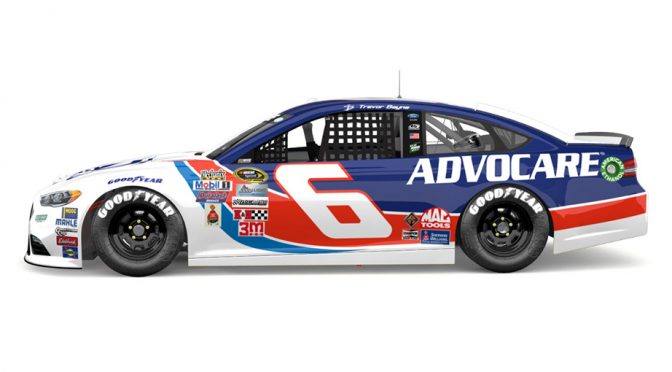
DAYTONA BEACH, Fla. — The Roush Fenway Racing NASCAR Sprint Cup Series teams of drivers Greg Biffle and Trevor Bayne will forfeit their original starting positions for Thursday night’s Can-Am Duel qualifying races due to rear gearing changes made Wednesday.

Both drivers are in the first of the two 60-lap (150 mile) qualifying races, which sets the lineup for Sunday’s 58th running of the Daytona 500 at Daytona International Speedway.

Biffle qualified 20th during Sunday’s Coors Light Pole qualifying and was scheduled to start 11th in Thursday’s first duel. The veteran racer, still searching for his first victory in the season-opening event, was third fastest in Wednesday’s opening practice.


RELATED: Qualifying speeds for Daytona


Bayne, a winner of the Daytona 500 in 2011 while with Wood Brothers Racing, was slated to start 17th in the first of Thursday’s qualifying races. He was second fastest in Wednesday’s opening practice.

Michael McDowell (Circle Sport-Leavine Family Racing) was fastest in the opening session, topping the charts with a fast lap of 200.173 mph.

The first of the two Can-Am Duel qualifying races is scheduled to get underway at 7 p.m. ET (FS1, MRN, SiriusXM NASCAR Radio.)

“Unfortunately we had some issues in qualifying so we changed the rear gear and have to start in the back for the Duels,” Bayne said. “We got it fixed and now the car is running really good. It has a lot of speed and drives really good.

“Hopefully on old tires it will keep that handling because right now it drives great.”

Teammate Ricky Stenhouse was fourth quickest in Wednesday’s opening session.

“This is good. It is good for Ford,” Biffle said. “It looks like the (Team) Penske guys are fast as well. There are a lot of fast cars out there. We are happy with the speed of the car. It feels good.

“It has been eight years since I had a fast car down here. I feel good about it. I don’t know if it is fast enough to win yet, but it is definitely fast enough to run up front and that is what counts.”


WATCH: Roush Fenway season preview


Bayne was the only RFR driver to take part in the final practice, and the driver of the No. 6 Ford turned only four laps (winding up 19th fastest) before calling it a night.

The rookie Brian Scott (Richard Petty Motorsports) was fastest in the final session.

Three drivers, Brian Vickers, Kevin Harvick and Martin Truex Jr. will also start at the rear of their respective qualifying races, the result of issues prior to the start of qualifying on Sunday.

The No. 78 Furniture Row Racing team of Truex failed to make a qualifying attempt after the team was unable to correct an issue with one of the car’s roof flaps in the allotted time. The team is making its debut with Toyota after switching from Chevrolet during the offseason.

Vickers, serving in a relief-driver role for the injured Tony Stewart, and Harvick had their qualifying times disallowed for what officials described as the track bars on the two Stewart-Haas Racing Chevrolets being “out of compliance.”

Harvick’s No. 4 team also had to go to the rear of the field two years ago, this time for the Daytona 500, when the car failed post-race inspection with a track bar issue following the opening Duel race.

A multi-car accident that began when the entry of Ty Dillon put oil down on the track interrupted the final practice Wednesday. Damage to the entries of Michael Waltrip (BK Racing) and Kyle Larson (Chip Ganassi Racing with Felix Sabates) was extensive enough to require those teams to go to back-up cars.

MORE: Wreck in practice could send more cars to the rear for Duels

DAYTONA BEACH, Fla. – Tyler Reddick said he remembers, “looking out my rear-view mirror more than I did my front windshield the whole race it seemed like.”
 
That’ll be the case when you lead the final 33 laps at Daytona International Speedway, the 2.5-mile superspeedway that plays host to NASCAR’s Camping World Truck Series opener Friday.
 
Keeping tabs on those behind him, hoping for the uneventful as the laps wind down.
 
Reddick, 20, earned his first career victory in the series here last season. Now the driver of the No. 29 Brad Keselowski Racing Ford (he drove the team’s No. 19 last season), Reddick will be looking to score a second consecutive victory in the season-opening event, the NextEra Energy Resources 250 (Friday, 7:30 p.m. ET, FS1, MRN, SiriusXM NASCAR Radio).
 
“It was very nerve-wracking because you’re out front and you don’t know what’s going on behind you,” Reddick said Thursday at Daytona. “Fortunately, I had a really good teammate (in) Austin Theriault; he did an outstanding job. We worked together really good all race long. … He went for it and it didn’t work out for him on the last lap.”
 
Theriault will be back as a teammate this season, in a one-race Daytona deal with BKR, while Daniel Hemric also returns and will be in the organization’s No. 19 Ford.
 
Reddick, a native of Corning, California, finished second in points to Erik Jones (Kyle Busch Motorsports) in the NCWTS last season. In addition to his Daytona victory, Reddick also scored a win at Dover International Speedway.
 
The Daytona victory, he said, taught him a lot about racing on the big track.
 
“The biggest thing is you have to qualify (well),” he said. “The qualifying is different. Once again we have to do everything we can on our single-truck run to qualify up front. But also, we have to have clean pit stops. We have to do everything we can to make sure we do not lose positions under caution. It’s really hard to gain them back in the Truck Series … unless you get a really good group of guys going on the outside to get up to the front of the pack.
 
“You have to really control your race, not make any mistakes, be passively aggressive I guess. You can’t just jump out of line; you have to make sure you have someone to go with you if you want to go to the front. Hopefully we’re up front all night long and we don’t have to worry about it.”
 
A new over-the-wall pit crew will service the No. 29 as last year’s group has been promoted to the XFINITY Series where they will pit Team Penske’s No. 22 Ford. “It’s going to be a learning process,” Reddick said. “We’re going to have to grow together as a team.”
 
Reddick’s 2015 victory stopped an eight-race win streak by Toyota teams in the season-opening event. … Former series champion Todd Bodine is the only driver to score multiple wins in the race, winning back-to-back Daytona races in 2008-09. … Friday night’s event is scheduled to take the green flag at 7:52 p.m. ET.

RELATED: See all the winners of the ‘Great American Race’

DAYTONA BEACH, Fla. – When Joey Logano captured the 2015 Daytona 500, he became the 36th driver to win NASCAR’s biggest race.
 
It is the Sprint Cup Series’ signature event, always has been and likely always will be. Win a Daytona 500 trophy and it’s something race fans will talk about for years.
 
Who finished second in last year’s race? Was it Kevin Harvick? Dale Earnhardt Jr.? Tony Stewart or Matt Kenseth? Few folks probably recall. But the winner? Sure.
 
The 58th running of what broadcaster Ken Squier aptly described as the “Great American Race” is Sunday at Daytona International Speedway (1 p.m. ET, FOX, MRN, SiriusXM NASCAR Radio).
 
“It’s cool; it sounds good when they introduce you like that,” Logano, driver of the No. 22 Team Penske Ford, said Tuesday during Media Day activities. “I have enjoyed it. And I am excited to get our car out of the museum and see our car again.”
 
Winning Daytona 500 entries are put on display at DIS for one year. Teams retrieve them prior to the start of the following season. The confetti hasn’t been wiped away, and dents and dings are still there.

RELATED: Oh, the places Daytona’s winning cars go
 
Giving up the car was a minor nuisance, but more than a fair trade for capturing a Daytona 500 title, according to the recipient of last season’s Harley J. Earl Trophy. But what’s done is done and the sport moves forward.
 
“What won last year is not going to win this year, whether it is what you do inside the car or the setup of the car,” said Logano, a 14-time winner in the series. “It’s because the sport is always evolving and getting better. [Winning the 500] is great but it [happened] last year, and we have to keep looking forward.”
 
Drivers are creatures of habit, most sticking to daily routines that have been constructed out of necessity. Some have taken it a bit further, mimicking past actions that led up to particular successes, eating the same meals, traveling the same routes to and from the track, or wearing the same clothing.
 
“I don’t do any of that,” Logano said. “I have tried that stuff before because you will try anything to win a race, but it doesn’t work. It is kind of disgusting if you start wearing the same underwear and stuff like that. It gets nasty pretty quick.”
 
He also said he doesn’t remember what he did before particular wins, including last season’s Daytona 500. “But I wouldn’t do it anyway,” he said. “To me, if I am thinking about a … sandwich and not what I am doing on the race track then I believe I’m doing it the wrong way.”
 
Ryan Newman won the Daytona 500 in 2008 while also driving for Team Penske. The 17-time race winner, now with Richard Childress Racing, said winning the 500 “changes people’s impressions of who you are.”
 
“It’s like having the ultimate hard card (credential) walking around Daytona,” Newman said. “It doesn’t change how I do things, what I do or how I think. But I think it changes people’s impressions of me in a good way, which is what you want.”
 
That his father, Greg, was in the spotter’s stand for his victory, he said, “made it ultra-sweet.”
 
This Sunday, Logano will attempt to become just the 12th driver to win multiple Daytona 500 titles, and join a list that consists of: seven-time winner Richard Petty; four-time winner Cale Yarborough; three-time winners Bobby Allison, Dale Jarrett and Jeff Gordon; two-time winners Bill Elliott, Sterling Marlin, Michael Waltrip, Matt Kenseth, Jimmie Johnson; and Dale Earnhardt Jr.

RELATED: See all the drivers with multiple wins

 
Winning a Daytona 500 doesn’t necessarily make going after a second one any easier or less stressful.
 
“Race car drivers sort of live in the moment,” said Waltrip, who won the Daytona 500 in 2001 and ’03. “That type of thing (multiple wins) … is for later in life. You get to be 40 years old and you haven’t won one yet and you start thinking about winning a Daytona 500. Then it becomes more of a topic in your brain and the fact that you’re going to have to deal with not having one, possibly.
 
“Joey’s more worried about winning another one and the championship. This is just a race he knows he can win and that’s exactly the way he’s approaching it, in my opinion. Sure, he’d love to have another Daytona 500 trophy, but it’s because that’s this (next) race. I’m pretty sure he believes he’s going to have many, many more chances to win this race again.”
 
Logano placed 12th in last Sunday’s single-car qualifying. His official starting position won’t be determined until after Thursday’s Can-Am Duel qualifying races (first duel starts at 7 p.m. ET, FS1). A year ago, he started fifth in the Daytona 500 and finished trailing no one.

RELATED: Full lineups for the Duels
 
“It is such a big race to be a part of,” he said. “Winning it is incredible. It is a hard feeling to explain. … Even a year later, I still can’t put it into words.
 
“I was just screaming on the radio and that is probably still the best way to explain it now.”

(Photo credit: Nigel Kinrade Photography)

WATCH: Danica talks about unwinding with yoga


DAYTONA BEACH, Fla. — In the small Renew Yoga studio, bordered by a hat company and a bustling tavern on Daytona Beach’s famed brick-laden “Beach Street,” Danica Patrick spent an hour Wednesday sharing a yoga class with a group of reporters.


It was a beautifully sunny morning with a light breeze easing in from the neighboring Intracoastal Waterway. Along the yoga studio’s front sidewalk, the “locals” sat at tables outside a coffeehouse and small café having a morning coffee and in one case, indulging in an early glass of wine.


The yoga studio was low key and serene, as you’d expect. So was Patrick.


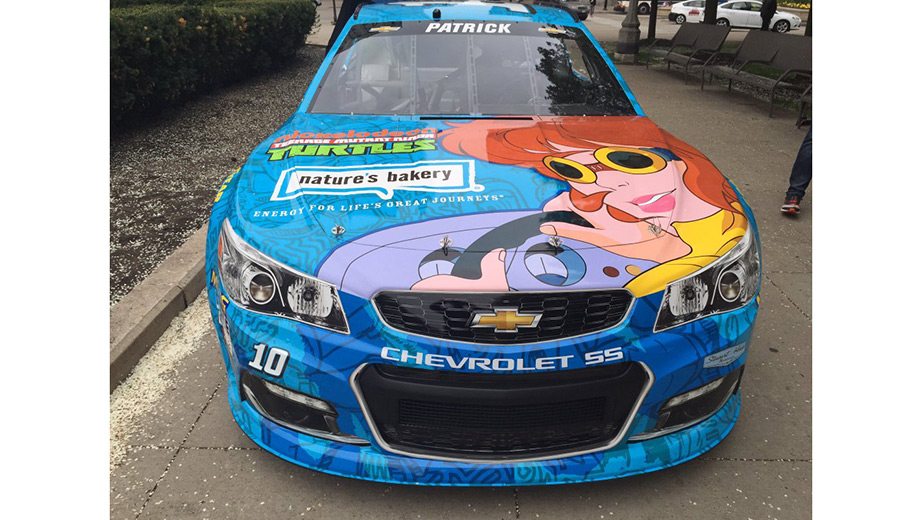
This was a time to re-introduce her new sponsor, Nature’s Bakery, to the small gathering of reporters, and Patrick looked fully and truly in her element.


Nature’s Bakery products — from gluten-free pomegranate fig bars to cholesterol-free and kosher double chocolate brownies — were on tables for post-yoga re-energizing.


Patrick, her hair in a ponytail, sat up front in the class and was clearly the expert among the media’s well-intentioned but mostly “good sport” participants.


RELATED: Patrick, the Instagram yoga pro


There were “Downward Facing Dog” and “Pigeon” poses, requests for arm balances and one-leg stands. We tried, but few were able to emulate the poses the way Patrick expertly did.


I’ve covered the sport for two and a half decades and it was the first time I ended a driver availability peacefully sitting cross-legged and saying, “Namaste.”


And it felt good.


That’s exactly the vibe Nature’s Bakery is hoping for in partnering with Patrick.


It’s an era away from many of the sport’s earliest and long-standing corporate sponsors — the beers, motor oils and car batteries.


It’s natural NASCAR evolution.


“I think it’s important to bring a brand that has an active and healthy lifestyle into the NASCAR family,” Nature’s Bakery founder Dave Marson said. “And with a younger generation, the education on nutrition and health and being active they are learning at a younger age. That’s the next generation of NASCAR fans for years. So we welcome the old fans and the new ones coming into NASCAR.”


RELATED: Nature’s Bakery signs on as Patrick’s sponsor


And it sure felt like a good fit here. This has been a long-time lifestyle for Patrick, who is eager to share the health benefits of staying active and eating right with NASCAR fans.


Patrick has been doing yoga regularly since her days as a teenager racing in England. And she says her boyfriend, fellow Sprint Cup driver Ricky Stenhouse Jr., and her team owner, Tony Stewart, have been supporters of the sport, if not devoted followers quite yet. But there is hope.


“He (Stenhouse) came into my ‘wo-man cave’ a couple months ago and did some stretching, it took about five minutes before he said, ‘OK, I’m done. I’m bored,’ Patrick said smiling. “Baby steps.”


She says her boss, the ultimate old-school racer Stewart, who is recovering from a L1 vertebra fracture in his back, has also recently given yoga a try. Although he is at home in North Carolina recovering from his recent injury and will not race in Sunday’s Daytona 500 (1 p.m. ET, FOX, MRN, SiriusXM NASCAR Radio) Patrick said Stewart has been very communicative.


“Honestly, I feel like he’s in good spirits,” she said. “I heard from him before the Sprint Unlimited (last Saturday night) and asked him how he’s doing.


“He’s in a great mood. I don’t know, maybe some of those endorphins.”


While she wasn’t sure if he would have joined us for Wednesday’s session, Patrick was impressed by some of her boss’s activity during the offseason.


“He had done some yoga and Pilates and that’s good for him,” she said. “He was really on a great track (before he got hurt). I’d imagine if he has a great recovery and keeps his attitude up and stays positive with it all, it probably stems from him getting healthier before it all happened. I hope he comes back 100 percent and as positive as possible.”


The opportunity to combine two of Patrick’s passions — yoga and healthy eating — clearly put the sports star in a good place. And welcoming a new and different sponsor to the sport puts NASCAR in a good place.


After the “regular” class concluded, Patrick purposely took the time to speak with everyone and share the good vibes her sport and sponsor give her. Then, with her new sponsor chairmen looking on, she went back inside the studio for another workout.


The Nature’s Bakery health bars promise “Energy for Life’s Great Journeys” and it has definitely been that for Patrick.


“When you’re in yoga class it’s more of a Zen presence but when you’re in a race car, you just get into the zone,” Patrick explained. “It’s more of a sports thing. When you just zone out, it’s almost like ‘out of body,’ It’s all fluid and easy. That happens in a race car a lot. The more you can make it happen, the better. The more you are able to focus, to breath right and to tune things out is part of the practice.


“We’ve always got so much going on, and we’re pulled in so many directions.


“The more clear your mind is, the better things are around you.”


They were good on Wednesday, for sure.


Namaste.