RELATED: Full coverage of Stewart’s accident | Driver tracker: Full lineup for ’16

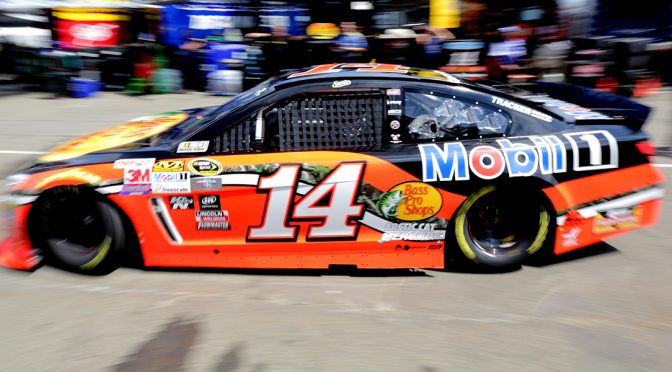
DAYTONA BEACH, Fla. — Brian Vickers was officially introduced as Tony Stewart‘s interim replacement Friday morning at Daytona International Speedway, taking the reins of the Stewart-Haas Racing No. 14 Chevrolet for the next 10 days of NASCAR’s season-opening Speedweeks.

It’s a chance to return that he wasn’t sure he’d ever get. Now that he has it, the 32-year-old driver is determined to make it special.


“If you’d asked me six months ago what my racing career looked like, I had no idea,” said Vickers, who last raced in NASCAR’s top division last March. “What I wasn’t going to do was get in something that I didn’t feel like when I walked in the gate that I could win in. What I did tell myself I was going to do was I was going to race again one day. It may not have been here, it may not have been Daytona, may not have been in the Sprint Cup Series, but something. I love racing.”

Vickers has been sidelined from the sport because of a recurrence of the blood clots that have forced him to abbreviate three seasons since 2010. He said he worked with his physicians on a plan to return to the cockpit, getting the necessary clearance to compete again. Thursday, NASCAR Executive Vice President and Chief Racing Development Officer Steve O’Donnell told SiriusXM that Vickers had been granted medical clearance from the sanctioning body.

Before sealing the deal, Vickers spent time with Stewart, who is out indefinitely with a broken back suffered in an all-terrain vehicle accident Jan. 31. Stewart, who broke his social media silence with an impromptu Periscope session Friday morning, gave his fill-in a vote of confidence while walking on a treadmill as part of his rehabilitation in his North Carolina home.


RELATED: Stewart breaks his silence


“I’m real confident with Brian in it,” Stewart said. “It’s pretty cool to see how excited he is about being in a car. He definitely deserves it. … It’s nice to take something negative on my side and make something positive about it.”

The agreement, which for now extends only through the Feb. 21 Daytona 500, is designed to bolster a team in flux with a new crew chief in Mike Bugarewicz and with Stewart still hoping to return for the balance of his final Sprint Cup season.

“Obviously when you’re in this situation, you look at who’s the best candidate, who has experience,” said Greg Zipadelli, Stewart-Haas Racing‘s competition director. “You look at his record at restrictor-plate races and we looked at everybody who was available and we talked to Tony and he felt like Brian would fit our group the best.”

Vickers has three victories in NASCAR’s premier series, including his breakthrough win at Talladega Superspeedway in 2006, his third full season. But since 2010, when his medical ailment was first diagnosed, Vickers has fewer full 36-race seasons than partial ones.

Vickers completed his most recent full campaign in 2014, but made just two starts last season.

“The last five, six years of my life have been a roller coaster to say the least,” Vickers said. “As race car drivers, we’re obviously willing to take a certain level of risk, but what I’m not willing to do is take undue risk, and I’m not now. That’s the reason my doctors approved me to come back racing with the plan that we’ve developed. I can’t wait to get back in the race car.

“For me, it’s one day at a time. I’ve learned so many times that you can only plan so far ahead. You just live life to the fullest, you enjoy it, you make reasonable decisions. Everyone’s tolerance is different, but I love what I do. I love this, I’m going to love what’s next, whatever that may be. Right now, I’m just focused on enjoying the Daytona 500.”

Vickers said he had been looking for the right opportunity to return to NASCAR in a competitive car, though he loathed the circumstances with Stewart’s injury. But throughout Vickers’ reintroduction Friday, the common theme to his comeback was gratitude — to his family, to Stewart-Haas Racing and to Stewart himself for another opportunity.

It’s something that will likely help Vickers savor the moment as he straps in again for the Great American Race.

“I think a lot of guys get in these cars and they’re so caught up in the moment, the future and everything else, they don’t stop to think that it may be their last time, just to kind of really enjoy it. I can assure you when the green drops next Sunday, I’m going to enjoy it as much as anyone on that race track. If I’ve got another five or 10 Daytona 500s in me, then great, and if it’s the last one, that’s fine, too.

“I’m very fortunate. I have gone through a lot, but I’ve learned so much through all those experiences as a person and grown. I couldn’t be happier in my life.”


BRUCE: Cruel twist to Stewart’s swan song
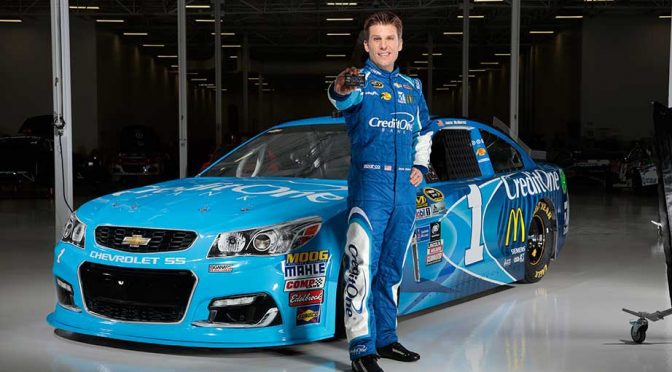
DAYTONA BEACH, Fla. (February 12, 2016) – One of the largest and fastest growing credit card issuers in the United States, Credit One Bank has entered into a multi-year partnership with NASCAR to include official agreements with both the sanctioning body and one of the most successful teams in auto-racing, Chip Ganassi Racing. The collaborations designate Credit One Bank as the “Official Credit Card of NASCAR,” in addition to being a partner of Chip Ganassi Racing


As part of the agreement with NASCAR, Credit One Bank will offer fans officially licensed NASCAR-themed credit cards. Credit One Bank will also be the primary sponsor of the No. 1 Chevrolet, piloted by “2015 Chase for the NASCAR Sprint Cup” contender Jamie McMurray for three races, as well as an associate partner throughout the 2016 NASCAR Sprint Cup Series (NSCS) campaign. The No. 1 Credit One Bank Chevy SS will debut on the track at Richmond International Raceway (RIR) on April 24.


“Our partnerships with both NASCAR and Chip Ganassi Racing will introduce the benefits of Credit One Bank card membership to a new audience of consumers,” said Laura Faulkner, vice president of marketing communications, Credit One Bank. “With the Official Credit Card of NASCAR, fans can further their love of racing with a rewards program that complements that same passion. We also look forward to supporting Jamie McMurray in the 2016 NASCAR Sprint Cup Series.”


Credit One Bank offers full spectrum credit card products, and is among the top 10 largest Visa credit card issuers in the United States. Credit One Bank will offer cash back rewards, exclusive experiences, discounts, and special offers to their NASCAR Visa® card members. The inaugural card design will feature NASCAR official marks and exciting race imagery, with additional designs to be released throughout the season. Fans can apply for the official NASCAR credit card by visiting www.CreditOneBank.com/NASCAR.


“We could not be happier with Credit One Bank’s fully integrated campaign to introduce its brand to our industry, stakeholders, and most importantly, our fans,” said Steve Phelps, NASCAR executive vice president and chief marketing officer. “As our entire industry gears up for Daytona 500 weekend, this new agreement signals that NASCAR is still one of the most effective marketing spends in all of sports.”


Credit One Bank will utilize 2010 Daytona 500 champion McMurray as a spokesperson to promote its brand and the Official Credit Card of NASCAR. The 2016 NASCAR Sprint Cup Series (NSCS) season will be McMurray’s 14th full-time year in NASCAR’s premier division. McMurray has seven career NSCS wins and 11 pole awards. McMurray is one of only three drivers to have won the Daytona 500 and the Brickyard 400 in a single season (2010).


“This announcement is really exciting news for our team, but it is also a testament to our sport when a company like Credit One Bank recognizes the power of brands like NASCAR and Chip Ganassi Racing. It is always nice to see new brands come to the sport and make a commitment like Credit One Bank has with this news,” said Steve Lauletta, president, Chip Ganassi Racing Teams. “We are excited to have Credit One Bank onboard the No. 1 Chevrolet with Jamie McMurray and look forward to working with them to introduce their products and services to NASCAR fans everywhere.”


The Credit One Bank NASCAR marketing campaign will also include national television advertising, network and satellite radio advertising, sweepstakes and promotions, at-track marketing, unique retail partnerships and card member experiences for NASCAR fans.

RELATED: 2016 preseason power rankings


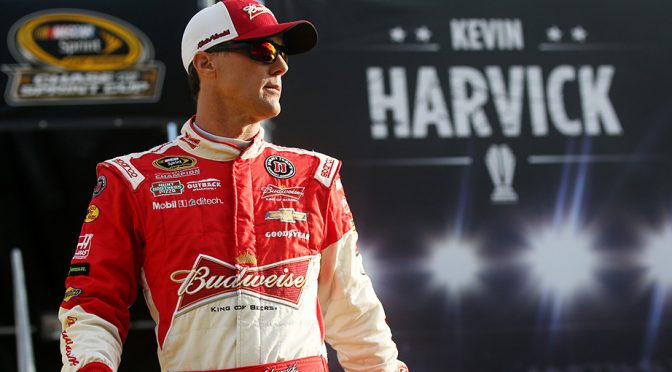
Kevin Harvick led 22 percent of all laps run in 2015, a total of 2,294 laps out 10,425 for the entire Sprint Cup Series season. The 2014 Sprint Cup Series champ was the only driver to top 2,000 laps led, yet he still finished the season second to a driver who missed 11 races due to an injury. 

The Stewart-Haas Racing driver knows that consistency — even consistent excellence — wasn’t going to score him a second title.


It’s all about Homestead.

“(2015) was probably the best year I had personally in my career,” Harvick said during the Charlotte Media Tour. “I think last year was probably better statistically than 2014 was in a lot of ways. … I think with this new format, for us, we just missed it a little bit at Homestead. The 18 car hit it, and we beat the other two cars. So that seems to be the new norm, you’re going to have to go down there with a car capable of winning the race.

With two years of the new Chase for the NASCAR Sprint Cup Series format under his belt — one ending as champion — Harvick has come to understand that perfection at Homestead is what truly matters once you’ve jumped through the hoops and accomplished what it takes to be a member of the Championship 4. 

“I think this is a very, very intense format,” Harvick said. “… You better be on your game and have a car that’s capable of winning that race because the last two years, you’ve had to win that race. But to get in the Chase, you’ve had to have had a pretty good 26 weeks. If you lucked up and won a race, usually it shows up in the first round.”

WATCH: Harvick talks about expectations for 2016

Rodney Childers, Harvick’s crew chief, has built a strategy for the No. 4 team that has proven strong for them. With three wins, 23 top-five and 28 top-10 finishes in 2015, Harvick and his team know what success looks like in NASCAR’s elite series.

“The strategy is still the same, ” Harvick said. “Rodney (Childers) instills that into our brain when we first started, and that’s to go out, try to win practice, try to sit on the pole and lead laps and win the race.”

It seems simple. But even with the accomplishments the No. 4 team has experienced, Childers still looks back on that one weekend in Homestead in 2015 when things might have been different.

“We just have to go and do the best job we can,” Childers said. “That particular weekend in Homestead we didn’t do a good job. We didn’t have a good car in the race. We didn’t make the right adjustments before the race. It’s disappointing for sure to finish second, but on the other hand, we’re pretty lucky to do what we do and run as well as we do with the group of people that we have.”


MORE: SHR zeroes in on digital dash

RELATED: Complete schedule for Daytona Speedweeks

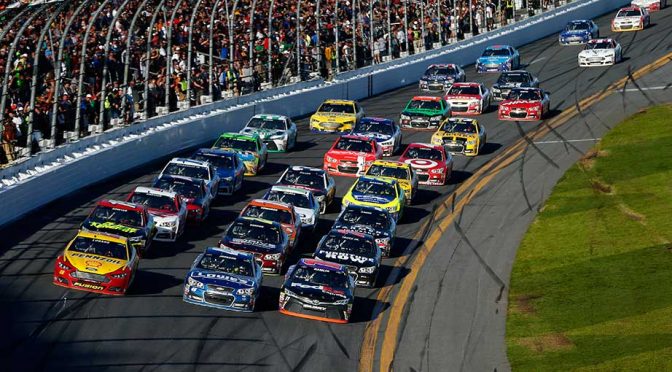
Changes to the points structure and the qualifying process for the Daytona 500, plus the addition of an “overtime line” will greet NASCAR Sprint Cup Series teams when the 2016 season kicks off this weekend at Daytona International Speedway.

The changes were announced by the sanctioning body Thursday and two — the points structure revision and qualifying format — were adopted as a result of NASCAR’s Charter system that was announced earlier this week.

Because Sprint Cup race fields going forward will consist of a maximum of 40 cars (36 Charter team cars and four Open team cars), the race winner will be awarded 40 points instead of the 43 that had been previously awarded. Second place will receive 39 points, third 38, etc., with 40th place receiving one point.

The total does not include bonus points awarded to the winner, or those awarded for leading the most laps or leading a single lap.

Likewise, the race points structure in the XFINITY and Camping World Truck series have also been re-configured based on a 40-car field for the XFINITY Series and a 32-truck field for the NCWTS. Last season, drivers in all three series earned 43 points, excluding bonus points, for finishing in first place regardless of the size of the field.

For the Daytona 500 , which is scheduled for Feb. 21 at 1 p.m. ET, the 36 Charter teams will be assigned a starting position based on either their qualifying effort or their result in one of the two Can-Am Duel races.

The remaining four positions will be awarded to Open teams attempting to qualify for the event.

RELATED: Fast facts for changes | ‘Overtime line’ tweaked for G-W-C procedure

The highest-finishing Open team in each Can-Am race will earn a starting spot in the 500. The two remaining Open positions will be determined based on Coors light Pole qualifying, if a team is not already a top finisher in one of the Duels.

As in the past, only the top two starting spots for the Daytona 500 are determined via qualifying. The starting lineup for the Can-Am Duel races will be based on qualifying results with the number of Charter and Open teams divided equally among the two fields.

If qualifying is canceled due to weather, the top two finishing Open teams in each Can-Am Duel will be awarded starting spots in the Daytona 500.

If both Duels are canceled due to weather, officials will use qualifying results to determine the four Open teams that would advance.

Should only the second Can-Am Duel be canceled due to weather, the highest finishing Open team from the first Duel would earn a starting berth, with the remaining three positions determined based on qualifying results.

Also, if no qualifying or Can-Am events are held, combined practice speeds will determine the lineup and the four Open teams; if there is no on-track activity whatsoever, 2015 owner points will be used to determine the Open teams making the 40-car field.

The final procedural change, which impacts NASCAR’s green-white-checkered rule, dictates that a race may go beyond its scheduled distance only once if the race leader has advanced beyond an “overtime line.”

In that instance, it will be considered a clean restart and any caution coming after that point would effectively conclude the event. Cars would proceed to the start/finish line under caution and be scored accordingly.

The location of the line will vary by track, according to officials.

After taking the green flag, if a caution flag appears before the leader has reached the overtime line, the restart will be waved off and another attempt will be made. If necessary, multiple attempts will be made until a clean restart is achieved.

The overtime line will be in effect for all three national series.

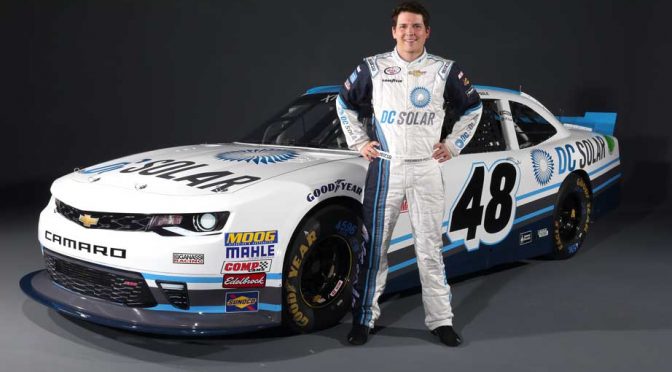
Brennan Poole will compete full-time in the NASCAR XFINITY Series for Chip Ganassi Racing this season, an opportunity that the Woodlands, Texas, native called “a dream come true.”


“It’s emotional; you really can’t put it into words,” the 24-year-old told NASCAR.com. “To run for a championship at the NASCAR level is something I’ve wanted to do for as long as I can remember.”


CGR will field two XFINITY Series entries this year, the No. 48 Chevrolet for Poole with funding from DC Solar, and the No. 42 that will feature Sprint Cup driver Kyle Larson for 17 races. A second driver has yet to be named for the No. 42 for the remaining 16 races.


Former Roush Fenway Racing crew chief Chad Norris, paired with drivers Darrell Wallace Jr. (20 races) and Ryan Reed (13) last season, will serve as crew chief.


“I’m confident that in our renewed partnership with Chip Ganassi, 2016 is going to be a winning season, and that DC Solar will continue to successfully engage and educate the NASCAR audience on solar energy and the DC Solar brand,” Jeff Carpoff, president and CEO of DC Solar, said. “We couldn’t be more excited to return to the track with Brennan and competing for a championship.”


Poole ran a limited schedule in ’15, splitting seat time with Larson in the No. 42 entry when the organization ran under the HScott Motorsports with Chip Ganassi Racing banner. In 17 starts, he finished in the top 15 on 10 occasions with a best result of ninth at Las Vegas Motor Speedway. The Las Vegas start was his very first in the series.


Much of the previous two seasons was spent as a spotter and working with Dartfish, a video software analysis program, “and just trying to get in a car whenever I could,” Poole said.


In spite of the limited seat time, Poole said he felt the team had “some great runs” last year. “Obviously we still want to improve on them and be better,” he said.


“I feel like we’ve shown at times we’ve been capable of really having not just a good weekend but a great weekend. As long as we continue to build on that and keep moving in the right direction, I’m really excited about what we can do.”


Poole, who has one career start in the NASCAR Camping World Truck Series, is a six-time winner in the ARCA Series.


The full-time opportunity with Ganassi, which fields Sprint Cup entries for Larson and Jamie McMurray, is the latest step in what he hopes will be a long career behind the wheel.


“I can’t put into words what it means to be part of such a great team,” Poole said. “There are only so many owners in the garage and I’m with one of the best. To have someone like that believe in you, it’s crazy.”

RELATED: Move to Toyota eased by JGR alliance


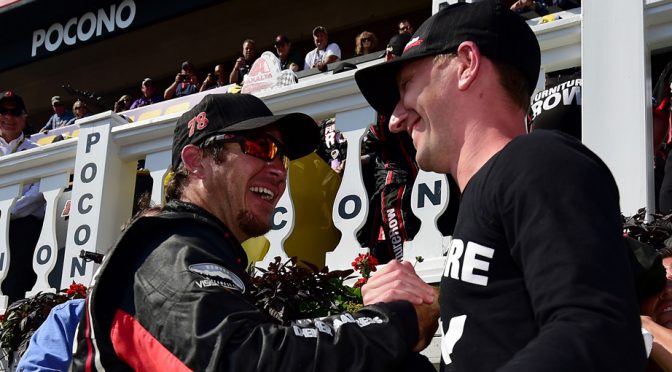
The 2015 season was a Cinderella story for Martin Truex Jr.

Like any picture-perfect fairy tale, Truex arose from the shadows with surprising power, earning an impressive 22 top-10s and leading 567 laps — the seventh-most in the NASCAR Sprint Cup Series — and advancing to the Championship 4 in the finale at Homestead-Miami Speedway.

But he didn’t do it alone — after all, even Cinderella had help in earning her happily-ever-after ending.

Enter Cole Pearn, the driving force behind the Furniture Row Racing machine. His Fairy Godfather, if you will. The mild-mannered crew chief seemed to jell with Truex right away in 2015, their freshman year together.

“We could be brothers, I think,” Truex said of Pearn at Charlotte Media Tour. “Real similar personality-wise … Grew up watching our dads race, going to the race track.”

Their on-track chemistry yielded the results Furniture Row was searching for last season. And this season, they’ll add two more ingredients to the dynamic mix: A manufacturer change from Chevrolet to Toyota and a technical alliance with powerhouse Joe Gibbs Racing.

“It’s been a pretty unbelievable offseason at this point,” Pearn said. “Coming off last year just feels like a lifetime ago … But as busy as it’s been, it’s definitely been equally as exciting. I can’t think of one thing where, or one area of our team that we’re getting worse in and we’re not improving.”


RELATED: Truex could get even better

The multiple changes have Pearn and Co. working diligently to prep for the season-opening Daytona 500 (Feb. 21, 1 p.m. ET, FOX).  With so many moving parts, the biggest challenge heading into the “Great American Race” for Pearn is “getting there,” he said with a laugh.

As the days until the Daytona 500 dwindle down, Pearn acknowledges the partnerships with Joe Gibbs Racing and Toyota that have made the transition smooth. He calls Toyota’s support “unbelieveable” and says the JGR relationship is “very open and very hands-on-deck.”

But JGR is also providing one, lesser-known force to the Denver, Colorado-based team: Pit crew members. For a team that struggled on pit road in 2015, the addition of consistently fast JGR pit crew members is the finishing touch to their newly furbished program.

“Their whole approach on the pit crew side is just unbelievable,” Pearn said. “Staggering to see the commitment they’ve put into it. So, to be a part of that is a huge step for us, Furniture Row as a company — that’s always been kind of one of our Achilles’ heel and to be partnered with arguably one of the best pit crews on pit road is really exciting.”


As Furniture Row continues to deepen its alliance in 2016 with Joe Gibbs Racing — which has talented young stars like Erik Jones and Daniel Suarez waiting in the wings — a lingering question arises: Will the one-man show expand to a second car?

Maybe one day.

“It’s something that we want to work on, to get ourselves — Furniture Row — in a position to do that,” FRR General Manager Joe Garone said at media tour.  ” … Some of that comes with sponsorship, getting the 78 to a certain level of funding, and then being able to go ahead and start a second team.

“Of course, if you look at the landscape, it only makes sense — if there’s room at Furniture Row, then we would be interested in doing that. So, I think there is a scenario there that could lead us to a second car with a Joe Gibbs driver.”

With all the boxes being checked and momentum continuing to build for the team, fans of the No. 78 likely will look for a Cinderella-like sequel in 2016 for the Truex-Pearn duo. Considering all the factors heading into the season, it certainly seems doable.

“Some days you get the panic attack setting in, like ‘How are we going to pull this all together?’ ” Pearn said. “But at the same time, you look back at where we are and where we’re going and you just can’t help feel excited about the future.”

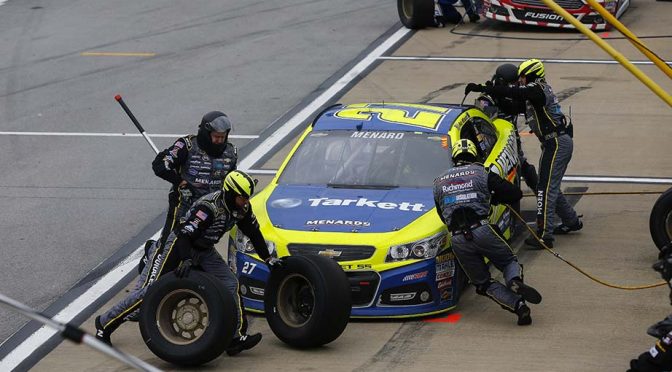
Richard Childress Racing first-year pit coach Ray Wright is taking offseason steps to boost the pit crews for Austin Dillon and Paul Menard for the 2016 season with the addition of two new members for Dillon’s No. 3 crew, and three new faces for Menard’s No. 27 crew.


No. 31 Ryan Newman‘s pit crew remains the same.


Front carrier Alan Steel and jackman Brian Chase, who worked together at Michael Waltrip Racing‘s No. 15 Clint Bowyer team last season, will join Dillon’s team this season. They join four returning crew men for the No. 3 crew: front changer Jason Pulver, rear changer Brian Bottlemy, rear carrier Josh Shiplett, and gasman Tyler Rader.


For Menard, Will Goodnow takes over the jackman position while Anthony O’Brian and Adam Mestemacher will handle changing and carrying tires on the rear, respectively. The rear carrier position opened when longtime carrier Wright took over the RCR coaching position. Crew members returning include Jeff Cordero and Matt Donley, changing and carrying front tires, with gasman Matt Krueter anchoring the back.  


For more pit crew news, visit PitTalks.com.


RELATED: See photos of the Road to Daytona


TAMPA, Fla. — Two-time Daytona 500 champion Matt Kenseth drew a captive audience while visiting the University of South Florida campus in Tampa on Thursday as part of the Road to Daytona tour.


He was accompanied by Daytona International Speedway President Joie Chitwood — a USF graduate — and the pair were popular visitors to the highly touted Sports & Entertainment Management Program. During a question-and-answer time, they won over graduate students with their humor and insight with Kenseth joking he needs to be more active on social media.


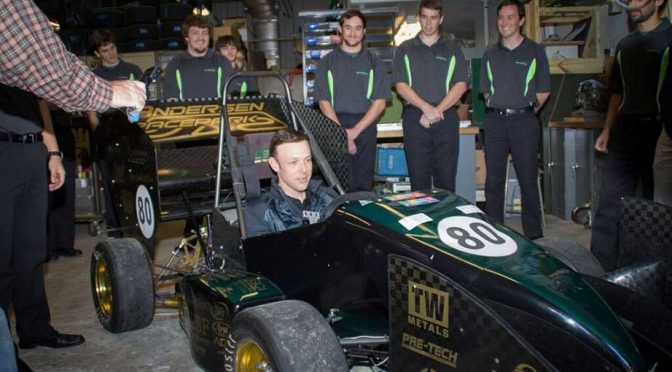
The two were equally well-received later by the Mechanical Engineering department, where Kenseth, driver of the Joe Gibbs Racing No. 20 Dollar General Toyota, seemed as interested in the students’ work as they were in meeting a NASCAR champion. Kenseth even sat in the race car built by the successful USF Racing Team.


And Chitwood surprised the group of engineering students by giving them tickets to the NASCAR XFINITY Series race next Saturday in Daytona Beach.


“I started going over to Daytona as a little boy when I was 8 or 9 years old,” engineering student Michael Kennedy said. “I got into NASCAR big time when my dad and all his friends were big Dale Earnhardt Sr. fans and I didn’t want to root for the same driver so that’s when Jeff Gordon was coming up and I started rooting for him. I attached to him. He’s retired and now I didn’t have a driver to root for, but Matt’s really selling his game.”


It’s Daytona 500 time and in just a few days it will be all business for Kenseth as he heads to the $400 million “reimagined” iconic Daytona International Speedway for Saturday’s Sprint Unlimited and ultimately, the Feb. 21 Daytona 500.


The sport has been abuzz this week with new rules, a ground-breaking Charter system and high-profile substitute drivers. But on Thursday, Kenseth seemed to enjoy a much lower profile sharing insight and winning over fans everywhere he went.


Explained that the USF Racing Team competitions include a 300-page rule book, Kenseth smiled and asked, “Do you read that whole thing?”


Kenseth’s time signing autographs for the students and sharing his love of the sport was sincere. And well-received.


“Talking to the kids isn’t the most comfortable I’d ever be, but it was good,” Kenseth joked of his time taking questions from the graduate students. “Then walking in here (USF Race Team shop) is neat and seeing all the stuff they built.”


Kenseth seemed to have as many questions for the students as they had for him. But he was kind and funny and put everyone at ease. 


“We are really big on bringing in industry people to share with our students, but as many speakers as we’ve had in during the last three-and-a-half years, this was the first time we’ve had a very recognizable, world-class professional athlete to share his thoughts about sports marketing,” said Dr. Mike Mondello, USF’s Associate Director of the Sports and Entertainment Management Program. “I think it worked out well to hear different perspectives, for the students and for Matt and Joie.”


In addition to big breaking news from NASCAR this week — including the announcement Thursday afternoon of Daytona 500 qualifying procedures, green-white-checkered flag formats and a new points system — Kenseth spoke about one of his more pressing issues: having a different spotter at Daytona.


Lorin Ranier will guide Kenseth in this weekend’s Sprint Unlimited and most likely next week in the Daytona 500 as Kenseth’s regular and longtime spotter Chris Osborne continues to heal from serious injuries he suffered in a December traffic accident near Charlotte. Doctors still have not cleared him to spot for the 500.


“Actually we got fortunate having Lorin be available,” Kenseth said. “Lorin actually spotted my first Cup race ever, believe it or not, and he’s spotted for me a lot of times over the years in the XFINITY Series. I’m real comfortable with Lorin and think he’ll do a good job.


“Of course it’s not the same as having your regular spotter, though. We just want ‘Crazy’ (Osborne) to get better and when he comes back, to be 100 percent healthy and be ready for the grind. I know he’s trying real hard.”


Kenseth said working with a different spotter at Daytona would more typically be worrisome, but that’s where having had previous experience with Rainier will make the difference.


“Especially on superspeedways, the driver-spotter thing is probably more important than people realize,” Kenseth said. “We talked about that last week. If you make a wrong move because you didn’t see something or didn’t hear something and the car is torn up it doesn’t matter how hard you worked in the shop to prepare it or how fast your pit stops were.


“Certainly at plate races when the game is a matter of inches, not feet, it’s extremely, extremely important to be on the same page as your spotter. I wish ‘Crazy’ could do it, but I feel very fortunate Lorin was available. He does a nice job particularly at the speedways where he’s had success. I know him well enough and I’m comfortable with him.”


As for NASCAR’s new Charter system, formally unveiled this week, Kenseth was equally as effusive and encouraged.


“I only know a little bit about it from the owners perspective,” Kenseth said. “The owners getting together and having a voice I think is a good thing, a good start. I didn’t know where it was going to end up, but it seems like the owners are satisfied they got it done. What’s good for the owners is good for the drivers.”


Kenseth said he was flying back to Charlotte later Thursday for one last night at home before his trip to Daytona for the highly anticipated Speedweeks.


“It usually hits me when I come down and throw my bag in the motorhome, and think, ‘I’m here,’ ” Kenseth said smiling. “But when you walk into the garage area that first morning you still get that feeling you did the first time you walked in there.”

FAST FACTS: 2016 procedural changes | New Charter system


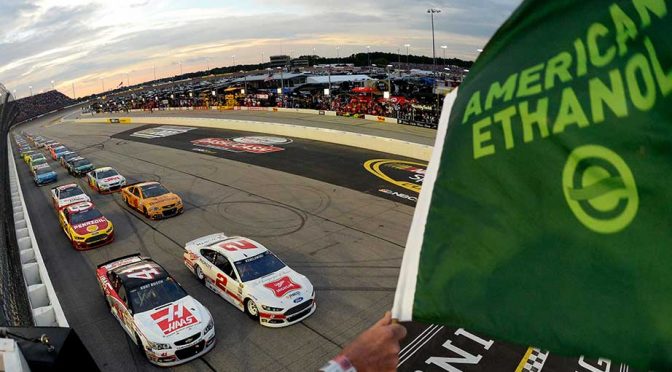
Among the competition changes NASCAR announced Thursday afternoon is a tweaked green-white-checkered flag system for all three national series.


Each track will feature an “overtime line” for the 2016 season, the location of which will vary by facility.


After taking the green flag on an overtime restart, the leader must pass the overtime line before a potential caution flag were to come out for the attempt to be considered a clean restart. If there is a clean restart, it will be a valid green-white-checkered attempt.


If the caution flag comes before the leader passes the overtime line on the first lap under green, it is not considered a valid attempt. A subsequent attempt at a green-white-checkered restart would then occur; if necessary, multiple attempts will be made until there is a clean restart.

Once a valid attempt (clean restart) happens, it is the only attempt at a green-white-checkered finish. If a caution flag occurs during a valid green-white-checkered attempt, that marks the end of the race. Vehicles would be scored as they cross the start/finish line under caution.


Previously, there was a maximum of three attempts at a green-white-checkered finish. NASCAR also reduced the number of G-W-C attempts at Talladega last year for the October race to one in an effort to balance an exciting finish with safety for all competitors.