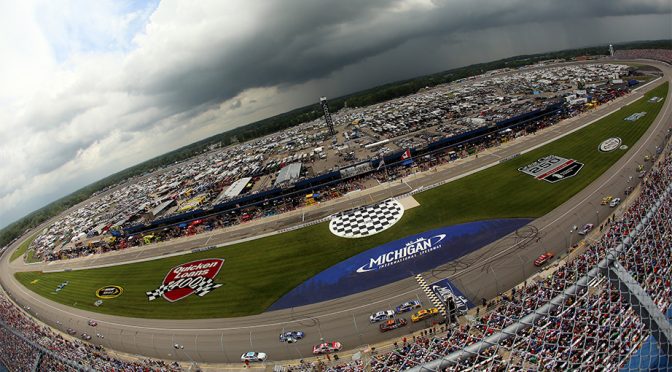
The last time NASCAR competition officials came to Michigan International Speedway with new aerodynamics rules for the Sprint Cup Series, it was all about the drag. The package dialed up the wick on downforce, highlighted by a noticeably larger rear spoiler.


The rules and the racing it produced were widely panned as a drag in general, but not by everyone.


“We did away with that one — unfortunately,” Jason Ratcliff, crew chief for Matt Kenseth and the Joe Gibbs Racing No. 20 Toyota, said with a laugh. Kenseth led 146 of 200 laps at the 2-mile track last August to win from the pole. “I’d like to show back up with that one this time.”


Since last year’s experimentation with various aero trims, the pendulum has swung the other way — far the other way. This weekend, the series will take the next step in downforce reduction with several tweaks for Sunday’s FireKeepers Casino 400 (1 p.m. ET, FS1, MRN, SiriusXM) in the Irish Hills region.


The byproduct of the tinkering was a 2016 rules package that eliminated roughly 900 pounds of downforce from the previous year’s 2,700-pound benchmark, helping promote side-by-side racing while reducing the aerodynamic benefits of running in clean, undisturbed air. Late last month, NASCAR announced that two 400-mile races — Sunday at Michigan and July 9 at Kentucky Speedway — will be run under a rules package that further chops away at downforce and sideforce stabilization, placing an emphasis on handling, plus driver skill and input.


Among the changes:


— A smaller rear spoiler, reduced both in height (down 1 inch to 2.5 inches tall) and width (down from 61 to 53 inches).


— The elimination of cooling fans and rear-axle offset or “skew,” two tweaks that were first used in the NASCAR Sprint All-Star Race last month. Cooling fans were dropped for the remainder of the season; elimination of skew is planned only for Michigan and Kentucky.


— A smaller, tapered fin on the rear deck lid.


— A smaller front splitter on the sides, trimmed from 5 to 2 inches wide.


Four teams tested the new configuration during a Goodyear tire test at Michigan on May 17, a session abbreviated by rain. Though the No. 20 camp wasn’t among those participating, Ratcliff said the observations shared in the garage by other teams were encouraging.


“Seems like the straightaway speeds, entry speeds, I don’t know that they’re up, but they’re pretty fast,” Ratcliff said. “And then the mid-corner speeds are down, which last year when we tested there, we went through a similar aero package, one that really separated the entry to mid-corner speeds — or the delta — and was much different than what we see with the current aero package.”


The variation in corner speeds is designed to promote passing, allowing for “comers and goers” through the field.


“I think you don’t really know until you get 40 cars on the track, but I think directionally, it’s going to be good,” Ratcliff said. “As far as for us, for the 20 team, we just have to do our best to be prepared for whatever it’s going to be. Until you get on the track with it, it’s hard to say what we’re going to have. But I think the racing itself, it’s a promising direction to go.”


Michigan has become a laboratory for aero experiments over the last two years. NASCAR competition officials tried six configurations there in August 2014 in a 10-team test to determine the 2015 rules package. After giving the high-drag set-up an unpopular whirl during last August’s 400-miler, NASCAR returned in October for a confirmation test of the 2016 rules.


Those rules have spawned much-improved racing on the intermediate-sized tracks that dominate the Sprint Cup schedule. After making further aero strides last month with rules trials in Michigan testing and the All-Star Race, Sunday’s event is the next phase in the process.


An organizational test with the further-reduced-downforce package is scheduled June 13-14 at repaved and reconfigured Kentucky Speedway, ahead of the July 9 stop on the Sprint Cup schedule. While those events will help to lock in the 2017 rules package, Michigan’s 400 will be the package’s first audition with points on the line.


“That should be really interesting,” said Brad Keselowski, a Michigan native still seeking his first Sprint Cup victory in his home state. “I heard the top speeds were really, really fast but the corner speeds were down which I think should provide a really good platform for side-by-side racing and opening opportunities to pass. It is a huge variable for our teams that they will all work through. I think it has a tremendous potential to be the future direction for our sport. That is really interesting and exciting to me personally.


“As far as how it is going to play out, you don’t know. It is really unknown. That always seems to make for our best racing when we don’t know what will happen.”


One thing that won’t happen: a repeat of last August, with teams employing the air-grabbing, 9-inch-tall rear spoilers that gave the high-drag package its signature look. The facets of that setup failed to achieve slingshot passes as hoped, but instead limited passing and produced the unintended consequence of searing cockpit heat.


Ten months later and with spoilers a whopping 6 1/2 inches shorter than last time at Michigan, it’s yet another wrinkle that keeps crew chiefs hopping.


“That can be challenging and frustrating at times, but it’s kind of like going to speedway races occasionally or doing a road-course event,” Ratcliff said. “It’s just something different, so you get to change it up a little bit and maybe get some new creativity going and don’t get kind of caught in the mundane of what we do every week. So hopefully we can do the same thing as we did last fall and show up and do well.”
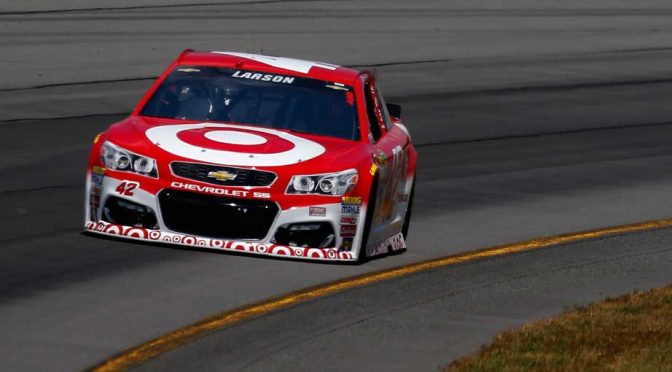
The No. 42 Chip Ganassi Racing with Felix Sabates team of Kyle Larson was assessed a P3 penalty for lug nuts not properly installed in the post-race inspection following the Axalta ‘We Paint Winners’ 400 at Pocono Raceway, NASCAR announced Wednesday.


As part of the penalty, crew chief Chad Johnston has been fined $20,000 and suspended for the NASCAR Sprint Cup Series FireKeepers Casino 400 at Michigan International Speedway this weekend, and has been placed on NASCAR probation through Dec. 31. The violation fell under Sections 12-1; 10.11.3.4 a; 12.5.3.4.1 p of the rule book.


Written warnings were assessed to:

• The No. 7 Tommy Baldwin Racing team of Regan Smith and No. 83 BK Racing team of Matt DiBenedetto for twice failing pre-race laser inspection. It’s the fourth offense for the 7 team and the first for the No. 83 team.

• The No. 1 Chip Ganassi Racing with Felix Sabates team of Jamie McMurray failed the template inspection twice pre-race. It was the first offense for the 1 team.

• The No. 43 Richard Petty Motorsports team of Aric Almirola failed laser inspection twice pre-qualifying. It was the first offense for the 43 team.

• The No. 10 Stewart-Haas Racing team of Danica Patrick and No. 95 Circle Sport-Leavine Family Racing team (Ty Dillon drove the car at Pocono) failed template inspection twice pre-qualifying. This was the first offense for the 10 team and the second offense for the 95 team.

RELATED: Buy Darlington tickets | ’16 throwback schemes 
SHOP: Almirola gear | Petty gear


There might not be a more historic number in NASCAR than the No. 43.


One of the oldest, most iconic tracks on the NASCAR circuit is Darlington Raceway.


Those two came together on Wednesday when Richard Petty Motorsports revealed the paint scheme for Aric Almirola‘s No. 43 Ford for the 2016 Bojangles’ Southern 500 (Sept. 4, NBC, MRN, SiriusXM NASCAR Radio) on NBCSN’s “NASCAR America.”


This marks Darlington’s second-straight year — in a five-year plan — hosting a throwback-themed race for the famed event.


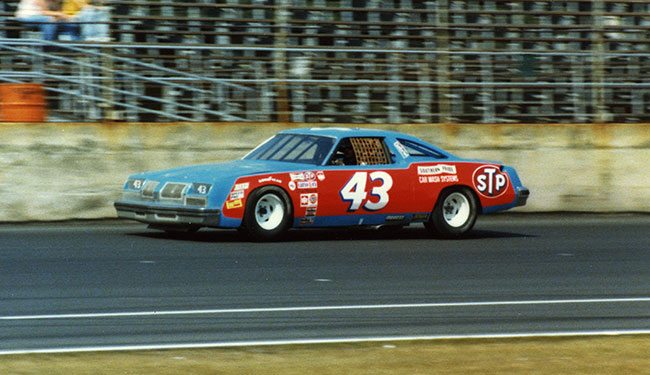
The Petty Blue and Day-Glo Red STP pays homage to 1979, a year in which Petty won the first nationally televised broadcast of the Daytona 500.


“I’m excited to run the 1979 STP paint scheme this year at Darlington,” Almirola said in a team release. “We had a lot of fun with the throwback theme last year, and it should be fun to throw back again this year. It makes the race so special. There are so many great STP paint schemes over the years, which makes it special for our team to run throwbacks. 1979 was definitely a breakout season when it comes to catapulting the sport into the mainstream, so it’s cool to recognize that this year with our throwback scheme.”


Petty’s 1979 Daytona 500 win cemented what has become one of the most memorable, important races in NASCAR. He took the checkered flag as previous race leaders Cale Yarborough and Bobby Allison fought in the infield after wrecking.


“We started the season really good because we won Daytona to kick off the year,” Petty said in a team release. “In 1978, we didn’t win any races, and then we won at Daytona to start the year. That was one of our better years, and we ended up winning the Championship that year, too. That was our last Championship, so it was a breakthrough year of sorts after not winning the year before. Having the car throwback to that year is special because it was a good year for us.”


(Image is Richard Petty’s 1979 STP car)

DAYTONA BEACH, Fla. (June 8, 2016) — NASCAR, in collaboration with broadcast partner NBC Sports Group, Kansas Speedway and Phoenix International Raceway, today announced adjustments to start times and network coverage for NASCAR XFINITY Series races at both tracks this fall.

The Kansas Lottery 300 from Kansas Speedway on Oct. 15 will air on NBC at 3 p.m. ET, while the penultimate race in the NASCAR XFINITY Series Chase from Phoenix International Raceway on Nov. 12 will air on NBCSN in primetime, beginning at 7:30 p.m. ET. Radio coverage will be provided by the Motor Racing Network and SiriusXM NASCAR Radio, channel 90. The full 2016 broadcast schedule is available at www.nascar.com/en_us/xfinity-series/schedule.html. Tickets to all NASCAR national series events are available at www.nascar.com/tickets.

“These updates were made with the goal of benefitting NASCAR fans, with Kansas now airing on NBC and Phoenix airing in primetime,” said Steve Herbst, senior vice president, broadcasting and production at NASCAR. “Our ability to adjust the start times for these two critically important races in the NASCAR XFINITY Series Chase is a testament to the collaboration between NASCAR, our broadcast partners, teams and tracks to deliver the best product possible to our fans.”

Both Kansas and Phoenix races are part of the inaugural NASCAR XFINITY Series Chase. The NASCAR XFINITY Series, where “Names Are Made,” will implement a seven-race, three-round Chase format with unique characteristics, but very much in the same spirit of the Chase for the NASCAR Sprint Cup. All three national series will conclude with a CHAMPIONSHIP 4 race at Homestead-Miami Speedway. The NASCAR XFINITY Series will crown its champion in the Ford EcoBoost 300 on Nov. 19 at 3:30 p.m. ET (NBCSN, MRN, SiriusXM).

All three national series return to action this weekend, beginning with the NASCAR Camping World Truck Series Rattlesnake 400 at Texas Motor Speedway Friday, June 10 at 9 p.m. ET. The NASCAR XFINITY Series returns to Michigan International Speedway for the Menards 250 presented by Valvoline Saturday, June 11 at 1:30 p.m. ET. The NASCAR Sprint Cup Series also will race at Michigan in the Firekeepers Casino 400 Sunday, June 12 at 1 p.m. ET. FS1, MRN and SiriusXM NASCAR Radio will provide live coverage for all three events.

WELCOME, N.C. — Richard Childress Racing (RCR) has announced the addition of four drivers to its 2016 NASCAR XFINITY Series team roster to compete in races at Iowa Speedway, Mid-Ohio Sports Car Course, Road America and Kentucky Speedway. The drivers — Ben Kennedy, Sam Hornish Jr., AJ Allmendinger and Michael McDowell — all will share seat time in the No. 2 Chevrolet Camaro with crew chief Danny Stockman.

“I’m looking forward to working with this talented group of drivers,” Stockman said. “It’s going to be great to work with Ben (Kennedy) in his XFINITY Series debut and also with all the veteran drivers. They’ll bring a lot to the table for us. I’m confident we’ll have a shot to win with all of these guys.”

Kennedy is scheduled to pilot the Ruud Chevrolet in the XFINITY Series race at Iowa Speedway on June 19. The 24-year-old driver currently competes in the NASCAR Camping World Truck Series and will make his XFINITY Series debut with the Welcome, North Carolina-based organization. Kennedy has three starts to his credit at the 0.875-mile track in the Camping World Truck Series, where he’s earned one top-10 finish.

Hornish Jr. is slated to drive the Rheem Chevrolet for RCR at the second Iowa Speedway race of the season on July 30 and at Kentucky Speedway on September 24. Hornish brings a wealth of XFINITY Series experience to the driver’s seat of the No. 2 Chevrolet. To date, Hornish has accumulated 110 starts in the XFINITY Series, earning three victories, seven pole awards, 32 top-five and 57 top-10 finishes with 1,124 laps led.

With an off weekend on the NASCAR Sprint Cup Series schedule, AJ Allmendinger will join the Rheem team at Mid-Ohio Sports Car Course on Aug. 13 for the road course race. In more than 40 career road course starts, Allmendinger has garnered seven wins and five pole awards.

Rounding out the season’s road course races, Michael McDowell takes to the seat of the Rheem Chevrolet at Road America. The No. 2 team earned the victory at the Plymouth, Wisconsin track last season with driver Paul Menard. McDowell has 12 road course starts in the XFINITY Series, collecting three top-five and five top-10 finishes with two pole awards.

“We’re honored to have these gifted drivers join the team for selected races during the 2016 season,” said Mike Dillon, RCR’s vice president of competition. “We’re working hard to put together a driver lineup that allows us to compete for the XFINITY Series owner’s championship. With Ben, Sam, AJ and Michael joining Austin (Dillon) and Paul (Menard) in the No. 2 Camaro seat, I’m confident we’ll be able to challenge for the title this season and be a threat to win in each of the races.”

Dillon and Menard will continue to share the seat of the No. 2 Chevrolet for the remainder of the 2016 season.

RELATED: Edwards reveals tie to former U.S. president

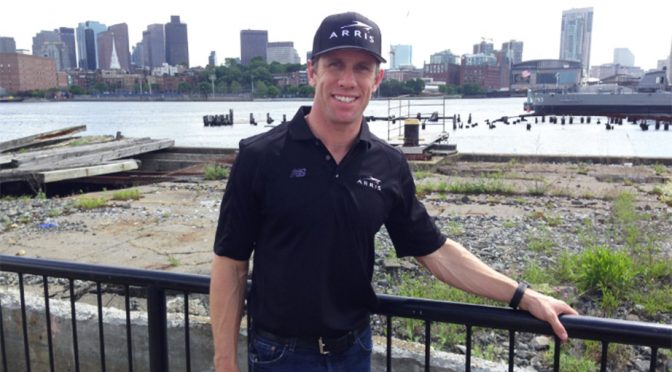
BOSTON — Carl Edwards wants to win at New Hampshire Motor Speedway.


Like, wicked bad.


The Joe Gibbs Racing driver made the trip due north to New England on Tuesday as part of a historic visit to downtown Boston with representatives from New Hampshire Motor Speedway — Milo the Mascot moose, included — to promote the upcoming New Hampshire 301 Sprint Cup Series race (July 17, 1:30 p.m. ET, NBCSN, PRN, SiriusXM NASCAR Radio). The veteran made it abundantly clear that he plans to take home his first lobster this summer — and eat him, too.


“I really like eating lobster, so that lobster’s out of luck if we win, I can tell you that,” Edwards told a crowd gathered on the iconic cobblestone outside the famed Quincy Market at City Hall Plaza. “I want to win this race. It’s a tough place and a lot of fun, but if you win at New Hampshire, you know you’ve done something … you’ve earned it. It’s a really hard track. We’ve won in the XFINITY Series, but in the Cup Series we haven’t done it.”


Spoken like a driver who, despite a respectable 13.3 average finishing position, has just seven top-10s in 23 attempts at the “Magic Mile.”


Don’t forget about the heartbreak of last year, either, when Edwards’ No. 19 Toyota Camry started from the pole at both Loudon races, only to see two of his teammates (Kyle Busch and Matt Kenseth) sweep the season.


Perhaps the resiliency of the USS Constitution, a wooden-hulled frigate known as “Old Ironsides” for withstanding a heavy amount of fire during the War of 1812, can inspire Edwards after he toured one of America’s most famous ships, ported in the Charlestown Navy Yard.


“I hear she’s 33-0 (in naval battles), which is not bad.”


Despite a history of near-misses at the track, it ranks among the 2011 Sprint Cup Series runner-up’s favorites. If you’ve ever been to a race at the New England motorsports mecca, you may be able to take some of the credit.


“There are a number of things that make (New Hampshire Motor Speedway) great,” Edwards said at the USS Constitution Museum. “Number one, really, I’d say it’s the fans. I truly feel like when I’m up here racing in New Hampshire, I feel like I’m racing in front of my peers. There are more racers in the grandstands watching us race and more racers walking around than probably anywhere we go. To me, it’s a real honor and a lot of pressure in that.

“The track itself is very unique. It looks simple, just a 1-mile race track and it’s really flat and it’s a true oval, but it’s a really tough place. Any driver will tell you that success at New Hampshire is a true success and you really have to do everything right. No matter how good you are, it’s those restarts … as you know if you’ve been to the race, they’re insane. Lot of crazy stuff that happens.

“… You look at it you say ‘Well, that’s pretty easy.’ The problem is, it’s easy for everybody. It’s the little tiny nuances, very small things in the pavement that you figure out. There’s a couple little bumps that you have to be careful of. Everybody is just on edge the entire time. To be fast at New Hampshire, you have to be right on the edge, just sliding the car perfectly and it’s real easy to screw up.”


Now just imagine that with the new lower downforce, higher-passing package we’ve seen thus far in 2016. Sounds like something wicked awesome every New Englander should see, no? 


NASCAR’s audience continues to expand in Boston, its market already saturated with so much of New England’s focus on its four major professional sports teams in the Boston Red Sox, Celtics and Bruins and New England Patriots, which have combined for a mesmerizing nine champions since 2001.


If any driver is aware of this challenge and ready to take it on headfirst, it’s Edwards — whose former team co-owner also, you know, signs the checks over at Fenway Park.


“I drove for Jack Roush and (Boston Red Sox owner) John Henry owned half that team, Roush Fenway (Racing), and I got to spend quite a bit of time down in Boston. Got to throw out a pitch at Fenway Park, which was one of the most nerve-wracking things I’ve ever done in my life. It’s a lot of pressure,” said Edwards, fourth in points.

” … New Hampshire Motor Speedway is NASCAR New England style. It’s as good as it gets. I say that because it’s tough and it’s really competitive. It’s just an hour away (from Boston). … I can say there are a lot of similarities between stick and ball sports here and the racing up at the speedway.


“Folks that haven’t been to New Hampshire Motor Speedway … it’s a short drive (from Boston) and it’s an amazing experience. … You can see the whole track. It’s a beautiful facility.


” … There’s no better place to watch a race.”

DAYTONA BEACH, FLA. — Iowa Speedway and The NASCAR Foundation today announced a race entitlement sponsorship to honor the Foundation’s 10 Years of Giving and to help children coping with illness or injury in Iowa and across the country.


The June 18 Camping World Truck Series Race in Iowa will be named The Speediatrics 200. This marks the first-ever entitlement sponsorship for Speediatrics, The NASCAR Foundation’s program that provides support to hospitals, specialty clinics, camps and other organizations offering children’s medical and health care services.


“Over the past few years, we have worked closely with The NASCAR Foundation through Iowa Speedway Cares, a program supporting our local community with an emphasis on youth health and education,” said Iowa Speedway President Jimmy Small. “The race entitlement takes our relationship with the Foundation to a whole new level, as we help bring awareness to the Speediatrics program and their mission of helping children to survive and thrive.”


At the Speediatrics 200 race, fans will be encouraged to visit www.NASCARFoundation.org and for every $25 donated, the NASCAR Foundation will deliver a Speedy Bear stuffed animal to sick children at Mercy Children’s Hospital and Clinics in Iowa, as well as other hospitals and organizations across the country. Since 2006, The NASCAR Foundation has committed more than $25 million to initiatives that inspire children around the country.  


“As The NASCAR Foundation celebrates its 10th Anniversary, we are honored to be the beneficiary of the Speediatrics 200,” said The NASCAR Foundation Executive Director Lorene King. “The Speediatrics program is very important to our Founder and Chairwoman Emeritus, Betty Jane France, as we believe every child should have a chance at a healthy life. Children’s health and medical needs remain our biggest priority.”


Speediatrics began with the goal of importing the color, excitement, and fun of NASCAR into children’s hospital rooms, wings, and waiting areas. Today, The NASCAR Foundation provides medical treatments for 50,000 children each year and continues to extend its reach beyond the hospital walls by supporting other causes related to helping children live a healthy life.


The NASCAR Camping World Truck Series Speediatrics 200 will kick off Iowa Speedway‘s Wide Opening Weekend on Saturday, June 18 at 8:30 p.m. ET on FS1, MRN and SiriusXM NASCAR Radio.

RELATED: NASCAR exec explains Pocono penalty | Keselowski battles back

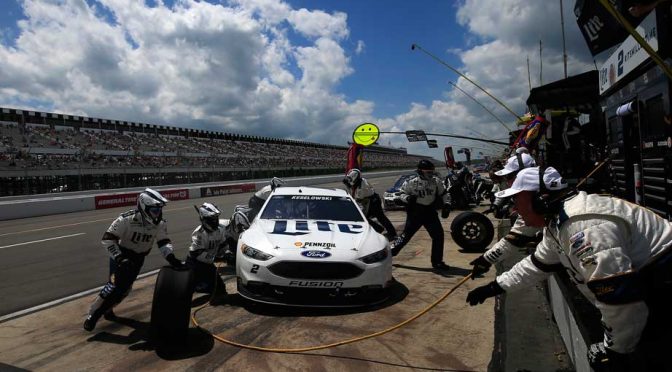
Monday’s Axalta ‘We Paint Winners’ 400 at Pocono Raceway had an unfortunate turn for the No. 2 Team Penske car when NASCAR penalized the team for unapproved body modifications during the first round of pit stops.  

The incident happened on Lap 25 when the team’s jackman went to pull the right rear tire. During the stop, the jackman’s right leg got into the body of the car, causing what NASCAR said was an “unapproved body modification.”  

If you can remember back a few weeks, NASCAR called the same penalty on the No. 1 car’s jackman.

RELATED: NASCAR exec discusses bodywork penalties at Kansas

From a pit crew’s perspective, it’s a tight line to walk during a pit stop. Most jackmen are 6-3 to 6-5 and weigh between 235-260 pounds. When a jackman posts the right side and then dives into the right rear to pull a tire, occasionally his body will make contact with the car.

Here lies the problem — intent doesn’t matter. Accident or not, making any body modification to that part of the car can help a car’s aerodynamics, especially at a track like Pocono.  

In this case, NASCAR deemed that the body modification produced an unfair advantage, and a penalty was assessed. 

For more pit crew news, visit PitTalks.com.

RELATED: Full race results | Updated series standings


Breaking down the full field for the Axalta ‘We Paint Winners’ 400 at Pocono Raceway:


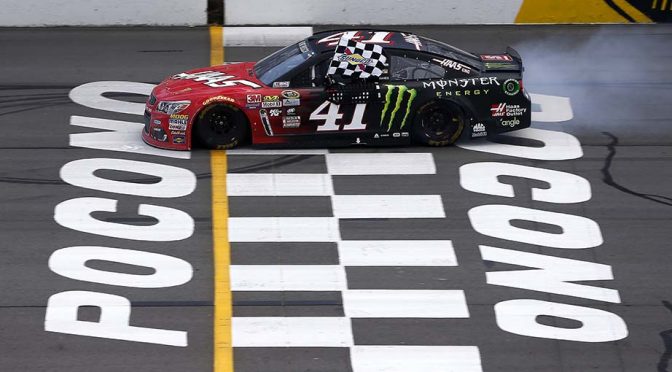
1. Kurt Busch, No. 41 Chevrolet, Stewart-Haas Racing. With John Klausmeier atop the pit box while crew chief Tony Gibson served a one-race suspension, Busch brilliantly saved enough fuel over the final 32 laps to win his first race of the season. Busch said prerace his season had been an A-. It wasn’t Monday. Grade: A+

2. Dale Earnhardt Jr., No. 88 Chevrolet, Hendrick Motorsports. Junior couldn’t hold off Kurt Busch – or track him down – after the final restart and settled for his season-leading fourth second-place finish. Grade: A


3. Brad Keselowski, No. 2 Ford, Team Penske. Despite running afoul of NASCAR for an unapproved body modification that resulted in two penalties (an NHL-approved hip check by the jackman to the right side of the car during an early pit stop), Keselowski improved his average finish over the past five races to 5.0, second only to Kurt Busch’s 4.6. Grade: A


4. Chase Elliott, No. 24 Chevrolet, Hendrick Motorsports. The rookie standout led a career-high 51 laps, but it wasn’t enough to get his first Cup victory. It will be soon. Grade: A


5. Joey Logano, No. 22 Ford, Team Penske. On the restart on Lap 27, Logano got into Ryan Newman, who wasted no time delivering several “love taps” as payback that damaged the No. 22 and sent it drifting back in the field. Logano’s pit crew fixed the left rear, and Logano did the rest for his first top-five finish in two months (since Texas). Grade: A


6. Kasey Kahne, No. 5 Chevrolet, Hendrick Motorsports. Kahne was too fast entering pit road on the competition caution on Lap 19 and had to restart at the back of the field. He didn’t spend much time there en route to his second top 10 in three weeks. Grade: A


7. Matt Kenseth, No. 20 Toyota, Joe Gibbs Racing. Kenseth led a career-best 31 laps at Pocono for his third-straight top 10 at the track. Grade: A


8. Carl Edwards, No. 19 Toyota, Joe Gibbs Racing. Edwards overcame contact with Kurt Busch that damaged his right front in the first half of the race to register his first top 10 since back-to-back wins at Bristol and Richmond in April. Grade: A


9. Kevin Harvick, No. 4 Chevrolet, Stewart-Haas Racing. Harvick was running seventh when he was penalized for entering pit road too fast on the competition caution. The No. 4 team tried to use pit strategy to compensate – and it almost worked – but the fourth caution submarined that. On the flip side, Harvick restarted 20th after the final caution and worked his way back into the top 10. Grade: B


10. Ryan Blaney, No. 21 Ford, Wood Brothers Racing. Blaney scored a top 10 on his first trip to Pocono. Well done. Grade: A


11. Kyle Larson, No. 42 Chevrolet, Chip Ganassi Racing with Felix Sabates. Larson’s team was one of the first to play the fuel-strategy game. It didn’t work, but he still crafted his fourth-best finish of the season. Grade: B


12. Ryan Newman, No. 31 Chevrolet, Richard Childress Racing. Newman’s eventful day included a battle with Joey Logano and getting loose and drifting into Kyle Busch, sending the No. 18 into the wall. In the race for the Chase, Newman is 16th in the standings, four points ahead of AJ Allmendinger. Grade: B


13. Trevor Bayne, No. 6 Ford, Roush Fenway Racing. A two-tire call on the second-to-last caution enabled Bayne to improve 17 positions for the restart. That was the difference in his day. Grade: B


14. Denny Hamlin, No. 11 Toyota, Joe Gibbs Racing. Hamlin finished where he pretty much ran throughout the day. Grade: B


15. Ricky Stenhouse Jr., No. 17 Ford, Roush Fenway Racing. Stenhouse continued his stranglehold of finishes in the teens. Grade: B


16. AJ Allmendinger, No. 47 Chevrolet, JTG Daugherty Racing. Allmendinger was never a factor, but he did lead two laps during a caution, his second and third laps led of the season. Grade: C


17. Jamie McMurray, No. 1 Chevrolet, Chip Ganassi Racing with Felix Sabates. McMurray’s average finish this season is 16.6, and he was spot on. Grade: C


18. Clint Bowyer, No. 15 Chevrolet, HScott Motorsports. Bowyer spent 10 laps in the top 15, the fewest among drivers in the top 20. Grade: C


19. Martin Truex Jr., No. 78 Toyota, Furniture Row Racing. Truex experienced none of the good fortune that washed over the No. 78 team in last week’s record-setting win at Charlotte. First, his car was damaged after taking a big hit from Matt DiBenedetto on pit road during the competition caution. Then, with 41 laps to go, the No. 78 came off pit road first, improving 15 positions on a two-tire call. But the right rear tire was damaged and went flat before the race returned to green. So much for track position down the stretch. Grade: C


20. Aric Almirola, No. 43 Ford, Richard Petty Motorsports. Almirola never raced higher than 12th, one of only three drivers who never sniffed the top 10 Monday. Grade: C


21. Ty Dillon, No. 95 Chevrolet, Circle Sport-Leavine Family Racing. Dillon was the race leader for the first time in his young Cup career (three laps, including two under caution) and made it 13-for-13 starts of running at the finish. Grade: B


22. Regan Smith, No. 7 Chevrolet, Tommy Baldwin Racing. Smith posted his best finish since coming home eighth in the Daytona 500. Grade: B


23. David Ragan, No. 23 Toyota, BK Racing. Another driver runs to form: In 19 Cup starts at Pocono, Ragan’s average finish is 23.2. Grade: B-


24. Casey Mears, No. 13 Chevrolet, Germain Racing. With 41 laps to go, the No. 13 had a gas-only pit stop and came off pit road second, improving 19 positions. Unfortunately for Mears, the No. 13 was collected in Jimmie Johnson‘s wreck soon after the restart. Grade: B-


25. Chris Buescher, No. 34 Ford, Front Row Motorsports. The No. 34 team did the same as the No. 13 team, with its gas-only stop enabling Buescher to roll off pit road fourth, improving 20 positions. Grade: B-


26. Greg Biffle, No. 16 Ford, Roush Fenway Racing. The No. 16 team couldn’t build on last week’s 11th-place finish at Charlotte, its best finish of the season. Grade: D


27. Josh Wise, No. 30 Chevrolet, The Motorsports Group. Wise posted his best finish of the season, topping his 33rd at Bristol. Grade: B


28. Reed Sorenson, No. 98 Chevrolet, Premium Motorsports. Ditto Sorenson, who registered his best finish since coming home 24th at Homestead in 2014. Grade: B


29. Jeb Burton, No. 32 Ford, Go Fas Racing. This was Burton’s first Cup start of the season. His best finish in 28 starts last season as a rookie: 27th last fall at Martinsville. Grade: B


30. Cole Whitt, No. 55 Chevrolet, Premium Motorsports. A rear gear issue saddled Whitt with his fourth DNF this season in 12 starts, although he did complete all but five laps. Grade: D


31. Kyle Busch, No. 18 Toyota, Joe Gibbs Racing. This is almost word-for-word from last week, which is not good: Busch was battling for 10th with less than 50 laps to go when Ryan Newman got loose and ran the No. 18 into the wall. Instead, Busch posted his third-straight finish in the 30s. Grade: B-


32. Danica Patrick, No. 10 Chevrolet, Stewart-Haas Racing. After the restart for the fifth caution on Lap 93, Tony Stewart got loose in front of Patrick and turned into wall, leaving Patrick with nowhere to go except into the right side of his No. 14. After repairs, Patrick returned to the track and finished 15 laps down. Grade: C-


33. Paul Menard, No. 27 Chevrolet, Richard Childress Racing. A broken rotor was the cause of his third-worst finish of the season. Grade: F


34. Tony Stewart, No. 14 Chevrolet, Stewart-Haas Racing. See Danica Patrick above. Stewart also returned to the track but didn’t pick up enough points to hold his spot in the driver standings. He dropped to 36th and is 71 points behind 30th-place David Ragan. Grade: F


35. Jimmie Johnson, No. 48 Chevrolet, Hendrick Motorsports. Johnson brought out the 10th and final caution when he got loose, collected Casey Mears‘ car and hit the inside wall. Said Johnson on Twitter: “Up front all day and then to have it end like that.” He got that right. Grade: D


36. Landon Cassill, No. 38 Ford, Front Row Motorsports. After the restart following the fifth caution, Cassill was collected in the Tony Stewart–Danica Patrick wreck. He returned to the track and finished a season-high 39 laps back. Grade: D


37. Austin Dillon, No. 3 Chevrolet, Richard Childress Racing. Dillon was running 24th on Lap 118 when his No. 3 Chevrolet broke a rotor and smacked the wall, causing major damage. Grade: F


38. Michael Annett, No. 46 Chevrolet, HScott Motorsports. Annett crashed with 58 laps to go, his third DNF for a crash in the past five races. Grade: F


39. Brian Scott, No. 44 Ford, Richard Petty Motorsports. Scott was running at the finish but completed only 81 laps after spinning out on Lap 22 in Turn 1 and tagging the wall. Grade: F


40. Matt DiBenedetto, No. 83 Toyota, BK Racing. Not a good day. His spin on the fourth lap brought out the first caution, he collided with Martin Truex Jr. in the pits during the competition caution and he was towed from the track after crashing on Lap 60. Grade: F