NASCAR’s warm embrace of innovation was about to send out a pivotal trial balloon. The snazzy new Pit Road Officiating (PRO) system had been thoroughly tested and troubleshot, closing in on its goal of implementing technology to make officials’ jobs more efficient and safer and to better enforce pit-road penalties.


Still, there was a natural anxiety among the sanctioning body’s competition officials ahead of its grand debut.


“Just a common, normal apprehension,” Chad Little explained, adding with understatement, “and just a little thing called the Daytona 500.”


Little, named to the new role of NASCAR’s managing director in charge of technical inspection and officiating just 20 days ahead of last year’s season-opening Great American Race, wasn’t alone in sharing some mild anxiety. Media were given a tour of the then-nondescript trailer in the offseason, complete with a demonstration of the eight workstations where officials would cycle through double-time video footage to verify potential penalties against laser-mapped telemetry — all in close to real time. There weren’t vocal doubters, but uncertainty remained about how the system would work in real race conditions.


RELATED: See photos from that tour


Each event has its own importance, but with the maiden voyage taking place in stock-car racing’s Super Bowl, the stakes were plenty high.


“We’re going into Daytona every year for our biggest race with not necessarily on pins and needles, but we’re geared up, we know that we can do the job, but we’re always thinking about the ‘what-ifs,’ and I’d be lying if that wasn’t the case going into last year with the PRO system,” said Jim Cassidy, NASCAR Senior Vice President of Racing Operations. “But we had redundancies, we had a plan in place … for every scenario that we can imagine, but at the same time we know there’s also the unknown.


“Sometimes what we’re the best at is dealing with things as they come along. In that case, fortunately, we enjoyed the fruits of it and it was more fine-tuning than dealing with any major issues, which is a credit to everybody involved.”


The PRO technology, which returns for its second year with a much higher comfort level entering next month’s Speedweeks at Daytona International Speedway, was on display earlier this week at the NASCAR Summit, the industry’s annual preseason convention for track services, medical, safety and security workers. The record number of almost 900 attendees for the Summit’s 15th year had the opportunity to tour the PRO trailer firsthand and learn about its intricacies.


It turns out that many of those worries heading into 2015 were unfounded. All of the system’s fail-safes performed as expected, and fears that the Pit Road Officiating trailer would be especially nitpicky in identifying infractions never materialized: Last year’s Daytona 500 tallied 29 pit-road violations, compared to 31 for the previous season and 28 in the year before that. The races that followed took a similar pattern.


“We were pretty much really comfortable with everything, but going into Daytona, we were concerned that what if we have 100 penalties,” Little said. “We don’t want to bog down the race with a bunch of travelling calls. We were real mindful of that, but we didn’t know exactly what we had because it’s a brand-new system. Those things develop throughout the year, but thank gosh we didn’t have any stumbling blocks at Daytona.”


WATCH SYSTEM IN ACTION: Footage of over-the-wall penalty for No. 88


Learning logistics


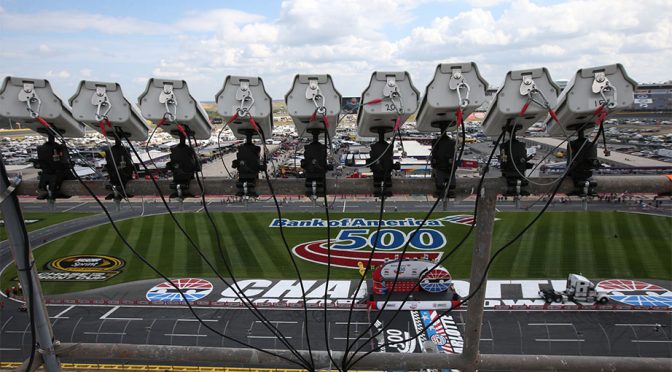
Attendees at Monday’s sessions at the NASCAR Summit received guidelines about how to best prepare their tracks for year two of the Pit Road Officiating structure. The seminar stressed the importance of uniformity in painting the bordering lines to pit boxes and the need to coordinate with NASCAR officials when mounting the 50 cameras that capture pit stop footage during the course of a race.


Adhering to those instructions tends to make life easier for George Grippo, NASCAR’s managing director of technology field and media operations. Beyond the PRO system, his responsibilities include the logistics of the trackside TV compound, timing and scoring, user support and maintenance and all the wiring, cables and power needed to make the technology go.


The biggest learnings from PRO’s first season, Grippo said, were that camera placement is paramount and that every track presents its own set of obstacles. Bristol Motor Speedway, for instance, had an accommodating roofline but cameras were mounted at much higher angles than a larger track such as Michigan International Speedway, where cameras were placed over the top row at the back of the grandstands at a greater distance. At Sonoma Raceway, cameras were located on a makeshift mount on heavy scissor-lift equipment aimed at pit road.


In each instance, working with tracks became imperative.


“Every time we went to a new place, it was a challenge,” Grippo says. “I think now we’ve kind of gotten that stuff dialed in, but first-year growing pains were all around, trying to figure it out on the fly — and you don’t have a lot of time.”
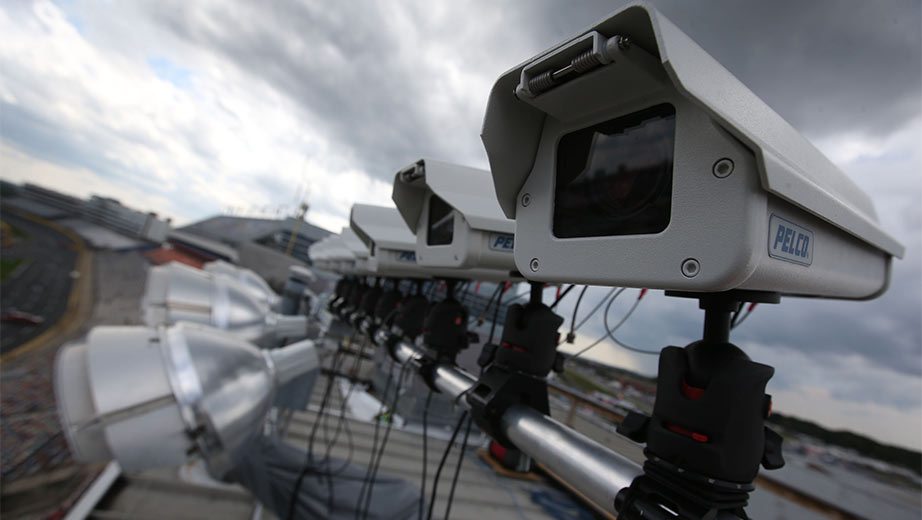
That part of the process figures to be easier in the second year; each eight-pound camera is packed up after a race weekend, but in most cases the custom-made mounts stay behind, ready for the next event.


But even as NASCAR officials learned more about the PRO system’s nuances, teams also picked up a few tricks of the trade. Among them, Grippo said, was the practice of wearing uniforms or shoes that matched the color of pit road — from off-white concrete to the darker grays from more freshly laid asphalt. The lack of contrast, Grippo explained, could potentially help crewmembers muddle officials’ task of determining whether a team member has come over the wall too soon.


“The teams are no dummies,” Grippo said. “They see the video, too, because we provide that video for them as a training piece. They can figure some of that stuff out. If I’m going to Dover, I’m wearing a white sneaker so that nobody can tell that I’m hitting the concrete versus a black shoe. They don’t do anything to help us, that’s for sure. They get smarter as we go along.”


One newfound advantage for officials is the use of footage to better explain to crew chiefs why certain rulings were made. Some calls, Little said, remain subjective but that video replays — delivered to teams atop the pit box in just a handful of minutes — typically help to clarify any disputed infractions. And the PRO system isn’t solely a watchdog; teams are able to download its pit-stop footage typically the day after a race for use as a training tool.


The system wasn’t without its fluky hiccups — the flyover pilot at one race who opened the back of a camera out of curiosity, the vapor-locked backup generator at another track and the occasional camera replacement to name a few — but because of the widespread use of redundant cameras, backup power generators and other safeguards, no race-altering issues crept up.


The goal for the new style of Pit Road Officiating was to seamlessly blend into the flow of a race, much like the adage of how the best referees are the ones you don’t notice. After 36 Sprint Cup points races last season, the system’s naysayers were relatively few.


“You’ve got the capability of our officiating team to take what they know and what they applied when they went over the wall and apply it to the PRO trailer in a way that buttons us up even further,” Cassidy says. “To get through season one and not have stories about it in any other way but to expose a positive approach, the tie-in with technology and letting our folks do what they are very good at but do it in a different way, it was impressive.”


Year two and beyond


With any remnants of 2015’s opening-day stage fright in the rear view, the Pit Road Officiating trailer enters its second year on steadier ground, thanks to a season’s worth of reps.


What’s next for 2016? Any advances in technical know-how as part of the never-ending search for enhancements at the NASCAR Research & Development Center may tell the tale.


“We get our best people that are available to manage the races from a pit-stop standpoint and we’ll continue to do that,” Little said. “From a technology standpoint, we continually look at faster and more efficient ways to look at the pit stops. But I think we’re entering the second year with more comfort in what we have to make it better and take advantage of that technology, because we just touched the tip of the iceberg.”


New challenges abound, especially at tracks where construction projects will make camera-mounting alterations necessary, but the strides made with the PRO system in its debut season have already secured a firm foundation.


“We were pretty fortunate,” Grippo says. “There were a lot of people that thought the thing wasn’t going to work. They were scratching their heads trying to figure out how we kept it going all year long. I think our greatest compliment was (NASCAR vice chairman) Mr. (Mike) Helton saying it looked like we’d been doing this thing for 10 years. If we can pull that off with all the technology we’re putting out there, we’re in a good spot.”
RELATED: Learn more about the NASCAR Hall of Fame


DAYTONA BEACH, Fla. — Some label Terry Labonte the NASCAR premier series’ least flamboyant champion.


Perhaps it just seemed that way, when measuring Labonte alongside such colorful contemporaries as NASCAR Hall of Famers Dale Earnhardt and Darrell Waltrip.


His calm, quiet demeanor at least partially explains why Labonte became known as “The Iceman.”


The Corpus Christi, Texas driver may not have personified flash, but Labonte got the job done.


Labonte won his first of two championships in 1984 and figuratively fell off the radar for a dozen years before resurfacing to claim a second title driving for Hendrick Motorsports.


MORE ON 2016 CLASS: Jerry Cook | Bobby Isaac | Bruton Smith | Curtis Turner


His 22 premier series victories don’t accurately measure the breadth of Labonte’s career. Consistency is a much better measure: 17 different seasons among the top 10 in the championship standings along with 361 top-10 finishes, the latter ranking 10th all-time. Labonte also won in the NASCAR XFINITY and Camping World Truck Series, as well as the International Race of Champions (IROC) and shared the GTO class-winning entry in the 1984 24 Hours of Daytona.


Rick Hendrick believed Labonte’s attitude — which often put others first — may have kept him from winning more frequently.


“Terry could’ve accomplished even more in his career had he been a little more selfish,” Hendrick told The Associated Press in 2006. “But there’s not a selfish bone in his body. He’s a great talent, but he’s just a great human being.


“He’ll always do what’s best for the team, even if it puts him in an awkward spot.”


Labonte will be inducted into the NASCAR Hall of Fame in Charlotte, North Carolina on Jan. 22, along with the other four members of the Class of 2016: Jerry Cook, Bobby Isaac, O. Bruton Smith and Curtis Turner. Ceremonies will be broadcast live on NBCSN at 8 p.m. ET.


Born Nov. 16, 1956 and raised in south Texas, Terrance Lee Labonte was introduced to racing by his father, who worked on race cars for friends. He was a quarter-midget champion by age nine and won stock car titles in Corpus Christi, Houston and San Antonio from 1975 to 1977.


Labonte met Louisiana oilman and sports car racer Billy Hagan, who fielded the NASCAR premier series team that carried Skip Manning to the rookie of the year title in 1976. Labonte joined the Stratagraph Racing team for the final five races of 1978 and became Hagan’s permanent driver the following season in which he finished 10th but lost rookie of the year honors to Earnhardt.


Labonte notched his first premier series victory in the 1980 Southern 500 at Darlington Raceway. With sponsorship from Piedmont Airlines, Labonte, Hagan and NASCAR Hall of Fame crew chief Dale Inman captured the 1984 championship with victories at Bristol Motor Speedway and the Riverside (California) International Raceway road course.


Success, however, was fleeting.


“We weren’t supposed to win it and we didn’t know what to do with it,” said Inman, who left the team to rejoin Richard Petty.


Labonte agreed, reminiscing after his second title, “I thought it was a pretty neat deal and we’d win it the next year. Next year took a long time coming.”


Labonte departed the Hagan outfit for Junior Johnson’s Budweiser team, then went to Precision Performance followed by a second stint with Stratagraph. He joined Hendrick Motorsports in 1994.


“I looked at his statistics early in his career and I couldn’t believe how well he’d run with the equipment he was in,” Hendrick later told The Associated Press.


Labonte responded by winning the 1996 championship, edging Hendrick Motorsports teammate Jeff Gordon by 37 points. His younger brother, Bobby, won the season-ending NAPA 500 at Atlanta Motor Speedway and the two celebrated together. Bobby Labonte became a NASCAR premier series champion himself in 2000, making the pair the first brothers to win a title in the top division.


Terry Labonte continued fulltime with the Hendrick team through the 2004 season, winning for the final time at Darlington in 2003. He continued to race on a part-time basis, calling it an 890-race career at Talladega Superspeedway on Oct. 19, 2014.


Labonte has said his two favorite victories were those in his home state — at Texas Motor Speedway. But he may be better-remembered for a pair of slam-bang races at Bristol battling the late Earnhardt. In 1995, Labonte won a final-lap duel despite a shove by Earnhardt that sent his car into the wall. Fast-forward to 1999, when Earnhardt spun and wrecked Labonte on the final lap and famously said in Victory Lane, he was “just trying to rattle his cage.”


The driver — and his fans — were livid, but Labonte admitted 15 years later in a Popular Speed Magazine interview that he was at least partially to blame for the ruckus.


“If I had gotten into the corner at a better angle then he wouldn’t have got the chance to hit me. But I was passing him low and couldn’t carry the speed into the corner and he took advantage of it,” Labonte said. “I don’t think he really intended to wreck me. He wanted to move me out of the way. That was his only shot. I had four new tires and he didn’t.


“It was just one of those deals.”


Labonte is a member of the National Quarter Midget Hall of Fame and in 1998 was named one of NASCAR’s 50 Greatest Drivers.


Tickets are available for the NASCAR Hall of Fame Induction Dinner and Ceremony (limited quantities available). Individual ticket and ticket packages are available at ticketmaster.com, the NASCAR Hall of Fame Box Office or by calling 800.745.3000.

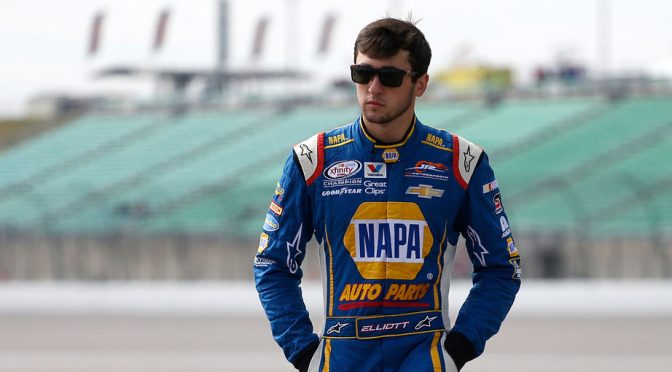
A 2015 rewind and a 2016 preview for the top five finishers last season in the NASCAR XFINITY and Camping World Truck Series. Today: Chase Elliott, the second-place finisher in the XFINITY Series standings.

Team: JR Motorsports No. 9 Chevrolet (2015); Hendrick Motorsports No. 24 Chevrolet in the NASCAR Sprint Cup Series (2016)

Wins: 1 (Richmond 2)

Strides: As defending series champion, expectations were high for Elliott, even though he turned 20 only a few days after the season ended. With a premium Sprint Cup Series ride awaiting him at Hendrick Motorsports in 2016, the talented youngster had high aspirations for his final full-time ride in the XFINITY Series. While Elliott won a race (Richmond) and posted 27 top 10s in 33 starts, he finished just shy (a slim 15 points) of the consistent Chris Buescher, who ultimately hoisted the 2015 XFINITY season trophy.

Setbacks: The superspeedways were the obvious stumbles for the talented second-generation driver. He finished 28th in the season-opener at Daytona Beach and 37th at Talladega eight races later — subpar finishes that more than accounted for the championship difference despite a victory and valiant final effort of eight top-10 showings in the final nine races.

Quoteworthy: “Once our season got done and wrapped up and thinking about Daytona and transitioning to HMS, it’s all kinda coming true and I’m obviously very excited. I think everybody always tells me I’ve got big shoes to fill. I’m not trying to fill anybody’s shoes, just make mine notable and do the best you can. I hope that becomes the case the more we go along in this deal.”

What’s next: Elliott will undoubtedly be a Sprint Cup Series Rookie of the Year contender to watch in 2016, taking over the No. 24 Chevrolet driven by Jeff Gordon for most of the past three decades. Elliott has yet to record a top-10 Cup run in five starts, but with a marquee NASCAR championship under his belt and the hopes — and blessings — of so many, the two-time XFINITY Series Most Popular Driver is in prime position to make a mark in 2016 and start a career already designated with great promise.

MORE: Buy Darlington tickets now
RELATED: See all of the 2015 Darlington throwback paint schemes


Darlington Raceway is hopping in the wayback machine again for the 2016 Southern 500, with this year’s throwback theme focusing on the 1975-1984 era for the Bojangles’ Southern 500 (Sept. 2-4, 2016).


More than 30 cars in the field for the 2015 Southern 500 featured paint schemes honoring drivers and popular livery from the 1970s. The event spurred memorable moments such as Kyle Larson driving the Mello Yello Chevrolet and morphing into Kyle Petty and Aric Almirola sporting a mustache fit for “The King.” And Ned Jarrett and Ken Squier returned to the broadcast booth to call part of the race.


RELATED: Best throwback images, from duds to logos to ‘staches


The 2015 throwback event was the first of a five-year campaign, and drivers, teams and fans all enjoyed it so much that the program won the National Motorsports Press Association’s 2015 Myers Brothers Award.


“We felt like if we could get eight or 10 teams on board to really showcase what we’re trying to accomplish, we felt like in 2016 we could get more, in 2017 we would get more and so on,” track president Chip Wile said. “But the response that we’ve gotten from everyone in the industry has been incredible.”


RELATED: Darlington takes home NMPA Myers Brothers Award


Dale Earnhardt Jr., for one, is pretty excited about the 2016 throwback program. After honoring Cale Yarborough in his 2015 throwback ride, Junior has strongly hinted that he’d like to drive a version of the “Gray Ghost” driven by Buddy Baker.


RELATED: ‘Gray Ghost’ coming to Darlington this year?

Attention, die-hard die-cast collectors: Lionel Racing’s new mass retail product line, NASCAR Authentics, is now available. And in more places than ever.

Target, Walmart and Toys “R” Us carry the NASCAR Authentics line, with Lionel and NASCAR teaming up in a mass retail capacity. That means 1:64-scale die-cast cars and other vehicles, such as haulers, are currently available. More are planned for later in the year.

Additional Lionel products can be found at the NASCAR Superstore and Trackside Superstore.

RELATED: Check out the NASCAR Superstore

Some sample die-cast cars:

For Rico Abreu, deciding to make the leap to the NASCAR Camping World Truck Series with one of its most established teams was the easy part. The more difficult task was keeping that development under wraps for such a long time.

“It’s been a few weeks obviously,” Abreu said by phone from Tulsa, Oklahoma, during a break in his title defense at the prestigious Chili Bowl Nationals sprint-car event. “Definitely tough to keep a secret just from how exciting and how quickly everything was moving through.”

The news became clearer for all Friday, when ThorSport Racing officially announced the 23-year-old standout as the full-time driver of its No. 98 Toyota. Abreu replaces veteran driver Johnny Sauter, who joined GMS Racing in the offseason.

Abreu will pair this season with crew chief Doug George, who helped guide Sauter to a fourth-place finish in the Camping World Truck Series standings last year. The California native will also work with veteran sprint-car driver Tracy Hines, who announced that he would become ThorSport’s new competition director last September.

Hines, who competed in the truck series full-time in 2004-05, is expected to help Abreu with the move to heavier stock cars. But part of the transition is already progressing without many seams as the Sunoco Rookie of the Year candidate gets better acquainted with his new team.

“From our perspective, it was unbelievable how Rico came into the shop,” said ThorSport executive Matthew LaNeve. “It’s like he’s been here for eight years. He just took to the trucks, took to the team, took to the crew and took to the challenge ahead like he’s been doing it his entire life.”

Though Abreu has spent much of his budding career slinging open-wheel cars on dirt, his venture into full-bodied NASCAR is a much more recent development. The 2015 season brought his first involvement with stock-car racing in the NASCAR K&N Pro Series East, where he won three pole positions and broke through for his first victory at Columbus (Ohio) Motor Speedway, 120 miles south of ThorSport’s headquarters.

Abreu made his first foray into the Camping World Truck Series for the last two events of 2015 with NTS Motorsports, getting caught up in a crash at Phoenix and securing a lead-lap finish in the season finale at Homestead. Though the sample size was relatively small, he said getting a feel for racing trucks on larger tracks was an important first step into building his confidence.

“Just to know what to expect going into Daytona, just to know what the aero is like on those trucks and what to do in certain situations,” Abreu said. “2016, my goal is just to show these guys at ThorSport that I want this and that I’ve got the drive and the will to do it and just to be a great person — I think that’s what it comes down to — and to win them some races. I think we have a team more than capable of doing it and everyone’s behind me, which is great for me to know that. If you don’t feel that people are behind you, then you’re going to be in some trouble later on and throughout your season. I just feel like this is the best team, they’ve got the best people and their organization and the best car owner.

“It’s something new for me this year and it seems like every year there’s something new for me in my career that I look forward to. That’s what keeps that fire in me burning and that drive, the drive to win races.”

One person helping Abreu channel that drive has a championship-level pedigree. Veteran Matt Crafton, a two-time series champion and a six-time winner last year, already has welcomed Abreu as his newest teammate alongside fellow newcomer Ben Rhodes.

Though Crafton’s rookie season came in 2001 — 361 starts ago — Abreu said the insights about how to make it as a first-year driver have been indispensable.

“He’s been doing this a long time and I’m pretty sure he’s gone through every situation, every scenario of truck racing and what goes on,” Abreu said. “He’s won races and he’s won championships, so he knows what to expect — just things that kind of help me push through on what to know and what you don’t need to do. He’s just there to mentor, and I think he’s all about it.

“We’ve built a great relationship the last six weeks that I’ve kind of been spending around ThorSport and him, and more of a friendship than anything off the race track. Obviously, we haven’t raced with each other yet, and he’s a great guy and just very honored to know that he’s going to be there to help me.”

With his Daytona debut weeks away, Abreu’s focus for now is a repeat Golden Driller trophy after five days of qualifying and racing in Tulsa. Abreu still plans to compete in sprint-car events on off weekends for the truck series.

Though his roots are firmly planted in sprint-car racing, Abreu said joining the ranks of NASCAR is the next step in his progression. It’s a path that panned out well for Jeff Gordon, Tony Stewart, Kasey Kahne and plenty others.

“I think I’ve always wanted to keep climbing up that ladder,” Abreu said. “That’s been my goal every year, to win in every car I’ve ever drove and now doing NASCAR is the next step to that road to glory and what it’s all about. I’m excited to keep accomplishing my goals.”

DAYTONA BEACH, Fla. (January 15, 2016) – After a competitive Combine event last October, six drivers were selected to the 2016 NASCAR Drive for Diversity® (D4D) class and will join the industry’s premier development program for multicultural and female drivers, and pit crew members.

Talented drivers from across the Americas will compete for Rev Racing in the NASCAR K&N Pro Series East and NASCAR Whelen All-American Series, and attempt to follow in the footsteps of D4D graduates and current NASCAR national series drivers Kyle Larson, Darrell Wallace Jr. and Daniel Suarez.

The 2016 class will be formally introduced to the industry as part of the Charlotte Motor Speedway NASCAR Media Tour on January 19.

“NASCAR remains steadfast in its mission to develop multicultural and female athletes and we believe this class has the potential to compete at the highest levels of our sport,” said Jim Cassidy, NASCAR senior vice president of racing operations. “The talent pool from which these drivers were selected was unprecedented for NASCAR Drive for Diversity – a testament to the program’s growth and success.”

Rev Racing will field four teams in the NASCAR K&N Pro Series East and two in the NASCAR Whelen All-American Series. The 2016 class is led by returning driver Collin Cabre and newcomer Rubén Garcia Jr., fresh off his NASCAR Mexico Series championship last fall.

The 2016 D4D roster includes:

Collin Cabre: After an impressive first year with D4D in which he won the season finale at Dover International Speedway and finished in the top 10, the 22-year-old from Tampa will again compete in the NASCAR K&N Pro Series East.

Rubén Garcia Jr.: At age 20, the Mexico City native won four races in the NASCAR Mexico Series en route to his first NASCAR championship. He brings his talents to the NASCAR K&N Pro Series East for his rookie season with Rev Racing.

Jairo Avila: The 20-year-old Colombian-American from Alhambra, Calif., made his NASCAR K&N Pro Series West debut in 2014 and achieved four top-10 finishes in five starts with his family-run team. He will compete in the K&N Pro Series East.

Ali Kern: The 22-year-old from Fremont, Ohio, had her best NASCAR D4D Combine last year after turning in strong performances in previous combine events. A second-place finisher in the ARCA/CRA Super Series, Kern will compete in the NASCAR K&N Pro Series East.

Enrique Baca: Following an impressive showing at the Combine, Baca, 24, will race in the NASCAR Whelen All-American Series. Baca is from Monterrey, Mexico, and competed in his native country’s Super Copa Telcel series in 2015.

Juan Garcia: Originally from Bogota, Colombia, Garcia, 18, earned the 2015 Wendell Scott Trailblazer Award for his competitiveness in the NASCAR Whelen All-American Series. He will return to the series with Rev Racing following a strong performance at the Combine last fall.

Under Rev Racing owner and CEO Max Siegel’s leadership, NASCAR D4D aligns drivers with a team of executives, athletic directors, crew chiefs and mentors tasked with helping drivers achieve career successes; thus, improving their goal of reaching one of NASCAR’s three national series.

“This year’s NASCAR Drive for Diversity class is so talented. We are excited to get the season started, to develop and showcase the drivers’ abilities to our fans and partners,” said Siegel. “Our ultimate goal is to prepare these minority and female drivers for the national series. Every year presents new opportunities for growth and we look forward to carrying over last season’s momentum into 2016.”

Since it began fielding D4D cars in 2010, Rev Racing has been the most consistent team in the NASCAR K&N Pro Series East, registering 17 total wins with six different drivers and at least one victory in each season. The 2016 NASCAR K&N Pro Series East season opener will take place on February 14 at New Smyrna Speedway in New Smyrna Beach, Fla., where Rev Racing scored a win with Suarez in 2014.

The 2015 NASCAR season featured a series of firsts and milestones for D4D alumni. Suarez and Wallace Jr. were in close contention to win Sunoco Rookie of the Year in the NASCAR XFINITY Series, with Suarez becoming the first Mexican driver to earn top rookie honors.

In 2015, more than 25 graduates of the NASCAR Drive for Diversity Pit Crew Development Program, also run by Rev Racing, pitted for national series teams. Mike Russell, jackman for the No. 60 Roush Fenway Racing team in the NASCAR XFINITY Series, became the first African-American D4D graduate to win a national series championship.

For more information on NASCAR Drive for Diversity, visit www.NASCARDiversity.com.

RELATED: Learn more about the NASCAR Hall of Fame

DAYTONA BEACH, Fla. – Curtis Turner lived life and stock car racing in the same manner – at full throttle.

A bootlegger at age nine, the Virginia native was a self-proclaimed millionaire at 20 and made and lost several fortunes while becoming one of the greatest drivers – and most colorful characters – of NASCAR’s pioneer era.

He won a lot but also wrecked just as often. His parties were legendary and lengthy, as were Turner’s on- and off-track antics in rental cars and airplanes – which frequently involved his friend and NASCAR Hall of Famer Joe Weatherly.

Called NASCAR’s first bad boy in the same-titled biography authored by Alan Hill and Dennis Treece, Turner was described as partier, playboy, innovator and entrepreneur with an edgy spirit that “drove him through one of the most cantankerous lives ever lived.”

Sports Illustrated, pointing to his 350 career victories – 17 in NASCAR’s premier division – anointed Turner the Babe Ruth of Stock Car Racing.

NASCAR Founder William H.G. “Big Bill” France, who banned Turner for attempting to unionize drivers and later reinstated him, said in 1972, “Curtis Turner was the greatest race car driver I have ever seen.”

NASCAR Hall of Famer Glen Wood, in whose Ford Turner won his final premier series race at North Carolina Motor Speedway in 1965, said Turner “was the best at controlling a car and putting it where he wanted it (as) anybody I’ve ever seen.” Recalling the days in which the two battled on dirt tracks, Wood added, “If he got a fender inside of you, you were passed.”

Turner, killed at age 46 when the airplane he was piloting crashed in Pennsylvania in 1970, will be inducted into the NASCAR Hall of Fame on Jan. 22 in Charlotte, North Carolina. along with Jerry Cook, Bobby Isaac, Terry Labonte and O. Bruton Smith. The ceremonies will be broadcast live on NBCSN at 8 p.m. ET.

Turner was born in the Virginia mountain community of Floyd in 1924. The Great Depression soon followed and it was no surprise he had to grow up quickly.

“Those were hard times back in the hills and you did things you shouldn’t to get by,” Turner said of his brief liquor-running days. “I’m not proud of my past, but I’m proud of the future I made for myself.”

By the time he was 14, Turner was cutting timber for 15 cents an hour and at age 20 owned three sawmills and related equipment. He competed in his first stock car race at Mt. Airy, North Carolina in 1946. Turner finished 18th in a field of 18 but won his next start.

He was known as the “Blond Blizzard of Virginia” early in his career, a nickname that was soon shed in favor of “Pops,” reflecting Turner’s frequent use of his car’s bumper to pop his rivals’ rear quarter panel to set up a pass.

Turner was in the field for NASCAR’s first race at Charlotte (N.C.) Speedway on June 19, 1949. He finished ninth in his own 1946 Buick on the .750-mile dirt track. Switching to a 1949 Oldsmobile fielded by Hubert Westmoreland, Turner captured his first victory in the season’s fourth race at the one-mile Langhorne (Pa.) dirt oval and defended the win in 1950.

The 1949-50 seasons were the only ones in which Turner ran anything resembling a full schedule in NASCAR’s premier series, finishing sixth and fifth in the points standings. His four wins in 1950 – at Langhorne, Rochester (N.Y.), Martinsville (Va.) Speedway and Charlotte Speedway – were a season high. Turner led every lap from the pole in consecutive starts at Rochester and Charlotte, the first and only driver to accomplish the feat in the premier series.

“If you feel like you’re in control (of your car), you ain’t going fast enough,” said Turner, partially explaining his hit and miss results on the dirt-surfaced tracks of NASCAR’s early years.

Turner won twice on paved superspeedways – at Rockingham and Darlington Raceway where he captured the 1956 Southern 500.

It’s fair to say Turner was at his best in NASCAR’s convertible division driving factory-backed Fords and winning 38 times. Twenty-two of those victories came in 1956 when he finished third in points. Turner’s 23 poles also marked a record for the short-lived division.

Turner’s strangest victory may have come Sept. 30, 1956 at Asheville-Weaverville (N.C.) Speedway where a 14-car pileup on a dust-shrouded track resulted in the race being declared complete. Turner’s Ford was the only car still running at the red flag – a first and last in a major NASCAR event.

A member of the Motorsports Hall of Fame of America and International Motorsports Hall of Fame, Turner was selected as one of NASCAR’s 50 Greatest Drivers in 1998.

Tickets are available for the NASCAR Hall of Fame Induction Dinner and Ceremony (limited quantities available). Individual ticket and ticket packages are available at ticketmaster.com, the NASCAR Hall of Fame Box Office or by calling 800.745.3000.

RELATED: Inside look at the new rules package for 2016


Kurt Busch
wants NASCAR to take away even more downforce while Matt Kenseth would be OK if NASCAR did away with testing.

Jimmie Johnson was among those who were just glad to get back behind the wheel and “knock the rust off.”

The three former Sprint Cup Series champions, along with another in Brad Keselowski, took part in a two-day Goodyear tire test Tuesday and Wednesday at Las Vegas Motor Speedway. Goodyear officials continue the process of adapting a new tire to the lower downforce rules package that teams will be running at the majority of races in 2016. Teams continue to fine-tune the changes to the aero package, which initially curbed downforce by roughly 1,000 pounds.

Teams used a similar package last season at Kentucky Speedway and Darlington Raceway.

“I think all of the work that’s been done, and the two races that we raced last year … was in a positive direction,” Busch, driver of the No. 41 Chevrolet for Stewart-Haas Racing, said. “I believe the direction of lower downforce is better, but I’d like to see us take another chunk of downforce away come July. Because with the technology that the teams have, we’ll be right back to where we are now with the downforce decrease because we’re able to increase it with wind tunnel time and simulation models.”

Speeds during the test were faster than anticipated, Johnson said. The six-time series champion took part in a similar test last season at Kansas Speedway and said tires used for that test had more falloff, slowing lap speeds during the course of a run. That wasn’t the case at Las Vegas.

“With these cool conditions and the surface here being so good still, it’s been tough to create the falloff that we’re looking for,” the Hendrick Motorsports driver said. “Bottom line is we’re just fast. We’re really fast.

“When we took downforce off the car, they’ve lowered the gear ratio, a lot of things to kind of slow the cars down and we’re every bit as fast if not faster than (with) the combination they had last year. … Obviously when we come back for the race, the sun will be out, hopefully we’ll get the falloff we’re looking for, the track will lose some grip and be slick but right now it’s fast.”

This week’s test was the first of the year. NASCAR teams head to Daytona International Speedway next month to officially begin the ’16 racing season.

Additional Goodyear tire tests are currently scheduled at eight other tracks for ’16; open team tests get underway in July at Indianapolis, with stops at Watkins Glen, Chicago and Homestead as well. A single-day open test is on tap for March 3 at Las Vegas, prior to that track’s NASCAR weekend.

“There was so much testing last year, it’s funny because they banned (private) testing everywhere but then with the few different aero packages they had last year they just scheduled so many tests I felt like in a way we tested more last year than in years past,” Kenseth, driver of the No. 20 Joe Gibbs Racing Toyota, said.

While he admitted testing is important, Kenseth said he would have no qualms about doing away with testing altogether.

“I’d like the testing banned,” he said. “I wish there was (fewer) tire tests. I think less testing is probably better for everybody. I think it’s better for the competition and the on-track product as well. Sometimes some people are going to get it and some people aren’t and it kind of mixes the field up a little bit.”

RELATED: Breaking down the new rules | Digital dash debuts with Kurt Busch


Editor’s note: The following Q&A is courtesy of NASCAR. Ths originally ran on Sept. 4, 2015.


Q. How many different screens are on the digital dash?
A. The digital dash will have 16 preset screens, but teams have the opportunity to customize them as they see fit.
 
Q. Can teams customize the displays on the digital dash?
A. Yes, the units are fully customizable for teams. They have the ability to display data using numbers, bar graphs, color scales or a digital version of the familiar gauge with needle. Teams can also customize which information is shown on the screen as well as its size and position.
 
Q. What information is available to teams on the digital dash?

A. For 2015, teams will have access to the same information that is currently available via analog gauges — RPM, water temperature, oil temperature, oil pressure, water pressure, fuel pressure and voltage. We are working on including additional information for the future to help strengthen the competition level and fan experience.
 
Q. We’ve heard you talk about two-way communication with the car, what does that mean?
A. We are working on a network to allow the dash to send real-time information to NASCAR and teams and vice versa. Crew chiefs will be able to monitor important information such as oil pressure or water temperature, and NASCAR will be able to directly communicate information such as caution periods or penalties. This network will ultimately provide teams more information that will increase the competition level and safety, and will provide fans with more engaging data.
 
Q. Will the digital dash also measure tire pressures?

A. We are working with Goodyear to identify options for the dash to measure tire pressure, however any potential decision would not go into effect this season. To maintain a level playing field, teams using the digital dash will only have access to the same data as teams using analog gauges.
 
Q. How will the digital dash enhance the fan experience?
A. Ultimately, fans will have access to more comprehensive, and accurate, data from their favorite teams. Fans could consume this information real-time through the race broadcasts as well as NASCAR’s digital platforms.
 
Q. How will the digital dash enhance the competition level?
A. Teams will have access to more reliable and accurate data through the digital dash. This will allow drivers and crew chiefs to have an exact understanding of what is happening in the car as well as what adjustments need to be made.