EDITOR’S NOTE: This story initially ran in 2016.

RELATED: Photos of women in NASCAR | About the series
MORE: Women racers pave new roads to success in NASCAR


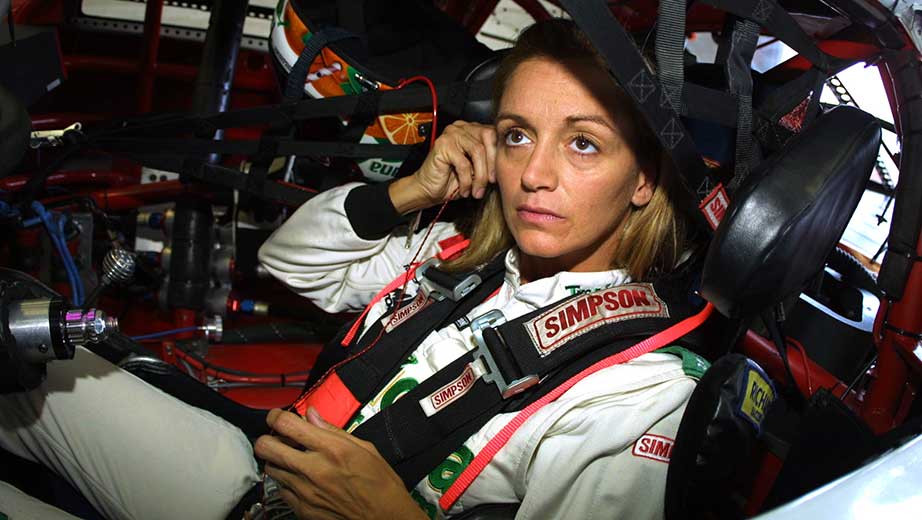
Four decades have passed since she first stepped foot on the track in her fire suit, yet Janet Guthrie’s impact remains just as prevalent in 2016 as it was in 1976. She continues to inspire some of NASCAR’s most successful athletes, including Dale Earnhardt Jr. and NASCAR Craftsman Truck Series wheelwoman Jennifer Jo Cobb

Guthrie’s recent nomination for the Landmark Award for Outstanding Contributions to NASCAR is confirmation of her legacy and acknowledgement of the adversities she had to overcome. It has, after all, taken her years to move from being the hecklers’ main target to an embraced figure.

The nomination was “a completely unexpected honor,” she told NASCAR.com.


Earnhardt, an avid historian of the sport, is pleased she is getting the recognition. 

“You know, she was tough,” he recalled. “What it must have been like in the late ’70s and early ’80s to be trying to get out there and compete as a female. That was unheard of.”

Recounting to NASCAR.com a scene from 1976 when she drove for team owner Rolla Vollstedt, Guthrie is honest about what she faced each day at the race track.


A group of bystanders asked her:


“Hey Janet, you gonna go out on the track today?”


“Yes, I hope so,” Janet responded.


“Well we don’t. We hope you crash on our corner.”


“I went back to Rolla’s garage,” Guthrie explained, “and kicked a few tires, but by the time I went out on the track I had made that (anger) vanish.”


It could be a different day, race track or group of critics, but both the spoken and unspoken message was always the same: she was not welcome.


Guthrie had the brains — with her Bachelor of Science in physics and aviation license — the talent, resilience and a fiery personality to boot. It was her gender that was her shortcoming in the eyes of so many.


Today, however, is a different story. She is celebrated as a pioneer who helped break down gender barriers in a high-octane, male-dominated arena.


“She proved being a female race car driver is possible,” Cobb told NASCAR.com.


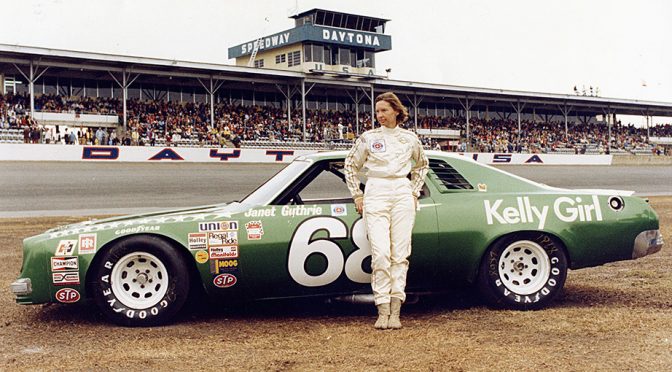
The Iowa native was the first woman to compete in the Indianapolis 500 as well as the Daytona 500. Her sixth-place finish at Bristol Motor Speedway in 1977 is shared with Danica Patrick (2014, Atlanta Motor Speedway) for the top finish by a female in NASCAR’s premier series in the modern era, 39 years later.


She clearly wasn’t crashing on too many corners.

A steering wheel and a gas pedal


It all began with a classified ad that read, “1953 Jaguar XK 120 M coupe, $1,200 …” 


This one advertisement would mark the beginning of her story.


Guthrie admitted in her autobiography, “Janet Guthrie: A Life of Full Throttle,” that by 1954, the Jaguar “was a sensation.”


Six years later, Guthrie purchased this “sensation,” and it would eventually accompany her on her first racing venture: gymkhanas — an intricate car course in which competitors drove one car at a time, as fast as they could. The fastest car, of course, won the event.


Guthrie was a natural and, she wrote, her Jaguar “became one of the cars to beat in gymkhanas.”


More than two decades after reading that all-important ad, another life-changing event would come her way. It, again, came in the form of a message — but this time a voice mail. 


“This is Rolla Vollstedt in Portland, Oregon,” the voice said. The name rang no bells. “Please call me about a possible ride in the Indianapolis 500.” 


At first, Guthrie was sure it was a scam.


“Well, of course, I had no idea who he was when he first told me,” she said.


But after investigating Vollstedt’s name she quickly realized, “Vollstedt was real.”


Once they connected, Vollstedt told the young Guthrie he was interested in having her race for his team.


But he also gave her a harsh truth: “You will never be a winning driver, because no one will ever give you a winning car, because you are a woman.”


Guthrie’s biggest break occurred when Vollstedt invited her to test one of his Indy cars for the 1976 Indianapolis 500.

Janet Guthrie, left, with two other women (Lela Lombardi, center, Christine Beckers, right) who qualified for 1977’s Daytona Firecracker 400, and grand marshal Lee Petty.


Influencing the next generation


Guthrie did not qualify for the Indianapolis 500 in 1976, but did so for the 1977 Indianapolis 500. It launched her professional racing career. Yes, with backlash. But it also was off to an unprecedented start. 


Guthrie went on to compete in 33 NASCAR premier series races, and notched five top-10 results. She also participated in two 24-hour races at Daytona International Speedway (1966 and 1967). 


As Earnhardt Jr. said: “She didn’t just race once or twice then disappear. She was very good.”


Reflecting with NASCAR.com on her decorated career, Guthrie revealed how she stayed passionate while surrounded by countless critics.


“The only way to deal with that stuff was on the race track; there was no other way to deal with it,” she said. “As long as I had a car to drive, I figured I could handle whatever came with the territory.” 


Her legendary tenacious drive still impacts today’s talent, including Cobb, who has nothing but appreciation for the pioneer female racer.


“Foundations must be strong in order to endure, and I don’t think female drivers could ask for a stronger foundation than Janet,” Cobb said.

More history at 78


When NASCAR announced on Feb. 24 — 12 days shy of her 78th birthday — that Guthrie was nominated for the Landmark Award, she was honored, but it also left a reminder of a hole in her resume that will never be filled.


“I’d give anything to have been able to continue competing in NASCAR Cup races for the necessary 10 years to be eligible for the NASCAR Hall of Fame,” she told NASCAR.com. “I truly believe that I would have won Cup races in less than the five full seasons that was standard at the time.”


Her admirers believe that, too.


“There are people in this world who are just born with it — and that means a special case of perseverance and true grit — and it seems that she has that factor that would enable her to make her mark no matter what generation of NASCAR she was involved with,” Cobb said.


It’s that same perseverance and grit that Guthrie hopes is reflected in the future. Most of all, she just hopes that drivers get an opportunity to shine.


“There is female talent out there, and the only question is will another talented woman get the chance,” Guthrie said.
MORE: About the Women In NASCAR series | Meet the Women in NASCAR
RELATED: Janet Guthrie pioneered the fast lane

Women racers have accounted for a vital part of NASCAR’s rich history. As NASCAR.com celebrates Women in NASCAR this week, check out some of the sport’s biggest female names and the accomplishments they achieved despite the numerous speed bumps they faced.

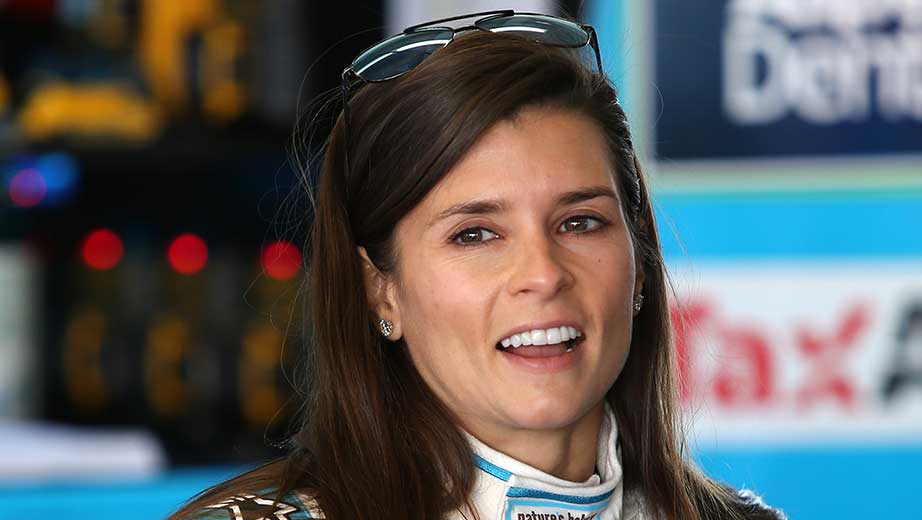
Danica Patrick


Patrick is the only female to win a pole in NASCAR (2013 Daytona 500 ), and she’s tied for the best finish by a woman in the premier series (sixth) in the modern era.


Patrick also is the first woman to win an IndyCar race (2008’s Indy Japan 300), and she owns the highest finish by a female in the Indianapolis 500 (third in 2009).


Yes, Danica Patrick lives up to the hype that surrounds her popular name.


After racing in IndyCar for seven full seasons, Patrick received a full-time opportunity with Stewart-Haas Racing in the NASCAR Sprint Cup Series in 2013.


“Tony (Stewart) gave me a job, so I’d say that is a pretty big player in my career,” Patrick said. “Just being a driver that’s gone from IndyCar to NASCAR is something that obviously plays into my career, and (Tony) having done the same thing.


“What you see is what you get with Tony. … So when it came time to think about NASCAR, think about what team I wanted to drive for, I was very fortunate to be able to name my team and have them willing to take me. … I’ve had a great fortune in my career to have good people around me, good sponsors behind me and Tony is absolutely one of them.”

Jennifer Jo Cobb


With 25 years in racing and more than 100 NASCAR Camping World Truck Series starts, Jennifer Jo Cobb continues to break down gender stereotypes as she wears both the driver and owner hats — a resilient soldier in her own journey to success.


After making her NASCAR debut in 2004 at Homestead-Miami Speedway, Cobb has used her gender as a motivator. “I, personally, am motivated by the fact that I will have to work a little harder to overcome being different,” she told NASCAR.com. “It makes me feel empowered to accomplish something that nobody expected me to do.”


The Kansas native was also given valuable guidance early in her career when she, admittedly, was struggling.


“(President of Rockingham Speedway) Andy Hillenburg … gave me the best advice on the subject (of women in the sport) that I have ever heard — I am going to get a lot of unfair criticism and it is going to hurt, but I am also going to get a lot of recognition, and I should not feel bad about that.”

Shawna Robinson


Former NASCAR driver Shawna Robinson is a wheelwoman of all trades, with her lengthy — and successful — resume including high honors in all three NASCAR national series as well as ARCA.


Her most fruitful stint was in the now-retired Goody’s Dash Series where she became the first woman to earn the pole position for a race (in 1989). She finished with three wins, 21 top 10s, two Most Popular Driver awards (1988 and 1989) and the Rookie of the Year title (1988).


In the Busch Series (what is now the XFINITY Series), Robinson was the first female to win a pole (Atlanta Motor Speedway, 1994).


And in 2003 during the Truck Series’ O’Reilly 400K at Texas Motor Speedway, Robinson had the first all-female pit crew to compete in a NASCAR event. The group penned itself “The Aaron’s Dream Team” and finished the day inside the top 20.

Photo credit: Hendrick Motorsports

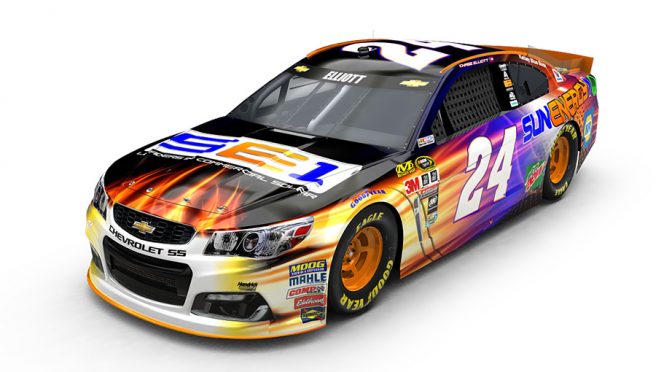
Chase Elliott
will have a sun-filled paint scheme later this year in the NASCAR Sprint Cup Series.

The look for his SunEnergy1-sponsored No. 24 Chevrolet has been unveiled and it has quite the array of colors.

The car will first take to the track at Daytona International Speedway ahead of the July 2 race at the revamped facility. SunEnergy1 will also be the primary sponsor for Elliott’s races at Watkins Glen International (Aug. 7), Kansas Speedway (Oct. 16) and Phoenix International Raceway (Nov. 13).

SunEnergy1 founder, CEO and part-time NASCAR driver Kenny Habul will pilot the No. 88 SunEnergy1 Chevrolet for JR Motorsports in the NASCAR XFINITY Series on Aug. 6 at Watkins Glen International.

The solar energy company is on board as a sponsor for four races in each of the next three years for the Hendrick Motorsports driver.

Elliott’s rookie season in the sport’s top series is off to a strong start. In addition to nabbing the pole for the season-opening Daytona 500, he has three top-10 finishes in the season’s first five races. The 20-year-old Georgia native and son of NASCAR Hall of Famer Bill Elliott is 16th in the point standings.

RELATED: Which rookie will win first? | SHOP: Elliott fan gear

MORE: About the Women In NASCAR series | Meet the Women in NASCAR
RELATED: Alba Colon blazes a trail in math, science and racing

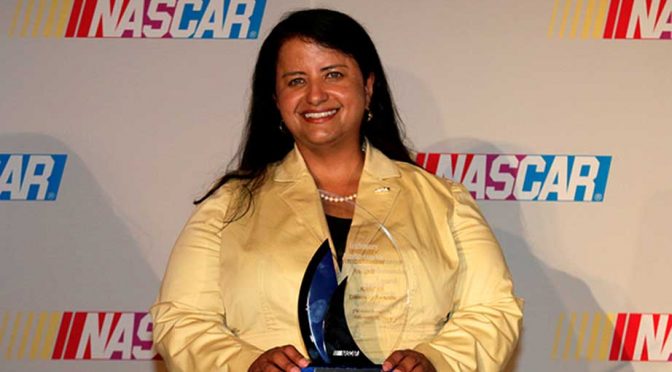
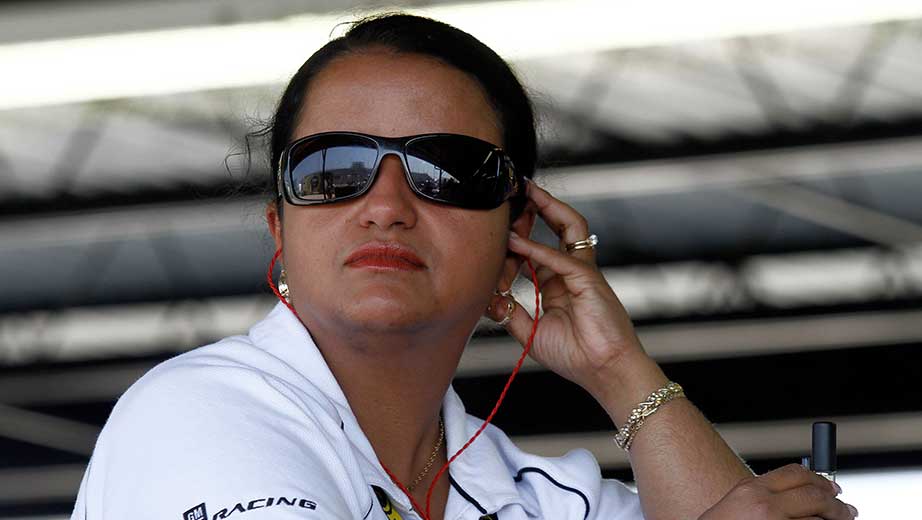
Engineering and technical jobs in NASCAR have traditionally been male-dominated positions, but times are changing. In addition to Alba Colon’s major presence as General Motors Program Manager in NASCAR, women are now holding major technical positions in the NASCAR garage.


Andrea Mueller is a lead engineer at Team Penske and has helped lead the team to manufacturer’s championships in the XFINITY Series. Ashley Parlett is a full-time mechanic at the Chip Ganassi Racing organization — both young women setting a high standard for themselves and breaking barriers for others to follow in the sport.

Andrea Mueller


After spending the early days of her career working on engine components for NASA’s space shuttles, Mueller made the move to her first love, auto racing. Mueller, who raced quarter and micro-midgets as a youngster, helped lead the esteemed Team Penske organization to back-to-back XFINITY Series titles in 2013 and 2014 and another last year. The team has collected 31 of its 54 race wins since Mueller came on board as a race engineer in 2012.

Ashley Parlett

While seeing Ashley Parlett with tools underneath a race car may cause some to pause, it’s just another day at work for this Chip Ganassi Racing mechanic. And there appears to be nothing she can’t handle — from working full-time on Jamie McMurray ‘s Sprint Cup Chevrolet to turning the wrenches on Ganassi’s famous sports cars, Parlett has been a NASCAR mechanic for 13 years. Her background in racing open-wheel sprint cars also included working on all of those race cars from the age of 13. Earlier in her career, she led the efforts of a NASCAR K&N team and hopes one day to have the opportunity to become a crew chief in one of NASCAR’s three national series.

MORE: Women in technical positions include Andrea Mueller and Ashley Parlett

RELATED: Photos of women in NASCAR | About the series


While still a young, school-aged girl, the ever-thinking, always-dreaming Alba Colon was completely convinced that she would join one of her heroes, astronaut Sally Ride, exploring space. She assumed that one day, she’d be visiting a faraway planet and conducting the science experiments she so loved while orbiting on a spaceship.


Growing up in Puerto Rico in the 1970s and 80s, Colon, was so talented in science and math that she remembers a time she wasn’t permitted to take art classes on her school schedule — even though art was a subject she loved and excelled in — because the school faculty had recognized her gift with numbers and theories and wanted to foster that potential.


Decades later and now Chevrolet’s program manager for the Sprint Cup Series, Colon, 48, is the first to suggest it hasn’t all worked out quite the way she planned.


But her position leading Chevy’s top-shelf NASCAR effort has given her unprecedented opportunity to still pursue her dreams — and it’s been every bit as high-tech and artful a ride for one of the sport’s true trailblazers.

SERIES DAY 1: Lesa France Kennedy | DAY 2: DeLana Harvick | DAY 3: Kelley Earnhardt Miller


‘You can be whatever you want to be’


“My father always told me, ‘You can be whatever you want to be’ and that was a big deal,” Colon remembered. “But, he said one thing we ask, is all of you (her brother and sister, too) must finish college.”


College was no problem; she loved academics. But cars?


“There was no interest in cars at the time for me,” she said laughing. “I wanted to be an astronaut and I had a poster of Sally Ride, the first American woman astronaut, in my bedroom. I wanted to be like her; that was the whole deal.


“A funny thing I also remember is from very early on, I wanted to be an altar boy. My brother was an altar boy and I come from a very Catholic family. I remember telling my mom I wanted to be an altar boy and she said, ‘No, you can’t because you are a girl.’ That was the first time I remember being told, ‘You can’t because you are a girl.’ At that time girls couldn’t become altar boys. They can now, but at that time you couldn’t.


“For me, that was always in the back of my mind: I don’t understand why I can’t do something because I am a girl.”


The philosophy of perseverance has served Colon well and made her an example of can-dream, can-do.


It certainly has never stopped Colon’s progress at General Motors, where she was hired immediately out of the University of Puerto Rico in 1994 thanks to what became a life-changing opportunity there. To get there, she first competed in International’s Formula SAE college competition that took Colon to many places around the world … including Michigan, where she has lived and worked ever since accepting a job with GM after graduating.


“I decided to be a mechanical engineer because that’s what I wanted to do,” said Colon. “And in college, things changed and I got an opportunity to work on a race car, to design and build a race car. My love shifted.


“Through this competition (Formulat SAE) I got a good opportunity to apply what I had learned in the classroom, and I remember in 1991 I came to United States for the first time to Michigan to participate in the competition and see other cars.


“I just fell in love with the whole idea of the competition and building something to make it better. It was the first time I really saw a nice Corvette, a Camaro. It was my first contact with GM and I was like, ‘This is awesome.'”


By 2001, GM had selected Colon to lead the top NASCAR Chevrolet technical position.


Blazing the trail


Even with the demands of her position today, Colon speaks to school students around the country, sharing not only her love of math and science, but also telling her life story of realizing anything is possible. It is important to Colon to share her background and encourage today’s students to consider all the possibilities — not just the easiest.


But most of all, Colon’s message really is about perseverance and being open to finding your talents.


“My father spent the time with me studying math and science,” Colon recalled of her father, Dr. Miguel Angel Colon Fernandez, who passed away last year. “It was not only studying, because when you are a kid it’s like, ‘Let’s just study the test questions and move on.’ But not with him. He wanted to look at the beauty of the math or Albert Einstein’s theory.”


A quick walk around the Sprint Cup garage and Colon’s presence is unmistakable. She is one of the most recognized and popular personalities, and her work ethic and knowledge clearly are second to none. Beyond that, she has been embraced for pursuing a career that wasn’t the easy option.


Colon is a trailblazer not just for women or Hispanics, but also for her craft in general — and the combination of the two is what makes her most proud.


“Let’s be honest, at first it was hard,” Colon said. “But my parents said, ‘Never give up.’ At first it was just the unknown, but you have to keep going, keep going. You will get there by respect, and respect is not something you can tell someone. You have to earn the respect and I learned that very young.


“It takes time to get respect in this garage and it doesn’t matter whether you are a woman or a man. You are part of their team and their well-being, and that takes time.


“That’s what I want people to understand: It doesn’t matter who you are, you have to earn it here and anywhere.”

Earning her reputation


During Colon’s career at Chevrolet she has both worked alongside the best and earned respect from them.


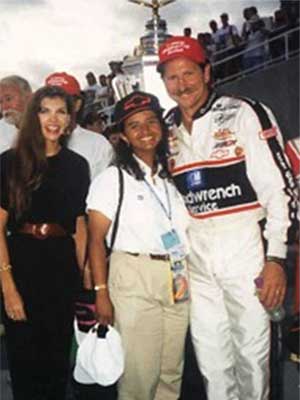
She remembers her initial meetings with the late, seven-time champion Dale Earnhardt, who during one test session early on suggested with a smile that NASCAR might not be more than a one-year gig for Colon. Then, with her help in winning the 1995 Brickyard 400 at Indianapolis, he insisted she pose with him and the trophy in Victory Lane.


She first met six-time champion Jimmie Johnson in his earliest days racing in ASA and has been a part of Chevrolet’s technical staff for all his championships and 77 wins. Despite all that success, Colon said, “You know what? He’s still the same, humble nice guy; still the great kid.”


Of another champion she worked with, Tony Stewart , Colon is especially impressed with Stewart’s 2011 title run when he won five of the final 10 races.


“I love the spark he had for that championship, the ‘and now I’m going to show you who I am’ feeling,” Colon said. “That season was magic.”


And last year, Colon was so glad a last-minute change in plans put her in Martinsville, Virginia, where the retiring Jeff Gordon emotionally collected the final of his 93 victories.


“These are things that will be there forever,” she said.


Those memories come from a work-ethic instilled in her by her late father, a doctor, and her mother, a middle-school teacher. But it’s  self-motivation she used to navigate the dueling forces of challenge and opportunity.


“She’s incredible,” longtime NASCAR team owner Richard Childress said. “She was one of the first engineers that ever came to RCR. She brought so much to us over the years. She’s a wonderful lady but very, very smart. She’s done it for so many years and still here, still strong and still has the passion. She really has a huge passion for our sport.”


Stewart , now a NASCAR team owner to go along with being a Chevrolet driver, shares that appreciation for Colon and notes what is particularly special is that she is as well-liked as she is brilliant. Stewart won three Cup championships driving Chevrolets with Colon leading the engineering effort.


“You think about the position she’s in with Chevrolet and she is one of very few women that has a title like that,” Stewart said. “And I don’t care who you are in the Cup garage, even if you don’t drive a Chevrolet, you know Alba and you respect Alba. 


“She’s one of the smartest people. And especially me being in the Chevy family for so long, I see that she has that special relationship with everybody — drivers, owners, crew chiefs or crew members. She knows everybody and everybody respects her. 


“But she’s always asking, ‘What can I do to help?’ and that’s something from my experience working with her, that sets her apart from everyone else.”


That’s the ultimate feedback that an engineer like Colon appreciates most: It speaks equally of her determination and ability.


Leaving her mark


“This is my family,” Alba said, motioning to the buzz and vibe around her on a recent NASCAR Sprint Cup Series race morning.


“Dreams shift. I tell young students, ‘You can prepare yourself for one thing, but in the end, God decides. Don’t fight against it. Accept it.’ I never imagined I’d be doing this, and this — racing — is my family.”


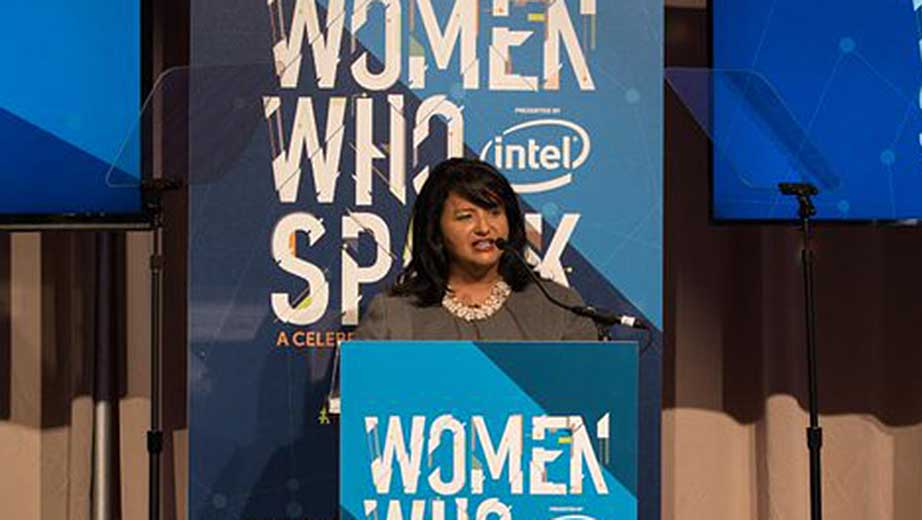
“I will be honest,” Colon said smiling, “I tend to come here to work and I just keep working. But once in a while you stop and realize people watch what you do and how you behave. One time, a young girl wanted to take a picture of me, and I asked, ‘Why?’ She said, ‘Because when I grow up I want to be like you.’


“I just cried. That day made me realize people admire the pit crew, the drivers, everyone out here, and we ought to be responsible for our actions.


“I will not be here forever; none of us will be. So while I am here, I want to do the right thing and someday say, ‘I left the sport better than I came.’ I love what I do.”

RELATED: Complete results from Fontana | On-track incident rules


NASCAR officials fined Danica Patrick $20,000 on Thursday for her actions after a crash during last Sunday’s Sprint Cup Series race at Auto Club Speedway.

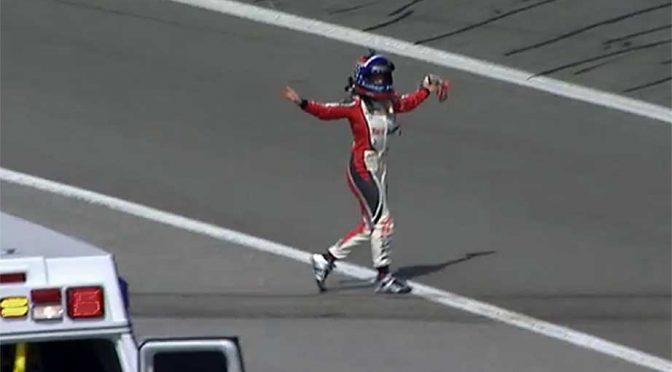
Competition officials ruled that Patrick violated safety rules when she walked toward the racing surface to gesture at Kasey Kahne‘s passing car. The guidelines are detailed in the on-track incident procedure section (10.4.2.1) of the 2016 NASCAR Rule Book. Patrick has also been placed on probation for the next four events.


WATCH: Patrick wrecks, gestures at Kahne


Additionally, Kyle Busch was fined $10,000 for failure to fulfill his post-race media obligations following the NASCAR XFINITY Series race at Auto Club. Busch is also on probation for the next four events.

Kahne’s Hendrick Motorsports No. 5 Chevrolet made contact with Patrick’s Stewart-Haas Racing No. 10 Chevrolet in the 120th lap of Sunday’s Auto Club 400, turning Patrick’s car sharply into the outside retaining wall on the frontstretch.

Patrick emerged from the car and walked toward the waiting ambulance for the mandatory ride to the infield care center, but — though she stayed below the uppermost white stripe delineating the racing surface from the track apron — her path deviated and included an agitated gesture in Kahne’s direction.

The fine is the same amount issued to Trevor Bayne last June for his actions at Dover International Speedway. After his involvement in a crash at the Monster Mile, Bayne did not wait for safety officials to tend to him, and there were no extenuating circumstances (such as fire) that prompted a more hasty exit.

Guidelines for properly exiting a race car have been stated in the drivers’ and crew chiefs’ meeting before every NASCAR race. The rules were formalized in August 2014 after a sprint-car accident at a New York dirt track involving Tony Stewart that fatally injured young racer Kevin Ward Jr., who approached Stewart’s passing car on foot.

During the yellow flag for the Kahne-Patrick incident, NASCAR race control ordered Kahne and his crew chief, Keith Rodden, to the Sprint Cup Series hauler for a post-race consultation with officials. Kahne apologized both mid-race over his radio communications, post-race after leaving the NASCAR hauler and again post-race through his personal Twitter account.

Patrick finished 38th in the 39-car field Sunday. Kahne wound up 28th.

• In addition to the fines for Busch and Patrick, NASCAR also issued warnings to six Sprint Cup Series teams for inspection issues at Auto Club.


Warnings, with season totals in parenthesis, were given to the following teams for failing the Laser Inspection Station twice during pre-qualifying inspection: Richard Childress Racing No. 3 with driver Austin Dillon (1); Joe Gibbs Racing No. 20 with driver Matt Kenseth (1); Wood Brothers Racing No. 21 with driver Ryan Blaney (1); and Richard Childress Racing No. 27 with driver Paul Menard (1).


The Joe Gibbs Racing No. 19 with driver Carl Edwards (2) failed the LIS twice during pre-race inspection.


The No. 20 team also received a warning, its second, for failing template inspection twice during pre-qualifying.


The Circle Sport Leavine Family Racing No. 95 with driver Michael McDowell was given a warning for a truck trailing arm that did not meet specifications. The issue was discovered during initial inspection on Friday.


Vehicles failing either pre-qualifying or pre-race inspection twice receive a written warning. A third failure results in the loss of 15 minutes of practice as well.


Any team receiving four warnings forfeits its opportunity for pit stall selection, either at that event if pit selection hasn’t taken place or at the next event if pit stall selection has been completed.


Once a team has forfeited its pit selection, its total is reset to zero.

RELATED: Danica fined $20,000 for actions in Sunday’s race


Defending Sprint Cup Series champion Kyle Busch has been fined $10,000 by NASCAR for failing to fulfill post-race media obligations following Saturday’s TreatMyClot.com 300 XFINITY Series race at Auto Club Speedway in Fontana, California.

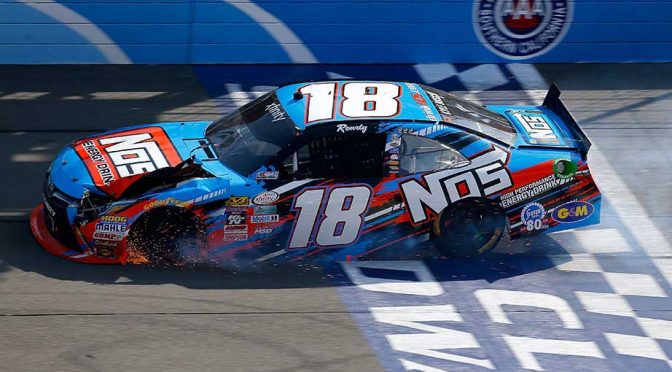
Busch, the series’ leader with 79 career victories, saw a three-race win streak come to an end at ACS when his No. 18 Joe Gibbs Racing Toyota suffered a flat left-front tire on the final lap of the race. He had led five times for 133 laps of the 150-lap event when he took the white flag.

After climbing from his car on pit road, Busch returned to his team’s hauler in the XFINITY Series garage, speaking with no media on pit road and failing to make an appearance in the media center.

According to the NASCAR rulebook, the second- and third-place drivers must report to the media center for post-race interviews upon the conclusion of the race, unless otherwise instructed by NASCAR.

NASCAR officials said afterward that no such release from that obligation had been granted to Busch.


In addition to the monetary fine, Busch has been placed on probation through April 27, 2016, a period that covers the next four championship points events.


With teams conserving fuel in an attempt to make it to the checkered flag on the heels of a long green-flag run, Busch led teammate Daniel Suarez by more than a second as the final lap began. The left-front tire let go before he made it to Turn 1, damaging the front fender and hood and sending debris across the track.

Suarez briefly overtook Busch, only to run out of gas as he entered the backstretch.

Eventual winner Austin Dillon (Richard Childress Racing) caught and passed Busch for the lead as the two raced out of Turn 4 coming to the checkered flag.

While Busch has been fined for his actions, Kevin Harvick, who finished second following an overtime ending to the Auto Club 400 Sprint Cup Series event on Sunday was not.

Harvick (Stewart-Haas Racing) spoke with the media as he made his way away from pit road, but was informed that his presence in the media center was not required.

Steve O’Donnell, NASCAR Executive Vice President and Chief Racing Development Officer, told SiriusXM NASCAR Radio earlier this week that he was “disappointed” in Busch’s comments and actions.

“I applaud Kyle’s passion because at the end of the day, the guy wants to win and he’s not happy when he doesn’t, so you always want to see that,” O’Donnell said. “Little disappointed … in terms of the post-race comments and certainly the media obligations.”

NASCAR also announced that Sprint Cup driver Danica Patrick had been fined $20,000 for walking toward the racing surface after she was involved in a crash with fellow driver Kasey Kahne at ACS.

Patrick approached the track to express her displeasure to Kahne following the incident.

Competitors are instructed to remain inside their vehicles until safety/emergency personnel arrive and to avoid walking on an active racing surface.


Patrick has also been placed on probation for the next four events.


In addition to the fines for Busch and Patrick, NASCAR also issued warnings to six Sprint Cup Series teams for inspection issues at Auto Club.


Warnings, with season totals in parenthesis, were given to the following teams for failing the Laser Inspection Station twice during pre-qualifying inspection: Richard Childress Racing No. 3 with driver Austin Dillon (1); Joe Gibbs Racing No. 20 with driver Matt Kenseth (1); Wood Brothers Racing No. 21 with driver Ryan Blaney (1); and Richard Childress Racing No. 27 with driver Paul Menard (1).


The Joe Gibbs Racing No. 19 with driver Carl Edwards (2) failed the LIS twice during pre-race inspection.


The No. 20 team also received a warning, its second, for failing template inspection twice during pre-qualifying.


The Circle Sport Leavine Family Racing No. 95 with driver Michael McDowell was given a warning for a truck trailing arm that did not meet specifications. The issue was discovered during initial inspection on Friday.


Vehicles failing either pre-qualifying or pre-race inspection twice receive a written warning. A third failure results in the loss of 15 minutes of practice as well.


Any team receiving four warnings forfeits its opportunity for pit stall selection, either at that event if pit selection hasn’t taken place or at the next event if pit stall selection has been completed.


Once a team has forfeited its pit selection, its total is reset to zero.

Los Angeles, Calif. — Los Angeles-based Lucky Brand, America’s premier denim and lifestyle brand, has teamed up with NASCAR to create vintage inspired T-shirts. The NASCAR-licensed Lucky Brand tees evoke a feeling of authentic, all-American spirit — true to both Lucky Brand and NASCAR’s rich heritage. The initial line of signature men’s retro graphic tees will be a nod to NASCAR’s bold roots and the era that established them as the No. 1 form of motorsports in the United States.


To celebrate, Lucky Brand and NASCAR are giving one Lucky customer a limited edition VIP trip to the Coke Zero 400 Powered by Coca-Cola NASCAR Sprint Cup Series race on July 2, 2016 at Daytona International Speedway. This race, historically known as the Firecracker 400, is one of the featured graphics of the collection and takes place during the Fourth of July weekend. Enter online at www.luckybrand.com starting on April 8, 2016.


Established in 1990 Lucky Brand is globally a recognized lifestyle and apparel retailer dedicated to making superior products. The Lucky Brand and NASCAR collaboration is a great example of two world-class brands working together to bring top quality products and value to consumers and fans.


The introductory collection will be available at Lucky Brand stores on March 24, and online at luckybrand.com on April 8, priced at $39.50 each.

MORE: About the Women In NASCAR series | Meet the Women in NASCAR
RELATED: Kelley Earnhardt Miller leads JR Motorsports with passion

Every sport needs leaders to aid in its growth, development and sustenance. NASCAR is no exception, with the sport featuring many exceptional leaders who have made racing what it is today.


As part of NASCAR.com’s Women in NASCAR series, learn more about JR Motorsports co-owner Kelley Earnhardt Miller, as well as other female leadership figures in racing.

Martha Nemechek


Known as a NASCAR matriarch, Martha Nemechek has long been a staple in the garage.

Born in 1940, Nemechek married Joe Jr., and the couple raised four children. She came into the sport briefly in the late ’80s, racing Powder Puff in the Bomber Division, including a second-place finish at the USA International Speedway — located in Lakeland, Florida — in 1988. Two of her sons, Joe and John, took up racing, but tragedy struck the Nemechek family in 1997 when John passed away from head injuries sustained in an accident during a Truck Series race at Homestead-Miami Speedway.

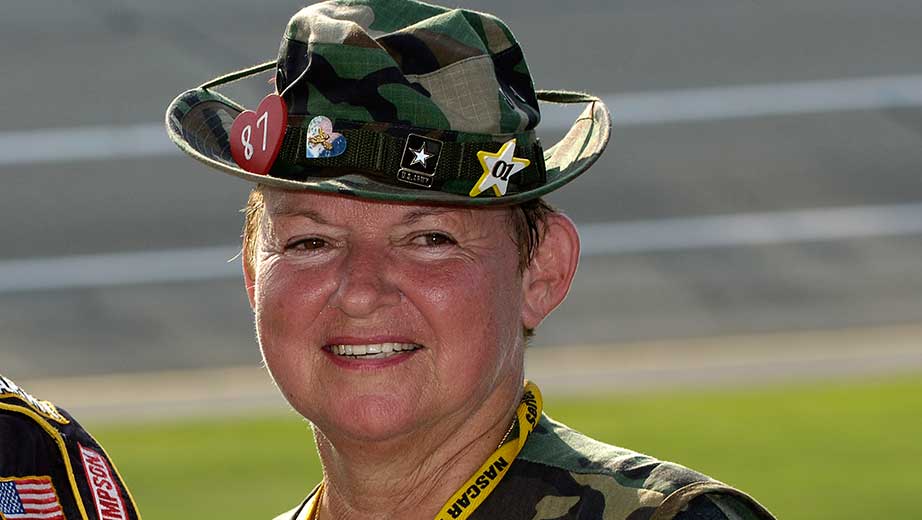
Nemechek’s son Joe’s U.S. Army sponsorship in 2003 gave Nemechek the perfect avenue to help others: she began to actively reach out to other families who had dealt with loss, including U.S. service members. She also donned Army fatigues and gave tours to military personnel at the track. 

Nemechek’s grandson, and current Truck Series driver John Hunter Nemechek , wheels the No. 8 ride — honoring his uncle John by running the same number — fielded by the Nemechek family-owned NEMCO Motorsports. Nemechek earned his first win of the 2016 season at Atlanta Motor Speedway on Feb. 27 and currently ranks third in the Truck Series driver standings.

RELATED: More about John Hunter

Jodi Geschickter


Jodi Geschickter is more than just a namesake in JTG (Jodi Tad Geschickter) Daugherty Racing — she’s a pioneer in NASCAR.

Along with her husband Tad, Geschickter formed a now-XFINITY Series team called ST Motorsports in 1994. They later partnered with Brad Daugherty, forming the Sprint Cup Series team JTG Daugherty Racing. For six years, Geschickter split her time between the race shop on weekdays and her job as a U.S. Airways fight attendant on weekends.

Today, the team fields the No. 47 entry of AJ Allmendinger, who earned a Chase-clinching win at Watkins Glen International in 2014. As a co-owner, Geschickter is the only active female owner of a Sprint Cup Series team.


MORE: JTG Daugherty team page | More about Allmendinger

Teresa Earnhardt


The third wife and widow of seven-time Cup champion Dale Earnhardt, Teresa Earnhardt is a gifted businesswoman.


With her husband, she founded Dale Earnhardt Inc. in 1984, earning Busch Series championships in 1998, 1999, 2004 and 2005 and two Truck Series titles in 1996 and 1998 as an owner. Dale Earnhardt Jr. scored the organization’s first Cup win in 2000 at Texas Motor Speedway.


Teresa Earnhardt and Chip Ganassi partnered in November 2008 to form Earnhardt Ganassi Racing, which fielded Jamie McMurray ‘s No. 1 Chevrolet that won the Daytona 500 , Brickyard 400 and Bank of America 500 in 2010.

Earnhardt and Ganassi parted ways prior to the start of the 2014 season.

MORE: Women in NASCAR team leadership

RELATED: Photos of women in NASCAR | About the series


Seated among NASCAR’s team owners in a boardroom, JR Motorsports co-owner Kelley Earnhardt Miller finally notices it.


It could be years of being one of the few women on the race track, or it could be Earnhardt Miller’s desire to be seen as equal. But the four enclosing walls of a boardroom do little to disguise the men-to-women ratio.


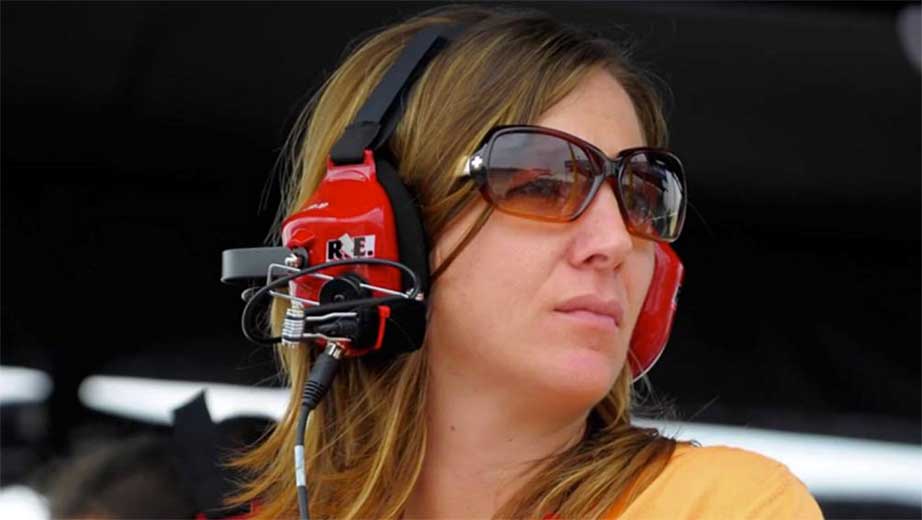
“I look around and there’s about three women in there – you know, Jill Gregory, myself and maybe Jennifer Jo Cobb,” Earnhardt Miller said. “Then you kind of look and go, ‘This is pretty cool. This is pretty cool to be a woman in the sport.’ “


SERIES DAY 1: Lesa France Kennedy | DAY 2: DeLana Harvick


The family ties


The daughter of the legendary Dale Earnhardt, Miller grew up in the sport, roaming track infields with her brother, Dale Earnhardt Jr.


They were young children, but they weren’t ordinary children — they were children of the Dale Earnhardt. “The Intimidator.” The famous driver of the black No. 3 Chevrolet.


The Earnhardt name has always been both a blessing and a curse.


“People definitely treat you different — good and bad — with the last name,” Earnhardt Miller said with a chuckle in her office overlooking the JR Motorsports shop. “School — my dad was ‘The Intimidator,’ right? We were either loved or hated, pretty much.


“And the hated part was kind of hard. People automatically thought we were snobby or we had everything that we wanted, and that wasn’t true. My dad made us work for things, and we were definitely not handed things on a silver platter.”


It was during these difficult times that Earnhardt Miller and her brother, Dale, leaned on one another for support.


They were, in a sense, their own team.


“There’s so much more to me that kind of shaped who we are,” Earnhardt Miller said of her brother. “Our parents were divorced early, we lived with our mom early on, we were in a house fire, we went to live with our dad — she felt like that was the best thing for us at the time. At that time, my dad was committed to his own (career) as a driver, we were home with nannies and family and things like that. 


“It just really made Dale and I close and want to look after each other because our world, you know, it was different than the typical family.”


“I think it’s hard for a lot of people to understand how close we are,” Dale Earnhardt Jr. said at Atlanta Motor Speedway in February. “I look at friends and other family members and their relationships with their brothers and sisters, and they’re good relationships.


“But man, ours is super-close because there’s so much we had to do, and we had to lean on each other and depend on each other. We never stopped.”


On the track


The Kelley-Dale duo became more of a racing team in the early 1990s, as both began racing in the Late Model Stock division on local tracks, along with their half-brother, Kerry Earnhardt.


But despite being the lone female among her brothers, Kelley was no damsel in distress at the race track.


“She was very good at what she did,” Earnhardt Miller’s cousin Tony Eury Jr. told ESPN in a 2010 article. “I raced her several times over at Tri-County (a short track in western North Carolina). We thought she probably had as much or more talent than any of them.”


But talent doesn’t always carve out an easy path for a female driver in a male-dominated sport.


“When I raced, gosh, being a girl was really hard. I raced against, you know, 40- and 50-year-old men,” Earnhardt Miller said. “And some young ones, too, but not quite as young as they race against today in the Late Model Stock Series. But it was difficult.”


Earnhardt Miller brushes off most hardship in the garage with a smile today, always keeping a positive note in her voice. But Earnhardt Jr., who worked on a few of Kelley’s cars during her racing years, saw firsthand his older sister’s struggles.


“Certainly as a driver she got pushed around, had guys wrecking her on purpose,” Earnhardt Jr. recalled. “You know, I think I see the same thing with Danica (Patrick) sometimes. Some of these guys, when Kelley was racing, they were waiting on her to give them the opportunity to rough her up. … Whereas if you’re racing another competitor, you sort of avoid those kind of things at all cost. Yeah, you don’t let someone shove you around, but they kind of might seize the opportunity when she’s just running someone hard and clean.


“She really took it hard when she struggled. She had this huge standard for herself. She could feel that nobody was overly excited to be a part of her career. People didn’t expect her to succeed, but she did, and she wanted to prove them wrong. And any time she had any kind of setback or struggle, she was super, super emotional and really hard on herself.”


From a brother’s perspective, the toll racing took on Kelley was the reason Earnhardt Jr. breathed a measured sigh of relief when she was forced to hang up her fire suit in 1998 due to lack of sponsorship. 


But something like sponsorship couldn’t impede Kelley from unearthing success in some facet of racing.


After all, her last name is Earnhardt. 


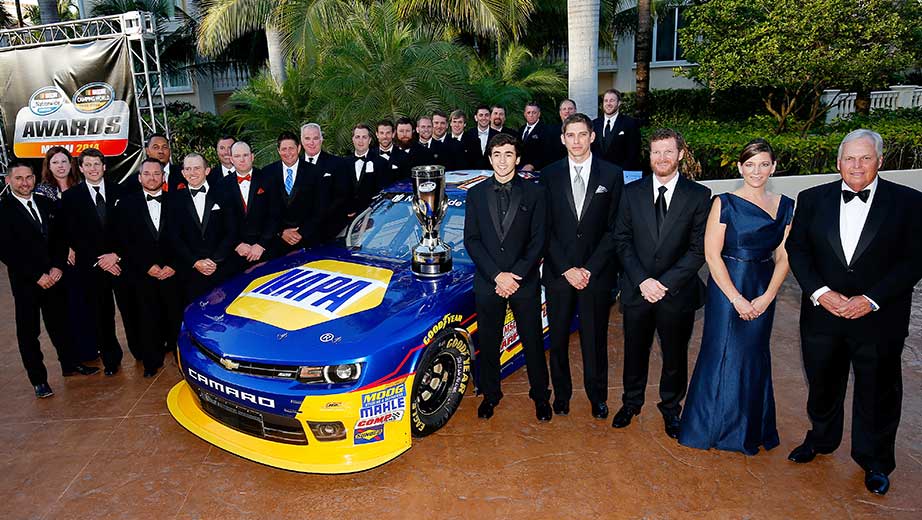
Chase Elliott won the 2014 XFINITY Series championship driving for JR Motorsports.


Moving into the boardroom


Equipped with a degree in business administration from the University of North Carolina at Charlotte, Earnhardt Miller focused her efforts on working full-time at souvenir sales company Action Performance. During her six years with the company, she climbed her way up the ladder to vice president of sales and vice president of procurement.


And after helping brother Dale kick-start his racing career, Earnhardt Miller was hired in 2001 as the general manager of JR Motorsports, a now-XFINITY team owned by Earnhardt Jr.


It was the perfect opportunity because for Earnhardt Miller, racing always has been a family affair.


“Really, what drives me in my position is because it is family and it is personal at the end of the day,” Earnhardt Miller said. “Carrying on the Earnhardt name … this is our family business. This is carrying on the legacy of my dad and what he built, and Dale and I doing that together — that’s what really propels me because it’s family and that’s very important to me.”


With the Earnhardts’ deep racing heritage that extends three generations, it came as little surprise to the industry when Earnhardt Miller’s oldest daughter, Karsyn, began racing go-karts at a young age.


“To be quite honest, as a mom, it’s a little scary to think about my daughter wanting to be a race car driver,” Earnhardt Miller admitted. “Not scary in the fact of getting hurt or anything like that, but it is so hard. 


“I kind of want to protect her, I guess, as a mom. On the flip side of that, I want her to chase her dreams.”


If anyone knows something about cheering young female drivers in pursuit of their dreams, it’s Earnhardt Miller.


Just ask Danica Patrick .


In 2010, Earnhardt Miller encouraged Patrick to transition from IndyCar to stock car racing, driving the No. 7 JR Motorsports Chevrolet. For Earnhardt Miller, Patrick was more than just a gifted driver — she was living out a dream that Earnhardt Miller once envisioned for herself.


“The driving force when we were presented the opportunity to potentially work with her was because she was a female and I wanted to be part of that,” Earnhardt Miller said. “Probably living vicariously through her for the dreams that I had and the dreams of Shawna Robinson and people like that that I followed at the time.”

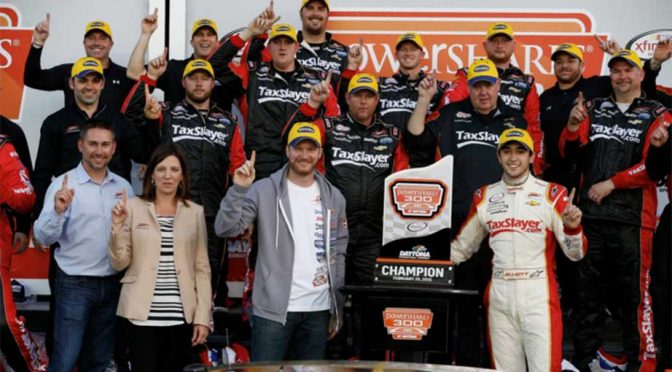
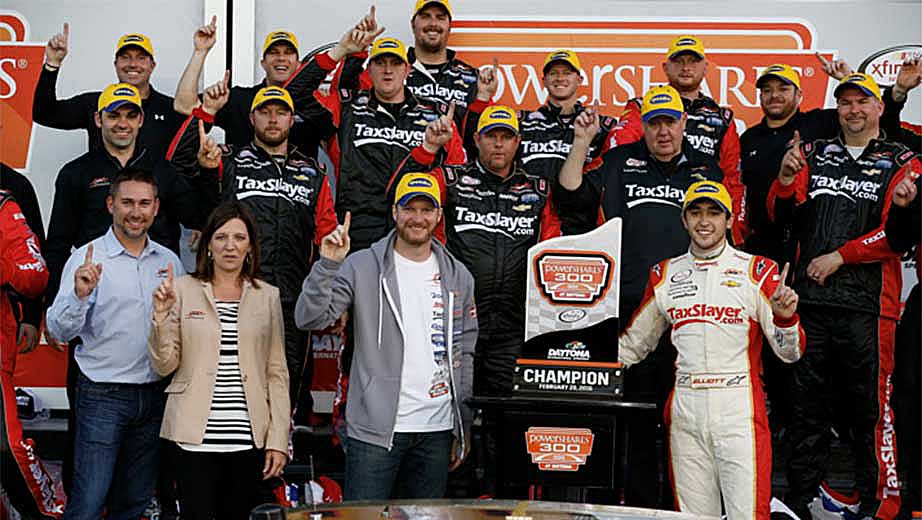
JR Motorsports celebrates Chase Elliott ‘s first win with the team. From left, front row: L.W. Miller, Kelley Earnhardt Miller, Dale Earnhardt Jr. , Elliott.


‘Show ’em what you’re made of’


While Earnhardt Miller’s racing-filled dreams have been laid aside, she has been dominant in her own right in business. In its 15 years of existence, Earnhardt Miller has helped lead JR Motorsports to 26 XFINITY victories and 53 late model wins. The team achieved its first XFINITY championship in 2014 when young star Chase Elliott swept to the series crown, and has also earned late-model track titles in 2012 and 2014.


With the company booming, it seemed as though her Earnhardt toughness on the race track transitioned seamlessly into the corporate side of NASCAR.


“She (is) so amazing at the business side of it, and she’s real tenacious,” Earnhardt Jr. said. “Nobody pushes her around, especially no male in the boardroom pushes her around. All those people at JR Motorsports … she has complete control of everything going on there and everyone gladly and happily answers to her because they have so much respect for her.”


Earnhardt Miller runs her operations the way she would race: Cleanly. 


“I’m not really a bully — I wouldn’t consider myself that at all — I just want things to be fair and I fight for things to be fair,” Earnhardt Miller said. “And usually you can see the rhyme and reason to that when you state your case and it’s all put out there.”


Fair is what she looks for with women in NASCAR in the future.


“I think obviously women are much more accepted in the garage (today),” Earnhardt Miller said. “I think it’s societal and generational that have really helped the changes overall, and then that’s carried on in our sport. 


“We’re well-received — if you get out there and show ’em what you’re made of, you gain people’s respect and you can sit right alongside the men in our sport.


“For me, I want more doors to open for drivers in the female landscape … I hope the door opens for car owners to believe in women, that they can drive.”


Contributing: Kathy Sheldon