RELATED: Raves, research for 2016 rules in Phoenix test


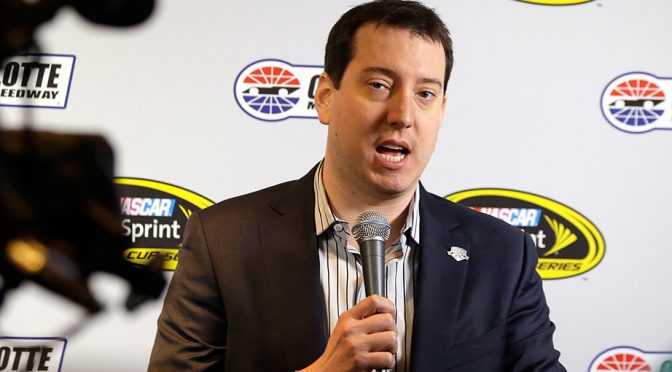
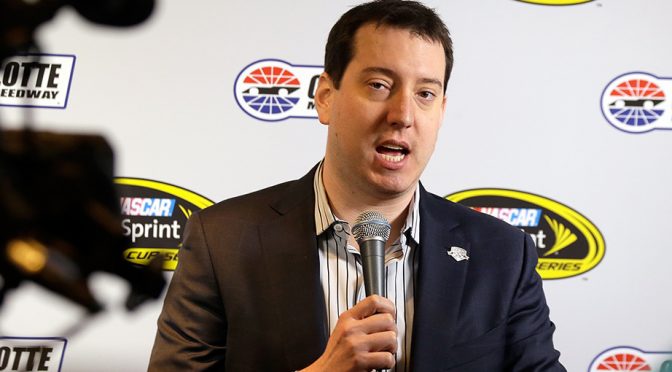
AVONDALE, Ariz. — Kurt Busch spent the lunchtime intermission during Wednesday’s open test at Phoenix International Raceway thumbing through his phone. This was no ordinary check of social media, e-mail or texts. This smartphone savvy and Stewart-Haas Racing driver was fixed on a primary goal: acquiring Cubs tickets.

Stock car racing’s Chase for the NASCAR Sprint Cup playoffs might be in full swing, but baseball’s postseason is heating up as well, leaving Busch, a diehard Chicago Cubs fan, hoping to ride the wave in person. Wednesday in Phoenix, Busch was wearing his team pride in between testing runs, donning his blue Cubs hat after the team’s victory the previous day in the National League Divisional Series.

Busch was in Pittsburgh on Oct. 7, watching his Cubs nail down a 4-0 victory in the NL Wild Card Game to eliminate the Pirates. His focus now is to watch from Chicago’s Wrigley Field next week as the Cubs play in their first National League Championship Series since 2003.

“It’s been an incredible ride,” Busch said. “It’s been a lot of fun with the energy that you can feel from (manager) Joe Maddon and the team. As a longtime fan, you see so many different stars align and then they go dark on you. Our expectation as Cubs fans has always been we love our team no matter what, but there’s something special about this year.”

On the other side of the garage, Furniture Row Racing crew chief Cole Pearn — a Canada native — went about the business of prepping the No. 78 Chevrolet for Martin Truex Jr. in the afternoon session while wearing a Toronto Blue Jays cap. The later session took place all while his fan favorites defeated the Texas Rangers in dramatic fashion to claim an American League Championship Series berth.

“We’ll see how the rest of the test goes based on how they do this afternoon,” Pearn said before Toronto’s stunning victory. “If Kansas City can win, they’ll play in Kansas this weekend. That’ll be exciting. We’ll at least be able to go chirp Kansas City fans, hopefully.”

Pearn’s Blue Jays open their best-of-seven series against the Royals this weekend, with Game 1 set for Friday and Game 2 scheduled for Saturday. The Royals were also still involved in the postseason during NASCAR’s trip to Kansas Speedway last fall, when the home-towners knocked off the Los Angeles Angels of Anaheim on their way to a World Series appearance.

Clint Bowyer, a Kansas native, undoubtedly remembers this all too well and will be cheering on the Royals during the race weekend in his home state.

RELATED: Bowyer takes BP, gets ‘Royal’ treatment in KC

Editor’s note: The following content was provided by Goodyear and may not reflect the opinions of the editorial staff.


In racing, a track’s surface is one of the most important variables that a driver must take into account because it directly affects the performance of both the tires and vehicle. And while it seems logical that a rough surface would be challenging for tires, smooth asphalt can be just as punishing because it brings its own unique set of challenges — including higher speeds and high heat.


Due to a track repave in 2012, Kansas Speedway has one of the smoothest track surfaces on the NASCAR circuit, which translates to higher speeds. In preparation for the Hollywood Casino 400 this weekend, teams must anticipate how the faster speeds on this smooth track surface will affect their race strategy.


One way teams will use this surface to their advantage is by setting up their cars very low to the ground. Using this approach, drivers can effectively minimize the amount of wind going under their car and push most of the air over the top of the hood to increase downforce, which will further increase their speed.


But while a smooth surface and lower ride height help make a car faster, the added speed results in increased heat and stress on Goodyear’s Eagle race tires. The smooth track surface brings a combination of higher speeds and a lower rate of tire wear than other tracks. Additionally, the car’s lower ride height reduces airflow around the tire. All these factors make managing heat buildup in the tire a critical factor.


Like they do at every track, Goodyear engineers developed the tires for the Kansas race with these grueling conditions in mind. They study the surface characteristics, car setups and track conditions to develop a tire combination that can deliver superior performance on race day. As a result, Goodyear’s right-side tires for Kansas feature a harder compound to manage the heat buildup. This is paired with a softer left-side tire to provide drivers with the grip they need to make it through the turns.


At Kansas, fans can expect to see the 12 Contenders battle it out for a guaranteed spot in the upcoming Eliminator round. Their race strategy to handle the higher speeds and heat buildup on their Goodyear Eagle tires will certainly be a factor in this week’s performance.

The No. 2 Team Penske team with Brad Keselowski and the No. 14 Stewart-Haas Racing with Tony Stewart received their fourth written warnings of the season at Charlotte. As a result, both will lose their respective pit selections at Kansas Speedway for this weekend’s Hollywood Casino 400 (Sunday, 2:15 p.m. ET, NBC, MRN, SiriusXM).

The No. 14 SHR team was warned for failing pre-qualifying inspection too many times as well as failing pre-race inspection templates too many times. Additionally, the No. 14 team received a 15-minute practice deduction.

The No. 24 Hendrick Motorsports team with Jeff Gordon received a warning for failing pre-qualifying inspection. The No. 15 Michael Waltrip Racing team with Clint Bowyer, the No. 17 Roush Fenway Racing team with Ricky Stenhouse Jr. and the No. 88 Hendrick Motorsports team with Dale Earnhardt Jr. received warnings for failing pre-race inspection too many times.


The No. 15 team was also warned for failing pre-race inspection templates too many times.

In the NASCAR XFINITY Series, the No. 28 JGL Racing team with J.J. Yeley was warned for failing the Laser Inspection System (LIS) portion of inspection too many times and also received a 15-minute practice deduction.

Ray Evernham has strong opinions about rules packages as NASCAR gets ready to introduce the 2016 parameters.

UPDATE: 2016 rules package announced | Fast facts about ’16 rules package


“These cars are too dependent on aerodynamics,” the former champion crew chief for Jeff Gordon‘s No. 24 ride said Tuesday on Sirius XM Radio with Dave Moody. “We have to find a way to make these cars less sensitive.”
 
Evernham referenced issues with side skirts that have cropped up the past few races. Martin Truex Jr.’s No. 78 team was penalized for a side skirt that was flared out too much at Dover, resulting in a P2 penalty and crew chief Cole Pearn being placed on probation. And NASCAR has asked a couple different teams to fix flared out wheel openings on pit road.
 
“You can make a car go a lot slower or a lot faster by kicking a dent in the quarter panel. To me, that’s crazy,” Evernham said.
 
Evernham advocates figuring out the most sensitive points on a car and minimizing the effects of changes to those points. His goal is to make aerodynamics less important and put the racing back in the hands of the drivers. Specifically, Evernham really likes the low downforce package that was used at Kentucky and again with some tweaks at Darlington.


“I know NASCAR’s working on it, and I’m not being critical of them,” Evernham said. “But we were going in that direction last year and we need to do it more.
 
“If we can get off these little things that make so much difference … you can’t regulate it, you can’t keep track of it. We need to figure out what exactly affects the bodies, take those things away and make these things a lot less sensitive.”

RELATED: Twenty NASCAR terms to know
 
Evernham’s first move would be to eliminate the splitter.
 
“Then I’d keep cutting the spoiler until the drivers scream,” Evernham said. “Then I’d cut another inch.”
 
NASCAR met with representatives from Chevrolet, Ford and Toyota at New Hampshire and have encouraged dialogue with drivers and teams about rules this and other items this year via a drivers’ council. The result of those meetings — the 2016 rules package — was announced on Wednesday.

The National Motorsports Appeals Panel panel amended the P2 penalty on Wednesday that was issued to the No. 54 NASCAR XFINITY Series team of Joe Gibbs Racing for failing post-race inspection at Chicagoland Speedway on Sept. 19.

The race-winning No. 54 driven by Kyle Busch at Chicagoland was found to be too low, failing to meet minimum height requirements on all four corners (Sections 12.1, 20.17.3.2.1. b & c, 20.17.3.2.2.b & c, 12.5.3.2.1.f, 12.5.3.2.2.a.b & d of the NASCAR rule book). Crew chief Chris Gayle was fined $12,500 and placed on probation through Dec. 31 2015, while car owner J.D. Gibbs was docked 10 series championship owner points.


With Wednesday’s ruling, these penalties will remain intact except Gayle’s fine, which was dropped to $8,500.

The appeal was heard at the NASCAR Research and Development Center in Concord, North Carolina, where a three-member panel made the final decision. The panel ruled that Busch violated the minimum ride height requirements and the original penalty would be upheld, execept for the adjustment in the fine to the crew chief.

Joe Gibbs Racing can appeal the decision to the National Motorsports Final Appeals Officer, but the organization has not stated if it will appeal the ruling yet.
 
While the sanctioning body annulled governing ride-height heights for the NASCAR Sprint Cup Series prior to the 2014 season, the regulations remain intact for the XFINITY and Camping World Truck Series.

The three-member panel consisted of: Ms. Cathy Rice, Mr. Lake Speed and Mr. Kevin Whitaker.

RELATED: Official release | Photos: See low downforce cars | Fast facts


NASCAR announced the base 2016 rules package for Sprint Cup Series teams on Wednesday, and the low downforce setup that received rave reviews from drivers following races at Kentucky Speedway and Darlington Raceway is the centerpiece.

Next year’s base package includes a 3.5-inch spoiler (currently 6 inches), a 0.25-inch front leading splitter edge (currently 2 inches) and a 33-inch wide radiator pan (currently 38 inches; it was 28 inches at the Darlington and Kentucky races).


The result of the smaller spoiler and other components will produce less downforce — downward thrust of a car created by aerodynamics — which drivers say gives them more control of the car and also results in both less throttle time and slower speeds in the corners.


“NASCAR has worked tirelessly with our teams, drivers, manufacturers and Goodyear to develop a rules package that provides fans with the best racing possible,” NASCAR Executive Vice President and Chief Racing Development Officer Steve O’Donnell said. “The success of the races at Kentucky and Darlington in similar trim proved extremely valuable in accelerating rules development for 2016. Now, as teams have even more time to prepare and a strong baseline of data, we anticipate the racing to be even better.”


The low downforce rules will also allow Goodyear to develop a tire that complements the new package and produces more fall-off, which would likely lead to more passing. A softer tire, like the one built for Darlington, led to drivers conserving their tires while slipping and sliding all over the track.


This base package is planned for all tracks except Daytona International Speedway and Talladega Superspeedway; each track will have its own tire combinations and drive train configurations, a flexibility NASCAR sought to produce the best racing for various track lengths and layouts.


Other changes in effect in the base package are adjusted rear gear ratios to maintain 9,000 RPM maximum engine speed, and a 1.38 third gear ratio for tracks smaller than 1.25 miles.


“We’re continuing to work with the industry on developing the appropriate elements of the rules for each track, and by that I mean what are the tires that would match up or the gears, as an example,” O’Donnell said. “The core goal for us continues to remain the same, and that’s deliver the best and safest racing possible for the fans, and it’s a goal that the entire industry shares. It’s a great thing in terms of working together with the industry, this year especially. It’s never been stronger. We’re confident it’s going to continue to deliver great racing for the fans.”

Teams began 2015 with a rules package that featured both less downforce and less horsepower. A move to take even more downforce away resulted in a second package used only at Kentucky and Darlington as officials experimented with what the ’16 package might look like. NASCAR also tested a high drag package at Michigan and Indianapolis.

The reaction from drivers and crew chiefs following the events at Darlington and Kentucky amounted to rave reviews.

“This is what race car driving’s all about. And I feel like now it’s back in the driver and crew chief’s hands to get their car handling like it’s supposed to, not just an arms race of who builds the fastest cars in the shop.” — Denny Hamlin


“Sold. Keep doing it. Ship it.” — Carl Edwards


“I think it was awesome. We had a lot better show. You saw cars spinning out on their own, slipping and sliding around. I thought it was really close racing, passes for the lead — stuff we haven’t seen in a long time.” — crew chief Darian Grubb


Superspeedways Daytona and Talladega have a few tweaks for next year, too. Engine roller lifters will replace the current solid lifters (adding approximately 10 horsepower), which in turn will reduce the size of restrictor plates from 29/32 inches to 57/64 inches.

The digital dashboard will also become mandatory in 2016 for all races, and safety enhancements include a new fire suppression activation system, right-hand side double NACA duct to better cool drivers at tracks where a side window is used and an enhanced safety belt restraint system.

Wednesday’s announcement followed a lengthy period of dialogue between the sanctioning body, teams, drivers, manufacturers and Goodyear.


Representatives from Chevrolet, Ford and Toyota, as well as others within the industry, met with the sanctioning body at New Hampshire regarding the packages, and drivers have met with NASCAR several times this season to discuss many issues, including rules.


Through a lot of dialogue that went on with the industry, we took a pause and we were having a number of different ownership conversations, a number of conversations with the drivers and Goodyear, and decided that we wanted to take a step back and really look at what was the best route to go to get to the rules package that we got to for 2016,” O’Donnell said. “I think, yes, it took longer, but what you’re seeing is an industry that’s really aligned in the direction we’re headed in for 2016 still. There will always be work to do. It’s always going to evolve. But I think we’ll really have a good base package to continue to work from.”

AVONDALE, Ariz. — Drivers on hand for NASCAR testing this week at Phoenix International Raceway were greeted not only with searing desert heat, but newly installed SAFER barrier.


The energy-absorbing barrier system now completely encircles the outside wall, providing an extra layer of safety protection at the 1-mile track ahead of its Nov. 15 race in the Chase for the NASCAR Sprint Cup playoffs. The longest stretch of new barrier completes the outside retaining wall on the frontstretch, which still had portions of brick wall from when the track opened in 1964.


The raceway, which coordinated with NASCAR officials before taking the safety measures, also added SAFER (Steel and Foam Energy Reduction) barrier along sections of the inside wall — at pit entry near Turn 4 and at pit exit near Turn 1. It’s already blended in with the surroundings, painted in the track’s familiar Southwestern light blue hue.


“I think the plan is to have that around every single race track, everywhere that a car can get, before next year,” said Jamie McMurray, participating in the test for Chip Ganassi Racing with Felix Sabates. “So I think some of the tracks are just getting ahead of the curve.”


Since the system sticks out roughly 30 inches from the existing wall at most tracks, the SAFER barrier sometimes alters the racing line. McMurray said after logging plenty of laps at Phoenix during testing, he hadn’t observed a difference.


“I hadn’t even noticed it,” McMurray said. “Honestly, I knew that they were going to put that and until you said it just now, I didn’t even notice it when I got out there. It didn’t bother me at all.”

AVONDALE, Ariz. — The commemorations of Jeff Gordon‘s final race last weekend at Charlotte Motor Speedway were unavoidable, his No. 24 splashed on the infield grass and on the exterior of the 1.5-mile track. When Gordon returns next month to Phoenix International Raceway for his final race here, the track will bear not only his number, but also his name.

Should Gordon’s Chase for the NASCAR Sprint Cup playoff hopes remain alive once the Quicken Loans 500 rolls around on Nov. 15, he’ll be vying for his place in Homestead-Miami’s championship quartet at a track with the name of Jeff Gordon Raceway. Even though that abbreviates to JGR (Gordon chuckled), the re-christening for one race serves as the latest in a series of one-upmanship tributes from tracks, sponsors and fans.

Though Gordon admitted Wednesday during a break in open testing at the Phoenix track that the recognitions have sometimes posed a distraction during his final full season of NASCAR competition, he’s been overcome by the outpouring of support as he closes out his Hall of Fame career.

“One of things that has been so rewarding this season has been what the fans and tracks have done when I’ve gotten to the track,” said Gordon, who has two wins at the Arizona mile. “They’re respecting the fact that we’re still trying to win a championship and win races, but they’re still doing things that are engaging the fans and honoring me in ways that I’ve been extremely grateful. This track kind of set the standard for that when they named the speedway after me on race day. I’ve been coming here for such a long time, going back before NASCAR and I’ve got very fond memories.”

Gordon’s torrent of gifts became an intriguing topic during Tony Stewart‘s announcement Sept. 30 that 2016 would be his final full season in NASCAR. When asked if he would welcome a similar victory tour with media center appearances and commemorations each week, Stewart was adamant that track owners should save their gifts, saying that Gordon was more worthy of a yearlong tribute.

Though Gordon said he has appreciated all of the appreciation, he was candid Wednesday in detailing how his farewell plans have sometimes snared the focus from his on-track goals, saying that his team has had to decline certain activities in an effort to raise its performance.

“We all have our reasons for announcing at the stages that we do or whether you just walk away and hang it up that day, I knew that it was going to a part of this season and have embraced it,” Gordon said. “We’ve tried to get on the front end of it and try to have conversations with the tracks and NASCAR about how we could handle it and get everyone involved and engaged. There were times earlier in the year where it was a distraction and I had to take a step back and we weren’t performing on the track as well as we wanted to and I needed to focus my attention more on the team. I’ve always wanted to enjoy this year as much as I possibly can, but I’m not going to enjoy it if I’m not being competitive out there.

“I can certainly relate to what Tony (Stewart) wants to do, and how he wants to go out. I’m very proud that we were able to make it into the Chase and make it to Round 2, and if we can make it to the next round or even to Homestead, that would be amazing.”

Wednesday’s prelude to Gordon’s final ride at Phoenix was well-attended, with track officials estimating 1,000 fans entering the track’s gates in exchange for a $5 donation to the speedway’s charitable foundation. Those that came mostly baked in the sunshine and near-100-degree heat for what’s scheduled to be Gordon’s final test session in a Sprint Cup car.

“I must say I was shocked to see how many people came out here for testing,” Gordon said. “We haven’t seen that in a long time, and I didn’t know that you guys promoted the test as being my last test, but I know how happy I am to know that this is my last test. I think as a driver, one of the things you look forward to least is testing, although you realize how important and necessary it is. It is pretty boring and not the most fun part of the job, but I’m certainly willing to celebrate that this will be my last day testing and I’m glad that the fans came out and enjoyed it as well. The fact that they came out here in this ridiculously hot weather shows their dedication and commitment and avidness and that made me feel good.”

RELATED: See what low downforce looks like


AVONDALE, Ariz. — The grand unveil of NASCAR’s 2016 rules package came as welcome news around stock-car racing circles, establishing a reduced-downforce baseline for the Sprint Cup Series. For the handful of teams busy this week with a three-day test at Phoenix International Raceway, the package had already received its initiation with a dry run in the desert.


The news received an overwhelming thumbs-up from those in the garage area Wednesday, moments after NASCAR competition officials released the 2016 rules configuration. A similar rules setup was met with approval during trial races this summer at intermediate-sized tracks Kentucky and Darlington.


RELATED: Low downforce prevelant in 2016 rules package


Teams put a similar reduced-downforce setup to the test on the 1-mile track during portions of the two-day Goodyear tire test Monday and Tuesday with positive results, then during some of Wednesday’s open test.


“We’ve tested a little bit here what we felt it was going to be, and looks like we were pretty spot-on for that,” said Brad Keselowski, the Coors Light Pole Award winner at Darlington with the package. “In general, I think from the technical side, I think it probably makes the race cars more in the drivers’ hands, so I’m a fan of that. I feel like that suits my style.”


NASCAR officials chopped the rear spoiler back from 6 inches to 3.5 for next season, and decreased the aerodynamic effect of the front splitter (2 inches to .25) and the radiator pan (38 inches to 33) for next year. The 2015 rules for superspeedways at Daytona and Talladega largely will remain intact; the reduced-downforce package will be the basis for the remaining 21 tracks where NASCAR’s top series competes.


RELATED: Get fast facts on the 2016 rules package


In making the anticipated changes, competition officials hoped to make the cars far less dependent on aerodynamics when racing in larger groups.


“The two times that we raced it, it seemed like it was better as far as being able to get close to another car and have less negative aero effects being behind other cars,” Matt Kenseth said. “I think it gives us more opportunities to get side-by-side and pass. I think it’s certainly what I think all the drivers think probably is the right direction as far as passing and putting on better racing.”


The primary focus for the eight teams here centered on tuning in this year’s package for when the series returns Nov. 15 for the next-to-last race in the Chase for the NASCAR Sprint Cup playoffs. Six of the eight drivers here — Kurt Busch, Jeff Gordon, Ryan Newman, Martin Truex Jr., and Kenseth and Keselowski — remain title-eligible, all hoping to find speed to upend Kevin Harvick‘s stellar streak of four consecutive Phoenix wins.


That focal point didn’t keep teams from getting a taste of the 2016 rules a few months early.


“I thought yesterday, really when we first went to it, the car overall was a little bit freer, but all in all it wasn’t drastically different,” said Jason Ratcliff, Kenseth’s crew chief on the Joe Gibbs Racing No. 20 Toyota. “Goodyear brought a lot of different tire combinations and they found a couple sets that seemed like they provide more grip and lap times were up a little bit from there, but all in all, Matt was fairly happy with it. I think if we’d had more time to just work on that, we could’ve made it better, but for our first stab at it here at Phoenix, I thought it went pretty good.


“I think we’ve raced it a couple times this year and the racing’s a little bit better directionally. I thought at Kentucky, there were a couple of situations where there was some passing going on that maybe we don’t see this year. I thought directionally it’s definitely the way to go. It’s hard to tell at a test like this what that’s going to do in a group because we were never in that situation, but from what we’ve seen at Kentucky and Darlington, I think it’s going to be a plus.”


Goodyear collected data this week to confirm its tire compound for the Sprint Cup race here next month, but teams also gathered valuable information in their dalliances with the 2016 rules. More tests for next year’s package are scheduled in the weeks and months ahead, next Tuesday at Michigan, Oct. 27-28 at Atlanta, and Dec. 14-15 at Homestead-Miami.


Michigan was the host to what was likely the final event of a two-race trial for the widely panned increased-downforce package, which raised the spoiler height and other aerodynamic devices. Next week, the 2-mile track will get its first taste of the 2016 baseline setup.


“I think that’s been the general consensus of all the drivers is that we liked that direction, and I think that those are two of the better races that we had this year,” said Jamie McMurray, driver of Chip Ganassi Racing‘s No. 1 Chevrolet. “I don’t really like when people use the term ‘having to drive the car,’ because no matter what the package is, you still have to drive the car and it’s still a lot of work, but the less downforce is just a little more fun to drive. The acceleration is better, the (tire) fall-off is a little more, and the corner speeds are less, so hopefully it creates more passing.”

RELATED: Low downforce prevalent | Photos: Low downforce cars | Fast facts


DAYTONA BEACH, Fla. (Oct. 14, 2015) – NASCAR announced today the base NASCAR Sprint Cup Series rules package to be used during the 2016 season. The package was delivered to teams after an extensive collaborative process between NASCAR and industry stakeholders.

The base package will include a 3.5-inch spoiler, a 0.25-inch front leading splitter edge and a 33-inch wide radiator pan. These components will provide lower downforce on the cars, and Goodyear will develop tires to complement them. Earlier this season, NASCAR Sprint Cup Series races at Kentucky Speedway and Darlington Raceway featured a similar aero package.

“NASCAR has worked tirelessly with our teams, drivers, manufacturers and Goodyear to develop a rules package that provides fans with the best racing possible,” said Steve O’Donnell, NASCAR executive vice president and chief racing development officer. “The success of the races at Kentucky and Darlington in similar trim proved extremely valuable in accelerating rules development for 2016. Now, as teams have even more time to prepare and a strong baseline of data, we anticipate the racing to be even better.”

Characteristics of the lower downforce rules package includes more off-throttle time for drivers and decreasing corner speeds. This generates more passing zones over the entire track, and allows for multiple tire combinations to be levered.

In addition to the base package, each track will continue to feature specific rules, including tire combinations and drive train configurations, to create the best racing for each track length, layout and surface. Rear gear ratios will be adjusted to maintain a maximum engine speed of 9,000 RPM and a 1.38 third gear ratio will be used at all tracks smaller than 1.25 miles. The digital dashboard, which was optional for teams during the second half of this season, will be mandatory in all vehicles.

“Our team at the NASCAR R&D Center is constantly looking at the racing, and evaluating ways to continue to improve it,” O’Donnell said. “Using science and technology and qualitative data compiled from world-class engineers throughout the industry as our guideposts, we will always look to make the racing better for our fans.”

Several safety updates have been instituted, including a double NACA duct where a right-hand side window is used, a fire suppression system activation cable routed to the dash or right-hand side leg board and a seat belt restraint system that meets SFI 16.6 specification.