Lorene King, executive director of the NASCAR Foundation, has done a Q&A with each of the four finalists for the Betty Jane France Humanitarian Award. They will appear on NASCAR.com this week.
RELATED: Cast your vote today
As another year comes swiftly to a close, we should all take time for reflection. As a charitable organization, we are thankful for those of you whose volunteer service impacts the lives of others and our communities.
Volunteerism remains strong with one in four adults volunteering in our country. The NASCAR Foundation has established the encouragement and support of volunteerism as one of our major efforts. Through the Betty Jane France Humanitarian Award that honors our founder, Betty Jane France, we annually receive and review hundreds of nominees from which four finalists are selected.
The stories of these four outstanding, everyday champions and the charities they serve are told through special appearances at NASCAR races, our marketing efforts and those of our supporters and sponsors. We are blessed this year that Nationwide has joined us as Presenting Sponsor of the Award and is helping us spread the word about each of our finalists and their work for children.
This week, we are giving you a more in-depth look at each of this year’s finalists. These outstanding volunteers will touch your heart, so please stay tuned as each of these champions for children share their passion. And you can help — vote for your favorite every day, share these stories through social media, and tune in to the 2015 NASCAR Sprint Cup Series Awards at Wynn Las Vegas at 9 p.m. ET on Dec. 4 (NBCSN), to see the winner of this year’s award.
Q: What does it mean to you to be among the finalists for The NASCAR Foundation’s Betty Jane France Humanitarian Award presented by Nationwide this year?
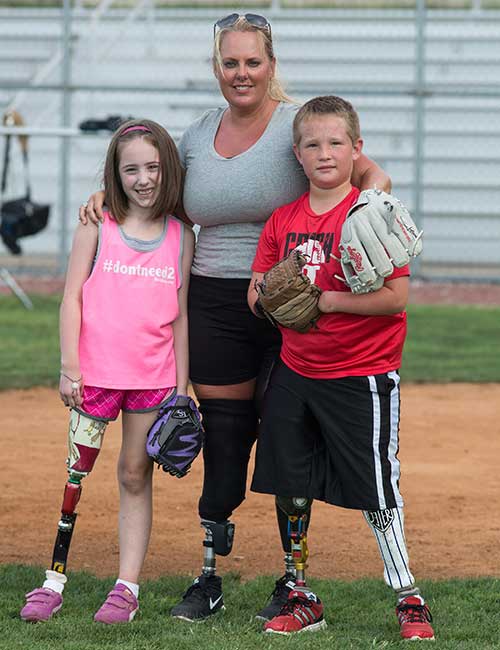
A: It means the world. Not only is my whole family NASCAR fans, this award will truly help put us on the map and be a game changer for the Stephanie Decker Foundation. The cost of running a camp for amputee kids can be quite high, between scholarships, travel/food for kids, programming, supplies and staffing.
Q: How will being selected as a finalist further your cause?
A: This award provides a large platform to bring awareness to children with missing limbs to an audience that we wouldn’t have reached before. Not only is it an opportunity to obtain sponsorships and form partnerships with other like-minded foundations, but it truly helps to bring awareness to the parents of limb different children, letting them know our organization exists to help.
Q: Why did you choose to work with this organization and/or cause?
A: When I lost my legs and began to get media attention about my survival, I realized that I was given a true opportunity to help make a difference. After experiencing our first camp and seeing the impact on the children we were helping, I knew this was what my family and I were meant to do. We haven’t looked back since. Our foundation helps provide sport opportunities, and sports are huge in our family. Being able to provide kids with confidence, skill, and teach metaphors for life experiences is priceless.
Q: What inspires you and your personal commitment to your cause?
A: When the kids first come into camp they are shy, but then they just blossom and come out of their shell. The truth is, those kids personally give us so much more in return than we can give them. It’s about the kids. They are our “why.”
Q: What has been the most rewarding moment during your work with your charity so far?
A: There was an amazing girl named Ella who never played sports (didn’t think she could) and was so quiet. Through her experiences at camp, she has gained so much confidence. Now she does jujitsu and loves to talk — and her mother said our camp changed her life. Instead of being a victim in other people’s eyes, she is now an advocate for herself and is taking on the world. It is priceless.
Q: Is there anything else you would like voters to know about you, your charity and your work?
A: We are so honored to even be considered. It’s important that people know we are an organization that needs some awareness — by voting for our foundation, it’s a true opportunity to make a difference in children’s lives.