Hall of Famer to appear in pre-race and post-race coverage

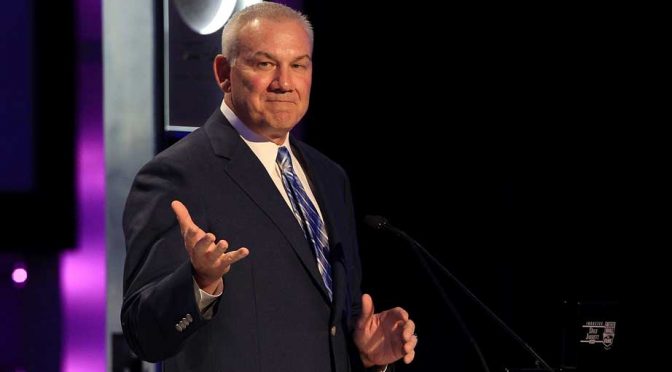
Dale Jarrett will join NBC Sports Group as a pre- and post-race analyst for select NASCAR Sprint Cup Series and NASCAR XFINITY Series races, the organization announced Monday.

A NASCAR Hall of Famer and three-time Daytona 500 winner, Jarrett will join previously announced talent Krista Voda and Kyle Petty when NBC begins its live pre-race coverage from Daytona International Speedway in July.

"I’m very pleased and excited to be a part of NBC Sports and their NASCAR coverage," Jarrett said. "NBC has assembled an All-Star crew for their coverage, and I’m honored to be a part of this group that will bring NASCAR fans inside the sport we all love."

Jarrett has worked for ESPN since 2008 and joins NBC just as the network returns as a broadcast partner.

"We are excited to welcome Dale and his Hall of Fame credentials to our NASCAR broadcast team," said Sam Flood, Executive Producer, NBC Sports and NBCSN. "As a former Champion, his experience and insights will help us set the stage and break down key races throughout the Chase for the NASCAR Sprint Cup."

Last week, NBC announced that motorsports journalists Nate Ryan and Dustin Long would join the platform. The on-air talent includes, in addition to Voda and Petty, Jeff Burton, Steve Letarte, race announcer Rick Allen and reporters Marty Snider, Kelli Stavast, Mike Massaro, Dave Burns and Rutledge Wood.

Longtime sponsor signs on with Erik Jones in XFINITY Series

RELATED: Watch JGR live stream, 4 p.m. ET

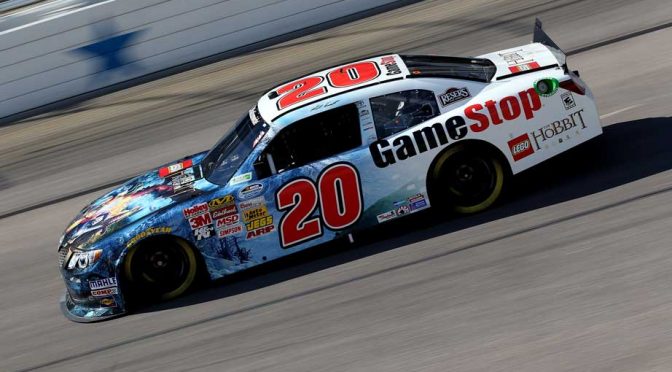
Joe Gibbs Racing announced Monday that longtime sponsor GameStop will continue its partnership in the NASCAR XFINITY Series and will adorn Erik Jones‘ No. 20 Toyota Camry for 10 races.

FULL SERIES COVERAGE

Jones’ first 2015 showing will be at the season opener on Feb. 21 at Daytona International Speedway.

"As a gamer, I’ve always followed the cars GameStop puts on the track each year," Jones said in a Joe Gibbs Racing release. "It’s so cool that they change their paint scheme for every race, and they’ve featured many of my favorite games. It’s exciting to have the opportunity to combine my love for gaming with my career as a NASCAR driver. I know we’ll be competitive each week with the GameStop Toyota, and I’m confident we’ll be able to get us a win, or a few, this season."

The 2015 season will mark the second year that Jones has competed in the XFINITY Series with JGR and GameStop’s eighth season partnering with the team.

After successful debut, playoff system will get time to take root

CHARLOTTE, N.C. — Last year’s NASCAR State of the Sport portion of the Charlotte Motor Speedway Media Tour carried the gravity of wholesale changes to the way it determines a champion in its top-tier series. This time around, the driving thought process was to let those changes take root.

FULL SERIES COVERAGE

Latest news
Standings
Schedule

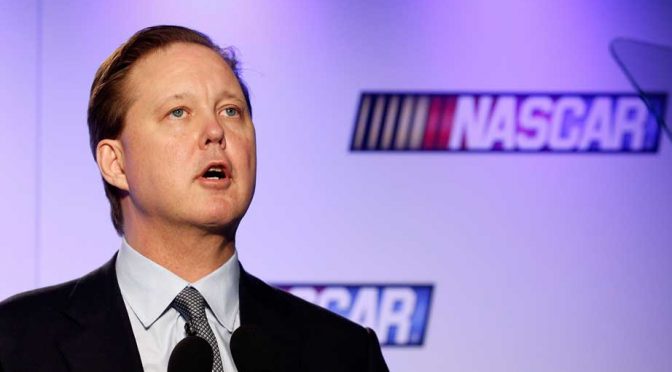
NASCAR Chairman and CEO Brian France said that while the sport’s senior management considered subtle tweaks to the Chase for the NASCAR Sprint Cup format, no changes are forthcoming for the 2015 season. France emphasized that the goal was to avoid muddling a system still fresh from its dramatic overhaul last offseason, allowing fans to become more familiar with the format and to let teams get a better handle on developing strategies for the final 10-race stretch.

"It’s not because there aren’t a tweak or two here that we didn’t get good suggestions on," France said in the kickoff event to the annual Charlotte Motor Speedway Media Tour, "but one of the magical parts of this Chase, and we want to make sure we keep it this way, is the simplicity of it: Win and you get in; be in the top eight, top four, whatever it may be, and move on; coming down the stretch, beat the other three drivers and you win the championship.

"So whatever we would do into the future, we want to make sure that simplicity is right there."

NASCAR’s season-opening address highlighted plenty of areas where things will take on a different look and feel: a new rules package, technological leaps in pit-road officiating and a new policy banning the altering of side skirts ahead of the rear wheels. While certain changes were regarded as necessary and evolutionary, the Chase format — still in its infancy — was considered sacrosanct.

Last year’s introduction of the new Chase system marked a step into uncertainty. The playoff eligibility requirements — including automatic berths for race winners in the regular season and top points performers — and the new 10-race system itself, featuring a series of gradual eliminations and a winner-take-all final race for four drivers, were rightly considered radical steps, met with a mixed reaction from fans and drivers alike.

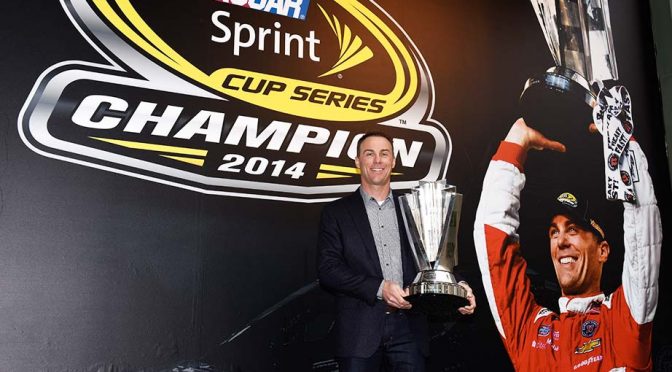
While it might be hard to convince purists, the format played out with some of the most intense racing the sport has seen in several seasons. The pressure ratcheted up at each stage of eliminations, and Kevin Harvick responded with clutch performances by winning the season’s final two races on the way to his first Sprint Cup Series championship.

For France and his team, the final series of events that led to Harvick popping the corks on champagne bottles at Homestead-Miami Speedway last November could have been seen as clear-cut validation. But even if the Chase had unfolded differently, France said last year’s decisions didn’t come without careful consideration before moving forward.

"It was an important step, had some risks, like anything that is controversial would have, and anything that fools around with tradition will have a big thing," France said. "But we wouldn’t do something, and I certainly wouldn’t, if we didn’t have a high degree of certainty it was the right step for us. I think it was important, but we’ll never know because it did work out, and thankfully it did."

NASCAR officials said they considered implementing a separate points system for Chase competitors, but that the complex nature deterred them from making such a change. Furthermore, changes to race formats — including qualifying races or other deviations from the current structure — were shelved for the time being.

"We just thought that with everything going on in the sport, with the Chase just being its second year, with the rules package, we wanted to let that play out this year," said Steve O’Donnell, Executive Vice President and Chief Racing Development Officer, "but there was certainly dialogue going on in NASCAR and the industry looking at race formats and what may continue to grow the sport, so that is something that we’re exploring."

For now, the status quo will be same as it relates to the 2015 Chase. Robin Pemberton, NASCAR Vice President for Competition, said that fans would have a better sense of how the playoff format works for Year 2, but so will teams, which can learn from their first run-through last season.

"I think it was all of the above," Pemberton said. "The teams will adjust a little bit on the second year, they’ll analyze the strategies they used and how they played out, and how other teams did and how they played out. Then for the fans is the big thing. I mean, it was a pretty big change for us, and the fans adapted to it. Brian felt it was really important that we stay pat, and we’re going to do that and let the teams work on it from here on out."

NASCAR officials becoming familiar with system during ‘dry runs’

CHARLOTTE, N.C. — The shakedown for NASCAR’s new pit road officiating system continued this past weekend as officials put the new technology to use during the Rolex 24 at Daytona International Speedway.

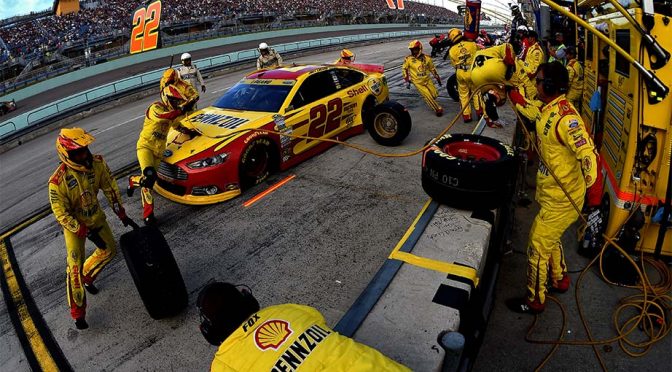
It was yet another "dry run" for the program, which uses 45 cameras to monitor pit road actions and then feeds that video to a central location where eight officials monitor the stops and are alerted to any potential infractions based on software built into the system. Officials replay the video of each flagged stop individually and either confirm that an infraction had occurred or clear the stop when it is determined that no infraction has taken place.

FULL SERIES COVERAGE

Latest news
Standings
Schedule

The technology was not used to officiate the Rolex race, or those in which it was used during the latter part of the 2014 Sprint Cup Series season as officials tested and became familiar with the program.

Gene Stefanyshyn, vice president of innovation and racing development for the sanctioning body, said the system would continue to be used in an unofficial capacity during the early activities at Daytona International Speedway next month before likely being put into official use in time for the season-opening Daytona 500, scheduled for Feb. 22 at DIS.

"Where we’re at right now, we have a high level of confidence in our officiating (with the technology)," Stefanyshyn said, adding that the focus going forward is on working to develop and refine "the ability to distribute the data provided by the system to the television partners and the teams."

The system will alert officials to such possible infractions as a team having too many crewmen over the wall, crewmen entering the pit box too soon, or a competitor driving through too many pit stalls when entering or exiting his or her pit stall.

Some possible violations, such as exceeding pit road speed and missing the commitment line when entering the pits will continue to be ruled on by officials in the scoring tower.

"It’s another tool in the toolbox for us to officiate races," said Steve O’Donnell, executive vice president and chief racing development officer for NASCAR. "But I think it puts us at the upper echelon of all sports.

"One of the things that gets missed in NASCAR is that every second of every race is under review, so unlike other sports where there’s limited challenges or a flag is thrown, every moment of every race is under review. … It’s not just important for us to police the races, it’s (important) for us to get data out to the fans."

What are Harvick’s chances of claiming the title back-to-back?

RELATED: Full schedule of driver previews

Team: Stewart-Haas Racing No. 4 Chevrolet

Rank in final 2014 standings: First

Wins: Five (Phoenix in March, Darlington in April, Charlotte in October, Phoenix in November, Homestead in November)

Year in photos: Recap Harvick’s 2014 season

FULL SERIES COVERAGE

Latest news
Standings
Schedule

Strides: Harvick often said that a driver doesn’t switch teams with the expectation of running worse. And that was the case for the Bakersfield, California, native when he ended a 13-year run at Richard Childress Racing to join Stewart-Haas Racing for the ’14 season. Although he was stepping into a slot made available with the departure of Ryan Newman, Harvick’s No. 4 team was built new, from top to bottom — a new driver, new crew chief in Rodney Childers, a new, handpicked crew and new equipment.

The result? Harvick won his first NASCAR Sprint Cup championship, five races, a series’ best eight poles and he led more laps (2,137) than any other driver. By a wide margin.

Never higher than third in final points during his stay at RCR, Harvick won early last season to earn a spot in the Chase, and then won key races during the 10-race, elimination-style format to continue to advance. He closed the season with wins at Phoenix, which guaranteed his place in the four-team finale, and then at Homestead to secure the title.

Although his Chevrolet was fast each and every week, it wasn’t consistency that carried him to the title.

"Our success came all from winning races," he said. "In the end, it was winning the last two races; winning early in the season and getting ourselves in the Chase. Pretty much, if you’re going to look at the root of our success, it wasn’t about consistency. It was really about winning for us."

Setbacks: While he won five races, Harvick knows there were several other wins that slipped from the team’s grasp in ’14. Mechanical issues early in the season derailed strong runs on several occasions. Problems on pit road were enough of an issue that heading into the Chase, his over-the-wall crew was swapped with that of teammate and team co-owner Tony Stewart.

It was the final tweak, but a sign that the team was still trying to improve.

"If you look at the first half of the year, we were fast, but we made a lot of mistakes," he said. "We won a couple of races, but it really took us a good half … of the year to get to where we weren’t having problems and get our stuff situated."

The early issues "really tested our team from a mental (aspect) on how we were going to react after having so many disappointments," he said.

Quoteworthy: "You always try to take what you have and make it better. If you don’t do it better than you did last year, it’s your own fault."

What’s next: Once you’ve reached the top, what else is there?

"I think the ultimate drive is just that sense of failure," Harvick said, "especially after you’ve reached the highest amount of success that you can reach. But the team and organization, as a group, we can all get a lot better.

"This is a sport where you have to constantly reinvent yourself and what you do. There isn’t a year that goes by that something doesn’t change. … We’ll re-evaluate everything and talk about what we did this year and how it got better, how the championship affects it."

While Harvick said he expected changes within the SHR organization during the offseason, his core group would remain intact. While he and teammate Kurt Busch qualified for the Chase, Busch was eliminated early while fellow SHR drivers Stewart and Danica Patrick failed to make the 16-team field.

With a pit crew that stepped up when it mattered most, and mechanical issues addressed, Harvick has high expectations as he begins defense of his title.

"This team," he said, "has a lot of confidence."

Sanctioning body will bring teams down pit road for manipulation

RELATED: NASCAR announces 2015 rule changes

NASCAR Sprint Cup Series teams will no longer be allowed to alter their car’s side skirts during an event, a practice that became widespread during the 2014 season.

At the NASCAR State of the Sport to kick off the Charlotte Motor Speedway Media Tour presented by Technocom, Executive Vice President and Chief Racing Development Officer Steve O’Donnell said the sanctioning body will bring cars back down pit road if officials see that the side skirts have been manipulated during a pit stop in the race.

O’Donnell said it would police flared skirts "by any means possible," including use of the new pit road technology that will make its debut during Speedweeks at Daytona International Speedway.

FULL SERIES COVERAGE

Latest news
Standings
Schedule

Robin Pemberton, vice president of competition and racing development said the practice was allowed to continue last season because officials "didn’t want to change how we were policing things in the middle of the Chase.

"We knew at the end of the year there was work to do on our part in how we policed it in 2015," he said.

"We’ll do that with our pit road cameras, we’ll do that with our video replay system and we’ll do that with our officials on pit road."

For 2015, NASCAR will police pit road through the use of 45 cameras (located on the grandstand side of the track) that will feed video back to a central location. Software written into the system will alert officials to any potential violations. There will also be 10 officials roaming pit road to monitor pit stops.

If it is determined that a team has altered the side skirt, Pemberton said the team will be required to correct the issue at that time.

"If we somebody physically pulling it out, or doing something to make it come out, we’ll react. We’ll make them fix it (during the race)," he said.

The pieces, officially known as vertical rocker panel extensions, are located along the bottom of the car’s body between the front and rear tires. They help seal the area between the bottom of the car’s chassis and the track surface, limiting airflow underneath the vehicle.

Unlike the thin sheet metal that covers most of the car, the pieces are made of hard plastic, which limits damage when they come into contact with the surface of the track.

However, one short section of the right-side piece, located between the exhaust area and the rear tire, is constructed of metal to withstand heat from the car’s exhaust.

And it’s that piece that drew the interest of officials as teams began to pull out or "flare" the metal portion in an attempt to improve downforce as the car traveled through the turns. The greater the pressure generated, the better the car moves through the corner, allowing the driver to maintain speed.

Not all teams were flaring the pieces last season, but those that did typically would make the adjustment during an early pit stop.

NASCAR allowed the practice to continue as the season progressed, but said on several occasions it was something that would be addressed after the completion of the 2014 season.

Teams haven’t said how much is gained from such an adjustment. There has, however, been talk about possible problems the move creates for other drivers.

Flat tires following contact sidelined at least two Chase contenders late in the year, and both were asked if the flared side skirts were at least partly to blame.

"I would assume it was something like that," Team Penske driver Joey Logano said of contact at Texas between his Ford and that of Richard Petty Motorsports driver Marcos Ambrose. "Obviously, the consequences of that (flaring) is that is you touch each other … you can get a flat tire, but that’s part of it. We all know it. We can see it.

"We know if we touch each other we’ll have an issue because of everyone being so aggressive in that department. But that’s the name of the game right now."

In the same race, contact between Logano’s teammate, Brad Keselowski, and Hendrick Motorsports driver Jeff Gordon resulted in a flat tire on the No. 24 Chevrolet. It also set the stage for post-race fireworks involving Gordon, Keselowski and various crewmen.

Gordon said whether his flat tire was caused by Keselowski’s flared side skirt or something else was "certainly debatable."

"You don’t know. The … tailpipes stick out, too," Gordon said, "and as hard as the impact was, it’s possible that the tailpipes may have done it."

Still, he said, such body alterations aren’t helping the situation in such instances.

"It is definitely getting a little bit out of control," he said.
Team has come a long way since 1991, has high hopes for 2015

RELATED: Monday’s best quotes from the Charlotte Media Tour

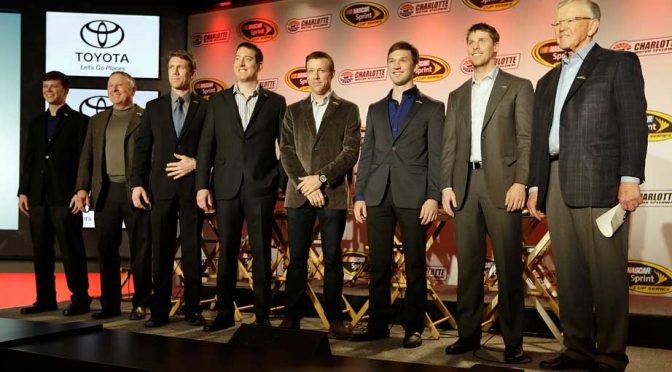
CHARLOTTE, N.C. — The spotlight shone down on Joe Gibbs Racing during the first stop of this week’s Charlotte Motor Speedway Media Tour as its contingent of drivers, crew chiefs and team executives congregated on-stage to discuss the 2015 season. It’s sure to only get brighter until the Daytona 500.

The organization, once a mom-and-pop shop, has evolved into a Fortune 500 company. That transformation was evident when Carl Edwards joined JGR in a fourth car, but the team’s evolution has been a constant force.

FULL SERIES COVERAGE

Latest news
Standings
Schedule

From a one-car team in 1991 with less than 25 employees to today’s four-car group with nearly 500 people, JGR has joined Hendrick Motorsports and Stewart-Haas Racing as teams that field four full-time cars at NASCAR’s highest level.

The Edwards addition had some folks whispering of a Hendrick copy-cat, but make no mistake about this group — it is uniquely Joe Gibbs.

"I think in any pro sport, it’s hard to stay at the top," Gibbs said. "Sometimes you can hit it and then fall away, but to stay up there consistently is the key. I think what Jimmie Johnson has done speaks for itself. That’s what everybody else would like to do.

"But I don’t think we’ve patterned us after Hendrick. I think we patterned us after ourselves."

Edwards, Denny Hamlin, Kyle Busch and Matt Kenseth comprise Joe Gibbs Racing, and they own a combined 107 career NASCAR Sprint Cup Series wins. Hamlin advanced to the Championship 4 last year, Kenseth won seven races and finished second in the standings to Jimmie Johnson in 2013, and both Edwards and Busch have made title pushes in the past.

All four drivers qualified for the Chase for the NASCAR Sprint Cup last year, although Edwards did so with Roush Fenway Racing. So although Gibbs didn’t model his organization after Hendrick Motorsports, it’s not too difficult to project similar results.

"Anytime you can compare yourself to Hendrick, that’s a good thing," Hamlin said, wearing a grin. "For all of us, this is a change for sure, but the best drivers will always find a way to be successful. We expect success."

"We’ve got a lot of new people and a lot of people who have a lot of different ideas," Kenseth added. "We feel like we’re all going to be better."

So what does it all mean?

Well, no one knows yet. The drivers expect to compete for wins. Ownership hopes to have a driver (or two) in the Championship 4 again in 2015.

But we don’t know yet. For today, in January, we can project and predict. But soon enough, the engines will roar, the green flag will drop, and then we’ll know for sure.

"I think any time you make a big decision like this, you’re always nervous about it," Gibbs said. "But the thing about sports is, you’re going to find out when we get out there and start racing. Everybody’s going to say ‘That was not smart’ or they’re going to say ‘Man, that was smart.’

"And I like that because you don’t guess about it. It’s going to happen on the track, and we’re all going to get to see it. I love that part about our sport. They keep score. So we’re going to find out in how we do. And I feel real good about it."

Driver of JGR’s No. 11 is ready to move forward

RELATED: Relive Brad’s burnout in the garage after run-in with Hamlin, others

CHARLOTTE, N.C. — At least one of the drivers who feuded with Brad Keselowski during last year’s Chase for the NASCAR Sprint Cup is moving on.

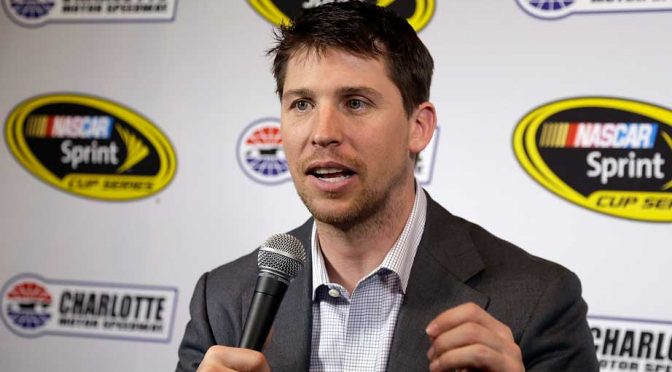
During Monday’s Joe Gibbs Racing stop on the Charlotte Motor Speedway Media Tour presented by Technocom, Denny Hamlin said he thinks he’s in "a good place" with the Team Penske driver.

RELATED: Monday’s best quotes from the Charlotte Media Tour

FULL SERIES COVERAGE

Latest news
Standings
Schedule

Hamlin and Keselowski, the 2012 NASCAR Sprint Cup Series champion, had an on-track incident in October’s race at Charlotte that had Hamlin tailing Keselowski through the garage following the event. Keselowski was also involved in an altercation with Hamlin’s JGR teammate Matt Kenseth the same night, and was part of a post-race free-for-all with Jeff Gordon and Kevin Harvick after the Chase race at Texas Motor Speedway.

"I think as drivers, we’re becoming a tighter-knit group," Hamlin said. "I think really, it doesn’t take long for stuff like that to kind of wash itself under the bridge. I think that any incidents with myself, or Kevin, or Jeff or anyone who may have had an issue with Brad, it’s in the past and you’ve got to move on.

"It’s hard to hold grudges because they take up so much effort to keep them going. As drivers, you just don’t have time."

The benefit of offseason vision helped Hamlin reach that place. In the throes of the Chase — which he called one of the most exciting things in the history of NASCAR — it can perhaps be more difficult for a big-picture view.

That’s why the man who said Keselowski’s "lack of remorse" wasn’t well received in the garage could offer a smile and well-reasoned dialogue three months later.

"Jeff, he probably knew that was a great opportunity for him to win a championship before he retires, that probably ramped up his intensity," Hamlin said. "For those other moments, we’re all trying to make it to the next round. If you feel like someone causes you to miss it, you are really, really angry. It’s part of racing."

NASCAR, Martinsville Speedway officials recognized by press organization

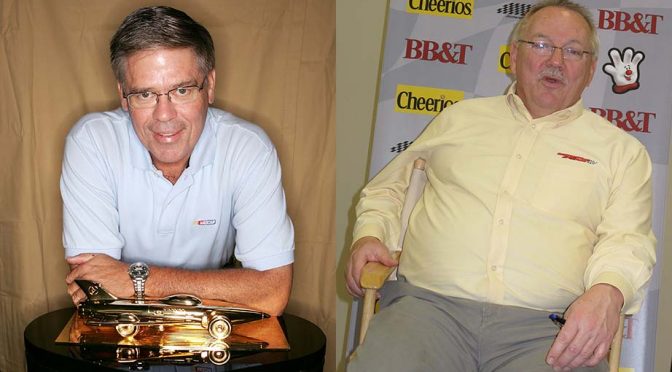
DARLINGTON, S.C. — Kerry Tharp, senior director, competition communications for NASCAR, and Mike Smith, public relations director for Martinsville Speedway were among those honored Sunday evening during the National Motorsports Press Association’s annual convention and awards dinner.

Tharp, who joined NASCAR in 2005 as director for the sanctioning body’s licensing office before moving into the competition department role, was presented the Joe Littlejohn award for his service to the NMPA. Since his arrival, Tharp has been instrumental in continuing to develop the relationship between NASCAR and the NMPA.

The Joe Littlejohn Award is presented each year to a person or persons, or an organization, in recognition for or outstanding service to the NMPA. It is named after the former track owner from Spartanburg, South Carolina. Littlejohn is credited with two career NASCAR starts, but raced extensively before the formation of NASCAR.

Smith is the recipient of this year’s Ken Patterson Helping Others award. He has handled the public relations duties at the 0.526-mile track since 2000. The facility hosts two NASCAR Sprint Cup Series events each season.

The Ken Patterson award, named after the former director of public relations for Talladega Superspeedway, is determined by a vote of the NMPA membership. It recognizes a public relations representative in the motorsports industry (team, track, and sanctioning body) who has exhibited the kind, generous qualities that Patterson always demonstrated.

Talladega Superspeedway donates $1,000 in the winner’s name to the Kenneth Patterson Educational Trust Fund each year.

Others awards presented by the organization included the Richard Petty Driver of the Year Award, which went to 2014 NASCAR Sprint Cup Series champion Kevin Harvick, and the NMPA Spirit Award, which was presented to the Petty family in honor of Lynda Petty.

Sunday’s event was held at the Embassy Suites in Concord, North Carolina.

Founding member of the Racing Wives Auxiliary honored posthumously

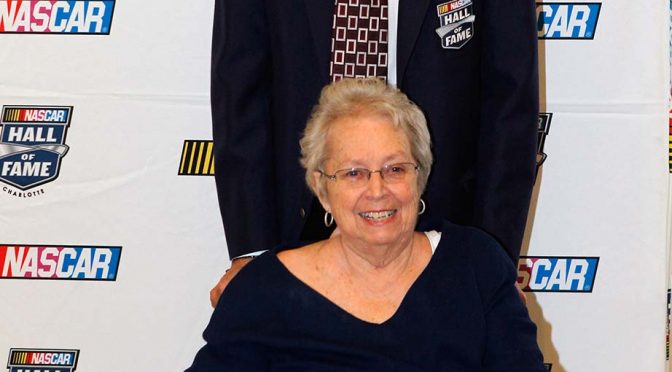
DARLINGTON, S.C. — Lynda Petty, the wife of seven-time NASCAR premier series champion Richard Petty, has been named the recipient of the National Motorsports Press Association’s annual Spirit Award for 2014.

Petty, who passed away March 30, 2014, was one of the founding members of the Racing Wives Auxiliary, a charitable organization that provided assistance to those in need within the racing community. Today the group, now known as the Women’s Auxiliary of Motorsports, seeks to enrich the lives of women, children and families through various education and wellness programs.

In addition to raising and caring for a family of four, Petty also was active in numerous community and civic endeavors.

The NMPA Spirit Award is designed to recognize character and achievement in the face of adversity, sportsmanship and contributions to motorsports. Each year, the NMPA membership selects four quarterly recipients, with an overall winner chosen from among the four candidates at season’s end.

Petty was the first quarter recipient of the award for 2014. Other recognized for their efforts were driver Martin Truex Jr. (second quarter), longtime car owner W.C. "Junie" Donlavey (third quarter) and brothers Darrell and Michael Waltrip (fourth quarter).

"The example that Lynda Petty and all of our Spirit Award nominees and recipients have set for us serves as a reminder that it’s not what you take from this life that is important, but what you give back," 2014 NMPA President Kenny Bruce said.

"Recognizing the work and contributions of these people is an honor and a privilege the NMPA doesn’t take for granted."

The announcement of the award came during the NMPA’s annual convention, held Jan. 25 in Concord, North Carolina.

NMPA Spirit Award Winners: 2014, Lynda Petty; 2013, Marcy Scott, Atlanta Motor Speedway; 2012, Andy Hillenburg, Rockingham Speedway; 2011, Jeff Gordon; 2010, Jim Hunter, NASCAR; 2009, David Poole, Charlotte Observer; 2008, T. Taylor Warren; 2007, Bill France Jr.; 2006, Benny Parsons; 2005, Morgan Shepherd; 2004, Kyle and Pattie Petty; 2003, Bob Latford; 2002, Larry Hicks; 2001, Ricky Craven; 2000, Kyle Petty; 1999, Clay Earles; 1998, Mark Martin; 1997, Dave Marcis; 1996, Dale Earnhardt; 1995, Ernie Irvan; 1994, Ernie Irvan; 1993, Davey Allison and Alan Kulwicki; 1992, Davey Allison Family