The 1960s: Building tracks from Charlotte to Alabama

Play: NASCAR Fantasy Live

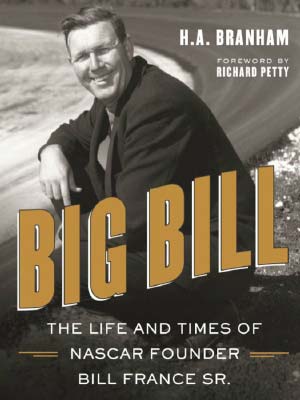
"Big Bill: The Life and Times of NASCAR Founder Bill France Sr." is the first official biography of the man who organized the sport. In the third of four excerpts that will appear over the next four weeks leading up to March 3, the publication date of the book, author H.A. Branham addresses France’s stand against the Teamsters and building Talladega Superspeedway.

RELATED: Big Bill Excerpt 2 on France building the Daytona International Speedway
RELATED: Big Bill Excerpt 1 on France’s induction into the NASCAR Hall of Fame

Curtis Turner, the hard-drinking, fast-driving black-hat hero, would forever be a good news-bad news proposition for Bill France Sr. He was daring. He was colorful. He was talented. He was also a pain in the ass.
And he was a pilot, giving him something in common with Bill Sr. But that road likely forked when stories surfaced about Turner landing his plane on a road near a liquor store, jumping out to go grab a bottle or two, and then getting back into the cockpit to take off again.

On the subject of his undeniable talent: Turner was credited with approximately 360 race victories in a variety of series, with 22 wins coming in 1956 in NASCAR’s short-lived Convertible Division and another 17 in NASCAR’s headlining Grand National Division. His biggest victory came in the 1956 Southern 500 at Darlington Raceway.

In 1960, Turner, partnered with Bruton Smith, sought to capitalize on the sudden appeal of bigger race tracks by building Charlotte Motor Speedway. In ’61, Turner was tossed out as the track’s president via a coup of sorts staged by the facility’s board of directors. To get back in, Turner needed money he didn’t have. He approached the Teamsters Union, which could provide large loans, albeit with significant interest charges coming down the pike. Turner’s need for a loan coincided with Teamsters president Jimmy Hoffa’s quest to unionize professional sports in the United States. Turner got the loan; as part of the deal he was required to recruit drivers to a union — the Federation of Professional Athletes, which promised drivers more money, a pension, and insurance. Drivers thought this sounded good, and overdue.

Bill Sr., suffice to say, did not approve.
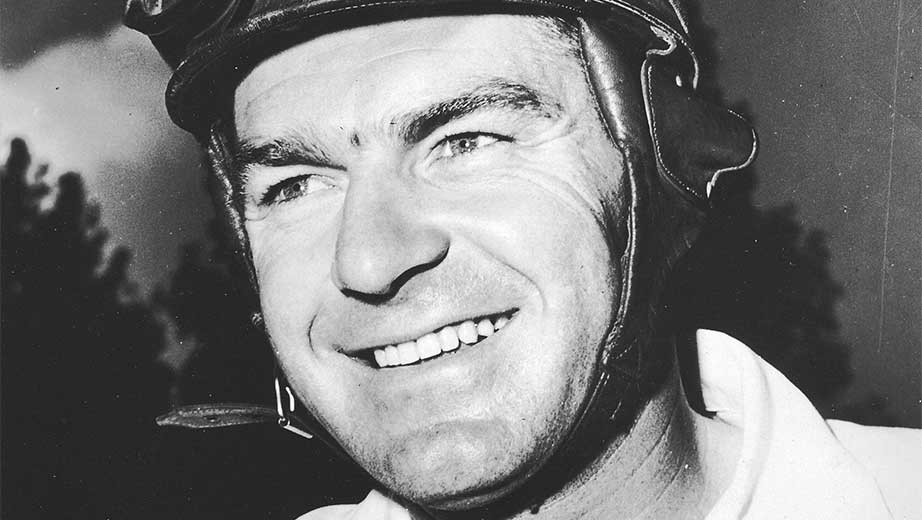

NASCAR Hall of Fame nominee Curtis Turner was known as the ‘Babe Ruth of stock car racing’

To battle the initiative he went to the top, talking his way into a meeting with the attorney general of the United States, Robert Kennedy (a pain in the ass to Jimmy Hoffa in those days of Camelot). A young attorney named John Cassidy — Bill Sr.’s "inductor" at the NASCAR Hall of Fame in 2010 — worked in the Department of Justice for RFK. He recalls the day of Bill Sr.’s visit as if it was yesterday. It actually was 1961, only months into the Kennedy administration.

How did Bill Sr. get a meeting with Kennedy in the first place? With the passage of years, Cassidy isn’t absolutely certain, but he thinks the access likely can be attributed to Bill Sr.’s relationship with the controversial South Carolina Democratic congressman Mendel Rivers, who stood alongside whatever hawkish tendencies the Kennedys had but firmly against even the slightest move toward improved civil rights. Much like Bill Sr.’s friendship with Alabama Governor George Wallace, his relationship with Rivers benefited from the relative lack of media attention accorded NASCAR at the time.

"The Teamsters were trying to organize the drivers," Cassidy said, "because they figured if they could control them and all the teams from motorsports  … they had set up a professional athletes division of the Teamsters that was heavily committed to organizing the NBA, the NFL, and motorsports."

Motorsports — that especially made sense. The Teamsters unionized truck drivers. Auto racing was a sport that truck drivers loved.

"The Teamsters knew what they were doing," Cassidy said.

"Senior knew he was in the battle of his life, and he was really viewing it as a battle for survival because if he lost the battle [over unionization] he would have lost control of NASCAR. One of the keys to Senior’s thought process was always a straight-line approach. How to solve the problem? One way was to attack Hoffa, who Senior believed to be corrupt. What better place to go for help than the U.S. Department of Justice? It just so happened that he and Bobby Kennedy were on the same wavelength."

With Cassidy advising at the behest of RFK, Bill Sr. also enlisted the help of two of his valued lieutenants, Pat Purcell and Ed Otto, to collectively beat back the beast of the Teamsters. It was a multi-level response to the threat, and it started in dramatic fashion when Bill Sr. imposed a lifetime ban from NASCAR on Turner, former champion Tim Flock, and Fireball Roberts, three central figures pushing for unionization. Turner’s involvement had especially infuriated Bill Sr. because it included an additional push to have betting at race tracks. After all he had done to cleanse stock car racing of its unsavory past, Bill Sr. was not about to let NASCAR regress.

Roberts was reinstated when he pulled out of the fledgling union after a long, Scotch-fueled come-to-Jesus discussion with Purcell. Other drivers defected following an impassioned Bill Sr. speech prior to a race in Winston-Salem, North Carolina, in which he appealed to the drivers’ basic values. "Auto racing," Bill Sr. told them, "is one of the few sports which has never had a scandal. Do you want to be the ones who changed that?"

Despite the defections, Flock and Turner stood their ground. So did Bill Sr., which meant they were gone from NASCAR — permanently. They tried to have their bans overturned repeatedly in the courts, to no avail. In NASCAR’s corner during these legal battles was a precedent dating to 1951, when Otto had helped a Long Island race track overturn a judgment resulting from the deaths of two drivers. The state of New York originally decreed that the drivers were in effect race track employees; the reversal placed the drivers in the category of independent contractors. That distinction provided an additional roadblock to unionization in NASCAR’s case; the drivers were not employed by NASCAR but rather by the individual teams.

The footnote: Bill Sr., pressured by track promoters in 1965, would grudgingly end up lifting the bans on Turner and Flock. Turner tried a half-hearted comeback. Flock stayed away for good.
 *     *     *    *


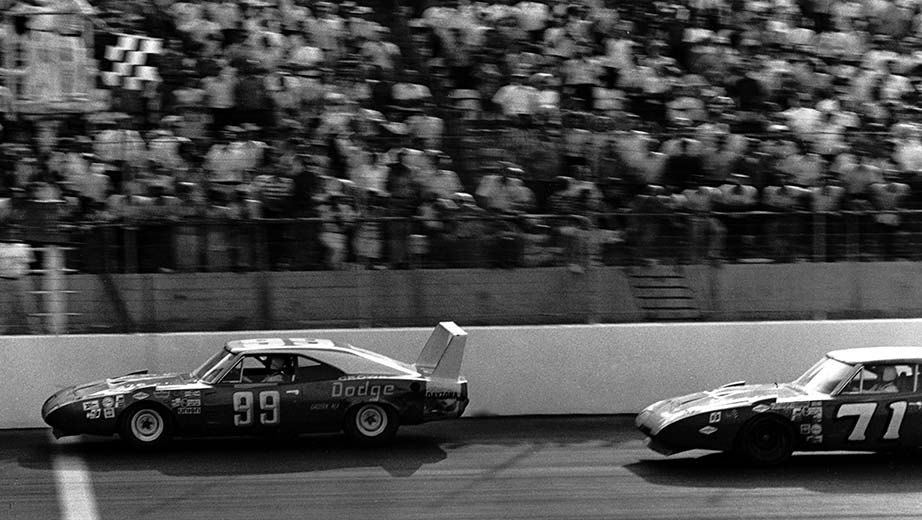
Richard Brickhouse takes the checkered flag to win the 1969 Talladega 500. Bobby Isaac, in the No. 71 car, was a lap down and finished fourth.

Daytona’s initial success and steady climb in relevance whetted Bill Sr.’s appetite for yet another project: a track that would be even larger and faster than Daytona, the world’s largest oval track. The fact that his proposed site was in the middle of nowhere was a slight obstacle, but Bill Sr. was accustomed to overcoming obstacles.

Talladega, Alabama, 50 miles east of Birmingham, 105 miles west of Atlanta. That was the site Bill Sr. chose for a 2.66-mile monster tri-oval with 33-degree banks — two degrees steeper than Daytona’s.

Ground was broken for Talladega on May 23, 1968, and that ground was on the site of the old Anniston Air Force Base, just outside the small burg of Lincoln, Alabama. Again, as with Daytona, it was a rush job, with the Moss-Thornton Construction Company of Birmingham the builder. The target date for the first race was September 14, 1969 — the 44th race on the 54-race Grand National schedule.

Amazingly, it was built in time to host one of the most historic weekends in NASCAR history, a confluence of events that served as a collective metaphor for the changing times surrounding the sport. Old was giving way to new. Alabama International Motor Speedway — the track’s name until 1989’s switch to Talladega Superspeedway — was definitely new. And for many drivers, it was absolutely frightening when tires started to fail at high speeds on the high banks.

And when the tires did start to balk, so did the drivers, with the specter of unionization resurfacing for the second time in the decade.

As it just so happened, earlier that season, drivers had semi-organized once more, forming the Professional Drivers’ Association (PDA), with Richard Petty as an especially tenuous president. The Talladega situation facilitated a coming-out party for the group.

Soon, talk of boycotting the very first Talladega event was in the air — rapidly gaining momentum. The way the weekend transpired is well-documented:

The growing discontent among drivers; the laps run around the track by a then-59-year-old Bill Sr. and his son Bill Jr. in an attempt to assuage the drivers — an effort discounted as a publicity stunt, with the drivers pointing to the Frances’ lap times as being far under what they would be turning in actual race conditions; Bill Sr. telling the drivers that if they were scared they could feel free to go home; drivers enraged at that remark and leaving en masse; and LeeRoy Yarbrough, feeling his oats during the most successful season of his career, flat-out cold-cocking Bill Sr. in the jaw, putting an end to a tumultuous meeting in the garage.

The boycott proceeded, putting Bill France Sr. in a serious bind.

A boycott was one thing. A cancellation was something altogether different, and Bill France Sr. was not about to let that happen.

Bill Sr. pieced together a patchwork field of drivers who weren’t involved in the boycott plus others from the Grand American Division, which raced the day before the premier series event. And so, on September 14, 1969, a crowd of 64,000 gathered at the gigantic new facility, with many fans attending thanks to free tickets France dispensed. Richard Brickhouse — who withdrew from the PDA to take advantage of what he called a "golden opportunity" — won the first Talladega 500, the triumph coming despite "competition cautions" every 25 laps to enable teams to inspect and change tires if needed. Those cautions belied the fact that competition was fierce, with 37 lead changes, and transpired without a serious incident.
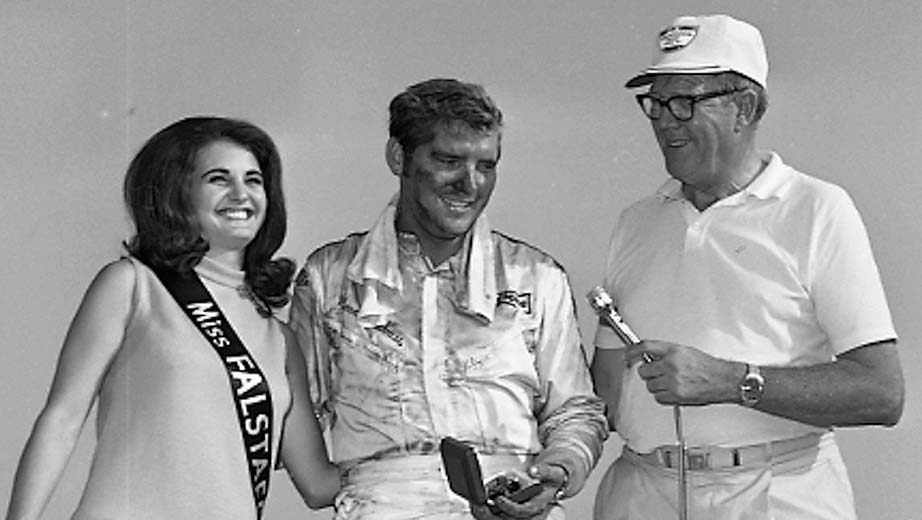

Bill France Sr. congratulates Richard Brickhouse in Victory Lane following the first premier series race in 1969 at Alabama International Motor Speedway, now known as Talladega Superspeedway.

Yes, by God, the race was run. The great Indy-car racer A.J. Foyt, who through the years became one of Bill Sr.’s closest friends in racing, was not surprised.

"I really admired that he told everybody to kiss his ass, that that race was going to run," Foyt said.

The end game, as far as racing, was that the drivers returned only four days — FOUR DAYS ! — later to compete in Columbia, South Carolina. Bobby Isaac won the Sandlapper 200, with Petty running second. And the following year, Bill France Sr. welcomed full fields to not one, but two Talladega events — April and August, both won by Pete Hamilton, also the Daytona 500 champion in 1970.

"Bill Sr. knew we had to go racing and we knew we had to go racing," Bobby Allison said. "We knew we didn’t want to have to go out and get newspaper routes or gas-station jobs, that’s for sure."

And so another end game was played and won, with memories left brewing in the heart and soul of Bill France Sr. Jousting over the unionization concept while having his authority challenged so severely did not sit well with the man who had started NASCAR. He had taken a hard hit, several hard hits: professionally, personally, and publicly. One newspaper headlined the United Press International report from the event as "Brickhouse Wins Talladega as Czar’s Empire Crumbles."

Twelve days after Richard Brickhouse became the answer to the ultimate NASCAR trivia question, Bill Sr. turned 60 years old.

It is likely that he felt much older.
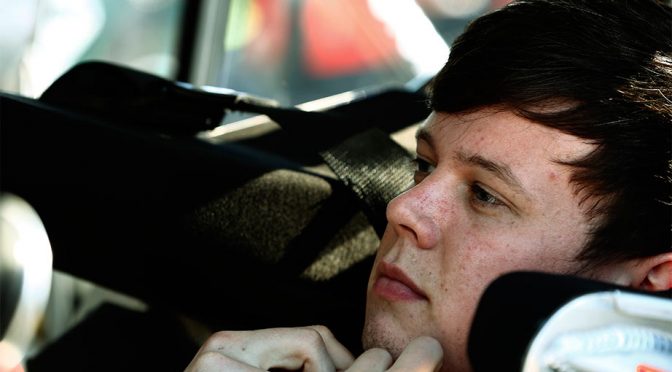
18-year-old driver wanted more from strong Daytona run

Play: NASCAR Fantasy Live

DAYTONA BEACH, Fla. — Erik Jones wrapped up his 2014 Camping World Truck Series campaign with his third win of the season, putting a stomping on the field to the tune of 114 of 126 laps led in the Lucas Oil 150 at Phoenix Raceway.

The 18-year-old Kyle Busch Motorsports driver then finished second in Friday night’s 2015 season-opening NextEra Energy Resources 250 at Daytona International Speedway, making a last-lap move to position himself for — albeit coming up just short of — the win.

Bookending seasons with an average finish of 1.5 in a pair of races?

Surely, any driver would take that. However, the highly-touted NASCAR Next wheelman wasn’t satisfied.

FULL SERIES COVERAGE

• Latest news
• Standings
• Schedule

"I wish we could have won the race; that’s first off," Jones said on pit road following the race. "… It’s unfortunate for us to finish second any day, but it’s a good run for us. We just wanted to come in here and have a good day, solid day to start off the year.

"Second is a great start to the season and we did what we wanted to. We came in here and didn’t get wrecked and put ourselves in a position not to be making up all year."

That second-place finish was looking like a certain fourth for the latter chunk of the 100-mile event, as the Brad Keselowski Racing duo of race-winner Tyler Reddick and Austin Theriault had a lock on the 1-2 spots ahead of the field.

Jones said his final lap strategy was to lay back through Turns 3 and 4, hopeful that if Theriault ended up making a move on his teammate — which is what ended up happening — he could pull his No. 4 Toyota Tundra off both of them and attempt to make his way to the front.

"It worked up to second, but just couldn’t quite get to the lead," he said.

Give him one more lap and there’s a good chance he puts his truck in Victory Lane. Considering it was just Jones’ second career restrictor-plate race, there are still lessons to be learned from finishing a position lower than he’d prefer, particularly from his experienced team owner, who has been offering his sage advice to his young padawan.

"Just lots of listening. Lots of listening," Jones said. "Really talked to Kyle a lot about it last year before Talladega. Talked to him more about it here. Read a lot of data that Toyota gives us. Try to apply it all in real‑time.

"I think everybody kind of knows the basics of drafting. It’s not extremely complicated. It’s just a matter of being able to process those during the race and being able to remember all the things you’ve gathered about it. Actually, I don’t mind plate racing. I enjoy it. I had fun tonight. Would have had a lot more fun if we came home one position higher."

You see? At all times — Jones is focused on nothing but winning. It’s the same mentality that all of NASCAR’s greats shared, and one that bodes well for the future of a talented young driver that is quickly rising within the sport’s ranks — he finished 18th in Saturday’s Alert Today Florida 300 XFINITY Series event.

While the first win of 2015 will have to wait, it was still crucial for Jones to escape Daytona without digging himself into a points hole, something that he and his team knew could be a possibility.

Instead, his momentum remains in tact and the team will head to Atlanta Motor Speedway for next weekend’s Hyundai Construction Equipment 200 (Saturday, 5:30 p.m. ET, FOX Sports 1).

"That was pretty important to us," the Michigan native said. "We talked about it for the last couple weeks. When you start off Daytona and get wrecked or whatever, say you finish 30th, it really gives you a hole to dig out of for really the next four races, even if you run those well. 


"It’s pretty important to finish well here, just get good momentum going for your season. It’s my first full‑time season."

Atlanta is similarly configured to the 1.5-mile Las Vegas Motor Speedway, where he picked up his second win of the year in 2014. Needless to say, he’s looking forward to it.

"Atlanta is going to be fun. I think our mile‑and‑a‑half program is pretty strong. It was really strong last year. I think we can probably go out and hopefully contend for a win."

MORE:

READ: Latest
 NASCAR news

PLAY: Sign up
 for Fantasy Live

WATCH: Latest
 NASCAR video

FOLLOW LIVE: Get
 RaceView today

Organization owns 12 tracks in NASCAR’s Sprint Cup Series

Play: NASCAR Fantasy Live

Officials at International Speedway Corporation, which owns 12 tracks where NASCAR’s premier Sprint Cup Series races, said Tuesday that the company has a "significant plan" in development to expand its use of impact-diffusing barriers in the interest of safety.

FULL SERIES COVERAGE

• Latest news
• Standings
• Schedule

John Saunders, ISC president, said in a statement that the project will focus first on its two largest tracks — 2.66-mile Talladega Superspeedway and 2.5-mile Daytona International Speedway, where Kyle Busch’s severe crash and resulting injuries during last Saturday’s NASCAR XFINITY Series race renewed the focus on safety measures.
 
In a statement provided by ISC, Saunders said the plan would emphasize "the installation of additional impact-absorbing technologies including but not limited to SAFER barriers (Steel and Foam Energy Reduction). We will utilize all available tools to ensure the safety of the drivers and our fans. It will remain our top priority."
 
Saunders also indicated that a "thorough review of our other ISC facilities will continue with the focus to prioritize each track’s most critical areas first." That focus will become sharper at the next ISC tracks hosting Sprint Cup and other NASCAR national series events — one-mile Phoenix International Raceway, March 13-15; and two-mile Auto Club Speedway in Fontana, California, March 20-22.
 
"ISC is working very closely with NASCAR and industry experts to identify areas for additional safety protections," Saunders said. "As we finalize our plans, we will communicate them to the drivers and necessary stakeholders ahead of our races at each ISC facility."

Daytona International Speedway President Joie Chitwood III emphatically said Saturday, hours after Busch’s crash, that his track would expand its use of impact-absorbing protective barriers. On Monday, Talladega and Kentucky Speedway followed suit with their plans, followed a day later by Atlanta Motor Speedway, site of this weekend’s tripleheader for all three NASCAR national series.
 
The Auto Club track expanded its use of energy-absorbing walls ahead of its 2014 race, after Denny Hamlin suffered a broken back when his car hit an unprotected concrete retaining wall the year before. The inside-wall area of Turn 4, just ahead of the pit road entrance, is now covered with SAFER barriers.

MORE:

READ: Latest
 NASCAR news

PLAY: Sign up
 for Fantasy Live

WATCH: Latest
 NASCAR video

FOLLOW LIVE: Get
 RaceView today

Heading to Atlanta, calls Ives ‘the right man for the job’

Play: NASCAR Fantasy Live

After a third-place finish in the Daytona 500, Dale Earnhardt Jr. is looking forward to the rest of the season because the No. 88 Hendrick Motorsports team was well-prepared for Speedweeks. Immediately following the race, he gave credit to the team on Twitter, and he expressed the same sentiments on Tuesday.

FULL SERIES COVERAGE

• Latest news
• Standings
• Schedule

"I’ve got a new crew chief with Greg Ives and a new car chief, Travis Mack," Earnhardt said on the "Dale Jr. Download" on Dirty Mo Radio. "Got some new engineers and over-the-wall guys. They were all ready to go, and everything went smooth. Every race went smooth. We never had a problem on pit road. Never had a miscommunication."

Heading to Atlanta (Sunday, 1 p.m. ET, FOX), where he has his best average finish (12.3) among NASCAR Sprint Cup Series circuits, Earnhardt says an already strong team can even get better.

"I see a lot of areas where we can improve as we get to know each other and understand what each other is looking for and what each other needs out there," Earnhardt said. "We can get a little better on our communication.

"But the team was really prepared. That says a lot about, not only Greg, but Chad (Knaus) and that whole (48/88) shop. Greg and Chad work real close together, and that says a lot about them being able to prepare those cars and those guys for that week and what they’re going to go through. I was real happy about that. That lets me know that Greg’s the right man for the job."

Earnhardt enjoyed last Sunday’s season opener and said NASCAR’s rule package put racing back in the drivers’ hands.

"I had a real damn good time in the race (Sunday)," Earnhardt said. "Racing during the day with that package, that little tiny spoiler on the back, that’s the way to do it. Man, the cars are moving around and handling. The drivers are having to really work hard to position themselves to make runs. We were all running three-wide forever without a whole lot of problems."

The two-time winner of the Great American Race looked back at the move that cost him track position late in the race and how he was able to make it back to the front with a shot to become the first driver in 20 years to win back-to-back Daytona 500s.

"I was in the bottom lane in third and Jimmie (Johnson) was on the outside as the control car," Earnhardt said of the Lap 182 restart. "When we took off, there was room for me to move up behind Jimmie so I moved up behind him, and I thought I was in line. But the guys behind me jumped to my outside and the guys on the inside that I gave up the position for moved on the inside of me so now I’m in the middle on a restart. We’re not up to speed.

"This is a terrible situation to be in, and everybody just mowed by me and left me in the middle. Next thing I know, I was about 20th to 25th. Looking at nothing but rows of three-wide in front of me with nowhere to go."

Right before the yellow flag flew for the next caution at Lap 199, Earnhardt explained how he was able to move from 20th back to the top 10.

"Finally with around 10 laps to go, the 51 got loose in the middle of (Turns) 3 and 4 and checked up the whole inside line and the middle line," Earnhardt said. "The seas parted, and I made a move. I got to the middle, got a good run on some guys and passed a bunch of people. Then the caution came out for the 51 wrecking on the frontstretch, and I was eighth."

On the final restart of the race for a green-white-checkered finish, Earnhardt said the outside line moved and allowed him to move up to third, where he finished when the race ended with a backstretch wreck on the white-flag lap.

Despite squandering a chance to capitalize on a winning race car last weekend, Earnhardt is looking forward to testing this week in advance of Atlanta’s first March race since 2010.

"We’ve got a couple days off, and we’re going to be practicing Atlanta Thursday, preparing for the race this weekend," Earnhardt said. "I’m looking forward to getting the rest of this season going. Twenty-six races in the regular season. One down, 25 to go. Try to make that Chase. Get some checkered flags and celebrate some wins."

MORE:

READ: Latest
 NASCAR news

PLAY: Sign up
 for Fantasy Live

WATCH: Latest
 NASCAR video

FOLLOW LIVE: Get
 RaceView today

Veteran to drive for JGR starting with Atlanta Sprint Cup race

Play: NASCAR Fantasy Live

Joe Gibbs Racing announced Tuesday that David Ragan will serve as interim driver in place of injured Kyle Busch for the next several weeks beginning this weekend at Atlanta Motor Speedway.

FULL SERIES COVERAGE

• Latest news
• Standings
• Schedule

The team said in a statement that Ragan, a NASCAR Sprint Cup Series veteran, will run JGR’s No. 18 Toyota as Busch recovers from multiple lower-leg injuries suffered in a crash Saturday at Daytona International Speedway. Matt Crafton, champion in the NASCAR Camping World Truck Series the last two seasons, finished 18th as a last-minute fill-in for the season-opening Daytona 500.

Front Row Motorsports and sponsor CSX accommodated Ragan’s move, according to JGR. Ragan is expected to return to the team later this season. A spokesperson for Front Row Motorsports said there was "no announcement yet" regarding their plans for the No. 34 Ford at Atlanta.

Erik Jones will pilot the No. 54 Toyota at Atlanta in the NASCAR XFINITY Series for JGR. Busch was expected to compete in the XFINITY Series’ Hisense 250 (Saturday, 2 p.m. ET, FOX Sports 1) at Atlanta in JGR’s No. 54 Toyota. An announcement on who will drive the No. 54 following the Atlanta race will be made at a later date, according to the team.

"We appreciate being able to work with Front Row Motorsports and CSX for David’s (Ragan) availability," said Joe Gibbs, owner of Joe Gibbs Racing. "We are fortunate to be able to have someone of David’s caliber behind the wheel while Kyle recovers. Erik is a big part of our future at JGR and we will be increasing his schedule in the XFINITY Series beginning this weekend in Atlanta and seeking the earliest opportunity to provide him Cup experience. We appreciate all the support we have received from the NASCAR community including our fans and we look forward to getting Kyle back in the car as soon as possible."

Kyle Busch’s wife, Samantha, wished David Ragan luck on Twitter after the news was announced.

 
Ragan, 29, drove the Front Row Motorsports’ No. 34 Ford in Sunday’s Daytona 500 and has competed in the last three NASCAR Sprint Cup Series seasons, bringing the Statesville, North Carolina-based team its only premier series victory in May 2013 at Talladega Superspeedway. Before his tenure at Front Row, Ragan raced for Roush Fenway Racing from 2007-2011.

Interesting enough, Ragan was teammates with current JGR drivers Matt Kenseth and Carl Edwards as recently as the 2011 Sprint Cup Series season, while all three were at Roush Fenway.

Jones, a three-time winner in Truck Series competition last year and a four-time winner in his career, was in consideration for the ride in Sunday’s Folds of Honor QuikTrip 500 (1 p.m. ET, FOX), which would have made him the first active NASCAR Next driver to make a Sprint Cup start. Ultimately, JGR went with Ragan, a driver with eight full seasons of top-division experience and home-state ties, having grown up in Unadilla, Georgia, roughly 100 miles south of the Atlanta track.
 
Busch, also 29, was released from a Florida hospital Tuesday for further treatment at a facility near his North Carolina home. The move came three days after the NASCAR XFINITY Series opener at Daytona, where Busch suffered a compound fracture of his lower right leg and a broken left foot, indefinitely placing him on the sidelines.
 
Ragan’s transition to the Gibbs team marks an abrupt shift in manufacturers, as his 291 career starts in the Sprint Cup Series have all come in Fords. It also creates a domino-effect vacancy at the Bob Jenkins-owned Front Row organization, which expanded to three full-time teams in the offseason with David Gilliland and Cole Whitt filling the other two seats.

Ragan finished 17th in Sunday’s Daytona 500, placing him 16th and in the final spot in the provisional Chase for the NASCAR Sprint Cup postseason grid after the season’s first race. Per NASCAR rules, if one driver switches teams during the 26-race regular season, the driver remains eligible for Chase consideration as long as he remains in the top 30 in points.
 
Jones ranks second in the Camping World Truck Series points after his runner-up finish in the Daytona opener. He’s scheduled to compete in the full truck season for Kyle Busch Motorsports, and was expected to race in 10 XFINITY events for Joe Gibbs Racing.

NASCAR.com’s Zack Albert contributed to this report

MORE:

READ: Latest
 NASCAR news

PLAY: Sign up
 for Fantasy Live

WATCH: Latest
 NASCAR video

FOLLOW LIVE: Get
 RaceView today

Wife Samantha tweets photo of couple boarding airplane

Play: NASCAR Fantasy Live

Kyle Busch, injured in a crash Saturday at Daytona International Speedway, is headed home to North Carolina.
 
Busch was released from Halifax Health Medical Center on Tuesday. A picture sent from the Twitter account of his wife, Samantha, showed the 29-year-old driver on a stretcher, set to be loaded onto a plane.

Joe Gibbs Racing confirmed to media members that Busch was due to be transferred to a North Carolina hospital for further treatment of his multiple lower-leg injuries, sustained in Saturday’s NASCAR XFINITY Series season opener. A more in-depth update from JGR officials was forthcoming.
 
Busch underwent successful surgery Saturday night, hours after his severe wreck, to repair a compound fracture to his lower right leg. Busch also suffered a fracture in the middle of his left foot in the crash.
 
Matt Crafton, the two-time defending NASCAR Camping World Truck Series champion, replaced Busch in the season-opening Daytona 500, finishing 18th in his Sprint Cup Series debut. The team announced Tuesday night that David Ragan would drive the No. 18 at Atlanta, and Erik Jones would drive the No. 54 Toyota in the XFINITY Series race.

MORE:

READ: Latest
 NASCAR news

PLAY: Sign up
 for Fantasy Live

WATCH: Latest
 NASCAR video

FOLLOW LIVE: Get
 RaceView today

Track is the latest to announce safety enhancements

Play: NASCAR Fantasy Live

Atlanta Motor Speedway announced Tuesday morning that it will expand its use of impact-absorbing barriers ahead of this weekend’s on-track activity.

FULL SERIES COVERAGE

• Latest news
• Standings
• Schedule

The move comes three days after Kyle Busch was injured in a NASCAR XFINITY Series race at Daytona International Speedway, his car slamming into a concrete retaining wall without the benefit of the Steel and Foam Energy Reduction (SAFER) barriers.
 
"As promised, we expedited a review of potential safety advancements at each of our racing venues," said Steve O’Donnell, NASCAR Executive Vice President and Chief Racing Development Officer. "We’re pleased with the additional safety enhancements Atlanta Motor Speedway will be making leading into our events this weekend. As we’ve stated, NASCAR and its track partners remain steadfastly committed to safety."
 
According to the statement, the Atlanta track — which has hosted NASCAR’s top series since its 1960 opening — will add 130 linear feet of protective barrier for this weekend, extending coverage of the protective wall at the exit of pit road near Turn 1 and an additional tire barrier along the inside wall of Turn 4.
 
All three NASCAR national series will be racing at the 1.54-mile Georgia track this weekend, culminating with Sunday’s Folds of Honor QuikTrip 500 (1 p.m. ET, FOX), the second race of the year for the Sprint Cup Series. Officials at the speedway said they would conduct a further review of additional SAFER barriers after Sunday’s race.
 
Hours after Busch’s injury, Daytona track president Joie Chitwood III said the 2.5-mile track would take every measure to ring its facility with the SAFER technology. Atlanta’s decision comes one day after similar announcements by officials at 2.66-mile Talladega Superspeedway and 1.5-mile Kentucky Speedway to expand their coverage with protective walls.

MORE:

READ: Latest
 NASCAR news

PLAY: Sign up
 for Fantasy Live

WATCH: Latest
 NASCAR video

FOLLOW LIVE: Get
 RaceView today

Track president: ‘We’ve got history and experience doing March races’

Play: NASCAR Fantasy Live

For the first time since 2004, NASCAR teams won’t load up and head west for the season’s second stop following the Daytona 500.
 
Instead, Week No. 2 will find teams from all three national series — Sprint Cup, XFINITY and Camping World Truck — headed to Atlanta Motor Speedway.
 
Coming on the heels of the season’s premier race has its challenges, AMS president Ed Clark told NASCAR.com, and weather is always a concern with an early March date in the area.

RELATED: Atlanta plans SAFER barrier additions

FULL SERIES COVERAGE

• Latest news
• Standings
• Schedule

But, Clark said, "We’ve got history and experience doing March races.
 
"The thing that’s different about this one is that in the past, the Daytona 500 kicked the season off, we came home and had two to three weeks of outstanding interest in the sport. The day after the 500 was always your biggest ticket sales day of the year.
 
"In this case, the Daytona 500 is over Sunday afternoon and we’re into Atlanta’s race week right then."
 
AMS hosted a Labor Day weekend race from 2010 through this past season. Up until 2010, it hosted two annual Sprint Cup weekends, the first typically falling in early to mid-March.
 
From ’82 through 2004, the second Sprint Cup race of the season was held at either Richmond International Raceway or North Carolina Motor Speedway (Rockingham). California’s Auto Club Speedway hosted the second stop from ’05 through ’10 and Phoenix International Raceway had been the host since ’11.
 
"It’s a plus and a minus," Clark said of being No. 2 on the schedule. "We all remember the year that Cale (Yarborough) and Bobby and Donnie (Allison) got in a fight (at Daytona in ’79). The printing press couldn’t have printed enough tickets for the next race. … That’s a bonus when it happens. The world is watching what goes on at Daytona, there’s a lot of focus on the sport. Everything is new. So it’s a plus from that standpoint."
 
Weather issues early in the year aren’t uncommon for the Atlanta region, however. And the long-range forecast for this year’s race weekend didn’t look promising. But it has since changed (and will likely again), going from a chance of snow to a 40 percent chance of rain to a 20 percent chance of rain in the span of a week, according to www.NOAA.gov.
 
Clark is more concerned about those things his group can control instead of those it can’t.
 
"I haven’t even looked at (the weather forecast) in about a day and a half," he said. "No need to. It changes.
 
"That’s the approach we’ve taken all along. We know how to promote races; we’ve done it for years. Have your plan; work your plan. When you get to race time, you don’t want to look back and say there was something you could have done that you didn’t do."
 
Part of that plan included an appearance by reigning Sprint Cup Series champion Kevin Harvick on Monday. Prior to Thursday’s scheduled test session, Atlanta Motor Speedway Day will be celebrated at the state capitol.
 
Three-time premier series champion and NASCAR Hall of Fame member Darrell Waltrip is expected to join active native Georgia drivers from all three series for a visit with the governor as well as stops as the Senate and House chambers.
 
"The long and short of it," Clark said, "is we’ve done things we typically do, no matter when the race is."

In addition to normal race-weekend preparations, AMS announced Tuesday upgrades to its current SAFER barrier system will be put in place in time for this weekend’s events.
 
Camping World Truck Series teams, which haven’t competed at AMS since 2012, will share top billing on Saturday with the XFINITY Series in a double-header race day that features the Hisense 250 XFINITY Series race (2 p.m. ET, FOX Sports 1) and the Hyundai Construction Equipment 200 Truck Series event (5:30 p.m. ET, FOX Sports 1).
 
The Folds of Honor QuikTrip 500 Sprint Cup Series event is scheduled for Sunday, March 1 with TV coverage on FOX.
 
"We know we’ll have a good race; we always have a good race at Atlanta," Clark said. "If we can get that first one done and all be positive, we have a whole year to work on (’16). I think that’s when we will find out what the potential is for the future."

MORE:

READ: Latest
 NASCAR news

PLAY: Sign up
 for Fantasy Live

WATCH: Latest
 NASCAR video

FOLLOW LIVE: Get
 RaceView today

Six-time champion bounced back for fifth-place finish at Daytona

SHOP: Buy Daytona 500 gear
RELATED: Get full race results
| Series standings

DAYTONA BEACH, Fla. — NASCAR installed a new pit road officiating system for the 2015 season designed to increase safety and add extra levels of technological precision to ensure teams were being held fully accountable for their in-race actions.

In Sunday’s 57th running of the Daytona 500 at Daytona International Speedway in the first full-field NASCAR Sprint Cup Series race under the new format, plenty of teams were hit with penalties detected by the new system — including the typically flawless No. 48 Hendrick Motorsports crew for six-time champion Jimmie Johnson.

PHOTOS: Get an inside look at the new pit road technology

FULL SERIES COVERAGE

• Latest news
• Standings
• Schedule

On Lap 87, NASCAR hit the 48 team with a pass-through penalty for an infraction of having a crew member over the wall too soon, one of six teams hit during that round of green-flag stops.

The only problem?

Johnson and crew chief Chad Knaus had no idea what they’d done wrong.

"NASCAR … I would appreciate an explanation," Knaus asked over the 48 team radio. "We do not know what we did wrong."

After serving the penalty, the 48 car stood in 35th place — the last car on the lead lap.

Johnson had plenty of race left to make up the track position lost — he ultimately finished fifth — but the Hendrick Motorsports driver really needed to battle on the 2.5-mile superspeedway to get back to the front of the pack.

"(It made our day) more difficult," Johnson said. "To almost lose a lap and then come back and have to start dead last and climb my way up through the middle, I took a lot of risks to get up there. We did have to work a lot today."

The biggest issue that Johnson and Knaus had with the penalty was that despite their efforts to contact NASCAR through the radio, they said no response was given — the two still were in the dark as to what happened and why they were penalized long after the checkered flag fell in favor of race-winner Joey Logano.

In essence, the penalties could’ve kept happening for the 48 team and they wouldn’t have known how to correct them, Johnson said.

"We couldn’t get clarification on why we were penalized, so in order for us to make a correction for the other three or four stops, we didn’t know what to do," Johnson said. "We just kind of went back to doing our thing like we had been and fortunately there were no more penalties.

"We’ll get clarification (from NASCAR) as the week develops. It’d be nice to know during the race so we can make an adjustment."

As far as if Knaus plans on reaching out to NASCAR officials for an explanation of what went wrong prior to the Sprint Cup Series’ next race, the Folds of Honor QuikTrip 500 at Atlanta Motor Speedway on Sunday (1 p.m. ET, FOX), the longtime 48 pit boss said "I’m sure at some point (we will)."

MORE:

READ: Latest
 NASCAR news

PLAY: Sign up
 for Fantasy Live

WATCH: Latest
 NASCAR video

FOLLOW LIVE: Get
 RaceView today

Get a breakdown of how the full 43-car field fared in the Great American Race

Play: NASCAR Fantasy Live

1. Joey Logano, No. 22 Ford, Team Penske. "Sliced Bread" was a bit worried after Ryan Blaney and Brad Keselowski had car trouble, but it was all for nothing. Logano led 31 laps and didn’t give up the lead from Lap 191 on as he carried all of the momentum from a breakout 2014 season into 2015. | WATCH: How Logano won the Daytona 500

2. Kevin Harvick, No. 4 Chevrolet, Stewart-Haas Racing. The 2014 NASCAR Sprint Cup Series champion had the fastest car during green-flag runs with an average speed of 198.102 mph, but didn’t lead a lap. Harvick was right there at the end and would have given Logano all he could handle if the caution hadn’t come out on the final lap.

3. Dale Earnhardt Jr., No. 88 Chevrolet, Hendrick Motorsports. Dale Jr. made a strong bid to repeat as the Daytona 500 champion, leading 32 laps, and made a nice recovery after making a move with 19 laps remaining that left him stuck in the middle, a move Junior took responsibility for over the radio at the end of the race. "I made a poor move on that restart with 19 to go. Should not have done that." | WATCH: Junior weighs in on costly decision

4. Denny Hamlin, No. 11 Toyota, Joe Gibbs Racing. Hamlin carried the flag for a JGR stable that showed lots of speed all week. Hamlin topped final practice and it carried over into the race as he spent all but five of 203 laps in the top 15 and had the most quality passes (396) in the race.

5. Jimmie Johnson, No. 48 Chevrolet, Hendrick Motorsports. A pit-road penalty seemed to leave the 48 team miffed, but the six-time series champion rebounded from it en route to leading 39 laps and being there late to challenge for the victory.

FULL SERIES COVERAGE

• Latest news
• Standings
• Schedule

6. Casey Mears, No. 13 Chevrolet, Germain Racing. After nearly not making the Daytona 500 with an engine failure in the first Daytona Duel, Mears took full advantage of his new life with his fourth straight top-10 at Daytona.

7. Clint Bowyer, No. 15 Toyota, Michael Waltrip Racing. A wreck in group qualifying didn’t start the week off right, but the veteran driver had plenty of speed Sunday (198.020 mph, seventh-fastest during green flag runs) and nearly made a run all the way to the front. Bowyer had a fan in eventual race winner Logano, who said on Lap 179, "Tell Bowyer he’s doing great." | Sign up for Scanner today to hear in-car audio

8. Martin Truex Jr., No. 78 Chevrolet, Furniture Row Racing.
Truex was one of the surprises of Speedweeks with a great run in the Sprint Unlimited. He overcame a pit road penalty and also led a lap to match his total for 2014 as the No. 78 team sent notice that the new season will bring new results.

9. Kasey Kahne, No. 5 Chevrolet, Hendrick Motorsports. In his first race with new crew chief Keith Rodden atop the pit box, Kahne had his best Daytona 500 finish since 2008 thanks to the second-most green flag passes for the day (479).

10. Greg Biffle, No. 16 Ford, Roush Fenway Racing. For the fourth straight time and fifth time in the last six Daytona 500s, Biffle scored a top-10 finish; he also recorded the third-most green flag passes with 459.

11.David Gilliland, No. 38 Ford, Front Row Motorsports. After not recording a top-20 finish until the 21st race of the season last year, Gilliland wasted no time in doing that this year and nearly brought home a top-10.

12. Sam Hornish Jr., No. 9 Ford, Richard Petty Motorsports. In his first start for RPM, Hornish started in the back of the field but came on strong late as the second-best closer of the race, gaining 14 spots in the final 20 laps.

13. Michael Annett, No. 46 Chevrolet, HScott Motorsports. Making his first start for the expanded two-car HScott team, Annett had the best finish of his 37 career Sprint Cup starts, and he did so by making up 14 spots in the final 20 laps.

14. Austin Dillon, No. 3 Chevrolet, Richard Childress Racing. Dillon has run some of his best Cup races at Daytona, and while he didn’t score a top-10 finish, he spent plenty of time in the front of pack. The handling of his car late in the race had the young driver a bit miffed, as he told his team, "You’ve never seen (expletive) like this before. We’re sideways every lap." | Sign up for Scanner today, to hear in-car audio

15. Aric Almirola, No. 43 Ford, Richard Petty Motorsports. Back at Daytona to run his first points-paying race since his Coke Zero 400 win last July, the Florida native was the best closer, gaining 18 spots in final 20 laps.

16. Regan Smith, No. 41 Chevrolet, Stewart-Haas Racing. Named as a sub for the suspended Kurt Busch, the NASCAR XFINITY Series runner-up in 2014 ran a solid race for SHR; one that could merit him more consideration for additional seat time in the No. 41 car.

17. David Ragan, No. 34 Ford, Front Row Motorsports. Ragan’s strength is restrictor-plate racing with both of his Sprint Cup wins coming at such venues. This result is a welcome one for a driver that struggled to a 32nd-place finish in the final standings in 2014. 


18. Matt Crafton, No. 18 Toyota, Joe Gibbs Racing. A late sub for the injured Kyle Busch, the two-time defending NASCAR Camping World Truck Series champion seemed to get more comfortable as the race went on and did an admirable job in less-than-ideal circumstances. | MORE: Gibbs gives update on Kyle Busch

19. Johnny Sauter, No. 83 Toyota, BK Racing. Sauter, a NASCAR Camping World Truck Series veteran, carried the flag for BK Racing, notching his best Sprint Cup result since a 15th-place finish at Phoenix in November of 2007.

20. AJ Allmendinger, No. 47 Chevrolet, JTG Daugherty Racing. The ‘Dinger had his share of issues early in the race and was running in the back thanks to a starting position of 40th, but he came on strong late, gaining 12 spots in the final 20 laps of the race.

21. Danica Patrick, No. 10 Chevrolet, Stewart-Haas Racing. It was an interesting Speedweeks for Danica, from going through several cars to a run-in with Denny Hamlin, but the third-year Sprint Cup driver toughed it out in the end.

22. Cole Whitt, No. 35 Ford, Front Row Motorsports. In his first start with the expanded Front Row organization, Whitt had his best-career finish at Daytona.


23. Carl Edwards, No. 19 Toyota, Joe Gibbs Racing. In his first points race for JGR, Edwards spent plenty of time at the front with 160 laps in the top 15 and led three laps. A speeding penalty on pit road on Lap 89 led Edwards to tell his team over the radio, "Completely my fault, guys. I’m sorry. I’ll make it up to you." | Sign up for Scanner today, to hear in-car audio


24. Bobby Labonte, No. 32 Ford, GO FAS Racing. This finish was the 2000 premier series champion’s worst in the Daytona 500 since 2006, but he did gain 19 spots from his starting position.

25. Paul Menard, No. 27 Chevrolet, Richard Childress Racing. After stringing together back-to-back top-10s in the 2011 and 2012 Daytona 500, Menard’s past two Daytona 500s have resulted in a 21st-place finish and a 32nd-place finish, so this finish roughly splits that distance.

26. Michael Waltrip, No. 55 Toyota, Michael Waltrip Racing. Filling in for the sidelined Brian Vickers, the two-time Daytona 500 winner gained nine spots in the final 20 laps.

27. Jamie McMurray, No. 1 Chevrolet, Chip Ganassi Racing with Felix Sabates. The CGR driver couldn’t replicate his Rolex 24 success from last month, but the "Big-game hunter" spent 134 laps in the top 15.

28. Ty Dillon, No. 33 Chevrolet, Circle Sport Racing. Making just his third career Sprint Cup start, the younger Dillon turned some heads with the eighth-fastest car in green flag conditions, but his promising run trailed off in the latter half of the race after taking on damage in a late wreck.

29. Ricky Stenhouse Jr., No. 17 Ford, Roush Fenway Racing. The third-year Cup driver had his worst Daytona 500 finish in 2015 after a career-best seventh-place result in 2014, but he did have the most green flag passes (484) in the race.

30. Trevor Bayne, No. 6 Ford, Roush Fenway Racing. Since his surprising win in his first Daytona 500 in 2011, Bayne has averaged a finish of 31.3. On the positive side, Bayne was the fourth-fastest car on restarts.

31. Michael McDowell, No. 95 Ford, Leavine Family Racing. For the third time in his four career Daytona 500 starts, McDowell finished 30th or worse; the exception was a ninth-place finish in the 2013 Daytona 500. 


32. Reed Sorenson, No. 44 Chevrolet, Team Xtreme Racing. Sorenson, who wasn’t sure he was going to have a backup car for the Daytona 500, raced his way into the field but had his worst finish in the Great American Race in six starts.

33. Jeff Gordon, No. 24 Chevrolet, Hendrick Motorsports. The Coors Light Pole Award winner led a race-high 87 laps and looked like one of the cars to beat. His finishing position is not indicative of his day as he was involved in a wreck on the final lap. | PHOTOS: Gordon through the years at Daytona

34. Kyle Larson, No. 42 Chevrolet, Chip Ganassi Racing with Felix Sabates. Larson’s sophomore campaign got off to a slow start after a day marred by pit road troubles that seemed to derailed the 2014 Sunoco Rookie of the Year at inopportune times.


35. Matt Kenseth, No. 20 Toyota, Joe Gibbs Racing. The Sprint Unlimited winner had plenty of speed during Speedweeks but couldn’t recover from damage suffered due to contact from Tony Stewart on Lap 41, and he finished a lap down.

36. Mike Wallace, No. 66 Toyota, Premium Motorsports. Running his first Daytona 500 since 2007, the 54-year-old couldn’t match his 2007 run when he finished fourth.

37. Justin Allgaier, No. 51 Chevrolet, HScott Motorsports. The second-year Sprint Cup competitor was in a wreck that triggered the green-white-checkered finish on Lap 199. | WATCH: Allgaier brings out caution


38. Ryan Newman, No. 31 Chevrolet, Richard Childress Racing. Last year’s runner-up in the final standings suffered damage from a chain reaction after Brad Keselowski’s car blew up; Newman would finish 19 laps back.

39. Ryan Blaney, No. 21 Ford, Wood Brothers Racing. In his maiden start for Wood Brothers Racing, Blaney was enjoying a nice run until his car blew up in similar fashion to Brad Keselowski’s on Lap 176.

40. J.J. Yeley, No. 23 Toyota, BK Racing. Yeley had trouble shifting into gear late in the race, which took him off the track and resulted in his third finish of 40th-or-worse in six Daytona 500 starts.


41. Brad Keselowski, No. 2 Ford, Team Penske. The 2012 Sprint Cup champion had been steadily making his way up through the field before car trouble on Lap 161 caused his worst career finish in the Daytona 500. | MORE: Blown engine cuts Keselowski’s day short

42. Tony Stewart, No. 14 Chevrolet, Stewart-Haas Racing. The elusive Daytona 500 victory will remain the trophy "Smoke" can’t rein in as a steering issue following a Lap 41 accident derailed his day. | MORE: Daytona 500 drought continues for Stewart

43. Landon Cassill, No. 40 Chevrolet, Hillman Smith Racing. Cassill’s engine expired on Lap 19, bringing the day to an early end for a driver who has had some recent success at restrictor-plate tracks.

MORE:

READ: Latest
 NASCAR news

PLAY: Sign up
 for Fantasy Live

WATCH: Latest
 NASCAR video

FOLLOW LIVE: Get
 RaceView today