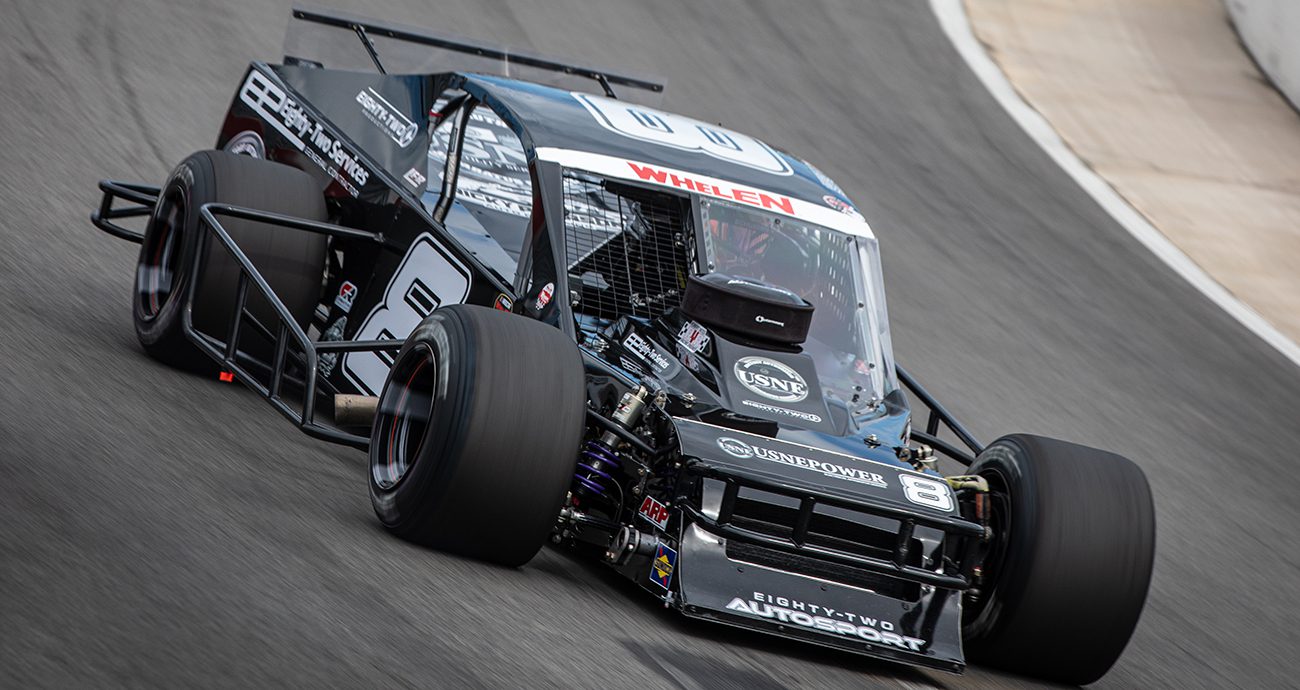
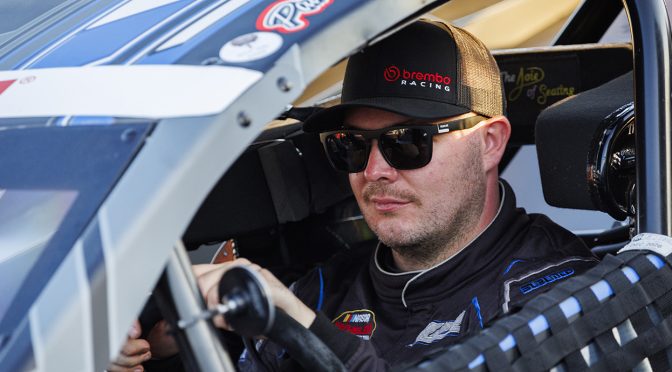
John-Michael Shenette has long dreamed of competing in a NASCAR Whelen Modified Tour event at his home track, Connecticut’s Thompson Speedway Motorsports Park.
That dream becomes a reality on Wednesday, April 16, when Shenette makes the trip from his home in North Carolina back to his old stomping grounds to compete in the Thompson 150 presented by FloSports.com (live on FloRacing).
“I have done, through my time in high school and college, more business plans, more letters to sponsors, major sponsors already in the sport, just trying to find people to put a program together to go (race at Thompson),” the 38-year-old said. “All I ever thought about doing was racing on the Whelen Modified Tour (at Thompson).
“Never once did I actually think it would happen.”
Shenette, who is from Thompson, Connecticut, grew up attending races at the 0.625-mile oval. He can remember watching drivers like Donny Lia, Keith Rocco, Bo Gunning, Ted Christopher and more battle for supremacy at the track considered one of the series’ most traditional venues.
Shenette began his own driving career when he was 7 at Little T Speedway, a quarter midget track located on the same property. He later became an employee at the big track, where he ran the scoreboard during races.
“Russ Dowd (the former announcer and general manager at Thompson who passed away on Feb. 16) was the first person to hire me to do any job,” Shenette recalled. “Russ hired me to run the scoreboard for $150 a night. Some nights were short, and my God some nights were long.
“Walking in the pit gate to go up to the scoring tower or wherever we were going that day and seeing all those Modifieds lined up in the center row in that pit area, man, all I ever wanted was one of those damn race cars.”
John-Michael Shenette during the FaithFest Evangelistic Ministries 150 at North Wilkesboro Speedway for the NASCAR Whelen Modified Tour in North Wilkesboro, North Carolina on May 18, 2025. (Photo: Ted Malinowski/NASCAR)
Eventually, Shenette went from racing at Little T Speedway to competing at Thompson Speedway Motorsports Park. He got to race in a few different divisions at Thompson in his 20s, but he never got the chance to compete in a Modified Tour event.
For years, it appeared that dream would likely go unfulfilled.
“My last race at Thompson was the Icebreaker in 2016, and I just remember being so in my head and emotional about it,” Shenette said. “I was in a crate car, and I basically went out and almost won my heat race. I started fourth in the race and ended up having a guy tear a fender off the car because I went to the outside three-wide down in Turn 4 to pass two cars in fifth and sixth.
“I get excited about that place, but in 2016, that was the last time I thought I was ever going to be able to race at home. It was a big deal for me.”
After racing Late Models for several years and moving to North Carolina with his wife Nicole, Shenette gave up racing in 2019 to focus on building a business and spending time with his family.
It wasn’t until 2023 when Shenette rejoined the racing ranks. Thanks to his successful general contracting company Eighty-Two Services, Shenette was able to form his own team to pursue his racing dreams.
Since then, Shenette has raced sporadically as his work and family schedule has allowed. He’s also begun working with 2008 Daytona 500 winner Ryan Newman, who has raced Shenette’s Modified to finishes of fifth and eighth in a pair of Modified Tour races at Martinsville Speedway and Florida’s New Smyrna Speedway, respectively.
Now, after two years of work building his program, Shenette will finally be able to check off his goal of racing in a Modified Tour event at his home track.
“I quit corporate America in 2020 because I didn’t want to be in corporate America anymore,” Shenette said. “Never once when I started Eighty-Two Services did I think it would generate enough income to start a Modified Tour team.”
Shenette hopes his story of perseverance can help motivate others to chase their own dreams, be it in the racing industry or elsewhere.
After all, if you’re going to dream, you may as well make your dreams epic.
“I never once thought it would happen, man,” Shenette said. “I’m so grateful for it.”
1. Will all four Hendrick drivers sit atop standings after Martinsville?
Kyle Larson’s battle with teammate Alex Bowman to capture the second win in six races for Hendrick Motorsports continued to show the team’s dominance as the championship organization takes control of the Cup Series standings.
The last time Hendrick Motorsports raced at Martinsville Speedway in the spring, it left the Virginia short track with a 1-2-3 on the results sheet. Come Sunday night, the winningest team in NASCAR history might be looking at a 1-2-3-4 sweep of its driver corps atop the Cup Series standings.
With fellow top-tier organizations Team Penske and Joe Gibbs Racing shining in spots but struggling to maintain consistent footing throughout the season’s first month and a half, the power vacuum has been enthusiastically filled by Hendrick’s quartet. The core four of Daytona 500 winner William Byron and Homestead winner Kyle Larson, alongside Alex Bowman and Chase Elliott, have established a tier of dominance atop the Cup Series standings, currently occupying spots 1-2-3-6, respectively.
The 2020 champ Elliott is the low man there in sixth, but he’s just nine points short of being fourth on the board — as the series now heads to a track type he arguably had a better handle on than any other driver in 2024. No. 9 is currently riding a career-best, seven-race top-10 streak on short tracks, with the next closest drivers (Larson and Joe Gibbs Racing’s Denny Hamlin) only at three apiece. He’s particularly great at Martinsville, with his 1,233 laps led there being the most he has at any track and more than double the amount at No. 2 (Phoenix, 553).
Elliott also owns the distinction of having run the most laps in the top five at Martinsville in the Next Gen (1,645) by a healthy margin (Hamlin, 1,485). It’s not just him who dominates, though; Larson has run the most laps in the top 10 in the Next Gen (2,125) and sports a bonkers 2.8 average finish in the last five Martinsville races after averaging a 20.5 in the 15 previous races. Something has clicked for him there, and it’s bad news for everybody else.
The two drivers separating the Hendrick contingent in spots four and five — Tyler Reddick and Christopher Bell — are both capable of winning this weekend, but notably have combined for just five top 10s across 20 Martinsville starts. It feels safe to predict Elliott is likely to make up those nine points on them this Sunday; it’s then more just a matter of whether the other three maintain their pace.
Hendrick has won five of the last nine Martinsville races, with all four of its drivers winning at least once. Perhaps even more crucially, the team has yet to lose a spring race there in the Next Gen era.
Heading into the weekend, every other team in the garage must feel like they’re standing at the base of Mount Everest, just staring up in bewilderment at the journey ahead. Toppling Hendrick Motorsports this weekend won’t be impossible, but it’ll be a heck of a climb for anybody who wants to get there.
2. Where and when will Team Penske capitalize on early speed?
A winless team with just four top 10s across 18 combined starts among its trio of drivers might actually be … the strongest of anybody? Let’s analyze how soon Team Penske’s results will match its speed.
They say “it’s better to be lucky than good,” and in the case of Team Penske’s first six races of 2025, truer words have never been spoken.
The trio of Fords driven by three-time and defending champ Joey Logano, 2023 title winner Ryan Blaney and 2022 Daytona 500 winner Austin Cindric have shown exceptional front-of-the-field potential this year, topping the series with 247, 147 and 159 laps led, respectively, each being a 2025 stage winner for four total among them.
And what do they have to show for it? Next to nothing, with exactly zero race wins and Blaney the highest among them in the standings in 10th. Logano, fresh off locking up and throwing away the key on his Hall of Fame case with a third Cup title, doesn’t even have a top 10 yet. Blaney, first in passing and fourth in speed for the season per NASCAR Insights, is riding the longest DNF-streak of his career after retiring early in each of the last three weeks.
All of that is about to be flipped on its head, with Penske being perhaps so good that luck doesn’t even enter the equation.
While the team obviously, as alluded to above, will likely have its hands full working on ways to outcompete Hendrick on Sunday, it does have arguably the driver to beat at the track in its stable in Blaney, who has outclassed the field under an intense amount of pressure with clutch wins there to make the Championship 4 each of the past two seasons. Despite Hendrick winning each spring race in the Next Gen era, Blaney has the best average finish overall there in this car (3.5), and it’s easy to see him whittling that down further on Sunday, given how fast he’s been. Also worth noting: He’s always been good there, with his 8.3 average Martinsville finish in his Cup career best among active drivers.
Assuming no calamity — which you shouldn’t do for Martinsville, of course, but for the sake of the analysis here, we will — all three of them will have a shot at finally harnessing the speed that continues to show up on Saturdays and for half of Sundays before they’re left collectively scratching their heads by Sunday evening.
Logano’s 11 straight top 10s at Martinsville is the longest active top 10 streak at the track and his longest streak anywhere. He’s also finished sixth or better in five of the last six races there, and the first top-10 run of the year for a driver who has finished all 32 of his Martinsville starts feels like a near-certainty this weekend.
The 26-year-old Cindric’s Martinsville history obviously is not as deep as his veteran teammates, but he did turn in his best run there yet (fourth) in his sixth start last November, with both of his two career short-track top 10s coming there and each in the last three races.
The first stretch of the season has undoubtedly been a frustrating one for the back-to-back-to-back Cup championship-winning organization, but with that amount of speed on a consistent basis, it’s only a matter of time before things take a turn for the better and the sun starts shining again.
And it’s looking like it’ll finally be a bright, sunshiney day for Team Penske this weekend in Virginia.
Jeff Gordon describes the fast start that Hendrick Motorsports has had to the 2025 season but acknowledges there is still more work to be done.
4. Ryan Blaney and Denny Hamlin among best ever at Martinsville
Team Penske’s Ryan Blaney and Joe Gibbs Racing’s Denny Hamlin, both with close family ties to the area, always seem to excel at the Virginia short track. Turns out, they’re two of the best to ever do it at NASCAR’s oldest racing venue. (Credit: Racing Insights; minimum 10 starts)
Driver
Average finish
Starts
Wins
Lee Petty
5.54
24
3
Jeff Gordon
6.74
47
9
Ryan Blaney
8.33
18
2
Cale Yarborough
8.74
31
6
Clyde Minter
8.80
10
0
Rex White
9.19
16
2
Joe Weatherly
9.69
13
1
Jimmie Johnson
9.87
38
9
Denny Hamlin
10.03
38
5
David Pearson
10.07
28
1
5. Catch the pack — news and notes from around the garage
On March 31, 1985, six-time NASCAR Modified champion Jerry Cook saw his relentless mission to build a series for the discipline finally come to fruition.
Nearly three dozen of the best Modified competitors converged at Connecticut’s Thompson Speedway Motorsports Park for NASCAR’s inaugural Modified Tour event. After decades of weekly events around the northeast, Thompson served as the launch point for Modified veterans to battle for their own championship.
The Icebreaker 150 at Thompson on April 16 coincides with the 40th anniversary of that first race, a milestone Cook finds difficult to believe. The process of assembling everything for the Modified Tour’s maiden venture remains fresh in his mind, from outlining the rules to ensuring communication remained steady and effective.
With the trust of the competitors, Thompson and NASCAR officials on his side, Cook was confident the debut for the Modified Tour would be a successful one.
He was right.
Jerry Cook at Martinsville Speedway in 1975 (Photo: ISC Images via Getty Images)
“There was a whole lot going through my mind,” Cook said. “I was just trying to put a group together, but the racers knew me, and I knew all of them, so that helped a lot. They all wanted it to go, too, but the biggest thing was to be sure we put it all together and that everything went good.
“We got through that whole day.”
For Cook, the basis of establishing the Modified Tour was simple. As costs continued to appreciate for Modified competitors during the early 1980s, they needed a streamlined outlet separate from weekly racing that was both competitive and affordable.
Cook needed time to coordinate with drivers, tracks and NASCAR to enact upon his vision, which materialized in time for 1985. The first schedule comprised of 29 events featuring recognizable venues such as Martinsville Speedway and New York’s Riverhead Raceway, along with other tracks like Pocono Raceway’s short oval.
Thompson provided Cook a solid first challenge as series director. The track’s rich history, including Modifieds and the NASCAR Cup Series, meant high expectations were placed on everyone to have a clean, professional outing.
Cook enlisted the help of Thompson officials Dick Brooks, Bob Slade and Paul Cokley to help oversee inspection and enforce series rules. Any insight and knowledge by track officials during Year 1 was invaluable to Cook while he sorted through the resources at his disposal.
“I had been around for a little bit, so I knew what I had to do, but [the challenge] was doing it with a bunch of different situations,” Cook said. “There was working with track officials to coordinate tour procedures, which were more structured than track procedures. I had a small group of tour officials, but also utilized local track officials when I started out. We didn’t have all the people then that we have now.”
Prior to hosting the first NASCAR Whelen Modified Tour event in 1985, Thompson Speedway Motorsports Park already boasted a proud racing history. (Photo: Getty Images)
With officiating squared away, Cook turned his attention to what he knew would be a stacked entry list. Headlining the group was Richie Evans, a legend in the discipline whose accomplishments at that point included eight national championships and four Thompson track titles.
Joining Evans in the field were other notables like Tom Baldwin, Jan Leaty, Charlie Jarzombek, Mike McLaughlin, Brian Ross and Jeff Fuller.
The idea of a year-long NASCAR Modified series was enticing to Fuller, who possessed championships at Westboro Speedway in 1979 and 1981. With strong equipment and plenty of experience, Fuller believed he could be a contender for the inaugural Modified Tour title despite the challenge of dethroning Evans atop the pedestal.
Jeff Fuller entered the inaugural Modified Tour event at Thompson confident he could contend for the victory. (Photo: ISC Images via Getty Images)
“I had positioned myself at that time in my career with a guy by the name of Jack Neusner,” Fuller said. “He did everything he said he was going to do, and I was really excited when the tour came together, so I couldn’t wait.
“In my opinion, it was really good we had that. Jerry Cook did a great job getting it off its feet.”
Fuller’s confidence proved to be founded. Evans remained a significant hurdle to clear, but Fuller got an early advantage over the Modified stalwart by starting on pole while Evans lined up fourth.
Once the green flag waved, Fuller was tasked with fending off Evans for the 47-lap feature. The two engaged in an intense battle for the lead throughout the race, but Evans was the driver who parked his iconic orange No. 61 Modified in Thompson’s Victory Lane. Despite leading one more lap than Evans, Fuller settled for second.
The distinction of being the first Modified Tour winner would have been a tremendous honor for Fuller, but he found solace in placing behind Evans that day. Fuller knew the standard Evans had established for Modified competition, and that any opportunity to battle him for a win was an enthralling experience.
“There was a race I remember where I brought Richie high in I think [turns] one and two,” Fuller said. “We were battling, but when you run people clean, [you’re shown] the respect you want to be shown. I kind of knew that was a little bit too high, and probably a lap or two later, he hit the back bumper.
“Richie Evans was the man. If you could run with Richie, you could run with anybody.”
Cook could only pay so much attention to how the inaugural race unfolded; directing the event and keeping everything on schedule were his primary objectives.
Once he had time to compartmentalize the race itself, Cook could not help but be satisfied with the Tour’s first showing. Certain aspects of the maiden event could have been more refined, but Cook departed Thompson knowing the Modified Tour was only going to improve.
He exuded that confidence thanks to the existing chemistry with drivers and teams.
“We needed to move forward with consistency,” Cook said. “Every time you had a problem, you dealt with it right away. You didn’t wait a week or two. Everyone wanted [the Modified Tour] to work, so it’s a plus when you’ve got people working with you, and you could believe them when they told you we needed to do this or adjust that.
“That’s how we moved forward with it.”
As the Modified Tour proceeded through the rest of 1985, nobody could consistently match Evans. With 15 victories, Evans had the championship secured by the time the series reached its penultimate race of the season, also at Thompson.
Richie Evans dominated the inaugural NASCAR Whelen Modified Tour season by earning 15 wins and the championship before passing away in a practice crash at Martinsville Speedway. (Photo: Getty Images)
Evans was never able to properly celebrate that milestone. He passed away in a practice accident at Martinsville three days before the Modified Tour finale at the same track.
The Modified Tour persevered through the tragedy that was Evans’ passing. Over the past 40 years, names like Mike Stefanik, Justin Bonsignore, Reggie Ruggiero, Ted Christopher and Doug Coby have become synonymous with success on the platform.
For Fuller, who would go on to win 31 Modified Tour events and the 1992 championship, nothing came easy during the first year. Going up against Evans, Jarzombek, Jimmy Spencer and more brought out the best in Fuller, who had to stay resolute to battle for victory.
Fuller sees the same respectful on-track principles from 1985 in the group of drivers today that includes Bonsignore, Ron Silk and Hirschman’s son, Matt.
“The first season I did [the Modified Tour], there were a lot of cars trying to make the show,” Fuller said. “When you showed up, you had to have your game face on. You knew you were racing the best of the best. [Even today], unless you’ve driven one of these beasts, nobody understands how hard it is to show each other that much respect.
“From when it started up to now, I still believe the cream rises to the top.”
On April 16, the current class of NASCAR Whelen Modified Tour drivers return to Thompson, which remains a fixture on the schedule 40 years after it hosted the series’ first race. In that timeframe, Thompson has been the site of 155 Modified Tour events, an average of almost four races a season.
Everything Cook set out to accomplish with the Modified Tour began on that first weekend at Thompson, where he sought to prove the discipline could become its own affordable, successful series on the NASCAR platform.
With hundreds of events and countless memorable moments in the record book, Cook’s belief in Modified racing was validated.
“When I started that tour, there were the naysayers that said it won’t last a year or two, and then it’ll be over,” Cook said. “Most of the people I remember telling me that are gone now, and the tour is still going.
“40 years later, this is still the best show, in my opinion.”
Six races into the NASCAR season, William Byron holds an early edge in the Cup Series standings. The Hendrick Motorsports driver has been in that No. 1 perch the last four weeks … and has another Daytona 500 trophy already in his season’s souvenir case.
Multiple factors have put the No. 24 Chevrolet team and its 27-year-old star in such a prime early position, but it’s difficult to overlook just how stellar Byron has been so far in several crucial performance metrics.
Byron ranks first in three of four key performance categories this season, according to NASCAR Insights data. The Racing Insights-powered analysis shows Byron leading the Cup Series in speed rating, defense rating and restart performance; the only category he isn’t heading is passer rating, where he’s a respectable eighth in the field.
Those top-rated metrics in the speed rating category stem from his overall pace relative to the rest of the field, with NASCAR Insights calculating short- and long-run speed and his efforts in both clean and dirty air. Byron’s defense rating measures his ability to hold position when under pressure, and his restart rating weighs his positions gained or lost and consistency after the green flag flies. The only other driver with top-10 ratings in all four categories is Tyler Reddick — third in both speed and passer rating, sixth in defense rating and 10th on restarts.
The Daytona win is one of four top-six finishes this year for Byron, who carries a healthy 36-point lead over Hendrick teammate Kyle Larson in the standings into Sunday’s Cook Out 400 (3 p.m. ET, FS1, MRN Radio, SiriusXM NASCAR Radio) at Martinsville Speedway. Two of his 14 career Cup Series wins have come at the Virginia short track, and he is the 400-lap race’s defending winner. He is also the only driver to lead at least one lap in all six Cup Series events this season.
Byron’s only blips on his results this year include a 27th-place run last month at Atlanta Motor Speedway, where late-race contact at the front foiled his bid for back-to-back wins. He was also in contention for a solid finish last weekend at Homestead-Miami Speedway, when a pit-road speeding penalty late in the race knocked Byron from the top 10; he still wound up 12th.
Byron ended up third in last year’s championship race, behind Team Penske’s Joey Logano and Ryan Blaney in the Phoenix Raceway finale. But momentum was squarely on his side during the season’s home stretch; he was among the top six finishers in each of the final seven races of 2024.
When Ryan Ellis informed Alpha Prime Racing he wasn’t returning to the team for the 2025 NASCAR Xfinity Series season, owner Tommy Joe Martins needed to find his next franchise driver to be paired with Brennan Poole. Coincidentally, 21-year-old Parker Retzlaff became available.
Retzlaff, fresh off his first two full-time seasons in the series with Jordan Anderson Racing, placed 16th and 21st in the championship standings in 2023 and 2024, respectively. And while Retzlaff led the series with 12 DNFs in 2024, Martins saw plenty of upside in the Wisconsin native.
“Parker is exactly the type of guy that we want,” Martins told NASCAR.com. “He is a talented young race car driver that has proven he’s not afraid to race on a smaller team and try to overachieve.”
Retzlaff had other options to compete for different teams in 2025, but his main priority was to remain full-time in the Xfinity Series. For the fourth season in a row, though, he will work with new people. While Retzlaff wheeled the No. 31 Chevrolet for two seasons, there were changes aplenty. He worked with different crew chiefs both years and wanted a fresh start for 2025.
“Some stuff didn’t match, some stuff wasn’t working,” Retzlaff said of his two-year stint with Jordan Anderson Racing. “I needed a change in my life to be happier from a sponsor’s side and from my side.
“Nothing was staying the same in my life. I was there for two years, and I didn’t have the same people for two years in a row. They switched every single person both years. I think I had a lot of pieces that could have worked well, but not with so much change in my life.”
When Retzlaff entered his rookie campaign, he was a soft-spoken driver, receiving guidance from those around him, whether it be his peers or team leaders. Throughout his sophomore campaign last year, he felt he had found his voice and was open to expressing himself more freely.
Ultimately, it led to the biggest change of his career to date, switching teams as a full-time driver.
“I was really quiet when I first started and never said anything,” Retzlaff said. “Now, I feel like I need to say something if something needs a change, and I think that was some of the problem. I didn’t feel like I had as much say as I needed to have for it to go better for me and for the sponsor’s side. I’m happy to make a little bit of change.
“I think it’s been a good change. I’ve been very happy throughout the offseason doing it. I think we have a good team for this year.”
What also sold Retzlaff on Alpha Prime was that Poole finished better than both Jordan Anderson Racing cars in the championship standings last season without having a leased engine program with ECR. The rebranded No. 4 team has a full motor deal this season with ECR, giving Alpha Prime its best chance of running toward the front of the field to date.
“That’s a big deal to compare ourselves apples to apples against some of those other guys midpack now that are doing engine deals,” Martins said. “The last few years, we haven’t been able to do that with our budget. It has been fun for us to see that our cars are a process and our ability to compete at some of those types of race tracks where the motor does play a big part of it.”
Through the opening six races, Retzlaff has experienced tough racing luck. He was involved in a wreck while running inside the top 15 in the season opener at Daytona International Speedway. Even more heartbreaking was when the No. 4 car made a move on Austin Hill during the final lap at Atlanta Motor Speedway while battling for the win, only to have a cut tire.
Rock bottom was a handful of mechanical woes at Circuit of The Americas during practice and qualifying, preventing Retzlaff from making the field. Martins considered practice and qualifying at COTA the worst day in company history, with two Alpha Prime cars missing the race.
Retzlaff was on the upswing at Phoenix Raceway, finishing a season-best 11th. He placed 17th at Homestead-Miami Speedway and has gained 11 spots in the championship standings over the last three races, currently sitting in 26th ahead of Saturday at Martinsville Speedway (5 p.m. ET, The CW, MRN Radio, SiriusXM NASCAR Radio). Retzlaff is the most recent pole winner at the Virginia short track.
Even with the setbacks to begin 2025, Retzlaff’s goal is to be a linchpin in the top 15 and eventually battle for top 10s weekly. The bonus? Winning a race and making the playoffs.
“If the goal is to make the playoffs, the only way that we’re going to do that is to win a race,” Martins said. “To point your way into the playoffs takes a level of speed and running in the top 10, consistently scoring stage points. That’s just not where our team is at. I think when we are firing on all cylinders, we’re probably racing around the top 15. In Parker’s case, he’s shown he can race around the top 10, but that’s still not scoring major stage points every week.
“I’ve tried to give him confidence and how much we believe in him. That’s a big thing for me with young drivers. They are probably not going to be perfect, but ultimately, you’re going to have their back, and that’s what we want to do with Parker.”
NASCAR officials issued fines to four teams in the Xfinity Series on Tuesday for lug-nut infractions last weekend at Homestead-Miami Speedway.
In a post-race inspection, competition officials found one unsecured lug nut each on the No. 10 Kaulig Racing Chevrolet driven by Daniel Dye, the No. 18 Joe Gibbs Racing Toyota piloted by William Sawalich, the No. 21 Richard Childress Racing Chevrolet wheeled by Austin Hill and Anthony Alfredo’s No. 42 Young’s Motorsports Chevrolet. Hill was the highest finisher among the quartet, netting a third-place result. Following Hill was Dye (9th), Alfredo (18th) and Sawalich (24th).
Each week after every Cup Series race, NASCAR.com — with assistance from our partners at Racing Insights — will bring you metrics that matter, going beyond the official race results with analytics and stats. The extra information and data help to provide context to each weekend’s action, showing who is overachieving and maximizing their results and who may have areas for improvement in certain categories.
NASCAR Insights data will be used to provide another layer of depth to NASCAR.com’s coverage, which includes projected results for each week’s race from Racing Insights, in addition to facts and figures — analyzing multiple data points throughout each lap — that can be used to zero in on performance trends and analysis for every driver in the field.
The four main NASCAR Insights metrics, including their subcategories:
Passer Rating
Passer Rating measures a driver’s efficiency in overtaking, tracking every passing opportunity throughout the race (excludes restart laps). Additionally, this statistic includes:
• Completion Efficiency: How quickly a driver is able to complete an overtake once within passing range. • Time in Range: Amount of time a driver is in an overtaking zone without being able to complete a pass. • Position: Running position of passes. • Total Passes: Overall count of successful true passes during the race. • Lapped Traffic: How well the driver manages passing lapped cars.
Defense Rating
Evaluates a driver’s ability to hold their position when under pressure, assessing their effectiveness in fending off faster cars (excludes restart laps).
• Defensive Effectiveness: How successful a driver is at preventing opponents from overtaking when they are within range to pass. • Pressure Duration: How long the driver spends being under threat of being passed. • Position: Running position where defending is taking place. • Passing Time: Time it takes for the pursuing car to complete the pass, if they eventually do. • Relative Speed: Speed of a driver’s car relative to the field when holding onto position.
Speed Rating
Analyzes a driver’s overall pace relative to the field, tracking lap times throughout the race.
• Long-Run Speed: Evaluates tire management by tracking lap time degradation compared to other drivers on similar tire strategies. • Short-Run Speed: Identifies drivers who maximize fresh tires, measuring their ability to post fast laps immediately after a pit stop. • Clean Air Speed: Assesses a driver’s pace when running in clean air, unaffected by the aerodynamic turbulence of a car ahead. • Dirty Air Speed: Evaluates a driver’s ability to maintain speed in traffic, considering the impact of turbulent air on handling.
Restart Rating
Assesses a driver’s performance in gaining or maintaining position after a start or restart.
• Position Change: Number of positions a driver gains or loses immediately after the restart. • Consistency: Ability to hold running position during the restart. • Position: Running position where the driver is gaining, losing, or holding position.
The following chart provides a glimpse at the top 10 finishers from Sunday’s race at Homestead-Miami Speedway, showing where each of those drivers ranked among the 37-car field in the respective four categories.
NASCAR.com plans to incorporate these NASCAR Insights data and analysis into its coverage leading up to and following Sunday’s Cook Out 400 (3 p.m. ET, FS1, MRN and SiriusXM NASCAR Radio) at Martinsville Speedway and for every race remaining on the Cup Series calendar.
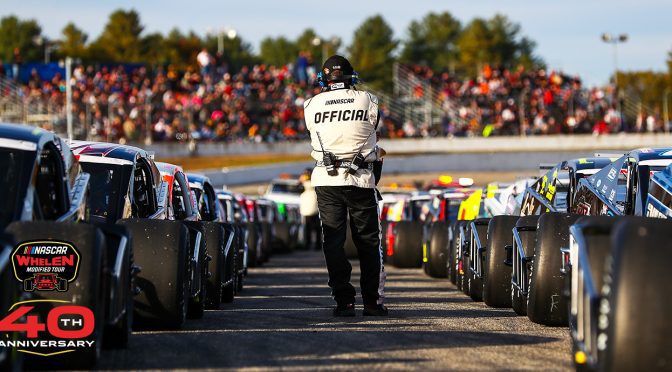
After a month off, the 40th anniversary season of the NASCAR Whelen Modified Tour roars back to life Wednesday, April 16 at Connecticut’s Thompson Speedway Motorsports Park with the running of the Icebreaker 150 (live on FloRacing at 8 p.m.).
The race, originally scheduled for Sunday, March 30, was postponed twice due to the threat of inclement weather.
The race marks the 156th time since the creation of the Modified Tour in 1985 the series has visited the historic oval. In fact, the first Modified Tour race was held at Thompson on March 31, 1985 and won by NASCAR Hall of Famer Richie Evans.
No driver has won more Modified Tour races at Thompson than Mike Stefanik, who won 15 at the venue during his career. Reigning series champion Justin Bonsignore is a close second with 14 wins, with his most recent coming last fall. Other notable winners at Thompson include Ted Christopher, Jeff and Rick Fuller, Tony Hirschman, Ron Silk, Doug Coby, Steve Park and Reggie Ruggiero, among others.
Tickets to the Icebreaker 150 are available trackside. Below is everything you need to know about the second race of the 2025 NASCAR Whelen Modified Tour season.
Thompson Speedway Motorsports Park has hosted the NASCAR Whelen Modified Tour more than any other track in series history. (Photo: Nick Grace/NASCAR)
Icebreaker 150 at Thompson Speedway Motorsports Park
Thompson Speedway Motorsports Park has served as the backbone of the NASCAR Whelen Modified Tour schedule since the creation of the series in 1985.
That’s why Thompson is the perfect place to host the inaugural FloRacing Connecticut Challenge, a three-race miniseries open exclusively to team owners that have not participated on the Modified Tour in the last three years or are new to the series.
The miniseries features a championship purse totaling $23,750, including $7,500 to the eligible team that scores the most points during the three Thompson races this season. In addition, should an eligible team win one of the three Thompson races, they’ll earn an additional $1,250 bonus.
Drivers competing for eligible teams include Jake Johnson, Teddy Hodgdon, Matt Swanson, Eric Berndt, Max Zachem, Brian Sones and Dylan Slepian.
Those drivers will have their hands full against a field full of series regulars, all of whom will be looking to collect the checkered flag for themselves. Chief among them is Justin Bonsignore, who at 14 Thompson victories is one triumph away from tying Mike Stefanik at the top of the all-time Thompson Modified Tour wins list.
Patrick Emerling enters the race at Thompson as both the Modified Tour points leader and the winner of the most recent series event last month at Florida’s New Smyrna Speedway. He scored his first Thompson win last summer and will by trying to add a second victory Sunday.
Ron Silk, a seven-time Thompson winner, should also be among the contenders.
Matt Hirschman will be looking to join his father, eight-time Thompson winner Tony Hirschman, as a winner in Modified Tour competition at the 0.625-mile oval. Luke Baldwin will again pilot the No. 7 for his father Tommy Baldwin Jr.; Woody Pitkat will be at the helm of the No. 82 for team owner Danny Watts Jr.; and Austin Beers will chase his first Thompson win in the No. 64 KLM Motorsports entry.
Other notable entrants include Tyler Rypkema, Kyle Bonsignore, Andrew Krause, Chase Dowling, Craig Lutz, Tommy and Trevor Catalano and Eric Goodale, among others.
The full entry list for the Icebreaker 150 is available here.
Action during the 2024 IceBreaker 150 for the NASCAR Whelen Modified Tour at Thompson Speedway Motorsports Park on April 7, 2024. (Photo: Nick Grace/NASCAR)
SCHEDULE: Wednesday, April 16 … Practice from 4:15 – 4:40 p.m. ET … Final practice from 4:45 to 5:15 p.m. ET … Qualifying at 7 p.m. ET … Start of the Icebreaker 150 (150 Laps / 93.75 Miles)
QUALIFYING: Two consecutive qualifying laps. Faster lap determines qualifying position. Adjustments or repairs may not be made on the vehicle after the vehicle has taken the green flag at the start/finish line. NASCAR reserves the right to have more than one vehicle engage in qualifying runs at the same time. Starting field for the 51st Annual Icebreaker 150 is limited to 30 starters including Provisional Positions.
TIRE ALLOTMENT: The maximum tire allotment available for this event is nine (9) tires per team. All tires used for qualifying and the race must be purchased at the track and scanned by Hoosier, unless otherwise approved in advance by the Series Director. Four (4) tires must be used for qualifying and to begin the race. All qualifying tires must remain in impound until released by NASCAR Officials. The remaining tire allotment may be used for practice and/or change tires during the event. The tire change rule is two (2) tires per per stop.
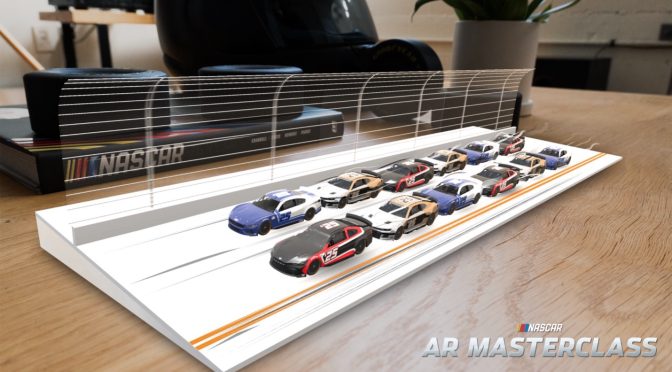
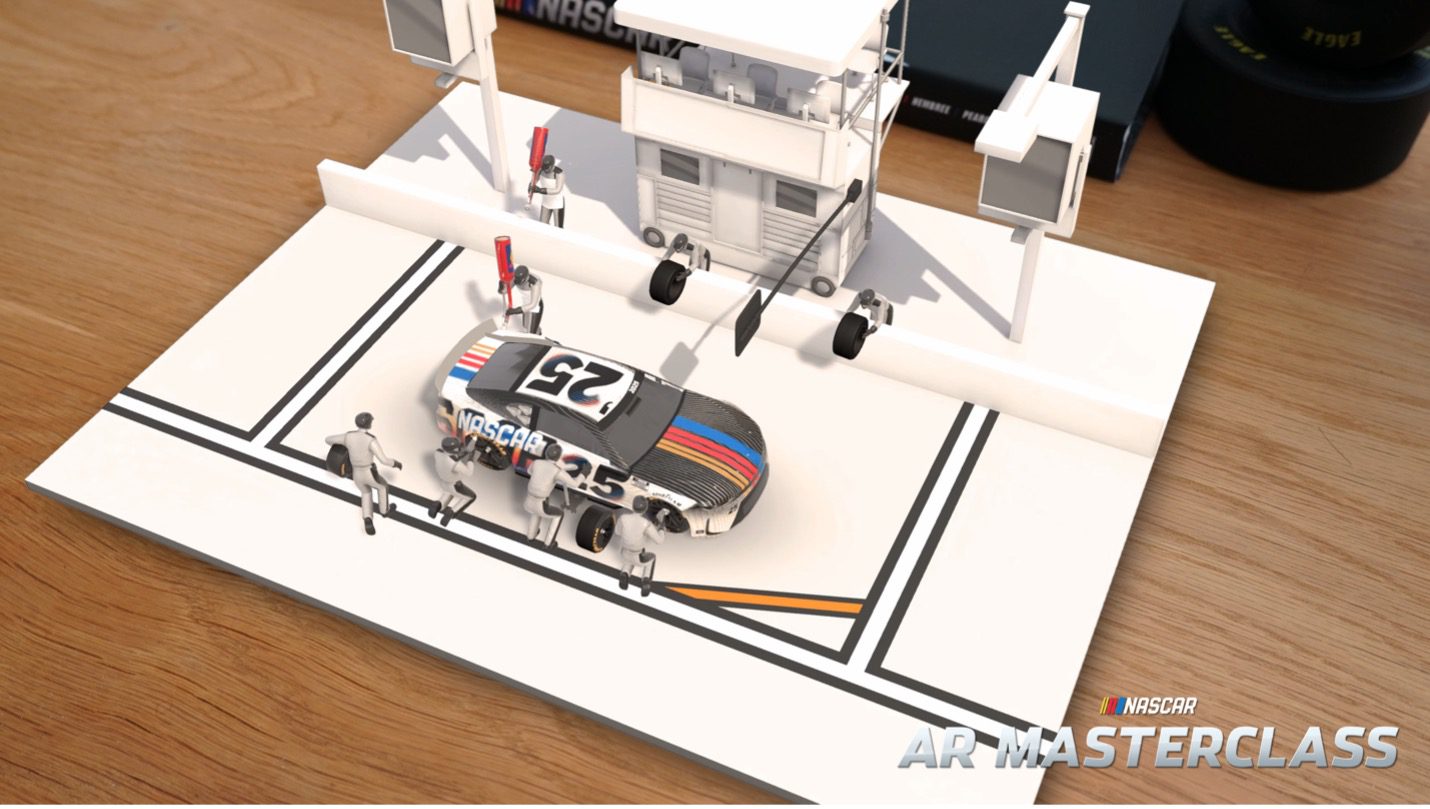
Have you ever wondered what really happens during a NASCAR pit stop or why cars seemingly go faster when lined up directly behind one another on the race track at high speeds?
Introducing the NASCAR AR Masterclass, a new immersive way for fans to go in-depth into the world of NASCAR, now available as part of the official NASCAR Mobile app on iOS and Android.
This new augmented reality feature aims to give fans foundational lessons on the sport of stock car racing, giving them the essential knowledge to advance to the next level in their fan journey.
NASCAR
From learning all the intricacies that go into a pit stop to a visual explainer on the inner workings of a spotter’s role, fans will get the knowledge straight from the pros. Interactive lessons teach you the strategy and science behind drafting and how teams choose racing lines on a superspeedway. Developed with input from actual crew members and NASCAR insiders, these lessons form the foundation for a deeper understanding of one of the world’s premier motorsports series.
All the lessons are presented in augmented reality, letting fans see the action from every angle on devices they already own. Place the lessons on your tabletop, in your living room or anywhere you want to get an interactive explainer on the core elements of NASCAR action.
Best of all, AR Masterclass is free and available today in the official NASCAR Mobile app on iOS and Android. Whether you’re a new fan or a lifelong follower, NASCAR AR Masterclass puts the heart of the sport in the palm of your hand.
Kyle Larson did Kyle Larson things as he rode the high line to his first victory of the season this past weekend in South Florida.
NASCAR.com’s Pat DeCola ranks the top 20 Cup Series contenders after the Straight Talk Wireless 400 at Homestead-Miami Speedway and before Sunday’s Cook Out 400 at Martinsville Speedway (3 p.m. ET, FS1, MRN Radio, SiriusXM NASCAR Radio).
Analysis: Larson’s Homestead triumph — in which he was second in passing, speed and defense per NASCAR Insights — could be a sign of things to come, as we’re now fully entrenched in a portion of the schedule that massively favors the 2021 champ. With a 2023 Martinsville win and five top-six finishes there since 2021, two in a row is very much within reach, and he might not be done after that.
Analysis: Byron salvaged 12th at Homestead despite a rocky final stage, but No. 24 appeared headed toward an even better day after picking up stage points in each of the first two. The two-time spring Martinsville winner already sports the top honors as the best restarter playing the best defense with the best speed, per NASCAR Insights, and win No. 2 of the season should be in play for the 2025 Daytona 500 winner.
Analysis: Back-to-back finishes outside the top 10 after back-to-back-to-back wins is a great example of how fickle NASCAR can be, but there’s no cause for concern just yet for Bell after a rough showing at Homestead. The Martinsville fall 2022 winner has likely been itching to get back to the Virginia track after the sting of last year’s penultimate race and should be in the mix for the win once again.
Analysis: A late wall scrape while battling his teammate cost Bowman his first win of 2025, but the runner-up marked his fifth straight — and series-best — top 10, proving his No. 48 team’s consistency to open the year. His 2021 Martinsville victory and Hendrick’s short-track dominance suggest he’ll contend again this weekend.
Analysis: Reddick’s eighth-place Homestead finish is probably a bit frustrating for him given his strength there, but No. 45 was 32nd-best on restarts Sunday so it could’ve been much, much worse. Martinsville has yet to fully click for him, with Reddick collecting just two top 10s en route to a very non-Reddick-like 20.8 average finish in 10 starts.
Analysis: Hamlin’s fifth-place Homestead run was an encouraging one for No. 11, who has either finished in the top six or outside the top 20 in every other race so far this year. His Martinsville success is long and prosperous, and JGR’s historical short-track edge makes him arguably Larson’s chief threat.
Analysis: It’s a bit curious that Elliott doesn’t seem to be enjoying quite the same level of success so far as his Hendrick teammates, leading just a pair of laps on the season despite a healthy standings position. The 2020 Martinsville fall winner will likely come alive this weekend at the half-mile track, however, as he tends to lead laps in bunches there.
Analysis: Wallace’s third-place Homestead finish — his first top five of 2025 — continued to show his gains from the tail end of 2024 that rolled into this year, and he has now led double-digit laps in back-to-back races for the first time since Daytona/Darlington last summer. Martinsville has tended to be a place where he performs well, too, and he could capitalize on it for a win this weekend.
Analysis: Blaney’s Homestead engine failure and third straight DNF (a career-first) overshadowed what quite possibly could’ve been a dominant win for No. 12, as the driver with the best speed and the best passer at Homestead per NASCAR Insights. It likely won’t take too long to get back on the horse, however, as Blaney is exceptional at Martinsville and clearly has had a rocket most weeks so far.
Analysis: Buescher’s sixth-place run at Homestead extended a strong start to the season, with a P30 at Atlanta being the lone outlier dragging down an otherwise excellent 11.8 average 2025 finish, which is still fourth-best among full-timers. Most of his short-track success has come at the non-paperclip-shaped ones, but it stands to reason that the speed and development he’s shown over the past few years should change that trend eventually.
Analysis: It remains unbelievably baffling, but Logano’s P14 at Homestead extended his top-10 drought to six despite leading a series-high 247 laps. Though he has just one Martinsville win to his credit (in 2018), he’s consistently a front-of-the-field threat there and should break through for his first solid finish of the year this weekend.
Analysis: Berry definitely had a shot to be competitive, but Homestead was no slam dunk for the Las Vegas winner to follow that up with another win, though he did earn points in Stage 1. The short-track superstar has shown he has what it takes to win at Martinsville in the Xfinity Series, though, and it’s extremely possible his early season speed could peek out once again this weekend.
Analysis: Chastain entered Miami with a truckload of momentum for his home-state race, only to qualify 25th and finish a dismal 31st with six points collected. We’ve obviously seen what he’s capable of at Martinsville in the past, but despite that highlight reel move back in 2022 he has just an overall 18.6 finish with three top 10s and 31 laps led in 12 starts.
Analysis: Briscoe’s fourth-place run was his first top 10 at Homestead in Cup and his best overall points day of the season so far as he begins to stabilize a bit. Martinsville was a place he was able to stand out in SHR’s waning years, so it’ll be interesting to see if he’s able to carry that over — and potentially improve upon — now that he’s with JGR, a team that traditionally excels there.
Analysis: Where there’s smoke, there’s fire, and Preece’s hot start could potentially be here to stay — he’s 12th in overall speed so far this season, according to NASCAR Insights. The longtime short-track star could finally show what he’s capable of at Martinsville, where he collected his first top 10 in his 11th try just last spring.
Analysis: McDowell is beginning to slip a bit — and still looking for his first top 10, somehow — but overall is still on pace for what would be a career-best average finish (16.3). Don’t expect his first one of the season to come this weekend, though … McDowell has never finished in the top 10 at Martinsville in a whopping 28 starts.
Analysis: Things very much are starting to trend in a way that doesn’t foretell a successful remainder of the season for Busch in his third season at RCR, and the sense that he was about to break through for a win in the near term is all but gone. That said, Martinsville is the kind of track that sheer will and determination play heavy, heavy factors and if “Rowdy” is dialed in this weekend he could compete for his third win there despite dwindling speed.
Analysis: A seventh-place starting position did not translate to in-race speed, with JHN turning in the 27th-best mark there on top of being 31st in speed for the season, per NASCAR Insights. A dismal 29.3 Martinsville average finish across four starts doesn’t inspire a ton of confidence he’ll be able to turn it on this weekend, either.
Analysis: Stenhouse likely isn’t destined for weekly top 10s this year, but he’s showing some above-average strength so far as his average finish (17.3) approaches his career-best (17.1), set in a two-win 2017 season. In terms of short tracks, Martinsville isn’t his favorite — he’s been formidable at Bristol at times but has just three top 10s in 24 Martinsville starts for a rough 24.1 average finish.
Analysis: Allmendinger is showing perhaps more life than many expected out of the veteran’s return to Cup, and he continued to be one of the best at Homestead as the race’s best restarter and best defender. He’s had some strong Martinsville Cup runs across his 25 starts, with a runner-up in 2016 being the best, but he hasn’t raced there at the top level since 2023 and could face an uphill battle.
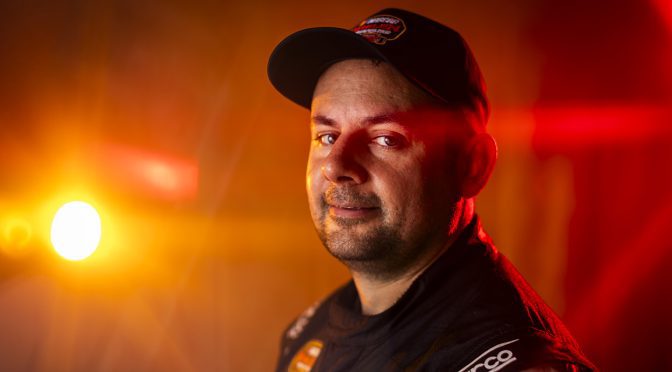







 Thompson Speedway Motorsports Park has served as the backbone of the NASCAR Whelen Modified Tour schedule since the creation of the series in 1985.