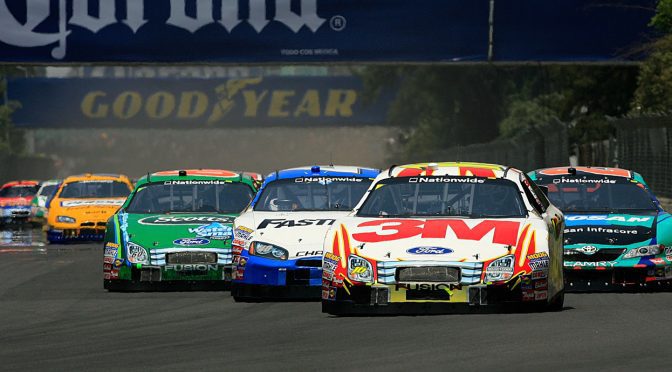
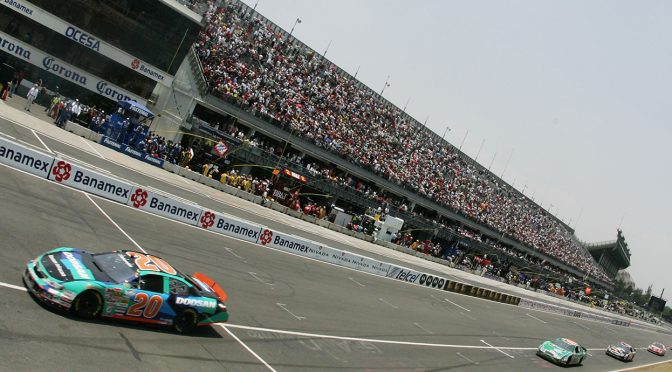
The NASCAR Xfinity Series marks its return to Mexico with Saturday afternoon’s The Chilango 150 (4:30 p.m. ET, The CW, MRN Radio, SiriusXM NASCAR Radio). The series has held four previous races at the famed Autódromo Hermanos Rodríguez — the last in 2008, won by Kyle Busch.
This is the second of seven road-course races on the schedule. JR Motorsports’ Connor Zilisch, a rookie this season, won the first at Circuit of The Americas from pole position.
Reigning series champion and JRM driver Justin Allgaier earned his third win of the season in the series’ most recent race two weeks ago at Nashville Superspeedway. It marks the fifth time in the last eight years the veteran has scored at least three victories in a season. He holds a 92-point advantage in the championship standings over fellow three-race winner Austin Hill of Richard Childress Racing.
The Illinois native has answered his first career title run with another top-shelf season in the No. 7 JRM Chevrolet. He leads all drivers in laps led (638) and top-10 finishes (10). He’s only eight top-10 finishes from 300 in his career — a feat never before accomplished in the series.
With 12 regular-season races remaining and six playoff spots still to be claimed, Mexico City certainly presents all the makings of an ultra-competitive weekend.
Sam Mayer and Ty Gibbs have the most road-course wins (four) in this weekend’s field. Interestingly, nine of the series’ last 11 road-course races have been won by just three drivers (Mayer, Shane van Gisbergen and Zilisch). And Mayer, who is ranked third in the standings, is still looking for his first win of the year.
Gibbs, driving the No. 19 Joe Gibbs Racing Toyota this weekend, is among three Cup Series regulars racing Saturday, joining Daniel Suárez (No. 9 JRM Chevy) and Christopher Bell (No. 24 Sam Hunt Racing Toyota). Craftsman Truck Series rookie Andrés Pérez de Lara will be making his Xfinity Series debut in the No. 91 DGM Racing x JIM Chevrolet.
Kennametal Pole Qualifying is slated for 12:10 p.m. ET on Saturday (The CW App) and historically has proven very significant on road courses, with the polesitter winning 10 of the last 18 road-course races.
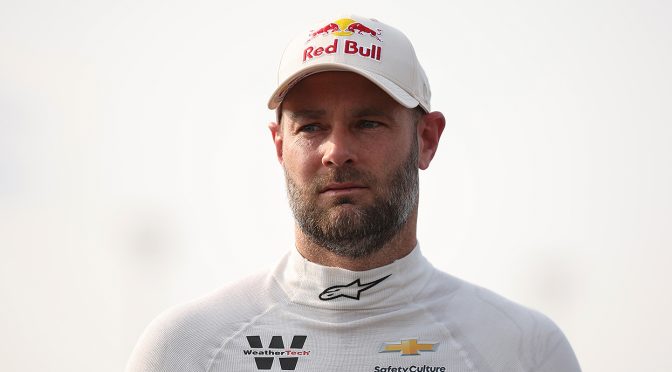
To say the learning curve has been steep in Shane van Gisbergen’s first full Cup Series season would be a massive understatement.
After winning his debut NASCAR race (at any level) on the Chicago Street Course in 2023, then performing well in a full-time Xfinity Series ride last year — while also holding his own in part-time Cup action — SVG seemed as ready for the sport’s highest level as anyone could be. But facing the best week-in and week-out, on a variety of different track types, is an entirely different challenge.
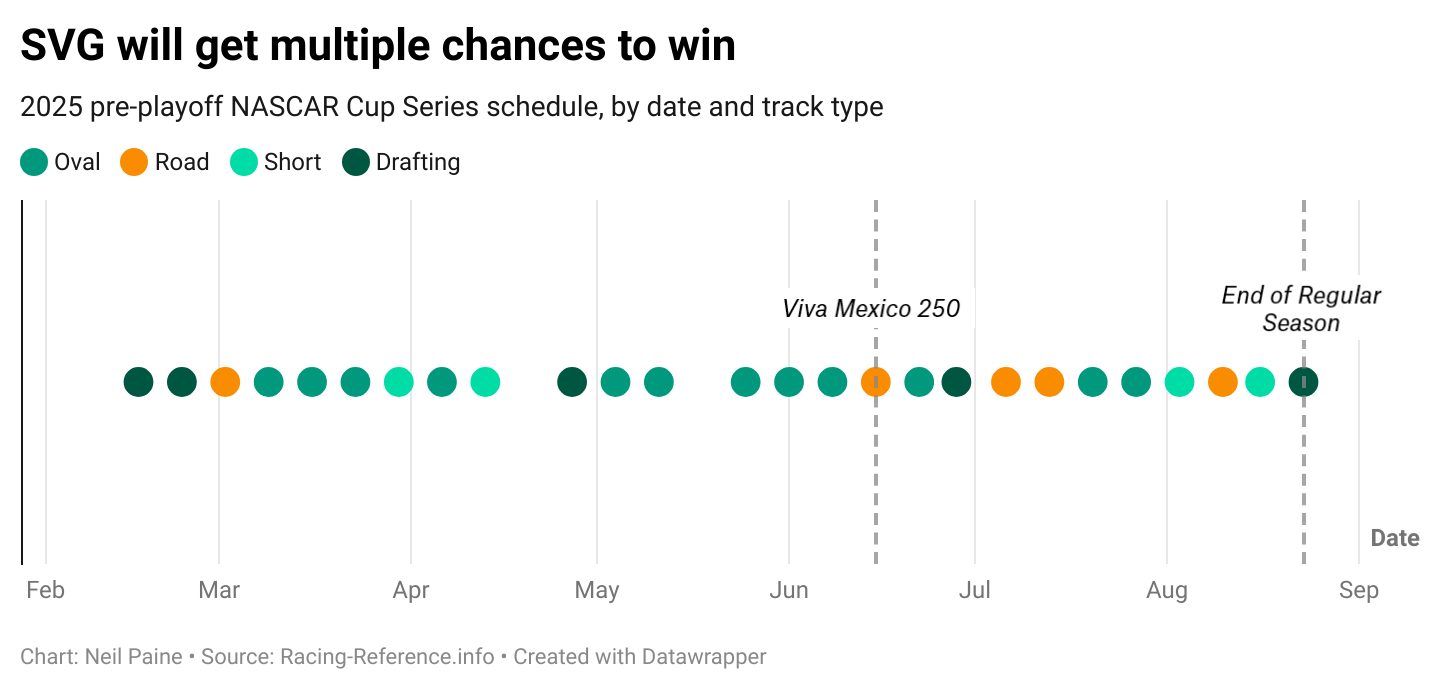
That’s something van Gisbergen has found out the hard way in 2025 thus far, proving that sustained success isn’t guaranteed for even the most talented and experienced drivers. But despite the rough transition, there might still be light in his playoff hopes this year. Based on the upcoming schedule — starting with this weekend’s Viva Mexico 250 in Mexico City — we might just be entering SVG season after all.
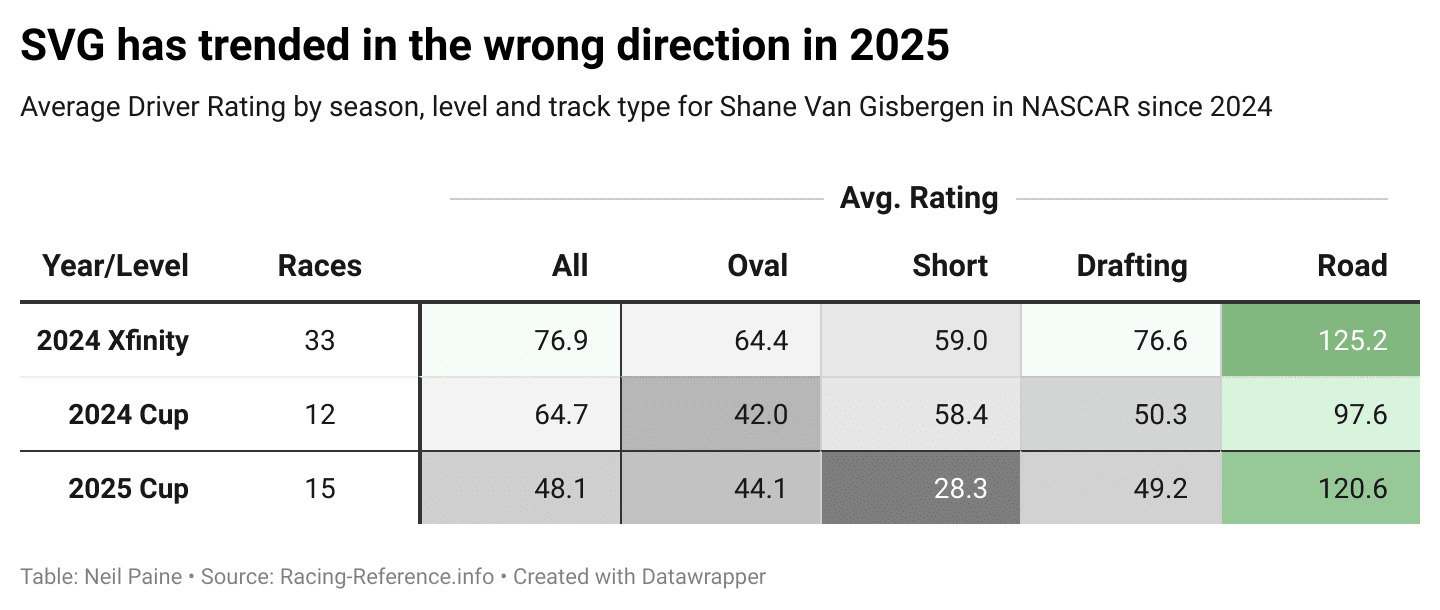
Based on the first half of the 2025 season alone, that might sound like an extreme long shot. After all, SVG’s performance is down markedly from what we might have expected from his 2024 form: His average Driver Rating in the Cup Series had been 64.7 in 12 starts — not too far from the series average of around 70 — and in Xfinity, it had been even better, 76.9 in 33 races. And yet, despite that prior record, van Gisbergen has an average rating of just 48.1 in 15 races, which ranks 33rd out of 36 full-time drivers this season.
The race-level results aren’t any better, either. Coming off of an 18th-place run at Michigan — one of his better finishes this season, despite running worse than the placement would indicate (he ranked 24th in Driver Rating and 28th in average running position) — van Gisbergen has zero wins, zero top fives, a single top 10 (more below) and an average finish of 25.3, earning him a 33rd-place ranking in the standings.
In terms of road-racing prowess, the bread-and-butter of SVG’s racing background, his form has remained very strong, albeit in a sample of just one race (COTA) 15 weeks ago. SVG led 23 of 95 laps, finished top five in the first two stages and posted a 120.5 Driver Rating — second-highest in the field — en route to finishing sixth. But the rest has been nothing short of disappointing.
After doing well at drafting-style tracks and running decently on traditional ovals in Xfinity last season, there was the hope that he would consistently turn in respectable performances in both categories this Cup season. But van Gisbergen has a sub-50 rating on each track type so far, ranking fourth-worst on ovals and third-worst on drafting tracks — a costly collapse, considering those tracks have made up 12 of the 15 races on the schedule so far.
And while we knew short tracks would probably be a weakness this season, SVG’s abysmal 28.3 average rating there (again, in a small sample — two races: Martinsville and Bristol) has been the worst in Cup so far this season. Not only that, but it’s currently tracking as the 21st-lowest average rating on short tracks in a season since 2005, with a minimum of two races on those tracks in a season.
None of that would seem to paint the portrait of a driver with playoff potential written all over him. To channel legendary football coach Jim Mora: “Playoffs?” A driver with these stats might just be hoping to stay in Cup! But of course, van Gisbergen isn’t just any driver. He’s arguably the most gifted — and feared — road-course specialist in the sport today. See those road-racing stats from earlier: even in an otherwise bad year, he still was a threat to dominate when last we saw him darting around the track in Austin.
Now, after a long and mostly miserable stretch without a road course in sight, van Gisbergen will be back in his element again. Including this week’s race, three of the next five dates on the Cup calendar are road courses: Mexico City — a new Cup Series track where SVG might have an extra advantage, given his history of adapting to relatively unknown circuits — Chicago Street Course — where SVG has a win — and Sonoma — where he won from pole position in Xfinity last year. And if he doesn’t win any of those, there’s also Watkins Glen — where he scored a 2nd-place finish in his lone career start — as one additional chance with three races to go before the playoff field is set:
In other words, as rough as things have been early this season for the full-time Cup rookie, van Gisbergen can play a unique trump card that gives him far higher playoff odds than would otherwise be expected from his full-season numbers. He is a near-automatic favorite (or close to it) on a specific type of track — and those tracks are about to come up fast and furious as we look ahead to the regular-season stretch run. While the odds for Mexico City haven’t come out yet, my statistical track scouting system lists SVG as the best bet to win based on his overall road-course pedigree. It would be shocking if SVG didn’t have a strong run this weekend.
And that’s the beauty of a NASCAR playoff system that rewards winning over just about everything else: A single standout performance on one of the upcoming road courses could instantly transform van Gisbergen’s frustrating year into another winning season — and a playoff campaign. If there’s anyone built to pull that dramatic turnaround off in the next handful of weeks, it’s SVG.
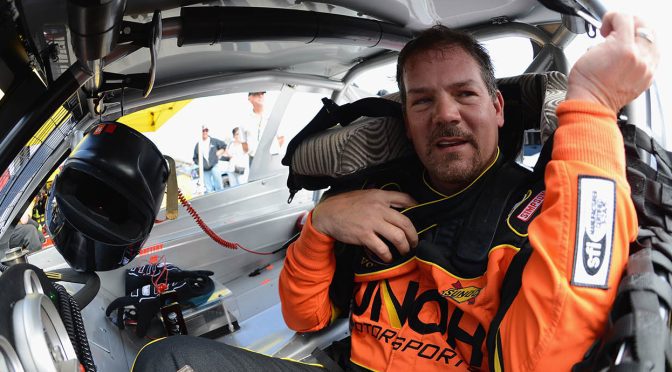
Steve Park remembers his days on the NASCAR Whelen Modified Tour fondly.
The East Northport, New York native practically grew up in the pits at race tracks across the Northeast while traveling with his father, fellow Modified racer Bob Park.
It was at those races where he acquired his passion for Modified racing, one that would eventually take him to the highest levels of NASCAR as a driver for the late Dale Earnhardt at Dale Earnhardt Inc.
“My dad, they use to call him ‘The Travelin’ Man’ Bob Park,” said Park, now 57. “He used to travel all up through New England racing Modifieds. I kind of grew up in a Modified racing family.”
This Saturday, Park will be recognized for his NASCAR Whelen Modified Tour achievements when Riverhead Raceway hosts the Miller Lite Salutes Steve Park 200.
The June event at Riverhead annually honors a driver who excelled with both the NASCAR Whelen Modified Tour and at Riverhead. Park, as a native of Long Island, spent many nights racing at Riverhead during his formative years.
“It’s an honor. We never set out in racing with the goal to be idolized or memorialized or to be put in Halls of Fame or have races named after you,” said Park, who was named as one of the NASCAR Whelen Modified Tour’s 40 Greatest Drivers on Wednesday afternoon. “I think at one point I probably thought I’d never get old enough to have any of that done.
“But it’s an honor. It just goes to show you that even though you didn’t think about it at the time, people respected what you were doing and what you were able to achieve and are proud you came from a place like Riverhead Raceway. Even though I moved and cut more of my teeth on a national level in Connecticut, I was still born and raised on Long Island.”
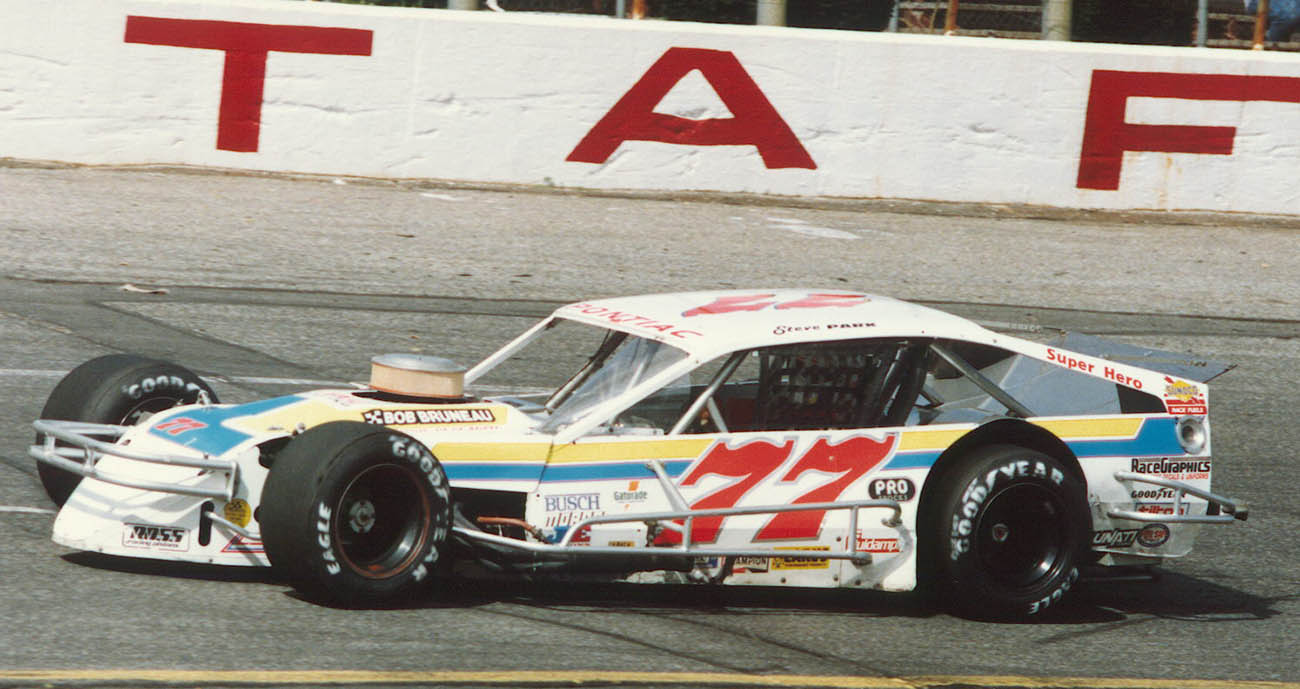
Steve Park earned his first NASCAR Whelen Modified Tour victory at Thompson Speedway Motorsports Park in 1991 while driving the No. 77 for team owner Curt Chase. (Photo: Howie & Mary Hodge Collection)
Park began his career racing four-cylinder modifieds, also called Pro 4 Modifieds, before stepping up to the headlining Modified division.
He still remembers the first time he climbed into a Modified at Riverhead in 1984. His father was competing for the track championship at the quarter-mile bullring, but a scheduling conflict prevented the elder Park from being at Riverhead to practice and qualify.
That opened the door for Steve Park to jump behind the wheel.
“My dad was racing ARCA at the time, and he was racing for the points at Riverhead Raceway when I was like 16 years old,” said Park. “He needed somebody to qualify his car while he was coming back from, I think, Pocono running the ARCA car. Him and his crew chief tagged me to give me the shot at it.
“I was kind of surprised and caught off guard. They felt they had enough confidence in me to run practice and run the heat race and get the car qualified for my dad and then my dad would fly back and race it. That was really my first experience, in my dad’s car.”
Naturally when it came time for Park to make his first NASCAR Whelen Modified Tour start midway through the 1986 season, it happened at Riverhead. He drove to a 16th-place finish that day, which he followed with an 11th-place run in another Modified Tour event at Riverhead a few weeks later.
It was during this time that Park moved from his home on Long Island to Connecticut, a strategic move meant to garner even more racing experience.
“That’s why I moved off Long Island to Connecticut, so I could race one more night a week and try to improve my talent to the point of deciding I wanted to go full-time in stock cars,” Park said.
Park ran his first full NASCAR Whelen Modified Tour season in 1988, but it took until 1991 for him to break through for his first win. That victory came at Thompson Speedway Motorsports Park during a 300-lap event while Park was driving for team owner Curt Chase.
It took two more years for Park to earn his second series win, which came at his home track, Riverhead. On that day, Park, who was now driving the No. 1 Modified for owners Tony Marciel and Guy Ronzoni, led 205 of a possible 209 laps to secure a dominant victory.
A year later Park backed up that Riverhead win with his third career victory, another stalwart performance that saw him lead 162 of 201 laps.
“Just growing up on Long Island, I’m so proud of the people we had behind us. My uncle Bill, he owned a NAPA store and raced a Modified at Riverhead. He was one of my first sponsors,” Park recalled. “He gave us the opportunity for the parts and the paint and the things that we needed for the Pro 4 car.
“Then again, with Jack Merkel and even Dennis Freese from Oval Speed, I can’t tell you how many times I didn’t have the money to pay my full bill, and he’d let me slide a week or two. He’d always come looking for me after the race was over. All the guys [would], the tire guys, the parts guys, they would all come looking for a little bit of a check to keep me going. Really, it felt like family. Everybody we were involved with at Riverhead Raceway felt like family.”
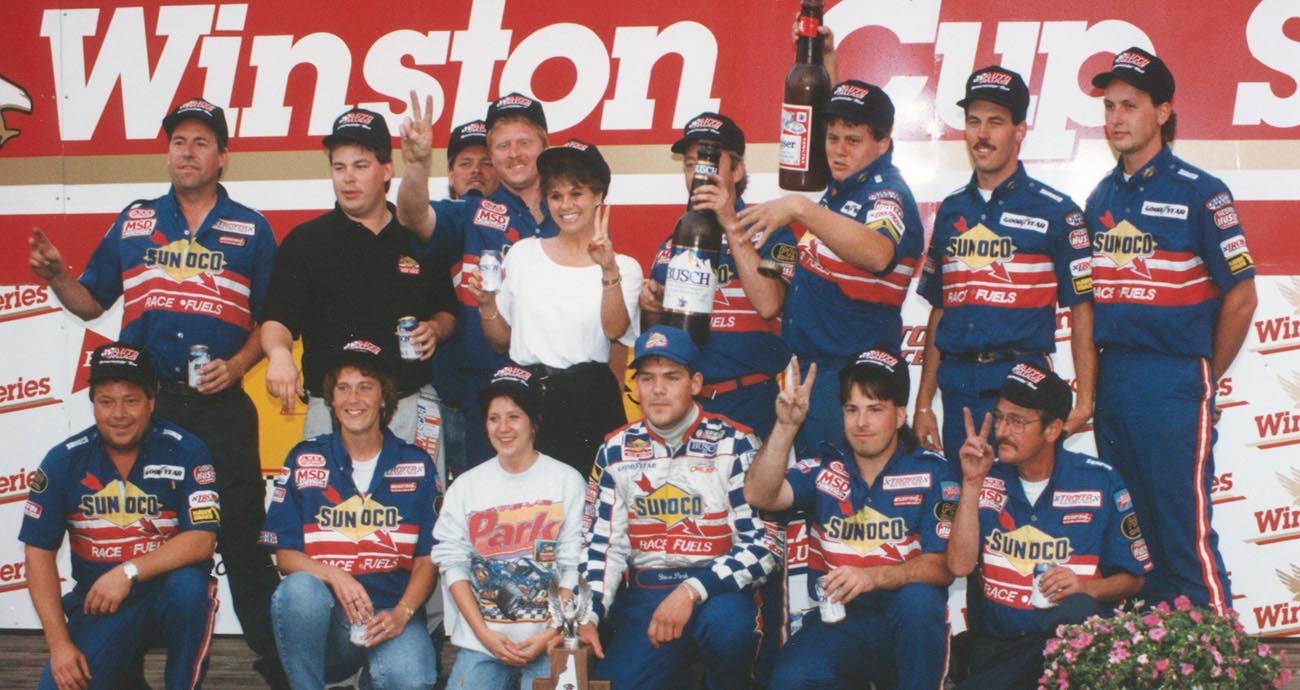
Steve Park celebrates a NASCAR Whelen Modified Tour victory with Sheba Racing at New Hampshire Motor Speedway. (Photo: Howie & Mary Hodge Collection)
At the conclusion of the 1994 season Park secured a new ride, this time at the wheel of the potent No. 8 Sunoco Modified for Sheba Racing owners Scott and Patty Bandzul.
During the next two seasons, Park truly came into his own. He scored 12 wins in two years and nearly won the NASCAR Whelen Modified Tour championship each time.
In 1995, Park, who had Tommy Baldwin Jr. as his crew chief, finished just three points Tony Hirschman for the series title. The following season Park came within 12 points of the title, once again losing out to Hirschman.
After that, it was on to bigger and better things for Park. He signed with Dale Earnhardt Inc., winning three NASCAR Xfinity Series races in 1997. He signed to run a full-time NASCAR Cup Series schedule in the No. 1 Pennzoil Chevrolet for 1998, but an injury-riddled rookie campaign prevented him from running the entire year until 1999.
Park would spend the next five seasons racing at the Cup Series level, scoring wins at Watkins Glen International and Rockingham Speedway. He eventually retired from active NASCAR competition after securing wins in all three NASCAR national divisions, a feat accomplished by only 41 drivers.
Now, all these years later, Park is returning to the track that helped give him the skills necessary to eventually make it all the way to Victory Lane in the Cup Series.
“It starts at places like Riverhead,” Park said. “For them to honor (me) by naming one of their biggest races after (me), it gives me the pleasure to know that when I go up there I’ll be able to see some of the fans and friends that have stood behind me all these years and gave me the opportunity to go on and win races at the highest levels of NASCAR.”
Fourteen NASCAR Xfinity Series races are in the books, and the 2025 postseason picture is starting to take shape. That said, 12 more regular-season contests remain before the playoffs get underway, so plenty of excitement is still in store, and things could appear quite different by then.
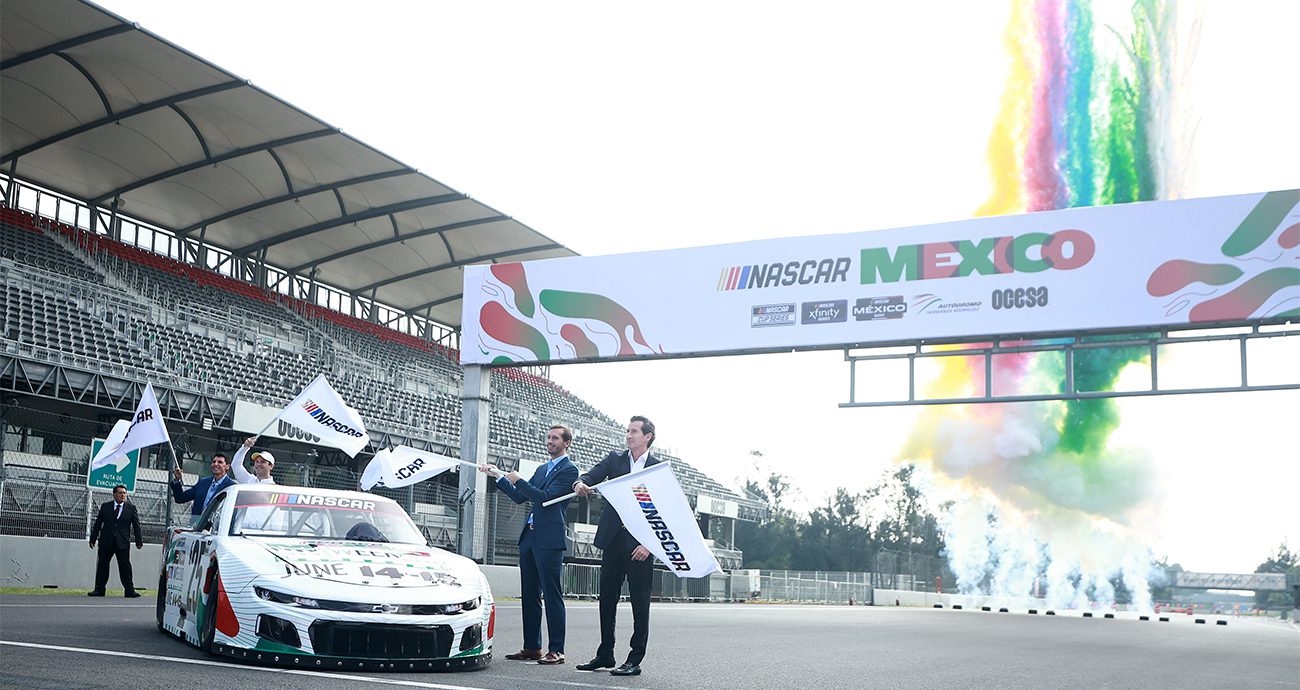
Look no further than the upcoming bout in Mexico City at the famed Autódromo Hermanos Rodríguez as the circuit goes international to tackle the 15-turn, 2.42-mile road course for the first time since 2008.
With quite a bit of movement since the previous installment, it’s time to give this exercise another crack, with NASCAR.com’s John Crane ranking the top 12 Xfinity Series drivers ahead of The Chilango 150 (Sat., 4:30 p.m. ET, The CW, MRN Radio, SiriusXM NASCAR Radio).
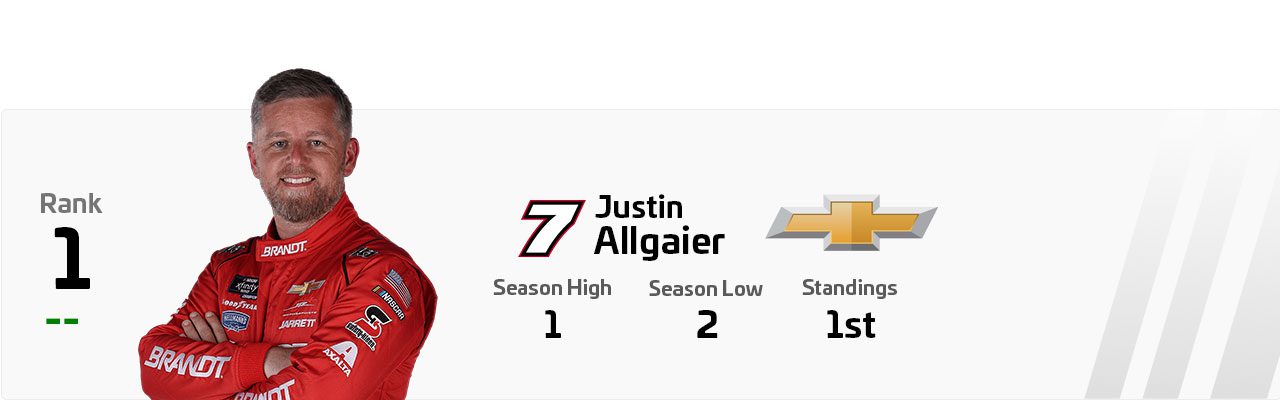
Analysis: A fine-tuned performance at Nashville Superspeedway en route to his third Xfinity dub of 2025 was just what Allgaier needed to illustrate his championship-caliber speed. And while a 35th-place clunker after a crash at Texas Motor Speedway in early May might be a recent damper, the No. 7 still sits No. 1 in the championship standings and No. 1 in this ranking installment.
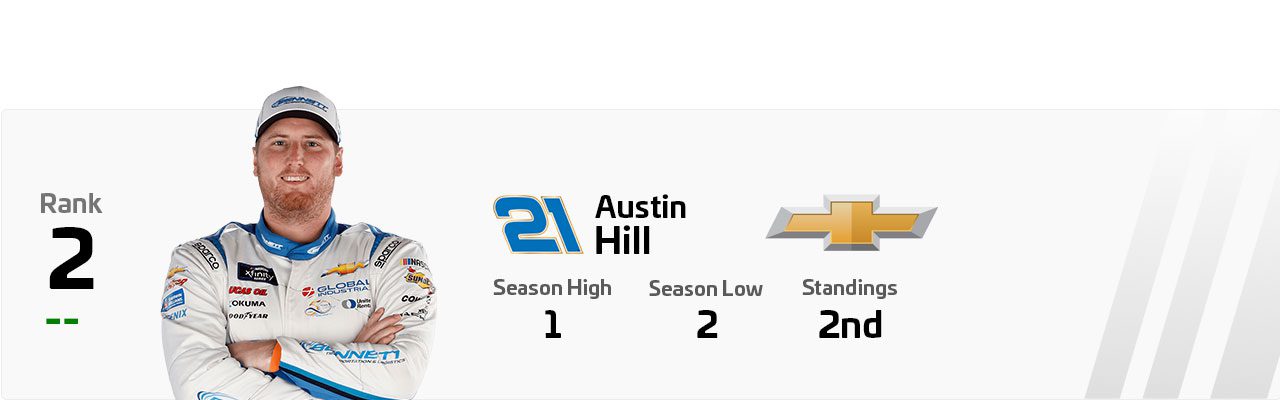
Analysis: If there’s a driver who had a convincing case to poach the No. 1 spot from Allgaier, look no further than Hill, who, since Rockingham, has tallied five consecutive finishes of seventh or better, including another superspeedway triumph (Talladega in April). The question for Hill as he looks to usurp Allgaier from his championship throne: will he find enough race-leading speed? Allgaier has led 304 laps since Rockingham compared to Hill’s 76 over the same timeframe.
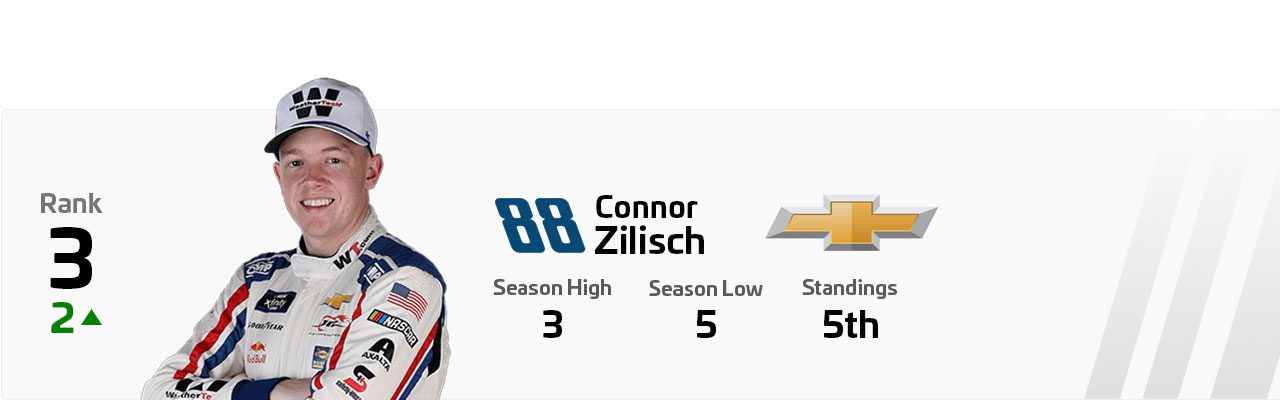
Analysis: A lower back injury sustained at Talladega Superspeedway resulted in Zilisch missing the following contest at Texas. Since his return one race later at Charlotte Motor Speedway, though, the 18-year-old phenom has yet to skip a beat, nabbing two straight runner-up results. With five road-course races still on the regular-season slate — where Zilisch is 2-for-2 in Xfinity victories on those tracks since debuting last season — it’s entirely possible No. 88 could make a case for No. 1 in this installment in due time.
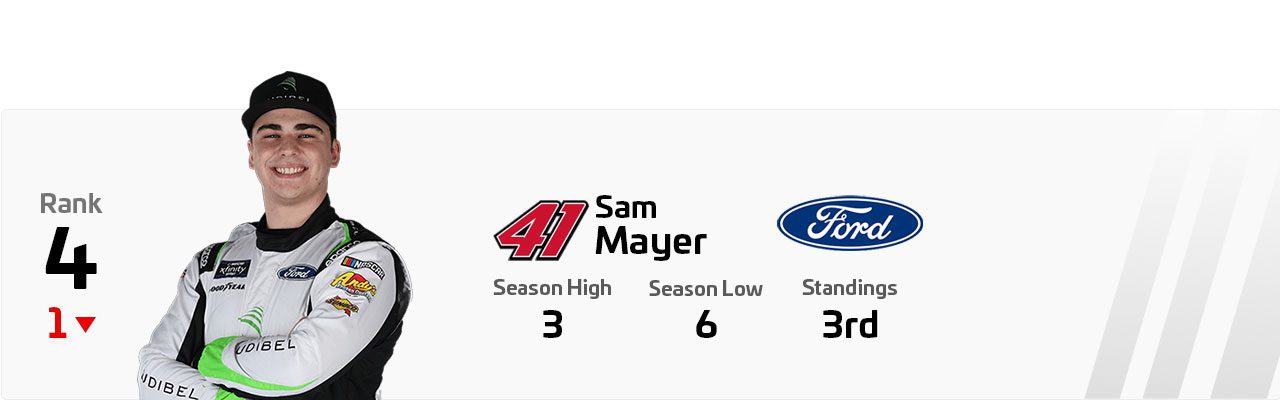
Analysis: A 26th-place result at Rockingham might have been a bump in the road, but since then, Mayer has compiled four straight finishes of 14th or better, continuing what looks to be a career year and on track to smash his previous career highs in top fives, top 10s and average finish. Finding more race-leading speed will continue to be a focal point in the hopes of clinching a playoff berth outright; Mayer’s 53 laps led ranks 11th among all full-time drivers.
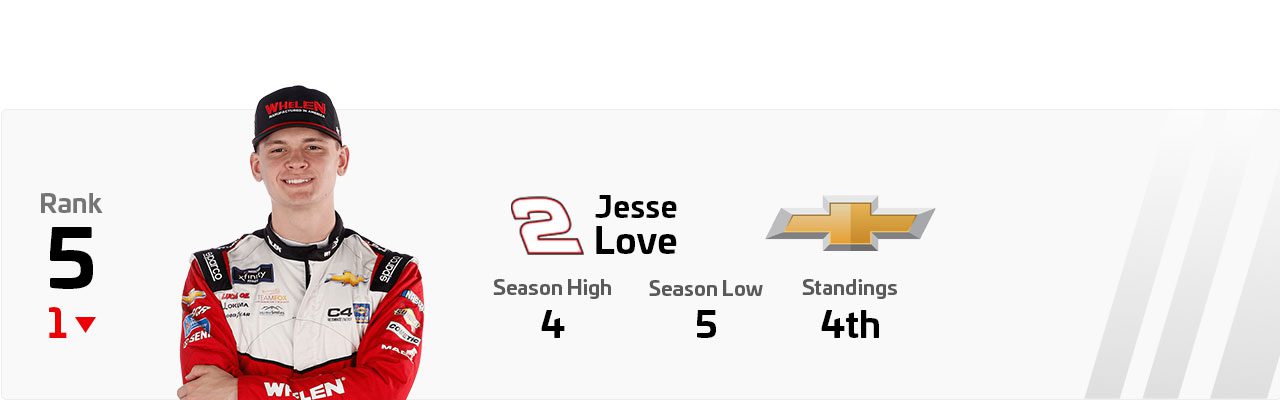
Analysis: All looked swell for Love at Rockingham following the No. 2’s apparent race victory at the track … until the team’s disqualification following post-race inspection. (The National Motorsports Appeals Panel upheld the penalty.) Nevertheless, Love is still locked into the 2025 playoffs with a race win already (Daytona in February), and the No. 2 has continued to amass excellent finishes, including results of eighth or better in three of the four races since the infraction.
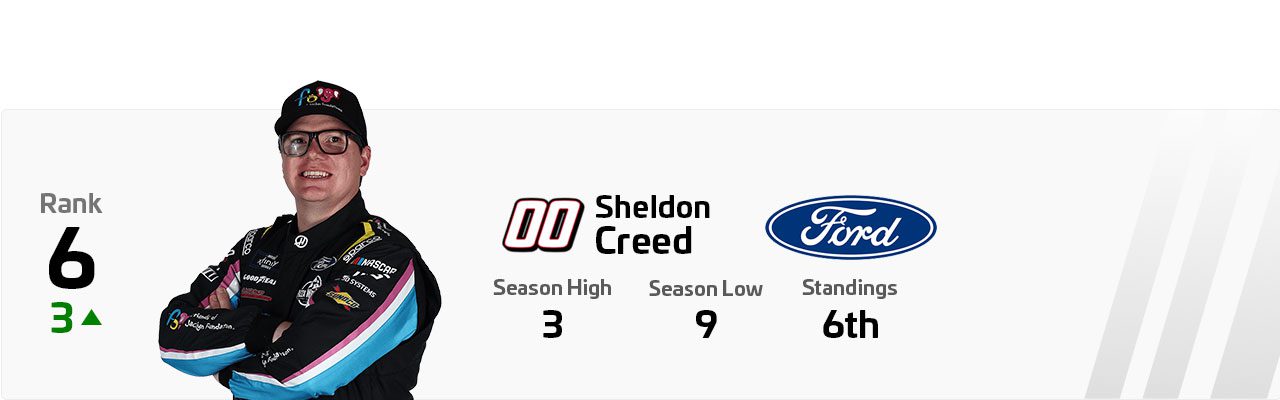
Analysis: Although Creed has yet to capture his first career Xfinity Series win, the 27-year-old has vaulted to sixth in the championship standings, thanks to steady points accumulation (Creed has captured 29 points or more in three of the last four races). With 25 laps led recently at Nashville, there’s hope that Creed will combine steady points tallies with race-leading circuits to find Victory Lane at last.
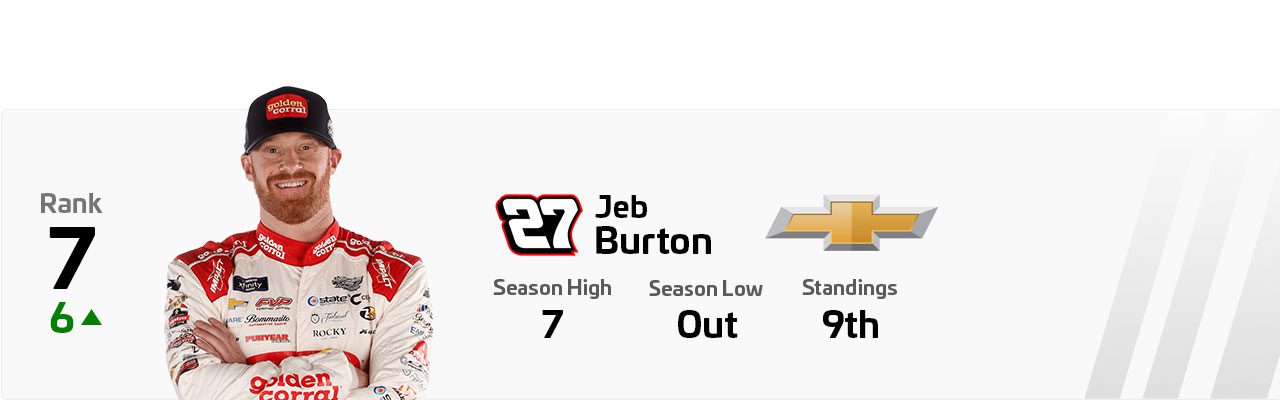
Analysis: Don’t look now, but Burton is on the path toward his best average finish since 2021 (14.4), when the Virginia native logged a 13.6 mark (not to mention a race win, seven top fives and 16 top 10s). Four top 15s over the last five races — including an emotional Talladega runner-up in April — paint an optimistic picture as the 32-year-old aims for a playoff berth.
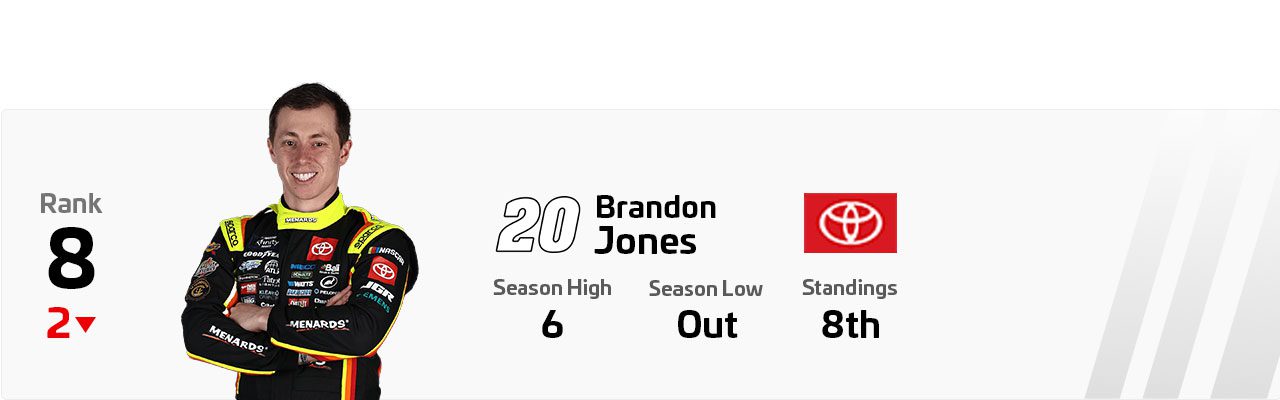
Analysis: Jones and the No. 20 team had five top-10 finishes — and a victory — to their 2025 ledger through the first nine races. It’s been a tougher sled since, with only one top 10 over the last five contests (ninth, Texas). There’s good news. To start, Jones has already secured a playoff spot. Secondly, none of the five races have resulted in DNFs, so the No. 20 is still finishing contests, at least. The trick will be to make those finishes pop just a bit more.
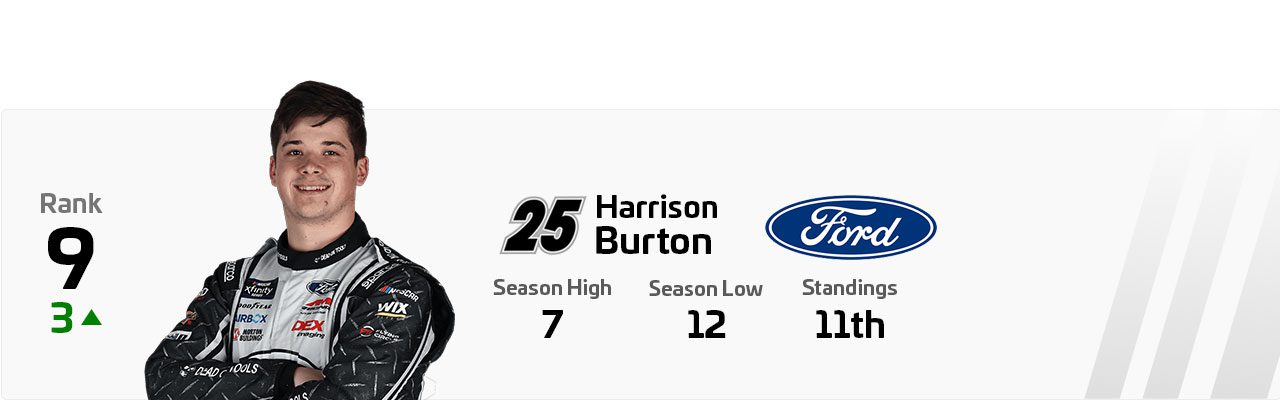
Analysis: Burton and the No. 25 crew have looked steady of late, finishing 12th or better in four of the last five races. Though Burton only has 24 laps led this season — and zero since Darlington Raceway in early April — the 24-year-old is on the right path to point his way into the postseason picture … at the minimum.
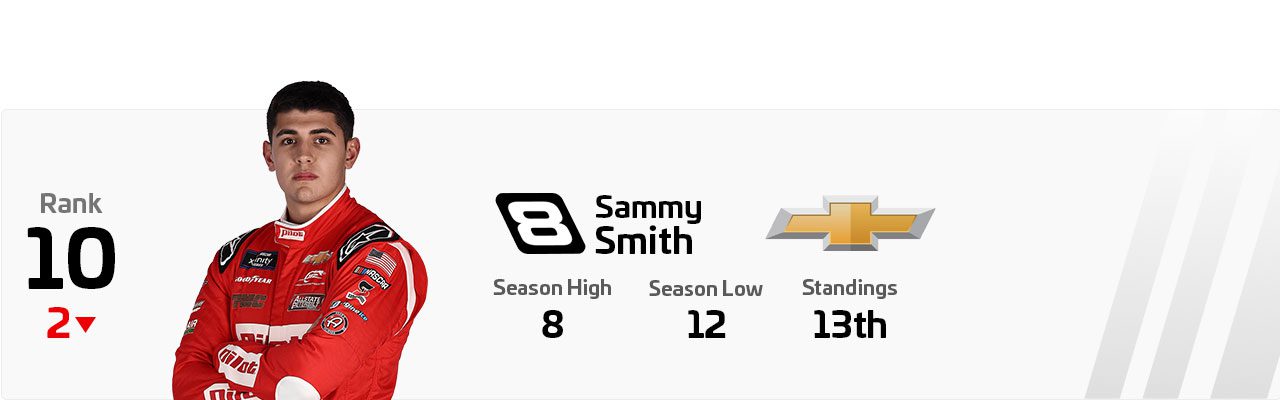
Analysis: This is a tricky one. On the one hand, the No. 8 has achieved a victory this season, coming at the expense of Love after the No. 2 was disqualified at Rockingham in April. On the other hand, the young Smith, who turned 21 on June 4, has tallied two finishes of 30th or worse in two of the last four races, including a disqualification at Charlotte in May. In other words, it’s been a mixed bag. For now, he remains inside the top 10 in this installment.
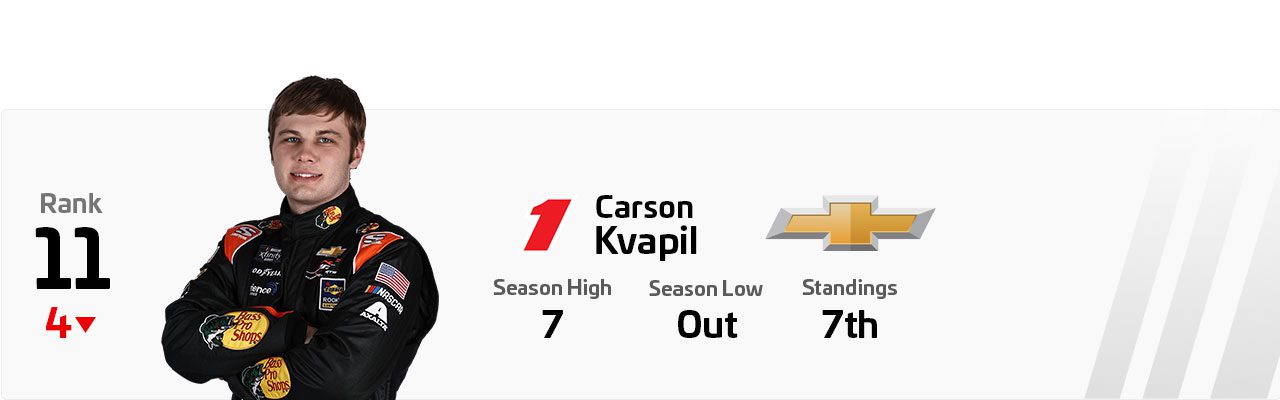
Analysis: Although Kvapil has remained competitive, the No. 1 driver has just one top 10 over the last five races (Nashville, ninth). Even still, Kvapil is keeping everyone honest and sometimes leading laps, too, with 47 circuits paced at “The Rock.” He indeed dropped in this ranking compared to the last, though no one doubts the possibility of vaulting up this installment once again. The talent is there.
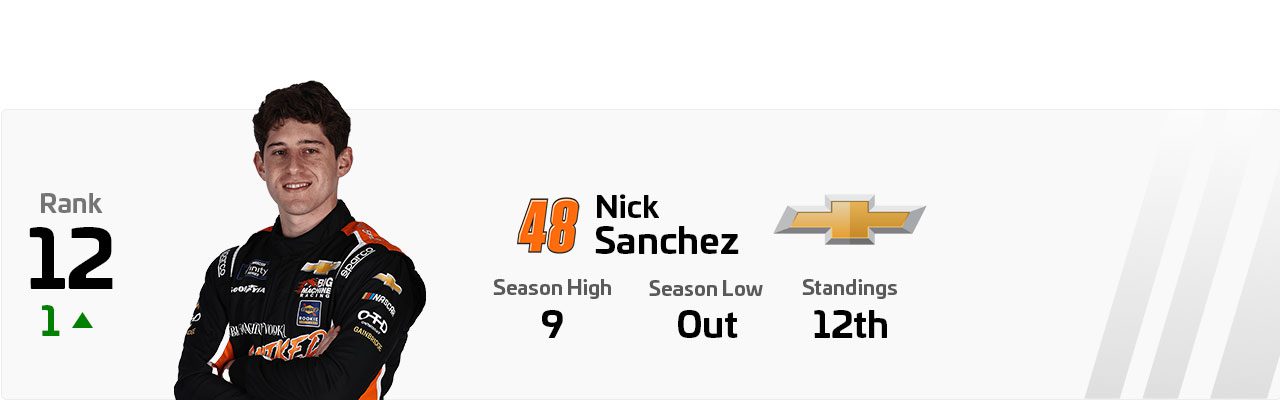
Analysis: A wreck with fewer than 15 laps remaining at Rockingham was unfortunate for Sanchez, who captured the Stage 1 victory at the track for his first stage win at the Xfinity level. With 141 points over the last five contests, Sanchez has gradually worked himself into the playoff picture and within this ranking installment, though there are those — Ryan Sieg, Taylor Gray and Daniel Dye, among others — on the prowl.
Ben Wright says he didn’t get it at first. As the Garage 56 car that NASCAR sent to Le Mans kept accumulating road grime and grit from blaring through the French countryside during its 24-hour journey, the Hendrick Motorsports project manager’s instinct was to make it look showroom-fresh.
“To be honest, I didn’t understand,” Wright says. “I always liked clean cars.”
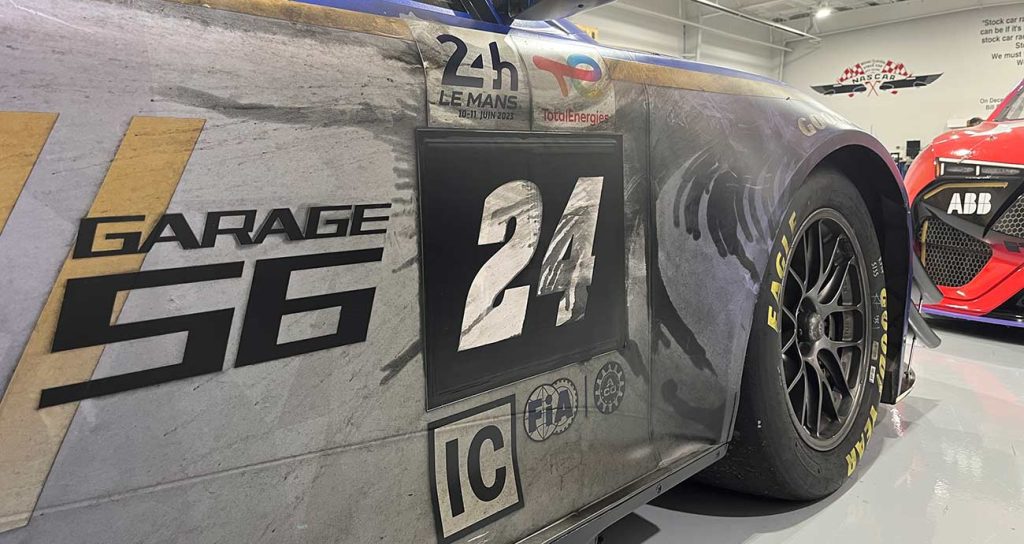
That caked-on dirt, the pitted paint and the smudges and splashes of fluid, though, were part of the car’s story. The underdog entry that brought a stock-car rumble to sports-car racing’s biggest stage had endeared itself to a new audience, charmed by its hulkish appearance and throaty sound and mesmerized by its upstart performance in a field of high-end exotics.
By the end of those 24 hours in the summer of 2023, the sense of triumph in bringing the project to life, developing it and watching it cross the finish line was overpowering. For those involved, freezing that moment in time was crucial. That meant the dirt stayed. Wright came around.
“I didn’t understand, and then going to Le Mans myself and we raced that car and seeing it come back at the end dirty and worn, I don’t know, it just upped the cool factor,” Wright says. “I think it just embodied everything you just went through, right? We just put this car through its paces, did all of this, finished the event. It just preserved it and gave it — I don’t know if aura is the right word — but it just made it way cooler.”
Nearly two years after the Garage 56 project — a joint effort among NASCAR, Hendrick, Chevrolet and Goodyear — completed its mission in the 24 Hours of Le Mans, a new documentary coming to Prime Video on Thursday details the program’s impact and legacy. Elite drivers Jimmie Johnson, Jenson Button and Mike Rockenfeller are among the biggest stars in “American Thunder,” but the No. 24 Chevy that went an astounding 2,413-mile distance deserves high placement near the top of the bill.
Coating and preserving that car in as-raced form may well be part of the documentary’s epilogue. It’s a story that’s nearly as suspenseful as the event itself, with the clock ticking and the immense pressure to leave the race-earned blemishes on a living piece of history undisturbed. It’s also about building a bridge from NASCAR’s first Le Mans effort, done on a shoestring in 1976, to the most recent well-heeled run during the 24-hour race’s 100th anniversary.
“This was about celebrating that 50 years prior, celebrating NASCAR’s 75th anniversary year, which was just amazing timing,” said IMSA president John Doonan, “and then it was making sure that once we completed the task, completed the journey for Garage 56, that no one could ever take away from the dirt and grime and the race-worn elements of the car, so that it would be candidly, a museum piece for generations and generations to come.”
Here’s how they did it.
* * *
The Garage 56 car’s preservation effort began before the race was even complete. The wear and tear of the endurance event’s ever-changing conditions started to take a toll, and Wright’s first impulse was strong.
“It was kind of a weird one because we here at Hendrick like to make sure things are clean and orderly. That’s how we operate,” Wright said. “When we were getting close to finishing the race, we had the brake issue, had the brakes fail in the pit lane. We then fixed it. We then had the transmission fail. We came into the garage, we were fixing the car and one of the normal things that we would want to do is go through and clean the car, right? Like, it’s going to get on track. We’ve got an opportunity. Let’s clean it. It looks good, right? That’s how we operate.”
Chris Graythen | Getty Images
That’s when Doonan, a fixture in the Garage 56 paddock for the Le Mans fortnight, intervened.
“He’s like, ‘No, don’t clean it.’ Like, what?” Wright recalled. “OK, maybe there’s some reason. He’s obviously working with Mr. France and Mr. Hendrick. If John says it, OK, we’re not going to clean it. Little bit weird, don’t understand, ‘Hey, guys, don’t touch the car. Don’t clean it.’ So obviously, you go through the race finish, the dirt stays on it, and I was looking back a couple days after Le Mans, John started a conversation about wanting to preserve the car with the dirt on it. So then, OK, things are coming into clear on why he wanted us to do that.”
From the time the No. 24 Chevrolet ended its 24-hour trek, another race was on. “Even in shipping, you get other handprints on it,” Doonan said, “and where there was race-worn dirt, grime and grease on the side of the car, somebody’s handprint, it just takes away from it, so we wanted to preserve it right away.”
Wright consulted with Hendrick’s body shop department, which initially winced at the thought of clear-coating over the dirt, suggesting that a hot-rod shop would be best suited to the task. Bringing the car back to the states for the work, though, was logistically unlikely. Le Mans had ended June 11, and the Garage 56 team was due at the Goodwood Festival of Speed in England on July 13.
Wright and Doonan focused their search for a speed shop in the United Kingdom, and Berkshire Bodyshop answered the call.
“We were really, really shocked, a bit amazed that someone like that was reaching out to a garage like us to do a car,” says owner Andy Cottrell, from his shop offices some 60 miles west of London. “I didn’t actually take the phone call. One of the other lads here did, and came in and said, ‘Look, Hendrick’s been on the phone with Garage 56 to paint the Le Mans car,’ and I thought he was joking to start with.”
Berkshire had been recommended to Wright and Doonan through stakeholder connections in England and the knowledge that the group had been entrusted with cars owned by the Duke of Richmond, the automotive-minded owner of the Goodwood Estate.
“All right, check mark,” Wright said. “This guy obviously knows what he’s doing.”
Wright said that after arranging transportation of the car from France, they gave Cottrell’s crew a timeline of about a week to do the job. “No problem” was the response, he said, but the magnitude of the task set in once it landed on their doorstep in Newbury. “When they unloaded it, it sort of started to hit home then, what it actually was,” Cottrell said. “It’s a massive piece of history, and we were kind of thinking, ‘how did we end up with this?’ ”
The challenges ahead were twofold: applying the clear-coat chemical without a reaction or smudging, and then ensuring it would adhere to the dirty body panels. That process, Cottrell says, was backward from typical clear-coating, which is applied to freshly painted or meticulously cleaned surfaces.
Cottrell said that clear-coating, for instance, an autographed piece of metal, sometimes causes the ink to move. In this case, sealing in all of the Garage 56 car’s dust, exhaust and rubber was of extra concern. Cottrell called paint manufacturers and suppliers he knew for their advice; multiple told him it was best not to get involved. So Cottrell took extra care to try the process on a dirty test panel, using an adhesion promoter in the mix. He also had to ensure that it dried clear, so that it didn’t distort any of the car’s colors.
Wright had opted for a matte finish instead of a glossy, shiny coat on the as-raced car. Cottrell said that matte looks milky as it’s applied, then the liquid dries clear. He took the extra step, though, to add a tiny amount of normal clear coat to the mixture, just to avoid the slight white sheen that sometimes materializes when mattes dry. “Obviously, I didn’t want to do anything to affect the rarity of what they wanted to preserve,” Cottrell said.
The nerves that came with preserving a historic car that’s one of one were evident in the shop’s video documentation of the process.
“100% you know, there was so much pressure on me,” said Cottrell, who did the clear-coat work himself. “The lads were really excited here to have the privilege of doing it, with what the car is and who drove it. And I actually just stood back, I said, ‘Hold on, lads. The pressure’s on me now, because if this goes wrong, we’ve ruined something that’s absolutely amazing that’s happened in Le Mans and with NASCAR.’ The pressure was really, really tense. That’s why I was really, really nervous of anything moving when we put a chemical on it. … It came down to it at the end that it was here, and I had to do something. So I just sort of brushed myself away and thought, right, let’s get it mixed, and then let’s just do this. So yeah, there was a lot of pressure.”
Once the clear-coat dried, the successful result became evident. Each mark that the No. 24 Chevrolet had left Le Mans with had been locked in, sporting the same appearance as when Jimmie Johnson climbed out of it in parc fermé. The true test came when Cottrell and his crew ran their hands over the car’s curves.
“It was a very scary thing because you look at it and you think you’re going to touch it and rub the marks off it,” Cottrell said. “Even when we’d finished painting it, I was scared to. We de-masked it, and I was like, ‘can we still touch it,’ because you just don’t want to ruin the history on it.”
Wright tested that theory when he was reunited with the Le Mans racer at Goodwood, where it shared the stage alongside the pristine Garage 56 backup car.
“The first time I saw it was at Goodwood, when we unloaded it. Yeah, it looked awesome,” Wright says. “Even at Goodwood, everybody there, they would touch it, and you can do it. Like, I’m telling people, ‘Go. Touch the car,’ right? The dirt doesn’t come off.”
Weeks later, Hendrick Motorsports sent a box of gifts — hats, T-shirts, hero cards and stickers — to Berkshire Bodyshop in appreciation. But before the Garage 56 racer left their doors, their crew made their own memento by taking a group photo with the No. 24 in their bay — panel beater Nicolas Lamb and metal fabricator Micki Cox flanking the car, with Cottrell in front with Buddy, his shop dog.
“It’s brilliant, and I’m really glad it’s turned out really well, and it will hold up for years,” Cottrell says. “There’s no reason why it won’t.”
These days, the Garage 56 car spends most of its days at the NASCAR Research & Development Center in Concord, North Carolina. Among all the grit and pitted grime that was preserved, certain markings from the car’s twice-around-the-clock journey stand out.
Wright says you can make out handprints on the spoiler where crew members had pushed it, plus there’s a clean, rectangular swipe above the rear bumper where the team cleaned the rear-view camera to make sure the drivers could see out the back.
Two other racing remnants are more obvious. On the car’s right side, a curved plume of liquid residue spirals away from the front fender, partially obscuring the car number. Wright says the team had made a pre-dawn pit stop and needed to fill the car with oil, going in through the front hood flap and injecting it. The process misfired — either because of a broken fitting or a leak — and oil spilled all over the car’s side. “When the oil got moved all around with all the air and the car running, it made this swirl pattern on the side,” Wright said. “And that’s a story right there, right? Like, that’s a cool thing that happened.”
Zack Albert | NASCAR Digital Media
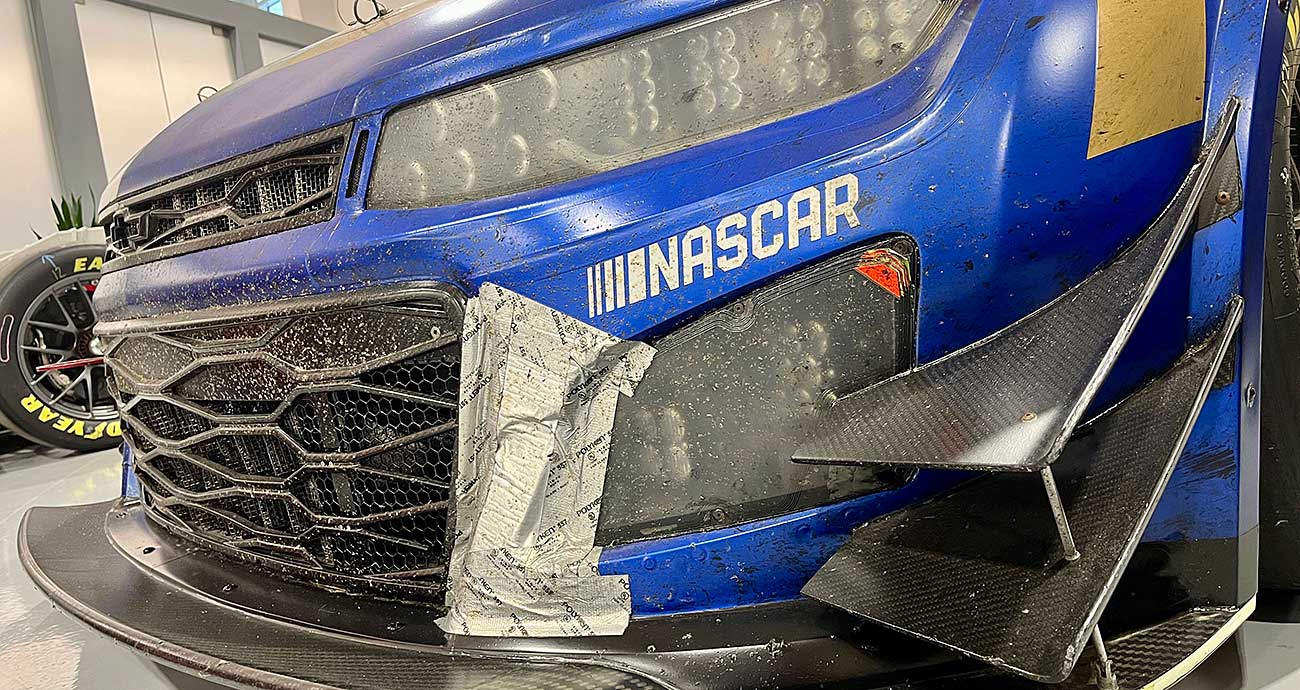
Another wound came just before sun-up. The Garage 56 racer smashed into a piece of bodywork that had broken off a car in the LMP2 Class, damaging the front of the No. 24 Chevy just below the driver’s side headlight. The evidence of that mishap remains, covered up by silvery tape.
“We didn’t want to put a whole new nose on it. We’re just going to tape it up and get it going again,” Wright says. “But that’s preserved, too, so just stuff like that, like all these stories of the car, the battle scars, they’re preserved. Just overall, now I will understand a dirty race car that’s preserved like that. I don’t even know the right words for it. It’s just battle scars, history.”
Nearly two years after those scars accumulated, Cottrell is still coming to terms with his shop’s role in keeping the car’s authenticity frozen in time.
“Even now, we’re a little bit surreal that it was here. We’ve painted some lovely cars here, but that’s just a different sort,” Cottrell says. “It’s massive, and it’s history. I know it’s cheeky, but we wanted to put a little sticker on it somewhere, you know, ‘Painted from Berkshire Bodyshop,’ but obviously we couldn’t. But yeah, I’m hoping one day that I can go over. They have said if we ever go to America, to ring them and we could visit, which is absolutely amazing.”
For Doonan, the car represents the fulfillment of a dreamlike project, one that helped NASCAR’s seventh-generation stocker compete alongside the world’s best sports cars in the Le Mans centennial. Seeing the car now, Doonan says, serves as a reminder of the community that came together to help that car earn its scars in one of motorsports’ centerpiece events.
It’s like catching up with an old friend. The preservation effort lets everyone who had a hand in Garage 56 pick right back up where they left off.
“You’re going to get me emotional because the whole project was once in a lifetime for, I think everybody involved,” Doonan says, “and the men and women who were in the trenches on this project have this relationship where when we see one another, it’s just like a glimmer in their eye, a special handshake, because we knew very early what the task was and what the objectives were, and we had a very short period of time to deliver on those objectives. Then, when we did it, there was just such a gratification and a satisfaction that we did it ourselves, we achieved it.
“We as a collective group were making the world proud by showing everybody what NASCAR is all about, and that’s what seeing the car now, and I get up to the R&D Center every so often, every couple months, and I go see it just to go look at it by myself, just because it’s a representation of a lot of hard work by a lot of people in a relatively short period of time.”
Editor’s Note: Denny Hamlin announced Thursday he will not compete in Sunday’s Cup Series race at Autódromo Hermanos Rodríguez due to the birth of his third child. Ryan Truex will pilot the No. 11 Joe Gibbs Racing Toyota.
Here’s what’s happening in NASCAR with the FireKeepers Casino 400 at Michigan International Speedway in the rearview and the Viva Mexico 250 at Autódromo Hermanos Rodríguez (Sun., 3 p.m. ET, Prime Video) up next.
1. Denny Hamlin is winning. Again. Is it finally different this time?
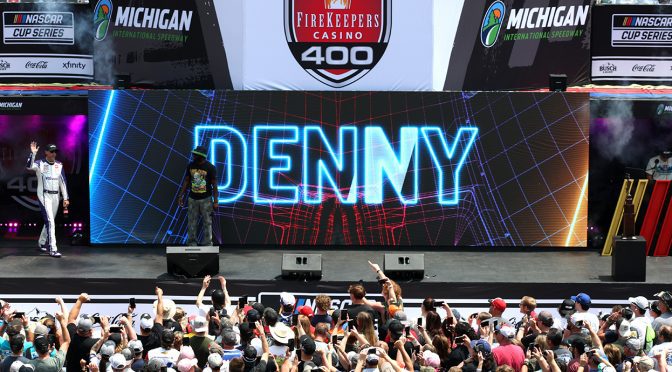
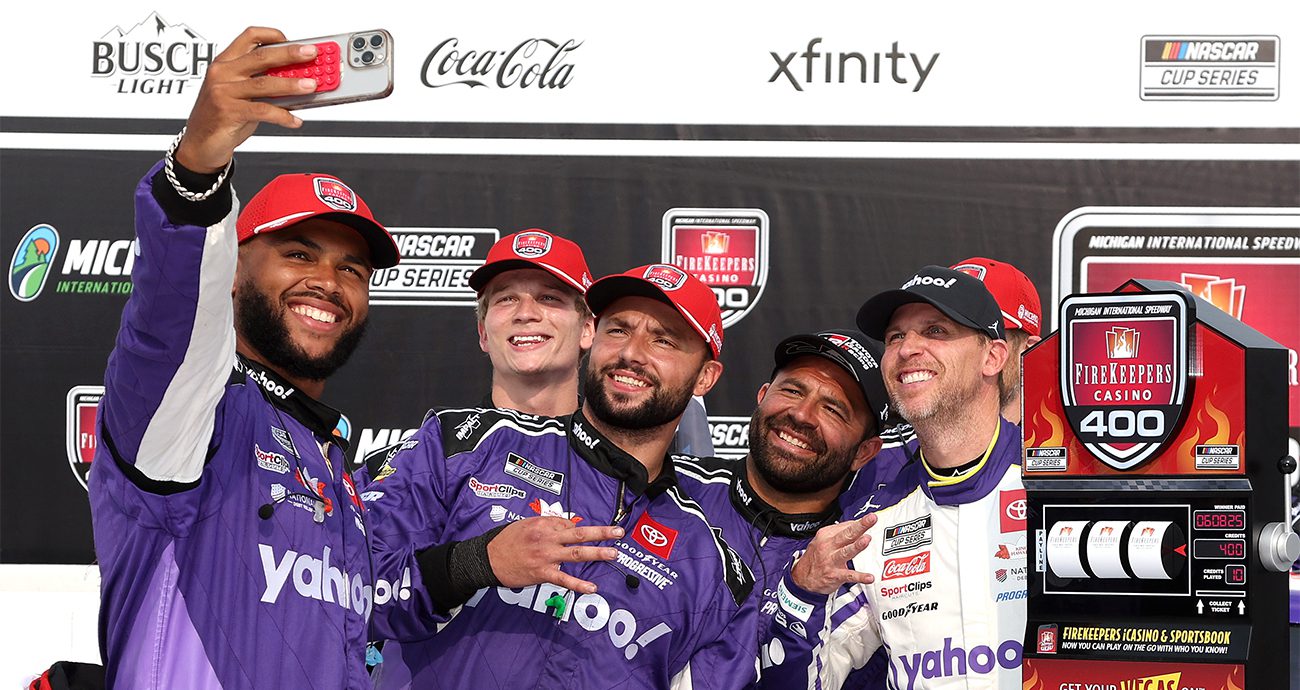
No. 11’s Michigan victory wasn’t flashy (until his Victory Lane interview, at least) — but something about this year feels distinct. With his third win of the season, the 57th of his Cup career in hand and all the momentum in the world, title-contender status would be cemented for most. For Hamlin? It sparks the same question we ask every summer: Will it finally matter in the fall?
On the race track, Denny Hamlin is no stranger to wins, winning, being victorious, successfully conquering, climbing proverbial mountains, etc.
Except for that one thing.
Sunday’s Michigan prevailer continues to close in on the top 10 in all-time NASCAR Cup Series wins, a milestone he very well may hit this season (and, perhaps, nobody ever will again). He again appears destined for a date with the Championship 4, stacking victories seemingly at will, at times looking like a man among boys and only getting hotter as we approach the summer solstice. All that said, the narrative hasn’t shifted: Hamlin is a big-stage winner; the active leader with three Daytona 500 crowns and as obvious a first-ballot Hall of Famer as they come — but still has zero Cup Series championships to his credit. Not yet, at least.
What made last Sunday’s win feel different isn’t the number — 57 among the 700-plus starts on his resume — it’s the nuance. The longtime Joe Gibbs Racing mainstay and all-time wins leader for the historic team is building not just results, but rhythm.
He’s scored points in nine straight stages, and the only reason that is for sure to end in Mexico City is because Hamlin is staying back in North Carolina following the birth of his son (Ryan Truex will sub). He’s among the series leaders in laps led and speed. He’s made fewer unforced errors than we’re used to seeing, his pit crew included. And Michigan, long a domain of Ford’s might, saw Toyota claim the race through Hamlin’s poise, not power. He didn’t steal one. He took it.
It’s well overused at this point, but Hamlin? He’s him.
What’s most interesting, perhaps, is that this is coming at a time when the rest of the field is becoming increasingly erratic. Kyle Larson … elite, but volatile. William Byron … fast, but burning through opportunities and hasn’t won since February. Christopher Bell … hot streak was outrageous, but has cooled some. Even Chase Elliott, the poster child for consistency, hasn’t reached Victory Lane in what feels like forever. In a season all of a sudden filled with parity, Hamlin is starting to resemble something different: untouchability.
With each coming week its own whirlwind and a fresh baby boy having just been delivered, Hamlin has needed to be as dialed in as ever across every aspect of his life. Everything comes down to detail, process and execution; an approach that clearly extends to the race track. And absolutely owning the execution piece that so often unraveled him in past playoff pushes might just be the boost he needs to push him to title No. 1.
“You have another birthday. You keep wondering, like, how long are you going to be able to keep doing this at this level? Listen, 57 might be it. None of us in this room know,” Hamlin said in his winner’s press conference on Sunday. “I’m at least going to enjoy it as if it’s my last, then I’ll go to work on Monday, just like I always have.”
And it’s starting to look like he has a real shot to roll into work on a Monday in early November, finally wielding the Bill France Cup.
Meg Oliphant | Getty Images
2. Everything coming into place for Trackhouse — just in time for Mexico City
Momentum is a dangerous thing in NASCAR and Trackhouse Racing has plenty of it heading into the inaugural Cup Series points race in Mexico. With Ross Chastain fresh off a gritty win to close out May, Shane van Gisbergen rounding into form with a road-course stretch lying in wait and Daniel Suárez stepping into the spotlight of a lifetime, the team enters the unknown with more than hype. It enters with opportunity.
The 2025 season hasn’t been a banner one for Trackhouse Racing.
Ross Chastain spent the early months fighting through mediocre qualifying efforts, lacking speed and fighting for back-half results. Daniel Suárez has been nearly invisible since his incredible EchoPark Speedway (formerly Atlanta Motor Speedway) win in 2024, weighed down by lingering contract negotiations. Shane van Gisbergen — the transcendent talent from Down Under — has shown flashes but has lacked a breakout moment since shocking the world at Chicago in 2023.
But all of that is about to be washed away, because the tide is turning.
Chastain’s Coca-Cola 600 win had been building for weeks after grinding everything out of his car he possibly could, and it came packed with a reminder that this team just knows how to win under pressure. That race wasn’t handed to him; the Florida native earned it after starting in a backup car from the rear of the field for NASCAR’s longest race; a whole team — and then some — effort. After turning in nothing but head-scratchers for the first quarter of the year, Chastain has emerged as one of the few consistent closers in a season where chaos seems to set a higher bar weekly.
The Cup rookie SVG is on the other end of the learning curve, but he’s climbing fast. Three consecutive top 10s on road courses. A win in his debut. He may not be a title threat this year, but Mexico is such an unknown to most of the field that he legitimately could be a playoff driver by Monday morning, despite sitting 33rd in points right now. If there’s a place for his next “how did he do that?” moment, it’s this one.
But no story looms larger this weekend than Daniel Suárez.
This is not just a home race — it’s a homecoming. Hailing from Monterrey, Suárez is the first Mexican-born driver to win a NASCAR national series event. He’s won at Autódromo Hermanos Rodríguez three times in the NASCAR Mexico Series.
This is his place. His people. His weekend. And perhaps his last best shot to will his way back into the playoff conversation.
Suárez sits 28th in the standings — 68 points below the elimination line — with just 11 regular-season races remaining. Trackhouse, however, knows how to win at road courses, and it’s Suárez’s specialty. The team has three road course victories in the Next Gen era, tied for the second-most among all teams.
And if either he or SVG wins? The entire playoff picture explodes.
Mexico City is more than just a debut event with pomp and circumstance. It’s a convergence point; a wildcard race with high-stakes implications to showcase American motorsport on an international scale. It’s a shot for NASCAR’s most eclectic team to, once again, to punch above its weight in what was looking like a lost season, rewrite the narrative and launch a back half of 2025 that resets everything.
Because Trackhouse doesn’t want to sneak into the postseason. It wants to arrive loudly.
Three cars deep, three different styles, one mission.
Chris Graythen | Getty Images
3. Recent winners at new Cup Series road courses
The past two seasons have offered some of the most competitive races the Irish Hills have ever seen, with nearly half the field leading a lap in each. (Credit: Racing Insights)
Date
Track
Winner
7/2/2023
Chicago Street Race
Shane van Gisbergen
8/15/2021
Indianapolis Road Course
AJ Allmendinger
7/4/2021
Road America
Chase Elliott
5/23/2021
Circuit of The Americas
Chase Elliott
8/16/2020
Daytona Road Course
Chase Elliott
9/30/2018
Charlotte Roval
Ryan Blaney
4. Catch the pack — news and notes from around the garage
WINSTON-SALEM, N.C. – Bowman Gray Stadium is shaking things up in for the Fans’ Challenge this Saturday night.
Normally, the Fans’ Challenge is only up for grabs for 100-lap races but — this week — drivers will get a possible two chances at $6,000 in the Elite Underground Utility Twin 50s.
Here’s how it works: the top-four time trial qualifiers will get a chance to take the Fans’ Challenge and win the money by dropping to the rear and trying to get back into the top four when the checkered flag falls. If no driver wins the money in the first race, the top four drivers after the field inverts in the second race will then get a shot at the prize.
“(The Fans’ Challenge) is something that’s fun for the fans, but it’s really an adrenaline boost for (the drivers) to see if you can actually pull it off,” says Mike Speeney, who comes off his first win this season in last week’s second QRC Twin 25 race.
Burt Myers, who just tied Tim Brown’s all-time wins record in the Brad’s Golf Cars Modified Seres, says it’s tough to sacrifice track position.
“I think we all want to put on a show for Bowman Gray,” Myers said, “but if you win the pole for the first race, it creates a situation where ‘would I rather take the money or the win?’ It’s hard not to go for the win when you have a great car.”
Gates open at 6 p.m. Saturday night with racing action to start at 8 p.m. Fans can get tickets online right now at www.bowmangrayracing.com. Tickets are $12 for adults and $2 for kids ages 6 to 11.
The forecast is uncertain for NASCAR’s inaugural Cup Series race weekend in Mexico City, but the plan for deploying wet-weather tires is straightforward.
“Thankfully, this is a lot easier than if it was a short track.” NASCAR managing director of racing communications Mike Forde said during the latest episode of the “Hauler Talk” podcast. “The short track rules are different, but with a road course, it’s pretty simple.”
If it’s raining before the green flag for Sunday’s 100-lap race at the Autódromo Hermanos Rodríguez course, Cup teams will be allowed to roll off on dry (also called “slicks”) or wet-weather tires for a parade lap. The teams then will be allowed to decide which tire to start on in the race (and, if necessary, switch to a different compound without penalty).
After the green flag, NASCAR will leave all tire selections to the teams.
“From then out, it is all going to be crew chief or team decisions on how they want to play that strategy,” Forde said. “So it’s as simple as that. For pit road rules or changing tires, nothing is different. It’s like a normal race. We have competitive pit stops at road courses, and it’s a pretty straightforward process for the road course.”
In addition to road and street courses, NASCAR has also been using wet-weather tires on ovals one mile and shorter since the 2023 All-Star Race at North Wilkesboro Speedway. Last season, the wet-weather tires also were used at Richmond Raceway and New Hampshire Motor Speedway.
Though the process was tweaked after New Hampshire so teams can manage their allotment of wet tires during “natural” cautions, NASCAR still determines whether slicks or wet-weather tires are used if damp conditions occur.
“We’re still evolving the short-track process (for wet-weather tires),” Forde said. “Eventually, we want to get to a place where we are with the road courses, where you can have competitive pit stops and have it completely in the hands of the teams.”
During the podcast episode, Forde and co-host Amanda Ellis were also joined by NASCAR managing director of event experience Michael Verlatti, who discussed preparing the fan experience for Mexico City and how the return of Ram to the Craftsman Truck Series was announced Sunday in a splashy pre-race event at Michigan International Speedway.
Other topics covered during the 18th episode of “Hauler Talk,” which explores competition issues in NASCAR:
— NASCAR officials made a Monday visit to Hendrick Motorsports to examine Alex Bowman’s No. 48 Chevrolet that crashed head-on into the outside wall on Lap 67 at Michigan. The car also underwent an inspection at the track, and Forde said NASCAR was satisfied with the performance of the safety components.
Forde said the crash registered an impact similar to the Xfinity Series crash at Talladega Superspeedway involving Connor Zilisch, who missed the next race with an injury. Bowman said he was sore after one of the worst hits in his career, but he is expected to race this weekend in Mexico City.
— How Ram will get its truck approved for the 2026 season (the deadline for its first wind tunnel test with NASCAR is Aug. 15).
— The 18-month process for Dodge potentially returning to the Cup Series.
— The state-of-the-art AVL dyno that is being installed at the R&D Center. The multimillion-dollar project, which will be completed by the end of the year, will help set the parameters for the evolution of the Next Gen engine.
— The Michigan speeding penalty that Brad Keselowski found to be curious.
Click on the embed above to listen or search for “Hauler Talk” wherever you download podcasts to hear it on your phone, tablet or mobile device.
Nate Ryan has written about NASCAR since 1996 while working at the San Bernardino Sun, Richmond Times-Dispatch, USA TODAY and for the past 10 years at NBC Sports Digital. He is a contributor to the “Hauler Talk” show on the NASCAR Podcast Network. He also has covered various other motorsports, including the IndyCar and IMSA series.
The NASCAR Xfinity Series heads to Autódromo Hermanos Rodríguez this weekend for its first trip to Mexico City since 2008, with qualifying at 10:35 a.m. ET on Saturday (The CW App).
All 39 cars entered this weekend will be permitted to race Saturday (4:30 p.m. ET, The CW, MRN Radio, Sirius XM NASCAR Radio), as two international provisional spots increase the field to 40 cars.
Saturday’s qualifying session will be just one round but completed in two 20-minute groups. The groups below are determined via a metric that combines the previous race finish by owner (70%) and current owner points position (30%).
# denotes series rookie
(i) denotes ineligible for driver points
The NASCAR Cup Series heads to Autódromo Hermanos Rodríguez in Mexico City for the inaugural Viva Mexico 250 (3 p.m. ET, Prime Video, MRN Radio, SiriusXM NASCAR Radio). Prime Video will also air Cup Series qualifying at noon ET on Saturday.
Saturday’s qualifying session will consist of just one round, but it will be completed in two 20-minute groups. The groups below are determined via metric that combines the previous race finish by owner (70%) and current owner points position (30%).