Watch the evolution of service on pit road from the 1950s to today

RELATED: Photos: Pit stop through the decades | Evolution of the pit stop
MORE: Play NASCAR Fantasy Live | Sign up for RaceView today

Editor’s note: The animation is for PC only and does not render on mobile or tablet.

Ever wonder what six decades worth of pit stops would look like in real time?

The animation below stacks the stops by time, starting with today’s 12 seconds of service and going back to the 55 seconds it took to pit cars in the 1950s.

For the technology and techniques that evolved the pit-road dance, click here, and scroll through a photo gallery to see decade-by-decade look at shade-tree mechanics have given way to former professional and college athletes.

MORE:

READ: Latest
NASCAR news

WATCH: Latest
NASCAR video

PLAY: NASCAR
Fantasy Live

FOLLOW LIVE: Get
RaceView

NASCAR.com writers discuss the hot topics around the sport

Editor’s note: Track Smack is a weekly feature that will showcase a panel of NASCAR.com experts providing their analysis from the previous week, while also looking ahead.

1. We’re now more than 20 years removed from Jeff Gordon‘s historic victory in the inaugural NASCAR race at Indianapolis Motor Speedway. Where does the Brickyard stand in the NASCAR universe today?

David Caraviello: How fitting that our Midwest Bureau Chief Brad Norman joins us for this discussion on the heartland. An event at Indy remains massive, whether some fans want to admit it or not. Driving through that tunnel still makes the hair on your arm stand up. Winning can still bring drivers to tears. Those yellow-shirted security guards can still be a terror. Being there in person makes it all feel that much bigger for certain, but even today Indy continues to stand out because of what it means to people in this industry.

Kenny Bruce: Brad has a yellow stripe on his butt ’cause he’s a rookie. It’s funny because on a Tuesday conference call with former Brickyard winners Dale Jarrett, Ricky Rudd and Bobby Labonte, one of the members of the media opened with "I wasn’t born when any of you guys won the race." So I guess it’s definitely become a part of the NASCAR fabric, as they say.

Brad Norman: Drivers seem to love the place, too. And why wouldn’t they? It’s one of the most historic tracks in the country. But do you think it’s one of those "check-it-off-the-bucket-list" type of places, as it pertains to NASCAR exclusively? Is it in the same club as a Daytona or a Darlington?

Caraviello: I’m frightened to admit that the first Brickyard I covered was just the sixth one ever run. But I haven’t missed one since, and I love going back, because the atmosphere there is simply unparalleled. That doesn’t mean it’s better than the Daytona 500. It’s just very different. You can really feel that you’re at a place that’s been around since 1910. The weight of tradition hangs off everything, and that’s why it remains so special.

Bruce: I don’t know that some of the younger drivers appreciate the history, if only because in their eyes, NASCAR has always raced at Indy. But the track remains a remarkable venue, and I think most teams still cherish the opportunity to compete there.

Caraviello: Yeah Kenny, I think those guys who were there in 1994 — or even the years immediately following — and remember how groundbreaking it was, perceive things a little differently than the drivers who followed them. You could probably say the same thing about the fans and media members.

Norman: Winning at the Brickyard also seems to be … while not a qualifier for the NASCAR Hall of Fame, it’s certainly something that carries weight. Win the Daytona 500. Win the Southern 500. Win at Indy. In that regard, it holds major significance as well. Despite the fact that Richard Petty or Junior Johnson never raced there.

Caraviello: Brad, I think it is. I’ve always believed fans attending in person perceive things very differently (and much more positively) than those who solely watch on television, because they get to soak in that feel of the place that doesn’t translate through the screen. Indy unquestionably has that. Is it the same as it was in 1994, or 2004? No. But it’s still one of those few tracks that genuinely gives you chills. That frontstretch during the opening ceremony is a special place.

Norman: Great point, David. And how about those bricks? You’d have to think that’s one of the more famous and meaningful post-race celebrations in the sport. I always love seeing drivers line up with the backward hat on, young kids in tow and ready to pucker up.

Caraviello: And, the place is so damn hard, that typically guys who win there already have the track record to be considered for Hall enshrinement. That’s changed a little in recent years (as we’ll address later) with some surprise winners, but Indy to me is much like Darlington in that it’s normally the domain of the very best. Indy may not make a career, but it can certainly validate one.

Bruce: Kissing the bricks, the ride around the track after the fact as fans cheer your accomplishment — it’s definitely not your typical track. And it’s one of the few events that continues to be mentioned years after a winning driver has stepped out of the sport. "Former Brickyard 400 winner …" You hear that for the Daytona 500 also, but anywhere else?

Caraviello: You mean to tell me you don’t remember all your former winners of the Yankee 400? For shame.

Bruce: At the moment, no.

2. The NASCAR Camping World Truck Series competed once again at Eldora Speedway on Wednesday night. How realistic is the prospect of midweek events for the NASCAR Sprint Cup Series?

Caraviello: Probably quite realistic — if you want to earn the wrath of every team in the garage. The turnaround time for those guys is tight enough going from Sunday to Saturday — a midweek event may well have shops working around the clock. Maybe having it after an off-weekend would make it more feasible, but you don’t have many of those.

Bruce: I think from a TV standpoint, it would be well worth the risk to throw it out there. But if I’m a track owner, I’m not so sure. Give me three days to sell all the hot dogs, beer and T-shirts I can versus a one-night, midweek show?

Norman: It’s realistic. There are plenty of intelligent, creative people surrounding the sport who could figure out a feasible way to make this happen. The follow-up question: Is it worth pursuing? Would everyone from teams to drivers to tracks to the sanctioning body sign off on such an event? That’s the bigger issue.

Bruce: DC, I think that would make sense — go midweek close to home, roll into an off-weekend and then back at it the following weekend. Then again, back in the day (here we go), they raced several times a week. With the same car!

Caraviello: Back in the day, they’d race at Daytona on July 4, and sometimes be at Dover two days later. But that was a different era. The demands on these Sprint Cup teams is high enough as it is. Unless they scaled back how they do things, a midweek race would really be a challenge in terms of logistics and personnel management. Does that mean it’s impossible? No way. But doing it in the Trucks is one thing. In Cup would be quite another.

Norman: I like the idea of following up an off-week, but I’d like to see what would happen the following week. Do you do a one-day show at Dover on Wednesday, for example, and then trek up to Pocono to start practice on Friday? If that’s the case, you need to pick your tracks carefully — and even then, you’re assuming that they’d be willing to give it a try.

Caraviello: The battle of what the sport needs versus what the tracks want seems a barrier to a lot of things. A midweek event would have to include the perfect day at the perfect track, and with the right promoter willing to take the risk. Darlington could do it, a few others. But they’d need to be willing to first.

Bruce: The big question is "would it work?" The answer is "well, we won’t know until we try." Even though I think the idea is worth consideration, what are we trying to accomplish? Better TV ratings, better attendance? Or just change for the sake of change. I don’t believe in the "well, we’ve always done it this way," but I have to admit, sometimes it’s done a particular way because it works. Now I’ve completely reversed my opinion.

Norman: Seems like NASCAR is in a place where it is trying new things, too. New Chase format. New rules package. Likely engine changes coming next year. Maybe this is next.

Caraviello: Perhaps our Midwest Bureau Chief (Des Moines, hello!) has hit on something — find a track that needs to reinvent and reenergize itself. Dover doesn’t have lights, but if you want to try something really out of the box to command attention — well then, maybe Wednesday night does beckon.

Norman: Must be all that Midwestern corn I’ve consumed lately.

Caraviello: We knew all those trips to Iowa and Chicagoland would make you smarter!

3. The past few years have produced some mild upsets at Indianapolis, with Ryan Newman, Paul Menard and Jamie McMurray all winning there since 2010. Who might be the best candidate to continue that trend?

Caraviello: Two words: Morgan Shepherd. Hey, his average finish at Indy is 10th! Watch out, Joey Logano! This might finally be the year! Of course, he also hasn’t started the race since 1998, which may be a slight hang-up.

Bruce: Tenth? Are you serious? Sounds like a great trivia question.

Norman: So long as he maintains minimum speed … In all seriousness, is Greg Biffle considered a mild upset? You could make an argument that he would be, given the struggles of both his own No. 16 team and Roush Fenway Racing overall. He’s one of the best at Indianapolis — five top-10s in the past six races.

Caraviello: Now that I’ve returned to reality, I’m right with you. Biffle has historically been great there, and given that he’s 16th in points … I think a victory by the No. 16 car would indeed qualify as a mild upset along the lines of Newman last year. Not that Ryan’s a slouch, by any means, but we all got used to seeing championship favorites win this event year after year.

Bruce: I think Juan Pablo Montoya falls into that category. He’s been so close before, is back with a team that’s clearly capable, and I’m betting he feels he has something to prove.

Caraviello: For the trivia buffs, Morgan Shepherd‘s finishes at Indy: 10th, 10th, fifth and 15th. Somebody give the guy a commemorative brick, at least.

Bruce: And Shepherd did it with three different car owners at that, DC.

Norman: Really, would anyone be surprised to see Kyle Larson in Victory Lane? He’d be the first driver since Paul Menard in 2011 to earn his first career Cup win at the Brickyard. Would be a great story to tell his son one day. Somehow we’ve gone from Morgan Shepherd to Kyle Larson, a span of 50 years.

Caraviello: Juan was 18th in his first Sprint Cup start this season at Michigan, and on a day when a lot of teams were out to lunch. That was just a warm-up for this weekend anyway. If Larson can apply some of that Pocono knowledge this weekend, the kid could really be a factor. And then there’s Kasey Kahne, who’s had good runs at Indy, is 17th in points, and is still looking for that signature win to define his career.

Bruce: OK Brad, put down the ear of corn. I’d be stunned to see Larson win at Indy, this early in his career.

Norman: The corn works in mysterious ways, Kenny.

Caraviello: Watch out for those children of the corn. And note that Morgan Shepherd has the third-best average finish at Indy behind Tony Stewart and Jeff Gordon, and just ahead of Rusty Wallace and Dale Earnhardt. Luminaries all!

Bruce: Face it, Cup drivers don’t normally get that breakthrough win on the bigger stages … well, other than Jeff Gordon (Coke 600), Trevor Bayne (Daytona 500) and probably a ton of others I’m forgetting.

Norman: Paul Menard.

Caraviello: And Brad Norman drops the mic, ladies and gentlemen. That day, and those sideburns, will live with us forever.

MORE:

READ: Latest
NASCAR news

WATCH: Latest
NASCAR video

PLAY: NASCAR
Fantasy Live

FOLLOW LIVE: Get
RaceView

Find out who could join Dale Earnhardt Jr. and Brad Keselowski at Indianapolis

MORE: Current Chase standings | Series standings
RELATED: Full coverage of the Chase for the NASCAR Sprint Cup format changes | Official news release | Changes explained | Chase Facts and FAQ

Those drivers with multiple wins and who cannot fall out of the top 30 in points have clinched a spot in the Chase for the NASCAR Sprint Cup, assuming they attempt to qualify for the remaining races.

FULL SERIES COVERAGE

Latest news
Standings
Schedule

As was announced after the race in New Hampshire, Dale Earnhardt Jr. and Brad Keselowski have clinched a spot in the Chase for the NASCAR Sprint Cup, assuming they attempt to qualify for the remaining seven races. Jeff Gordon and Matt Kenseth have clinched a top-30 spot, but do not have multiple wins.

At Indianapolis, the following drivers can clinch a Chase spot with a win or by clinching a top-30 spot: Gordon, Jimmie Johnson, Carl Edwards, Kyle Busch, Joey Logano, Denny Hamlin and Kevin Harvick.

The magic number for a top-30 clinch: 289. Any driver 289 points ahead of 31st place leaving Indy will clinch a top-30 points position.

MORE:

READ: Latest
NASCAR news

WATCH: Latest
NASCAR video

PLAY: NASCAR
Fantasy Live

FOLLOW LIVE: Get
RaceView

At home or on the go, keep tabs on Sprint Cup and Nationwide races

RELATED: Play NASCAR Fantasy Live | Sign up for RaceView today

This week brings the NASCAR Sprint Cup Series and NASCAR Nationwide Series and to Indianapolis Motor Speedway.

The Sprint Cup Series Crown Royal presents, The John Wayne Walding 400 at the Brickyard is Sunday, July 27, at 1 p.m. ET with coverage on ESPN.

The Nationwide Series Lilly Diabetes 250 is Saturday, July 26, at 4:30 p.m. ET with coverage on ESPN.

For more information on track times, press conferences and GarageCam, you can check out this weekend’s schedule. For TV times see this week’s TV schedule.

We know you may not have the time to watch the race action without any interruptions, so if you’re on the go, here’s how to keep up at Indianapolis.

FULL SERIES COVERAGE

Latest news
Standings
Schedule

NASCAR.com’s live Cup leaderboard and Nationwide leaderboard update in real-time and offer constant text updates of lead changes, cautions, strategies, strong runs and everything in between. On the go? Download the NASCAR Mobile app to follow the leaderboards live from your device.

NASCAR Sprint Cup Series RaceBuddy is back on NASCAR.com and NASCAR Mobile. Get 10 live high-definition feeds, including views of pit road and battle cams. Plus, ride along with in-car camera feeds for Dale Earnhardt Jr., Jeff Gordon, Kevin Harvick, Matt Kenseth, Brad Keselowski and Joey Logano.

The NASCAR Nationwide Series will also be using the RaceBuddy feature with ride along cameras for Brian Scott, Ty Dillon, Chase Elliott, Joey Logano, Kevin Harvick and Kyle Busch.

Lap-by-Lap will keep you caught up even if you can only take a peek here and there. Check in now and then to read back through all the laps you’ve missed, or keep an eye on the feed for real-time race updates.

We’ll also be sending race updates via Twitter through the official @NASCAR, @NASCAR_NNS and @NASCARStats handles.

Haven’t tried RaceView yet? If you sign up, you’ll get virtualized video of cars on the track from various angles and hear what your favorite team is saying over the radio. And this weekend (Friday-Sunday) if you sign up and use our special offer you can get a premium subscription to RaceView for your PC for the rest of the season for just $24.95 (45% savings off our current subscription price).

Use RaceView as a second screen or as your only screen. Just want to scan the radios? You can have that too with RaceView Audio. On a mobile device? Get RaceView Mobile here.

If you want to be more involved in the on-track action, you can manage your own fantasy team on NASCAR.com and follow your team’s performance in NASCAR Fantasy Live.

Mobile users can also download NASCAR Connect, a game from OneUp Sports that allows users to play other fans with race predictions, for some off-track competition while drivers battle it out on the track.

Live Press Pass streams will keep the NASCAR action rolling even after the winner rolls in and out of Victory Lane. Catch interviews with the top finishers immediately following the checkered flag for the Sprint Cup and Nationwide Series races, and stay tuned to NASCAR.com throughout the week for the latest news.

MORE:

READ: Latest
NASCAR news

WATCH: Latest
NASCAR video

PLAY: NASCAR
Fantasy Live

FOLLOW LIVE: Get
RaceView

After impressive Truck Series encore, Stewart and Co. not sitting still

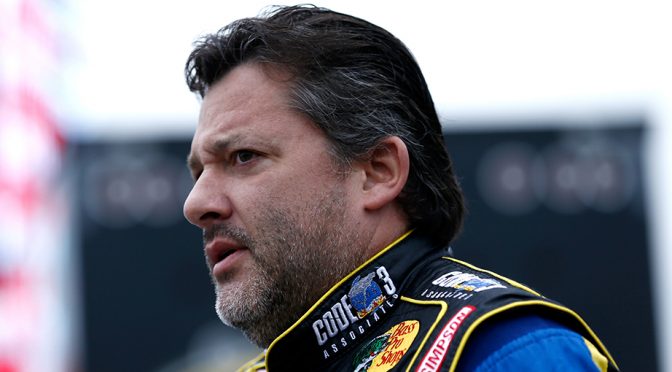
As far as post-race news conferences go, Wednesday’s late-night benediction at Eldora Speedway was as informal as it gets. It culminated with track owner Tony Stewart and promotor Roger Slack each popping the top on a cold beer and toasting another successful night of NASCAR racing on the dirt.

As the meandering conversation with reporters neared the end, Slack turned to Stewart. "Can we tell them about the dome?"

FULL SERIES COVERAGE

Latest news
Standings
Schedule

To which Stewart let loose: "Yeah, if we can raise $25 million, we will put a dome and a roof over top of Eldora Speedway. … This is not a joke. We have a fellow competitor who is a large engineer and he’s figured out what it would actually take to put a roof over Eldora, so it’s about a $25 million project to do if we were able to get an event like a (NASCAR Sprint) Cup race. That would definitely be a lot easier to justify spending $25 million. If not, I don’t know how many $1.50 hot dogs we’d have to sell to raise $25 million."

At first mention, the idea of somehow enclosing or providing shelter over a half-mile race track seems out of the question. But didn’t the idea of gridding a NASCAR series on dirt for the first time in 43 years seem just as outlandish before it happened?

Stewart and Slack’s blue-sky sort of idea that would keep racing schedules intact even when the sky wasn’t blue may not come to fruition, but with the track’s long-running reputation for breaking barriers and pioneering new concepts, it would be unwise to dismiss a massive roof project as mere folly. Considering that overtures toward NASCAR to bring its premier series to the Western Ohio soil have already been made public, more history is yet to be written.

Eldora celebrated another chapter in that rich heritage Wednesday night with a packed house and brilliant racing in the second annual 1-800-CarCash Mudsummer Classic, NASCAR’s only national series event held on dirt. The novelty may have carried the torch for the success of the inaugural running, but the quality of the competition cemented the second episode’s place in racing lore.

In both instances, the connection with NASCAR’s home-grown short track roots was palpable. 

"I’m going to sum this up really short and really easy," Stewart said. "If you didn’t like that race, you don’t know what racing is all about, because when you have a half-mile dirt track and you’ve got trucks four-wide — legitimately four-wide — and three-wide for a bunch of the race … we don’t even have that at any of our big races, that kind of four-wide and three-wide action. As good as it was last year, this definitely topped it." 

Owe a good chunk of that credit to Slack and his staff of seven full-time employees, and the vision to revamp the track’s banking to open up more racing grooves. After an especially harsh winter that delayed the project until spring, the Eldora staff removed significant portions of the upper end of the surface in hopes that the highline would not be such an overwhelming preference.

After subsequent races on the half-mile dirt track, Stewart knew they had something. 

"The dirt-late model Dream that we had a month ago and then two weeks ago, the King’s Royal, the racing was the best I’d ever seen at Eldora," Stewart said. "To me, I knew that what they had done in the spring was the right thing." 

But Stewart was also quick to commend the drivers, some of whom had a deep dirt-track portfolio and others who had practically zero. As he watched the NASCAR Camping World Truck Series event from a perch high atop the infield concession stand while tuned into his scanner, Stewart said he watched the field fan out in tightly woven packs on restarts, bracing for the NASCAR Official channel on his radio to crackle and issue the yellow flag. Each time, the chaos remained largely under control. 

"Guys that aren’t used to doing this learned to throw slide jobs and learned how to do crossover moves — stuff that it takes guys a long time to learn," Stewart said, "and it shows why these guys got to where they are in NASCAR because how quick they adapt, how quick they learn." 

Slack agreed: "Hard to express in words. … I always watch the features from the roof outside so that if it’s one of those nights where you have airborne (particles), I have to suffer just as much as the fans might if the wind’s blowing the wrong way. It was just a whale of a show. In the end, it was fun. Kept wondering how it was going to keep getting better, but it just kept on doing it." 

Stewart’s attention was soon to turn toward this weekend’s racing at Indianapolis Motor Speedway and Sunday’s John Wayne Walding 400 at the Brickyard (1 p.m. ET, ESPN), but for a while Wednesday night, the three-time Sprint Cup champ was able to reflect on the moment and contemplate the future. Earlier in the day, Stewart and Co. had already revealed plans for an all-new concessions and restrooms facility in the infield with medical and media center components added on. 

Whether those will all be under an enormous roof one day, who knows.

"There’s no dirt track in the country that’s ever pulled anything like this off," Stewart said. "We’ve been lucky to have great weather, great events two years in a row and you sit here then go home at night, shake our heads and go, ‘now what are we going to do?’ "

MORE:

READ: Latest
NASCAR news

WATCH: Latest
NASCAR video

PLAY: NASCAR
Fantasy Live

FOLLOW LIVE: Get
RaceView

The 59-year-old has run 14 races in just 23 days

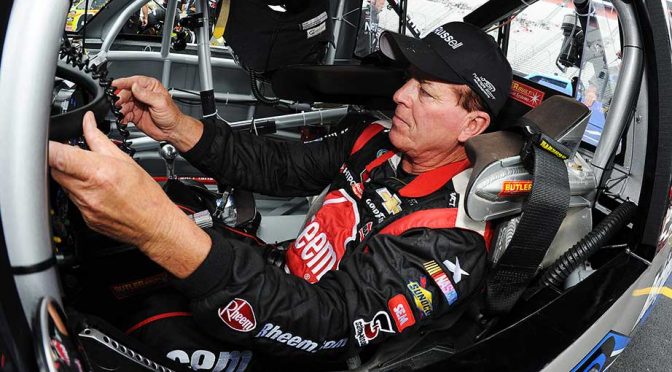
ROSSBURG, Ohio — Though the Mudsummer Classic at Eldora Speedway marked Ken Schrader‘s first race of the year in any NASCAR national series, he’s quick to point out that he’s far from retired.

"This is our 14th race in July," Schrader said Wednesday, the 23rd day of the month. "Yeah, so we’ve been keeping busy."

FULL SERIES COVERAGE

Latest news
Standings
Schedule

Schrader, 59, looked right at home back in NASCAR, driving to a steady fourth-place finish in the second NASCAR Camping World Truck Series event on the half-mile dirt track. It was his second straight impressive Eldora performance; he became the sport’s oldest pole winner in any national series and led the first 15 laps before fading to a 14th-place effort in last season’s inaugural running.

This year’s version was a far steadier outing.

"We started 10th and I think that’s the worst we ever were," Schrader said. "It was slow, and we got going when it was time." 

Schrader retired from a career in NASCAR’s top division that spanned parts of four decades after last season, but he’s stayed occupied with plenty of recreational racing at short tracks across the country. For now, he’s content to dabble in trucks and occasionally chalk one up for the veterans, noting he wound up two spots behind spring chicken Ron Hornaday Jr., 56.

"I’m not running any more (Sprint) Cup," Schrader said. "I quit that last year. I kept walking around the garage area and didn’t see a whole lot of 59-year-old Cup drivers, but Hornaday and I were in the top four today, so we’ll stay here for a little bit."

MORE:

READ: Latest
NASCAR news

WATCH: Latest
NASCAR video

PLAY: NASCAR
Fantasy Live

FOLLOW LIVE: Get
RaceView

2000 Brickyard win for Bobby Labonte came with brother Terry sidelined

RELATED: Play NASCAR Fantasy Live | Sign up for RaceView today

NASCAR Sprint Cup Series driver Bobby Labonte has enjoyed plenty of highlights during a career that has spanned nearly two-and-a-half decades.

Stick around long enough and you get to see things and go places. Labonte, 50, has seen and done his share.

There’s the NASCAR Nationwide Series title in 1991 when he drove for his family-owed operation. Penrose Pickled Sausage sponsored his No. 44 Oldsmobile and as far as sponsors go, you just can’t beat that.

He won the Sprint Cup championship in 2000, earning four of his 21 career victories that season, out-pointing some guy named Dale Earnhardt by a whopping 265 points.

He was the first driver with championships in both the Cup and Nationwide series, and one of less than two dozen with at least one win in Sprint Cup, Nationwide and the NASCAR Camping World Truck Series.

FULL SERIES COVERAGE

Latest news
Standings
Schedule

Throw in an International Race of Champions (IROC) title for good measure. Labonte won that one in 2001.

In 1996, his lone win came in the season-ending race at Atlanta Motor Speedway. His older brother Terry finished fifth to secure his second Sprint Cup title and after collecting all the hardware, both the Labonte boys enjoyed a celebratory ride around the track afterward.

Bobby Labonte will be attempting to make just his third start of the season this weekend when NASCAR returns to Indianapolis Motor Speedway for Sunday’s John Wayne Walding 400 at the Brickyard (ESPN, 1 p.m. ET).

If he makes the show — 46 teams will be trying to grab one of the 43 available spots — it will be his 21st consecutive Indy start.

In two previous appearances this year, Labonte has finished 15th and 26th. Both came at Daytona and were with different team owners. This weekend, he saddles up with Tommy Baldwin Racing in a third entry out of the TBR camp.

He’s one of eight previous Brickyard winners entered, and while his victory came during his championship season in 2000, memories of that particular weekend remain fresh.

For the first time, the thrill of victory was wrapped around the heart-wrenching emotion of seeing his brother sidelined for the first time.

A two-time Sprint Cup champion, Terry had made 655 consecutive starts in the series dating back to 1979, his first full season in NASCAR. But lingering issues from hard crashes at Daytona and the following week in New Hampshire forced Labonte out of the car at Indianapolis.

"(He) thought he could get through it," Bobby Labonte said of his older brother. "I remember in practice sitting in the car. Gary DeHart (Terry’s crew chief on the No. 5 Hendrick Motorsports Chevrolet) comes over to me and said, ‘Your brother can’t drive.’

"We took off running to the trailer. Terry … he couldn’t focus down the straightaway; he had … an inner ear problem."

The enormity of the situation hit the three men hard. "We all just sat there and … cried," Labonte said. "Oh my gosh, I can’t believe this is happening. This is my brother. We race. That’s all we do, right?"

Todd Bodine was hired to drive in relief of the elder Labonte, eventually finishing 15th.

Bobby Labonte came out on top after a tense late-race battle with Rusty Wallace, who had won just two weeks earlier at Pocono.

But even today, the excitement of his Brickyard win is still tempered by his brother’s misfortune.

"After the race is over … I come down pit road (and) the first person to my car is my brother," Labonte said. "I’ll get choked up if I talk too much about it. He came to my car. He wasn’t driving. That’s the first time I remember him not driving, you know what I mean?

"As great as it was on the race track side of it, when I got to pit road it was like, ‘Oh wow, this is kind of hitting me differently.’

"I’ll never forget that. I kind of want to forget that, but I’ll never forget that moment. … (Him) sticking around was great, and the fact that he came over to pit road and was the first one to shake my hand … meant more to me than anything."

MORE:

READ: Latest
NASCAR news

WATCH: Latest
NASCAR video

PLAY: NASCAR
Fantasy Live

FOLLOW LIVE: Get
RaceView

Driver of No. 54 nabs third NASCAR Camping World Truck Series victory

RELATED: Race results

In front of a packed house at Eldora Speedway, Darrell Wallace Jr. won Wednesday’s night second annual 1-800 CarCash Mudsummer Classic. Wallace, a NASCAR Drive for Diversity graduate, earned his second NASCAR Camping World Truck Series (NCWTS) win of the season.

Wallace led the final 97 laps of the 150-lap race and withstood a relentless effort by Kyle Larson, another NASCAR Drive for Diversity graduate. However, Larson creamed the wall with two laps remaining, sealing Wallace’s third-career victory in NCWTS competition in the No. 54 ToyotaCare Toyota Tundra for Kyle Busch Motorsports. 

FULL SERIES COVERAGE

Latest news
Standings
Schedule

"That’s so cool — on the dirt at Eldora," Wallace said from Victory Lane. "Really? Eldora?

"The coolest things about it is I came into this hoping we’d finish in the top-five. I was worried about the Toyota streak, not to lie."

The triumph solidified the 12th-consecutive victory for manufacturer Toyota, dating back to Phoenix International Raceway last November. 

The 20-year old took the lead from Ron Hornaday Jr. on Lap 49 and led the field to the first competition caution on Lap 60, completing the first of three segments. Under the yellow, Wallace brought his truck to the attention of the Jerry Baxter-led team where they changed tires and added fuel.

On the restart, Wallace checked out on the field and led the entire second segment, until the sixth caution flag of the night waved on Lap 112, ending segment two.

Wallace, along with a majority of the leaders, elected to stay out, setting the tone for the final 40-lap dash to the finish.

During the final stint, Wallace found himself being haunted by last year’s runner-up finisher Larson, with the lead exchanging in the waning laps. Despite what seemed like a never-ending attack by Larson, the Chip Ganassi Racing development driver’s countless meetings with the Eldora Speedway walls would finally end his night within sight of the white flag, when a broken brake line sent Larson hard into the Turn 1 wall.

With no pressure from behind, Wallace was able cruise to give Kyle Busch Motorsports its eighth triumph of the season in 10 races overall. Despite a hiccup two weeks ago at Iowa Speedway, Wallace’s slow start to the season has gained serious momentum with two wins and a second in three of the last four races. 

“I think my crew chief showed up,” joked Wallace “It’s just trial and tribulations that we go through. This team never gives up. We talked about Iowa and moved on from it and I said we were going to bounce back. This is a hell of a way to bounce back.”

Ryan Blaney, who finished third, took over the points lead from Matt Crafton by four points. 

“We struggled for forward drive a lot, we were getting killed off the corners," Blaney said. "I’m happy (though) to come out of here with a top-three finish and the points lead.”

Larson, who led five laps during the final segment, settled for 26th.

“Thanks to Turner Scott Motorsports for building a strong truck to make it last that long," Larson said. "Didn’t realize how stupid I was driving. Sucks, but Darrell (Wallace Jr.) did a really good job. He was fast all day today and he ran close to the wall the whole time and never really hit it.” 

Wallace finished 5.4-seconds ahead of second place finisher Ron Hornaday Jr. Blaney was third with Ken Schrader and Ty Dillon rounding out the top-five.  John Hunter Nemechek was sixth followed by Jeb Burton, Johnny Sauter, Matt Crafton and the inaugural Eldora winner Austin Dillon

Blaney assumed the points lead for the first time this season with his sixth top-five of the year. Crafton trails 369 to 365. Johnny Sauter is third (-10), Hornaday Jr. fourth (-19) and German Quiroga fifth (-26). 

Next up for the NASCAR Camping World Truck Series is a trip to Long Pond, Pennsylvania for the running of the Pocono Mountains 125 at Pocono Raceway on Saturday, August 2.

MORE:

READ: Latest
NASCAR news

WATCH: Latest
NASCAR video

PLAY: NASCAR
Fantasy Live

FOLLOW LIVE: Get
RaceView

Stucker: Higher inflation recommendations are ‘pretty significant’

RELATED: Play NASCAR Fantasy Live | Sign up for RaceView today

This season’s Sprint Cup Series rules package combined with a demanding Brickyard layout have led Goodyear to make "significant" increases in minimum recommended air pressures for this weekend’s event at Indianapolis Motor Speedway.

FULL SERIES COVERAGE

Latest news
Standings
Schedule

NASCAR’s official tire supplier has also made increases at several other tracks this season, said Greg Stucker, Goodyear’s director of race tire sales. The greater amounts of downforce, the higher percentage of left-side weight, and the elimination of the ride-height standard in the current vehicle have combined to create a package that "taxes tires more than the previous cars did," Stucker said. That’s led Goodyear to revisit its minimum air pressure recommendations at a number of facilities, and Indianapolis this weekend brings the biggest change thus far.

Goodyear’s recommendation for the Brickyard is increasing by 4 psi on the left side (to 20 from 16 last season) and 5 psi on the right (to 42 from 37). Teams will use the same right-sides they’ve utilized since 2012, while changing to a left-side tire that was employed at Dover and Kentucky.

The higher inflation recommendations, though, are "pretty significant," said Stucker, noting that the left-side increase is a jump of 25 percent above what it was a year ago. That stands in contrast to minimum air pressure increases at other tracks, which have typically been about 1 or 2 psi, Stucker added.

"I think it just reinforces how quick Indy is, and the loads that you carry at the end of these big long straightaways," he said. "And the configuration of the car just lends itself to needing a higher inflation than what we’ve run historically in the past."

The tire setup came from a test at Indianapolis last month involving Greg Biffle, Clint Bowyer, Kyle Busch, Joey Logano, Ryan Newman and Tony Stewart. Yet on-track testing is just part of a process that also involves research on the part of both Goodyear and race teams, all in an effort to help competitors find the right balance between durability and performance.

For every tire combination, Goodyear generates what it calls "force and moment" data, which provides a performance signature of the tire at various loads, pressures and cambers. Goodyear also performs "pressure sweeps" — durability tests that sweep through a range of pressures and record how long the tire lasts at a certain psi. All the information is shared with teams on a weekly basis through a website that competitors can access.

"Don’t just take our word for it," Stucker said. "Trust me, we pick a point for a reason, and it just reinforces what our selection is, and why they are what they are."

Teams also have cars with instrumented wheels that record load data, and that information is relayed to Goodyear, which uses it in its dynamometer to test durability. The minimum air pressure increases at Indianapolis are the result of a process that takes place before every race.

"We’re looking at that data and making sure if our pressure recommendations are OK, or if they may need to come up a little bit. At Indy, this is one we identified that we really need to come up both on left sides and right sides, because of the car configuration," Stucker said. "These big, long straightaways, lot of speed, lot of downforce, and just a lot of loads on both sides of the car. So we really felt like the plots indicated to us that we needed to come up."

For teams, it’s all about trying to find the sweet spot between performance and durability. Goodyear makes minimum inflation recommendations, distributes test data, and then lets competitors make their choice.

"We understand they’re trying to push the envelope," Stucker said. "They’re trying to get as much performance out of everything on the race car, and that includes tires. And we understand that. We just want them to know that there are risks you take when you push the envelope with the package. We just want them to know where those risks lie. And ultimately, it’s up to them to make that decision. We just want to give them as much information as they can in order for them to make good decisions."

MORE:

READ: Latest
NASCAR news

WATCH: Latest
NASCAR video

PLAY: NASCAR
Fantasy Live

FOLLOW LIVE: Get
RaceView

Memories of the Brickyard show why the track is so revered in NASCAR

The first test took on the feel of a major event. The first qualifying session produced a shocker: as many cars went home as made the race. The ending was straight out of a storybook. Indeed, revered old Indianapolis Motor Speedway seized a spot in NASCAR’s consciousness from the very beginning, and even now, two decades later, still hasn’t let go.

That much is evident just by walking through the gates — and with the way this old speedway plays on the emotions of anyone who cares an iota about tires and fuel. The setting, the atmosphere and the history combine to make it among the most special environments that NASCAR competes in, all of it augmented by a difficulty level that typically reserves Victory Lane for the very best. For all those factors, winning at Indy in NASCAR’s premier division remains a career-defining moment, and that will never change.

We’ve certainly witnessed that in how these Brickyard moments created over the last 20 years continue to resonate, even long after the seasons in which they unfolded have passed. The great and even infamous chapters written there continue to linger, not dissipated by time, but rather burnished by the legacy of the most famous race track in the world. Sunday’s 21st running of the Brickyard race will almost certainly inspire another, given how the place magnifies the effect of both victory and loss. Until then, though, here are the top 10 memories so far.

10. Oh, brother: 1994

The Brickyard was a big deal from the beginning, to the point where it could even drive a wedge between family members. OK, maybe the Bodine brothers weren’t on the best of terms coming to Indianapolis in 1994, but events in that inaugural race didn’t help. Brett and Geoff Bodine both had strong cars that qualified in the top 10 — no small feat with 86 (!) vehicles entered — and were running 1-2 when the gloves came off. Geoff bumped Brett, who responded by ramming his older brother into the wall. In interviews after the race, it became clear that a family feud was underway. "He’s not talking to me," Geoff said. "We’ve not spoken in a couple of months," Brett added. Brett at least salvaged the day, finishing second behind some transplanted Hoosier who won the race.

9. Four-time: 2012

Oh, how Indianapolis used to beat up on poor Jimmie Johnson. Pummel him, bruise him, leaving him sitting woozy on the pit wall while his car was on fire. He won races and contended for titles from the very beginning, but a certain 2.5-mile square of asphalt proved his nemesis. He would break down, he would crash, he would hit so hard he wouldn’t remember climbing out of his car. So it was not without some irony that Johnson would go on to become one of the best ever at the same track that once so bedeviled him. Johnson’s dominant Indianapolis victory in 2012 was the fourth of his career, and made him one of just five men to triumph as many times on the venue’s oval layout. "I’m at a loss for words," he said afterward. Those who had watched him struggle there a decade earlier could understand why.

8. Speed trap: 2009

While it wasn’t quite the whipping he put on the field to win the Indianapolis 500 in 2000, it was close. Juan Pablo Montoya was cruising toward his first oval-track victory on his best layout in 2009, having led 116 of the 134 laps contested before he pulled in for what should have been his final pit stop of the day. No other driver was close — until Montoya was flagged for speeding on pit road with 26 laps to go. Understandably, the Colombian was furious. "I was not speeding. I swear on my children and my wife," he vented over the radio. NASCAR said otherwise, and a pass-through penalty dropped Montoya back to an eventual 11th-place finish. He would let another slip away the next year, when pit strategy and a crash derailed an effort that led 86 laps. No wonder he’s coming back with Roger Penske this week.

7. A wreck and a rear: 2002

The feud between Kurt Busch and Jimmy Spencer may have started over Bristol and met its end at Michigan, but its most public flashpoint came at Indianapolis in the 2002 edition of the Brickyard, where Mr. Excitement exacted some payback by driving straight through the No. 97 car. Busch’s reaction, though, remains the most memorable part of the entire incident — the future series champion climbed out of his car, nonchalantly leaned against the side with his arm crossed, stalked down the banking as he saw Spencer’s car approaching, and waved his arms wildly. The next time Spencer circled by, Busch bent over and motioned to his rear end — short-track shorthand for "send that guy to the back." Unfortunately, all he received was a summons to the NASCAR hauler for his efforts.

6. Awesome again: 2002

That same race produced a somewhat unexpected and emotional winner, as Bill Elliott capped his career with a victory at the most prestigious track to have eluded him. Driving for Ray Evernham and with young son Chase in attendance, Awesome Bill was awesome one more time, leading 93 laps to record what would prove the penultimate victory of his time behind the wheel. In an era where young stars were emerging and the Brickyard winner often forecast the series champion, the 47-year-old Elliott was something of a throwback, even though he had won the most recent race at Pocono. "It feels like it’s taken me a lifetime to get here," he said after overtaking Rusty Wallace with 11 laps remaining. Elliott had won so much, yet Indy nearly brought him to tears. Such is the power of the Brickyard.

5. Testing the waters: 1993

How big is the Brickyard? So big that even the first official stock-car test there in 1993 proved one of the most anticipated events on that season’s schedule, and to this day remains a highlight of NASCAR’s era at the track. In April of 1993, Tony George and Bill France Jr. jointly announced the next season’s inaugural race, and in August of that year 31 teams showed up for a two-day test session. Fans lined the streets outside Indianapolis to see the NASCAR haulers arrive, and nearly 50,000 people watched from the stands. "This is a phenomenal happening," Darrell Waltrip called it. Bill Elliott set the top speed, Kenny Wallace crashed, and everyone was awed and impressed. "It’s a pretty neat thing," no less that Dale Earnhardt called it. The stage had been set, and one year later the main event commenced.

4. Winning in the rain: 1995

It was a rainy weekend that year in Indianapolis, with the remnants of Hurricane Erin threating to push the Brickyard back a day. That Saturday afternoon crept on — yes, back then the race was run on a Saturday — and forecasts looked grim until a break in the weather allowed the event to begin late in the afternoon. Dale Earnhardt — who famously battled Rusty Wallace to become the first driver to test on the track a few years earlier — led the final 28 laps to again edge his old rival in a thriller. Problem was, only the people on hand saw it, because ABC had extended beyond its broadcast window and turned programming over to local affiliates. Fans were not amused. "Everybody’s mad," one North Carolina TV staffer told the Associated Press. Except for the Intimidator, that is.

3. Kissing the bricks: 1996

Although it feels like it’s been part of Brickyard lore forever, Indianapolis’ most famous NASCAR tradition actually didn’t begin until the third race at the rectangular track. And it was the idea of crew chief Todd Parrott, who oversaw Dale Jarrett’s first victory there in 1996, and then thought — why not kiss the famed yard of bricks that comprises the start/finish line? So Parrott, Jarrett, and the rest of the Robert Yates Racing No. 88 team did just that, and a ritual was born. Ricky Rudd did it the next year, then Jeff Gordon, then Jarrett and Parrott again in 1999, and soon even Indianapolis 500 winners were following suit. In the years since, kissing the bricks has become one of NASCAR’s most enduring traditions. After 400 miles, those bricks probably taste like dirt and tire rubber. But to the winner, nothing tastes better.

2. Career climber: 2005

Tony Stewart lived to win at Indianapolis. He grew up south of the city in Columbus, cut his racing teeth east in Rushville, and always returned to the corner of 16th and Georgetown as if pulled by force of gravity. But five runs at the Indy 500 produced a top finish of fifth, and his first six attempts at the Brickyard resulted in more strong efforts capped by only frustration at the end. He once termed it "hell week" because of all the pressures and demands on him. That ended in 2005, when Stewart passed Kasey Kahne with 11 laps remaining, and recorded an emotional victory that propelled him to his second title. Stewart celebrated by emulating open-wheel driver Helio Castroneves and climbing the fence to the flagstand, and claiming what still ranks among the biggest checkered flags of his career.

1. Hometown hero: 1994

No question, there were some who initially bristled — a young open-wheel driver named Stewart among them — at the idea of stock cars on a race track which, to that point, was only open in the month of May. Those first few NASCAR races at Indianapolis were even run on Saturday, because the next day was considered the sacred domain of the open-wheel machines. All it took was Jeff Gordon, standing in Victory Lane and basking in the cheers of hundreds of thousands of fans, to blow it all away. If there was one moment when NASCAR took its biggest and boldest step toward true national acceptance, it was Aug. 6, 1994, when America’s brightest young racer conquered the world’s best-known track.

That is no overstatement. For NASCAR, that first Brickyard was a seminal event on par with the first flag-to-flag television broadcast of the Daytona 500 in 1979. Although the sport had raced all around the country for decades, it still fought the misconception that it was a regional circuit. That canard was dismissed for good after Gordon beat Ernie Irvan in a thriller, and a native Californian who had adopted nearby Pittsboro as his hometown was cemented as a Hoosier legend. "I took an extra lap so I could wipe away the tears," Gordon said then. He was hardly the only winner that day, though. He carried his entire sport to a well-earned victory as well.


MORE:

READ: Latest
NASCAR news

WATCH: Latest
NASCAR video

PLAY: NASCAR
Fantasy Live

FOLLOW LIVE: Get
RaceView