NASCAR’s longest race has had plenty of great action over the years

RELATED: Play NASCAR Fantasy Live | Sign up for RaceView today

A lot can happen over 600 miles.

It was designed to be NASCAR’s ultimate test of car and driver, and in many ways, it still is. While vehicles are much more durable than they were back in the day — when half the starting field was liable to be sidelined with mechanical problems — the Coca-Cola 600 remains a marathon that tests patience as well as equipment management, and presents unique setup challenges given that it begins in the daytime and concludes under the lights. No other event is as long, no other event presents as many variables, no other event is quite like it.

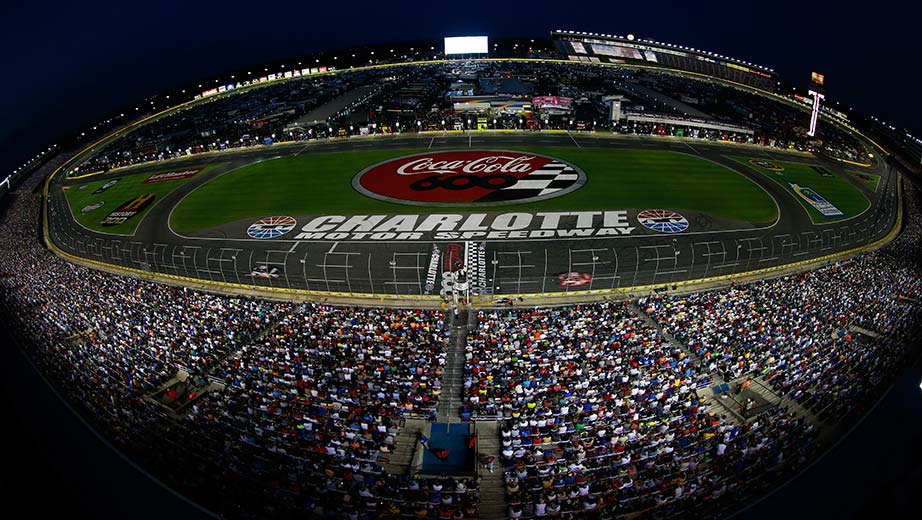
Which is perhaps why the Memorial Day weekend classic at Charlotte Motor Speedway has produced a list of memorable moments to rival nearly any other event on the schedule. Near-miss heartbreakers, unforeseen triumphs, unlikely first-time winners, dramatic duels, car-eating robot dinosaurs, wacky fuel-mileage finishes — the 600 has seen them all. Something interesting is always bound to happen, and that’s just in the pre-race show. Add in all those extra miles, and who knows what you might get.

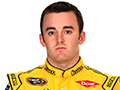
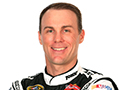
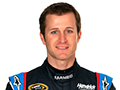
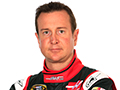
We certainly saw that last season, when a dead battery suffered by leader Kurt Busch under a late red flag period opened the door for Kevin Harvick to take two tires on his final stop and win the event for the second time in three years. Sunday brings the 55th running of one of NASCAR’s signature events, one sure to produce a few memorable moments of its own. Until then, here are the top 10.

FULL SERIES COVERAGE

Latest news
Standings
Schedule

10. Burt and Bonnett

It felt more like summer in Talladega than spring in Charlotte. On a sweltering day in 1982 when some drivers including Richard Petty needed relief due to the heat, Neil Bonnett and Bill Elliott took part in a memorable duel despite ultimately being the only competitors left on the lead lap. Over the final 160 laps, the two frontrunners swapped the lead six times, with Bonnett overtaking Elliott for good with 13 circuits remaining. The Alabama Gang member won by two car lengths in a race that would be used in the Burt Reynolds film "Stroker Ace," while Elliott — not yet even a full-time competitor — showed signs of promise to come.

9. Race to the start

Before there was Junior, before there was Jimmie, the Johnson who ruled at Charlotte went by the name of Joe Lee. The Tennessean claimed his second and final victory in NASCAR’s premier circuit in the inaugural 1960 World 600, winning by four laps over Johnny Beauchamp. But the real race was to the starting line — track founders Bruton Smith and Curtis Turner planned the event for late May, but weeks of delays put the completion of the speedway behind schedule, and the race was rescheduled for June 19. Toiling around the clock, workers finished the 1.5-mile track in time for an inaugural event that clocked in at five hours and 34 minutes, and paid just over a healthy $27,000 to the winner.

8. Mears on fuel mileage

Fuel mileage has played a decisive role more than once over the course of Charlotte’s day-to-night marathon, and that was certainly the case when Casey Mears unexpectedly found himself in Victory Lane in 2007. Ranked 35th in the standings to that point, the unheralded fourth Hendrick Motorsports driver ran strong all night, stayed out when leader Tony Stewart and most of the other top contenders pitted for fuel, and then pulled a shocker on a Memorial Day weekend where his uncle Rick had previously won four times at Indianapolis. And it wasn’t just Mears — J.J. Yeley took second, Kyle Petty third and Reed Sorenson fourth in a surprising finishing order at the end of 600 miles.

7. Record domination

Jim Paschal had won the World 600 once before, but that 1964 race became better known for a much more tragic event — the crash that would hospitalize and ultimately claim the life of legend Glenn "Fireball" Roberts. Three years later, though, Paschal would claim another victory at Charlotte that would be solely his own. And with good reason — he turned in the most dominant performance ever in the event in 1967, leading 335 of 400 laps, including the final 240. He had to hold on at the end, losing a three-lap advantage after hitting the wall with 61 laps remaining. But his crew patched the car, and Paschal still beat David Pearson by five seconds.

6. Gordon’s breakthrough

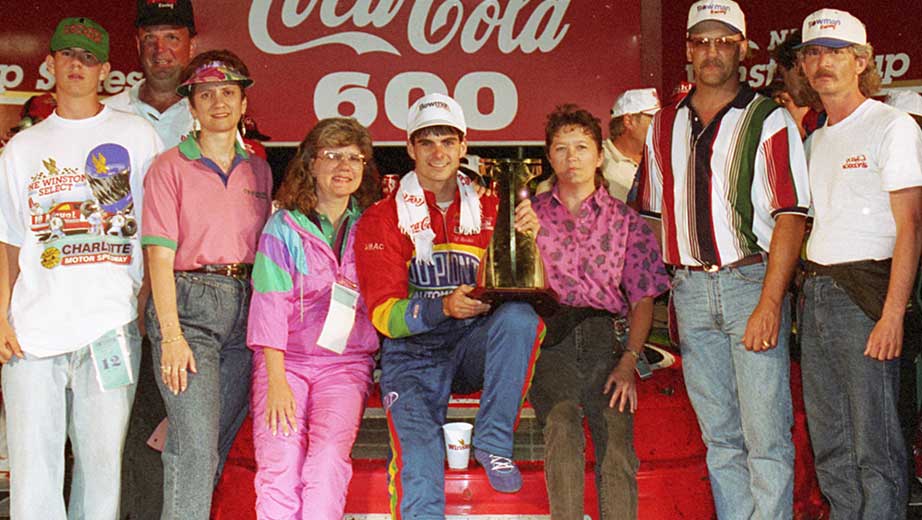
Hard to believe, but Jeff Gordon had some doubts about himself when he came to Charlotte for the 600 in 1994. Although he was just 22 and in the midst of his second full-time season, Gordon entered NASCAR’s longest event on the heels of a rough six-race stretch that had taken a toll on his confidence. The year before, he had come close to victory many times but not broken through. He felt overdue, and in an event famous for first-time winners, he would finally deliver. Gordon stayed patient, and crew chief Ray Evernham called for two tires late that gave his driver the track position necessary to get out front at the end. Gordon led just 16 laps, but he led the last one, and soon all those doubts would be washed away in champagne.
5. Duel of champions

Goodness, was it a long day. Two rain delays. A track-record 113 laps run under caution. Tire issues that (according to the Charlotte Observer) forced Neil Bonnett to pit road 19 times, and Harry Gant to blow four right-fronts. But Benny Parsons and Darrell Waltrip made it all worthwhile in 1980, the two champions staging an epic duel that would end with Parsons narrowly out front at the checkered flag. With third-place Terry Labonte two laps behind, the leaders were able to decide it among themselves over the final 26 laps. They exchanged the lead five times over the final 26 laps, with Parsons taking it for good with two to go. More than five hours of racing was decided by half a car length at the end.

4. Junior runs dry

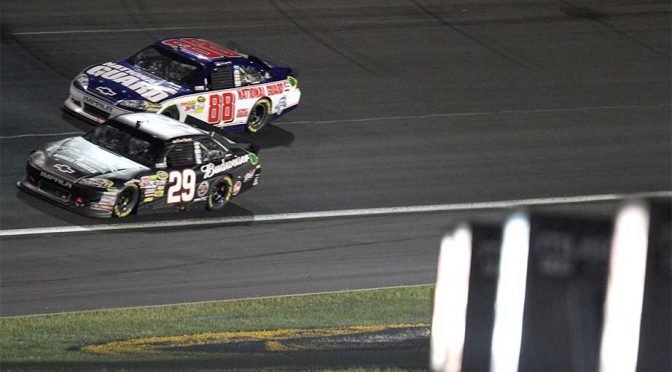
Fans were jumping to their feet and the grandstands were exploding in jubilation, but Dale Earnhardt Jr. knew it was all for naught. He was out of gas, had been since the backstretch of the final lap, so even though he rolled through Turn 4 with the lead he knew it was only a matter of time. "My spotter was like, ‘Man they’re coming! They’re coming!’ I was like, ‘I’m cruising. What am supposed to do, get out and pedal this thing with my feet?’ " Earnhardt said that night in 2011. So he was powerless when Kevin Harvick roared past, claiming victory in a dramatic 600-miler that left NASCAR’s most popular driver still on a winless skid that would take more than another year to end.

3. Johnson vs. Labonte

There was that whole "levigation" thing, the grinding process Charlotte underwent prior to the 2005 season intended to smooth out bumps. There were the 22 cautions, still a track record. There was the fire-breathing mechanical dinosaur in the pre-race show that ate junkyard cars. But then there was that incredible finish, with Bobby Labonte — driving in a FedEx scheme switched to his No. 18 car after teammate Jason Leffler failed to qualify — doing all he could to hold off Jimmie Johnson in the waning laps. Johnson looked high and low, was denied again and again, but finally caught Labonte off the final corner to win by .027 seconds. The 2000 champ kicked at his car in frustration over what would prove to be his best final shot at winning a race.
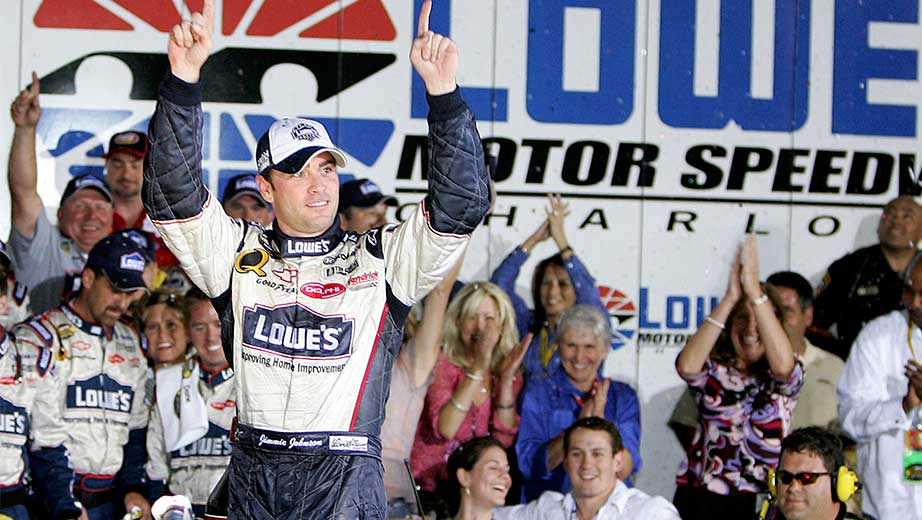

2. ‘Little David’ wins big

David Pearson wasn’t the "Silver Fox" in 1961 — he was just a 26-year-old from Spartanburg, S.C., already nearing a make-or-break point in his young career. He got the latter: a call to drive Ray Fox’s Pontiac Catalina in the World 600 at Charlotte, where Pearson led 225 laps. The day was infamous for tire failures, included one that sent Reds Kagle into the guardrail and cost the driver his left leg above the knee. Pearson led by four laps when he suffered a blowout of his own with just over a lap remaining, but he nursed it back to the checkered flag on the rim, sparks flying. It was the first career victory for a driver who that day became known as "Little David the Giant Killer," but would soon be known for much more.

1. Earnhardt shines bright

The Coca-Cola 600 was reinvented as a day-to-night event in 1993, the year after lights were added at the Charlotte track, and nobody in that race shined brighter than Dale Earnhardt. Of course, it didn’t exactly start out that way — the Intimidator was forced to make a pass-through penalty after speeding on pit road. Later, he was sent to the rear of the field for having too many men over the wall. He rebounded and was running second with 73 laps remaining when he spun the lapped car of Greg Sacks trying to get by. For that, Earnhardt was hit with another penalty — rough driving.

Earnhardt later argued that he never touched Sacks, and that air had caused the spin, but NASCAR officials saw it differently. The penalty was one lap, and suddenly Earnhardt seemed out of it. But a caution for a Rusty Wallace spin helped him get back on the lead lap, and with 39 to go Earnhardt was again up front, and passing Ernie Irvan for the lead. This time, nothing would stop him. Earnhardt went on to win, adding another colorful chapter to both the Intimidator legacy, and that of NASCAR’s longest race.

MORE:

READ: Latest
NASCAR news

WATCH: Latest
NASCAR video

PLAY: NASCAR
Fantasy Live

FOLLOW LIVE: Get
RaceView

Data collection programs reinventing how things happen in the garage

There were days when the cars in a NASCAR race were the same ones you could buy off the showroom floor. Tape up the glass, maybe move the radiator around a bit, duct-tape or paint a number on the door and you were good to go.

Now? Not so much.

It’s all about technology.

Gone are the days when geniuses like Smokey Yunick or Vic Edelbrock came up with an idea, modeled it out of clay or wood or metal, set up a smoke box and measured what they could. Or, in Yunick’s case, cut a hole in an intake manifold, plugged it with clear material and watched the air flow through the plenum.

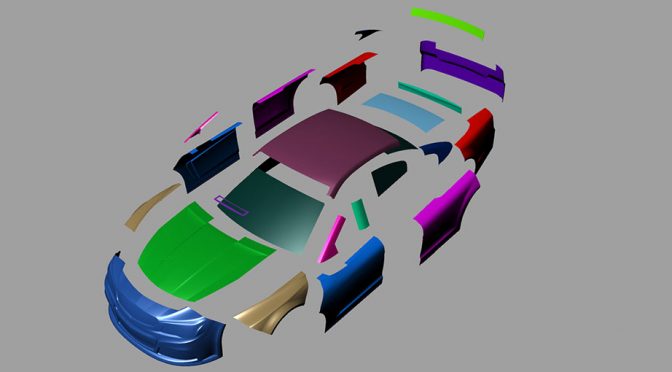
Instead of doing their work in a noisy, greasy garage, today’s geniuses sit in cube farms and move pixels, postulations and theorems around to produce a 3D version of a piston rod, cam shaft or cowl assembly.

It’s called Computer-Aided Design and Computer-Aided Manuacturing (CAD/CAM), and it was developed for a variety of applications. Hendrick Motorsports was one of the first teams to use it, and today nearly every major team has some version of it in the shop.

At first, it was used to save money. Racers tend to use available cash  judiciously, figuring that one mile per hour was worth whatever it cost. By doing all the research and development with computer models first, they had all the kinks worked out before they put it in metal or carbon fiber.

Dodge, in its return to the NASCAR Sprint Cup Series in 1999, used this kind of Finite Element Analysis to shave months off its ramp-up to competition.

Not only did such wizardry cut time, it also improved consistency in manufacture. Nothing irritates an engineer more than having his design mucked up by a hundred-thousands-of-an-inch mistake in casting. It also irritates the quality control people — and doing that too often can put you in the unemployment line.

The end result is teams now have a way to input massive engineering information — whether it is CAD models, CAM programs, digital simulation data, engineering reports or process matrices — into their computers.

Combining all that data into one big picture was a missing step that had to be solved. Teams aren’t just drivers, crew chiefs and mechanics. There are engineers, chassis specialists, aerodynamicists, and so on, and all need access to pieces of that electronic pie, which is stored on more than 25 servers and hundreds of virtual server points at HMS’ campus in Concord, N.C.

So what did Hendrick do? They contacted experts at Siemens — and engineering and electronics company — and found the answer. It’s called the PLM system.

"Without some way to manage all this information, we waste time and sometimes people aren’t looking at the latest version of what they need," said Hendrick Motorsports application manager Jim McKenzie. "If we have a problem at the race track, we have three days — at most — to fix it. If you spend a few hours of that time searching for data, it can really handicap you."

Say hello to Teamcenter, Siemens’ product lifecycle management digital enterprise backbone. In five months, with help from the Siemens techs, it was up and running. It is keyword-based, which means you can type in something like "Piston HMS 3517," and it spits out all the relevant data.

And there’s a lot of data. When you can match up a dyno sheet to a particular engine configuration with a parts list and other specs, you’re cooking with gas. That’s what Teamcenter does. You don’t even have to be in the building to access it, either. You can do it remotely, like at Talladega, too. You can dial up a particular configuration (cams, pistons, settings, valve assembly, etc.) and match it to track data, weather factors — the list is endless. It is all done by satellite, too.

The program also allowed for plug and play. New configurations happen all the time, but never as fast as they do now. A generic, base-model engine is the standard, and engineers can switch parts out at random to come up with new ways to make speed. If something fails, the bulk data is there to find the source, and eventually, the solution. It can also identify, through process, other items which might be at risk of failure.

The simplest example is the valve train, traditionally the weakest link in the engine as a whole. A spring or tappet goes funky, and the software can trace the manufacturer, lot number, forging data, and other details of the part. Vendor management has gotten a whole lot easier with this kind of program.

NASCAR has been known, on occasion, to make changes in the rules concerning parts and pieces. Product lifecycle management systems play a big role in this. If NASCAR mandates a change, the PLM system has the ability to incorporate "serialized, as-built configuration data" to the process. What that means is HMS spends a lot of its time remanufacturing parts to fit all scenarios.

The PLM system is useful in myriad other ways, too. You can incorporate and interpret data from other manufacturers, import and export race and test data to work into the mix and even present the data to engineers and crew chiefs in virtually any format, any time. You can send a 3-D image that people who don’t know a slide rule from a ski pole can understand and manipulate. That greatly enhances the speed of the work flow, as you might imagine.

"Sometimes within a week, we have to have a new part designed, built, tested and put in place before the next race," McKenzie said. "Having Teamcenter manage the engineering review cycle could save us half a day or more in getting that done."

It’s a brave new world — one that men like Yunick could not possibly have envisioned back when they were making everything by hand.

Harvick already has two wins in just 11 races as a driver for Stewart-Haas Racing

CONCORD, N.C. — Tracing the roots from where Kevin Harvick and his new Stewart-Haas Racing team first unlocked the secrets to speed doesn’t require a long trip. Not when the journey leads you back to Charlotte Motor Speedway, where NASCAR’s traveling circus convenes this weekend.
 
To say that Harvick and crew chief Rodney Childers have found chemistry at an early point — just 11 races into the NASCAR Sprint Cup Series season — doesn’t begin to tell the story of the No. 4 Chevrolet team. It begins much earlier than that, on a wintry Wednesday last December at the same 1.5-mile track.
 
"The first minute that I was in that car, I haven’t quit smiling since," Harvick said.

Harvick heads into Sunday’s Coca-Cola 600 (6 p.m. ET, FOX) as one of only two drivers with multiple victories this season, wins that all but have locked him into the Chase for the NASCAR Sprint Cup playoffs this fall. He also carries a history of success in NASCAR’s longest race with two victories in the last three years in the 600.
 
While Harvick entered 2014 as a preseason favorite to qualify for the Chase field, the uncertainty that always shrouds the formation of a new team was real. The 38-year-old California native answered any doubts early on by posting a resounding triumph in the second race of the season at Phoenix, then romping to victory from the pole six races later at Darlington.
 
But indications that the No. 4 team had done its homework went deeper than that. Childers had announced last August that he would leave Michael Waltrip Racing, leading the team to relieve him of his duties but keep him under contract. His full release came earlier than expected last October, at which point he began working toward cracking the engineering code around the 2014 rules package.
 
At the offseason test at Charlotte last December, NASCAR conducted five simulated races to test different setup configurations for 2014 in race conditions. Harvick finished first in three of the five, then second and third in the others.
 
"All he worked on once he got to SHR was what we were going to do this year with the new rules," Harvick said Thursday of Childers. "I feel like we have been a little bit ahead of the game since that test. But when we had that test here last year, the first lap on the race track, everybody’s confidence went to about as high as you could put it just for the fact of how well things went."
 
The extra swagger hasn’t gone unnoticed in the garage area. While Jamie McMurray was able to stave off Harvick’s charge in the final segment to win last weekend’s non-points NASCAR Sprint All-Star Race at Charlotte, he said the foreshadowing of week-in, week-out speed from the Stewart-Haas No. 4 came way back in the dead of winter.
 
"From the time we came here and tested in December and January for spoiler testing and pan testing, the 4 car has been the fastest off the truck," McMurray said. "They’ve been really for the most part the best car all year long. I think everyone in the garage is paying attention to Kevin and Rodney. You’re looking at pictures and looking at their car. Everyone is eyeballing that team and trying to figure out where the speed is."
 
While Harvick lobbed some criticism toward his crew last weekend for losing ground in the pits before the pivotal final segment, it was a reminder that the over-the-wall group — like most everything else on the team — is just 11 races into its current incarnation. File under the heading of growing pains, too, the handful of parts breakages that have kept the team back in 15th in the Sprint Cup standings and the clock-management gaffe in Thursday’s Coors Light Pole Qualifying that cost him a shot at the pole position for the Coca-Cola 600.
 
Despite the glitches, Harvick remains convinced by the performance that he’s with the best team in his career.
 
"The bottom line is the organization from a whole has given us every resource that we have asked for," Harvick said. "You never talk about money, it’s just what do you need and how do we get it for you, how do we get better. They went out recruited Rodney and he went out and recruited every single person on this team. They all came here for the same reasons. They all want to win races. They all want to win and race for championships and when you put that kind of people together with that determination everybody pushes everybody else. So you just have to ride the wave and try to keep getting better. …
 
"It’s been so refreshing and so much fun to be a part of it that every day you just kind of leave the race track shaking your head going, ‘Well we won that one or we could have won that one,’" Harvick added. "We raced and led and did all the things that you want to do as a race car driver as a team. I don’t know how you could ask for it to go much better."

MORE:

READ: Latest
NASCAR news

WATCH: Latest
NASCAR video

PLAY: NASCAR
Fantasy Live

FOLLOW LIVE: Get
RaceView

Go behind the scenes for the selection of the 2015 class 

MEET THE 2015 CLASS: Bill Elliott | Fred Lorenzen | Wendell Scott | Joe Weatherly | Rex White
LANDMARK AWARD WINNER: Anne B. France

FULL HALL OF FAME COVERAGE

What goes on behind closed doors when the NASCAR Hall of Fame voting panel meets each year to select the upcoming class of five inductees?
 
Are there outright endorsements? Questions? Discussions? Disagreements?
 
Yes, yes, yes and you bet.
 
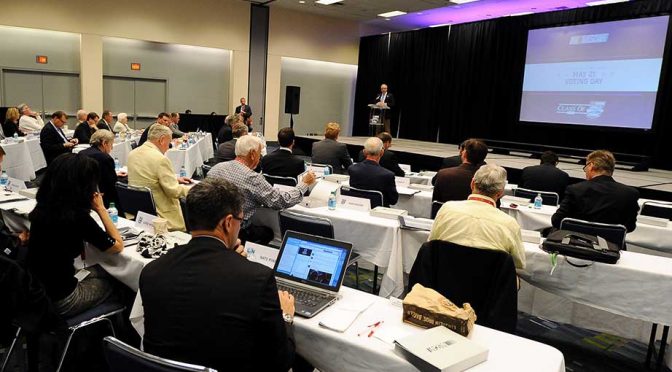
This year’s meeting, held May 21 at the Charlotte Convention Center, wasn’t much different than the previous five gatherings. Except for the addition of the Landmark Award, which debuted this year, the process was very similar to those of years past.

It begins with a group photograph, an official time stamp of sorts to get things started, and ends a little more than four hours later with the announcement that five new inductees have been determined.
 
In between? If you are a fan of the sport and wish to learn something about its history, it’s Christmas come early.
 
Many of the same faces of legends in the sport — for one reason or another — sat side-by-side with those who work on the periphery. For the first time, the Sprint Cup Series‘ defending champion was also a part of the process. This year, it was Jimmie Johnson. Next year?
 
"I hope I get to come back soon," the six-time champion said.
 
Here is a look at how this year’s selection process progressed:
 
Landmark Award
Created as a way to honor "outstanding contributions to NASCAR," the nominees consisted of Martinsville track founder H. Clay Earles; Anne B. France, wife of NASCAR founder William H.G. France; Raymond Parks, the first championship-winning car owner for today’s Sprint Cup Series; R.J. Reynolds executive Ralph Seagraves; and longtime sportscaster Ken Squier.
 
Unlike voting for the Hall of Fame, two separate votes were taken for the Landmark Award. After initial discussions, the first vote was taken, and the three nominees receiving the most votes were determined.
 
Much of the initial conversations during the morning session focused on the contributions of Squier and Seagraves, with several late comments explaining the role France played. General observation was that it appeared likely that those three would appear on the final ballot.
 
NASCAR Hall of Fame Nominees
Conversations concerning the accomplishments of engine builder/car owner Robert Yates opened the Hall of Fame discussion phase, but talk quickly turned to Wendell Scott. It was clear that many felt the timing was right for Scott, who was making his third appearance on the ballot.
 
And just as quickly, as is often the case during the voting process, the subject of conversation shifted.  The names of Joe Weatherly, Bill Elliott, Terry Labonte and Rex White cropped up. Speedway Motorsports Inc. founder Bruton Smith and Fred Lorenzen were discussed with talk of what they did for the sport as well what each accomplished.
 
And then it was time for lunch. Which is perhaps the best "unofficial" time to mull over what’s been said and discuss key facts that have surfaced.
 
Curtis Turner, an afterthought earlier, eased into the conversation during the afternoon session, as did former champion Benny Parsons. Many of those that didn’t generate a lot of back-and-forth during the morning meeting were suddenly getting plenty of attention, including Ray Fox, Bobby Isaac, Jerry Cook and Buddy Baker.
 
As the discussion phase began to come to a close, it was one veteran who put it best, noting that, "Of all the votes we’ve had, this is by far the hardest." Few disagreed.
 
Landmark Award finalists were announced with additional discussion before a final vote was taken.
 
Shortly afterward, the ballots for the 2015 class of the NASCAR Hall of Fame were handed out.
 
After more than four hours of discussion, each ballot was marked, signed and collected.
 
There were 20 nominees on the ballot when the day began, and at some point each name came up for discussion. No one was overlooked. The conversations among the group were lively, cordial and most of all they were informative.
 
For many in the room, taking part in the voting is a learning experience as much as it is a selection process. For others, it’s more of a remembering process, a chance to recall and relate past experiences and to pass on knowledge that was gained first-hand.
 
And at day’s end, each left with a little something else. A sense of pride in what they’d been asked to do, and a sense of accomplishment with the end result.

MORE:

READ: Latest
NASCAR news

WATCH: Latest
NASCAR video

PLAY: NASCAR
Fantasy Live

FOLLOW LIVE: Get
RaceView

Will steadily improving Kahne break through at Charlotte?

Editor’s note: The following drivers are ranked according to the NASCAR Sprint Cup Series standings. Driver Reports includes the top 16 in the points standings and drivers currently in the Chase for the NASCAR Sprint Cup field.

1. Jeff Gordon (No. 24)

Hendrick Motorsports, Chevrolet 

Standing: Gordon leads the NASCAR Sprint Cup Series standings with 394 points.
Past five races: 1st at Kansas, 39th at Talladega, 2nd at Richmond, 7th at Darlington, 2nd at Texas.
Season stats: 1 win, 5 top-fives, 8 top-10s.
Track history: At Charlotte, Gordon’s average finish is 18.7 and his average running position is 15.1 over the past nine years. In 42 career starts at Charlotte, he has five wins, 16 top-fives, 22 top-10s and nine poles.
Quick hit: Gordon doesn’t dominate at Charlotte like he once did — his last win in the 600 came in 1998, and he finished 35th last year after a crash. The biggest thing Gordon has going for him Sunday is the power of Hendrick Motorsports equipment underneath him. This 400-lap race tests drivers’ wherewithal and the reliability of their car, and Gordon will be among the strongest in the field in both categories.

2. Matt Kenseth (No. 20)

Joe Gibbs Racing, Toyota 

Standing: Kenseth is second in the standings with 379 points.
Past five races: 10th at Kansas, 37th at Talladega, 5th at Richmond, 4th at Darlington, 7th at Texas.
Season stats: 3 top-fives, 8 top-10s, 1 pole.
Track history: At Charlotte, Kenseth’s average finish is 14.5 and his average running position is 13.9 over the past nine years. In 29 career starts at Charlotte, he has two wins, eight top-fives and 15 top-10s.
Quick hit: Kenseth won his first Coca-Cola 600, but he hasn’t been back to Victory Lane for this race. You can generally count on Kenseth for a top-10 in the 600 — he has four of them in the past six events — but the Joe Gibbs Racing team’s struggles on intermediate tracks under the new rules package is a concern.

3. Kyle Busch (No. 18)

Joe Gibbs Racing, Toyota 

Standing: Busch is third in the standings with 373 points.
Past five races: 15th at Kansas, 12th at Talladega, 3rd at Richmond, 6th at Darlington, 3rd at Texas.
Season stats: 1 win, 3 top-fives, 5 top-10s, 1 pole.
Track history: At Charlotte, Busch’s average finish is 14.0 and his average running position is 9.7 over the past nine years. In 20 career starts at Charlotte, he has nine top-fives, 12 top-10s and one pole.
Quick hit: Even with a blown engine last year and a crash in 2011, Busch’s statistics at Charlotte are ranked in the top three among active drivers. Since joining Joe Gibbs Racing, he’s logged three top-fives (all third-place finishes) in six 600 starts. The No. 18 team is among the best when determining a late-race strategy for this event, too, so count on ‘Rowdy’ being near the front with 30 laps to go.

4. Dale Earnhardt Jr. (No. 88)

Hendrick Motorsports, Chevrolet

Standing: Earnhardt Jr. is fourth in the standings with 368 points.
Past five races: 5th at Kansas, 26th at Talladega, 7th at Richmond, 2nd at Darlington, 43rd at Texas.
Season stats: 1 win, 6 top-fives, 7 top-10s.
Track history: At Charlotte, Earnhardt Jr.’s average finish is 21.9 and his average running position is 19.6 over the past nine years. In 28 career starts at Charlotte, he has five top-fives, 11 top-10s and one pole.
Quick hit: This may be the year Junior breaks through for his first-ever NASCAR Sprint Cup Series win at Charlotte. He has two top-fives in three races this year on 1.5-mile tracks (and he had a strong car at Texas before wrecking), along with the momentum that comes with his perhaps his best-ever start to a season. Nothing would delight the home crowd more.

5. Carl Edwards (No. 99)

Roush Fenway Racing, Ford 

Standing: Edwards is fifth in the standings with 367 points.
Past five races: 6th at Kansas, 30th at Talladega, 9th at Richmond, 13th at Darlington, 14th at Texas.
Season stats: 1 win, 2 top-fives, 6 top-10s.
Track history: At Charlotte, Edwards’ average finish is 11.8 and his average running position is 14.7 over the past nine years. In 18 career starts at Charlotte, he has five top-fives and 11 top-10s.
Quick hit: Edwards’ average finish at Charlotte in the loop data era is third among active drivers. He rarely runs poorly here, but he’s typically not a threat to win, either. Given the strength of Edwards’ car in the Sprint All-Star Race, perhaps that changes Sunday night.

6. Joey Logano (No. 22)

Team Penske, Ford 

Standing: Logano is sixth in the standings with 346 points.
Past five races: 4th at Kansas, 32nd at Talladega, 1st at Richmond, 35th at Darlington, 1st at Texas.
Season stats: 2 wins, 6 top-fives, 6 top-10s, 1 pole.
Track history: At Charlotte, Logano’s average finish is 10.4 and his average running position is 14.7 over the past nine years. In 10 career starts at Charlotte, he has three top-fives and six top-10s.
Quick hit: Logano has two top-fives in the past three Coca-Cola 600 races, two wins already this year and is coming off a fourth-place showing at Kansas (another 1.5-mile track) in which he led 63 laps. He might be the favorite among Ford drivers to put the manufacturer back in Victory Lane following the 600 for the first time since Mark Martin did it in 2002.

7. Jimmie Johnson (No. 48)

Hendrick Motorsports, Chevrolet

Standing: Johnson is seventh in the standings with 340 points.
Past five races: 9th at Kansas, 23rd at Talladega, 32nd at Richmond, 3rd at Darlington, 25th at Texas.
Season stats: 3 top-fives, 6 top-10s, 1 pole.
Track history: At Charlotte, Johnson’s average finish is 12.8 and his average running position is 7.8 over the past nine years. In 25 career starts at Charlotte, he has six wins, 12 top-fives, 16 top-10s and three poles. He has added to that with a fourth pole for Sunday’s Coca-Cola 600.
Quick hit: Johnson’s name is synonymous with Charlotte success, given his six wins at the track. His recent track record, though, suggests a less-than-optimal performance may be at hand. Johnson’s recent dominance has come during the fall races — he’s finished outside the top 10 in six consecutive Coca-Cola 600s. Pair that with a less-than-ideal start to 2014, and it seems Johnson will have to wait until next month to pick up his first win of the season. However, he will start from the pole position on Sunday.

8. Ryan Newman (No. 31)

Richard Childress Racing, Chevrolet 

Standing: Newman is eighth in the standings with 332 points.
Past five races: 11th at Kansas, 18th at Talladega, 8th at Richmond, 10th at Darlington, 16th at Texas.
Season stats: 4 top-10s.
Track history: At Charlotte, Newman’s average finish is 18.3 and his average running position is 17.5 over the past nine years. In 26 career starts at Charlotte, he has four top-fives, 10 top-10s and nine poles.
Quick hit: Newman’s average career start at Charlotte is 7.0, and he has nine poles in 26 races — an average of one in every 2.9 starts. Yet with all of his starts up front, Newman doesn’t have a win at the 1.5-mile track. His average running position in the past nine years is outside the top 15, and his last top-five at the track was in 2009.

9. Greg Biffle (No. 16)

Roush Fenway Racing, Ford

Standing: Biffle is ninth in the standings with 328 points.
Past five races: 16th at Kansas, 2nd at Talladega, 15th at Richmond, 5th at Darlington, 6th at Texas.
Season stats: 2 top-fives, 4 top-10s.
Track history: At Charlotte, Biffle’s average finish is 16.0 and his average running position is 14.6 over the past nine years. In 22 career starts at Charlotte, he has five top-fives, eight top-10s and one pole.
Quick hit: Biffle has quietly put together a consistent stretch of five races over a variety of track distances. His team appears to be on the upswing after five consecutive finishes outside the top 10 early in the season. Expect more of the same Sunday — a top-10 run with an outside shot at the win.

10. Brian Vickers (No. 55)

Michael Waltrip Racing, Toyota 

Standing: Vickers is 10th in the standings with 327 points.
Past five races: 14th at Kansas, 4th at Talladega, 12th at Richmond, 26th at Darlington, 4th at Texas.
Season stats: 2 top-fives, 4 top-10s.
Track history: At Charlotte, Vickers’ average finish is 21.4 and his average running position is 19.8 over the past nine years. In 15 career starts at Charlotte, he has two top-fives and three top-10s.
Quick hit: Vickers has been in the mix to challenge for a win in a couple of races this year. While you shouldn’t expect that to continue at Charlotte — his average finish and average place rank outside the top 20 — there are still tracks coming up where the No. 55 is better suited for a victory.

11. Brad Keselowski (No. 2)

Team Penske, Ford 

Standing: Keselowski is 11th in the standings with 326 points.
Past five races: 13th at Kansas, 38th at Talladega, 4th at Richmond, 17th at Darlington, 15th at Texas.
Season stats: 1 win, 4 top-fives, 4 top-10s, 1 pole.
Track history: At Charlotte, Keselowski’s average finish is 16.3 and his average running position is 16.1 over the past nine years. In nine career starts at Charlotte, he has one win, two top-fives, two top-10s and one pole.
Quick hit: Keselowski won last year’s fall race, and has routinely qualified at the front of the field this season (his starting position of second on Sunday will be his ninth top-five starts in 12 races). Yet he’s struggled to piece together strong finishes, with just one top-10 — a fourth-place finish — in the past eight races. The veteran never recovered from a similar stretch last year, although with a win in the bank and a new Chase for the NASCAR Sprint Cup format in 2014, there’s less pressure this season.

12. Denny Hamlin (No. 11)

Joe Gibbs Racing, Toyota 

Standing: Hamlin is 12th in the standings with 318 points.
Past five races: 18th at Kansas, 1st at Talladega, 22nd at Richmond, 19th at Darlington, 13th at Texas.
Season stats: 1 win, 2 top-fives, 3 top-10s, 1 pole.
Track history: At Charlotte, Hamlin’s average finish is 13.2 and his average running position is 12.3 over the past nine years. In 17 career starts at Charlotte, he has four top-fives, 10 top-10s and one pole.
Quick hit: Hamlin’s outstanding recent success at Charlotte mirrors that of fellow JGR teammate Kyle Busch. The concern is the same here, too — are the Gibbs teams good enough on 1.5-mile tracks for Hamlin to be a serious contender? At the very least, Hamlin should continue his trend of seven consecutive top-10s at the track.

13. Kyle Larson (No. 42)

Chip Ganassi Racing with Felix Sabates, Chevrolet  

Standing: Larson is 13th in the standings with 318 points.
Past five races: 12th at Kansas, 9th at Talladega, 16th at Richmond, 8th at Darlington, 5th at Texas.
Season stats: 2 top-fives, 5 top-10s.
Track history: In his one career start at Charlotte, Larson finished 37th in 2013 with an average running position of 22.0.
Quick hit: Larson was impressive in last year’s fall race at Charlotte before his engine blew up. His Sprint Showdown outing wasn’t sparkling, but with teammate Jamie McMurray winning the Sprint All-Star Race, perhaps the No. 42 team can glean information in advance of Sunday’s race.

14. Austin Dillon (No. 3)

Richard Childress Racing, Chevrolet  

Standing: Dillon is 14th in the standings with 306 points.
Past five races: 19th at Kansas, 15th at Talladega, 27th at Richmond, 11th at Darlington, 21st at Texas.
Season stats: 1 top-10, 1 pole.
Track history: Dillon has not started a NASCAR Sprint Cup Series race at Charlotte. In four Nationwide Series starts, he has one top-five, two top-10s and one pole.
Quick hit: One interesting note about Dillon: Yes, he only has one top-10 this year, but he has three 11th-place finishes. He’s close to having four top-10s, and that sort of consistency would put him in the Chase field if the season ended today. Expect another top-20 — and maybe more — Sunday. His Richard Childress Racing equipment should last until the end.

15. Kevin Harvick (No. 4)

Stewart-Haas Racing, Chevrolet 

Standing: Harvick is 15th in the standings with 302 points.
Past five races: 2nd at Kansas, 7th at Talladega, 11th at Richmond, 1st at Darlington, 42nd at Texas.
Season stats: 2 wins, 3 top-fives, 5 top-10s, 2 poles.
Track history: At Charlotte, Harvick’s average finish is 16.2 and his average running position is 17.8 over the past nine years. In 26 career starts at Charlotte, he has two wins, three top-fives and nine top-10s.
Quick hit: Harvick has won two of the past three Coca-Cola 600s, and he’s driving better now and sitting in better equipment than he did in either of those two victories. What does it all mean? Harvick is the odds-on favorite to win Sunday night. And if he does, don’t expect him to lead just 28 laps like last year. Think triple digits.

16. Kasey Kahne (No. 5)

Hendrick Motorsports, Chevrolet

Standing: Kahne is 16th in the standings with 294 points.
Past five races: 3rd at Kansas, 8th at Talladega, 14th at Richmond, 37th at Darlington, 11th at Texas.
Season stats: 1 top-five, 4 top-10s.
Track history: At Charlotte, Kahne’s average finish is 10.2 and his average running position is 11.3 over the past nine years. In 20 career starts at Charlotte, he has four wins, nine top-fives and 12 top-10s.
Quick hit: If the postseason began today, Kahne would be on the outside looking in. Good thing that’s not the case. With one of the best histories at Charlotte among active drivers, look for Kahne to continue his streak of five consecutive top-10s at the track (four of which were top-fives) and continue his climb up the standings.

28. Kurt Busch (No. 41)

Stewart-Haas Racing, Chevrolet

Standing: Busch is 28th in the standings with 211 points.
Past five races: 29th at Kansas, 33rd at Talladega, 23rd at Richmond, 31st at Darlington, 39th at Texas.
Season stats: 1 win, 2 top-fives, 2 top-10s.
Track history: At Charlotte, Busch’s average finish is 19.4 and his average running position is 16.9 over the past nine years. In 27 career starts at Charlotte, he has one win, six top-fives and seven top-10s.
Quick hit: Racing at Charlotte is just half of Busch’s day. He’ll compete in the Indianapolis 500 earlier Sunday, then fly down to Charlotte for the Coca-Cola 600. His team owner Tony Stewart is the only driver to complete every lap of both races on the same day, something that is no doubt Busch’s goal.

MORE:

READ: Latest
NASCAR news

WATCH: Latest
NASCAR video

PLAY: NASCAR
Fantasy Live

FOLLOW LIVE: Get
RaceView

Coca-Cola Racing Family driver meets military families ahead of Memorial Day weekend

Editor’s Note: Richard Childress Racing driver Austin Dillon visited Fort Bragg on Tuesday as he prepares to run his first Coca-Cola 600 at Charlotte Motor Speedway (Sunday, 6 p.m. ET, FOX). Dillon writes about his appreciation for the military and looks forward to running NASCAR’s most grueling race with the team that has won it two of the last three years.

Being at Charlotte Motor Speedway on Memorial Day weekend has always been special. I’ve watched a lot of races here and to see our troops carry the flag out onto the track and be a part of that this year is going to be very special.

In between the NASCAR Sprint All-Star Race weekend and the Coca-Cola 600, I had the opportunity to visit the troops at Fort Bragg. Any time you get to come out to one of our military bases, especially here in North Carolina, where I was born and raised, it’s exciting.

I took a high school trip there and got to watch them pack parachutes and learn about what they do on the base. I feel a little at home when I’m around Fort Bragg.

Military members are some of the most avid fans of our sport. It’s very cool to see an actual hero love what we get to do on the weekends and be part of the races. I had the chance to meet several families at the Fort Bragg Commissary South store. At more than 180 military commissaries, shoppers can enter the 2014 Champion’s Week Sweepstakes.

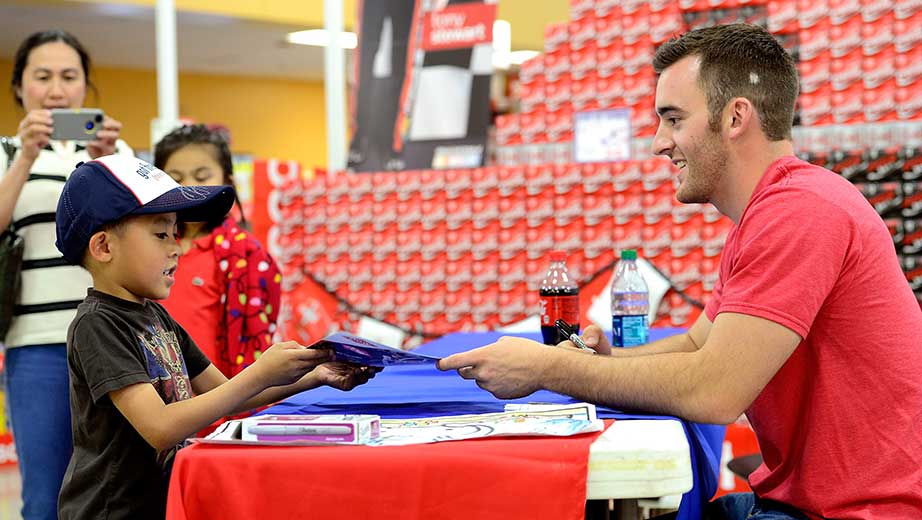
Coca-Cola Racing Family NASCAR driver Austin Dillon greets a young fan at the Fort Bragg South Post Commissary on Tuesday in Fort Bragg, North Carolina. (Photo by Grant Halverson/NASCAR via Getty Images)
It’s awesome what NASCAR and Coca-Cola are teaming up to do, to bring our military members to our NASCAR Sprint Cup Series Champion’s Week in Las Vegas, where they get to come hang out with us when we’re out of our element and enjoy our final weekend of the year, celebrating our champion.

Everybody loves Vegas so it’s cool to have our military members be part of that.

In March, I teamed up with Cheerios to donate General Mills products to underprivileged families in the Las Vegas area. Visiting Nellis Air Force Base and also having the opportunity to give back to the men and women who fight for our country was an amazing experience and one that I’ll never forget.

Last September, I joined my grandfather, Richard Childress and several NASCAR drivers at Walter Reed National Military Medical Center. We had a good day, and it really made me appreciate the sacrifices our military and their family member make for our country.

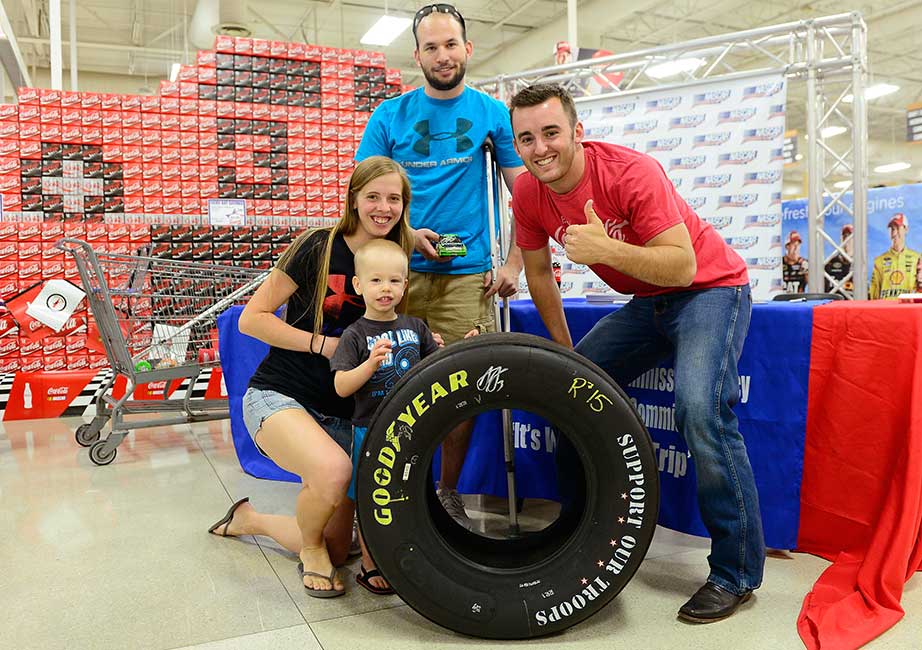
Our military members are the ones that allow us to race on the weekends, and the NASCAR community rallies to support our troops. You can show your support by logging on to the Goodyear Gives Back online auction. I made the first bid on my tire at Goodyear.com/givesback.

Coca-Cola Racing Family NASCAR driver Austin Dillon poses for a photograph with Rebecca, Easton and Jeremy Morelock and their race-worn Goodyear Support Our Troops tire at the Fort Bragg South Post Commissary on Tuesday in Fort Bragg, North Carolina. (Photo by Grant Halverson/NASCAR via Getty Images)
Heading back to the track this weekend, it’s taken a few NASCAR Nationwide Series races to figure out what it takes to run well at Charlotte because the track does change so much from daytime to night. Your balance shift is pretty big and having a little bit of notes helps you. That’s why it’s tough for rookies to come here for the first time, but I feel like we’ve got a great team.

It’s my first time running a 600-mile race. I ran Texas Motor Speedway last year and this year. Both of those races are 500-mile races. Why not give it 100 miles more and see what we’ve got? I think you prepare for the race a little bit earlier in the week. It’s an important hometown race. It’s going to be hot. I feel like you do have to prepare for it as much as you can, but until you get in there in that environment you really don’t know. I’ll do my best early in the week to hydrate.

If we can look back and use some of the notes that Kevin Harvick was able to gain last year and run well here with, the new style where we’re running these cars so low, it’s a little bit different than what they brought here a year ago. But we can still look at the notes, see what changes they made going into the race that helped them and see if that benefits us.

I’ve been fortunate enough to watch a bunch of races here, sitting in Turn 1 with sponsors from Richard Childress Racing over the years in a condo up there. I sat with my family and my grandfather and remember Harvick winning here and being able to run down the stands and get to Victory Lane and being a part of that was awesome.

On Sunday night, I hope I can drive my No. 3 Cheerios Chevrolet SS into Victory Lane and join Matt Kenseth as the only other NASCAR Sprint Cup Series Sunoco Rookie of the Year contender to win the Coca-Cola 600.

NASCAR, Coca-Cola, Mars Chocolate North America and Mondelez have collaborated to create a unique program designed to engage authorized shoppers in over 180 military commissaries. Shoppers can enter the 2014 Champion’s Week Sweepstakes for a chance to win a trip to Las Vegas for the NASCAR Sprint Cup Series Champions Week by texting NASCAR Salute to 313131 or visiting https://2014championsweeksweeps.com/

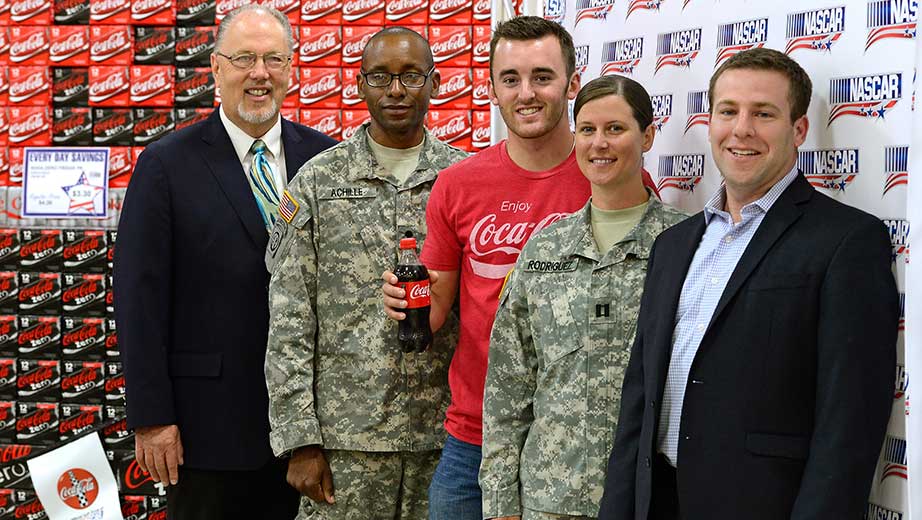
(L-R) John Moore, commissary director, Specialist Ricardy Achille, Coca-Cola Racing Family NASCAR driver Austin Dillon, Capt. Jennifer Rodriguez, and Matt Shulman, managing director of marketing platforms at NASCAR, at Fort Bragg South Post Commissary on Tuesday in Fort Bragg, North Carolina. As part of ‘NASCAR: An American Salute,’ NASCAR teamed with official partners to give military members across 180 commissaries a chance to win a trip to Las Vegas for NASCAR Sprint Cup Champions Week. (Photo by Grant Halverson/NASCAR via Getty Images)
MORE:

READ: Latest
NASCAR news

WATCH: Latest
NASCAR video

PLAY: NASCAR
Fantasy Live

FOLLOW LIVE: Get
RaceView

Panel of experts examines hot topics in the world of NASCAR

Editor’s Note: Track Smack is a weekly feature that will showcase a panel of NASCAR.com experts providing their analysis from the previous week, while also looking ahead. In this edition, NASCAR.com’s Holly Cain, Kenny Bruce and Alan Cavanna examine NASCAR Hall of Fame criteria, what a successful Memorial Day weekend double looks like for Kurt Busch and whether NASCAR still needs a 600-miler on its schedule.

1. With a nod to NASCAR Hall of Fame voting week and the difficult decisions and varying criteria, where do drivers such as Saturday’s Sprint All-Star Race winner Jamie McMurray stack up in the big scheme of things? He’s now won a Sprint All-Star Race, the Daytona 500 and the Brickyard 400, but not a Sprint Cup championship. Kevin Harvick and Ryan Newman are in similar situations.

Alan Cavanna:  I think they end up being Hall-of-Famers for a few reasons … Racing is all about winning, especially in big moments. Daytona and the Brickyard are two of the sport’s crown jewels, and winning both during a career is a rare accomplishment that should be celebrated. Fans remember those wins more than others. 

Kenny Bruce: Jamie’s got seven "points" wins. Granted, they came in some of the sport’s biggest events (Daytona, Indy) but when looking at Hall of Fame numbers and only numbers, I can’t say they stack up with someone such as Harvick (25 wins) or Newman (17 wins). Impressive, yes. Hall worthy? Let’s not get ahead of ourselves.

Holly Cain: It’s interesting because most feel Mark Martin is a sure Hall of Famer, but yet he doesn’t have a Cup title or a Daytona 500 or Brickyard 400 trophy. Hall of Famer Rusty Wallace didn’t win the Daytona 500.

Sounds like volume of wins maybe speaks louder to the voters than where you win or the size of your trophy. 

Bruce: As a Hall of Fame voter (had to throw that in there), I know having a Daytona 500 victory carries a certain amount of weight. Looking at choices, the first thing that comes to mind is number of titles won; then number of races won; then which races. A victory in the 500 is a factor when making comparisons, but not the only factor.

Wallace won a title and a slew of races. Martin was extremely successful and not just in Cup. Plus, he came extremely close to winning the title on a number of occasions. 

Cavanna: Kenny, eventually you and are your esteemed colleagues are going to run out of champions to induct. When that happens, seeing a D500 and B400 win on someone’s resume will get more and more important. 


2. This is a big weekend in racing. And for the first time in a decade we have a driver, Kurt Busch, attempting to compete in NASCAR’s Coca-Cola 600 this Sunday evening and the Indy 500 earlier on the same day. What does Busch need to do to have his feat considered a success?

Cain: I was a little surprised to see it’s been 10 years since someone tried this (Robby Gordon), and that of the four NASCAR drivers to give it a shot recently, only Tony Stewart completed all 1,100 miles (in 2001) of the two races. But I think a top-10 in both races for Kurt would be tremendous! Tony had a third at Charlotte and a sixth at Indy. 

Cavanna: I think he needs to be running at the end of the 500. To me, it doesn’t matter what he does in the 600. He’s a Cup champion and proven winner. We know he’s one of NASCAR’s best drivers. But finishing the Indy 500 in his first attempt in an Indy car would be an outstanding feat in my mind. 

Cain: Kurt has really been fast at Indy and he’s won the Coke 600 before. It actually ruined Chip Ganassi’s shot at a "team double" (in 2010) — Dario Franchitti won at Indy and Kurt edged Jamie Mac at Charlotte to give Penske that win. Seems like Memorial Day weekend always brings out the best in Ganassi and Penske teams. 

Bruce: First of all, I think what Kurt has done so far in preparation for the Indy 500 qualifies the effort as a success, although I’m sure he’s hoping for more than that. He needs a good run in the 500 for it to be memorable; no one recalls those who fell out early. If he were running better on the Cup side, a decent finish would round out the day. But given his recent Cup results, I think he needs much more. Top 10 or better would be my guess. 

Cain: There have been years at Indy where running at the end would almost get you a top-10. 

Bruce: Good point. There’s something to be said for survival.

Cavanna: Exactly, Holly. That’s why I think just being around at the end would be a huge success for Kurt. That alone would gain him a newfound respect in the racing world.

Cain: He has been very impressive at Indy and, like you said, Alan, really doesn’t have to prove anything on the Cup side. However, the whole point of doing two races in one day is to make a statement and I think the difference between just "racing them" and really competing is important. He’s with premier teams in both events. I actually have high expectations. 


3. Speaking of the Coca-Cola 600, does NASCAR still need a 600-mile race on its schedule? 

Cain: I understand the history and tradition of the 600 miles and that it makes this race different. But I would argue there are already too many 500-mile races, so I wouldn’t object to changing this one. Although I realize I may be in the minority. 

Cavanna: NASCAR doesn’t NEED a 600-mile race. But it does need traditions. And the tradition, for decades now, is to run 600 miles on Memorial Day weekend. For that reason alone … you keep it.

Cain: Valid point, Alan, and that pretty much sums it up. However, that’s a long and late night. I’m curious what the drivers and fans really think. 

Bruce: Every year we hear some complaints about the 600 being outdated and unnecessary. But the fact that it’s the only 600-mile race on the schedule, has tremendous history behind it and pushes teams to their ultimate limits makes it worth keeping it around. We see 500 milers, 400 milers, etc. every other weekend. This is different. It’s about those extra pit stops, it’s about driver endurance. The cars may be bulletproof today, but the drivers are another matter. 

Cain: Wow, Kenny. Good stuff. And I agree with the nod to traditions … however, seems to me like there’s been some change to tradition on the schedule in recent years. 

Bruce: I enjoy variety. There are fans that enjoy road courses on the schedule and fans that would rather see those races go away as well. But it adds to the skill sets required by teams to be competitive each and every weekend. 

Cavanna: If anything, why not reduce the number of 500-mile races on intermediate tracks? That makes going 600 miles even more daunting of a task. Perhaps the "extra 100 miles" has lost its luster a bit. 

Cain: I like that idea, Alan. And I know I can’t be alone. 

Bruce: If the cars are going faster, why does it still take so long to run the same distance? I’ve never been able to figure that one out. Seems like from a time standpoint, it would take less. 

Cavanna: No one said there would be math, Kenny. Ask Ryan Newman.

MORE:

READ: Latest
NASCAR news

WATCH: Latest
NASCAR video

PLAY: NASCAR
Fantasy Live

FOLLOW LIVE: Get
RaceView

Patrick: ‘Being P1 in the second group, I’m a little disappointed I’m not on the pole’

RELATED: Play NASCAR Fantasy Live | Sign up for RaceView today

CONCORD, N.C. — Danica Patrick used to hate qualifying.

"This is the part of the weekend where in the old days I would have said I hated," she said. "Literally, I’ve used those words a million times. I hate qualifying. But really had to tell myself over time to stop saying that, because nothing good’s going to happen if you keep thinking bad things."

FULL SERIES COVERAGE

Latest news
Standings
Schedule

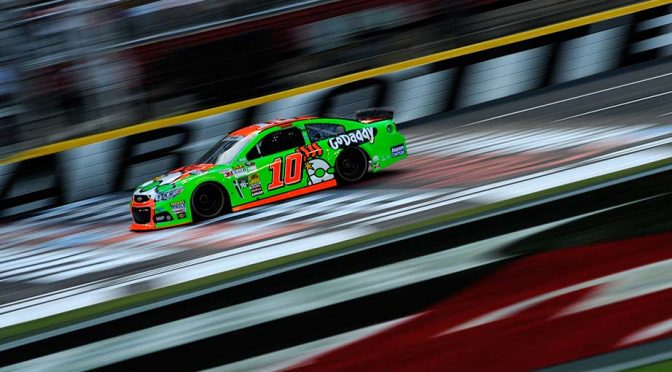
Maybe the change of mindset has had an effect. Patrick led the second session of group qualifying Thursday evening at Charlotte Motor Speedway, and ended up with a fourth-place starting position for the Coca-Cola 600 — which proved to be the best ever by a female driver on an unrestricted track in NASCAR’s premier series.

The previous mark had been shared by Patrick and Janet Guthrie, the latter of whom started ninth at Bristol and Talladega in 1977, before the era of restrictor plates. Patrick qualified ninth in the most recent Sprint Cup Series event two weeks ago at Kansas. The starting spot was the second-best of Patrick’s career following her historic pole in the 2013 Daytona 500, where she became the first woman ever to lead NASCAR’s top series to the green flag.

Patrick was sixth-fastest in the first of Thursday’s three rounds, and led the second with a speed of 194.595 mph. Her run in the five-minute final segment put her second behind Kasey Kahne, and she was ultimately bumped down to fourth by Brad Keselowski and Coors Light Pole Award winner Jimmie Johnson, the latter of whom vaulted to the top of the scoring pylon with a lap of 194.911 mph.

"It just feels so good to have good qualifying. I have to say, though, I’m a little disappointed. Being P1 in the second group, I’m a little disappointed I’m not on the pole. Not sure I could have done a (lap of 27.705 seconds) anyway. I was really tight through 3 and 4 on my lap. I guess I’m a little more surprised that I’m fourth," Patrick said.

"I really thought we — well, we did have a shot at the pole. Wish we could have done that. It would have put me in the (Sprint Unlimited) at the beginning of (next) year, right? That’s always what you want to do is get to those special races. Great day, great starting spot for the Coke 600. A big departure from last year when we had to do an engine change and start at the back. Let’s hope we can do more of what we did at Kansas."

Kansas was where Patrick turned in a career-best seventh-place finish, bettering even her eighth-place run in the 2013 Daytona 500. And Thursday’s qualifying session continued a solid stretch on pole days for Patrick, who notched her third consecutive top-10 starting position, and fourth of the year. She started 10th at Martinsville, seventh at Talladega, and ninth at Kansas.

Patrick’s qualifying run also came six days after she was unable to make the Sprint All-Star Race — she finished 10th in the Sprint Showdown qualifying race, and then watched the fan vote go surprisingly to Josh Wise.

"Anytime you can have track time at a track you’re going to race at, it’s good for learning, it’s good for repetition, it’s good for learning about your car," she said. "So we would have loved to have been in the All-Star weekend, but it wasn’t meant to be. But we’re doing OK here, and we’ve got another practice before the race."

That comes Saturday, when Patrick said her No. 10 team will focus on longer runs and setup strategies for Sunday’s event, the longest on NASCAR’s premier circuit. She’s never finished better than 20th at Charlotte — but she had also never qualified in the top five on an unrestricted track until Thursday night.

"Everybody brings their best stuff for the Coke 600," she said, "so we’ve got a better car, and I’m sure Hendrick gave all their best engines, and we’re ready to rock for Sunday."

MORE:

READ: Latest
NASCAR news

WATCH: Latest
NASCAR video

PLAY: NASCAR
Fantasy Live

FOLLOW LIVE: Get
RaceView

NASCAR drivers plan to root Busch on Sunday as he represents stock car racers

CONCORD, N.C. — It took Kurt Busch nearly half an hour Thursday to sign in at the NASCAR transporter, a routine duty drivers must fulfill each week before getting on the track. The delay wasn’t due solely to fans asking the Stewart-Haas Racing driver for autographs — it was because Busch was stopped repeatedly by other drivers and crew chiefs, who all wanted to talk to him about the same thing.

The double.

"It’s just so exciting to talk about it," Busch said Thursday at Charlotte Motor Speedway. "It’s just hard to put it all into words."

And now, it’s almost here. The road to the first Memorial Day weekend double in a decade ends this with a flurry of practices in both Charlotte and Indianapolis leading up to the 1,100-mile odyssey itself. Thursday, Busch was in his No. 41 machine for practice and qualifying for the Coca-Cola 600. Friday brings Carburetion Day, the last shakedown of his open-wheel car in Indy. Saturday, he’ll be back in Charlotte for final practice in his Sprint Cup Series vehicle. Sunday, it’s a green flag at the Brickyard shortly after noon local time, and then a 90-minute commute to Concord for the 6 p.m. capper in NASCAR’s longest race.

It’s a breathless final push toward an undertaking no driver has attempted since Robby Gordon’s last effort in 2004, and only two others — John Andretti and Tony Stewart — have tried previously. But none of those endeavors featured a born-and-bred stock-car driver branching out into the opposite discipline. None of them featured almost hourly updates on social media. And none of them has galvanized the NASCAR community quite like this one, thanks in large part to speed in the open-wheel car that has a few wondering if Busch can do something that’s never been done.

"I really do believe Kurt has an opportunity to pull that off," Clint Bowyer said, referring to the Indy 500. "That would be something that would make all of us in this sport pretty proud."

No driver has ever won either half of the double — in fact, Stewart in 2001 remains the only driver to complete every lap. But there’s something about this effort by Busch that’s captured the attention of the Sprint Cup garage area, given that the driver at the center of it all is a NASCAR champion who swept the May races at Charlotte in 2010, and got up to speed extremely quickly in his open-wheel entry. Over a few weeks Busch went from virtually zero experience in an IndyCar to a very competitive 230 mph, and even used his crash in practice Monday to accelerate his learning curve.

"I’m glad that I experienced it," he said. "I might sound stupid by staying that I’m glad I wrecked at 220 mph, but if I didn’t put myself in that position I would have done that on Sunday possibly 50 laps into the race. That is how you have to advance through life, is to learn from your mistakes."

Those in the open-wheel community have taken notice. "He is talented and incredibly brave," former Indy 500 winner Eddie Cheever Jr., now a television analyst, said of Busch. "If he digests this last hit he had — it took me a long time to digest — if he can go through that, he’s in that leading group at the end of the race, I would consider him a possible top-three finisher, if he gets through all the problems during the race. But he’s been incredible. I’m very impressed."

Another believer is Juan Pablo Montoya, the two-time winner in NASCAR’s top series and former Indy 500 champion who returned to open-wheel racing this year. Montoya said Busch’s crash Monday happened after the driver overcorrected, likely because his natural instincts from driving the heavier stock car led him to put too much wheel into the vehicle. But after a month being around Indy, Montoya said it’s clear Busch is growing more comfortable. The two drivers both will start the 500 in the fourth row.

"I think the cool thing is, Kurt doesn’t know what to expect, and he’s in a good place," Montoya said during a recent visit to Charlotte. "If he does the smart thing, that is get in line, get comfortable, and build to it, he’ll do a really good job."

Other drivers in the NASCAR garage will certainly be rooting for him, and will be following the first half of his double with interest. "I think it’s awesome. Can’t wait to get up on Sunday morning and turn on the Indy 500 and watch Kurt’s day," said Sprint All-Star Race winner Jamie McMurray. The question is whether that curiosity will lure more NASCAR drivers to try it, particularly since several — Jimmie Johnson and Kasey Kahne among them — have expressed an interest in one day attempting the 500.

"My desire to compete in the Indianapolis 500 has not diminished one bit. But I made a deal with my wife. So, a deal’s a deal," Johnson said Thursday. Even though the undertaking necessitated back-and-forth airplane trips last weekend as well as this one — not to mention the hiring of Parker Kligerman as a standby driver — Busch fully vouches for the experience.

"I’m a racer. Tony Stewart is a racer, Robby Gordon is a racer, and John Andretti is a racer. This is a true test of what your commitment level is on being a racer," Busch said. "There are so many practices back and forth, the travel, the logistics — the fun meter is pegged right now. I’m having a blast doing it. You just have to know it comes with a lot of hard work. I encourage others to try it out."

Jeff Burton, a 21-time winner at NASCAR’s top level who now competes part-time while working as an analyst for NBC Sports, said there’s always been keen interest among many Sprint Cup drivers in the Indy 500, to the point where they’ve asked officials to turn on the end of the race before the driver’s meeting prior to the Coca-Cola 600. But when it comes to the double, Burton believes it has to be a perfect situation with owners and sponsors all on board. Busch has that with Stewart as the co-owner of his No. 41 car, as well as a race victory that enhances his Chase for the NASCAR Sprint Cup hopes. But not every driver does.

"I just don’t know how it can’t take a little bit away. If he was in the situation where he hadn’t won a race and he didn’t look like he was good in the points as far as being able to get in the Chase, I would think he would be under a fair amount of criticism for taking away from his Cup program. It’s got to be a unique situation where the car owner is 100 percent for it, he understands that it is going to be a distraction. There’s no way it’s not a distraction," Burton said.

"I just think it takes so much time away from the Cup thing. To do it right, it takes commitment. I just don’t know how many people are going to raise their hand and want to do it, because there’s just no way it can’t be a distraction from your Cup program."

In Busch’s case, that remains to be seen. He finished 11th in the All-Star event, getting knocked out of the top five before the final 10-lap dash due to his average finish over the first four segments. After he completes his run at the Brickyard on Sunday and touches down in the Charlotte infield in a helicopter, all eyes will turn to his effort in NASCAR’s longest race. Prior to that, though, the same drivers who will ultimately be competing against him will be cheering Busch’s attempt in a double unlike anything the sport has ever seen.

"I can’t wait to watch and pull for him," Dale Earnhardt Jr. said. "He’s representing our sport, and whether he knows it or not, he’s got a lot of people, drivers and crew, and just about everybody in the infield is going to be pulling for him to do well. He’s representing all of us."

MORE:

READ: Latest
NASCAR news

WATCH: Latest
NASCAR video

PLAY: NASCAR
Fantasy Live

FOLLOW LIVE: Get
RaceView

Dale Jr. talks collection of wrecked stock cars, desire to win Coca-Cola 600

CONCORD, N.C. — Dale Earnhardt Jr. has a vision: That one day, decades or centuries from now, more advanced humans will wander through the woods outside Mooresville, North Carolina, and stumble across a graveyard of wrecked stock cars — dozens upon dozens of them, comprising an automotive Stonehenge replete with its own mysteries and secrets.

"Just like that Western town I built," Earnhardt said, referring to Whisky River, another curiosity on his spread north of Charlotte, "it will be there hopefully long after I’m gone, and somebody will walk back there and go, ‘What in the hell is this doing here? And who put it here?’ And then my name will come up, and they’ll remember me."

Chances are they’ll remember Earnhardt anyway, since he owns two Daytona 500 titles and seems capable of much more given the performance he’s shown this season. But beyond a Sprint Cup Series championship, there’s something else looming out there for NASCAR’s most popular driver — a points victory at Charlotte Motor Speedway, a track he’s visited since he was a kid, and which Sunday once again hosts the Coca-Cola 600. Earnhardt’s only victories at Charlotte came in the 2000 All-Star exhibition and the qualifier for the Sprint All-Star Race in 2012, the Sprint Showdown, leaving him winless in points events at what’s essentially his home track.

That’s a glaring omission for a driver whose earliest memories of a Cup event include watching qualifying for the 600 in 1983 from the press box. Once the condominiums went up in Turn 1 and 2, he watched many Charlotte races from the balcony of the unit his family owned. Later on as a teenager, he’d watch along with family members and cousin Tony Eury Jr. from the hill overlooking the final turn of the track’s infield road course. Earnhardt’s father won five times at Charlotte, including a 1993 Coca-Cola 600 that ranks among the best ever editions of the Memorial Day weekend classic.

No wonder, then, Earnhardt calls the 600 "definitely a race I’d love to win." And no wonder he’s irritated by his relative lack of success here — his average finish is 19th, and best chance to claim the 600 came in 2011, when he led off the final corner but ran out of fuel and settled for seventh.

"It’s frustrating that I haven’t won a race here aside form the All-Star event," Earnhardt said. "We’ve had some good cars, but nowhere near good enough."

Perhaps a Superman paint scheme, which is appearing on Earnhardt’s No. 88 car this weekend, will help. Asked during his Thursday afternoon media session which superpower he’d prefer, Earnhardt was quick with an answer — superhuman strength. "You could impress your friends and show off for the ladies," he said. Maybe he’d go to a junkyard and "toss some cars around or something. Because that would be harmless, right?"

It would certainly help in his effort to add more crashed cars to his graveyard, which this week brought two new arrivals in the vehicles Justin Allgaier and David Gilliland wrecked at Kansas two weeks ago. Earnhardt has been collecting wrecked race cars for a long time, back to when his JR Motorsports race team was competing in late models. They spent so much money building cars, he said, that rather than scrap the wrecked ones, he started stashing them in the woods around his property. Maybe half the cars out there, Earnhardt estimated, are connected to his company.

They used them for target practice, or as trail markers, and over time the collection grew. Brad Keselowski contributed a car his father owned, which Dennis Setzer crashed in a Nationwide race at Talladega. There’s one of Keselowski’s old trucks, the front end buried in a creek. "It’s real funny-looking sticking out like that," Earnhardt said. He started calling around, asking other teams for notable cars. He has the car Juan Pablo Montoya was driving when he struck the jet dryer at Daytona, although Chip Ganassi donated it with the caveat that photos not be taken. He has the Jimmie Johnson car penalized for its C-posts at Daytona, which was wrecked early in that race.

To get the Allgaier car from Kansas, he just called his buddy Steve Addington, the crew chief and competition director for owner Harry Scott Jr.’s team. "I know Harry Scott pretty well," Earnhardt said, "so I figured if they were going to throw it away, I could at least have it."

He’s not sure exactly how many cars are out there, given that he has stray sides and noses scattered around the property, not to mention oddities like hoods hanging from trees. "The hard part is, people want to know if there’s tours or if they can come look at it," Earnhardt said. "So I feel kind of bad, because it’s on my property."

Fans can see photos of many of the graveyard cars on Earnhardt’s Twitter feed, given that he’s posted pictures of several recent additions since joining the social network in the wake of his most recent Daytona 500 victory in February. Earnhardt will certainly accumulate more of them in the near future, though he hopes his Superman-themed Coca-Cola 600 car isn’t one of them. He’d prefer to fly that thing straight to Victory Lane.

MORE:

READ: Latest
NASCAR news

WATCH: Latest
NASCAR video

PLAY: NASCAR
Fantasy Live

FOLLOW LIVE: Get
RaceView