Discuss the latest news from media week with writers Kenny Bruce and Zack Albert

As teams begin to make their first big appearances of the season at the Sprint Media Tour, our writers are ready to be your eyes and ears. Leave your questions below, and during media week, our writers will answer as many as they can. Check back here Tuesday at 11 a.m. ET, when NASCAR.com’s Kenny Bruce and Zack Albert will be live in the comments below answering your questions.

Enter Aticle’s Bottom Body

Son of legendary driver Dan Gurney looks for first Rolex 24 win

DAYTONA BEACH, Fla. — The urge to merge has evolved into a compulsion to compete, and Thursday marked the first day of actual competition for the new TUDOR United SportsCar Championship, with qualifying for this weekend’s Rolex 24 At Daytona.
 
The 52nd running of the Rolex 24 opens the first season for the TUDOR Championship, which resulted from the highly anticipated merger of two formerly competing sports car organizations — the American Le Mans Series and the GRAND-AM Rolex Series. A total of 67 cars are slated to take the green flag Saturday at 2:10 p.m. ET, for the 24-hour endurance classic; Thursday, four cars claimed respective class pole positions on the 3.56-mile Daytona International Speedway road course.

Start with the headlining Prototype (P) class, an amalgam of the ALMS’ exotic P2 and DeltaWing cars and the Rolex Series’ Daytona Prototypes, where a history-rich name took center stage on a day that was so much about the future.
 
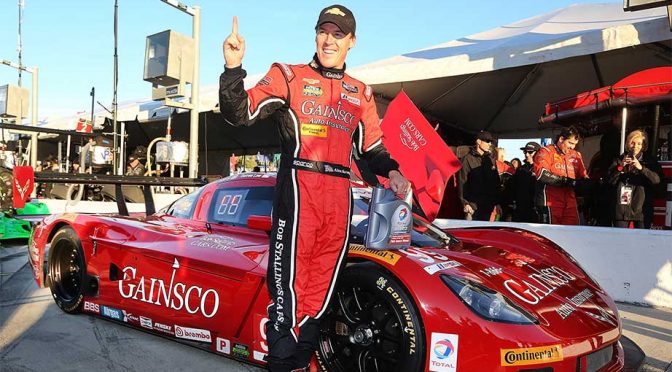
Alex Gurney, son of legendary driver Dan Gurney — who won the first incarnation of the Rolex 24, a three-hour event in 1962 called the Daytona Continental — put the No. 99 Corvette DP on the overall pole with a fast lap of 1 minute, 38.270 seconds (130.416 mph). Gurney and his longtime co-driver Jon Fogarty — two-time champions in the Rolex Series — are joined this week by Memo Gidley and Darren Law. Somewhat surprisingly, the Gurney-Fogarty combination has never produced a Rolex 24 win.
 
Gurney acknowledged the satisfaction a victory this weekend would provide, saying, "it would be the biggest thing in my career, I think. But yeah, for me personally, this is the biggest race we do [in North America]. It’s the one we all want to win."
 
Daytona Prototypes dominated the P class qualifying, taking nine of the first 10 positions. The fastest P2 car was 11th overall, the No. 6 Nissan ORECA driven by Klaus Graf, at 1:39.829 (128.380).
 
Other class poles:
 
· In the Prototype Challenge (PC) class, former NASCAR driver Colin Braun put the No. 54 ORECA FLM09 on point, with a lap of 1:41.777 (125.922), good for 14th overall.

· In GT Le Mans (GTLM), Marc Goossens turned a pole-winning lap of 1:44.506 (122.634) in the No. 91 SRT Viper GTS- R. The car will start 25th overall.

· In GT Daytona (GTD), the No. 48 Audi R8 claimed the top spot in the class — and 34th overall — via Christopher Haase’s lap of 1:46.973 (119.806).

MORE:

WATCH: NASCAR ’14 trailer:
Stewart’s comeback

READ: Kurt Busch compares
new, old teams

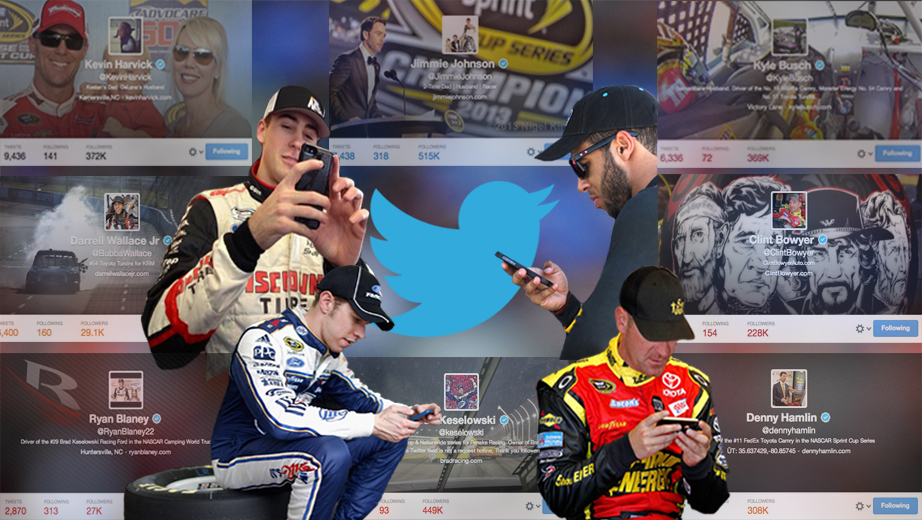
READ: Twitter crew:
Favorite NASCAR follows

READ: Top 10
rookie campaigns

Strategy, gamesmanship come into play under new procedure

RELATED: More on the changes | Official release | Changes 101 | Reaction | Tracks pleased

You can almost hear the buzz building now, coursing over those high banks, storming through the turns and heading toward the start/finish line. Gone is the agonizing three-hour wait as one car after another makes individual laps around NASCAR’s biggest race track. Qualifying at Talladega Superspeedway — along with everywhere else — has been transformed by virtue of a single rule change.

Now it will be an absolute storm, with drivers almost certainly working the draft in an effort to secure the top starting position (and its accompanying first pit stall selection) in the frantic final session that caps the new group qualifying format announced Wednesday across all three of NASCAR’s national series. No place stands to benefit from the change more than big, bad Talladega, where the issuing of one news release has changed the track’s qualifying process from a grind into 50 minutes of must-see-TV.

Although NASCAR refers to the new process simply as a group qualifying format, other circuits like Formula 1 that have successfully utilized similar concepts call it "knockout" qualifying — and in many places, the new procedure could prove to be just that. Beginning with this coming season, all cars will qualify on the track at the same time in an atmosphere that more closely simulates race conditions. The faster vehicles advance through two or three sessions, depending on the track’s size, always culminating with the quickest 12 cars deciding the top spot among themselves.

After year upon year of single-car qualifying, this is a revolutionary change for NASCAR. While the old format had its merits — the can-you-top-this element of single-car qualifying occasionally had its own knockout feel — the sheer duration it took for all those cars to make all those laps on their own often dragged the session down. Weather was always a concern. Now, the process has been standardized — qualifying in one hour, everywhere, under a format that will surely ratchet up the entertainment value and have track promoters giddy over the prospect of better Friday afternoons at the gate.

From a competitive standpoint, it’s going to be interesting to see how strategy and timing play a part. The opening session of group qualifying — mark your calendars, it’s Feb. 21 when the NASCAR Nationwide Series and NASCAR Camping World Truck Series qualify at Daytona — won’t begin with all entered vehicles charging toward the green flag, but instead starting from pit road. They can exit pit road at any time, and drivers can make as many laps as they want during the course of the session. Crews can even make minor adjustments between segments, though the cars can’t be jacked and the hoods can’t be raised. Go to the garage area, you’re done.

The format will debut in the NASCAR Sprint Cup Series at Phoenix in the second race of the season. Needless to say, there are a lot more variables at play here than just holding down the accelerator for two laps, and that’s without mentioning the random draw that will decide the order in which cars are lined up on pit road prior to the session. No question, that draw could loom large, depending on the track and the situation — say for instance you’re Jimmie Johnson in the thick of the championship hunt, and you arrive at Martinsville Speedway with four races remaining, and you draw pill 45 on a tight half-mile track. Stranger things have happened.

That cars will start on pit road, able to come and go as they please over the length of the session, and makes you wonder — will teams with poor starting draws try to game the system, staying put and gambling that a few cars will come back in or head to the garage area, easing the traffic just enough to rip off that one good qualifying lap? Or will everyone make a mad dash for it from the start, since the first qualifying laps are usually the best ones? Since all vehicles will begin with a full fuel load and use just one set of tires, will some teams stay out longer trying to trade tire wear for weight? Will teams tape off the front end, wait until the final minutes, and make one bomber run with the clock running down?

"It’s hard to anticipate what they’ll do. But I would imagine that many of them will think that their first couple laps on the race track, engines will be cold, things of that nature, will be their best laps in that first segment. But it’s hard to imagine what strategies these guys will work on and have play out over the course of the qualifying session," said Robin Pemberton, NASCAR’s vice president for competition and racing development, and a longtime crew chief at the sport’s top level.

"I think as we move through the season it will take on a life of its own at different places where they will have different strategies, whether it’s working on the race setups, or if they want to be aggressive in one round or kind of lay‑up in the other round, saving tires to just squeak into the final round and have the best tires. Comes to mind what you would have to do with tire management for (Auto Club) Speedway or Atlanta, Homestead and some others. I think there are opportunities there for different crew chiefs to take advantage of some of these situations."

Either way, we’re guaranteed to have multiple cars on the track at the same time, which means we’re guaranteed to have incidents at some point. Get wrecked, by the way, and your qualifying time is the best one you posted in the most recent session you were a part of. While it wasn’t unheard of for teams to unload backup cars because of qualifying accidents under the single-car format — particularly on fast, slick intermediate layouts — that prospect certainly looms larger under this new procedure. And then there’s the question of the draft, and how much teams will use it for qualifying at Talladega and the summer Daytona event, and whether somebody will jump out of line and go for that pole position just as if they were going for the win.

Indeed, there are a lot of moving parts to this, a qualifying format that’s more complicated yet more concise all at the same time. None of this should be a surprise to competitors, who were made aware in a meeting last fall that NASCAR was considering such a shift for all points events outside of the Daytona 500 and the Truck Series race at Eldora Speedway. Two weeks ago at Preseason Thunder testing, Pemberton effectively said a move was forthcoming, although he didn’t specify the Sprint Cup Series at the time. If there were voices of dissent coming from the garage area, surely we would have heard them by now.

If anything, the reaction among fans and competitors has been almost universally positive, save those malcontents who lurk on the fringes of social media and are never happy about anything. "I really like what NASCAR is doing to add more excitement," wrote Kasey Kahne on Twitter, and he was far from alone in that sentiment. Track operators get a better product, television networks get a more manageable window, officials get more flexibility in dealing with weather. Certainly, May 2 at Talladega now shapes up as a far more interesting day on the NASCAR calendar. As does every qualifying session, thanks to a new format that promises to be a knockout indeed.

MORE:

WATCH: NASCAR ’14 trailer:
Stewart’s comeback

READ: Kurt Busch compares
new, old teams

READ: Twitter crew:
Favorite NASCAR follows

READ: Top 10
rookie campaigns

Norris had been suspended following events of Richmond race

Michael Waltrip Racing executive Ty Norris was reinstated by NASCAR on Thursday after serving a five-month suspension for his involvement in a controversial race outcome during the Sept. 7 NASCAR Sprint Cup Series regular-season finale at Richmond International Raceway. He remains on indefinite probation, however.

"I appreciate NASCAR’s action today and respect their position," Norris said in a statement. "I am focused forward and dedicated to the success of Michael Waltrip Racing and the continued growth of a sport that has been my home for the past 24 years."

NASCAR suspended Norris, the executive vice president for MWR, for actions he took while serving as spotter for the No. 55 MWR Toyota driven by Brian Vickers at Richmond.

NASCAR found evidence that Norris had sacrificed the integrity of the race outcome by telling Vickers to pit unnecessarily so that driver Joey Logano would gain a position on track. The result was that Logano qualified for the Chase for the NASCAR Sprint Cup based on points, giving MWR driver Martin Truex Jr. one of two Wild Card berths.

After reviewing in-race, in-car audio recordings and consulting with race officials and team members, NASCAR took the unprecedented action to severely penalize MWR for the incident. In addition to Norris’ suspension, the team was given the largest monetary fine in NASCAR history of $300,000, all three of MWR’s teams were penalized 50 driver championship points and each team was docked 50 owner’s points.

Additionally, Truex was removed from the Chase and replaced with Ryan Newman, who had lost the Wild Card to Truex on a tiebreaker.

And NASCAR CEO and Chairman Brian France later added Jeff Gordon as a 13th member of the traditionally 12-driver field.

"This naturally is a very significant reaction from NASCAR," NASCAR President Mike Helton said Sept. 9 in announcing the disciplinary actions two days after the race. "As multiple car owners have become a very positive, integral part of our support, also comes with it, though, responsibility from NASCAR and as well the car owners, to maintain a fair and level playing field.

"It’s not an easy decision to make. Conversations about it were deep. We feel like we researched it extremely well, talked at great length with the folks from Michael Waltrip Racing to try to get to the right spot and make the correct decision, and that’s what we feel like we have done."

Norris has not publicly commented since the incident. But when informed of his team’s penalties, Waltrip accepted responsibility on behalf of the team while expressing continued support of Norris, who has been with the team since it was founded.

"What occurred on the No. 55 radio at the end of Saturday night’s race in Richmond was a split-second decision made by team spotter Ty Norris to bring the No. 55 to pit lane and help a teammate earn a place in the Chase," Waltrip said in a statement. "We regret the decision and its impact. We apologize to NASCAR, our fellow competitors, partners and fans who were disappointed in our actions. We will learn from this and move on.

"As general manager, Ty Norris has been an integral part of Michael Waltrip Racing since its founding and has my and (co-owner) Rob Kauffman’s full support."

Even with the points penalty, Clint Bowyer still qualified for the Chase and finished seventh in the championship. The consequences were greater for Truex. Not only was he removed from the Chase, his car’s longtime sponsor NAPA Auto Parts announced it would pull its longtime sponsorship of MWR at the end of the 2013 season in light of the unfavorable publicity surrounding the incident.

With no funding for the car Waltrip was forced to downsize his team. Truex was free to look for work elsewhere and in November announced that he would race for Denver-based Furniture Row Racing in 2014, which qualified for its first Chase last season with driver Kurt Busch.

MORE:

WATCH: NASCAR ’14 trailer:
Stewart’s comeback

READ: Kurt Busch compares
new, old teams

READ: Twitter crew:
Favorite NASCAR follows

READ: Top 10
rookie campaigns

Michael Waltrip Racing executive remains on indefinite NASCAR probation

DAYTONA BEACH, Fla. – NASCAR announced Thursday that it has reinstated Ty Norris, an executive with Michael Waltrip Racing. Norris had been indefinitely suspended from NASCAR last Sept. 9 as part of the penalties assessed to MWR following the sanctioning body’s review of the NASCAR Sprint Cup Series race Sept. 7 at Richmond International Raceway. Norris remains on indefinite NASCAR probation.

MORE:

WATCH: NASCAR ’14 trailer:
Stewart’s comeback

READ: Kurt Busch compares
new, old teams

READ: Twitter crew:
Favorite NASCAR follows

READ: Top 10
rookie campaigns

Borla Exhaust sponsor will be featured on No. 83 at Daytona and four additional races

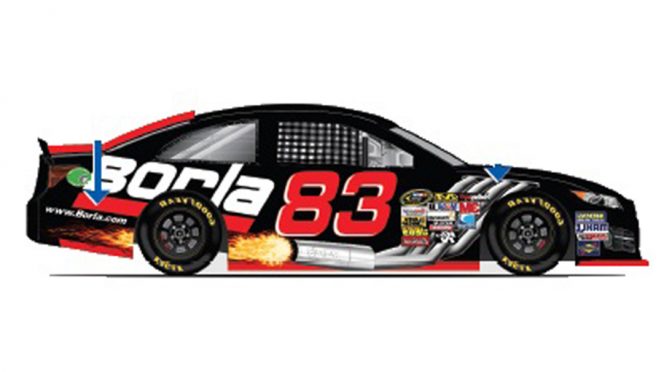
Making its sponsorship premiere at Daytona, BK Racing has announced that Borla Exhaust will appear on the No. 83 Toyota Camry for a total of five NASCAR Sprint Cup Series races this season.

Speedweeks’ viewers will have to keep a sharp eye for the No. 83 as it will be foregoing the traditional BK Racing colors and will now adorn black header pipes and flames of Johnson City, Tenn. and Oxnard, Calif. based Borla Exhaust. 

Ryan Truex, younger brother to Sprint Cup Series veteran Martin Truex Jr., will be piloting the No. 83 Camry this season. 

"I am very excited to work with a great company like Borla Exhaust," Truex said. "It’s great to start my rookie season with sponsorship from Borla and I appreciate them allowing me the opportunity to drive their first ever sponsored car at the Daytona 500."

Made in the USA, Borla Exhaust has been the leader in the manufacture and design of high-performance exhaust systems for racing and the street for more than three decades. 

"Borla Exhaust is thrilled to participate in this year’s Daytona 500 with the BK Racing Team and driver Ryan Truex, "Alex Borla, Co-Founder and CEO of Borla Exhaust said. "Borla has always believed the excitement of NASCAR resonates with everything our company is about."

The NASCAR Sprint Cup Series will begin its 2014 season on Sunday, Feb. 23 with the 56th running of the Daytona 500 at Daytona International Speedway

MORE:

WATCH: NASCAR ’14 trailer:
Stewart’s comeback

READ: Kurt Busch compares
new, old teams

READ: Twitter crew:
Favorite NASCAR follows

READ: Top 10
rookie campaigns

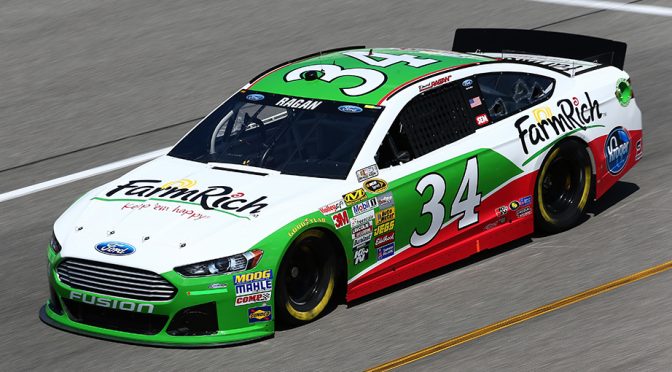
Farm Rich was sponsor for Ragan’s historic Talladega win last May

Farm Rich, the primary sponsor during David Ragan‘s thrilling win at Talladega Superspeedway last May that gave Front Row Motorsports its first trip to Victory Lane, will return to the team for a second straight season. The frozen snacks and appetizers brand will be the primary sponsor of Ragan’s No. 34 Ford Fusion at Phoenix International Raceway in March.

"We couldn’t have written a better ending for Farm Rich’s first race with us with the car going to Victory Lane in Talladega last year," said team owner Bob Jenkins in a team release. "But equally important is that they recognize how much more we can do together, and we’re thrilled such a great company is back to grow their program with us for a second season."

In its first-ever foray into NASCAR last May, Farm Rich enjoyed being thrust into the spotlight as Ragan earned Front Row’s first team victory in a dramatic, come-from-behind win in the Farm Rich Ford at Talladega. The company later returned as the primary sponsor for a second race with Ragan at Richmond International Raceway in September.

"David and Front Row Motorsports are ideal partners for Farm Rich," said Shannon Gilreath, senior brand manager. "His personality reflects our wholesome, family brand and many of our customers are huge NASCAR fans and connect with David and his team. Hopefully, we’ll all see him in Victory Lane come March 2 in Phoenix."

The Farm Rich logo will appear on Ragan’s uniform throughout the 2014 Sprint Cup Series schedule.

The March 2 race in Phoenix will be televised live on FOX at 3 p.m. ET.

MORE:

WATCH: NASCAR ’14 trailer:
Stewart’s comeback

READ: Kurt Busch compares
new, old teams

READ: Twitter crew:
Favorite NASCAR follows

READ: Top 10
rookie campaigns

Talladega Chairman: ‘It’ll just be better’

RELATED: More on the changes | Official release | Changes 101 | Reaction
CARAVIELLO: New qualifying format will be a knockout indeed

NASCAR officials hope the new qualifying format in place for 2014 will help bring excitement to the process of determining the starting grid for its races.
 
No one is counting on that more than Grant Lynch, chairman of Talladega Superspeedway.
 
"Anything that … gives us a chance to qualify differently at Talladega I think is a plus," Lynch told NASCAR.com on Wednesday. "I think the fact that now the cars are potentially going to qualify at the speeds they race is going to provide a lot more excitement for the fans than seeing a single car ride around a 2.66-mile track."
 
Beginning this season, the qualifying process for all three national series — Sprint Cup, Nationwide and Camping World Truck Series — will consist of either two or three timed rounds, depending on track size, with brief breaks in between each session. Those posting the fastest laps in each session will continue to advance, while those who don’t will be assigned starting positions based on their times in the just-completed round.
 
While it has some aspects of a "qualifying race" format, teams can choose to run as many or as few laps as they deem necessary during the allotted time in each session. And while all entries will participate in the opening round, they likely won’t all be on the track at the same time.

Qualifying at Talladega has been a lengthy process, often lasting two-and-a-half hours or more. The new format should shorten the amount of time it takes to less than one hour at each venue.
 
"Anybody that sat through three hours of qualifying at Talladega is going to have to enjoy what we’re going to see in May," Lynch said. "It’ll just be better. It has to be better. Now how much better?
 
"If your remember back to the days when they didn’t impound the cars and we had that last, late happy hour (of practice) … I used to joke back then that happy hour at Talladega was better than racing at most race tracks, because you’re finally getting to see what they could do with those cars, kind of a mini look at how the race would play out as far as the type of competition you would see. With all the different packages we’ve had on the cars as well as the restrictor-plate sizes, you never really knew what you were going to see until they got out there for that last practice.
 
"I think it may give us a little bit of an opportunity, and NASCAR also, to let them go a little faster at Talladega. I really believe that we should be the fastest race track in NASCAR, that’s what we were built for."
 
Because of the draft, race speeds at Talladega often eclipse the 200 mph mark. But in qualifying trim and running alone has generated pole speeds some 10 mph below that.
 
"You can’t have Talladega qualifying in the 190 (mph range) but then we’re racing at 200,” he said. ‘We need to figure out a way to get them to qualify at least as fast as we race. I think this new system will give us that.
 
"… We’re all looking for better experiences for our fans in the stands whether it be things we can do with our seating, new Jumbotrons, different ways to communicate … but the competition elements mean a lot to the fans."
 
Lynch isn’t the only track operator pleased with the format change. Roger Curtis, the president of Michigan International Speedway said, "the whole dynamic of qualifying has changed.
 
"You have a lot more pressure, more strategy and the pure excitement of more than one car on the track at one time," he said. "This is going to be really exciting for fans and competitors alike."
 
With multiple cars on the track at the same time, Texas Motor Speedway president Eddie Gossage said, "you are going to have to worry not only about getting a perfect lap but that somebody else doesn’t come down and mess up your line a little bit. They may squeeze you down a little bit and you have to get out of the gas a little earlier than you might otherwise."
 
Since 2001, NASCAR qualifying has consisted of single-car qualifying runs to determine the starting order for its races. The only exceptions have been at road courses, where group qualifying had been the norm of late; the Daytona 500, which uses its own unique single-car and qualifying races format to set the field; and Eldora Speedway, which used heat races to determine the bulk of its starting lineup during last year’s inaugural Truck Series event.
 
According to NASCAR officials, the qualifying formats for the Daytona 500 and Truck Series race at Eldora will remain unchanged while the road course events will adopt the new format.

MORE:

WATCH: NASCAR ’14 trailer:
Stewart’s comeback

READ: Kurt Busch compares
new, old teams

READ: Twitter crew:
Favorite NASCAR follows

READ: Top 10
rookie campaigns

Rookie turns focus to Cup career as Great American Race looms

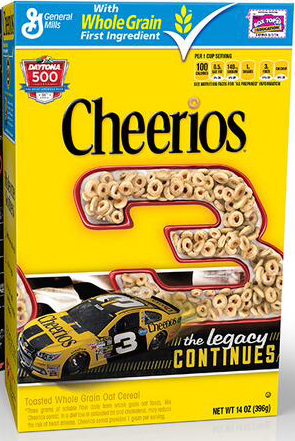
The impact of his move into NASCAR’s premier series isn’t lost on Austin Dillon, even though he’s yet to make a green-flag lap in his first full season. He spent Tuesday in the greater Cincinnati area, where he stopped at a Kroger grocery store to unveil a new Cheerios box with his car number on the front — without question, a first for the new driver of the legendary No. 3 — and where those in line for autographs came from far and wide.

"People actually drove down six hours from Michigan to come to the autograph session," he told NASCAR.com afterward by telephone. "And there were a lot of people with Dale (Earnhardt) stuff on, coming from a long ways away to say hello, and that they’re excited about seeing the 3 back and seeing it back on the track. That was pretty special today. That was the best part — having people from Michigan and Pittsburgh and other random places coming all the way to Ohio."

It’s all part of a much bigger transition for the former NASCAR Camping World Truck Series and NASCAR Nationwide Series champion, who next month will return the No. 3 to competition in the NASCAR Sprint Cup Series for the first time since Earnhardt’s fatal crash at Daytona in 2001. Since the formal announcement last month that he would indeed take his number up to NASCAR’s top level with him, everything has seemed bigger — from the breadth of fans at autograph signings, to the size of the Sprint Cup shop at Richard Childress Racing, to the crowd of photographers surrounding him at the recent Daytona test.

So yes, given the intertwined legacies of both Dillon and his car number, this all is a very big deal already. Now, just imagine if he goes out and wins the Daytona 500.

It’s hardly an outlandish notion, given that Dillon was fastest at what due to rain became a single-day Sprint Cup test earlier this month at Daytona International Speedway, with RCR teammates Brian Scott (in a No. 33) and Matt Crafton (substituting in Paul Menard‘s No. 27) right behind. Dillon said Tuesday that crew chief Gil Martin plans to bring the same vehicle from testing back to Speedweeks as his primary car. And Dillon is most at home on big restrictor-plate tracks, which have been known to produce surprises like Trevor Bayne’s victory in the Daytona 500 in 2011.

"I’m pretty jacked up and excited about it," he said. "It was unbelievable to be in the car like that and go to the top of the board. It’s good for your company to see one, two, and three on the board and know you had some speed down there. It’s a test, everybody knows it’s a test, but it is nice know that you don’t have to come back and find two seconds in your race car, or a second and a half you can’t find. If you can go down there and be within two-tenths, you’re usually happy at the test. But being the lead guy, if we can go back and hopefully add a tenth or two, we should be able to maintain what we had."

In his most recent restrictor-plate race, last fall at Talladega where he substituted for the injured Tony Stewart, Dillon was third at the white flag before being involved in a final-lap crash. No wonder, then, the 23-year-old Sprint Cup rookie allows himself to think about winning the Daytona 500 — a victory that would mean so much not just to Dillon and Childress, but also likely to many who once cheered for Earnhardt.

"I definitely do. All the speedway races, I circle all of them," he said. "Daytona, Talladega, I feel like I want to win them. I’m not going out there to just ride. It’s my rookie season, I can go try stuff. It’s like running that race for Tony last year when I went to Talladega, I had nothing to lose, and I ran probably the best I’ve ever run on a speedway, and was up front all day and had a blast. That’s how I’m going to approach the speedway races, and trying to win them."

His Daytona hopes aside, Dillon is realistic about the transition to the Sprint Cup level, which he knows poses a challenge. The move from Nationwide to Sprint Cup, he said, is much greater than that from Truck Series to Nationwide, where the vehicles are more similar. But the elimination of ride height in the 2014 rules package helps the front end of the Sprint Cup car feel more like that from the Nationwide tour, which could both help his progress and place him on more level footing with more experienced drivers getting accustomed to the change.

At every level in which he’s driven, Dillon said he’s reached a point where he’s grown comfortable in the vehicle, and then been able to get the most out of it. In the Nationwide Series, that happened near the end of his first season, and he knew he’d have a shot at the championship the next year. Now it’s a matter of getting to that same point, only at the highest level of NASCAR.

"I’m very optimistic. I feel like we have a great team built around me, a great pit crew," he said. "Personally, I want to get in there and get some experience. I know every level I’ve moved up through, there’s a time when you hit a level where you’re like, ‘Man, I’m comfortable now.’ I want to get to that point. I want to get to where I know I’m driving the car to the best of its ability, to its max, and I can get to that next level for me. I did it in Nationwide cars — in the second year, I was like, OK, I can do things in this car that I couldn’t do in the first year. Same with Trucks. Now I get in a truck, and I have enough confidence and ability in where the edge is, and I can get to that next level. I want to get to that in the Cup Series. I know it’s going to take a little bit longer, but I want to start working on it now."

Toward that end, Dillon is bound for a test in Nashville on Wednesday and Thursday. But soon enough he’ll be back in Daytona, climbing into the No. 3 to prepare for the Great American Race, which Earnhardt didn’t win until his 20th attempt. He has an idea of what the scene will be like.

"It will be a camera-flashing moment for sure," Dillon said. "I was in the test and got in the car, and there were like 20 cameras around me. It was pretty wild. You just try to block all that out, just try to get in your own zone. I try to go into my own world. I’m pretty good at it. My mom has always told me, I could block anybody out I wanted to. She seems to think I’m good at that, and I have selective hearing. I’m pretty good at selective hearing. When I get focused at something, it’s pretty easy for me to block everything out."

Having his dirt modified down in Florida certainly won’t hurt. But the idea of winning the Daytona 500 — that race, in that car — well, the feat just might get Dillon on another cereal box.

"Oh, man, it would be amazing," he said. "I feel like we’ve got every opportunity to do it. It’s about staying focused all the way to that last lap, which has bitten me a few times. I think I’ve led three white-flag laps in the Nationwide race, was in third at Talladega in the Cup car. So the white flag is the one we’ve got to get by. We get by it, I think we’ll have a great shot."

MORE:
WATCH: NASCAR ’14 trailer:
Stewart’s comeback

READ: Kurt Busch compares
new, old teams

READ: Twitter crew:
Favorite NASCAR follows

READ: Top 10
rookie campaigns

NASCAR qualifying changes to enhance fan experience, broadcast and digital content

RELATED: Breaking down the changes | Qualifying changes FAQ | VIDEO: New format explained

DAYTONA BEACH, Fla. In a move aimed toward enhancing the fan experience watching at the track and at home, NASCAR has announced a new group qualifying format for its three national series that is more compelling, more closely emulates actual on-track competition and underlines the sport’s on-going commitment to innovation.

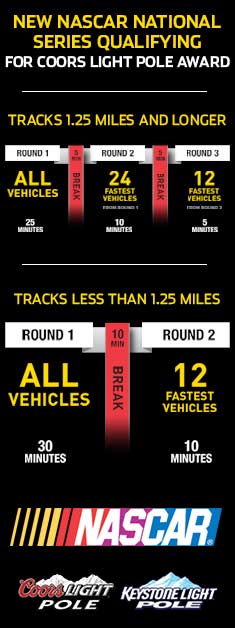
At tracks measuring 1.25 miles in length or larger, qualifying for the Coors Light Pole Award will consist of three rounds:

The first qualifying elimination round will be 25 minutes in duration and includes all cars/trucks. The 24 cars/trucks that post the fastest single lap from the first qualifying round will advance to the second round.

 The remaining cars/trucks will be sorted based on their times posted in the first round of qualifying in descending order.

The second qualifying elimination round will be 10 minutes in duration and the 12 cars/trucks that post the fastest single lap time will advance to the third and final round. The fastest remaining cars/trucks earn positions 13th through 24th based on their times posted in qualifying in descending order.

The third and final qualifying round will be five minutes in duration and the fastest single lap time will determine positions 1st through 12th in descending order.

There will be a five-minute break between each qualifying round.

At tracks measuring less than 1.25 miles, qualifying for the Coors Light Pole Award will consist of two rounds:

The first qualifying elimination round will be 30 minutes in duration and includes all cars/trucks. The 12 cars/trucks that post the fastest single lap time from the first qualifying round will advance to the second and final round.

The remaining cars/trucks will be sorted based on their times posted in the first round of qualifying in descending order.

There will be a 10-minute break between the two qualifying rounds.

The second and final qualifying round will be 10 minutes in duration and the fastest single lap time posted will determine positions 1st through 12th in descending order.

The new qualifying format does not apply to the Daytona 500, which will preserve its historic and unique qualifying format. Additionally, it does not apply to non-points NASCAR Sprint Cup Series events or the NASCAR Camping World Truck Series event at Eldora Speedway.

NASCAR previewed the concept of group qualifying with its national series teams late last fall and expects the new format will be a well-received improvement by its fans, competitors, tracks, sponsors and media partners.

"We believe the timing is right for a new qualifying format across our three national series," said Robin Pemberton, vice president for competition and racing development. "This style of group qualifying has all the makings of being highly competitive and more engaging to our fans in the stands and those watching on television and online. For the drivers and teams, we believe this new qualifying will fuel even greater competition leading into the events. Additionally, it provides our tracks, broadcasters and other key partners with a greater opportunity to develop more entertaining content for our race weekends."

For more details on the new qualifying formal, please visit NASCAR.com. Please note that the official title of the award in the NASCAR Camping World Truck Series is the Keystone Light Pole Award.

MORE:

WATCH: NASCAR ’14
trailer

READ: Kurt Busch compares teams

READ: Twitter crew:
Favorite NASCAR follows

READ: Top 10
rookie campaigns