First season with Joe Gibbs Racing results in second-place finish in standings

RELATED: 2013 recaps of every Chase driver

This is the 12th in a series of 2013 Sprint Cup Series driver recaps that will be featured on NASCAR.com

Matt Kenseth was virtually certain that he’d never have another chance to win a title again.

That was his mindset a year and a half ago at Roush Fenway Racing, where he was solid driver who contended for race victories, but didn’t think he had the week-to-week speed necessary to threaten for the year-end crown. But suddenly circumstances intervened, and Roush’s decision to promote two-time NASCAR Nationwide Series champion Ricky Stenhouse Jr. left no room for Kenseth, who departed for Joe Gibbs Racing and a No. 20 program that had experienced only moderate success under his predecessor, Joey Logano.

The result was a transformation, with Kenseth recording a career-best and series-high seven race victories, and the 2003 champion of NASCAR’s premier circuit making his most serious title run in a decade. He wound up second, finishing 19 points behind Jimmie Johnson, but the entire experience was one he didn’t even think possible just a short time earlier.

"Honestly, before we put this deal together a year and a half ago, I was 95 percent sure that I wasn’t going to have that shot again," Kenseth said. "I don’t mean this as any disrespect or anything like that, but I was almost 100 percent sure we were never going to be fast enough to beat somebody like the 48 (team of Johnson) every week to win one again. This year, we could have. I felt like on average all year, we could go toe-to-toe with anybody."

FULL SERIES COVERAGE

SEASON IN REVIEW

That much was evident over the course of a year that saw the 41-year-old take the top seed into the Chase for the NASCAR Sprint Cup and hold onto it for six weeks of the playoff.

From the very beginning, it was clear Kenseth was going to a threat — he was the class of the Daytona 500 field before his engine expired, he scored an early-season victory at Las Vegas, and he kept piling up race wins as the year went along. Prior to this season, Kenseth’s personal record for race victories had been five, set way back in 2002. He matched that at Bristol in August, and then became the third driver to sweep the first two events of the Chase.

The move to JGR helped Kenseth show vast improvements at tracks like New Hampshire and Martinsville, where he had rarely contended in the past. It made him a beast on 1.5-milers, and did nothing to detract from his prowess on restrictor-plate venues. It put Kenseth in the thick of the title hunt until the very end — he and Johnson were knotted at the top leaving Martinsville, three races from the finish, after which the six-time champion gradually pulled away.

"Before the year started, honestly my first goal was to win, and to win early. I thought that was really, really important. It was important for me personally, but I thought it was really important. We put this whole thing together and we looked at it on paper and it looked like it was going to work and all that, but how do you know until you get to the track? So it was important to get that first win under out belt, and it happened really early, which was great," Kenseth said.

"And of course your goal is really to win the championship every year, but we’ve ran better and won more races than anybody I think really expected. And really we were in position to win several more races. So yeah, when you’re running that good, and you’re inning races and you’re leading the Chase the first five, six weeks and you don’t win the championship, you’re a little disappointed. You can’t help not to be."

Even at the end, though, there was never bitterness — just gratitude over a season no one had seen coming. "I really will walk away from this year feeling like we all gave it everything there was to give," he said after finishing second in the finale at Homestead. "… I think when you look at our season overall, when I talk about it being the best season of my career, we didn’t come up with the championship. The championship is the ultimate goal, you always want that. But from a competitive standpoint, it’s been by far the best season of my career."

Kenseth was even able to joke about his second-place points finish in a skit that was part of the Sprint Cup Awards Ceremony in Las Vegas. And yet, one thing still bugged him — the penultimate race at Phoenix, where his setup was off from the beginning, and he faded to a 23rd-place finish that helped Johnson secure the title. He and crew chief Jason Ratcliff were at a loss as to what had caused Kenseth’s worst finish of the season that didn’t involve a crash or a failure.

Weeks later, he remained puzzled by that day in the desert. "I’m not over it," he said in Vegas. "Yeah, I do wonder why it went so bad a little bit, because there hasn’t been any of that this year — even when we’ve been off, gosh, we’ve could still run 12th or something. We didn’t have a day like that. I think Jason has some answers in his head that he’s pretty sure was the biggest problem, but I think we all need to be better there as a group. … It’s something we’re still working on. I think we all have some ideas."

And yet, when taken in full, not even that one uncharacteristic stumble could detract from a career year, and the closest anyone’s come to winning a title in a debut with a new team since Darrell Waltrip did it with Junior Johnson and Associates in 1981. No wonder then at Homestead, Kenseth sounded as if he didn’t want the season to end.

"For me, when you’re running good, you kind of don’t want the season to end in a way," he said that night. "You want to keep going to the track." Given the success Kenseth enjoyed this past season, it was easy to see why.

MORE:

READ: Dillon to drive
‘3’ in Sprint Cup

READ: No argument from
Dale Jr. on ‘3’ returning

WATCH: Top three
moments for the ‘3’

READ: Earnhardt not the
only legend to drive ‘3’

Article intro

MORE:

READ: Dillon to drive
‘3’ in Sprint Cup

READ: No argument from
Dale Jr. on ‘3’ returning

WATCH: Top three
moments for the ‘3’

READ: Earnhardt not the
only legend to drive ‘3’

Legacy of ‘Mr. 500’ lives on in NASCAR

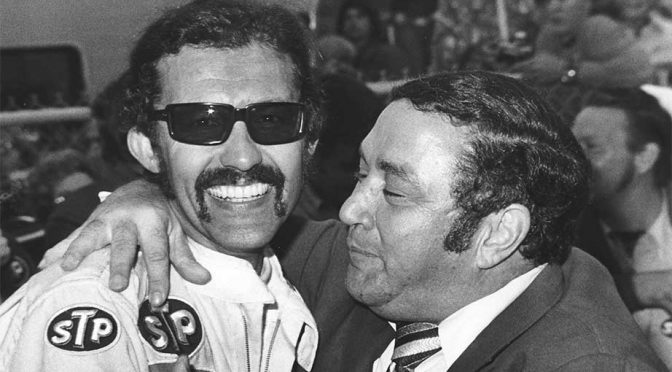
He was one half of perhaps the most important sponsorship deal NASCAR has ever known, a man whose company would become as synonymous with Richard Petty as the driver’s seven championships and ostrich-feathered cowboy hat. Everybody knew the King. But everybody in motorsports also knew Andy Granatelli.

They called him "Mr. 500," and he was a gravelly-voiced force of nature who through auto racing built STP into a company whose brand identity rivaled that of almost any other company in America. A relationship with Petty that began in a Chicago office in early 1972 blossomed into a game-changer for a sport whose teams had previously relied primarily on local or regional sponsors to foot the bill.

That is the NASCAR legacy left behind by Granatelli, who died Sunday at 90 of congestive heart failure in a hospital in Santa Barbara, Calif., his son told The Associated Press. Granatelli won two Indianapolis 500 titles as a car owner, once promoted stock car races at Chicago’s Soldier Field, and as chairman of STP struck the $250,000 deal with Petty that changed the landscape of team sponsorship in NASCAR.

"Andy was one of the best at public relations and marketing in all of motorsports. He was ahead of his time and set the standard for selling his products," Petty said Monday. "We still enjoy our relationship with STP today and it was our meetings with Andy that started it all. He was really determined about how he wanted to market his product, and he never stopped wanting to get his way, but that’s what made him successful, too."

"Before Andy Granatelli and STP arrived on the scene, cars were sponsored by Joe’s Garage and Abby’s Fish Shack and lot of just local people," Dean Kruse, a friend of Granatelli’s, remembered in 2011. "Sometimes when they’d go to a race track 100 miles away, they’d go visit people and put their restaurants and gas stations on the cars. But there was no major money. … [The STP deal] inspired other drivers, and [Bill] France, to approach bigger companies. Andy was the one who thought of that. He’s a great innovator."

He was relentless, building STP through lavish promotion, backing Motor Racing Network broadcasts, being among the first to make "welcome race fans" banners. Reports from the time indicate Granatelli spent roughly $20 million a year to promote STP through auto racing, an amount that played a role in his eventual split with the company in 1973.

But by then, the Petty deal was already in place. It almost didn’t happen — Granatelli wanted his cars to be day-glow orange, as they always had been at Indianapolis, while Petty insisted on his team’s namesake blue. A compromise was struck, resulting in car that often sported both colors. "Stick with me," Granatelli told Petty that day, with his typical swagger, "and one day you’ll be as famous as I am."

Petty won the championship in his first season with STP, and would run a car backed by the familiar red oval up through his final race at NASCAR’s top level, at Atlanta in 1992. Of his former partner, Granatelli had nothing but praise. "He was the best," Granatelli said of Petty in a 2011 interview. "He’s a gentleman’s gentleman. Nobody didn’t like Richard."

And in NASCAR, nobody will forget Andy Granatelli. A decades-long deal that altered the scope of sponsorship — paving the way for future agreements involving the likes of Jeff Gordon and DuPont, Dale Earnhardt and Goodwrench, Kevin Harvick and Budweiser, Jimmie Johnson and Lowe’s, and countless others — ensures that the memory of “Mr. 500” will continue to live on.

MORE:

READ: Dillon to drive
‘3’ in Sprint Cup

READ: No argument from
Dale Jr. on ‘3’ returning

WATCH: Top three
moments for the ‘3’

READ: Earnhardt not the
only legend to drive ‘3’

Ragan’s move up the middle, Kurt Busch’s surge on a restart among the best

The ability required to drive a race car at the highest levels is not always an obvious thing. Thanks to in-car cameras, it’s evident sometimes when we see a driver’s hands fighting the steering wheel, or perhaps working the pedals with his feet. But unlike dunking a basketball or hitting a home run, skill in race car driving is more subtle, more innate, more difficult to define in and of itself. Obviously, it’s there. But it’s most clearly manifested not through the competitor, but the 3,300-pound vehicle wrapped around him.

It’s the cars that act as translator, the cars that put all that skill onto vivid display, the cars that become the physical indication of just how good the guy behind the wheel really is. Outside the cockpit, they can look like everyone else; inside, they become superstar athletes possessing abilities few others can match. The mental and physical wherewithal required to compete at NASCAR’s national level can be impossible to deduce from the outside looking in. It’s the cars that speak. And sometimes they speak volumes.

That’s never more the case than when a car slides or spins and somehow rights itself, or sails up against the wall in a daring pass, or muscles by another competitor off the final restart. A driver’s talent and focus are on maximum display during instances of great triumph or crisis, whether it’s passing someone for the victory or trying to pull a car out of a spin. Those are the snapshots that best encapsulate NASCAR, those heart-in-your-throat moments when there seems no way a driver can pull off the impossible — yet somehow, he does.

Through all the months and weeks and laps of competition, it’s those individual moves on the race track that so often stand out, and the 2013 season certainly had its share. Jimmie Johnson may have his sixth Sprint Cup Series trophy, and testing for the 2014 campaign may be mere weeks away, but for the moment let’s pause and look back at the 10 best moves from this past season, and marvel once again at how good these guys can be.

10. Synchronized sliding

A tricky triangle, indeed. Tony Stewart and Brad Keselowski discovered as much during the June event at Pocono Raceway, when the last two champions of NASCAR’s premier division at the time made slight contact driving through Turn 2. That light touch as the cars were running on the outside was all it took to send both drivers into slow, synchronized slides that at one point had their respective front ends pointed toward the inside wall. But both drivers saved it, and Greg Biffle and Kyle Busch somehow avoided any contact as they rushed by on the low side. Stewart even rallied to claim a top-five finish.
 

9. Spin and win

Kyle Busch’s hopes of winning the NASCAR Nationwide Series race at Indianapolis Motor Speedway seemed dashed when he made contact with Sam Hornish Jr. trying to sneak by on the low side through Turn 1. Busch’s No. 54 car spun right in front of Austin Dillon, and right toward the outside wall on the narrow Brickyard track. But the Sprint Cup star somehow avoided any contact with anything, staying off the concrete and keeping his black and green vehicle in good enough shape to get back to the front. The end result? He passed Brian Scott with three laps remaining, and recorded the biggest of his 12 Nationwide Series victories in 2013.

8. Save and a beauty

Johnson may have all but secured his sixth Sprint Cup title with a strong run at Phoenix International Raceway, but not until weathering a hold-your-breath moment at the very start of the penultimate event of the season. Johnson started from the pole, but didn’t lead the first lap — he was assaulted at the green flag by an onrushing Denny Hamlin and Joey Logano, the latter of whom made contact with Johnson’s left-rear entering Turn 3. The No. 48 car fishtailed and wiggled up the track, but Johnson held it together, kept it off the wall, and recovered for a third-place finish that made his sixth championship all but a sure thing.

7. A monstrous moment

Stewart’s 2013 season was a star-crossed one indeed, a year that ended with the three-time champion on the shelf due to a broken leg suffered in a sprint car crash. Well before that there were struggles of another kind, as Stewart-Haas Racing tried to find its footing after a sluggish start. The breakthrough came in June at Dover International Speedway, where Stewart reeled in Juan Pablo Montoya and made the pass for the win with three laps remaining. Johnson jumping a late restart may have received much of the attention that day, but the end result for Stewart was a needed victory that kept him in playoff position until his injury.

6. Against the wall

In one of the defining moments of the 2013 season, the simmering feud between Hamlin and Logano went white-hot on the final lap at Auto Club Speedway, where the two rivals made contact and sparked an accident that sent the No. 11 car crashing into an inside wall. Almost lost in the aftermath — which included a broken back vertebra by Hamlin that would keep him out of four races — was the winning move made by Kyle Busch, who slipped by almost unnoticed on the high side as the two antagonists were busy going at one another. The No. 18 car slides by against the wall right before the other two vehicles make contact, clearing Logano and Hamlin just in time to avoid the chaos erupting behind.

5. Power move at Pocono

One of the best winning passes of this past season occurred back at Pocono, this time in an August race where Jeff Gordon found himself in the lead with eight laps remaining. But a caution for an accident involving Matt Kenseth forced one final restart, and Gordon lined up on the front row with Kasey Kahne to his outside. Kahne had been the class of the event earlier in the day, and the strength of his No. 5 car was evident on the restart as Kahne pulled even with Gordon entering Turn 1. One corner later he had completed the pass, doing it the hard way by powering around Gordon on the outside lane of the 2.5-mile track. One lap later, he had secured the victory.

4. High, wide and handsome

Dale Earnhardt Jr. didn’t win a race in 2013, but he certainly seemed capable of it in the season finale at Homestead-Miami Speedway, particularly in one galvanizing moment when he made the kind of sweeping pass he’s become famous for. In a move that was vintage Dale Jr., NASCAR’s most popular driver swept by Hamlin and Keselowski in dramatic fashion, soaring into the lead high on the outside in a move that brought the crowd to its feet. Earnhardt led 28 laps that night, but couldn’t hold off Hamlin in the end and settled for third. Even so, it was a move that brought back memories of Earnhardt at his best, and it came in a resurgent season that saw him record his best points finish in years.

3. Train a-comin’

Kenseth dominated the spring race at Talladega Superspeedway, as the restrictor-plate ace led 142 laps on the big Alabama track. He was in front on the final restart, which came in the gloaming near the end of the long day of rain delays. But in an event where strategy often blurs into guesswork, Kenseth found himself in the wrong spot on the final lap. Up high against the wall, he was out of position to try and block the onrushing David Ragan, who burst up the middle off the final corner with teammate David Gilliland pushing him. It was a perfectly-timed move that resulted in a stunning finish, with the Front Row Motorsports drivers snaking past one final obstacle in Carl Edwards, and recording a huge victory for the sport’s little guys.


2. He never lifted

Everyone knew the inaugural NASCAR Camping World Truck Series race at Eldora Speedway, NASCAR’s first national event on dirt since 1970, would be special. But nobody expected the night’s biggest moment to unfold in the last-chance qualifying race. But that’s just what happened when the final transfer spot into the main event turned into a personal battle between Norm Benning and Clay Greenfield, and the latter throwing everything he had at the former. Twice over the final two laps Greenfield tried slide jobs on Benning, hammering into the side of the red No. 57 truck. Twice Benning held on. Benning came to the checkered flag pinned to the outside wall, Greenfield right on his bumper, but stayed in front. "I never lifted," the veteran driver said later, after a moment that encapsulated what dirt racing is all about.

1. ‘The seas parted’

Kurt Busch needed to make something happen. He was mired back in 11th place on a late restart at Atlanta Motor Speedway, and his hopes of getting single-car Furniture Row Racing into the Chase for the NASCAR Sprint Cup were on the line. What happened next was mesmerizing, the single-best individual move of the 2013 season — a jaw-dropping charge from 11th to second over the course of just one single lap, a surge that essentially vaulted the single-car No. 78 team into the playoff for the first time. "The seas parted," Busch said afterward. But it was much more than that.

Busch had started the night with what he termed a 15th-place car, but his team gradually made it better, and he was 11th on a restart 293 laps into the 325-lap event. What followed was riveting — Busch charged through the low lane, then sailed high to pass a line of cars though turns 1 and 2, then crossed down to jet around Logano. Suddenly, he was second. On social media, the comparisons to similar moves made by Dale Earnhardt were immediate. "Where everybody else was, I went opposite," Busch said. The result was a fourth-place finish that put Busch 10th in points, and one week later at Richmond he and Furniture Row cruised into the Chase — thanks in large part to one sensational restart at Atlanta.

MORE:

READ: Dillon to drive
‘3’ in Sprint Cup

READ: No argument from
Dale Jr. on ‘3’ returning

WATCH: Top three
moments for the ‘3’

READ: Earnhardt not the
only legend to drive ‘3’

Final season with RCR ends with four wins, third-place finish

RELATED: Season recaps of all 2013 Chase drivers

This is the 11th in a series of 2013 Sprint Cup Series driver recaps that will be featured on NASCAR.com

After sitting on stage alongside fellow title hopefuls Jimmie Johnson and Matt Kenseth for the NASCAR Sprint Cup Series championship contenders press conference three days before the 2013 season finale, Kevin Harvick couldn’t resist pointing out the irony.

A four-time race winner and bona fide championship player right up until the last checkered flag, Harvick chided the NASCAR press corps for not giving him much of a shake nine months earlier in Daytona Beach. He recalled only two reporters attended his preseason media availability.

"I did tell those two people that this has a very good possibility of being the best year that I’ve ever had at RCR just for the fact there’s really no pressure for me," Harvick said with a smirk. "Everybody wants to go out on a high."

And that he did.

FULL SERIES COVERAGE

SEASON IN REVIEW

Harvick completed a dramatic and successful 13-year tenure in the Sprint Cup Series at Richard Childress Racing with one of the most accomplished seasons of his career.  His third-place finish in the championship — for the third time in four years — equaled a career-best finish and featured nine top-fives, 21 top-10s and his first Coors Light Pole position (Kansas) since 2006.

In fact, the 21 top-10 finishes was the second-best tally ever for Harvick. And only the newly crowed six-time champion Johnson (six wins) and runner-up Kenseth (seven) had more wins on the year. Kyle Busch matched Harvick with four victories.

Two of Harvick’s wins in the No. 29 Chevrolet came when it counted most during the 10-race Chase for the NASCAR Sprint Cup, highlighted by a win from the pole at Kansas. He also won the Sprint Unlimited preseason all-star race at Daytona and one of the two Budweiser Duel races at Daytona.

Harvick’s performance ultimately shamed anyone too willing to write off his final season at RCR as a lame-duck effort.

"It’s all you could have asked for," Harvick said. "We obviously wanted to win the championship, but under the circumstances, it (the season) far exceeded everyone else’s expectations but our own."

There were, however, challenges.

Knowing that 2013 would be Harvick’s final year with RCR, there was a lot of speculation as to what kind of send-off it would be. Winning the Sprint Unlimited and one of the Daytona 500 qualifiers seemed to answer any questions about Harvick or his team’s motivation. 

But a crash and 42nd-place finish in the season-opening Daytona 500 put the team in catch-up mode from the first green flag. And Harvick managed only a single top-10 in the first eight races (ninth at Las Vegas).

His first trip to Victory Lane in 2013, at Richmond in April, righted the ship, however.

Following the win at Richmond, he had top-10 finishes in nine of the next 10 races, including another win at Charlotte. A crash and 40th-place finish at Talladega was the only blemish in that span.

A strong summer set Harvick up for a legitimate run at the championship. Not only did he win twice during the Chase, but he led 218 laps (out of his season total of 269 laps led) during those 10 races.

Perhaps most telling about Harvick and his team’s commitment was that he succeeded despite a controversial late season incident while competing in the NASCAR Camping World Truck Series at Martinsville, where he had a run-in and verbal sparring match with his team owner Richard Childress’ grandson, Ty Dillon.

Harvick answered the headline-making hullabaloo with a Cup win two weeks later at Phoenix.

It was a turning point for Harvick in a much broader sense. He said in reconciling the situation with Childress, it brought the two full circle. It triggered a time to reflect on their time together which included an incredibly emotional and difficult Cup beginning when Childress tabbed Harvick to succeed Dale Earnhardt in the car after the seven-time Cup champion died following a crash in the 2001 Daytona 500.

"I think the Martinsville situation drew to our attention to just how good each other have been through the years for each other," Harvick said. "There’s that competitive fire that’s driven in both of us."

"You think back to just how it started. That was obviously the highest of a situation of being in an adversity situation you could be, and yet we were able to overcome and perform. And then when we had lack of performance through the years to comeback and get the performance back where it needs to be, saying things you don’t need to stay, stressing that relationship, figuring that out and knowing how to come back and win.

"We’ve done that for years."

Even as Harvick closed out his final 2013 interview session — attended by dozens of reporters — discussing his highly anticipated move to Stewart-Haas Racing next year, he took the time to celebrate and relish this season. And he was able to look back on his career at RCR with few regrets and many triumphs — including a proper final chapter.

"Really this was the way I would want to leave with everybody shaking hands and happy that we have been together and been successful together," he said.

MORE:

READ: Dillon to drive
‘3’ in Sprint Cup

READ: No argument from
Dale Jr. on ‘3’ returning

WATCH: Top three
moments for the ‘3’

READ: Earnhardt not the
only legend to drive ‘3’

No repeat for Buescher, but 2012 champ had memorable moments

This is the fourth in a series of 2013 Camping World Truck Series driver recaps that will be featured on NASCAR.com.

James Buescher was the only driver with a shot at a specific feat of history last season, an accomplishment that hasn’t been achieved in the 19-year existence of the NASCAR Camping World Truck Series — back-to-back championships.

Buescher righted himself after a slight stumble out of the starting blocks, but couldn’t make the inroads necessary to unseat eventual champion Matt Crafton. He’ll make the move to the NASCAR Nationwide Series in 2014, right on the heels of his 2013 third-place finish in the truck tour.

"You know, we got off to a slow start. It definitely had its ups and downs," Buescher said. "I felt the way the second half of our season went, if we’d had a decent first part of the year, we’d be able to repeat what we did last season. It’s been a trying season, for sure, and a lot of things have happened, on the race track and in my personal life, that just changed everything in my life. It’s been a fun year for me."

FULL SERIES COVERAGE

View all articles
View all videos
View all photos

SEASON IN REVIEW

The off-track developments Buescher alluded to include the birth of his first child, Stetson, on July 26. Buescher and his wife, Kris, brought their son to his first race at Michigan International Speedway just 22 days later. At that point in the season, Buescher ranked fourth in the standings, but had just two top-five finishes through the first 11 races.

Good luck charm or not, Buescher rallied to win at Michigan, vaulting the No. 31 Turner Scott Motorsports team back into championship contention and touching off a stirring celebration with their newborn son in tow.

"It’s definitely different than any Victory Lane experience we’ve ever had, including the championship last year," the 23-year-old Texas native said. "It was an exciting moment for us, and something we’ll never forget, for sure."

Three races later, Buescher closed in more and shed a stumbling block in the process. Surviving a flurry of late-race restarts in an overtime finish, Buescher finally notched a win at Iowa Speedway, breaking through in his 13th career start across all forms of stock-car racing.

"I’ve raced there since the second year the track was open several times a year and had so many races slip away from me there that I felt like if anywhere on the circuit owed me one, Iowa and Texas probably owe me more than anywhere — if you can say a race track owes you," Buescher said. "These things are hard to win, and to be able to get to Victory Lane, we played a really good strategy at Iowa and that was pretty cool as well."

The triumph entrenched Buescher in second place in the series standings, but he was still 37 points behind the steady Crafton with seven races left in the year. Buescher would get no closer, losing a substantial portion of his momentum in a crash-related 26th-place effort at Talladega Superspeedway.

"We did a good job of chipping away at it for a while, and then the end of the season we took a big chunk out, to the point that I think that they were starting to get nervous," said Buescher, who wound up just three points behind series runner-up Ty Dillon at season’s end. "Then we had two bad races and what we gained was lost. It was unfortunate, but that’s kind of the way our season started off, so the fact that it ended that way wasn’t real surprising, but we did have some highlights in the middle of it."

The transition for Buescher will be twofold in 2014. On Dec. 13, he announced he’ll be entering his first full-time season in the Nationwide Series, and he’ll be doing it with a multiyear deal with a new team — RAB Racing — after opting to leave the racing operation run by his father-in-law. With his plans still unsettled at the time of the series’ awards banquet, Buescher was coy about his options.

"We’re waiting to figure out what everything is," he said Nov. 18. "Regardless, I’ll be in a race car in a NASCAR series and hopefully be winning races and competing for championships."

When asked if he had unintentionally tipped his hand by saying car instead of truck, Buescher laughed. "I mean. … We all slip up and call trucks cars all the time."

MORE:

READ: Dillon to drive
‘3’ in Sprint Cup

READ: No argument from
Dale Jr. on ‘3’ returning

WATCH: Top three
moments for the ‘3’

READ: Earnhardt not the
only legend to drive ‘3’

Busch rallies after off year to post best-ever finish in final standings

RELATED: 2013 recaps of every Chase driver

This is the 10th in a series of 2013 Sprint Cup Series driver recaps that will be featured on NASCAR.com

Kyle Busch‘s analytical nature when it comes to his on-track approach carried over into his deconstruction of 2013, one day after the engines went silent on his ninth full season in the NASCAR Sprint Cup Series.
 
Sure, Busch had four victories for Joe Gibbs Racing, finished a career-best fourth in the year-end standings and returned to the Chase for the NASCAR Sprint Cup after missing the postseason in 2012. But even after crunching the numbers with imaginary mulligans, the 28-year-old driver was still short of the benchmark set by six-time series champion Jimmie Johnson.
 
"It’s so tough but man, it’s going to be so rewarding when we do because it’s just such a difficult sport to win in," Busch said of the prospect of clinching his first big-league NASCAR title. "To compete at Jimmie’s level that he did this year throughout the Chase, there’s nothing else you can do to beat a guy like that. You’ve got to win a couple races, you’ve got to finish top-10 every week … I mean, his worst finish being 13th (in the Chase) is just unreal.
 
"We all have to improve. My whole team has to improve — myself, (crew chief) Dave Rogers, our engineers, our whole engineering group, pit crew, all of it just has to get better to be in the 48’s spot at the end of the deal."

FULL SERIES COVERAGE

SEASON IN REVIEW

His 2013 improvement was a noticeable upturn from the disappointment of 2012. Busch quickly rallied from engine failure in the season-opening Daytona 500 and lackluster results the following week at Phoenix with a five-race stretch of top-five finishes, including victories at Auto Club Speedway and Texas Motor Speedway that pushed him to second place in the standings.
 
Busch’s next five races were a wash, with a crash that foreshadowed more misfortune at Kansas and a bizarre outcome in the Coca-Cola 600 in Charlotte. In NASCAR’s longest race, Busch was leading when his car struck a television cable that had snapped and fallen onto the racing surface. His JGR crew worked feverishly to repair the damaged No. 18 Toyota only to see the car’s engine expire just past the halfway point.
 
Busch righted the ship in the second half of the regular season, scoring summertime wins at Watkins Glen and Atlanta. Once the standings were reset for the Chase, Busch ranked second. Although he registered just one finish outside the top 15 in the 10-race playoff, it wasn’t enough to catch Johnson, second-place Matt Kenseth or third-place Kevin Harvick.
 
"Finishing fourth in points, it kind of beats your confidence up a little bit because I feel like we were better than Harvick all year," Busch said. "We should’ve finished better than him. I would’ve liked to have been closer to the top two, obviously, but they had a good Chase. They were competitive, they were fast, and it didn’t seem like I had enough of what we needed on the race track to finish better.
 
"I’ve known all along that I can finish well in the Chase if given the right opportunity and giving 100 percent every week. This year, I tried to go out and prove that and not just give up when we were eliminated, so that was good."
 
The biggest trouble spot in an otherwise solid Chase was a crash at Kansas Speedway, where Busch was saddled with his third straight wreck-related exit at the 1.5-mile track. But Busch said that even a well-placed mulligan wouldn’t have swung the pendulum far enough in his favor in the season-long standings.
 
"Man, I really, really struggle there for some reason. I’m not sure what it is," Busch said. "Even getting that finish back, and let’s say we finish 10th or something like that. We finished 35th, so that’s 25 points back that we missed out on. That only puts us third in points. Even by getting a Kansas finish back, it doesn’t help our picture."
 
Busch candidly admitted after the season that in years past, he would’ve lost his initiative after a similar setback. With a renewed focus this season, Busch forged ahead and notched his best overall finish — one position better than 2007, the year before he joined the Gibbs team.
 
Busch said unseating Johnson in 2014 will be a matter of repeating that ’07 magic, but also making the necessary step of finishing strong with momentum through the Chase.
 
"It’s a long season," Busch said. "You can feel as confident as you want today, but where are you going to be in Week 5, 10, 20, 30, 40? That’s what it all boils down to."

MORE:

READ: Dillon to drive
‘3’ in Sprint Cup

READ: No argument from
Dale Jr. on ‘3’ returning

WATCH: Top three
moments for the ‘3’

READ: Earnhardt not the
only legend to drive ‘3’

Aftershocks of fallout from 2013’s final race before the Chase will still be evident in 2014

As darkness fell on Richmond International Raceway on the evening of Sept. 7, it was already clear the remainder of the season would be impacted by the events unfolding on the Virginia short track. This was, after all, the race that set the field for the Chase for the NASCAR Sprint Cup, the 10-week dash that would decide the championship. For many teams and drivers, seven long months of hard work would come down to 400 miles in the Virginia capital.

But no one — not in the most twisted of prognostications — could have anticipated the effect that one night in Richmond would ultimately have. Oh, it determined the championship field, all right, one that would be changed not once but twice before the first playoff race. For one driver, it altered not just a season, but a career. For one sponsor, it was reason enough to withdraw. And for one organization, it left lasting impressions that will still be evident at Budwesier Speedweeks 2014, when Michael Waltrip Racing arrives at Daytona not with three full-time cars, but with two.

The 2013 NASCAR campaign was overloaded with one major news story after another, from Tony Stewart‘s late-night and season-ending broken leg, to Jimmie Johnson‘s sixth championship, to the Generation-6 car smashing track records and Danica Patrick winning the pole for the Daytona 500. But none of those made quite the impact or left quite the ripple effects of one night in Richmond, where MWR was at the center of a race manipulation scandal that dogged the sport for weeks. The 2014 team rosters of at least three organizations are directly affected by that night, the shadow of which still hangs over MWR like a dark cloud.

"I never would have dreamed in a million years that that would have escalated into what it did," MWR driver Clint Bowyer, whose suspicious spin in the final laps at Richmond was at the center of it all, said in October. "It was a bad deal. It was the hardest thing I’ve ever been through in this sport."

By now, everyone knows the story — Bowyer spins, teammate Brian Vickers pits unexpectedly, MWR’s Martin Truex Jr. edges Ryan Newman for the final Chase spot. Days later in the face of suspicious radio communications, NASCAR levies arguably the harshest penalty in its history, and Truex is bumped out of the Chase in favor of Newman. After more radio communications surface involving other teams, NASCAR takes the unprecedented step of adding Jeff Gordon to the playoff as a 13th driver. Matt Kenseth takes the checkered flag at Chicagoland, and everyone hopes the scandal is over.

Except it isn’t. The biggest blow is yet to come, in the form of sponsor NAPA departing MWR, and leaving Truex’s No. 56 team without a backer for 2014. In the face of that deficit, MWR contracts from three full-time teams to two. Truex lands at Furniture Row Racing, his crew chief Chad Johnston lands at Stewart-Haas Racing, and Bowyer temporarily becomes a pariah to many of the fan base.

"I think that the repercussions that the team has seen from it are obviously pretty big," Kevin Harvick said a few weeks later. "I think if they look back on it, they would probably say that they would have done things a little bit differently to protect the things and the sponsors that are expected from their fans. You listen to the reaction to Clint and you hear the fans boo and you hear the things that they think about it. I know that bothers him, but it’s had a lot of repercussions. I think if everybody had it to do over again, I’m sure that they would do things differently, but you have to make decisions at the time and those were the decisions that were made. Everybody is trying to move on, and it will definitely be something that is talked about for a long time.”

Even NASCAR chairman Brian France, never one prone to overstatement, admitted to being "pissed off" by the entire episode — likely one reason the penalties to MWR were so harsh.

"I knew that our credibility would be preserved if we did the right thing and we acted swiftly, and over time. So I wasn’t ever worried about that," France said in early December. "But of course, we were disappointed. But that’s just the nature, I guess, of competitive sports. You’ve got human beings trying to do their best, and sometimes they cross lines they shouldn’t cross."

And indeed, that’s what occurred on one now-infamous night in Richmond, the aftershocks of which will be evident well into 2014. Team changes, driver changes, sponsor changes, rule changes — they were all results of a race manipulation scandal that was the biggest story of a NASCAR season full of big stories. The rest of the top 10:

2. Smoke sidelined. After walking away from a pair of high-flying sprint car crashes, three-time NASCAR champion Tony Stewart paid a price for his favorite extracurricular activity in early August. At a dirt track in Iowa, Stewart hit another car and broke two bones in his lower right leg, knocking him out for the rest of the Sprint Cup season. The injury was more serious than many realized, causing muscle and tissue damage and leading to a long and painful recovery process.

The repercussions were massive: One of NASCAR’s most popular drivers was sidelined, SHR teammate Ryan Newman was eventually awarded the Wild Card berth to the Chase that Stewart had been in position for, Mark Martin ended up as a substitute in the No. 14 car, crew chief Steve Addington wound up fired, and co-owner Gene Haas hired Kurt Busch as a fourth driver for 2014 while his partner was incapacitated from the injury. Thankfully, all signs point to Smoke being back in the car for the Daytona 500 in 2014.

3. Johnson takes the sixth. Jimmie Johnson didn’t win the most races in 2013, but he broke a two-year drought by claiming a sixth Sprint Cup title that sets him up to join the sport’s most exclusive club. Then again, six titles in eight years is something that not even Dale Earnhardt or Richard Petty — the greats with seven crowns Johnson hopes to match — could pull off. A victory at Texas in the third-to-last race of the season propelled Johnson into the points lead, and he never let go after that, clinching the title rather easily in the finale at Homestead and placing himself squarely on the doorstep of history.

4. Aches and pains. An on-track feud took a painful turn in late March when final-lap contact with Joey Logano sent Denny Hamlin crashing into an inside wall at Fontana. Hamlin suffered an L1 compression fracture that forced him to miss most of five races, causing him to miss the Chase for the first time in his career. When it came to injuries or medical issues in 2013, he was far from alone. Nationwide Series driver Michael Annett missed two months with a broken sternum, Stewart went out with his broken leg, Vickers sat the final weeks due to a reoccurrence of blood clots, Eric McClure battled a kidney ailment and Trevor Bayne was diagnosed with multiple sclerosis. Most tragically, former NASCAR racer Jason Leffler lost his life in a sprint car crash, leaving behind a young son.

5. Kenseth’s career year. Given that he’s one of the steadiest drivers in the garage area, everyone expected Matt Kenseth to succeed at Joe Gibbs Racing, his new home in 2013 after a dozen years with Jack Roush’s team. But enjoy a career year? That’s exactly what Kenseth did, nearly becoming the first driver to win a title in his first season with a new organization since Darrell Waltrip did it with Junior Johnson in 1981. He set a new career mark with a season-best seven race wins, and led the points for seven weeks down the stretch. A few slip-ups at the end kept him from the championship, but Kenseth’s prolific debut at JGR certainly sets the stage for more.

6. Danica at Daytona. Jimmie Johnson may have offered a sign of things to come by winning the Daytona 500, but many eyes over the course of Speedweeks were glued to the green No. 10 car of Danica Patrick. And with good reason — the rookie became the first woman ever to win the pole for a premier-series event when she unleashed a lap of 196.434 mph, and then held her own in the Great American Race by finishing eighth. She was third in the final laps when her inexperience showed, and she was unable to put herself in position to go for the victory. But no matter — to many, the final result was a triumph in and of itself.

7. A new Generation. The vehicle that debuted this past season on the Sprint Cup tour was designed with brand identity in mind, to tighten the connections between race cars and their counterparts on the street. But when the Generation-6 car rolled out on the track, it proved to also be something else — extraordinarily fast. That much was evident from the first test at a 1.5-mile track, when Kasey Kahne turned a lap that would have been a record at Charlotte. The records would fall for real soon enough, with the Gen-6 smashing previous marks in 19 of the 32 qualifying sessions held in 2013. All told, 16 tracks now have new track records thanks to the Gen-6 car, which will continue to evolve into 2014.

8. Kurt Busch is back. The 2004 champion of NASCAR’s top series has been on a personal odyssey ever since his surprising split from Penske Racing following the 2011 season. But 2013 was when Kurt Busch finally climbed back to the top, bringing Furniture Row Racing along with him. The No. 78 team became the first single-car entity ever to make the Chase thanks in large part to Busch, who parlayed the breakthrough into a ride at powerhouse Stewart-Haas Racing for 2014. But his 2013 was at times spectacular in its own right, even if growing pains kept his car out of Victory Lane. But with Busch bound for SHR and Truex for his old seat in the No. 78, both sides are better for the experience.

9. Keselowski Chased out. It all started out so well for Brad Keselowski, who finished in the top five in each of the first four races of the 2013 season, and looked primed to pursue a repeat of his 2012 championship. But then came penalties, and a suspension to his crew chief, and mechanical issues, and a inability to get the race win he so desperately needed in the regular season. In the end, Keselowski became only the second champion of the Chase era to miss the playoff the following year. He showed flashes of his usual self all season, and finally broke into Victory Lane at Charlotte in October, but it wasn’t enough to prevent his title defense from ending 10 weeks early.

10. Return to dirt. It may have been a Camping World Truck Series event, but that didn’t stop it from becoming one of the most anticipated races of the year. The July race at Eldora Speedway marked NASCAR’s first national-series event on dirt since Petty won at the North Carolina Fairgrounds in Raleigh in 1970. And it proved worth the wait, with Ken Schrader becoming the oldest pole winner, a fender-banging last-chance race and Nationwide Series regular Austin Dillon besting an all-star field of NASCAR drivers and dirt specialists. The debut event at Stewart’s half-mile track was nothing short of a rousing success, and it whetted the appetite for more.

Surprises

1. Harvick makes it work. A lame-duck season, an angry verbal assault on one of his car owner’s grandkids after an on-track incident — there seemed no way Kevin Harvick and Richard Childress could make it work in 2013. Not with the end coming, not with how they’ve clashed in the past, not with a split looming between them. And yet, they not only held it together, they succeeded amid it all, winning four races and staying in the title hunt until the final weekend. Despite the odds, they kept it professional and managed a memorable final season before Harvick departed for Stewart-Haas.

2. Furniture Row takes the next step. We all knew Kurt Busch was good. But good enough to lift a mediocre single-car team into championship contention? Yes, that good. Before Busch, the No. 78 team had managed just three top-five finishes in its eight-year history. With Busch they notched 11 in this past season alone, to go with nine front-row starting positions, a high point of seventh in the standings, and a near sweep of the May events in Charlotte. Now the challenge is to keep it going with Truex behind the wheel.

3. Joey Logano breaks through. Keselowski saw enough in Logano that when the No. 22 car became open for 2013, the defending champion convinced Roger Penske that the former Gibbs driver was right one for the job. The result was a race victory at Michigan in August, and the first Chase berth of Logano’s career. For a driver who broke in very young and is still just 23, the increased comfort, confidence and maturity levels are noticeable. Keselowski may have missed the Chase this past season, but he laid the groundwork for the one Penske driver who made it.

Disappointments

1. Roush Fenway Racing. While former Roush driver Kenseth was off winning seven times and contending for the title until the final week of the season, his old mates at Roush Fenway Racing were often left scratching their heads. Although Greg Biffle and Carl Edwards combined for three race victories, their highest points finish was Biffle in ninth. Edwards came home 13th, and after a promising start rookie Ricky Stenhouse Jr. fell to 19th. Roush is a proud organization capable of better, and it shuffled some crew chiefs in the offseason in the hopes of finding combinations that work.

2. Rookie struggles. Speaking of Stenhouse, there’s no question he and girlfriend Patrick comprised the strongest Sprint Cup rookie class in years. But there’s also no question both of those first-year drivers struggled more than anyone — themselves likely included — probably envisioned. After capturing headlines at Daytona, Patrick managed a promising 12th at Martinsville, and then plummeted to 27th in final points in a year SHR often struggled with its race cars. Stenhouse enjoyed a decent start and showed flashes near the finish, but couldn’t maintain it in between. But everything is different at NASCAR’s highest level, and more experience can only help.

3. Earnhardt-Ganassi Racing. Once again, the most underperforming race team in NASCAR maintains its usual position in this category. Jamie McMurray got off to a nice start and won the fall race at Talladega, but never found any consistency in between. Juan Pablo Montoya nearly won in the spring at Richmond, but the rest of the year was problematic and uneven, and he returned to open-wheel racing after his contract wasn’t renewed. Their final points results were 15th and 21st, respectively, a little better than past years but hardly good enough. Perhaps the arrival of rookie Kyle Larson will bring some new life for 2014.

Awards

Driver of the Year: Matt Kenseth. OK, nothing against Johnson, whose greatness has been well-chronicled. But what Kenseth did, nearly winning the title in his first year with a new team, crew chief, and manufacturer, is almost unheard of. The fact that he enjoyed his best year ever amid entirely new surroundings is staggering. Runner-up: Jimmie Johnson. Six-time is simply the standard by which all others are measured. Honorable mention: Dale Earnhardt Jr. Returned to the elite even if he didn’t win a race.

Crew chief of the Year: Chad Knaus. The difference in the title race this past season was that Johnson’s cars were better off the truck when it counted most. Knaus also expertly managed a number of changes on the No. 48 team’s road and over-the-wall crews. This title was his as much as anyone’s. Runner-up: Steve Letarte. The voice in Earnhardt Jr.’s ear has worked wonders with NASCAR’s most popular driver. Honorable mention: Todd Berrier. A chronically underrated wrench-turner who oversaw Kurt Busch’s return to the Chase.

Car owner of the Year: Rick Hendrick. Four drivers in the Chase for two consecutive years (even if Jeff Gordon’s 11th-hour addition perhaps requires an asterisk) is a heck of a feat. So is an 11th title. Runner-up: Joe Gibbs. Kenseth had a career year, and Kyle Busch enjoyed his best Chase finish. Honorable mention: Barney Visser. The quiet man from Colorado who turned Kurt Busch’s career around.

Comeback of the Year: Kurt Busch. From Phoenix Racing to Furniture Row Racing to a ride with Stewart-Haas for 2014. Runner-up: Ryan Newman. After missing the Chase in 2012 and losing his job mid-season, Newman made the playoff this year (again, an asterisk) and secured a ride with Richard Childress Racing for 2014. Honorable mention: Jeff Gordon. Don’t tell him he didn’t belong in the Chase. The four-time champion took advantage of the chance, winning at Martinsville and rising as high as third in the standings en route to earning his highest points finish since 2009.

Race of the Year: Aaron’s 499, Talladega Superspeedway. David Ragan and David Gilliland burst up the middle at the finish to steal one for the little guys and ruin a dominant day by Kenseth. Runner-up: Auto Club 400, Auto Club Speedway. Logano and Hamlin crash on the final lap, and Logano and Stewart rumble on pit road in a race that alters the playoff picture. Honorable Mention: AdvoCare 500, Phoenix International Raceway. Harvick wins as Edwards runs out of gas on the final lap, and Kenseth’s setup struggles open the door for Johnson to claim a sixth title.

Quote of the Year: "You mortals have got to learn." — Tony Stewart, admonishing the media at Pocono for making a big deal out of his spectacular sprint car crashes. Runner-up: "If I was going to give Matt (Kenseth) a piece of advice, I’d say use the s— out of him. Every time you get, run him hard, because that’s his weakness." — Brad Keselowski at Phoenix, opining on how to beat Johnson, and stoking the rivalry between the 2 and 48 teams in the process. Honorable mention: "I never lifted." — Norm Benning, after holding off Clay Greenfield in a last-chance qualifier to earn the final berth in the Truck Series race at Eldora.

Early 2014 Championship Pick

Jimmie Johnson. Kenseth will almost certainly be back, Keselowski and the Roush bunch will almost certainly be better, and Stewart-Haas presents a sizeable challenge in and of itself. But it’s just impossible to pick against the guy right now, not with how he dispatched the competition in the final weeks of the Chase, despite a number of changes on his race team and two seasons being elapsed since his last championship. Have we even seen his best yet? At this point, you have to wonder. But for now, history — and a place alongside the King and the Intimidator — awaits.

MORE:

READ: Dillon to drive
‘3’ in Sprint Cup

READ: No argument from
Dale Jr. on ‘3’ returning

WATCH: Top three
moments for the ‘3’

READ: Earnhardt not the
only legend to drive ‘3’

Strong showing in Chase results in Dale Jr.’s best finish in standings since 2006

This is the ninth in a series of 2013 Sprint Cup Series driver recaps that will be featured on NASCAR.com

Dale Earnhardt Jr. knows his best season in seven years could have been even better.

NASCAR’s most popular driver took a big step forward in 2013, using a strong start and an even better finishing kick to record a fifth-place finish in points that was his best since 2006. Earnhardt was especially strong in the Chase for the NASCAR Sprint Cup, where he posted an average finish of 5.6 over the final nine events of the playoff. It was an engine failure in the Chase opening at Chicagoland, though, that ultimately prevented Earnhardt from challenging Jimmie Johnson for the championship.

FULL SERIES COVERAGE

SEASON IN REVIEW

Wait — Earnhardt and championship, used in the same sentence? Yes, his season was that good, and the driver of the No. 88 car is hoping to carry that momentum into 2014. There was only one thing missing this past season, and it was a trip to Victory Lane.

Goodness, he came close. Second in the Daytona 500. Second at Fontana. Second at Dover after starting from the pole. Second at Talladega and Texas. And third in the season finale at Homestead-Miami, where he led 28 laps late in the running and appeared to have the best car until Denny Hamlin snuck in for the victory.

"I enjoyed all the races in the Chase. We ran really well, were real competitive," said Earnhardt, who this year won the Most Popular Driver award for the record 11th straight time. "… I thought the Homestead thing was magic. For some reason, it just kind of lined up. I wish I could have won. I was disappointed, and still think about what I could have done, why I didn’t win. I should have won. I had the best car, had the fastest car. I should have won. I don’t know why I didn’t win."

Earnhardt’s most recent race victory was at Michigan in the summer of 2012, which means he’ll carry a streak of 55 winless event weekends into the Daytona 500. But such a skid is hardly the cause of hand-wringing that it once was, given the strength the No. 88 car showed on a consistent basis throughout the 2013 campaign. What clicked? It’s hard to tell. Crew chief Steve Letarte said the team had a plan to unroll better cars for the Chase, perhaps one reason for the program’s performance in the playoff.

It also can’t hurt that the No. 88 car is stabled at Hendrick Motorsports alongside the Johnson’s team, who this year won his sixth title at NASCAR’s top level. Otherwise it was just business as usual, the same people working better together and improving over time.

"I’ve asked Steve over and over, asked my car chief Jason (Burdette) over and over, and asked everybody on the team at least once or twice what we’re doing different. They said they’re not doing anything different. You know, I really don’t know why. I have the same feeling, like our cars are way faster," Earnhardt said.

"We have been more competitive, I think not just as a company, I think the 88 team has really stepped it up. But each year … we’ve gotten better. As a team, we’ve gotten better. When we first started working together, it’s easy to forget about all this, but when me and Steve started working together, we were working our guts out to finish in the top 10. Each year it’s kind of gotten easier to run a little better."

There were the occasional hiccups, like a trio of engine failures and then a bad alternator that derailed a promising run at Texas in the spring. But Earnhardt clearly left 2013 feeling optimistic, and knowing that race wins are key to his team taking the next step. And not just to earn the payoff of reaching Victory Lane, but also to accrue bonus points that will keep him closer to the Chase leaders once the championship hunt begins.

"We need to win some more races in the regular season to give ourselves some bonus points going into the Chase," Earnhardt said. "… Even with 10 races to go, the bonus points are a steep hill in front of you, when you’re a guy sitting there eighth or 10th or 13th place in points starting the Chase off, and the guy leading the Chase field already has 15 bonus points, or whatever it is this year. That’s a steep hill to climb."

And yet, if this past season was any indication, the No. 88 team is clearly on the ascent. The 22 top-10s Earnhardt accumulated in 2013 were a personal record, and there’s a clear sense of optimism surrounding his program for next year. Not even the lack of a victory can dampen that.

"I expect us to continue our trajectory to get better, and I expect us to have a lot to enjoy and a lot of good fortune next year," Earnhardt said. "I’d be real surprised if things aren’t as good or better than they were this past season, and I’m looking forward to that."

MORE:

READ: Dillon to drive
‘3’ in Sprint Cup

READ: No argument from
Dale Jr. on ‘3’ returning

WATCH: Top three
moments for the ‘3’

READ: Earnhardt not the
only legend to drive ‘3’

Seventh annual #Loopies: Probably trending in a city near you

DAYTONA BEACH, Fla. (Dec. 23, 2013) — Sometime in the middle of November, as NASCAR prepared for its 2013 culmination, the good folks at Oxford announced “selfie” as their word of 2013.

Well, since then, a new word has taken the sports world by storm: Loopie. As in: Statistically based awards using NASCAR’s Loop Data. One day, Oxford will wait until the end of December to make its announcement.

A quick primer on the Loopies: NASCAR’s Integrated Marketing Communications squad dug through, deciphered and deliberated on pages upon pages of Loop Data statistics to come up with one final batch of awards. And here they are.

Last but not least, we have the Loopies. The envelopes please …

Most Improved Driver Award: Points position … wins … top 10s … laps led. These are the factors most often used to determine Most Improved Driver. Not here. We use driver rating, the ultimate picture painter when deciding upon a driver’s year-over-year performance. And the winner of this year’s Most Improved Loopie: Kurt Busch, who finished 2012 with a driver rating of 71.0. This year, that number ballooned to 93.0, an increase of 22.0 — the largest in the NASCAR Sprint Cup Series. Interestingly, second and third on that list were Joey Logano (an increase of 12.8 points) and Matt Kenseth (11.0). That means the top three were all drivers who just completed their first full season with a new team.

Least Improved Driver Award: This is what makes the Loopies unique. Not every award is coveted. Like this one. This one goes to the driver who had the biggest drop in driver rating. The unlucky winner: Denny Hamlin. In 2012, he chipped in an excellent driver rating of 100.9. This season, it fell to 82.4, a difference of 18.5. No need to worry for Hamlin, however. He heads into 2014 hot. Three of his last four finishes were in the top 10 (including his season-finale win at Homestead-Miami Speedway), and two of those resulted in a driver rating over 100. We believe Vegas has posted him as even money for the Most Improved Loopie in 2014.

Jimmie Johnson Lifetime Achievement Award: A new award, this one goes to the driver who has assembled a career that most resembles that of Jimmie Johnson, one of the all-time NASCAR legends. The winner: Jimmie Johnson. With its inception in 2005, Loop Data is now nine years old. During that span, Johnson has posted otherworldly stats — and he doesn’t show signs of slowing down. A few superlatives: Series highs in career driver rating (105.9), fastest laps run (8,071), laps in the top 15 (75,070) and average running position (10.206). Additionally, this year, he set Chase for the NASCAR Sprint Cup records in driver rating (125.8), average running position (5.165) and laps in the top 15 (3,001).

Project Makeover Award: This goes to the driver who switched teams in 2013, and became a completely different competitor. Congratulations, Matt Kenseth. Here’s why: Kenseth ranked second in laps led with 1,783. His average rank in the five seasons prior to 2013 was 9.8. (Another fun fact: His 1,783 laps led were more than his laps led total in the previous four seasons, combined.)

It’s Go Time Award: This one goes to the top "closer" in the NASCAR Sprint Cup Series. The "closer" stat measures the positions gained or lost in the last 10 percent of races. And the Loopie goes to: Dale Earnhardt Jr., who improved 68 positions over the final 10 percent of races this year, tops in the series. That accounts for almost two positions per race, and the reason for his career-high 22 top-10 finishes. In eight races this season, Earnhardt came from outside-to-inside the top 10 with 10 percent of the laps remaining.

No, Really, It’s Go Time, Why Aren’t You Going? Award: While statistics like average finish and laps led tell fans what a driver did, Loop Data tells them how and why a driver did it. Here’s a possible explanation of why the winner of this award went otherwise winless this season for the first time since 2009. The unfortunate winner: Clint Bowyer. The reason: He lost 67 positions in the final 10 percent of races, the second highest figure in the series. That means a very strong season could have been that much better. On the bright side, he did win this Loopie.

Stefan Kretschmann Lifetime Achievement Award: Nothing pleases an awards show crowd — and dictates a standing ovation — like a Lifetime Achievement Award. That’s why the Loopies have two of them this year. (It’s been seven years of this … we do what we gotta do.) A quick explanation on the namesake of this award: Stefan Kretschmann works for our good friends at Stats, LLC in Chicago, and is considered the godfather of Loop Data. The formulas that make Loop Data so interesting and invaluable are his brainchild. Prior winners of this prestigious award included Jimmie Johnson and Kyle Busch. The winner this year … Jeff Gordon. If not for Johnson, Gordon would lead almost all key Loop Data categories. Since the inception of Loop Data in 2005, he is second in fastest laps run (5,006), average running position (11.9), laps in the top 15 (70,985) and percentage of laps run on the lead lap (89.4 percent). In addition, only three drivers have posted a 90+ driver rating each year from 2006 to present in NASCAR Sprint Cup competition: Gordon, and the two previous winners (Johnson and Busch).

And that’s that. Congratulations to all our winners, even those who didn’t want a Loopie. Seven years are now in the books. Three more, and the Loopies will be eligible for induction into the NASCAR Hall of Fame. Happy Holidays everyone!

MORE:

READ: Dillon to drive
‘3’ in Sprint Cup

READ: No argument from
Dale Jr. on ‘3’ returning

WATCH: Top three
moments for the ‘3’

READ: Earnhardt not the
only legend to drive ‘3’