From Bristol to Phoenix, track standards fell quickly in 2013

RELATED: Complete list of Gen-6 qualifying records

Editor’s note: This story is the fourth of a weekly series about the Gen-6 debut.

It was built with brand identity in mind, to further strengthen the bonds between the vehicles raced on the track and those driven on the street. In the process though, something else happened — the Generation-6 car became one fast machine.

That much was evident in a test last December at Charlotte Motor Speedway, where Kasey Kahne was turning laps that would have broken the track qualifying record. And it was realized in a breakthrough season for the new NASCAR Sprint Cup Series car, one in which lighter overall weight and increased rear grip helped the vehicle set new track records in 19 of the 32 qualifying sessions conducted this past season at NASCAR’s top level.

Of the 23 tracks on the Sprint Cup circuit, 16 now have new track records thanks to the Gen-6 car. Of the seven tracks that retained their existing marks, two (Daytona and Talladega) are restrictor-place venues with records out of reach, and another (Las Vegas) had its qualifying session rained out. That means the Gen-6 car broke records at 16 of 20 facilities where it had the opportunity, a sparkling batting average straight out of the box. Even Danica Patrick‘s pole speed for the Daytona 500 was among the fastest of the restricted era.

Yes, NASCAR’s new car proved to be a speed racer indeed. And some of the marks it set proved more notable than others, given the circumstances or the dramatics involved. So as we zoom from Thanksgiving and toward Champions Week, chew on a helping of the top 10 track records set by the Gen-6 car.

10. Darlington: 181.918 mph

Ten years after his historic duel to the finish with Ricky Craven, and at the same track where his Furniture Row Racing team notched its only victory to date, Kurt Busch showed flashes of what he might be capable of in the No. 78 car by turning a qualifying lap at Darlington that easily surpassed Kasey Kahne’s previous mark from two seasons earlier. It was the first pole since 2011 for Busch, who regained his competitive footing with Furniture Row for the first time since his split with Penske Racing. "A great surprise," said Busch, who would go on to amass nine front-row starting spots and get the No. 78 team into the Chase for the NASCAR Sprint Cup for the first time.

9. Watkins Glen: 128.241 mph

There had been no track record at Sonoma Raceway, the first road course in which the Sprint Cup field used group qualifying at NASCAR’s top level. That would change a few months later at Watkins Glen International, when Marcos Ambrose would smash the track record despite a slight bobble in the esses during his best lap on the high-speed course. Ambrose’s lap easily bettered the one-year-old previous record held by Juan Pablo Montoya, with the Australian over a full mile per hour faster than the Colombian had been. It was a brisk qualifying session in total, with all but 10 cars breaking the old mark.

8. Dover: 161.849 mph

Dale Earnhardt Jr. isn’t necessarily known for his qualifying prowess, but you wouldn’t have known that in qualifying before the Chase race at Dover. NASCAR’s most popular driver broke the nine-year-old track record previously held by Jeremy Mayfield, and in the process earned multiple poles in a single season for the first time since 2002. "I think we’re a better team that we were last year," said Earnhardt, who had also won the pole in a track-record effort at Kentucky.

7. Bristol: 129.535 mph

At Daytona, there were the restrictor plates. At Phoenix, everyone was still adjusting to a new pavement and new configuration. At Las Vegas, there was rain. So the long-awaited first track record to be set by the Gen-6 car had to wait until the season’s first short track, and Kyle Busch delivered at half-mile Bristol in the form of a 14.813-second lap that broke the existing mark set a decade earlier by Ryan Newman. "A great, crazy-fast lap," second-place starter Kasey Kahne called it. To Busch, who would also win the NASCAR Camping World Truck and NASCAR Nationwide Series events that weekend, it was another accomplishment at perhaps his best track.

6. Charlotte: 195.624 mph

Denny Hamlin‘s comeback from a broken vertebra suffered in a crash started so well — first with a runner-up performance at Darlington, and then with a record qualifying lap at Charlotte that broke the mark Greg Biffle had set the previous October. "These small victories give me confidence I’m still capable," he said then. Hamlin admittedly pushed himself right to the edge in qualifying, trying to make up for what he missed due to the injury. But such high hopes were short-lived — the layoff, combined with struggles with his race cars, led him to miss the Chase for the first time in his career.

5. Richmond: 130.334 mph

The guy who hardly ever wins poles took his second in as many race weekends — kind of. Matt Kenseth earned the first back-to-back poles of his career in track record efforts at first Kansas and then Richmond, although the former was initially stripped of Sprint Unlimited qualification due to engine penalties that would be largely overturned on appeal. "One of our goals this weekend was to come here and sit on the pole and try to quiet down some of the noise," he said after a lap at Richmond that broke a nine-year-old record previously held by Brian Vickers. "I was pretty glad we were able to accomplish that." And even better, he got to keep it.

4. Phoenix: 139.222 mph

Leading Matt Kenseth by eight points entering the penultimate race weekend of the season, Jimmie Johnson made a statement by dropping a track-record run on the competition at a track he’s all too often used as the staging ground for a championship. While Kenseth qualified 14th, Johnson broke the old mark set by Kyle Busch the previous November. "Track records are awesome," Johnson said. "I don’t qualify on the pole all that often, so I take great pride in them." It was a session that underlined the disparity in how the two leading contenders would run that weekend, with Kenseth struggling deep in the pack and Johnson motoring toward title No. 6.

3. Michigan: 203.949 mph

No single day emphasized the speed in the Gen-6 car better than one August afternoon in Michigan, where Joey Logano broke a blistering record that Marcos Ambrose had set only the season before. Logano’s lap bettered Ambrose’s mark of 203.241 set the previous June, and became the ninth-highest speed ever recorded by a NASCAR pole winner. "I don’t know how fast it is, but it feels freaking fast," Logano said afterward. No surprise — that day at Michigan produced the fastest pole speed since Bill Elliott went 212.809 mph at Talladega, on the weekend in 1987 that ushered in the use of restrictor plates at the sport’s two largest tracks.

2. Indianapolis: 187.531 mph

Jimmie Johnson posted an early provisional pole speed at the Brickyard and waited as more than 30 other drivers tried to knock him off. One by one, they came up short — until the last man to go in the qualifying order. In one fell swoop, Ryan Newman bumped Johnson, broke Casey Mears‘ nine-year-old track record, and notched his 50th pole. It was a big moment for the driver once called "Rocketman," who hadn’t won a pole since 2011, and had recently learned he was losing his ride at the end of the year. "People ask me if I’ve run out of fuel for the rockets," Newman joked. Certainly not that day at Indianapolis.

1. Richmond: 130.599 mph

For Jeff Gordon, the pressure was on. The four-time series champion came to Richmond in September six points out of the 10th and final Chase berth decided on the standings, and needing a strong run to bridge that gap. Gordon left no doubt that he would be in the mix for a playoff spot, seizing the pole for the crucial regular-season finale with a lap that broke the track record set by Matt Kenseth only a few months earlier. "There’s no doubt," Gordon said that night, "we all recognize what’s on the line here."

What happened since is well-known. Gordon finished eighth in the event, and fell just shy of the a Chase berth — until NASCAR took the unprecedented step of adding him as a 13th driver in the wake of a race manipulation scandal that had unfolded that night in Richmond. But before that, there was clear satisfaction in a pole that not only established Gordon as a contender, but also extended his record string of consecutive seasons with a pole to 21, breaking a tie with David Pearson. "I didn’t think it was going to come this year, I’ll be honest," Gordon said that night. "… Very proud of this one. Boy, it comes as a great time."

MORE:

READ: Drivers excited
for Gen-6 evolution

READ: Manufacturers give
Gen-6 debut high marks

WATCH: Gen-6 Top 10:
Nos. 9-10

WATCH: Gen-6 Top 10:
Nos. 7-8

Cars are safer than ever before, but auto racing still rife with risks

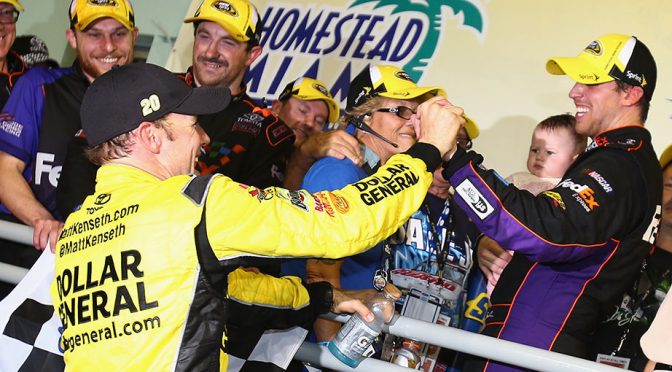
It was a single snapshot that captured two of the dominant themes from this past season, as contradictory as they might seem. In Victory Lane, there was Denny Hamlin celebrating his first race win in a season interrupted by a fractured bone in his back. And up on the championship stage at Homestead-Miami Speedway, there was Tony Stewart — he of the broken leg suffered in a sprint-car accident — leaning on a cane while congratulating Jimmie Johnson on his sixth NASCAR title. Taken in sum, there was pain, joy, recovery and triumph, all present at the same time.

There was plenty of all of that this year, in a season that cast both the risks and rewards of auto racing in stark detail. On one side is Johnson, creeping to within a single title of tying the sport’s all-time record; on the other is Stewart, a multiple-time champion in his own right, missing the final third of the season with injuries to his right leg that were more than just mere broken bones. On one side is Matt Kenseth, enjoying the best year of his career; on the other is his teammate Hamlin, missing four races due to his back injury, and falling short of the Chase for the NASCAR Sprint Cup for the first time.

It was a season that reminded everyone there are no absolutes in terms of safety — just ask Michael Annett, who missed nearly three months after fracturing his sternum in a crash during the NASCAR Nationwide Series opener at Daytona. It was a year that reminded us that drivers are indeed human, as the off-track health battles fought by Brian Vickers, Eric McClure and Trevor Bayne do attest. It was a campaign that illustrated the gap in safety systems between NASCAR and many lower circuits, brought home in the sprint-car crashes that injured Stewart and took the life of former NASCAR driver Jason Leffler.

"I think the whole motorsports industry has gotten better and safer," Mike Helton, NASCAR’s president, said the day after Stewart broke his leg racing at an Iowa short track. "But it’s still a dangerous sport, and you have occurrences like we’ve been reminded of."

No question, this was a year in which a lot of drivers battled a lot of pain, perhaps more than we’re accustomed to witnessing in a sport that’s been transformed by breakthroughs like head-and-neck restraints, impact-absorbent walls and race cars that protect their inhabitants better than ever before.

NASCAR has come so far over the last 15 years in terms of safety, it feels like a completely different and far more modern sport. The work being done in that area at the Research & Development Center is downright heroic, something that’s evident every time a driver walks away from a hard crash.

And yet, as Helton’s words and the events of this past season clearly illustrate, the risk is never removed completely from the equation. Race cars at high speeds are still going to sometimes act unpredictably, vehicles are still going to crash, a few drivers are still going run off and race midweek at short tracks that may not feature the most modern of safety advances. But NASCAR manages all of it better than it ever has, and nothing will bear that out more than the sight of the three drivers whose injuries partially defined this season — Stewart, Hamlin, and Annett — all in the starting field for the 2014 Daytona 500.

Not that those returns will occur easily — Stewart in particular is traversing a rough road that’s already seen the guy endure three surgeries and battle one infection, all of which speaks to how badly hurt he was in the first place. Mark Martin will do all the preseason testing in the No. 14 car, but the plan is for Stewart to be in the seat for the Great American Race. While Annett never recaptured the form that saw him finish fifth in final Nationwide points in 2012, he got better as he went along this past season, and is moving to the Sprint Cup level with Tommy Baldwin Racing in 2014.

And then there’s Hamlin, who opened this year as a legitimate championship contender and was sixth in points at Auto Club Speedway, where he and Joey Logano tangled on the final lap and the No. 11 car slid hard into an inside wall. The resulting compression fracture of a lumbar vertebra kept Hamlin out all of four races effectively scuttling his title hopes. His return became a physical and mechanical slog, one in which Hamlin battled back pain and balky race cars at the same time, leading many to question which one was really behind his uncharacteristically poor results.

His victory in the finale at Homestead helped quell some of that, for certain. And even better news was that Hamlin wouldn’t require surgery on his back, something that had concerned him because of both the unpredictability of the procedure as well as the prospective timetable for recovery with Speedweeks 2014 just over the horizon. A system of injections and rehabilitation therapy has provided him with relief from the "lightning bolts of pain" he said he was feeling when his back was at its worst, and led to improved performance inside the car.

"Luckily now things have really taken a turn, and every day continues to get better," he said at Homestead. "Looking forward to this offseason, staying hard at it, coming back strong."

Which, for any of the drivers touched this year by injury or illness, is all anyone can hope for. Hamlin is a winner again, and despite his difficulties Stewart has progressed from a bed to a scooter to a cane. On the final race weekend of the 2013 season, they were each supporting players in a larger celebration that centered on Johnson, hoisting that silver trophy once again. On the final race weekend of the 2014 season, it could very well be one of them on that championship stage, turning the page from recovery to rejoicing. They’ll certainly have the opportunity, at least, and this week especially that is reason for thanksgiving indeed.

MORE:

READ: Johnson wins
2013 Sprint Cup Series title

READ: HOF-worthy career
in the books, Martin bows out

READ: Finale represents
end of a chapter for some

READ: Kenseth won’t dwell
on coming up short

Rusty Wallace-designed short track has a ‘very bright future’

DAYTONA BEACH, Fla. — In a strategic move designed to expand its commitment to enhancing event experiences and fan engagement, as well as solidify the future of one of the premier racing and entertainment facilities in the Midwest, NASCAR announced today that it has purchased Iowa Speedway. The agreement, finalized today under a wholly-owned subsidiary, Iowa Speedway, LLC, is effective immediately.

“Iowa Speedway is a great entertainment facility with a very bright future,” said Eric Nyquist, NASCAR vice president, strategic development. “The facility has the support of the region, it’s positioned well in the heart of the Midwest, and year in and year out it provides great short-track racing action for motorsports fans.

2014 EVENT SCHEDULE

May 17 (Saturday): NASCAR K&N Pro Series East vs. West Challenge
May 18 (Sunday): NASCAR Nationwide Series
July 11 (Friday): American Ethanol 200, NASCAR Camping World Truck Series
July 12 (Saturday): Iowa Corn Indy 300, IndyCar Series
Aug. 1 (Friday): NASCAR K&N Pro Series East vs. West Challenge
Aug. 2 (Saturday): NASCAR Nationwide Series

“NASCAR ownership will allow us to draw on the entire resources of our company. It also provides us with the opportunity to execute first-hand a number of entertainment ideas and engagement opportunities with fans — much of which we have outlined repeatedly as the core of our Industry Action Plan.”

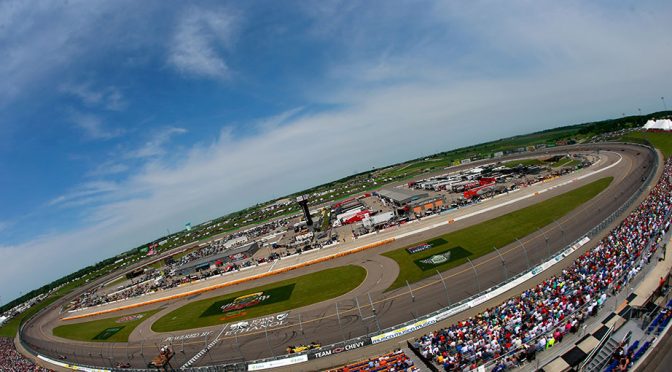
The facility, located 30 miles east of Des Moines in Newton, features a fast, .875-mile asphalt paved tri-oval designed by NASCAR Hall of Famer Rusty Wallace. The Speedway released its 2014 schedule earlier this month, encompassing three weekends, one each in May, July and August. The schedule will include two NASCAR Nationwide Series races, a combination NASCAR Camping World Truck Series and IndyCar Series weekend, plus two additional NASCAR K&N Pro Series support races. NASCAR has no plans for Iowa Speedway to host a NASCAR Sprint Cup Series race next year or in the immediate future.

NASCAR will host a special event in Des Moines on Thursday, Dec. 12, to outline additional details on the purchase and plans for the future. Information on this event will be announced soon.

The 2014 Iowa Speedway season opens May 17-18, with the NASCAR K&N Pro Series East versus West Challenge on Saturday night. The stars and cars of the NASCAR Nationwide Series then will battle on Sunday in a 250-lap, high-speed contest. The race marks the only Sunday afternoon event of the season at Iowa Speedway.

The new NASCAR Camping World Truck Series / IndyCar Series race weekend at Iowa Speedway is slated for July 11-12. The NASCAR Camping World Truck Series will race Friday night and feature short-track racing action that has become synonymous with the series in the American Ethanol 200. The first-ever Iowa Corn Indy 300 will follow on Saturday night.

On Friday, Aug. 1, a second NASCAR K&N Pro Series East versus West challenge race will be held followed by a second NASCAR Nationwide Series 250-lap event on Saturday under the lights.

Season ticket holders may renew their tickets for the 2014 season, and will have an exclusive right to secure their current seats until Dec. 14. All other seats are available for purchase immediately, with season ticket prices starting at $95. All season tickets will include a guaranteed seat location, complimentary Casey’s Fan Walk pass and an opportunity to participate in pre-race ceremonies. Season tickets, parking passes and onsite camping options are available online at www.iowaspeedway.com, or by calling the toll-free ticketing hotline, 866-RUSTY-GO (787-8946). 

Iowa Speedway’s ticketing office, located at 3333 Rusty Wallace Drive in Newton, also will be open to assist customers from 9 a.m. to 5 p.m. Monday through Friday and 9 a.m. to 3 p.m. Saturday, holidays excepted.

MORE:

READ: Drivers excited
for Gen-6 evolution

READ: Manufacturers give
Gen-6 debut high marks

WATCH: Gen-6 Top 10:
Nos. 9-10

WATCH: Gen-6 Top 10:
Nos. 7-8

Musicians John Mellencamp, Dierks Bentley, Sara Bareilles to perform; Jay Mohr to host NASCAR Sprint Cup Series Awards in Las Vegas

DAYTONA BEACH, Fla. — A little bit of country, pop, rock and roll and comedy will equal a show chock full of entertainment when chart-topping musicians John Mellencamp, Dierks Bentley and Sara Bareilles take the stage, and actor, comedian and radio personality Jay Mohr hosts this year’s NASCAR Sprint Cup Series Awards.

The NASCAR Sprint Cup Series Awards, which will take place at Wynn Las Vegas on Friday, Dec. 6, will begin at 8 p.m. ET. The event will crown six-time NASCAR Sprint Cup Series champion Jimmie Johnson and honor the remaining top 10 drivers in the final Chase for the NASCAR Sprint Cup standings. The event will air on FOX Sports 2 and NASCAR.com beginning at 9 p.m. ET, with Motor Racing Network and SiriusXM NASCAR Radio also providing coverage starting at 8 p.m. ET.

Jay Mohr, who transcended the comedic world from a fixture on "Saturday Night Live" landing roles in popular films such as "Jerry McGuire," "Pay it Forward" and "Hereafter" will host this year’s event. His career in show business, which also includes hosting nationally syndicated "Jay Mohr Sports" and other top radio programs, spans more than three decades. Mohr is no stranger to the spotlight, making him a natural fit to showcase some of NASCAR’s most prominent stars. 

“It may be just a coincidence, but I hosted the NASCAR Sprint Cup Series Awards in 2006 when Jimmie Johnson won the first of his five straight titles,” said Mohr. “Now, I’m back again to officially crown him champion for a sixth time. I couldn’t be more thrilled to host this show again and help honor some of the best drivers — and athletes — in the world.”

To get the night started, NASCAR fans will be treated to a special performance by John Mellencamp. With 22 top 40 hits to his credit, Mellencamp has been nominated for 13 GRAMMY Awards and has been the recipient of numerous accolades including Billboard’s Century Award, The Woody Guthrie Award, The John Steinbeck Award, induction into the Rock and Roll Hall of Fame and the Americana Music Association’s Lifetime Achievement Award over the course of his storied career.

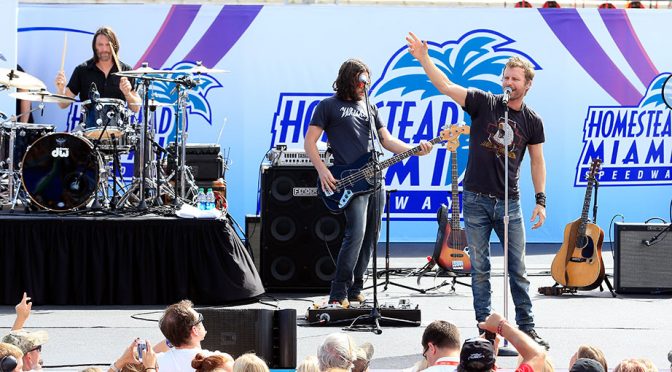
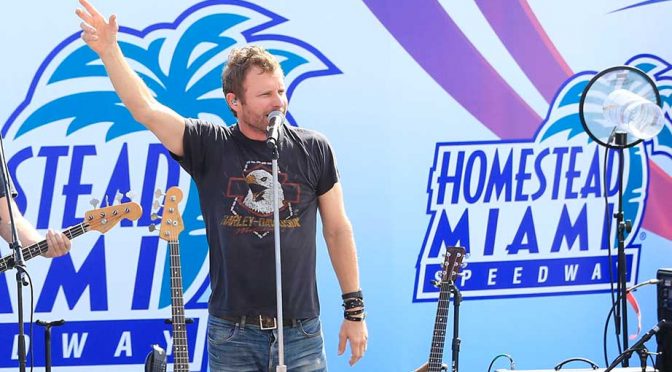
Later in the evening, Dierks Bentley, one of contemporary country music’s biggest stars, keeps his NASCAR performance streak rolling following his act at Homestead-Miami Speedway during Ford Championship Weekend. Bentley has forged his own artistic path by mixing elements of modern country, classic country, bluegrass and rock, which has helped him maintain an unmistakable identity while constantly reinventing his sound. His most recent album "Home" debuted at No. 1 on the Billboard Country Album Charts and spawned three consecutive chart-topping hits, marking 10 career number one songs for Bentley as a singer and songwriter. His five previous studio albums have sold more than five million copies. Bentley has earned 11 GRAMMY nominations and an invitation to join the Grand Ole Opry. He recently released his new single, “I Hold On,” off his upcoming album "Riser."

Additionally, three-time GRAMMY-nominated singer, songwriter and pianist Sara Bareilles will perform a song from her fourth studio album "The Blessed Unrest" which features the current hit song “Brave.” She achieved initial mainstream success in 2007 with the chart-topping single "Love Song,” which was No. 1 on Billboard’s Pop 100 list. Since then, Bareilles has sold more than one million records and more than four million singles in the United States.

NASCAR’s Los Angeles-based Entertainment Marketing division has garnered a strong cross-section of high-profile celebrities and star-studded musical acts for the NASCAR Sprint Cup Series Awards throughout the years. These efforts are a reflection of the division’s aim to reach a broad audience, which is one of NASCAR’s top priorities. Recent examples include superstar comedian and actor Howie Mandel, multimedia superstar Reba, multiplatinum recording artist Kid Rock, GRAMMY Award-winning band Train and multiplatinum recording artist Phillip Phillips.

“The NASCAR Sprint Cup Series Awards are the perfect opportunity to bring together NASCAR’s top drivers and some of the most popular names in Hollywood for a star-powered celebration,” said Zane Stoddard, NASCAR vice president of entertainment marketing and business development. "Just like in years past, this is a quality line-up filled with a wide range of personalities and musical genres, so there will be something for everyone.”

The 2013 NASCAR Sprint Cup Series Awards will re-air on FOX Sports 1 at noon ET on Sunday, Dec. 8.

MORE:

READ: Johnson wins
2013 Sprint Cup Series title

READ: HOF-worthy career
in the books, Martin bows out

READ: Finale represents
end of a chapter for some

READ: Kenseth won’t dwell
on coming up short

Commitment to Midwest renewed as track ownership changes hands

NASCAR has purchased Iowa Speedway.

Officials from the sanctioning body made the announcement Wednesday afternoon, just days after court documents and a special city council meeting indicated that a transfer of ownership was imminent.

NASCAR announced it will host a special event Dec. 12 in Des Moines to outline further details of the purchase and plans for 2014 and beyond. According to Wednesday’s news release, "NASCAR has no plans for Iowa Speedway to host a NASCAR Sprint Cup Series race next year or in the immediate future."

The sale — made to a wholly owned subsidiary of NASCAR called Iowa Speedway, LLC — is the latest development in an offseason of change for the 0.875-mile asphalt track in Newton, Iowa. Doug Fritz resigned as the speedway’s CEO on Sept. 9, one day after the track concluded its 2013 racing schedule.

The track was formerly owned by U.S. Motorsport Corp., with minority ownership from NASCAR Hall of Fame inductee Rusty Wallace, who also served as the track’s designer. Wallace will continue to have a role with the track — located on Rusty Wallace Drive in Newton — under its new ownership.

The facility, located approximately 30 miles east of Des Moines, has 30,000 permanent grandstand seats.

"Iowa Speedway is a great entertainment facility with a very bright future," said Eric Nyquist, NASCAR vice president, strategic development. "The facility has the support of the region, it’s positioned well in the heart of the Midwest, and year in and year out it provides great short-track racing action for motorsports fans.

"NASCAR ownership will allow us to draw on the entire resources of our company. It also provides us with the opportunity to execute first-hand a number of entertainment ideas and engagement opportunities with fans — much of which we have outlined repeatedly as the core of our Industry Action Plan."

Iowa Speedway has three NASCAR national series events scheduled in 2014 — May 18 and Aug. 2 for the NASCAR Nationwide Series, and July 11 for the NASCAR Camping World Truck Series. Two races for the combined East and West divisions of the NASCAR K&N Pro Series are also scheduled, as is a July 12 event for the IndyCar Series.

The track opened in 2006 and played host to its first NASCAR national series events three years later, with Brad Keselowski (Nationwide) and Mike Skinner (Truck Series) the inaugural Iowa winners. Joey Logano edged Kevin Harvick to win the first NASCAR event of any type on the 7/8-mile layout, capturing a K&N Pro Series event in May 2007 — just four days before his 17th birthday.

MORE:

READ: Johnson wins
2013 Sprint Cup Series title

READ: HOF-worthy career
in the books, Martin bows out

READ: Finale represents
end of a chapter for some

READ: Kenseth won’t dwell
on coming up short

Country star would love to drive a stock car at some point

Country star Dierks Bentley celebrated his 38th birthday three days after performing a pre-race concert before the NASCAR Sprint Cup Series season finale at Homestead-Miami Speedway.

The singer-songwriter has had 10 career No. 1 singles on the country charts, including "What Was I Thinkin’", "Sideways", "Am I the Only One" and "Home."

Bentley is a big NASCAR fan and counts Sprint Cup Series drivers Kevin Harvick and Kasey Kahne among his friends in the sport. At Homestead, Bentley discussed his enjoyment of NASCAR, his latest single and his forthcoming album, "Riser."

On being a NASCAR fan and his connection to the sport:

A lot of friends, a lot of great drivers. I think the more you follow NASCAR, the more you get into it, the more you just kind of root for a great race. … When you first get into the sport, you have one (driver) that kind of brings you in. Now, a lot of guys out there I am pulling for.

On the genesis of his single "I Hold On":

Every record is special and you kind of go through a transformation in making them. When I started making this record, my dad had passed away, so that was about a year and a half ago. And I started thinking about how he and I drove out to Nashville together when I was 19 in this 1994 Chevy truck which I still drive, y’know. I made a bunch of money and could afford a new truck and had car dealerships offer me free trucks, but I still drive the same truck with 200,000 miles on it. It’s the only car I own. And I was like ‘why do I still drive that same truck?’

There are a lot of things I hold to, whether it’s the truck, my guitar that’s got a big hole in it from playing it so much, our tour bus out here which is probably the oldest tour bus in this entire infield, has over a million miles on it. I’ve put all one million miles on that bus on it myself. I just kind of like things that have character and history to them and the song is kind of about that. It takes these personal vignettes in my life, my truck, my guitar, and ties them into bigger things. The chorus is about faith, love and freedom. I am pretty proud of it as a songwriter and fans seem to connect to it.

On playing before the season’s final race at Homestead:

This is awesome. … Y’know, we have been off the road for a little bit and Nashville is a little chilly right now. It’s just great to be in Miami, certainly to be at the last race. When this opportunity came up, it was one of those things you are excited to be a part of and to get down here. We are also going to be out in Vegas for the championship, so it’s a nice tie-in to be out here for the last race and also be out there in December. Just a great day. As a fan to get down here, get a chance to sing, play music and also watch the race. It was a great opportunity and I’m just thankful to be here.

On his hope to one day drive a stock car:

I’ve watched it on television. … You really can get a good feel for it. I just took a lap in the pace car and I wish I could have taken it for a spin. I think I could do all right. I had go-karts as a kid and I raced them, so I think it be comparable (laughs). No, even just being in the pace car, sitting shotgun, going into the corners, going whatever speed we were going. I think in the backstretch we were going 140 and under 100 in the corners. Even that, you could feel the “G’s” and feel the pull and I could see how it would be pretty exhausting after doing that for real, three times the speed with other cars around you all day long. … I’ve talked to Kyle Petty about getting in the car and trying to do something. It’s just hard man, with our schedule, being on the road 150-200 days a year and then three kids. Somewhere down the road, I’d really love to do it. It’d be fun.

On the most difficult part of making a record:

I think editing. The words you don’t use. The songs you don’t include. It’s cutting it out and trying to make it feel like an album. In today’s world, which is buying tracks, I think the album form…obviously this is a biased opinion, but I think country music is one of the last places where you really can make an album and your fans believe it when you say you’re making an album and not just a collection of hits produced by six different producers that you find in the pop world.

On what it’s like to learn from someone the impact a song has had on them:

You meet those fans and that’s what fuels you. Bumped into a couple out here that were wearing my stuff and they come out here and they are sweating, they’re sunburned, but they’re excited to be here and you use that little extra boost, not that you even need it. What we do does matter and these songs get woven into the thread of people’s lives. I am a fan, too. I got songs that do the same thing for me. It really is important and I take myself really seriously for the hour-and-a-half on stage and be what I’m needed to be. … I take it seriously because people have invested a lot of time, money and chunks of their life in our career and these songs that we write, so it’s special. It really is. It’s a special relationship with the fans.


New car highlights NASCAR’s emphasis on innovation

Editor’s note: This story is the third of a weekly series about the Gen-6 debut.

It’s difficult to pinpoint the exact genesis of the current, sixth generation of NASCAR Sprint Cup Series car. So clandestine were the Generation-6 model’s beginnings that some secret tests with rolling prototypes only came to light long after they were conducted.

Once the wraps were off after more than two years in the making, NASCAR officials savored the fruits of many months of labor with the Gen-6 car’s successful debut in the 2013 season. Watching the redesigned model make its first competitive laps at Daytona International Speedway was the byproduct of extensive development and unprecedented collaboration among the sport’s three manufacturers to create a race car with a fresh look, showroom-style savvy and striking brand identity.

NASCAR President Mike Helton, during a season-ending address ahead of the Sprint Cup finale at Homestead-Miami Speedway, touched on the reception of the Gen-6 car and the lessons the sport’s officials have learned from its rollout. In doing so, he extolled the upswing in on-track passes and the theme of parity with 17 different drivers heading to Victory Lane in the 36-race season.

"What that taught us, the benefits of it, the outcome of it, the high praise and excitement and acceptance, the visibility of our race cars has shown us what we can do collectively at NASCAR with the OEMs (Original Equipment Manufacturers), with the race teams and other folks in the sport were able to grow a very popular product and build some strong relationships," Helton said.

While the Daytona debut in February marked a key checkpoint on the Gen-6 car’s journey, it wasn’t a checkered flag. Work continues at NASCAR’s Research & Development center in Concord, N.C., in an effort to fine-tune the car’s evolution and improve the competition in the model’s second year.

"And to that point, I would tell you that in ’12 and particularly continuing into ’13, NASCAR continues to build relationships with the teams, certainly the drivers, the tracks, but its partners, whether it’s Sprint or Nationwide or Camping World or Goodyear, Sunoco, Chevrolet, Ford, Toyota, to make the sport better," Helton said. "That’s why NASCAR, I think, has a reputation and is known for throughout its history is to continue to work on its product, and next to making it safe, the next biggest topic we’ve got is making sure it’s competitive, and we’ll continue to do that.

"Along the way we’ve learned more how to do that, and I think the Gen‑6 is a big symbol of the cooperation of everybody in the industry and the result of that cooperation."

Cooperation was a trademark of the car’s development. In bringing the Gen-6 concept from sketch to model to race car, NASCAR received collective help across the board from Chevrolet, Ford and Toyota — fierce rivals on the track, but dedicated participants in helping to advance the sport.

From there, teams and drivers offered their feedback in a battery of test sessions, the most extensive testing schedule since the introduction of the previous generation car before the 2007 season. The extra preparation bore out competitive statistics for 2013 beyond the variety of race winners — 19 track records broken, 20 races with a margin of victory less than a second and a 15.8 percent increase in the number of green-flag passes compared to 2012.

The increase in parity wasn’t lost on NASCAR Chairman and CEO Brian France, who lauded the improvement at Charlotte Motor Speedway in May, before the season had even hit its midpoint. But even then, France hinted at the direction the car would take in the rest of 2013 and beyond.

"Innovation is going to be a big area to us," France said. "You’ll see us announce different companies that are going to come in. This is a place to validate lots of things with technology. The car manufacturers, each one has stated goals about evolving, innovating in their own space. We have a technology partner as our series partner in Sprint. You’re going to see us embrace technology, embrace innovation, so long as it can make the racing tighter, better and safer."

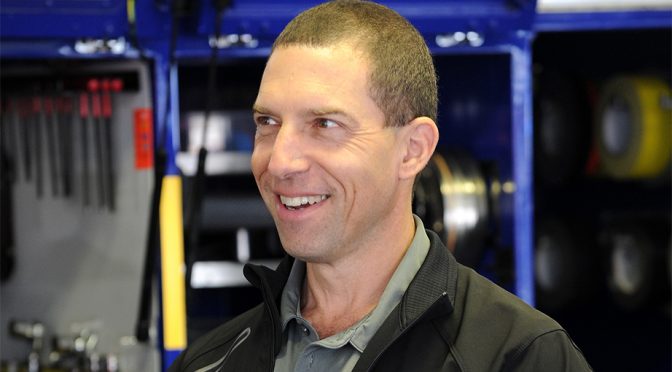
France’s remarks came just weeks after NASCAR announced the hiring of Gene Stefanyshyn — former General Motors executive, designer and technical director — as a key cog to NASCAR’s R&D department. Stefanyshyn dove into the role of Vice President of Innovation and Racing Development this spring, working closely with Senior Vice President of Racing Operations Steve O’Donnell and Vice President of Competition Robin Pemberton.

The department will focus efforts on four planks of competition in an expansive 18-month project — announced in July — that will redevelop the NASCAR rule book and reshape the way the sport is officiated. But even as that initiative continues, the department is already at work on sharpening the Gen-6 car’s aerodynamics and rules package for 2014, with a test session scheduled Dec. 9-10 at Charlotte — just days after the confetti and champagne corks are swept from the floor of the Wynn Las Vegas after the NASCAR Sprint Cup Series Awards.

Though officials, teams and drivers have all chimed in on the car’s progression, one of the most vocal groups with a positive reaction to the car’s debut has been the fans, who welcomed the renewed connection with the race machines and their newfound relevance to their own vehicles.

Many have also embraced the racing. Count John Darby, NASCAR Sprint Cup Series director, among them.

"I don’t know if I could be much happier right now with the first five races that we’ve rolled out," Darby said in March, just before the first idle weekend of the Sprint Cup season. "The competition has been phenomenal. The races are just fun to watch. I mean, I don’t know how else to describe it.

"I know my role in the sport, but I’ve got to tell you, there’s a lot of race fan in me as well, and you know, I would already be buying tickets for the next race if I had seen the first five that I have this year. So yes, we are pleased and I think we can keep that momentum rolling."

MORE:

READ: Drivers excited
for Gen-6 evolution

READ: Manufacturers give
Gen-6 debut high marks

WATCH: Gen-6 Top 10:
Nos. 9-10

WATCH: Gen-6 Top 10:
Nos. 7-8

MWR co-owner has long held an interest in automobiles

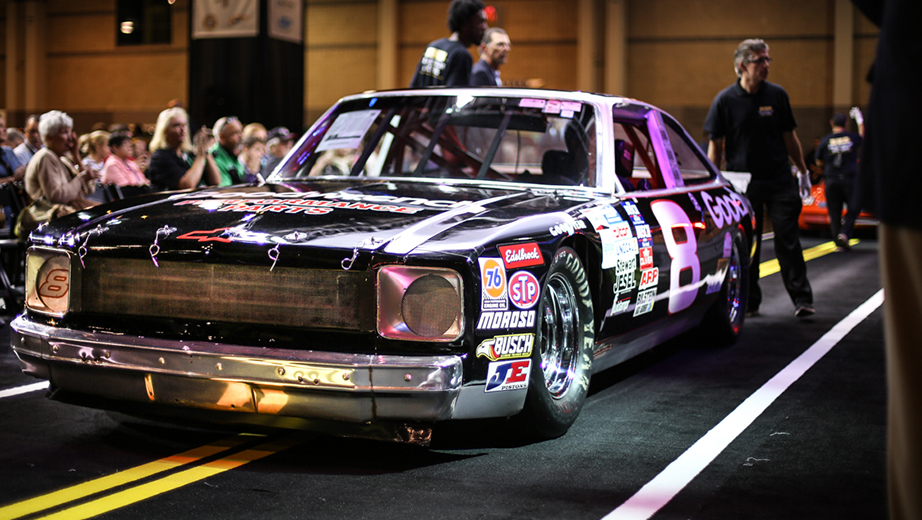
They gleamed under the bright lights of the convention hall, workers in white gloves ensuring that each was polished to a high sheen. There was the Mercedes supercar with a top speed of 268 mph. There was the beastly off-roader with nearly two feet of suspension travel. There was the Camaro convertible that paced the 1969 Formula One race at Watkins Glen, and a black No. 8 stock car driven to Victory Lane by the Intimidator.

Indeed, Rob Kauffman has come a long way from those first two junkyard Firebirds his parents once bought him for $70 total, figuring there were enough salvageable parts out of both vehicles to build one serviceable car.

"I’m probably an example of, the only difference between men and boys is the price of the toys, at some level," said the co-owner of Michael Waltrip Racing. The vehicles displayed at the Charlotte Convention Center aren’t owned by Kauffman, but they’re on display because of his company, all of them bound together by a passion for fast cars the NASCAR team owner and entrepreneur has had for as long as he can remember.

On this November weekend, the occasion is a collector car auction run by RK Motors, the restoration and sales company that Kauffman founded in 2006, and has appeared periodically on the hood of the No. 55 car at MWR. It’s the second such auction held by RK Motors, and befitting its founder, it’s an ambitious effort — while Kauffman’s partner in the business, Joe Carroll is overseeing things in Charlotte, Kauffman is trying to tap into the Middle Eastern market by overseeing a simulcast in the emirate of Abu Dhabi.

"The car culture in the Middle East is vibrant," said Bill Mathews, the auction’s executive vice president, "and many of the collectors are very interested in American classics." The same could certainly be said of Kauffman, who jokes that his first word after "mom" was "car." Although his grandfather was a Studebaker dealer, there were no car buffs in the family. That didn’t stop a young Kauffman from playing with Corgi and Matchbox die-casts, from later devouring issues of "Road and Track" and "Car and Driver," from later grabbing a wrench and going at those two junkyard ’67 Firebirds his parents bought him for his 13th birthday.

"They said that between the two, you should have enough parts to make one decent one. And you can get your driver’s license in three years, so good luck," Kauffman remembered. "I went to busting my knuckles for a year on rusted-out bolts. Then I sold the taillight on one for $20, and the light bulb went off. I stopped working on them and started selling the parts, and then rolled that into another car, and then another car."

He never stopped. Kauffman was a mechanic during high school, and still knows his way under the hood. "I might be a little bit rusty, but if my ’63 Corvette breaks down on the side of the road, given a few tools, duct tape and a coat hanger, I probably have a fighting chance of getting it going again," he joked.

He went to college, got into finance, and made his fortune as co-founder of an investment firm. But that love of the automobile never left him — when he retired from the investment business late last year, he told Bloomberg News it was partly because he wanted more time to devote to his passion for cars.

No one who knows him is surprised. "Rob is one of the most hardcore, pure car nuts that I’ve ever known in my life," said Carroll, who owned a classic car company that merged with RK Motors in 2010. "I knew that Rob owned a NASCAR team. I knew he had a small boutique that sort of supported his hobby, but I really didn’t appreciate the passion that he has just for cars in general. I would venture to say that he’s the only person in the world right now that’s spending regular time driving a 1928 Bentley, a 1960 Willys Wagon, and a ’63 Corvette Split Window in rotation. … He definitely lives and breathes cars 24 hours a day."

Kauffman’s co-ownership of MWR, which he joined in late 2007 in a move that helped steady the organization financially, certainly is part of that. So are the sports-car events he occasionally competes in as a driver, a list that includes the 24 Hours of Le Mans and the Rolex 24 at Daytona. But the RK Motors Collector Car Auction, and all those race cars and muscle cars arrayed under one roof, brings it home in a sea of shining glass and metal.

Presented for auction by their individual owners — who, if they don’t like the price the cars fetch on the block, have another opportunity to sell them through a consignment program — the vehicles have all been restored to a meticulous degree, making each peek behind the wheel feel like a step back in time. It’s difficult for any gearhead to not feel the pull of a 1971 Plymouth Cuda, a 1969 Shelby Mustang GT500, or a 1962 Corvette roadster. For the more modern-minded, there’s the menacing off-road car built by championship crew chief Ray Evernham, or the one-of-a-kind, million-dollar 1995 Lotec Mercedes-Benz, which churns out a cool 1,000 horsepower.

Amidst it all are a few race cars, some of which competed on the track. There’s a 1986 Pontiac which Waltrip drove at Talladega, a vehicle whose nickname — "Big Ed" — is scribbled on the dash. There’s a No. 11 Bill Elliott Thunderbird with Junior Johnson’s autograph on the air filter cover, and a No. 28 Davey Allison Ford with "Think" taped to the dash in large red letters, but it’s unclear whether either vehicle was ever raced. Of one, though, there’s no doubt.

Among the race cars up for auction, the unquestioned centerpiece is a No. 8 in that familiar black Goodwrench livery, a vehicle built by Robert Gee that Dale Earnhardt drove to victory in a 1986 Nationwide Series event at Daytona.

Dale Earnhardt drove this car to victory in a 1986 Nationwide Series race at Daytona. (My Classic Garage)

"That is a highly appealing car to any NASCAR collector or Dale Sr. collector," Carroll said. "There just aren’t that many cars from his career that survived that era. So that’s a highly desirable car."

That is borne out in the auction, where the Earnhardt car goes for $140,000, seventh-highest among all vehicles sold. The only race car to fetch a higher price is a 1977 F1 McLaren that James Hunt used to win the Japanese Grand Prix, and sells for $1.3 million. Kauffman called former NASCAR cars an "emerging" facet of the collector market, the most valuable being genuine vehicles driven by the legends themselves — like the 1963 Junior Johnson "Mystery Motor" Impala he has in his private collection. More modern cars typically aren’t as valuable because they’re rebuilt so often, although the chassis are frequently sought after by racing schools or hobbyists looking for track day cars.

The No. 56 Toyota that former MWR driver Martin Truex Jr. used to win this past season at Sonoma recently sold to a collector in Europe, Kauffman said, but it’s still vintage NASCAR machines like the Earnhardt car that attract the most interest.

"The Earnhardt car, that was a real deal car," he added. "Earnhardt raced that, it’s pretty much in its original form. It was before all the (Richard) Childress stuff, and it’s a genuine, functioning car, so you can use it. So I think those are the more valuable ones."

And Kauffman would certainly know, given a lifetime of devotion to the automobile that spans his years as a teenage mechanic to his current roles as NASCAR team owner and classic car enthusiast. Kauffman said this month’s RK Motors auction fit "within our band of expectations," and there are already plans for another in the spring. He’s always has a mind for business and a passion for cars, and these days gets to combine the two. Amazing what can come of a $20 profit made off a junkyard taillight.

"It’s nice to make a real business out of it," Kauffman said. "I enjoy the stuff a lot, obviously. But I feel good it’s a proper company."

MORE:

READ: Johnson wins
2013 Sprint Cup Series title

READ: HOF-worthy career
in the books, Martin bows out

READ: Finale represents
end of a chapter for some

READ: Kenseth won’t dwell
on coming up short

Nationwide points runner-up remains without a team for 2014

DAYTONA BEACH, Fla. — Even though Sam Hornish Jr. fell an eyelash short of the NASCAR Nationwide Series championship this year, there was a point during his title run where the former Indianapolis 500 winner thought his options for 2014 were limited to nonexistent.
 
The harsh financial realities of big-time stock car racing conspired against the three-time IndyCar Series champion. Without support for his Nationwide effort next year, Penske Racing opted to cut back to one NNS entry in 2014.
 
So Hornish found himself in a job market where jobs are few and far between, and competition for open seats is intensely competitive.
 
Hornish, however, told reporters after last Monday night’s NASCAR Nationwide and NASCAR Camping World Truck Series Awards that his prospects have improved to the point of having multiple offers for next year, though he declined to name them.

"It’s really great to have an opportunity, and for a while there, it looked like there may not be any opportunities," Hornish said. "But it isn’t just that. It’s almost like, when you date a girl, you’ve got all these other girls wanting to date you. And then, when you don’t have a girlfriend, it’s really hard to find one.
 
"Now I’ve got to tell somebody ‘No.’ Over the past couple of years, not a lot of doors have opened for me. So having to tell anybody ‘No’ is kind of a hard thing, because I know that doesn’t necessarily mean that there’s always going to be that next door open. You always feel bad [declining an offer], so you try to treat people with the dignity that they deserve and give yourself the best options moving forward."
 
Where Hornish might be going remains a mystery, but the 34-year-old driver from Defiance, Ohio, did provide one significant clue, indicating he’d rather drive part-time in strong equipment than full-time with an also-ran.
 
The time window is narrow. Ideally, Hornish would like to have a deal in place before Preseason Thunder testing at Daytona starts Jan. 9.
 
"I’m looking forward to hopefully having something done in the next … I can’t say two months because we’ll already be in Daytona at that point in time," Hornish said. "[I’m working on] figuring out how to get myself in the best possible equipment, regardless of how many times I go out there and race, but just [wanting] the opportunity that when we do compete, we compete at a high level."
 
Hornish proved this year that he could compete with the best, contesting the Nationwide championship through the final lap of the season finale at Homestead-Miami Speedway before finishing three points behind Austin Dillon.
 
"I had a lot of people tell me, ‘What are you even worried about it for? You’re a three-time IndyCar champion,’" Hornish said. "We’re race car drivers. We don’t care. If you gave us grocery carts, we’d want to win the championship or win the race, because that’s our validation of who we are and what we do as a competitor."
 
Thrust into the NASCAR Sprint Cup Series in 2008 before he was ready — as he and team owner Roger Penske freely admit today — Hornish has avoided steadfastly a return to IndyCars, even to the point of sitting out the majority of the 2011 season when funding was no longer available to run in the NASCAR Sprint Cup Series.
 
"Roger has given me some opportunities that maybe a lot of people would have said ‘Why do that?’ but we came really close to proving a lot of people wrong," Hornish said. "Regardless of the final outcome, I think we showed a championship performance this year.
 
"We raced with a lot of good guys like Brad Keselowski and Joey Logano, Kyle Busch and Tony Stewart. We finished second to a lot of them, we beat some of them and just came up shy of the championship."
 
As Hornish approaches a new opportunity in 2014, whatever it may be, he can take solace in knowing he’ll be better prepared to take advantage.

MORE:

READ: Johnson wins
2013 Sprint Cup Series title

READ: HOF-worthy career
in the books, Martin bows out

READ: Finale represents
end of a chapter for some

READ: Kenseth won’t dwell
on coming up short

New car generated closer racing, to delight of competitors

Editor’s note: This story is the second of a weekly series about the Gen-6 debut.

The statistics alone are impressive.

This season’s debut of NASCAR’s Generation-6 race cars in the Sprint Cup Series produced 19 track qualifying records by 11 different drivers. The total of 127,306 green-flag passes is nearly 17,500 more than last season and the second most since 2005.

There were 17 different winners — only two off the modern-era record. And the blink-of-an-eye 1.267-second average margin of victory is the lowest in eight years. Twenty times races were decided by less than one second.

The reviews from those behind the wheels of the sleek, street-true Gen-6 Ford Fusions, Chevy SSs and Toyota Camrys are just as impressive.

"I’m telling you, whoever designed this new car, we should kiss ’em every weekend," Toyota driver Clint Bowyer said earlier this year. "It’s creating drama. We haven’t seen racing like this in years.

"When you leave a race track and there’s people in tears because they won and in tears because they got crashed, that’s what brings us to the race track, that kind of racing and determination and passion."

And that’s coming from a driver that didn’t win a race in 2013.

Ford driver Greg Biffle called the cars "fun to drive."

His Roush Fenway Racing teammate Carl Edwards — a two-time winner in the Gen-6 Fusion this year — went even further.

"The plan was to start by making it really different. At the end of the day, it drives great, looks great and is an awesome race car."

From the outset, fans and competitors praised the representative look of the cars, which more closely resembled their street-car counterparts.

Fans’ perception that the cars looked like showroom cars increased from 28 percent a year ago to 83 percent with the Gen-6, according to the NASCAR Fan Council — an important credibility boost for car manufacturers, who have long held to the "race on Sunday, sell on Monday" mantra.

But no one was blind to the most essential aspect of the Gen-6: its performance on-track, in-race.

The cars were durable — 83.1 percent were running at the checkered flag, up nearly 10 percent from a year ago.

They were safer, and Loop Data such as green-flag passes and lead changes per race (19.4) saw quantifiable upticks.

"Every weekend is a big weekend now for this sport and this car," said 2012 Sprint Cup Series champion Brad Keselowski. "We’ve seen some compelling racing and great battles."

Now NASCAR considers it a matter of tweaking a good thing and making it better. Tests throughout the season and another coming the week of Dec. 9 will be important in finalizing and evaluating.

"That’s why NASCAR, I think, has a reputation and is known for throughout its history is to continue to work on its product, and next to making it safe, the next biggest topic we’ve got is making sure it’s competitive, and we’ll continue to do that," NASCAR President Mike Helton said just before the season finale.

There are many different opinions from the 43-car starting grid on what the sport should do going forward.

Some drivers warn about making massive changes to the cars, wondering if outside variables such as tires could create even closer racing, while other drivers have suggested aerodynamic modifications, including completely eliminating downforce.

There are those that think an easy drive makes for better competition and an equally vocal contingent that thinks making it more difficult for drivers adds an exciting and essential component to the competition.

"I think we’ve just barely begun to scratch the things that we can do with this car," Richard Childress Racing crew chief Gil Martin said. "Sometimes it takes a long time to find huge changes along with the car, but I think as the season has progressed, we’ve gotten much better with the car, and I think the garage has.

"I think there’s a tremendous amount of upside for what’s going to happen with the future of this car. I think the racing is just going to continue to get better."

Newly crowned six-time Sprint Cup champion Jimmie Johnson certainly enjoyed success in the Gen-6 car, considering his six wins and series-best three qualifying records. He has taken a more philosophical approach to the process.

"There’s a lot going on within the NASCAR offices and all the competition side and then what takes place in the garage area and the race shops," Johnson said. "In December there’s a big test session and we’ll know a lot more at that point as to the direction of the rules package and where it’s going. 

"Over the years I’ve learned to not stress about things. There’s only so much I can contribute to in this decision-making process. When I’m asked questions by whatever NASCAR official it is, I’m more than willing to give my opinion and try to sound off and be a part of that process. They’ve got to manage so many different angles and now we’re using a lot of data, some of it’s new data that they’re using to make these decisions.

"I’m just sitting back patiently waiting where things go. I always look at change as an opportunity, and the No. 48 has taken advantage of those opportunities over the years."

MORE:

READ: Drivers excited
for Gen-6 evolution

READ: Manufacturers give
Gen-6 debut high marks

WATCH: Gen-6 Top 10:
Nos. 9-10

WATCH: Gen-6 Top 10:
Nos. 7-8