DAYTONA BEACH, Fla. — Featuring breathtaking shots of the Daytona Beach shoreline, with the Atlantic Ocean’s lapping waves and a setting sun, the “Home Turn” documentary episode carefully takes viewers to the start of it all — NASCAR’s stunning birthplace.
Longtime journalist and author Jay Busbee hosts this NASCAR Studios video project, which comes from the heart and will touch the soul of both longtime NASCAR fans and those simply curious about the sport’s history and culture. “Home Turn” debuted at 7 p.m. ET on Tuesday, Feb. 11 on NASCAR’s YouTube channel.
“I love the stories behind NASCAR every bit as much as I love the results of the races,” Busbee said. “I love talking to drivers, love talking to people in the stands, love seeing what goes on around the track and so that was always my background — the whole culture of NASCAR.”
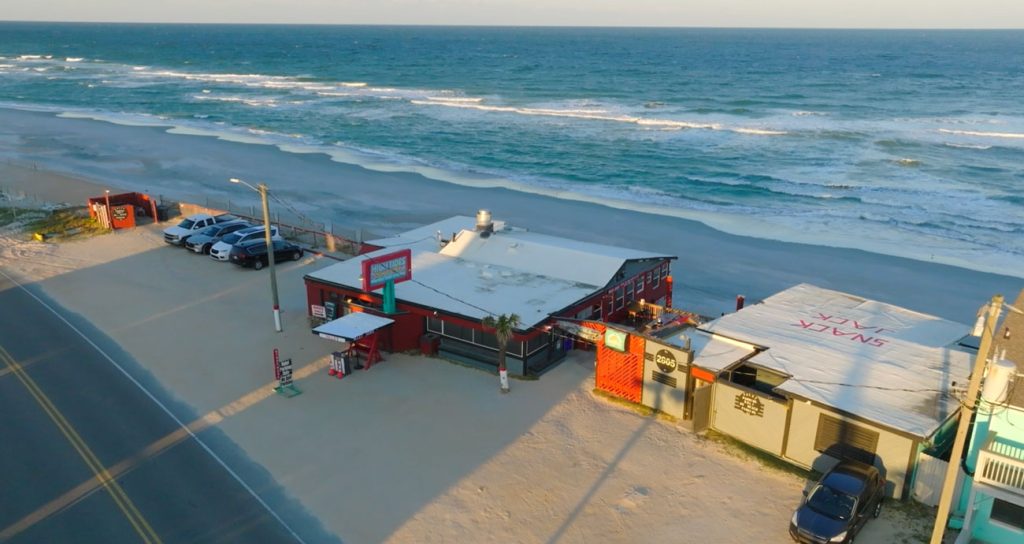
Not only does Busbee share his favorite parts of the sport’s most famous high banks, but “Home Turn” takes a deep dive beachside in neighboring locales that offer a long list of compelling reasons to bookend days at the track with visits to interesting places nearby. Think NASCAR culture: The track, but also beyond the track, to local history and the life that goes on outside Daytona’s four turns.
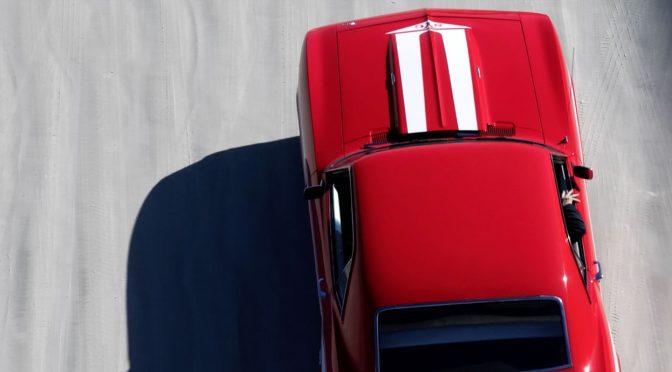
Busbee explores the earliest days of racing on the beach and integrates local expertise via conversations with longtime Daytona Beach News-Journal sports columnist Ken Willis, a Daytona Beach native who has covered NASCAR for decades, to Suzanne Heddy, a local historian and member of the National Racing Heritage Association, and Steve Gooch, the owner of Fun Coast Tours.
The episode visits the locals’ favorite restaurants from Fernandina Beach in the north to New Smyrna in the south. It explores the sky diving culture in nearby Deland and, of course, Daytona Beach’s famous rowdy Spring Break scenes dating from the 1980s.
“We just did our best to get a feel for the city outside the track,” Busbee said. “In Daytona, you’ve got the track, that Krispy Kreme and the Steak and Shake down the road and that may be all you see when you’re covering the race or going to the race.
“So, what I wanted to do was get outside of the track and tell the story of Daytona but also the story of some of the people, the restaurants and the culture of Daytona and the beaches around it.
“What I love about Daytona, it’s got all these identities. It’s got racing on the beach, spring break, obviously the track, bike week and a destination place for people to retire and settle down. There’s just so much there that if you’re just focused on the race, you might miss other things. That’s what we were trying to get across to everybody.”
The video work is stunning, the interviews compelling, and the premise of taking people to new places beyond the grandstand is fascinating. Unsurprisingly, the people working on this project are all accomplished and include the producers and writers from the award-winning “TrueSouth” documentary series. Blue Foot TV is a production company, and John T. Edge is the writer who collaborated with Busbee on this debut film.
“It’s all completely new for me and that’s why I was really glad to have these guys that have done this work; it’s a collection of real professionals, Emmy Award winners,” Busbee explained.
The result is something that is not only informative but that stands the test of time by examining the tests of time that have made Daytona Beach such an iconic place in sports history.
“I see how documentaries now can be 10 hours,” Busbee said with a laugh. “I see how that happens because we had so many things we didn’t even get to, and even some of what we filmed, we couldn’t include all of it. I hope people will see this and enjoy the entire Daytona experience, not just the track. I want people to understand what happens in Daytona the other 364 days when the race isn’t in town.
“It’s just tremendous fun,” Busbee added, “and I was really glad to be able to do it with something as meaningful to me and to so many people as NASCAR is.”
Lake Wales, Fla., (February 10, 2025) – DGM Racing is excited to announce a strategic alliance with Jesse Iwuji Motorsports for the 2025 NASCAR Xfinity Series season. This collaboration brings together DGM Racing’s long-standing success in the motorsports industry and Jesse Iwuji Motorsports’ vision for growth and opportunity, as they join forces to strengthen and grow their organizations.
US Naval Officer and NASCAR driver Jesse Iwuji formed Jesse Iwuji Motorsports alongside Pro Football Hall of Famer Emmitt Smith, and entrepreneur Matt Casto in 2021. Powered by Chevrolet, Jesse Iwuji Motorsports will make its return to full-time racing for the first time since the 2022 NXS season. Together, DGM Racing and Jesse Iwuji Motorsports will leverage shared resources to maximize their on-track performance and off-track impact.
“This year will be an exciting year aligning our group, resources, and assets to put together the best on and off-track product we can with DGM x JIM,” said Jesse Iwuji, co-owner of Jesse Iwuji Motorsports. “In 2025, we have formed a strong alliance with DGM, who has a long-standing, proven track record of results. Our efforts as a team remain the same: to bring our resources together to consistently compete, generate opportunities to help our brand partners and drivers grow, and inspire others to stay strong enough long enough while chasing their dreams.”
DGM Racing, a family-owned and operated team, has built its reputation on integrity and hard work as they continue to turn heads and exceed expectations in the NXS. With this alliance, both teams aim to enhance their capabilities collectively and continue growing within the sport.
“Our team is really looking forward to working with Jesse Iwuji Motorsports for many years to come,” shared Mario Gosselin, owner of DGM Racing. “Jesse and his team share our passion for racing and competition. Our combined resources and shared desire to achieve beyond our limits create the perfect recipe for success. I’m confident that our partnership will continue to open doors that take our team to the next level.”
More details regarding the alliance, upcoming race plans, and partner announcements to follow. DGM Racing and Jesse Iwuji Motorsports will field two Chevrolets full time and a third part-time entry during the NXS season, kicking off the alliance in the season-opener race at Daytona International Speedway.
DGM Racing has already announced it will field three entries in Daytona, Ryan Ellis in the No. 71, Josh Bilicki in the No. 91 and CJ McLaughlin in the No. 92 Chevy Camaros.
DGM Racing has already named Bilicki as the anchor driver of the team’s No. 91 Chevrolet and welcomed Ellis to the team full-time for 2025. Fans can stay up to date on driver and partner news by following DGM Racing and Jesse Iwuji Motorsports on social media.
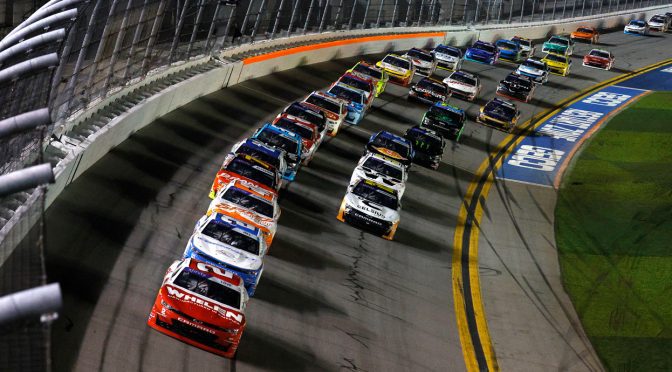
The NASCAR Xfinity Series rolls into the United Rentals 300 on Saturday at Daytona International Speedway (5 p.m. ET, The CW, MRN Radio, SiriusXM NASCAR Radio) for its season-opening race.
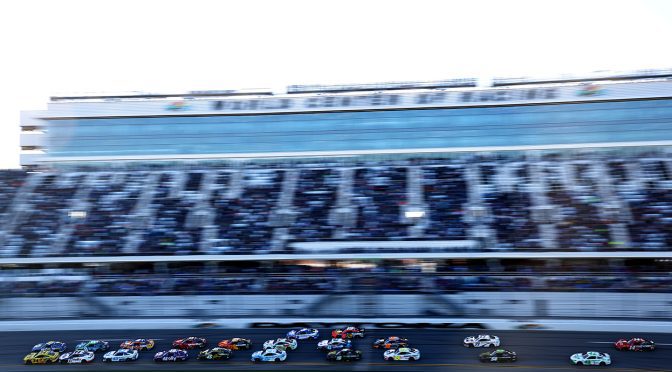
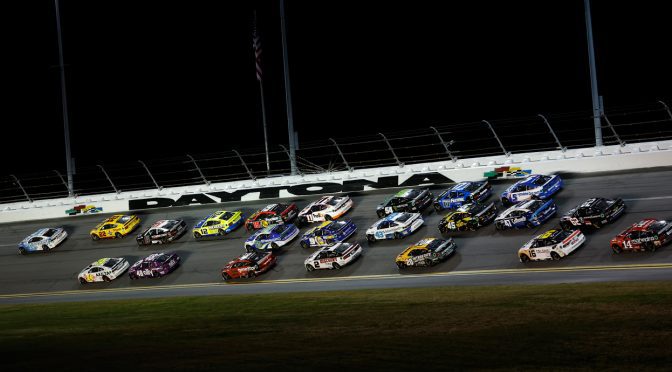
The NASCAR Cup Series rolls into Daytona International Speedway this weekend for the 67th running of the “Great American Race,” and the initial entry list shows 45 drivers attempting to make the 40-car field.
In addition to the 36 Charter cars, there are nine non-Charter cars listed, upping the number from previous years. Those nine cars will battle for four spots in the season-opening Daytona 500. That group is headlined by series champions Jimmie Johnson (No. 84) and Martin Truex Jr. (No. 56), both of whom will have to race into the field.
So, too, will Corey LaJoie (No. 01), Justin Allgaier (No. 40), JJ Yeley (No. 44), Anthony Alfredo (No. 62), Chandler Smith (No. 66), BJ McLeod (No. 78) and Hélio Castroneves (No. 91).
Hélio Castroneves and Trackhouse Racing intend to utilize NASCAR’s new Open Exemption Provisional to secure a starting spot in the 2025 Daytona 500. If Castroneves does not qualify for the 40-car field via single-car qualifying and the Duel races, he will start in position No. 41 — benefiting from a new provisional rule NASCAR announced earlier this year.
Editor’s Note: This marks the final story in a three-part series as Spire Motorsports allows NASCAR Digital Media to cover its preparation for the 2025 Daytona 500.
MOORESVILLE, N.C. — Luke Lambert knew in the summer of 2023 that Carson Hocevar was the real deal. On the precipice of the 2025 NASCAR Cup Series season, the crew-chief-driver combo is ready to prove it.
Hocevar highlights an exciting, fresh roster of driver talent at Spire Motorsports, lined up for his second full season in the Cup Series behind the wheel of the No. 77 Chevrolet with Lambert atop the pit box. Alongside him is Justin Haley in the No. 7 car, another young driver who has showcased his own bursts of potential, as well as 2021 Daytona 500 champion and two-time Cup race winner Michael McDowell, who steps into the No. 71 Chevy after seven years with Front Row Motorsports.
Now 22, Hocevar made his Cup debut at World Wide Technology Raceway at Gateway in June 2023, coincidentally at Spire in the No. 7 car. He immediately proved his natural speed and ability despite his novice nature — and before a mechanical failure ultimately sidelined him. So when Legacy Motor Club needed a substitute driver through nine of the final 10 races of that season, the Michigan native got the call with Lambert then calling the shots for the No. 42 Chevrolet.
That combination produced improved results nearly immediately, netting top-20 finishes in each of his first four starts and including an 11th-place effort in his first 500-lap feature at Bristol Motor Speedway. Together, Hocevar and Lambert moved to Spire’s No. 77 team ahead of the 2024 season and became a weekly fixture inside the top 20 — evidenced by his 18.3 average finish — as Hocevar earned Rookie of the Year honors.
There is more than hope that his sophomore year as a full-time Cup driver will produce even better results. Rather, there is an expectation to contend for a spot within NASCAR’s 16-driver playoff field on the front end of what could be a lengthy stay at the sport’s top level.
“I feel like his runway is really long here,” Lambert said. “I feel like that my role in it with him is to work with him and help him to expect some of the things that are going to be big challenges in this sport and learn the right times to push the right times to make aggressive moves really try to reinforce the discipline that it takes to compete at this level.”
Sean Gardner | Getty Images
Managing that aggression level may stand as the most significant challenge for both Lambert and Hocevar. A young, fast and fiery driver, Hocevar has found himself in the center of controversy over the past few years — first as a full-time Craftsman Truck Series contender from 2021-23 and continuing to the Cup level last year, earmarked by a Nashville Superspeedway run-in with Harrison Burton that resulted in a $50,000 fine and 25-point penalty after spinning Burton under yellow-flag conditions.
“It might explain sometimes when I do dumb things or make mistakes, but a lot of times, it’s literally just going off instinct and doing everything and literally being on autopilot,” Hocevar told NASCAR.com Feb. 4. “That’s why I want to race every day of my life, just because the more I can be on that autopilot, the better I think I am.”
Therein lies the impossible balance Hocevar must navigate: Keep doing what has worked and gotten him to the world’s top level of stock-car racing, but refine those rough edges and eliminate any doubt that he belongs — and perhaps remove any lingering friction among his competitors.
“Fortunately, he’s in this position as a 22-year-old now,” Lambert said. “I think it’s an awesome opportunity to be that young and to be competing at the top level of motorsports in the United States. I want to be a part of watching all of that develop and see him be the best version of himself. And so I want to be able to be a part of that by helping reinforce the discipline and helping him learn how to work within the rest of our team. But as much as anything else for me, it’s fun to be a part of the ride and to do it with him, with his team. And we have a good time working together, and that is icing on the cake.”
Lambert and Hocevar head the only Spire team that returns intact from its 2024 campaign. Within the shop are plenty of new faces that had to navigate competing against Hocevar in prior years.
“It’s been interesting because a lot of the guys that came in this building have raced against me,” Hocevar said. “It’s funny. A lot of them didn’t like racing against me, but they like racing with me. So that’s been fun for me. And truthfully, like I know Matt McCall, like, he loves it. I feel like I’m one of the most confident persons in myself. And I feel like that’s part of the reason that was fast in a Cup car right away was you have this confidence as a race car driver, and some of it’s mixed with delusion and daydreaming and pipe dreams and everything. But if you have the confidence to just go and do it, there’s a lot of times there’s speed and availability there.
“The only thing I’ve ever been scared of was being slow. I’ve never been scared of pushing too hard or making mistakes.”
Zach Sturniolo | NASCAR Digital Media
In his inaugural Daytona 500 appearance one year ago, Hocevar qualified ninth but completed just five laps after falling victim to other drivers’ mistakes and getting collected in a multi-car crash, ultimately finishing 40th — last — in the “Great American Race.”
“Superspeedways are not my forte,” Hocevar said.
His typical strategy, he continued, is to ride near the back of the field for the majority of the race and capitalize on others’ misfortune. That strategy generally played in his favor in the other five drafting-style races in 2024, averaging a 15.4 finish across them.
This year, Hocevar has two new teammates behind the wheel. Haley, a Daytona winner in 2019, replaced Corey LaJoie in the No. 7 car for the final seven races of 2024 and has crew chief Rodney Childers joining atop the pit box this year. McDowell, who earned five of his six 2024 Busch Light Pole Awards on superspeedways last year, joins this year with crew chief Travis Peterson to replace Zane Smith and Co. in the No. 71. Each driver has their own individual strengths, which Hocevar says he believes will only better them all.
“I think we’re gonna be able to make each other faster,” Hocevar said. “When I don’t know (how to be better), they’ll know. And when they don’t know, I’ll know. And I think it’s that way in crew chiefs, right? I think Rodney’s strong suit is the short tracks, and Travis’ strong suits (are) the road courses and superspeedways, and our strong suit’s the mile-and-a-halves and really fast tracks, right? So when you look even at our crew-chief lineup, and then you throw Matt McCall and Ryan Sparks in there, you have all your bases covered.”
Haley, 25, has spent this offseason learning the microscopic detail that Childers and his crew put into each step of preparation. What he hasn’t quite figured out is Hocevar.
“I don’t know if I’ve learned anything about Carson,” Haley told NASCAR.com with a laugh on Feb. 4. “He’s kind of his own animal, and I let him do his own thing and let him find his own way. Obviously, he’s super quick and has a lot of speed, and, you know, McDowell is experienced and been around it forever. I kind of fall in the middle.
“We honestly haven’t even really developed a team dynamic at the race track. Obviously, we’ve been in several meetings at the shop, but Bowman Gray was pretty rushed, and we didn’t have a debrief because we went straight into qualifying. So, we had our first debrief today. It went well, and we’ll build off of that.”
At age 40, McDowell is easily the elder statesman of the program. With that comes built-in trust in his feedback. But he also offers a fresh perspective to a still-burgeoning group of racers. In joining Spire, McDowell pointed to his trust in the ownership group’s outlook through co-owner Jeff Dickerson and team president Bill Anthony.
“I think we all know how to make race cars go fast, and I feel like we’ve brought people to make race cars go fast,” McDowell said Jan. 29. “But it’s having a clear vision, and it’s having good leadership and being able to execute that. And so I feel that’s probably the biggest strength that I’ve seen here, is that Jeff and Bill and everybody committed to the growth of this race team, and not just short term, but long term. They’re doing all the things that also represent them, right?
“It’s one thing to talk about it and say, ‘Oh, we’re gonna be really invested in this and this and this. But they have been, and they’re doing it.”
Together, they’ll go into battle Sunday with hopes one of the three walks away with a Daytona 500 victory.
The NASCAR Cup Series kicks off the 2025 season with the sport’s premier crown-jewel event: the 67th running of the Daytona 500 at Daytona International Speedway. Qualifying for this race is unlike any other on the circuit. The format includes two rounds of single-car qualifying to set the front row of the Daytona 500, plus a pair of 60-lap Duel races that sets the remainder of the field and the official starting lineup for the “Great American Race.”
The 36 drivers of Chartered cars are guaranteed to be in the race. Their starting positions are determined by both single-car qualifying and the Duel races. The remaining four spots in the field are filled by drivers in non-Chartered, or Open, cars.
The two fastest non-Charter cars in single-car qualifying will lock into the field — they could still advance their Daytona 500 starting spot with their performance in the Duel races but can fall back on their time if needed. The final two positions are determined by the highest-finishing non-Charter car in each Duel race.
New for 2025 is the Open Exemption Provisional, which NASCAR can give to a special or invited entrant on a case-by-case basis. NASCAR announced that Hélio Castroneves would be awarded the provisional for the Daytona 500 if needed. Castroneves, driving the No. 91 Chevrolet for Trackhouse Racing, can still qualify for the Daytona 500 via the standard qualifying procedure. But if he doesn’t, he would slot in as a special entrant and start 41st. For more information on the OEP, read here.
MORE: Active drivers with Daytona 500 victory | Daytona 500 pole winners
Daytona 500 single-car qualifying
The single-car qualifying session is Wednesday, Feb. 12 (8 p.m. ET, FS1, MRN Radio, SiriusXM NASCAR Radio).
Each driver will run one timed lap around the 2.5-mile Florida superspeedway. The top 10 fastest drivers will then advance to Round 2 to fight for the pole position. The two fastest drivers in the final round lock themselves on the front row for Sunday’s Daytona 500 (1:30 p.m. ET, FOX, MRN Radio, SiriusXM NASCAR Radio), with the fastest claiming the pole. The rest of the lineup for the “Great American Race” is determined by the Duel races on Thursday (7 p.m. ET, FS1, MRN, SiriusXM NASCAR Radio).
The lineups for the two Duel races are determined by the qualifying speed chart. Those finishing first, third, fifth, etc. will race in Duel 1. Those finishing second, fourth, sixth, etc. will race in Duel 2, although NASCAR ensures there is an even number of Charter cars and non-Charter cars in each Duel race.
How do the Duels set the starting lineup for the Daytona 500?
The Duels consist of two 60-lap, 150-mile qualifying races that set positions third to 40th in the Daytona 500. The finishing order from Duel No. 1 will make up the inside rows for the Daytona 500. Then, those participating in Duel No. 2 will complete the outside rows for the “Great American Race.” Remember, the starting front row for the Daytona 500 was previously determined via single-car qualifying.
Duel No. 1 is set to get underway Thursday, Feb. 13 (7 p.m. ET, FS1, MRN Radio, SiriusXM NASCAR Radio). Meanwhile, Duel No. 2 is tentatively scheduled for 8:45 p.m. ET (FS1, MRN Radio, SiriusXM NASCAR Radio).
The top-10 finishers in each Duel will be rewarded points that count toward the regular season. However, no playoff points will be awarded to the winners of each Duel race.
The winning driver of each Duel race will receive 10 points. Second place will earn nine points, and so on, down to the 10th-place finishers, who will get one point.
NEW SMYRNA BEACH, Fla. — A week-long trip to New Smyrna Speedway comes as a full-circle moment for Quebec, Canada native Raphael Lessard.
It was in 2016 during the World Series of Asphalt when Lessard made a solid first impression amongst the U.S. motorsports community. Driving a car prepared by David Gilliland, a solid debut outing for Lessard ended with a fourth-place finish in the Pro Late Model standings, which included a victory in the penultimate event.
That triumph in the Pro Late Model was Lessard’s first on U.S. soil at 14 years old. Now wiser with more experience to his name, Lessard has spent the first few days in New Smyrna diagnosing issues with his Pro Late Model but remains optimistic he can recapture the same consistency from 2016 before the week concludes.
“We wanted to enjoy a week of racing, that’s why we’re here,” Lessard said. “[We’ve been] having some trouble with the engine. It just won’t go. The car is really good in the corners, but there’s something we haven’t figured out.”
Lessard had plenty of knowledge to rely on for resolving his mechanical problems, some of which stems from his brief stint in the NASCAR Craftsman Truck Series with organizations like Gilliland’s and Kyle Busch Motorsports.
The efficiency Lessard displayed on U.S. short tracks, including accomplishments such as a Super Late Model title the same year of his breakthrough World Series of Asphalt win, kept him on the radar of major teams during the late 2010s. By the end of the decade, Lessard found his way into the Truck Series on a part-time basis.
Lessard’s first full-time Truck Series campaign with Busch was anything but normal. The onset of the COVID-19 pandemic meant Lessard could not utilize practice or qualifying to acclimate himself to tracks larger than a half mile, requiring him to lean more on the simulator and his team for guidance.
Despite dealing with some initial struggles, Lessard adjusted to the circumstances around him and began to find his comfort zone. All four of Lessard’s top fives came during the second half of the Truck Series season, including his lone victory at Talladega Superspeedway after he passed Stewart Friesen on the last lap.
Despite dealing with COVID-19 restrictions, Raphael Lessard adapted to his environment and managed to score his lone NASCAR Craftsman Truck Series win in 2020. (Photo: Chris Graythen/Getty Images)
Although he planned to run another full Truck Series season in 2021 with GMS Racing, financial issues caused him to vacate the ride after seven starts. While he wishes his time in NASCAR would have endured, Lessard is grateful for everything he learned during that timeframe, particularly in a year dominated by COVID-19 restrictions.
“I learned to adapt,” Lessard said. “It was a new race track every week with no practice. You’re working full-time to develop your skills and craft at racing. There’s a lot of aero stuff at [an intermediate] you don’t have on a short track, but that was really fun to learn.
“In the end, it was too much money for us, but I lived that dream for a year and a half.”
Lessard moved back to his home country of Canada after departing GMS Racing, where he maintains an active presence in the motorsports community.
The start of the 2021 NASCAR Canada Series saw Lessard take home checkered flags in the first two races at Sunset Speedway. Lessard still makes infrequent appearances in the Canada Series, but his focus the past two years has been with Serie ACT Quebec, where he has piloted the No. 48 for LaRue Performance.
Lessard wasted no time showcasing the talent that helped him reach NASCAR’s top levels just a few years earlier. He earned the Serie ACT Quebec championship during his rookie year in 2023 before following it up with an even more dominant run that saw him tally six victories and build a 109-point advantage over Jeff Cote in the final standings.
Cote has known Lessard since his childhood, as they both attended the same school and played ice hockey together. The two also bonded over their family’s passion for motorsports, as Lessard and Cote’s fathers, Francois and Tony respectively, raced against each other during their careers.
Competing against Lessard on a regular basis in Serie ACT Quebec provided Cote a reminder on how accomplished his friend is behind the wheel. There are many qualities about Lessard that Cote believes have contributed to his success in both the U.S. and Canada, the most notable being his versatility.
“It’s his capacity to adjust his driving style to the car he has,” Cote said. “It’s quite impressive with the way he explains what the car is doing. He’s a good driver for many reasons and when you’re at a track practicing with Kyle Busch, it makes you a better driver. He’s a well-rounded race car driver at his age.”
While Cote wants to best Lessard on the track, he also cherishes being able to share ideas and assist him in any capacity. The camaraderie between the two is one reason why Cote accompanied Lessard to New Smyrna for the World Series of Asphalt.
Cote, Lessard and the rest of the crew have been diligently working to rectify the mechanical issue that has plagued Lessard’s No. 48 since they unloaded at New Smyrna. Lessard never cracked the top 20 during practice on opening night Friday evening and placed 24th of 26 cars during the 59-lap Pro Late Model feature.
Sunday’s feature saw Lessard’s struggles continue with a 17th place finish. He did not run the Pro Late Model event Saturday.
Raphael Lessard has battled issues with his during the World Series of Asphalt, but remains optimistic about picking up a victory. (Photo: Ted Malinowski/NASCAR Regional)
The setback is not deterring Lessard, who is exploring every viable option with his team to get the car where it needs to be. Lessard’s goal heading into the World Series of Asphalt was to have fun, all while gathering information that can be utilized ahead of a busy racing season.
“In a week [at New Smyrna], you learn as much as you would in a full racing season,” Lessard said. “We just want to learn more about these Pro Late Models because I think we’re going to run more in the future. They’re a lot of fun, the competition is great and we have some potential to be in the front with these guys.”
Following New Smyrna, the tentative plan for Lessard in 2025 is to venture back into the U.S. again more frequently, primarily in the ACT Late Model Tour that operates in the northeast. He also intends to keep racing in his home country and is currently working on a deal to return to the Canada Series on at least a part-basis.
Cote looks forward to seeing what Lessard accomplishes in both countries and would love to see him start the year with success in the World Series of Asphalt. The mechanical issues have been frustrating on numerous fronts, but Cote said there are still plenty of days left for Lessard to deliver a performance he and the team deserve.
“We want to win, but all these drivers and teams are great,” Cote said. “If we can be in the top five all week, we’ll be good. [Helping Lessard win this week] would be as cool as it was if I were driving the car. At this point, I want everyone to have fun and enjoy our week.
“When the car is right, he’s going to be fast.”
Even if the World Series of Asphalt comes up fruitless for Lessard, he is finding ways to take pleasure in the experience. New Smyrna’s endurance event was where everything began for Lessard a decade ago, which taught him some key fundamentals that are still ingrained into his race craft today.
If his car remains intact, Lessard plans to make a run at a checkered flag during the remaining Pro Late Model events.
“[A win] would be great,” Lessard said. “It’d be like ‘I’m still here’ to the people out here who still know me from when I raced against them in 2015, and 2016 to 2018 in Super and Pro Late Models. I’ve still got the talent to compete.”
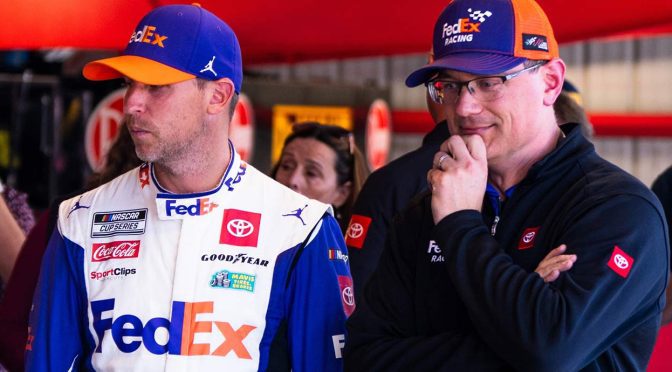
Before the preseason-opening Clash at Bowman Gray Stadium, Chris Gabehart was asked about the emotions of stepping off the pit box for the first time in a long time, changing roles at Joe Gibbs Racing after spending the last six seasons as crew chief of Denny Hamlin’s No. 11 Toyota.
“I mean, we’ll see,” Gabehart said. “I haven’t actually done it yet.” His answer partly stemmed from the timing (one day before the 200-lap Madhouse exhibition) and partly from that weekend’s logistics (Bowman Gray’s small size and the lack of a traditional pit-box setup).
“What I can tell you is, for the first time in literally 32 years of racing, both as a driver and so on, I’m now not focused on a single door number. I’m focused on multiples,” Gabehart said. “So that part is different. But what that actually looks like? I don’t know. We’ll see how it’s going to evolve.”
Joe Gibbs Racing enters that evolving chapter with a new crew chief lineup and a new competition director for its four-car fleet in Gabehart, whose job begins in earnest this week in preparation for Sunday’s Daytona 500 (1:30 p.m. ET, FOX, MRN Radio, SiriusXM NASCAR Radio). The change shakes up an organization that went winless in the second half of the NASCAR Cup Series season last year, missing out on the Championship 4 round of the playoffs for the first time since the elimination-format era began in 2014.
An offseason evaluation prompted the switch, with Gabehart replacing Wally Brown at JGR’s competition department helm. Chris Gayle shifted over after two seasons with the No. 54 team and driver Ty Gibbs to replace Gabehart and pair with Hamlin, while Tyler Allen was called up from Gibbs’ deep Xfinity Series roster to work with Gibbs. The team’s other two crew chiefs remain in place: Adam Stevens and driver Christopher Bell stay connected on the No. 20 team, and James Small remains atop the No. 19 pit box to pair with newcomer Chase Briscoe, who replaces veteran Martin Truex Jr.
Hamlin — 44, and now the Cup Series’ oldest driver after Truex’s transition to semi-retirement — expressed his initial “shock” at the move during the annual NASCAR Awards banquet, but also praised Gabehart’s leadership and management style as a potential boon to all four teams. Those changes, though, came in fairly short order after the Nov. 10 finale at Phoenix Raceway, setting the stage for his reaction when the announcement was made 12 days later.
“So things moved pretty quickly in a lot of different aspects,” Gabehart says, “and you know, Denny’s life is quite busy his self, so finding time to absorb details on any week for him is a lot because there’s a lot going on, right? He does a good job of it, but there’s a lot going on. So in this case, it was tough. Things moved pretty quick. I honestly made the decision probably the Tuesday night of the week after Phoenix, I had finally done enough talking and making sure that I was comfortable enough with what the role would be and what I felt like my reach could be, and then once they decided there was something to talk about, then it was a matter of time to tell Denny, and I think he was pretty shocked.
“I think we’re all still … I understand the perception of this, but I have every intention of making it pretty clear that this wasn’t just a passive move. I mean, I plan to make a big difference. So it may feel awkward up front here, but I hope in several months’ time, everybody has a good understanding of why it happened.”
Gabehart is new on the job but sees his role as a conduit between what happens at the track and back at the shop, taking direct responsibility of those operations, then optimizing their performance. Gayle called the move “like having a fifth crew chief,” noting how Gabehart’s recent experience in that role will aid the flow of communication among the four teams.
Gayle has worked with Hamlin in the past, pairing up with him for a handful of Xfinity Series races, including a victory in 2015 at Charlotte Motor Speedway. As far as the surprise factor goes, Gayle says it’s a natural reaction, but adds that the shift is not as drastic as it might seem.
“I think that the shock thing is he just didn’t really … in his mind, he didn’t see it coming, right? But the driver on the outside, versus all the things that are going on inside the team, they’re not always aware of everything that’s going on until late,” Gayle said. “I can understand he has a huge rapport and success with Gabehart, so any change in his mind late in his career is trepidation about, well, how’s this going to be, right? I just assured him that I’m as motivated as ever. There were lots of times that the 54 car may have had as good a car as the 11 car. We might not have finished there, but to be quite honest with you, it’s not like we’re losing any of the information and processes with how things are done. No one’s leaving. Gabehart’s shifting to this role and going to try to lean on all four teams a little better, but nothing’s really changing, other than the voice he’s going to hear from the box.”
Gayle goes from working with the 22-year-old Gibbs to a driver who is a generation older. He and Hamlin are both later in their careers, and both share the same goals of getting back to the championship stage. The two are still in a sorting-out period, but one preseason race in, Hamlin says so far, so good.
“Yeah, we’re learning each other. Certainly it’s a process,” Hamlin said after a third-place result at Bowman Gray. “We’re not going to just figure each other out right off the bat. I’m trying to do things as I did before, and he’s trying to understand that. I also am trying to give him the full free rein to kind of do things however he sees fit as well. He got to this position for a reason. You’ve got to always trust your leadership to make the right calls. My job is to drive the car and give them the feedback, nothing more. I’m not the crew chief. I’m not the strategist. Nothing like that. My job is to do it today and go there tomorrow and tell them a direction that we need to work on. That’s really important. I feel like it’s getting off to a good start.”
A quick start this season could propel JGR to its first win since Christopher Bell’s triumph last June at New Hampshire. Hamlin won three times last season, but not since Dover in late April.
Gabehart may not have exactly discovered the full-fledged feeling of what it’s like to step off the No. 11 pit box, but the question remains: Where does he plan to sit on a given race weekend? He says that some of his trackside belongings will be in the No. 54 team’s hauler this season, while the rest may stay with the No. 11 group.
His race-day vantage point, though?
“That’s the fun part for me, honestly, is I don’t know,” Gabehart says. “I say that a little tongue in cheek. I definitely have plans, but you have to remember every lap of my NASCAR professional career, from the time I was an engineer in trucks to my last race I called as a crew chief of the 11 has been on top of a pit box. That viewpoint is very limited, and the focal point is very specific. So I’m excited to and have plans to explore all parts of what we do on a weekend from a different perspective. As a matter of fact, I think that’s acutely my job, and in doing that, be able to take that perspective and bring it back to the shop on Monday and start building speed for the following weekend. That’s the intent.”
NEW SMYRNA BEACH, Fla. — Jeremy Gerstner had no idea what happened.
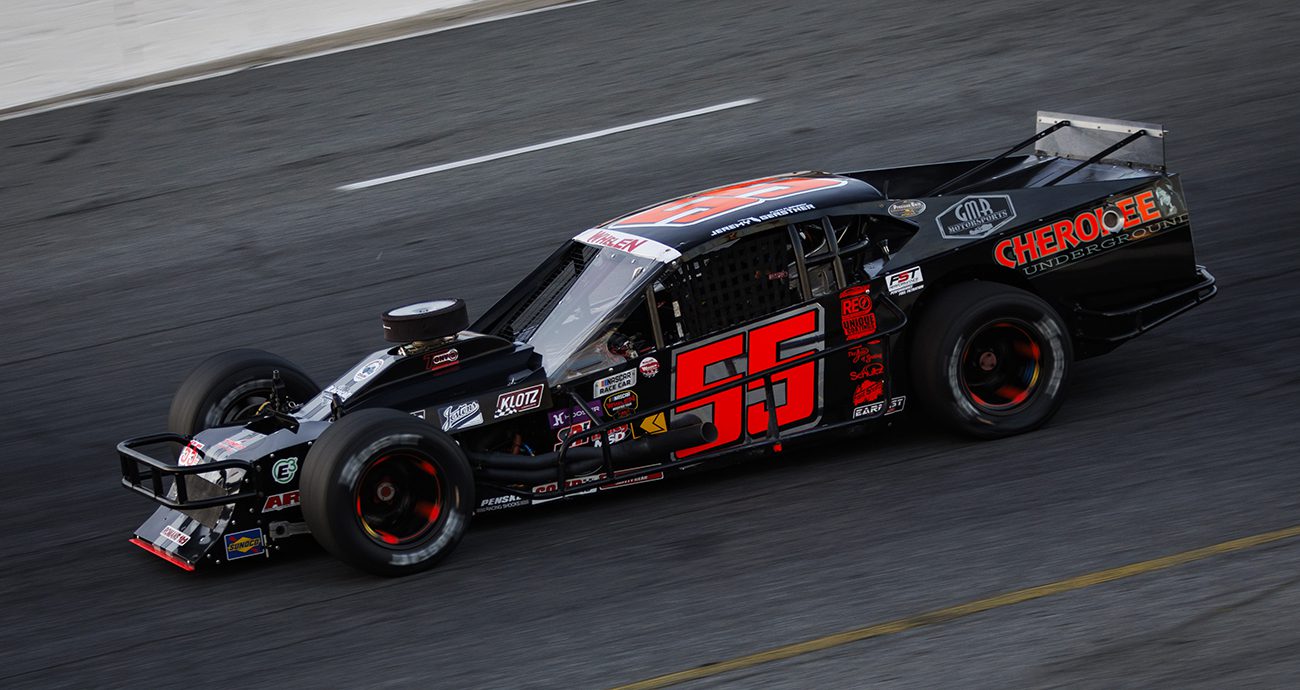
Only seconds before, he was barreling down the fronstretch at Florida’s New Smyrna Speedway preparing to enter Turn 1 during NASCAR Whelen Modified Tour practice. The next thing he knew, he was sitting inside the remains of his destroyed race car and wondering whether he was paralyzed.
The Tampa, Florida native was not paralyzed by his crash on Feb. 10, 2024. But in the moments after, he couldn’t feel anything below his waist.
“I went to get out of the car, and I couldn’t move my legs,” Gerstner said. “I pulled myself up to the outside of the car and put my head down and started taking my HANS Device off. I wasn’t in tears, but all I could think of was my buddy, Shane Hmiel.
“I raced Silver Crown cars with him back in the day and he flipped over and broke his back, and it paralyzed him from the waist down. I was freaked out; I’m not going to lie.”
Fast forward a year, and Gerstner was back at New Smyrna on Saturday to once again race with the Modified Tour.
The road to that moment was a long one, and it wasn’t easy.
Gerstner, now 52, never lost consciousness during the crash and remembers everything, including the moments before and after the impact with the Turn 1 wall.
“I came out of Turn 4, and I felt the motor skip a little bit,” Gerstner explained. “I was like, ‘Well, there is no way I could be in the chip.’ By the time I got the start/finish line it (made a noise) like it was misfiring or hitting the chip. When I went to lift after that, the motor was still wide open.
“I was like, ‘What the hell is going on?’ I pulled back as hard as I could on the return pedal … I bent the return pedal 45 degrees the wrong way. I knew at that point I was along for the ride.”
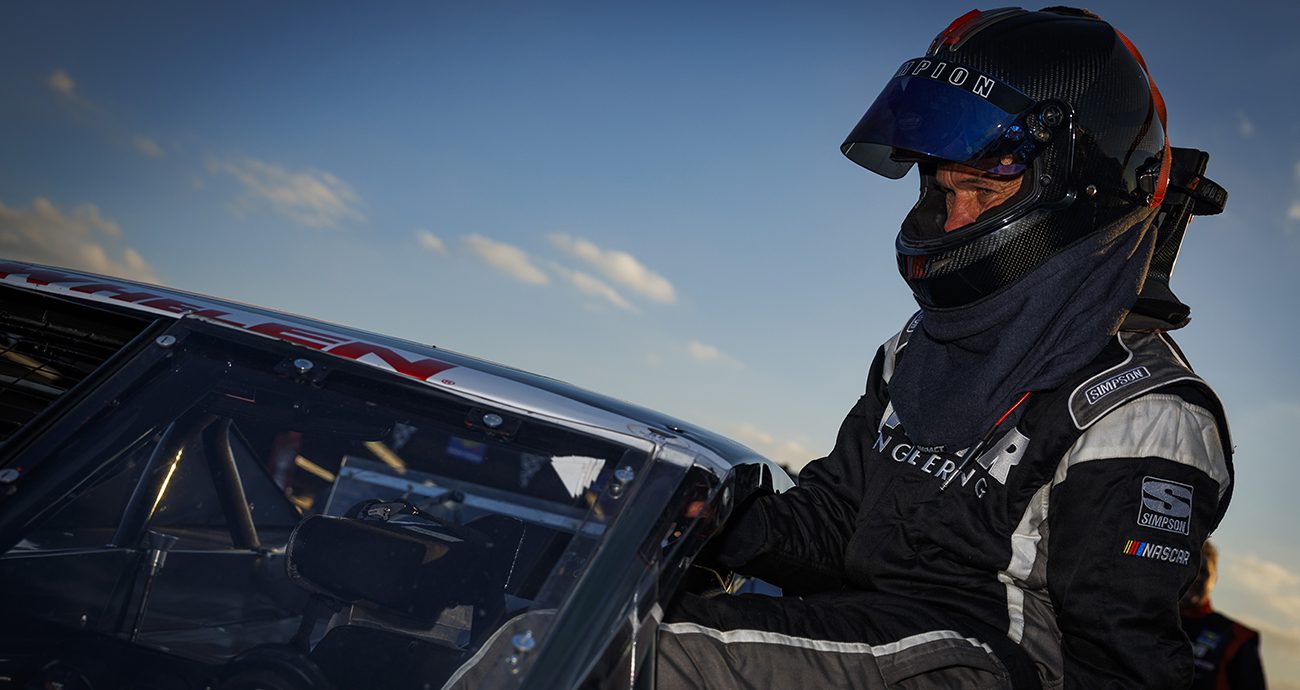
Jeremy Gerstner made his return to the NASCAR Whelen Modified Tour Saturday night at New Smyrna Speedway. (Photo: Adam Glanzman/NASCAR)
Gerstner said he hit the Turn 1 wall going approximately 150 mph. He added that the impact with the wall was estimated to have been about 35 Gs, meaning approximately 35 times the force of gravity.
“Once I hit the wall, I watched the car fly through the air,” Gerstner recalled. “I saw chain link fence. I actually felt it hook on the retention fence up top and when it did it spun me around and bam, I hit the ground.”
Gerstner’s car was left mangled. The impact was so severe that a wheel was sheared off Gerstner’s No. 55 Modified, flew over the catch fencing and landed outside the track. Luckily, no bystanders were injured as a result.
Emergency medical personal quickly rendered aid to Gerstner. Once they put him in the ambulance and got medication into his system, he began to regain feeling in his legs.
“The second they put me in the ambulance, they put me on propofol,” Gerstner said. “I could feel my legs, and I could wiggle my toes. It was like, relief.”
Gerstner was transported to Halifax Health Medical Center in Daytona Beach, Florida, where he was diagnosed with a pubic rami fracture, a broken left femur and shattered left meniscus.
“I broke my pelvis — they called it a pubic rami fracture — in four different spots,” Gerstner said. “It’s basically like cutting your whole right lower extremity off. That’s why the nerves were pinched, and I couldn’t feel nothing.”
He believes that it wasn’t the impact with the Turn 1 wall that caused most of his injuries, but rather the hard landing and clipping the catch fence.
“Hitting the wall didn’t break my pelvis or my left tibia,” Gerstner said. “What actually broke it was slamming down at 102 mph from a dead drop from hitting the fence. Our seats aren’t designed to save you like that.
“I can’t blame nobody. It was one of those unfortunate deals.”
The cause of the accident itself was a fluke; a one-in-a-million part failure according to Gerstner. The kind of thing that no one, not even the best engineer in the world, could have predicted.
Jeremy Gerstner climbs aboard his No. 55 Modified prior to Saturday’s NASCAR Whelen Modified Tour event at New Smyrna Speedway. (Photo: Adam Glanzman/NASCAR)
“On that particular day, I hit the chip on the back straightaway. Bumped it a couple of times,” Gerstner said. “I have never hit the chip with the max gear. Coming off the corner, I hit the chip at the start/finish line, which made the motor go about 200 feet in the chip.
“When you do that, it floats the valves because it’s a hydraulic cam type motor. It can’t handle being at 8200 (rpms) that long. I basically killed the motor. When it did that, a piece of the valve guide, when it bent the intake in the exhaust, bounced off the piston and shot up back through the intake.
“It was like the perfect storm. When I lifted, that piece of guide wedged between the rear throttle blade and the carburetor housing. It didn’t matter how hard I pulled back, it wasn’t coming out. When I hit the wall and it revved way up and I bounced off [the wall], the piece came out and it fell down inside the intake.”
NASCAR officials discovered the broken piece of the valve guide inside the intake while inspecting Gerstner’s car after the crash, which confirmed what caused the throttle to hang.
“I probably could have had a better chance of winning the lottery that day,” Gerstner said.
Gerstner spent months confined to a bed while he recovered, and even more months doing physical therapy to regain the strength he lost because of his injuries.
“They said, ‘As long as you behave yourself for four months and lay still, we won’t have to put the pins and all that stuff and the halo around you for your pelvis,’” Gerstner said. “So, I sat in bed for four or five months.”
Gerstner returned to the seat of a race car for the first time last November when he competed in the North-South Shootout at North Carolina’s Caraway Speedway, but what he really wanted to do was compete with the Modified Tour on Feb. 8 at New Smyrna.
He was determined not to let the bad memories from one season ago stop him from racing at a track he’s raced at for decades.
It was hardly a perfect day for Gerstner on Saturday. He qualified 26th and spun to bring out the first caution on Lap 4 but quickly got his lap back. He would spin again later in the evening on Lap 95 before retiring from the race early due to overheating issues.
Despite not having the race he hoped for, Gestner was thankful.
Thankful to be racing. Thankful to be walking. Thankful to be alive.
“I’m still here to talk about it and race another day,” Gerstner said.
 Busbee explores the earliest days of racing on the beach and integrates local expertise via conversations with longtime Daytona Beach News-Journal sports columnist Ken Willis, a Daytona Beach native who has covered NASCAR for decades, to Suzanne Heddy, a local historian and member of the National Racing Heritage Association, and Steve Gooch, the owner of Fun Coast Tours.