DAYTONA BEACH, Fla. – It took 20 attempts for Dale Earnhardt Sr. to win the Daytona 500. When he took the checkered flag in 1998, the seven-time NASCAR Cup Series champion ended a winless streak that had reached 59 races.
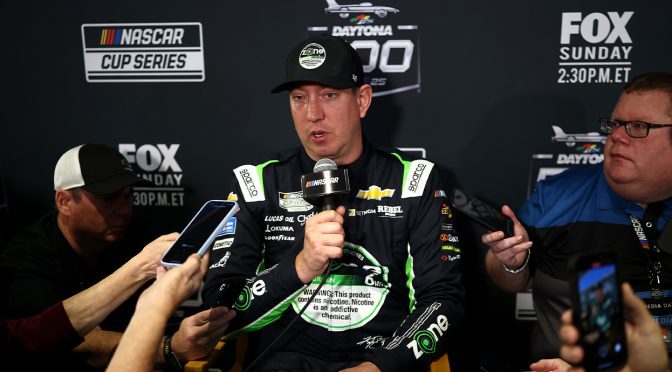
Likewise, Kyle Busch has been frustrated in his first 19 starts in the “Great America Race.” The two-time series champion hopes he’ll find the same magic Earnhardt did in his 20th attempt on Sunday (1:30 p.m. ET, FOX, MRN Radio, SiriusXM NASCAR Radio).
Busch drives for Richard Childress Racing, just as Earnhardt did. Earnhardt failed to win a race in the season before his breakthrough victory at Daytona. Busch was winless last year, breaking a series-record streak of 19 straight seasons with at least one victory.
Busch, whose winless streak has reached 57 races, certainly knows the history.
“Twenty years of trying,” Busch said wistfully. “There was another storied racer of the past that won on his 20th try and that was a pretty big deal. He was a former RCR driver as well, so it’d certainly be nice to win that race and do it with RCR in the No. 8 Zone Chevrolet. So that would be pretty cool.”
Nor does Busch lack confidence in the quality of Childress’ superspeedway package.
“We’ve had really good speed being down here,” Busch said. “These guys build great (superspeedway) race cars, so when we go to Daytona, Atlanta, Talladega, we feel like those places are really good for us.
“We’ve got really good speed. I just told someone that it’s an 80 percent luck/20 percent skill race. Others would disagree, but I feel like you have to have a lot of things go your way, and you have to have the stars align. Being able to lead (after) the final pit stop is certainly going to put yourself in a really good position.”
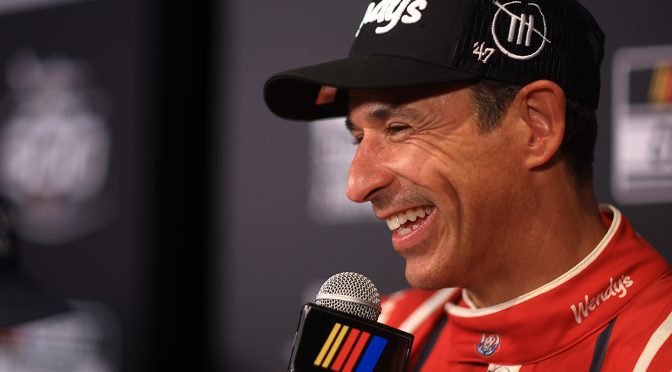
Hugely popular four-time Indianapolis 500 champion Hélio Castroneves showed up for Wednesday’s interviews with the national media smiling and optimistic. In other words — typical Castroneves spirit.
In his first official NASCAR Cup Series practice at the track — driving the No. 91 Trackhouse Racing Chevrolet — Castroneves was second fastest among the rookies and 12th overall.
No matter how Castroneves fares in Wednesday night’s qualifying or Thursday’s Duel 150, he has already been granted a starting position in Sunday’s race as an Open Exemption Provisional, a special designation Trackhouse requested from NASCAR more than 90 days prior to the race.
The provisional, which NASCAR granted, is designed to give world-class drivers who are not full-time NASCAR competitors a chance to race. Only one such provisional is granted per event.
Castroneves conceded it’s all been a learning exercise, from negotiating directions from pit lane to the garage and how to properly pit, not to mention allowing more room between the car and pit wall than he is used to competing in IndyCar so the NASCAR crew has ample space to change the tires.
“Every step has been a learning process,” said Castroneves, who will also attempt to race in this year’s Indianapolis 500 in hopes of earning a historic, unprecedented fifth win.
“I’ve been watching a lot of in-car cameras,” he added. “Understanding a lot of the rules and being in touch with the guys (on the team) because the language is different. When you come out of the pits, normally they say, ‘Whoa, whoa, whoa,’ but here they say, ‘Dig, dig, dig.’
“I know it sounds interesting or different; however, it’s completely the opposite of what I’m used to. So, I have to adapt. … all these little details, even though it’s a race car, it’s very different. When you are in a big race like this, every little detail matters, so I am trying to study all these details.”
Throughout his time with the NASCAR press Wednesday, the 49-year-old Castroneves reminded reporters that, although he is thoroughly enjoying his time at track and behind the wheel in this new quest, he is quite serious about the ultimate goal.
“At the end of the day, I’m not here just to cause attention,” Castroneves said. “I’m going to do everything I can to do the job.
“But the camera cannot see the smile behind my helmet. It will feel so good. Super excited.”
Cole Pearn is returning to his old gig, but it’s only a brief hiatus from the new life he has built far away (figuratively and literally) from NASCAR.
In a snow-kissed valley known as “The Rocky Mountain Trench,” Pearn now fills his days with “a little bit of everything” since he stunned the Cup Series by walking away from his job as a championship-caliber crew chief following the 2019 season.
With his wife, Carrie, he owns and runs Golden Alpine Holidays, a 50,000-acre vacation playground in the Esplanade Range of the Selkirk Mountains. Pearn dotes on his two kids who are growing up at ice rinks that appeal to him as much as an asphalt oval. He juggles a jack-of-all-trades existence that runs the gamut from coordinating weekly helicopter landings to posting picturesque photos as an Instagram influencer.
Pearn even helps coach a youth hockey team in Golden, a town of roughly 4,000 that sits at the junction of two rivers, three mountain ranges and five national parks in southeast British Columbia.
Though still “a massive fan” of motorsports, which dominated over half his life and took him to the United States for the fame and glory of excelling in NASCAR, the Canadian now is experiencing his other dream of living, hiking and skiing among the peaks of his native country.
“I still wake up every day and feel like I hit the lottery,” Pearn told NASCAR.com. “It’s been great. I get to do all the things that I love to do, and it’s been really good for my mental health and physical health. I’ve learned new things and obviously owning a business is an adventure. It’s been a lot. It’s crazy it’s been five years already.
Even crazier might be Pearn being back atop a NASCAR pit box this week.
And it’ll be the first race as crew chief for Pearn since the 2019 season finale that seemed his final chapter as one of the most brilliant and unconventional minds in NASCAR. A month after Truex finished second at Homestead-Miami Speedway (the second consecutive year the team was one spot short of a title), Joe Gibbs Racing suddenly announced Pearn was retiring from NASCAR after 24 wins and four championship-round appearances in five seasons as a crew chief.
His surprising comeback was revealed in a way that felt just as shocking.
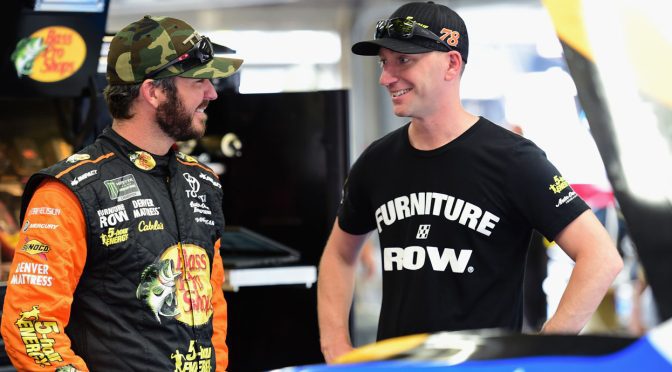
In the laid-back manner that made him such a good fit with Pearn, Truex casually dropped the bombshell just before his final Cup playoff run began last September. Cracking “I didn’t know it was that big of news,” Truex said his ask of Pearn to crew chief the season’s biggest race “just kind of popped out” during a casual conversation.
“Martin caught me at a weak moment,” Pearn said in his familiar deadpan. “They kind of put the bug in my ear and said, ‘Hey, we’re going to maybe do a one-off. Would you be interested?’ I didn’t see a reason not to. I made sure I checked with my better half, and she was fine with it. It seemed to make sense. Not very often do you get these one-off deals, so if there’s ever a time to come back and do a race, it seemed like a good one to do.”
Well, at least until last month when he began getting a taste of the breakneck pace and overwhelming pressure tied to a workaholic job that he chose to leave behind.
“I was like, ‘What the hell was I thinking?’ saying yes to this,” Pearn says with a laugh. “But now that we’re right on top of it, I’m definitely looking forward to it. It’s not something you get to do every day, to step in and call a race with a good team for the Daytona 500. It’s a pretty cool life opportunity, and I’m really thankful.”
Golden Alpine Holidays, courtesy Cole Pearn
Speaking from his home in Golden, Pearn seemed typically low-key and stress-free 11 days before the Daytona 500. He would spend the next day flying cross continent to North Carolina, checking on the Daytona 500 car and team for the first time in person. Confident in Tricon’s technical alliance with Joe Gibbs Racing (which will supply most of the team personnel in preparing the No. 56), Pearn was at ease sticking to his daily routine of varied activities while managing the NASCAR one-off remotely.
“I’ve done the classic thing of I don’t have any one job that requires a lot of time,” he said. “I’ve just stacked on a lot of different jobs that all require time. Every day is kind of its own adventure.”
On this Wednesday morning, it meant being at the local rink before 7 a.m. for skating sessions with both kids before a junior hockey practice.
His 12-year-old son, Callum, is a defenseman on a high-level traveling hockey team based in Calgary (which means regular drives across the Alberta border up to three hours each way), and his 10-year-old daughter, Freya, is an aspiring figure skater who also has taken to hockey.
“Lots of time in the arena, not as much time skiing as we probably would like, but it’s for a short time in your life,” Pearn said. “I grew up doing it as well. So my wife and I both love it and are happy to be their chauffeurs.”
The rest of their days are consumed by managing the small staff that operates Golden Alpine Holidays, a collection of four lodges (Sunrise, Meadow, Vista and Sentry) located at 7,000 feet and surrounded by 130 ski runs and 125 kilometers of hiking trails.
Most of the heavy lifting involves reaching the lodges. Every Friday, two helicopters ferry up to 60 arrivals and departures as weeklong stays begin and end. “My first biggest challenge was just getting the operation sides of that down,” Pearn said. “We’re more efficient now.”
In addition to a dozen guests, each lodge has a caretaker, cook and guides who are part of a full commitment to austere outdoor living among nature. The buildings are heated by wood and propane. Water comes from nearby lakes and streams, and outhouses are in place of indoor plumbing.
“I always say it’s like four crappy Airbnbs that are just really hard to get to,” Pearn said. “They’re pretty rustic and basic. That’s part of the experience, though. With the kids being as busy as they are, I’m not up there as much as I want, but in a few years when the kids are older, I’ll hopefully build an owner’s cabin and just live up there for part of the winter.”
Though Pearn spent most of his adult life in the United States (his kids were born in Colorado while he worked at Denver-based Furniture Row Racing), he and his wife eventually wanted a “simpler” life in their native Canada (both grew up in Ontario).
That meant leaving motorsports despite having been a champion since a teenager (as a driver of go-karts and cars before becoming a crew chief).
“I knew I didn’t want to do it my whole life,” said Pearn, who turned 42 last year. “I wanted to do other things. I grew up in racing. My dad raced cars, and I raced cars and then worked in the sport full time. My whole life to my late 30s had been all about going to a race track, and it was just time to do something else.”
Tricon Garage co-owner David Gilliland could appreciate why Pearn made such a staggering move to leave NASCAR.
“It’s just priorities change and obviously he had accomplished his goals,” Gilliland said. “A lot of people get stuck doing what they think other people think they should be doing, and he’s obviously not that person.
“I always admired his passion and dedication. He was very well respected, and I think everybody is excited to have him back in the garage for another weekend. I just feel very fortunate that he’s willing to come back and just super excited to see what we can accomplish together. And who knows what the future holds.”
Jared C. Tilton | Getty Images
Pearn has kept a hand in NASCAR from thousands of miles away. Since 2021, he has handled Joe Gibbs Racing’s aerodynamic mapping — taking wind tunnel data and fitting it for the simulations that have become instrumental in making cars go fast in Cup. Every layout — short track, road course, intermediate and superspeedway — requires its own map, which makes for a painstaking job.
“It’s critical work and definitely took some time to get my arms wrapped around it,” said Pearn, who was new to the process. “It’s got to be right. If not, then it kind of leads you down the wrong path in terms of setup and stuff. It’s been a perfect kind of job for me to stay abreast and involved in the technical side.”
The work comes “in spurts” but usually keeps him busier in the offseason and around rules changes. It’s a good schedule for Pearn, who worked the 2020 Indy 500 as a lead engineer for Conor Daly (who called him an “alpha wizard of engineering”) but had no plans to be a crew chief again until the Tricon deal materialized after being brokered by Truex and Toyota Racing Development.
“I’ve made peace with that part of my life and that part of my career,” Pearn said. “So this definitely feels a bit daunting. But I’m just looking forward more than anything else to seeing all the people and old friends that I haven’t seen in quite some time.”
Aside from a couple of NASCAR cameos — Pearn was a spotter in 2021 at the Roval and a substitute engineer in 2022 at Sonoma — Truex and Pearn hardly have seen each other but maintained their longtime bond in sporadic conversations. “Sometimes a few times in a week, sometimes not for a few months at a time,” said Pearn, who admittedly doesn’t watch every Cup race to keep in constant contact but tries to check in around wins and big events.
“We don’t talk very often, but when we do, it’s just like old times,” Truex said last year. “He can pretty much read me like a book. He’s a special guy. He’s different than anyone I’ve ever known. He knows the answer to everything.”
Their understated and complementary personalities always seemed to mesh. Truex is the laconic New Jersey native who quietly posted impressive results while avoiding controversy as one of the cleanest drivers in NASCAR. Pearn is the savvy Canadian who introduced T-shirts as acceptable crew chief attire and became known for his biting social media posts.
“We have always had an easy relationship,” Pearn said. “We’re not overly complicated people. So to be able to speak matter of factly to each other and not have anybody’s feelings get hurt, it’s pretty easy to reconnect and rekindle things.”
Gilliland, who has won as a NASCAR driver, crew chief and team owner during his lengthy career in the sport, said chemistry was the secret sauce for Pearn and Truex.
“Those two don’t doubt each other and that’s hard to find,” Gilliland said. “That’s what makes that particular pairing extremely potent. Everybody’s going to make mistakes. When you’re sitting on top of the box, there’s decisions to make that are not going to be right every time. The championship-caliber teams, when a bad decision or call is made, they’re not dwelling on it or sulking in the negative consequences. You’ve got to believe in each other.”
Pearn and Truex built that trust at Furniture Row Racing, which slowly morphed from obscure single-car underdog into NASCAR powerhouse. The anti-establishment team cultivated an outsider reputation through its Midwest base that was mandated by team owner Barney Visser, who preferred to spend only on substantive parts instead of flash. There are similarities to Tricon, a scrappy startup that grew from running quarter-midgets out of Gilliland’s backyard into an organization now fielding five trucks.
“That’s definitely a role I’m comfortable in and have lived, so that part is definitely kind of cool,” Pearn said. “But you’ve got to temper expectations for sure. I know the cars and guys working on the team, so that helps make things a lot simpler.”
There is extra motivation for Truex, who is winless in 85 superspeedway starts. Furniture Row’s most memorable superspeedway moment was unveiling a gigantic power saw (quickly outlawed by NASCAR in 2017), and Daytona has been the site of multiple disappointments — namely losing the 2016 Daytona 500 to Denny Hamlin by inches. Though Pearn said he jokingly asked Truex, “Why the hell are we going to Daytona? Let’s maybe go somewhere where we have a chance,” he knows his driver wants a win at the track that got away.
“But it’s hard,” he said. “We never won one when we were at the peak of our game. So coming in off the couch, it’s going to be challenging.”
Chris Graythen | Getty Images
A strong result could open the door to more offers. Truex has hinted at wanting to run more races this year, and Gilliland said his team would be ready.
Pearn’s work in aero mapping Cup and Xfinity cars has planted another seed. Less enthused about the Next Gen rules package, Pearn would like to make his crew chief debut in the Xfinity Series. (“They have a gem in that car.”)
With his phone lighting up in the last few months, he probably would have no shortage of opportunities — though he naturally would put limits on what he’d accept.
“Since I’ve left, it’s been super flattering to have a lot of good opportunities thrown at me,” he said. “It’s just not something that I’m interested in. People have a viewpoint of what you used to be like and how you operated at a high level.
“I might not necessarily be that person anymore. But I was able to leave the sport, and people still hold you in high regard. That is a nice feeling for sure.”
Nate Ryan has written about NASCAR since 1996 while working at the San Bernardino Sun, Richmond Times-Dispatch, USA TODAY and for the past 10 years at NBC Sports Digital. He also has covered various other motorsports, including the IndyCar and IMSA series.
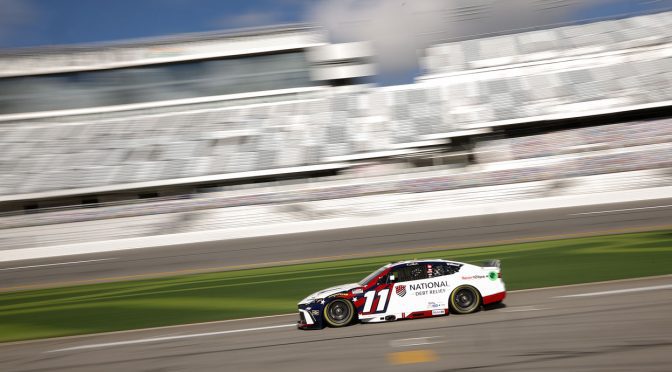
Denny Hamlin paced the NASCAR Cup Series field during Wednesday’s opening practice session at Daytona International Speedway, turning a lap of 187.480 mph in his No. 11 Joe Gibbs Racing Toyota. It’s the first of three scheduled practice sessions for Sunday’s 67th running of the Daytona 500.
Bubba Wallace (186.915), Ty Gibbs (186.370), Chandler Smith (186.177) and John Hunter Nemechek (186.100) completed the top five. Riley Herbst, Daniel Suárez, Noah Gragson, Erik Jones and Kyle Busch completed the top 10.
Notables included Helio Castroneves as the 12th quickest, Kyle Larson 14th, Shane van Gisbergen 17th and Martin Truex Jr. 31st.
For the most part, drivers participated in single-car runs to diagnose any mechanical issues for qualifying Wednesday night (8 p.m. ET, FS1, MRN, SiriusXM NASCAR Radio).
Roush Fenway Keselowski Racing teammates Brad Keselowski and Ryan Preece both had smoke coming from the right front, while Jones had transmission problems trying to leave the garage for a run.
NEW SMYRNA BEACH, Fla. — Christopher Bell’s first start at New Smyrna Speedway in a decade proved to be more eventful than he had anticipated.
Bell’s Clyde Hart Memorial 200 was dominated by adversity, as two separate early incidents and a pit road penalty forced him to repeatedly drive from the rear of the field. Despite this, Bell never wavered from the challenges in front of him and battled his way back to sixth by the time the checkered flag was displayed.
The decision for Bell to race Tuesday was last-minute, which left him a limited amount of time to acclimate to the track conditions and a car that was originally a backup for his teammate Cole Butcher. He enjoyed climbing back into a Super Late Model but knew his showing could have been much better.
“It was fun and frustrating,” Bell said. “We tried to keep an open mind. Obviously, I didn’t qualify well. Moved up through the field and was in a pretty good spot up until [the penalty], and that was a bummer to go to the back again after halfway. It was up and down.”
New Smyrna was an ideal track for Bell to make his surprise late entry. His lone previous attempt at the World Series of Asphalt back in 2015 saw him prevail in a 100-lap Super Late Model feature over names like Harrison Burton, Zane Smith and others.
The years since that victory have seen Bell emerge as one of the best competitors in both NASCAR and the world. Among the accomplishments Bell has on his growing resume are a Coca-Cola 600 victory, a NASCAR Craftsman Truck Series title and three consecutive triumphs in the Chili Bowl from 2017-19.
Bell initially balanced out his stock-car commitments with dirt-track racing, but he has explicitly focused on NASCAR in recent years. The status quo changed at the start of the 2025 season with Bell attempting his first Chili Bowl since 2022 while also running sprint cars at Volusia Speedway Park earlier in February.
The car Christopher Bell drove for Donnie Wilson Motorsports on Tuesday was originally a backup for teammate Cole Butcher. (Photo: Ted Malinowski/NASCAR Regional)
A return to Super Late Model competition also crossed Bell’s mind. With the World Series of Asphalt at New Smyrna ongoing just 20 minutes away from Daytona International Speedway, Bell contacted Donnie Wilson Motorsports about potentially entering the Clyde Hart Memorial 200.
The deal was quickly put together in time for the event, reuniting Bell with his old Super Late Model car owner Bond Suss, who is now the general manager for Donnie Wilson Motorsports.
“I didn’t have anything else going on,” Bell said. “We’ve got [Daytona 500] practice [on Wednesday], but Bond Suss and I had been talking for a while about putting something together. It ended up working out.”
Joe Gibbs Racing Director of Competition Chris Gabeheart also accompanied Bell to New Smyrna as his crew chief for the Clyde Hart Memorial 200. The presence of Suss, Gabeheart and Wilson gave Bell plenty of confidence about his chances to win despite the expedited schedule.
Finding a rhythm proved to be a challenge for Bell with no practice prior to Wednesday. With his teammates being the only source of information available from the previous day’s practice, Bell could only post a quick time of 18.229 seconds, which placed him 30th of 32 cars on the starting grid.
The two early wrecks only compounded Bell’s struggles, but he only sustained minimal damage and gradually grew more comfortable as the race progressed. An onslaught of cautions led to diverging strategies amongst the leaders, enabling Bell to climb his way into the top 10 by the halfway point.
All of Bell’s progress would be erased when he was assessed a penalty on pit road during a controlled caution. Now at the tail end of the lead lap again with fewer laps at his disposal, Bell began methodically picking off his competition, all while attempting to avoid any further collisions with the ASA STARS National Tour regulars.
“I’m just trying not to create enemies,” Bell said. “I’m out here racing for fun, but for these guys, this race is a big deal to them. This is what they do, and I’m trying to stay out of people’s way.”
Despite dealing with plenty of adversity, Christopher Bell enjoyed his return to New Smyrna Speedway in a Super Late Model. (Photo: Adam Glanzman/NASCAR Regional)
When the dust settled on a chaotic night of racing at New Smyrna, Bell’s red No. 20 Mobil 1 Toyota was still intact and comfortably inside the top 10 once again. The comeback from Bell capped off an efficient night for Donnie Wilson Motorsports, as Bell’s 17-year-old teammate Gavan Boschele took home the checkered flag.
Although Bell wanted to park his car in New Smyrna’s Victory Lane again, he found plenty of positives to take away from his impromptu visit to the facility. One highlight for Bell was sharing ideas with Suss again, the same person who helped Bell with his initial transition into stock cars many years ago.
Every opportunity to compete in pavement races outside the Cup Series carries immense value for Bell. Dirt races are the focal point of Bell’s non-NASCAR schedule, but he is not ruling out another Super Late Model collaboration with Suss and Wilson at some point in 2025.
“This is a blast,” Bell said. “It’s fun to broaden your horizons and get to race with different people. We’ll have to see what the schedule allows [for Super Late Models], but I enjoy these one day shows for sure. Hopefully I get to keep it up.”
Confirming NASCAR is leaning toward tweaking its Cup Series Playoffs, chief operating officer Steve O’Donnell said it’s a virtual certainty that the location of the title race will change.
During the inaugural episode of the new “Hauler Talk” podcast, O’Donnell discussed the deep dive into the playoffs that NASCAR is taking this year with an industrywide committee, highlighting a rotation of the championship as an integral part of the conversation.
NASCAR Creative Design
“It’s more complicated than just waving a checkered flag and say, ‘Let’s move the championship,’ but I do think a rotation is going to be really important for us,” O’Donnell said. “If (a driver has) won 45 Phoenix races in a row and the championship is there, it’s probably not a good look for the sport, right? And we’ve had a good mixture (of champions at Phoenix). But I think a rotation is what the fans would like.
“College football and the NFL (have) that rotation (of championship games) and anticipation of a new venue. I think you’ll see that with NASCAR as well.”
What tracks are on the title rotation wish list?
O’Donnell essentially ruled out superspeedways (which lack support from drivers and teams) and added that road and street courses “might be a little tough.” That leaves short tracks and intermediates as fair game – and not necessarily just those that are in warm-weather destinations in the fall.
O’Donnell said the success of the Cook Out Clash with winter temperatures in the 40s at Bowman Gray Stadium proved that “people will show up if it’s exciting enough and it’s not snow and rain.”
“Wherever we can put on a great race,” he said. “I think any oval where we can pull it off. The biggest thing for us is having the championship atmosphere around that community as well. It’s one thing to have a race, but you need passionate race fans, you need a sold-out venue and you need the community to embrace it. I think there’s a lot of opportunities for us in a lot of different places to look at that.”
There also has been speculation about the future site of The Clash, which raced at a sold-out Bowman Gray as its third venue in the past five years. O’Donnell hopes there will be a second consecutive year in Winston-Salem, North Carolina (“I’d like to see us go back there in 2026 and reward the fans who showed up”) but said NASCAR might have two primary options for its Clash tracks after that.
“You could go international or you could use that same model of going to a short track in the U.S.,” O’Donnell said. “Where NASCAR comes in, rewards that track and their competitors for what they’re doing and makes some upgrades to the facility that we leave for the next generation of racers. And then we stay for a little bit and move on to the next one. So I think a combination of both of those would be really cool. I really like the idea of NASCAR coming in and investing in the short tracks.”
The future of The Clash will be determined through collaborative deliberation, just like the potential playoff changes for the 2026 season.
NASCAR is forming a working group that will include drivers, team owners, manufacturer representatives, media and fans to beat up ideas in a manner similar to the industry committee that produced stage racing and playoff points introduced in 2017.
O’Donnell said everything is on the table for the playoffs, from points format to the race track lineup to how the rounds are structured (such as determining the champion over multiple races).
“We may end up exactly where we are, but I don’t think so,” he said. “I think there’ll be some tweaks that we look at that we can improve upon. There’s a lot of different variables to look at to make sure we’re crowning the drivers who win and are up on the wheel, and we can tell a story that they’re deserving of being a NASCAR champion.”
In light of Chase Elliott’s recent proclamation that “I’m not sure there’s a more important decision that we can make in just how we crown our champion every year and making sure that we’re not ever doing that the wrong way,” O’Donnell said legitimacy would be stressed in the discussions.
“I still stand by Joey Logano as a three-time champion, but we want to take a look at how we can balance that,” he said. “So that the Kyle Larsons of the world feel like this is a place I want to race for the rest of my career because If I’m up on the wheel and I’m winning, I’m going to be rewarded for that.”
During the debut of the Hauler Talk podcast, which will explore competition issues in NASCAR with Mike Forde and Amanda Ellis of the communications department, O’Donnell also discussed:
— His upbringing in the Middle East and how it impacted his worldview and as an adjudicator of disputes in NASCAR;
— The emotions of being in the scoring tower;
— The nuances of NASCAR listening to everyone’s opinions without agreeing with all of them.
The Daytona 500 is the greatest stock-car spectacle in the world — and as such, it has attracted a wide swath of drivers over the years attempting to qualify for the field.
Many of those stories — like those of Dale Earnhardt, Richard Petty and Jeff Gordon — are well known. Others are a bit more unique.
We analyzed every driver who has driven in the “Great American Race” and selected 10 whose stories deserve to be told.
Below are 10 of the most unique drivers to ever compete in the Daytona 500.
There are few drivers more closely associated with Modified racing than Maynard Troyer.
Troyer is well known as the founder of Troyer Engineering, a chassis and parts business he formed in 1977.
However, long before that, he was a fierce competitor at tracks up and down the East Coast. From his home base in Spencerport, New York, Troyer competed against the best Modified competitors of the era, including NASCAR Hall of Famers Richie Evans and Jerry Cook.
Troyer was a track champion at New York venues like Spencer Speedway and Lancaster Motorplex, and his orange No. 6 Modified was well known across the region with major victories coming in the Race of Champions and the Spring Sizzler.
In 1971, Troyer moved up to the Cup Series and made his Daytona 500 debut. However, things took a disastrous turn only nine laps into the race when an engine failure on his No. 60 Ford resulted in a horrible crash that saw Troyer flip more than a dozen times.
Troyer was seriously hurt but was back racing by April. He returned to Daytona in 1973 for his second and final start in the “Great American Race,” finishing 23rd after an engine failure knocked him out of the race after 150 laps.
Troyer would remain involved in the motorsports industry for years through his business, Troyer Engineering. He died in 2018 at age 78. Pedro Rodríguez de la Vega
Decades before Daniel Suárez became the first Mexican-born driver to win a NASCAR Cup Series race, Pedro Rodríguez de la Vega became the first Mexican-born driver to compete in a NASCAR Cup Series event years before making his Daytona 500 debut.
Born in Mexico City, Mexico, he began racing at an early age. Alongside his brother Ricardo, who was also a renowned racer, the brothers captured national motorcycle championships in the early 1950s in Mexico.
By 1959, he began racing in Europe, but that didn’t stop him from competing in North America. In 1959, the then 19-year-old made his Cup Series debut during an event at New Jersey’s Trenton Speedway, finishing sixth in a field that included winner Tom Pistone, Lee Petty, Cotton Owens, Richard Petty and Junior Johnson.
That was the first of six Cup Series events he would compete in during his career, which included a fifth-place effort in the 1965 World 600.
Away from NASCAR, Rodríguez made a name for himself in sports cars and Formula One. He won two Formula One Grands Prix and captured victories in the 24 Hours of Le Mans and the Rolex 24 at Daytona.
Weeks after winning the Rolex 24 in 1971, he made his Daytona 500 debut. He initially attempted to qualify for the Daytona 500 in a car prepared by Bill Ellis, but an engine failure prevented him from doing so.
Thankfully, Jabe Thomas agreed to step out of the No. 25 owned by Don Robertson, and Rodríguez drove Robertson’s Plymouth to a 13th-place finish.
Rodríguez’s life came to a tragic end only a few months later when he was killed while competing in a sports car event at the Norisring in Nuremberg, West Germany. He was 31.
Eduardo Dibós Chappuis
One of the more unique stories to come out of the first Daytona 500 in 1959 centers around Eduardo Dibós Chappuis, who was known professionally as Eduardo Dibós or by the nickname “Chachi.”
Born in Lima, Peru, Dibós was the son of former Lima mayor Eduardo Dibós Dammert and Rina Chappuis Castagnino.
He became interested in racing at an early age, and in the 1960s, he raced sports cars against the greatest drivers of the era, including Pedro Rodríguez, Phil Hill, Dan Gurney and A.J. Foyt.
His NASCAR participation began in 1959 when he, alongside fellow Peruvian driver Raul Cilloniz, traveled to Florida to compete in the inaugural running of the Daytona 500.
Driving the No. 37 Thunderbird for team owner Van Acker, Dibós finished fifth in the 40-lap Daytona 500 qualifying race held on Feb. 20, outlasting Lee Petty, Rex White, Speedy Thompson, Junior Johnson, Tim Flock, Fireball Roberts and Buck Baker.
His success in the qualifying race didn’t transition to the Daytona 500. Starting ninth in the 59-car field, Dibós fell out of the race early with a suspension issue and finished 48th.
That wasn’t the end of his NASCAR adventure, however. He returned to Daytona International Speedway later that year to compete in the inaugural Firecracker 250. Again, driving for Acker, Dibós qualified third and finished fifth. It was his final Cup race.
NASCAR Research & Archives Center | Getty Images
Robert McGregor Innes Ireland
In the early days of the Daytona 500, it wasn’t uncommon for drivers from other racing disciplines to enter NASCAR’s biggest event.
Robert McGregor Innes Ireland, or simply Innes Ireland, is one of those drivers.
Born in Mytholmroyd, Yorkshire, England, Ireland served in the British Army in the 1950s. During this time, he also expressed an interest in racing, and by 1957, he began to pursue it as a career.
He eventually reached Formula One, but in 1961, Ireland was seriously injured in a crash in the Monaco Grand Prix. Despite this, Ireland returned to competition and scored his lone Formula One victory that same year during the United States Grand Prix at Watkins Glen International.
He made his NASCAR debut in 1967 at Daytona. Driving the No. 31 Dodge owned and prepared by the legendary Ray Fox, Ireland finished 10th in his qualifying race to earn a spot in the Daytona 500.
Sharing his impressions of Daytona after his first laps on the track, Ireland told National Speed Sport News, “Those banks look nice from here, but when you drive down the straightaway, they look like bloody ribbons.”
Starting 20th, Ireland failed to finish the 500-mile event after an engine failure. He was credited with finishing 27th.
Ireland retired from driving shortly thereafter. He later became a motorsports journalist and owned fishing trawlers that operated in the North Atlantic. He died after a battle with cancer on Oct. 22, 1993, at age 63.
Sammy Swindell
If you’re a fan or even a casual watcher of dirt-track racing, then odds are you know the name Sammy Swindell.
Swindell is arguably one of the greatest sprint car drivers ever. His accolades are abundant and his victories countless, but here are a few examples just to lay the groundwork.
Swindell, who was given the nickname “Slammin’ Sammy” for his hard-nosed and aggressive driving style, captured three World of Outlaws Sprint Car Series championships in 1981, 1982 and 1997. He also won the 1983 Knoxville Nationals.
He’s also an ace in a midget car, which he proved by winning the Chili Bowl Nationals five times, more than any other driver in event history.
Swindell has never been afraid to try something different. He made his Cup debut in 1985, driving a car fielded by Raymond Beadle at Atlanta Motor Speedway, where he finished 30th after retiring early following a crash.
He made one more Cup start, which came in 1991 during the Daytona 500. At the wheel of the No. 20 Oldsmobile owned by Dick Moroso, Swindell’s lone Daytona 500 start ended abruptly after 28 laps after he was involved in not one but two different accidents.
Swindell remains active in the racing world today as a competitor, though he has backed off the gas quite a bit compared to the 1980s and 1990s. He competed in the Chili Bowl Nationals in January in Tulsa, Oklahoma, where, at 69 years old, he raced his way to a D-Feature on championship Saturday.
Bob Senneker
The Midwestern region of the United States has produced some of the greatest short-track racers ever, including Dick Trickle, Rich Bickle and the next man on this list, Bob Senneker.
A Michigan native, Senneker began his racing career in 1963 and quickly became one of the most successful racers in the Midwest, capturing the 1966 track championship at Berlin Raceway.
In a career that spanned more than three decades, Senneker competed in and won some of the biggest short-track races in the United States, including seven Winchester 400 wins and one triumph in the All American 400.
Senneker made his only Daytona 500 start early in his career in 1968. Driving a 1966 Chevrolet Chevelle that he and his crew prepared, Senneker started 34th and finished 13th, only one position behind the legendary A.J. Foyt.
Senneker would go on to make a few more Cup Series starts, including five in 1983, but he was never able to top that 13th-place result in the 1968 Daytona 500.
His driving career may be long over, but Senneker and his famous “Bluebird” race car still make occasional appearances at tracks across the Midwest, where his accolades are revered.
NASCAR Research & Archives Center | Getty Images
Al Holbert
Less than a dozen drivers can say they’ve won three of the biggest sports car races in the world — the Rolex 24 at Daytona, the 12 Hours of Sebring and the 24 Hours of Le Mans.
One of those drivers was Al Holbert.
The son of race car driver and Porsche dealership owner Bob Holbert, the younger Holbert developed into one of the best American road racers of his era.
He captured the first of his five IMSA championships in 1976 and added a second in 1977. He later added three more championships in 1983, 1985 and 1986. He won the Rolex 24 twice, the 12 Hours of Sebring twice and the 24 Hours of Le Mans three times and even finished fourth in the 1984 Indianapolis 500.
Holbert dabbled in NASCAR during the 1970s, mostly driving for James Hylton. In his third Cup start, he competed in the 1978 Daytona 500 aboard Hylton’s No. 48 Chevrolet.
He failed to finish the race after an engine failure, which left him 29th. Holbert made a total of 19 Cup starts, earning a best finish of seventh at Darlington Raceway.
Holbert’s life was tragically cut short after he was killed in a plane crash on Sept. 30, 1988. He was 41.
Don Tilley
Tilley was an early pioneer in both stock car and motorcycle racing. It was through his time racing stock cars that he became friends with Richard Petty, for whom he worked as a mechanic during some of Petty’s most successful seasons.
As part of his stock-car racing career, Tilley competed in several events at Daytona International Speedway in the 1960s, including the 1965 Daytona 500.
Driving the No. 81 Dodge owned by Joe Keistler, Tilley drove from 33rd at the start to finish 22nd after rain halted the race after the completion of 133 laps. Fred Lorenzen was ultimately declared the winner, the first time the Daytona 500 ended early because of weather.
Tilley made six Cup starts during his brief driving career, earning a best finish of 15th at Hickory Motor Speedway.
Tilley was also a co-founder of the Kyle Petty Charity Ride Across America and always made room on his schedule for the ride.
Tilley and his wife, Robinette, died following a motorcycle accident on Aug. 29, 2014. Tilley was 78 years old. Tilley Harley-Davidson, the business he founded in 1972, continues to operate today.
Bill Kimmel Sr.
Fans of the ARCA Menards Series are very familiar with the Kimmel family, which includes the family patriarch Bill Kimmel Sr.
Born in Louisville, Kentucky, Kimmel served in the United States Army before pursuing a career in motorsports.
For roughly three decades, Kimmel made a living through racing. It’s estimated he won more than 500 races at a variety of tracks and is known to have captured 12 track championships. He also won three races as a driver in what is now known as the ARCA Menards Series.
In 1969, Kimmel traveled to Florida to qualify for the Daytona 500. Driving the No. 69 Chevrolet owned by Carl Manis, he successfully made the race but finished 46th due to an engine failure.
After concluding his own racing career, he shifted his focus to helping his sons Thom, Bill Jr. and Frank as they pursued racing careers of their own.
The most successful of the trio was Frank, who won 10 ARCA Menards Series championships and a series-best 80 races. Eight of those championships came consecutively from 2000 to 2008.
Kimmel died of natural causes on July 30, 2020, at age 91. Kimmel Racing, the race team he started in the 1950s, continues to operate today with his grandson, Will Kimmel, at the helm.
NASCAR Research & Archives Center | Getty Images
Bernie Hentges
Race car drivers will do amazing things to make sure they get to the race track. Then, there is what Bernie Hentges did to make sure he raced in the inaugural running of the Daytona 500 in 1959.
The Minnesota native raced successfully on dirt tracks in his home state as a teenager, winning more than 100 races. He then got the itch to compete in the inaugural running of what would eventually become NASCAR’s greatest event.
In early 1959, the 22-year-old Hentges walked into a local car dealership and purchased a new DeSoto, which he then drove from Minnesota all the way to Daytona Beach so he could drive the car in the first “Great American Race.”
“You see those high banks, and you say, ‘Wow. What am I doing here?'” Hentges told the San Diego Union-Tribune in 2008.
Thousands of miles from home, Hentges made the most of his time in Florida. He qualified 12th and finished 12th in his qualifying race, which earned him the 23rd starting position in the 59-car starting field.
Driving the only DeSoto in the field, Hentges was competitive until the engine in his car expired. He finished 37th but ahead of a few notable names, including Buck Baker, Fireball Roberts and Richard Petty.
Hentges never competed in NASCAR again. After a stint in the National Guard, he eventually settled in Vista, California, where he worked as a mechanic and carpenter.
Reigning NASCAR Xfinity Series champion Justin Allgaier has been pulled in every direction this offseason. That’s the status quo when you are crowned a champion.
But Allgaier had the phrase “champion” out of his mind, thinking he’d never be associated with the prestigious accolade. After six previous trips to the Championship 4 race, the Illinois native needed a late-race miracle in the 2024 season finale at Phoenix Raceway to win that first elusive Xfinity Series title. By golly, it happened.
The way Championship Weekend transpired was symbolic of Allgaier’s entire 2024 season. The No. 7 team ranked second in laps led (709), and his 16 stage victories were nine more than his closest competitor. The results throughout the season left a lot to be desired, with Allgaier only scoring two victories.
“I just didn’t execute like I know how to, and I think that’s what made [2024] so frustrating,” Allgaier told NASCAR.com. “You get to Phoenix, and when I started banging on the toolbox, I think a lot of that was with the emotion coming out of me after the practice crash. I know how hard my group worked and to have nothing to show for it was a kick in the gut. The race was very symbolic to our season — that’s an understatement.”
Yet when the checkered flag waved, Allgaier punctuated one of the more feel-good stories in recent memory. Team owner Dale Earnhardt Jr. was waiting for his driver on the frontstretch, as were Allgaier’s parents. They soaked in the moment.
That feeling continued throughout the offseason as Allgaier was a part of multiple championship celebrations. Since Allgaier was the team’s first driver to win a title since 2018 (Tyler Reddick), JR Motorsports gathered at the shop to celebrate the accomplishment. The party rolled into central Illinois with longtime sponsor Brandt. Plenty of members of the local community celebrated Allgaier’s achievement.
“When we finally [won the championship], it was this cool moment that came full circle for me and the amount of people that ended up wanting to celebrate with us,” Allgaier said. “It made it that much more special.”
Rest is for the weak, however. Before Christmas, the No. 7 team turned its attention toward the 2025 season. Led by crew chief Jim Pohlman, the No. 7 crew has been head-down since the turn of the calendar year, honing in on the upcoming 33-race schedule.
The primary goal for Pohlman in 2025 is to replicate the speed the No. 7 had for the bulk of the 2024 season.
“We had really fast race cars, and we would make a lot of mistakes over and over again,” Pohlman said of 2024. “Not always the same mistake, not always our doing. We would always somehow manage to give it away, is what it felt like to me.”
That adversity, however, is what carried the No. 7 team through Phoenix. From unloading a backup car after an early practice crash to nearly going two laps down after multiple costly penalties, the group knew how to overcome adversity, though it needed some racing luck.
“I might be older and have been around this sport for a long time, but I will be the first to admit that I have equally as many shortcomings as everyone else,” he said. “It’s a full-time job to be prepared for these races, and I put a lot of weight on my shoulders to make sure we’re ready to go when we show up to the race track each and every week.”
Allgaier may be even more dangerous in 2025, believing the No. 7 team has only “hit the tip of the iceberg.” He knows JRM still has room to grow, with the additions of rookies Connor Zilisch and Carson Kvapil, plus Sammy Smith’s return to the No. 8 fold. The belief, internally, is that this is the deepest JRM lineup in the organization’s history.
Away from the JRM bubble, Allgaier and Pohlman collectively name-dropped the likes of Haas Factory Team and Joe Gibbs Racing as its biggest competition. Sophomore driver Jesse Love also made the list, as did Ryan Sieg, who showed an abundance of speed at Rockingham.
“I don’t think the competition has gotten any easier in 2025 than it was in 2024,” Pohlman said. “We definitely have our work cut for ourselves.”
With a championship on Allgaier’s resume, he is entering the new campaign loose. The intimidating Pohlman even said he was relaxed, having confidence that the No. 7 team can win the championship again.
“We did it in the most unruly fashion possible,” Pohlman joked. “It relaxes everybody and gives everybody confidence.”
Winning consecutive titles is an uphill battle for any race team, though Reddick (with two teams) and Ricky Stenhouse Jr. did so in the last 15 Xfinity seasons. Allgaier has mastered Phoenix, so should he get to the Championship 4 again, he would jump to the top of the list as the favorite to win it all once again.
The No. 7’s 2025 philosophy, as such, is to treat each individual race with this title-defending foresight: “How are we getting to Phoenix?”
“Even though I’m a champion, race winner and have been in this sport for a long time, I’m working harder today than I worked in my entire career just to be relevant,” Allgaier noted. “That’s tough because you hope to get to the end of your career, and you can enjoy and relax a little bit, but that’s not the case. These young drivers coming up are more prepared, talented, ready to go. As a driver, every year, the intensity ramps up, and I need to stay relevant and current if I want to keep a job in the sport.”
With Allgaier aiming to become the first JRM driver to win consecutive championships since Martin Truex Jr. did so under the Chance 2 Motorsports banner in 2004 and 2005, the direction is as clear as ever.
NEW SMYRNA BEACH, Fla. — The transition to full-bodied stock cars for Toyota prospect Jade Avedisian has been a seamless one during the opening nights of New Smyrna Speedway’s World Series of Asphalt Stock Car Racing.
Known for her success in dirt midget competition, the 17-year-old from Clovis, California, is participating in the World Series of Asphalt Stock Car Racing as part of an expanded Pro Late Model schedule this year. Each race for Avedisian has been an improvement over the last, as she currently sits within striking distance of the World Series of Asphalt Stock Car Racing Pro Late Model points lead.
The week has moved quickly for Avedisian in multiple ways. She entered the World Series of Asphalt Stock Car Racing focused on gaining experience. She understands the expectations placed upon her, but knows a strong week at New Smyrna is a solid first step towards one day racing at the premier levels of NASCAR.
“Growing up, I’ve always dreamed of going to NASCAR and racing in it,” Avedisian said. “I never thought it would be a reality. Obviously, I’m still far from it, but I’ve been doing dirt for so long and I thought that was going to be my path. This is a crucial year for my career, so I want to go out, do the best I can and hopefully I’ll win a lot of races.”
Facing stellar, seasoned competition is an exercise Avedisian has acclimated herself to while competing on dirt tracks around the United States.
This composure was exemplified during her debut Chili Bowl Nationals appearance in 2023. In a field that featured more than 300 drivers, Avedisian put together a near flawless week inside the SageNet Center to earn a 13th-place finish out of 24 cars in the championship A-Main.
Although she was not a factor for the victory, Avedisian’s overall performance at the Chili Bowl against seasoned dirt racing veterans cemented her as a driver to watch. The accolades kept accumulating for Avedisian after the Chili Bowl, who ended the 2023 season with five victories in a dirt midget.
Jade Avedisian’s success on dirt tracks included making the Chili Bowl A-Main in her debut appearance back in 2023. (Photo: NASCAR)
The 2024 season saw Avedisian add events at road courses and paved short tracks to her schedule while also balancing out a plethora of dirt events. It did not take long for Avedisian to adjust, as she piloted a Donnie Wilson Motorsports Pro Late Model to Victory Lane at North Carolina’s Hickory Motor Speedway in only her second race with the team.
Avedisian believes she could have won her debut race with Wilson at Orange County Speedway in Rougemont, North Carolina, but is proud of the progress she has made on pavement since then. Despite the early success, Avedisian anticipated a much tougher challenge during a full week of racing at New Smyrna Speedway.
“I turned my brake bias the wrong way [at Orange County] and finished second,” Avedisian said. “Then we went to Hickory and everything was really good. This week is way different with the field of cars being way tougher. It’s good to check one off the box, but I want to win with really hard competition.
“Right now, all I care about is how to get to the winner’s circle.”
Since arriving at New Smyrna, Avedisian has been relying on the copious resources available within Wilson’s program to figure out how to attack New Smyrna. Along with having teammates like Cole Butcher and Gavan Boschele, Avedisian’s crew chief for the week is Tyler Tanner, a successful competitor in his own right.
From his limited time working with Avedisian, Tanner has noticed how dedicated she is to understanding all the intricacies of the Pro Late Model. He envisions Avedisian becoming more refined as she continues to log laps at New Smyrna and other tracks.
“The biggest thing with [Avedisian] is her confidence, along with her ability to digest everything and fix it at a rapid rate,” Tanner said. “That’s been refreshing to see. With a lot of new drivers, their learning curve has been half of what hers is. She’s made some mistakes, but that’s natural when you’re doing something new.”
Tanner didn’t have any established goals for Avedisian heading into the World Series of Asphalt Stock Car Racing. His focus was making sure Avedisian’s No. 24 Mobil 1 Toyota could be competitive across all six nights of Pro Late Model competition.
The expertise of Tanner and Avedisian’s driving ability were both apparent from the first Pro Late Model green flag on Feb. 7. After qualifying 13th, Avedisian methodically moved her way through the field, but had to settle for an 11th-place finish after a flat tire halfway through the feature derailed her race.
Avedisian has since rebounded from a disappointing opening night with two consecutive top-three finishes, including a runner-up showing to Hunter Wright on Sunday night. She has enjoyed consistency at New Smyrna despite having yet to post a qualifying run better than sixth.
Competing in the Red Eye at New Smyrna a month before the World Series of Asphalt Stock Car Racing provided Avedisian an introduction to the facility’s fast layout. The knowledge she obtained from that weekend has been instrumental in finding her comfort zone against drivers with years of pavement experience.
“This is one of the biggest tracks I’ve ever been on,” Avedisian said. “On the dirt side of things, we run a half mile, but it’s only once a year. This place is actually really fun. You have to set up your passes off [turn two] to get down the back straightaway into [turn three]. The line takes a lot of rubber, so I can use that to my advantage if I’m tight or free.”
A consistent debut week for Jade Avedisian (24) in the World Series of Asphalt Pro Late Model division has her within reach of the points lead. (Photo: Ted Malinowski/NASCAR)
Right now, Avedisian’s biggest learning curve revolves around qualifying. The Pro Late Model events in the World Series of Asphalt range from 35-100 laps, which places a heavy emphasis on strong qualifying efforts due to the limited amount of time available to move through the field.
Tanner is confident he can find an ideal setup balance that will enable Avedisian to be quick in both qualifying and race conditions. Tanner still believes there are plenty of opportunities to improve during the remaining Pro Late Model events, which includes the prestigious Hart to Heart 100 this Wednesday.
“We need to keep making progress,” Tanner said. “At the rate we’re making gains right now, I think we can be contending for wins. You want to win races, but I don’t set specific goals. We just need to be improving every time. As long as she keeps racing smart and aggressive, things are going to get better from here.”
Avedisian would love to obtain a victory before the World Series of Asphalt Stock Car Racing concludes, but she’s focused on staying composed and absorbing information.
Six nights of competition across nine days, including four consecutive Pro Late Model events, is both a physically and mentally taxing process for young and experienced drivers. Despite the strain, Avedisian sees the grueling schedule as beneficial towards her development.
With a busy slate of Pro Late Model events coming up for her in 2025, Avedisian feels the World Series of Asphalt Stock Car Racing gave her many essentials to establish consistency. Along with accumulating several strong results, Avedisian has avoided trouble so far, a trend she wants to maintain while traveling across the country.
“I don’t want to be wrecking race cars,” Avedisian said. “That sets me up for the rest of this year. I need laps and reps. If I’m wrecking every night, I’m not getting any of that. This is a great opportunity for me to come out here this week, since it’s a lot of repetition and back-to-back nights, which I kind of need right now.”
The journey to NASCAR’s top levels will be a long one for Avedisian following the World Series of Asphalt Stock Car Racing. A successful, week-long outing at New Smyrna puts her on the right trajectory towards completing her transition into full-bodied stock cars and solidifying her status as one of the sport’s brightest new stars.
The 2025 NASCAR Cup Series season is upon us and the roster of talent is as deep as it’s ever been.
NASCAR.com’s Pat DeCola ranks the top 20 Cup Series contenders after the 2025 Cook Out Clash at Bowman Gray Stadium and before the 2025 Daytona 500 at Daytona International Speedway.
Editor’s note: +/- correlates to ranking movement since 2025 lookahead rankings post-Phoenix.
Jared C. Tilton | Getty Images
20. Ty Gibbs, No. 54 Joe Gibbs Racing Toyota (-5)
Analysis: Gibbs made the highlight reel at the Cook Out Clash at Bowman Gray Stadium, but for all the wrong reasons as a mix-up with Justin Haley in the Last-Chance Qualifier lifted his No. 54 Toyota into the air and out of the rest of the night’s festivities. Despite that being Gibbs’ second straight spicy Clash, short of falling out of these rankings he has nowhere to go but up, and win No. 1 is absolutely coming at some point this year — and win No. 2 likely not too far behind it.
Jared C. Tilton | Getty Images
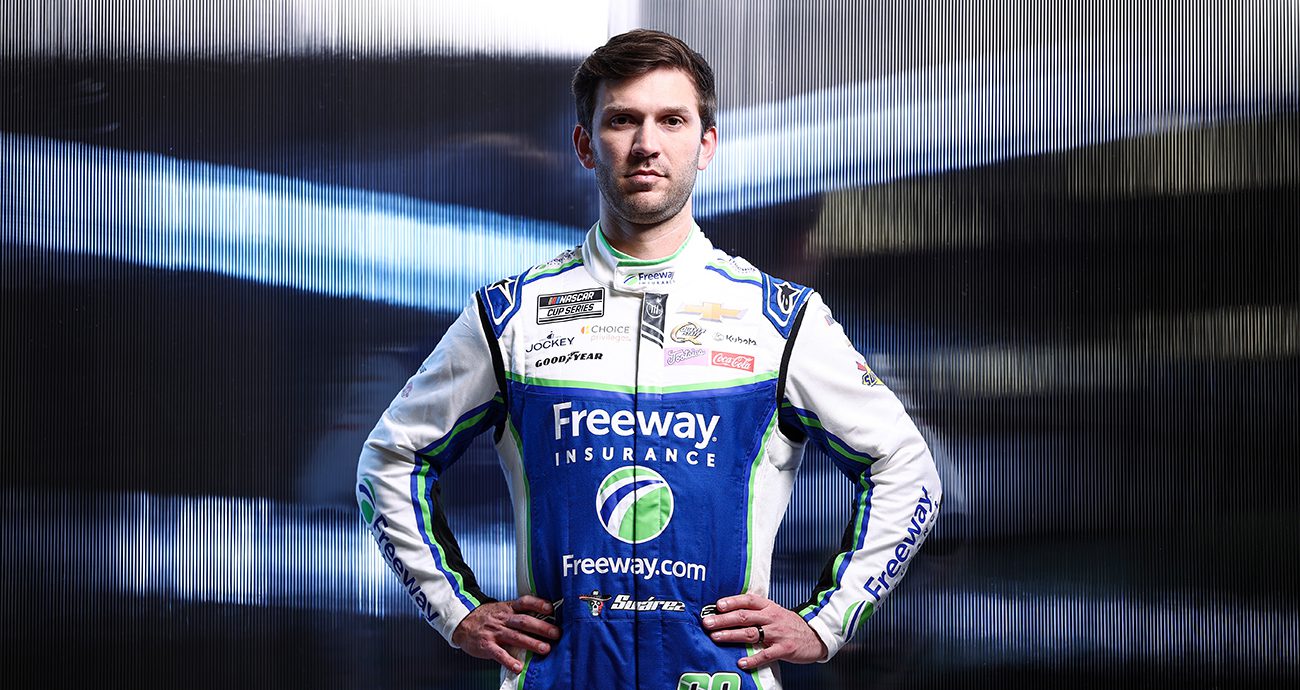
19. Daniel Suárez, No. 99 Trackhouse Racing Chevrolet (-1)
Analysis: There weren’t a ton of “pros” for Suárez at the Clash, seeing as he finished second-to-last in the main, but, hey, he’ll be able to tell his grandkids someday that he beat Kyle Larson in Heat 2 of a preseason exhibition event. Kidding aside, Suárez was the second driver to lock into the playoffs last year — on a superspeedway, notably — and at some point his truly unbelievable Daytona luck will have to turn around, and likely in a big way. Maybe this weekend.
Jared C. Tilton | Getty Images
18. Carson Hocevar, No. 77 Spire Motorsports Chevrolet (+1)
Analysis: Hocevar impressed in his heat at the Clash and advanced to the main event by finishing in the top five there before turning in a P16 when all was said and done. Still, it’s evident Hocevar is going to be a front-half-of-the-field talent in 2025 as he continues to make a name for himself. Credited with a last-place finish in his first Daytona 500 last year, it would not be the biggest shock in the world to see him finish at the top of the results sheet this time around. | MORE: Hocevar highlights exciting driver roster at Spire
Jared C. Tilton | Getty Images
17. Kyle Busch, No. 8 Richard Childress Racing Chevrolet (–)
Analysis: The main event was unremarkable for the two-time champion, but Busch showed some sportiness throughout the weekend as he looks to rebound from a challenging, winless 2024 campaign. Plenty of eyes will be on “Rowdy” this week as he — in his Richard Childress Racing Chevrolet, of course — attempts to end 20 years of trying and 20 years of frustration by capturing his first Daytona 500 win. Considering his 19th year was perhaps his most trying and most frustrating, he’ll be motivated to make it happen.
Jared C. Tilton | Getty Images
16. Brad Keselowski, No. 6 RFK Racing Ford (-3)
Analysis: Keselowski finished runner-up to eventual dominant Clash winner Chase Elliott in his heat, which made it all the more surprising that he wound up being so underwhelming in the big race, landing 21st of 23 on the results sheet. RFK Racing hasn’t been able to hit on The Clash in its recent years of being a 0.25-mile event, which would be more concerning if the team didn’t look as strong as it does at the other short tracks on the schedule. Finally, fully settled into his new driver/owner role, don’t be surprised if Keselowski has another championship run in him.
Jared C. Tilton | Getty Images
15. Chase Briscoe, No. 19 Joe Gibbs Racing Toyota (-5)
Analysis: Like Keselowski, Briscoe impressed early at Bowman Gray, placing second in his heat to Chris Buescher before struggling to get anything going in the main event, landing dead last. Don’t read into that at all, as Briscoe should have his best season to date ahead of him, replacing the perennial championship contender and recent full-time retiree Martin Truex Jr. in the No. 19. He’s sneakily had some strong runs in his limited Daytona 500 history, so he could be a dark horse pick to take home the Harley J. Earl.
Jared C. Tilton | Getty Images
14. Alex Bowman, No. 48 Hendrick Motorsports Chevrolet (-3)
Analysis: Bowman wasn’t great at Bowman Gray, just barely avoiding the LCQ before turning in a ho-hum Clash result of 19th. Again, all of this needs to be taken with a grain of salt, as it’s a preseason event and there’s no points race the rest of the way on a similar track. Bowman will be plenty amped up to get the actual season underway following his difficult-to-stomach elimination from last year’s playoffs after his car failed inspection. A Daytona 500 win feels almost like an inevitability for him based on how fast he is there annually, and last year’s runner-up could make it one spot better on Sunday.
Jared C. Tilton | Getty Images
13. Shane van Gisbergen, No. 88 Trackhouse Racing Chevrolet (+7)
Analysis: Look, if you’re not impressed by a guy from halfway around the world who keeps showing up to races extremely out of his element and nonchalantly succeeding in them, I’m not sure what to tell you. The New Zealander and Cup rookie took quite well to the intricacies of Bowman Gray, placing third in his heat and landing a top 10 in the main. Big, big things are in store for SVG in 2025.
Jared C. Tilton | Getty Images
12. Austin Cindric, No. 2 Team Penske Ford (+4)
Analysis: If there’s one driver who just seems to have the mojo entering 2025, it’s probably this guy right here. This could be a pivotal season for the now fourth-year veteran, and after seeing his Team Penske cohorts win a title in each of his first three seasons, Cindric might be feeling like it’s his turn to tout the title. He’s the most recent Daytona 500 winner among them, however, and he already turned some heads at the Clash, where he wasn’t too far off their pace in seventh.
Jared C. Tilton | Getty Images
11. Bubba Wallace, No. 23 23XI Racing Toyota (+3)
Analysis: Wallace is rounding the corner on a decade in the Cup Series, and at some point it does feel like he’ll elevate into the next tier but took an undeniable step back with last year’s campaign. A very strong postseason as a non-playoff driver indicated he and the team had found something late in the year and Wallace kept it rolling at Bowman Gray with a top five. His Daytona 500 near-misses are well documented, and as close as he’s gotten, this feels like the year it could all come together for a “Great American Race” crown.
Jared C. Tilton | Getty Images
10. Chris Buescher, No. 17 RFK Racing Ford (+2)
Analysis: In case you forgot over the offseason, Buescher is that dude now and should compete for wins on a consistent basis this year despite just missing out on the playoffs a season ago — and if you did, he reminded you by winning his heat and turning in a Clash top 10. He’s an above-average superspeedway driver and a Daytona 500 win to announce his status as a 2025 championship contender would be huge.
Jared C. Tilton | Getty Images
9. Ross Chastain, No. 1 Trackhouse Racing Chevrolet (–)
Analysis: Chastain also outperformed in last year’s postseason as a non-playoff driver and has all the makings of a potential deep run this year, only reinforced by a top five in his heat and a P6 in the main event at the Clash. All three of his top 10s at Daytona came in the 500 and he could make quite a statement by making a trip to Victory Lane on Sunday.
Jared C. Tilton | Getty Images
8. Christopher Bell, No. 20 Joe Gibbs Racing Toyota (-2)
Analysis: If you’re wondering just how deep the Cup Series is this year, you could make a legitimate argument for any of the top eight or so drivers to be No. 1 overall heading into Daytona. Bell took a slight dip because some mediocre Clash results, but don’t be dismayed; he is every bit the full-scale championship contender he’s been the past few years — and then some. You can guarantee he hasn’t, and won’t, forget about Martinsville last fall any time soon.
Jared C. Tilton | Getty Images
7. Kyle Larson, No. 5 Hendrick Motorsports Chevrolet (-3)
Analysis: The same can be said for Larson, who is obviously capable of hanging 10-plus wins on the series (we know, because he did exactly that a few years ago) but took a bit of a tumble after nearly missing the Clash altogether before winning the LCQ. When it comes to the word “impossible,” it essentially never applies to Larson, but let’s just say that it’s “unlikely” he wins the Daytona 500 based on his shoddy superspeedway history, but he could pour gas on the field shortly after. And perhaps unrelentingly.
Jared C. Tilton | Getty Images
6. William Byron, No. 24 Hendrick Motorsports Chevrolet (-4)
Analysis: Hendrick Motorsports had quite an interesting Clash, as Chase Elliott dominated the event, but his three teammates finished 17th to 19th, with Byron square in the middle. There probably won’t be a whole lot of races this season in which Hendrick only puts one car in the top 10, however, and Byron is most definitely a threat to win the title this year — in addition to back-to-back Daytona 500s. | MORE: Active drivers with a Daytona 500 win
Jared C. Tilton | Getty Images
5. Tyler Reddick, No. 45 23XI Racing Toyota (–)
Analysis: Fresh off a Championship 4 appearance, much will be expected of Reddick this season and he came out looking strong, winning his heat and turning in a top 10 at Bowman Gray. Reddick is just like his fellow Californian Larson in that there’s essentially nothing he can’t do behind the wheel of a race car, but it hasn’t quite shown up at Daytona yet. Reddick has exactly zero top-20 finishes in NASCAR’s biggest race.
Jared C. Tilton | Getty Images
4. Denny Hamlin, No. 11 Joe Gibbs Racing Toyota (+4)
Analysis: As he tends to do, Hamlin came out firing in the preseason Clash event and won his heat before turning in a top three in the main event; immediately quelling any concerns over how he would respond to the major personnel shakeup at JGR. There haven’t been as many “is this the year”-type narratives around him so far this preseason, which might be a good thing, as Hamlin will be able to focus on the task at hand, week-to-week. Up first? A potential fourth Daytona 500 win. | MORE: JGR, Gabehart, Hamlin forge ahead after key personnel shifts
Jared C. Tilton | Getty Images
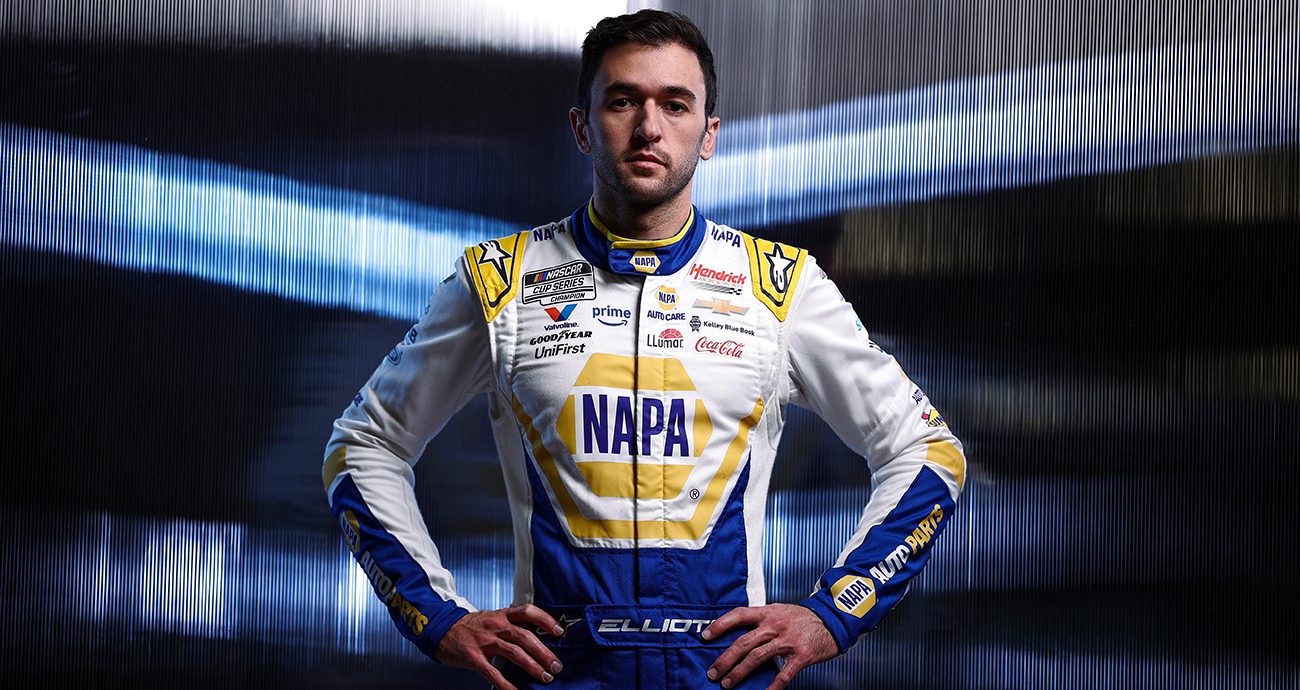
3. Chase Elliott, No. 9 Hendrick Motorsports Chevrolet (+4)
Analysis: There was little doubt that both the fastest car and best driver won the 2025 Cook Out Clash, as Elliott looked like the man to beat from the second cars rolled into Bowman Gray and he backed it up throughout. If that’s a sign of things to come, a second championship might very well be in his future just nine months from now, but we’ll go ahead and guess he’d be satisfied with a Daytona 500 win to tide him over until then.
Jared C. Tilton | Getty Images
2. Joey Logano, No. 22 Team Penske Ford (+1)
Analysis: One of the many reasons the 2025 season is going to be must-watch is just the sheer amount of drivers that’ll be racing with a chip on their shoulder, including our reigning champion. Logano brushes off the naysayers with the best of them, but still — don’t you think he wouldn’t mind going out and beating the pants off the field after having his third title — when he entered the playoffs as a 15th seed and wound up winning the whole damn thing — questioned publicly by some? The future Hall of Famer is obviously capable of dominance and he already looked quite strong at Bowman Gray. His peers might wish they’d kept quiet over the offseason by the end of the year. Or sooner.
Jared C. Tilton | Getty Images
1. Ryan Blaney, No. 12 Team Penske Ford (–)
Analysis: Blaney did unfortunately need to take the provisional to get into the big show, but he made it count — the No. 12 Ford was perhaps the only contending ride to Elliott’s dominant No. 9 Chevy under the Winston-Salem, North Carolina lights. A local to the area, a Blaney win would’ve been huge, but a runner-up coming off a runner-up championship finish ain’t too shabby, either. There have been some Daytona 500s that appeared his for the taking, and the 2021 Daytona summer race winner might as well be the favorite. He’ll be there at the end.