COME MEET ALEX

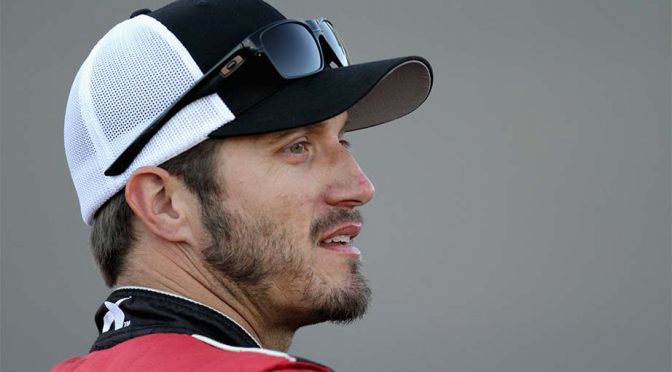
RAB Racing driver Alex Bowman will be at the Microsoft Specialty Store at Stonebriar Centre Mall in Frisco, Texas, on Friday, Nov. 1 from 7:30 p.m. to 9 p.m.

Alex, who is 20 years old, is one of the youngest competitors driving in the NASCAR Nationwide Series. He’s a contender for the Sunoco Rookie of the Year Award. Find out more about what Alex thinks about his season so far, being a Rookie of the Year contender and all that goes into his Windows powered car. Read full story

The address for the mall is:
  
     Stonebriar Centre Mall
     2601 Preston Road
     Frisco, TX, 75034

The Store is on the Lower Level of the Stonebriar Centre Mall, in the Center Court, in front of the escalators.

WIN BIG

You can enter for a chance to win VIP Passes to watch Alex’s Nationwide NASCAR race at Texas Motor Speedway on Nov. 2, 2013 from the RAB Racing garage, as well as a chance to score a new Surface RT.

One lucky runner-up winner will get a chance to also win a Surface RT. Must be present to enter and win. Winners will be announced during the event.

DOWNLOAD THE APP

Don’t forget to download the Windows Phone and Windows 8 NASCAR app for all the latest news and features on Alex Bowman, RAB Racing and all your other favorite teams, drivers and races!

Download the contest rules and regulations

Get event times, TV information and more as NASCAR action heats up in Martinsville

This weekend, the NASCAR Sprint Cup Series and the NASCAR Camping World Truck Series are at Martinsville Speedway this weekend.

The NASCAR Nationwide Series is idle this weekend.

All times ET

RELATED: Full coverage of the Chase for the NASCAR Sprint Cup

FRIDAY, OCTOBER 25:

ON TRACK
— 9-10 a.m. ET, NASCAR Camping World Truck Series practice, FOX Sports 1 (Get results)

– 10:30-11:50 a.m. ET, NASCAR Camping World Truck Series final practice, FS1
 (Get results)
— Noon-1:30 p.m. ET, NASCAR Sprint Cup Series practice, FS1 (Get results)

– 3:40 p.m. ET, NASCAR Sprint Cup Series Coors Light Pole Qualifying, FS1 (Get results)
— 5 p.m ET, NASCAR Camping World Truck Series Keystone Light Pole Qualifying, FOX Sports 2 (Get results)

PRESS CONFERENCES:
WATCH LIVE
— 10:45 a.m.: Elliott Sadler
— 11 a.m.: Matt Kenseth
— 11:15 a.m.: Jimmie Johnson
— Noon: Matt Crafton and Johnny Sauter
— 2 p.m.: Denny Hamlin
— 2:15 p.m.: Jeff Gordon
— 2:40 p.m.: Jeb Burton
— Approx. 4:45 p.m.: Post-NSCS qualifying
— Approx 5:45 p.m.: Post-NCWTS qualifying

GarageCam
WATCH LIVE
Camping World Truck Series: 10 a.m. ET
Sprint Cup: 11:30 a.m. ET

BUY TICKETS
 FOR MARTINSVILLE

Click here to purchase Sprint Cup tickets.

Click here to purchase Camping World Truck Series tickets.

SATURDAY, OCTOBER 26:

ON TRACK
— 10:30-11:25 a.m. ET, NASCAR Sprint Cup Series practice, FS2
 (Get results)
— Noon-12:50 p.m. ET, NASCAR Sprint Cup Series final practice, FS1 (Get results)

– 1:30 p.m. ET, NASCAR Camping World Truck Series Kroger 200 (200 laps, 105.2 miles), FS1 on air at 1 p.m. ET (Get results)

PRESS CONFERENCES:
WATCH LIVE
— Approx. 3 p.m.: Post-NCWTS race

BUY TICKETS FOR MARTINSVILLE

Click here to purchase Sprint Cup tickets.

Click here to purchase Camping World Truck Series tickets.

SUNDAY, OCTOBER 27:

ON TRACK
— 1:30 p.m. ET, Goody’s Headache Relief Shot 500 Powered by Kroger (500 laps, 263 miles), ESPN on air at 1 p.m. ET (Get results)

PRESS CONFERENCES:
WATCH LIVE
— 9:15 a.m.: Aric Almirola, Maurice Petty
— 10:15 a.m.: Brian Vickers
— 10:30 a.m.: Darrell Wallace Jr., family members of Wendell Scott
— 11 a.m.: Dale Earnhardt Jr.
— Approx. 5 p.m.: Post-NSCS race

MORE:

Note: Links will be added as information becomes available.

Sprint Cup: Season schedule | Standings | Entry list | Qualifying order | Lineup | Pit stall assignments | Results

Nationwide: Season schedule | Standings
Camping World Truck: Season schedule | Standings | Entry list | Qualifying order | Lineup | Pit stall assignments | Results

MORE:

READ: Johnson’s best track
is Kenseth’s biggest test

WATCH: Fantasy Showdown:
Martinsville

READ: Logano learning
from first time in Chase

WATCH: Almirola unveils
No. 41 for Maurice Petty

Kim Coon and Jaclyn Roney share favorite memories and duties as Miss Sprint Cup

RELATED: Full Chase for the NASCAR Sprint Cup coverage

Most people recognize them from the yellow and black fire suits they wear in Victory Lane interviews, but the job of a Miss Sprint Cup is much more than just celebrating with a team after the race. They serve as ambassadors for NASCAR and are involved in many activities both on race weekends and throughout the week.

Recently, I had the chance to catch up with two of the current Miss Sprint Cups — Kim Coon and Jaclyn Roney.

Q: When did you first become interested in racing? Did you grow up watching it?

KC: Kind of a mix! Growing up in Orlando, I lived about 45 minutes away from Daytona. I watched racing, but I wasn’t an avid fan. When I got older, I had friends that worked in the sport so I was familiar with NASCAR and I’d been to a lot of races. After I got this job, I have so much more respect for the drivers, the teams and the sport in general.

JR: I first got into NASCAR about 10 years ago so I didn’t grow up watching it. I went to Indianapolis Motor Speedway and saw my first race there. Once you go, you get sucked in. 

Q: When did you become Miss Sprint Cup?

KC: This is my third year. 2011 was my first season as Miss Sprint Cup. I thought every year would be the same, but each year I’ve gotten to do something different. 

JR: I got this job in the middle of 2011, so it’s my third season wearing the fire suit.

Q: What’s your favorite part of being Miss Sprint Cup?

KC: My favorite part is probably meeting all the fans from all over the world. When you go to the (Atlanta) race you think it’s just going to be people from Alabama, Georgia or somewhere from the region. When we’re out at the Sprint Unlimited Fan Experience, we meet people from Japan, Australia or Germany who want to see their favorite driver. They’ve planned their trips to America when there’s a race so they can see one. Seeing how passionate NASCAR fans are about the sport is really cool. NASCAR fans aren’t like fans in other sports.

JR: When we are able to do things that we get to everyday, but those same things would make someone else’s day. When we give away tickets or give away a meet and greet with someone’s favorite driver, something they woke up not thinking that they were going to do that day and we are able to make that happen, those are the days that I’m really thankful for my job. 

Q: Do you have any Victory Lane celebrations that you remember as the messiest or the most exciting?

KC: The 2011 Daytona 500 when Trevor Bayne won was my very first Victory Lane for a points race. It was so cool because it was history-making and that moment was so incredible. You could hear him over the radio saying "Am I dreaming?" There are some pictures floating around from last year in Kentucky when Brad Keselowski won and the Miller Lite guys just annihilated me. I looked like I had jumped in a pool! I really had a lot of fun two years ago at the fall race in Phoenix when Kasey Kahne won for Red Bull right before Red Bull left the sport. I had a lot of friends on the pit crew so it was fun to get to share that with them. At Dover, Jimmie Johnson won with the Madagascar car and the rainbow wigs were awesome. For the Championship Victory Lane my first year, I don’t know how you could have chosen a better ending between Carl Edwards and Tony Stewart. We rode the stage out at the end of the race with about 10 laps to go to crown the champion. The race hadn’t finished yet so we didn’t know who the champion was yet even while we were riding out!

JR: They are all pretty messy, but I think the coolest was my first Victory Lane because I didn’t know what to expect! You watch it on TV, but once you’re in it you realize they are smaller than they appear. My first one was Michigan with Kyle Busch. That was a lot of fun! I remember his whole team was dousing me and they were saying, "Welcome to Victory Lane rookie!"

Q: How do you get all of that stuff out of your hair?

KC: A couple showers and you have to shampoo quite a few times! Beer smells, but the worst is red Gatorade because it stains. My hair will be pink!

Q: What other Miss Sprint Cup responsibilities do you have during the week? I know you do the victory breakfast at the shop for the winning driver.

KC: Oh goodness, so many! We do have Victory Lane at the shop. It is a lot of fun because there’s hundreds of people that work at the shop that don’t come to the track on the weekends. A lot of people do not realize what it takes to, not only get to Victory Lane, but also just to field a car every weekend. It takes so many people. We do have a few office days here and there where we catch up on fan mail and different office duties. We do an average of 600 interviews and appearances combined each year. We do an appearance for each track during the Chase for the NASCAR Sprint Cup. We do filming for Rowdy.com each week where we choose our fantasy picks for the weekend. We do work with the (NASCAR) Hall of Fame and at the different race shops. When the race comes to Charlotte in May and again in October, the shops will have us come to do Q&A’s. Our work could be anyone from a track to a sponsor to just anyone who wants us to make an appearance. 

JR:  During the week, we have an office where we answer fan mail and plan what we are going to do on social media throughout the weekend. There are a lot of us that work in this program. We do anything that can help our team. We do Victory Lane in the shop every week. This is where we bring breakfast to everyone in the shop of the winning race team. Most of the time we leave to go to a race city on Wednesday or Tuesday (depending on where we are flying), so our week flies by pretty fast. 

Q: What is your favorite experience you’ve had as Miss Sprint Cup away from the track? Someone you’ve gotten to meet or somewhere you’ve gotten to go? 

JR: At Indy 2011, where I met some Make-A-Wish Foundation kids with Richard Petty. That was the coolest thing because these kids have such a positive outlook on life. It was very life-changing and fun! 

Q: At the track, you see a lot of little kids that come with their parents, but you don’t see as many teenage fans. What do you think the tracks or NASCAR can do to keep teenagers interested in NASCAR? 

KC: I think NASCAR and the tracks are doing the best they can to attract all different types of fans. I think the drivers help push that, too. Young drivers like Trevor Bayne and Ricky Stenhouse Jr. and Danica Patrick, being a female driver, will help expand the type of the fans coming out to NASCAR races, whether it’s by age or gender. As the sport gets a little more competitive and a little more exciting each year, I think it will continue to increase the number of teenage fans. 

JR: That’s a great question because it’s kind of that window between little kids that get brought and then the teenage, even into college age, fans. I’ve been seeing a lot of them this season come in big groups. I think some of the younger drivers coming into the Sprint Cup Series, like Kyle Larson getting a full ride for next year, is going to bring a new level of fans. He is a fresh face, but well-accomplished driver. The tracks have done a really good job at making the drivers accessible. You can’t go to a basketball game or football game and go meet the players like you can here. NASCAR does a lot of meet and greets with the drivers. Our job is all about being accessible. We’re kind of the fans’ friend on the inside. I think they’ve done a great job so far and it can only continue to get better. 

Q: The next few questions are going to be then and now questions. Think back to your high school days. What was your favorite junk food then and what is it now? 

KC: Then — probably those ice cream sandwiches and now — I try to stay away from it now but anything dark chocolate!

JR: Pizza then and pizza now. It hasn’t changed. (laughs) 

Q: What was your favorite TV show then and what is it now?

KC: Probably "Friends" in high school. I still watch that now. But now, I really like "Homeland." It’s filmed in Charlotte, which is where I live, so it’s cool to watch a show that’s filmed in my city! 

JR: Then — it was "The Hills." Now — "The First 48," which is a murder mystery/reality show. They say if you haven’t solved a murder in the first 48 hours after it happened, the chance of solving it is slim to none. The show follows the first 48 hours after a murder. 

Q: What was your favorite song/group then and what is it now? 

KC: In high school, Blink 182 was probably my favorite band. Now, it’s a mix of stuff. I really like The xx, Say Anything or anything that has a good beat because I’m a dancer. 

JR: Instead of a song, I’ll say Garth Brooks. He’s my all-time favorite and I got to see him after the NASCAR banquet in 2011. After the banquet, everyone else went out to industry parties, but I went and bought a single ticket to Garth Brooks. Since I bought a single ticket, I got four rows back, center stage. It was amazing! 

Q: What was your favorite fashion trend then and what is it now?

KC: When I was in high school, the backless shirts were really popular. I like the floral trend a lot right now! 

JR: I liked the flare pants back in my high school days. Now, I like the peplum tops!

Roney recently annouced in the video on Instagram below that she will be retiring from Miss Sprint Cup because her and her husband are expecting their first child in the spring. 

MORE:

READ: Johnson’s best track
is Kenseth’s biggest test

WATCH: Fantasy Showdown:
Martinsville

READ: Logano learning
from first time in Chase

WATCH: Almirola unveils
No. 41 for Maurice Petty

NASCAR also looks to improve the Sprint Cup car, particularly at mile-and-a-half tracks

RELATED: Full Chase for the NASCAR Sprint Cup coverage

NASCAR on Thursday discussed with drivers potential changes to qualifying procedures for next season, and laid out plans to further enhance competition on intermediate tracks.

In a meeting at the NASCAR Research and Development Center in Concord, N.C., officials from the sanctioning body told drivers from all three national series that it was considering the elimination of single-car qualifying for the 2014 season. The alternative would be group qualifying similar to the procedure currently used on road courses, where a number of vehicles would be on track during qualifying at the same time.

Currently on road courses, cars are assigned to a set number of groups based on practice speeds, from slowest to fastest. Each group is on the track for an amount of time determined by the series director, and a car’s best time during its session counts as its qualifying time of record.

Kerry Tharp, NASCAR’s senior director of competition communications, said the proposed procedure would have to be adjusted depending on track size. The process would be different at Daytona and Talladega, the two facilities that require the use of restrictor plates to slow the cars down. At those venues, the field would have an open qualifying session lasting 45 to 50 minutes that would allow for drafting.

"Nothing in stone yet," Tharp cautioned. Thursday’s meeting — in which drivers were also informed that a baseline concussion test will be mandatory in all three national series beginning in 2014 — was to solicit feedback from competitors, who Tharp said were receptive to the idea. The primary goal would be to make qualifying more exciting for spectators.

"We believe it would provide a much more enjoyable experience for the fans who are not only at the track," Tharp said, "but those who are watching as well."

Toward that same end, NASCAR continues to work on improving the current Sprint Cup Series car, particularly at mile-and-a-half tracks. NASCAR has scheduled a second test at Charlotte Motor Speedway, this one for Dec. 9, to build on its findings from the first test at the facility on Oct. 14. There, six drivers representing three manufacturers tested seven different aerodynamic elements used in three different packages.

Teams tinkered with elements such as static ride height, vents in the rear fascia, a strip across the roof, a larger rear spoiler, and a stepped-down front splitter. Since then, NASCAR has been to the wind tunnel and performed computer simulation. Officials plan to meet with engine builders next week, and have another wind tunnel session set for November.

The first Charlotte test was "very productive," Tharp said, allowing NASCAR to eliminate some elements that didn’t work, and focus more on those that did. "Those are some of the things we’re looking at now trying to validate, and some of the things we’ll likely test in December to make the racing better," he added. "… We’re very diligent and very aggressive toward this end right now, and for the balance of this year."

It’s all being done with the intention of improving the racing, particularly at the intermediate tracks that comprise the bulk of the schedule. "That’s a top priority for us," Tharp said. "We’re approaching that very aggressively."

MORE:

READ: Johnson’s best track
is Kenseth’s biggest test

WATCH: Fantasy Showdown:
Martinsville

READ: Logano learning
from first time in Chase

WATCH: Almirola unveils
No. 41 for Maurice Petty

The preseason baseline test is for doctors to have a snapshot of the brain in a healthy state

RELATED: Full Chase for the NASCAR Sprint Cup coverage

At the beginning of this season, NASCAR met with drivers from its three national series and encouraged them to take a baseline concussion test. It was very likely, the drivers were told, that such a test would one day become mandatory.

That day was Thursday, when NASCAR again met with its national series drivers, and this time told them that baseline neurocognitive testing — one of the fundamental tools in concussion diagnosis — would be obligatory for next year. As a result, every driver in the Sprint Cup, Nationwide and Camping World Truck tours will be required to take the ImPACT test prior to the start of the season beginning in 2014.

"I think we had some drivers who took the initiative, but I think it was a good process to take the time and talk to them about what we were doing and where we wanted to go," said Steve O’Donnell, NASCAR’s senior vice president for racing operations. "You’re seeing it more and more in all professional sports, college, even down to the high school level."

Indeed, the ImPACT test — which stands for Immediate Post-Concussion Assessment and Cognitive Testing — is also used by a number of NFL, NHL and Major League Baseball teams, as well more than 1,000 colleges and 7,400 high schools, according to the Pittsburgh-based company. When Dale Earnhardt Jr. was forced to sit out two races last year due to the effects of a pair of concussions suffered behind the wheel, one of the specialists he visited was ImPACT co-founder Dr. Michael Collins.

O’Donnell said Earnhardt’s case did not specifically lead NASCAR to make baseline testing mandatory. The sanctioning body was already headed down that road, he added, when Earnhardt announced late last year that the symptoms from two concussions — one suffered in a testing crash at Kansas, the other in a wreck at Talladega — had forced him to see a doctor, which led to him being pulled him from the race car.

"One of the things with concussions that’s a challenge for any sport right now is, a lot of it is up to the athlete to let the doctors know how they’re feeling," O’Donnell said. "I think if anything, Dale Jr. coming out and talking about it and seeking the help certainly put the spotlight more on concussions. I think helped us be able to introduce it, I’d say. But I think we were already headed down this path."

Why the season-long gap between recommending the test to drivers, and then mandating it? O’Donnell said NASCAR officials faced many questions from drivers, who wanted to know how much weight the test carried in the evaluation process, and what it might mean for them in terms of getting back into the car. NASCAR took this season, he added, to put minds at ease before telling drivers the test would be required beginning with 2014.

"One thing we felt we needed to do was educate our drivers," O’Donnell said. "There were a lot of questions about concussions … so we wanted to take the time to educate them this year. We told them at the beginning of the year we were strongly looking at this, first and foremost for their safety. We took that time to educate them. We think it’s the right thing to do to implement ImPACT testing. It’s not the be-all, end-all of how we’ll evaluate a driver, but we think it’s an additional tool to help us, and believe it’s the best direction to go in for their safety."

The 25-minute, Web-based ImPACT test evaluates an athlete’s verbal and visual memory, processing speed, and reaction time. By taking the test before the season, doctors have a snapshot of the brain in a healthy state, and can use that baseline to compare to post-concussion to evaluate the extent of an injury and judge recovery time.

Drivers were told of the move Thursday in a meeting at the NASCAR Research and Development Center in Concord, N.C. Dr. Vinay Deshmukh, a neurosurgeon and member of NASCAR’s medical advisory group who consulted on the Earnhardt case, presented drivers with an overview of what concussions are, as well as causes, treatments, and the role baseline testing plays in evaluation and diagnosis.

"There were some questions, for sure," O’Donnell said. "Just on, ‘If I have a concussion, is it a go-no-go?’ I think there was some further education through Dr. Deshmukh that this is just one tool used to evaluate a driver before he can get back into the car. And actually, in educating the drivers, what we’re able to tell them is … by not having (a baseline test), there’s almost more of a risk of not allowing a driver to get back in the car, because you have nothing to compare it to. By having that baseline test and looking at symptoms and saying, ‘OK, we think this driver’s ready to go,’ it makes that call a lot easier."

MORE:

READ: Johnson’s best track
is Kenseth’s biggest test

WATCH: Fantasy Showdown:
Martinsville

READ: Logano learning
from first time in Chase

WATCH: Almirola unveils
No. 41 for Maurice Petty

Stewart-Haas Racing tire specialist carries on track’s modified tradition (CIA Stock Photo)

RELATED: Full Chase for the NASCAR Sprint Cup coverage

Every trip to Martinsville Speedway brings the same routine for Jeff Zarrella. The tire specialist for Stewart-Haas Racing pulls out the orange T-shirt bearing the No. 61, and packs it away in the backpack he carries with him to the race track each day. And then, he hopes for another chance to return Richie Evans to Victory Lane at a place that once meant so much to modified racing.

He may work for Danica Patrick’s race team these days, but deep down Zarrella will always be a modified racer — and there was no greater modified racer than Evans, the nine-time national champion who was inducted into the NASCAR Hall of Fame last year. And so much of Evans’ legacy centers on Martinsville, a track that once hosted the Daytona 500 of modified racing, where Evans earned 10 feature victories — and on a dark day in 1985, met his demise.

Zarrella was there, working on the team of driver Reggie Ruggerio. "Silence. Just silence," he said of the reaction when word began to spread that Evans had suffered a bad crash in practice. Zarrella would endure the same thing two years later when another modified great, Charlie Jarzombek, died at the same track. And then again when still another driver, Corky Cookman, was killed in Jarzombek’s benefit race at Thompson Speedway in Connecticut.

Finally, he had suffered enough. Weighed down by grief, Zarrella walked away from racing, and turned what was supposed to be a two-week vacation in Hawaii into a new life in paradise. Ultimately, Martinsville drove him out.

And Martinsville brought him back.

And Martinsville still drives him, to this day.

"The special part of Martinsville remains in my heart," said Zarrella, a 55-year-old native of Southington, Conn., who now lives in North Carolina. "It just continues to be there."

The modified cars no longer compete at Martinsville, which Sunday hosts a crucial race in the Chase for the NASCAR Sprint Cup. But for years, it held a modified event that was as big as any other on the sport’s oldest touring circuit. "Our Daytona. Our holy grail," Zarrella called Martinsville, and he knows because he was there, starting as a tire specialist in 1975, and later as a jack man. He worked with Ruggerio, with Rick Fuller, with Greg Sacks, with Ed Flemke Sr. This was a golden age of modified racing, a time when top drivers could make a good living in the series, an era which produced stars that glowed as brightly in own their universe as Cale Yarborough or Darrell Waltrip did in theirs.

Zarrella shown working the jack in the pits at Martinsville

And foremost among them was Evans, whose charm and magnetism went unrivaled, who before each race would walk down the line of cars helping everyone ensure their vehicles would pass technical inspection, and yet at the same time joke they were all racing for second place. The Rome, N.Y., native was well-known for the advice he gave to other drivers, not to mention the firesuits, tires, or even engines he would dispense to other competitors in financial need. Evans was the rare driver who could dominate opponents while being universally beloved by them at the same time.

While Zarrella and Evans weren’t particularly close friends, within the modified ranks the nine-time champion was hardly a stranger. "Knew him to go in and have a beer," Zarrella said. "We used to get our race cars from him. It wasn’t like me and him were best buddies hanging out. But he was somebody I looked up to, and his ethics and stuff, I tried to mirror. When they invented the word ‘racer,’ that’s who I think of."

All of which made Oct. 24, 1985, such a blow to the gut. Evans was practicing for a feature at Martinsville when he crashed heavily in Turn 3. At 44 — and still near the peak of his career, given that he would clinch his ninth championship posthumously — he was gone, and a garage area that revered him was left to wander through the remainder of the event weekend in shock.

"It was the most eerie feeling to go through," Zarrella remembered. "… There are so many ironies in it. It being a practice session that Richie got killed in — now you’ve got to qualify, you’ve got to run the qualifying races, and then your whole race. It was surreal, is all I can say. It was like somebody just removes your soul. It was like ripping the heart right out of you."

Evans was bad enough. Then two years later, it was Jarzombek. Then it was Cookman. It was a dark time for modified racing, which was suffering a safety crisis similar to the one NASCAR’s top series would endure after Dale Earnhardt’s death. Zarrella had reached a breaking point. "Call it post-traumatic syndrome or whatever," he said, "I was like, ‘I don’t want to do this anymore. I don’t want to see Reggie Ruggerio get killed in a race car.’" He had gotten though it all by letting the racer in him take over. By 1988, it was all used up.

So he walked away, made a clean break, refused to even watch it on television. He went to Maui to visit his brother, on what was supposed to be a two-week vacation. He wound up moving to Hawaii, getting married, making a new home and a new life. And yet, he could suppress his true nature for only so long. By 1993, he was working some modified some races again. He found himself venturing to New Smyrna Beach, Fla., to help out his old buddies. "It’s like smoking cigarettes," he said. "I had that one cigarette."

Then came the phone call from Fuller, who was moving south to drive in what is now the Nationwide Series for the 1997 season, and needed a tire specialist. A choice loomed — stay in Maui, or go racing? "What do you think?" Zarrella asked his wife. "I’ll go wherever you want to go," she answered. There was no choice, really. Fuller lasted only two races, but Zarrella kept moving up the ladder, from David Green to Greg Biffle to Paul Menard to Ryan Newman to this season and his current job managing tire sets and air pressures on Patrick’s program.

"You know what? I can go back to Maui tomorrow," he said. "When you sit on your rocking chair at some point, you don’t want to say, ‘Well, I wonder what I could have done in racing?’ So I packed up my bags and came here."

Zarrella shown today as a member of Danica Patrick’s team

Through it all, though, there was Martinsville, a place that holds for him and all former modified racers such a swirl of conflicting emotions. Zarrella carried the orange T-shirt with him each trip there, hoping to one day wear it in Victory Lane and give Evans one last triumph. On April 1 of last year, he got his chance. It was a race many remember for its controversial finish, David Reutimann stalling and bringing out a caution, Clint Bowyer forcing it three-wide on the ensuing restart, Jimmie Johnson and Jeff Gordon crashing out. It was the event that would lay the groundwork for the feud between Gordon and Bowyer that would erupt much later in the season.

To Zarrella, none of that mattered. Newman was an unlikely winner, but a winner nonetheless, and Zarrella put on his orange T-shirt and pointed to the sky in Victory Lane. "If I don’t ever win another race, I’m good with it. I want to win every race, but if the stars don’t line up and I never do, that was the race I needed to win. It was a real special moment. A lot of people wouldn’t understand it, but it was really important," he said.

"It’s like I tell people, when Richie died in 1985, the music stopped in modified racing. And that deal there, on that stage, was just kind of a way for me to put another quarter in the jukebox."

Like a lot of former modified racers, the little half-mile track just has a hold over him, which is why Zarrella got such a thrill out of Patrick’s unexpected 12th-place run there in the spring. The victory he shared there last year with Newman, though, will be difficult to top. That triumph earned him the grandfather clock trophy that stands in his living room. Every 15 minutes, it chimes. And it reminds him of Martinsville, and of Richie Evans.

MORE:

READ: Johnson’s best track
is Kenseth’s biggest test

WATCH: Fantasy Showdown:
Martinsville

READ: Logano learning
from first time in Chase

WATCH: Almirola unveils
No. 41 for Maurice Petty

A look into the disasters and drama at short tracks that have impacted the Chase in the past

RELATED: Full Chase for the NASCAR Sprint Cup coverage

Don’t let the schedule fool you. There may be only one short track in the Chase for the NASCAR Sprint Cup, but those smallest of venues have very often played a very large role in determining who competes for the series championship, not to mention who wins it.

There’s Bristol in late August, where the contenders and pretenders are often separated from one another like ingredients put through a sifter. There’s Richmond in early September, the final regular-season event of the year, where the playoff field is ultimately determined. And there’s Martinsville in October, so close to the end of the schedule you can almost see it, and a track that in recent years has emerged as the fulcrum on which the entire Chase swings. 

It may well happen again Sunday, when NASCAR’s premier series returns to Martinsville Speedway for a crucial race, given that eight-time track winner Jimmie Johnson now holds a four-point lead on Matt Kenseth, who’s never won at the layout in southern Virginia. Until then, here are the 10 short-track races that have had the biggest impact on the Chase.

10. Junior’s back: Bristol, 2004

The final events leading up that that inaugural Chase were kind of like a wild frontier for teams still figuring out the best way to approach the new playoff. The result was a stretch of races where it seemed like every lap mattered, chief among them the night event at the World’s Fastest Half Mile in the late summer of 2004. Enjoying one of his best seasons, Dale Earnhardt Jr. essentially locked up a postseason bid by leading 295 laps en route to his first victory since suffering burns in a sports car crash only a few weeks earlier. Equally as important, Ryan Newman finished second to jump three spots into the 10th and (then) final Chase position, one he’d maintain two weeks later when that first playoff field was finalized.

9. Master disaster: Martinsville, 2012

Joe Gibbs Racing, and mechanical failures in the Chase. They’ve gone together a few times too often, one large reason the organization is still hunting its first premier-series championship since Tony Stewart moved on. One of the more painful episodes occurred in last year’s Martinsville Chase race, which Denny Hamlin entered 20 points behind leader Brad Keselowski. On one of his best tracks, the JGR driver was looking to make a big move. It never happened — a bolt broke off his master electrical switch, the power to his car cut off, and he finished 33rd to fall 49 points back. Meanwhile, Keselowski finished sixth to stick close to winner Jimmie Johnson, putting himself in position to win the title over the following three weeks.

8. Keselowski rises, Bristol, 2011

Speaking of Keselowski, the night where the Penske Racing ace truly cemented himself as a championship contender came a year earlier at a different short track. His victory at Bristol in August of 2011 capped a five-week surge that saw the driver of the Blue Deuce rise from 23rd to 11th in the Sprint Cup standings. During a stretch where several other playoff hopefuls stumbled, Keselowski led the final 80 laps and left no doubt. It was a win that effectively locked up Keselowski’s first career berth in the Chase, which he would ultimately make that year as a Wild Card. But it also heralded much bigger things — like the title run the Penske driver would embark upon one season later.

7. Smoked out: Richmond, 2006

The year before, Stewart had kept a torrid late-summer stretch going into the Chase, and become still the only champion to claim the title without winning a race in the playoff. The next year, he found himself attached to another first, albeit a more dubious one — the first reigning champion to miss the Chase the following year. Stewart entered that 2006 regular-season finale in eighth place in points, but could never get his car working at Richmond and finished 18th. Meanwhile Kasey Kahne finished third, and edged Stewart for the final berth by 11 points. "That’s unbelievable," Mark Martin called it, and many agreed. It would remain the only year a reigning champion missed the playoff until Keselowski did the same this season.

6. Tipping point: Martinsville, 2008

At the height of their five-year championship run, Jimmie Johnson and his No. 48 team often seemed to have the competition mentally beaten before they even showed up at the race track. That was certainly the case in 2008, when Johnson obliterated the competition in a Chase that was very nearly locked up with a week still left in the season. The tipping point was Martinsville, which Johnson entered with a 69-point lead over the field under the previous format. It was one of those "max points" day Johnson would become famous for, a race where he led 339 laps and dominated everyone else. By the end, his edge had swollen to 149 points, the rest of the season was academic, and lone three-time champion Cale Yarborough would soon have company.

5. Narrow margin: Richmond, 2012

You want drama? Rain that pushed everything until the wee hours of the morning. A last-gasp attempt by Jeff Gordon that appeared destined to fall short. An ill-timed pit decision by Kyle Busch‘s team that turned everything around. And suddenly there was Gordon, in the midst of one of his most trying seasons, edging Busch by three points for the final Chase berth. Busch seemed in command of that spot for most of the night, while Gordon fell a lap down. But under caution for rain, Busch stayed out while everyone else pitted for fuel. Then there was a lug nut problem. Meanwhile the handling of Gordon’s car improved, and the four-time champion surged to a runner-up race finish that netted the most unlikely playoff berth of his career.

4. The Iceman falleth: Martinsville, 2006

They were calling Jeff Burton "the new Iceman" in that fall of 2006, because the veteran driver was overcoming everything the opposition could throw at him. Enjoying the best season of his career, Burton finished third at Charlotte to carry a 45-point lead to Martinsville, his home track. Yet the Virginia native made it just 217 laps before the engine in his No. 31 car let go, plunging him to a 42nd-place finish that would prove devastating to his championship hopes. Burton left Martinsville that day fifth in the standings, 48 points behind. Meanwhile, Johnson scored a victory that anchored an amazing run of five straight finishes of second or better, and propelled him to a huge comeback that netted his first career title.

3. Night of scandal: Richmond, 2013

You want more drama? Newman streaking toward an victory that would clinch a Chase berth. Gordon maintaining a slight edge over Joey Logano, who was two laps down. Clint Bowyer spinning to bring out a caution that changed everything, Brian Vickers pitting unexpectedly, and suddenly Logano and Martin Truex Jr. claiming the final two playoff spots. It seemed too good to be true — and it was. NASCAR later charged Michael Waltrip Racing with manipulating the race, levying record penalties that knocked Truex out of the Chase in favor of Newman. Days later in the wake of more alleged impropriety, Gordon was added as well. What should have been a glorious night for NASCAR instead became a scandalous one, and the consequences continue to be felt today.

2. Pulling a Mayfield: Richmond, 2004

To this day, it’s still referred to as "pulling a Mayfield." It’s what Newman may well have done this year, had Bowyer’s spin not intervened — win the final regular-season race to get into the Chase. It’s been done only once, that prior to the inaugural Chase in 2004, in a time before the field was expanded from 10 to 12 drivers and there were Wild Cards to shoot for. No, back then it was top 10 or bust, and Jeremy Mayfield had only one way to get there: win Richmond. He entered the night 14th in the standings, but led 151 laps and was assured of the victory when Kurt Busch ran out of gas with eight to go. Everything that needed to happen did, and he didn’t just make the Chase, he made it in ninth place, with room to spare. "I couldn’t believe it," he said that night. Neither could we.

1. Mind games: Martinsville, 2011

It wasn’t just the fact that Stewart won that day on the half-mile track, it was the way in which he did it — with a swagger that carried right over into his post-race interviews, and helped him seize control of a Chase where he was still trailing at the time. Although he’d won the opening two playoff races, Stewart came to Martinsville fourth in points, 19 behind leader Carl Edwards. But he overtook Johnson with three laps remaining to win, on the reigning champion’s best track, no less. He got help when Matt Kenseth was wrecked by Vickers, and Keselowski finished well back in the pack.

Suddenly, two of the drivers that had been ahead of him were out of the way. Edwards managed a respectable ninth on a track that was far from his favorite, and took an eight-point lead over Stewart. But you’d never have known it by the challenge Stewart issued in Victory Lane. "Carl Edwards had better be real worried," he said. "That’s all I’ve got to say. He’s not going to sleep for the next three weeks." The mind games continued as Stewart won three of the season’s final four races, including the finale at Homestead that gave him the title over Edwards in a tiebreaker. His words at Martinsville would prove prophetic, indeed.

MORE:

READ: Johnson’s best track
is Kenseth’s biggest test

WATCH: Fantasy Showdown:
Martinsville

READ: Logano learning
from first time in Chase

WATCH: Almirola unveils
No. 41 for Maurice Petty

Drivers to get tested before 2014 season

DAYTONA BEACH, Fla. (Oct. 24, 2013) — NASCAR announced today that beginning in 2014, the sanctioning body will mandate pre-season neurocognitive baseline testing as part of its comprehensive concussion prevention and management program for all of its national series drivers.

At the start of this season, NASCAR recommended that drivers who did not already have a baseline test secure one, while also indicating that a pre-season baseline mandate could become effective as soon as next year.

Baseline testing will be performed through the use of an ImPACT (Immediate Post-Concussion Assessment and Cognitive Testing) test, which is a widely used neurocognitive assessment tool. The result of neurocognitive testing is one factor out of many that doctors use to diagnose and treat concussions. This particular test evaluates an athlete’s verbal and visual memory, processing speed and reaction time.

By performing this test prior to the start of a season of competition, doctors are given a snapshot of an athlete’s brain function while in a healthy state. Doctors can then use that baseline to compare to post-concussion tests to assist them in both evaluating the effects of any injury and informing their decisions to return an athlete to competition.

"NASCAR made this decision because we think it is important to drivers’ health for doctors to have the best information and tools available in evaluating injuries," said Steve O’Donnell, NASCAR vice president of racing operations. "Before announcing this rule, we provided drivers concussion and baseline testing education and created opportunities for them to ask any questions they may have to a top neurosurgeon that specializes in traumatic brain injuries. Also, remember that ImPACT tests are not new to our sport and have been used for treatment through the years."

Since NASCAR’s recommendation prior to the start of this season, drivers were invited to two concussion education sessions featuring Dr. Vinay Deshmukh, M.D. of Carolina Neurosurgery & Spine Associates, a member of NASCAR’s Medical Advisory Group of Consulting Physicians. At those sessions, drivers were presented with an overview of what concussions are, their causes, treatment and the role that baseline tests play in the comprehensive evaluation of concussions.

"We are extremely confident that our concussion protocol is among the best in sports," O’Donnell said. "We regularly review all of our practices involving safety and health to see if there is anything that we can do better, or should do differently moving forward. Implementing baseline testing is a primary example of our philosophy to protect our competitors the best that we can."

Martinsville has served as Chase game-changer

RELATED: Full Chase for the NASCAR Sprint Cup coverage

Brad Keselowski won two races last year in the Chase for the NASCAR Sprint Cup, but the performance that ultimately earned him the championship might have come in an event where someone else reached Victory Lane. Needing something close to a career-best finish at a track where his nearest rival was essentially a sure thing, Keselowski managed just that — and in the process, kept pace at a half-mile facility that’s emerged as the swing point in the sport’s playoff.

Jimmie Johnson may have been the one spraying champagne and basking in confetti after last season’s Chase race at Martinsville Speedway, but it was the sixth-place run by Keselowski — his career best finish — that was as clutch a performance as we witnessed over the course of that title hunt. Johnson is unquestionably the master there, with now eight wins and a ridiculous average finish of 5.3 at the southern Virginia layout. Seeing the No. 48 car in contention at Martinsville is every bit as reliable as the Ridgeway grandfather clock the track awards to its winners.

All of which is why it was so key for Keselowski to mitigate what seemed a sure-fire points loss — and toward that end, it was mission accomplished in a race he would finish trailing the five-time champion by a mere two points. Now the year is different, and one of the players has changed, but the venue and the objective remain the same. For Matt Kenseth to win this championship, he too must weather a short track that once again looms monumentally large, and a primary opponent who’s better there than anyone else racing today.

Forget Talladega, its whimsical aerodynamics and roulette-wheel unpredictability aside. The real game-changer in the Chase has often been Martinsville, which has made a habit of bringing the title picture into tighter focus. It was at Martinsville where Jeff Burton blew an engine, and Johnson won to key an unthinkable comeback in 2006. It was at Martinsville where Johnson won to break the back of the competition in 2008. It was at Martinsville where Tony Stewart won and issued his challenge to Carl Edwards in 2011. It was at Martinsville where Denny Hamlin‘s title hopes went out with his dead master switch in 2012.

And it was at Martinsville last season where Keselowski recorded the hold he had to have, one that loomed even larger after Johnson won again the next week at Texas Motor Speedway. Kenseth is older and savvier, but he’s still up against history that would label him the underdog even though he gave up the Chase lead only last week. Johnson has 14 career victories at the four remaining tracks. Kenseth has four victories at the four remaining tracks, none of them at Martinsville. Now that Kenseth is down four points in the standings, the little paperclip is again poised to play a huge role.

Now, Kenseth does have a resident Martinsville ace in the form of Joe Gibbs Racing teammate Hamlin, a four-time winner whose notebook will surely be available to the No. 20 team this week. And Kenseth is coming off one of his best Martinsville performances ever, a spring race where he led career-high 96 laps before a late pit stop and a tight car dropped him back to a 14th-place result. Even so, on a day where Johnson won and led the most laps, Kenseth was still outscored by 17 points. Back in April, it was a mere hiccup. That happens again Sunday, it’s a disaster.

"You don’t know what’s going to happen," Kenseth said. "It’s been a fun year, because (JGR) has made me run a lot better at tracks where we usually don’t run good at. Hopefully, Martinsville will be one of those."

Can Kenseth win at Martinsville? Absolutely. The guy is a former champion who came up racing late models on Wisconsin short tracks, and this season has emerged as a threat every week. But historically Martinsville has been one of those places — not unlike, say, Darlington or a road course — that drivers either take to immediately, or spend a career trying to figure out. The NASCAR Nationwide Series has raced there just once since 1994, and its flat design means tactics from other similar-sized tracks rarely translate.

It all plays into Johnson’s edge. "They’ve got a notebook that’s like a dream notebook when they go there, and Jimmie’s very good at that race track," said Joey Logano, who added he’s studied video of the No. 48 car at Martinsville, trying to find ways to get his vehicle to look like Johnson’s on the 0.526-mile layout. "They’re able to tie all that together and run very fast there."

No wonder 11 Sprint Cup drivers, Logano included, tested at the facility for two days earlier this month. "There’s no other Martinsville," Burton, a native of the region, said at the test. "There’s no other track where we can really take the information we learn here and go somewhere else with. When you see people here testing, they’re looking for an advantage at this race track."

Johnson, with eight wins in his back pocket, didn’t test at Martinsville. Neither did Kenseth, for whom the spring race likely offered a solid starting point. Both of them are testing this week at Texas, home to the next race on the schedule, and site of perhaps the most galvanizing moment of the 2012 Chase when Johnson and Keselowski went wheel-to-wheel and fender-to-fender over the final laps, producing a 1-2 finish that set the stage for the playoff’s endgame.

But to get there, they had to get through Martinsville first. Johnson’s lead is a slim one, to be sure. But given the success he’s enjoyed at the next three venues, it’s not difficult to imagine the maximum potential for that No. 48 team over the next three weeks. Martinsville is Johnson’s absolute best track, which is saying something given the guy has five titles and 65 race wins. So all eyes will be on Kenseth, who’ll likely need a career performance similar to the one the eventual champion produced last season, to ensure that grandfather clock in Victory Lane does not toll for him.

MORE:

READ: Johnson’s best track
is Kenseth’s biggest test

WATCH: Fantasy Showdown:
Martinsville

READ: Logano learning
from first time in Chase

WATCH: Almirola unveils
No. 41 for Maurice Petty

Talladega victory gives EGR boost heading into 2014

RELATED: Weekend Schedule | Standings

TALLADEGA, Ala. — This is the time of the NASCAR Sprint Cup Series season when motivations vary and immediate gratification isn’t the only sure sign of success.

Thirteen drivers earned a berth in the Chase for the NASCAR Sprint Cup, and only four are within 50 points of leader Jimmie Johnson with four races remaining.

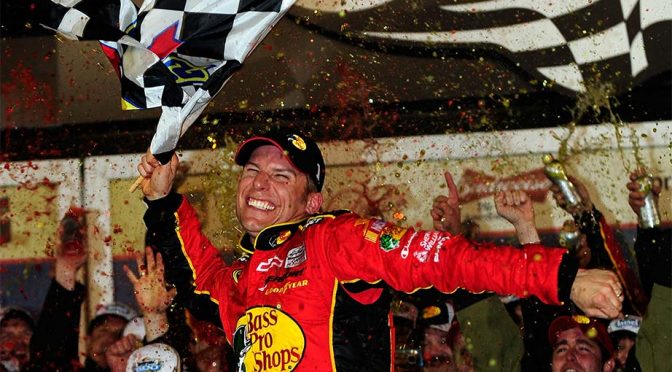
For Jamie McMurray, a non-Chase driver, and his Earnhardt Ganassi Racing team, Sunday’s victory at Talladega Superspeedway was both vindication and promise.

The team had been close before to reclaiming its mojo after a nearly three-year winless streak, but McMurray’s dramatic win rewarded his team’s substantial investment in a new engine program. Perhaps best of all, it points toward great possibility for next season, too.  

"We’ve struggled this year a little bit," said co-owner Felix Sabates shortly after celebrating in Victory Lane. "This does a lot for both of our race teams. It shows that we’re capable of winning. Looking ahead is what we do in this business. You can’t look backward because what happened today is history. We have made a big, big, big investment and we did it because we think we can win.

"If we didn’t think we could win we’d just take our money and go home."

Of course, thinking and doing are two different things. But McMurray’s win is his third top-five in the past seven races after having only one — a runner-up finish at Kentucky — in the 25 previous races.

It bodes well not only for the remaining four races this year, but what the team may be capable of in 2014 when McMurray will have a new rookie teammate in the highly touted Kyle Larson.

"It’s important for the whole organization," McMurray said. "Chip (Ganassi) has obviously won the championships on the IndyCar side and the GRAND-AM side but he and Felix have also made a really big financial commitment to our (NASCAR) team. The switch to the Hendrick engines … was a big financial tax on the team and I think it’s made our cars better.

"Our cars have definitely been better this year, but getting to Victory Lane, it really doesn’t matter what track, it definitely is a momentum builder for our whole organization."

With the win, McMurray overtook reigning Cup champ Brad Keselowski for 14th place in the standings — the top ranked driver not in the Chase — which at the very least is a source of pride. In this case, it’s also a message.

"Winning is not just about me," McMurray said. "It’s about everybody within our whole group. It’s cool to see their faces in Victory Lane and know that when we go to Martinsville you have confidence. Everybody does."

MORE:

READ: Johnson’s best track
is Kenseth’s biggest test

WATCH: Fantasy Showdown:
Martinsville

READ: Logano learning
from first time in Chase

WATCH: Almirola unveils
No. 41 for Maurice Petty