Meet the new class of 2014 at noon ET on Thursday
MORE:
|
highlight Chase changes |
WATCH: Brian France breaks
|
READ: Coors Light qualifying
|
WATCH: Qualifying: One-on-one
|
|---|
Meet the new class of 2014 at noon ET on Thursday
MORE:
|
highlight Chase changes |
WATCH: Brian France breaks
|
READ: Coors Light qualifying
|
WATCH: Qualifying: One-on-one
|
|---|
Veteran driver hopes new team, new crew chief leads to first Sprint Cup championship
RELATED: New crew chiefs key to SHR push
It’s been an offseason of change for Kevin Harvick in more ways than one.
On the track, he has started working with his new race team at Stewart-Haas Racing and new crew chief Rodney Childers.
On the home front, Harvick has new living arrangements as he, his wife DeLana and 1-year-old son Keelan are living with DeLana’s mother in Kernersville, N.C., following a fire in the basement of their North Carolina home in late November. Harvick said the family expects to be back in their house in May.
"Living the high life," Harvick joked with reporters during the Sprint Media Tour hosted by Charlotte Motor Speedway.
All kidding aside, these are high times for Harvick indeed. One of the most successful drivers to change race teams for the 2014 NASCAR Sprint Cup Series season, Harvick comes into the year with big expectations and one thing squarely on his mind.
"I expect to win and race for a championship," Harvick said. "That’s why I came here."
Harvick spent the first 13 seasons of his Cup career with Richard Childress Racing, posting 23 wins. He finished in third place in the final standings in three of the past four seasons. In 2013, he ended the year 34 points behind champion Jimmie Johnson.
"It was just that we hadn’t won a championship there," he said. "It had been 10 or 12 years, whatever it was, and we hadn’t won a championship so it was just kind of like, ‘What do we need to do to try to figure that out?’ I hadn’t ever not been able to accomplish that (winning a championship) in any division I’ve ever raced in in my whole racing career. So, it was something that I wanted to figure out personally.
"Just a lot of things happened. We sold the race teams, had our son and just one thing after another kept getting evaluated and I just didn’t feel like I was making any progress on getting any closer."
The 2013 season was a trying one for Harvick at times, largely due to his lame-duck status at RCR. That situation became filled with a little more drama following an incident between Richard Childress’ grandson Ty Dillon and Harvick during the October NASCAR Camping World Truck Series race at Martinsville.
"Last year, it was a grind," Harvick said. "Just very tense, just an awkward situation to be in from a driver’s standpoint. Everybody knew everybody was going in a different direction the year after, but you had to try to keep the focus on the racing, not on the business side, the hurt feelings and all the emotions that came with the position we were in."
Harvick won four races in 2013, including the Chase races at Kansas and Phoenix, and finished third in the final standings.
Greg Zipadelli, the vice president of competition at SHR, appreciates Harvick’s ability to step it up in big moments.
"He shows up for the big games," Zipadelli said. "He can rise up at the end of the race, he can rise up for the big races — they don’t seem to intimidate him at all and I think that’s really cool. I think that’ll help drive our company, our group to a better product week in, week out."
Harvick’s situation in 2014 mirrors that of Matt Kenseth‘s in 2013. Kenseth spent 13 full-time Cup seasons driving for Roush Fenway Racing. But before the 2013 season, Kenseth made the move to Joe Gibbs Racing, then won seven races and finished runner-up in the Chase for the NASCAR Sprint Cup. Harvick acknowledged he has talked to Kenseth about how Kenseth handled the change.
"The one thing I took from him that was probably the best piece of advice that you could get, was after Homestead, just hit delete," Harvick said.
And with that, Harvick said "when that checkered flag dropped at Homestead, that day my alliance to who I was loyal to switched." And he has dived right in with his new team and never wavered once in his decision.
Validation of the move came during the December test at Charlotte.
"I told them on Lap 2 at Charlotte, ‘Thank you guys very much. You have just confirmed every reason that I came here to drive this car,’ " Harvick said.
Helping to guide Harvick in the pursuit of his first Cup championship is Childers, who spent the past five seasons with Michael Waltrip Racing and has served as crew chief for 288 Cup races.
In early returns for the pairing, Harvick has raved about his cars from recent testing sessions. The 38-year-old driver says the duo has "developed a great relationship over the past few months."
Childers said the biggest reason he made the move to SHR was to work with Harvick.
"He’s a great race car driver and he’s probably better than a lot of people know," Childers said. "I’ve seen a lot of driver data over the years and out of the tests we’ve done and seeing his data, throttle, brake, steering, all that stuff, is pretty exceptional. There’s not too many people that can do what he’s doing."
With the page turned to the 2014 season, Harvick is ready to get started, especially with the new group qualifying format NASCAR is introducing this season.
As far as other changes, Harvick said he liked the knockout rounds coming to the Chase. That comment led to a playful exchange between him and his team co-owner and fellow driver, Tony Stewart.
Stewart: "You know that’s not literally knocked out."
Harvick: "Only if necessary. If we’re fighting, I’m kicking you in the leg."
Stewart: "Sweep the leg."
The exchange showed the fun-natured and easy relationship that Harvick and Stewart have. This is not the first time both drivers have worked together as a driver and an owner, but the roles are reversed this time. Stewart drove 35 races for a Harvick-owned car in the NASCAR Nationwide Series, winning four times.
Harvick cited Stewart’s 2011 championship numerous times when he talked about coming over to SHR as well as having another teammate, Kurt Busch, who has a championship of his own .
"The best conversation I had all year was when I sat in that bus and he (Stewart) said, ‘I promise you, you are my motivation to make sure we get this race team situated and competitive because I want to win this championship as the owner for you driving this car.’ "
And for Harvick that’s what it all comes down to, winning a championship.
"It’s all I think about. It’s the one trophy in racing that I feel like has eluded my trophy case and I’d like to see it put in there sooner rather than later."
MORE:
|
highlight Chase changes |
WATCH: Brian France breaks
|
READ: Coors Light qualifying
|
WATCH: Qualifying: One-on-one
|
|---|
Ride grand marshal pace car, present winner’s trophy, serve as a honorary pit crew member
BUY TICKETS | VOTE NOW FOR THE FORMAT
Ticketholders for The Sprint Unlimited At Daytona can register for special prizes and once-in-a-lifetime opportunities on Saturday night, Feb. 15 at Daytona International Speedway.
Upgraded experiences that fans can win include:
·Presenting the winning driver with The Sprint Unlimited trophy
·Riding in a Grand Marshal car during the pace laps of The Sprint Unlimited
·Attending the driver’s meeting
·Honorary pit crew member
·Photo with the winning Sprint Unlimited driver in Gatorade Victory Lane
"The Sprint Unlimited is an event that is designed around the race fans," said Daytona International Speedway President Joie Chitwood III. "As we kick off the new NASCAR season with this exciting star-studded event, fans in attendance will have the opportunity to participate in significant race roles and win some special experiences that will deliver long-lasting memories."
Beginning today, fans can pre-register online at www.DISrewards.com. Fans can also register on-site at the Daytona Reward Stations powered by Windows located in the Sprint FanZone, the Midway outside Turn 4 and in front of the Daytona International Speedway Ticket and Tours Building.
For the second straight year, The Sprint Unlimited will feature 2013 NASCAR Sprint Cup Series pole winners and past champions of The Sprint Unlimited.
Among the 20 eligible drivers for the 75-lap race are defending Daytona 500 champion and six-time NASCAR Sprint Cup Series champion Jimmie Johnson, last year’s Sprint Unlimited winner Kevin Harvick, Dale Earnhardt Jr., Jeff Gordon and Tony Stewart, who is scheduled to make his return to competition for the first time since a sprint car crash ended his 2013 season last August.
Click here to buy tickets for The Sprint Unlimited At Daytona.
MORE:
|
highlight Chase changes |
WATCH: Brian France breaks
|
READ: Coors Light qualifying
|
WATCH: Qualifying: One-on-one
|
|---|
After his vow to return, Parrott will call shots for No. 36 team
RELATED: 2014 Driver Tracker
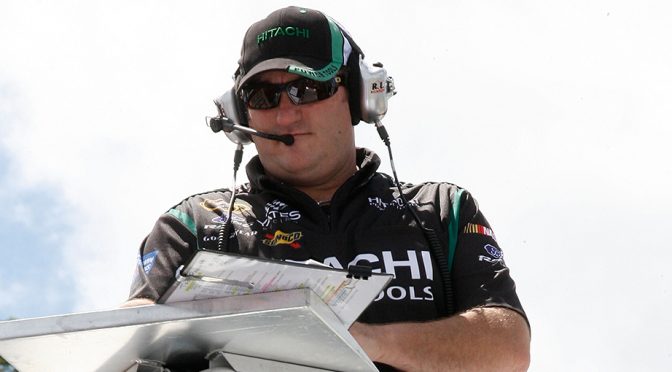
Tommy Baldwin Racing announced Todd Parrott as the crew chief for its No. 36 Chevrolet entry in the NASCAR Sprint Cup Series on Monday.
Although no driver has been disclosed for the No. 36 this season, Parrott’s hiring comes following his reinstatement to the sport after a suspension and ultimate release from his previous job as crew chief for the No. 43 Ford driven by Aric Almirola of Richard Petty Motorsports. Parrott violated NASCAR’s substance abuse policy last season, but quickly completed the NASCAR Road to Recovery program.
"I’m glad to get back to the sport I love and I’ve missed," Parrott said in a team release. "I’m looking forward to working with Tommy … and the driver of the No. 36. I’m hoping to try and build this team into something bigger and better. I’m humbled. I’m going to continue to do what I know how to do and just try to make race cars go fast. I’m tickled to be here."
Winner of the 1996 and 2000 Daytona 500s and the 1999 premier-series title with Dale Jarrett, Parrott is a seasoned veteran of the sport. His total of 31 victories is the third-highest among active crew chiefs.
"We at TBR are excited to take another step and grow our company with Todd Parrott," team owner Tommy Baldwin said. "He will be a great addition to the team. I think it’s important for everyone in this sport to have a second chance. Todd has earned that right by handling everything as a professional, by going through the NASCAR mandated recovery process. He has two Daytona 500 wins and a championship, which has earned him his right in the industry, and we are proud to have him on board to help take the No. 36 to a new level."
MORE:
|
highlight Chase changes |
WATCH: Brian France breaks
|
READ: Coors Light qualifying
|
WATCH: Qualifying: One-on-one
|
|---|
18-year-old to drive No. 31 for Turner Scott Motorsports, brings loyal sponsor
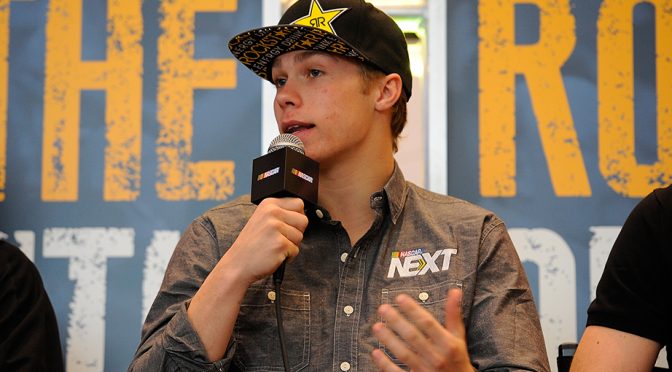
Following testing for Turner Scott Motorsports last month, Dylan Kwasniewski has secured a full-time ride with the team for the 2014 NASCAR Nationwide Series season.
The 18-year-old already has both NASCAR K&N Pro Series East and West championships under his belt as he goes behind the wheel of the No. 31 Rockstar Energy Drink Chevrolet Camaro in the series opener at Daytona International Speedway on Feb. 22.
"I’m thankful for Harry Scott and Steve Turner for giving me this opportunity, as well as Rockstar for moving up with us," Kwasniewski said. "The test session earlier this month at Daytona taught us a lot and it’s good to enter Daytona with a level of confidence. … Racing in the Nationwide Series is going to present a lot of challenges and it won’t be easy, but I look forward to taking it all on, learning from the other competitors and hopefully winning some races."
Driving for TSM last season in the NASCAR K&N Pro Series East, Kwasniewski earned six wins, eight top-fives and 10 top-10s in 14 starts. He also claimed three poles, led for 394 laps and has been selected for the NASCAR Next program, which highlights NASCAR’s up-and-coming stars, for three consecutive years.
"Dylan is a great kid and has unbelievable talent," team co-owner Harry Scott Jr. said. "Steve and I are thrilled that he is taking the next step in his career with us here at TSM. The sky is the limit for Dylan and this Rockstar team. He showed us what he’s capable of last year and while he’s making a big step, we know Dylan can achieve great things this year."
The news of Kwasniewski’s debut in the Nationwide Series comes three days after TSM announced that NASCAR Camping World Truck Series driver Jeb Burton does not have a full-time ride heading into the 2014 season due to a sponsorship default.
The Las Vegas native is bringing the Rockstar Energy Drink sponsor with him from Pro Series competition to the Nationwide Series. Rockstar Energy Drink is headquartered in Las Vegas and has been partnered with the driver since 2009. Pat Tryson will serve as the team’s crew chief.
"Everyone at Rockstar is proud of the investment we have made in Dylan Kwasniewski," said Jason May, executive vice president of marketing for Rockstar Energy Drink said. "He has demonstrated that he has the potential to become one of the best drivers on the planet."
MORE:
|
highlight Chase changes |
WATCH: Brian France breaks
|
READ: Coors Light qualifying
|
WATCH: Qualifying: One-on-one
|
|---|
Six-time series champion one of four drivers with multiple wins at track
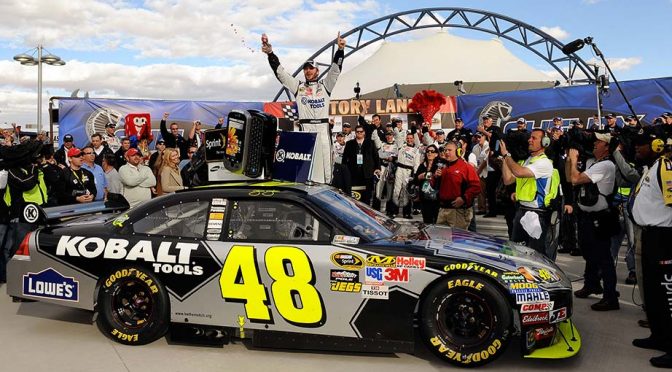
Jimmie Johnson has four Sprint Cup Series wins at Las Vegas Motor Speedway, which is more than any other driver. He won three races in a row at Las Vegas from 2005 to 2007 and visited Victory Lane again in 2010. The six-time series champion is one of four drivers with multiple wins at Las Vegas, with the others being Matt Kenseth (three wins), Carl Edwards (two wins) and Jeff Burton (two wins).
No. 27 team knows it must avoid another summer swoon
Paul Menard, now the longest-tenured Cup driver at Richard Childress Racing, says his No. 27 team "doesn’t need to re-invent the wheel," but acknowledges it must improve on past years’ performances.
"But at the same time," the 33-year-old said, "we’re always pushing to get better, finding things we didn’t do to our complete satisfaction to work on, whether it’s little things from how you get on and off to pit road, how do you manage pit-road speed, managing our practice sessions, having a plan and sticking to the plan or when do you bail off the plan and try something different if it’s not going well."
Menard, Ryan Newman and Sunoco Rookie of the Year candidate Austin Dillon make up the RCR NASCAR Sprint Cup Series driver lineup for 2014. Newman, with 17 career Cup wins, found a home at RCR after being released from Stewart-Haas Racing at the end of last season. Paired with crew chief Luke Lambert, he will work with most of the same folks that made up former driver Jeff Burton‘s No. 31 team this past year.
Dillon, a former NASCAR Camping World Truck Series and NASCAR Nationwide Series champion, has enjoyed a successful run in the lower series as he advanced up the ladder to Cup. For ’14, he inherits the Gil Martin-led team that helped Kevin Harvick to a third-place points finish in ’13.
Menard’s own team remains intact, for the most part, with veteran crew chief Slugger Labbe once again calling the shots.
"I trust Slugger and he trusts me," Menard said of the pairing that is entering its fifth year — the two previously worked together at Richard Petty Motorsports before making the move to RCR in 2011. "We balance each other out really well, I think. I’m probably a little more laid-back; he’s probably a little more high-strung. Sometimes he gets wound up and I have to calm him down; sometimes he needs to kick me in the ass. So that works."
Labbe has helped guide three drivers to Victory Lane since 2002, and among his five career victories as a crew chief are the 2003 Daytona 500 (with Michael Waltrip) and the 2011 Brickyard 400 (with Menard).
The Brickyard victory is Menard’s lone win through 255 career starts in the series. He also has a single win in the Nationwide Series.
Avoiding a midseason slump that has hit the team in recent seasons is just one of the goals for 2014.
"The biggest thing is that historically, we’ve always fired off the season really strong, then get to the summer months, races 12 to 15, and we fall on our face," Labbe said. "It happened again this (past) year and it’s hard to make those points back up in the middle of the year."
Eighth in points through 12 races, the team fell to 20th following a crash at Kentucky and blown engine at Daytona later in the summer.
"We really got behind there," Labbe said. "If we just minimize our mistakes — our cars have speed, we have a lot of potential, a really good pit crew. Believe it or not, it’s the same pit crew I’ve had for the last three years … I tried to blow ’em up at Homestead, but we survived all that. The core group, from the shop to the road, I think we’ve changed out six people total (through the years).
"But the big thing is just minimize the mistakes. If we have a 10th-place car, we need to finish 10, don’t finish 15th. If we can minimize the mistakes and avoid the wrecks, engine failures or parts failures, I think we’ll be where we need to be."
Menard and Labbe say the addition of engineers Justin Alexander and James Small should be a big benefit to the No. 27 team and the RCR organization.
"I remember 10 years ago, it was all about having good mechanics," Labbe said. "You changed 2-3 engines a weekend, there was a lot of work involved and you had to have really good mechanics. You still have to have that, but you’ve got to have a strong group of engineers today. … Each team has two that goes to the track, there’s an assistant that floats among the teams, and a core group back at the shop when we’re on the track, analyzing what we are doing."
Alexander previously worked at Hendrick Motorsports (2004-10) while Small comes to RCR from Melbourne, Australia, where he enjoyed a successful engineering career in the V8 Supercar series.
"We’ve had very little car trouble," Menard said. "Our cars are solid; we haven’t had pieces fall off. …Probably the one thing we lacked the last couple of years was giving Slugger a good engineering support staff. I feel really confident in Justin and James this year to help us out."
And as for taking that next step?
"That’s the million-dollar question," Menard said. "That’s what everyone is trying to do — take your results from last year and improve on them.
"I feel like RCR as a whole, going into the season with some of the personnel moves, the engineering buildup that has happened, we’ve got a great opportunity to do that."
MORE:
|
highlight Chase changes |
WATCH: Brian France breaks
|
READ: Coors Light qualifying
|
WATCH: Qualifying: One-on-one
|
|---|
Since Chase format began in 2004, Jimmie Johnson holds most titles with six
In 1953, Herb Thomas became the first driver to win multiple NASCAR championships after winning his first two years prior. Since then, a total of 14 drivers have added onto their success by winning multiple Cup championships, the most recent being six-time champion Jimmie Johnson. Although Johnson is inching closer toward joining them, Richard Petty and Dale Earnhardt still hold the record with seven Sprint Cup Series titles each.
Blake Shelton’s moving speech, Martin Truex Jr.’s Skype drop-in among top moments
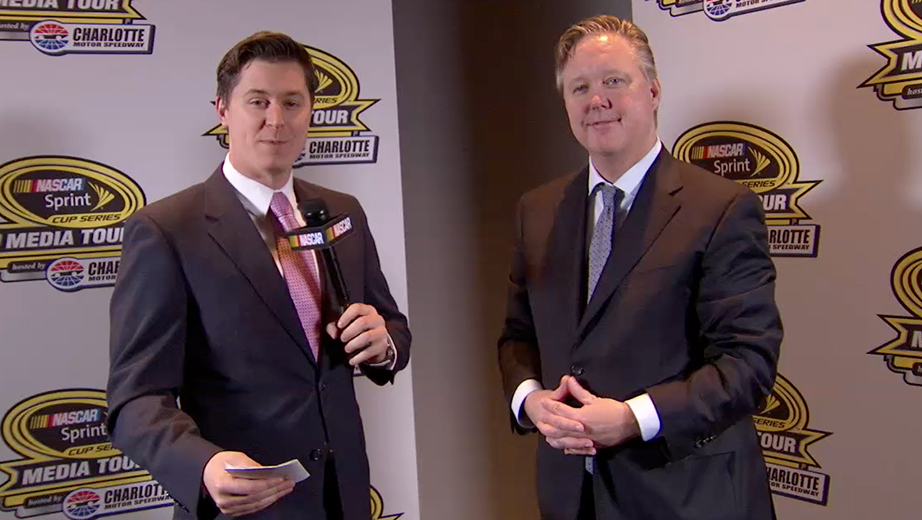
Over four days this past week, reporters and competitors commingled in what for more than three decades now has been an annual rite of winter in NASCAR land. The 32nd edition of the NASCAR Sprint Media Tour presented by Charlotte Motor Speedway once again allowed ink-stained wretches and logo-clad drivers to exist pretty much in harmony, with writers filling notebooks and racers spilling quotes all in an effort to build interest, momentum, and storylines for the forthcoming season.
In many ways, it was the same as it’s always been — team
principles on a stage thanking sponsors and professing excitement,
journalists asking usually responsible, but occasionally ridiculous
questions, all followed by breakout sessions in which writers or
cameramen gather elbow-to-elbow around Tony Stewart or Dale Earnhardt Jr.
This year, though, rather than bussing the masses from race shop to
race shop, the teams came to the convention center in downtown
Charlotte. The Hall of Fame induction was incorporated. And it was all
capped by a small NASCAR announcement you may have heard about.
But
the more things change, the more things stay the same. The overall
atmosphere was still one of optimism. Some journalists still went after
gift bags — filled with sponsor-related products, and handed out after
some sessions — as if they were the last edible scraps remaining on the
planet. And the tour was still punctuated by those touching or humorous
individual moments that stand out above the rest, and help provide
depth and humanity to the entire week. From the event’s 2014 edition,
here are the top 10.
10. That’ll be $5, Governor
With the tour moved downtown, the kickoff luncheon found a few home in the Great Hall of the Hall of Fame. And it had a few new attendees, such as Charlotte Mayor Patrick Cannon and North Carolina Gov. Pat McCrory. A former Charlotte mayor who refers to his home turf as the "NASCAR Valley," McCrory confessed to attending his first race in 1975 — by walking through an unattended gate at Charlotte Motor Speedway for free, after the World 600 was halfway over. To make amends for skirting the entry fee, McCrory pulled out a $5 bill and offered it to track president Marcus Smith. "I’m not sure we could afford the compounded interest," Smith joked. "We’ll forgive the taxes on this," the governor responded. "Just don’t tell anyone at my department of revenue."
9. Bowyer on the big game
When it comes to Clint Bowyer, there are few simple answers. Ask him for a Super Bowl pick, for instance, and hold on. "I’m going to freeze my ass off, but nonetheless I think we’re going," he said during the Michael Waltrip Racing visit. "Peyton (Manning) — what a great story. Probably could’ve, should’ve retired and (still) would’ve had a huge legacy and impact in the sport. You hear all these things about other players, that man changed everything. He went to a complete new team and is right back on top, competing for a Super Bowl again. It’s a great story and he represents the sport well. You hate to say it, but Jimmie (Johnson) — he is a champion, not only in the car, but out of the car. He represents the sport in the right way for kids growing up racing, that’s what champions need to do. Peyton certainly conducts himself well. … He did beat the Chiefs twice. I wasn’t very happy with him over that, but nonetheless, that’s who my pick is." We’ve got it … we think.
8. Calamity Jeff
Although not technically on the itinerary, the 2014 paint scheme on Jeff Gordon’s No. 24 car was unveiled at the NASCAR Hall of Fame shortly after the tour officially concluded on Thursday afternoon. Before the vehicle — a sharp, gleaming black number with those trademark flames flowing down the sides — was uncovered, Gordon admitted to needing some of his sponsor Axalta’s product because of a fender-bender he had been involved in while pulling out of a parking lot earlier in the day. Team owner Rick Hendrick, seated right next to the four-time champion, couldn’t resist. "That wasn’t the first car you’ve wrecked," he cracked, explaining that Gordon had totaled 17 — 17! — cars in the driver’s rookie season of 1993, when he also had 11 DNFs. No wonder, then, Hendrick struck a deal with an automotive finishing brand as a sponsor.
7. Professor Tony
Tony Stewart is back. No, maybe he hasn’t yet returned to the race track — that will have to wait a few weeks still — but the three-time NASCAR champ, who missed the last four months of the 2013 season with a broken leg suffered in a sprint-car accident, is clearly back to his acerbic old self when it comes to dealing with the media. That much was evident during the Stewart-Haas Racing tour session, when a reporter asked Stewart to confirm Twitters posts that indicated he’d been cleared for Sprint Unlimited practice at Daytona. It was a legitimate and responsible question, but even so, Stewart couldn’t resist. "Read the Internet every once in a while, and you’ll see I got released a couple of days ago," he lectured. "It was on the Internet everywhere. I’ll show you how to use your computer later." Ah, Tony, how we’ve missed you.
6. Felix being Felix
Although Chip Ganassi wasn’t at the tour stop for his namesake team — he evidently had some business with another racing series — Felix Sabates certainly was, and no one can liven up an early-morning session better than the Cuban-born minority owner of Chip Ganassi Racing with Felix Sabates. "Eight-thirty in the morning is early as hell," Sabates said. "If we had 10 wins, we’d be at 4 o’clock in the afternoon." As for the team’s recent name change from Earnhardt Ganassi Racing, Sabates joked that he was all for it, because his name now appears more prominently on the logo. And though he’s cut back his race schedule in recent years, Sabates plans on attending 28 events in 2014. The reason? Kyle Larson. "The first opportunity the kid has to get to Victory Lane," Sabates said, "I don’t want to be at the club playing golf with a bunch of idiots." It all made getting up early quite worthwhile.
5. Junior on Junior
Perhaps the best individual interview session of the tour belonged to Dale Earnhardt Jr., who seemed as comfortable before the microphones as he is storming the high line at Daytona. Always honest, he didn’t mince words. On not winning as much as he’d like: "It really motivates you and ticks you off." On hopes for 2014: "I think we’re right there. I think we’re right around the corner. This is the year. Maybe this is the year." His best comments, though, were on Austin Dillon taking over his father’s former car at Richard Childress Racing. The No. 3 returns to the premier series this season after a hiatus of 13 years, with Childress’ grandson behind the wheel. "This is how it should happen," said Earnhardt, who never wanted the ride himself. "This is what should happen, with Austin and Richard." No doubt.
4. Suave Drew Herring
On a team with plenty of star power, who would have thought that the driver who would steal the show at the Joe Gibbs Racing tour session would be — Drew Herring? But that’s exactly what happened when the team showed a photo from Herring’s Instagram feed — one of the part-time Nationwide Series driver as a youngster, kicked back on a rattan couch, wearing white pants and white suede shoes, with a stuffed Easter bunny placed next to him and a Dale Earnhardt No. 3 pendant hanging from his neck. His sister had sent him the photo, so Herring decided to share it with the world. "I mean, I was looking good back then," he said. "Not much has changed. A little more facial hair, but any guy who can pull that off is pretty confident and comfortable with himself." Indeed.
3. Monkey business
Tim Flock may be gone, but former Charlotte track president Humpy Wheeler did the driver proud when the late NASCAR champion was inducted into the Hall of Fame. And any mention of Flock brought memories of Jocko Flocko, the monkey who once rode in his car. As a tribute, Wheeler wished he’d have brought his own primate. "They’re illegal in the convention center, but the fine is only $92," he joked after his speech. In the press room after the ceremony, Flock’s widow Frances regaled reporters with stories of Jocko’s exploits. "He had a helmet, he had a uniform, and he had a safety belt, and he’d sit in that seat with his safety belt connected," she said. That is, until he got loose and cost Tim a race. "Tim literally had to pull in the pits, leading the race, and pull a monkey off his back." And not the figurative kind.
2. Fathers and sons
On a night when most Hall of Fame inductees were enshrined by family members or others in the racing industry, it initially seemed odd that country singer Blake Shelton would do the honors for his friend Dale Jarrett. That is, until Shelton began his speech and started talking about his father, a lifelong NASCAR fan. "I hope you drivers realize the kind of impact you have on the lives of everyday, hard‑working people — people like my dad," he said. It struck a perfect tone, given that Dale and Ned Jarrett are now the only living father and son combination to earn enshrinement. "I had no idea what Blake was going to say," Jarrett said later in the media room. "Knowing him, that could have gone in a lot of ways." But it went the right way, and by the end there was hardly a dry eye in the ballroom.
1. Live from Anguilla
Tuesday was a grim day in Charlotte, one that began with cold and overcast conditions, and ended with a few inches of snow on the ground. Some journalists on tour were left scrambling due to school closings, others crept home on icy roads. For Martin Truex Jr., though, it was all sunshine and palm trees. "My biggest concern is getting sunburned," said the new Furniture Row Racing driver, and with good reason — he was lounging in 80-degree temperatures on the lovely, tropical Caribbean island of Anguilla, appearing via a video screen to the shivering masses in North Carolina.
At first, there was a degree of consternation among the media when it was learned that Truex — the lone driver on a one-car team — would miss the Furniture Row stop because of a previously-scheduled vacation, replaced by a cardboard standup placed next to a row of director chairs on stage. That all disappeared, though, when his smiling face popped onto a video screen via a Skype hookup. In a sport that craves any sort of variety, this was certainly different.
"Look out your window and look out mine," he needled, and then on cue was handed a Captain Morgan and ginger ale. "That wasn’t even planned," he added. "Perfect." It was everything the Sprint Media Tour should be — fun, playful, interesting and sunny in disposition. Let’s just hope other drivers don’t get the same idea.
MORE:
|
highlight Chase changes |
WATCH: Brian France breaks
|
READ: Coors Light qualifying
|
WATCH: Qualifying: One-on-one
|
|---|
Defaulted payment from sponsor forces ‘especially painful’ decision
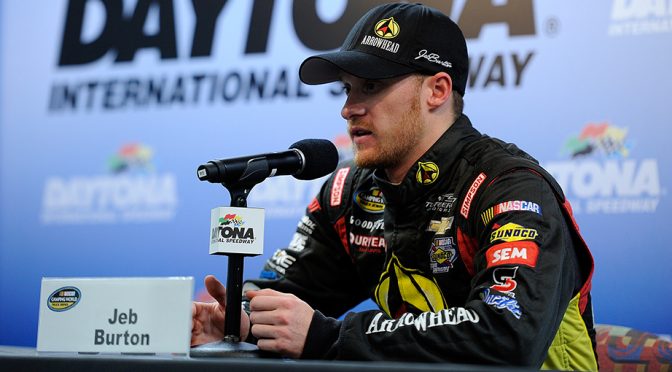
Jeb Burton figured he’d be spending the last few weeks before Daytona preparing for the Camping World Truck Series opener. He had no idea he’d instead be making telephone calls, searching for a sponsor just to get him there.
Yet that was the cruel reality Friday, when Turner Scott Motorsports announced that the sponsor of its No. 4 truck had defaulted on payments, and as a result Burton’s program would not be fielded full-time. Turner Scott said the default by Arrowhead electronic cigarettes would also force the team to lay off as much as 20 percent of its staff.
The news was crushing to Burton, the 21-year-old son of former Daytona 500 winner Ward Burton. The younger Burton finished fifth in Truck Series points last season, and was positioned to be a leading contender for the championship in 2014.
"It’s just hard for my family and I," Burton told NASCAR.com by telephone Friday evening. "Racing is kind of my whole life, and to have it kind of taken from me because of something I don’t have any control over is devastating to my family and I. We’ve just got to keep going forward, and hopefully I’ll get an opportunity to get back on the race track."
Toward that end, Burton said he and his father have been "calling and calling" potential sponsors. "We’ve been close to some things, but nothing’s come together," he added. "We’ve just got to keep digging there."
The loss of the No. 4 team leaves rookie Ben Kennedy as the lone full-time Truck Series driver in the Turner Scott stable. The organization will also field a part-time team with Brandon Jones and other drivers to be named later, as well as two full-time Nationwide Series programs involving Kyle Larson and another driver still to be announced.
"The breakout success of Jeb Burton and the entire No. 4 team in 2013 makes these decisions especially painful," team co-owner Harry Scott Jr. said in a statement. "However, we will do everything we can to put Jeb on the race track with our organization going forward. He is a great talent and has a great career ahead of him. Despite this setback, Turner Scott Motorsports remains strong overall and will compete for championships in both the NASCAR Nationwide Series and the NASCAR Camping World Truck Series. We are extremely proud of the talent of our workforce here at TSM, and it is very difficult for us to lose anyone within our organization. We understand the way that this affects the lives of everyone involved, and we will do our best to assist in placement elsewhere in the sport."
Friday, Burton said he wasn’t certain what Turner Scott had in mind as far as a potential part-time schedule, or whether he’d be in the season opener Feb. 21 at Daytona if his current situation remains unchanged. "Right now I feel like something has to come together, because I have not been told if I will be in Daytona or not," Burton said. "I need to find a sponsor."
According to Turner Scott, the situation stems from Arrowhead’s "unfortunate and untimely failure to make a critical payment" to the team. Burton, who won one race and earned seven poles in his rookie campaign of 2013, received the bad news earlier this week and has been working the phones ever since.
"I just hate it for my race team and my family," he said. "I thought we had a great team, and I thought we could go win the championship this year. Maybe something will come together and we can still do it, but as of right now, it’s not looking too good."
Burton’s plight met with plenty of sympathy on Twitter, where the likes of Larson, Brad Keselowski, and JR Motorsports co-owner Kelley Earnhardt Miller all voiced their support. And yet, the disappointment was evident in the driver’s voice. "I just want to race," Burton said, and over the next few weeks he plans to prepare as if he’s still going to Daytona — even though right now, he’s not certain if he is or not.
"Our sport sometimes isn’t fair, like any sport isn’t," he said. "We’ve got to find those sponsor dollars to get on the race track, that’s what it seems to me right now. I feel like my family and I can represent a company really well, and I think I can do a good job on the race track and off the race track for a company. I’ve just got to find a company that wants to sponsor me, so I can try to do a good job for them."
MORE:
|
highlight Chase changes |
WATCH: Brian France breaks
|
READ: Coors Light qualifying
|
WATCH: Qualifying: One-on-one
|
|---|