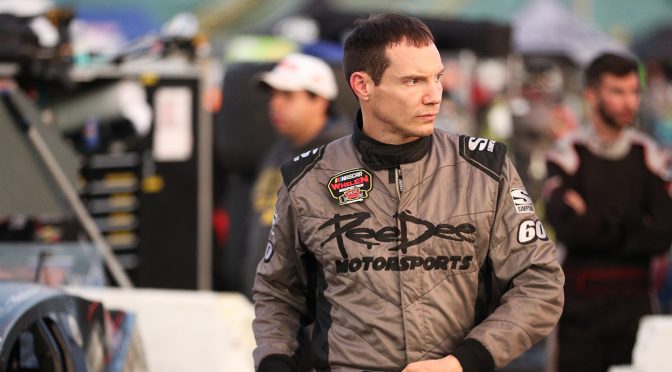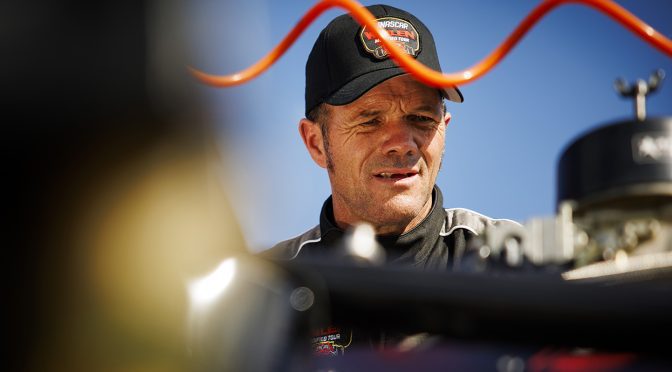
NEW SMYRNA BEACH, Fla. — Jeremy Gerstner had no idea what happened.

Only seconds before, he was barreling down the fronstretch at Florida’s New Smyrna Speedway preparing to enter Turn 1 during NASCAR Whelen Modified Tour practice. The next thing he knew, he was sitting inside the remains of his destroyed race car and wondering whether he was paralyzed.

The Tampa, Florida native was not paralyzed by his crash on Feb. 10, 2024. But in the moments after, he couldn’t feel anything below his waist.

“I went to get out of the car, and I couldn’t move my legs,” Gerstner said. “I pulled myself up to the outside of the car and put my head down and started taking my HANS Device off. I wasn’t in tears, but all I could think of was my buddy, Shane Hmiel.

“I raced Silver Crown cars with him back in the day and he flipped over and broke his back, and it paralyzed him from the waist down. I was freaked out; I’m not going to lie.”

Fast forward a year, and Gerstner was back at New Smyrna on Saturday to once again race with the Modified Tour.

The road to that moment was a long one, and it wasn’t easy.

RELATED: Watch the World Series of Asphalt on FloRacing

Gerstner, now 52, never lost consciousness during the crash and remembers everything, including the moments before and after the impact with the Turn 1 wall.

“I came out of Turn 4, and I felt the motor skip a little bit,” Gerstner explained. “I was like, ‘Well, there is no way I could be in the chip.’ By the time I got the start/finish line it (made a noise) like it was misfiring or hitting the chip. When I went to lift after that, the motor was still wide open.

“I was like, ‘What the hell is going on?’ I pulled back as hard as I could on the return pedal … I bent the return pedal 45 degrees the wrong way. I knew at that point I was along for the ride.”
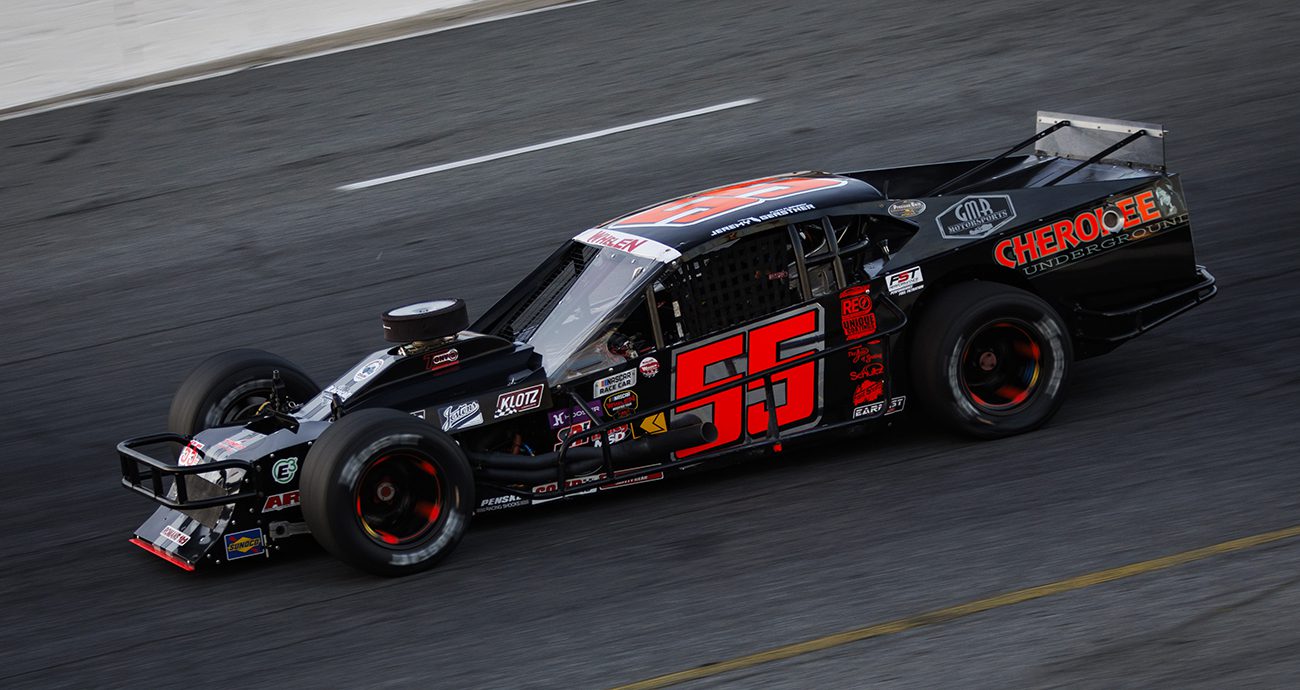
Jeremy Gerstner
Jeremy Gerstner made his return to the NASCAR Whelen Modified Tour Saturday night at New Smyrna Speedway. (Photo: Adam Glanzman/NASCAR)

Gerstner said he hit the Turn 1 wall going approximately 150 mph. He added that the impact with the wall was estimated to have been about 35 Gs, meaning approximately 35 times the force of gravity.

“Once I hit the wall, I watched the car fly through the air,” Gerstner recalled. “I saw chain link fence. I actually felt it hook on the retention fence up top and when it did it spun me around and bam, I hit the ground.”

Gerstner’s car was left mangled. The impact was so severe that a wheel was sheared off Gerstner’s No. 55 Modified, flew over the catch fencing and landed outside the track. Luckily, no bystanders were injured as a result.

Emergency medical personal quickly rendered aid to Gerstner. Once they put him in the ambulance and got medication into his system, he began to regain feeling in his legs.

“The second they put me in the ambulance, they put me on propofol,” Gerstner said. “I could feel my legs, and I could wiggle my toes. It was like, relief.”

Gerstner was transported to Halifax Health Medical Center in Daytona Beach, Florida, where he was diagnosed with a pubic rami fracture, a broken left femur and shattered left meniscus.

“I broke my pelvis — they called it a pubic rami fracture — in four different spots,” Gerstner said. “It’s basically like cutting your whole right lower extremity off. That’s why the nerves were pinched, and I couldn’t feel nothing.”

He believes that it wasn’t the impact with the Turn 1 wall that caused most of his injuries, but rather the hard landing and clipping the catch fence.

“Hitting the wall didn’t break my pelvis or my left tibia,” Gerstner said. “What actually broke it was slamming down at 102 mph from a dead drop from hitting the fence. Our seats aren’t designed to save you like that.

“I can’t blame nobody. It was one of those unfortunate deals.”

The cause of the accident itself was a fluke; a one-in-a-million part failure according to Gerstner. The kind of thing that no one, not even the best engineer in the world, could have predicted.
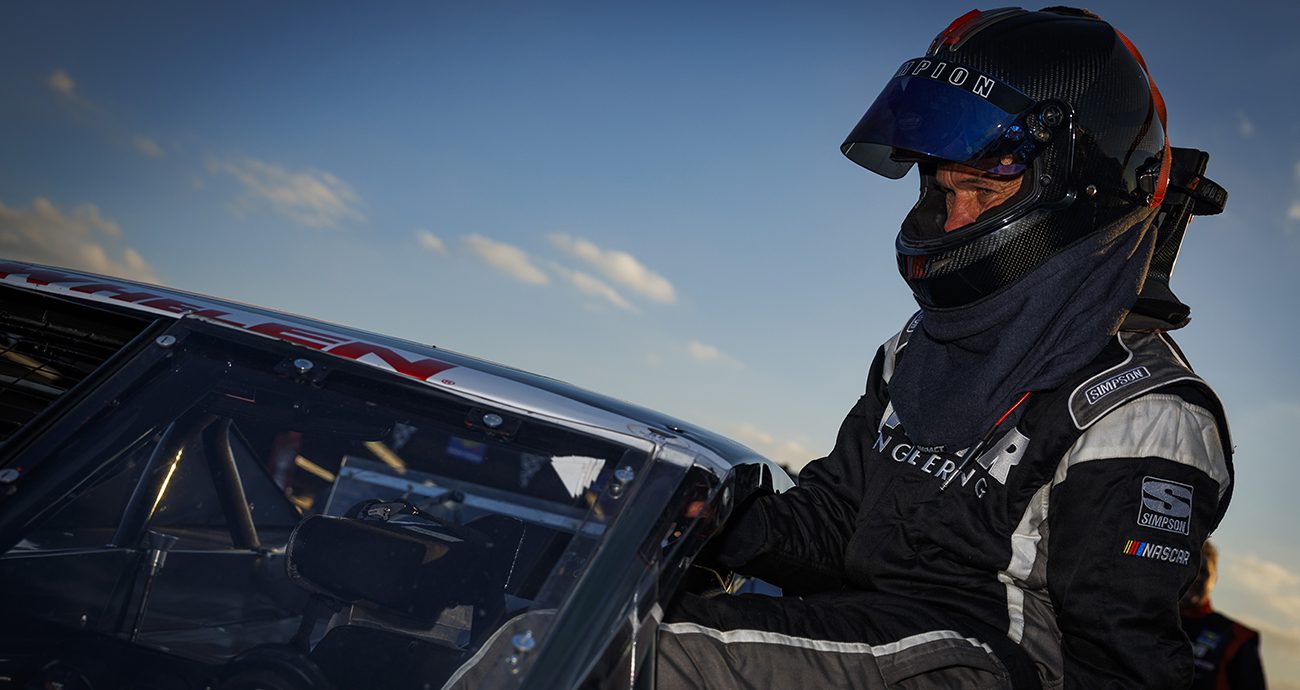
Jeremy Gerstner
Jeremy Gerstner climbs aboard his No. 55 Modified prior to Saturday’s NASCAR Whelen Modified Tour event at New Smyrna Speedway. (Photo: Adam Glanzman/NASCAR)

“On that particular day, I hit the chip on the back straightaway. Bumped it a couple of times,” Gerstner said. “I have never hit the chip with the max gear. Coming off the corner, I hit the chip at the start/finish line, which made the motor go about 200 feet in the chip.

“When you do that, it floats the valves because it’s a hydraulic cam type motor. It can’t handle being at 8200 (rpms) that long. I basically killed the motor. When it did that, a piece of the valve guide, when it bent the intake in the exhaust, bounced off the piston and shot up back through the intake.

“It was like the perfect storm. When I lifted, that piece of guide wedged between the rear throttle blade and the carburetor housing. It didn’t matter how hard I pulled back, it wasn’t coming out. When I hit the wall and it revved way up and I bounced off [the wall], the piece came out and it fell down inside the intake.”

NASCAR officials discovered the broken piece of the valve guide inside the intake while inspecting Gerstner’s car after the crash, which confirmed what caused the throttle to hang.

“I probably could have had a better chance of winning the lottery that day,” Gerstner said.

Gerstner spent months confined to a bed while he recovered, and even more months doing physical therapy to regain the strength he lost because of his injuries.

“They said, ‘As long as you behave yourself for four months and lay still, we won’t have to put the pins and all that stuff and the halo around you for your pelvis,’” Gerstner said. “So, I sat in bed for four or five months.”

RELATED: Jeremy Gerstner’s career statistics

Gerstner returned to the seat of a race car for the first time last November when he competed in the North-South Shootout at North Carolina’s Caraway Speedway, but what he really wanted to do was compete with the Modified Tour on Feb. 8 at New Smyrna.

He was determined not to let the bad memories from one season ago stop him from racing at a track he’s raced at for decades.

It was hardly a perfect day for Gerstner on Saturday. He qualified 26th and spun to bring out the first caution on Lap 4 but quickly got his lap back. He would spin again later in the evening on Lap 95 before retiring from the race early due to overheating issues.

Despite not having the race he hoped for, Gestner was thankful.

Thankful to be racing. Thankful to be walking. Thankful to be alive.

“I’m still here to talk about it and race another day,” Gerstner said.
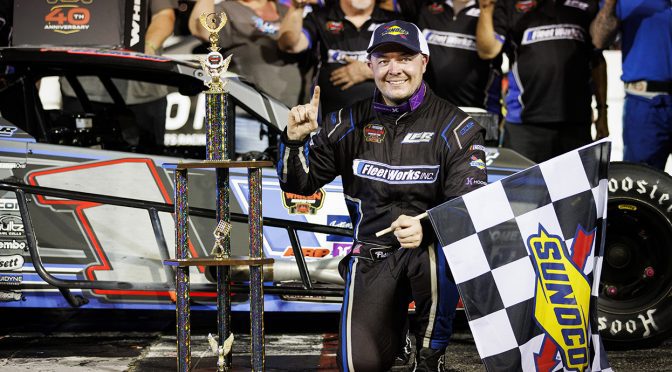
Last year’s NASCAR Whelen Modified Tour season opener at New Smyrna Speedway saw Patrick Emerling deliver a fourth-place finish in Rich Gautreau’s first race as a car owner.

Their second visit to New Smyrna together ended with a trip to Victory Lane.

RELATED: Complete results from New Smyrna Speedway

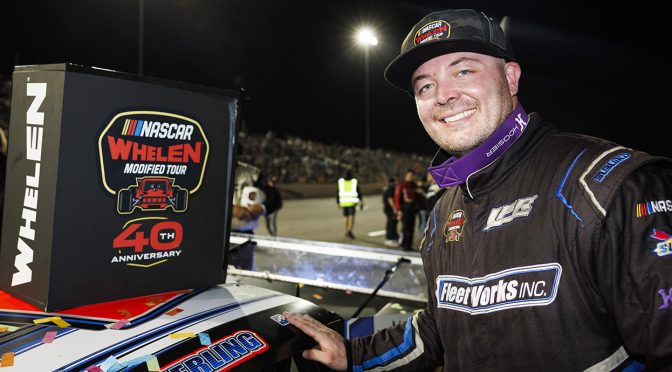
In a race dominated by a record number of cautions and diverging pit strategies, Emerling utilized every available opportunity to climb from the tail end of the field. Fresh rubber on his No. 1 Fleetworks Inc. Modified in the closing laps enabled Emerling to open 2025 with his eighth career Modified Tour victory.

The cohesion Emerling has developed in a short amount of time with Gautreau’s team had him eager to hit the track on a Saturday after a long winter of preparation.

“We couldn’t wait to get rolling,” Emerling said. “This is a brand new LFR car. [My crew chief] Dale Hedquist and the team put in so much hard work. I think Dale was working 100 hours a week. This is absolutely incredible. We weren’t the best car at the beginning, but we had to dial it in so we were good at the end.”


When Emerling made the decision to join Gautreau’s start-up operation ahead of the 2024 season, he expected to be competitive every week.

Aside from a crash that knocked them out of the second race of the season at Richmond Raceway, efficiency quickly became a theme for Emerling and Gautreau. The duo’s first nine races together consisted of six top-five finishes, all while Emerling inched closer to giving Gautreau his first victory as a car owner.

Everything finally came together for Emerling in race 10 of the year at Thompson Speedway Motorsports Park, where he cruised to victory after leading all 150 laps from the pole. Two more triumphs for Emerling at Oswego Speedway and Monadnock Speedway solidified a third-place points finish for Emerling behind Ron Silk and champion Justin Bonsignore.

Emerling entered the New Smyrna Beach Area Visitors Bureau 200 determined to build upon a stellar 2024. The car provided by Gautreau possessed plenty of speed, but the path toward the front proved unconventional with a plethora of cautions resulting in numerous pit stops.

An ill-timed yellow could have derailed Emerling’s strategy and shuffled him to the rear. Having been in similar situations several times during his career, Emerling kept his composure, all while patiently waiting for an opening to give himself a tire advantage over his competition.

“We started dead last, but as a team, we didn’t panic at all,” Emerling said. “We won the Spring Sizzler doing the same thing with the motor issue in qualifying. This was a strategy race, and you’re going to give up your track position early anyway. There were a lot of variables, but we wanted to out-tire the field and it all worked out.”

A caution for Trevor Catalano with 50 laps remaining brought Emerling to pit road for fresh rubber. He proceeded to pick off the slower cars in front of him before making the race-winning pass on Craig Lutz during the penultimate restart.

Lutz, who has not visited Victory Lane in the NASCAR Whelen Modified Tour since 2022, knew he was at the mercy of yellow flags. The early cautions allowed Lutz to climb into the top five with his strategy, while the late ones made it impossible to fend off Emerling.

“With the pit strategy there, it’s such a gamble,” Lutz said. “It really makes the crew chief and the crew roll the dice on the calls and you hope one works out your way. [Emerling] had the best car and his strategy worked out the best, but we fought for it. We just came up a little bit short.”

Despite settling for a disappointing second, Lutz saw Saturday’s season-opener as a step in the right direction. If he can amass more strong runs like the one at New Smyrna, Lutz is optimistic he can contend for the Modified Tour title in his second year with Goodie Racing.

Emerling will be a primary obstacle standing in the path of Lutz and the rest of the Modified Tour field. With his victory at New Smyrna on Saturday, Emerling has now enjoyed 15 consecutive finishes inside the top 10.

A long season awaits Emerling as he looks to parlay his New Smyrna victory into a potential Modified Tour title. He has full trust in himself, Gautreau, Hedquist and the rest of the operation to keep securing wins and solidifying themselves as the championship favorite.

“This is what we are trying to do,” Emerling said. “We executed tonight. It’s racing and anything can happen, but we came out on the good side tonight. We’re going to try and continue this momentum. This is a really scrappy team and [a championship] will take everyone involved.”

Justin Bonsignore overcame losing a lap from a flat tire to start his NASCAR Whelen Modified Tour championship defense with a third-place finish. A strong evening for Luke Baldwin, in which he earned his first career pole, culminated with a fourth-place performance.

Austin Beers rounded out the top-five finishers. Following him in the running order were Stephen Kopcik, Eric Goodale, Ryan Newman, Ron Silk and Andrew Krause.

The Modified Tour gets a prolonged break before heading to Thompson Speedway Motorsports Park on March 30. FloRacing will provide live flag-to-flag coverage

New Smyrna Beach Area Visitors Bureau 200

New Smyrna Speedway

New Smyrna Speedway Logo

  • Race results:
Pos Car No. Name Sponsor Laps Diff.
1 1 Patrick Emerling Fleetworks Inc 206  –
2 46 Craig Lutz Riverhead Building Supply 206 0.38
3 51 Justin Bonsignore Phoenix Communications, Inc. 206 0.659
4 7 Luke Baldwin* Baldwin Automotive 206 0.74
5 64 Austin Beers G&G Electrical Supply/Dell Electric/Lumiere Electrical 206 0.918
6 21 Stephen  Kopcik Wanick Construction/Karchner/Franzosa Trucking 206 1.017
7 58 Eric  Goodale GAF Roofing 206 1.284
8 8 Ryan  Newman Bass Pro Shops/Cabelas/USNE/Eighty-two services/Anglers Choice 206 1.577
9 16 Ron Silk Blue Mountain Machine/Future Homes 206 1.718
10 24 Andrew Krause Supreme Manufacturing 206 1.789
11 3 Tyler Rypkema USNE/Northeast Drilling 206 2.004
12 25 Brian Robie Bar Harbor Bank and Trust 206 2.072
13 56 Trevor Catalano USNE/Catalano Motorsports 206 2.248
14 54 Tommy Catalano FX Caprara/USNE/Catalano Motorsports 206 2.654
15 60 Matt Hirschman Pee Dee Motorsports 206 2.818
16 20 Max Zachem USNE/Lu-Mac’s/Byrnes Agency 206 2.965
17 81 Mark  Stewart* Cromers Market/Keith Grimes Excavating/Hydroaction 205 1 Lap
18 84 Tyler Catalano USNE Power/Kennedy Realty 205 1 Lap
19 18 Ken Heagy Buoy One Seafood Market & Restaurant 205 1 Lap
20 36 Dave Sapienza Eastport Feeds 204 2 Laps
21 29 Mike Marshall* MLM Diagnostics/Jusczak Electric/Tisdell Transmissions 203 3 Laps
22 59 Tyler Barry* Pro Systems/BNP Machine 202 4 Laps
23 11 Norman  Newman* Family Funland Amusement Park 198 8 Laps
24 26 Gary McDonald Lakeland Landscape Supply 181 25 Laps
25 9 Chris Hatton* Generac 160 46 Laps
26 55 Jeremy Gerstner TBE5/Crippling Hot Sauce/ Racecar Engineering 124 82 Laps
27 22 Kyle Bonsignore Chalew Performance/MTT/Munns Auto 86 120 Laps
28 40 Frank  Fleming William E Smith Trucking/Taylor Auto Parts 70 136 Laps
29 44 Chase Dowling SS Paving/ Harshaw Paving 70 136 Laps
30 12 Brian Sones* Dennis Wenner 57 149 Laps
31 14 Jacob Lutz Advantage Trucks/Washtronic’s/Anastasi Trucking 29 177 Laps


New Smyrna Beach Area Visitors Bureau 200

New Smyrna Speedway

New Smyrna Speedway Logo

  • Qualifying results:
Pos. Car No. Name Sponsor Best Time Best Speed In Lap Laps Diff.
1 7 Luke Baldwin* Baldwin Automotive 17.501 102.851 2 2  –
2 64 Austin Beers G&G Electrical Supply/Dell Electric/Lumiere Electrical 17.587 102.348 2 2 0.086
3 21 Stephen  Kopcik Wanick Construction/Karchner/Franzosa Trucking 17.688 101.764 2 2 0.187
4 51 Justin Bonsignore Phoenix Communications, Inc. 17.693 101.735 2 2 0.192
5 46 Craig Lutz Riverhead Building Supply 17.699 101.701 2 2 0.198
6 58 Eric  Goodale GAF Roofing 17.713 101.62 2 2 0.212
7 60 Matt Hirschmann Pee Dee Motorsports 17.718 101.592 2 2 0.217
8 24 Andrew Krause Supreme Manufacturing 17.776 101.26 2 2 0.275
9 44 Chase Dowling SS Paving/ Harshaw Paving 17.784 101.215 1 1 0.283
10 1 Patrick Emerling Fleetworks Inc 17.785 101.209 2 2 0.284
11 16 Ron Silk Blue Mountain Machine/Future Homes 17.787 101.198 2 2 0.286
12 3 Tyler Rypkema USNE/Northeast Drilling 17.788 101.192 2 2 0.287
13 14 Jacob Lutz Advantage Trucks/Washtronic’s/Anastasi Trucking 17.793 101.163 2 2 0.292
14 54 Tommy Catalano FX Caprara/USNE/Catalano Motorsports 17.795 101.152 2 2 0.294
15 40 Frank  Fleming William E Smith Trucking/Taylor Auto Parts 17.81 101.067 2 2 0.309
16 22 Kyle Bonsignore Chalew Performance/MTT/Munns Auto 17.816 101.033 2 2 0.315
17 84 Tyler Catalano USNE Power/Kennedy Realty 17.868 100.739 2 2 0.367
18 36 Dave Sapienza Eastport Feeds 17.882 100.66 2 2 0.381
19 25 Brian Robie Bar Harbor Bank and Trust 17.893 100.598 2 2 0.392
20 81 Mark  Stewart* Cromers Market/Keith Grimes Excavating/Hydroaction 17.894 100.592 2 2 0.393
21 56 Trevor Catalano USNE/Catalano Motorsports 17.908 100.514 2 2 0.407
22 8 Ryan  Newman Bass Pro Shops/Cabelas/USNE/Eighty-two services/Anglers Choice 17.917 100.463 2 2 0.416
23 59 Tyler Barry* Pro Systems/BNP Machine 18.067 99.629 2 2 0.566
24 20 Max Zachem USNE/Lu-Mac’s/Byrnes Agency 18.132 99.272 1 2 0.631
25 12 Brian Sones* Dennis Wenner 18.207 98.863 2 2 0.706
26 55 Jeremy Gerstner TBE5/Crippling Hot Sauce/ Racecar Engineering 18.227 98.755 2 2 0.726
27 29 Mike Marshall* MLM Diagnostics/Jusczak Electric/Tisdell Transmissions 18.262 98.565 2 2 0.761
28 9 Chris Hatton* Generac 18.32 98.253 2 2 0.819
29 18 Ken Heagy Buoy One Seafood Market & Restaurant 18.367 98.002 2 2 0.866
30 11 Norman  Newman* Family Funland Amusement Park 18.4 97.826 2 2 0.899
31 26 Gary McDonald Lakeland Landscape Supply 18.509 97.25 2 2 1.008


CONCORD, N.C. — Hendrick Motorsports has always been on the forefront of technology in NASCAR Cup Series racing.

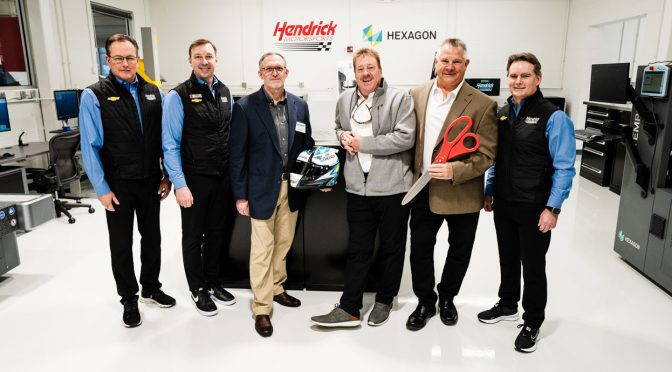
The 14-time champions reinforced that Wednesday when the company unveiled its latest addition, the Hexagon Metrology Lab, at its shop in Concord, North Carolina.

Hendrick has utilized Hexagon’s coordinate measuring machines (CMMs) since 2002. But the latest influx of machinery allows Hendrick employees to laser-scan parts to the ten-thousandths of an inch, giving the team, it believes, an edge over its competition during the Next Gen era in which 85% of the vehicle is built from supplier-sourced parts.

MORE: 2025 NASCAR Cup Series schedule

As Hendrick employees demonstrated Wednesday morning, the machine’s robotic arms can be used to scan and create three-dimensional models of anything placed in front of it — from the stud in a wheel the lug nut attaches to the car itself. In total — and not exclusive to its metrology lab — Hendrick has 33 absolute arms, 13 scanners, a Leica Absolute Tracker, and seven CMMs.

“What happens is the data gets output into an Excel file and a PDF file,” explained Roy Crump, Hendrick Motorsports’ quality control supervisor. “So the Excel file is ingested into our database, and that feeds our simulation. The way that works is we’ve worked with Microsoft to set up just some pretty simple flows. So once that file shows up in the folder, it automatically gets fed to an Azure Blob storage account, and then that gets uploaded into our database. And then once that data gets updated, essentially the race engineers can then go and can pick and choose whatever parts are in there to essentially assemble their car virtually.”

NASCAR’s vendor-supplied parts are assigned to teams with each piece intended to be the same for each competing car across the Cup Series. Crump’s job as the head of Hendrick’s quality control is to ensure the parts the Nos. 5, 9, 24 and 48 teams receive are up to par upon receipt.

With such an advanced system in house now since November, the speed and efficiency of those processes allows Hendrick more time to focus its efforts elsewhere and build vehicles quicker with more assurances than ever in the Next Gen era since 2022.

“All the data is readily available,” Crump said. “We have all sorts of tools set up, all sorts of reporting set up where you can look top to bottom, look at the bell curve of all the parts that we have to say: ‘Look at this. Why do we have this outlier? Is it a bad part? Is it actually just a different part? Was there something wrong with it?’ And so it helps us be able to catalog that, and sometimes it does allow the race teams to say, ‘You know what, maybe that’s a good idea. Maybe we should use that part for a certain event.'”

NASCAR Hall-of-Famer and seven-time Cup championship-winning crew chief Chad Knaus now serves as the team’s vice president of competition. He and his teams benefitted significantly from this type of technology when Hendrick Motorsports was building its cars from the ground up. In a new world of stock-car racing has come a home and redefined purpose for this tech.

“It’s not only getting our tolerances where we need it and making sure we’re putting the best pieces together, it’s also making us tremendously more efficient,” Knaus said. “We’ve got a machine back there that we can stack up parts, and this robotic arm will pull the parts out of a shelf, lock it into the scanner. It will come through. It will measure this whole part. It will pick it back up, sort it, and put it where it needs to be. And we don’t have to do anything. All we have to do is program it. That saves hours and hours and hours of labor. There’s one thing in life you can’t replace and that’s time, right? So we have to get efficiencies.”

The season is young but Hendrick Motorsports is already 1-for-1 after Chase Elliott won the exhibition Cook Out Clash at Bowman Gray Stadium on Feb. 2. That only helped validate the group back at the shop that the team is moving the right direction.

“It’s just a great start to the season,” Crump said. “We always believe that everything we’re doing here helps drive the performance of the race cars. And seeing Chase go out there and get the W already makes us feel a lot better, that what we’re doing is the right thing. We’re already seeing results.”

New Smyrna Beach Area Visitors Bureau 200

New Smyrna Speedway

New Smyrna Speedway Logo

  • Final practice results:
Pos. Car No. Driver Sponsor Best Time Best Speed In Lap Laps Diff.
1 7 Luke Baldwin* Baldwin Automotive 17.588 102.343 7 7  –
2 46 Craig Lutz Riverhead Building Supply 17.678 101.821 2 8 0.09
3 1 Patrick Emerling Fleetworks Inc 17.723 101.563 3 7 0.135
4 64 Austin Beers G&G Electrical Supply/Dell Electric/Lumiere Electrical 17.745 101.437 24 38 0.157
5 44 Chase Dowling SS Paving/ Harshaw Paving 17.765 101.323 15 16 0.177
6 16 Ron Silk Blue Mountain Machine/Future Homes 17.776 101.26 8 13 0.188
7 14 Jacob Lutz Advantage Trucks/Washtronic’s/Anastasi Trucking 17.786 101.203 16 17 0.198
8 60 Matt Hirschmann Pee Dee Motorsports 17.814 101.044 2 15 0.226
9 51 Justin Bonsignore Phoenix Communications, Inc. 17.843 100.88 5 7 0.255
10 54 Tommy Catalano FX Caprara/USNE/Catalano Motorsports 17.891 100.609 2 7 0.303
11 56 Trevor Catalano USNE/Catalano Motorsports 17.905 100.531 14 14 0.317
12 58 Eric Goodale GAF Roofing 17.916 100.469 14 27 0.328
13 21 Stephen  Kopcik Wanick Construction/Karchner/Franzosa Trucking 17.92 100.446 15 16 0.332
14 36 Dave Sapienza Eastport Feeds 17.946 100.301 14 14 0.358
15 84 Tyler Catalano USNE Power/Kennedy Realty 17.975 100.139 6 11 0.387
16 40 Frank Fleming William E Smith Trucking/Taylor Auto Parts 17.984 100.089 1 17 0.396
17 20 Max Zachem USNE/Lu-Mac’s/Byrnes Agency 18.066 99.635 7 14 0.478
18 3 Tyler Rypkema USNE/Northeast Drilling 18.096 99.469 17 22 0.508
19 24 Andrew Krause Supreme Manufacturing 18.096 99.469 7 9 0.508
20 59 Tyler Barry* Pro Systems/BNP Machine 18.106 99.415 2 8 0.518
21 8 Ryan Newman Bass Pro Shops/Cabelas/USNE/Eighty-two services/Anglers Choice 18.117 99.354 2 27 0.529
22 81 Mark Stewart* Cromers Market/Keith Grimes Excavating/Hydroaction 18.147 99.19 9 10 0.559
23 55 Jeremy Gerstner TBE5/Crippling Hot Sauce/ Racecar Engineering 18.188 98.966 7 10 0.6
24 12 Brian Sones* Dennis Wenner 18.247 98.646 3 21 0.659
25 25 Brian Robie Bar Harbor Bank and Trust 18.247 98.646 4 44 0.659
26 26 Gary McDonald Lakeland Landscape Supply 18.321 98.248 3 11 0.733
27 18 Ken Heagy Buoy One Seafood Market & Restaurant 18.337 98.162 3 7 0.749
28 11 Norman  Newman* Family Funland Amusement Park 18.388 97.89 8 39 0.8
29 29 Mike Marshall* MLM Diagnostics/Jusczak Electric/Tisdell Transmissions 18.396 97.847 11 35 0.808
30 9 Chris Hatton* Generac 18.446 97.582 2 24 0.858


New Smyrna Beach Area Vistors Bureau 200

New Smyrna Speedway

New Smyrna Speedway Logo

  • Practice results
Pos. No. Driver Sponsor Best Time Best Speed In Lap Laps Diff.
1 60 Matt Hirschman Pee Dee Motorsports 17.839 100.903 24 25
2 44 Chase Dowling SS Paving/Harshaw Paving 17.925 100.418 3 35 0.086
3 51 Justin Bonsignore Phoenix Communications, Inc. 17.988 100.067 4 42 0.149
4 16 Ron Silk Blue Mountain Machine/Future Homes 18.045 99.751 3 31 0.206
5 64 Austin Beers G&G Electrical Supply/Dell Electric/Lumiere Electrical 18.069 99.618 7 42 0.23
6 14 Jacob Lutz Advantage Trucks/Washtronic’s/Anastasi Trucking 18.126 99.305 11 26 0.287
7 81 Mark  Stewart* Cromers Market/Keith Grimes Excavating/Hydroaction 18.137 99.245 24 24 0.298
8 56 Trevor Catalano USNE/Catalano Motorsports 18.146 99.195 4 19 0.307
9 7 Luke Baldwin* Baldwin Automotive 18.162 99.108 7 28 0.323
10 54 Tommy Catalano FX Caprara/USNE/Catalano Motorsports 18.167 99.081 3 41 0.328
11 1 Patrick Emerling Fleetworks Inc 18.187 98.972 9 15 0.348
12 46 Craig Lutz Riverhead Building Supply 18.209 98.852 15 18 0.37
13 84 Tyler Catalano USNE Power/Kennedy Realty 18.217 98.809 4 44 0.378
14 36 Dave Sapienza Eastport Feeds 18.22 98.793 6 27 0.381
15 3 Tyler Rypkema USNE/Northeast Drilling 18.237 98.7 13 27 0.398
16 22 Kyle Bonsignore Chalew Performance/MTT/Munns Auto 18.241 98.679 3 5 0.402
17 40 Frank  Fleming William E Smith Trucking/Taylor Auto Parts 18.255 98.603 11 23 0.416
18 21 Stephen  Kopcik Wanick Construction/Karchner/Franzosa Trucking 18.274 98.501 17 29 0.435
19 58 Eric  Goodale GAF Roofing 18.278 98.479 4 24 0.439
20 55 Jeremy Gerstner TBE5/Crippling Hot Sauce/ Racecar Engineering 18.332 98.189 14 15 0.493
21 59 Tyler Barry* Pro Systems/BNP Machine 18.356 98.061 9 45 0.517
22 29 Mike Marshall* MLM Diagnostics/Jusczak Electric/Tisdell Transmissions 18.416 97.741 25 26 0.577
23 20 Max Zachem USNE/Lu-Mac’s/Byrnes Agency 18.419 97.725 4 22 0.58
24 8 Ryan  Newman Bass Pro Shops/Cabelas/USNE/Eighty-two services/Anglers Choice 18.425 97.693 19 20 0.586
25 25 Brian Robie Bar Harbor Bank and Trust 18.426 97.688 19 36 0.587
26 24 Andrew Krause Supreme Manufacturing 18.439 97.619 14 16 0.6
27 18 Ken Heagy Buoy One Seafood Market & Restaurant 18.661 96.458 5 6 0.822
28 26 Gary McDonald Lakeland Landscape Supply 18.677 96.375 11 30 0.838
29 09 Chris Hatton* Generac 18.915 95.163 2 5 1.076
30 12 Brain Sones* Dennis Wenner 19.024 94.617 6 16 1.185


CHARLOTTE, N.C. — Officially, Carl Edwards is forever enshrined in stock-racing lore with his induction into the NASCAR Hall of Fame on Friday evening.

Eight years after his abrupt decision to step away from NASCAR Cup Series competition, Edwards is still pinching himself, cherishing the honor after the sport left its arms wide open for his return.

HALL OF FAME: Edwards, Rudd, Moody inducted into Hall of Fame | Watch Edwards’ Hall of Fame speech 

If anything, that warm welcome back has been what Edwards has struggled to wrap his head around.

“The most surprising thing is the realization that I can’t separate my life from this sport,” Edwards said during a Thursday teleconference. “And I did. I walked away eight years ago. I turned my back, and I walked out of the room, and it was scary. And over the last eight years, I felt odd about that. But for NASCAR to welcome me back, it’s made me realize that this sport, it’s a part of me. It’s who I am. It’s a part of my family. My life is shaped by this, and I think NASCAR knew that more than I did.

“And for them to welcome me back like this and show me that and give me this honor, I guess that’s been the most surprising thing, and really the most impactful part of all this.”

His return to the NASCAR world began two years ago at Darlington Raceway, rejoining the fraternity upon being named one of NASCAR’s 75 Greatest Drivers, part of a yearlong celebration of the sport’s 75th anniversary. But while it was a moment of celebration, there was also a moment of pause.

“When I got invited back to Darlington, I was really nervous to go. You can ask my wife,” Edwards said Friday in the Hall of Fame’s Grand Hall. “I just didn’t know the reception. And I was blown away. I was shocked. I remember when we did the introduction, I was waiting to hear what the crowd would do, and they cheered. And I told Dale (Earnhardt) Jr., oh my gosh. He said, ‘Dude! We miss you!’ You don’t know how much it means to me.”

Carl Edwards shakes hands with NASCAR CEO Jim France as a member of NASCAR's 75 Greatest Drivers.
Jared C. Tilton | Getty Images

Edwards spent much if not all of his career in solitude. He was not one to make friends with the men and women he raced against. All he concerned himself with was being the best driver on the track. In large part, that played to his favor statistically. But Edwards regrets that mindset years later.

“I read this book Georges St. Pierre, a UFC fighter, wrote,” Edwards said. “And one of the things he said in the book was, ‘I don’t understand why people hate their competitors, why they have all these mean things to say. I can’t be a fighter without my opponent. My opponent makes me what I love to be.’ And I thought, Oh! Like, this light went off. I thought, I missed that my whole career. I thought of it wrong.

“I didn’t love and respect those guys for the fact that they were so good. And it was that iron sharpens iron. I mean, they made me great. And if I had to do it over again, I’d go back. I’d be best friends with these guys off the track. And we’d still race like crazy, but I could have done that better.”

RELATED: Edwards discusses past rivalry with Keselowski

Those same competitors, Edwards later said during his induction speech, helped add a necessary dose of humility to his life.

“I came in with a passion,” he said. “I wanted to literally race more than anything. I’d have given anything to just be in the car. Didn’t care about anything else. And then it got kind of interesting. You’re winning. You know, I’m kind of a big deal. Started walking around. I cared more than I should’ve about what I look like, what people thought of me, whether I was tough enough, whether I made enough money.

“And you guys found the cracks in that facade of reputation, OK? And you pointed them out. And it hurt. ‘These people don’t know me. Why are they treating me this way?’ And I realized: ‘It’s because you’re kind of becoming a [expletive].’ You’ll know this period because I didn’t have my shirt on the whole time. I had to realize that there’s a huge difference between reputation and character. Huge. And you helped me to develop that character and understand it. No matter how much shiny stuff there is around, it’s who you really are that matters.”

Carl Edwards climbs into a NASCAR race car in 2009.
Geoff Burke | Getty Images

Edwards’ journey to the pinnacle of NASCAR was, in some measures, impossibly quick. In another universe, he explained Friday, that path was impossible altogether.

“This is hard for me to tell,” Edwards prefaced. “You realize there’s like a one-in-a-million chance you get to drive these cars. And I knew that my only chance was to win at the local dirt track.”

And so he did, racing and winning frequently in dirt modifieds in the early 2000s. Simultaneously, Edwards was lending a hand at Mike Mittler’s Craftsman Truck Series team shop. All he wanted was a chance to drive that No. 63 Ford.

“It was like, ‘Carl, you’re never driving the truck,’ ” Edwards recalled. “Mittler said, ‘Look, I get it. You’re winning these dirt races you’re doing. Don’t mean anything. The best drivers in the world come out of Silver Crown.’ ”

So after two championships in the modified ranks, Edwards and his family sold off everything they had, amassing $14,000. But it wasn’t quite enough for a USAC Silver Crown car. He and his family needed to sacrifice everything if Edwards was going to purchase one of those vehicles.

“Mom and dad, their life savings were $18,000. That was it,” Edwards said. “And I said, ‘OK, mom, here’s what I got. Gene Beach has got a Silver Crown car. It’s like 30 grand. It’s a smoking deal. I don’t have any money to rebuild anything, but we can run like two races. We gotta buy this car. My dad said, ‘That’s the craziest thing I’ve ever heard in my life. Hell no.’ Mom said, ‘This is the craziest thing I’ve ever heard in my life. But do you think it’ll work?’ I was like, ‘I got no clue.’ ”

Edwards, whose father’s cousin is former Cup driver Ken Schrader, called a trusted family friend who worked at Schrader’s dirt shop.

“He said, ‘I’ll tell you what, junior. Sometimes you just gotta say, what the hell?’ ” Edwards said. “I told my mom that. She said, ‘Screw it. Let’s go do it.’ We went to the bank, got her life savings out, took it, bought that Silver Crown car. Two races in, got hired by a bunch of people and it took off. It was crazy.

“You were my age, mom. I can’t believe you did that. You’re insane.”

It was only insane if it didn’t work. Thanks to Edwards’ ferocious drive and natural ability to extract raw speed out of his race cars, it worked.

The reward for his family’s sacrifices is now bestowed upon Edwards for life as a NASCAR Hall of Famer.

CHARLOTTE, N.C. — NASCAR royalty made its way to uptown Charlotte Friday night to welcome and honor the newest class of NASCAR’s greatest. The sport’s heroes and legends gathered at the NASCAR Hall of Fame to formally induct the Hall’s esteemed class of 2025 — racing greats Ricky Rudd, Carl Edwards and the late Ralph Moody.

They — along with one of the sport’s great safety innovators, Dr. Dean Sicking, and one of its most accomplished storytellers, Associated Press reporter Mike Harris, were celebrated for their important contributions to stock car racing.

RELATED: Members of NASCAR Hall of Fame | Scenes from NASCAR Hall of Fame induction ceremony

Hundreds of fans began crowding the lobby of the NASCAR Hall of Fame early in the afternoon, hours before their heroes arrived — their cameras pointed toward the red carpet and applause finally greeting each of the honored guests from one of the Hall’s original inductees, seven-time NASCAR Cup Series champion Richard Petty, to beloved driver Donnie Allison to a pair of the most successful crew chiefs in racing history, Ray Evernham and Chad Knaus.

But the cheers rang loudly, and cell phone cameras flashed rapidly, when Rudd and Edwards arrived on the red carpet.

In a 13-year Cup Series career, Edwards won 28 races, including the Southern 500 at Darlington Raceway and the Coca-Cola 600 at Charlotte Motor Speedway. He was a two-time Cup Series championship runner-up, losing out on the 2011 title in the closest title race in history — a tiebreaker with fellow NASCAR Hall of Famer Tony Stewart.

In all, Edwards earned 72 victories across the three national series, including the 2007 Xfinity Series championship. In 2005, he competed full-time in both the Craftsman Truck Series and Xfinity Series.

Nearly 200 people — Edwards’ family, friends and most ardent career supporters — accompanied the 45-year-old Missourian to North Carolina for Friday’s career-defining big moment. One of his former car owners, fellow NASCAR Hall of Famer Joe Gibbs, rented an airplane for Edwards to transport his large group of support from Missouri.

He explained that during his career, fans watched him do his signature backflips to celebrate race wins, but that was only a momentary snapshot and that he probably did not allow himself the time to cherish the victories.

“So, I said, we’re going to make sure there is a real celebration,” Edwards said of the massive Hall of Fame honor.

“For many reasons, I’m happy to be able to come back and thank everyone,” Edwards said. “It’s not reality, not for me yet. … I don’t even know what to say. It feels. … very good.”

HALL OF FAME: Edwards through the years | Grit, determination define Rudd’s career

Asked about his emotions, Edwards conceded it’s been more special than he ever imagined but that he had received some advice on the momentous week.

“Chad Knaus was a great crew chief to me yesterday and pulled me aside and told me, ‘Carl, this is like a roller coaster,’ ” Edwards shared with a smile, “He said, ‘Right now, you’re going up [the roller coaster], and you’re nervous, and you’re going to get on the ride, and that’s right now and you’re going to like it. Then it’s going to be over, and you’re going to want to do it again immediately because it happens so fast.’

“For me right now, it’s time to soak this in and understand it’s a once-in-a-lifetime opportunity.”

In speaking to the Hall on stage during his official induction, Edwards called his message one of “gratitude” — thanking his parents, wife, children, longtime fans and Hall of Fame team owners Jack Roush and Gibbs, his competitors and all those who worked on his teams.

“I realized probably the most revelatory thing in my life, that changed everything for me, I realized that all that time in the car, all that time in the shop, all the people that loved and cared about me, helped me, all the people, the friends and family that I wasn’t alone, that God was leading, God was beside me, and you don’t know how perfect the timing is that you invited me back here because, for this one person, you were the signpost, the echoes of sound that showed me that,” Edwards said.

“So, you didn’t just give me racing, you gave me an amazing life.” Then he motioned toward the rapt audience, “I can’t wait to see what you guys leave here and go do, I’m so excited to see some of you at the race track this year. Thanks again for the honor. Thanks for making me part of your family. Thank you, NASCAR.”

It was a similarly moving induction experience for Rudd, known as one of the toughest competitors in the sport’s history. His first ever NASCAR start of any kind came in the Cup Series, and he finished 11th in that 1975 debut at Rockingham, North Carolina, as an 18-year-old — earning his first of 374 career top-10s the following week at Bristol, Tennessee. In 1983, at the age of 24, he became the youngest pole winner in Daytona 500 history.

WATCH: Rudd’s Hall of Fame acceptance speech | Ralph Moody’s son accepts father’s Hall of Fame honors

Rudd, 68, of Chesapeake, Virginia, would go on to earn 23 career Cup Series victories, including the 1997 Brickyard 400 as an owner-driver and the 1992 International Race of Champions (IROC) title in his first year in the series.

He is best known, however, for his singular toughness — 16 consecutive years (1983-98) with a victory at the sport’s highest level, and his string of 788 straight starts was a record that lasted until 2015. His 905 total starts in a career that spanned four decades is second only to the seven-time NASCAR champion Petty (1,185 starts).

“With the help of a lot of great people, I was able to chase a lot of dreams, and with tonight’s induction, that dream is now complete,” said Rudd, who thanked his family, fans, wife Linda and son Landon, noting that Linda “has not only been my wife and best friend for 45 years she mentally drove every lap with me.”

“NASCAR allowed me to experience things most people will never do. I got to fly with the Blue Angels. I shook the hands of two presidents, refueled with the Air Force Thunderbirds high above the Nevada desert and play a small role in a movie. … This is truly the honor of a lifetime.”

Ralph Moody, who passed away in 2004, served under General George Patton in World War II before becoming a full-time driver and winning five times in NASCAR’s premier division in 1956-57. But his legacy was only beginning. In 1957, he partnered with John Holman to form the iconic Holman-Moody Racing company — building cars and creating innovations that produced 96 Cup wins between 1957-72 and winning the 1968-69 Cup Series championships with driver David Pearson.

“If not for Ralph Moody there probably wouldn’t be a Bobby or Donnie Allison, he’s just a fantastic man,” Donnie Allison said, introducing Moody’s son and daughter to the stage for the official Hall of Fame ring presentation.

“It is with great pride and gratitude I stand here tonight to honor my father,” the younger Ralph Moody told the crowd of his father’s unlikely rise from a Massachusetts farm into NASCAR’s most esteemed hall of honor.

“For Dad, it was never just about winning, it was about creating safety not just being faster,” Moody said, ending the acceptance speech with an emotion-filled thank you to his father.

MORE: Sicking’s devotion to safety lauded by family, friends, NASCAR industry

Dr. Dean Sicking was given the Landmark Award for his Outstanding Contributions to NASCAR that included his work alongside the University of Nebraska-Lincoln in creating SAFER (Steel And Foam Energy Reduction) barriers that now line the walls at all race tracks hosting one of NASCAR’s three top-level divisions.

“I did not expect to win that,” shared Sicking, who received a standing ovation from the packed ballroom. “I was very surprised and honored and want to make sure all the team from [University of] Nebraska gets recognized for this effort because they certainly worked hard to make this happen.”

The long-time Associated Press racing journalist Harris was awarded the Squier-Hall Award for NASCAR Media Excellence for his four decades of work as the lead motorsports writer for the AP before retiring in 2009.

“Mike was always a gentlemen journalist,” said longtime NASCAR executive Mike Helton, one of more than a dozen racing insiders who offered their congratulations and praise for Harris.

“He truly was a gentleman and respectful of everybody else who was doing what he was inside the sport. While covering heroes of the sport and the characters and team owners and crew members, he himself became a well-known name that people would migrate to follow the sport because of his abilities to do it so well.”

CONCORD, N.C. — A trackside photo dating back to the early 2000s popped up on a large screen Thursday morning at the NASCAR Research & Development Center, and a wave of memories started flooding back. Dr. Dean Sicking stood there in the picture, flanked by his team from the University of Nebraska-Lincoln on either side of a revolutionary retaining wall of their own creation.

Many of those team members were back by his side Thursday, celebrating the significant work led by Sicking, who was there to soak it all in.

“It’s been a wonderful experience because I spent hours and hours and hours with these people, and it’s great to see everybody here and celebrating the SAFER barrier work,” Sicking said. “I just can’t describe it.”

Sicking, a pioneer in both motorsports and roadside safety, was an honored guest at the NASCAR Research & Development Center on Thursday, one day ahead of his recognition as the Landmark Award recipient for outstanding contributions to stock-car racing at the NASCAR Hall of Fame Class of 2025 induction ceremonies.

RELATED: Hall of Fame: TV times, schedule | All about the Class of 2025

Sicking’s work in developing the SAFER (Steel And Foam Energy Reduction) barrier system has been an indispensable advance in motorsports safety. The impact-absorbing walls were first installed at a major speedway 23 years ago and have since become a mainstay at every track on the NASCAR schedule.

The Landmark Award is the latest in a series of accolades for the 67-year-old innovator. Dr. Sicking was presented with the prestigious Bill France Award of Excellence in 2003, and he received the National Medal of Technology and Innovation — the country’s top award for technological achievement — from President George W. Bush in 2005.

“Who thinks about that?” Sicking said in reflection. “Nobody dreams about that because it doesn’t seem possible — and it still doesn’t seem possible that it happened to me.”

The SAFER barrier invention came during Sicking’s time as a civil engineering professor and director of the Midwest Roadside Safety Facility (MwRSF) at the University of Nebraska-Lincoln. He later moved to study and teach at the University of Alabama-Birmingham, where he became a faculty member in 2012, but his work from his UNL days remains an enduring, life-saving legacy.

That calling card was foremost on NASCAR Hall of Fame voters’ minds when his candidacy was considered last May. His Landmark Award recognition arrived in his first year on the ballot.

“I was glad that he got the award and got recognized for his work because honestly, it’s saved a lot of drivers’ lives, and for him to develop something like that, it should go recognized and noticed,” said Ryan Blaney, who served on the Hall of Fame Voting Panel that year as the Cup Series’ reigning champion from 2023. “From a driver standpoint, it’s one of the best inventions we’ve ever had. I mean, outside of the HANS (Head And Neck Support) Device, I put those two up there as the two most important safety measures that NASCAR and other sporting series have done. It was neat to sit on that panel as a voter as well, so it’s nice that he’s getting recognized for it.”

Ryan Blaney smiles on pit road
Ryan Blaney is among many to have praised Dr. Dean Sicking’s work to keep drivers safe. | Getty Images

Racing officials first reached out to Sicking in the late 1990s, first as IndyCar sought a technical solution to reduce the severity of racing impacts. That effort was later joined by NASCAR, which experienced a series of fatal crashes in that time period — from Adam Petty to Kenny Irwin Jr. to Tony Roper to the death of seven-time Cup Series champion Dale Earnhardt in 2001.

Early prototypes for an energy-dissipating barrier were made of plastic at IndyCar’s insistence, but that material was abandoned after studies showed that those walls allowed vehicles to gouge into it with a jarring, halting effect. The final SAFER product combined a sturdy barrier of steel tubing backed by bundled foam — a system that was more forgiving than a bare, concrete wall when vehicles struck it.

MORE: Members of the NASCAR Hall of Fame

Kurt Busch was the first Cup Series driver to crash into a SAFER barrier, making heavy driver’s-side contact during the 2002 Brickyard 400 at Indianapolis Motor Speedway. Not only was Busch uninjured, but he was well enough to show his trackside displeasure for his run-in with rival Jimmy Spencer before boarding the ambulance for a precautionary trip to the infield care center.

NASCAR officials have learned plenty about the use of SAFER barriers in the days since. Jerry Nadeau’s severe crash into a wall without the SAFER system in place at Richmond Raceway in May 2003 demonstrated that the need was not isolated to larger, faster speedways. Kyle Busch’s injury-causing wreck during an Xfinity Series race at Daytona in 2015 showed that race cars will find unprotected walls, sparking an outcry for more widespread implementation of SAFER-equipped barriers. The analysis of crash angles has also been evolutionary; Sicking recalls being a passenger in the pace car years ago with Kurt Busch, who wanted to show him firsthand how a just-installed barrier at Charlotte Motor Speedway had created a harsh transition. He laughs today about the experience, saying that the intense, high-speed nature of the pace-car ride provided him with more than enough proof.

“The barriers get constant chatter and accolades when the driver can climb out of the car, but I just don’t know that they have a great appreciation, and maybe even some of us have forgotten or overlooked the importance of that day, that era, that relationship and what we learned from Dr. Sicking,” said NASCAR Vice Chairman Mike Helton. “We were in the performance business, and yes, safety was important, and we were kind of reacting to safety more than proactive to it, but that era with all of you and Dr. Sicking taught us the science of safety in and around a race car — things that I never thought we might learn, we’ve learned.”

Sicking, his family and many former colleagues were present at the R&D Center on the eve of the Hall of Fame festivities for tributes, stories and a brief tour. The facility has blossomed since its founding in 2002, and the embrace of technological advances that Sicking and his team championed have helped to drive its growth.

Those Nebraska team members took turns sharing stories Thursday about Sicking’s workaholic approach, his painstaking attention to detail, plus his tendency to sometimes walk barefoot in the office hallways. The team effort that was crucial to developing the SAFER barrier was top of mind, but so was Sicking’s leadership in making the project go.

“It’s kind of like reminiscing with this family again that we had a big role in an industry to make major progress,” said Ron Faller, the current director at the MwRSF who worked as a principal investigator alongside Sicking and traveled to many tracks to inspect new SAFER installations. “Seeing the videos, hearing all the speakers, it’s emotional actually to me to come together and enjoy this together because this is a once-in-a-lifetime opportunity for Dean and all of us to be celebrating with him something that was greatness, being accomplished together as a team.

“… It was history in the making, and to cap it all off (Friday) night is a once-in-a-lifetime event for all of us, and I’m going to take it all in. I’ll never probably experience that again, but it’s going to be a celebration of work for keeping drivers alive and going home to their families at night is how we look at it. We deal with highway safety every day that way. This is no different. We want people to go home and see their children and their families after their work day. So that’s why we did it, and we wanted to innovate and push us to the limits to something we weren’t doing, and it really moved us to another level, taking this work on.”