Talladega Chairman: ‘It’ll just be better’

RELATED: More on the changes | Official release | Changes 101 | Reaction
CARAVIELLO: New qualifying format will be a knockout indeed

NASCAR officials hope the new qualifying format in place for 2014 will help bring excitement to the process of determining the starting grid for its races.
 
No one is counting on that more than Grant Lynch, chairman of Talladega Superspeedway.
 
"Anything that … gives us a chance to qualify differently at Talladega I think is a plus," Lynch told NASCAR.com on Wednesday. "I think the fact that now the cars are potentially going to qualify at the speeds they race is going to provide a lot more excitement for the fans than seeing a single car ride around a 2.66-mile track."
 
Beginning this season, the qualifying process for all three national series — Sprint Cup, Nationwide and Camping World Truck Series — will consist of either two or three timed rounds, depending on track size, with brief breaks in between each session. Those posting the fastest laps in each session will continue to advance, while those who don’t will be assigned starting positions based on their times in the just-completed round.
 
While it has some aspects of a "qualifying race" format, teams can choose to run as many or as few laps as they deem necessary during the allotted time in each session. And while all entries will participate in the opening round, they likely won’t all be on the track at the same time.

Qualifying at Talladega has been a lengthy process, often lasting two-and-a-half hours or more. The new format should shorten the amount of time it takes to less than one hour at each venue.
 
"Anybody that sat through three hours of qualifying at Talladega is going to have to enjoy what we’re going to see in May," Lynch said. "It’ll just be better. It has to be better. Now how much better?
 
"If your remember back to the days when they didn’t impound the cars and we had that last, late happy hour (of practice) … I used to joke back then that happy hour at Talladega was better than racing at most race tracks, because you’re finally getting to see what they could do with those cars, kind of a mini look at how the race would play out as far as the type of competition you would see. With all the different packages we’ve had on the cars as well as the restrictor-plate sizes, you never really knew what you were going to see until they got out there for that last practice.
 
"I think it may give us a little bit of an opportunity, and NASCAR also, to let them go a little faster at Talladega. I really believe that we should be the fastest race track in NASCAR, that’s what we were built for."
 
Because of the draft, race speeds at Talladega often eclipse the 200 mph mark. But in qualifying trim and running alone has generated pole speeds some 10 mph below that.
 
"You can’t have Talladega qualifying in the 190 (mph range) but then we’re racing at 200,” he said. ‘We need to figure out a way to get them to qualify at least as fast as we race. I think this new system will give us that.
 
"… We’re all looking for better experiences for our fans in the stands whether it be things we can do with our seating, new Jumbotrons, different ways to communicate … but the competition elements mean a lot to the fans."
 
Lynch isn’t the only track operator pleased with the format change. Roger Curtis, the president of Michigan International Speedway said, "the whole dynamic of qualifying has changed.
 
"You have a lot more pressure, more strategy and the pure excitement of more than one car on the track at one time," he said. "This is going to be really exciting for fans and competitors alike."
 
With multiple cars on the track at the same time, Texas Motor Speedway president Eddie Gossage said, "you are going to have to worry not only about getting a perfect lap but that somebody else doesn’t come down and mess up your line a little bit. They may squeeze you down a little bit and you have to get out of the gas a little earlier than you might otherwise."
 
Since 2001, NASCAR qualifying has consisted of single-car qualifying runs to determine the starting order for its races. The only exceptions have been at road courses, where group qualifying had been the norm of late; the Daytona 500, which uses its own unique single-car and qualifying races format to set the field; and Eldora Speedway, which used heat races to determine the bulk of its starting lineup during last year’s inaugural Truck Series event.
 
According to NASCAR officials, the qualifying formats for the Daytona 500 and Truck Series race at Eldora will remain unchanged while the road course events will adopt the new format.

MORE:

WATCH: NASCAR ’14 trailer:
Stewart’s comeback

READ: Kurt Busch compares
new, old teams

READ: Twitter crew:
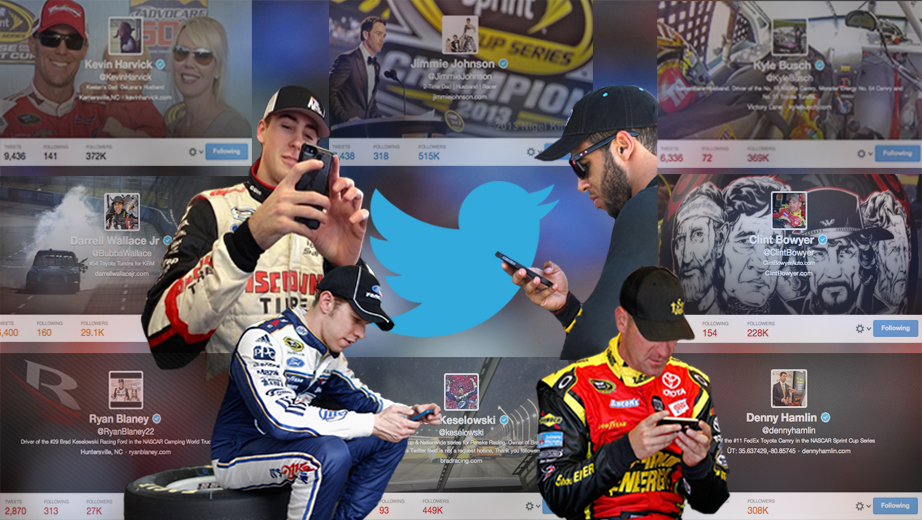
Favorite NASCAR follows

READ: Top 10
rookie campaigns

Rookie turns focus to Cup career as Great American Race looms

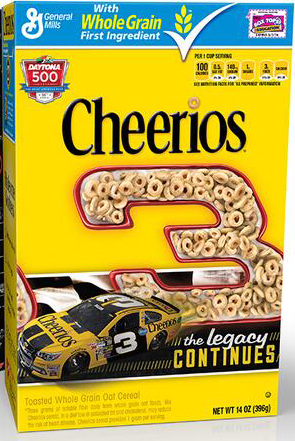
The impact of his move into NASCAR’s premier series isn’t lost on Austin Dillon, even though he’s yet to make a green-flag lap in his first full season. He spent Tuesday in the greater Cincinnati area, where he stopped at a Kroger grocery store to unveil a new Cheerios box with his car number on the front — without question, a first for the new driver of the legendary No. 3 — and where those in line for autographs came from far and wide.

"People actually drove down six hours from Michigan to come to the autograph session," he told NASCAR.com afterward by telephone. "And there were a lot of people with Dale (Earnhardt) stuff on, coming from a long ways away to say hello, and that they’re excited about seeing the 3 back and seeing it back on the track. That was pretty special today. That was the best part — having people from Michigan and Pittsburgh and other random places coming all the way to Ohio."

It’s all part of a much bigger transition for the former NASCAR Camping World Truck Series and NASCAR Nationwide Series champion, who next month will return the No. 3 to competition in the NASCAR Sprint Cup Series for the first time since Earnhardt’s fatal crash at Daytona in 2001. Since the formal announcement last month that he would indeed take his number up to NASCAR’s top level with him, everything has seemed bigger — from the breadth of fans at autograph signings, to the size of the Sprint Cup shop at Richard Childress Racing, to the crowd of photographers surrounding him at the recent Daytona test.

So yes, given the intertwined legacies of both Dillon and his car number, this all is a very big deal already. Now, just imagine if he goes out and wins the Daytona 500.

It’s hardly an outlandish notion, given that Dillon was fastest at what due to rain became a single-day Sprint Cup test earlier this month at Daytona International Speedway, with RCR teammates Brian Scott (in a No. 33) and Matt Crafton (substituting in Paul Menard‘s No. 27) right behind. Dillon said Tuesday that crew chief Gil Martin plans to bring the same vehicle from testing back to Speedweeks as his primary car. And Dillon is most at home on big restrictor-plate tracks, which have been known to produce surprises like Trevor Bayne’s victory in the Daytona 500 in 2011.

"I’m pretty jacked up and excited about it," he said. "It was unbelievable to be in the car like that and go to the top of the board. It’s good for your company to see one, two, and three on the board and know you had some speed down there. It’s a test, everybody knows it’s a test, but it is nice know that you don’t have to come back and find two seconds in your race car, or a second and a half you can’t find. If you can go down there and be within two-tenths, you’re usually happy at the test. But being the lead guy, if we can go back and hopefully add a tenth or two, we should be able to maintain what we had."

In his most recent restrictor-plate race, last fall at Talladega where he substituted for the injured Tony Stewart, Dillon was third at the white flag before being involved in a final-lap crash. No wonder, then, the 23-year-old Sprint Cup rookie allows himself to think about winning the Daytona 500 — a victory that would mean so much not just to Dillon and Childress, but also likely to many who once cheered for Earnhardt.

"I definitely do. All the speedway races, I circle all of them," he said. "Daytona, Talladega, I feel like I want to win them. I’m not going out there to just ride. It’s my rookie season, I can go try stuff. It’s like running that race for Tony last year when I went to Talladega, I had nothing to lose, and I ran probably the best I’ve ever run on a speedway, and was up front all day and had a blast. That’s how I’m going to approach the speedway races, and trying to win them."

His Daytona hopes aside, Dillon is realistic about the transition to the Sprint Cup level, which he knows poses a challenge. The move from Nationwide to Sprint Cup, he said, is much greater than that from Truck Series to Nationwide, where the vehicles are more similar. But the elimination of ride height in the 2014 rules package helps the front end of the Sprint Cup car feel more like that from the Nationwide tour, which could both help his progress and place him on more level footing with more experienced drivers getting accustomed to the change.

At every level in which he’s driven, Dillon said he’s reached a point where he’s grown comfortable in the vehicle, and then been able to get the most out of it. In the Nationwide Series, that happened near the end of his first season, and he knew he’d have a shot at the championship the next year. Now it’s a matter of getting to that same point, only at the highest level of NASCAR.

"I’m very optimistic. I feel like we have a great team built around me, a great pit crew," he said. "Personally, I want to get in there and get some experience. I know every level I’ve moved up through, there’s a time when you hit a level where you’re like, ‘Man, I’m comfortable now.’ I want to get to that point. I want to get to where I know I’m driving the car to the best of its ability, to its max, and I can get to that next level for me. I did it in Nationwide cars — in the second year, I was like, OK, I can do things in this car that I couldn’t do in the first year. Same with Trucks. Now I get in a truck, and I have enough confidence and ability in where the edge is, and I can get to that next level. I want to get to that in the Cup Series. I know it’s going to take a little bit longer, but I want to start working on it now."

Toward that end, Dillon is bound for a test in Nashville on Wednesday and Thursday. But soon enough he’ll be back in Daytona, climbing into the No. 3 to prepare for the Great American Race, which Earnhardt didn’t win until his 20th attempt. He has an idea of what the scene will be like.

"It will be a camera-flashing moment for sure," Dillon said. "I was in the test and got in the car, and there were like 20 cameras around me. It was pretty wild. You just try to block all that out, just try to get in your own zone. I try to go into my own world. I’m pretty good at it. My mom has always told me, I could block anybody out I wanted to. She seems to think I’m good at that, and I have selective hearing. I’m pretty good at selective hearing. When I get focused at something, it’s pretty easy for me to block everything out."

Having his dirt modified down in Florida certainly won’t hurt. But the idea of winning the Daytona 500 — that race, in that car — well, the feat just might get Dillon on another cereal box.

"Oh, man, it would be amazing," he said. "I feel like we’ve got every opportunity to do it. It’s about staying focused all the way to that last lap, which has bitten me a few times. I think I’ve led three white-flag laps in the Nationwide race, was in third at Talladega in the Cup car. So the white flag is the one we’ve got to get by. We get by it, I think we’ll have a great shot."

MORE:

WATCH: NASCAR ’14 trailer:
Stewart’s comeback

READ: Kurt Busch compares
new, old teams

READ: Twitter crew:
Favorite NASCAR follows

READ: Top 10
rookie campaigns

NASCAR qualifying changes to enhance fan experience, broadcast and digital content

RELATED: Breaking down the changes | Qualifying changes FAQ | VIDEO: New format explained

DAYTONA BEACH, Fla. — In a move aimed toward enhancing the fan experience watching at the track and at home, NASCAR has announced a new group qualifying format for its three national series that is more compelling, more closely emulates actual on-track competition and underlines the sport’s on-going commitment to innovation.

At tracks measuring 1.25 miles in length or larger, qualifying for the Coors Light Pole Award will consist of three rounds:

• The first qualifying elimination round will be 25 minutes in duration and includes all cars/trucks. The 24 cars/trucks that post the fastest single lap from the first qualifying round will advance to the second round.

 • The remaining cars/trucks will be sorted based on their times posted in the first round of qualifying in descending order.

• The second qualifying elimination round will be 10 minutes in duration and the 12 cars/trucks that post the fastest single lap time will advance to the third and final round. The fastest remaining cars/trucks earn positions 13th through 24th based on their times posted in qualifying in descending order.

• The third and final qualifying round will be five minutes in duration and the fastest single lap time will determine positions 1st through 12th in descending order.

• There will be a five-minute break between each qualifying round.

At tracks measuring less than 1.25 miles, qualifying for the Coors Light Pole Award will consist of two rounds:

• The first qualifying elimination round will be 30 minutes in duration and includes all cars/trucks. The 12 cars/trucks that post the fastest single lap time from the first qualifying round will advance to the second and final round.

• The remaining cars/trucks will be sorted based on their times posted in the first round of qualifying in descending order.

• There will be a 10-minute break between the two qualifying rounds.

• The second and final qualifying round will be 10 minutes in duration and the fastest single lap time posted will determine positions 1st through 12th in descending order.

The new qualifying format does not apply to the Daytona 500, which will preserve its historic and unique qualifying format. Additionally, it does not apply to non-points NASCAR Sprint Cup Series events or the NASCAR Camping World Truck Series event at Eldora Speedway.

NASCAR previewed the concept of group qualifying with its national series teams late last fall and expects the new format will be a well-received improvement by its fans, competitors, tracks, sponsors and media partners.

"We believe the timing is right for a new qualifying format across our three national series," said Robin Pemberton, vice president for competition and racing development. "This style of group qualifying has all the makings of being highly competitive and more engaging to our fans in the stands and those watching on television and online. For the drivers and teams, we believe this new qualifying will fuel even greater competition leading into the events. Additionally, it provides our tracks, broadcasters and other key partners with a greater opportunity to develop more entertaining content for our race weekends."

For more details on the new qualifying formal, please visit NASCAR.com. Please note that the official title of the award in the NASCAR Camping World Truck Series is the Keystone Light Pole Award.

MORE:

WATCH: NASCAR ’14
trailer

READ: Kurt Busch compares teams

READ: Twitter crew:
Favorite NASCAR follows

READ: Top 10
rookie campaigns

Broadening the color spectrum, Wurth sponsorship will be featured in four races in 2014

The Blue Deuce is getting a dash more color for 2014.

Team Penske announced Wednesday that Wurth will be a primary sponsor of former NASCAR Sprint Cup Series champion Brad Keselowski in four races this season. The first race for the automotive, industrial and woodworking supply company as primary backer is scheduled for March 23 at Auto Club Speedway in Fontana, Calif.

The partnership with Wurth gives Team Penske a full season of sponsorship on its flagship NASCAR operation. One day earlier, Alliance Truck Parts announced an eight-race deal as primary sponsor of team owner Roger Penske’s No. 2 Ford. Last October, Miller Lite sealed a deal for primary sponsorship for 24 races a year through 2017, an extension that runs concurrent to Keselowski’s contract. 

Wurth, a sponsor in European forms of motorsports for more than 30 years, will enter into its third season with Team Penske. The company has served as a primary sponsor for Penske’s efforts in the NASCAR Nationwide Series and has been an associate partner in the Sprint Cup.

The predominantly blue Miller Lite paint scheme has given the No. 2 Ford the enduring nickname of the "Blue Deuce." With the addition of Wurth’s red and white corporate colors, plus Alliance’s yellow and black, Keselowski’s rides will cover more ends of the spectrum this season.

MORE:


WATCH: NASCAR ’14 trailer:
Stewart’s comeback

READ: Kurt Busch compares
new, old teams

READ: Twitter crew:
Favorite NASCAR follows

READ: Top 10
rookie campaigns

Veteran had led Jamie McMurray’s team for past four years

RELATED: 2014 Sprint Cup Series Driver Tracker

Tommy Baldwin Racing hired a new a driver in Michael Annett to power the team’s No. 7 Chevrolet in the NASCAR Sprint Cup Series this year. Now it has a new crew chief as well.

Kevin Manion will lead the No. 7 operation this year, replacing Tommy Baldwin Jr. — who is also the team owner. Manion served as Jamie McMurray‘s crew chief in the No. 1 Earnhardt Ganassi Racing entry for the past four years. He became available when EGR hired Keith Rodden as McMurray’s crew chief in the offseason.

"Our original plan was for me to be the crew chief, but when the opportunity to hire (Manion) came along, it’s the right fit," Baldwin said in a team release. "I can concentrate more on making our business and competition relationships stronger. I can take a look from the top of hill rather than in the trenches."

While Annett is a Sunoco Rookie of the Year candidate with zero career Cup starts, Manion has called 283 Sprint Cup races. He has five career wins, four of which came with McMurray (the other was with Martin Truex Jr. in 2007).

Annett, meanwhile, has seven top-fives and 34 top-10s in 163 NASCAR Nationwide Series starts. He finished fifth in the final 2012 points standings and missed eight races in 2013 after breaking his sternum in a season-opening race wreck.

"I’m excited to have (Manion) as my crew chief," Annett said in the release. "He brings a wealth of knowledge, experience and winning resume with him to TBR. (Manion) being hired by TBR is a great testament of Tommy’s leadership ability and surrounding this company with the talent (Manion) brings to the team. We have some great things ahead of us and I’m excited where this organization is headed." 

The team is scheduled to test from Feb. 5-6 at Talladega Superspeedway.

MORE:

WATCH: NASCAR ’14 trailer:
Stewart’s comeback

READ: Kurt Busch compares
new, old teams

READ: Twitter crew:
Favorite NASCAR follows

READ: Top 10
rookie campaigns

Broadcast team continues to take shape with addition of two pit reporters

NBC Sports continues to round out the team that will call NASCAR races when the network returns next year as a broadcast partner, adding reporters Marty Snider and Kelli Stavast to a group that also includes announcer Rick Allen and analysts Jeff Burton and Steve Letarte.

Snider and Stavast will both operate out of Charlotte, N.C. Snider has been a pit reporter for TNT’s NASCAR Sprint Cup Series coverage since 1998, and worked with NBC when the network was last involved in NASCAR. Stavast has most recently worked motorsports events such as the GRAND-AM Series, the Whelen Modified tour and off-road racing circuits.

No further announcements related to broadcasters are expected in the near term, according to NBC. NBC and NBC Sports Network will air the final 20 Sprint Cup Series events and final 19 NASCAR Nationwide Series events of the season beginning in 2015.

MORE:

WATCH: NASCAR ’14 trailer:
Stewart’s comeback

READ: Kurt Busch compares
new, old teams

READ: Twitter crew:
Favorite NASCAR follows

READ: Top 10
rookie campaigns

Reser’s Fine Foods increases sponsorship to seven races; GameStop returns with 10 races

Joe Gibbs Racing announced Wednesday that Reser’s Fine Foods and GameStop will return to Matt Kenseth’s No. 20 Toyota as sponsors for the 2014 NASCAR Nationwide Series season. 

Coming back for its seventh season, GameStop has signed on for 10 races, premiering at Las Vegas Motor Speedway on March 8 and concluding at the season finale at Homestead-Miami Speedway on Nov. 15. 

Reser’s Fine Foods will appear on JGR’s No. 20 Toyota seven times throughout the 2014 season, opening at Daytona International Speedway on Feb. 22. 

"It’s exciting to have GameStop and Reser’s Fine Foods back on board with us this season," Kenseth said. "They are tremendous partners and I am looking forward to working with (crew chief) Kevin (Kidd). Hopefully we can provide a few celebrations for each of them in Victory Lane this season."

Kenseth returned to the Nationwide Series last season for the first time since his single race in 2011. Making a total of 16 Nationwide starts in 2013, Kenseth earned two wins, seven top-fives and 14 top-10s, ultimately giving both of his returning sponsors a trip to Victory Lane, winning the July race at Daytona with GameStop and giving Reser’s Fine Foods its first win in October at Kansas. 

"We applaud the determination and winning drive Matt and JGR displayed last year," said Mark Reser, president and CEO of Reser’s Fine Foods. "Sponsoring this championship-caliber team helps us increase the visibility of our brands and reach new customers in key markets across the country. It’s a win-win partnership."

MORE:

WATCH: NASCAR ’14 trailer:
Stewart’s comeback

READ: Kurt Busch compares
new, old teams

READ: Twitter crew:
Favorite NASCAR follows

READ: Top 10
rookie campaigns

After a two-year hiatus, former KBM driver is back on the track

Making a return to the NASCAR Camping World Truck Series, 28-year-old Brian Ickler has earned a spot behind the wheel of Red Horse Racing’s No. 7 Bullet Liner Toyota Tundra.

FULL SERIES COVERAGE

• View all articles
• View all videos
• View all photos

"I am really glad to be back in the Camping World Truck Series and driving for Red Horse Racing," Ickler said. "The Truck Series is a lot of fun to race in and the competition this year will be great. I am anxious to get back on track in the new Toyota Tundra and get them and Bullet Liner to Victory Lane."

Previously driving for Kyle Busch Motorsports in 2011, Ickler took the past two years off from NASCAR competition. Ickler has had 22 career starts in the Truck Series, with six top-five and 10 top-10 finishes, along with earning a Coors Light Pole at Michigan International Speedway in June 2009. The Poway, Calif., native has eight NASCAR Nationwide Series starts under his belt and has also collectively made 43 starts in the NASCAR K&N Pro Series (East and West divisions), earning himself seven wins and five poles.

The Camping World Truck Series kicks off its 2014 season at Daytona International Speedway on Friday, Feb. 21, with the green flag for the NextEra Energy Resources 250 scheduled to drop at 7:30 p.m. ET.

MORE:

WATCH: NASCAR ’14 trailer:
Stewart’s comeback

READ: Kurt Busch compares
new, old teams

READ: Twitter crew:
Favorite NASCAR follows

READ: Top 10
rookie campaigns

Change will be in effect for all three national series but does not include Daytona 500

RELATED: NASCAR official release | Changes FAQ

NASCAR’s qualifying process will undergo a significant change for the 2014 season, as officials have announced a group qualifying format to replace the single-entry attempts previously used to determine the starting grid for each race.
 
The change will be in effect for all three national series — Sprint Cup, Nationwide and the Camping World Truck Series.
 
The Coors Light Pole Award Qualifying will now consist of three rounds at tracks measuring 1.25 miles or longer, and two rounds at those tracks measuring less than 1.25 miles.

Under the three-round qualifying format:

• Round 1 — All entries will have 25 minutes to post a qualifying time, after which the 24 registering the fastest laps will advance to the second round.
 
Those failing to advance will be sorted based on first-round times in descending order (from fastest to slowest).
 
• Round 2 — The 24 fastest from the first round will have 10 minutes to post a second-round qualifying time, with the 12 fastest advancing to a third round.
 
Those not advancing will earn starting positions 13 through 24 based on time, again in descending order.
 
• Round 3 — The final round will be five minutes in length. The fastest times from this session will determine the first (Coors Light Pole Award) through 12th starting positions.
 
There will be a five-minute break between each round; teams may make adjustments to their entries only during the individual breaks.
 
They will not be allowed to jack the vehicle or raise the hood, and once the car or truck enters the garage, it will no longer be permitted to return to the track for additional qualifying attempts.

This format will be used at the following tracks: Atlanta Motor Speedway (1.54 miles); Auto Club Speedway (2 miles); Canadian Tire Motorsport Park (2.46 miles); Charlotte Motor Speedway (1.5 miles); Chicagoland Speedway (1.5 miles); Darlington Raceway (1.37 miles); Daytona International Speedway (2.5 miles) (except for the Daytona 500); Gateway Motorsports Park (1.25 miles); Homestead-Miami Speedway (1.5 miles); Indianapolis Motor Speedway (2.5 miles); Kansas Speedway (1.5 miles); Kentucky Speedway (1.5 miles); Las Vegas Motor Speedway (1.5 miles); Michigan International Speedway (2 miles); Mid-Ohio Sports Car Course (2.4 miles); Pocono Raceway (2.5 miles); Road America (4.05 miles); Sonoma Raceway (1.99 miles); Talladega Superspeedway (2.66 miles); Texas Motor Speedway (1.5 miles); Watkins Glen International (2.45 miles)
 
For the two-round qualifying format, the following changes will be made:
 
• Round 1 — All entries will have 30 minutes to post an official qualifying time, with the fastest 12 advancing to the second and final round. Those not advancing will be sorted based on qualifying times.
 
• Round 2 — Ten minutes of track time for the fastest 12 remaining cars or trucks, with positions 1 (pole) through 12 determined based on qualifying times.

There will be a 10-minute break between each round.

This format will be used at the following tracks: Bristol Motor Speedway (0.53 miles); Dover International Speedway (1 mile); Iowa Speedway (0.88 miles); Martinsville Speedway (0.526 miles); New Hampshire Motor Speedway (1.06 miles); Phoenix International Raceway (1 mile); Richmond International Raceway (0.75 miles)

"We believe the timing is right for a new Coors Light Pole Award Qualifying format across our three national series," Robin Pemberton, NASCAR vice president for competition and racing development, said. "This style of group qualifying has all the making of being highly competitive and more engaging to our fans in the stands and those watching on television and online.
 
"For the drivers and teams, we believe this new qualifying will fuel even greater competition leading into the events."
 
Before the start of qualifying, cars or trucks will be lined up on pit road based on a random draw and may exit pit road at any time while the green flag is displayed. Each driver may complete as few or as many laps as he or she chooses during the allotted time period for each segment. Pit road speeds will be enforced during each session.

Pemberton said conversations with drivers and crew chiefs helped determine what types of changes teams would be allowed to complete during the breaks in between the sessions.

“And what we surmised from that,” he said, “is you should be able to adjust wedge and track bar, tire pressures and tape strategies.

“The consensus was to not go under the hood and make other extreme adjustments. And the adjustments … can only be made during the breaks.” 
If all rounds are not completed due to weather or other circumstances, starting positions will be set based on the last official completed round. If no rounds are completed, starting positions will be determined per the NASCAR rule book.
 
According to officials, NASCAR’s provisional system will remain in place with those positions being awarded following the first round of each qualifying session.
 
The qualifying format does not apply to the Daytona 500, which features single-car runs and two qualifying races to set the lineup for the season-opening race. Heat races to determine the lineup will still be used at Eldora Speedway as well.
 
NASCAR went to a one-round qualifying format in 2001. Before that, two rounds of qualifying were used to determine the starting lineup with positions 1-25 locked in during the first round. Teams outside the top 25 could participate in a second round or stand on their first-round time.

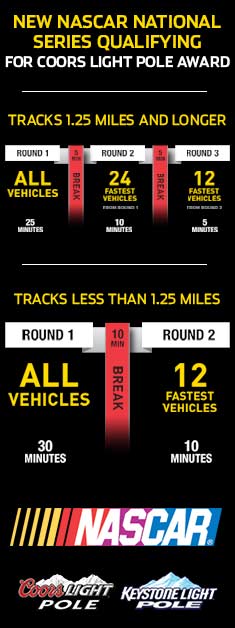
See the graphic below for an explanation of the changes:

Frequently asked questions about NASCAR’s new qualifying rules

RELATED: Breaking down the changes | NASCAR official release | VIDEO: New format explained

 Q. How does this new qualifying impact the Coors Light Pole Award or Keystone Light Pole Award? 

A. The fastest driver in the final round of NASCAR Sprint Cup Series and NASCAR Nationwide Series qualifying will earn the Coors Light Pole Award. The fastest driver in the final round of NASCAR Camping World Truck Series qualifying will earn the Keystone Light Pole Award. 

Q. How will the cars/trucks be chosen in the first round of qualifying? 

A. Cars/trucks will be lined up on pit road based on a random draw. 

Q. Where will the cars/trucks that advance go between rounds? 

A. Cars/trucks that advance return to their respective pit stalls in preparation for the next round of qualifying. 

Q. What kind of adjustments can be made on pit road during qualifying? 

A. Teams can make wedge, track bar, tire pressure and tape adjustments and also plug in oil on pit road, but only between each qualifying round. A team cannot jack up the vehicle or raise the hood. 

Q. What happens if a car/truck is involved in an on track incident during one of the qualifying rounds? Are they permitted to return to pit road and/or the garage to make repairs? 

A. Repairs are not permissible on pit road or in the garage during qualifying. Once a vehicle returns to the garage, it will not be permitted to return or compete in that qualifying round or any future qualifying rounds for that event. 

Q. Will vehicles’ top lap speeds carry over between rounds? 

A. No. Top lap speeds are reset after each round. 

Q. Will NASCAR stop the clock during a qualifying round because of an incident? 

A. The clock will stop if the red flag is displayed and it can also be stopped at the discretion of the managing director of the series. 

Q. What happens when the clock strikes zero at the end of a round? 

A. Vehicles are allowed to cross the start/finish line one time. 

Q. Does a car/truck have to compete for the entire duration of a session? 

A. No, but the vehicle must complete one lap in order to record a qualifying time. 

Q. Does the new qualifying format impact provisionals? 

A. No. NASCAR’s provisional system remains intact and provisionals will be assigned at the end of the first round of qualifying. 

Q. What if two or more vehicles finish tied with the same top lap speed? 

A. If multiple vehicles are tied with the same top lap speed, their starting position will be determined by the owner point standings. If owner points cannot break the tie, the driver setting the duplicate time first would start in front of the other. Note: Owner points from the previous season will be used to break ties until the completion of the third championship event of the current season. 

Q. What happens if qualifying can’t be completed because of weather or other adverse conditions? 

A. If one or more qualifying sessions are completed, the starting positions will be determined based on the most-recently completed qualifying sessions. 

Q. What happens if qualifying is canceled because of weather or other adverse conditions? 

A. Starting positions will be determined per the rule book. 

Q. Will this format also be used for road courses? 

A. This format will be used at all NASCAR tracks across all three national series, with the exception of the Daytona 500 and non-points NASCAR Sprint Cup Series events and the NASCAR Camping World Truck Series race at Eldora Speedway. 

Q. Will pit stall selections be handled as they have been previously, with the No. 1 qualifier getting first choice, No. 2 qualifier getting the second choice, etc.? 

A. The pit stall selection process post-qualifying will remain the same. 

MORE:

WATCH: NASCAR ’14 trailer:
Stewart’s comeback

READ: Kurt Busch compares
new, old teams

READ: Twitter crew:
Favorite NASCAR follows

READ: Top 10
rookie campaigns