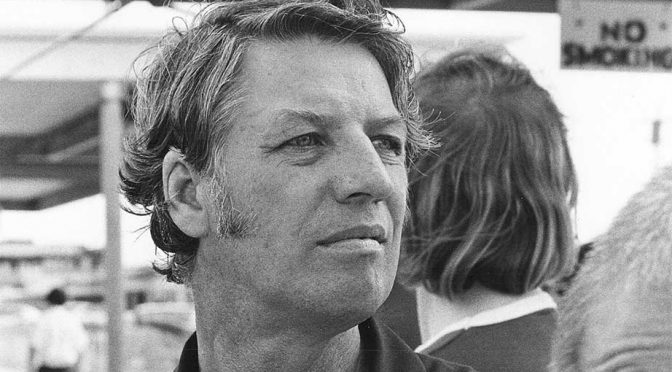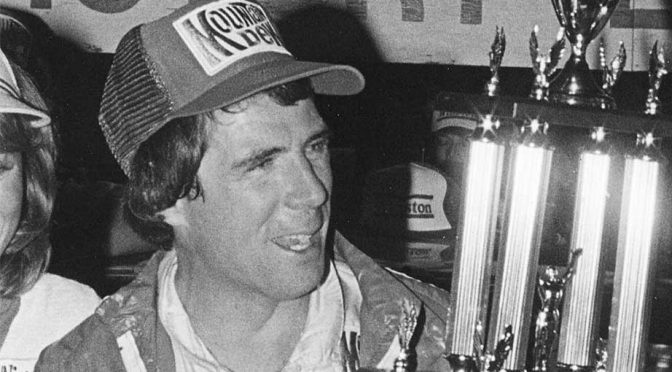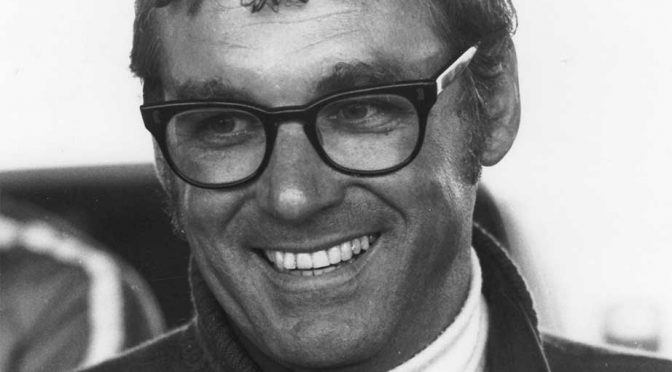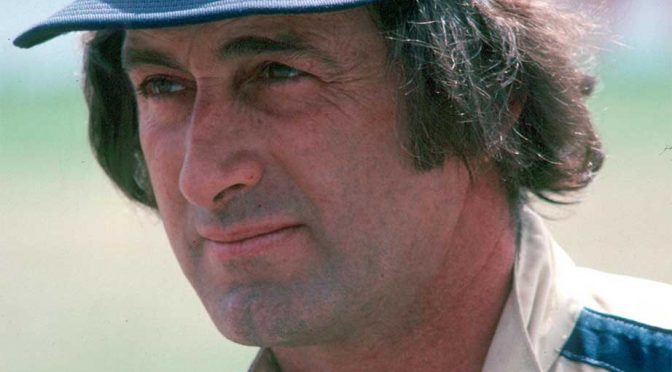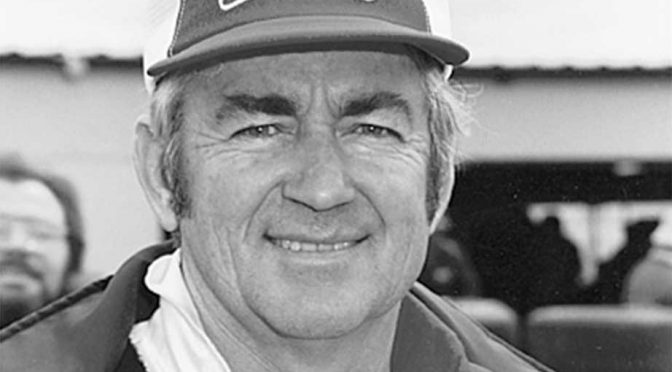
Bobby Allison, the 1983 champion of the NASCAR Sprint Cup Series, ended his career with 85 victories — fourth on the all-time victory list.

A charter member of the “Alabama Gang,” the longtime resident of Hueytown, Ala., has become one of NASCAR’s most beloved former competitors, in large part because of his remarkable resilience after a career-ending accident at Pocono Raceway in 1988 — just several months after he won the Daytona 500.

Allison continues to be cherished by the millions of fans who remember his long list of accomplishments:

His 1983 championship season:

— His three (1978, ’82 ’88) Daytona 500 victories — especially the third, when he beat his son Davey to the finish, earning what would be his last victory.

— His two NASCAR Modified Division championships, in 1964 and 1965.

— His two NASCAR Modified Special Division titles in 1962-63.

— And his fantastic 1972 season when he won 10 races, had 12 second-place efforts and 11 poles, in the process finishing second to Richard Petty in the series championship standings.

Fittingly, Allison was named one of NASCAR’s “50 Greatest Drivers” in 1998.

BOBBY ALLISON BIO
Hometown: Hueytown, Ala.
Competed: 1961-88
Starts: 718
Wins: 85
Poles: 58
NASCAR Hall of Fame member

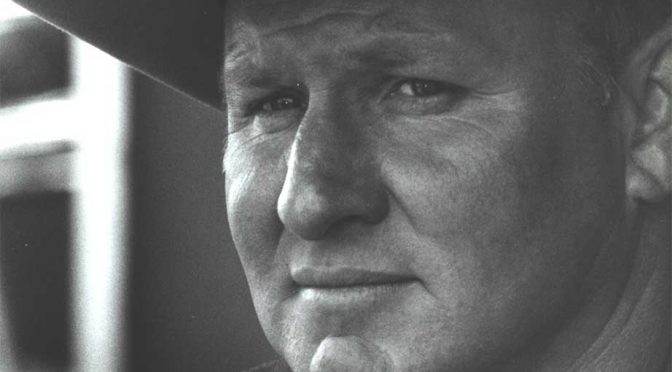
As competitive as the sport has always been, NASCAR has had very few dynasties. Cale Yarborough’s reign in the late 1970s, though, was one of them.

(b. 3/27/39)

Hometown: Timmonsville, S.C.

Competed: 1957-88

Starts: 562

Wins: 83

Poles: 69

His string of three consecutive NASCAR premier series championships from 1976-78 was unprecedented — and unmatched until 2008, when Jimmie Johnson was crowned champion for the third straight year. Johnson won his fourth and fifth consecutive titles in 2009-10.

During his three-year dominance, Yarborough won 28 races — nine in 1976, nine in ’77 and 10 in ’78. His final championship points margin in those three years was never fewer than 195 points and was as much as 474 in 1978.

Those three years made Yarborough’s career, but he enjoyed success before and after. The fiery competitor was the series championship runner-up in 1973 and ’74 and again in 1980.

Yarborough totaled 83 victories in his 31-year career, ranks sixth all-time. His 69 poles rank fourth all-time. And he won the Daytona 500 four times (1968, ’77, ’83-84), a mark that ranks second only to Richard Petty’s seven.

When NASCAR’s 50 Greatest Drivers list was compiled in 1998, suffice to say that William Caleb Yarborough was a shoo-in.

___________________________________________________________________________________________

Comments are currently unavailable. We’re working on the development of a NASCAR fan forum – please stay tuned.

NASCAR Hall of Fame member

Glen Wood laid the foundation for the famed Wood Brothers racing team as a driver in the NASCAR premier series. Competing on a semi-regular basis, mostly at tracks close to his southern Virginia home, Wood won four times — all at Bowman-Gray Stadium in Winston-Salem, N.C. His best season was 1960 during which Wood won three times and posted six top-five and seven top-10 finishes in just nine races. He also won 14 poles during a 62-race career.

(b. 7/18/25)

Hometown: Stuart, Va.

Competed: 1953-64 (Driver); 1953-Present (Owner)

Starts: 62 (Driver); 1,369 (Owner)

Wins: 4 (Driver); 98 (Owner)

Poles: 14 (Driver); 118 (Owner)

Wood, of course, is best known for his collaboration with brothers Leonard and Delano in Wood Brothers Racing. The Stuart, Va.-based team, which dates to 1950 and remains active, has amassed 98 victories in 1,367 races. The team’s all-time roster of drivers is a virtual who’s who of NASCAR and includes David Pearson, Curtis Turner, Marvin Panch, Dan Gurney, Tiny Lund, Parnelli Jones, Junior Johnson, Cale Yarborough, Fred Lorenzen and Bill Elliott.

The Wood Brothers have excelled outside the NASCAR world as well, winning the 1965 Indianapolis 500 with Jim Clark.

___________________________________________________________________________________________

Comments are currently unavailable. We’re working on the development of a NASCAR fan forum – please stay tuned.

NASCAR Hall of Fame member

A three-time NASCAR premier series champion (1981-82, ’85), Waltrip won all three with legendary driver/owner Junior Johnson. Waltrip is tied with Bobby Allison for fourth all-time in series victories with 84. His 59 poles rank fifth all-time in NASCAR Sprint Cup history. He competed from 1972-2000, another highlight being his 1989 Daytona 500 victory in a Rick Hendrick-owned Chevrolet.

(b. 2/5/47)

Hometown: Franklin, Tenn.

Competed: 1972-2000

Starts: 809

Wins: 84

Poles: 59

Waltrip’s first series title came in 1981, when he finished with 12 wins and 21 top fives in 31 races. He won the title by 53 points over Bobby Allison. In his second championship season, 1982, he finished with 12 wins and 20 top 10s in 30 races, sweeping both races at four tracks (Nashville, Bristol, Talladega and North Wilkesboro). In his third championship season, 1985, Waltrip finished with three wins and 21 top 10s in 28 races.

Waltrip and his wife, Stevie, reside in Franklin, Tenn. He was nicknamed "Jaws" during his career because of an outspoken demeanor. He currently is a commentator on FOX’s NASCAR broadcasts. He was named one of NASCAR’s 50 Greatest Drivers in 1998.

___________________________________________________________________________________________

Comments are currently unavailable. We’re working on the development of a NASCAR fan forum – please stay tuned.

NASCAR Hall of Fame member

Behind every legendary driver, there is usually a legendary wrenchman.

That was Dale Inman, without whom Richard Petty might never have been The King.

(b. 8/19/36)

Hometown: Level Cross, N.C.

Competed: 1958-92

Wins: 193

Poles: 129


Inman, Petty’s crew chief at Petty Enterprises for nearly three decades, set records for most wins (193) and championships (eight) by a crew chief.

Inman won seven of those championships with inaugural Hall Of Fame inductee Petty (1964, 1967, 1971, 1972, 1974, 1975, and 1979), and another one in 1984 with Terry Labonte.

Credited with revolutionizing the crew chief position, Inman’s standout year was 1967. That season, Inman and Petty won a NASCAR-record 27 races — 10 of them consecutively. All 27 victories were in the same car they built a year earlier.


___________________________________________________________________________________________

Comments are currently unavailable. We’re working on the development of a NASCAR fan forum – please stay tuned.

NASCAR Hall of Fame member

The recognized "king" of Modified racing, Evans captured nine NASCAR Modified titles in a 13-year span, including eight in a row from 1978-85.

(b. 7/23/41 — d. 10/24/85)

Hometown: Rome, N.Y.

Competed: 1973-85

Starts: 1,300 (estimated)

Wins: 475 (estimated)

In the first year of the current NASCAR Whelen Modified Tour format in 1985, Evans won 12 races, including wins in four of five events at Thompson, Conn.

Evans ranked No. 1 in the 2003 voting of the "NASCAR All-Time Modified Top 10 Drivers," and he was named one of NASCAR’s "50 Greatest Drivers" in 1998.

___________________________________________________________________________________________

Comments are currently unavailable. We’re working on the development of a NASCAR fan forum – please stay tuned.

NASCAR Hall of Fame member

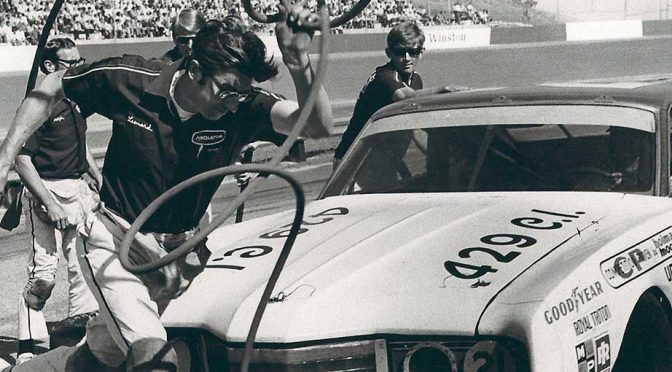
The Wood Brothers team is renowned as the innovator of the modern pit stop. Leonard Wood, brother of Glen and Delano Wood, was front and center in its development as chief mechanic — that’s what they called crew chiefs in the early days — for the Stuart, Va.-based team.

Wood was what you might call a tinkerer. He built a washing machine engine-powered go-kart from parts and pieces he found when he was 13. It still runs and can be seen in the Woods’ museum.

(b. 9/22/34)
Hometown: 
Stuart, Va.

Competed: 1953-Present

Starts: 990

Wins: 96

Poles: 117

When NASCAR began adding superspeedways — and pit stops — Wood figured out ways to get the race car serviced in the least amount of time.

One major achievement in the team’s pit stop arsenal was the light-weight jack that replaced floor jacks weighing more than 100 pounds found in the repair shops of the day. With Wood’s choreography the team excelled like no other. Wood continued to go over the wall to change tires well into his 50s.

In 1965, Ford and Colin Chapman hired the Woods to service Jim Clark’s car in the Indianapolis 500. Another Wood innovation, an internal device allowing fuel to flow more quickly from a gravity-based fuel tank, dramatically reduced pit times and was key in Clark’s victory.

Wood’s accomplishments were not confined to pit road. He ran the team’s engine shop that provided horsepower and longevity on a par with rivals Holman-Moody and Petty Enterprises. That was instrumental to the success NASCAR Hall of Fame inductee David Pearson enjoyed as Pearson won 43 races between 1972 and 1978. Racing legends Neil Bonnett, Cale Yarborough, A.J. Foyt and Dan Gurney are among drivers winning in Wood Brothers-prepared and crewed cars.

___________________________________________________________________________________________

Comments are currently unavailable. We’re working on the development of a NASCAR fan forum – please stay tuned.

NASCAR Hall of Fame member

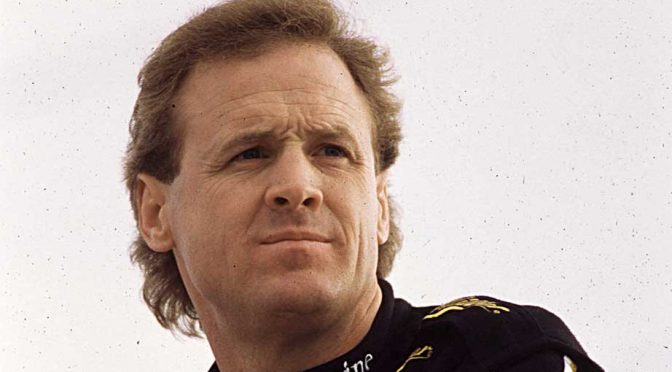
Russell William Wallace Jr., the 1989 NASCAR Sprint Cup Series champion, followed his father Russ Wallace onto the race track — a path taken as well by brothers Mike and Kenny. Rusty Wallace competed at weekly tracks in Missouri before moving to Midwest-based touring series in which he was identified as a racing star of the future.

He was the U.S. Auto Club’s 1979 rookie of the year finishing third in points to champion A.J. Foyt. In 1983, he won the American Speed Association title competing against NASCAR Sprint Cup champion-to-be Alan Kulwicki and Mark Martin.

(b. 08/14/1956)

Hometown: St. Louis, Missouri

Competed: 1980-2005

Starts: 706

Wins: 55

Poles: 36

Wallace’s first NASCAR Sprint Cup race resulted in his first top-five finish: second at Atlanta Motor Speedway in 1980 driving for Roger Penske. He came to the series full-time in 1984 and won rookie of the year honors driving Cliff Stewart’s Pontiacs. Moving to drag racer Raymond Beadle’s Blue Max Racing in 1986, Wallace won his first of 55 races, capturing the checkered flag at Bristol Motor Speedway. His 55 victories rank tied for eighth all time. He was especially adept on the circuit’s short tracks winning 25 times at Bristol, Martinsville, North Wilkesboro and Richmond.

Wallace remained with Beadle through the 1990 season, winning the 1989 championship by a 12-point margin over Dale Earnhardt. Wallace won 18 times with Blue Max Racing, including road races at Infineon, Riverside and Watkins Glen.

Although failing to win another championship, Wallace’s most successful seasons were spent behind the wheel of Penske Racing Fords, Pontiacs and Dodges from 1991 through his retirement in 2005. He won 37 times in Roger Penske’s cars finishing second in the points in 1993, the best of 11 top-10 championship rankings with the organization. Wallace currently is an ESPN NASCAR analyst.


___________________________________________________________________________________________

Comments are currently unavailable. We’re working on the development of a NASCAR fan forum – please stay tuned.

NASCAR Hall of Fame member

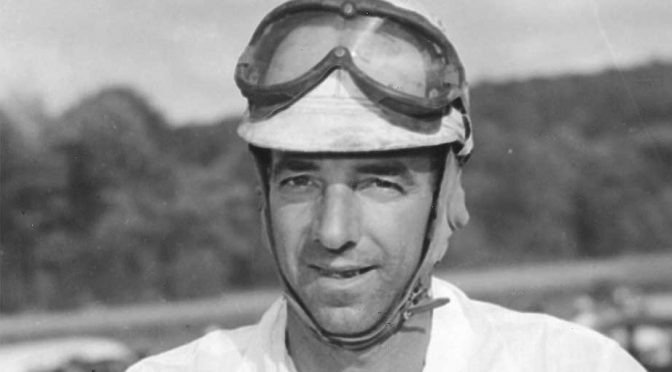
Herb Thomas was truly one of NASCAR’s first superstars. He was the first to win two NASCAR premier series championships (1951, ’53). He finished second in the points standings in 1952 and 1954 giving the North Carolina veteran top-two championship finishes in four consecutive seasons. He finished outside the top two in the championship only once (fifth in 1955) between 1951 and 1956. Thomas won the 1951 championship driving self-owned cars.

(b. 4/6/23 – d. 8/9/00)

Hometown: Olivia, N.C.

Competed: 1949-62

Starts: 228

Wins: 48

Poles: 39

Thomas won the second running of Darlington Raceway’s famed Southern 500 in 1951 and with back-to-back victories in 1954-55 was the race’s first three-time winner.

Thomas won 48 times in series competition, a number that continues to rank 13th all-time. His 48 victories in 228 starts equates to a series-record winning percentage of 21.05. Thomas won races in seven consecutive seasons from 1950 through 1956.

After retiring from competition following the 1962 seasons, Thomas went on to start a trucking company and sawmill. He was named one of NASCAR’s 50 Greatest Drivers in 1998.


NASCAR Sprint Cup Series Statistics

Year Age Races Win Top 5 Top 10 Pole Laps Led AvSt AvFn RAF Miles LLF
1949 26 4 of 8 0 1 1 0 197 0    18.0 3 123.1 0
1950 27 13 of 19 1 4 6 0 719 176 4.0 11.4 9 446.6 1
1951 28 34 of 41 7 16 18 4 2015 954 4.2 11.5 26 1613.2 7
1952 29 32 of 34 8 19 22 10 5134 863 4.1 8.3 24 3533.1 14
1953 30 37 of 37 12 27 31 12 4292 1632 1.3 5.2 32 3101.2 16
1954 31 34 of 37 12 19 27 8 5605 1255 1.6 7.7 24 3966.9 16
1955 32 23 of 45 3 14 15 2 3437 249 7.0 9.3 15 2788.1 6
1956 33 48 of 56 5 22 36 3 7890 261 7.4 8.4 37 5181.5 6
1957 34 2 of 53 0 0 0 0 146 0 13.5 37.0 0 123.0 0
1962 39 1 of 53 0 0 0 0 377 0 23.0 14.0 1 235.6 0
10 years    228 48 122 156 39 29812 5390 6.6 13.1 171 21112.3 66

NASCAR Hall of Fame member

There are successful drivers and there are successful owners. But, rarely are there both.

Cotton Owens, a recent inductee into the NASCAR Hall of Fame, joins fellow Hall of Famer Junior Johnson as masters of the two crafts.

(b. 5/21/24 — d. 06/07/12)
Hometown: 
Union, S.C.

Competed: 1950-64 (Driver); 1950-73 (Owner)

Starts: 160 (Driver); 405 (Owner)

Wins: 9 (Driver); 38 (Owner)

Poles: 10 (Driver); 33 (Owner)

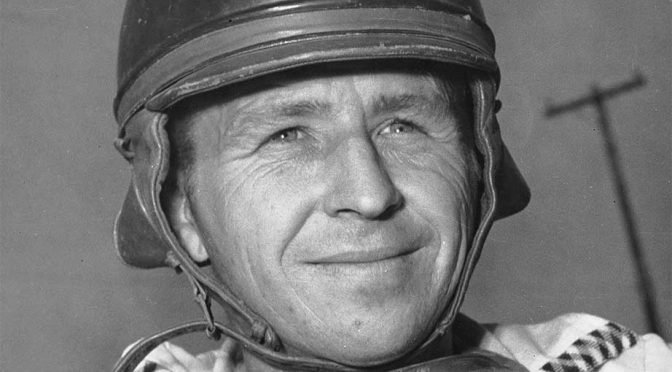
Owens was more than successful behind the wheel, winning nine times in NASCAR’s premier series competition, including the 1957 Daytona Beach road course which marked Pontiac’s first NASCAR victory. He nearly won the 1959 championship, finishing second to NASCAR Hall of Famer Lee Petty.

But as an owner, Owens stood out as one of the greats of NASCAR’s early eras. His eye for talent was unmatched. He hired Johnson in 1962, the same season in which he began a future championship relationship with another NASCAR Hall of Famer David Pearson.

Johnson spent only four races with Owens but with Pearson, well, that was another story. Twenty-seven of Pearson’s 105 NASCAR premier series victories were recorded in a Cotton Owens car. The pair teamed to win the 1966 championship after Pearson, driving an Owens Dodge, finished third in points in 1964.

In 1998 Owens was named one of NASCAR’s 50 greatest drivers, and in 2012 he was selected as a member of the fourth class of the NASCAR Hall of Fame.


NASCAR Sprint Cup Series Statistics

Year Age Races Win Top 5 Top 10 Pole Laps Led AvSt AvFn RAF Miles LLF
1950 26 3 of 19 0 0 1 0 511 23 16.0 12.3 3 770.3 0
1951 27 5 of 41 0 1 3 0 370 0 23.8 11.2 4 505.4 0
1952 28 4 of 34 0 0 1 0 391 0 16.5 17.3 1 205.3 0
1953 29 1 of 37 0 0 0 0 274 0    21.0 1 274.0 0
1954 30 4 of 37 0 0 1 0 530 0 4.0 27.0 1 474.2 0
1955 31 2 of 45 0 1 2 0 549 0 20.5 6.5 2 581.1 0
1956 32 8 of 56 0 1 4 0 1141 0 9.4 18.5 6 666.8 0
1957 33 17 of 53 1 3 6 1 2300 179 8.6 16.4 7 1776.6 2
1958 34 29 of 51 1 8 17 2 3894 241 8.2 14.3 19 2481.9 5
1959 35 37 of 44 1 13 22 2 6733 208 9.2 10.4 27 4679.2 5
1960 36 14 of 44 1 5 5 2 2121 185 5.2 15.4 7 2374.5 4
1961 37 17 of 52 4 11 11 2 2694 58 7.5 9.1 12 2223.9 6
1962 38 16 of 53 0 7 8 1 2000 36 6.6 13.6 6 1547.6 3
1963 39 1 of 55 0 0 1 0 170 0 10.0 8.0 0 85.0 0
1964 40 2 of 62 1 2 2 0 466 54 4.0 1.5 2 374.4 1
15 years    160 9 52 84 10 24144 984 9.4 13.3 98 19020.2 26