Stress of short track will test tires, brakes and teamwork

More tech: Vote on new poll in Mobil 1 hub

Temperatures aren’t expected to be unseasonably warm when NASCAR’s Sprint Cup Series visits Martinsville (Va.) Speedway this weekend. That doesn’t mean heat won’t be a concern.

In at least two of this season’s first five Cup races, excessive heat in the right-front wheel area has led to tire failures for several teams.

At Phoenix, Stewart-Haas Racing teammates Ryan Newman and Danica Patrick were involved in single-car incidents that Goodyear officials said were the result of melted tire beads.

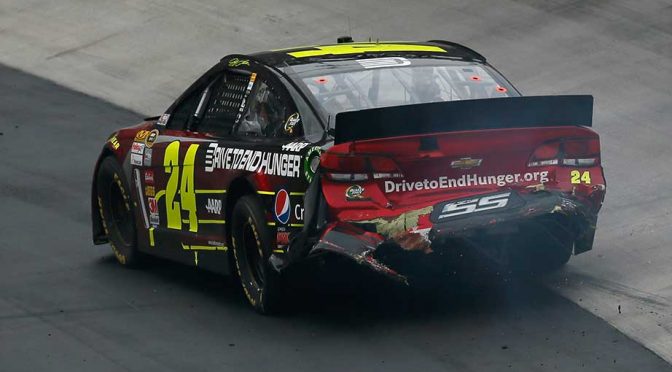
Two weeks later at Bristol, five drivers suffered similar fates, including four-time Cup champion Jeff Gordon and Hendrick Motorsports teammate and five-time champ Jimmie Johnson.

"In the past if you were going to hurt a tire, you’d know it because your brakes would fade."

— Crew chief Alan Gustafson

Those early-season incidents, and the fact that there are still many unknown variables associated with the new Generation-6 car, have created an air of uncertainty among teams.

With Martinsville up next on the schedule, has that awareness become a full-blown concern?

Greg Stucker, director of race tire sales for Goodyear, said he doesn’t believe the number of melted bead issues this year has escalated significantly, “but it is definitely up.”

Teams continue to learn about the new car, he said, and the trial-and-error process was likely behind the problems encountered at Phoenix and Bristol.

“We’ve had so many conversations with teams and with NASCAR about this particular issue, it’s really down to the teams to try and make sure they are doing everything they can to get air to the front end, to get it to that wheel,” Stucker said.

Martinsville is the smallest track on the Cup series at 0.526 miles and among the flattest with 0-degree banking on the straightaways and turns on both ends of the speedway banked at just 12 degrees. It has long been considered the most punishing on brake components and thus likely to produce soaring temperatures in the wheel area.

Cars reach speeds of approximately 120 mph on the two 800-foot long straightaways before slowing to nearly half that as drivers work their way through the nearly nonexistent banking in the turns.

Toss in stop-and-go, bumper-to-bumper traffic, repeat the whole process 500 times in a roughly three-and-a-half hour period and it’s not unusual for brake rotor temperatures to reach nearly 1,400 degrees during the race.

In most cases, Cup teams go to great lengths to cool that radiant heat and vent it away from the wheel and tire. Hoses pull air in from the front of the car, fans blow air across the brakes and metal shields help direct the flow of the hot air as it is forced away from the rotor.

But when too much heat builds up, “it actually melts the nylon, the fabric that wraps around the bead of the tire,” Stucker said.

“Of course, (the tire) eventually lets go.”

The melting point of the nylon used in the tires is close to 400 degrees.

There are other factors at play as well. At Bristol, for example, increased speeds may have played a part in the increased number of melted beads.

The tires provided to teams were the same compound and construction as those used at the track approximately seven months earlier, however, lap times “were running about three-quarters of a second faster,” Stucker said.

“So the lap times were significantly lower; the speeds were significantly higher than we had raced there in the past. I think that’s a function of the new car, (it’s) lighter. I heard guys talk about how much it got up off the corner that much better. You’re carrying a lot more speed when you do — obviously that generates more load; they have to get the car slowed down. It seems to be a different animal.”

Stucker said Goodyear officials evaluated the tires that failed at Bristol off-site and later met with Hendrick officials to discuss ­what had happened and what factors might have played a role in the incidents.

In Gordon’s case, the team had made a two-tire stop, changing only left-side tires, prior to his incident. The right-side tires remained on the car for close to 150-160 laps. And during the stop, Stucker said, “that tire is sitting there on that wheel, and the rotor is radiating heat up through that wheel … and it transmits heat to the tire itself.”

Alan Gustafson, Gordon’s crew chief, said he couldn’t totally discount Goodyear’s findings, but that the amount of time spent in the pit box prior to the tire problem was insignificant.

“I know our brake temperatures … when you’re talking Martinsville temperatures where you’ve got 1,300-degree rotors, 300-degree plus calipers, I maybe buy into it a little bit more,” he said. “But I really have a hard time believing that that heat transfer … we were stopped in our pit box; had a 5.40 (second) left side tire change. So we’re in our pit box for five seconds. I have a hard time believing (it was a factor).”

Instead, he said he believed the increased speeds, which didn’t fall off noticeably with a two-tire change, had more of an impact.

“You’re stressing that (right-side) tire to a way higher extent. … If you put on four, obviously the right sides are (out of the equation). If you take no tires, you don’t have the grip to generate that kind of speed,” he said. “So that, in my opinion, is where left-sides … aggravate the situation.”

Running lap times as fast or faster with fresh left-side tires creates “an extreme amount of abuse” for those on the right side, he said.

“Ultimately, is that what blew that tire out?” Gustafson asked. “I don’t know. None of us are going to know.”

Excessive brake heat shouldn’t be a problem at Martinsville, he said, because the team already provides the maximum cooling allowed under NASCAR rules to cool the tire and brakes there.

“You can pound the brakes and pound the brakes and they’re fine,” he said. “They can live at these elevated temperatures and there will be no signs that you’re generating excessive heat. Until you fail the tire.

“That’s why I think you see a lot more blown beads than you had in the past, because the brakes can live at such a high temperature and have zero issue.”

While the brakes have improved to the point that they are nearly bulletproof, can the tire withstand the increased abuse along with the constant 1,300-degree temperatures?

“In the past if you were going to hurt a tire, you’d know it because your brakes would fade or you’d have to pump your pedal, there were a lot of different signs,” Gustafson said. “Well, the brakes don’t have any issues now.”

The heat at Martinsville will be an issue, said Trent Thomasson, on-site representative for Essex Parts Services Inc. Essex is the sole distributor for AP Racing Brake and Clutch Systems, and services approximately 30 Cup teams today. The bigger concern isn’t brake failure, he said, it’s tire management.

“I’ve seen 1,350-, approaching 1,400-degree (rotor) temperatures on a regular basis (at Martinsville) on a Saturday during a long practice run,” Thomasson said. “ … Real time on the track (in race conditions), they get up there, 1,400 to 1,500 degrees in the corners.

“Today, the brake fluids, the pads, everything has been stepped up so what they see now, what they worry about now is the tire beads melting.”

On bigger tracks that feature longer straightaways, the brakes have more time to cool. And because drivers use less brake, different packages, and venting to cool those packages, can be employed. Closing off a portion of the openings in front of the car allows teams to create more front-end downforce, something that’s not worth the tradeoff at Martinsville where aerodynamics isn’t as much of an issue.

Keeping the brakes cool, and extending the life of the tire, is more crucial.

The amount of camber a team chooses to run will also impact the life of the tire. Negative camber, where the top of the tire leans in toward the car, improves grip by providing a greater contact patch between the tire and the race surface and helps the car turn.

However, it also generates additional stress on the tire.

“Let’s face it, race teams’ jobs are to push the envelope on every part of the race car and that’s what they try to do,” Stucker said. “They just have a little bit different package to work with now and I think that’s what they are trying to understand.”

___________________________________________________________________________________________

Comments are currently unavailable. We’re working on the development of a NASCAR fan forum – please stay tuned.
Check out which colors will hit the .526-mile track in Martinsville

Editor’s note: This story will be updated as additional paint schemes are revealed.

This weekend’s races at Martinsville Speedway will give the drivers in the Sprint Cup and Camping World Truck series a chance to race on a short track for the second time this season. With flat straightaways and 12 degrees of banking in the turns, the ‘Paperclip’ is one of the most saught-after trophies on the circuit.

Below are some of the special paint schemes you’ll see at the Kroger 250 and STP Gas Booster 500.

RELATED: Purchase die-casts of favorite driver | Classic die-casts

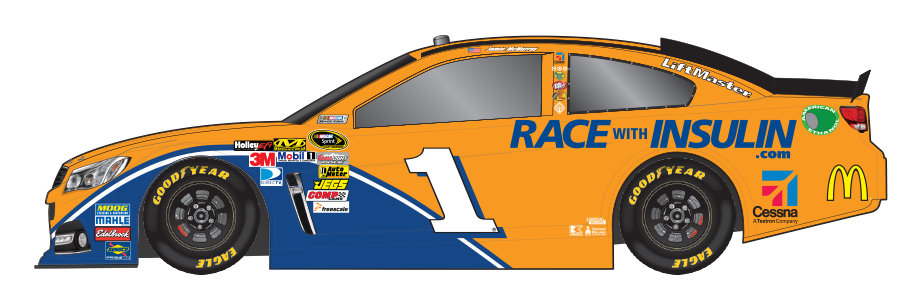
Jamie McMurray will drive the No. 1 Novo Nordisk Chevrolet.

SHOP: Jamie McMurray die-casts

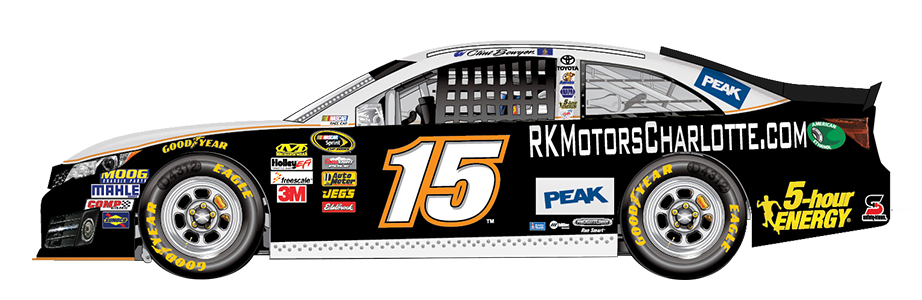
Clint Bowyer will drive the No. 15 RK Motors Toyota.

SHOP: Clint Bowyer die-casts

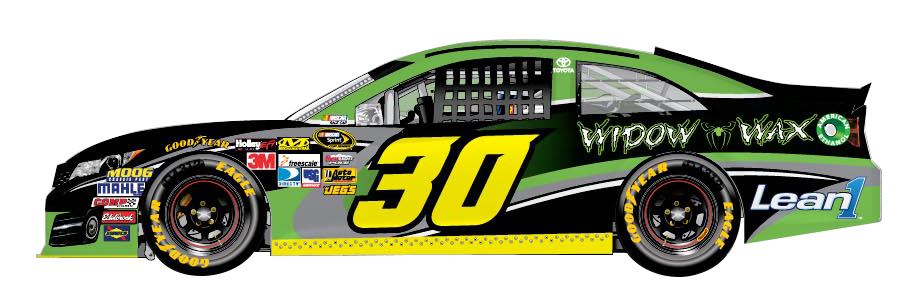
David Stremme will drive the No. 30 Widow Wax Toyota.

SHOP: David Stremme die-casts

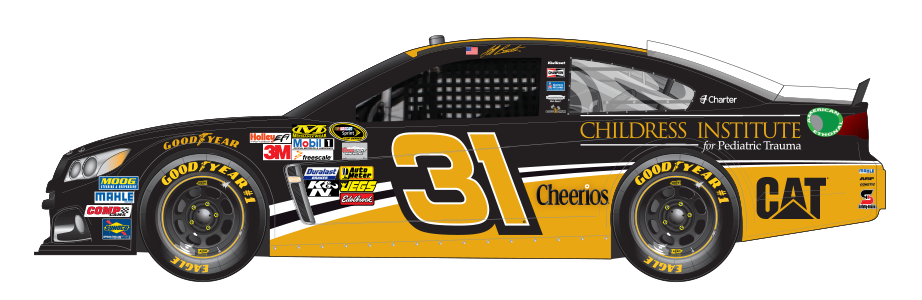
Jeff Burton will drive the No. 31 Childress Institute for Pediatric Trauma Chevrolet.

SHOP: Jeff Burton die-casts

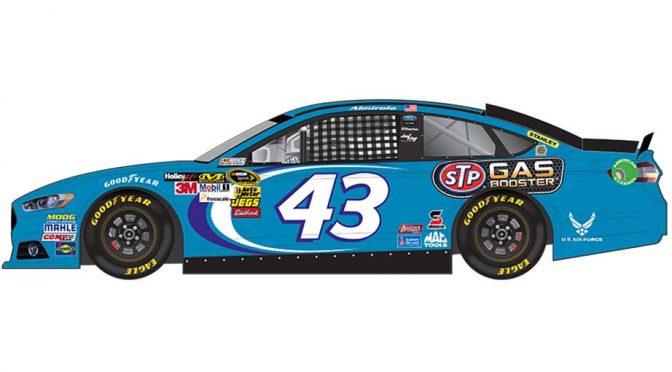
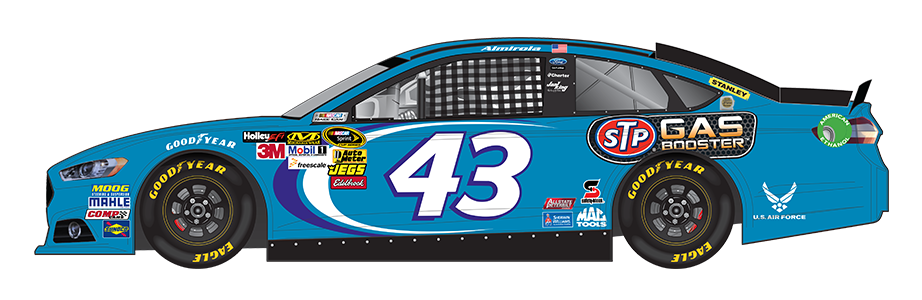
Aric Almirola will drive the No. 43 Jani-King STP Ford.

SHOP: Aric Almirola die-casts

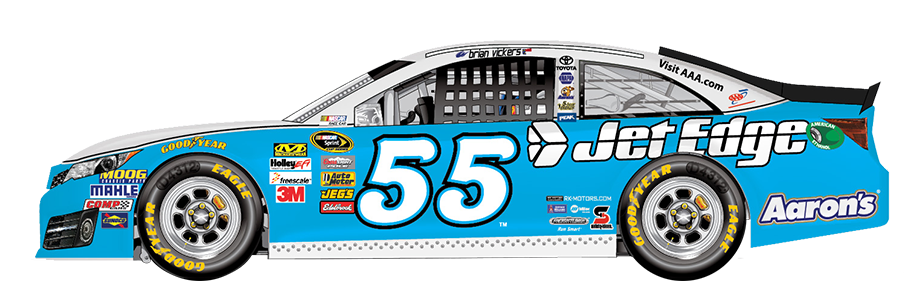
Brian Vickers will drive the No. 55 Jet Edge Toyota.

SHOP: Brian Vickers die-casts

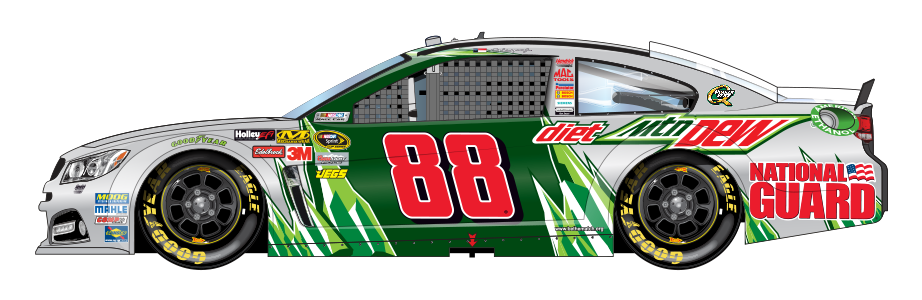
Dale Earnhardt Jr. will drive the No. 88 Diet Mountain Dew Chevrolet.

SHOP: Dale Earnhardt Jr. die-casts

___________________________________________________________________________________________

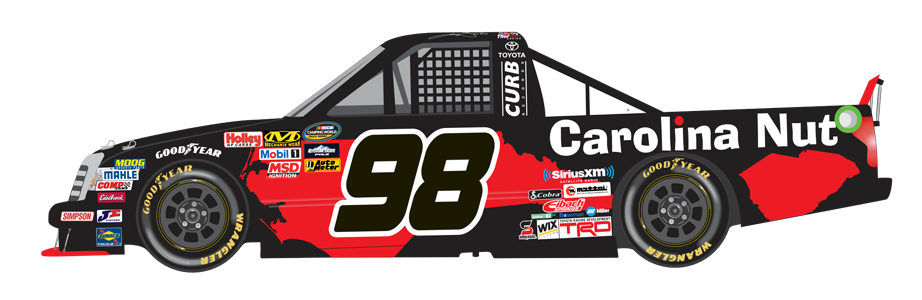
Johnny Sauter will drive the No. 98 Carolina Nut Co – Curb Records Toyota.

SHOP: Johnny Sauter die-casts

___________________________________________________________________________________________

___________________________________________________________________________________________

2013 Paint Scheme Previews:

The Sprint Unlimited
Daytona 500
Phoenix
Las Vegas
Bristol
Auto Club

___________________________________________________________________________________________

Comments are currently unavailable. We’re working on the development of a NASCAR fan forum – please stay tuned.
Logano incidents help Junior fly under radar

It took a second post-race fracas in as many race weekends to relegate NASCAR’s most popular driver to an afterthought. While crews and drivers were pushing and shoving on pit road, Dale Earnhardt Jr. departed Auto Club Speedway with the NASCAR Sprint Cup Series points lead in tow.

Now he carries it into tiny Martinsville Speedway, once again overlooked given the continuing saga involving Southern California combatants Joey Logano and Tony Stewart, and the injured Denny Hamlin. As far as Earnhardt is concerned, everyone else can keep on scuffling. He doesn’t mind working in the shadows, for once.

"There are other guys in the series not doing anything any flashier than we are."

— Dale Earnhardt Jr.

“I feel like it gives us the opportunity to keep focusing on what we need to do. We’re still not winning races, and I don’t expect to get much attention until we can win races,” Earnhardt, leader in the standings by 12 points over Brad Keselowski, said Tuesday on a conference call with reporters.

“We’ve finished well, but I think there’s a lot of areas where we can improve. We get to focus on that being out of the scope and out of the spotlight. We can pay more attention to, how do we keep getting better as a team? If we go out and win some races, we’ll get credit where credit is due. But we’ve run well, we’ve gotten lucky, we’ve had good cars, we’ve worked hard. But everybody in the garage has done the same thing. There are other guys in the series not doing anything any flashier than we are. So I wouldn’t expect the spotlight to be much brighter than it is. Hopefully we can win some races, though, and change that.”

Earnhardt may not have won since his victory last summer at Michigan that snapped an epic 143-race skid, but his level of consistency has become the standard on NASCAR’s premier series. This season, he’s the only driver to have finished in the top 10 in all five Sprint Cup events. Since missing two races late last year because of lingering concussion symptoms, he’s notched top-10s in seven of his nine starts and completed all but two laps over that span.

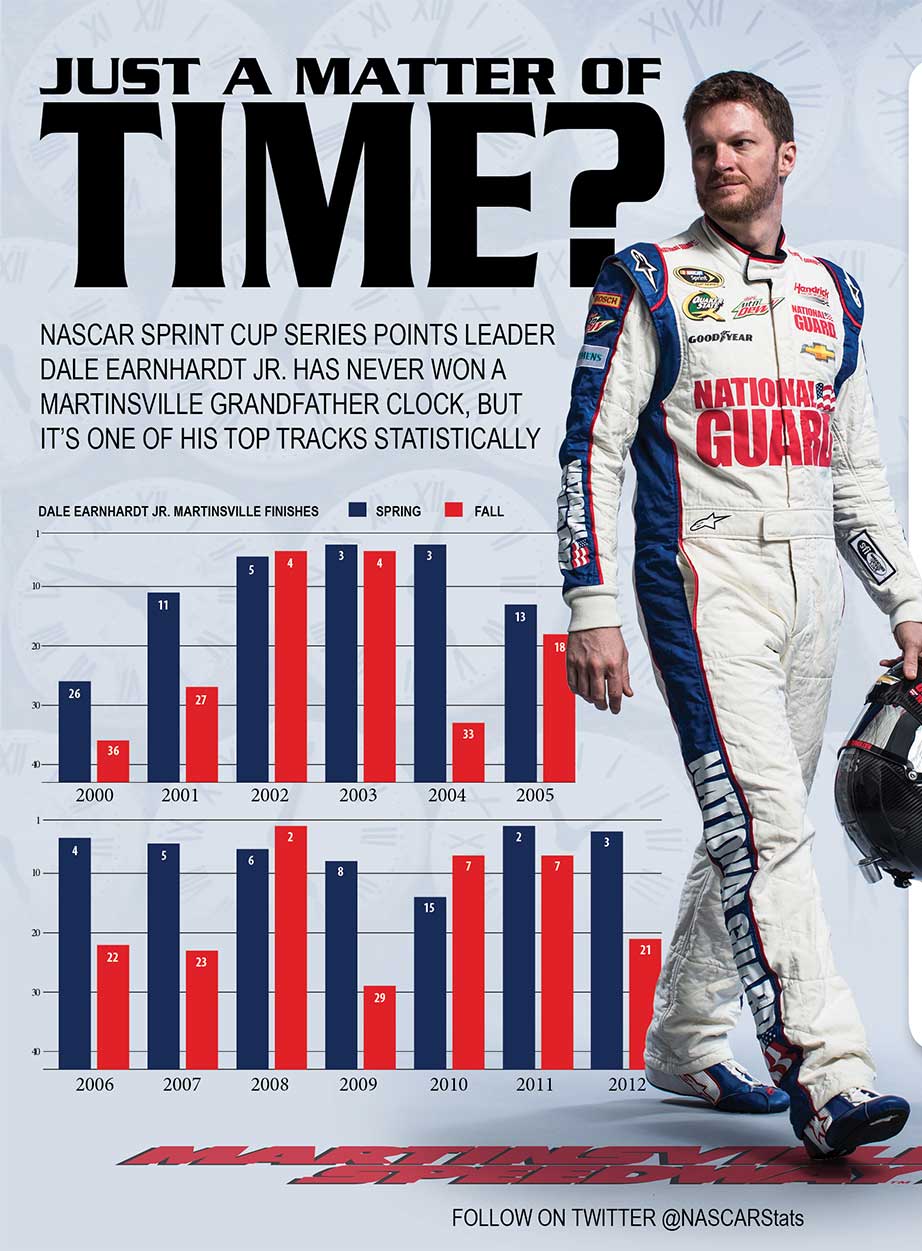
That trend continued in the most recent Sprint Cup event at Auto Club Speedway, where Earnhardt used a devastating finishing kick to surge from 18th to second over the final green-flag run. Now it’s on to half-mile Martinsville, where Earnhardt has never won, but where he finished third last spring, has a personal-best driver rating and has led more laps (868) than at any other venue on the sport’s top circuit.

As he did in Southern California, Earnhardt has shown a knack this season for making up positions late in a race — a trait for which he credits strategy calls made by crew chief Steve Letarte. At Fontana, a decision to take four tires and a fortuitous restart position in the favored outside lane helped Earnhardt seize the points lead from reigning champion Keselowski, who suffered his first finish of the season outside of the top five.

All of which makes Earnhardt wonder if his current points position really reflects how well his car has run. No question, he’s managed the finishes. But looking back over the first five races, he sees room for improvement.

“Just circumstance and good fortune has been a big part of it,” Earnhardt said. “We’ve ran good, we’ve had good cars, good speed. … I think we’re a better team than we were last year but still ‑‑ I just feel like that we need to be winning races, we need to be running up in the top two, three all day long. We just need to run a little bit better. There’s just a little bit there for us to gain until I feel super comfortable and feel, I guess, like our statistics and our points position really reflect on our performance.”

Between the blocking controversy ignited by Logano and Stewart and the fractured vertebra that’s sidelined Hamlin — who will be out at least five races, and have Mark Martin substituting for him at Martinsville — there’s plenty going on to steal the spotlight from Earnhardt, who sounds more than willing to give it up. While attention is diverted elsewhere, the points leader wants to improve his No. 88 program and prepare for the Chase for the NASCAR Sprint Cup.

“We’ve got time in the season to get there, and we did that last year. We got faster throughout the season. And by mid‑summer, we were really one of the best teams out there, I thought,” he said. “So I’ve got good confidence in the team that we’re going to be able to gain what I think we need to gain to be able to compete once the Chase comes around, and hopefully we’ll have that opportunity to be in the Chase at that point. But we’ve still got more to gain. There’s guys out there that I see that have more speed, and I think that’s the only thing that concerns me.”

See the graphic below for more on Dale Earnhardt Jr.’s stats at Martinsville Speedway:

___________________________________________________________________________________________

Comments are currently unavailable. We’re working on the development of a NASCAR fan forum – please stay tuned.
Logano incidents help Junior fly under radar

It took a second post-race fracas in as many race weekends to relegate NASCAR’s most popular driver to an afterthought. While crews and drivers were pushing and shoving on pit road, Dale Earnhardt Jr. departed Auto Club Speedway with the NASCAR Sprint Cup Series points lead in tow.

Now he carries it into tiny Martinsville Speedway, once again overlooked given the continuing saga involving Southern California combatants Joey Logano and Tony Stewart, and the injured Denny Hamlin. As far as Earnhardt is concerned, everyone else can keep on scuffling. He doesn’t mind working in the shadows, for once.

"There are other guys in the series not doing anything any flashier than we are."

— Dale Earnhardt Jr.

“I feel like it gives us the opportunity to keep focusing on what we need to do. We’re still not winning races, and I don’t expect to get much attention until we can win races,” Earnhardt, leader in the standings by 12 points over Brad Keselowski, said Tuesday on a conference call with reporters.

“We’ve finished well, but I think there’s a lot of areas where we can improve. We get to focus on that being out of the scope and out of the spotlight. We can pay more attention to, how do we keep getting better as a team? If we go out and win some races, we’ll get credit where credit is due. But we’ve run well, we’ve gotten lucky, we’ve had good cars, we’ve worked hard. But everybody in the garage has done the same thing. There are other guys in the series not doing anything any flashier than we are. So I wouldn’t expect the spotlight to be much brighter than it is. Hopefully we can win some races, though, and change that.”

Earnhardt may not have won since his victory last summer at Michigan that snapped an epic 143-race skid, but his level of consistency has become the standard on NASCAR’s premier series. This season, he’s the only driver to have finished in the top 10 in all five Sprint Cup events. Since missing two races late last year because of lingering concussion symptoms, he’s notched top-10s in seven of his nine starts and completed all but two laps over that span.

That trend continued in the most recent Sprint Cup event at Auto Club Speedway, where Earnhardt used a devastating finishing kick to surge from 18th to second over the final green-flag run. Now it’s on to half-mile Martinsville, where Earnhardt has never won, but where he finished third last spring, has a personal-best driver rating and has led more laps (868) than at any other venue on the sport’s top circuit.

As he did in Southern California, Earnhardt has shown a knack this season for making up positions late in a race — a trait for which he credits strategy calls made by crew chief Steve Letarte. At Fontana, a decision to take four tires and a fortuitous restart position in the favored outside lane helped Earnhardt seize the points lead from reigning champion Keselowski, who suffered his first finish of the season outside of the top five.

All of which makes Earnhardt wonder if his current points position really reflects how well his car has run. No question, he’s managed the finishes. But looking back over the first five races, he sees room for improvement.

“Just circumstance and good fortune has been a big part of it,” Earnhardt said. “We’ve ran good, we’ve had good cars, good speed. … I think we’re a better team than we were last year but still ‑‑ I just feel like that we need to be winning races, we need to be running up in the top two, three all day long. We just need to run a little bit better. There’s just a little bit there for us to gain until I feel super comfortable and feel, I guess, like our statistics and our points position really reflect on our performance.”

Between the blocking controversy ignited by Logano and Stewart and the fractured vertebra that’s sidelined Hamlin — who will be out at least five races, and have Mark Martin substituting for him at Martinsville — there’s plenty going on to steal the spotlight from Earnhardt, who sounds more than willing to give it up. While attention is diverted elsewhere, the points leader wants to improve his No. 88 program and prepare for the Chase for the NASCAR Sprint Cup.

“We’ve got time in the season to get there, and we did that last year. We got faster throughout the season. And by mid‑summer, we were really one of the best teams out there, I thought,” he said. “So I’ve got good confidence in the team that we’re going to be able to gain what I think we need to gain to be able to compete once the Chase comes around, and hopefully we’ll have that opportunity to be in the Chase at that point. But we’ve still got more to gain. There’s guys out there that I see that have more speed, and I think that’s the only thing that concerns me.”

See the graphic below for more on Dale Earnhardt Jr.’s stats at Martinsville Speedway:

___________________________________________________________________________________________

Comments are currently unavailable. We’re working on the development of a NASCAR fan forum – please stay tuned.
Hollywood star on the rise with G.I. Joe Retaliation, the box office smash

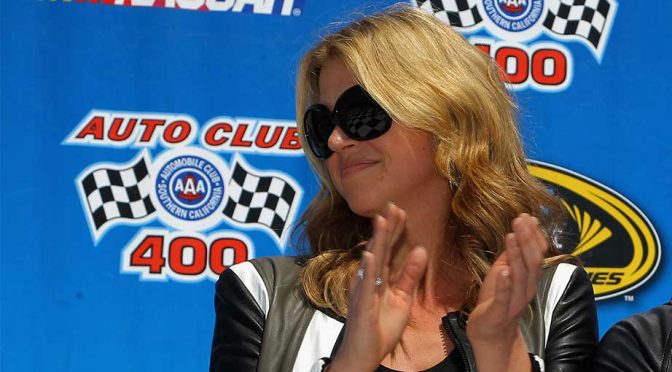
Best known as Tyra Collette from the television program “Friday Night Lights,” actor Adrianne Palicki was one of the grand marshals for the recent NASCAR Sprint Cup Series race at Auto Club Speedway in Fontana, Calif. Now starring as Lady Jaye in the film “G.I. Joe: Retaliation,” Palicki spoke with NASCAR.com prior to the event:

Q: What can you tell us about your new film?
Palicki: “The movie is fun and explosive. I don’t know if you’re a G.I. Joe fan, but it’s definitely a movie made for G.I. Joe fans. It’s an awesome action-packed film, and what an awesome cast we have (with) Bruce Willis and Dwayne Johnson. … I play Lady Jaye. She’s a tough cookie. She likes to play with the boys. She’s one of the only women in the movie, and she’s definitely a guy’s girl.”

FULL SERIES COVERAGE

• View all articles
• View all videos
• View all photos

Q: This is your first time at a NASCAR race. Any drivers in particular you hope to meet?
Palicki: “I wanted to meet Danica (Patrick). I haven’t yet. Hopefully I will. I’m a big fan of her’s. She’s kind of like the Lady Jaye of NASCAR.”

Q: How big is it for an actor to be in a big-budget action picture?
Palicki: “You know, it’s weird, because while we were shooting it, it didn’t seem like a big deal. Even working with Bruce and Wayne, they were more just like friends of ours. It wasn’t until actually we did the international tour that it started to feel like a lot bigger deal and people really got excited about it.”

Q: Do you like cars? Any personal favorites?
Palicki: “My favorite is the one I own now. I own a ’72 Chevy pickup. My grandpa used to collect old cars, so I fell in love with them at such a young age. And I was living in Texas for so long (shooting “Friday Night Lights”), I was like, I need a truck. I bought it from the original owner, and just had it revamped as far as painting and interior. The engine is gorgeous. It’s so beautiful.”

Q: Much like drivers, you’re in a performance business that requires a big break to launch your career. What was yours?
Palicki: “I worked for years, and then I got “Friday Night Lights,” and I have to say that changed my entire trajectory. My entire life changed after that. I loved that show. So that I feel like that was my shift.”

Q: Speaking of “Friday Night Lights,” that show has amassed such a devout following. How often do you get asked about it?
Palicki: “All the time. People stop me and say, ‘Oh my god, “Friday Night Lights” is my favorite show.’ I love it, because I love ‘Friday Night Lights’ fans, because we didn’t have them when we were actually shooting. So now we have this massive group of people who love it, and I’m really happy.”

___________________________________________________________________________________________

Comments are currently unavailable. We’re working on the development of a NASCAR fan forum – please stay tuned.
NASCAR Race to Green™ will rally fans, industry and partners around sustainable behavior       

DAYTONA BEACH, Fla. — As racing season shifts gears into April, a month nationally associated with environmental awareness, NASCAR is launching two programs further bolstering the sustainability efforts the sanctioning body, industry, and a wide range of partners have in place to help reduce the sport’s carbon footprint.

Headlining the month-long NASCAR Green® initiative leading up to Earth Day and Arbor Day are two signature programs designed to help drive more sustainable behavior within the sport. NASCAR Race to Green™ will galvanize teams, tracks, drivers, Official NASCAR Partners, and most importantly fans, around the theme of protecting and preserving our environment. The NASCAR Green Clean Air Tree Planting Program™ Delivered by UPS will plant trees to absorb carbon emissions equivalent to all of the racing in NASCAR’s three national series for the entire season. One mature tree over the course of its lifetime absorbs about one metric ton of carbon dioxide, the same amount of carbon dioxide emitted by a NASCAR Sprint Cup car driving 500 miles.

NASCAR Race to Green includes a call-to-action for fans and the industry to pledge trees that will be planted across the country as well as in a number of areas recently devastated by natural disasters. NASCAR fans can visit www.NASCAR.com/green to donate trees — for $1 per tree for a 2-3 foot sapling — to be planted in those stricken areas.

"NASCAR has become the leader in sustainability across all sports."

— Brian France, NASCAR Chairman and CEO

As presenting sponsor of the NASCAR Green Clean Air Tree Planting Program, UPS has partnered with the Arbor Day Foundation to commit to plant more than 8,000 trees — including 90 in each market where the NASCAR Sprint Cup Series races for the remainder of 2013. Additionally, UPS will serve as presenting sponsor for the NASCAR Green Summit later this fall.

“Our NASCAR Green activities this month comprise our most ambitious and collective effort to date in reducing our sport’s impact on the environment,” said Brian France, NASCAR Chairman and CEO. ”With the help of our industry, some best-in-class partners, and most importantly our fans, NASCAR has become the leader in sustainability across all sports and has had a substantive impact in creating awareness and positively changing consumer behaviors around Green.” 

“UPS shares NASCAR’s commitment to operating sustainably and doing our part to protect and preserve the environment,” said Ron Rogowski, UPS vice president, global brand and sponsorships. “Last year, we launched an initiative to plant one million trees worldwide that aims to reduce and offset carbon emissions. At UPS, we are always looking for ways to apply our sustainability experience to everything that we do, including operating more than 2,600 alternative fuel vehicles.”

Since its inception in 2008, NASCAR Green has become one of the most powerful environmental awareness platforms in the country. NASCAR has the largest recycling and tree planting programs in sports; has put nearly four million miles on Sunoco Green E15, a biofuel blended with 15 percent American-made ethanol from American-grown corn; and has the largest renewable energy stadium projects in the world.

Importantly, the efforts that have led to these achievements align with NASCAR fan values. According to a 2012 study conducted by Toluna, NASCAR fans are twice as likely as non-fans to view their household as very green — always looking for new ways to positively impact the environment. The same research shows that NASCAR fans are multiple times more likely than non-fans to closely associate NASCAR with being environmentally responsible — not surprising since NASCAR fans are more likely to see the various initiatives the sport has in place to positively impact the environment.

NASCAR Race to Green will highlight accomplishments, events and activities taking place within the sport in three key areas: waste, emission and power. While NASCAR Green initiatives have and will continue to span the entire year, including the complete roll out of the NASCAR Green Clean Air Tree Planting Program Delivered by UPS, the following activities will take place during the month of April:

· On April 5, Martinsville Speedway, NASCAR and UPS will host an event officially kicking off the NASCAR Green Clean Air Tree Planting Program during the race weekend.

· Kansas Speedway will prominently feature the NASCAR Green logo on the infield grass and the backstretch wall and start/finish line will be painted green. A Toyota Camry Hybrid will serve as pace car for the race.

· Pocono Raceway in partnership with NASCAR will be donating 8,000 tree seedlings under the supervision and monitoring of the National Parks Service. The donation is a continuation of a major reforestation effort that will eventually result in 150,000 new trees at the Flight 93 National Memorial, the nation’s permanent memorial to the 40 passengers and crew of United Flight 93, and all of those lost on September 11, 2001. The UPS Foundation will also donate 35,000 trees to this site.

· NASCAR Sprint Cup Series™ teams and drivers will also be doing their part throughout April. A large majority of teams will feature the NASCAR Green logo on the B-post of their race cars. Additionally, NASCAR drivers are expected at a number of industry events throughout the course of the month.

· NASCAR will also break new television creative on NASCAR on FOX during the network’s broadcast of the STP 500 on April 21 at 1 p.m. ET. A 30-second spot, courtesy of Ogilvy & Mather, will bring the NASCAR Green platform to life. The campaign will also include print and radio. Additionally, a digital vignette will be released, encouraging fans to join the effort by pledging trees.

· The NASCAR Foundation in partnership with the Student Conservation Association (SCA) will host a park renovation project in the Kansas City area on Earth Day highlighting the first of the UPS tree planting events. Participants will include SCA representatives, local high school students, UPS volunteers, Sprint employees and representatives from the NASCAR community.

The next NASCAR Sprint Cup Series race will be the STP Gas Booster 500 at Martinsville Speedway on Sunday at 1 p.m. on FOX, FOX Deportes, Motor Racing Network Radio and SiriusXM Satellite Radio

___________________________________________________________________________________________

Comments are currently unavailable. We’re working on the development of a NASCAR fan forum – please stay tune

Fans can meet Truck series drivers during one-hour session

CHARLOTTE, N.C. — When the NASCAR Camping World Truck Series heads to Rockingham Speedway, fans will get the chance to meet some of their favorite Truck Series drivers.

On Saturday, April 13, the speedway is holding a one-hour autograph session by the rocks at the main entrance to the track at 10:50 a.m. The session is open to anyone who has purchased a ticket to either Saturday or Sunday’s race.

Rockingham Speedway President Andy Hillenburg said last year’s attendance to the autograph session is the reason they are bringing it back for a second time.

Another fan event will be Sunday’s “Tweet Meet,” where fans who are part of the active NASCAR Twitter community can meet and talk before the race. Details will become available as the event gets closer through the speedway’s official handle, @RockinghamSpeed.

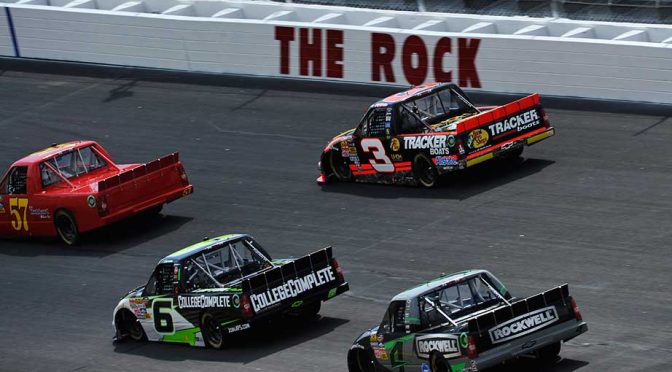
This is the second trip to Rockingham Speedway for the Camping World Truck Series. The North Carolina Education Lottery 200 at The Rock presented by Cheerwine is on Sunday, April 14 at 2 p.m. ET.

___________________________________________________________________________________________

Comments are currently unavailable. We’re working on the development of a NASCAR fan forum – please stay tuned.
Newman calls tactic a "chicken" move; Dale Jr. not so much

Blocking. Impeding the progress of a trailing competitor while attempting to maintain or improve one’s on position on the track. It’s hardly new to NASCAR.
 
Ryan Newman describes it as “chicken.”
 
Dale Earnhardt Jr. says he expects it and accepts it.

FULL SERIES COVERAGE

• View all articles
• View all videos
• View all photos

"In certain situations,” NASCAR’s Sprint Cup Series points leader explained.
 
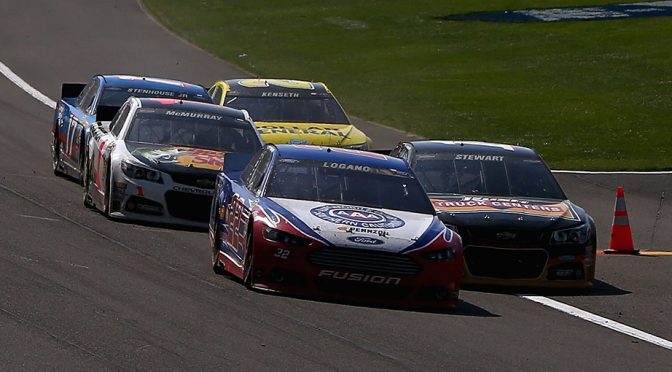
The issue of blocking returned to the spotlight when Tony Stewart took exception to Joey Logano’s efforts to keep Stewart behind him during a late-race restart at Auto Club Speedway.
 
“I think blocking is a chicken way to drive,” Newman said April 2 during a NASCAR national teleconference. “It’s just something I don’t do.
 
“If you’ve got a run on me, take it. If I can get through the corner better than you, then we’ll race, but blocking is … an open-wheel type move, it seems like.
 
“You’re there to race; you’re not there to block. … It’s just a chicken way of driving and not very respectful for the guys around you.”
 
Stewart’s frustration following the Auto Club 400 led to an altercation between the three-time NASCAR Sprint Cup Series champion and Logano, who eventually succeeded him at Joe Gibbs Racing.
 
“What the hell do you think I was mad about?” an angry Stewart said when asked about the incident moments after it occurred.
 
“Dumb little (expletive) runs us clear down to the infield. He wants to (expletive) about everybody else and he’s the one who drives like a little (expletive). I’m going to bust his ass.”
 
Logano, the leader with 11 laps remaining when the race resumed following a caution period, moved low on the track to block Stewart’s advances once the green flag reappeared.
 
Stewart moved lower. Logano countered by moving lower as well.
 
Logano said he “had to throw the block there.
 
“That was the race for the lead,” the 22-year-old said afterward. “I felt if the 14 (of Stewart) got underneath me, that was going to be the end of my opportunity to win the race.”
 
He was “protecting” his spot, he said.
 
Neither won the race — Logano tangled with Denny Hamlin on the final lap and finished third while Stewart, simmering, eventually took the checkered flag in 22nd.
 
Shortly thereafter, things got a bit heated around Logano’s No. 22 Penske Racing Ford as it sat on pit road.
 
“My opinion is that … I might block in certain situations,” Earnhardt Jr. said April 2. “I would expect and accept to be blocked in certain situations. But you’ve got to give me race track. You’ve got to give me somewhere to run. You can’t just run me up into the fence. … If you give me a reasonable amount of race track to race on, then I really can’t complain in regards to what you’re trying to do to maintain the position.”
 
Was Logano wrong for blocking Stewart? Given the number of times blocking occurs, did Stewart overreact?
 
If it is acceptable for a driver to use his car to move a fellow competitor out of the way in the closing laps of a race, is it any different when a driver in front uses his car to slow another’s progress?
 
In the aftermath of a 24-car pileup on the final lap last fall at Talladega, it was Stewart who said, “I just screwed up. … It was my fault blocking to stay where I was at. So, I take 100 percent of the blame.”
 
How blocking is viewed by competitors is often determined by when it takes place. Just as intentional contact is often viewed differently when drivers are “going for the win.”
 
“Tony is one of the best, but I have to say he tried to block us at Talladega in the fall and wrecked the entire field. That’s racin,’ ” Michael Waltrip Racing crew chief Rodney Childers tweeted a day after the California incident.
 
“If my driver didn’t try to hold his position on the restart for the chance to win, I would be really pissed.”
 
Strip away the last-lap mentality and drivers often see such incidents in a different, less forgiving light.
 
“Is the position that important at that moment in time?” Earnhardt Jr. asked. “Everybody will have a different opinion.
 
”I’m not going to say I’ve never blocked anybody because I have. … Being in certain situations, that’s your only alternative.”
 
Newman, a teammate of Stewart’s at SHR, said he did not know if Stewart and Logano had spoken to one another since the post-race incident.
 
“I don’t know if they talked, plan on talking or won’t ever talk again,” he said.

___________________________________________________________________________________________

Comments are currently unavailable. We’re working on the development of a NASCAR fan forum – please stay tuned.
Martinsville Speedway should be rust-free after drivers kept busy during layoff

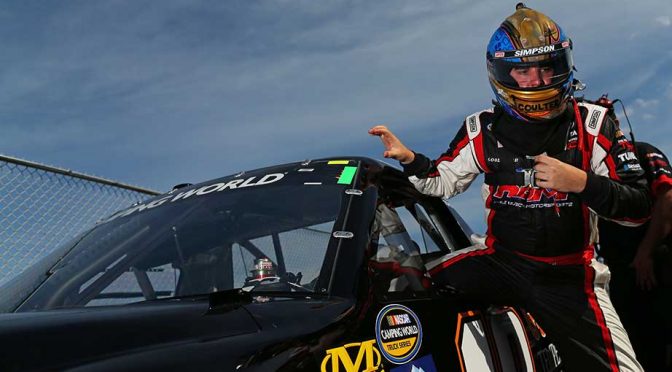
Joey Coulter took his late model stock car and raced at dirt tracks throughout the Southeast over the past six weeks while waiting for the NASCAR Camping World Truck Series to get back on track.

Ryan Blaney, who finished eighth in the season-opening NextEra Energy Resources 250 at Daytona International Speedway, was one of multiple Truck Series drivers to race go-karts in Mooresville, N.C., and test his truck at Rockingham Speedway.

The key to drivers staying sharp over such an extended break was getting in the car — any car — and on a track — any track — to do what comes so naturally on the NASCAR circuit: log laps.

“When you get breaks like this, not running is pretty bad,” said Darrell Wallace Jr., who finished 12th in his opening Trucks Series race back in February. “I mean you take Kyle Larson, he runs 150 races a year. So I personally try to do as much racing as I can to keep everything up to par.

"…if you’re a racer, you always want to race something, no matter what day of the week it is or where it’s at."

— Darrell Wallace Jr.

“Plus, if you’re a racer, you always want to race something, no matter what day of the week it is or where it’s at.”

Wallace is part of a young contingent of drivers that will be on the track this week in Martinsville for the Kroger 250, the first Trucks Series race since Feb. 22. In fact, six drivers on the 40-car entry list are younger than 20.

In addition to Wallace, who is 19 years old and will drive the No. 54 Toyota, Blaney is 19, Grant Galloway and Devin Jones are 18, Chase Elliott is 17 and Erik Jones is 16. Of that group, only Wallace and Blaney have previously driven in the Truck Series.

They have the opportunity to race Saturday following a rule change in the offseason that allows 16- and 17-year-old drivers to compete in Truck Series races at tracks 1.1-miles or less.

“Lowering the age limit to 16 at the smaller tracks gives another opportunity for drivers to get experience before they get into the mile-and-a-half-type tracks,” Truck Series director Chad Little said. “(It’s a) very important goal for NASCAR and also working with our partners, the track owners.”

Jones is the youngest beneficiary of the rule change, and he’ll drive the No. 51 Toyota for Kyle Busch Motorsports. It’s an interesting twist, given that Jones outraced Busch in December to win the 45th annual Snowball Derby, an event considered the premier late model event of the season.

Jones’ win at Five Flags Speedway in Pensacola, Fla., led to negotiations for him to drive a five-race schedule for KBM — Jones will also run the fall Martinsville race, at Rockingham Speedway on April 14 and both races at Iowa Speedway.

“Coming here to Martinsville, you can feel that history. This is a great opportunity for me, and I think it’s going to be a good race for us,” Jones said. “I’m looking forward to the opportunity, with Kyle Busch trucks having so much success here. I’m used to short tracks, so I think it’s going to be a good race for us.”

Like most of his fellow young competitors, Jones has not raced at Martinsville. His first foray to the .526-mile paperclip track was last week during a media availability session.

He took in the flat, speed-inviting straightaways and tight turns while riding along for a few pace-car laps.

“Martinsville is one of those real bullring type tracks,” Jones said. “It’s always been one of my favorites to watch on TV. Getting off the corner will be big. If we can figure that out and get around people, I think we’ll have a pretty good day.”

The young folks, though, will be in the pack with some veterans who have been racing longer than they’ve been alive.

Ron Hornaday Jr., who has four Trucks Series titles, 51 wins and 323 total series races, sits second in the standings after finishing third at Daytona. He’s the elder statesman of the Truck Series at age 54. Other veterans include Johnny Sauter, who won the opening race and leads the points standings, and 49-year-old Todd Bodine, who is 10th in the standings.

What happens if Jones or some other young hotshot has a chance to outduel a bigger name in the waning laps?

“In your first race, it’s kind of setting a precedent. You can’t let people knock you out of the way,” Jones said. “When the white flag comes out, you do what you got to do.”


___________________________________________________________________________________________

Comments are currently unavailable. We’re working on the development of a NASCAR fan forum – please stay tuned.