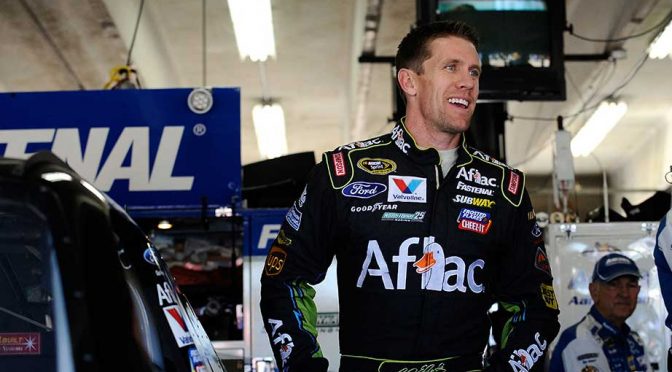
With new crew chief, Edwards hopes to recapture 2011 form

There were “flashes of speed,” Carl Edwards said in recounting his 2012 NASCAR Sprint Cup Series season, and occasions when he felt his Roush Fenway Racing team was on the brink of turning the corner.

But the flashes were no more than brief bursts that generated encouragement and optimism, but fell short of honest-to-goodness success.

Had it been another team, another driver, another year even, perhaps the lackluster results wouldn’t have been quite so startling. But coming off a 2011 season in which Edwards had battled Tony Stewart down to the very last lap of the very last race of the season, only to lose the Sprint Cup championship on a tiebreaker of all things? Great things were expected for the 33-year-old; great struggles were not.

Instead, the 2012 season closed with his last Cup win a distant memory. Edwards missed the 10-race Chase for the NASCAR Sprint Cup for just the second time in eight years, and his 15th-place points finish was a career worst.

Looking back, Edwards says simply “our performance was mediocre and our luck was terrible. So if you take those two things together, you’re just bad.”

"I feel like we respond really well to change."

Carl Edwards

A flurry of offseason changes at RFR saw the departure of longtime teammate Matt Kenseth (now at Joe Gibbs Racing) and the ascension of two-time NASCAR Nationwide Series champion Ricky Stenhouse Jr. to the Sprint Cup. The result of that movement has paired Edwards with veteran crew chief Jimmy Fennig and the bulk of the No. 17 team that guided Kenseth to three victories and into the Chase last season.

Eighteen of Edwards’ 19 Cup wins came with crew chief Bob Osborne at the helm. A handful of others have been atop the pit box from time to time, but neither Osborne nor the others have the experience of Fennig, a 28-year Cup veteran with 36 wins and 817 races under his belt.

Edwards said he got a glimpse of Fennig’s longevity and success during one of their initial conversations late last season.

“We were talking, and he was saying ‘Bobby Allison did this, Kurt Busch did this, Matt Kenseth did this,’ ” Edwards said. “He has champion drivers that he has known intimately. That’s really cool.

“I felt relatively ignorant sitting there in his office. But I think that’s good for a person. At this level of the sport, it’s real easy to get a big head and think you know everything. He’ll be a good measuring stick, I guess, for me. He can say, ‘Hey look, you’re not pulling your weight here’ or ‘You’re good here.’ I think that will make me be better.”

Both driver and crew chief will have to adapt to working with someone new, and while Fennig said he doesn’t anticipate changing the way he has approached the sport in previous years, he doesn’t run his team with a “my way or the highway” approach either.

“I’m the type of person who is open-minded,” he said. “I know how important simulation is and a lot of the other tools we have at our disposal as a race team, and I want to make sure that Carl gives our engineers and myself all of the feedback on what that car is doing so we can help him. Our simulation is a big part of what we do and our engineering staff is a big strength of our organization that we’ve got to make sure it works.”

It’s unknown how much of an impact the arrival of the Generation-6 car will create, but Edwards said the car should be “really good for us.”

“I feel like we respond really well to change,” Edwards added. “New tracks, that sort of thing, that’s kind of been our bread and butter (in the past).”

The opportunity is there, he said, “for someone to get ahead of the curve for a year or two. And I hope that it’s us.”

Annual kickoff race gets new name thanks to new sponsor

DAYTONA BEACH, Fla. — Sprint has partnered with Daytona International Speedway to sponsor The Sprint Unlimited At Daytona, the fan-favorite non-points event formerly known as the Daytona Shootout that traditionally kicks off the stock car portion of Budweiser Speedweeks 2013 and the NASCAR season.

The race will once again be held under the lights on Saturday night, Feb. 16 (FOX 8 p.m. ET) but will feature several new elements that will make this event even more of a fan favorite.  Fans in attendance will be eligible to receive special upgraded race experiences from Sprint, including roles as Grand Marshal, Honorary Starter, and trophy presenter. Fans can also help deliver the trophy to Gatorade Victory Lane or participate in driver introductions during pre-race ceremonies.

SPRINT UNLIMITED   
Sprint Cup Series kick-off

Fans decide: Vote on format

Mobile experience
New innovations for 2013

Sprint Unlimited content
Event gets an overhaul
New name, same setting

Video: Kyle Busch’s 2012 save

“Sprint is entering its 10th season
as title sponsor of the NASCAR Sprint Cup Series,” said Steve Gaffney,
vice president of marketing for Sprint. “From the outset, we promised
unprecedented access for race fans, and each year we challenge ourselves
to honor that commitment in innovative ways. Thanks to the strength of
our partnership with NASCAR and Daytona International Speedway, we have
designed The Sprint Unlimited so that fans play a major role in all
aspects of the event. It is the ideal way to start this milestone
season, and we look forward to sharing all of the details later this
month.”

In addition to the new fan elements, The Sprint
Unlimited marks the first time the new NASCAR Sprint Cup Series race
cars will compete on-track in an event. Dubbed “Gen-6,” the new-look
sixth generation cars highlight greater brand identity for the
manufacturers and are expected to heighten the rivalries among drivers
and manufacturers.

“Now more than ever, through our growing partnership with Sprint, The Sprint Unlimited will be the fans’ race,” said Daytona International Speedway President Joie Chitwood III. “Sprint has been a great partner with Daytona and NASCAR, and they continue to raise the bar by engaging race fans in new and innovative ways.  We look forward to hearing about additional unique elements for this race in the coming weeks. 

“We are also excited for the debut of the new Sprint Cup Series car, which we believe will provide thrilling on-track action and make The Sprint Unlimited an unforgettable launch to the 2013 season.”

As announced earlier in the year, the format for selecting the field of drivers in the invitation-only event will return to its roots for 2013. The eligible field of drivers will consist of pole winners from the 2012 NASCAR Sprint Cup Series season and past winners of The Sprint Unlimited who have attempted to qualify for at least one race during the 2012 season.

Tickets for The Sprint Unlimited start at $39 and are available for purchase at www.daytonainternationalspeedway.com or by calling 1-800-PITSHOP. Children 12 and under are free in general admission grandstands and the Sprint FANZONE.

Fans can follow Miss Sprint Cup (@MissSprintCup) and NASCAR (@NASCAR) on Twitter and stay up to speed on the latest news by using hashtags #SprintUnlimited, #NASCAR, #DAYTONA500 and #NASCARBattle. 

In addition, fans can also stay connected with Daytona International Speedway on Twitter, Facebook, Google+ and Pinterest for all the latest news all season long.

The field for The Sprint Unlimited is currently at 22 drivers and features a who’s who of NASCAR stars.

2012 Pole Winners:

Greg Biffle
Dale Earnhardt Jr.
Carl Edwards
Denny Hamlin
Kasey Kahne
Mark Martin
Jeff Gordon
Martin Truex Jr.
Tony Stewart
AJ Allmendinger
Aric Almirola
Joey Logano
Marcos Ambrose
Jimmie Johnson
Matt Kenseth
Kyle Busch
Juan Pablo Montoya

Past champions of The Sprint Unlimited:
Kurt Busch
Kevin Harvick
Bill Elliott
Terry Labonte
Ken Schrader

The Year of Brad: On or off the race track, Keselowski’s exploits proved runaway story of 2012

It started with a photo snapped from a cellular phone, and ended with a tipsy celebration broadcast on live television. Those two indelible media moments bookended the season of Brad Keselowski, whose actions and words outside of the race car made as much of an impact as the Sprint Cup championship he earned behind the wheel.

The photo of the burning jet dryer, snapped during a red flag in the Daytona 500, from a phone he had slipped into his firesuit pocket before climbing into the car. Another tweet from inside the vehicle, this one much later in the season, that earned him a fine from NASCAR. Strong words against retaliation on the race track. A beer-guzzling championship celebration and a buzzed SportsCenter interview that quickly went viral. A speech during the awards ceremony that showed maturity, humility and perspective, and ended with a call for unity.

In and of itself, it might have been enough to make the Penske Racing driver the story of the 2012 season in NASCAR. But couple all that with what unfolded on the race track — the five wins, the fuel strategies, the fender-banging, a Chase run that no one could match, a long-awaited first premier-series title for the man they call the Captain — and there is no doubt. This was the year of Brad.

No question, he earned it on the track. But even when he was outside the No. 2 car, he was impossible to ignore. Outspoken and accessible, a driver who pushed the limits of social media in NASCAR, Keselowski earned renown for who he was as much as what he achieved.

“I don’t think Brad’s learned to be cautious yet, and I hope it won’t bite him like it has some drivers, but it’s refreshing,” three-time champion Tony Stewart said. “It’s nice to see someone who speaks from the heart and isn’t guarded, and that’s the way all of us should be.”

“You’ve got to be who you are and let that shine, and I think that’s what I see in him,” added four-time champion Jeff Gordon. “It doesn’t seem like too much is going to change in him, at least not what I’ve seen so far. So I don’t anticipate it happening.”

No wonder, then, so many see so much potential in this 28-year-old, over and above what he does on the race track.

“I think he’s going to drive the sport further,” car owner Roger Penske said.

A lot to heap on a young first-time champion, to be sure, but Keselowski seems to embrace it. But he fully understands it starts behind the wheel — which is why to the driver, despite all those unforgettable media moments that defined his 2012 campaign, the best parts involved reaching Victory Lane.

“The championship is a reflection of the year, but a race win is a reflection of a weekend,” Keselowski said. “So it’s a much narrower view, but a very important view. So the wins themselves, to me, mean the most.”

And with that, the rest of the top 10 stories of 2012:

"I think he’s going to drive the sport further."

Roger Penske

2. Earnhardt’s resurgence. He may have been an afterthought by the time Keselowski and Jimmie Johnson dueled for the title at Homestead, but there were times this season when Earnhardt burned brighter than anyone else. His return to championship relevance was punctuated by an end to his 143-race winless streak, and a high ranking in points for much of the year. Wrecks and concussions ultimately derailed his title run, but for the first time in a long time NASCAR’s most popular driver was a viable candidate for NASCAR’s biggest prize.

3. AJ’s release and return.
It felt as if we had seen the last of AJ Allmendinger when he failed a random drug screening at Kentucky in July and then lost his ride at Penske Racing. And in truth, he didn’t help himself with the way he and his advisors handled the situation at first. But a humbled, contrite and appreciative Allmendinger completed NASCAR’s Road to Recovery program, made a few starts with Phoenix Racing and put himself in play for an open seat in 2013. In the process, he proved that one positive test doesn’t have to mean the end of a career.

4. The rise of MWR. Is this really the same Michael Waltrip Racing that barely survived its first season? Indeed it is. Thanks to an upgrade in personnel and an improved way of building race cars, MWR emerged as a legitimate title contender in 2013. Clint Bowyer and Martin Truex Jr. made the Chase, and the No. 55 car might have done the same had it had the same driver all year. Although Truex faded some toward the end, all three cars were good all season long. This wasn’t a fluke — guys like competition director Scott Miller, crew chief Brian Pattie and veteran Mark Martin know what they’re doing, and they’ve changed the culture of an organization that almost didn’t make it to Year Two.

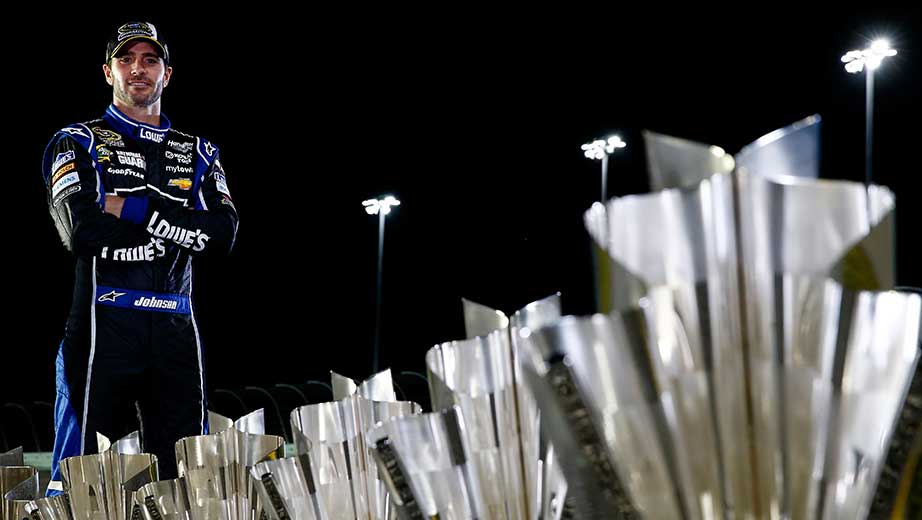
5. Five-Time returns to form. No one thought Jimmie Johnson would stay down for long. After a career-worst sixth-place finish in 2011 brought on by cars that simply didn’t have enough speed, the man they call “Five-Time” roared back to life with a season that nearly netted championship No. 6. He won five races, held the points lead with two events remaining, and might have won much more had his car not ended up behind the wall in each of his last two starts. The Sprint Cup series moves to a new vehicle next season, and no team has proved better at adaptation than the No. 48. Watch out.

6. Carl and Kyle get Chased out. One year ago, Carl Edwards led the championship race entering the final race of the season and Kyle Busch won four times. This season, neither qualified for the Chase. Edwards remained on the cusp on playoff contention all season long, but only once came close to recording the victory he needed to have, and the 2011 runner-up was but a footnote by the end. Busch led a wild-card berth slip away on the last day of the regular season, and although he was strong in the final 10 races, it was all just a warm-up for 2013. Better luck next year, boys.

7. Kenseth moves on. Among “silly season” transactions, the most seismic of them all involved a former champion and reigning Daytona 500 winner who surprisingly left the only team he’d ever known. No one really knows for sure why Matt Kenseth left Roush Fenway — at one point he seemed ready to retire there, the next he was headed out the door. But despite his Chase standing, he finished strong, winning races to burnish his legacy with a program that was Kenseth’s as much as anyone else’s. Now it’s off to Joe Gibbs Racing, where he promises to bring leadership and accountability to a team that could use a little more of both.

8. Danica’s growing pains. She started the season talking about contending for the Nationwide title, which quickly seemed more dream than reality. She crashed three times in Speedweeks, one of them a harrowing head-on plunge into the wall. Danica Patrick’s stepping-stone NASCAR season was often a trying one, though she ended with a few good runs and the record for highest points finish by a woman in a national division. Even amid the low points, there was always just enough there to make you think she could do it. Of course, now she’ll have to do it in the big leagues.

9. Fire and rain at Daytona. Where was James Taylor when you needed him? The 2012 edition of the Great American Race was memorable for a mixed bag of reasons, most notably Juan Montoya losing control of his car under caution and crashing into a jet dryer, igniting a fireball that thankfully injured no one, but still necessitated a long cleanup during which Keselowski’s tweets and Tide detergent went viral. This after the race was postponed by rain for the first time, turning it into a Monday night spectacular. And at the end there was Dale Jr., trying to hunt down Kenseth, but running out of time. Try and top all that, 2013.

10. Kurt Busch’s comeback.
The elder Busch brother began 2012 out of a ride after a testy separation from Penske Racing. Soon afterward he struck a deal to drive for Phoenix Racing, and the 2004 champion went from winning races and contending for Chase berths to squeezing all he could out of an operation that was undermanned and unsponsored.  The results were sometimes disastrous (crash at Darlington), a few times spectacular (third place at Sonoma) and always interesting to watch. But Busch persevered, moved up to a better ride at Furniture Row and closed the season with a team first — three straight top 10s.

Surprises

1. Clint Bowyer. OK, we all knew the guy was good. But this good? Walking into a brand new team, pairing with a new crew chief and immediately contending for the Sprint Cup championship? Yes, Clint is that good. Everyone knew his addition would help raise the competitive profile of Michael Waltrip Racing. But winning three times and lingering in the title picture until only one race remained? That was above and beyond, and it portends bigger things for both the driver and the organization in 2013. Some days, Richard Childress has to shake his head over what he let get away.

2. Ryan Blaney. Hey, he’s Dave Blaney’s son, so there was no doubt that he could drive. But becoming the youngest winner in the history of the Camping World Truck Series was something else entirely. That’s what the then-18-year-old did at Iowa Speedway, the crowning moment of a season in which the younger Blaney was fast and competitive in everything he drove at NASCAR’s national level. Whether it was in Keselowski’s truck or a Penske Nationwide car, he finished in the top 10 with a regularity that belied his age. Just imagine what the kid might be capable of when he grows up.

3. Michael Annett. Marcos Ambrose may have won the Sprint Cup road race at Watkins Glen International, but the Richard Petty Motorsports driver who had the best season was probably the unassuming Annett, who quietly finished right behind the primary title contenders on the Nationwide tour. The native Iowan enjoyed his best year, posting the first top fives of his career, highlighted by third-place runs at Daytona and Dover. Now, whether he can take the next step and move into the title mix is yet to be seen. But with so many top 10s and so few DNFs, the groundwork is certainly there for a driver better than he probably gets credit for.

Disappointments

1. Richard Childress Racing. RCR has been known for its peaks and valleys in recent seasons, and in 2012 the six-time championship team suffered through another trough. One win. One car in the Chase. More personnel shuffles in the competition department and among crew chiefs. A team with Kevin Harvick behind the wheel is certainly capable of more, but the driver can only do so much when the problems are organization-wide. In Nationwide and Trucks, RCR had a fantastic year. But although Harvick made the playoff and won a race, and Paul Menard continued to show quiet improvement, the Sprint Cup campaign was uneven at best. This is a proud team that aims to compete against Hendrick and Roush, and in 2012 it wasn’t close.

2. Earnhardt Ganassi Racing. Unfortunately for Chip Ganassi, his organization is becoming a fixture in this section. A year of sweeping change for the two-car organization produced decidedly mediocre results, with Jamie McMurray and Juan Montoya lingering well down the standings. EGR shuffled crew chiefs, it shuffled executives, its drivers spoke often about how much they liked the new, positive vibe in the shop. And yet, nothing changed. Is Ganassi too fixated on IndyCar? Is Montoya too comfortable? Who knows. But when your season highlight is hitting a jet dryer, something isn’t right.

3. Adieu, Montreal. Fans and drivers alike loved the annual Nationwide race on the Canadian road course, but after six years the event at Circuit Gilles Villeneuve simply proved too unwieldy. No question, it annually produced some of the craziest action of the Nationwide season, and the 2012 edition was no exception. But promoter demands became unrealistic, logistics became a hassle and the event is off the schedule for 2013. Everyone hated to see it go, even though it seemed like an inevitability. But the Montreal experience was wonderful while it lasted, and NASCAR hasn’t closed the door on one day going back.

Awards

Driver of the Year: Brad Keselowski. Don’t let all the tweets and headline-grabbing comments distract you from what the 2012 champion did on the race track. From midsummer on, Keselowski was simply lights-out, finishing outside of the top 11 just twice after his victory at Kentucky. One of those was in the finale at Homestead, where the No. 2 team didn’t have its best race. It didn’t matter — by that time, it was plenty good enough.

Runner-up: Clint Bowyer. New team, new manufacturer, new crew chief, new owner. None of that mattered to Bowyer, who came completely into his own in his first year with a Michael Waltrip Racing outfit that took a large step toward the elite. He posted career-bests in wins, top fives and top 10s. Remove crashes at Talladega and Phoenix, and the series runner-up might have won the title. Regardless, he set himself up for many more runs at the crown in the seasons to come.

Honorable mention: Matt Kenseth. Yes, he finished seventh in final points, and yes, he had three miserable runs to open the Chase that all but ended his hopes in the playoff. But in a season where he had every reason to quit, Kenseth won three times — among them the Daytona 500 — lingered at or near the top of the standings almost the entire regular season, and rebounded with a pair of victories in the Chase. Not a bad way to say goodbye to his mates at Roush Fenway and head off to his new ride with Joe Gibbs.

Crew Chief of the Year: Paul Wolfe. Brad Keselowski is a heck of a driver, no doubt about that. But to a degree his championship this season was engineered from atop the pit box, by a crew chief whose knack for making the right strategy calls had the competition on their heels. Although not every plan worked, calls like those at Dover, Kentucky and Chicago proved that the No. 2 team could do more than just go fast. His moves got into the heads of his competition, and helped foster that go-big-or-go-home mentality under which Keselowski thrived.

Runner-up: Bran Pattie. Unemployed after being released from Earnhardt Ganassi Racing last fall, MWR picked Pattie off the scrap heap and found a crew chief who fit brilliantly with new driver Clint Bowyer. A savvy signal-caller who tailors car setups to his driver, Pattie not only made the No. 15 car go fast, but along with spotter Brett Griffin also engineered a way to keep the notoriously high-strung Bowyer focused in the car. The result was three wins and a legitimate title run, a first for the Waltrip shop.

Honorable mention: Rodney Childers. MWR’s resident juggler, Childers oversaw a No. 55 car that featured three drivers — Mark Martin, Brian Vickers and Waltrip – over the course of the season and never missed a beat. Regardless of who was behind the wheel, the vehicle was fast. Childers always downplayed the difficulty, making the shuffle look easier than it was. He’ll handle the same task next season, though you have to wonder — what might Childers and that team be capable of if they had the same driver all season long? Maybe in 2014, we’ll find out.

Car Owner of the Year: Michael Waltrip. He may make funny commercials, but his race team is no joke. Thanks to an influx of cash from Rob Kauffman and the cool leadership of competition director Scott Miller, MWR eclipsed Joe Gibbs Racing as the best team in the Toyota fleet. No small feat, given all those titles over at Coach’s place. But Martin Truex was solid all year long, Clint Bowyer was a legitimate championship threat, and the No. 55 car was good regardless of who was in it. Waltrip suffered through some dark days, and could have closed up shop, but he didn’t. His reward is an organization set to contend for years to come.

Runner-up: Roger Penske. The Captain’s first start at NASCAR’s highest level was at Riverside, Calif., in 1972, when he fielded a car for Mark Donahue. It took him 40 years to win his first championship, enduring plenty of close calls along the way. Had he walked away and devoted all his efforts to open-wheel racing, where his cars were more successful, everyone would have understood. But Penske knew winning in NASCAR was the validation, so he kept at it. His team has made some curious personnel decisions at times, but matching Keselowski and that flagship No. 2 car wasn’t one of them.

Honorable mention: Rick Hendrick. Seasons come and go, but the man in the pressed white shirt and the ball cap with the slanted H on the front continues to set the standard for NASCAR team ownership. Hendrick got all four of his drivers into the Chase, something that hasn’t been done since Roush squeezed five in prior to the implementation of the car cap. Jimmie Johnson is back, Dale Earnhardt Jr. is rejuvenated, Kasey Kahne is coming on, Jeff Gordon defies the flecks of gray in his hair. An 11th title next year? No one would bet against it.

Race of the Year: Finger Lakes 355 at the Glen, Watkins Glen International, Aug. 12. Goodness, who can forget that final lap? It lingers so vividly in the memory, it’s as if it happened yesterday — Keselowski nosing into Kyle Busch, Busch falling out of the lead in a race he had to have to make the Chase, Keselowski and Marcos Ambrose trading door-panel shots over a rollicking final few turns, and the Australian coming out on top. It was riveting stuff, and more evidence that road courses rule.

Runner-up: AdvoCare 500, Phoenix International Raceway, Nov. 11. Where to begin? Johnson melting a bead trying to get all he could out of a mediocre race car and crashing his championship hopes? Gordon and Bowyer crashing one another on the track? Seemingly half the field crashing on the final lap of Kevin Harvick’s unlikely victory or the No. 15 and 24 teams clashing in the garage area? It was a rough-and-tumble day in the desert, with a sellout crowd on hand to see it all unfold.

Honorable mention: Irwin Tools Night Race, Bristol Motor Speedway, Aug. 25. All that talk of grinding the top groove of the track, of removing the progressive banking, of putting the bite back in Bristol. None of it compared to the action, most notably a run-in between two drivers with four titles between them, and Tony Stewart’s thrown helmet serving as an exclamation point. It was one of those wild nights that made Bristol famous, back to remind us all that this great half-mile race track never really left.

Comeback of the Year: Denny Hamlin. So much for that hangover that followed his near-miss championship campaign of 2010. The Joe Gibbs Racing driver returned to the ranks of NASCAR’s elite this season, winning five times and looking very much like the favorite for the tile during the early stages of the Chase. But mechanical problems that have become too typical at JGR, this time an electrical switch, undid his playoff at Martinsville. It didn’t matter — he and crew chief Darian Grubb promise to be a powerhouse combo for years to come.

Runner-up: Greg Biffle. The Roush Fenway driver followed up one of his worst Sprint Cup seasons with a campaign in which he was the class of the field for much of the year. Biffle fell out of title contention early in the Chase, but during the first 26 races, he was a rock: Over that time he notched 15 top-10 finishes and led the points for 14 weeks. The series leader before the Chase, Biffle and crew chief Matt Puccia clearly hit on something, building a springboard for what should be a better 2013.

Honorable mention: Sam Hornish Jr. The former Indianapolis 500 champion continues to rebuild his NASCAR career, enjoying a breakout season on the Nationwide tour in which he was in title contention for much of the season. No, he didn’t get the No. 22 Sprint Cup ride at Penske for 2013. But after competing part-time last year, this is a guy who was solid all year in the Nationwide ranks, and filled in admirably when called upon after AJ Allmendinger’s suspension. He keeps moving in this direction, he’ll get back up there soon enough.

Quote of the Year:

“I’m going to run over him every him every chance I’ve got from now ’til the end of the year. Every chance I’ve got." — Tony Stewart, after throwing his helmet at Matt Kenseth during the Bristol night race on Aug 25.

Runner-up: “If this was what we did every week, I wouldn’t be doing it, let me put it to you like that. If this was how we raced every week, I’d find another job.” — Dale Earnhardt Jr., after being involved in a 25-car crash on the final lap at Talladega on Oct. 7.

Honorable mention: “We’re not going to put the prevent defense out there. We’re going to go at you, and we’re going to try to sack the quarterback every time. Sometimes we’re going to miss, and they’re going to get a big play out of it. But we’ve hit ’em a lot, and that’s why we’re in the points lead, and we’re going to keep after it." — Brad Keselowski, after a Charlotte race Oct. 13 in which he ran out of gas stretching a fuel run and finished 11th.

Early 2013 championship pick

Denny Hamlin. It’s his time. Past his time, actually. Despite all the focus on Johnson and Keselowski, there were stretches this past year where no one was better, no one was faster, no one was more dominant. And yet, he was hamstrung through no real fault of his own – all the fuel not getting into the No. 11 car during the final pit stop in the Chase opener at Chicago, an electrical switch left unchecked that proved the end at Martinsville. Oversights ruined Kyle Busch’s 2008 title run, and they did the same this year to Hamlin, and perhaps the arrival of detail-oriented Matt Kenseth will help JGR button things down to the needed degree. Because cut out the mistakes, and there’s nothing stopping Hamlin from winning multiple Sprint Cup championships — starting next season.
Interest high in first national-series dirt event since 1970

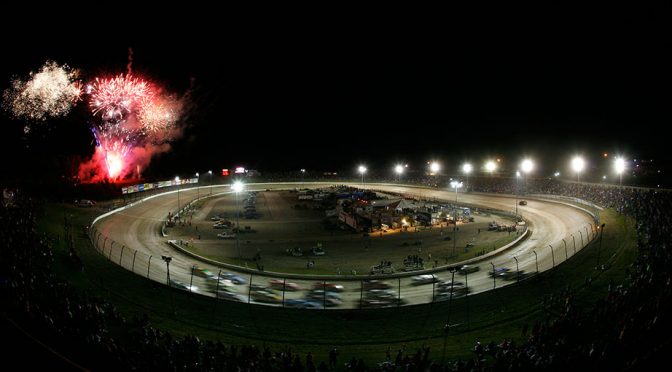
It took Eldora Speedway three minutes to sell 1,500 tickets. In a half-hour, 6,500 were gone. By the end of the first day, the main grandstand was sold out. By the end of the weekend, only a few thousand reserved seats were left for the track’s inaugural NASCAR Camping World Truck Series event.

The first few days of ticket sales for NASCAR’s return to dirt racing were brisk ones, with purchases made by households in 48 U.S. states and seven Canadian provinces, track general manager Roger Slack said Monday. Tickets went on sale at 10 a.m. Saturday, and roughly 48 hours later the facility had only 2,600 of its 17,700 reserved seats remaining.

“We knew we would have a big immediate rush of sales, and are excited that the pace has stayed strong,” Slack said. “The fact that we are already flirting with a sellout definitely has us excited. Over half of the people are coming from outside of the state of Ohio, so it is going to have a major impact for our community, the region and the state.”

The event is scheduled for Wednesday, July 24, on the half-mile clay oval near Rossburg, Ohio. The Camping World Truck Series Mudsummer Classic will be the first dirt race in the circuit’s history, and the first NASCAR national-series event on a dirt track since a 1970 Cup Series race at the North Carolina State Fairgrounds in Raleigh.

Although the track did much of its business online, Saturday morning it still had eight people manning telephones, including some members of the Baltes family that owned the facility before three-time Sprint Cup champion Tony Stewart purchased it in 2004. A mecca for dirt racing, Eldora was built in 1954 and is one of the nation’s premier venues for sprint cars and dirt late models. It is not adding additional seats for the Truck Series event.

“It was like little kids on Christmas,” Slack said of the enthusiasm of those early ticket buyers. “At least 60 percent of them have never been to Eldora before, and they are telling us it is a bucket list visit — like a baseball fan going to Fenway or Wrigley.”

Beyond its reserved seats, Eldora also features general admission hillside areas lining the turns. Slack said the track is encouraging fans to purchase tickets for those areas in advance, to guard against potentially overselling an event held on a weeknight. Including general admission areas, the facility can hold over 22,000 spectators.

Different templates could lead to interesting results, but level playing field will be sought

When Sprint Cup cars were redesigned for the 2013 season, manufacturers seeking more brand identity had their voices heard by NASCAR. The resulting vehicles feature bodies that more closely resemble those of their production-line brethren, from the front end to the roofline to the rear bumper. When those same cars begin competing on the race track, manufacturers may seek to have their voices heard once again — but for a very different reason.

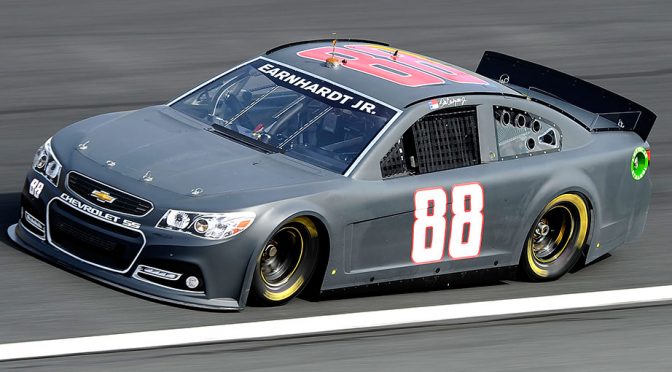
The cosmetic differences between the three models debuting this year are stark, and that enhanced brand identity will have an impact all the way down to the inspection line on race weekends. The outgoing “Car of Tomorrow” is a thing of the past, as is the common body manufacturers shared during its run. More brand-specific parts mean more brand-specific templates, which at least opens the door to more brand-specific success — and the lobbying by other manufacturers that has historically accompanied it.

“If Chevy wins a bunch of races early, they’re going to say, ‘Oh, Chevy’s got an advantage,’” five-time Sprint Cup champion Jimmie Johnson said. “And it’s going to start that whole mess back up again.”

Indeed, the real possibility exists that these new-look cars could revive old-school politicking by manufacturers, something not seen since before the introduction of the Car of Tomorrow and its common body and template in 2007. Before then it was common for carmakers to urge NASCAR for help on the spoiler or some other body part that might improve results, particularly if vehicles of the same nameplate were ahead of the pack. Now the Ford, Toyota and Chevrolet will be almost completely different from nose to tail, and any differences in performance might lead to lobbying in the garage.

"We’ll listen, and we’ll do the best to maintain a level playing field."

–Robin Pemberton

“I think any time there’s opportunity to politick, we’re all going to politick,” said Steve Letarte, crew chief on Dale Earnhardt Jr.’s No. 88 car. “I mean, we’re racers, right? And the goal is to win.”

According to Robin Pemberton, NASCAR’s vice president for competition, only one element of the new cars is the same across all three manufacturers — the rear deck lid. Although the claw-like grid that became a part of the inspection process along with the Car of Tomorrow will continue to be used, there are “way more manufacturer-specific templates that are needed,” said Brett Bodine, senior director of racing at NASCAR’s Research and Development Center. “That’s what is really going to challenge the officiating staff, because (the cars’) shapes are so different.”

NASCAR and the manufacturers determined that the greenhouse — the roof, windows, posts and deck lid — would be a “common area” where surface area would remain consistent from one car model to another, but differences exist even there. “The roof panels, some of them are in the same shape, but they’re different lengths,” Pemberton said. “Size of noses and tails are different. Windshields are different, back glasses are different. So it’s just that small part of the deck lid … that’s the only thing that’s a common part.”

Teams must still have their chassis pre-certified at the NASCAR R&D Center before taking them to the race track, a process carried over from the days of the outgoing car. Once at the race venue, however, the differences between the three redesigned models will be evident in the templates used to inspect them. And if there are differences in performance on the track, NASCAR expects it will hear from manufacturers seeking help, just as it did a decade ago.

“I do,” Pemberton said. “I think that they’re different enough that there will be times you’re going to hear it, you’re going to see it. When somebody goes to Vegas and one manufacturer runs one through three, somebody’s going to complain. But if you’re getting beat, you should be complaining about something, but maybe it’s internally. But I’m sure we’ll hear it.”

What might be the sanctioning body’s reaction? “We’ll listen, and we’ll do the best to maintain a level playing field,” Pemberton added. “That doesn’t mean every week we’re going to be whacking on the spoiler or doing something like that. But it is our responsibility to make sure that a group is not disadvantaged out there. But I don’t see that really being too big of an issue right now.”

The reason? It isn’t 2002 anymore, Letarte said. Years ago in the heyday of politicking, everything was based off what happened on the race track, according to the crew chief. Now there are more sophisticated ways of determining why and how one manufacturer might be behind another, potentially putting more responsibility on the teams. Rather than trimming a fraction of an inch off one spoiler in an effort to equalize competition, NASCAR might instead be able to eliminate aerodynamic questions, and tell an organization to go back and improve its cars.

“I think that using technology we can prove that the best Chevy, the best Ford, the best Toyota, are close in the wind tunnel. That allows NASCAR to challenge back to the teams and the manufacturers that you need to go to work on other areas of your car. It’s not in the body,” Letarte said. “So is there politicking? There always will be. But I feel that we have the tools and the technology to answer those questions without involving rule changes.”

Although the 2013 cars were designed to heighten brand identity, the goal is still to win. “It’s wonderful that the cars are going to look like the cars they’re born from, but at the end of the day, we have to make sure (results) on the track are not impacted,” said Ford Racing chief Jamie Allison. That responsibility falls on the manufacturers as much as anyone else. And surely, it helps that competitors are on board with the reasons why the vehicles were redesigned in the first place — even if inspection grows a little more complicated, and politicking raises its head once again.

“This car is a perfect example of technology helping our sport,” Letarte said. “I think we now have three makes out here that, my little boy at 9 years old can tell the difference between the Chevy and the Ford. And that’s the goal, right? That anybody can walk through the parking lot and see a Chevy and a Ford and a Toyota and know that they’re different. So I think that we’ve gained that.”

Best- and worst-case scenarios for programs revamped for 2014

Jimmie Johnson may have won his sixth title this past season, but what Matt Kenseth did in 2013 was almost as impressive. Despite a new team, a new crew chief and a new car manufacturer, the Joe Gibbs Racing driver won a series-best seven races and came within 19 points of adding a second championship trophy to his mantle. Think that’s easy? Consider then that Kenseth almost became the first driver to win the crown in his debut with a new organization since Darrell Waltrip did it with Junior Johnson way back in 1981.

And in the process, the 2003 champion also set a high bar for drivers assimilating into a new environment. For Kenseth, so much went right — he and crew chief Jason Ratcliff found a rapport right away, he felt immediately comfortable in JGR’s race cars and his new teammates Denny Hamlin and Kyle Busch were welcoming and receptive to the ideas of an older colleague with a title on his resume. Add in Kenseth’s own high standards and even-keeled demeanor, and you had the perfect combination for a career year, not to mention a model to emulate for every other driver changing addresses.

Of course, it’s not nearly as easy as he made it look. And for every Kenseth exceeding all expectations in new surroundings, there’s a situation like Dale Earnhardt Jr. struggling in his first season at Hendrick Motorsports, despite all the pieces seemingly in place at NASCAR’s best organization. Busch has often said that moving to a new team can produce a degree of reinvigoration that’s evident on the race track, something his older brother Kurt could certainly testify to after this past season. But then again, there are no guarantees.

Regardless, there are a number of drivers hoping to become the next Kenseth — or maybe just the next Joey Logano, who had a nice freshman season with Penske Racing — as they settle into their new teams for 2014. So let’s take a look at the major driver changes in the NASCAR Sprint Cup Series for the coming campaign, and the best, worst, and most likely scenarios for those who switched rides over the winter. There just might be another Matt Kenseth in there yet.

Earnhardt Ganassi Racing

Change: Kyle Larson replaces Juan Pablo Montoya in the No. 42 car.

Worst-case scenario: The most underperforming team at NASCAR’s top level slides once again into mediocrity. Keith Rodden, the former Hendrick Motorsports engineer who is now Jamie McMurray’s crew chief, faces the same steep learning curve that colleague Chris Heroy did when he became crew chief of the No. 42, and the No. 1 team takes a step back from last year’s 15th-place finish. Larson struggles in his transition from the NASCAR Nationwide Series to the Sprint Cup tour, and EGR once again languishes in the middle of the pack.

Best-case scenario: Rodden and McMurray click, and the No. 1 team is able to build on last season — when it got off to a nice start and won the fall race at Talladega — and moves onto the fringes of playoff contention. Larson follows the lead of another former sprint-car driver, Kasey Kahne, by acclimating to the Sprint Cup tour much faster than anyone expects. The 21-year-old claims top rookie honors by finishing in the top 15 in points, and breathes some new life into the organization in the process.

Most likely scenario: Larson, whose skill is evident each time he steps into a race car, exceeds expectations. And though his results are as inconsistent as any rookie’s would be, his good days do wonders for an EGR team that for too long has been idling in neutral. McMurray’s program shows more progress, but falls short of the Chase for the NASCAR Sprint Cup. Still, those are hopeful signs for an organization that has nowhere to go but up.

Michael Waltrip Racing

Change: Drops the full-time No. 56 team of former driver Martin Truex Jr. due to sponsor loss. Adds Brian Vickers full-time in the No. 55 car, and Jeff Burton in a part-time No. 66 car for testing and a limited number of events.

Worst-case scenario: Vickers — who missed the final few weeks of this past season due to a recurrence of blood clots — and the No. 55 team suffer in the absence of former crew chief Rodney Childers, who had the car contending almost every week in 2013 despite a rotating cast of drivers, and is now at Stewart-Haas Racing. The loss of Truex leaves Clint Bowyer to shoulder the entirety of MWR’s championship aspirations, but the team continues to feel the consequences of last year’s race-manipulation scandal, and the organization misses the Chase for the first time in three years.

Best-case scenario: Vickers and new crew chief Billy Scott build the No. 55 into a week-in, week-out force, and having one driver in the seat all year allows the program to challenge for a Chase berth. Bowyer keeps on being Bowyer. Burton adds the steadying veteran presence the team thrived on during Mark Martin’s tenure with the organization, and MWR becomes as strong a two-car entity as it was with three.

Most likely scenario: Vickers certainly showed in his limited role the last two years that he’s capable of carrying a program, and Bowyer is one of the best around. But make no mistake about it, Truex and Childers are top-flight talents and huge losses, and the shadow of Richmond remains. A team that thought it was entering 2014 with three Chase-contending cars is down to two, and might be fortunate to get one of those in.

Richard Childress Racing

Change: Ryan Newman replaces Burton in the No. 31 car. Austin Dillon moves into a No. 3 car, effectively replacing Kevin Harvick and the No. 29.

Worst-case scenario: With Harvick gone, RCR is left without a legitimate championship threat for the first time in recent memory. Burton’s departure leaves behind a leadership gap that’s reflected in struggles with car development. Adaptation to the Sprint Cup level proves difficult for Dillon. A team known for enduring steep peaks and valleys falls into another trough, this one preventing either Newman or Paul Menard from making a run at the Chase.

Best-case scenario: The sneaky-good Newman does his thing, winning a couple of races and getting into the playoff. Dillon benefits greatly from the tutelage of crew chief Gil Martin, rides a wave of momentum spawned by the return of the No. 3 and finishes inside the top 15 in final points to claim top rookie honors. Menard steals another race victory, and challenges for a Chase bid. On paper, there’s still no clear championship contender, but all three programs show potential in a season that lays the groundwork for others to come.

Most likely scenario: If Newman can make the Chase last season — forget the asterisk for the time being — when he had a patchwork crew and a one-year deal, he certainly can with more stability and a more seasoned group around him. Dillon faces high expectations because of both his car number and his pedigree, but has done so in the past and always responded. Is there a title contender in the group? No. Is Harvick’s absence huge? Of course. Can RCR still challenge for race wins and get one driver onto the Chase? Absolutely.

Stewart-Haas Racing

Change: Harvick moves into a No. 4 car, and Kurt Busch into a No. 41 car. Tony Stewart returns to the No. 14 after an injury layoff of nearly seven months. Newman is not retained.

Worst-case scenario: Where to begin? Stewart isn’t quite the same after missing so much of this past year because of a broken leg suffered in a sprint car accident. The issues in car development that dogged the team early last year become more pronounced, in part due to the accelerated expansion undertaken to accommodate a fourth team. Danica Patrick stagnates, all those fiery personalities become the combustible mixture everyone feared they would be, and a powerhouse on paper falls victim to infighting and underperformance.

Best-case scenario: The addition of Childers and another former MWR crew chief, Chad Johnston, allows SHR to get a better handle on its race cars, which has the added benefit of improving Patrick’s performance. Busch’s immense natural talent overcomes any headaches caused by the organization’s rapid expansion, and his past working relationship with Harvick helps the No. 41 team get up to speed. With new crew chief Johnston, Stewart returns to his irrepressible old self, and a trio of SHR drivers — Harvick, Busch, and the boss himself — make the Chase.

Most likely scenario: Stewart’s leg injury was severe, and his recovery hasn’t been easy. At this point, we just don’t know what it’s going to be like for him when he slides back behind the wheel at Daytona. Beyond that, fears of clashes among the headstrong SHR drivers are likely overrated — Busch and Harvick developed a nice working relationship last season when the former was at Furniture Row and the latter was at RCR, and this is a sport that puts competitors in close quarters every week. A more legitimate concern might be the rapid expansion, and what toll it will take on the organization. Regardless, this team has all kinds of potential, and Childers and Johnston are great additions. Think better cars, a better year from Patrick, and at least two drivers in the Chase.

Furniture Row Racing

Change: Truex replaces Kurt Busch in the No. 78 car.

Worst-case scenario: The groundbreaking run to the Chase last season by single-car, Denver-based Furniture Row proves in hindsight to be the work of Busch more than anything else. The No. 78 pit crew continues to have issues, and without the 2004 series champion there to make up the difference, the program falls out of the playoff conversation and back into mediocrity.

Best-case scenario: Busch’s one-year stint in the No. 78 car raises standards across the board, making Furniture Row Racing much more capable of competing without him. The technical alliance with RCR continues to pay dividends, MWR expatriate Truex drives like a man with something to prove, and Barney Visser’s team goes back to Richmond in September with another chance to crash the championship party.

Most likely scenario: Let’s face it, a guy like Kurt Busch is almost impossible to replace. Almost single-handedly, he elevated the No. 78 program from an afterthought to one that could contend for race wins. But he also made it possible for Furniture Row to replace him with a driver like Truex, who might never have considered a ride like the No. 78 otherwise. Can Furniture Row once again make the Chase and threaten to sweep both May races at Charlotte? That’s a tough ask. Can it continue to be relevant, and a factor each Sunday? Sure. And from there, much more is certainly possible.

JTG Daugherty Racing

Change: AJ Allmendinger replaces Bobby Labonte in the No. 47 car.

Worst-case scenario: The driver changes, but the song remains the same for an organization searching for both identity and sure footing. Allmendinger takes over the No. 47, but the issues hampering the team’s performance prove more than one man can change.

Best-case scenario: Allmendinger’s arrival as full-time driver — he started nine races in the car last year — provides a natural lift, as does the team’s new technical association with RCR and switch to Chevrolet. With more information at its disposal and a driver better able to make use of it, JTG Daugherty Racing follows the Furniture Row model and makes strides, which in this case means a final points standing inside the top 20.

Most likely scenario: As beloved as Labonte is, clearly things had stagnated on the No. 47 team, and Allmendinger brings an optimism and enthusiasm that has to brighten the picture by his very presence. JTG Daugherty suffered greatly after cutting ties with MWR, so the affiliation with RCR should certainly help. Don’t expect a miracle turnaround, but for an organization that’s finished 31st and 26th in owner points the past two seasons, a little forward progress would certainly mean a lot.

MORE:

READ: Year in Review
driver profiles

READ: A season defined
by a night in Richmond

READ: Top 10 on-track
moves of 2013

WATCH: Handing out the
2013 Loopie Awards

Brandt returns as sponsor for the No. 31 Nationwide car

CHARLOTTE, N.C. — Justin Allgaier, who finished sixth in NASCAR Nationwide Series points in 2012 and earned one victory in 2012, will return to the newly renamed Turner Scott Motorsports next season along with his longtime sponsor Brandt, which is celebrating its 60th anniversary as a company.
 
Allgaier, an Illinois native like his sponsor, was the 2009 Nationwide Rookie of the Year and has three wins under his belt. After driving for Penske Racing, he moved to Turner Scott Motorsports, where he has piloted the No. 31 to 12 top-five finishes and 36 top-10s. Two of his three wins came with Turner Scott, first at Chicagoland, home track to both parties, and last year at Montreal.

President and CEO Rick C. Brandt said returning as the primary sponsor to the No. 31 shows the company’s dedication and commitment to motorsports marketing.
 
As for Allgaier, he couldn’t be happier.
 
"I am so excited to come back with Brandt on my car," said Allgaier. "I’ve known the people at Brandt for years and I could not be more proud of representing them on and off the track. They are a family-owned business with literal roots in my home community."

With one start and one win for the team, JRM’s newest driver hopes to keep up momentum

Although he has just one career start with his current team, it should come as no surprise that driver Regan Smith and officials with JR Motorsports fully expect to contend for the 2013 NASCAR Nationwide Series championship.

Based on how well that single start turned out, it would be something of a surprise if those involved felt otherwise.

“It was a case where we definitely learned some things,” Smith said of his winning effort with JRM in last year’s season-ending race at Homestead-Miami Speedway. 

"Honestly, I thought he would probably want to take a different Cup offer; you don’t expect someone to be willing to step away from that series."

 Kelley Earnhardt-Miller

“Some of what we learned was what not to do; some of it was the direction we need to go in this year. But I definitely think we took a lot out of it.”

As a result, he said, “we’re going to have some pretty lofty goals for 2013.”

It will be a fresh start for Smith, 29, who for the past five seasons toiled in the Sprint Cup Series, most recently with the Denver-based Furniture Row Racing team, winning once (at Darlington in 2011) yet finishing no higher than 24th in points.

When Furniture Row released Smith before the end of the 2012 season, passing inquiries about driving for JRM suddenly became much more intense.

“When I knew he was going to be leaving … he was a guy we had our eye on,” Kelley Earnhardt-Miller, JRM team co-owner and general manager, said of Smith. “Honestly, I thought he would probably want to take a different Cup offer; you don’t expect someone to be willing to step away from that series.”

Smith, she said, “fits well” with what her younger brother and team founder Dale Earnhardt Jr. likes.

“Regan’s had his stint in the Cup series but he’s still young and still has the potential to make a mark in the sport,” she said.

Greg Ives, a former team engineer at Hendrick Motorsports, was named crew chief for the No. 7 team late last year. His lack of crew chief experience isn’t a concern for Smith or Earnhardt-Miller. More telling, they said, are the five consecutive Cup championships he helped driver Jimmie Johnson earn while at Hendrick.

“Obviously his background speaks for itself,” Smith said. “He’s got five championships in seven years and that’s a pretty big deal no matter what you’re doing, (but) especially at the Cup level. And obviously he’s worked with (crew chief) Chad Knaus, one of the best there is in the business.”

“He’s definitely qualified,” Earnhardt-Miller said. “A real straight-shooter; a no B.S. kind of guy.”

Putting a winning driver such as Smith behind the wheel, she said, will go a long way in confirming how competitive the organization’s cars are on the track. Taking nothing away from Danica Patrick and Cole Whitt, who ran full-time for the group last season, Earnhardt-Miller added, “it’s just an experience factor."

“It takes it all to come together from the standpoint of the driver, the team and the cars," she said. "In 2008 and 2009 we had the ability to have someone like Brad (Keselowski) in the car … but also had a car we called the all-star car, where we ran different drivers with some experience. So we were able to showcase what the cars could do. And obviously Brad excelled in the cars even as a rookie. You don’t get that every time; they’re not all Brad Keselowskis.”

Smith said he is still working with Phoenix Racing to possibly compete in a handful of Cup races in 2013. He will test with the team later this week, during Preseason Thunder at Daytona International Speedway. But his focus, he said, will be on contending for the Nationwide Series championship.

“I feel like we’ve got every piece to the puzzle in place,” he said. “We’ve been given every tool that we need to go out and succeed. It’s our job to make sure we use those tools.

“I can promise you one thing: we will go into every race this year with the mentality that we’re going to win that race.”